Issue published October 8, 2026 Previous issue

- Volume 11, Issue 19
On the cover:
Mapping vascular plasticity during fibrogenesis identifies fibrosis-associated endothelial cells in early-stage liver disease
Gkantsinikoudi et al. describe how blood vessels change during fibrosis and identify markers that could help predict liver disease at earlier stages than current clinical tests. The cover image shows localization of liver fibrosis (orange) emanating from central veins, stained with the endothelial cell zonation markers endomucin (cyan) and thrombomodulin (magenta). Image credit: Christina Gkantsinikoudi and Neil Dufton.
Gkantsinikoudi et al. describe how blood vessels change during fibrosis and identify markers that could help predict liver disease at earlier stages than current clinical tests. The cover image shows localization of liver fibrosis (orange) emanating from central veins, stained with the endothelial cell zonation markers endomucin (cyan) and thrombomodulin (magenta). Image credit: Christina Gkantsinikoudi and Neil Dufton.
Go to section:
-
Research Letters
×
Abstract
Authors
Kadambari Vijaykumar, Liang Ma, Kevin Chen, Liping Tang, Nikoleta Pavelkova, Elex Harris, Kajal Jadhav, Qian Li, Mohamed Hanafy, Hinnerk Schulz-Hildebrandt, Guillermo J. Tearney, Finn Hawkins, Darrell N. Kotton, Steven M. Rowe
×Abstract
Authors
Allen Duong, Sajad Moshkelgosha, Tereza Martinu, Stephen Juvet

-
Physician-Scientist Development
×
Abstract
Effective grant writing is an essential skill for physician-scientists to achieve academic independence and long-term career success. Previous studies have established that receiving an NIH F30 or F31 during predoctoral training is correlated with success in subsequent training stages and contributes to the retention of physician-scientists in academia. However, many trainees experience challenges in predoctoral grant writing that prevent them from submitting a grant or developing a well-rounded application. Identifying and addressing such barriers and obstacles remains crucial; however, limitations in NIH public reporting exclude data on prospective applicants and applicants who were not awarded grants. In this study, we employed a national survey of trainees to identify perceived needs and barriers to grant writing as well as factors associated with NIH predoctoral grant funding success. We found that limited mentor and sponsor support of the development of quality applications, constrained eligibility timelines, and limited available awards were prominent barriers to submission, while access to previously funded applications was the most valued resource among respondents. Using these findings, we highlight opportunities for interventions at the federal, institutional, applicant, and medical and scientific society levels to improve predoctoral grant writing feasibility and success.
Authors
Brian J. Thomas, Tiger Zhang, Daniel C. Brock, Timothy J. Ley, W. David Arnold, Cynthia Y. Tang

-
Research Articles
×
Abstract
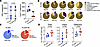
Persistent monocyte activation contributes to HIV-associated neurocognitive disorders (HAND), yet biomarkers that predict neurocognitive impairment before and after antiretroviral therapy (ART) remain incompletely defined. We evaluated monocyte subsets and activation markers in participants from the SEARCH007 cohort before ART initiation and at 6 and 12 months following treatment. Increased frequencies of CD14+CD16+ monocytes and elevated CD163 expression were associated with worsening neurocognitive performance and HAND severity. Plasma soluble CD163 levels increased with neurocognitive impairment and correlated with plasma HIV RNA levels, while CCR2 expression was associated with a composite neuropsychological performance Z-score (NPZglobal). Notably, CD169 expression was elevated across all monocyte subsets and demonstrated a stepwise increase with worsening neurocognitive impairment. Although ART reduced overall monocyte activation, elevated CD169 expression persisted in some individuals despite virologic suppression. Bayesian kernel machine regression and random forest analyses identified CD169 expression as one of the strongest predictors of cognitive impairment, surpassing plasma viral load, CD4+ T cell count, and several established monocyte activation markers. These findings identify monocyte CD169 expression as a biomarker of neurocognitive dysfunction before and during the first year of ART and support further investigation of its role in HAND pathogenesis.
Authors
Hai Duc Nguyen, Andrew K. Ding-Su, Caroline Soulas, Tricia H. Burdo, Patrick Autissier, Pasiri Sithinamsuwan, Nitiya Chomchey, Jintanat Ananworanich, Victor Valcour, Silvia Ratto-Kim, Woong-Ki Kim, Kenneth C. Williams
×Abstract
Obesity is a major risk factor for chronic kidney disease. Time-restricted feeding (TRF) shows promise to reduce kidney inflammation in chronic kidney disease. We hypothesized that TRF blunts kidney fibrosis in obese mice by mitigating T cell inflammation. We used a diet-induced obese mouse model fed a high-fat diet (DIO; 45% fat) ad libitum for 18 weeks followed by 2 weeks of TRF or ad libitum high-fat feeding. We found that TRF reversed kidney fibrosis as well as reduced kidney CD8+ T cells in DIO mice. Our study also reveals that DIO mice had increased kidney CD8+ T cell infiltration from the small intestine that was blunted with TRF. Furthermore, anti-CD8 intervention in DIO showed reduced kidney fibrosis and damage compared with anti-IgG–treated DIO mice. Single-cell RNA-seq data reveal that DIO increased, while TRF reduced, the frequency of a specific cluster of CD8+ T cells that featured high expression of exhaustion/activation genes. Spatial analyses showed DIO mice had significant infiltration of PD-1+CD8+ T cells near CD31+ endothelial cells that was diminished by TRF. In conclusion, this study shows that TRF reversed kidney fibrosis through reducing CD8+ T cell infiltration in obese mice.
Authors
Claudia J. Edell, John D. Erickson, Xiaofen Liu, Savannah C. Walker, Jackson Colson, Michael Heim, Pranav Nagila, Kyle H. Moore, Keri M. Kemp, Kelly Hyndman, Selene Meza-Perez, Troy D. Randall, Annye P. Bennett, Anna G. Sorace, Yu-Hua Dean Fang, David M. Pollock, Carmen De Miguel, Julienne L. Carstens, Jennifer S. Pollock
×Abstract
Fractures heal by rapid formation of mineralized callus, a process requiring periosteal cell proliferation and differentiation. Our objective was to dissect the contribution of proliferating osteoblast-lineage cells to fracture callus formation. First, mice expressing thymidine kinase (TK) in 3.6Col1a1-lineage cells were treated with ganciclovir (GCV) to ablate proliferating osteolineage cells for 5 or 10 days. Immunostaining demonstrated that this approach specifically depleted TK+ proliferating cells in the bony regions of the callus, while sparing other proliferating cells. Single-cell RNA-seq of callus cells revealed that GCV-treated Col1-TK mice had fewer osteoblasts and chondrocytes than controls, with more myofibroblasts and immune cells, consistent with fibrous nonunion. In controls, 15%–30% of callus cells expressing the early osteoblast marker Osterix (Osx, Sp7) and the late marker osteocalcin (Ocn, Bglap) were in the cell cycle. Next, we targeted proliferating osteolineage cells at different stages of differentiation by crossing Osx-CreERT2, Ocn-Cre, and Dmp1-CreERT2 mice with ROSA-TK mice. Following fracture, each Cre ROSA-TK mouse line exhibited decreased callus bone volume and a shift from callus bone to fibrous tissue. Therefore, during fracture repair, proliferation of callus cells at early and mature stages of osteoblast differentiation is critical to the formation of a mineralized callus that is essential for healing.
Authors
Nicole R. Gould, Andre F. Coello, Jennifer A. McKenzie, Mariam Obaji, Tiandao Li, Katherine R. Hixon, Leyi Chen, Kristen Barwick, Tiffany Lee, Bo Zhang, David Ornitz, Matthew J. Silva
×Abstract
After encountering allogeneic nonself, monocytes differentiate to DCs, which in turn activate the adaptive immune system that drives transplant rejection. The downstream mechanisms of allorecognition are largely unknown. We analyzed scRNA-seq data sets to identify transcriptional changes in monocytes occurring after allostimulation. Hspa1a, which encodes HSP70, was upregulated in monocytes after allostimulation in contrast to syngeneic controls in mice lacking T, B, and NK cells. Similar findings were seen in scRNA-seq data derived from kidney biopsies of rejecting transplant patients. To validate the role of HSP70 in innate allorecognition and transplantation, we performed allogeneic bone marrow plug and kidney transplantation into WT, Hspa1a/Hspa1b–/–, and DSG-treated (HSP70 inhibitor) B6 mice and examined the graft immune infiltrate. Histology, T cell infiltration, and survival were assessed in kidney transplanted mice. In both models, DSG-treated or HSP70-KO recipients displayed significantly reduced infiltration by monocyte-derived DCs (mo-DC). Chronic rejection of Balb/c kidney grafts in WT B6 recipients was attenuated in DSG-treated and HSP70-KO recipients as indicated by a reduction in Banff score. Further experiments demonstrated that in vitro allostimulated immature HSP70-KO BMDC showed less maturation compared with WT BMDC. Targeting HSP70 in innate immune cells offers a novel approach to reduce chronic kidney graft rejection.
Authors
Zeping Gui, Neda Feizi, Berkay Demirors, Canxiang Lin, Hehua Dai, Mouhamad Al Moussawy, Andrew Friday, Steven M. Sanders, Latha Halesha, Amanda L. Williams, Faruk Sacirbegovic, Parmjeet S. Randhawa, Khodor I. Abou-Daya, Martin H. Oberbarnscheidt
×Abstract
Endothelial progenitor cells (EPCs) are critical for vascular regeneration after injury. However, their role in pulmonary fibrosis (PF) remains unclear. Here, we identified a previously unrecognized population of lung capillary EPCs coexpressing c-KIT and FOXF1 (capEPCs) in adult human and mouse lungs. capEPCs were significantly reduced in lungs from patients with PF and in bleomycin-injured mice, implicating loss of this regenerative endothelial population in disease pathogenesis. Transplantation of donor capEPCs attenuated experimental PF, improved survival, reduced collagen deposition, and restored lung function. Donor capEPCs engrafted into the lung microcirculation of bleomycin-injured mice. Single-cell RNA sequencing identified interferon-induced transmembrane protein 3 as a highly enriched transcript in capEPCs. Conditioned media from IFITM3-overexpressing EPCs or recombinant IFITM3 enhanced endothelial proliferation and angiogenesis while suppressing TGF-β1–induced fibroblast activation in vitro. IFITM3 was found in capEPC-derived exosomes. Treatment with IFITM3-containing exosomes recapitulated the therapeutic effects of capEPC transplantation by improving endothelial function, inhibiting fibroblast activation, increasing animal survival, reducing lung fibrosis, and restoring lung function. Together these findings identified capEPC deficiency as a feature of PF and demonstrated that IFITM3-containing exosomes promoted vascular repair. Restoration of capEPC regenerative function or delivery of IFITM3-enriched exosomes may represent a promising therapeutic strategy for human PF.
Authors
Ying-Wei Lan, Jonathan Do, Wen Gao, Zicheng Deng, Xiaomei Xia, Enhong Li, Jillian Kash, Gautam Verma, Angara Sureshbabu, Kenneth S. Knox, Ross M. Bremner, Nicholas E. Banovich, Vladimir V. Kalinichenko, Tanya V. Kalin
×Abstract
Acute myeloid leukemia (AML) is the most common adult leukemia diagnosis. Bone marrow (BM) niche significantly influences the initiation and progression of AML. However, our knowledge about the effect of leukemic niche on leukemia stem cells (LSC) and leukemogenesis is limited. In this study, we identified an extrinsic-regulatory function of latexin (Lxn) in leukemogenesis. Using a MLL-AF9–induced AML mouse model in WT and Lxn-KO (Lxn–/–) recipient mice, we found that Lxn deletion in the BM niche enhanced the survival of AML mice by suppressing LSCs and reducing blood blasts. Single-cell RNA-seq of stromal cells and cell communication analysis uncovered downregulation of the leukemia inhibitory factor receptor (LIFR) signaling pathway in the Lxn–/– niche, particularly within mesenchymal stromal cells (MSCs). Mechanistically, reduced LIFR level in Lxn–/– MSCs upregulated Cxcl9 expression, leading to increased recruitment of CD8 T cells and enhanced cytotoxicity against leukemic cells. Combination of Lxn niche deletion and immune checkpoint inhibitor PD-1 further prolonged survival. The findings have important clinical implications, suggesting that Lxn inhibition could improve the efficacy of AML therapies by targeting the leukemia niche and enhancing immune surveillance.
Authors
Cuiping Zhang, Xia Yao, Pinpin Sui, Liming Hou, Bowen Yan, Larry L. Luchsinger, Gang Huang, Sheng Tong, Youwen Zhang, Bojing Shao, Hong Qian, Hong Zheng, Hui Zhong, Feng-Chun Yang, Ying Liang
×Abstract
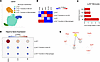
Integrin αVβ3, a transmembrane receptor involved in tumor growth and metastasis, specifically recognizes and binds proteins with the Arg-Gly-Asp (RGD) peptide sequence. Using mRNA and/or protein expression data from 496 thyroid cancer (TC) samples in The Cancer Genome Atlas, 14 TC cell lines, and 70 TC and 10 normal thyroid tissues, we found that papillary TC exhibits the highest αVβ3 integrin expression. We then evaluated the therapeutic efficacy of a radiolabeled RGD analog, 177Lu-DOTA-EB-cRGDfK, in TC. Genetic knockout and overexpression of αVβ3 in TC cell lines confirmed the target specificity of 177Lu-DOTA-EB-cRGDfK. In mouse xenograft models established from human TC cell lines with high αVβ3 expression, 177Lu-DOTA-EB-cRGDfK demonstrated superior antitumor efficacy compared with standard-of-care lenvatinib and placebo. However, no synergistic benefit was observed with combination therapy. Biodistribution studies identified the kidneys as the dose-limiting organ. RNA-seq analysis of resected tumors demonstrated that 177Lu-DOTA-EB-cRGDfK induced a type I IFN response, characterized by upregulation of IFI6, IFIT1-2, and MX1, compared with both lenvatinib-treated tumors and placebo. These findings identify αVβ3 integrin as a promising therapeutic target in a subset of TCs and demonstrate that 177Lu-DOTA-EB-cRGDfK exhibits superior efficacy to lenvatinib, supporting its potential clinical translation for progressive TC refractory to standard therapies.
Authors
Sonam Kumari, Rhitajit Sarkar, Zhantong Wang, Shilpa Thakur, Laura Abaandou, Oksana Gavrilova, Huiyan Lu, Noha Behairy, Lixin Lang, Dale Kiesewetter, Vasyl Vasko, Joanna Klubo-Gwiezdzinska
×Abstract
Autoimmune kidney diseases can cause glomerulonephritis and tubulointerstitial nephritis, which if unresolved, lead to progressive glomerulosclerosis and tubulointerstitial fibrosis. The IL-1 receptor (IL-1R1) is known to have divergent and cell-specific effects in kidney injury. We hypothesized that IL-1R1 would dampen pro-inflammatory activation of myeloid cells such that deletion of myeloid cell IL-1R1 would exacerbate autoimmune nephritis. Mice with myeloid cell–specific deletion of IL-1R1 (LysMCre+/Il1r1fl/fl, hereafter MKO) and littermate controls (LysMCre–/Il1r1fl/fl, MWT) were subjected to nephrotoxic serum (NTS) nephritis. MKO mice demonstrated worsened glomerular and tubular injury as indicated by increased albuminuria, glomerular injury scores, and kidney mRNA levels of kidney injury molecule 1 (KIM-1) (Havcr1) and neutrophil gelatinase-associated lipocalin (NGAL/Lcn2). We further found that myeloid IL-1R1 deficiency resulted in increased myeloid cell ER stress and expression of the heterodimeric cytokine Ebi3/Il27a (IL-27). IL-27 then induced increased type I IFN expression by kidney endothelial cells. In turn, anti–IL-27 limited type I IFN expression in endothelial cells and NTS nephritis, and anti-IFNAR1 therapy ameliorated glomerular and tubular injury in MKO mice. Thus, we demonstrated a myeloid cell/endothelial cell immunoregulatory axis whereby myeloid IL-1R1 activity constrained endothelial type I IFN generation to limit chronic kidney damage.
Authors
Yanting Chen, Yu Li, Jiafa Ren, Chia-Chun Wu, Xiaohan Lu, Achintya Inumarty, Steven D. Crowley, Jamie R. Privratsky
×Abstract
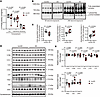
The pathogenesis of Bartter syndrome (BS) has long been attributed to decreased salt reabsorption in the thick ascending limb of Henle’s loop (TAL). By studying Clc-k2–KO (mouse ortholog of ClC-Kb–KO [Clc-k2–/–]) mice, we recently uncovered an additional mechanism in which loss of Clc-k2 induces TAL hypoplasia in neonatal kidneys, exacerbating BS severity. Here, we further investigated this mechanism. TALs and distal convoluted tubules (DCTs) isolated from Clc-k2–/– and WT mice were used for transcriptome, proteomics, cell cycle, and proliferation assays. Mitochondrial morphology and function were studied using electron microscopy and mitochondrial respiration assays. Our results reveal impairments in cell proliferation, S-to-G2/M cell cycle transition, mitochondrial biogenesis, oxidative phosphorylation, glycolysis, and fatty acid oxidation in Clc-k2–/– TALs and DCTs. Increasing transport function by introducing a gain-of-function with-no-lysine kinase 4 (Wnk4) mutation in Clc-k2–/– mice restored these metabolic and proliferative impairments and improved phenotype. Transgenic expression of peroxisome proliferator-activated receptor γ coactivator-1α, a master regulator of mitochondrial biogenesis, in Clc-k2–/– mice also alleviated mitochondrial dysfunction and phenotype. These findings support the hypothesis that mitochondrial hypofunction, resulting from decreased transport function, contributes to cell cycle arrest and tubular hypoplasia in BS. Targeting mitochondria early in life could be a therapeutic approach for BS.
Authors
Chiao-Hui Hsieh, Yu-Jen Chen, Chih-Chien Sung, Emily Morrison, Chou-Long Huang, Chih-Jen Cheng
×Abstract
Mycobacterium tuberculosis (Mtb), the causative agent of tuberculosis (TB), is the most common coinfection in people living with HIV-1. This coinfection is associated with accelerated HIV-1 disease progression and reduced survival. However, the immunological and virological mechanisms driving this progression are not completely understood. To address this knowledge gap, using pleural effusion samples from people living with HIV-1 and TB, we investigated how the HIV-1 genetic landscape and the anti–HIV-1 immune response are impacted by a TB-associated microenvironment. Our results revealed an enrichment of genetically intact HIV-1 and impaired CD8+ T cell–mediated antiviral response at this site of HIV-1/Mtb coinfection. Moreover, efficient CD8+ T cell activation was inhibited by lipids present in the TB-associated pleural effusion. These findings indicate that this immune microenvironment induced by TB promotes the persistence of cells infected with replication-competent HIV-1 by creating a niche of reduced antiviral immune pressure, potentially contributing to the worsened clinical outcomes observed in people living with HIV-1 and TB.
Authors
Samantha Cronin, Jennifer Simpson, Andrea Pereyra-Casanova, Yuchen Li, Josefina Marín-Rojas, Freja A. Warner van Dijk, Katie Fisher, Daniel J. Buffa, Hafsa Rana, Zoï Vahlas, Joaquina Barros, Mariano Maio, Thomas R. O’Neil, Kirstie M. Bertram, Eunok Lee, Najla Nasr, Andrew N. Harman, Gabriela Turk, Maria Florencia Quiroga, Anthony D. Kelleher, Christel Vérollet, Luciana Balboa, Sarah Palmer, Gabriel Duette
×Abstract
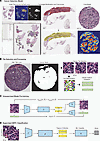
Metastatic prostate cancer is a clinically and molecularly heterogeneous disease. Under the selective pressure of androgen receptor–directed (AR-directed) therapies, resistant phenotypes frequently emerge, posing significant diagnostic and therapeutic challenges. Neuroendocrine prostate cancer (NEPC) is a clinically important phenotype characterized by lineage plasticity, neuroendocrine features, visceral metastases, and poor prognosis. Accurate diagnosis of NEPC remains difficult owing to its histologic and molecular complexity but has high clinical relevance. In this study, we developed a deep learning model that leverages interpretable cellular features to improve feature extraction from H&E-stained tissue sections (NEURAL-PC). By incorporating a multiple-instance learning framework, NEURAL-PC enables robust NEPC classification solely from H&E tumor images, achieving an area under the receiver operating characteristic curve of 0.921 in independent external validation. In addition to its diagnostic utility, NEURAL-PC provides prognostic information that enables further subclassification of advanced prostate cancer across diverse datasets, supporting its strong prognostic value and generalizability. Broadly, our work highlights a hybrid approach that integrates features across different domains, offering a promising strategy for developing reliable deep learning tools in pathology. Built on this framework, NEURAL-PC represents an extensively validated diagnostic and prognostic model for advanced prostate cancer.
Authors
Zhijun Chen, Erolcan Sayar, Daniela Guevara, Helen Richards, Haoyue Zhang, Radhika A. Patel, Agnes C. Gawne, Lucas J. Liu, Ilsa Coleman, Ruth Dumpit, Colm Morrissey, Michael T. Schweizer, Ruben Raychaudhuri, Laura S. Graham, Evan Y. Yu, Heather H. Cheng, Chien-Kuang C. Ding, Yuzhuo Wang, Peter Choyke, Baris Turkbey, Chantal Chanel-Vos, Christina Fedorov, John R. Otilano, Troy Kane, Jyothi Manohar, Michael Sigouros, Jones T. Nauseef, Ana Molina, David Nanus, Scott T. Tagawa, Juan Miguel Mosquera, Himisha P. Beltran, Ruth Etzioni, Peter S. Nelson, Rama Soundararajan, Ana M. Aparicio, Cora N. Sternberg, Michael C. Haffner, Stephanie A. Harmon
×Abstract
Obstructive nephropathy is a significant and preventable contributor to chronic kidney disease, yet no disease-modifying antifibrotic agents are currently available. We hypothesized that interferon regulatory factor 5 (IRF5) functions as a macrophage transcriptional regulator that directly transactivates matrix metalloproteinase 9 (MMP9) to initiate early extracellular matrix (ECM) remodeling. Analysis of 30 human obstructive nephropathy biopsy specimens demonstrated that IRF5+CD68+ macrophage density increased progressively with fibrosis severity and correlated significantly with α-smooth muscle actin–positive (α-SMA+) areas. In the murine unilateral ureteral obstruction (UUO) model, both global and myeloid-specific Irf5 deletion significantly attenuated collagen deposition, immune cell infiltration, and fibrotic gene expression compared with WT controls. Cleavage under targets and tagmentation (CUT&Tag) analysis demonstrated that IRF5 directly binds the Mmp9 enhancer region and increases chromatin accessibility. Consequently, myeloid-specific Irf5 KO significantly reduced Mmp9 mRNA and MMP9 protein levels. Pharmacological inhibition using the IRF5 inhibitor N5-1 mitigated established fibrosis, downregulated α-SMA and MMP9 expression, and reduced CD68+ macrophage infiltration. These findings identify the IRF5/MMP9 axis as a therapeutically targetable pathway driving macrophage-mediated ECM expansion and provide preclinical evidence supporting IRF5 inhibition as a potential treatment strategy for patients with obstructive nephropathy.
Authors
Jia Wei, Gengyu Du, Zixia Li, Min Yang, Ting Chen, Zihao Xu, Zhen Yuan, Yidan Zheng, Xiang Yan
×Abstract
Identifying factors that govern the ability of retinal ganglion cells (RGCs) to extend axons is an important step in developing therapies to achieve recovery after optic nerve injury. Here, we report that the intracellular domain of the leukemia inhibitory factor receptor (LIFR/CD118) is essential for mature RGCs’ ability to regenerate injured axons independent of the cognate ligand (LIF) and other therapies. Overexpression of LIFR in adult RGCs induces neurite outgrowth in cultured RGCs and axon regeneration in vivo while strongly amplifying RGCs’ response to LIF itself and to unrelated growth factors. Conversely, downregulation of LIFR strongly suppresses the pro-regenerative effects of PTEN knockdown and other potent stimuli. LIFR modulation alters the constitutive activity of the MAPK pathway, in contrast to LIF itself, which primarily activates pSTAT3. The extracellular domain–truncated LIFR construct retains substantial pro-regenerative activity, whereas mutation of intracellular signaling motifs reduces the full regenerative effect of LIFR. Together, these findings identify LIFR as a key cell-autonomous regulator of optic nerve regeneration in mature RGCs.
Authors
Qian Jiang, Cong Wang, Yuerong Ren, Peiyun Duan, Ke Tian, Xiangwei Duan, Binghan Cai, Changzhong Xu, Ke Liu, Jian Li, Larry Benowitz, Ningli Wang, Bing Jiang, Lili Xie
×Abstract
Menin is a scaffolding protein that interacts with context-specific partners to regulate gene expression. In rearranged mixed-lineage leukemia, Menin-MLL interactions drive leukemogenesis and Menin inhibitors have been FDA approved for these cancers. We previously reported that Menin promotes oncogenic phenotypes in Ewing sarcoma (EwS). Here, we sought to define EwS-specific functions of Menin and determine if Menin inhibitors could be therapeutically leveraged for these tumors. Genetic KO of Menin had no effect on EwS cell proliferation in vitro, but metastatic potential of Menin-depleted cells in vivo was impaired. Transcriptional profiling of Menin-KO cells in vitro showed reproducible downregulation of MYC signature genes and upregulation of developmental programs. Conversely, transcriptional rewiring of developmental genes and restoration of MYC target gene expression were evident in tumors that arose from Menin-KO cells. Exposing EwS cells to the Menin inhibitor VTP50469 (revumenib) inhibited expression of MYC targets, and coimmunoprecipitation studies detected Menin-MYC interactions that were partially disrupted by the drug. Metastatic colonization of disseminated EwS cells in vivo was significantly inhibited in mice fed VTP50469 chow. Together these findings implicate Menin as a mediator of EwS metastasis and suggest that Menin inhibitors warrant investigation as novel therapeutics for patients with high-risk disease.
Authors
Katherine A. Braun, Nicolas M. Garcia, Mohamed A. Ahmed, Darleen S. Tu, Stephanie I. Walter, Emma D. Wrenn, Megan E.B. Dean, Neerja Katiyar, Elizabeth R. Lawlor
×Abstract
Wnt signaling drives tumorigenesis in multiple cancers, in part through complex interactions with other oncogenic pathways including the MAPK cascade. In Wnt-addicted cancers, pharmacological and genetic inhibition of Wnt signaling activates multiple RTKs, increases ERK phosphorylation, and induces MAPK target gene expression, but the specific RTKs responsible for this MAPK hyperactivation are not known. Here, we performed phosphotyrosine-targeted mass spectrometry, which revealed robust phosphorylation of EPHA2 and EGFR upon Wnt inhibition. Unexpectedly, we found that in xenografts, EPHA2 suppresses EGFR and ERK activation. Most notably, the increased ERK phosphorylation observed in EPHA2-KO tumors is transcriptionally inert, as there is no concomitant increase in MAPK target gene expression until concomitant Wnt inhibition. This suggests a Wnt-activated transcriptional repressor such as GATA3 that gates MAPK signaling in Wnt-high cancers. Although Wnt-high KRAS-mutant cancers are resistant to erlotinib alone, adding a Wnt inhibitor mitigates this resistance. Additionally, loss of EPHA2 enhances these cancers’ sensitivity to both erlotinib and Wnt inhibitors. Our studies therefore identify therapeutic vulnerabilities in Wnt-high tumors, even within traditionally EGFR inhibitor-resistant, RAS-mutant contexts.
Authors
Shawn R. Wadia, Changyuan Hu, Siddhi Patnaik, Shreya Sridharan, Roger J. Daly, David M. Virshup, Babita Madan
×Abstract
Prediabetes is associated with increased production of triglyceride-rich lipoproteins (TRLs), cardiovascular disease (CVD), and hepatic steatosis, which is linked to increased plasma levels of soluble TREM2 (sTREM2), the shed domain of TREM2 (triggering receptor expressed on myeloid cells 2). Whether and how TREM2 shedding contributes to elevated TRLs is unknown. By complementary analyses of individuals with prediabetes and hepatic steatosis and preclinical models, we show that plasma sTREM2 levels correlate positively with plasma apolipoprotein C3 (APOC3), an apolipoprotein that slows TRL catabolism and predicts CVD risk. Individuals with prediabetes and hepatic steatosis had higher plasma concentrations of APOC3-rich TRLs 35 to 60 nm in diameter than healthy controls. Mouse models of prediabetes with hepatic steatosis revealed that the increased plasma concentrations of sTREM2, APOC3, and TRLs were due to activation of macrophage ADAM17, a TREM2 sheddase. Preserving macrophage full-length TREM2 protected against the elevated plasma APOC3, sTREM2, dyslipidemia, and atherosclerosis, whereas TREM2 deficiency increased APOC3, TRLs, and atherosclerosis. Mechanistically, full-length TREM2 mediates macrophage TRL uptake, preventing excessive hepatic APOC3-rich TRL release and atherosclerosis. Our findings identify macrophage TREM2 shedding as an upstream contributor to the elevated TRLs in hepatic steatosis, providing a mechanistic link between hepatic steatosis and CVD risk in prediabetes.
Authors
Jingjing Tang, Jenny E. Kanter, Baohai Shao, Masami Shimizu-Albergine, Farah Kramer, Ah Reum Khang, Jason Luo, Huaqing Zheng, Alan Tran, Jocelyn Cervantes, Jeremy M. Frey, Mauricio D. Dorfman, Cheng-Chieh Hsu, Laura J. den Hartigh, Tomas Vaisar, Brandon S.J. Davies, Adam E. Mullick, George N. Ioannou, Gordon I. Smith, Samuel Klein, Nicholas O. Davidson, Karin E. Bornfeldt
×Abstract
Defective synaptic transmission is a prominent pathology that underlies cognitive deficits in Alzheimer’s disease (AD), highlighting the need to elucidate molecular mechanisms of synaptic failure. Vacuolar H+-ATPase (V-ATPase), a proton-pumping enzyme, is essential for synaptic vesicle acidification and neurotransmitter loading. However, whether SV-associated V-ATPase is vulnerable to AD remains unclear. Here, using SV-rich fractions from postmortem brain tissues, we identified SV-associated V-ATPase deficits, including decreased enzymatic activity, impaired complex assembly, and altered expression of its key subunits in AD. SV-associated V-ATPase dysfunction was further associated with pathological and clinical characteristics of AD. Genetic downregulation of the V-ATPase V1D subunit, a component reduced in AD brains, disrupted V-ATPase proton transport and impaired SV acidification. Further experiments using 5×FAD mice, which exhibited AD-like SV-associated V-ATPase deficits, demonstrated the deleterious impact of V-ATPase dysfunction on SV acidification and synaptic transmission including presynaptic neurotransmitter release. In addition, ex vivo studies identified amyloid β–induced oxidative stress as a driver of V1D loss and V-ATPase disassembly, linking AD pathology to SV-associated V-ATPase dysfunction. These findings indicate that SV-associated V-ATPase dysfunction contributes to synaptic failure and cognitive deficits in AD. Therapeutic avenues to mitigate V-ATPase dysfunction have the potential to attenuate synaptic failure for the management of AD.
Authors
Yanting Chen, Khloud Ashraf Farouk Emam, Shuwen Yue, Jing Tian, Tienju Wang, Albert Park, Shalini Mishra, Gagan Deep, Zi-Jun Wang, Heng Du, Lan Guo
×Abstract
Skeletal muscle is composed of heterogeneous myofiber types and non-myocyte populations. Myopathies occur in many diseases, but the mechanisms driving these pathologies remain largely unknown, partly because conventional approaches cannot link histopathological features to molecular states at single-fiber resolution. To address this challenge, we brought histopathology and spatial transcriptomics together by applying high-resolution Seq-Scope technology to a mouse model of mTORC1 hyperactivation. Cross-sections from the extensor digitorum longus (EDL) and soleus (SOL), two muscles with distinct fiber-type compositions, were profiled to determine how transcriptome changes are linked to histopathological outcomes. mTORC1 hyperactivation elicited distinct, fiber type–dependent pathological programs. Type I and IIa fibers were largely resistant to mTORC1-induced pathology, exhibiting relatively limited morphological alterations. In contrast, type IIx fibers diverged into opposing fates: in SOL, they underwent abnormal enlargement associated with sustained growth signaling, cytoskeletal remodeling, and impaired proteostasis; in EDL, they developed basophilia associated with increased RNA content and lipid-, oxidative-, and nucleotide metabolism–related signatures. Within EDL, type IIb fibers displayed heterogeneity with discrete transcriptional states. Non-myocytic populations, including macrophages and fibroblasts, accumulated preferentially in SOL, forming a fibrotic microenvironment associated with inflammation, remodeling, and hypertrophy. These findings provide a link between histopathological phenotypes and molecular states at single-fiber resolution.
Authors
Jer-En Hsu, Qingyang Zhao, Weiqiu Cheng, Hyun Min Kang, Susan V. Brooks, Myungjin Kim, Jun Hee Lee
×Abstract
Noise-induced hearing loss (NIHL) is a major public health problem caused by damage to cochlear hair cells, synapses, and spiral ganglion neurons (SGNs). Since effective treatments are lacking, we investigated cellular stress responses induced by moderate and loud noise in a mouse model of cochlear synaptopathy. RNA-seq and spatial transcriptomics revealed that noise exposure elicited a robust but transient upregulation of endoplasmic reticulum chaperones and proteasome subunits in SGNs and their supporting cells. To target this response, we administered TRC051384, a small-molecule activator of the heat shock transcription factor Hsf1, prior to noise exposure. TRC051384 crossed the blood-labyrinth barrier and reached the cochlea, induced heat shock protein gene expression, and restored ubiquitin-proteasome function in SGNs. Notably, TRC051384 treatment enhanced auditory brainstem response threshold recovery, preserved Wave I amplitudes, and maintained ribbon synapse density. Together with the existing literature, these findings identify proteotoxic stress in SGNs as a contributor to noise-induced hearing loss and support pharmacological activation of HSF1 as a promising therapeutic strategy.
Authors
Jintao Yu, Miguel A. Ramirez, Yi-Zhi Wang, Seby Edassery, Maxwell Shramuk, SangEun Yeom, Casey Jiaxi Li, Yuvraj Joshi, Mary Ann Cheatham, Mark A. Rutherford, Leah J. Welty, Jeffrey N. Savas
×Abstract
Allergic contact dermatitis (ACD), a recurrent inflammatory skin disorder, affects 21% of humans and is the second leading cause of occupational diseases in the United States. ACD is initiated by the innate immune response to skin-contact sensitizers potentiated by the neuropeptide substance P (SP). Skin sensitizers stimulate SP-secreting sensory nerves and trigger proinflammatory functions of keratinocytes expressing the neurokinin 1 receptor (NK1R). Nevertheless, the neuroimmune regulation of hapten-initiated skin inflammation remains incompletely elucidated. Using K14Cre/+ NK1RKO mice skin-sensitized with 2,4-dinitrochlorobenzene (DNCB), we demonstrate that NK1R deletion exclusively in keratinocytes prevents hapten-initiated skin inflammation, impairs the mobilization of conventional dendritic cells to draining lymph nodes, and blocks the elicitation of the contact hypersensitivity reaction to the same extent observed in global Tac1KO (without SP) and NK1RKO mice. The DNCB effects were restored by skin co-administration of IL-1β and TNF-α. SP-NK1R signaling of mouse and human keratinocytes increased transcripts encoding proteins of the NLRP3 inflammasome. Although DNCB and SP induced pro–IL-1β synthesis, only SP triggered intracellular Ca2+ increase, NFATc1 nuclear translocation, and synthesis of TNF-α, a cytokine mediating systemic inflammation in ACD. Our data identifying SP-NK1R signaling of keratinocytes as a key mechanism for ACD provide relevant insight for therapies targeting skin neuroimmune interactions.
Authors
Sumeet Manandhar, Mohna Bandyopadhyay, Olga A. Tkacheva, William J. Shufesky, Gregory A. Gibson, Simon C. Watkins, Adrian E. Morelli, Adriana T. Larregina
×Abstract
Vascular plasticity is a crucial biological asset enabling our bodies to rapidly adapt to infections and acute inflammation. However, repeated insults during chronic disease can result in these vascular adaptations becoming irreversible, thereby driving disease progression and fibrosis. This study aimed to understand if phenotypic changes in endothelial cell (EC) identity could be indicative of progressive fibrosis and thereby offer diagnostic and therapeutic opportunities for patients with metabolic dysfunction–associated steatotic liver disease (MASLD). We integrated high-resolution imaging and proteomic and transcriptomic analysis, which collectively highlighted a central role for endothelial-mesenchymal transition–induced (EndMT-induced) EC plasticity in the derivation of fibrosis-associated EC (FAEC). We demonstrated that: (a) full-spectrum flow cytometry can provide new opportunities to categorize and phenotype EC subpopulations; (b) 2 distinct EndMT-derived FAEC subpopulations expanded during fibrogenesis (THY1.2+ICAM1+ and TAGLN+MCAM+ EC) that displayed unique immunomodulatory and metabolic phenotypes; (c) TAGLN+ FAEC are a conserved, profibrotic cell type that arose at early stages of MASLD; and (d) increased hepatic expression of TAGLN was significantly associated with detrimental patient outcomes at all stages of liver disease. This study paves the way for the development of FAEC-specific diagnostic and therapeutic approaches to tackle progressive fibrotic disease.
Authors
Christina Gkantsinikoudi, Joshua P. Dignam, Raju Kumar, Elliot Jokl, Meenakshi Rana, Wenhao Li, Maryna Samus, Stephanie Landi, Varinder S. Athwal, Timothy J. Kendall, Antal Rot, Jonathan A. Fallowfield, Karen Piper Hanley, William Alazawi, Neil P. Dufton
×Abstract
Mutations in mitochondrial DNA (mtDNA) cause various mitochondrial diseases that are currently incurable. Allotopic expression of nucleus-recoded mitochondrial genes represents a promising therapeutic strategy, given its demonstrated capacity to restore mitochondrial function in human cell models harboring mtDNA mutations. However, the in vivo evaluation of allotopic gene therapy has been hindered by optimization challenges and the lack of appropriate animal models. Here, we overcome these limitations by utilizing an optimized AAV2-ND6 construct with codon optimization and mitochondrial targeting sequence in a mouse model bearing the homoplasmic ND6P25L mutation, which recapitulates Leber hereditary optic neuropathy (LHON). High-dose administration of the AAV2-ND6 construct resulted in robust, sustained expression within the retina and optic nerve without apparent systemic toxicity. Strikingly, we compared the therapeutic efficacy in mutant mice at different ages and presymptomatic intervention with AAV2-ND6 effectively attenuated disease progression, mitigated retinal cellular deficiencies and optic nerve damage, and restored visual function in ND6P25L mice. Mechanistically, allotopic ND6 expression markedly rescued the mitochondrial dysfunction, corrected dysregulated retinol metabolism and phototransduction pathways, and suppressed apoptotic processes in the mutant retina. Our study validates the safety and therapeutic potential of allotopic expression in vivo and provides critical mechanistic insights into its role in treating LHON and other mitochondrial diseases.
Authors
Cheng Ai, Huiying Li, Jing Wu, Tianwei Zhou, Jing Wang, Shao-Hui Pan, Jun Yu, Douglas C. Wallace, Min-Xin Guan