
Research ArticleHepatologyImmunologyInfectious disease
Open Access |  10.1172/jci.insight.196809
Preclinical assessment of oral TLR7 agonist SA-5 in a nonhuman primate model
Shokichi Takahama,1 Takahiro Tomiyama,1 Sachiyo Yoshio,2 Yuta Nagatsuka,1 Hirotomo Murakami,1 Takuto Nogimori,1 Mami Kochi,3 Shoko Ochiai,3 Hidenori Kimura,3 Akihisa Fukushima,3 Tatsuya Kanto,4 and Takuya Yamamoto1,5,6,7
1Laboratory of Precision Immunology, Center for Intractable Diseases and ImmunoGenomics, National Institutes of Biomedical Innovation, Health and Nutrition, Osaka, Japan.
2Department of Human Immunology and Translational Research, National Institute of Global Health and Medicine, Japan Institute for Health Security, Tokyo, Japan.
3Research and Development (Division), Sumitomo Pharma. Co., Ltd., Osaka, Japan.
4Department of Liver Diseases, The Research Center for Hepatitis and Immunology, National Institute of Global Health and Medicine, Japan Institute for Health Security, Chiba, Japan.
5Laboratory of Aging and Immune Regulation, Graduate School of Pharmaceutical Sciences, and
6Department of Virology and Immunology, Graduate School of Medicine, The University of Osaka, Osaka, Japan.
7Laboratory of Translational Cancer Immunology and Biology, Next-generation Precision Medicine Research Center, Osaka International Cancer Institute, Osaka, Japan.
Address correspondence to: Takuya Yamamoto, Laboratory of Precision Immunology, Center for Intractable Diseases and ImmunoGenomics, National Institutes of Biomedical Innovation, Health and Nutrition, Osaka 567-0085, Japan. Email: yamamotot2@nibn.go.jp.
Authorship note: ST and TT contributed equally to this work
Find articles by
Takahama, S.
in:
PubMed
|
Google Scholar
|

1Laboratory of Precision Immunology, Center for Intractable Diseases and ImmunoGenomics, National Institutes of Biomedical Innovation, Health and Nutrition, Osaka, Japan.
2Department of Human Immunology and Translational Research, National Institute of Global Health and Medicine, Japan Institute for Health Security, Tokyo, Japan.
3Research and Development (Division), Sumitomo Pharma. Co., Ltd., Osaka, Japan.
4Department of Liver Diseases, The Research Center for Hepatitis and Immunology, National Institute of Global Health and Medicine, Japan Institute for Health Security, Chiba, Japan.
5Laboratory of Aging and Immune Regulation, Graduate School of Pharmaceutical Sciences, and
6Department of Virology and Immunology, Graduate School of Medicine, The University of Osaka, Osaka, Japan.
7Laboratory of Translational Cancer Immunology and Biology, Next-generation Precision Medicine Research Center, Osaka International Cancer Institute, Osaka, Japan.
Address correspondence to: Takuya Yamamoto, Laboratory of Precision Immunology, Center for Intractable Diseases and ImmunoGenomics, National Institutes of Biomedical Innovation, Health and Nutrition, Osaka 567-0085, Japan. Email: yamamotot2@nibn.go.jp.
Authorship note: ST and TT contributed equally to this work
Find articles by Tomiyama, T. in: PubMed | Google Scholar
1Laboratory of Precision Immunology, Center for Intractable Diseases and ImmunoGenomics, National Institutes of Biomedical Innovation, Health and Nutrition, Osaka, Japan.
2Department of Human Immunology and Translational Research, National Institute of Global Health and Medicine, Japan Institute for Health Security, Tokyo, Japan.
3Research and Development (Division), Sumitomo Pharma. Co., Ltd., Osaka, Japan.
4Department of Liver Diseases, The Research Center for Hepatitis and Immunology, National Institute of Global Health and Medicine, Japan Institute for Health Security, Chiba, Japan.
5Laboratory of Aging and Immune Regulation, Graduate School of Pharmaceutical Sciences, and
6Department of Virology and Immunology, Graduate School of Medicine, The University of Osaka, Osaka, Japan.
7Laboratory of Translational Cancer Immunology and Biology, Next-generation Precision Medicine Research Center, Osaka International Cancer Institute, Osaka, Japan.
Address correspondence to: Takuya Yamamoto, Laboratory of Precision Immunology, Center for Intractable Diseases and ImmunoGenomics, National Institutes of Biomedical Innovation, Health and Nutrition, Osaka 567-0085, Japan. Email: yamamotot2@nibn.go.jp.
Authorship note: ST and TT contributed equally to this work
Find articles by Yoshio, S. in: PubMed | Google Scholar
1Laboratory of Precision Immunology, Center for Intractable Diseases and ImmunoGenomics, National Institutes of Biomedical Innovation, Health and Nutrition, Osaka, Japan.
2Department of Human Immunology and Translational Research, National Institute of Global Health and Medicine, Japan Institute for Health Security, Tokyo, Japan.
3Research and Development (Division), Sumitomo Pharma. Co., Ltd., Osaka, Japan.
4Department of Liver Diseases, The Research Center for Hepatitis and Immunology, National Institute of Global Health and Medicine, Japan Institute for Health Security, Chiba, Japan.
5Laboratory of Aging and Immune Regulation, Graduate School of Pharmaceutical Sciences, and
6Department of Virology and Immunology, Graduate School of Medicine, The University of Osaka, Osaka, Japan.
7Laboratory of Translational Cancer Immunology and Biology, Next-generation Precision Medicine Research Center, Osaka International Cancer Institute, Osaka, Japan.
Address correspondence to: Takuya Yamamoto, Laboratory of Precision Immunology, Center for Intractable Diseases and ImmunoGenomics, National Institutes of Biomedical Innovation, Health and Nutrition, Osaka 567-0085, Japan. Email: yamamotot2@nibn.go.jp.
Authorship note: ST and TT contributed equally to this work
Find articles by Nagatsuka, Y. in: PubMed | Google Scholar
1Laboratory of Precision Immunology, Center for Intractable Diseases and ImmunoGenomics, National Institutes of Biomedical Innovation, Health and Nutrition, Osaka, Japan.
2Department of Human Immunology and Translational Research, National Institute of Global Health and Medicine, Japan Institute for Health Security, Tokyo, Japan.
3Research and Development (Division), Sumitomo Pharma. Co., Ltd., Osaka, Japan.
4Department of Liver Diseases, The Research Center for Hepatitis and Immunology, National Institute of Global Health and Medicine, Japan Institute for Health Security, Chiba, Japan.
5Laboratory of Aging and Immune Regulation, Graduate School of Pharmaceutical Sciences, and
6Department of Virology and Immunology, Graduate School of Medicine, The University of Osaka, Osaka, Japan.
7Laboratory of Translational Cancer Immunology and Biology, Next-generation Precision Medicine Research Center, Osaka International Cancer Institute, Osaka, Japan.
Address correspondence to: Takuya Yamamoto, Laboratory of Precision Immunology, Center for Intractable Diseases and ImmunoGenomics, National Institutes of Biomedical Innovation, Health and Nutrition, Osaka 567-0085, Japan. Email: yamamotot2@nibn.go.jp.
Authorship note: ST and TT contributed equally to this work
Find articles by Murakami, H. in: PubMed | Google Scholar
1Laboratory of Precision Immunology, Center for Intractable Diseases and ImmunoGenomics, National Institutes of Biomedical Innovation, Health and Nutrition, Osaka, Japan.
2Department of Human Immunology and Translational Research, National Institute of Global Health and Medicine, Japan Institute for Health Security, Tokyo, Japan.
3Research and Development (Division), Sumitomo Pharma. Co., Ltd., Osaka, Japan.
4Department of Liver Diseases, The Research Center for Hepatitis and Immunology, National Institute of Global Health and Medicine, Japan Institute for Health Security, Chiba, Japan.
5Laboratory of Aging and Immune Regulation, Graduate School of Pharmaceutical Sciences, and
6Department of Virology and Immunology, Graduate School of Medicine, The University of Osaka, Osaka, Japan.
7Laboratory of Translational Cancer Immunology and Biology, Next-generation Precision Medicine Research Center, Osaka International Cancer Institute, Osaka, Japan.
Address correspondence to: Takuya Yamamoto, Laboratory of Precision Immunology, Center for Intractable Diseases and ImmunoGenomics, National Institutes of Biomedical Innovation, Health and Nutrition, Osaka 567-0085, Japan. Email: yamamotot2@nibn.go.jp.
Authorship note: ST and TT contributed equally to this work
Find articles by Nogimori, T. in: PubMed | Google Scholar
1Laboratory of Precision Immunology, Center for Intractable Diseases and ImmunoGenomics, National Institutes of Biomedical Innovation, Health and Nutrition, Osaka, Japan.
2Department of Human Immunology and Translational Research, National Institute of Global Health and Medicine, Japan Institute for Health Security, Tokyo, Japan.
3Research and Development (Division), Sumitomo Pharma. Co., Ltd., Osaka, Japan.
4Department of Liver Diseases, The Research Center for Hepatitis and Immunology, National Institute of Global Health and Medicine, Japan Institute for Health Security, Chiba, Japan.
5Laboratory of Aging and Immune Regulation, Graduate School of Pharmaceutical Sciences, and
6Department of Virology and Immunology, Graduate School of Medicine, The University of Osaka, Osaka, Japan.
7Laboratory of Translational Cancer Immunology and Biology, Next-generation Precision Medicine Research Center, Osaka International Cancer Institute, Osaka, Japan.
Address correspondence to: Takuya Yamamoto, Laboratory of Precision Immunology, Center for Intractable Diseases and ImmunoGenomics, National Institutes of Biomedical Innovation, Health and Nutrition, Osaka 567-0085, Japan. Email: yamamotot2@nibn.go.jp.
Authorship note: ST and TT contributed equally to this work
Find articles by Kochi, M. in: PubMed | Google Scholar
1Laboratory of Precision Immunology, Center for Intractable Diseases and ImmunoGenomics, National Institutes of Biomedical Innovation, Health and Nutrition, Osaka, Japan.
2Department of Human Immunology and Translational Research, National Institute of Global Health and Medicine, Japan Institute for Health Security, Tokyo, Japan.
3Research and Development (Division), Sumitomo Pharma. Co., Ltd., Osaka, Japan.
4Department of Liver Diseases, The Research Center for Hepatitis and Immunology, National Institute of Global Health and Medicine, Japan Institute for Health Security, Chiba, Japan.
5Laboratory of Aging and Immune Regulation, Graduate School of Pharmaceutical Sciences, and
6Department of Virology and Immunology, Graduate School of Medicine, The University of Osaka, Osaka, Japan.
7Laboratory of Translational Cancer Immunology and Biology, Next-generation Precision Medicine Research Center, Osaka International Cancer Institute, Osaka, Japan.
Address correspondence to: Takuya Yamamoto, Laboratory of Precision Immunology, Center for Intractable Diseases and ImmunoGenomics, National Institutes of Biomedical Innovation, Health and Nutrition, Osaka 567-0085, Japan. Email: yamamotot2@nibn.go.jp.
Authorship note: ST and TT contributed equally to this work
Find articles by Ochiai, S. in: PubMed | Google Scholar
1Laboratory of Precision Immunology, Center for Intractable Diseases and ImmunoGenomics, National Institutes of Biomedical Innovation, Health and Nutrition, Osaka, Japan.
2Department of Human Immunology and Translational Research, National Institute of Global Health and Medicine, Japan Institute for Health Security, Tokyo, Japan.
3Research and Development (Division), Sumitomo Pharma. Co., Ltd., Osaka, Japan.
4Department of Liver Diseases, The Research Center for Hepatitis and Immunology, National Institute of Global Health and Medicine, Japan Institute for Health Security, Chiba, Japan.
5Laboratory of Aging and Immune Regulation, Graduate School of Pharmaceutical Sciences, and
6Department of Virology and Immunology, Graduate School of Medicine, The University of Osaka, Osaka, Japan.
7Laboratory of Translational Cancer Immunology and Biology, Next-generation Precision Medicine Research Center, Osaka International Cancer Institute, Osaka, Japan.
Address correspondence to: Takuya Yamamoto, Laboratory of Precision Immunology, Center for Intractable Diseases and ImmunoGenomics, National Institutes of Biomedical Innovation, Health and Nutrition, Osaka 567-0085, Japan. Email: yamamotot2@nibn.go.jp.
Authorship note: ST and TT contributed equally to this work
Find articles by Kimura, H. in: PubMed | Google Scholar
1Laboratory of Precision Immunology, Center for Intractable Diseases and ImmunoGenomics, National Institutes of Biomedical Innovation, Health and Nutrition, Osaka, Japan.
2Department of Human Immunology and Translational Research, National Institute of Global Health and Medicine, Japan Institute for Health Security, Tokyo, Japan.
3Research and Development (Division), Sumitomo Pharma. Co., Ltd., Osaka, Japan.
4Department of Liver Diseases, The Research Center for Hepatitis and Immunology, National Institute of Global Health and Medicine, Japan Institute for Health Security, Chiba, Japan.
5Laboratory of Aging and Immune Regulation, Graduate School of Pharmaceutical Sciences, and
6Department of Virology and Immunology, Graduate School of Medicine, The University of Osaka, Osaka, Japan.
7Laboratory of Translational Cancer Immunology and Biology, Next-generation Precision Medicine Research Center, Osaka International Cancer Institute, Osaka, Japan.
Address correspondence to: Takuya Yamamoto, Laboratory of Precision Immunology, Center for Intractable Diseases and ImmunoGenomics, National Institutes of Biomedical Innovation, Health and Nutrition, Osaka 567-0085, Japan. Email: yamamotot2@nibn.go.jp.
Authorship note: ST and TT contributed equally to this work
Find articles by Fukushima, A. in: PubMed | Google Scholar
1Laboratory of Precision Immunology, Center for Intractable Diseases and ImmunoGenomics, National Institutes of Biomedical Innovation, Health and Nutrition, Osaka, Japan.
2Department of Human Immunology and Translational Research, National Institute of Global Health and Medicine, Japan Institute for Health Security, Tokyo, Japan.
3Research and Development (Division), Sumitomo Pharma. Co., Ltd., Osaka, Japan.
4Department of Liver Diseases, The Research Center for Hepatitis and Immunology, National Institute of Global Health and Medicine, Japan Institute for Health Security, Chiba, Japan.
5Laboratory of Aging and Immune Regulation, Graduate School of Pharmaceutical Sciences, and
6Department of Virology and Immunology, Graduate School of Medicine, The University of Osaka, Osaka, Japan.
7Laboratory of Translational Cancer Immunology and Biology, Next-generation Precision Medicine Research Center, Osaka International Cancer Institute, Osaka, Japan.
Address correspondence to: Takuya Yamamoto, Laboratory of Precision Immunology, Center for Intractable Diseases and ImmunoGenomics, National Institutes of Biomedical Innovation, Health and Nutrition, Osaka 567-0085, Japan. Email: yamamotot2@nibn.go.jp.
Authorship note: ST and TT contributed equally to this work
Find articles by Kanto, T. in: PubMed | Google Scholar
1Laboratory of Precision Immunology, Center for Intractable Diseases and ImmunoGenomics, National Institutes of Biomedical Innovation, Health and Nutrition, Osaka, Japan.
2Department of Human Immunology and Translational Research, National Institute of Global Health and Medicine, Japan Institute for Health Security, Tokyo, Japan.
3Research and Development (Division), Sumitomo Pharma. Co., Ltd., Osaka, Japan.
4Department of Liver Diseases, The Research Center for Hepatitis and Immunology, National Institute of Global Health and Medicine, Japan Institute for Health Security, Chiba, Japan.
5Laboratory of Aging and Immune Regulation, Graduate School of Pharmaceutical Sciences, and
6Department of Virology and Immunology, Graduate School of Medicine, The University of Osaka, Osaka, Japan.
7Laboratory of Translational Cancer Immunology and Biology, Next-generation Precision Medicine Research Center, Osaka International Cancer Institute, Osaka, Japan.
Address correspondence to: Takuya Yamamoto, Laboratory of Precision Immunology, Center for Intractable Diseases and ImmunoGenomics, National Institutes of Biomedical Innovation, Health and Nutrition, Osaka 567-0085, Japan. Email: yamamotot2@nibn.go.jp.
Authorship note: ST and TT contributed equally to this work
Find articles by
Yamamoto, T.
in:
PubMed
|
Google Scholar
|
Published November 11, 2025 - More info
JCI Insight. 2025;10(24):e196809. https://doi.org/10.1172/jci.insight.196809.
© 2025 Takahama et al. This work is licensed under the Creative Commons Attribution 4.0 International License. To view a copy of this license, visit http://creativecommons.org/licenses/by/4.0/.
Received: June 16, 2025; Accepted: November 4, 2025

-
Results
Single and repeated dose-setting study and PK of the oral TLR7 ligand SA-5 in monkeys. In this study, first, we conducted a single-dose PK study and cytokine analysis of the oral TLR7 ligand SA-5 (Figure 1A) in cynomolgus monkeys (Cohort 1) (Supplemental Figure 1A; supplemental material available online with this article; https://doi.org/10.1172/jci.insight.196809DS1). The plasma concentration of SA-5 increased after its oral administration. In both sexes, the time to reach the maximum plasma concentration (Tmax) was 6–8 hours (h) for all dose groups, except the 300 mg/kg group (Supplemental Figure 2A and Supplemental Table 1). The plasma exposure of SA-5, assessed by area under the plasma concentration-time curve (AUC0–t) and maximum plasma concentration (Cmax), increased in a dose-dependent manner (Supplemental Table 1). In all dose groups, a clear induction of type I IFN-α, IL-6, and IP-10 was observed, peaking at 6–8 h after dosing. TNF-α was detectable only in the groups receiving 300 mg/kg or higher, and low levels were detected in the groups receiving 100 mg/kg or lower.
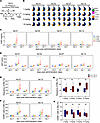 Figure 1
SA-5 safety assessment. Six macaques per dose group were orally administered SA-5 at various dose levels to evaluate the effects of multiple administrations. (A) Structural formula of SA-5, an orally active TLR7 agonist structurally related to Guretolimod (DSP-0509), a pyrimidine derivative. (B) Pie charts indicate the proportion of main subsets in blood. (C) Box plots indicate the changes in blood CRP level (d0, d1, d7) after administration measured by biochemical test. (D) Box plots indicate the changes in blood AST level (d0, d1, d7) after administration measured by biochemical test. (E) Box plots indicate the changes in the frequency of intermediate monocytes (d0, d1, d7) after administration measured by flow cytometry. (F) Box plots indicate the changes in the activation of intermediate monocytes (d0, d1, d7) after administration measured by flow cytometry. (C–F) Colors indicate doses described in the legend of B. Statistical significance relative to day 0 in each administration was determined using paired Wilcoxon tests followed by Benjamini-Hochberg FDR correction across dose groups within each administration and time point; adjusted q values are shown. Unless noted otherwise, adjusted q values are denoted as: ***q < 0.001, **q < 0.01, *q < 0.05. (G) Box plots indicate the changes in the frequency of intermediate monocytes (day 0 at Ad.01 versus day 7 at Ad.12). (H) Box plots indicate the changes in the activation of intermediate monocytes (day 0 at Ad.01 versus day 7 at Ad.12). (G and H) Colors indicate groups as described in the legend of G. Statistical significance was determined using the paired Mann-Whitney U test comparing Ad.12 day 7 with Ad.01 day 0 (*P < 0.05, **P < 0.01). AST, aspartate aminotransferase; iMo, intermediate monocytes; FCM, flow cytometry; dpa, days postadministration; CBC, complete blood count; CRP, C-reactive protein.
Furthermore, PK and repeated-dose toxicity studies were conducted in cynomolgus monkeys. These animals received once-weekly oral dosing for 4 consecutive weeks, and plasma concentrations were measured at 2, 4, 8, 24, and 48 h after dosing in both the first and fourth weeks (Cohort 2; Supplemental Figure 1A). Consistent with Cohort 1 findings, plasma SA-5 concentrations increased after oral administration. In the 10–100 mg/kg group, Tmax was 8 h (day 1 [d1] in Supplemental Figure 2C and Supplemental Table 2). Plasma exposure, assessed by AUC0–t and Cmax, showed a dose-dependent increase (Supplemental Table 2 and Supplemental Figure 2C). Notably, no clear correlation was observed between the Cmax values of the first and fourth doses (Supplemental Figure 2D). Comparison of AUC values indicated that the 10 mg/kg and 30 mg/kg groups were exposed to similar levels of SA-5 (Supplemental Tables 1 and 2). In the 30 mg/kg group, a clear induction of type I IFN was observed immediately after administration, suggesting that a similar response may also occur in the 10 mg/kg group. Furthermore, good tolerability up to 1,000 mg/kg was confirmed with repeated administration for at least 5 weeks. Based on these results, a dosing regimen with a maximum dose of 10 mg/kg was adopted for the subsequent 12-week repeated administration study (Cohort 3; Supplemental Figure 1A).
Safety profile of the oral TLR7 ligand SA-5. Subsequently, the safety of repeated SA-5 administration at doses ≤ 10 mg/kg was evaluated (Cohort 3; Supplemental Figure 1A). Six cynomolgus monkeys received oral SA-5 (1, 3, 5, or 10 mg/kg) every other week for 12 weeks, with blood sampling before dosing, 1 day (d) after dosing, and 7 d after dosing (prior to the next administration); plasma and peripheral blood mononuclear cells (PBMCs) were isolated for subsequent analyses. To reduce sampling burden, only drug administration occurred at weeks 5, 6, 9, and 10.
Throughout the study, no notable changes in body weight were observed (Supplemental Figure 3). Hematologic parameters were monitored after each SA-5 dose to evaluate drug-related changes (Figure 1B and Supplemental Figure 4), using statistical analyses comparing postdosing values to both the first dosing day (Ad.0_d0) and the respective dosing day for each administration. The first administration showed a marked decrease in peripheral blood lymphocyte counts at ≥ 3 mg/kg 1 d after dosing (Supplemental Figure 4). However, from the second administration onward, no significant changes were detected at ≤ 3 mg/kg. At 5 and 10 mg/kg, considerable decreases were observed after the twelfth and seventh administrations, respectively, but resolved within 1 week. Leukocyte subset analysis indicated a trend toward decreased lymphocyte and increased neutrophil fractions 1 d after administration without consistent statistical significance across dose groups (Figure 1B and Supplemental Figure 4B). Other hematologic parameters showed no notable adverse effects (Supplemental Figure 4, C and D).
Biochemical inflammatory markers, analyzed similarly, revealed a dose-dependent elevation in C-reactive protein (CRP), with trend-level transient increases 1 d after administration across all dose groups (q = 0.059–0.083), returning to baseline within 1 week (Figure 1C). Liver injury markers (aspartate aminotransferase [AST] and lactate dehydrogenase [LDH]) were markedly elevated 1 d after administration across all dose groups (1–10 mg/kg) but returned to predosing levels by 1 week (Figure 1D and Supplemental Figure 5A). Comparisons between the first administration and values 7 d after subsequent administrations showed no significant differences, suggesting no irreversible effects (Supplemental Figure 5A). A positive correlation between AST and LDH and a partial correlation between AST and CRP were observed at doses ≥ 3 mg/kg 1 d after administration (Supplemental Figure 5B). While other parameters showed transient elevations, these were within expected inflammatory response ranges (Supplemental Figure 5, C and D). Minor, transient deviations in some liver function and inflammatory markers were noted immediately after dosing but subsided and returned to normal. Other biochemical parameters showed no notable adverse effects (Supplemental Figure 5, C and D).
Plasma levels of proinflammatory cytokines IL-6 and TNF showed induction in some high-dose individuals (5 and 10 mg/kg) 1 d after administration but no statistically significant changes across dose groups (Supplemental Figure 6A). Similarly, PBMC IL-6 and TNF expression by reverse transcription PCR showed no clear dose-dependent increase (Supplemental Figure 6B), indicating no systemic inflammatory cytokine induction up to 10 mg/kg.
High-parameter flow cytometry of PBMCs assessed SA-5’s effect on cell frequency and phenotype, focusing on monocytes. Intermediate monocytes (iMo; CD14+CD16+), associated with inflammation and antigen presentation, showed a transient increase 1 d after dosing, returning to baseline by d7 (Figure 1E and Supplemental Figure 7, A and B). Notable iMo increases occurred at ≥ 3 mg/kg after the first dose (Figure 1E). Activation markers CD80, CCR7, and CD169/Siglec-1 on iMos increased 1 d after dosing and returned to baseline by d7 (Figure 1F and Supplemental Figure 7D). Classical and nonclassical monocyte subsets were also analyzed (Supplemental Figure 7). While frequency changes were most prominent and consistent in iMo, dose-dependent increases in activation markers at d1 were detectable across all 3 subsets. This indicates that iMo provide the most sensitive marker of SA-5–induced myeloid activation, as they combine both expansion in frequency and upregulation of activation markers. Upon comparing the initial and final time points, a marked iMo increase was observed in the 5 mg/kg group, but no changes in activation marker expression were noted at any dose (Figure 1, G and H).
Collectively, the transient changes in monocyte composition and iMo activation following SA-5 administration suggest a transient inflammatory response, consistent with hematologic and biochemical findings. Importantly, no statistically significant differences were observed between the initial and final dosing time points for any evaluated parameter, indicating that the observed safety-related changes during the 12 repeated administrations were transient.
Evaluation of safety-related biomarkers. Next, to identify potential safety biomarkers, we integrated data from various analyses, comprehensively evaluating drug-induced responses, repeated dosing effects on baseline levels, and deviations from reference values by performing a group-wise comparison between low-dose (1–3 mg/kg) and high-dose (5–10 mg/kg) groups to extract parameters exhibiting dose-dependent changes (Figure 2A). Parameter extraction relied on 3 indices: (a) fold change (FC) between predosing and 1 d after first administration, (b) FC between predosing and 7 d after the twelfth and final administration, and (c) a deviation score reflecting the extent of deviation from the established reference values (Supplemental Figure 8).
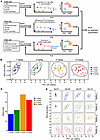 Figure 2
Multiparameter safety assessment of multiple SA-5 administration of different doses in cynomolgus macaque. (A) Schematic depiction of the analysis pipeline. (B) Principal component analysis (PCA) plot generated using values of selected parameters based on the statistically significant data shown in Supplemental Figure 9. Probability ellipses indicate the area where 90% of a distribution lies. The colors indicate the dose. (C) Bar plots indicate the relative size of the ellipse area shown in B. Colors indicate each dose. (D) PCA plot generated using values of selected parameters based on the statistically significant data. Colors indicate each dose as in B. PCA, principal component analysis; PC1, principal component 1.
For hematologic and biochemical parameters, a deviation scoring system was applied to 35 parameters with established reference ranges. The range unit was defined as the midpoint between the upper and lower reference limits. Deviations were categorized and scored: minor deviation (within the reference range limits = score 1), moderate deviation (exceeding the reference range by ≥ 1 range unit = score 2), and marked deviation (exceeding the reference range by ≥ 2 range units = score 4), with separate scores for deviations above and below the range (Supplemental Figure 8). Calculating the difference in deviation scores (delta scores) revealed a trend toward a dose-dependent increase (Supplemental Figure 8, B and C).
Out of 132 parameters, 27 were identified as reflecting dose-responsive changes: 20 were associated with responses after the first administration, 3 reflected fold changes after the final administration, and 4 were derived from the deviation score index (Supplemental Figure 9). For these selected parameters, we extracted: (a) FC between predose and 1 d after dose for each administration, (b) FC relative to the baseline value prior to the first administration across all dosing points, and (c) deviation scores from reference values. These data were subjected to principal component analysis (PCA) to generate datasets for each individual at each dosing point. PCA plotting of post-dosing d1 values for each administration (n = 6 animals × 4 dosing points = 24 data points) showed a dose-dependent expansion in distribution (circle size), with PC1 shifting positively and PC2 shifting negatively with increasing dose (Figure 2B). Based on probabilistic ellipse areas, a dose-dependent expansion in distribution was observed (Figure 2C), suggesting increasing interindividual variability in off-target responses with dose, plateauing at 5 mg/kg. To assess repeated dosing effects, PCA plots were generated for the first, second, seventh, and twelfth administrations. In animals receiving ≥ 5 mg/kg, the 90% probabilistic ellipses after the first and second doses were markedly shifted negatively, indicating the potential induction of qualitatively distinct off-target responses compared with ≤ 3 mg/kg (Figure 2D).
Evaluation of the efficacy profile of SA-5, an oral TLR7 agonist. Next, we investigated the induction of plasma type I IFN production, a key efficacy-related outcome of SA-5, resulting from its target TLR7 activation. ELISA measurement of plasma IFN-α levels after SA-5 administration showed a consistent increase 1 d after dosing across all time points, exhibiting a clear dose-dependent trend (Figure 3A and Supplemental Figure 10A). At 1 and 3 mg/kg, 1 monkey in each group showed no detectable IFN response, corresponding to no statistical significance at 1 mg/kg and a trend at 3 mg/kg (q = 0.079). Conversely, at 5 and 10 mg/kg, all animals displayed a robust IFN-α response after the first and second administrations, showing trend-level increases (q = 0.063) after multiple-comparison correction. However, repeated dosing led to a gradual attenuation of this response over time. Furthermore, comparing baseline and 7 d after final administration revealed no statistically significant differences at any dose (Figure 3B).
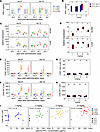 Figure 3
Efficacy assessment of multiple SA-5 administration of different doses in cynomolgus macaque. Macaques (n = per 6 dose) received oral SA-5. Box plots show: (A) plasma IFN-α level (d0, d1, d7) measured by ELISA; (B) IFN-α levels at Ad.01 day 0 versus Ad.12 day 7; (C) representative IFN-induced gene expression (days 0, 1, and 7) measured by qRT-PCR; (D) gene expression at Ad.01 day 0 versus Ad.12 day 7; (E) DC activation (CD80+ frequency) (days 0, 1, and 7) as measured by flow cytometry; (F) DC activation (CD80 MFI in pDC) (days 0, 1, and 7); (G) CD80+ frequency at Ad.01 day 0 versus Ad.12 day 7; and (H) CD80 MFI in pDC at Ad.01 day 0 versus Ad.12 day 7. (I) Correlation between IFN-α and CD80 MFI in pDC at 1 dpa, including data from all administrations (Ad.01–Ad.12), thereby increasing statistical power. (A, C, E, and F) Colors denote dose groups. Statistical significance relative to day 0 in each administration was determined using paired Wilcoxon tests followed by Benjamini–Hochberg FDR correction across dose groups within each administration and time point; adjusted q-values are shown. Unless noted otherwise, adjusted q-values are denoted as: *** q < 0.001, ** q < 0.01, * q < 0.05. (B, D, G, and H) Statistical significance was determined by paired Mann-Whitney U test comparing Ad.12 day 7 with Ad.01 day 0 (*P < 0.05, **P < 0.01; ns, not significant). (I) Correlation was evaluated using the Spearman’s rank correlation test. Colors indicate each dose as described in A. IFN-α, IFN-alpha; qRT-PCR, quantitative reverse transcription PCR; pDC, plasmacytoid dendritic cell; MFI, median fluorescence intensity; ISG, IFN-stimulated gene; IFIT1, IFN-induced protein with tetratricopeptide repeats 1.
To further support these findings, qPCR in PBMCs examined type I IFN and IFN-stimulated gene (ISG) expression. Significant upregulation of ISGs IFIT1 and ISG15 occurred 1 d after first administration across all dose groups (Figure 3C and Supplemental Figure 10B). Notably, in the 5 mg/kg group, this upregulation was consistently observed 1 d after each administration (Supplemental Figure 10B). While the 5 mg/kg group had the strongest gene induction after both the first and twelfth administrations, the 10 mg/kg group showed weaker ISG upregulation than the 5 mg/kg group 1 d after the initial dose, suggesting potential suppression at excessive dosing. Comparing gene expression between the first administration and 7 d after final administration showed a marked increase at 3 and 5 mg/kg (Figure 3D).
Furthermore, we evaluated the abundance and activation of plasmacytoid dendritic cells (pDCs), which are known to highly express TLR7, a target of SA-5, major type I IFN sources, using high-parameter flow cytometry. A marked increase in pDC frequency and activation marker CD80 expression was observed 1 d after first administration at all doses, with a clear dose-dependent magnitude (Figure 3, E and F, and Supplemental Figure 10D). pDC activation decreased with repeated 5 and 10 mg/kg doses. After the twelfth dose, considerable activation (MFI) was only observed at 10 mg/kg (Supplemental Figure 10E), while frequency-based significance was only noted at 3 mg/kg. Myeloid DCs (mDCs) showed similar activation patterns to pDCs, with no significant activation at 1 mg/kg after the first dose but clear activation at ≥ 3 mg/kg.
Comparing the first administration and 7 d after final administration revealed no statistically significant changes in pDCs or mDCs at any dose (Figure 3, G and H). Analyzing the relationship between plasma IFN-α and ISG expression 1 d after administration showed no significant correlation for IFIT1 or ISG15 (Supplemental Figure 10C), suggesting their potential as independent biomarkers of type I IFN pathway activation. In contrast, a strong positive correlation was observed between plasma IFN-α and pDC activation at doses ≥ 3 mg/kg (Figure 3I).
Evaluation of efficacy-related biomarkers. Finally, to identify efficacy-related biomarkers, we integrated data from various analyses, selecting 9 markers associated with type I IFN-α induction: plasma IFN-α levels, expression of 7 ISGs in PBMCs via qPCR, and the frequency of activation markers on pDCs, the primary type I IFN source. These markers underwent PCA for comprehensive evaluation (Figure 4A). The PCA revealed a dose-dependent shift, with PC1 increasing positively and PC2 shifting negatively (Figure 4B). The 90% probabilistic ellipse area decreased dose-dependently, indicating convergence toward a distinct phenotypic pattern at higher doses (Figure 4C). Separate PCA plots for the first, second, seventh, and twelfth administrations showed 90% ellipse convergence after the first and second doses at doses ≥ 3 mg/kg, while no such convergence occurred at 1 mg/kg across all time points. This suggests that efficacy-related immune activation occurred at doses of 3 mg/kg or higher (Figure 4D). Notably, the degree of convergence decreased after the seventh and twelfth administrations. Collectively, these findings indicate that SA-5 has the potential to activate the type I IFN pathway when administered at ≥ 3 mg/kg for at least 2 doses.
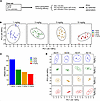 Figure 4
Multiparameter efficacy assessment of multiple SA-5 administration of different doses in cynomolgus macaque. (A) Schematic depiction of the analysis pipeline. (B) Principal component analysis (PCA) plot generated using values of selected parameters based on the statistically significant data shown in Figure 2C. Probability ellipses indicate the area where 90% of a distribution lies. The colors indicate the dose. (C) Bar plots indicate the relative size of the ellipse area shown in D. Colors indicate each dose as in B. (D) PCA plot generated using values of selected parameters based on the statistically significant data shown in Figure 2C. The colors indicate the dose. PCA, principal component analysis; ISG, IFN-stimulated gene.
Integrated analysis of safety and efficacy. To evaluate the relationship between safety and efficacy in individual cynomolgus monkeys, we plotted the PC1 values obtained from the respective PCAs of safety (PC1 safety) and efficacy (PC1 efficacy) parameters (Figure 5A). This visualization revealed a dose-dependent upward-sloping distribution pattern.
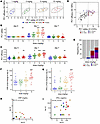 Figure 5
Integrated analysis of safety and efficacy. (A) Scatter plot indicates PC1 values from 2 principal component analyses (PCAs) for safety and efficacy. Probability ellipses indicate areas encompassing 90% of the distribution. Dashed lines indicate the boundaries of 4 regions defined by the ellipse border at 1 mg/kg. Colors indicate each dose. (B) PC1 safety values in each dose group. (C) PC1 efficacy values in each dose group. (D) Scatter indicates PC1 values for safety and efficacy, as in A, but not separated by dose. Colors indicate each region. (E) Bar plots indicate the frequency of macaques in each region as in D. (F) CRP scores in each dose group. (G) IFN-α scores in each dose group. (H) Scatter plot indicates the correlation between CRP values at Ad.01 and Ad.12. (I) Scatter plot indicates the correlation between IFN-α values at Ad.01 and Ad.12. (B and C) Statistical significance among dose groups was determined using the Wilcoxon rank-sum test stratified by administration (van Elteren), comparing each dose group with the 1 mg/kg group. (F and G) Statistical significance among dose groups based on fold-change values at day 1 (relative to day 0) was determined using the same test. P values were adjusted for multiple comparisons among dose groups using the Benjamini-Hochberg FDR correction; adjusted qvalues are shown. Unless noted otherwise, adjusted qvalues are denoted as: ***q < 0.001, **q < 0.01, *q < 0.05. (H and I) Statistical significance was determined using the Spearman’s rank correlation test. (A–C, F, and G) Colors indicate each dose as in A. (D and E) Colors indicate each region as in D. PCA, principal component analysis; PC1, principal component 1; CRP, C-reactive protein.
Using the values at 1 mg/kg as a reference, statistical comparisons were performed for each PC1 axis. A significant increase in PC1 safety was observed 1 d after administration at doses of 5 and 10 mg/kg, indicating that safety was likely maintained at doses of up to 3 mg/kg (Figure 5B). In contrast, for efficacy, considerable differences were observed at doses of 3 mg/kg and above (Figure 5C).
To further assess the magnitude of individual responses in cynomolgus monkeys, we classified the animals into 4 groups based on PC1 safety and PC1 efficacy values, using the maximum value of the 1 mg/kg probabilistic ellipse as a threshold. The groups were defined as follows: low safety and low efficacy (G1: DN); high safety and low efficacy (G2: Safety); low safety and high efficacy (G3: Efficacy); and high safety and efficacy (G4: Both) (Figure 5D). This classification revealed that animals exhibiting high efficacy (PC1 efficacy) began to appear at a dose of 3 mg/kg, whereas animals showing elevated safety responses (PC1 safety) were evident from 5 mg/kg onward (Figure 5E).
To validate the PCA results, we examined the dose dependency of representative parameters for safety and efficacy: CRP and IFN-α, respectively. Both markers showed a dose-dependent trend toward increased median values (Figure 5, F and G). Furthermore, correlation analyses between the first and twelfth administrations revealed a strong positive correlation for both CRP and IFN-α (Figure 5, H and I), suggesting that the integrated analysis captured consistent trends across repeated dosing.
Based on these findings, a dose of 3 mg/kg was concluded to represent the optimal balance between safety and efficacy, as it demonstrated therapeutic activity while maintaining an acceptable safety profile.
Comparative evaluation of the predecessor TLR7 ligand GS-9620 and SA-5. Next, a comparative analysis was conducted using the existing agent GS-9620. Body weights remained stable throughout the study period in both treatment groups (Supplemental Figure 11, A and B). Evaluation of serum CRP levels as a safety marker revealed no significant changes in the SA-5 group at 1 mg/kg. In contrast, the GS-9620 group exhibited remarkable increases at multiple time points (Figure 6A). In contrast, regarding IFN-α as an efficacy marker, the SA-5 group showed a trend toward induction 1 d after dosing, while the GS-9620 group demonstrated no clear induction (“blip”) (Figure 6B).
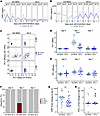 Figure 6
Direct comparison of SA-5 versus GS-9620. (A) Line plots indicate changes in blood CRP levels (d0, d1, d7) after administration, measured by biochemical testing. (B) Line plots indicate changes in plasma IFN-α levels (d0, d1, d7) after administration, measured by ELISA. (C) Scatter plot indicates PC1 values from 2 principal component analyses (PCAs) for safety and efficacy. Probability ellipses indicate areas encompassing 90% of the distribution. Dashed lines indicate the borders of the 4 regions defined in Figure 5. Colors indicate the adjuvant. (D) PC1safety values in each adjuvant group. (E) PC1efficacy values in each adjuvant group. (F) Bar plots indicate the frequency of macaques in each region as in Figure 5E. (G) CRP scores in each adjuvant group. (H) IFN-α scores in each adjuvant group. (A and B) Statistical significance was determined using the paired Mann-Whitney U test for comparisons with d0. Blue asterisks indicate comparisons with day 0 of Administration 1 (Ad.01), and red asterisks indicate comparisons with day 0 of each corresponding administration. (*P < 0.05). (D, E, G, and H) Statistical significance was determined using the Mann-Whitney U test for comparisons between GS-9620 and SA-5 at each corresponding time point (*P < 0.05, **P < 0.01, ****P < 0.0001). (C–E, G, and H) Colors indicate each adjuvant as in C. (F) Colors indicate each region as in Figure 5E. PCA, principal component analysis; CRP, C-reactive protein; PC1, principal component 1.
Using the same PCA-based approach shown in Figure 5, we plotted the safety and efficacy responses for each group. Both groups exhibited no shifts 1 d after dosing; however, while safety scores in the SA-5 group remained below the defined threshold, those in the GS-9620 group markedly exceeded this threshold (Figure 6C). Group-wise statistical comparisons revealed no significant difference in PC1 efficacy between the 2 groups. In contrast, PC1 safety was markedly elevated in the GS-9620 group 1 d after dosing, suggesting that SA-5 had a considerably better safety profile than GS-9620 (Figure 6, D and E). Furthermore, using the classification method described in Figure 5E, safety-efficacy profiling showed that approximately half of the animals in the GS-9620 group fell into categories associated with safety concerns (Figure 6F).
To validate the PCA results, representative safety and efficacy parameters — CRP and IFN-α — were compared between the 2 groups. While no significant difference in IFN-α levels was observed, serum CRP levels were notably higher in the GS-9620 group compared with the SA-5 group (Figure 6, G and H). Additionally, the deviation score was markedly higher in the GS-9620 group (Supplemental Figure 11C). Collectively, a comprehensive comparison at an equivalent dose level suggested a superior safety profile for SA-5.
Investigation in aged NHPs. Finally, we conducted a comparative analysis at the 3 mg/kg dose — identified as both safe and effective — to evaluate age-related differences, focusing on an aged group (≥ 20 years old; Supplemental Figure 12A). Except for 1 animal in the aged group, the body weight remained stable throughout the study period in both the young and aged groups (Supplemental Figure 12, B and C). The evaluation of serum CRP levels as a safety marker revealed no significant changes in the young group. In contrast, the aged group exhibited remarkable increases at multiple time points (Figure 7A). Additionally, the deviation score was considerably higher in the aged group (Supplemental Figure 12D).
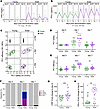 Figure 7
Direct comparison of young versus older populations. (A) Line plots indicate changes in blood CRP levels (d0, d1, d7) after administration, measured by biochemical testing. (B) Line plots indicate changes in plasma IFN-α levels (d0, d1, d7) after administration, measured by ELISA. (C) Scatter plot indicates PC1 values from 2 principal component analyses (PCAs) for safety and efficacy. Probability ellipses indicate areas encompassing 90% of the distribution. Dashed lines indicate the borders of the 4 regions defined in Figure 5. (D) PC1 safety values in each age group. (E) PC1 efficacy values in each age group. (F) Bar plots indicate the frequency of macaques in each region as in Figure 5E. (G) CRP scores in each age group. (H) IFN-α scores in each age group. (A and B) Statistical significance was determined using the paired Mann-Whitney U test for comparisons with d0. Blue asterisks indicate comparisons with d0 of Administration 1 (Ad.01), and red asterisks indicate comparisons with d0 of each corresponding administration (*P < 0.05). (D, E, G, and H) Statistical significance was determined using the Mann-Whitney U test for comparisons between Young and Elder at each corresponding time point (*P < 0.05, **P < 0.01, ***P < 0.001, ****P < 0.0001). (A–E, G, and H) Colors indicate each age group (young versus older) as in C. (F) Colors indicate each region as in Figure 5E. CRP, C-reactive protein; PCA, principal component analysis; PC1, principal component 1.
In contrast, for the efficacy marker IFN-α, both young and aged groups exhibited a trend toward induction 1 d after dosing (Figure 7B). Using the PCA-based analysis described in Figure 5, we plotted the safety and efficacy responses, which revealed clear shifts 1 d after administration in both groups. Notably, the aged group exhibited a positive directional shift along both axes (Figure 7C). Group-wise statistical comparisons showed a significant increase in the aged group 1 d after dosing, suggesting a modest increase in safety-related concerns. Simultaneously, efficacy was maintained (Figure 7, D and E). When the safety and efficacy classification was performed using the framework described in Figure 5E, none of the individuals in either group fell into the category associated with safety concerns alone. Furthermore, approximately half of the animals in the aged group showed an efficacy profile (Figure 7F).
To validate the PCA results, representative safety and efficacy parameters — CRP and IFN-α — were compared between the young and aged groups. Both these parameters were markedly higher in the aged group (Figure 7, G and H). Collectively, these findings from a comprehensive comparison at the same dose level suggest that, although safety-related concerns may increase, SA-5 retains the potential to elicit efficacy even in aged individuals.


