
Research ArticleMetabolismMuscle biology
Open Access |  10.1172/jci.insight.194868
Myosin inhibition partially rescues the myofiber proteome in X-linked myotubular myopathy
Elise Gerlach Melhedegaard,1 Fanny Rostedt,1,2,3 Charlotte Gineste,4 Robert A.E. Seaborne,1,5 Hannah F. Dugdale,6 Vladimir Belhac,6 Edmar Zanoteli,7 Michael W. Lawlor,8 David L. Mack,9,10,11 Carina Wallgren-Pettersson,2,3 Anthony L. Hessel,12,13 Heinz Jungbluth,14,15 Jocelyn Laporte,4 Yoshihiko Saito,16 Ichizo Nishino,16 Julien Ochala,1 and Jenni Laitila1,2,3
1Department of Biomedical Sciences, University of Copenhagen, Copenhagen, Denmark.
2Folkhälsan Research Center, Helsinki, Finland.
3Department of Medical Genetics, University of Helsinki, Helsinki, Finland.
4IGBMC, CNRS UMR 7104, Inserm U 1258, Strasbourg University, Illkirch, France.
5Centre of Human and Applied Physiological Sciences, School of Basic and Medical Biosciences, Faculty of Life Sciences & Medicine, King’s College London, London, United Kingdom.
6School of Sport, Exercise and Health Sciences, Loughborough University, Loughborough, United Kingdom.
7Department of Neurology, Faculdade de Medicina, Universidade de São Paulo, São Paulo, Brazil.
8Diverge Translational Science Laboratory and Medical College of Wisconsin, Department of Pathology and Laboratory Medicine, Milwaukee, Wisconsin, USA.
9Institute for Stem Cell and Regenerative Medicine,
10Department of Bioengineering, and
11Department of Rehabilitation Medicine, University of Washington, Seattle, Washington, USA.
12Institute of Physiology II, University of Muenster, Muenster, Germany.
13Accelerated Muscle Biotechnologies Consultants, Boston, Massachusetts, USA.
14Department of Paediatric Neurology, Neuromuscular Service, Evelina London Children’s Hospital, Guy’s & St Thomas’ NHS Foundation Trust, London, United Kingdom.
15Randall Centre for Cell and Molecular Biophysics, Muscle Signalling Section, Faculty of Life Sciences and Medicine, King’s College London, London, United Kingdom.
16Department of Neuromuscular Research, National Institute of Neuroscience, National Center of Neurology and Psychiatry, Tokyo, Japan.
Address correspondence to: Jenni Laitila or Julien Ochala, University of Copenhagen, Department of Biomedical Sciences, Blegdamsvej 3B, København N, Denamrk 2200. Phone: 4553558184; Email: jenni.laitila@helsinki.fi (J Laitila); Email: julien.ochala@sund.ku.dk (JO).
Authorship note: EGM and FR contributed equally to this work.
Find articles by Gerlach Melhedegaard, E. in: PubMed | Google Scholar
1Department of Biomedical Sciences, University of Copenhagen, Copenhagen, Denmark.
2Folkhälsan Research Center, Helsinki, Finland.
3Department of Medical Genetics, University of Helsinki, Helsinki, Finland.
4IGBMC, CNRS UMR 7104, Inserm U 1258, Strasbourg University, Illkirch, France.
5Centre of Human and Applied Physiological Sciences, School of Basic and Medical Biosciences, Faculty of Life Sciences & Medicine, King’s College London, London, United Kingdom.
6School of Sport, Exercise and Health Sciences, Loughborough University, Loughborough, United Kingdom.
7Department of Neurology, Faculdade de Medicina, Universidade de São Paulo, São Paulo, Brazil.
8Diverge Translational Science Laboratory and Medical College of Wisconsin, Department of Pathology and Laboratory Medicine, Milwaukee, Wisconsin, USA.
9Institute for Stem Cell and Regenerative Medicine,
10Department of Bioengineering, and
11Department of Rehabilitation Medicine, University of Washington, Seattle, Washington, USA.
12Institute of Physiology II, University of Muenster, Muenster, Germany.
13Accelerated Muscle Biotechnologies Consultants, Boston, Massachusetts, USA.
14Department of Paediatric Neurology, Neuromuscular Service, Evelina London Children’s Hospital, Guy’s & St Thomas’ NHS Foundation Trust, London, United Kingdom.
15Randall Centre for Cell and Molecular Biophysics, Muscle Signalling Section, Faculty of Life Sciences and Medicine, King’s College London, London, United Kingdom.
16Department of Neuromuscular Research, National Institute of Neuroscience, National Center of Neurology and Psychiatry, Tokyo, Japan.
Address correspondence to: Jenni Laitila or Julien Ochala, University of Copenhagen, Department of Biomedical Sciences, Blegdamsvej 3B, København N, Denamrk 2200. Phone: 4553558184; Email: jenni.laitila@helsinki.fi (J Laitila); Email: julien.ochala@sund.ku.dk (JO).
Authorship note: EGM and FR contributed equally to this work.
Find articles by Rostedt, F. in: PubMed | Google Scholar
1Department of Biomedical Sciences, University of Copenhagen, Copenhagen, Denmark.
2Folkhälsan Research Center, Helsinki, Finland.
3Department of Medical Genetics, University of Helsinki, Helsinki, Finland.
4IGBMC, CNRS UMR 7104, Inserm U 1258, Strasbourg University, Illkirch, France.
5Centre of Human and Applied Physiological Sciences, School of Basic and Medical Biosciences, Faculty of Life Sciences & Medicine, King’s College London, London, United Kingdom.
6School of Sport, Exercise and Health Sciences, Loughborough University, Loughborough, United Kingdom.
7Department of Neurology, Faculdade de Medicina, Universidade de São Paulo, São Paulo, Brazil.
8Diverge Translational Science Laboratory and Medical College of Wisconsin, Department of Pathology and Laboratory Medicine, Milwaukee, Wisconsin, USA.
9Institute for Stem Cell and Regenerative Medicine,
10Department of Bioengineering, and
11Department of Rehabilitation Medicine, University of Washington, Seattle, Washington, USA.
12Institute of Physiology II, University of Muenster, Muenster, Germany.
13Accelerated Muscle Biotechnologies Consultants, Boston, Massachusetts, USA.
14Department of Paediatric Neurology, Neuromuscular Service, Evelina London Children’s Hospital, Guy’s & St Thomas’ NHS Foundation Trust, London, United Kingdom.
15Randall Centre for Cell and Molecular Biophysics, Muscle Signalling Section, Faculty of Life Sciences and Medicine, King’s College London, London, United Kingdom.
16Department of Neuromuscular Research, National Institute of Neuroscience, National Center of Neurology and Psychiatry, Tokyo, Japan.
Address correspondence to: Jenni Laitila or Julien Ochala, University of Copenhagen, Department of Biomedical Sciences, Blegdamsvej 3B, København N, Denamrk 2200. Phone: 4553558184; Email: jenni.laitila@helsinki.fi (J Laitila); Email: julien.ochala@sund.ku.dk (JO).
Authorship note: EGM and FR contributed equally to this work.
Find articles by Gineste, C. in: PubMed | Google Scholar
1Department of Biomedical Sciences, University of Copenhagen, Copenhagen, Denmark.
2Folkhälsan Research Center, Helsinki, Finland.
3Department of Medical Genetics, University of Helsinki, Helsinki, Finland.
4IGBMC, CNRS UMR 7104, Inserm U 1258, Strasbourg University, Illkirch, France.
5Centre of Human and Applied Physiological Sciences, School of Basic and Medical Biosciences, Faculty of Life Sciences & Medicine, King’s College London, London, United Kingdom.
6School of Sport, Exercise and Health Sciences, Loughborough University, Loughborough, United Kingdom.
7Department of Neurology, Faculdade de Medicina, Universidade de São Paulo, São Paulo, Brazil.
8Diverge Translational Science Laboratory and Medical College of Wisconsin, Department of Pathology and Laboratory Medicine, Milwaukee, Wisconsin, USA.
9Institute for Stem Cell and Regenerative Medicine,
10Department of Bioengineering, and
11Department of Rehabilitation Medicine, University of Washington, Seattle, Washington, USA.
12Institute of Physiology II, University of Muenster, Muenster, Germany.
13Accelerated Muscle Biotechnologies Consultants, Boston, Massachusetts, USA.
14Department of Paediatric Neurology, Neuromuscular Service, Evelina London Children’s Hospital, Guy’s & St Thomas’ NHS Foundation Trust, London, United Kingdom.
15Randall Centre for Cell and Molecular Biophysics, Muscle Signalling Section, Faculty of Life Sciences and Medicine, King’s College London, London, United Kingdom.
16Department of Neuromuscular Research, National Institute of Neuroscience, National Center of Neurology and Psychiatry, Tokyo, Japan.
Address correspondence to: Jenni Laitila or Julien Ochala, University of Copenhagen, Department of Biomedical Sciences, Blegdamsvej 3B, København N, Denamrk 2200. Phone: 4553558184; Email: jenni.laitila@helsinki.fi (J Laitila); Email: julien.ochala@sund.ku.dk (JO).
Authorship note: EGM and FR contributed equally to this work.
Find articles by Seaborne, R. in: PubMed | Google Scholar
1Department of Biomedical Sciences, University of Copenhagen, Copenhagen, Denmark.
2Folkhälsan Research Center, Helsinki, Finland.
3Department of Medical Genetics, University of Helsinki, Helsinki, Finland.
4IGBMC, CNRS UMR 7104, Inserm U 1258, Strasbourg University, Illkirch, France.
5Centre of Human and Applied Physiological Sciences, School of Basic and Medical Biosciences, Faculty of Life Sciences & Medicine, King’s College London, London, United Kingdom.
6School of Sport, Exercise and Health Sciences, Loughborough University, Loughborough, United Kingdom.
7Department of Neurology, Faculdade de Medicina, Universidade de São Paulo, São Paulo, Brazil.
8Diverge Translational Science Laboratory and Medical College of Wisconsin, Department of Pathology and Laboratory Medicine, Milwaukee, Wisconsin, USA.
9Institute for Stem Cell and Regenerative Medicine,
10Department of Bioengineering, and
11Department of Rehabilitation Medicine, University of Washington, Seattle, Washington, USA.
12Institute of Physiology II, University of Muenster, Muenster, Germany.
13Accelerated Muscle Biotechnologies Consultants, Boston, Massachusetts, USA.
14Department of Paediatric Neurology, Neuromuscular Service, Evelina London Children’s Hospital, Guy’s & St Thomas’ NHS Foundation Trust, London, United Kingdom.
15Randall Centre for Cell and Molecular Biophysics, Muscle Signalling Section, Faculty of Life Sciences and Medicine, King’s College London, London, United Kingdom.
16Department of Neuromuscular Research, National Institute of Neuroscience, National Center of Neurology and Psychiatry, Tokyo, Japan.
Address correspondence to: Jenni Laitila or Julien Ochala, University of Copenhagen, Department of Biomedical Sciences, Blegdamsvej 3B, København N, Denamrk 2200. Phone: 4553558184; Email: jenni.laitila@helsinki.fi (J Laitila); Email: julien.ochala@sund.ku.dk (JO).
Authorship note: EGM and FR contributed equally to this work.
Find articles by Dugdale, H. in: PubMed | Google Scholar
1Department of Biomedical Sciences, University of Copenhagen, Copenhagen, Denmark.
2Folkhälsan Research Center, Helsinki, Finland.
3Department of Medical Genetics, University of Helsinki, Helsinki, Finland.
4IGBMC, CNRS UMR 7104, Inserm U 1258, Strasbourg University, Illkirch, France.
5Centre of Human and Applied Physiological Sciences, School of Basic and Medical Biosciences, Faculty of Life Sciences & Medicine, King’s College London, London, United Kingdom.
6School of Sport, Exercise and Health Sciences, Loughborough University, Loughborough, United Kingdom.
7Department of Neurology, Faculdade de Medicina, Universidade de São Paulo, São Paulo, Brazil.
8Diverge Translational Science Laboratory and Medical College of Wisconsin, Department of Pathology and Laboratory Medicine, Milwaukee, Wisconsin, USA.
9Institute for Stem Cell and Regenerative Medicine,
10Department of Bioengineering, and
11Department of Rehabilitation Medicine, University of Washington, Seattle, Washington, USA.
12Institute of Physiology II, University of Muenster, Muenster, Germany.
13Accelerated Muscle Biotechnologies Consultants, Boston, Massachusetts, USA.
14Department of Paediatric Neurology, Neuromuscular Service, Evelina London Children’s Hospital, Guy’s & St Thomas’ NHS Foundation Trust, London, United Kingdom.
15Randall Centre for Cell and Molecular Biophysics, Muscle Signalling Section, Faculty of Life Sciences and Medicine, King’s College London, London, United Kingdom.
16Department of Neuromuscular Research, National Institute of Neuroscience, National Center of Neurology and Psychiatry, Tokyo, Japan.
Address correspondence to: Jenni Laitila or Julien Ochala, University of Copenhagen, Department of Biomedical Sciences, Blegdamsvej 3B, København N, Denamrk 2200. Phone: 4553558184; Email: jenni.laitila@helsinki.fi (J Laitila); Email: julien.ochala@sund.ku.dk (JO).
Authorship note: EGM and FR contributed equally to this work.
Find articles by Belhac, V. in: PubMed | Google Scholar
1Department of Biomedical Sciences, University of Copenhagen, Copenhagen, Denmark.
2Folkhälsan Research Center, Helsinki, Finland.
3Department of Medical Genetics, University of Helsinki, Helsinki, Finland.
4IGBMC, CNRS UMR 7104, Inserm U 1258, Strasbourg University, Illkirch, France.
5Centre of Human and Applied Physiological Sciences, School of Basic and Medical Biosciences, Faculty of Life Sciences & Medicine, King’s College London, London, United Kingdom.
6School of Sport, Exercise and Health Sciences, Loughborough University, Loughborough, United Kingdom.
7Department of Neurology, Faculdade de Medicina, Universidade de São Paulo, São Paulo, Brazil.
8Diverge Translational Science Laboratory and Medical College of Wisconsin, Department of Pathology and Laboratory Medicine, Milwaukee, Wisconsin, USA.
9Institute for Stem Cell and Regenerative Medicine,
10Department of Bioengineering, and
11Department of Rehabilitation Medicine, University of Washington, Seattle, Washington, USA.
12Institute of Physiology II, University of Muenster, Muenster, Germany.
13Accelerated Muscle Biotechnologies Consultants, Boston, Massachusetts, USA.
14Department of Paediatric Neurology, Neuromuscular Service, Evelina London Children’s Hospital, Guy’s & St Thomas’ NHS Foundation Trust, London, United Kingdom.
15Randall Centre for Cell and Molecular Biophysics, Muscle Signalling Section, Faculty of Life Sciences and Medicine, King’s College London, London, United Kingdom.
16Department of Neuromuscular Research, National Institute of Neuroscience, National Center of Neurology and Psychiatry, Tokyo, Japan.
Address correspondence to: Jenni Laitila or Julien Ochala, University of Copenhagen, Department of Biomedical Sciences, Blegdamsvej 3B, København N, Denamrk 2200. Phone: 4553558184; Email: jenni.laitila@helsinki.fi (J Laitila); Email: julien.ochala@sund.ku.dk (JO).
Authorship note: EGM and FR contributed equally to this work.
Find articles by Zanoteli, E. in: PubMed | Google Scholar
1Department of Biomedical Sciences, University of Copenhagen, Copenhagen, Denmark.
2Folkhälsan Research Center, Helsinki, Finland.
3Department of Medical Genetics, University of Helsinki, Helsinki, Finland.
4IGBMC, CNRS UMR 7104, Inserm U 1258, Strasbourg University, Illkirch, France.
5Centre of Human and Applied Physiological Sciences, School of Basic and Medical Biosciences, Faculty of Life Sciences & Medicine, King’s College London, London, United Kingdom.
6School of Sport, Exercise and Health Sciences, Loughborough University, Loughborough, United Kingdom.
7Department of Neurology, Faculdade de Medicina, Universidade de São Paulo, São Paulo, Brazil.
8Diverge Translational Science Laboratory and Medical College of Wisconsin, Department of Pathology and Laboratory Medicine, Milwaukee, Wisconsin, USA.
9Institute for Stem Cell and Regenerative Medicine,
10Department of Bioengineering, and
11Department of Rehabilitation Medicine, University of Washington, Seattle, Washington, USA.
12Institute of Physiology II, University of Muenster, Muenster, Germany.
13Accelerated Muscle Biotechnologies Consultants, Boston, Massachusetts, USA.
14Department of Paediatric Neurology, Neuromuscular Service, Evelina London Children’s Hospital, Guy’s & St Thomas’ NHS Foundation Trust, London, United Kingdom.
15Randall Centre for Cell and Molecular Biophysics, Muscle Signalling Section, Faculty of Life Sciences and Medicine, King’s College London, London, United Kingdom.
16Department of Neuromuscular Research, National Institute of Neuroscience, National Center of Neurology and Psychiatry, Tokyo, Japan.
Address correspondence to: Jenni Laitila or Julien Ochala, University of Copenhagen, Department of Biomedical Sciences, Blegdamsvej 3B, København N, Denamrk 2200. Phone: 4553558184; Email: jenni.laitila@helsinki.fi (J Laitila); Email: julien.ochala@sund.ku.dk (JO).
Authorship note: EGM and FR contributed equally to this work.
Find articles by Lawlor, M. in: PubMed | Google Scholar
1Department of Biomedical Sciences, University of Copenhagen, Copenhagen, Denmark.
2Folkhälsan Research Center, Helsinki, Finland.
3Department of Medical Genetics, University of Helsinki, Helsinki, Finland.
4IGBMC, CNRS UMR 7104, Inserm U 1258, Strasbourg University, Illkirch, France.
5Centre of Human and Applied Physiological Sciences, School of Basic and Medical Biosciences, Faculty of Life Sciences & Medicine, King’s College London, London, United Kingdom.
6School of Sport, Exercise and Health Sciences, Loughborough University, Loughborough, United Kingdom.
7Department of Neurology, Faculdade de Medicina, Universidade de São Paulo, São Paulo, Brazil.
8Diverge Translational Science Laboratory and Medical College of Wisconsin, Department of Pathology and Laboratory Medicine, Milwaukee, Wisconsin, USA.
9Institute for Stem Cell and Regenerative Medicine,
10Department of Bioengineering, and
11Department of Rehabilitation Medicine, University of Washington, Seattle, Washington, USA.
12Institute of Physiology II, University of Muenster, Muenster, Germany.
13Accelerated Muscle Biotechnologies Consultants, Boston, Massachusetts, USA.
14Department of Paediatric Neurology, Neuromuscular Service, Evelina London Children’s Hospital, Guy’s & St Thomas’ NHS Foundation Trust, London, United Kingdom.
15Randall Centre for Cell and Molecular Biophysics, Muscle Signalling Section, Faculty of Life Sciences and Medicine, King’s College London, London, United Kingdom.
16Department of Neuromuscular Research, National Institute of Neuroscience, National Center of Neurology and Psychiatry, Tokyo, Japan.
Address correspondence to: Jenni Laitila or Julien Ochala, University of Copenhagen, Department of Biomedical Sciences, Blegdamsvej 3B, København N, Denamrk 2200. Phone: 4553558184; Email: jenni.laitila@helsinki.fi (J Laitila); Email: julien.ochala@sund.ku.dk (JO).
Authorship note: EGM and FR contributed equally to this work.
Find articles by Mack, D. in: PubMed | Google Scholar
1Department of Biomedical Sciences, University of Copenhagen, Copenhagen, Denmark.
2Folkhälsan Research Center, Helsinki, Finland.
3Department of Medical Genetics, University of Helsinki, Helsinki, Finland.
4IGBMC, CNRS UMR 7104, Inserm U 1258, Strasbourg University, Illkirch, France.
5Centre of Human and Applied Physiological Sciences, School of Basic and Medical Biosciences, Faculty of Life Sciences & Medicine, King’s College London, London, United Kingdom.
6School of Sport, Exercise and Health Sciences, Loughborough University, Loughborough, United Kingdom.
7Department of Neurology, Faculdade de Medicina, Universidade de São Paulo, São Paulo, Brazil.
8Diverge Translational Science Laboratory and Medical College of Wisconsin, Department of Pathology and Laboratory Medicine, Milwaukee, Wisconsin, USA.
9Institute for Stem Cell and Regenerative Medicine,
10Department of Bioengineering, and
11Department of Rehabilitation Medicine, University of Washington, Seattle, Washington, USA.
12Institute of Physiology II, University of Muenster, Muenster, Germany.
13Accelerated Muscle Biotechnologies Consultants, Boston, Massachusetts, USA.
14Department of Paediatric Neurology, Neuromuscular Service, Evelina London Children’s Hospital, Guy’s & St Thomas’ NHS Foundation Trust, London, United Kingdom.
15Randall Centre for Cell and Molecular Biophysics, Muscle Signalling Section, Faculty of Life Sciences and Medicine, King’s College London, London, United Kingdom.
16Department of Neuromuscular Research, National Institute of Neuroscience, National Center of Neurology and Psychiatry, Tokyo, Japan.
Address correspondence to: Jenni Laitila or Julien Ochala, University of Copenhagen, Department of Biomedical Sciences, Blegdamsvej 3B, København N, Denamrk 2200. Phone: 4553558184; Email: jenni.laitila@helsinki.fi (J Laitila); Email: julien.ochala@sund.ku.dk (JO).
Authorship note: EGM and FR contributed equally to this work.
Find articles by Wallgren-Pettersson, C. in: PubMed | Google Scholar
1Department of Biomedical Sciences, University of Copenhagen, Copenhagen, Denmark.
2Folkhälsan Research Center, Helsinki, Finland.
3Department of Medical Genetics, University of Helsinki, Helsinki, Finland.
4IGBMC, CNRS UMR 7104, Inserm U 1258, Strasbourg University, Illkirch, France.
5Centre of Human and Applied Physiological Sciences, School of Basic and Medical Biosciences, Faculty of Life Sciences & Medicine, King’s College London, London, United Kingdom.
6School of Sport, Exercise and Health Sciences, Loughborough University, Loughborough, United Kingdom.
7Department of Neurology, Faculdade de Medicina, Universidade de São Paulo, São Paulo, Brazil.
8Diverge Translational Science Laboratory and Medical College of Wisconsin, Department of Pathology and Laboratory Medicine, Milwaukee, Wisconsin, USA.
9Institute for Stem Cell and Regenerative Medicine,
10Department of Bioengineering, and
11Department of Rehabilitation Medicine, University of Washington, Seattle, Washington, USA.
12Institute of Physiology II, University of Muenster, Muenster, Germany.
13Accelerated Muscle Biotechnologies Consultants, Boston, Massachusetts, USA.
14Department of Paediatric Neurology, Neuromuscular Service, Evelina London Children’s Hospital, Guy’s & St Thomas’ NHS Foundation Trust, London, United Kingdom.
15Randall Centre for Cell and Molecular Biophysics, Muscle Signalling Section, Faculty of Life Sciences and Medicine, King’s College London, London, United Kingdom.
16Department of Neuromuscular Research, National Institute of Neuroscience, National Center of Neurology and Psychiatry, Tokyo, Japan.
Address correspondence to: Jenni Laitila or Julien Ochala, University of Copenhagen, Department of Biomedical Sciences, Blegdamsvej 3B, København N, Denamrk 2200. Phone: 4553558184; Email: jenni.laitila@helsinki.fi (J Laitila); Email: julien.ochala@sund.ku.dk (JO).
Authorship note: EGM and FR contributed equally to this work.
Find articles by
Hessel, A.
in:
PubMed
|
Google Scholar
|

1Department of Biomedical Sciences, University of Copenhagen, Copenhagen, Denmark.
2Folkhälsan Research Center, Helsinki, Finland.
3Department of Medical Genetics, University of Helsinki, Helsinki, Finland.
4IGBMC, CNRS UMR 7104, Inserm U 1258, Strasbourg University, Illkirch, France.
5Centre of Human and Applied Physiological Sciences, School of Basic and Medical Biosciences, Faculty of Life Sciences & Medicine, King’s College London, London, United Kingdom.
6School of Sport, Exercise and Health Sciences, Loughborough University, Loughborough, United Kingdom.
7Department of Neurology, Faculdade de Medicina, Universidade de São Paulo, São Paulo, Brazil.
8Diverge Translational Science Laboratory and Medical College of Wisconsin, Department of Pathology and Laboratory Medicine, Milwaukee, Wisconsin, USA.
9Institute for Stem Cell and Regenerative Medicine,
10Department of Bioengineering, and
11Department of Rehabilitation Medicine, University of Washington, Seattle, Washington, USA.
12Institute of Physiology II, University of Muenster, Muenster, Germany.
13Accelerated Muscle Biotechnologies Consultants, Boston, Massachusetts, USA.
14Department of Paediatric Neurology, Neuromuscular Service, Evelina London Children’s Hospital, Guy’s & St Thomas’ NHS Foundation Trust, London, United Kingdom.
15Randall Centre for Cell and Molecular Biophysics, Muscle Signalling Section, Faculty of Life Sciences and Medicine, King’s College London, London, United Kingdom.
16Department of Neuromuscular Research, National Institute of Neuroscience, National Center of Neurology and Psychiatry, Tokyo, Japan.
Address correspondence to: Jenni Laitila or Julien Ochala, University of Copenhagen, Department of Biomedical Sciences, Blegdamsvej 3B, København N, Denamrk 2200. Phone: 4553558184; Email: jenni.laitila@helsinki.fi (J Laitila); Email: julien.ochala@sund.ku.dk (JO).
Authorship note: EGM and FR contributed equally to this work.
Find articles by Jungbluth, H. in: PubMed | Google Scholar
1Department of Biomedical Sciences, University of Copenhagen, Copenhagen, Denmark.
2Folkhälsan Research Center, Helsinki, Finland.
3Department of Medical Genetics, University of Helsinki, Helsinki, Finland.
4IGBMC, CNRS UMR 7104, Inserm U 1258, Strasbourg University, Illkirch, France.
5Centre of Human and Applied Physiological Sciences, School of Basic and Medical Biosciences, Faculty of Life Sciences & Medicine, King’s College London, London, United Kingdom.
6School of Sport, Exercise and Health Sciences, Loughborough University, Loughborough, United Kingdom.
7Department of Neurology, Faculdade de Medicina, Universidade de São Paulo, São Paulo, Brazil.
8Diverge Translational Science Laboratory and Medical College of Wisconsin, Department of Pathology and Laboratory Medicine, Milwaukee, Wisconsin, USA.
9Institute for Stem Cell and Regenerative Medicine,
10Department of Bioengineering, and
11Department of Rehabilitation Medicine, University of Washington, Seattle, Washington, USA.
12Institute of Physiology II, University of Muenster, Muenster, Germany.
13Accelerated Muscle Biotechnologies Consultants, Boston, Massachusetts, USA.
14Department of Paediatric Neurology, Neuromuscular Service, Evelina London Children’s Hospital, Guy’s & St Thomas’ NHS Foundation Trust, London, United Kingdom.
15Randall Centre for Cell and Molecular Biophysics, Muscle Signalling Section, Faculty of Life Sciences and Medicine, King’s College London, London, United Kingdom.
16Department of Neuromuscular Research, National Institute of Neuroscience, National Center of Neurology and Psychiatry, Tokyo, Japan.
Address correspondence to: Jenni Laitila or Julien Ochala, University of Copenhagen, Department of Biomedical Sciences, Blegdamsvej 3B, København N, Denamrk 2200. Phone: 4553558184; Email: jenni.laitila@helsinki.fi (J Laitila); Email: julien.ochala@sund.ku.dk (JO).
Authorship note: EGM and FR contributed equally to this work.
Find articles by
Laporte, J.
in:
PubMed
|
Google Scholar
|
1Department of Biomedical Sciences, University of Copenhagen, Copenhagen, Denmark.
2Folkhälsan Research Center, Helsinki, Finland.
3Department of Medical Genetics, University of Helsinki, Helsinki, Finland.
4IGBMC, CNRS UMR 7104, Inserm U 1258, Strasbourg University, Illkirch, France.
5Centre of Human and Applied Physiological Sciences, School of Basic and Medical Biosciences, Faculty of Life Sciences & Medicine, King’s College London, London, United Kingdom.
6School of Sport, Exercise and Health Sciences, Loughborough University, Loughborough, United Kingdom.
7Department of Neurology, Faculdade de Medicina, Universidade de São Paulo, São Paulo, Brazil.
8Diverge Translational Science Laboratory and Medical College of Wisconsin, Department of Pathology and Laboratory Medicine, Milwaukee, Wisconsin, USA.
9Institute for Stem Cell and Regenerative Medicine,
10Department of Bioengineering, and
11Department of Rehabilitation Medicine, University of Washington, Seattle, Washington, USA.
12Institute of Physiology II, University of Muenster, Muenster, Germany.
13Accelerated Muscle Biotechnologies Consultants, Boston, Massachusetts, USA.
14Department of Paediatric Neurology, Neuromuscular Service, Evelina London Children’s Hospital, Guy’s & St Thomas’ NHS Foundation Trust, London, United Kingdom.
15Randall Centre for Cell and Molecular Biophysics, Muscle Signalling Section, Faculty of Life Sciences and Medicine, King’s College London, London, United Kingdom.
16Department of Neuromuscular Research, National Institute of Neuroscience, National Center of Neurology and Psychiatry, Tokyo, Japan.
Address correspondence to: Jenni Laitila or Julien Ochala, University of Copenhagen, Department of Biomedical Sciences, Blegdamsvej 3B, København N, Denamrk 2200. Phone: 4553558184; Email: jenni.laitila@helsinki.fi (J Laitila); Email: julien.ochala@sund.ku.dk (JO).
Authorship note: EGM and FR contributed equally to this work.
Find articles by Saito, Y. in: PubMed | Google Scholar
1Department of Biomedical Sciences, University of Copenhagen, Copenhagen, Denmark.
2Folkhälsan Research Center, Helsinki, Finland.
3Department of Medical Genetics, University of Helsinki, Helsinki, Finland.
4IGBMC, CNRS UMR 7104, Inserm U 1258, Strasbourg University, Illkirch, France.
5Centre of Human and Applied Physiological Sciences, School of Basic and Medical Biosciences, Faculty of Life Sciences & Medicine, King’s College London, London, United Kingdom.
6School of Sport, Exercise and Health Sciences, Loughborough University, Loughborough, United Kingdom.
7Department of Neurology, Faculdade de Medicina, Universidade de São Paulo, São Paulo, Brazil.
8Diverge Translational Science Laboratory and Medical College of Wisconsin, Department of Pathology and Laboratory Medicine, Milwaukee, Wisconsin, USA.
9Institute for Stem Cell and Regenerative Medicine,
10Department of Bioengineering, and
11Department of Rehabilitation Medicine, University of Washington, Seattle, Washington, USA.
12Institute of Physiology II, University of Muenster, Muenster, Germany.
13Accelerated Muscle Biotechnologies Consultants, Boston, Massachusetts, USA.
14Department of Paediatric Neurology, Neuromuscular Service, Evelina London Children’s Hospital, Guy’s & St Thomas’ NHS Foundation Trust, London, United Kingdom.
15Randall Centre for Cell and Molecular Biophysics, Muscle Signalling Section, Faculty of Life Sciences and Medicine, King’s College London, London, United Kingdom.
16Department of Neuromuscular Research, National Institute of Neuroscience, National Center of Neurology and Psychiatry, Tokyo, Japan.
Address correspondence to: Jenni Laitila or Julien Ochala, University of Copenhagen, Department of Biomedical Sciences, Blegdamsvej 3B, København N, Denamrk 2200. Phone: 4553558184; Email: jenni.laitila@helsinki.fi (J Laitila); Email: julien.ochala@sund.ku.dk (JO).
Authorship note: EGM and FR contributed equally to this work.
Find articles by
Nishino, I.
in:
PubMed
|
Google Scholar
|
1Department of Biomedical Sciences, University of Copenhagen, Copenhagen, Denmark.
2Folkhälsan Research Center, Helsinki, Finland.
3Department of Medical Genetics, University of Helsinki, Helsinki, Finland.
4IGBMC, CNRS UMR 7104, Inserm U 1258, Strasbourg University, Illkirch, France.
5Centre of Human and Applied Physiological Sciences, School of Basic and Medical Biosciences, Faculty of Life Sciences & Medicine, King’s College London, London, United Kingdom.
6School of Sport, Exercise and Health Sciences, Loughborough University, Loughborough, United Kingdom.
7Department of Neurology, Faculdade de Medicina, Universidade de São Paulo, São Paulo, Brazil.
8Diverge Translational Science Laboratory and Medical College of Wisconsin, Department of Pathology and Laboratory Medicine, Milwaukee, Wisconsin, USA.
9Institute for Stem Cell and Regenerative Medicine,
10Department of Bioengineering, and
11Department of Rehabilitation Medicine, University of Washington, Seattle, Washington, USA.
12Institute of Physiology II, University of Muenster, Muenster, Germany.
13Accelerated Muscle Biotechnologies Consultants, Boston, Massachusetts, USA.
14Department of Paediatric Neurology, Neuromuscular Service, Evelina London Children’s Hospital, Guy’s & St Thomas’ NHS Foundation Trust, London, United Kingdom.
15Randall Centre for Cell and Molecular Biophysics, Muscle Signalling Section, Faculty of Life Sciences and Medicine, King’s College London, London, United Kingdom.
16Department of Neuromuscular Research, National Institute of Neuroscience, National Center of Neurology and Psychiatry, Tokyo, Japan.
Address correspondence to: Jenni Laitila or Julien Ochala, University of Copenhagen, Department of Biomedical Sciences, Blegdamsvej 3B, København N, Denamrk 2200. Phone: 4553558184; Email: jenni.laitila@helsinki.fi (J Laitila); Email: julien.ochala@sund.ku.dk (JO).
Authorship note: EGM and FR contributed equally to this work.
Find articles by Ochala, J. in: PubMed | Google Scholar
1Department of Biomedical Sciences, University of Copenhagen, Copenhagen, Denmark.
2Folkhälsan Research Center, Helsinki, Finland.
3Department of Medical Genetics, University of Helsinki, Helsinki, Finland.
4IGBMC, CNRS UMR 7104, Inserm U 1258, Strasbourg University, Illkirch, France.
5Centre of Human and Applied Physiological Sciences, School of Basic and Medical Biosciences, Faculty of Life Sciences & Medicine, King’s College London, London, United Kingdom.
6School of Sport, Exercise and Health Sciences, Loughborough University, Loughborough, United Kingdom.
7Department of Neurology, Faculdade de Medicina, Universidade de São Paulo, São Paulo, Brazil.
8Diverge Translational Science Laboratory and Medical College of Wisconsin, Department of Pathology and Laboratory Medicine, Milwaukee, Wisconsin, USA.
9Institute for Stem Cell and Regenerative Medicine,
10Department of Bioengineering, and
11Department of Rehabilitation Medicine, University of Washington, Seattle, Washington, USA.
12Institute of Physiology II, University of Muenster, Muenster, Germany.
13Accelerated Muscle Biotechnologies Consultants, Boston, Massachusetts, USA.
14Department of Paediatric Neurology, Neuromuscular Service, Evelina London Children’s Hospital, Guy’s & St Thomas’ NHS Foundation Trust, London, United Kingdom.
15Randall Centre for Cell and Molecular Biophysics, Muscle Signalling Section, Faculty of Life Sciences and Medicine, King’s College London, London, United Kingdom.
16Department of Neuromuscular Research, National Institute of Neuroscience, National Center of Neurology and Psychiatry, Tokyo, Japan.
Address correspondence to: Jenni Laitila or Julien Ochala, University of Copenhagen, Department of Biomedical Sciences, Blegdamsvej 3B, København N, Denamrk 2200. Phone: 4553558184; Email: jenni.laitila@helsinki.fi (J Laitila); Email: julien.ochala@sund.ku.dk (JO).
Authorship note: EGM and FR contributed equally to this work.
Find articles by Laitila, J. in: PubMed | Google Scholar
Published November 4, 2025 - More info
JCI Insight. 2025;10(24):e194868. https://doi.org/10.1172/jci.insight.194868.
© 2025 Melhedegaard et al. This work is licensed under the Creative Commons Attribution 4.0 International License. To view a copy of this license, visit http://creativecommons.org/licenses/by/4.0/.
Received: May 7, 2025; Accepted: October 30, 2025


-
Results
Disproportionate number of muscle myosin molecules in the ATP-consuming DRX state in patients with XLMTM. To determine muscle myosin DRX and SRX states, we performed Mant-ATP chase experiments (13). Mant-ATP [2’-(or-3’)-O-(N-Methylanthraniloyl) Adenosine 5’-Triphosphate] was used to determine the fluorescence intensity decay over time and was best fitted by a double exponential curve allowing the separation of fast and slow phases (indicative of DRX and SRX states, respectively) as the rate of ATP consumption is approximately 10-fold greater for DRX than SRX (Figure 1A). In the present study, a total of 188 myofibers were assessed (minimum of 7 muscle fibers for each of the patients with XLMTM and controls). P1 (indicative of DRX) was greater in muscle fibers from patients with XLMTM than controls (Figure 1B), whereas P2 (indicative of SRX) was smaller in myofibers from patients with XLMTM than controls (Figure 1C). In line with these (mal)adaptations, T1 and T2 (indicative of the ATP turnover of myosin molecules in DRX or SRX states, respectively) were faster in myofibers from patients with XLMTM than controls (Figure 1, D and E). Taking into consideration P1, P2, T1, and T2, we estimated a theoretical myosin ATP consumption. This theoretical myosin energy expenditure was 2-fold greater in muscle fibers from patients with XLMTM than controls (Figure 1F).
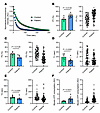 Figure 1
Myosin biochemical and energetic states in patients with XLMTM. (A) Typical fluorescent decays for one XLMTM patient and one control. (B) The proportion of myosin molecules in the DRX state (P1). (C) The number of myosin heads in the SRX state (P2) for all patients and fibers analyzed. (D and E) Their respective ATP turnover lifetimes (T1 in D and T2 in E). (F) The theoretical myosin ATP consumption based on P1, P2, T1 and T2 values. For B–F, in the left panels, circles are individual patient’s average data; while in the right panels, circles are individual muscle fibers. Data are shown as mean ± SD. Unpaired t tests with Welch correction were used to compare groups (level of significance P < 0.05).
To identify whether these myosin biochemical alterations are accompanied by a change in the structural ON and OFF states, we assessed x-ray diffraction patterns of thin bundles from patients with XLMTM and controls (Figure 2A). We analyzed equatorial reflections related to the lattice planes creates by myosin (1,0 plane) and both myosin and actin filaments (1,1 plane); and meridional reflections related to the ~14.3 myosin crown repeats (M3). The interfilament lattice spacing (d1,0; Figure 2B), its heterogeneity (σD; Figure 2C), and equatorial intensity ratio (I1,1 to I1,0 ratio; Figure 2D) were not different between patients with XLMTM and controls, suggesting an unaffected myofilament lattice organization. Nevertheless, the meridional M3 reflection (representative of the distance between myosin crowns) showed some (mal)adaptations in the diseased group. Indeed, despite a preserved spacing (SM3; Figure 2E), the M3 intensity was lower in myofibers from patients with XLMTM than controls (IM3; Figure 2F). This indicates that myosin heads may prefer a structural disordered (and potentially ON) state. Altogether, our loaded Mant-ATP chase experiments and x-ray diffraction analyses have revealed that there is an accrued proportion of muscle myosin molecules in the DRX state, significantly increasing the ATP demand in patients with XLMTM.
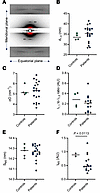 Figure 2
Myofilament and myosin order in patients with XLMTM. (A) A typical x-ray diffraction pattern from one control. Equatorial (1,0 and 1,1) as well as meridional (M3) reflections are presented. (B) Interfilament lattice spacing derived from the 1.0 equatorial reflections (d1,0). (C) The heterogeneity of inter-filament lattice spacing (σD). (D) The equatorial intensity ratio (I1,1 to I1,0 ratio); (E) is M3 spacing (SM3). (F) M3 intensity (IM3). Circles are individual muscle bundles. Means represented by a line also appear on all the panels. Unpaired t tests with Welch correction were used to compare groups (level of significance P < 0.05).
Phosphorylation-linked disruption of the number of myosin heads in the ATP-demanding DRX state in XLMTM dogs. To get insights into potential underlying mechanisms (and as we did not have enough human material), we took advantage of a canine model carrying a MTM1 gene mutation (14, 15). We separated and tested a total of 190 muscle fibers (minimum of 15 myofibers per animal). We used WT controls and XLMTM dogs. To evaluate whether myosin-related changes are profound or can ultimately be reversed, we also performed our Mant-ATP assays on dogs injected with 2 different doses of a gene therapy consisting of rAAV8 vector expressing the WT canine MTM1 cDNA under the control of the desmin promoter (AAVlo and AAVhi). AAVhi dogs are known for being functionally cured, while AAVlo animals have heterogenous and variable responses to the treatment. This may be related to the fact that some of the dogs display little improvements in the amount of myotubularin while others experienced a significant increase in lifespan (18, 19). When analyzing the Mant-ATP chase experiments, the change of fluorescence intensity over time was best fitted by a double exponential decay (Figure 3A). As with the patients with XLMTM, P1 was higher in myofibers from XLMTM dogs than control (WT) animals (Figure 3B). In parallel, P2 was smaller in muscle fibers from XLMTM dogs than WT animals (Figure 3C). Interestingly, P1 (and P2) were fully rescued in AAVhi dogs (Figure 3, B and C). Unlike humans, we only detected tendencies toward a faster T1 in XLMTM dogs compared with WT animals, and we detected a partial restoration in AAVhi animals when compared with XLMTM dogs (Figure 3D). T2 was not affected by XLMTM or the gene therapy (Figure 3E). When taking P1, P2, T1, and T2 together, the theoretical myosin ATP expenditure tended to be greater in muscle fibers from XLMTM dogs than WT animals (Figure 3F). This tendency disappeared in AAVhi dogs (Figure 3F).
 Figure 3
Myosin biochemical and energetic states in the canine model of XLMTM. Our study included WT control dogs as well as XLMTM-affected dogs expressing a MTM1 gene mutation. These XLMTM dogs were injected systemically with a saline solution (XLMTM) or with 2 different doses of gene therapy (AAVlo or AAVhi). (A) Typical fluorescent decays for one XLMTM dog and one WT. (B) The amount of myosin molecules in the DRX state (P1). (C) The proportion of myosin heads in the SRX state (P2). (D and E) Their respective ATP turnover lifetimes are also displayed (T1 in D and T2 in E). (F) The theoretical myosin ATP consumption. For B–F, in the left panels, circles are individual animals’ average data; in the right panels, circles are individual muscle fibers. Data are shown as mean ± SD. One-way ANOVAs with Tukey post hoc were used to compare groups (level of significance P < 0.05).
As the level of phosphorylation of muscle myosin molecules is essential for superrelaxation (10), we sought to characterize whether this specific posttranslational modification plays a role in what we describe above — i.e., myosin (mal)adaptation in XLMTM. We isolated muscle fibers from the canine model (total of 198 muscle fibers). In vitro incubation of muscle fibers with a lambda phosphatase solution decreased P1 (and increased P2) in both XLMTM dogs and WT animals (Figure 4, A and B). However, the effect of the phosphatase treatment was more pronounced in the WT compared with the XLMTM dogs (Figure 4, A and B). No effects on T1 or T2 was observed (Figure 4, C and D). Treating muscle fibers with a protein kinase A (PKA) solution partially restored P1 (and P2) in WT dogs but not in XLMTM dogs (Figure 4, A and B). As for the phosphatase incubation, PKA had no effect on T1 or T2 (Figure 4, C and D). Thus, modulating the level of myofilament phosphorylation affects the equilibrium between DRX and SRX states in a differential manner in XLMTM dogs and WT animals. Overall, our Mant-ATP chase experiments in myofibers from a canine model of XLMTM indicate that, in the context of the disease, myosin biochemical (mal)adaptation is related to phosphorylation alterations and is reversible.
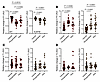 Figure 4
Effect of phosphorylation level on myosin biochemical states in XLMTM dogs. (A and B) The relative change in the number of myosin molecules in the DRX (P1) and SRX state (P2), respectively, in response to vehicle, phosphatase treatment or protein kinase A (PKA) incubation. (C and D) The relative change of their respective ATP turnover time (T1 and T2, respectively). For A–D, The left panels show WT; the right panels show XLMTM dogs. Circles are individual muscle fibers. Means represented by a line also appear on all the panels. One-way ANOVAs with Tukey post hoc were used to compare groups (level of significance P < 0.05).
Disrupted myosin DRX state and ATP consumption are paralleled with a muscle fiber proteome remodeling in XLMTM dogs. Since muscle fibers from XLMTM dogs have an accrued number of myosin molecules in the ATP-demanding DRX state, we sought to gain insights into a potential remodeling of cellular energy proteome. We separated individual myofibers from the canine model and ran a proteomics analysis using quantitative LC-MS/MS. Fiber type for each sample was established, and all samples were considered to be mixed type I/2A (Supplemental Table 1; supplemental material available online with this article; https://doi.org/10.1172/jci.insight.194868DS1). Following data filtration, 232 proteins were considered for comparison between WT and XLMTM dogs (Supplemental Table 2). Of the 232 proteins, 138 were significantly different between groups, with approximately two-thirds being upregulated in the XLMTM group (47 down- and 91 upregulated; Figure 5A). A volcano plot was generated to visualize the 232 proteins. The top 10 most significant proteins were annotated, revealing that not only does XLMTM have a greater number of upregulated proteins, but the top 10 most significant proteins were all upregulated in the XLMTM group (Figure 5B). Tubulin alpha chain possessed the highest significance value, whereas GLOBIN domain–containing protein had the highest fold change (both upregulated in XLMTM). All significant proteins observed with a log2FC > 1.5 were visualized in a heatmap (Figure 5C). This further illustrated the large shift in proteins upregulated in the XLMTM group. While these figures provide visualization of differential change in the proteome, they do not provide insight as to the potential pathways modified as a result of or causing the aforementioned ATP demand. To examine this, we carried out gene ontology (GO) analysis using Proteomaps (Figure 5D). Proteomaps highlighted a modification in metabolic proteins (both up- and downregulated). While proteins associated with oxidative phosphorylation appeared to be largely downregulated in XLMTM, the presence of proteins required for similar energetic pathways (i.e., glycolysis, lipid, steroid, and amino acid metabolisms) may be indicative of a general metabolic disruption, rather than a compensation toward a different energetic pathway. This disruption may be seen as an exhaustion of the oxidative machinery (where the increased myosin ATP consumption may have played a role). Furthermore, and perhaps unsurprisingly, cytoskeletal proteins were dysregulated. Similarly to the energetic pathways, these proteins were dysregulated in both directions (up- and downregulated in XLMTM).
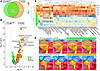 Figure 5
Comparative proteomic analysis in XLMTM dogs. (A) Venn diagram depicting detected proteins that were significantly upregulated and downregulated in XLMTM as well as those that remained statistically unchanged between experimental groups. (B) Volcano plot displaying Log2 fold change (Log2FC) against Log10 P value. The top 10 most significant proteins have been annotated. (C) A heatmap was created to illustrate the proteins with the greatest fold change, all proteins included possessed a Log2FC > 1.5. For readability some gene names are used rather than protein names; the protein and gene names can be found in Supplemental Table 2. (D) Proteomaps were generated using Log2 transformed protein abundance values of proteins, which were significantly different between groups. Unpaired 2-tailed t test was used.
Myosin inhibition partially restores the dysregulated myofiber proteome in mice lacking MTM1. To unveil whether these basic energetic alterations of myosin molecules can be alleviated, we used a mouse model lacking MTM1 (20), where the calculated myosin ATP expenditure is significantly greater than normal (Figure 6A), mimicking human XLMTM (Figure 1F). Body weight was significantly lower in untreated Mtm1y/– mice than controls (WT) (Figure 6B). After a 4-week exposure to a myosin ATPase inhibitor named mavacamten (12, 21), body weight was not affected by the treatment in either Mtm1y/– or WT mice (Figure 6B). Soleus muscle mass (normalized to body weight) and fiber type proportions did not appear different between the 4 groups (Figure 6, C and D). As expected, myofiber cross-sectional area was smaller in both type I and IIA of Mtm1y/– mice than WT (Figure 6, E and F). This latter was significantly greater after the mavacamten treatment in both type I and IIA of WT mice only (Figure 7, A and B).
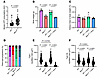 Figure 6
Muscle histological analysis in mice lacking MTM1. Our study involved WT mice as well as mice lacking MTM1 (Mtm1y/–). These animals were either treated with vehicle or mavacamten for 4 weeks (+ mava). (A) The theoretical myosin ATP consumption. (B) Body weight. (C) Soleus muscle mass normalized to body weight. (D) Fiber type proportions. (E and F) Myofiber cross-sectional area separated according to their types (I vs IIA). For A, E, and F, circles are individual myofibers’ data; an unpaired t test with Welch correction was used to compare groups (level of significance P < 0.05). For B and C, circles are individual animals’ data; data are shown as mean ± SD; 2-way ANOVA with Tukey post hoc were used to compare groups (level of significance P < 0.05).
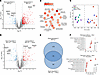 Figure 7
Comparative proteomic analysis in mice lacking MTM1. We used WT mice and mice lacking MTM1 (Mtm1y/–). These animals were either treated with vehicle or mavacamten for 4 weeks (+ mava). (A–F) Part of the proteomics analyses with the principal component analyses and volcano plots displaying Log2 fold change against Log10 P value.
To explore potential differences at the protein level, we enriched soleus muscle fibers and performed global proteomic profiling. In the first instance, we found a significant dysregulation in the soleus muscle proteome of Mtm1y/– mice, with 907 protein hits displaying differential abundance (Figure 7A and Supplemental Table 3). Interestingly, while the majority of these proteins were found to be more abundant in Mtm1y/– mice (737 proteins, ~81%), the only evidential coordination in dysregulation was found in downregulated proteins (170 hits). Indeed, when performing enrichment GO analysis for biological processing terms, these proteins all cluster to terms relating to the sarcomere, muscle contraction, myofiber biology/physiology, and metabolic/energy processing (Figure 7B). Such a response demonstrates a disruption in the fundamental properties of the soleus muscle in Mtm1y/– mice. It also strengthens our canine proteomics analysis where similar clusters of dysregulated protein were shown (Figure 5).
When examining the effect of 4-week mavacamten treatment on mouse soleus muscle, we first noticed that Mtm1y/– mice tended to transition toward a WT proteome with a noticeable reduction in heterogeneity, as demonstrated via PCA (Figure 7C). We explored the proteome of these mice and found a reduced number of differential proteins following mavacamten treatment (410 proteins dysregulated in total; 153 downregulated, 257 upregulated in Mtm1y/– mavacamten; Figure 7D and Supplemental Table 4), in comparison with our untreated mice comparison. Comparing the downregulated proteins in the 2 analyses (with and without mavacamten) the downregulated proteins shared 65 proteins maintaining consistent dysregulation, while 105 proteins were uniquely dysregulated in the untreated Mtm1y/– mice (Figure 7D). This suggests that the abundance of these proteins is restored to nonsignificant levels relative to WT mice, following 4-weeks mavacamten treatment. Enrichment GO analysis of both the restored 105 proteins, as well as the maintained 65 proteins identified terms relating to sarcomere, myofiber biology/physiology, and metabolism (Figure 7, E and F, and Supplemental Table 5). Collectively, these analyses suggest that 4-week treatment with mavacamten is able to partially restore the dysregulated sarcomeric and energetic proteome in Mtm1y/– mouse soleus muscle.
Of note, 89 protein hits were found to be significantly downregulated following mavacamten treatment in Mtm1y/– mice; these hits were not found in the original Mtm1y/– mice comparison. GO analysis revealed little coordination in these proteins.

-
Discussion
Our findings highlight that myosin molecules, within isolated muscle fibers from patients, from a canine model with MTM1 gene mutations, and from a mouse model lacking MTM1, have increased ATP consumptions. In line with these observations, our results demonstrate that the myofiber energetic (and cytoskeletal) proteome undergoes a maladaptive remodeling in dogs carrying a p.N155K mutation in myotubularin. Nevertheless, and of great interest, in MTM1-deficient mice, a short-term treatment with mavacamten, pharmacological compound known to rescue myosin biochemical state, partially counterbalanced the altered expression of myofiber proteins belonging to cytoskeletal, sarcomeric, and energetic pathways.
Preferred myosin DRX state in XLMTM. Our result of a greater proportion of myosin molecules in the ATP-demanding DRX state is perfectly in line with our recent works focusing on another form of congenital myopathy, nemaline myopathy (11, 12). Even though nemaline myopathy belongs to the same class of skeletal muscle diseases, causative mutations mainly alter genes encoding proteins of the sarcomere, including NEB (nebulin) and ACTA1 (actin), as opposed to XLMTM, where mutations affect genes with no known direct links to myosin (MTM1; myotubularin) (2, 3, 5). Hence, the present study strongly indicates that myosin dynamics (mal)adaptation is common to multiple forms of congenital myopathies and occurs irrespective of the genes mutated. Future studies will have to decipher whether this change is primarily pathogenic or secondary. We can speculate that it may act as a compensatory/remodeling process by which myosin heads enter their DRX/ON state to be more available for actin binding and then counteract the cellular force depression seen in XLMTM (3). In the long-term, we can further speculate that this predominant myosin DRX/ON state may become energetically deleterious with an unwanted increase in basal sarcomeric ATP usage (contributing to muscle fatiguability).
The exact triggers by which myosin function is disrupted in XLMTM remain in question. However, our canine proteomics analyses did not reveal any major quantitative adaptations of the main proteins involved in the stabilization of myosin SRX/OFF state (e.g., myosin heavy chain, and myosin binding protein-C) (10). On the other hand, more subtle changes are likely to happen and may involve posttranslational modifications such as phosphorylation, as proven by our series of in vitro experiments. Indeed, when we modulated the phosphorylation levels within isolated muscle fibers using phosphatase or PKA incubation, we were able to worsen or rescue the myosin dynamics response. Note that these modulations (incubations) were unspecific and mainly targeted sarcomeric phosphorylatable proteins, such as myosin regulatory light chains, myosin binding protein C, and the troponin complex (22). These 3 proteins possess large amounts of the amino acids serine, threonine, and tyrosine; they also have a turnover rate of 1%–2% per day, making them preferential targets for phosphorylation (23–25). If, in XLMTM, the phosphorylation levels of regulatory light chains and protein C are impaired (e.g., Ser15 and Ser282, respectively), one may suggest that the myosin head-head and head-tail interactions, characteristic of the interacting-heads motif, are weaker (10). This may, in turn, cause myosin heads to move away from the thick filament backbone, reducing head ordering, and inhibiting the energy-conserving configuration.
Is myotubularin deficiency involved in fine-tuning myosin and myosin-binding proteins phosphorylation? If the increased proportion of myosin heads in their DRX/ON state is a compensatory/remodeling mechanism (as mentioned above), this is unlikely. However, if this phenomenon is primarily pathogenic of XLMTM, we can suggest some potential molecular processes. Myotubularin is known to primarily function as a lipid phosphatase modulating membrane trafficking and signaling lipid pools (20). Then, it may affect protein phosphorylation indirectly through its regulation of lipid signaling molecules. This has been proven for the phosphorylation status of important muscle proteins such as Akt (26). Further experiments specifically and thoroughly assessing the link between myotubularin and the posttranslational status of the proteins mentioned above are warranted.
Consequences of myosin energy dissipation in XLMTM. The shift toward more disordered ATP-dissipating myosin molecules undoubtedly induces an increase in basal sarcomeric energy expenditure in XLMTM. Does this myosin (mal)adaptation have whole-body consequences? Skeletal muscle together with liver, brain, heart, adipose tissue, and kidneys contribute substantially to the basal metabolic rate (27, 28). Because skeletal muscle represents 45%–55% of total body mass, it contributes to 20%–30% of whole-body resting oxygen uptake and, thus, basal metabolic rate (29–31). Within skeletal muscle (and myofibers), besides myosin ATPase, the sarcoplasmic reticulum Ca2+ ATPase as well as Na+/K+ ATPase have been shown to extensively account for the organ resting energy expenditure (8). Nevertheless, it is known that shifting myosin molecules from their ATP-conserving to their ATP-consuming conformation by approximately 10% leads to an increase in energy demand by 0.7 megajoule day−1 (10). Over a period of a year, this induces a weight loss of 7 kg of fat in humans (10). Consequently, in the present study, we can speculate that the 2-fold increase in myosin ATP consumption may increase the whole-body basal metabolic rate and decrease fat content, contributing to the fact that patients are lean or underweight. Additionally, based on our previous study (11, 12), in the long-term, we believe this has serious consequences by straining energy resources and exhausting cellular respiration. This notion is strengthened by our canine proteomic analyses where we found a clear downregulation in the abundance of proteins involved in energy metabolism and oxidative phosphorylation.
Myosin inhibition as a drug target in XLMTM. Based on the above results, designing a therapeutic intervention that would decrease myosin ATPase activity would be obvious and worth exploring in the context of XLMTM. In the present study, we focused our attention on 1 pharmacological compound named mavacamten (or MYK-461/Camzyos). Mavacamten is well established to inhibit myosin ATP turnover rate by pushing heads toward their quiescent SRX/OFF state, consequently reducing the basal sarcomeric ATP expenditure (16, 17). Its efficacy has been proven in cardiac muscle of patients with hypertrophic cardiomyopathy (32). Interestingly and as demonstrated here, when applied short-term in mice lacking myotubularin, myosin inhibition did partially rescue the muscle fiber molecular signature by notably restoring the expression of a number of proteins belonging to the cytoskeletal, sarcomeric, and energetic pathways. Our proof-of-concept study provides a strong basis for future works where myosin inhibition may be sustained for longer periods of time or at higher doses. We can speculate that these may allow a full recovery of the myofiber proteome. Could mavacamten be directly used in clinical trials focusing on XLMTM? As this drug has been developed to specifically target β-cardiac/slow myosin heavy chain, it may not be as potent in fast-twitch muscle fibers expressing type IIa and IIx myosin heavy chains. Mavacamten may also lead to unwanted effects on patients’ hearts. Hence, the present study highlights myosin as a drug target (rather than mavacamten per se).
Cross-species similarities and differences. Interestingly, here, we have unveiled a common pathway by which muscle myosin and its ATP consumption (mal)adapt in all the species studied: mice, dogs, and humans. Nevertheless, one should be aware that the underlying molecular pathogenic or compensatory/remodeling mechanisms leading to such myosin disruption may have some species-specific components. Indeed, genetic mutations, protein variants, and myotubularin expressions differ between humans, dogs, and mice. For instance, dogs have a p.N155K variant resulting in a partial protein deficiency (18, 19), while mice have a deletion inducing a frameshift, premature stop codon, and total absence of myotubularin (20). Human mutations have variable molecular consequences (Table 1). Future studies deciphering the exact upstream mechanisms by which differential myotubularin expressions affect myosin molecules (and their phosphorylation status) are needed.
Conclusion. Altogether, by isolating membrane-permeabilized myofibers from patients with XLMTM, and from dog/mouse models of the disease, we uncovered a change in myosin dynamics as attested by the presence of an unusually high proportion of proteins in their ATP-dissipating state, DRX. We also highlighted the role of one specific posttranslational modification, phosphorylation, in such a process. Finally, in line with this increased molecular energy expenditure, we delineated an adaptation of the muscle fiber energetic (and cytoskeletal) proteome that can partially be rescued by mavacamten short-term. All these data emphasize that myosin, besides being a molecular contributor to XLMTM, can be considered as a suitable target for future drug design.


