
Research ArticleCell biologyGastroenterologyHepatology
Open Access |  10.1172/jci.insight.195242
ETS1 suppresses hepatic stellate cell activation and liver fibrosis
Wonseok Lee,1,2,3 Xiao Liu,1,2 Sara Brin Rosenthal,4 Charlene Miciano,5,6 Sadatsugu Sakane,1,2 Kanani Hokutan,1,2 Debanjan Dhar,1,7 Hyun Young Kim,1,2,8,9 David A. Brenner,7 and Tatiana Kisseleva2
1Department of Medicine,
2Department of Surgery, University of California San Diego School of Medicine, La Jolla, California, USA.
3College of Pharmacy, Gachon University, Incheon, South Korea.
4Center for Computational Biology and Bioinformatics,
5Department of Cellular and Molecular Medicine, and
6Center for Epigenomics, University of California San Diego School of Medicine, La Jolla, California, USA.
7Sanford Burnham Prebys Medical Discovery Institute, La Jolla, California, USA.
8College of Pharmacy and
9Center for Human Risk Assessment, Dankook University, Cheonan, Chungnam, South Korea.
Address correspondence to: Tatiana Kisseleva, 9500 Gilman Drive, #0063, La Jolla, California 92093, USA. Email: tkisseleva@health.ucsd.edu. Or to: David A. Brenner, 10901 North Torrey Pines Road, La Jolla, California 92037, USA. Email: dbrenner@sbpdiscovery.org.
Authorship note: WL and XL contributed equally to this work and are co–first authors.
Find articles by Lee, W. in: PubMed | Google Scholar
1Department of Medicine,
2Department of Surgery, University of California San Diego School of Medicine, La Jolla, California, USA.
3College of Pharmacy, Gachon University, Incheon, South Korea.
4Center for Computational Biology and Bioinformatics,
5Department of Cellular and Molecular Medicine, and
6Center for Epigenomics, University of California San Diego School of Medicine, La Jolla, California, USA.
7Sanford Burnham Prebys Medical Discovery Institute, La Jolla, California, USA.
8College of Pharmacy and
9Center for Human Risk Assessment, Dankook University, Cheonan, Chungnam, South Korea.
Address correspondence to: Tatiana Kisseleva, 9500 Gilman Drive, #0063, La Jolla, California 92093, USA. Email: tkisseleva@health.ucsd.edu. Or to: David A. Brenner, 10901 North Torrey Pines Road, La Jolla, California 92037, USA. Email: dbrenner@sbpdiscovery.org.
Authorship note: WL and XL contributed equally to this work and are co–first authors.
Find articles by Liu, X. in: PubMed | Google Scholar
1Department of Medicine,
2Department of Surgery, University of California San Diego School of Medicine, La Jolla, California, USA.
3College of Pharmacy, Gachon University, Incheon, South Korea.
4Center for Computational Biology and Bioinformatics,
5Department of Cellular and Molecular Medicine, and
6Center for Epigenomics, University of California San Diego School of Medicine, La Jolla, California, USA.
7Sanford Burnham Prebys Medical Discovery Institute, La Jolla, California, USA.
8College of Pharmacy and
9Center for Human Risk Assessment, Dankook University, Cheonan, Chungnam, South Korea.
Address correspondence to: Tatiana Kisseleva, 9500 Gilman Drive, #0063, La Jolla, California 92093, USA. Email: tkisseleva@health.ucsd.edu. Or to: David A. Brenner, 10901 North Torrey Pines Road, La Jolla, California 92037, USA. Email: dbrenner@sbpdiscovery.org.
Authorship note: WL and XL contributed equally to this work and are co–first authors.
Find articles by Rosenthal, S. in: PubMed | Google Scholar
1Department of Medicine,
2Department of Surgery, University of California San Diego School of Medicine, La Jolla, California, USA.
3College of Pharmacy, Gachon University, Incheon, South Korea.
4Center for Computational Biology and Bioinformatics,
5Department of Cellular and Molecular Medicine, and
6Center for Epigenomics, University of California San Diego School of Medicine, La Jolla, California, USA.
7Sanford Burnham Prebys Medical Discovery Institute, La Jolla, California, USA.
8College of Pharmacy and
9Center for Human Risk Assessment, Dankook University, Cheonan, Chungnam, South Korea.
Address correspondence to: Tatiana Kisseleva, 9500 Gilman Drive, #0063, La Jolla, California 92093, USA. Email: tkisseleva@health.ucsd.edu. Or to: David A. Brenner, 10901 North Torrey Pines Road, La Jolla, California 92037, USA. Email: dbrenner@sbpdiscovery.org.
Authorship note: WL and XL contributed equally to this work and are co–first authors.
Find articles by Miciano, C. in: PubMed | Google Scholar
1Department of Medicine,
2Department of Surgery, University of California San Diego School of Medicine, La Jolla, California, USA.
3College of Pharmacy, Gachon University, Incheon, South Korea.
4Center for Computational Biology and Bioinformatics,
5Department of Cellular and Molecular Medicine, and
6Center for Epigenomics, University of California San Diego School of Medicine, La Jolla, California, USA.
7Sanford Burnham Prebys Medical Discovery Institute, La Jolla, California, USA.
8College of Pharmacy and
9Center for Human Risk Assessment, Dankook University, Cheonan, Chungnam, South Korea.
Address correspondence to: Tatiana Kisseleva, 9500 Gilman Drive, #0063, La Jolla, California 92093, USA. Email: tkisseleva@health.ucsd.edu. Or to: David A. Brenner, 10901 North Torrey Pines Road, La Jolla, California 92037, USA. Email: dbrenner@sbpdiscovery.org.
Authorship note: WL and XL contributed equally to this work and are co–first authors.
Find articles by Sakane, S. in: PubMed | Google Scholar
1Department of Medicine,
2Department of Surgery, University of California San Diego School of Medicine, La Jolla, California, USA.
3College of Pharmacy, Gachon University, Incheon, South Korea.
4Center for Computational Biology and Bioinformatics,
5Department of Cellular and Molecular Medicine, and
6Center for Epigenomics, University of California San Diego School of Medicine, La Jolla, California, USA.
7Sanford Burnham Prebys Medical Discovery Institute, La Jolla, California, USA.
8College of Pharmacy and
9Center for Human Risk Assessment, Dankook University, Cheonan, Chungnam, South Korea.
Address correspondence to: Tatiana Kisseleva, 9500 Gilman Drive, #0063, La Jolla, California 92093, USA. Email: tkisseleva@health.ucsd.edu. Or to: David A. Brenner, 10901 North Torrey Pines Road, La Jolla, California 92037, USA. Email: dbrenner@sbpdiscovery.org.
Authorship note: WL and XL contributed equally to this work and are co–first authors.
Find articles by Hokutan, K. in: PubMed | Google Scholar
1Department of Medicine,
2Department of Surgery, University of California San Diego School of Medicine, La Jolla, California, USA.
3College of Pharmacy, Gachon University, Incheon, South Korea.
4Center for Computational Biology and Bioinformatics,
5Department of Cellular and Molecular Medicine, and
6Center for Epigenomics, University of California San Diego School of Medicine, La Jolla, California, USA.
7Sanford Burnham Prebys Medical Discovery Institute, La Jolla, California, USA.
8College of Pharmacy and
9Center for Human Risk Assessment, Dankook University, Cheonan, Chungnam, South Korea.
Address correspondence to: Tatiana Kisseleva, 9500 Gilman Drive, #0063, La Jolla, California 92093, USA. Email: tkisseleva@health.ucsd.edu. Or to: David A. Brenner, 10901 North Torrey Pines Road, La Jolla, California 92037, USA. Email: dbrenner@sbpdiscovery.org.
Authorship note: WL and XL contributed equally to this work and are co–first authors.
Find articles by Dhar, D. in: PubMed | Google Scholar
1Department of Medicine,
2Department of Surgery, University of California San Diego School of Medicine, La Jolla, California, USA.
3College of Pharmacy, Gachon University, Incheon, South Korea.
4Center for Computational Biology and Bioinformatics,
5Department of Cellular and Molecular Medicine, and
6Center for Epigenomics, University of California San Diego School of Medicine, La Jolla, California, USA.
7Sanford Burnham Prebys Medical Discovery Institute, La Jolla, California, USA.
8College of Pharmacy and
9Center for Human Risk Assessment, Dankook University, Cheonan, Chungnam, South Korea.
Address correspondence to: Tatiana Kisseleva, 9500 Gilman Drive, #0063, La Jolla, California 92093, USA. Email: tkisseleva@health.ucsd.edu. Or to: David A. Brenner, 10901 North Torrey Pines Road, La Jolla, California 92037, USA. Email: dbrenner@sbpdiscovery.org.
Authorship note: WL and XL contributed equally to this work and are co–first authors.
Find articles by Kim, H. in: PubMed | Google Scholar
1Department of Medicine,
2Department of Surgery, University of California San Diego School of Medicine, La Jolla, California, USA.
3College of Pharmacy, Gachon University, Incheon, South Korea.
4Center for Computational Biology and Bioinformatics,
5Department of Cellular and Molecular Medicine, and
6Center for Epigenomics, University of California San Diego School of Medicine, La Jolla, California, USA.
7Sanford Burnham Prebys Medical Discovery Institute, La Jolla, California, USA.
8College of Pharmacy and
9Center for Human Risk Assessment, Dankook University, Cheonan, Chungnam, South Korea.
Address correspondence to: Tatiana Kisseleva, 9500 Gilman Drive, #0063, La Jolla, California 92093, USA. Email: tkisseleva@health.ucsd.edu. Or to: David A. Brenner, 10901 North Torrey Pines Road, La Jolla, California 92037, USA. Email: dbrenner@sbpdiscovery.org.
Authorship note: WL and XL contributed equally to this work and are co–first authors.
Find articles by Brenner, D. in: PubMed | Google Scholar
1Department of Medicine,
2Department of Surgery, University of California San Diego School of Medicine, La Jolla, California, USA.
3College of Pharmacy, Gachon University, Incheon, South Korea.
4Center for Computational Biology and Bioinformatics,
5Department of Cellular and Molecular Medicine, and
6Center for Epigenomics, University of California San Diego School of Medicine, La Jolla, California, USA.
7Sanford Burnham Prebys Medical Discovery Institute, La Jolla, California, USA.
8College of Pharmacy and
9Center for Human Risk Assessment, Dankook University, Cheonan, Chungnam, South Korea.
Address correspondence to: Tatiana Kisseleva, 9500 Gilman Drive, #0063, La Jolla, California 92093, USA. Email: tkisseleva@health.ucsd.edu. Or to: David A. Brenner, 10901 North Torrey Pines Road, La Jolla, California 92037, USA. Email: dbrenner@sbpdiscovery.org.
Authorship note: WL and XL contributed equally to this work and are co–first authors.
Find articles by Kisseleva, T. in: PubMed | Google Scholar
Published November 4, 2025 - More info
JCI Insight. 2025;10(24):e195242. https://doi.org/10.1172/jci.insight.195242.
© 2025 Lee et al. This work is licensed under the Creative Commons Attribution 4.0 International License. To view a copy of this license, visit http://creativecommons.org/licenses/by/4.0/.
Received: May 5, 2025; Accepted: October 30, 2025


-
Results
MASH activates human HSCs and downregulates expression of Ets1. ETS1 is a lineage-specific TF implicated in the maintenance of the HSC phenotype (6). Analysis of single-nucleus RNA sequencing (snRNA-Seq) of human livers (7) revealed that ETS1 is mainly expressed in HSCs, endothelial cells, and T cells (Figure 1, A and B). Expression of ETS1 was compared in human HSCs from normal liver (n = 5), metabolic dysfunction–associated steatotic liver (MASL) (n = 4), and MASH (n = 9) livers. Notably, HSCs from normal livers and MASL exhibited higher expression of ETS1 compared with HSCs from MASH livers with stage 2–4 fibrosis (Figure 1C), suggesting that activation of HSCs is associated with downregulation of ETS1.
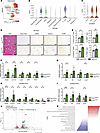 Figure 1
Deletion of ETS1 in HSCs promotes liver fibrosis in naive Ets1ΔHSC mice. (A) UMAP plot of snRNA-Seq data from liver cells of all donors, showing identified cell types and a red color-coded UMAP for ETS1 expression. (B) Violin plot showing the expression of ETS1 in each subset of liver cells. (C) Violin plot showing the expression of ETS1 in human liver samples from human normal (n = 5), MASL (n = 4), MASH (n = 9) groups. (D) Livers from Ets1fl/fl mice and Ets1ΔHSC mice (n = 3–5 per group) were stained for H&E, Sirius red, αSMA, desmin, and F4/80 (scale bar: 200 μm). (E) Positive area was calculated as a percentage. (F) Expression of fibrogenic genes and (G) inflammatory genes in the liver tissues were analyzed by using qRT-PCR. (H) Fibrogenic genes and (I) inflammatory genes in activated HSCs isolated from Ets1fl/fl mice and Ets1ΔHSC mice were measured by qRT-PCR. (J and K) Bulk RNA-Seq of mouse HSCs infected with nontargeting shRNA (control) or Ets1 targeting shRNA (Ets1 knockdown). (J) Volcano plot of control versus Ets1 targeted HSCs. Differentially expressed genes (log2FC > 1.5, P < 10–10) are shown in red. (K) Reactome pathway enrichment analysis of control versus Ets1-knockdown HSCs. Data are expressed as the mean ± SD; *P < 0.05, **P < 0.01, and ***P < 0.001, unpaired Student’s t test.
Deletion of Ets1 in HSCs promotes fibrogenesis in livers of naive Ets1ΔHSC mice. To study ETS1 function in HSCs, HSC-specific Ets1-KO (Ets1ΔHSC) mice were generated by crossing LratCre mice and Ets1-floxed mice (C57BL/6, males, n = 3–5/group). Ets1ΔHSC mice grew and developed normally; however, at the age of 10 weeks on a chow diet, Ets1ΔHSC mice exhibited signs of mild liver fibrosis and inflammation. Histological analysis revealed that the positive areas of Sirius red, αSMA, desmin, and F4/80 staining were increased in the livers of naive Ets1ΔHSC mice compared with WT Ets1-floxed littermates (Figure 1, D and E). Expression of fibrogenic markers (Acta2, Tgfb1, Col1a1, Loxl2, and Timp1) and proinflammatory genes (Il1b, Il6, Cxcl5, and Cxcl1) was increased in the livers of Ets1ΔHSC mice (Figure 1, F and G).
Primary HSCs were isolated from the livers of WT and Ets1ΔHSC mice and analyzed by qRT-PCR. A high efficiency of Cre-lox recombination was achieved in Ets1-deficient HSCs compared with WT HSCs (Supplemental Figure 1A; supplemental material available online with this article; https://doi.org/10.1172/jci.insight.195242DS1). Ets1-deficient HSCs significantly upregulated expression of fibrogenic genes (Acta2, Tgfb1, Col1a1, Loxl2, and Timp1) (Figure 1H, compared with WT HSCs) but downregulated the expression of quiescence-associated genes such as Bambi and Pparg (Figure 1H). Moreover, the expression of proinflammatory genes Il1b, Il6, Cxcl1, and Cxcl5 was slightly induced in Ets1ΔHSC HSCs (Figure 1I), suggesting that deletion of Ets1 promotes fibrogenic HSC activation in the livers of uninjured mice.
Knockdown of Ets1 facilitates activation of primary mouse HSCs. The gene expression profiles of mouse HSCs, in which Ets1 was knocked down using lentiviral infection, were compared with those of control (nontargeting) HSCs using RNA-Seq (Supplemental Table 1) (6). Knockdown of Ets1 significantly increased the expression of fibrogenic genes (Smad3, Col1a1, and Tgfbr1) and proinflammatory genes (Ccl2, Ccl9, and Il6) (Figure 1J) in culture-activated HSCs. Pathway enrichment analysis revealed a strong enrichment of genes associated with extracellular matrix proteins, including the collagen biosynthesis pathway, collagen chain trimerization, and crosslinking of collagen fibrils in Ets1-knockdown HSCs (Figure 1K). Similarly, upregulation of genes involved in the collagen production pathway, TGF-β receptor signaling, and IL-6 family signaling was detected in Ets1-knockdown HSCs by gene set enrichment analysis (GSEA) (Supplemental Figure 1, B–E), indicating that downregulation of Ets1 drives HSC activation.
The development and regression of liver fibrosis are impaired in CCl4-injured Ets1ΔHSC mice. To explore the role of ETS1 in the development and regression of liver fibrosis, WT and Ets1ΔHSC mice (n = 6 per group) were subjected to CCl4 liver injury for 6 weeks, followed by cessation of liver injury for 2 weeks (n = 6 per group). CCl4-injured Ets1ΔHSC mice developed approximately 20% more liver fibrosis than WT littermates treated under the same conditions, as shown by the increased area of Sirius red, αSMA, desmin, and F4/80 staining (Figure 2, A and B) and upregulation of Acta2, Col1a1, desmin, Loxl2, and Timp1 mRNA expression. To determine whether the upregulation of desmin expression was associated with increased HSC proliferation, livers of CCl4-injured WT and Ets1ΔHSC mice were stained with anti-Ki67 antibody. Ki67 mRNA was increased in primary HSCs isolated from livers of CCl4-injured Ets1ΔHSC mice (Supplemental Figure 2A). Consistently, the number of Ki67+ cells was significantly elevated in Ets1ΔHSC livers compared with WT mice (Supplemental Figure 2B), indicating that loss of ETS1 directly promotes HSC proliferation.
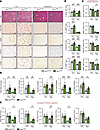 Figure 2
Deletion of ETS1 in HSCs exacerbates CCl4-induced liver fibrosis and prevents fibrosis resolution in Ets1ΔHSC mice. Ets1fl/fl mice and Ets1ΔHSC mice (n = 7 per group) were administered with either vehicle (corn oil) or carbon tetrachloride (CCl4) for 6 weeks, followed by cessation for 2 weeks after the last CCl4 administration. (A) Livers from Ets1fl/fl mice and Ets1ΔHSC mice were stained for H&E, Sirius red, αSMA, desmin, and F4/80 (scale bar: 200 μm), and (B) staining-positive area was calculated as a percentage. (C) The rate of fibrosis resolution was calculated by setting the positive area (%) of the group administered CCl4 for 6 weeks to 1 (baseline). (D) Fibrogenic mRNA expression in the liver tissues was analyzed by qRT-PCR. (E) The rate of fibrosis resolution was calculated by setting the mRNA expression of the 6-week CCl4-injured group to 1 (baseline). Data are expressed as the mean ± SD; *P < 0.05, **P < 0.01, and ***P < 0.001, 1-way ANOVA followed by Tukey’s test.
To evaluate fibrosis resolution, resorption of fibrous scars and myofibroblast inactivation were compared in recovering mice versus CCl4-injured mice (14). The regression rate was calculated as the ratio of fibrogenic gene expression in recovering mice relative to the corresponding CCl4-injured mice (considered as 1.0 for each genotype). As shown in Figure 2C, Sirius red–positive and desmin-positive areas were increased approximately 15%–20% in livers of Ets1ΔHSC mice recovering from CCl4 (vs. WT mice). To further validate this finding, quantitative digital analysis of Sirius red–stained liver sections was performed using QuPath software, which automatically detected and color-coded collagen-positive regions (red overlay) and calculated the percentage of Sirius red–positive area (Supplemental Figure 2C). We confirmed that Ets1ΔHSC mice exhibited approximately 15%–20% higher Sirius red–positive area compared with WT mice during the regression phase, indicating impaired fibrosis resolution. Expression of Acta2 and Col1a1, desmin, and Timp1 mRNA remained upregulated (>35%) in livers of recovering Ets1ΔHSC mice (Figure 2, D and E). Serum alanine aminotransferase (ALT) levels were significantly elevated in CCl4-injured Ets1ΔHSC mice compared with WT mice and remained higher in Ets1ΔHSC mice during the regression phase (Supplemental Figure 2D), indicating that liver injury is exacerbated in CCl4-injured Ets1ΔHSC mice while recovery is delayed. In accordance with this finding, expression of matrix-degrading proteases (Mmp2, Mmp9, and Mmp13) was markedly reduced in livers of Ets1ΔHSC mice and specifically in isolated Ets1-deficient HSCs (Supplemental Figure 2, E and F), suggesting that Ets1 deficiency in HSCs impairs extracellular matrix remodeling required for scar resolution. Taken together, these results demonstrate that the genetic deletion of Ets1 in HSCs aggravates CCl4-induced liver fibrosis and prevents the regression of CCl4-induced liver fibrosis.
Genetic deletion of Ets2 in HSCs does not cause liver injury in naive Ets2ΔHSC mice but accelerates liver fibrosis in CCl4-injured Ets2ΔHSC mice. ETS1 and ETS2 TFs share high homology. ETS2 has also been implicated in the pathogenesis of liver fibrosis (15). Unlike ETS1, ETS2 is predominantly expressed in hepatocytes, and to a lesser extent in HSCs and endothelial cells, as shown by snRNA-Seq analysis of human livers (Figure 3, A and B) (7). To investigate the role of ETS2 in HSCs, we generated Ets2ΔHSC mice (by crossing LratCre mice with Ets2-floxed mice), in which the Ets2 gene was genetically deleted in HSCs (n = 3–5 per group). The loss of Ets2 expression in HSCs was validated by qRT-PCR and confirmed strong downregulation of Ets2 expression in isolated Ets2ΔHSC HSCs compared with WT HSCs (Supplemental Figure 3A). In contrast to chow-fed naive Ets1ΔHSC mice, deletion of Ets2 in HSCs did not activate profibrogenic responses in naive Ets2ΔHSC mice under physiological conditions, as shown by similar expression levels of Sirius red, αSMA, desmin, and F4/80 (Supplemental Figure 3, B and C), as well as Acta2, Col1a1, Col1a2, Loxl2, Timp1, and Serpine1 in the livers of uninjured WT and Ets2ΔHSC mice (Supplemental Figure 3D).
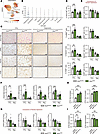 Figure 3
The development of liver fibrosis is increased in CCl4-injured Ets2ΔHSC mice. (A) UMAP plot of snRNA-Seq data from liver cells of all donors, showing identified cell types and a red color-coded UMAP for ETS2 expression. (B) Violin plot showing the expression of ETS2 in each subset of liver cells. (C–G) Ets2fl/fl mice and Ets2ΔHSC mice (n = 7 per group) were administered with either vehicle (corn oil) or CCl4 for 6 weeks, followed by cessation for 2 weeks after the last CCl4 administration. (C) Livers from Ets2fl/fl mice and Ets2ΔHSC mice were stained for Sirius red, αSMA, desmin, and F4/80 (scale bar: 200 μm), and (D) staining-positive area was calculated as a percentage. (E) The rate of fibrosis resolution was calculated by setting the positive area (%) of the 6-week CCl4-injured group to 1 (baseline). (F) Fibrogenic mRNA expression in the liver tissues was analyzed by qRT-PCR. (G) The rate of fibrosis resolution was calculated by setting the mRNA expression of the 6-week CCl4-injured group to 1 (baseline). (H and I) Human HSCs from two normal livers were transfected with ETS1-targeting or ETS2-targeting dsiRNA for 48 hours. (H) mRNA expression of ETS1 was measured in HSCs transfected with ETS2-targeting dsiRNA. (I) mRNA expression of ETS2 was measured in HSCs transfected with ETS1-targeting dsiRNA. Data are expressed as the mean ± SD; **P < 0.01, and ***P < 0.001, 1-way ANOVA followed by Tukey’s test.
Deletion of Ets2 in HSCs exacerbated liver fibrosis in CCl4-injured Ets2ΔHSC mice. CCl4-injured Ets2ΔHSC mice developed approximately 15%–20% more fibrosis than Ets2-floxed mice (n = 7 per group), as shown by increased expression of Sirius red, αSMA, desmin (Figure 3, C–E), and fibrogenic genes (Acta2, Col1a1, Loxl2, and Timp1) (Figure 3, F and G). However, deletion of Ets2 in HSCs had no effect on fibrosis resolution in Ets2ΔHSC mice recovering from CCl4 injury (vs. WT mice), suggesting that despite similarities, ETS1 and ETS2 mediate specific functions. In support of this finding, Ets1 expression was upregulated in ETS2-deficient HSCs compared with WT HSCs, indicating that increased levels of Ets1 may compensate for the loss of Ets2 function in naive Ets2ΔHSC mice (Supplemental Figure 3E).
ETS1 is a predominant isoform in human and mouse HSCs. To test this hypothesis, ETS2 was knocked down in primary human quiescent HSCs isolated from human livers. ETS2 knockdown in human HSCs resulted in a significant increase of ETS1 expression (Figure 3H). In contrast, knockdown of ETS1 did not affect expression levels of ETS2 (Figure 3I). These findings indicate that ETS1 is a predominant isoform in HSCs, and ETS2 cannot compensate for the loss of ETS1.
To further assess functional differences and similarities between Ets1 and Ets2 in mouse HSCs, the gene expression profiles of mouse shRNA-Ets1–, shRNA-Ets2–, or shRNA-Ets1/2–knockdown HSCs were compared with shRNA-control HSCs using RNA-Seq (Supplemental Figure 4A). Knockdown of Ets1 in HSCs yielded a striking phenotype in Ets1-knockdown HSCs compared with control HSCs (9,830 genes were significantly changed out of a total of 20,231 genes). In contrast, Ets2-knockdown HSCs mainly resembled control HSCs, but they uniquely upregulated genes that were not induced in Ets1-knockdown HSCs. Simultaneous knockdown of both Ets1 and Ets2 in HSCs resulted in a third phenotype, in which the effect of Ets1 knockdown was partially reversed.
Despite the differences in the gene expression profiles, out of 100 most significantly changed pathways (selected for each group of HSCs from significantly upregulated and downregulated genes), approximately half of the top pathways overlapped between the shRNA-Ets1–, shRNA-Ets2–, or shRNA-Ets1/2–knockdown groups (Supplemental Figure 4B), supporting the notion that Ets1 and Ets2 exhibit some functional redundancy. In Ets1-knockdown HSCs, 33 pathways were uniquely upregulated, including those related to inflammatory responses, such as cytokine and interleukin signaling, cell-cell communications, and TLR cascades (Supplemental Figure 4, B and C). In the Ets2 knockdown group, 19 pathways were upregulated exclusively and were related to lipoprotein metabolism (Supplemental Figure 4, B and D). These findings indicate that ETS1 regulates inflammatory responses in quiescent HSCs, which may contribute to the phenotypic differences observed between shRNA-Ets1– and shRNA-Ets2–knockdown HSCs, and between Ets1ΔHSC and Ets2ΔHSC mice. Overall, Ets1 is highly expressed in HSCs and plays a more significant role in liver fibrosis than Ets2, since it can compensate for the loss of Ets2 functions.
ETS1 knockdown increases responses of human HSCs to TGF-β1 stimulation. To translate our findings in mice to humans, expression of ETS1 was analyzed in human primary HSCs isolated from normal (n = 8), MASL (n = 8), and MASH (n = 12) human livers. Similar to snRNA-Seq findings (Figure 1C), RNA-Seq analysis of isolated human HSCs revealed that expression of ETS1 was downregulated in MASH HSCs compared with normal livers, confirming that activation of HSCs is associated with suppression of ETS1 function (Figure 4A).
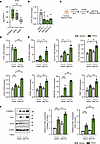 Figure 4
HSC-specific knockdown of ETS1 facilitates activation of TGF-β1–stimulated human HSCs. (A) ETS1 expression was evaluated in an RNA-Seq dataset of isolated human HSCs (normal n = 8, MASL n = 8, and MASH n = 12). (B) Human HSCs from a normal donor were transfected with 3 different ETS1-targeting dsiRNA or dsiNC (dsi-negative control) for 48 hours, and the efficiency of gene knockdown was measured by qRT-PCR. (C) Experimental timeline; human HSCs were transfected with ETS1-targeting dsiRNA or dsiNC for 48 hours and treated with recombinant human TGF-β1 protein (5 ng/mL) for 24 hours. (D) mRNA expression of ETS1 after ETS1 knockdown in HSCs. (E) mRNA and (F) protein expression of fibrogenic markers were measured in ETS1-targeting dsiRNA-transfected (vs. dsiNC) HSCs with or without TGF-β1. Data are expressed as the mean ± SD; *P < 0.05, **P < 0.01, and ***P < 0.001, 1-way ANOVA followed by Tukey’s test.
Next, primary human HSCs expressing high levels of ETS1 were isolated from normal livers and transfected with ETS1-targeting or control dsiRNA to knock down ETS1 (Supplemental Table 2). Three dsiRNA-hairpins were tested. The hairpin with highest knockdown efficiency in dsiRNA-ETS1 HSCs (~70% vs. dsiRNA-control HSCs) was used (Figure 4B). Responses of ETS1 knockdown and control HSCs to TGF-β1 were tested. Knockdown of ETS1 facilitated TGF-β1–mediated HSC activation and significantly increased expression of ACTA2, COL1A1, COL1A2, LOXL2, TGFB1, SERPINE1, and TIMP1 mRNA (vs. control HSCs; Figure 4, C–E). Consistently, ETS1 knockdown also increased TGF-β1–induced SMAD2 phosphorylation (Supplemental Figure 5A), confirming that the amplified fibrogenic responses in ETS1-knockdown HSCs are mediated through activation of canonical TGF-β/SMAD signaling. Collagen type 1 and PAI-1 proteins were also significantly increased in ETS1-knockdown HSCs compared with controls (Figure 4F), indicating that ETS1 plays an important role in the maintenance of a quiescent HSC phenotype.
Knockdown of ETS1 in HSCs exacerbates MASH fibrosis in 3D human liver spheroids. The role of ETS1 in activation of human HSCs was evaluated using 3D human liver spheroids with MASH (16). HSCs were transfected with ETS1-targeting or control dsiRNA before spheroid formation and then used for spheroid generation. Human liver spheroids were generated by coculturing all liver cell types — hepatocytes (3 × 10⁵), nonparenchymal cells (1.5 × 10⁵), and HSCs (0.8 × 10⁵) — at physiological ratios in the presence of MASH cocktail (160 μM palmitate, 160 μM oleate, 10 mM fructose, 5.5 mM glucose, 10 μg/mL LPS, 1 ng/mL TGF-β1) (Figure 5A). Spheroids (n = 3 per group) were harvested and analyzed. Hepatocytes and HSCs were visualized by immunostaining for hepatocyte nuclear factor 4α (HNF-4α) and vimentin, respectively (Figure 5B). As expected, exposure to the MASH cocktail increased expression of fibrogenic markers (e.g., ACTA2, COL1A1, COL1A2, SERPINE1, TGFB1, LOXL2, and TIMP1 mRNA and collagen type I, αSMA, and PAI-1 proteins) in human liver spheroids (Figure 5C) compared with spheroids cultured in growth medium (Figure 5, D and E). When MASH spheroids were compared, knockdown of ETS1 in HSCs resulted in a significant increase of approximately 30% of fibrogenic gene expression in human liver spheroids with MASH (Figure 5, C–E). Remarkably, upregulation of collagen type 1, PAI-1, αSMA, and desmin proteins was observed in human liver spheroids containing ETS1-knockdown HSCs even prior to injury and was further increased (~4 fold) in response to MASH (Figure 5, D and E).
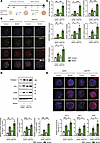 Figure 5
Knockdown of ETS1 in HSCs accelerates liver fibrosis in human liver spheroids with MASH. (A) Experimental timeline; human HSCs were transfected with ETS1-targeting dsiRNA or dsiNC (dsi-negative control) for 48 hours, and human liver spheroids were generated by coculturing different liver cells for 7 days, followed by stimulation with MASH cocktail for an additional 7 days. (B) Immunofluorescence images of human control and MASH liver spheroids containing ETS1-knockdown HSCs were stained for hepatocyte nuclear factor 4α (HNF-4α), vimentin (VIM), and DAPI (scale bar: 100 μm). Fibrogenic markers in control and MASH liver spheroids were assessed using (C) qRT-PCR and (D) Western blot analysis. (E) Control and MASH liver spheroids containing ETS1-knockdown HSCs were stained for collagen 1, PAI-1, and desmin (scale bar: 100 μm). Data are expressed as the mean ± SD; *P < 0.05, **P < 0.01, and ***P < 0.001, 1-way ANOVA followed by Tukey’s test.
Knockdown of ETS1 in human HSCs decreases regression of MASH-induced liver fibrosis in human liver spheroids. Regression of liver fibrosis was achieved by transferring MASH spheroids into growth medium (16). Culturing MASH liver spheroids in growth medium caused HSC inactivation, which was characterized by downregulation of fibrogenic gene expression and reexpression of some quiescence-associated genes (Figure 6A) (4, 17). Consistent with in vivo findings, MASH liver spheroids containing ETS1-targeted HSCs exhibited an approximately 30% lower rate of fibrosis regression compared with control spheroids, as shown by higher expression of ACTA2, COL1A1, LOXL2, SERPINE1, COL1A2, and TIMP1 (Figure 6, B and C). We also observed persistence of collagen type 1 and αSMA protein expression in human liver spheroids containing ETS1-targeted HSCs during regression of MASH fibrosis (Figure 6D). Moreover, expression of inactivation markers PPARG, BAMBI, and GABRA3 was significantly lower in ETS1 knockdown liver spheroids compared with control spheroids (Figure 6E). These results indicate that HSC-specific knockdown of ETS1 suppresses the inactivation of human HSCs and prevents regression of liver fibrosis in MASH spheroids.
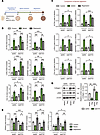 Figure 6
Knockdown of ETS1 in HSCs attenuates the regression of MASH-induced liver fibrosis in human liver spheroids. (A) Experimental timeline; human HSCs were transfected with ETS1-targeting dsiRNA or dsiNC (dsi-negative control) for 48 hours, and human liver spheroids were generated by coculturing different liver cells for 7 days. After formation, metabolic liver fibrosis was induced by stimulation with MASH cocktail for an additional 7 days, followed by removal of metabolic injury by replacing MASH cocktail with growth medium. (B–E) Fibrogenic markers in liver spheroids were assessed using (B) qRT-PCR or (D) Western blot analysis, and (C) the rate of fibrosis resolution was quantified by setting the mRNA expression of the MASH-induced group to 1 (baseline). (E) mRNA expression of inactivation-associated HSC markers was measured. Data are expressed as the mean ± SD; *P < 0.05, **P < 0.01, and ***P < 0.001, 1-way ANOVA followed by Tukey’s test.
CRTC2 is a potential ETS1 target gene in human HSCs. PPARγ plays a critical role in the maintenance of the quiescent HSC phenotype (6), and PPARγ was identified as an ETS1 target gene (18). In support of this finding, ETS1 knockdown using dsiRNA in human HSCs abrogated PPARγ-mediated effects in TGF-β1–stimulated HSCs, leading to exacerbation of fibrogenic responses, and treatment with the PPARγ agonist rosiglitazone (20 μM) effectively restored PPARγ signaling in ETS1-knockdown HSCs (Figure 7, A and B). Still, the mechanism by which ETS1 regulates PPARγ is unknown. We used the ENCODE (Encyclopedia of DNA Elements) (19) and ChEA (ChIP Enrichment Analysis) (20) databases, which are designed to identify the target genes of TFs based on their DNA binding site profiles, to investigate the ETS1/PPARγ axis. Using this approach, potential ETS1 targets were selected from the list of genes downregulated in mouse HSCs with shRNA-mediated Ets1 knockdown in the RNA-Seq dataset (Figure 7C). We identified 202 potential ETS1 target genes, including CRTC2, which has been implicated in PPARγ activation (21). Furthermore, FIMO-based motif enrichment analysis of single nucleus ATAC-Seq data of human livers (7) revealed that ETS1 binds to the regulatory element of the CRTC2 gene locus, suggesting ETS1 as a potential regulator of CRTC2 transcription (Supplemental Figure 6, A and B). To test this hypothesis, ChIP-qPCR was performed in human HSCs using an anti-ETS1 antibody (targeting the promoter region of the CRTC2 gene where putative ETS1 binding motifs were identified by in silico analysis). ETS1 binding was significantly enriched at the CRTC2 promoter region, whereas no enrichment was observed in the IgG control (Figure 7D). These results provide direct mechanistic evidence that ETS1 binds to the CRTC2 locus and positively regulates CRTC2 transcription, supporting the notion that ETS1 regulates the CRTC2/PPARγ axis to maintain the quiescent HSC phenotype.
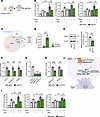 Figure 7
ETS1 regulates PPARγ via the CRTC2 pathway in human HSCs. (A) Schematic illustration of dsiRNA transfection and rosiglitazone treatment. Human HSCs were transfected with dsiRNA for 48 hours and treated with recombinant human TGF-β1 protein (5 ng/mL) with or without rosiglitazone (20 μM or vehicle) for 24 hours. (B) The expression of fibrogenic genes was measured in ETS1-targeting dsiRNA-transfected HSCs after rosiglitazone treatment by qRT-PCR. (C) ETS1 direct target genes were overlapping with the genes downregulated in ETS1 knockdown HSCs (vs. HSCs infected with nontargeting shRNA) in our RNA-Seq dataset. ETS1 target genes were identified from the ENCODE and ChEA databases. (D) ETS1 locus-specific ChIP-qPCR analysis was performed using human HSCs. (E and F) Human HSCs were transfected with ETS1-targeting dsiRNA or dsiNC (dsi-negative control). (E) CRTC2 and (F) CRTC2 downstream genes were measured using Western blot analysis or qRT-PCR. (G) Human HSCs were transfected with 3 different CRTC2-targeting dsiRNA or dsiNC (dsi-negative control) for 48 hours, and the efficiency of gene knockdown was measured by qRT-PCR. (H) mRNA expression of PPARGC1A and PPARG in CRTC2-targeting dsiRNA-transfected HSCs. (I) mRNA expression of fibrogenic markers was measured in dsiCRTC2-transfected HSCs. (J) Schematic illustration of the underlying mechanism by which ETS1 regulates the HSC phenotype through CRTC2. Data are expressed as the mean ± SD; *P < 0.05, **P < 0.01, and ***P < 0.001, 1-way ANOVA followed by Tukey’s test.
ETS1 regulates the quiescent HSC phenotype via activation of the CRTC2/PGC1α/PPARγ pathway in human HSCs. CRTC2 (TORC2) is a transcriptional coactivator of CREB TF that also regulates hepatic gluconeogenesis-related genes, including transcription of PGC1α, encoded by the PPARGC1A gene. PGC1α can directly interact with PPARγ (22). We hypothesized that ETS1 modulates PPARγ responses through activation of the CRTC2/PGC1α signaling pathway in HSCs. In support of this hypothesis, dsiRNA-based ETS1 knockdown in human HSCs significantly suppressed CRTC2 expression, leading to downregulation of PPARGC1A and PPARG (Figure 7, E and F). Similarly, expression of PPARGC1A and PPARG was reduced in CRTC2-knockdown HSCs (Figure 7, G and H). To further validate the role of ETS1 in the regulation of the CRTC2/PGC1α/PPARγ pathway, expression of CRTC2, PGC1A, and PPARG was measured in mouse and human HSCs. HSCs isolated from uninjured Ets1ΔHSC mice exhibited significant downregulation of CRTC2, PGC1A, and PPARG compared with WT HSCs (Supplemental Figure 7A). Consistently, ETS1-targeted and control human HSCs were stimulated with or without TGF-β1. dsiRNA-based knockdown of ETS1 in human HSCs resulted in a significant reduction in CRTC2, PGC1A, and PPARG expression (Supplemental Figure 7B). To determine whether the effects of ETS1 and CRTC2 on HSC phenotype are mediated by PPARγ, CRTC2 was knocked down using dsiRNA in human HSCs. CRTC2-targeted and control HSCs were pretreated with or without rosiglitazone (a PPARγ agonist) and subsequently stimulated with or without TGF-β1 (Figure 7A). CRTC2 knockdown in human TGF-β1–stimulated HSCs significantly downregulated expression of PPARγ and increased fibrogenic gene expression, while rosiglitazone treatment prevented fibrogenic activation of CRTC2-targeted HSCs (Figure 7I). Overall, these results suggest that ETS1 regulates the quiescent phenotype of HSCs through a CRTC2/PGC1α/PPARγ pathway (Figure 7J).


