
Clinical Research and Public HealthClinical ResearchDermatologyInflammation
Open Access |  10.1172/jci.insight.193563
Icotrokinra induces early and sustained pharmacodynamic responses in phase IIb study of patients with moderate-to-severe psoriasis
David Strawn,1 James G. Krueger,2 Robert Bissonnette,3 Kilian Eyerich,4 Laura K. Ferris,5 Amy S. Paller,6 Andreas Pinter,7 Dylan Richards,1 Elizabeth Y. Chen,8 Kate Paget,8 Daniel Horowitz,1 Roohid Parast,1 Joshua J. Rusbuldt,1 Jocelyn Sendecki,1 Sunita Bhagat,1 Lynn P. Tomsho,1 Ching-Heng Chou,8 Marta E. Polak,1 Brice E. Keyes,8 Emily Bozenhardt,1 Yuan Xiong,1 Wangda Zhou,1 Cynthia DeKlotz,1 Paul Newbold,1 Dawn M. Waterworth,1 Megan Miller,1 Takayuki Ota,8 Ya-Wen Yang,9 Monica W.L. Leung,8 Lloyd S. Miller,1 Carolyn A. Cuff,10 Bradford McRae,10 Darren Ruane,8 and Arun K. Kannan1
1Johnson & Johnson, Spring House, Pennsylvania, USA.
2The Rockefeller University, New York, New York, USA.
3Innovaderm Research, Montreal, Quebec, Canada.
4University of Freiburg, Freiburg im Breisgau, Germany.
5University of North Carolina, Chapel Hill, North Carolina, USA.
6Northwestern University Feinberg School of Medicine and the Ann & Robert H Lurie Children’s Hospital, Chicago, Illinois, USA.
7Goethe University Frankfurt, Frankfurt, Germany.
8Johnson & Johnson, La Jolla, California, USA.
9Johnson & Johnson, Horsham, Pennsylvania, USA.
10Johnson & Johnson, Cambridge, Massachusetts, USA.
Address correspondence to: Arun Kumar Kannan, 1400 McKean Rd., Lower Gwynedd Township, Pennsylvania 19002, USA. Phone: 215.986.1394; Email: akannan2@its.jnj.com.
Find articles by Strawn, D. in: PubMed | Google Scholar
1Johnson & Johnson, Spring House, Pennsylvania, USA.
2The Rockefeller University, New York, New York, USA.
3Innovaderm Research, Montreal, Quebec, Canada.
4University of Freiburg, Freiburg im Breisgau, Germany.
5University of North Carolina, Chapel Hill, North Carolina, USA.
6Northwestern University Feinberg School of Medicine and the Ann & Robert H Lurie Children’s Hospital, Chicago, Illinois, USA.
7Goethe University Frankfurt, Frankfurt, Germany.
8Johnson & Johnson, La Jolla, California, USA.
9Johnson & Johnson, Horsham, Pennsylvania, USA.
10Johnson & Johnson, Cambridge, Massachusetts, USA.
Address correspondence to: Arun Kumar Kannan, 1400 McKean Rd., Lower Gwynedd Township, Pennsylvania 19002, USA. Phone: 215.986.1394; Email: akannan2@its.jnj.com.
Find articles by Krueger, J. in: PubMed | Google Scholar
1Johnson & Johnson, Spring House, Pennsylvania, USA.
2The Rockefeller University, New York, New York, USA.
3Innovaderm Research, Montreal, Quebec, Canada.
4University of Freiburg, Freiburg im Breisgau, Germany.
5University of North Carolina, Chapel Hill, North Carolina, USA.
6Northwestern University Feinberg School of Medicine and the Ann & Robert H Lurie Children’s Hospital, Chicago, Illinois, USA.
7Goethe University Frankfurt, Frankfurt, Germany.
8Johnson & Johnson, La Jolla, California, USA.
9Johnson & Johnson, Horsham, Pennsylvania, USA.
10Johnson & Johnson, Cambridge, Massachusetts, USA.
Address correspondence to: Arun Kumar Kannan, 1400 McKean Rd., Lower Gwynedd Township, Pennsylvania 19002, USA. Phone: 215.986.1394; Email: akannan2@its.jnj.com.
Find articles by Bissonnette, R. in: PubMed | Google Scholar
1Johnson & Johnson, Spring House, Pennsylvania, USA.
2The Rockefeller University, New York, New York, USA.
3Innovaderm Research, Montreal, Quebec, Canada.
4University of Freiburg, Freiburg im Breisgau, Germany.
5University of North Carolina, Chapel Hill, North Carolina, USA.
6Northwestern University Feinberg School of Medicine and the Ann & Robert H Lurie Children’s Hospital, Chicago, Illinois, USA.
7Goethe University Frankfurt, Frankfurt, Germany.
8Johnson & Johnson, La Jolla, California, USA.
9Johnson & Johnson, Horsham, Pennsylvania, USA.
10Johnson & Johnson, Cambridge, Massachusetts, USA.
Address correspondence to: Arun Kumar Kannan, 1400 McKean Rd., Lower Gwynedd Township, Pennsylvania 19002, USA. Phone: 215.986.1394; Email: akannan2@its.jnj.com.
Find articles by Eyerich, K. in: PubMed | Google Scholar
1Johnson & Johnson, Spring House, Pennsylvania, USA.
2The Rockefeller University, New York, New York, USA.
3Innovaderm Research, Montreal, Quebec, Canada.
4University of Freiburg, Freiburg im Breisgau, Germany.
5University of North Carolina, Chapel Hill, North Carolina, USA.
6Northwestern University Feinberg School of Medicine and the Ann & Robert H Lurie Children’s Hospital, Chicago, Illinois, USA.
7Goethe University Frankfurt, Frankfurt, Germany.
8Johnson & Johnson, La Jolla, California, USA.
9Johnson & Johnson, Horsham, Pennsylvania, USA.
10Johnson & Johnson, Cambridge, Massachusetts, USA.
Address correspondence to: Arun Kumar Kannan, 1400 McKean Rd., Lower Gwynedd Township, Pennsylvania 19002, USA. Phone: 215.986.1394; Email: akannan2@its.jnj.com.
Find articles by Ferris, L. in: PubMed | Google Scholar
1Johnson & Johnson, Spring House, Pennsylvania, USA.
2The Rockefeller University, New York, New York, USA.
3Innovaderm Research, Montreal, Quebec, Canada.
4University of Freiburg, Freiburg im Breisgau, Germany.
5University of North Carolina, Chapel Hill, North Carolina, USA.
6Northwestern University Feinberg School of Medicine and the Ann & Robert H Lurie Children’s Hospital, Chicago, Illinois, USA.
7Goethe University Frankfurt, Frankfurt, Germany.
8Johnson & Johnson, La Jolla, California, USA.
9Johnson & Johnson, Horsham, Pennsylvania, USA.
10Johnson & Johnson, Cambridge, Massachusetts, USA.
Address correspondence to: Arun Kumar Kannan, 1400 McKean Rd., Lower Gwynedd Township, Pennsylvania 19002, USA. Phone: 215.986.1394; Email: akannan2@its.jnj.com.
Find articles by Paller, A. in: PubMed | Google Scholar
1Johnson & Johnson, Spring House, Pennsylvania, USA.
2The Rockefeller University, New York, New York, USA.
3Innovaderm Research, Montreal, Quebec, Canada.
4University of Freiburg, Freiburg im Breisgau, Germany.
5University of North Carolina, Chapel Hill, North Carolina, USA.
6Northwestern University Feinberg School of Medicine and the Ann & Robert H Lurie Children’s Hospital, Chicago, Illinois, USA.
7Goethe University Frankfurt, Frankfurt, Germany.
8Johnson & Johnson, La Jolla, California, USA.
9Johnson & Johnson, Horsham, Pennsylvania, USA.
10Johnson & Johnson, Cambridge, Massachusetts, USA.
Address correspondence to: Arun Kumar Kannan, 1400 McKean Rd., Lower Gwynedd Township, Pennsylvania 19002, USA. Phone: 215.986.1394; Email: akannan2@its.jnj.com.
Find articles by Pinter, A. in: PubMed | Google Scholar
1Johnson & Johnson, Spring House, Pennsylvania, USA.
2The Rockefeller University, New York, New York, USA.
3Innovaderm Research, Montreal, Quebec, Canada.
4University of Freiburg, Freiburg im Breisgau, Germany.
5University of North Carolina, Chapel Hill, North Carolina, USA.
6Northwestern University Feinberg School of Medicine and the Ann & Robert H Lurie Children’s Hospital, Chicago, Illinois, USA.
7Goethe University Frankfurt, Frankfurt, Germany.
8Johnson & Johnson, La Jolla, California, USA.
9Johnson & Johnson, Horsham, Pennsylvania, USA.
10Johnson & Johnson, Cambridge, Massachusetts, USA.
Address correspondence to: Arun Kumar Kannan, 1400 McKean Rd., Lower Gwynedd Township, Pennsylvania 19002, USA. Phone: 215.986.1394; Email: akannan2@its.jnj.com.
Find articles by Richards, D. in: PubMed | Google Scholar
1Johnson & Johnson, Spring House, Pennsylvania, USA.
2The Rockefeller University, New York, New York, USA.
3Innovaderm Research, Montreal, Quebec, Canada.
4University of Freiburg, Freiburg im Breisgau, Germany.
5University of North Carolina, Chapel Hill, North Carolina, USA.
6Northwestern University Feinberg School of Medicine and the Ann & Robert H Lurie Children’s Hospital, Chicago, Illinois, USA.
7Goethe University Frankfurt, Frankfurt, Germany.
8Johnson & Johnson, La Jolla, California, USA.
9Johnson & Johnson, Horsham, Pennsylvania, USA.
10Johnson & Johnson, Cambridge, Massachusetts, USA.
Address correspondence to: Arun Kumar Kannan, 1400 McKean Rd., Lower Gwynedd Township, Pennsylvania 19002, USA. Phone: 215.986.1394; Email: akannan2@its.jnj.com.
Find articles by Chen, E. in: PubMed | Google Scholar
1Johnson & Johnson, Spring House, Pennsylvania, USA.
2The Rockefeller University, New York, New York, USA.
3Innovaderm Research, Montreal, Quebec, Canada.
4University of Freiburg, Freiburg im Breisgau, Germany.
5University of North Carolina, Chapel Hill, North Carolina, USA.
6Northwestern University Feinberg School of Medicine and the Ann & Robert H Lurie Children’s Hospital, Chicago, Illinois, USA.
7Goethe University Frankfurt, Frankfurt, Germany.
8Johnson & Johnson, La Jolla, California, USA.
9Johnson & Johnson, Horsham, Pennsylvania, USA.
10Johnson & Johnson, Cambridge, Massachusetts, USA.
Address correspondence to: Arun Kumar Kannan, 1400 McKean Rd., Lower Gwynedd Township, Pennsylvania 19002, USA. Phone: 215.986.1394; Email: akannan2@its.jnj.com.
Find articles by Paget, K. in: PubMed | Google Scholar
1Johnson & Johnson, Spring House, Pennsylvania, USA.
2The Rockefeller University, New York, New York, USA.
3Innovaderm Research, Montreal, Quebec, Canada.
4University of Freiburg, Freiburg im Breisgau, Germany.
5University of North Carolina, Chapel Hill, North Carolina, USA.
6Northwestern University Feinberg School of Medicine and the Ann & Robert H Lurie Children’s Hospital, Chicago, Illinois, USA.
7Goethe University Frankfurt, Frankfurt, Germany.
8Johnson & Johnson, La Jolla, California, USA.
9Johnson & Johnson, Horsham, Pennsylvania, USA.
10Johnson & Johnson, Cambridge, Massachusetts, USA.
Address correspondence to: Arun Kumar Kannan, 1400 McKean Rd., Lower Gwynedd Township, Pennsylvania 19002, USA. Phone: 215.986.1394; Email: akannan2@its.jnj.com.
Find articles by Horowitz, D. in: PubMed | Google Scholar
1Johnson & Johnson, Spring House, Pennsylvania, USA.
2The Rockefeller University, New York, New York, USA.
3Innovaderm Research, Montreal, Quebec, Canada.
4University of Freiburg, Freiburg im Breisgau, Germany.
5University of North Carolina, Chapel Hill, North Carolina, USA.
6Northwestern University Feinberg School of Medicine and the Ann & Robert H Lurie Children’s Hospital, Chicago, Illinois, USA.
7Goethe University Frankfurt, Frankfurt, Germany.
8Johnson & Johnson, La Jolla, California, USA.
9Johnson & Johnson, Horsham, Pennsylvania, USA.
10Johnson & Johnson, Cambridge, Massachusetts, USA.
Address correspondence to: Arun Kumar Kannan, 1400 McKean Rd., Lower Gwynedd Township, Pennsylvania 19002, USA. Phone: 215.986.1394; Email: akannan2@its.jnj.com.
Find articles by Parast, R. in: PubMed | Google Scholar
1Johnson & Johnson, Spring House, Pennsylvania, USA.
2The Rockefeller University, New York, New York, USA.
3Innovaderm Research, Montreal, Quebec, Canada.
4University of Freiburg, Freiburg im Breisgau, Germany.
5University of North Carolina, Chapel Hill, North Carolina, USA.
6Northwestern University Feinberg School of Medicine and the Ann & Robert H Lurie Children’s Hospital, Chicago, Illinois, USA.
7Goethe University Frankfurt, Frankfurt, Germany.
8Johnson & Johnson, La Jolla, California, USA.
9Johnson & Johnson, Horsham, Pennsylvania, USA.
10Johnson & Johnson, Cambridge, Massachusetts, USA.
Address correspondence to: Arun Kumar Kannan, 1400 McKean Rd., Lower Gwynedd Township, Pennsylvania 19002, USA. Phone: 215.986.1394; Email: akannan2@its.jnj.com.
Find articles by Rusbuldt, J. in: PubMed | Google Scholar
1Johnson & Johnson, Spring House, Pennsylvania, USA.
2The Rockefeller University, New York, New York, USA.
3Innovaderm Research, Montreal, Quebec, Canada.
4University of Freiburg, Freiburg im Breisgau, Germany.
5University of North Carolina, Chapel Hill, North Carolina, USA.
6Northwestern University Feinberg School of Medicine and the Ann & Robert H Lurie Children’s Hospital, Chicago, Illinois, USA.
7Goethe University Frankfurt, Frankfurt, Germany.
8Johnson & Johnson, La Jolla, California, USA.
9Johnson & Johnson, Horsham, Pennsylvania, USA.
10Johnson & Johnson, Cambridge, Massachusetts, USA.
Address correspondence to: Arun Kumar Kannan, 1400 McKean Rd., Lower Gwynedd Township, Pennsylvania 19002, USA. Phone: 215.986.1394; Email: akannan2@its.jnj.com.
Find articles by Sendecki, J. in: PubMed | Google Scholar
1Johnson & Johnson, Spring House, Pennsylvania, USA.
2The Rockefeller University, New York, New York, USA.
3Innovaderm Research, Montreal, Quebec, Canada.
4University of Freiburg, Freiburg im Breisgau, Germany.
5University of North Carolina, Chapel Hill, North Carolina, USA.
6Northwestern University Feinberg School of Medicine and the Ann & Robert H Lurie Children’s Hospital, Chicago, Illinois, USA.
7Goethe University Frankfurt, Frankfurt, Germany.
8Johnson & Johnson, La Jolla, California, USA.
9Johnson & Johnson, Horsham, Pennsylvania, USA.
10Johnson & Johnson, Cambridge, Massachusetts, USA.
Address correspondence to: Arun Kumar Kannan, 1400 McKean Rd., Lower Gwynedd Township, Pennsylvania 19002, USA. Phone: 215.986.1394; Email: akannan2@its.jnj.com.
Find articles by Bhagat, S. in: PubMed | Google Scholar
1Johnson & Johnson, Spring House, Pennsylvania, USA.
2The Rockefeller University, New York, New York, USA.
3Innovaderm Research, Montreal, Quebec, Canada.
4University of Freiburg, Freiburg im Breisgau, Germany.
5University of North Carolina, Chapel Hill, North Carolina, USA.
6Northwestern University Feinberg School of Medicine and the Ann & Robert H Lurie Children’s Hospital, Chicago, Illinois, USA.
7Goethe University Frankfurt, Frankfurt, Germany.
8Johnson & Johnson, La Jolla, California, USA.
9Johnson & Johnson, Horsham, Pennsylvania, USA.
10Johnson & Johnson, Cambridge, Massachusetts, USA.
Address correspondence to: Arun Kumar Kannan, 1400 McKean Rd., Lower Gwynedd Township, Pennsylvania 19002, USA. Phone: 215.986.1394; Email: akannan2@its.jnj.com.
Find articles by Tomsho, L. in: PubMed | Google Scholar
1Johnson & Johnson, Spring House, Pennsylvania, USA.
2The Rockefeller University, New York, New York, USA.
3Innovaderm Research, Montreal, Quebec, Canada.
4University of Freiburg, Freiburg im Breisgau, Germany.
5University of North Carolina, Chapel Hill, North Carolina, USA.
6Northwestern University Feinberg School of Medicine and the Ann & Robert H Lurie Children’s Hospital, Chicago, Illinois, USA.
7Goethe University Frankfurt, Frankfurt, Germany.
8Johnson & Johnson, La Jolla, California, USA.
9Johnson & Johnson, Horsham, Pennsylvania, USA.
10Johnson & Johnson, Cambridge, Massachusetts, USA.
Address correspondence to: Arun Kumar Kannan, 1400 McKean Rd., Lower Gwynedd Township, Pennsylvania 19002, USA. Phone: 215.986.1394; Email: akannan2@its.jnj.com.
Find articles by Chou, C. in: PubMed | Google Scholar
1Johnson & Johnson, Spring House, Pennsylvania, USA.
2The Rockefeller University, New York, New York, USA.
3Innovaderm Research, Montreal, Quebec, Canada.
4University of Freiburg, Freiburg im Breisgau, Germany.
5University of North Carolina, Chapel Hill, North Carolina, USA.
6Northwestern University Feinberg School of Medicine and the Ann & Robert H Lurie Children’s Hospital, Chicago, Illinois, USA.
7Goethe University Frankfurt, Frankfurt, Germany.
8Johnson & Johnson, La Jolla, California, USA.
9Johnson & Johnson, Horsham, Pennsylvania, USA.
10Johnson & Johnson, Cambridge, Massachusetts, USA.
Address correspondence to: Arun Kumar Kannan, 1400 McKean Rd., Lower Gwynedd Township, Pennsylvania 19002, USA. Phone: 215.986.1394; Email: akannan2@its.jnj.com.
Find articles by Polak, M. in: PubMed | Google Scholar
1Johnson & Johnson, Spring House, Pennsylvania, USA.
2The Rockefeller University, New York, New York, USA.
3Innovaderm Research, Montreal, Quebec, Canada.
4University of Freiburg, Freiburg im Breisgau, Germany.
5University of North Carolina, Chapel Hill, North Carolina, USA.
6Northwestern University Feinberg School of Medicine and the Ann & Robert H Lurie Children’s Hospital, Chicago, Illinois, USA.
7Goethe University Frankfurt, Frankfurt, Germany.
8Johnson & Johnson, La Jolla, California, USA.
9Johnson & Johnson, Horsham, Pennsylvania, USA.
10Johnson & Johnson, Cambridge, Massachusetts, USA.
Address correspondence to: Arun Kumar Kannan, 1400 McKean Rd., Lower Gwynedd Township, Pennsylvania 19002, USA. Phone: 215.986.1394; Email: akannan2@its.jnj.com.
Find articles by Keyes, B. in: PubMed | Google Scholar
1Johnson & Johnson, Spring House, Pennsylvania, USA.
2The Rockefeller University, New York, New York, USA.
3Innovaderm Research, Montreal, Quebec, Canada.
4University of Freiburg, Freiburg im Breisgau, Germany.
5University of North Carolina, Chapel Hill, North Carolina, USA.
6Northwestern University Feinberg School of Medicine and the Ann & Robert H Lurie Children’s Hospital, Chicago, Illinois, USA.
7Goethe University Frankfurt, Frankfurt, Germany.
8Johnson & Johnson, La Jolla, California, USA.
9Johnson & Johnson, Horsham, Pennsylvania, USA.
10Johnson & Johnson, Cambridge, Massachusetts, USA.
Address correspondence to: Arun Kumar Kannan, 1400 McKean Rd., Lower Gwynedd Township, Pennsylvania 19002, USA. Phone: 215.986.1394; Email: akannan2@its.jnj.com.
Find articles by Bozenhardt, E. in: PubMed | Google Scholar
1Johnson & Johnson, Spring House, Pennsylvania, USA.
2The Rockefeller University, New York, New York, USA.
3Innovaderm Research, Montreal, Quebec, Canada.
4University of Freiburg, Freiburg im Breisgau, Germany.
5University of North Carolina, Chapel Hill, North Carolina, USA.
6Northwestern University Feinberg School of Medicine and the Ann & Robert H Lurie Children’s Hospital, Chicago, Illinois, USA.
7Goethe University Frankfurt, Frankfurt, Germany.
8Johnson & Johnson, La Jolla, California, USA.
9Johnson & Johnson, Horsham, Pennsylvania, USA.
10Johnson & Johnson, Cambridge, Massachusetts, USA.
Address correspondence to: Arun Kumar Kannan, 1400 McKean Rd., Lower Gwynedd Township, Pennsylvania 19002, USA. Phone: 215.986.1394; Email: akannan2@its.jnj.com.
Find articles by Xiong, Y. in: PubMed | Google Scholar
1Johnson & Johnson, Spring House, Pennsylvania, USA.
2The Rockefeller University, New York, New York, USA.
3Innovaderm Research, Montreal, Quebec, Canada.
4University of Freiburg, Freiburg im Breisgau, Germany.
5University of North Carolina, Chapel Hill, North Carolina, USA.
6Northwestern University Feinberg School of Medicine and the Ann & Robert H Lurie Children’s Hospital, Chicago, Illinois, USA.
7Goethe University Frankfurt, Frankfurt, Germany.
8Johnson & Johnson, La Jolla, California, USA.
9Johnson & Johnson, Horsham, Pennsylvania, USA.
10Johnson & Johnson, Cambridge, Massachusetts, USA.
Address correspondence to: Arun Kumar Kannan, 1400 McKean Rd., Lower Gwynedd Township, Pennsylvania 19002, USA. Phone: 215.986.1394; Email: akannan2@its.jnj.com.
Find articles by Zhou, W. in: PubMed | Google Scholar
1Johnson & Johnson, Spring House, Pennsylvania, USA.
2The Rockefeller University, New York, New York, USA.
3Innovaderm Research, Montreal, Quebec, Canada.
4University of Freiburg, Freiburg im Breisgau, Germany.
5University of North Carolina, Chapel Hill, North Carolina, USA.
6Northwestern University Feinberg School of Medicine and the Ann & Robert H Lurie Children’s Hospital, Chicago, Illinois, USA.
7Goethe University Frankfurt, Frankfurt, Germany.
8Johnson & Johnson, La Jolla, California, USA.
9Johnson & Johnson, Horsham, Pennsylvania, USA.
10Johnson & Johnson, Cambridge, Massachusetts, USA.
Address correspondence to: Arun Kumar Kannan, 1400 McKean Rd., Lower Gwynedd Township, Pennsylvania 19002, USA. Phone: 215.986.1394; Email: akannan2@its.jnj.com.
Find articles by DeKlotz, C. in: PubMed | Google Scholar
1Johnson & Johnson, Spring House, Pennsylvania, USA.
2The Rockefeller University, New York, New York, USA.
3Innovaderm Research, Montreal, Quebec, Canada.
4University of Freiburg, Freiburg im Breisgau, Germany.
5University of North Carolina, Chapel Hill, North Carolina, USA.
6Northwestern University Feinberg School of Medicine and the Ann & Robert H Lurie Children’s Hospital, Chicago, Illinois, USA.
7Goethe University Frankfurt, Frankfurt, Germany.
8Johnson & Johnson, La Jolla, California, USA.
9Johnson & Johnson, Horsham, Pennsylvania, USA.
10Johnson & Johnson, Cambridge, Massachusetts, USA.
Address correspondence to: Arun Kumar Kannan, 1400 McKean Rd., Lower Gwynedd Township, Pennsylvania 19002, USA. Phone: 215.986.1394; Email: akannan2@its.jnj.com.
Find articles by Newbold, P. in: PubMed | Google Scholar
1Johnson & Johnson, Spring House, Pennsylvania, USA.
2The Rockefeller University, New York, New York, USA.
3Innovaderm Research, Montreal, Quebec, Canada.
4University of Freiburg, Freiburg im Breisgau, Germany.
5University of North Carolina, Chapel Hill, North Carolina, USA.
6Northwestern University Feinberg School of Medicine and the Ann & Robert H Lurie Children’s Hospital, Chicago, Illinois, USA.
7Goethe University Frankfurt, Frankfurt, Germany.
8Johnson & Johnson, La Jolla, California, USA.
9Johnson & Johnson, Horsham, Pennsylvania, USA.
10Johnson & Johnson, Cambridge, Massachusetts, USA.
Address correspondence to: Arun Kumar Kannan, 1400 McKean Rd., Lower Gwynedd Township, Pennsylvania 19002, USA. Phone: 215.986.1394; Email: akannan2@its.jnj.com.
Find articles by Waterworth, D. in: PubMed | Google Scholar
1Johnson & Johnson, Spring House, Pennsylvania, USA.
2The Rockefeller University, New York, New York, USA.
3Innovaderm Research, Montreal, Quebec, Canada.
4University of Freiburg, Freiburg im Breisgau, Germany.
5University of North Carolina, Chapel Hill, North Carolina, USA.
6Northwestern University Feinberg School of Medicine and the Ann & Robert H Lurie Children’s Hospital, Chicago, Illinois, USA.
7Goethe University Frankfurt, Frankfurt, Germany.
8Johnson & Johnson, La Jolla, California, USA.
9Johnson & Johnson, Horsham, Pennsylvania, USA.
10Johnson & Johnson, Cambridge, Massachusetts, USA.
Address correspondence to: Arun Kumar Kannan, 1400 McKean Rd., Lower Gwynedd Township, Pennsylvania 19002, USA. Phone: 215.986.1394; Email: akannan2@its.jnj.com.
Find articles by Miller, M. in: PubMed | Google Scholar
1Johnson & Johnson, Spring House, Pennsylvania, USA.
2The Rockefeller University, New York, New York, USA.
3Innovaderm Research, Montreal, Quebec, Canada.
4University of Freiburg, Freiburg im Breisgau, Germany.
5University of North Carolina, Chapel Hill, North Carolina, USA.
6Northwestern University Feinberg School of Medicine and the Ann & Robert H Lurie Children’s Hospital, Chicago, Illinois, USA.
7Goethe University Frankfurt, Frankfurt, Germany.
8Johnson & Johnson, La Jolla, California, USA.
9Johnson & Johnson, Horsham, Pennsylvania, USA.
10Johnson & Johnson, Cambridge, Massachusetts, USA.
Address correspondence to: Arun Kumar Kannan, 1400 McKean Rd., Lower Gwynedd Township, Pennsylvania 19002, USA. Phone: 215.986.1394; Email: akannan2@its.jnj.com.
Find articles by Ota, T. in: PubMed | Google Scholar
1Johnson & Johnson, Spring House, Pennsylvania, USA.
2The Rockefeller University, New York, New York, USA.
3Innovaderm Research, Montreal, Quebec, Canada.
4University of Freiburg, Freiburg im Breisgau, Germany.
5University of North Carolina, Chapel Hill, North Carolina, USA.
6Northwestern University Feinberg School of Medicine and the Ann & Robert H Lurie Children’s Hospital, Chicago, Illinois, USA.
7Goethe University Frankfurt, Frankfurt, Germany.
8Johnson & Johnson, La Jolla, California, USA.
9Johnson & Johnson, Horsham, Pennsylvania, USA.
10Johnson & Johnson, Cambridge, Massachusetts, USA.
Address correspondence to: Arun Kumar Kannan, 1400 McKean Rd., Lower Gwynedd Township, Pennsylvania 19002, USA. Phone: 215.986.1394; Email: akannan2@its.jnj.com.
Find articles by Yang, Y. in: PubMed | Google Scholar
1Johnson & Johnson, Spring House, Pennsylvania, USA.
2The Rockefeller University, New York, New York, USA.
3Innovaderm Research, Montreal, Quebec, Canada.
4University of Freiburg, Freiburg im Breisgau, Germany.
5University of North Carolina, Chapel Hill, North Carolina, USA.
6Northwestern University Feinberg School of Medicine and the Ann & Robert H Lurie Children’s Hospital, Chicago, Illinois, USA.
7Goethe University Frankfurt, Frankfurt, Germany.
8Johnson & Johnson, La Jolla, California, USA.
9Johnson & Johnson, Horsham, Pennsylvania, USA.
10Johnson & Johnson, Cambridge, Massachusetts, USA.
Address correspondence to: Arun Kumar Kannan, 1400 McKean Rd., Lower Gwynedd Township, Pennsylvania 19002, USA. Phone: 215.986.1394; Email: akannan2@its.jnj.com.
Find articles by Leung, M. in: PubMed | Google Scholar
1Johnson & Johnson, Spring House, Pennsylvania, USA.
2The Rockefeller University, New York, New York, USA.
3Innovaderm Research, Montreal, Quebec, Canada.
4University of Freiburg, Freiburg im Breisgau, Germany.
5University of North Carolina, Chapel Hill, North Carolina, USA.
6Northwestern University Feinberg School of Medicine and the Ann & Robert H Lurie Children’s Hospital, Chicago, Illinois, USA.
7Goethe University Frankfurt, Frankfurt, Germany.
8Johnson & Johnson, La Jolla, California, USA.
9Johnson & Johnson, Horsham, Pennsylvania, USA.
10Johnson & Johnson, Cambridge, Massachusetts, USA.
Address correspondence to: Arun Kumar Kannan, 1400 McKean Rd., Lower Gwynedd Township, Pennsylvania 19002, USA. Phone: 215.986.1394; Email: akannan2@its.jnj.com.
Find articles by Miller, L. in: PubMed | Google Scholar
1Johnson & Johnson, Spring House, Pennsylvania, USA.
2The Rockefeller University, New York, New York, USA.
3Innovaderm Research, Montreal, Quebec, Canada.
4University of Freiburg, Freiburg im Breisgau, Germany.
5University of North Carolina, Chapel Hill, North Carolina, USA.
6Northwestern University Feinberg School of Medicine and the Ann & Robert H Lurie Children’s Hospital, Chicago, Illinois, USA.
7Goethe University Frankfurt, Frankfurt, Germany.
8Johnson & Johnson, La Jolla, California, USA.
9Johnson & Johnson, Horsham, Pennsylvania, USA.
10Johnson & Johnson, Cambridge, Massachusetts, USA.
Address correspondence to: Arun Kumar Kannan, 1400 McKean Rd., Lower Gwynedd Township, Pennsylvania 19002, USA. Phone: 215.986.1394; Email: akannan2@its.jnj.com.
Find articles by Cuff, C. in: PubMed | Google Scholar
1Johnson & Johnson, Spring House, Pennsylvania, USA.
2The Rockefeller University, New York, New York, USA.
3Innovaderm Research, Montreal, Quebec, Canada.
4University of Freiburg, Freiburg im Breisgau, Germany.
5University of North Carolina, Chapel Hill, North Carolina, USA.
6Northwestern University Feinberg School of Medicine and the Ann & Robert H Lurie Children’s Hospital, Chicago, Illinois, USA.
7Goethe University Frankfurt, Frankfurt, Germany.
8Johnson & Johnson, La Jolla, California, USA.
9Johnson & Johnson, Horsham, Pennsylvania, USA.
10Johnson & Johnson, Cambridge, Massachusetts, USA.
Address correspondence to: Arun Kumar Kannan, 1400 McKean Rd., Lower Gwynedd Township, Pennsylvania 19002, USA. Phone: 215.986.1394; Email: akannan2@its.jnj.com.
Find articles by McRae, B. in: PubMed | Google Scholar
1Johnson & Johnson, Spring House, Pennsylvania, USA.
2The Rockefeller University, New York, New York, USA.
3Innovaderm Research, Montreal, Quebec, Canada.
4University of Freiburg, Freiburg im Breisgau, Germany.
5University of North Carolina, Chapel Hill, North Carolina, USA.
6Northwestern University Feinberg School of Medicine and the Ann & Robert H Lurie Children’s Hospital, Chicago, Illinois, USA.
7Goethe University Frankfurt, Frankfurt, Germany.
8Johnson & Johnson, La Jolla, California, USA.
9Johnson & Johnson, Horsham, Pennsylvania, USA.
10Johnson & Johnson, Cambridge, Massachusetts, USA.
Address correspondence to: Arun Kumar Kannan, 1400 McKean Rd., Lower Gwynedd Township, Pennsylvania 19002, USA. Phone: 215.986.1394; Email: akannan2@its.jnj.com.
Find articles by Ruane, D. in: PubMed | Google Scholar
1Johnson & Johnson, Spring House, Pennsylvania, USA.
2The Rockefeller University, New York, New York, USA.
3Innovaderm Research, Montreal, Quebec, Canada.
4University of Freiburg, Freiburg im Breisgau, Germany.
5University of North Carolina, Chapel Hill, North Carolina, USA.
6Northwestern University Feinberg School of Medicine and the Ann & Robert H Lurie Children’s Hospital, Chicago, Illinois, USA.
7Goethe University Frankfurt, Frankfurt, Germany.
8Johnson & Johnson, La Jolla, California, USA.
9Johnson & Johnson, Horsham, Pennsylvania, USA.
10Johnson & Johnson, Cambridge, Massachusetts, USA.
Address correspondence to: Arun Kumar Kannan, 1400 McKean Rd., Lower Gwynedd Township, Pennsylvania 19002, USA. Phone: 215.986.1394; Email: akannan2@its.jnj.com.
Find articles by Kannan, A. in: PubMed | Google Scholar
Published December 22, 2025 - More info
JCI Insight. 2025;10(24):e193563. https://doi.org/10.1172/jci.insight.193563.
© 2025 Strawn et al. This work is licensed under the Creative Commons Attribution 4.0 International License. To view a copy of this license, visit http://creativecommons.org/licenses/by/4.0/.
Received: April 7, 2025; Accepted: October 30, 2025

-
Results
Participant baseline clinical and molecular characteristics.
To characterize the PD response in participants with psoriasis treated with icotrokinra, serum samples were analyzed from consenting FRONTIER-1 (n = 248) and FRONTIER-2 LTE (n = 227) participants (Figure 1). Among participants with available serum samples, no statistically significant differences were noted in baseline demographics or clinical characteristics among treatment groups, with mean age ranging from 42.0 to 45.7 years, body weight from 85.1 to 92.1 kg, and psoriasis disease duration from 15.3 to 21.7 years. Females comprised a larger proportion of participants in the placebo (41.9%) than combined icotrokinra (28.3%) groups. Also, 22.9% of participants in the combined icotrokinra dose groups had severe psoriasis, as assessed by Investigator Global Assessment (IGA), versus 11.6% in the placebo group. Serum beta-defensin-2 (BD-2) (median levels: 2,614–3,836 pg/mL), IL-17A (0.8 pg/mL for all), IL-17F (3.0–4.6 pg/mL), IL-22 (15.0–28.6 pg/mL), and IL-23 (0.5–0.6 pg/mL) levels were generally balanced across treatment groups (Table 1).
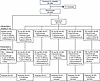 Figure 1
CONSORT diagram of FRONTIER-1 and FRONTIER-2 clinical trials. Flowchart illustrates the number of participants randomized to each treatment group who were included in the analyses. BID, twice daily; Pt, patient; QD, once daily.
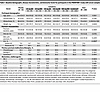 Table 1
Baseline demographic, disease characteristics, and biomarker levels for participants in the FRONTIER-1 study with serum samples
Baseline demographics were comparable, and no statistically significant differences were noted, among the 60 (29 placebo and 31 icotrokinra 100 mg twice daily [BID]) participants from whom tape-strip samples were analyzed for BD-2 (Supplemental Table 1; supplemental material available online with this article; https://doi.org/10.1172/jci.insight.193563DS1) or among the subset of 46 (20 placebo and 26 100 mg BID) FRONTIER-1 participants from whom Olink Explore HT–based broad proteomic data were generated from tape-strip samples (Table 2), with similar differences in demographics as observed in the serum cohort. Among participants with available tape-strip samples, there was a larger proportion of female participants in the placebo (55.2%) than in the 100 mg BID icotrokinra group (35.5%); 25.8% of participants in the icotrokinra dose groups had severe psoriasis, as assessed by IGA, versus 6.9% in the placebo group; however, none of these differences were statistically significant (Supplemental Table 1).
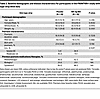 Table 2
Baseline demographic and disease characteristics for participants in the FRONTIER-1 study with tape-strip Olink data
Fewer participants consented to skin biopsy sampling (placebo N = 3; icotrokinra N = 22), and as a result there were more differences in baseline characteristics of participants who provided skin biopsy samples for transcriptomic analyses (Table 3). Similar to the serum and skin-tape cohorts, there was a higher proportion of females in the placebo group (66.7%) than the icotrokinra group (18.2%). A higher proportion of icotrokinra-treated participants with skin biopsies had severe psoriasis (40.9%), while all placebo participants had moderate psoriasis, as assessed by IGA. Additionally, there were differences in prior therapies, with 36.4% of participants receiving icotrokinra receiving prior phototherapy and 0.0% in the placebo group. Findings from skin biopsy transcriptomics datasets should be interpreted within this context.
Characterization of systemic PD changes.
Activation of the IL-23 pathway in psoriasis is associated with increased serum levels of IL-23 pathway biomarkers IL-17A, IL-17F, and IL-22 (29). Additionally, inflammatory burden in psoriatic skin has been shown to increase serum levels of antimicrobial peptides, like BD-2 (30). Serum levels of these biomarkers correlate with disease severity and treatment response, including therapies that inhibit IL-23 (30, 31). Reductions from baseline for IL-17A, IL-17F, IL-22, and BD-2 were observed for all icotrokinra doses relative to placebo, with the largest reductions in the 100 mg BID dose cohort. Importantly, reductions in serum biomarkers with icotrokinra treatment were observed as early as week 4 and were sustained through week 52, with similar reductions from week 16 to week 52 in the placebo group after transition to icotrokinra 100 mg once daily (QD; Figure 2, A–D).
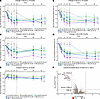 Figure 2
Serum levels of biomarkers relevant to psoriasis disease over time among participants receiving icotrokinra and placebo and broad protein quantification of icotrokinra-treated participant serum. Serum levels of (A) IL-17A, (B) IL-17F, (C) IL-22, (D) BD-2, and (E) IL-23 among participants receiving icotrokinra and placebo were compared with baseline over time. (F) Olink Explore HT protein quantification in serum of icotrokinra-treated participants at week 52 versus week 0. Of the 5,420 proteins that were quantified, 11 proteins were significantly downregulated (adjusted P < 0.05; log2 FC < –1) with icotrokinra after 52 weeks of treatment. (A–E) Estimated marginal means displayed. Error bars are model-based 95% confidence intervals. *Nominal P < 0.05 for all treatments versus baseline. †Nominal P < 0.01 for all treatments versus baseline. ‡Nominal P < 0.001 for all treatments versus baseline. §Nominal P < 0.0001 for all treatments versus baseline. (F) Log2 FC = 1 or –1 and adjusted P value = 0.05 thresholds are depicted with dotted lines. Enrichment statistics were based on Benjamini-Hochberg procedure. BD, beta-defensin; BID, twice daily; FC, fold change; PBO, placebo; PI, peptidase inhibitor; QD, once daily; CAMK1G, calcium/calmodulin dependent protein kinase IG; ENTHD1, ENTH domain-containing protein 1; FKBP1B, FKBP prolyl isomerase 1B; GPR15LG, G protein–coupled receptor 15 ligand.
Other receptor antagonist therapeutics have been shown in clinical studies to increase systemic levels of their respective ligands (32, 33). Despite reducing psoriasis-relevant biomarkers, blocking IL-23R with icotrokinra did not result in a change of serum levels of its ligand, IL-23, from baseline through week 52 (Figure 2E). Broad proteomic analysis of serum samples showed that, of the 5,420 proteins quantified on the Olink HT platform, only 11 proteins were significantly downregulated with icotrokinra after 52 weeks of treatment (FDR < 0.05; log2 fold change [FC] < –1; Figure 2F). Eight of these 11 downregulated proteins (PI3, IL-19, BD-2, IL-17A, IL-17C, IL-22, GPR15LG, and SERPINB4) are directly relevant to psoriasis or IL-23 pathway activation (34–38). While the log2 FC of the other 3 proteins (ENTHD1, CAMK1G, and FKBP1B) were less than –1, the –log10 P value was much lower than the aforementioned 8 psoriasis-relevant proteins.
Taken together these results show icotrokinra induced a dose-dependent systemic PD response with early and sustained reductions in systemic biomarkers of IL-23 pathway activation and psoriasis disease severity. Furthermore, icotrokinra selectively inhibited IL-23–driven psoriatic inflammation without broad modulation of circulating proteins, including serum IL-23 levels.
Skin transcriptomic analysis.
Effective treatment response in psoriasis, including IL-23 pathway inhibition, is associated with normalization of the transcriptome in lesional psoriatic skin (19). To characterize the skin PD response of icotrokinra, whole transcriptome analysis with enrichment of biological pathways and processes was performed on lesional and nonlesional skin biopsy samples. Given the limited number of participants consenting to the skin biopsy substudy, only qualitative descriptive analysis of placebo- versus pooled icotrokinra-treated participants was performed. Week 16 lesional skin samples from icotrokinra-treated, but not placebo-treated, participant samples were more similar to week 0 nonlesional skin samples (Figure 3). Icotrokinra treatment induced transcriptional changes, with modulation of gene sets associated with multiple cell types (e.g., T cells, keratinocytes) and disease-relevant cytokine signaling pathways (e.g., IL-23, IL-12, IFN-γ, and TNF-α). Importantly, icotrokinra attenuated well-characterized psoriasis-associated gene sets, including meta-analysis derived-3 (MAD-3) up and MAD-5 up, which contain genes that are upregulated in lesional compared with nonlesional psoriasis samples across multiple studies (39), as well as IL-23/IL-17 signaling. This analysis also showed increased expression of well-characterized gene sets that are downregulated in disease (e.g., MAD-3 down, MAD-5 down; Figure 3) (39). Thus, icotrokinra treatment induced transcriptional changes that are consistent with IL-23 pathway inhibition and normalization of inflammation in lesional skin.
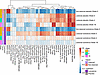 Figure 3
GSVA scores of skin biopsies in lesional and nonlesional skin among participants receiving icotrokinra compared with placebo. Gene set expression in lesional skin from icotrokinra-treated participants is more similar to nonlesional skin than lesional skin. GSVA, gene set variation analysis; BID, twice daily; NFKB, nuclear factor κB; PID, Pathway Interaction Database; QD, once daily; Th, T helper cells; TNF, tumor necrosis factor.
Characterization of skin PD changes.
Skin tape-strip sampling, a relatively minimally invasive technique, has shown promise in differentiating transcriptional signatures between psoriasis and atopic dermatitis skin (40). To further characterize icotrokinra skin PD effects, proteins derived from lesional and nonlesional skin tape-strip samples collected through week 16 were compared between participants receiving icotrokinra 100 mg BID versus placebo.
The sensitivity of tape-strip based analysis was assessed by evaluating changes in skin levels of BD-2, a serum biomarker responsive to icotrokinra (Figure 2D). BD-2 protein levels were elevated in week 0 lesional skin in both icotrokinra 100 mg BID and placebo groups. Icotrokinra 100 mg BID treatment, but not placebo, significantly reduced BD-2 levels in lesional skin to levels approaching those seen in nonlesional and healthy control skin (Figure 4A).
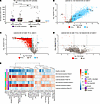 Figure 4
Protein changes in skin among participants receiving icotrokinra and placebo. (A) BD-2 protein levels in skin of participants receiving icotrokinra compared with placebo at weeks 0 and 16. Comparisons of BD-2 protein levels (pg of BD-2/μg of total protein) between lesional and nonlesional skin and between week 0 and week 16 were performed using an unpaired t test. BD-2 protein levels were significantly reduced after 16 weeks of icotrokinra but not with placebo. (B–E) Protein expression measured by Olink Explore HT comparing (B) lesional versus nonlesional skin at week 0, (C) lesional skin from icotrokinra-treated participants at week 16 versus week 0, and (D) lesional skin from icotrokinra-treated participants at week 16 versus nonlesional skin at week 0. Psoriasis-relevant proteins were upregulated at week 0 in lesional skin compared with nonlesional, and they were downregulated after 16 weeks of icotrokinra, bringing protein expression to levels comparable to nonlesional skin. (E) GSVA scores of protein sets in skin of placebo- and icotrokinra-treated FRONTIER-1 participants and healthy volunteers. Skin from icotrokinra-treated participants was more similar to nonlesional than lesional skin. *Nominal P < 0.05 based on unpaired t test. (B–D) Log2 FC = 1 or –1 and adjusted P value = 0.05 thresholds are depicted with dotted lines. Enrichment statistics were based on Benjamini-Hochberg procedure. aBD-2 pg/mL: total μg/mL. bAverage of 100 mg BID and placebo (PBO) nonlesional skin at week 0. cHealthy control (HC) skin tape-strip samples were obtained from sponsor healthy donor program at Johnson & Johnson (Protocol NOCOMPOUNDNAP1001). DEFB4, defensin beta 4; BID, twice daily; NFKB, nuclear factor κB; NL, nonlesional; PI, peptidase inhibitor; RQ, relative quantification; Th, T helper cells; TNF, tumor necrosis factor; W, week.
To further characterize changes in proteins collected via tape-strip sampling, broad proteomics was performed using the Olink Explore HT platform (>5,420 proteins assessed). At baseline, the protein landscape in lesional tape-strip samples was markedly differentiated from nonlesional samples, with enrichment of several psoriasis-relevant proteins. A total of 2,684 proteins were upregulated and 18 proteins were downregulated in lesional samples relative to nonlesional samples. The upregulated proteins included known IL-23/IL-17 pathway biomarkers (IL-19, IL-17A, BD-2, IL-22, and IL-17F; Figure 4B). Similar differences in protein expression patterns were also observed when comparing week 0 lesional skin with skin samples from healthy volunteers (Supplemental Figure 1). A paired analysis of week 16 versus week 0 lesional samples showed that 100 mg BID icotrokinra treatment downregulated disease-relevant proteins, with 2,366 downregulated and 13 upregulated proteins after 16 weeks of treatment (Figure 4C). Importantly, a paired analysis of week 16 lesional versus week 0 nonlesional samples in icotrokinra-treated participants showed 5,406 out of 5,415 proteins were comparable at week 16, and of the 9 proteins that were different between these groups, none are known to be related to the pathogenesis of psoriasis (Figure 4D).
To further evaluate the impact of icotrokinra on psoriasis-relevant proteins, protein sets were generated from well-characterized or published psoriasis and IL-23 pathway activation gene sets (39, 41–43). In this GSVA, the icotrokinra-treated week 16 lesional samples were more similar to healthy control and nonlesional samples than both week 0 lesional and placebo-treated week 16 lesional samples (Figure 4E). Thus, icotrokinra normalized psoriasis-associated protein signatures in lesional skin to levels observed in nonlesional skin by week 16, suggesting normalization of skin inflammation with treatment.
Correlation of icotrokinra PD response with observed clinical response and exposure.
To understand the exposure-response relationship of icotrokinra PD and its correlation with clinical response, the pharmacokinetic (PK)/PD relationship coupled with clinical response was assessed. Log2 FC in serum BD-2 levels strongly correlated with percentage PASI improvement (R = –0.6, P < 2.2 × 10⁻¹⁶; Figure 5A). Furthermore, higher reductions in serum BD-2 levels were associated with higher levels of PASI improvement (Figure 5B). Similar results were obtained with IL-22, with serum levels correlating with PASI response (R = –0.4, P < 2.2 × 10⁻¹⁶; Figure 5, C and D).
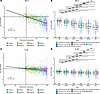 Figure 5
Levels of BD-2 and IL-22 in serum are correlated with PASI response among participants receiving icotrokinra. (A and B) BD-2. (C and D) IL-22.Correlation between PASI change from baseline and biomarker change from baseline was performed using Pearson’s correlation. BD-2 and IL-22 log2 FC from baseline were compared across all PASI percentage improvement categories, and adjusted P values were generated using Tukey’s multiple comparisons of means. Reductions in BD-2 and IL-22 were correlated with PASI improvement. **P < 0.01. ***P < 0.001. Correlation performed using Pearson’s correlation. Adjusted P values calculated using Tukey’s test for multiple comparisons of means. BD, beta-defensin; BID, twice daily; PASI, Psoriasis Area and Severity Index; QD, once daily.
Population PK/PD modeling was performed to evaluate the relationship between icotrokinra treatment on PASI scores and serum BD-2 levels over time. Sequential population PK/PD modeling with indirect response models for PASI scores and log2 BD-2 levels fit the data well (visual predictive check based on simulation of N = 1,000 shown in Figure 6). The precision of the parameter estimate for the concentration at half of the maximum effect (EC50) improved slightly by including BD-2 levels in the model, compared with a model including PASI scores alone. The time course and magnitude of effect of icotrokinra concentrations on PASI scores and BD-2 levels were similar. These results demonstrate that the exposure-clinical response and exposure-biomarker relationships were similar with icotrokinra. Thus, there was a strong correlation between exposure, PD changes, and the observed clinical response with icotrokinra.
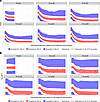 Figure 6
Visual predictive check for longitudinal population PK/PD model describing the effect of icotrokinra on PASI and log2 BD-2. (A) PASI. (B) log2 BD-2. BD, beta-defensin; BID, twice daily; CI, confidence interval; PASI, Psoriasis Area and Severity Index; PD, pharmacodynamics; PK, pharmacokinetics; QD, once daily.


