
Research ArticleEndocrinologyReproductive biology
Open Access |  10.1172/jci.insight.189775
Central SELENOT deficiency impairs gonadotrope axis function, sexual behavior, and fertility in male and female mice
Ben Yamine Mallouki,1,2 Loubna Boukhzar,1,2 Ludovic Dumont,1,2 Azénor Abgrall,1,2 Marjorie Gras,1,2 Agathe Prieur,1,2 David Alexandre,1,2 David Godefroy,1,2 Yves Tillet,3 Nathalie Rives,1,2 Luca Grumolato,1,2 Fatiha Chigr,4 and Youssef Anouar1,2
1Université Rouen Normandie, Inserm, U1239, Neuroendocrine, Endocrine and Germinal Differentiation and Communication Laboratory, F76000, Rouen, France.
2Institute for Research and Innovation in Biomedicine, F76000, Rouen, France.
3CNRS UMR 7247, IFCE, INRAE, Université de Tours, Physiologie de la Reproduction et des Comportements, F-37380 Nouzilly, France.
4Bioengineering Laboratory, Faculty of Sciences and Techniques, Sultan Moulay Slimane University, Beni Mellal, Morocco.
Address correspondence to: Youssef Anouar, INSERM U1239, Sciences and Technics Faculty, University of Rouen Normandie, CURIB Bldg., Mont-Saint-Aignan, France. Phone: 0033235146641; Email: youssef.anouar@univ-rouen.fr.
Find articles by Mallouki, B. in: PubMed | Google Scholar
1Université Rouen Normandie, Inserm, U1239, Neuroendocrine, Endocrine and Germinal Differentiation and Communication Laboratory, F76000, Rouen, France.
2Institute for Research and Innovation in Biomedicine, F76000, Rouen, France.
3CNRS UMR 7247, IFCE, INRAE, Université de Tours, Physiologie de la Reproduction et des Comportements, F-37380 Nouzilly, France.
4Bioengineering Laboratory, Faculty of Sciences and Techniques, Sultan Moulay Slimane University, Beni Mellal, Morocco.
Address correspondence to: Youssef Anouar, INSERM U1239, Sciences and Technics Faculty, University of Rouen Normandie, CURIB Bldg., Mont-Saint-Aignan, France. Phone: 0033235146641; Email: youssef.anouar@univ-rouen.fr.
Find articles by Boukhzar, L. in: PubMed | Google Scholar
1Université Rouen Normandie, Inserm, U1239, Neuroendocrine, Endocrine and Germinal Differentiation and Communication Laboratory, F76000, Rouen, France.
2Institute for Research and Innovation in Biomedicine, F76000, Rouen, France.
3CNRS UMR 7247, IFCE, INRAE, Université de Tours, Physiologie de la Reproduction et des Comportements, F-37380 Nouzilly, France.
4Bioengineering Laboratory, Faculty of Sciences and Techniques, Sultan Moulay Slimane University, Beni Mellal, Morocco.
Address correspondence to: Youssef Anouar, INSERM U1239, Sciences and Technics Faculty, University of Rouen Normandie, CURIB Bldg., Mont-Saint-Aignan, France. Phone: 0033235146641; Email: youssef.anouar@univ-rouen.fr.
Find articles by
Dumont, L.
in:
PubMed
|
Google Scholar
|

1Université Rouen Normandie, Inserm, U1239, Neuroendocrine, Endocrine and Germinal Differentiation and Communication Laboratory, F76000, Rouen, France.
2Institute for Research and Innovation in Biomedicine, F76000, Rouen, France.
3CNRS UMR 7247, IFCE, INRAE, Université de Tours, Physiologie de la Reproduction et des Comportements, F-37380 Nouzilly, France.
4Bioengineering Laboratory, Faculty of Sciences and Techniques, Sultan Moulay Slimane University, Beni Mellal, Morocco.
Address correspondence to: Youssef Anouar, INSERM U1239, Sciences and Technics Faculty, University of Rouen Normandie, CURIB Bldg., Mont-Saint-Aignan, France. Phone: 0033235146641; Email: youssef.anouar@univ-rouen.fr.
Find articles by Abgrall, A. in: PubMed | Google Scholar
1Université Rouen Normandie, Inserm, U1239, Neuroendocrine, Endocrine and Germinal Differentiation and Communication Laboratory, F76000, Rouen, France.
2Institute for Research and Innovation in Biomedicine, F76000, Rouen, France.
3CNRS UMR 7247, IFCE, INRAE, Université de Tours, Physiologie de la Reproduction et des Comportements, F-37380 Nouzilly, France.
4Bioengineering Laboratory, Faculty of Sciences and Techniques, Sultan Moulay Slimane University, Beni Mellal, Morocco.
Address correspondence to: Youssef Anouar, INSERM U1239, Sciences and Technics Faculty, University of Rouen Normandie, CURIB Bldg., Mont-Saint-Aignan, France. Phone: 0033235146641; Email: youssef.anouar@univ-rouen.fr.
Find articles by Gras, M. in: PubMed | Google Scholar
1Université Rouen Normandie, Inserm, U1239, Neuroendocrine, Endocrine and Germinal Differentiation and Communication Laboratory, F76000, Rouen, France.
2Institute for Research and Innovation in Biomedicine, F76000, Rouen, France.
3CNRS UMR 7247, IFCE, INRAE, Université de Tours, Physiologie de la Reproduction et des Comportements, F-37380 Nouzilly, France.
4Bioengineering Laboratory, Faculty of Sciences and Techniques, Sultan Moulay Slimane University, Beni Mellal, Morocco.
Address correspondence to: Youssef Anouar, INSERM U1239, Sciences and Technics Faculty, University of Rouen Normandie, CURIB Bldg., Mont-Saint-Aignan, France. Phone: 0033235146641; Email: youssef.anouar@univ-rouen.fr.
Find articles by Prieur, A. in: PubMed | Google Scholar
1Université Rouen Normandie, Inserm, U1239, Neuroendocrine, Endocrine and Germinal Differentiation and Communication Laboratory, F76000, Rouen, France.
2Institute for Research and Innovation in Biomedicine, F76000, Rouen, France.
3CNRS UMR 7247, IFCE, INRAE, Université de Tours, Physiologie de la Reproduction et des Comportements, F-37380 Nouzilly, France.
4Bioengineering Laboratory, Faculty of Sciences and Techniques, Sultan Moulay Slimane University, Beni Mellal, Morocco.
Address correspondence to: Youssef Anouar, INSERM U1239, Sciences and Technics Faculty, University of Rouen Normandie, CURIB Bldg., Mont-Saint-Aignan, France. Phone: 0033235146641; Email: youssef.anouar@univ-rouen.fr.
Find articles by Alexandre, D. in: PubMed | Google Scholar
1Université Rouen Normandie, Inserm, U1239, Neuroendocrine, Endocrine and Germinal Differentiation and Communication Laboratory, F76000, Rouen, France.
2Institute for Research and Innovation in Biomedicine, F76000, Rouen, France.
3CNRS UMR 7247, IFCE, INRAE, Université de Tours, Physiologie de la Reproduction et des Comportements, F-37380 Nouzilly, France.
4Bioengineering Laboratory, Faculty of Sciences and Techniques, Sultan Moulay Slimane University, Beni Mellal, Morocco.
Address correspondence to: Youssef Anouar, INSERM U1239, Sciences and Technics Faculty, University of Rouen Normandie, CURIB Bldg., Mont-Saint-Aignan, France. Phone: 0033235146641; Email: youssef.anouar@univ-rouen.fr.
Find articles by Godefroy, D. in: PubMed | Google Scholar
1Université Rouen Normandie, Inserm, U1239, Neuroendocrine, Endocrine and Germinal Differentiation and Communication Laboratory, F76000, Rouen, France.
2Institute for Research and Innovation in Biomedicine, F76000, Rouen, France.
3CNRS UMR 7247, IFCE, INRAE, Université de Tours, Physiologie de la Reproduction et des Comportements, F-37380 Nouzilly, France.
4Bioengineering Laboratory, Faculty of Sciences and Techniques, Sultan Moulay Slimane University, Beni Mellal, Morocco.
Address correspondence to: Youssef Anouar, INSERM U1239, Sciences and Technics Faculty, University of Rouen Normandie, CURIB Bldg., Mont-Saint-Aignan, France. Phone: 0033235146641; Email: youssef.anouar@univ-rouen.fr.
Find articles by Tillet, Y. in: PubMed | Google Scholar
1Université Rouen Normandie, Inserm, U1239, Neuroendocrine, Endocrine and Germinal Differentiation and Communication Laboratory, F76000, Rouen, France.
2Institute for Research and Innovation in Biomedicine, F76000, Rouen, France.
3CNRS UMR 7247, IFCE, INRAE, Université de Tours, Physiologie de la Reproduction et des Comportements, F-37380 Nouzilly, France.
4Bioengineering Laboratory, Faculty of Sciences and Techniques, Sultan Moulay Slimane University, Beni Mellal, Morocco.
Address correspondence to: Youssef Anouar, INSERM U1239, Sciences and Technics Faculty, University of Rouen Normandie, CURIB Bldg., Mont-Saint-Aignan, France. Phone: 0033235146641; Email: youssef.anouar@univ-rouen.fr.
Find articles by Rives, N. in: PubMed | Google Scholar
1Université Rouen Normandie, Inserm, U1239, Neuroendocrine, Endocrine and Germinal Differentiation and Communication Laboratory, F76000, Rouen, France.
2Institute for Research and Innovation in Biomedicine, F76000, Rouen, France.
3CNRS UMR 7247, IFCE, INRAE, Université de Tours, Physiologie de la Reproduction et des Comportements, F-37380 Nouzilly, France.
4Bioengineering Laboratory, Faculty of Sciences and Techniques, Sultan Moulay Slimane University, Beni Mellal, Morocco.
Address correspondence to: Youssef Anouar, INSERM U1239, Sciences and Technics Faculty, University of Rouen Normandie, CURIB Bldg., Mont-Saint-Aignan, France. Phone: 0033235146641; Email: youssef.anouar@univ-rouen.fr.
Find articles by Grumolato, L. in: PubMed | Google Scholar
1Université Rouen Normandie, Inserm, U1239, Neuroendocrine, Endocrine and Germinal Differentiation and Communication Laboratory, F76000, Rouen, France.
2Institute for Research and Innovation in Biomedicine, F76000, Rouen, France.
3CNRS UMR 7247, IFCE, INRAE, Université de Tours, Physiologie de la Reproduction et des Comportements, F-37380 Nouzilly, France.
4Bioengineering Laboratory, Faculty of Sciences and Techniques, Sultan Moulay Slimane University, Beni Mellal, Morocco.
Address correspondence to: Youssef Anouar, INSERM U1239, Sciences and Technics Faculty, University of Rouen Normandie, CURIB Bldg., Mont-Saint-Aignan, France. Phone: 0033235146641; Email: youssef.anouar@univ-rouen.fr.
Find articles by Chigr, F. in: PubMed | Google Scholar
1Université Rouen Normandie, Inserm, U1239, Neuroendocrine, Endocrine and Germinal Differentiation and Communication Laboratory, F76000, Rouen, France.
2Institute for Research and Innovation in Biomedicine, F76000, Rouen, France.
3CNRS UMR 7247, IFCE, INRAE, Université de Tours, Physiologie de la Reproduction et des Comportements, F-37380 Nouzilly, France.
4Bioengineering Laboratory, Faculty of Sciences and Techniques, Sultan Moulay Slimane University, Beni Mellal, Morocco.
Address correspondence to: Youssef Anouar, INSERM U1239, Sciences and Technics Faculty, University of Rouen Normandie, CURIB Bldg., Mont-Saint-Aignan, France. Phone: 0033235146641; Email: youssef.anouar@univ-rouen.fr.
Find articles by
Anouar, Y.
in:
PubMed
|
Google Scholar
|
Published November 6, 2025 - More info
JCI Insight. 2025;10(24):e189775. https://doi.org/10.1172/jci.insight.189775.
© 2025 Mallouki et al. This work is licensed under the Creative Commons Attribution 4.0 International License. To view a copy of this license, visit http://creativecommons.org/licenses/by/4.0/.
Received: December 16, 2024; Accepted: October 30, 2025

-
Results
SELENOT deficiency in the brain alters fertility and sexual behavior. We have previously validated and described a mouse line (Nes-Cre:Selenotfl/fl) with disruption of the Selenot gene in the brain obtained by crossing Selenotfl/fl mice with mice carrying Cre recombinase under the control of a nestin (Nes) promoter (12, 13). In order to investigate the effects of SELENOT inactivation in the brain on mouse fertility, male and female Nes-Cre:Selenotfl/fl mice were mated during a 5-month period and compared to control littermate animals (control group). As shown in Figure 1A, the pregnancy rate was dramatically reduced in the Nes-Cre: Selenotfl/fl group (1 out of 11 mated females) compared with the control group, which showed normal reproductive behavior (46 out of 50 females). In continuous mating, the Nes-Cre:Selenotfl/fl group showed impaired fertility, as indicated by the birth of only 1 litter with 2 pups during the mating period (Figure 1, B and C). We then tested the fertility of male Nes-Cre:Selenotfl/fl mice after mating with female control mice. As shown in Figure 1A, the number of female control mice becoming pregnant when mated with male Nes-Cre:Selenotfl/fl mice was significantly lower (5 out of 15 females) compared with those mated with control males. In continuous mating, control females had fewer litters when mated with mutant males as compared with control males, and the number of pups per litter produced over 5 months was also significantly lower (Figure 1, B and C). The fertility of Nes-Cre:Selenotfl/fl females was also assessed after mating with male control mice. In comparison with control females, the number of Nes-Cre:Selenotfl/fl females that became pregnant was significantly reduced (13 out of 29 females; Figure 1A). In continuous mating, female Nes-Cre:Selenotfl/fl mice mated with male control had fewer litters (Figure 1B) and the number of pups per litter produced over 5 months was significantly lower compared with control females (Figure 1C). Together, these data revealed that SELENOT deficiency in the brain alters male and female fertility in mice.
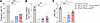 Figure 1
Fertility assessment of brain SELENOT–deficient mice. (A) Pregnancy rate corresponding to the percentage of mating resulting in pregnancy. The number of pregnant mice out of the number of mated females is indicated in each bar. Statistical significance for the pregnancy rate was assessed by the χ2 test. (B) Number of litters for each mated female. (C) Litter size. Data are expressed as mean ± SEM and were compared with the nonparametric Kruskal-Wallis test and a posthoc Dunn’s test. *P < 0.05; **P < 0.01; ***P < 0.001. Control females were paired with control males (n = 10 per group). Nes-Cre:Selenotfl/fl females were paired with Nes-Cre:Selenotfl/fl males (n = 8 per group). Control females were paired with Nes-Cre:Selenotfl/fl males (n = 8 per group). Nes-Cre:Selenotfl/fl females were paired with control males (n = 8 per group). Mating was performed during 5 months. Note that no statistical analysis could be performed for the pregnancy rate of the Nes-Cre:Selenotfl/fl group since only 1 mating out of 11 attempts led to pregnancy in this group, giving birth to 1 litter of 2 pups.
In line with these data, couples of Nes-Cre:Selenotfl/fl mice exhibited longer mount latency and lower mount frequency compared with control littermates (Figure 2, A and B). In addition, these mice exhibited increased intromission latency and almost no intromissions compared with the control group (Figure 2, C and D). The behavioral changes observed in Nes-Cre:Selenotfl/fl mice were due to sexual impairments in both male and female mutant mice. Indeed, Nes-Cre:Selenotfl/fl males mated with female control mice showed an increase in mount and intromission latencies (Figure 2, A–C), and a decrease in mount and intromission frequencies (Figure 2, B–D). For female Nes-Cre:Selenotfl/fl mice, these parameters were not significantly modified, as they depend mostly on control males used in mating (Figure 2, A–D). However, the lordosis quotient was significantly decreased in Nes-Cre:Selenotfl/fl females compared with control females (Figure 2E), indicating an altered receptivity of these females. Also, a significant decrease in the copulatory efficacy was found for Nes-Cre:Selenotfl/fl males compared with control males (Figure 2F). Thus, central SELENOT is necessary for normal sexual behavior of both male and female mice.
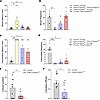 Figure 2
Sexual behavior of brain SELENOT–deficient mice. (A) Mount latency is represented for the different groups of mice. (B) Mount frequency. (C) Intromission latency. (D) Intromission frequency. (E) The lordosis quotient of female Nes-Cre:Selenotfl/fl mice was calculated as the lordosis number/number of mounts. (F) Copulatory efficacy was calculated as the intromission frequency divided by mount frequency + intromission frequency. For these analyses, male and female Nes-Cre:Selenotfl/fl mice (n = 8 for each group) and male and female control mice (n = 11 for each group) were used. The data are expressed as mean ± SEM and were compared using the nonparametric Kruskal-Wallis test with a post hoc Dunn’s test (A–D) and unpaired, 2-tailed Student’s t test (E and F). *P < 0.05; **P < 0.01; ***P < 0.001.
Nes-Cre:Selenotfl/fl mice exhibit increased GnRH levels. We then asked whether GnRH neurons, which control the gonadotrope axis and sexual behavior (1), express SELENOT. RNAScope analysis showed indeed that virtually all hypothalamic GnRH neurons of the mPOA exhibited Selenot mRNA expression (Figure 3A). To determine whether disruption of the Selenot gene in the brain could affect hypothalamic GnRH neuron distribution and density, we analyzed GnRH immunoreactivity in coronal sections of the hypothalamus from adult Nes-Cre:Selenotfl/fl and control mice. These studies revealed a higher immunoreactive signal in the mPOA and ME of Nes-Cre:Selenotfl/fl mice compared with littermate controls (Figure 3B). To confirm these findings, we compared the number of GnRH neurons in the hypothalamus of adult male and female Nes-Cre:Selenotfl/fl mice with that of control mice using iDISCO-based 3D immunohistochemistry (15). The characteristic rostro-caudal distribution pattern of the GnRH neurons and the arborization of their processes were demonstrated by reconstructing series of optical slices in the hypothalamus of adult Nes-Cre:Selenotfl/fl and control mice (Figure 3C). This analysis revealed that the number of GnRH neurons was higher in male and female Nes-Cre:Selenotfl/fl compared with control mice (Figure 3D). This increase in the immunoreactive neuropeptide was accompanied by an increase in the Gnrh mRNA levels, as indicated by qPCR analysis of hypothalamic mRNA (Figure 3E), indicating that SELENOT deficiency alters Gnrh gene expression.
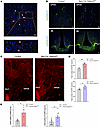 Figure 3
Distribution of GnRH neurons in the hypothalamus of Selenot–/– mice. (A) RNAScope analysis of SELENOT and GnRH mRNA expression in the mPOA. Gnrh mRNA is labeled in red (arrows) and Selenot mRNA is in green (arrowheads). Colabeled neurons expressing both mRNAs are indicated in the inset by asterisks. Nuclei are labeled in blue by DAPI. Scale bar: 50 μm. The images below are a higher-magnification view of the box in the top image (×5 of the original image). (B) Coronal sections at the mPOA and ME were immunostained for GnRH (green). Nuclei were stained in blue using DAPI. Scale bars: 50 μm. (C) 3D sagittal view of GnRH labeling with anatomical references in adult control and Nes-Cre:Selenotfl/fl mice. Scale bars: 500 μm. OVLT, organum vasculosum of the lamina terminalis; mPOA, median preoptic area. (D) Total number of hypothalamic GnRH neurons in adult female and male control and Nes-Cre:Selenotfl/fl mice (n = 4 per group). (E) Gnrh mRNA levels in the hypothalamus of control and Nes-Cre:Selenotfl/fl adult female (n = 6 and 5 per group, respectively) and male (n = 8 per group) mice. Statistical analysis was performed using unpaired, 2-tailed Student’s t test. *P < 0.05, **P < 0.01.
Nes-Cre:Selenotfl/fl mice exhibit abnormal LH pulse secretion and altered estrous cyclicity. To determine whether the higher intensity of GnRH immunoreactivity observed in the mPOA and ME would translate into a higher LH output, circulating LH levels were measured in male and female Nes-Cre:Selenotfl/fl mice (Figure 4). In males, LH levels were indeed higher in Nes-Cre:Selenotfl/fl compared with control mice (Figure 4A). In addition, a significantly lower LH pulse frequency was observed in Nes-Cre:Selenotfl/fl males compared with control males (Figure 4, B and C). Similarly, LH levels measured at diestrus were markedly elevated in Nes-Cre:Selenotfl/fl females compared with controls (Figure 4D). Nes-Cre:Selenotfl/fl females also had a significantly lower LH pulse frequency as compared with controls (Figure 4, E and F). These results indicate that SELENOT deficiency impacts the function of the hypothalamic-hypophyseal system in both male and female mice. Because LH concentration regulates the length and order of the different phases of the estrous cycle in females (16), we wondered whether the changes observed in circulating LH levels would lead to impairment of the reproductive cycle. We found that a large majority of Nes-Cre:Selenotfl/fl females exhibit severely disrupted estrous cyclicity (oligo-ovulation). Nes-Cre:Selenotfl/fl females rarely reached the preovulatory stage of the estrous cycle and exhibited prolonged duration of metestrus and diestrus, compared with control females (Figure 4, G and H).
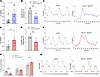 Figure 4
LH circulating levels and estrous cyclicity in brain SELENOT–deficient mice. (A) Plasma LH levels in adult males (n = 10 per group). (B) Number of LH pulses during 2 hours in adult males (n = 5 per group). (C) Representative graphs of LH pulsatility during a 2-hour interval for male control and Nes-Cre:Selenotfl/fl mice. (D) Plasma LH levels in adult female control and Nes-Cre:Selenotfl/fl mice (n = 7 per group). (E) Number of LH pulses during 2 hours in females at diestrus (n = 5 per group). (F) Representative graphs of LH pulsatility during a 2-hour interval for adult female control and Nes-Cre:Selenotfl/fl mice. (G) Percentage of time spent in each estrous cycle stage (E, estrus; M/D, metestrus/diestrus; P, proestrus) (n = 7 per group). (H) Representative estrous cyclicity of control and Nes-Cre:Selenotfl/fl mice during 21 consecutive days. Statistical analysis was performed using unpaired, 2-tailed Student’s t test. *P < 0.05, **P < 0.01, ***P < 0.001.
Nes-Cre:Selenotfl/fl mice exhibit abnormal hormone levels and defective follicular development. To further characterize the gonadotrope axis in female Nes-Cre:Selenotfl/fl mice, we measured circulating FSH, estradiol (E2), and T levels. While FSH and E2 were significantly decreased in Nes-Cre:Selenotfl/fl compared with control mice (Figure 5, A and B), T concentration was higher in Nes-Cre:Selenotfl/fl compared with control mice (Figure 5C). These data suggest that the subfertility and altered sexual behavior of female mice with SELENOT inactivation in the brain is due to abnormal hormonal levels in the whole gonadotrope axis.
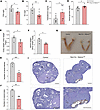 Figure 5
Hormone levels and ovarian morphology of brain SELENOT–deficient mice. (A) Plasma FSH levels in adult female control and Nes-Cre:Selenotfl/fl mice (n = 6 and 5, respectively). (B) Plasma E2 concentration in adult female control and Nes-Cre:Selenotfl/fl mice (n = 6 and 8, respectively). (C) Plasma T levels measured in adult female control and Nes-Cre:Selenotfl/fl mice (n = 8 and 7, respectively). (D) Blood glucose levels were measured in fasted adult female control and Nes-Cre:Selenotfl/fl mice (n = 7 per group). (E) Ratio of ovary weight to body weight in control and Nes-Cre:Selenotfl/fl mice (n = 5 per group). (F) Ratio of uterine weight to body weight in control and Nes-Cre:Selenotfl/fl mice (n = 5 per group). (G) Gross structure of the ovaries and uteri is shown. (H) Quantitative analysis of antral follicle (AF) and corpora lutea (CL) in control and Nes-Cre:Selenotfl/fl mice (n = 5 per group). (I) H&E staining of the ovarian tissue morphology of adult control and Nes-Cre:Selenotfl/fl mice. Scale bars: 200 μm. Ovarian sections containing AF and CL are shown. Asterisks denote ovarian cysts. Data are presented as mean ± SEM. Statistical analysis was performed with unpaired, 2-tailed Student’s t test. *P < 0.05, **P < 0.01, ***P < 0.001.
Because glycemia dysregulation could be also associated with certain reproductive disorders, we measured blood glucose in the knockout animals, and found that glycemia was higher in these mice compared with control littermates (Figure 5D).
To determine whether the abnormal circulating FSH and E2 levels observed in the female Nes-Cre:Selenotfl/fl mice impinge on ovary and uterine morphology, we first assessed the ratios of ovary and uterine weight to body weight, markers of circulating FSH and estrogen concentrations, respectively (17). We found that both markers were affected in Nes-Cre:Selenotfl/fl mice since they were both significantly reduced compared with control littermates (Figure 5, E–G). Ovarian histology of Nes-Cre:Selenotfl/fl females showed abnormalities consistent with their anovulatory phenotype, with the presence of fewer antral follicles (containing a single large antrum) and significantly less postovulation corpora lutea compared with control females (Figure 5H). In addition, cysts were observed in the ovaries of brain SELENOT–deficient mice (Figure 5I).
Male Nes-Cre:Selenotfl/fl mice exhibit abnormal hormone levels and testicular changes. Because male Nes-Cre:Selenotfl/fl mice also displayed impaired sexual behavior and fertility, and higher levels of GnRH and LH compared with control, we investigated the male gonadotrope axis activity and testis morphology. The data showed that, as in females, FSH concentration was lower in Nes-Cre:Selenotfl/fl compared with control males (Figure 6A). In addition, E2 levels were higher and T levels were markedly elevated in Nes-Cre:Selenotfl/fl males compared with control males (Figure 6, B and C). These results showed that, as in females, SELENOT deficiency in the male brain alters the whole activity of the gonadotrope axis, which impacts male fertility as described above.
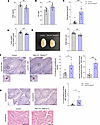 Figure 6
Hormone levels and testis morphology of brain SELENOT–deficient mice. (A) Plasma FSH concentration in adult male control and Nes-Cre:Selenotfl/fl mice (n = 7 and 8, respectively). (B) Plasma E2 concentration in adult male control and Nes-Cre:Selenotfl/fl mice (n = 9 and 10, respectively). (C) Plasma T concentration in adult male control and Nes-Cre:Selenotfl/fl mice (n = 11 and 9, respectively). (D) Ratio of testis weight to body weight in control and Nes-Cre:Selenotfl/fl mice (n = 10 per group). (E) Representative image showing the morphology of the testis and the corresponding measurement of the size in control and Nes-Cre:Selenotfl/fl mice. (F) Histological evaluation using H&E and saffron staining of testicular tissue from adult control and Nes-Cre:Selenotfl/fl mice. Cell pyknotic nuclei (arrowhead in the inset) were observed in seminiferous tubules of control and Nes-Cre:Selenotfl/fl mice. The images below are a higher-magnification view of the boxes in the top images (×10 of the original image). Stereological analyses of testicular tissues from control and Nes-Cre:Selenotfl/fl mice was used to determine the percentage of pyknotic seminiferous tubules, the number of pyknotic cells/1000 μm2 for seminiferous tubules containing at a minimum 1 pyknotic cell. (G) Vacuolizations in seminiferous tubules (asterisks) were analyzed in testicular tissues from control and Nes-Cre:Selenotfl/fl mice, and the percentage of seminiferous tubules with vacuolization was determined. (H) H&E staining of cauda epididymides sections from adult male control and Nes-Cre:Selenotfl/fl mice. Scale bars: 50 μm. The values are expressed as the mean percentage ± SEM, with n = 6 and 5, respectively, per group (for each animal, 4 testicular tissue pieces and 2 slices/tissue piece were analyzed). Statistical analysis was performed with unpaired, 2-tailed Student’s t test. *P < 0.05, **P < 0.01, ***P < 0.001.
At the level of the gonads, the weight and size of the testis were significantly reduced in Nes-Cre:Selenotfl/fl males compared with control littermates (Figure 6, D and E). Histologic examinations were carried out on H&E- and saffron-stained sections of testis (Figure 6F). The overall histology of the testicular tissue in Nes-Cre:Selenotfl/fl mice did not seem to be altered (Figure 6F). However, a higher percentage of pyknotic seminiferous tubules was observed in Nes-Cre:Selenotfl/fl testicular tissue compared with control (Figure 6F). The number of pyknotic cells per area of seminiferous tubules containing at a minimum 1 pyknotic cell was also higher in Nes-Cre:Selenotfl/fl testes (Figure 6F). In addition, an important vacuolization was observed in seminiferous tubules within the testicular tissue of Nes-Cre:Selenotfl/fl mice (Figure 6G). No apparent difference in epididymal anatomy was seen between Nes-Cre:Selenotfl/fl and control animals (Figure 6H).
GnRH antagonist treatment restores the neuroendocrine phenotype and ovarian morphology of Nes-Cre:Selenotfl/fl mice. Since our results uncovered a hyperactivation of GnRH neurons in Nes-Cre:Selenotfl/fl mice, we reasoned that competing with endogenous GnRH for binding to membrane receptors on gonadotropic cells could decrease the rate of LH release in female mutant mice, thus restoring physiological LH levels and estrous cyclicity in these animals. To test this hypothesis, we monitored LH levels and estrous cyclicity in Nes-Cre:Selenotfl/fl females for 12 days before, during, and after the treatment with the GnRH antagonist cetrorelix. The mice received cetrorelix acetate at 0.5 mg/kg, i.p. every second day (Figure 7A). The 12-day periods of treatment with the vehicle or cetrorelix ensured the observation of 3 consecutive estrous cycles at each period, and such antagonist treatment has been previously shown to normalize LH release and estrous cyclicity (18). Tail-blood samples were collected for LH measurements in brain Nes-Cre:Selenotfl/fl and control females twice during the GnRH antagonist treatment, and once before and after the treatment period (Figure 7A). Following intermittent GnRH antagonist treatment (0.5 mg/kg), the high mean LH values initially observed in female Nes-Cre:Selenotfl/fl mice were significantly reduced to reach levels indistinguishable from those of control (Figure 7B). When the treatment was discontinued, LH levels increased again to levels similar to those observed before the treatment (Figure 7B).
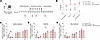 Figure 7
Treatment with a GnRH antagonist restored the neuroendocrine phenotype of female brain SELENOT–deficient mice. (A) Schematic of the experimental design showing the 3 steps of the protocol, before, during, and after i.p. injection of 0.5 mg/kg of cetrorelix acetate or PBS. Female Nes-Cre:Selenotfl/fl mice were injected i.p. for 12 days with cetrorelix acetate (every other day). Tail blood samples were collected for measurement of LH, once before the start of the treatment and then on days 2 and 6 of treatment, as well as on day 4 after the last injection (n = 5 per group). (B) Time course of serum LH concentration in Nes-Cre:Selenotfl/fl mice before the beginning of the treatment, 2 and 6 days after the first injection of cetrorelix, and after discontinuation of the drug antagonist. Blood from control and Nes-Cre:Selenotfl/fl mice that received PBS injection as a control was collected during the same temporal windows as for cetrorelix treatment. (C–E) Percentage of time spent in each estrous cycle was determined for each group of animals and in each condition (E, estrus; M/D, metestrus/diestrus; P, proestrus). Statistical analysis was performed using the nonparametric Kruskal-Wallis test with a post hoc Dunn’s test. *P < 0.05; **P < 0.01.
As described above, Nes-Cre:Selenotfl/fl females spent a shorter time in proestrus as compared with control females (Figure 7C). When Nes-Cre:Selenotfl/fl females were injected with 0.5 mg/kg of GnRH antagonist, almost normal estrous cyclicity was recovered with a proestrus and metestrus/diestrus times comparable to those of control animals (Figure 7D). When the antagonist treatment was stopped, proestrus and estrous times were altered (Figure 7E).
GnRH antagonist treatment normalizes LH pulsatility in both male and female Nes-Cre:Selenotfl/fl mice. To assess whether the reduced LH pulse frequency observed in male and female Nes-Cre:Selenotfl/fl mice is due to increased GnRH activity, we administered the GnRH antagonist cetrorelix acetate at 0.5 mg/kg. i.p. every day for 3 days, and measured LH pulsatility from blood samples (Figure 8A). As shown in Figure 8B, cetrorelix acetate restored the LH pulse frequency in both female and male Nes-Cre:Selenotfl/fl mice as compared with control littermates. Indeed, female and male Nes-Cre:Selenotfl/fl mice treated with the antagonist displayed a similar number of LH pulses compared to control mice (Figure 8, C and D). These results indicate that the altered LH pulse secretion observed in male and female brain SELENOT-deficient mice could be ascribed to the impaired GnRH activity.
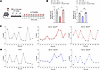 Figure 8
Treatment of male and female brain SELENOT–deficient mice with a GnRH antagonist restored LH pulsatility. (A) Schematic of the experimental design. Female and male Nes-Cre:Selenotfl/fl mice were injected i.p. with cetrorelix acetate or PBS every day during 3 days. Tail blood samples were collected after the treatment, every 10 minutes during 2 hours for measurement of LH concentration. (B) Representative graphs of LH pulsatility in female control and Nes-Cre:Selenotfl/fl mice. (C) Representative graphs of LH pulsatility in male control and Nes-Cre:Selenotfl/fl mice. (D) Number of LH pulses in adult females at diestrous (n = 5 control + PBS, 4 Nes-Cre:Selenotfl/fl + PBS, and 5 Nes-Cre:Selenotfl/fl + cetrorelix acetate) and males (n = 6/5/7) during 2 hours. Statistical analysis was performed using the nonparametric Kruskal-Wallis test with a post hoc Dunn’s test. *P < 0.05; **P < 0.01.
Kisspeptin gene expression is altered in the anteroventral paraventricular nucleus but not the arcuate nucleus in male and female Nes-Cre:Selenotfl/fl mice. To further elucidate the mechanisms involved in the changes in GnRH neuron activity, we examined the hypothalamic anteroventral paraventricular nucleus (AVPV) and arcuate nucleus (ARC) expression of the gene encoding kisspeptin, which is known to regulate LH surge and pulsatility, respectively, through GnRH regulation. At diestrus, kisspeptin mRNA levels were significantly reduced in the AVPV of the mutant mice compared with controls in both females (Figure 9, A and C) and males (Figure 9, E and G), while there was no significant variation in these mRNAs in the ARC, neither in female (Figure 9, B and D) nor in male mutant mice (Figure 9, F and H).
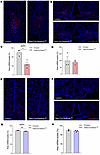 Figure 9
Analysis of the expression of kisspeptin mRNA by RNAScope in situ hybridization. (A–D) RNAScope analysis of kisspeptin mRNA expression in the AVPV and ARC from adult female control and Nes-Cre:Selenotfl/fl mice (n = 3). (E–H) RNAScope analysis of kisspeptin mRNA expression in the AVPV and ARC from adult male control and Nes-Cre:Selenotfl/fl mice (n = 3). Kisspeptin mRNA is labeled in red and nuclei are labeled in blue by DAPI. Original magnification, ×20. Statistical analysis was performed using an unpaired, 2-tailed Student’s t test. *P < 0.05, **P < 0.01.


