
Research ArticleNephrologyTherapeutics
Open Access |  10.1172/jci.insight.183998
Inhibition of cell surface GRP78 and activated α2M interaction attenuates kidney fibrosis
Jackie Trink,1 Ifeanyi Kennedy Nmecha,1 Katrine Pilely,1,2 Renzhong Li,1 Zi Yang,3 Sydney Kwiecien,3 Melissa MacDonald,1 Bo Gao,1 Mariam A. Mamai,1 Chao Lu,1 Urooj F. Bajwa,1 Nikhil Uppal,1 James C. Fredenburgh,4,5 Masao Kakoki,6 Salvatore V. Pizzo,7 Anthony F. Rullo,3 Matthew B. Lanktree,1,4 Jeffrey I. Weitz,5 Yaseelan Palarasah,2 and Joan C. Krepinsky1
1Division of Nephrology, Department of Medicine, McMaster University, Hamilton, Ontario, Canada.
2Department of Molecular Medicine-Cancer and Inflammation, University of Southern Denmark, Odense, Denmark.
3Department of Chemistry and Chemical Biology and
4Department of Health Research Methods, McMaster University, Hamilton, Ontario, Canada.
5Thrombosis and Atherosclerosis Research Institute (TaARI), Hamilton, Ontario, Canada.
6Department of Physiology, Dokkyo Medical University, Mibu, Japan.
7Department of Pathology, Duke University Medical Center, Durham, North Carolina, USA.
Address correspondence to: Joan C. Krepinsky, St. Joseph’s Hospital, 50 Charlton Ave. East, Rm. T3311, Hamilton, Ontario, L8N 4A6, Canada. Phone: 905.522.1155 ext. 34991; Email: krepinj@mcmaster.ca.
Authorship note: IKN and KP share second authorship.
Find articles by Trink, J. in: PubMed | Google Scholar
1Division of Nephrology, Department of Medicine, McMaster University, Hamilton, Ontario, Canada.
2Department of Molecular Medicine-Cancer and Inflammation, University of Southern Denmark, Odense, Denmark.
3Department of Chemistry and Chemical Biology and
4Department of Health Research Methods, McMaster University, Hamilton, Ontario, Canada.
5Thrombosis and Atherosclerosis Research Institute (TaARI), Hamilton, Ontario, Canada.
6Department of Physiology, Dokkyo Medical University, Mibu, Japan.
7Department of Pathology, Duke University Medical Center, Durham, North Carolina, USA.
Address correspondence to: Joan C. Krepinsky, St. Joseph’s Hospital, 50 Charlton Ave. East, Rm. T3311, Hamilton, Ontario, L8N 4A6, Canada. Phone: 905.522.1155 ext. 34991; Email: krepinj@mcmaster.ca.
Authorship note: IKN and KP share second authorship.
Find articles by Nmecha, I. in: PubMed | Google Scholar
1Division of Nephrology, Department of Medicine, McMaster University, Hamilton, Ontario, Canada.
2Department of Molecular Medicine-Cancer and Inflammation, University of Southern Denmark, Odense, Denmark.
3Department of Chemistry and Chemical Biology and
4Department of Health Research Methods, McMaster University, Hamilton, Ontario, Canada.
5Thrombosis and Atherosclerosis Research Institute (TaARI), Hamilton, Ontario, Canada.
6Department of Physiology, Dokkyo Medical University, Mibu, Japan.
7Department of Pathology, Duke University Medical Center, Durham, North Carolina, USA.
Address correspondence to: Joan C. Krepinsky, St. Joseph’s Hospital, 50 Charlton Ave. East, Rm. T3311, Hamilton, Ontario, L8N 4A6, Canada. Phone: 905.522.1155 ext. 34991; Email: krepinj@mcmaster.ca.
Authorship note: IKN and KP share second authorship.
Find articles by Pilely, K. in: PubMed | Google Scholar
1Division of Nephrology, Department of Medicine, McMaster University, Hamilton, Ontario, Canada.
2Department of Molecular Medicine-Cancer and Inflammation, University of Southern Denmark, Odense, Denmark.
3Department of Chemistry and Chemical Biology and
4Department of Health Research Methods, McMaster University, Hamilton, Ontario, Canada.
5Thrombosis and Atherosclerosis Research Institute (TaARI), Hamilton, Ontario, Canada.
6Department of Physiology, Dokkyo Medical University, Mibu, Japan.
7Department of Pathology, Duke University Medical Center, Durham, North Carolina, USA.
Address correspondence to: Joan C. Krepinsky, St. Joseph’s Hospital, 50 Charlton Ave. East, Rm. T3311, Hamilton, Ontario, L8N 4A6, Canada. Phone: 905.522.1155 ext. 34991; Email: krepinj@mcmaster.ca.
Authorship note: IKN and KP share second authorship.
Find articles by Li, R. in: PubMed | Google Scholar
1Division of Nephrology, Department of Medicine, McMaster University, Hamilton, Ontario, Canada.
2Department of Molecular Medicine-Cancer and Inflammation, University of Southern Denmark, Odense, Denmark.
3Department of Chemistry and Chemical Biology and
4Department of Health Research Methods, McMaster University, Hamilton, Ontario, Canada.
5Thrombosis and Atherosclerosis Research Institute (TaARI), Hamilton, Ontario, Canada.
6Department of Physiology, Dokkyo Medical University, Mibu, Japan.
7Department of Pathology, Duke University Medical Center, Durham, North Carolina, USA.
Address correspondence to: Joan C. Krepinsky, St. Joseph’s Hospital, 50 Charlton Ave. East, Rm. T3311, Hamilton, Ontario, L8N 4A6, Canada. Phone: 905.522.1155 ext. 34991; Email: krepinj@mcmaster.ca.
Authorship note: IKN and KP share second authorship.
Find articles by Yang, Z. in: PubMed | Google Scholar
1Division of Nephrology, Department of Medicine, McMaster University, Hamilton, Ontario, Canada.
2Department of Molecular Medicine-Cancer and Inflammation, University of Southern Denmark, Odense, Denmark.
3Department of Chemistry and Chemical Biology and
4Department of Health Research Methods, McMaster University, Hamilton, Ontario, Canada.
5Thrombosis and Atherosclerosis Research Institute (TaARI), Hamilton, Ontario, Canada.
6Department of Physiology, Dokkyo Medical University, Mibu, Japan.
7Department of Pathology, Duke University Medical Center, Durham, North Carolina, USA.
Address correspondence to: Joan C. Krepinsky, St. Joseph’s Hospital, 50 Charlton Ave. East, Rm. T3311, Hamilton, Ontario, L8N 4A6, Canada. Phone: 905.522.1155 ext. 34991; Email: krepinj@mcmaster.ca.
Authorship note: IKN and KP share second authorship.
Find articles by Kwiecien, S. in: PubMed | Google Scholar
1Division of Nephrology, Department of Medicine, McMaster University, Hamilton, Ontario, Canada.
2Department of Molecular Medicine-Cancer and Inflammation, University of Southern Denmark, Odense, Denmark.
3Department of Chemistry and Chemical Biology and
4Department of Health Research Methods, McMaster University, Hamilton, Ontario, Canada.
5Thrombosis and Atherosclerosis Research Institute (TaARI), Hamilton, Ontario, Canada.
6Department of Physiology, Dokkyo Medical University, Mibu, Japan.
7Department of Pathology, Duke University Medical Center, Durham, North Carolina, USA.
Address correspondence to: Joan C. Krepinsky, St. Joseph’s Hospital, 50 Charlton Ave. East, Rm. T3311, Hamilton, Ontario, L8N 4A6, Canada. Phone: 905.522.1155 ext. 34991; Email: krepinj@mcmaster.ca.
Authorship note: IKN and KP share second authorship.
Find articles by MacDonald, M. in: PubMed | Google Scholar
1Division of Nephrology, Department of Medicine, McMaster University, Hamilton, Ontario, Canada.
2Department of Molecular Medicine-Cancer and Inflammation, University of Southern Denmark, Odense, Denmark.
3Department of Chemistry and Chemical Biology and
4Department of Health Research Methods, McMaster University, Hamilton, Ontario, Canada.
5Thrombosis and Atherosclerosis Research Institute (TaARI), Hamilton, Ontario, Canada.
6Department of Physiology, Dokkyo Medical University, Mibu, Japan.
7Department of Pathology, Duke University Medical Center, Durham, North Carolina, USA.
Address correspondence to: Joan C. Krepinsky, St. Joseph’s Hospital, 50 Charlton Ave. East, Rm. T3311, Hamilton, Ontario, L8N 4A6, Canada. Phone: 905.522.1155 ext. 34991; Email: krepinj@mcmaster.ca.
Authorship note: IKN and KP share second authorship.
Find articles by Gao, B. in: PubMed | Google Scholar
1Division of Nephrology, Department of Medicine, McMaster University, Hamilton, Ontario, Canada.
2Department of Molecular Medicine-Cancer and Inflammation, University of Southern Denmark, Odense, Denmark.
3Department of Chemistry and Chemical Biology and
4Department of Health Research Methods, McMaster University, Hamilton, Ontario, Canada.
5Thrombosis and Atherosclerosis Research Institute (TaARI), Hamilton, Ontario, Canada.
6Department of Physiology, Dokkyo Medical University, Mibu, Japan.
7Department of Pathology, Duke University Medical Center, Durham, North Carolina, USA.
Address correspondence to: Joan C. Krepinsky, St. Joseph’s Hospital, 50 Charlton Ave. East, Rm. T3311, Hamilton, Ontario, L8N 4A6, Canada. Phone: 905.522.1155 ext. 34991; Email: krepinj@mcmaster.ca.
Authorship note: IKN and KP share second authorship.
Find articles by Mamai, M. in: PubMed | Google Scholar
1Division of Nephrology, Department of Medicine, McMaster University, Hamilton, Ontario, Canada.
2Department of Molecular Medicine-Cancer and Inflammation, University of Southern Denmark, Odense, Denmark.
3Department of Chemistry and Chemical Biology and
4Department of Health Research Methods, McMaster University, Hamilton, Ontario, Canada.
5Thrombosis and Atherosclerosis Research Institute (TaARI), Hamilton, Ontario, Canada.
6Department of Physiology, Dokkyo Medical University, Mibu, Japan.
7Department of Pathology, Duke University Medical Center, Durham, North Carolina, USA.
Address correspondence to: Joan C. Krepinsky, St. Joseph’s Hospital, 50 Charlton Ave. East, Rm. T3311, Hamilton, Ontario, L8N 4A6, Canada. Phone: 905.522.1155 ext. 34991; Email: krepinj@mcmaster.ca.
Authorship note: IKN and KP share second authorship.
Find articles by Lu, C. in: PubMed | Google Scholar
1Division of Nephrology, Department of Medicine, McMaster University, Hamilton, Ontario, Canada.
2Department of Molecular Medicine-Cancer and Inflammation, University of Southern Denmark, Odense, Denmark.
3Department of Chemistry and Chemical Biology and
4Department of Health Research Methods, McMaster University, Hamilton, Ontario, Canada.
5Thrombosis and Atherosclerosis Research Institute (TaARI), Hamilton, Ontario, Canada.
6Department of Physiology, Dokkyo Medical University, Mibu, Japan.
7Department of Pathology, Duke University Medical Center, Durham, North Carolina, USA.
Address correspondence to: Joan C. Krepinsky, St. Joseph’s Hospital, 50 Charlton Ave. East, Rm. T3311, Hamilton, Ontario, L8N 4A6, Canada. Phone: 905.522.1155 ext. 34991; Email: krepinj@mcmaster.ca.
Authorship note: IKN and KP share second authorship.
Find articles by Bajwa, U. in: PubMed | Google Scholar
1Division of Nephrology, Department of Medicine, McMaster University, Hamilton, Ontario, Canada.
2Department of Molecular Medicine-Cancer and Inflammation, University of Southern Denmark, Odense, Denmark.
3Department of Chemistry and Chemical Biology and
4Department of Health Research Methods, McMaster University, Hamilton, Ontario, Canada.
5Thrombosis and Atherosclerosis Research Institute (TaARI), Hamilton, Ontario, Canada.
6Department of Physiology, Dokkyo Medical University, Mibu, Japan.
7Department of Pathology, Duke University Medical Center, Durham, North Carolina, USA.
Address correspondence to: Joan C. Krepinsky, St. Joseph’s Hospital, 50 Charlton Ave. East, Rm. T3311, Hamilton, Ontario, L8N 4A6, Canada. Phone: 905.522.1155 ext. 34991; Email: krepinj@mcmaster.ca.
Authorship note: IKN and KP share second authorship.
Find articles by Uppal, N. in: PubMed | Google Scholar
1Division of Nephrology, Department of Medicine, McMaster University, Hamilton, Ontario, Canada.
2Department of Molecular Medicine-Cancer and Inflammation, University of Southern Denmark, Odense, Denmark.
3Department of Chemistry and Chemical Biology and
4Department of Health Research Methods, McMaster University, Hamilton, Ontario, Canada.
5Thrombosis and Atherosclerosis Research Institute (TaARI), Hamilton, Ontario, Canada.
6Department of Physiology, Dokkyo Medical University, Mibu, Japan.
7Department of Pathology, Duke University Medical Center, Durham, North Carolina, USA.
Address correspondence to: Joan C. Krepinsky, St. Joseph’s Hospital, 50 Charlton Ave. East, Rm. T3311, Hamilton, Ontario, L8N 4A6, Canada. Phone: 905.522.1155 ext. 34991; Email: krepinj@mcmaster.ca.
Authorship note: IKN and KP share second authorship.
Find articles by Fredenburgh, J. in: PubMed | Google Scholar
1Division of Nephrology, Department of Medicine, McMaster University, Hamilton, Ontario, Canada.
2Department of Molecular Medicine-Cancer and Inflammation, University of Southern Denmark, Odense, Denmark.
3Department of Chemistry and Chemical Biology and
4Department of Health Research Methods, McMaster University, Hamilton, Ontario, Canada.
5Thrombosis and Atherosclerosis Research Institute (TaARI), Hamilton, Ontario, Canada.
6Department of Physiology, Dokkyo Medical University, Mibu, Japan.
7Department of Pathology, Duke University Medical Center, Durham, North Carolina, USA.
Address correspondence to: Joan C. Krepinsky, St. Joseph’s Hospital, 50 Charlton Ave. East, Rm. T3311, Hamilton, Ontario, L8N 4A6, Canada. Phone: 905.522.1155 ext. 34991; Email: krepinj@mcmaster.ca.
Authorship note: IKN and KP share second authorship.
Find articles by Kakoki, M. in: PubMed | Google Scholar
1Division of Nephrology, Department of Medicine, McMaster University, Hamilton, Ontario, Canada.
2Department of Molecular Medicine-Cancer and Inflammation, University of Southern Denmark, Odense, Denmark.
3Department of Chemistry and Chemical Biology and
4Department of Health Research Methods, McMaster University, Hamilton, Ontario, Canada.
5Thrombosis and Atherosclerosis Research Institute (TaARI), Hamilton, Ontario, Canada.
6Department of Physiology, Dokkyo Medical University, Mibu, Japan.
7Department of Pathology, Duke University Medical Center, Durham, North Carolina, USA.
Address correspondence to: Joan C. Krepinsky, St. Joseph’s Hospital, 50 Charlton Ave. East, Rm. T3311, Hamilton, Ontario, L8N 4A6, Canada. Phone: 905.522.1155 ext. 34991; Email: krepinj@mcmaster.ca.
Authorship note: IKN and KP share second authorship.
Find articles by Pizzo, S. in: PubMed | Google Scholar
1Division of Nephrology, Department of Medicine, McMaster University, Hamilton, Ontario, Canada.
2Department of Molecular Medicine-Cancer and Inflammation, University of Southern Denmark, Odense, Denmark.
3Department of Chemistry and Chemical Biology and
4Department of Health Research Methods, McMaster University, Hamilton, Ontario, Canada.
5Thrombosis and Atherosclerosis Research Institute (TaARI), Hamilton, Ontario, Canada.
6Department of Physiology, Dokkyo Medical University, Mibu, Japan.
7Department of Pathology, Duke University Medical Center, Durham, North Carolina, USA.
Address correspondence to: Joan C. Krepinsky, St. Joseph’s Hospital, 50 Charlton Ave. East, Rm. T3311, Hamilton, Ontario, L8N 4A6, Canada. Phone: 905.522.1155 ext. 34991; Email: krepinj@mcmaster.ca.
Authorship note: IKN and KP share second authorship.
Find articles by Rullo, A. in: PubMed | Google Scholar
1Division of Nephrology, Department of Medicine, McMaster University, Hamilton, Ontario, Canada.
2Department of Molecular Medicine-Cancer and Inflammation, University of Southern Denmark, Odense, Denmark.
3Department of Chemistry and Chemical Biology and
4Department of Health Research Methods, McMaster University, Hamilton, Ontario, Canada.
5Thrombosis and Atherosclerosis Research Institute (TaARI), Hamilton, Ontario, Canada.
6Department of Physiology, Dokkyo Medical University, Mibu, Japan.
7Department of Pathology, Duke University Medical Center, Durham, North Carolina, USA.
Address correspondence to: Joan C. Krepinsky, St. Joseph’s Hospital, 50 Charlton Ave. East, Rm. T3311, Hamilton, Ontario, L8N 4A6, Canada. Phone: 905.522.1155 ext. 34991; Email: krepinj@mcmaster.ca.
Authorship note: IKN and KP share second authorship.
Find articles by Lanktree, M. in: PubMed | Google Scholar
1Division of Nephrology, Department of Medicine, McMaster University, Hamilton, Ontario, Canada.
2Department of Molecular Medicine-Cancer and Inflammation, University of Southern Denmark, Odense, Denmark.
3Department of Chemistry and Chemical Biology and
4Department of Health Research Methods, McMaster University, Hamilton, Ontario, Canada.
5Thrombosis and Atherosclerosis Research Institute (TaARI), Hamilton, Ontario, Canada.
6Department of Physiology, Dokkyo Medical University, Mibu, Japan.
7Department of Pathology, Duke University Medical Center, Durham, North Carolina, USA.
Address correspondence to: Joan C. Krepinsky, St. Joseph’s Hospital, 50 Charlton Ave. East, Rm. T3311, Hamilton, Ontario, L8N 4A6, Canada. Phone: 905.522.1155 ext. 34991; Email: krepinj@mcmaster.ca.
Authorship note: IKN and KP share second authorship.
Find articles by Weitz, J. in: PubMed | Google Scholar
1Division of Nephrology, Department of Medicine, McMaster University, Hamilton, Ontario, Canada.
2Department of Molecular Medicine-Cancer and Inflammation, University of Southern Denmark, Odense, Denmark.
3Department of Chemistry and Chemical Biology and
4Department of Health Research Methods, McMaster University, Hamilton, Ontario, Canada.
5Thrombosis and Atherosclerosis Research Institute (TaARI), Hamilton, Ontario, Canada.
6Department of Physiology, Dokkyo Medical University, Mibu, Japan.
7Department of Pathology, Duke University Medical Center, Durham, North Carolina, USA.
Address correspondence to: Joan C. Krepinsky, St. Joseph’s Hospital, 50 Charlton Ave. East, Rm. T3311, Hamilton, Ontario, L8N 4A6, Canada. Phone: 905.522.1155 ext. 34991; Email: krepinj@mcmaster.ca.
Authorship note: IKN and KP share second authorship.
Find articles by Palarasah, Y. in: PubMed | Google Scholar
1Division of Nephrology, Department of Medicine, McMaster University, Hamilton, Ontario, Canada.
2Department of Molecular Medicine-Cancer and Inflammation, University of Southern Denmark, Odense, Denmark.
3Department of Chemistry and Chemical Biology and
4Department of Health Research Methods, McMaster University, Hamilton, Ontario, Canada.
5Thrombosis and Atherosclerosis Research Institute (TaARI), Hamilton, Ontario, Canada.
6Department of Physiology, Dokkyo Medical University, Mibu, Japan.
7Department of Pathology, Duke University Medical Center, Durham, North Carolina, USA.
Address correspondence to: Joan C. Krepinsky, St. Joseph’s Hospital, 50 Charlton Ave. East, Rm. T3311, Hamilton, Ontario, L8N 4A6, Canada. Phone: 905.522.1155 ext. 34991; Email: krepinj@mcmaster.ca.
Authorship note: IKN and KP share second authorship.
Find articles by
Krepinsky, J.
in:
PubMed
|
Google Scholar
|

Published December 22, 2025 - More info
JCI Insight. 2025;10(24):e183998. https://doi.org/10.1172/jci.insight.183998.
© 2025 Trink et al. This work is licensed under the Creative Commons Attribution 4.0 International License. To view a copy of this license, visit http://creativecommons.org/licenses/by/4.0/.
Received: June 25, 2024; Accepted: October 30, 2025

-
Results
High glucose–induced csGRP78 and α2M* mediate matrix production in PTEC and renal fibroblasts. We previously showed the importance of high glucose–induced pro-fibrotic csGRP78/α2M* signaling in mesangial cells (4–6). While this is relevant to the development of glomerulosclerosis in diabetic kidney disease, whether this ligand-receptor pair also regulates tubulointerstitial fibrosis is not known. We thus first assessed whether csGRP78 and α2M* are induced by high glucose in PTEC and renal fibroblasts, cells that contribute importantly to tubulointerstitial fibrosis. In Figure 1, A and B, biotinylation of cell surface proteins showed increased csGRP78 in response to high glucose in both PTEC and renal fibroblasts, with surface expression increasing over time in renal fibroblasts but being most prominent at 6 hours in PTEC. In Figure 1, C and E, increased α2M production and the presence of extracellular α2M* in the medium with high glucose treatment were seen in PTEC. Parallel findings were observed in renal fibroblasts (Figure 1, D and F). The osmotic control mannitol did not increase surface expression of GRP78 on either PTEC or renal fibroblasts (Supplemental Figure 1, A and B; supplemental material available online with this article; https://doi.org/10.1172/jci.insight.183998DS1).
 Figure 1
Inhibition of csGRP78 or α2M* prevents high glucose–induced matrix production in PTEC and renal fibroblasts. High glucose– (6 or 24 hours, 30 mM) induced csGRP78 expression, assessed by biotinylation, was increased in (A) PTEC (n = 6) and (B) renal fibroblasts (n = 3). Production of α2M (24 and 48 hours) by PTEC (C) and renal fibroblasts (D) was increased by high glucose (30 mM, n = 5 and 8, respectively). Similar results were observed for α2M activation (E and F, respectively) (high glucose 48 hours, 30 mM, n = 5 and 4, respectively). Inhibition of csGRP78 interaction with α2M* using the GRP78-targeting antibody C38 prevented high glucose– (30 mM, 48 hours) induced fibronectin and collagen IV production in both (G) PTEC (n = 4–6) and (H) renal fibroblasts (n = 3–5). Similarly, α2M* inhibition with the Fα2M antibody attenuated matrix protein production in high glucose (30 mM, 48 hours, n = 5–6 PTEC and 4 renal fibroblasts (I = PTEC and J = renal fibroblasts). Peptide inhibition of the csGRP78/α2M* interaction also prevented matrix protein production in high glucose (30 mM, 48 hours) by (K) PTEC (n = 4–9) and (L) renal fibroblasts (n = 3–6) (*P < 0.05, **P < 0.01, ***P < 0.005, ****P < 0.001).
To determine whether csGRP78 and α2M* are relevant to tubulointerstitial fibrosis in vivo, we next assessed their expression in this compartment in 40-week-old type 1 diabetic Akita mice. We performed immunofluorescence on nonpermeabilized frozen kidney sections to identify cell surface rather than intracellular GRP78 and confirmed its surface localization using the cell surface marker wheat germ agglutinin (WGA) (11) (Supplemental Figure 2A). Colocalization with megalin further verified localization of csGRP78 and α2M* to PTEC (Supplemental Figure 2, B and C). Together, these data support specific upregulation of this receptor-ligand pair in disease.
We previously showed that in prostate cancer 1LN cells expressing high levels of csGRP78, α2M* interaction with csGRP78 induced a significant rise in intracellular calcium (12). We thus determined whether α2M* produced by PTEC and renal fibroblasts would induce a similar response. After PTEC (HK2 cells and primary human PTEC) or renal fibroblasts were treated for 48 hours with high glucose, conditioned medium was added to 1LN cells. As seen in Supplemental Figure 3, A–C, this increased intracellular calcium across all cell types. To confirm this was dependent on csGRP78/α2M* interaction, we tested the effects of adding an inhibitory peptide directly to 1LN cells exposed to PTEC or renal fibroblast media. This peptide is derived from the N-terminal Leu91-Leu115 sequence of GRP78, which binds to α2M* (13). Its effect on abolishing the calcium increase in the presence of PTEC or renal fibroblast media supports functional α2M* interaction with csGRP78.
We next evaluated whether inhibition of csGRP78 using the C-terminal targeting antibody C38, previously shown to attenuate α2M*-induced signaling through csGRP78 (14), would prevent high glucose–induced extracellular matrix production in PTEC and renal fibroblasts. In Figure 1, G and H, high glucose–induced production of fibronectin and collagen IV were inhibited by C38 in PTEC and renal fibroblasts, respectively. An IgG control had no effect on the response to high glucose in either cell type (Supplemental Figure 1, C and D). Further, we determined the effects of α2M* inhibition on high glucose pro-fibrotic responses to high glucose. Here, we used the antibody Fα2M, which recognizes the receptor binding domain of α2M* and which we previously showed neutralizes α2M* effects in 1LN cells (4). Figure 1, I and J, show that neutralizing α2M* prevented high glucose–induced fibronectin and collagen IV upregulation in both PTEC and renal fibroblasts. Similarly, the inhibitory peptide blocked high glucose–induced matrix protein upregulation (Figure 1, K and L). In parallel to these findings, inhibition of csGRP78, α2M*, or their interaction prevented pro-fibrotic signaling (measured as FAK and Akt activation) as well as production of matrix proteins fibronectin and collagen IV in human primary PTEC (Supplemental Figure 4, A and B). Together, these data support a potentially novel role for high glucose–induced csGRP78/α2M* pro-fibrotic signaling in kidney cells relevant to tubulointerstitial fibrosis as seen in the later stages of diabetic kidney disease.
Inhibition of TGF-β1–induced csGRP78 or α2M* prevents matrix production by PTEC and renal fibroblasts. TGF-β1 is an established mediator of fibrosis in both diabetic and nondiabetic CKD (8, 15, 16). We have previously shown in mesangial cells that csGRP78/α2M* mediate TGF-β1 activation and pro-fibrotic signaling in response to high glucose through regulation of its nonproteolytic activator, thrombospondin-1 (6). However, whether csGRP78/α2M* can be directly increased by TGF-β1 is as yet unknown. To assess this, PTEC and renal fibroblasts were initially treated with TGF-β1 for various times. Biotinylation experiments to isolate cell surface proteins show an increase in csGRP78 at 6 and 24 hours in both cell types (Figure 2, A and B). Increased production and extracellular activation of α2M were also seen in both PTEC and renal fibroblasts at 48 hours (Figure 2, C–F). Thus, the translocation of GRP78 and upregulation, secretion, and activation of α2M can be elicited by TGF-β1 in addition to high glucose. We next assessed whether blocking this signaling pathway would also prevent TGF-β1–mediated matrix protein production. Inhibition of csGRP78 with the C38 antibody decreased expression of the matrix proteins fibronectin and collagen IV in PTEC (Figure 2G) and renal fibroblasts (Figure 2H). Inhibition of α2M* with Fα2M also attenuated matrix protein production in PTEC and renal fibroblasts (Figure 2, I and J). An IgG control had no effect on the TGF-β1 response in either cell type (Supplemental Figure 1, E and F). Hence, csGRP78/α2M* signaling is an important contributor to TGF-β1–mediated matrix production.
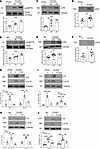 Figure 2
TGF-β1 induces csGRP78 localization and α2M activation in PTEC and renal fibroblasts. TGF-β1 (5 ng/mL, 6 or 24 hours) increased localization of GRP78 to the surface of both PTEC and renal fibroblasts, assessed by biotinylation (A and B, respectively) (n = 4). Similarly, TGF-β1– (5 ng/mL) induced α2M production (24 and 48 hours) and activation (48 hours) were increased in PTEC (n = 6 production and 10 activation) (C and E) and renal fibroblasts (n = 8–9 production and 7 activation) (D and F). TGF-β1– (5 ng/mL, 48 hours induced fibronectin and collagen IV production were attenuated by csGRP78 inhibition (G and H for PTEC and renal fibroblasts, respectively) (n = 4 for both). Similarly, α2M* inhibition in PTEC and renal fibroblasts prevented TGF-β1-induced matrix protein production (I and J) (5 ng/mL, 48 hours, n = 4 and 6) (*P < 0.05, **P < 0.01, ***P < 0.005; Kruskal-Wallis test used for α2M in D).
csGRP78 and α2M* inhibition prevent high glucose–induced, but not TGF-β1–induced, Smad3 activation. We previously showed that csGRP78/α2M* inhibition prevents activation of Smad3, the canonical downstream mediator of TGF-β1 pro-fibrotic signaling, in response to high glucose in mesangial cells. Here we assessed whether this was also the case in PTEC and renal fibroblasts. Smad3 activation was assessed by its activating C-terminal phosphorylation (Ser473/475). In Figure 3, A and B, high glucose induced Smad3 activation in PTEC and renal fibroblasts, and this was inhibited by the C38 neutralizing antibody for csGRP78. Both the α2M* neutralizing antibody (Figure 3, C and D) and inhibitory peptide (Figure 3, E and F) also prevented high glucose–induced Smad3 activation in both cell types. This supports an important role for csGRP78/α2M* signaling in Smad3 activation across multiple cell types in response to high glucose.
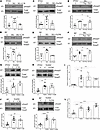 Figure 3
Smad3 activation by high glucose, but not by TGF-β1, is mediated by csGRP78/α2M*. High glucose– (30 mM, 48 hours) induced activation of Smad3 (measured as phosphorylation at Ser473/475) was prevented by csGRP78 inhibition in PTEC (n = 3–4) (A) and renal fibroblasts (n = 5) (B). Similarly, α2M* inhibition attenuated Smad3 activation by high glucose with either neutralizing antibody (n = 6 PTEC and 4 renal fibroblasts) (C = PTEC and D = renal fibroblasts) or inhibitory peptide (n = 4–5 PTEC and 3–4 renal fibroblasts) (E = PTEC and F = renal fibroblasts). In both PTEC and renal fibroblasts, csGRP78 (C38, 10 μg) did not prevent TGF-β1– (5 ng/mL, 48 hours) induced Smad3 activation (n = 4 and 6) (G and J, respectively). TGF-β1–induced Smad3 activation was also not prevented by α2M* inhibition (Fα2M, 10 μg) in PTEC or renal fibroblasts (n = 6 for both) (H and K, respectively). We confirmed these results using the Smad3-mediated reporter CAGA12-luciferase. TGF-β1-induced luciferase activation was not prevented by csGRP78 inhibition in either PTEC or renal fibroblasts (n = 8 for both) (I and L, respectively). Similarly, inhibition of α2M* did not prevent activation by TGF-β1 (I and L, respectively) (0.05 ng/mL, 24 hours, n = 8 for both) (*P < 0.05, **P < 0.01, ***P < 0.005, ****P < 0.0001; Kruskal-Wallis test used for CAGA12-luciferase in K).
Interestingly, in contrast with our findings above, TGF-β1–induced Smad3 phosphorylation was unaffected by csGRP78 or α2M* inhibition in PTEC (Figure 3, G and H). Lack of C38 or Fα2M effect on Smad3 transcriptional activity was confirmed using the reporter CAGA12-luciferase (Figure 3I). Similarly, inhibition of csGRP78 or α2M* did not prevent Smad3 activation by TGF-β1 in renal fibroblasts (Figure 3, J and K) or downstream activity of CAGA12-luciferase (Figure 3L). Since TGF-β1–induced pro-fibrotic effects were prevented by csGRP78 or α2M* inhibition, these data suggest a potential role for csGRP78/α2M* in regulating noncanonical TGF-β1 signaling.
csGRP78/α2M* mediate noncanonical TGF-β1 signaling through YAP and TAZ. The known noncanonical TGF-β1 signaling mediators and transcriptional co-activators yes-associated protein 1 (YAP) and transcriptional co-activator with PDZ-binding motif (TAZ) have previously been shown to play a role in promoting the pro-fibrotic phenotype seen in CKD (17–20). They were also shown to be regulated by csGRP78 in pancreatic cancer (21). We thus assessed their potential role as factors downstream of csGRP78/α2M* in mediating the pro-fibrotic response to TGF-β1 as well as high glucose in PTEC and renal fibroblasts. In Figure 4, A and B, TGF-β1 increased expression of YAP and TAZ, and this was prevented by C38 inhibition of csGRP78 in both PTEC and renal fibroblasts, respectively. This was also seen with neutralization of α2M* (Figure 4, C and D). We next assessed functional effects on YAP/TAZ activity using the reporter transcriptional enhanced associate domain–luciferase (TEAD-luciferase). Here, inhibition of csGRP78 by C38 or α2M* by Fα2M prevented TGF-β1–induced TEAD activity in both PTEC (Figure 4E) and renal fibroblasts (Figure 4F). We observed similar effects with high glucose. In Figure 4, G and H, csGRP78 inhibition attenuated high glucose–induced expression of YAP and TAZ in PTEC and renal fibroblasts. Similar inhibition was seen with α2M* inhibition using either the neutralizing antibody Fα2M (Figure 4, I and J) or the inhibitory peptide (Figure 4, K and L). Thus, both TGF-β1– and high glucose–induced YAP/TAZ pro-fibrotic signaling is mediated by csGRP78/α2M* in PTEC and renal fibroblasts.
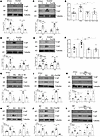 Figure 4
Noncanonical TGF-β1 mediators YAP and TAZ are regulated by csGRP78/α2M* in response to both high glucose and TGF-β1. Increased YAP and TAZ in response to TGF-β1 (5 ng/mL, 48 hours) were prevented by inhibition of csGRP78 (n = 4–6 PTEC and 6 renal fibroblasts) (A = PTEC and B = renal fibroblasts) and α2M* (n = 4–6 PTEC and 6–8 renal fibroblasts) (C = PTEC and D = renal fibroblasts). Using the TEAD-luciferase reporter construct, we confirmed that inhibition of both csGRP78 and α2M* in PTEC (n = 8–10) (E) and renal fibroblasts (n = 7–8) (F) prevented YAP/TAZ signaling in response to TGF-β1. High glucose– (30 mM, 48 hours) induced YAP and TAZ expression were also attenuated by csGRP78 (n = 4 PTEC and 4–6 renal fibroblasts) (G = PTEC and H = renal fibroblasts) and α2M* (n = 4–6 PTEC and 4 renal fibroblasts) (I = PTEC and J = renal fibroblasts) inhibition, as well as by the peptide inhibitor of csGRP78/α2M* interaction (n = 3–4, PTEC, K; and n = 4, renal fibroblasts, L). (*P < 0.05, **P < 0.01, ***P < 0.005, ****P < 0.0001.)
Integrin β1 is required for mediating csGRP78 signaling. We sought to understand the basis for the differences in GRP78 involvement in signaling between high glucose and TGF-β1. We previously identified that integrin β1 is required for csGRP78 signaling and downstream upregulation of TGF-β1 synthesis, secretion, and signaling in response to high glucose in mesangial cells (5). We further implicated a role for csGRP78/α2M* in the activation of TGF-β1 through the regulation of its nonproteolytic activator, thrombospondin-1 (6). We thus hypothesized that integrin β1 may be required for csGRP78/α2M* modulation of TGF-β1 activation and activity in the setting of high glucose, whereas exogenous administration of active TGF-β1 would bypass this mechanism, thus giving rise to the differences in canonical signaling we observed in our in vitro studies. We first verified that Smad3 and YAP/TAZ activation by high glucose were indeed modulated by TGF-β1 in PTEC. Figure 5, A and B, show that TGF-β1 neutralization prevented both Smad3 phosphorylation and YAP upregulation by high glucose. We next confirmed that as for mesangial cells, integrin β1 was required for high glucose–induced Smad3 and YAP/TAZ activation. As seen in Figure 5, C and D, neutralization of integrin β1 prevented Smad3 activation, as measured by CAGA12-luciferase activity, and YAP/TAZ activation, measured by TEAD-luciferase activity. Conversely, TGF-β1–induced Smad3 transcriptional activation was not affected by integrin β1 neutralization, but YAP/TAZ activation was inhibited (Figure 5, E and F). These data show that in response to TGF-β1, YAP/TAZ but not Smad3 activation requires integrin β1.
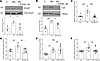 Figure 5
Requirement of integrin β1 for high glucose– and TGF-β1–induced YAP but not Smad3 activation. (A) High glucose– (30 mM, 48 hours) induced Smad3 activation (measured by its phosphorylation at S473/475) and (B) YAP upregulation were prevented by a TGF-β1 neutralizing antibody (10 μg) (n = 5 and n = 6 respectively). High glucose–induced activation of (C) CAGA12-luciferase, a measure of Smad3 transcriptional activity, and (D) TEAD-luciferase, a measure of YAP/TAZ activity, were prevented by an active integrin β1 neutralizing antibody (10 μg) (n = 7–8 and n = 8, respectively). TGF-β1– (0.05 ng, 24 hours) induced activation of (E) CAGA12-luciferase was not prevented by active integrin β1 neutralization, but (F) TEAD-luciferase activity was inhibited (n = 7–9 and n = 12, respectively). *P < 0.05, **P < 0.01, ***P < 0.005, ****P < 0.0001.
Inhibition of csGRP78, α2M*, or their interaction attenuates fibrosis in a mouse model of diabetic kidney disease. We next sought to assess whether csGRP78 and α2M* expression were increased in type 1 diabetic Akita mice overexpressing TGF-β1. We previously showed worsened kidney pathology, particularly tubulointerstitial fibrosis, in this model compared with Akita mice without TGF-β1 overexpression in which tubulointerstitial fibrosis development is limited (22). Nondiabetic TGF-β1–overexpressing mice were used as controls (referred to as HH for TGF-β1 overexpression alone or HH-A for overexpression in Akita mice). csGRP78 was assessed by immunofluorescence of frozen kidney sections, with antibody labeling prior to fixation and permeabilization as described in Methods. WGA was used as a membrane marker. Supplemental Figure 5A shows increased staining for csGRP78 in both glomeruli and the tubulointerstitium, the latter highlighted by the colocalization mask shown in white, in HH-A mice at 20 and 30 weeks of age. Increased duration of diabetes augmented csGRP78, with no significant staining seen in 12-week-old mice. We also observed increased α2M* expression by immunofluorescence in HH-A mice at 20 and 30 weeks of age in both glomeruli and the tubulointerstitium (Supplemental Figure 5B). Interestingly, this was also increased in HH nondiabetic mice, though to a much lower degree than that seen in the diabetic mice. At 12 weeks of age, no significant staining was seen, similarly to that observed for csGRP78.
Given this time course, we began treatment studies of csGRP78 or α2M* inhibition at 16 weeks of age, prior to established increases in both receptor and ligand. Mice were followed for 12 weeks until 28 weeks of age. In the first study, mice received 2 injections weekly of C38 or an isotype control (IgG2b) antibody dosed at 5 mg/kg. Figure 6A shows a timeline of this study. After 12 weeks of C38 or IgG2b administration, we observed increased albuminuria, measured by ACR (Figure 6B), and hyperfiltration, measured by the glomerular filtration rate (GFR) (Figure 6C) in all HH-A mice. These were unaffected by C38 treatment. Interestingly, although kidney hypertrophy was unaffected (Supplemental Figure 6A), we did observe a significant decrease in glomerular volume of HH-A mice treated with C38 compared with HH-A controls (Figure 6D). Compared with HH-A mice treated with control IgG2b antibody, C38-treated HH-A mice had significantly less fibronectin and collagen expression (measured by trichrome and PSR staining) (Figure 6D). We next assessed proteins downstream of csGRP78/α2M* we have shown regulate pro-fibrotic signaling in vitro (3–5). Here, we observed a significant decrease in Smad3 and FAK activation (measured by their phosphorylation at S473/475 and Y397, respectively), as well as in YAP expression with csGRP78 inhibition in HH-A mice (Figure 6E). Thus, inhibition of csGRP78 by C38 protected against the development of fibrosis in diabetic kidney disease.
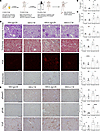 Figure 6
A csGRP78 neutralizing antibody attenuates fibrotic signaling in a mouse model of diabetic kidney disease. (A) Schematic outline of the study. Created in BioRender. Trink, J. (2025) https://BioRender.com/r0khlge FITC, fluorescein isothiocyanate; IP, intraperitoneal. The C38 csGRP78 antibody did not attenuate albuminuria, measured as the albumin-to-creatinine ratio (ACR) (B), the elevation in glomerular filtration rate (GFR) (C), or glomerular hypertrophy in diabetic mice (D) glomerular hypertrophy was reduced by C38 in diabetic mice. Fibrosis, as measured by trichome, Picrosirius red (PSR), and fibronectin, was reduced by C38 (D). Pro-fibrotic signaling, measured by Smad3 and FAK activation (phosphorylation at S473/475 and Y397, respectively), and YAP expression were all significantly reduced by C38 in diabetic mice (E) (n = 5–7, *P < 0.05, **P < 0.01, ***P < 0.005, ****P < 0.0001; #P < 0.05 indicates significant only by t test; Kruskal-Wallis test used for glomerular volume in D; &P < 0.05 indicates significant only by Mann-Whitney test. Scale bar represents 20 μm in all panels except D, glomerular volume, where scale bar represents 10 μm.
We next assessed whether inhibition of α2M* by using the Fα2M antibody would show similar antifibrotic effects in vivo. Confirmation of this antibody’s ability to bind to α2M* was assessed by surface plasmon resonance (Supplemental Figure 7). An outline of this study is depicted in Figure 7A. After 12 weeks of treatment with Fα2M or an isotype control (IgG1), dosed as for the C38 study at 5 mg/kg twice weekly, we observed a significant decrease in ACR (Figure 7B), GFR (Figure 7C), kidney hypertrophy (Supplemental Figure 6B), and glomerular hypertrophy (Figure 7D). Further, kidney fibrosis, measured by PSR (collagens I/III) and fibronectin, was also significantly decreased in HH-A Fα2M-treated mice compared with mice given isotype control antibody (Figure 7D). Last, the pro-fibrotic signaling proteins Smad3 pS473/475, FAK pY397, and YAP were all decreased by α2M* inhibition in HH-A mice (Figure 7E). These data support α2M* inhibition as an antifibrotic agent for diabetic kidney disease.
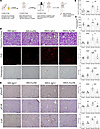 Figure 7
Inhibition of α2M* with the Fα2M neutralizing antibody attenuates fibrotic signaling in a mouse model of diabetic kidney disease. (A) Schematic outline of the study. Created in BioRender. Trink, J. (2025) https://BioRender.com/k0jedtz Fα2M reduced albuminuria, measured as the albumin-to-creatinine ratio (ACR) (B), the elevation in glomerular filtration rate (GFR) (C), and glomerular hypertrophy in diabetic mice (D). Fibrosis, as measured by PSR and fibronectin, was also significantly reduced by Fα2M (D). Activation of pro-fibrotic signaling, measured by Smad3 (phospho-S473/475) and FAK (phospho-Y397), as well as YAP expression, were significantly reduced in diabetic mice treated with Fα2M (E) (n = 6–9; *P < 0.05, **P < 0.01, ***P < 0.005, ****P < 0.0001; scale bar represents 20 μm in all panels except D, glomerular volume, where scale bar represents 10 μm).
Last, we assessed whether inhibition of csGRP78/α2M* interaction using our inhibitory peptide would prevent fibrosis in diabetic kidney disease. The study outline is shown in Figure 8A. After 4 weeks of active or scrambled control peptide administration (35 μg/d) via osmotic minipump, there was no difference in GFR (Figure 8B) or kidney hypertrophy (Supplemental Figure 6C). In comparison with treatment with Fα2M, this is likely due to the much shorter treatment time with peptide. However, ACR (Figure 8C) and kidney fibrosis, measured by PSR and fibronectin (Figure 8D), were significantly decreased by active peptide in diabetic mice. Further, YAP was also decreased by inhibitory peptide but not by scrambled control in diabetic mice (Figure 8E). Together, these studies support the therapeutic potential of inhibiting csGRP78/α2M* signaling as an antifibrotic target in diabetic kidney disease.
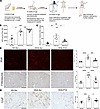 Figure 8
Inhibition of csGRP78/α2M* interaction by inhibitory peptide reduces fibrosis in a mouse model of diabetic kidney disease. (A) Schematic outline of the study. Created in BioRender. Trink, J. (2025) https://BioRender.com/untls0u (B) Active peptide treatment did not prevent the elevation in glomerular filtration rate (GFR) in diabetic mice. (C) Active peptide reduced albuminuria in diabetic mice, measured as the albumin-to-creatinine ratio (ACR). (D) Fibrosis, as measured by PSR and fibronectin, was significantly reduced by inhibitory peptide. (E) Activation of pro-fibrotic signaling, measured by YAP expression, was reduced by active peptide (n = 6–8, *P < 0.05, **P < 0.01, ***P < 0.005, ****P < 0.0001; scale bar represents 20 μm).
Inhibition of α2M* attenuates fibrosis after unilateral ureteral obstruction. To evaluate the potential role of csGRP78/α2M*-mediated pro-fibrotic signaling in a nondiabetic model of kidney disease, we first determined their expression after unilateral ureteral obstruction (UUO), a model characterized by tubulointerstitial fibrosis and inflammation (23). In Supplemental Figure 8A, csGRP78 (colocalized with plasma membrane WGA) was increased at 7, 14, and 21 days after UUO, with a small increase seen as early as 1 day following model creation. Similarly, α2M* was also increased at these time points (Supplemental Figure 8B). We further confirmed csGRP78 and α2M* colocalization with PTEC in the model at 10 days after UUO, our time point for assessment of therapeutic intervention (Supplemental Figure 9, A and B). These data support a potential role for csGRP78/α2M* in mediating tubulointerstitial fibrosis in this model.
We next tested the effects of the Fα2M antibody or its isotype control (IgG1) antibody at 5 mg/kg beginning the day after UUO surgery, with additional injections occurring on the fourth and eighth day prior to harvest 10 days after UUO creation. Figure 9A depicts the outline of this study. Figure 9B shows that fibrosis, assessed by trichome, PSR, and fibronectin as well as the marker of activated fibroblasts, α–smooth muscle actin (α-SMA) (24), were all significantly attenuated by Fα2M.
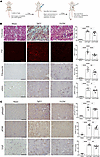 Figure 9
Inhibition of α2M* with the Fα2M neutralizing antibody reduces fibrosis in the UUO model of CKD. (A) Schematic outline of the study. Created in BioRender. Trink, J. (2025) https://BioRender.com/2rod2yk (B) Fα2M significantly reduced fibrosis measured as trichrome, PSR, and fibronectin, as well as the myofibroblast marker α–smooth muscle actin (α-SMA). (C) Treatment with Fα2M also prevented Smad3 and FAK activation (measured by phosphorylation at S473/475 and Y397, respectively), as well as increased YAP expression compared with control IgG1 (n = 7–9; *P < 0.05, **P < 0.01, ****P < 0.0001; #P < 0.05 significant by t test; scale bar represents 20 μm).
TGF-β1 activity has been shown to play an important role in fibrosis induced by UUO (25, 26), with inhibition of either its Smad-dependent or -independent signaling reducing tubulointerstitial fibrosis (27–29). Figure 9C shows that activation of Smad3 and FAK and upregulation of YAP were all significantly decreased by Fα2M. Interestingly, the observed decrease in Smad3 activation in vivo did not align with our in vitro findings, suggesting that other factors such as mechanical stress may be important to Smad3 activation and regulated by α2M* signaling. These data support a potentially novel role for α2M* inhibition in preventing the fibrotic phenotype in CKD.
Peptide inhibition of csGRP78/α2M* interaction attenuates pro-fibrotic signaling and fibrosis in UUO. We next wished to test the in vivo efficacy of our peptide inhibitor of csGRP78/α2M* interaction in a delayed treatment model. Mice were treated starting at day 3 after UUO creation with inhibitory or scrambled peptide at either a low (30 μg/d) or a high (150 μg/d) dose via osmotic minipump for 7 days. An outline of this study is described in Figure 10A. As seen in Figure 10B, fibrosis, assessed by PSR and fibronectin immunohistochemistry, was dose-dependently attenuated by the active peptide. Activation of myofibroblasts, measured by α-SMA, was also dose-dependently decreased (Figure 10B). We next assessed FAK and Akt, important mediators of UUO-induced fibrosis (30), which we previously showed were activated by csGRP78 in mesangial cells (3). The activation of both was also decreased by active peptide (Figure 10C), as were Smad3 activation and YAP expression (Figure 10D). Together, these data support a role for csGRP78/α2M* in regulating pro-fibrotic signaling and extracellular matrix production in the UUO model.
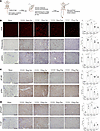 Figure 10
Treatment with a peptide inhibitor of csGRP78/α2M* interaction reduces fibrosis in the UUO model. (A) Schematic outline of the study. Created in BioRender. Trink, J. (2025) https://BioRender.com/8b94uo6 Treatment was initiated 3 days after UUO. (B) Active, but not scrambled, peptide dose-dependently inhibited fibrosis as measured by staining for PSR and fibronectin, as well as α-SMA, a marker for myofibroblast activation. (C) Pro-fibrotic signaling through FAK and Akt activation downstream of csGRP78/α2M*, assessed by their phosphorylation (Y397 and S473/475, respectively), was decreased by peptide. Akt phosphorylation showed dose dependency. (D) Smad3 activation (phospho-S473/475) and increased YAP were both reduced by active, but not scrambled, peptide (n = 3–5; *P < 0.05, **P < 0.01, ***P < 0.001, ****P < 0.0001; #P < 0.05 indicates significant only by t test; scale bar represents 20 μm).
As recruitment of activated inflammatory cells was shown to contribute to the pathogenesis of kidney fibrosis, we next determined whether peptide inhibition could attenuate inflammation. In Supplemental Figure 10A, T cell infiltration was mildly affected by csGRP78/α2M* inhibition at the higher peptide dose. We also observed a decrease in macrophage infiltration with the higher peptide dose. These data implicate a potential role for csGRP78/α2M* in mediating inflammation that contributes to the fibrotic phenotype seen in kidney disease (31).
Last, low- and high-dose peptide administration also decreased α2M* expression (Supplemental Figure 10B), showing that peptide inhibition of this signaling pathway does not lead to α2M* accumulation. These data suggest that α2M* clearance through its lower affinity receptor low density lipoprotein receptor-related protein 1 is not impaired by peptide treatment (32, 33).
Finally, we sought to test the antifibrotic effects of peptide treatment after more established fibrosis. We thus implanted osmotic minipumps with scrambled or active peptide 7 days after UUO creation and assessed kidneys at day 14, as outlined in the schematic in Figure 11A. As seen in Figure 11B, fibrosis as measured by PSR and fibronectin were markedly decreased in UUO treated with active compared with scrambled peptide. The increase in the fibroblast activation marker α-SMA was similarly decreased by active peptide (Figure 11B). These data support efficacy of csGRP78/α2M* signaling in the setting of established kidney fibrosis.
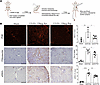 Figure 11
Delayed treatment with a peptide inhibitor of csGRP78/α2M* interaction reduces fibrosis in the UUO model. (A) Peptide administration was delayed until 7 days after UUO surgery. Created in BioRender. Trink, J. (2025) https://BioRender.com/0ul7cxg Mice were followed for an additional 7 days as shown in the schematic outline of this study. (B) Fibrosis, measured by PSR and fibronectin, as well as α-SMA, a marker for myofibroblast activation, were decreased by inhibitory peptide but not scrambled control peptide (n = 5–7; *P < 0.05, **P < 0.01, ****P < 0.0001; scale bar represents 20 μm).
α2M transcript levels are elevated in CKD from various causes. Although both the cell surface localization of GRP78 and activation of α2M are posttranslational events, our data show that α2M production is increased upon exposure to either high glucose or TGF-β1. It is also increased progressively with disease duration in diabetic kidneys (4) and after UUO. Supporting local production, increased urinary α2M was recently identified in a discovery proteomics study in stages 3 and 4 of disease as a potential biomarker of progressive diabetic kidney disease (34). In our previous studies in mesangial cells, we identified the transcriptional upregulation of α2M and showed that increased transcript was also seen in human diabetic kidney disease in both the glomerular and tubulointerstitial compartments using NephroSeq data (6). Increased α2M transcript has additionally been identified in human nondiabetic CKD in mesangial cells and glomerular endothelial cells in focal glomerular sclerosis (FSGS), in which it was associated with disease progression and poor kidney prognosis (35). We thus assessed α2M transcript in additional kidney diagnoses that lead to fibrosis and CKD. In the NephroSeq dataset, we found increased α2M in FSGS as previously identified. We also found increased α2M in other CKD diagnoses characterized by progressive fibrosis, including hypertensive kidney disease and IgA nephropathy (Figure 12). Increased expression was observed in both the glomerular and tubulointerstitial compartments. These data support local upregulation and synthesis of α2M in various kidney diseases marked by fibrosis.
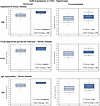 Figure 12
RNA-Seq data support a role for α2M transcript increases in human patients with CKD. Data available from the NephroSeq database (https://www.nephroseq.org/resource/login.html) were used. α2M RNA expression was significantly increased in kidneys in glomeruli and the tubulointerstitium from patients with various forms of CKD, including hypertensive CKD, FSGS, and IgA nephropathy, compared with healthy living donors.


