
Research ArticleEndocrinologyMetabolismNeuroscience
Open Access |  10.1172/jci.insight.188077
H3K18 lactylation potentiates microglial polarization via the TLR4 pathway in diabetes-induced cognitive impairment
Ying Yang,1 Fei Chen,2 Lulu Song,1 Liping Yu,1 Jinping Zhang,1 and Bo Zhang1
1Department of Endocrinology, China-Japan Friendship Hospital, Beijing, China.
2Department of Endocrinology, Peking University First Hospital, Beijing, China.
Address correspondence to: Bo Zhang, Department of Endocrinology, China-Japan Friendship Hospital, No.2 Yinghuayuan East Street, Hepingli, Chaoyang District, Beijing, China. Phone: 86.010.84205254; Email: drbozhang@yahoo.com.
Find articles by Yang, Y. in: PubMed | Google Scholar
1Department of Endocrinology, China-Japan Friendship Hospital, Beijing, China.
2Department of Endocrinology, Peking University First Hospital, Beijing, China.
Address correspondence to: Bo Zhang, Department of Endocrinology, China-Japan Friendship Hospital, No.2 Yinghuayuan East Street, Hepingli, Chaoyang District, Beijing, China. Phone: 86.010.84205254; Email: drbozhang@yahoo.com.
Find articles by Chen, F. in: PubMed | Google Scholar
1Department of Endocrinology, China-Japan Friendship Hospital, Beijing, China.
2Department of Endocrinology, Peking University First Hospital, Beijing, China.
Address correspondence to: Bo Zhang, Department of Endocrinology, China-Japan Friendship Hospital, No.2 Yinghuayuan East Street, Hepingli, Chaoyang District, Beijing, China. Phone: 86.010.84205254; Email: drbozhang@yahoo.com.
Find articles by Song, L. in: PubMed | Google Scholar
1Department of Endocrinology, China-Japan Friendship Hospital, Beijing, China.
2Department of Endocrinology, Peking University First Hospital, Beijing, China.
Address correspondence to: Bo Zhang, Department of Endocrinology, China-Japan Friendship Hospital, No.2 Yinghuayuan East Street, Hepingli, Chaoyang District, Beijing, China. Phone: 86.010.84205254; Email: drbozhang@yahoo.com.
Find articles by Yu, L. in: PubMed | Google Scholar
1Department of Endocrinology, China-Japan Friendship Hospital, Beijing, China.
2Department of Endocrinology, Peking University First Hospital, Beijing, China.
Address correspondence to: Bo Zhang, Department of Endocrinology, China-Japan Friendship Hospital, No.2 Yinghuayuan East Street, Hepingli, Chaoyang District, Beijing, China. Phone: 86.010.84205254; Email: drbozhang@yahoo.com.
Find articles by Zhang, J. in: PubMed | Google Scholar
1Department of Endocrinology, China-Japan Friendship Hospital, Beijing, China.
2Department of Endocrinology, Peking University First Hospital, Beijing, China.
Address correspondence to: Bo Zhang, Department of Endocrinology, China-Japan Friendship Hospital, No.2 Yinghuayuan East Street, Hepingli, Chaoyang District, Beijing, China. Phone: 86.010.84205254; Email: drbozhang@yahoo.com.
Find articles by Zhang, B. in: PubMed | Google Scholar
Published November 4, 2025 - More info
JCI Insight. 2025;10(24):e188077. https://doi.org/10.1172/jci.insight.188077.
© 2025 Yang et al. This work is licensed under the Creative Commons Attribution 4.0 International License. To view a copy of this license, visit http://creativecommons.org/licenses/by/4.0/.
Received: October 22, 2024; Accepted: October 27, 2025

-
Results
Hyperglycemia can cause cognitive impairment and brain tissue damage. We performed Morris water maze tests, which are used to assess spatial learning and memory. In the Morris water maze task involving place and cue navigation, compared with age-matched controls, mice with type 2 diabetes mellitus (T2DM) exhibited prolonged latency to locate the platform (Figure 1, A and B). In subsequent probe trials, T2DM mice displayed a reduced inclination toward the trained target zone in comparison with the control group (Figure 1 A and C). Notably, both groups of mice exhibited similar swimming speeds (Figure 1D). Cerebral deposition of Aβ plaques is a remarkable contributor to cognitive impairment. As shown in Figure 1E, Aβ deposition became detectable in T2DM models starting at 16 weeks after induction, with no visible accumulation observed at earlier time points (8 or 12 weeks). Our study utilized hematoxylin and eosin (H&E) staining to assess neuronal morphology and quantity. In control mice, hippocampal cells displayed organized arrangements without morphological anomalies. Conversely, hyperglycemia induced neuronal damage and loss in the hippocampus and cortex of T2DM mice compared with controls (Figure 1F). Microscopic analysis revealed irregular cellular patterns and pyknotic nuclei in T2DM mice, which were notably pronounced in the hippocampus. In addition to these, cells subjected to T2DM-relevant metabolic stress demonstrated significantly elevated mortality rates relative to normoglycemic controls (Figure 1G). TUNEL assays showed that T2DM significantly increased TUNEL-positive cells compared with the control mice (Figure 1, H and I). In tests analyzing astro- and microgliosis, immunostaining demonstrated substantially elevated glial fibrillary acidic protein (GFAP) fluorescence intensity in T2DM astrocytes and microglial cells compared with the control group (Figure 1, J and K). Hippocampal impairment is an important pathological basis for cognitive impairment in individuals with T2DM. The above findings establish that T2DM can cause neuronal injury in the hippocampus across multiple pathological dimensions.
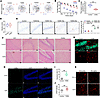 Figure 1
Hyperglycemia can cause cognitive impairment and brain tissue damage. (A) Representative tracks of the distances moved in the Morris water maze (MWM) in the different groups. (B) Analysis of the escape latency data from the positioning navigation tests. (C) Time spent in target quadrant in space exploration tests. (D) Swimming speeds of mice in the MWM task. (E) Aβ immunohistochemistry in hippocampal tissues and quantification. Scale bars: 20 μm. (F) Representative images of H&E staining in various brain regions (original magnification, ×400; scale bars: 50 μm). (G) Immunostaining representative of tissue viability at the sectioning stage, depicting live (green) and dead (red) zones. Scale bars: 20 μm (all panels). (H and I) TUNEL assay and statistical results of TUNEL+ cells. (J and K) Fluorescence images of hippocampal sections expressing GFAP in microglial cells or astrocytes. Scale bars: 10 μm. n = 3 per group. Data are expressed as mean ± SD. Statistical analysis was performed using 2-tailed Student’s t tests (B–D, I, and J) or 2-way ANOVA with Tukey’s test for differences among groups (E). **P < 0.01. T2DM, type 2 diabetes mellitus.
Hyperglycemia elevated lactate levels and Pan-Kla levels in the cortex and hippocampus. To evaluate the metabolic reprogramming of the hippocampus and cortical tissue from oxidative phosphorylation (OXPHOS) to glycolysis, we measured lactate levels in streptozotocin- (STZ-) and high-fat diet–induced (HFD-induced) diabetic mice (a well-established T2DM model). Quantification of lactate demonstrated that lactate levels were significantly elevated in both the hippocampal/cortical tissues and serum of T2DM mice (Figure 2, A–C). Moreover, Western blot analysis revealed that pan-lysine Kla (Pan-Kla) levels were also dramatically elevated in both the hippocampal and cortical tissues of T2DM mice (Figure 2, D–F). Microglia play a defensive role in the frontline response to injury. Therefore, we focused on microglia in a follow-up study. To examine changes in proteins with Kla modifications in microglia, we performed immunofluorescent costaining of Pan-Kla along with antibodies against a marker for microglia (Iba1). Immunofluorescence analysis revealed Pan-Kla/Iba1 colocalization, and more cells displayed Pan-Kla fluorescence in the hippocampus of T2DM mice (Figure 2, G and H). The Pan-Kla signal intensity was significantly greater in the Aβ plaque–adjacent microglia of T2DM mice than in those of control mice.
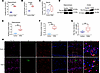 Figure 2
Lactate levels and Pan-Kla are increased in the cortex and the hippocampus of T2DM mice. Lactate levels in hippocampus (A), cortex (B), and serum (C) of mice in different groups. (D) Western blotting analysis of Pan-Kla in the cortex and hippocampus of mice; graphs are representative of 3 independent experiments. Quantification of Western blot images in hippocampus (E) and cortex (F). (G) Quantification of Pan-Kla intensity. (H) Representative images of Pan-Kla costained for Aβ+ plaques and microglia (Iba1+) in the hippocampal CA1 region of mice (scale bars: 10 μm). n = 3 per group. Data are expressed as mean ± SD. Statistical analysis was performed using 2-tailed Student’s t tests (A–C and E–G). *P < 0.05, **P < 0.01. Kla, lactylation.
Global landscape of the lactylome in isolated microglial cells. To comprehensively understand the lactylome, which encompasses both histone and nonhistone Kla, we conducted a proteomic analysis specifically targeting Kla. In brief, microglial cells obtained from both T2DM and control mice were isolated using magnetic separation techniques (Figure 3A). Sorted cells were confirmed by immunofluorescence and revealed very few cellular protrusions (Supplemental Figure 1, A and B; supplemental material available online with this article; https://doi.org/10.1172/jci.insight.188077DS1). A minimum of 1 × 10⁷ cells were collected. Purity check was performed by flow cytometry and showed purity to be 98% or greater (Supplemental Figure 1, C and D). Cells maintained essential stability during the sorting procedure (Supplemental Figure 1, E and F). A total of 2424 Kla sites were identified across 931 proteins, with 2254 sites from 871 proteins quantified. Among these proteins, 496 (52.95%) had a single Kla site, 182 (19.55%) had 2, and 1804 (27.5%) had more than 3 (Figure 3B). We next analyzed the amino acids flanking the identified Kla sites using iceLogo (Figure 3C). Amino acid analysis of the flanking Kla sites identified using iceLogo revealed enrichment of serine and alanine at positions –1 and +1, respectively (Figure 3D). Structural analysis via NetSurfP software (https://services.healthtech.dtu.dk/service.php?NetSurfP-2.0) indicated that approximately 26.41% of Kla sites were in α-helices, 5.93% were in β-strands, and the remaining 67.65% were in irregular coils. There was no apparent difference compared to total protein lysine residues, suggesting that there was no structural preference for Kla, at least in isolated microglial cells. However, the average surface accessibility of the Kla protein was significantly less than that of the total protein lysine residues, indicating preferential localization within protein structures (Figure 3E). Gene Ontology (GO) analysis revealed that lactylated proteins participate in various cellular processes, including cellular regulation, metabolism, and response to stimuli (Figure 3F).
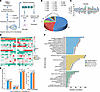 Figure 3
Identification of Kla proteome profile in isolated microglia. (A) Schematic of microglia isolated from adult brains of T2DM and control mice. (B) Pie chart illustrating the distribution of the quantity of identified Kla sites per protein. (C) Motif analysis for the identified lactylated proteins. (D) The iceLogo representation displays the flanking sequence preferences for all Kla sites located between the upstream +10 position and the downstream –10 position. (E) Distribution of all lysines and Kla lysines in the structured regions of proteins. (F) Bar graphs illustrating the ontology annotations representative of the Kla proteome enrichment. Statistical analysis was performed using 2-tailed Student’s t tests (C and E).
Quantitative analysis of the Kla proteome in isolated microglial cells from different groups. The threshold for significant Kla changes between the T2DM and control groups was a ratio above 1.5 or below 0.67. Analysis revealed the upregulation of 96 Kla sites in 86 proteins and the downregulation of 12 Kla sites in 12 proteins in the microglia of T2DM mice (Figure 4, A–C). These proteins have been observed to localize to diverse subcellular compartments, such as the mitochondria, cytoplasm, and nucleus (Figure 4D). The chord diagram depicts the 4 most enriched Kyoto Encyclopedia of Genes and Genomes (KEGG) pathways and the connections between Kla sites and these pathways. KEGG enrichment analysis revealed that the significantly differentially expressed lactylated proteins were primarily involved in pathways such as TLR signaling, citrate cycle (TCA cycle), nicotinate and nicotinamide metabolism, amyotrophic lateral sclerosis, proximal tubule bicarbonate reclamation, HIV-1 viral life cycle, and metabolic pathways (Figure 4E).
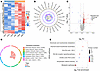 Figure 4
Quantification of the lactylome in microglia in response to different glycemic status. (A) Heatmap showing the changes in the quantifiable Kla sites between negative control and T2DM groups. (B) Radar maps of the top upregulated and downregulated Kla sites. (C) Scatter plot showing changes in the quantifiable Kla sites between negative control and T2DM groups. (D) The subcellular localization of the differentially modified proteins. (E) Bubble diagram showing KEGG pathway enriched with upregulated and downregulated lactylated proteins.
Increased levels of H3K18la are observable in microglial cells within the hippocampal tissues of T2DM mice and in microglia treated with HG. The proteomic results were further validated by immunoblot analyses and immunofluorescent staining. The level of lactate in microglial cells within the hippocampus was substantially greater in T2DM mice than in control mice (Figure 5A). CREB-binding protein (CBP) and P300 are histone acetyltransferases that also play roles in protein Kla (14). Western blot analysis revealed enhanced expression levels of CBP and P300 in microglia in the hippocampus of T2DM mice compared with those in control mice (Figure 5B). The results also showed that H3K18la was elevated in microglia in hippocampal tissues from T2DM mice (Figure 5C). Furthermore, we conducted immunofluorescent staining for H3K18la, along with markers for microglia (Iba1) and Aβ plaques, in postmortem brain sections from mice. We found that H3K18la was notably greater in microglia adjacent to plaques in the T2DM group than in microglia in the control group (Figure 5, D and E).
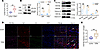 Figure 5
Elevated levels of H3K18 Kla can be observed in microglia within the hippocampus of T2DM mice. (A) Lactate levels in microglia within the hippocampus in mice. n = 3. (B) Western blotting analysis of CBP and P300 in microglia in the hippocampus of mice. (C) Western blotting analysis of Pan-Kla, H3K18la, H4K12la, and H3K23la in microglia in the hippocampus of mice. n = 3. (D) Representative images of H3K18la costained for Aβ plaques and Iba1 in the hippocampal CA1 region of mice (scale bars: 20 μm). More than 5 fields of view were randomly selected to be analyzed. (E) Quantification of H3K18la intensity in Iba+ microglia. n = 3 per group. Data are expressed as mean ± SD. Statistical analysis was performed using 2-tailed Student’s t tests. *P < 0.05, **P < 0.01. NC, negative control; HG, high glucose; Aβ, amyloid-β.
For in vitro experiments, 50 mM oxamate was added to suppress LDH activity, and siP300 was used to suppress P300 expression (Supplemental Figure 2, A and B). We conducted experiments in cultured primary microglial cells and HMC3 cells, employing 3 distinct glucose concentration media (HG, moderate, and low glucose) to culture primary microglia and HMC3 cells. As demonstrated in Supplemental Figure 3, A and B, both moderate-glucose and HG conditions resulted in significant reductions in cell viability compared with low-glucose controls, with the most pronounced decrease observed in the HG treatment group. Analysis of lactate metabolism revealed that intracellular lactate levels in moderate-glucose cultures remained comparable to those in low-glucose conditions. In contrast, HG exposure induced a substantial increase in lactate accumulation relative to the low-glucose group (Supplemental Figure 3C). Neither moderate- nor low-glucose culture conditions elicited detectable changes in Pan-Kla expression levels. In contrast, sustained exposure to HG triggered a marked upregulation of Pan-Kla expression compared with moderate-glucose controls (Supplemental Figure 3D). P300 siRNA did not cause a significant loss in cell viability up to 48 hours after exposure (Supplemental Figure 3, E and F). Higher lactate levels were detected in HG-treated primary microglia and HMC3 cells than in negative control cells. Relative lactate expression did not markedly decrease following P300 inhibition in either cell line, indicating that P300 did not affect lactate production. As shown in Supplemental Figure 4A, LDH suppression significantly inhibited lactate levels in primary microglia and HMC3 cells even after culture in HG medium. Histone Kla increased following incubation of primary microglia and HMC3 cells with sodium lactate (NaLa) (Supplemental Figure 5, A and C). Given the role of lactate as a precursor capable of inducing histone Kla, we hypothesized that there might be changes in histone Kla within the framework of cognitive decline associated with T2DM. We cultured cells with NaLa to promote Kla. Compared with control microglia, HG-treated microglia expressed higher levels of CBP and P300. In addition, NaLa-treated microglial cell lines exhibited considerably increased expression of CBP and P300 (Supplemental Figure 4, B and C). We also found that HG led to increased H3K18la expression in primary microglia, which was consistent with the results of the above animal experiments. Interestingly, there was also an increase in histone H3, which is lactylated at Lys-23 (H3K23la), and in histone H4, which is lactylated at Lys-12 (H4K12la), after HG treatment. As shown in Supplemental Figure 4, D and E, the presence of siP300 or oxamate in HG-treated primary microglia dramatically inhibited H3K18la and H4K12la but not H3K23la. In the HMC3 cell line, we found results similar to those we found in the primary microglial cells. This finding additionally confirms the crucial role of lactate in histone Kla. Immunofluorescence assays showed that HG increased the colocalization ratio of H3K18la to total Iba1 in primary microglia (Supplemental Figure 4F). Similarly, NaLa-treated primary microglia also exhibited a high ratio of H3K18la to total Iba1. Similar findings were also observed in HMC3 cells (Supplemental Figure 4, G and H).
Genome-wide analysis of the transcriptional consequences of H3K18la in primary microglial cells. Histone modifications can influence both the activation and inhibition of target genes through transcriptional regulation (15). To investigate the potential functional significance of H3K18la in HG-treated primary microglia, a genome-wide CUT&Tag analysis was performed to identify candidate genes that are regulated by H3K18la in microglia. CUT&Tag conducted with antibodies targeting H3K18la, followed by analysis using deepTools (https://github.com/deeptools/deepTools) and the ChIPseeker R package (https://github.com/ENCODE-DCC/chip-seq-pipeline2), demonstrated a significant increase in H3K18la peaks in primary microglia in the HG group compared with those in the control group (Figure 6A). In the comparison of microglia, 13,574 differential H3K18la binding peaks were identified, 11.89% of which were located within promoter sequences (≤1 kb), and with 7.92% of the peaks located within promoter sequences (1–2 kb) (Figure 6B). To explore the epigenetic effects of H3K18la in primary microglia treated with HG, we classified target genes with distinct H3K18la binding peaks at promoters into various KEGG pathways using GO analysis (Figure 6C). KEGG pathways, including the TLR, NF-κB, and mTOR signaling pathways, are implicated in insulin resistance and inflammation. Notably, the identified peaks highlighted genomic regions at glycolytic genes such as TLR4 and NF-κB, indicating elevated H3K18la levels at their promoters (Figure 6D). Real-time quantitative polymerase chain reaction (qPCR) analysis demonstrated a significant increase in the expression levels of these genes in primary microglia treated with HG compared with those in control cells (Figure 6E).
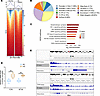 Figure 6
Analysis of the transcriptional consequences of H3K18la in HG-treated primary microglia. (A) Heatmap presenting the binding density of H3K18la with different H3K18la binding peaks in HG-treated primary microglial cells and control cells, ordered by signal strength. (B) Genome-wide distribution of upregulated H3K18la-binding peaks in HG-treated primary microglia. (C) KEGG analysis of enhanced H3K18la binding peaks at candidate target genes. (D) Genome browser tracks of H3K18la binding peaks at the representative target gene loci. (E) qPCR assays monitoring expression of the indicated genes in HG-treated primary microglial cells and control cells. n = 3 per group. Data are expressed as mean ± SD. Statistical analysis was performed using 2-tailed Student’s t tests. **P < 0.01. KEGG, Kyoto Encyclopedia of Genes and Genomes; TLR4, Toll-like receptor 4; NF-κB, nuclear factor κB.
Transcriptome analysis was performed to delineate transcriptomic changes in sorted microglial cells. Transcriptomic profiling revealed distinct sample clustering in 2-dimensional PCA space, reflecting intrinsic gene expression covariation patterns, with tight aggregation of biologically analogous replicates (Supplemental Figure 6A). Expression distribution homogeneity was validated through integrated box-and-whisker plot–violin plot hybrid visualizations (Supplemental Figure 6, B and C). Comparative analysis identified 2010 significantly upregulated and 1984 downregulated differentially expressed genes (DEGs) in HG-treated microglia versus controls (Supplemental Figure 6, D–F). GO enrichment analysis of DEGs from the control versus T2DM group comparison revealed significant enrichment in multiple processes and functions. Key enriched terms included negative regulation of glial cell differentiation, regulation of inflammatory response, regulation of TLR4 signaling pathway, regulation of insulin secretion, DNA-binding transcription activator activity, modified amino acid binding, peptide binding, and nuclear receptor activity (Supplemental Figure 6G). Subsequent KEGG pathway analysis of the T2DM versus negative control (NC) comparison identified significant enrichment in the TLR signaling pathway, protein digestion and absorption, insulin secretion, T2DM, and others (Supplemental Figure 6H). Collectively, these findings suggest that H3K18la modification triggers the transcription of numerous genes encoding marker proteins involved in TLR4 signaling in primary microglial cells treated with HG.
Inhibition of Kla reduced cognitive impairment and suppressed the TLR4 signaling pathway. Figure 7A shows a schematic of the workflow of the animal experiments. To evaluate whether H3K18la inhibition attenuated neuronal damage in the hippocampus, we reduced microglia histone Kla levels with adeno-associated viral HDAC3-EYFP (AAV-HDAC3-EYFP) (Figure 7, B and C). The AAV infection efficiency was higher than 70% in Iba1-positive cells (Supplemental Figure 7, A and B). HDAC3 is a classical deacetylase for histone H3 Kla. In the novel object location recognition (NOL) test, control mice spent more time exploring the object in the new location (Figure 7, D–F). Similarly, mice in the T2DM+AAV-HDAC3-EYFP group also showed a significant increase in time spent interacting with the object at the novel location. However, the T2DM+AAV-EYFP mice displayed no preference between the 2 objects. Both the NOL and novel object recognition (NOR) tests indicated that AAV-HDAC3-EYFP helped alleviate cognitive impairment in T2DM mice. Spatial learning and memory were further evaluated using the Morris water maze (Figure 7G). T2DM mice took significantly longer to find the hidden platform compared with age-matched controls (Figure 7H). AAV-HDAC3-EYFP improved learning performance, as reflected by shorter escape latency during the place navigation task. In the subsequent probe trials, T2DM+AAV-EYFP mice showed less preference for the trained target zone compared with the control group. In contrast, mice in the T2DM+AAV-HDAC3-EYFP group spent significantly more time in the target quadrant compared with the T2DM+AAV-EYFP group (Figure 7I). H&E staining further confirmed that inhibition of histone Kla improved hippocampal damage (Figure 7J). TUNEL assay demonstrated that TUNEL-positive cells were increased in T2DM hippocampal slices, and were decreased after AAV-HDAC3-EYFP intervention (Supplemental Figure 7, C and D). More dead cells were observed in the hippocampus of T2DM mice. The dead cells were markedly reduced after the AAV-HDAC3-EYFP was administered (Supplemental Figure 7, E and F). In the gliosis detection experiment, compared with cells in the Control+AAV-EYFP group, GFAP fluorescence intensity increased markedly in both astrocytes and microglia of the T2DM+AAV-EYFP group (Supplemental Figure 7, G and H). However, the increased fluorescence intensity of GFAP in the T2DM+AAV-EYFP group was significantly reduced after the AAV-HDAC3-EYFP intervention. In addition, our study demonstrated that T2DM increased the expression of H3K18la and the TLR4/NF-κB pathway. However, the suppression of Kla failed to initiate TLR4/NF-κB pathway activation (Figure 7, K and L, and Supplemental Figure 2, C–F). Immunofluorescence experiments also showed that H3K18la and TLR4 were coexpressed (Supplemental Figure 8, A and B). The fluorescence intensity of H3K18la and TLR4 in T2DM microglia increased significantly. However, after treatment with AAV-HDAC3-EYFP, this fluorescence was effectively inhibited.
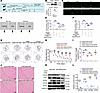 Figure 7
Inhibition of Kla of histone and H3K18 leads to TLR4/NF-κB suppression in vivo. (A) Workflow of animal experiments. (B) Western blotting analysis of HDAC3. (C) Validation of HDAC3 overexpression in the hippocampus. (D) Schematics of NOL and NOR tests. Results of NOL test (E) and NOR tests (F) (9 mice per group). (G) Morris water maze assay. (H) Analysis of the escape latency data from the positioning navigation tests. (I) Time spent in target quadrant in space exploration tests. (J) The results of H&E staining. n = 3. Scale bars: 50 μm. The bands (K) and quantification of the blots of TLR4/NF-κB signaling in microglial cells in the hippocampus (L); graphs are representative of 3 independent experiments. n = 3. Data are expressed as mean ± SD. Statistical analysis was performed using 2-tailed Student’s t test (B) or 2-way ANOVA with Tukey’s test for differences among groups (E, F, H, I, and L). *P < 0.05; **P < 0.01.
Suppression of H3K18la inhibited TLR4 signaling and reduced M1 polarization. To examine the influence of H3K18la on TLR4 signaling, we treated primary microglial cells with HG, H3K18R-pMSCV, or Control vector and then analyzed the results. First, a cell viability assay indicated that exposure to siP300 did not significantly impact cell viability (Supplemental Figure 3G). Western blot assays confirmed that H3K18la was substantially suppressed by H3K18R-pMSCV (Figure 8A). The TLR4/NF-κB pathway was activated, and microglial M1 polarization was enhanced after incubating primary microglia and HMC3 cells with 25 μM NaLa (Supplemental Figure 5, B and D). HG+Control vector treatment increased the levels of H3K18la, TLR4, MYD88, and NF-κB in primary microglial cells compared with those in NC+Control vector group. Concurrent treatment with H3K18R-pMSCV reversed the TLR4/NF-κB pathway activation (Figure 8A and Supplemental Figure 9, A and B). Immunofluorescent staining revealed the localization of TLR4 (green fluorescence) in the primary microglias treated with HG+Control vector (Figure 8C). The fluorescence intensity of the HG+Control vector group was much stronger than that of the NC group; nevertheless, the fluorescence intensity of the HG+H3K18R-pMSCV group decreased significantly (Figure 8D).
 Figure 8
Inhibition of Kla of histone H3 at lysine 18 leads to TLR4/NF-κB suppression and microglial M1 polarization inhibition in vitro. (A) Western blotting analysis of TLR4/NF-κB signaling in primary microglia; graphs are representative of 3 independent experiments. n = 3. (B) Western blotting analysis of M1/M2 polarization markers in primary microglia. n = 3. (C) The representative images of immunofluorescent foci of TLR4 (green) in hippocampal tissues from 2 groups of mice (scale bars: 20 μm). (D) Quantitation of immunofluorescence for TLR4 in microglia. n = 3 per group. Data are expressed as mean ± SD. Statistical analysis was performed using 2-way ANOVA with Tukey’s test for differences among groups (A, B, and D). **P < 0.01.
Next, we investigated the impact of the H3K18la/TLR4 signaling axis on microglial polarization by treating primary microglias with or without HG, H3K18R-pMSCV, or Control vector. Western blot data revealed that compared with the NC group, HG-treated primary microglia exhibited a significant increase in M1 polarization markers, including CD86 and iNOS. However, following the addition of H3K18R-pMSCV to HG medium, the expression of CD86 was attenuated (Figure 8B and Supplemental Figure 9, C and D). This finding suggested that the increase in M1 polarization markers was triggered by HG-induced H3K18la/TLR4 signaling activation. Immunofluorescence assays showed that HG induced decreased expression of CD206 and increased expression of CD86. Suppression of H3K18la further inhibited CD86 expression in HG primary microglia (Supplemental Figure 10A). With the addition of H3K18R-pMSCV, suppression of H3K18la resulted CD86 inhibition in primary microglia (Supplemental Figure 10B). This revealed that H3K18R-pMSCV blocked the activation of TLR4 as well as the transformation of M2-type microglia to M1-type microglia.

-
Discussion
A common comorbidity of diabetes is cognitive deterioration (16–18), characterized by a marked increase in the risk of mild cognitive impairment to full-scale dementia among diabetic patients relative to healthy individuals (19). There are 3 characteristic stages in the clinical course of DACD: diabetes-linked cognitive dysfunction, mild neurocognitive impairment, and severe cognitive loss (20). However, the complexity of its pathogenesis involves the interplay of multiple factors and is yet to be fully deciphered (21, 22). DACD is considered to be a clinical outcome mediated by the chronic adverse influence of DM on cerebral function, predominantly stemming from energy metabolic disturbances (23, 24). There are many possible mechanisms of DACD (25–30), but the exact mechanism is not clear. A recent study demonstrated that lactate, which serves as both an end-product of glycolysis and an important metabolic fuel, influences transcriptional activity via the Kla of histones, depending on changes in cellular lactate availability. This discovery highlights lactate as a novel posttranslational modification contributor to the epigenetic landscape (31). Histone Kla, akin to other forms of histone acylation, has been demonstrated to directly promote transcriptional activity within chromatin contexts. Histone Kla serves an essential function in numerous biological processes, such as macrophage M1 polarization and cellular senescence. It has been linked to the underlying mechanisms of several pathological states, including the advancement of AD progression (31, 32). Studies conducted in HG, medium-glucose, and hyperglycemic animal models have shown elevated levels of L-lactate in the brains of individuals with diabetes and AD. Additionally, excessive lactate secretion in the hippocampus has been found to have an inhibitory effect on cognitive function (3, 33, 34). As the disease progressed, the T2DM mice in the present study exhibited cognitive impairments, particularly in terms of memory decline and reduced learning ability. This study revealed elevated lactate concentrations in the hippocampal and cortical regions of DACD mice, indicating a metabolic reprogramming from OXPHOS toward aerobic glycolysis. This shift facilitates the rapid generation of 5′-triphosphate (ATP) while concurrently promoting substantial lactate buildup. Furthermore, the accumulation of lactate triggered by HG leads to heightened levels of histone Kla, thereby exacerbating cognitive impairment development and Aβ deposition. These initial findings imply that the metabolic reprogramming to aerobic glycolysis within the brains of T2DM mice may have marked effects on both the hippocampus and cortex, particularly changes in microglial activity.
Next, we performed Kla proteomics analysis to gain mechanistic insight into hyperglycemia-induced microglial damage. A marked elevation in histone Kla was observed in the microglia of T2DM mice compared with control animals. This finding is similar to the results of proteomic analysis of histone Kla in senescent primary microglia (32). Protein Kla modifications include histone Kla and nonhistone Kla. Among these epigenetic marks, histone Kla serves as a key regulator of gene transcription (35). In eukaryotic cells, histones are nuclear proteins that are essential for packaging and condensing DNA into chromatin structures (36–38). Histones are composed of small, positively charged proteins that bind tightly to the negatively charged phosphate backbone of DNA. The 5 major histone families include H1, H2A, H2B, H3, and H4 (39). A key function of histones is to assemble DNA into structural subunits called nucleosomes, which constitute the fundamental repeating units of chromatin and are formed by an octamer of histone proteins (2 each of H2A, H2B, H3, and H4) encircled by approximately 147 DNA base pairs. The linker histone H1 binds to DNA between nucleosomes, promoting higher-order chromatin organization (40, 41). This packaging allows DNA to be tightly compacted, regulating access to genetic information and influencing processes such as transcription, replication, and DNA repair (35).
We observed significant differences in H3K18la between microglia in T2DM mice and control mice. H3K18la has been shown to be critically involved in multiple pathological contexts, such cancer, cardiovascular diseases, and metabolic diseases (32, 42, 43). This modification, which involves the attachment of lactyl moieties to lysine 18 on histone H3, regulates chromatin structure and gene expression, thus impacting cellular functions and disease progression. Dysregulation of H3K18la has been implicated in aberrant transcriptional programs, disrupted DNA repair mechanisms, and altered signaling pathways, all of which contribute to disease pathogenesis. Understanding the precise mechanisms underlying H3K18la in different pathological contexts may provide a foundation for novel therapeutic approaches. GO analysis identified genes associated with key ontological categories, encompassing biological processes, cellular components, and molecular functions. Notably, the most enriched terms included regulation of biological processes, cellular metabolic processes, protein binding, and DNA-binding transcription factor activity. In addition, we observed strong enrichment of TLR signaling pathway members in the gene set enrichment analysis.
Through CUT&Tag profiling and subsequent validation experiments, we demonstrated that H3K18la stimulates the TLR4/NF-κB pathway to promote M1 polarization. This finding suggests that transition to aerobic glycolysis in HG-stimulated microglia exacerbates DACD via neuroinflammatory mechanisms mediated by the H3K18la/TLR4 signaling axis. This findings illuminate a prospective biological implication of histone Kla and its regulatory influence on downstream genes or signaling cascades. These data advance the current knowledge of the functional scope of histone Kla and its target networks. Initial evidence suggest that the H3K18la/TLR4/NF-κB axis exacerbates DACD phenotypic progression by amplifying neuroinflammatory responses in microglia under hyperglycemic conditions. Collectively, the aforementioned findings imply that the effects of the Kla of various histones are exerted via diverse molecular mechanisms, influencing specific target genes or pathways in microglia and thereby promoting cerebral impairment and cognitive dysfunction. Subsequent experimental validation showed that increased H3K18la result in heightened binding to the promoter region of the TLR4 gene, consequently amplifying NF-κB signaling and ultimately facilitating microglial M1 polarization. These effects substantially influence the inflammatory status of the microglial cells. Our research indicates that H3K18la/TLR4/M1-M2 polarization promotes the pathogenesis of DACD. Additionally, we demonstrated the acetyltransferases P300 and CBP function as histone lactyltransferases (designated as “writers”) in 2 distinct microglial systems: primary cultures and the HMC3 cell line. This finding shows partial consistency with previous studies by Zhang et al. (13) and Wei et al. (32).
The present study possesses certain limitations. First, our study did not establish animal models with site mutations of histone H3. The lactoyl group’s unique chemical structure cannot be directly mimicked through conventional amino acid substitutions. The absence of documented CRISPR/dCas9 applications for site-specific Kla control reflects an inevitable methodological gap. Compounding this limitation, current epigenetic editing tools universally lack the capacity to induce gene repression magnitudes comparable to native epigenetic regulation (44). There has been no reliable animal model with these particular site mutations available to test the effect on TLR4 and M1 polarization in vivo. Forthcoming research aimed at delineating the specific actyltransferases or delactylases, as well as the proteins responsible for writing, erasing, and/or interpreting H3K18la, will greatly advance our understanding of how this epigenetic mark influences microglia in T2DM. Furthermore, elucidating the mechanistic conservation and disease-driving functions of this axis in additional microglia-driven neuroinflammatory disorders, such as Parkinson disease, ischemic stroke, and multiple sclerosis, would be of considerable interest.
In conclusion, this study unveil a previously unrecognized mechanism through which the H3K18la/TLR4 axis orchestrates neuroinflammatory responses by influencing microglial polarization, thereby fostering the emergence of DACD phenotypes (refer to Figure 9). These findings highlight therapeutic targets for the advancement of promising interventions aimed at addressing DACD pathology.


