Issue published November 10, 2025 Previous issue | Next issue

- Volume 10, Issue 21
On the cover:
CCL5 paradoxically regulates glomerular injury by skewing macrophage polarization
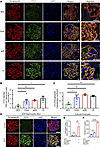
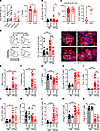
Kadariswantiningsih et al. report that CCL5 is selectively upregulated in podocytes in human glomerular diseases. The cover art shows CCL5 (green) colocalization with synaptopodin (red), highlighting podocyte-specific upregulation in IgA nephropathy. Image credit: Ika N. Kadariswantiningsih.
Kadariswantiningsih et al. report that CCL5 is selectively upregulated in podocytes in human glomerular diseases. The cover art shows CCL5 (green) colocalization with synaptopodin (red), highlighting podocyte-specific upregulation in IgA nephropathy. Image credit: Ika N. Kadariswantiningsih.
Go to section:
-
Research Articles
×
Abstract
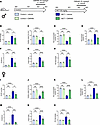
Glomerular inflammation and podocyte loss are the hallmarks of chronic kidney disease (CKD) progression. Understanding how podocytes and their microenvironment regulate inflammation is critical for developing effective therapies. In this study, we identified C-C chemokine ligand 5 (CCL5) as an inflammatory mediator elevated in injured podocytes, based on analyses of both human kidney biopsies and mouse models of CKD. We discovered that CCL5 exerts paradoxical effects in nephropathy; while it protects podocytes in vitro, it exacerbates glomerular injury in vivo. Recombinant CCL5 and podocyte-specific CCL5 overexpression promoted cell survival and reduced apoptosis in cultured podocytes. However, in adriamycin-induced nephropathy, CCL5 worsened glomerular injury, increasing proteinuria, glomerulosclerosis, and podocyte loss. Bone marrow (BM) transplantation experiments revealed that CCL5 in BM-derived cells — not kidney-resident cells — drove disease progression. CCL5 deficiency in BM-derived cells conferred protection by increasing reparative M2 macrophages, whereas endogenous CCL5 promoted M1 polarization, inhibited M2 differentiation, and triggered M2-to-M1 transition. These findings demonstrate that while CCL5 supports podocyte survival, its expression in BM-derived cells promotes inflammatory macrophage phenotypes and glomerular injury. The harmful immune effects of CCL5 in BM-derived cells outweigh its podocyte-protective role, highlighting the importance of cell-targeted strategies to mitigate kidney damage.
Authors
Ika N. Kadariswantiningsih, Issei Okunaga, Kaho Yamasaki, Maulana A. Empitu, Hiroyuki Yamada, Shin-ichi Makino, Akitsu Hotta, Hideo Yagita, Masashi Aizawa, Ryo Koyama-Nasu, Motoko Y. Kimura, Narihito Tatsumoto, Katsuhiko Asanuma
×Abstract
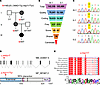
Focal cortical dysplasia (FCD) is a major cause of refractory epilepsy and is associated with pathogenic variants in mTOR pathway genes, including DEPDC5, the most common cause of familial focal epilepsy. The mechanisms of epileptogenesis associated with FCD and hyperactive mTOR signaling remain unclear in DEPDC5-related epilepsy. To test whether DEPDC5 loss leading to seizures requires in utero cortical developmental defects or whether postnatal neuronal dysfunction of mTORC1 is sufficient to drive seizures, we developed a postnatal focal cortical Depdc5-knockout mouse model. Postnatal day 0–1 Depdc5-floxed mice received unilateral motor cortex injections of either AAV-Cre-GFP or control AAV-GFP. The AAV-Cre-GFP–injected hemisphere had decreased DEPDC5 levels with hyperactivation of mTOR that increased with age compared with both the contralateral hemisphere and the AAV-GFP–injected mice. Cortical lamination was not disrupted by postnatal DEPDC5 loss. Pathologic hallmarks of FCDs were identified in the Depdc5-knockout hemisphere, including increased SMI-311 neurofilament staining, hypomyelination, astrogliosis, and microglial activation. Mice with postnatal cortical DEPDC5 loss exhibited lower seizure thresholds, increased focal seizures, and increased rates of seizure-induced death compared with control mice. This study demonstrates that postnatal DEPDC5 loss and subsequent mTOR hyperactivation without disruption of cortical migration is sufficient to cause epilepsy.
Authors
Karenna J. Groff, Yini Liang, Christopher Morici, Jinita B. Modasia, Leena Mehendale, Nishtha Gupta, Angelica D’Amore, Yongho Choe, Mustafa Q. Hameed, Alexander Rotenberg, Mustafa Sahin, Christopher J. Yuskaitis
×Abstract
Fibroblast growth factor receptors (FGFRs) are tyrosine kinase receptors critical for organogenesis and tissue maintenance, including in the adrenal gland. Here we delineate the role of FGFR2 in the morphogenesis, maintenance, and function of the adrenal cortex with a focus on the zona glomerulosa (zG). zG-specific Fgfr2 deletion (Fgfr2-cKO) resulted in impaired zG cell identity, proliferation, and transdifferentiation into zona fasciculata (zF) cells during postnatal development. In adult mice, induced deletion of Fgfr2 led to loss of mature zG cell identity, highlighting the importance of FGFR2 for the maintenance of a differentiated zG state. Strikingly, Fgfr2-cKO was sufficient to fully abrogate β-catenin–induced zG hyperplasia and to reduce aldosterone levels. Finally, short-term treatment with pan-FGFR small molecule inhibitors suppressed aldosterone production in both WT and β-catenin gain-of-function mice. These results demonstrate a critical role for FGFR signaling in adrenal morphogenesis, maintenance, and function and suggest that targeting FGFR signaling may benefit patients with aldosterone excess and/or adrenal hyperplasia.
Authors
Vasileios Chortis, Dulanjalee Kariyawasam, Mesut Berber, Nick A. Guagliardo, Sining Leng, Betul Haykir, Claudio Ribeiro, Manasvi S. Shah, Emanuele Pignatti, Brenna Jorgensen, Lindsey Gaston, Paula Q. Barrett, Diana L. Carlone, Kleiton Silva Borges, David T. Breault
×Abstract
Sepsis contributes substantially to mortality rates worldwide, yet clinical trials that have focused on its underlying pathogenesis have failed to demonstrate benefits. Recently, enhancing self-defense has been regarded as an emerging therapeutic approach. Autophagy is a self-defense mechanism that protects septic mice, but its regulatory factor is still unknown. Moreover, the role of interferon regulatory factor 7 (IRF7) in sepsis has been debated. Here, we showed that Irf7 deficiency increased mortality during polymicrobial sepsis. Furthermore, IRF7 drove macrophages to protect against sepsis. Mechanistically, IRF7 is a transcription factor that upregulates the expression of autophagy-related genes responsible for autophagosome formation and autolysosome maturation, induces autophagic killing of bacteria, and ultimately reduces septic organ injury. Recombinant adeno-associated virus 9–Irf7–mediated IRF7 overexpression promoted the autophagic clearance of pathogens and improved sepsis outcomes, which may be the mechanism underlying the observed improvement in bacterial clearance. These findings provide evidence that IRF7 is the underlying regulatory factor that drives autophagy to eliminate pathogens in macrophages during sepsis. Collectively, IRF7 overexpression represents a potential host-directed therapeutic strategy for preclinical sepsis models, operating independently of antibiotic mechanisms.
Authors
Guiming Chen, Kangxin Li, Haihua Luo, Lianxu Zhao, Yong Jiang
×Abstract
Glioblastoma IDH-wildtype is the most common and aggressive primary brain tumor in adults, with poor prognosis despite current therapies. To identify new therapeutic vulnerabilities, we investigated the role of CDK12, a transcription-associated cyclin-dependent kinase, in glioblastoma. Genetic or pharmacologic inactivation of CDK12 impaired tumor growth in patient-derived xenograft (PDX) models and enhanced the efficacy of temozolomide. Metabolic profiling using extracellular flux analysis and stable isotope tracing with U-¹³C-glucose and U-¹³C-glutamine showed that CDK12 inhibition disrupted mitochondrial respiration, resulting in energy depletion and apoptotic cell death characterized by caspase activation and Noxa induction. Mechanistically, we identified a direct interaction between CDK12 and GSK3β. CDK12 inhibition activated GSK3β, leading to downregulation of PPARD, a transcriptional regulator of oxidative metabolism. This CDK12/GSK3β/PPARD axis was required for glioblastoma cell proliferation and metabolic homeostasis. In vivo, CDK12 inhibition significantly extended survival without overt toxicity and induced complete tumor regression in a subset of animals. Strikingly, combined CDK12 inhibition and temozolomide treatment led to complete tumor eradication in all animals tested. These findings establish CDK12 as a key regulator of glioblastoma metabolism and survival, and provide strong preclinical rationale for its therapeutic targeting in combination with standard-of-care treatments.
Authors
Jeong-Yeon Mun, Chang Shu, Qiuqiang Gao, Zhe Zhu, Hasan O. Akman, Mike-Andrew Westhoff, Georg Karpel-Massler, Markus D. Siegelin
×Abstract
Premature ovarian insufficiency (POI) is a complex reproductive disorder with a strong genetic component. The known POI causative genes currently account for only a small fraction of cases. In this study, we conducted whole-exome sequencing and identified a rare heterozygous missense variant in DNA helicase B (HELB) (c.349G>T, p.Asp117Tyr) in a Chinese family with POI and early menopause. To investigate the pathogenicity of this variant, a knockin mouse model carrying a heterozygous missense Helb variant (Helb+/D112Y) homologous to the human HELB c.349G>T was constructed. The Helb-mutated female mice exhibited reduced litter sizes and prolonged interlitter intervals compared with wild-type mice after reaching 10 months of age, leading to a shortened reproductive lifespan. Consistently, aged Helb+/D112Y females showed decreased ovarian weight and accelerated follicle depletion. Transcriptomic analysis of the ovaries from Helb-mutated mice revealed dysregulated expression of genes associated with impaired ovarian function and ovarian aging. Collectively, these findings in both humans and mice suggest that HELB is involved in maintaining ovarian function and regulating reproductive aging, highlighting the importance of HELB in female reproductive health.
Authors
Yuncheng Pan, Yuexin Yu, Jitong Mo, Shuting Ren, Zixue Zhou, Xi Yang, Yiqing Liu, Feng Zhang, Yanqin You, Xiaojin Zhang, Yanhua Wu
×Abstract
Coronary artery disease (CAD) is the leading cause of mortality worldwide, with macrophages playing a central role in shaping the inflammatory environment through cytokines, chemokines, and other mediators. Long noncoding RNAs (lncRNAs) are emerging as key regulators of cellular processes owing to their interactions with DNA, RNA, microRNAs, and proteins, which positions them to be promising therapeutic targets. Through integrative transcriptomic analysis, we identified SPANXA2-OT1 as a primate-specific lncRNA with a potential role in macrophage-mediated inflammation in CAD. Functional studies in primary human macrophages demonstrated that SPANXA2-OT1 was induced by inflammatory stimulation, localized to the cytoplasm, and exerted regulatory effects on chemokine expression and macrophage chemotaxis. Mechanistically, SPANXA2-OT1 acted as a molecular sponge for microRNA-338, thereby influencing the expression of IL-8, a critical mediator of monocyte recruitment and inflammatory signaling. Collectively, these findings establish SPANXA2-OT1 as a human-specific regulator of inflammatory pathways in CAD and highlight its translational potential as both a biomarker and therapeutic target.
Authors
Prabhash K. Jha, Sarvesh Chelvanambi, Yuto Nakamura, Lucas Y.U. Itto, Aatira Vijay, Adrien Lupieri, Miguel C. Barbeiro, Thanh-Dat Le, Caio B. Nascimento, Taku Kasai, Mary Whelan, Daiki Hosokawa, Dakota Becker-Greene, Sasha A. Singh, Elena Aikawa, Shizuka Uchida, Masanori Aikawa
×Abstract
Renal polycystins (PKD1, PKD2) are ion channel–forming subunits that traffic to principal cell primary cilia. Variants in these proteins cause approximately 95% of autosomal dominant polycystic kidney disease (ADPKD), a common, lethal genetic disorder that lacks effective drug treatments. We assessed the mechanistic impact and pathogenic propensity of 2 disease-associated PKD2 truncating variants, R803X and R654X. Worldwide, hundreds of individuals with ADPKD harbor these germline mutations, including the R803X founder variant first identified within the patient population of Taiwan. Our biochemical, electrophysiological, and super-resolution imaging analyses demonstrated that the pore-truncating R654X variant abolished channel assembly and ciliary trafficking, whereas the R803X variant retained partial cilia trafficking and channel function. To assess disease impact, we generated transgenic mice with analogous truncation mutations. Homozygous mutants were embryonic lethal, whereas heterozygous mice expressing both variant and conditional Pkd2 repression alleles developed pronounced renal cysts. Cyst progression was slower in mice carrying the equivalent Taiwan mutation, reflecting the milder clinical course observed in patients. These findings revealed that the degree of impaired PKD2 channel trafficking to primary cilia correlated with cystic disease severity, providing insight into variant-specific ADPKD pathogenesis and newly developed animal models expressing clinically relevant variants for therapeutic testing.
Authors
Louise F. Kimura, Orhi Esarte Palomero, Megan Larmore, Paul G. DeCaen, Thuy N. Vien
×Abstract
Pulmonary arterial hypertension (PAH) is a rare and incurable disease characterized by progressive narrowing of pulmonary arteries (PA), resulting in right ventricular (RV) hypertrophy, RV failure, and eventually death. Orai1 inhibition has emerged as promising therapeutic approach to mitigate PAH. In this study, we investigated the efficacy of a clinically applicable selective Orai1 inhibitor, CM5480, and its effects when combined with standard PAH therapies in a preclinical PAH model. In male and female monocrotaline PAH-rats, CM5480 monotherapy improved hemodynamics, PA, and RV remodeling, as confirmed by RV catheterization, echocardiography, histology, and unbiased RNA-Seq. Standard PAH therapies, ambrisentan or sildenafil, achieved modest improvements in experimental PAH. In contrast, combination therapies with CM5480 yielded significantly greater benefits in reducing PA remodeling and improving cardiac function compared with monotherapies. Furthermore, in vitro experiments showed that Orai1 knockdown reduced pulmonary endothelial cell dysfunction in PAH and that the Orai1 pathway is independent of standard PAH-targeted pathways in PA smooth muscle cells (PASMCs). Finally, we found enhanced Orai1 expression/function in PASMCs and pulmonary vein SMCs from patients with pulmonary veno-occlusive disease. These findings suggest that Orai1 inhibition represents a potentially novel and complementary therapeutic strategy for PAH by acting at pulmonary vascular and RV levels.
Authors
Anaïs Saint-Martin Willer, Grégoire Ruffenach, Bastien Masson, Kristelle El Jekmek, Angèle Boët, Rui Adão, Mathieu Gourmelon, Antoine Beauvais, Jessica Sabourin, Mary Dutheil, Maria-Rosa Ghigna, Laurent Tesson, Séverine Ménoret, Ignacio Anegon, Fabrice Bauer, Vincent de Montpréville, Sudarshan Hebbar, Carmen Brás-Silva, Kenneth Stauderman, Marc Humbert, Olaf Mercier, David Montani, Véronique Capuano, Fabrice Antigny
×Abstract
Glutaminolysis is enhanced in T cells of patients with lupus and in Tfh cells, a critical subset of CD4+ T cells that provide help to autoreactive B cells, in lupus mice. Glutaminolysis inhibitors reduced lupus activity in association with a decreased frequency of Th17 cells in mice. Here, we thought to determine the role of glutaminolysis in murine Tfh cells. The pharmacological inhibition of glutaminolysis with DON reduced the expression of the critical costimulatory molecule ICOS on lupus Tfh cells, in association with a reduction of autoantibody production and B cell differentiation markers. Accordingly, profound transcriptomic and metabolic changes, including a reduction of glycolysis, were induced by DON in lupus Tfh cells, whereas healthy Tfh cells showed minor changes. The T cell–specific genetic inhibition of glutaminolysis largely phenocopied the effects of DON on Tfh cells and B cells in an autoimmune genetic background with minor changes in Tfh and B cells in healthy controls. Furthermore, we showed that T cell–specific glutaminolysis inhibition impaired T-dependent humoral responses in autoimmune mice as well as their Tfh response to a viral infection. Overall, these results suggest that lupus Tfh cells have a greater intrinsic requirement of glutaminolysis for their helper functions.
Authors
Seung-Chul Choi, Yong Ge, Milind V. Joshi, Damian Jimenez, Abigail Castellanos Garcia, Cassandra LaPlante, Lauren T. Padilla, Chaoyu Ma, Nu Zhang, Jeffrey C. Rathmell, Mansour Mohamadzadeh, Laurence Morel
×Abstract
Rheumatoid arthritis (RA) is a common systemic autoimmune disorder. Fibroblast-like synoviocytes (FLS) have emerged as an attractive target for nonimmunosuppressive RA therapy, but there are no approved drugs targeting FLS. The receptor protein tyrosine phosphatase sigma (PTPRS) negatively regulates FLS migration and has been proposed as a target for FLS-directed RA therapy. Here we examined the impact of sequence variations on efficacy of an FLS-targeted biologic composed of Fc-fused PTPRS IgG-like domains Ig1 and Ig2 (Ig1&2-Fc). Engineering the linker and Fc tag improved effectiveness of human Ig1&2-Fc in assays of FLS migration and a mouse model of arthritis. Treatment of mice with Ig1&2-Fc over 4 months revealed no signs of toxicity or organ pathology. Finally, we show potential of Ig1&2-Fc coadministration in combination or as a bispecific fusion with a tumor necrosis factor-α inhibitor. Combination treatment of mouse tumor necrosis factor receptor 2 (mTnfr2) with Ig1&2-Fc resulted in increased efficacy in suppressing arthritis beyond single-agent treatment. When administered as a dual-action bispecific, Ig1&2 fused to mTnfr2 proved more efficacious at suppressing arthritis than mTnfr2 alone. This study illustrates the potential of Ig1&2-Fc as a combination or bispecific therapy with disease-modifying antirheumatic drugs to improve patient outcomes in RA.
Authors
Sterling H. Ramsey, Zixuan Zhao, Megan C. Lee, Thales Hein da Rosa, Ava C. Schneider, Miriam Bollmann, Nour Dada, Katie E. Frizzi, May M. Han, Jaeyeon Kim, Martina Zoccheddu, Nigel A. Calcutt, Gary S. Firestein, James W. Bryson, Mattias N.D. Svensson, Eugenio Santelli, Stephanie M. Stanford, Nunzio Bottini
×Abstract
Insulin resistance impairs benefits of lipid-lowering treatment, as evidenced by higher cardiovascular disease risk in individuals with type 2 diabetes versus those without. Because platelet activity is higher in insulin-resistant patients and promotes atherosclerosis progression, we questioned whether platelets impair inflammation resolution in plaques during lipid lowering. In mice with obesity and insulin resistance, we induced advanced plaques and then implemented lipid lowering to promote atherosclerotic plaque inflammation resolution. Concurrently, mice were treated with either platelet-depleting or control antibodies for 3 weeks. Platelet activation and insulin resistance were unaffected by lipid lowering. Both antibody-treated groups showed reduced plaque macrophages, but plaque cellular and structural composition differed. In platelet-depleted mice, single-cell RNA-seq revealed dampened inflammatory gene expression in plaque macrophages and an expansion of a subset of Fcgr4+ macrophages having features of inflammation-resolving, phagocytic cells. Necrotic core size was smaller and collagen content greater, resembling stable human plaques. Consistent with the mouse results, clinical data showed that patients with lower platelet counts had decreased proinflammatory signaling pathways in circulating nonclassical monocytes after lipid lowering. These findings highlight that platelets hinder inflammation resolution in atherosclerosis during lipid-lowering treatment. Identifying novel platelet-targeted therapies following lipid-lowering treatment in individuals with insulin resistance may be a promising therapeutic approach to promote atherosclerotic plaque inflammation resolution.
Authors
Maria Laskou, Sofie Delbare, Michael Gildea, Ada Weinstock, Vitor De Moura Virginio, Maxwell La Forest, Franziska Krautter, Casey Donahoe, Letizia Amadori, Natalia Eberhardt, Tessa J. Barrett, Chiara Giannarelli, Jeffrey S. Berger, Edward A. Fisher
×Abstract
Atherosclerotic cardiovascular disease is a major contributor to the global disease burden. We previously demonstrated that Clock-mutant mice, and mice with global or liver-specific Bmal1 deficiency, exhibit enhanced atherosclerosis because of overproduction of lipoproteins and sustained hyperlipidemia. Atherosclerosis initiation depends on cholesterol accumulation in subendothelial macrophages (Mφs). To clarify the role of Bmal1 in Mφ function and atherosclerosis, we used several global and myeloid-specific Bmal1-deficient mouse models. Mφ-specific Bmal1-deficient mice had similar plasma lipid levels, higher Mφ cholesterol content, and displayed greater atherosclerosis compared with controls. We attempted to understand molecular mechanisms for increased cellular cholesterol levels. Bmal1-deficient Mφs exhibited: (a) elevated expression of Cd36 and uptake of oxLDL; (b) diminished expression of Abca1 and Abcg1, and decreased cholesterol efflux and reverse cholesterol transport; and (c) reduced Npc1 and Npc2 expression and diminished cholesterol egress from lysosomes. Molecular studies revealed that Bmal1 directly regulates basal and cyclic expression of Npc1 and Npc2 by binding the E-box motif (CANNTG) sequence recognized by Bmal1 in their promoters and indirectly regulates the basal and temporal regulation of Cd36 and Abca1/Abcg1 involving Rev-erbα and Znf202 repressors, respectively. In conclusion, Mφ Bmal1 is a key regulator of the uptake of modified lipoproteins, cholesterol efflux, lysosomal cholesterol egress, and atherosclerosis and, therefore, may be a master regulator of cholesterol metabolism in Mφs. Restoration of Mφ Bmal1 expression or blocking of factors that decrease its activity may be effective in preventing atherosclerosis.
Authors
Xiaoyue Pan, John O’Hare, Cyrus Mowdawalla, Samantha Mota, Nan Wang, M. Mahmood Hussain
×Abstract
Primary exposure to influenza antigens during infancy shapes the humoral response to subsequent exposures. Development of a universal vaccine approach to protect newborns against influenza would represent a major step forward. In our previous study, we showed vaccination of newborn African green monkeys (AGMs) with an adjuvanted hemagglutinin (HA) stem nanoparticle induced robust IgG responses with broad recognition across HAs. Here, we examined the cellular responses in the lung-draining lymph node of these vaccinated newborn AGMs following challenge with a heterologous H1N1 virus. Our results show that vaccination is associated with early HA stem IgG+ B cell and antibody-secreting cell responses following infection, consistent with a rapidly recalled memory response. In addition, there was evidence of an increase in both HA stem– and head–specific plasma cells in vaccinated animals, suggesting a vaccine-engendered benefit for novel antibodies targeting HA epitopes. Finally, challenge was associated with preferential increases in antibodies that cross-react with H5 HA, suggesting improved protection against this divergent strain. Overall, these findings indicate that HA stem with AddaVax as adjuvant generates a stem-specific cross-reactive memory pool in newborn AGMs with the potential to be rapidly recalled upon infection.
Authors
Kali F. Crofts, Beth C. Holbrook, Courtney L. Page, Maya Sangesland, Masaru Kanekiyo, Martha Alexander-Miller
×Abstract
Matrix remodeling by metalloproteinases (MMPs) is essential for maintaining muscle homeostasis; however, their dysregulation can drive degenerative processes. By interrogating biopsy RNA-Seq data, we showed that MMP expression correlated with disease severity in facioscapulohumeral muscular dystrophy (FSHD). In the iDUX4pA FSHD mouse model, MMP levels also progressively increased in response to double homeobox 4–induced (DUX4-induced) muscle degeneration. Single-cell RNA-Seq further identified fibroadipogenic progenitors (FAPs) and macrophages as the primary sources of MMPs, particularly MMP2, MMP14, and MMP19, in dystrophic muscle. Treatment with the pan-MMP inhibitor batimastat alleviated inflammation and fibrosis, improved muscle structure, and decreased the number of FAPs and infiltrating macrophages. These findings underscore the role of MMPs in driving muscle degeneration in FSHD, highlight MMPs as functional biomarkers of disease, and support MMP inhibitors as a DUX4-independent therapeutic approach to limit fibroadipogenesis and promote muscle regeneration.
Authors
Usuk Jung, Erdong Wei, Haseeb Ahsan, Ana Mitanoska, Kenric Chen, Michael Kyba, Darko Bosnakovski
×Abstract
BACKGROUND Accurate prognostic assays for COVID-19 represent an unmet clinical need. We sought to identify and validate early parsimonious transcriptomic signatures that accurately predict fatal outcomes.METHODS We studied 894 patients enrolled in the prospective, multicenter Immunophenotyping Assessment in a COVID-19 Cohort (IMPACC) with peripheral blood mononuclear cells (PBMC) and nasal swabs collected within 48 hours of admission. Host gene expression was measured with RNA-Seq. We trained parsimonious prognostic classifiers incorporating host gene expression, age, and SARS-CoV-2 viral load to predict 28-day mortality in 70% of the cohort. Classifier performance was determined in the remaining 30% and externally validated in a contemporary COVID-19 cohort (n = 137) with vaccinated patients.RESULTS Fatal COVID-19 was characterized by 4,189 differentially expressed genes in the peripheral blood. A COVID-specific 3-gene peripheral blood classifier (CD83, ATP1B2, DAAM2) combined with age and SARS-CoV-2 viral load achieved an area under the receiver operating characteristic curve (AUC) of 0.88 (95% CI, 0.82–0.94). A 3-gene nasal classifier (SLC5A5, CD200R1, FCER1A), in comparison, yielded an AUC of 0.74 (95% CI, 0.64–0.83). Notably, OLAH, the most strongly upregulated gene in both PBMC and nasal swab and recently implicated in severe viral infection pathogenesis, yielded AUCs of 0.86 (0.79–0.93) and 0.78 (95% CI, 0.69–0.86), respectively. Both peripheral blood classifiers demonstrated comparable performance in an independent contemporary cohort of vaccinated patients (AUCs 0.74–0.80).CONCLUSION Our parsimonious blood- and nasal-based classifiers accurately predicted COVID-19 mortality and merit further study as accessible prognostic tools to guide triage, resource allocation, and early therapeutic interventions.FUNDING NIH: 5R01AI135803-03, R35HL140026, 5U19AI118608-04, 5U19AI128910-04, 4U19AI090023-11, 4U19AI118610-06, R01AI145835-01A1S1, 5U19AI062629-17, 5U19AI057229-17, 5U19AI125357-05, 5U19AI128913-03, 3U19AI077439-13, 5U54AI142766-03, 5R01AI104870-07, 3U19AI089992-09, 3U19AI128913-03, 5T32DA018926-18, and K0826161611. National Institute of Allergy and Infectious Diseases, NIH: 3U19AI1289130, U19AI128913-04S1, and R01AI122220. National Center for Advancing Translational Sciences, NIH: UM1TR004528. The National Science Foundation: DMS2310836. The Chan Zuckerberg Biohub San Francisco.
Authors
Rithwik Narendra, Emily C. Lydon, Hoang Van Phan, Natasha Spottiswoode, Lucile P. Neyton, Joann Diray-Arce, IMPACC Network, COMET Consortium, EARLI Consortium, Patrice M. Becker, Seunghee Kim-Schulze, Annmarie Hoch, Harry Pickering, Patrick van Zalm, Charles B. Cairns, Matthew C. Altman, Alison D. Augustine, Steve Bosinger, Walter Eckalbar, Leying Guan, Naresh Doni Jayavelu, Steven H. Kleinstein, Florian Krammer, Holden T. Maecker, Al Ozonoff, Bjoern Peters, Nadine Rouphael, Ruth R. Montgomery, Elaine Reed, Joanna Schaenman, Hanno Steen, Ofer Levy, Sidney C. Haller, David Erle, Carolyn M. Hendrickson, Matthew F. Krummel, Michael A. Matthay, Prescott Woodruff, Elias K. Haddad, Carolyn S. Calfee, Charles R. Langelier
×Abstract
BACKGROUND Among people living with HIV (PLWH), immunological nonresponders (INR) fail to adequately restore CD4+ T cell counts despite effective antiretroviral therapy (ART), placing them at greater risk for adverse outcomes and reduced vaccine efficacy. We aimed to study the robustness and longevity of vaccine-induced virus-specific cellular immune responses in INR.METHODS Virus-specific CD8+ T cell responses were analyzed in INR (CD4+ T cell count < 300 cells/μL) and immunological responders (IR) (CD4+ T cell count > 500 cells/μL), receiving ART, and HIV-uninfected controls following COVID-19 mRNA vaccination and infection. Virus-specific CD8+ T cells were characterized using peptide-loaded MHC I tetramer technology, after in vitro expansion and cytokine production assays. Virus-specific CD4+ T cells and IgG levels were determined by activation-induced marker (AIM) assay and ELISA, respectively.RESULTS We demonstrated that, while long-lasting virus-specific cellular immune responses were generated in INR, CD8+ T cell immunity remained limited compared with robust CD4+ T cell reactivity. CD8+ T cell responses in INR exhibited reduced breadth and frequency, accompanied by altered memory differentiation and suboptimal activation and effector response upon antigen exposure. This deficiency correlated with low CD4+ T cell counts, independent of other disease markers, highlighting the pivotal role of CD4+ T cells in orchestrating vaccine-induced immunity. Notably, repeated booster vaccinations enhanced virus-specific CD8+ T cell responses.CONCLUSION INR elicit limited vaccine-induced virus-specific CD8+ T cell immunity, but booster vaccinations can enhance these responses, suggesting better immune outcomes with tailored vaccination strategies.FUNDING Helmholtz Society, German Research Foundation, Federal Ministry of Education and Research.
Authors
Vivien Karl, Anne Graeser, Anastasia Kremser, Liane Bauersfeld, Florian Emmerich, Nadine Herkt, Siegbert Rieg, Susanne Usadel, Bertram Bengsch, Tobias Boettler, Hendrik Luxenburger, Christoph Neumann-Haefelin, Matthias C. Müller, Robert Thimme, Maike Hofmann
×Abstract
Elexacaftor/tezacaftor/ivacaftor (ETI) cystic fibrosis transmembrane conductance regulator (CFTR) modulator therapy has led to rapid and substantial improvements in cystic fibrosis (CF) airway disease. Underlying molecular and cellular mechanisms, long-term efficacy, and ability to reverse airway epithelial remodeling in established disease remain unclear. Longitudinal nasal brushes from an adult CF cohort were used to evaluate gene expression, cellular composition, stem cell function, and microbiome changes at baseline and at 6 months and 2 years after ETI. The baseline to 6 month span showed a massive downregulation of extensive neutrophilic inflammatory gene expression programs that correlated with increased pulmonary function and decreased sinusitis. Primary airway epithelial stem cell cultures from matched donor samples showed partially improved differentiation and barrier capacity at 6 months. Although clinical outcomes remained stable during the 6 month to 2 year span, transcriptional changes revealed a resurgence of baseline inflammatory programs. The time course of gene expression was consistent with ongoing normalization of epithelial remodeling. Relative abundance of Pseudomonas also decreased during the time course. These data suggest that ETI rectifies inflammation, epithelial remodeling, and bacterial infection in the airways, but resurgence of inflammatory gene expression may indicate ongoing inflammation, potentially presaging disease progression with long-term therapy.
Authors
Eszter K. Vladar, Austin E. Gillen, Sangya Yadav, Mikayla R. Murphree, David Baraghoshi, J. Kirk Harris, Elmar Pruesse, Sierra S. Niemiec, Alexandra W.M. Wilson, Katherine B. Hisert, Stephen M. Humphries, Matthew Strand, David A. Lynch, Max A. Seibold, Daniel M. Beswick, Jennifer L. Taylor-Cousar
×Abstract
About one-third of neonatal seizures do not respond to the first-line anticonvulsant phenobarbital, which activates phasic inhibition and whose effectiveness decreases over time. Whether enhancing tonic inhibition can treat refractory seizures or status epilepticus in neonates remains uncertain. We evaluated the effect of recurrent seizure-like events (SLE) on α5– and δ–GABAA receptor (α5- and δ-GABAAR) subunit expression and tonic inhibition in neonatal C57BL/6J mice (P6–9, both sexes) using acute brain slices. We investigated the impact of THIP (gaboxadol) on neonatal behavioral seizures, neuronal apoptosis, and neurodegeneration in vivo. We found neonatal neocortical expression of α5- and δ-GABAAR subunits. Blocking α5-GABAARs with L-655,708 did not affect acute neonatal SLE, whereas enhancing δ-GABAARs with THDOC, a neurosteroid, reduced them. The α5- and δ-GABAAR membrane expression increased after 8 hours of neonatal SLE and correlated with increased δ-mediated conductance but not α5-mediated conductance. Enhancing tonic inhibition was more effective in reducing recurrent neonatal SLE (8 hours) compared with early treatment. Increasing tonic inhibition reduced the duration, severity, and number of kainic acid–induced in vivo neonatal behavioral seizures without increasing neurodegeneration or apoptosis. We conclude that recurrent neonatal seizures increase tonic inhibition. Therefore, enhancing tonic inhibition may be a treatment strategy for prolonged neonatal status epilepticus.
Authors
Gage T. Liddiard, Gordon F. Buchanan, Mark L. Schultz, Joseph Glykys
×Abstract
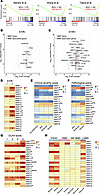
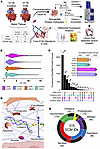
Ischemic cardiomyopathy (ICM) is a leading cause of heart failure characterized by extensive remodeling of the cardiac extracellular matrix (ECM). While initially adaptive, ECM deposition following ischemic injury eventually turns maladaptive, promoting adverse cardiac remodeling. The strong link between the extent of fibrosis and adverse clinical outcomes has led to growing interest in ECM-targeted therapies to prevent or reverse maladaptive cardiac remodeling in ICM; yet, the precise composition of the ECM in ICM remains poorly defined. In this study, we employed sequential protein extraction enabled by the photocleavable surfactant Azo to enrich ECM proteins from left ventricular tissues of patients with end-stage ICM and nonfailing donor hearts. High-resolution mass spectrometry–based quantitative proteomics identified and quantified over 6,000 unique protein groups, including 315 ECM proteins. We discovered significant upregulation of key ECM components, particularly glycoproteins, proteoglycans, collagens, and ECM regulators. Notably, LOXL1, FBLN1, and VCAN were among the most differentially expressed. Functional enrichment analyses revealed enhanced TGFB signaling, integrin-mediated adhesion, and complement activation in ICM tissues, suggesting a feedback loop driving continued ECM deposition in the end-stage failing heart. Together, our findings provide a comprehensive proteomic landscape of ECM alterations in the end-stage ICM myocardium and identify promising molecular targets for therapeutic intervention.
Authors
Kevin M. Buck, Holden T. Rogers, Zachery R. Gregorich, Morgan W. Mann, Timothy J. Aballo, Zhan Gao, Emily A. Chapman, Andrew J. Perciaccante, Scott J. Price, Ienglam Lei, Paul C. Tang, Ying Ge
×Abstract
Prolonged and dysregulated neutrophilic inflammation causes tissue damage in chronic inflammatory diseases, including antibody-mediated glomerulonephritis (AGN). An increase in glycolysis, supported by enhanced glucose uptake, is a hallmark of hyperneutrophilic inflammation. Neutrophils upregulate glucose transporter 1–mediated (Glut1-mediated) glucose incorporation for renal antimicrobial activities. However, little is known about the role of neutrophil-specific Glut1 function in the pathogenesis of AGN. Using a well-vetted mouse model of AGN, we show that neutrophils upregulate Glut1 expression and function in the nephritic kidney. We demonstrate that Glut1 function in the hematopoietic cells during the early stage of the disease is necessary for kidney pathology. Most importantly, neutrophil-intrinsic Glut1 function is critical for AGN. While neutrophil-specific Glut1 ablation diminished the expression of tissue-damaging effector molecules in both the early and late stages, renal cytokines’ and chemokines’ production were compromised only in the late stage of the disease. Consequently, Glut1 inhibitor treatment ameliorated renal pathology in AGN mice. These data identify a Glut1-driven inflammatory circuit in neutrophils, which is amenable to therapeutic targeting in AGN.
Authors
Hossein Rahimi, Wonseok Choi, Doureradjou Peroumal, Shuxia Wang, Partha S. Biswas
×Abstract
Despite the widespread use of adenovirus, mRNA, and protein-based vaccines during the COVID-19 pandemic, their relative immunological profiles and protective efficacies remain incompletely defined. Here, we compared antigen kinetics, innate and adaptive immune responses, and protective efficacy following Ad5, mRNA, and protein vaccination in mice. Ad5 induced the most sustained antigen expression, but mRNA induced the most potent IFN responses, associated with robust antigen presentation and costimulation. Unlike Ad5 vaccines, which were hindered by preexisting vector immunity, mRNA vaccines retained efficacy after repeated use. As a single-dose regimen, Ad5 vaccines elicited higher immune responses. However, as a prime-boost regimen, and particularly in Ad5 seropositive mice, mRNA vaccines were more immunogenic than the other vaccine platforms. These findings highlight strengths of each vaccine platform and underscore the importance of host serostatus in determining optimal vaccine performance.
Authors
Bakare Awakoaiye, Shiyi Li, Sarah Sanchez, Tanushree Dangi, Nahid Irani, Laura Arroyo, Gabriel Arellano, Shadi Mohammadabadi, Malika Aid, Pablo Penaloza-MacMaster