
Research ArticleCell biologyNephrology
Open Access |  10.1172/jci.insight.191419
Molecular pathology and cystogenic propensity of the ADPKD Taiwan founder variant
Louise F. Kimura,1 Orhi Esarte Palomero,1 Megan Larmore,1 Paul G. DeCaen,1,2 and Thuy N. Vien1
1Department of Pharmacology, Feinberg School of Medicine, and
2Chemistry of Life Processes Institute, Northwestern University, Evanston, Illinois, USA.
Address correspondence to: Paul G. DeCaen or Thuy N. Vien, 320 East Superior, Chicago, Illinois, 60601, USA. Phone: 206.403.8811; Email: paul.decaen@northwestern.edu (PGD). Phone: 206.854.9450; Email: thuy.vien@northwestern.edu (TNV).
Authorship note: LFK and OEP contributed equally to this work.
Find articles by Kimura, L. in: PubMed | Google Scholar
1Department of Pharmacology, Feinberg School of Medicine, and
2Chemistry of Life Processes Institute, Northwestern University, Evanston, Illinois, USA.
Address correspondence to: Paul G. DeCaen or Thuy N. Vien, 320 East Superior, Chicago, Illinois, 60601, USA. Phone: 206.403.8811; Email: paul.decaen@northwestern.edu (PGD). Phone: 206.854.9450; Email: thuy.vien@northwestern.edu (TNV).
Authorship note: LFK and OEP contributed equally to this work.
Find articles by Esarte Palomero, O. in: PubMed | Google Scholar
1Department of Pharmacology, Feinberg School of Medicine, and
2Chemistry of Life Processes Institute, Northwestern University, Evanston, Illinois, USA.
Address correspondence to: Paul G. DeCaen or Thuy N. Vien, 320 East Superior, Chicago, Illinois, 60601, USA. Phone: 206.403.8811; Email: paul.decaen@northwestern.edu (PGD). Phone: 206.854.9450; Email: thuy.vien@northwestern.edu (TNV).
Authorship note: LFK and OEP contributed equally to this work.
Find articles by Larmore, M. in: PubMed | Google Scholar
1Department of Pharmacology, Feinberg School of Medicine, and
2Chemistry of Life Processes Institute, Northwestern University, Evanston, Illinois, USA.
Address correspondence to: Paul G. DeCaen or Thuy N. Vien, 320 East Superior, Chicago, Illinois, 60601, USA. Phone: 206.403.8811; Email: paul.decaen@northwestern.edu (PGD). Phone: 206.854.9450; Email: thuy.vien@northwestern.edu (TNV).
Authorship note: LFK and OEP contributed equally to this work.
Find articles by DeCaen, P. in: PubMed | Google Scholar
1Department of Pharmacology, Feinberg School of Medicine, and
2Chemistry of Life Processes Institute, Northwestern University, Evanston, Illinois, USA.
Address correspondence to: Paul G. DeCaen or Thuy N. Vien, 320 East Superior, Chicago, Illinois, 60601, USA. Phone: 206.403.8811; Email: paul.decaen@northwestern.edu (PGD). Phone: 206.854.9450; Email: thuy.vien@northwestern.edu (TNV).
Authorship note: LFK and OEP contributed equally to this work.
Find articles by Vien, T. in: PubMed | Google Scholar
Published November 10, 2025 - More info
JCI Insight. 2025;10(21):e191419. https://doi.org/10.1172/jci.insight.191419.
© 2025 Kimura et al. This work is licensed under the Creative Commons Attribution 4.0 International License. To view a copy of this license, visit http://creativecommons.org/licenses/by/4.0/.
Received: January 17, 2025; Accepted: September 11, 2025


-
Introduction
Autosomal dominant polycystic kidney disease (ADPKD) is a common monogenetic condition characterized by progressive development of nephrotic cysts that precipitates lethal kidney failure (1). ADPKD impacts more than 12 million individuals worldwide, for whom there is no drug cure. Human variants in renal polycystin ion channel subunits (PKD1 and PKD2) cause the majority of ADPKD (Supplemental Figure 1, A and B) (2, 3). Approximately 80% of patients with ADPKD carry one germline variant in PKD1, and approximately 15% carry a variant impacting the PKD2 gene (4). Results from patient samples and animal models suggest cyst initiation begins when kidney tubule cells acquire a somatic mutation (“second hit”) in either PKD1 or PKD2 alleles (Figure 1A) (5, 6). Thus, ADPKD has a recessive mechanism at the cellular level, which explains the accumulation of renal cysts and typical midlife onset of kidney failure during disease progression (3, 7). Although correlates of genotype to renal function from a limited subset of the ADPKD patient population has been previously reported, our understanding of the cystogenic propensity of the types (missense, nonsense) and the genomic locus of heritable polycystin variants is speculative (8). Beyond the kidney, polycystins have vital roles in the development and maintenance of vital organ systems including the cardiovascular system. Biallelic loss of either PKD1 or PKD2 expression in mice causes embryonic lethality due to cardiac, hepatic, and renal defects (9–11). Various mouse models with hypomorphic expression or conditional loss of polycystin alleles faithfully recapitulate ADPKD phenotypes (12–16). While transgenic mice expressing human disease–associated variants have been reported for PKD1 (17), analogous PKD2 mutations in mouse models are untested. These questions form the premise of our current study, which aims at defining the molecular pathology and cystogenic propensity of PKD2 variants found in the ADPKD population.
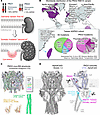 Figure 1
Two-hit hypothesis of ADPKD cyst initiation and the worldwide distribution of the Taiwan founder variant. (A) Diagram depicting the germline polycystin gene alleles impacted in 95% of ADPKD clinical cases and the acquisition of a second somatic mutation that drives ADPKD progression. Note, ADPKD does not progress until a second acquired mutation impacts either PKD1 or PKD2 alleles. (B) Geographic distribution of the PKD2 R801X truncation variant based on patient sequencing analysis from 25 institutions and 17 countries (29). Expanded view: Published analysis of a cohort of ADPKD patients in Taiwan identifying the PKD2 R801X founder variant (30). Note the high frequency of PKD2 germline mutations (32%) within the Taiwanese patient population compared with that observed globally (~15%). Map images were created with MapChart (https://www.mapchart.net/) under a Creative Commons Attribution–Share Alike 4.0 International License. (C) Top: Previously determined PKD2 channel core structures solved by cryo-EM (24, 40, 78, 79). Bottom: The isolated C-terminal EF hand and coiled-coil motif structures solved by NMR and x-ray crystallography, respectively (41, 42, 49). (D) Left: Assembled homotetrameric PKD2 channel AlphaFold3 models. Right: A PKD2 subunit modeled using AlphaFold3 identifying the structural location of R654 and R803 variant sites, and integral structural motifs.
ADPKD is a ciliopathic disease, as renal polycystins normally traffic to the primary cilium — a solitary microtubule-based organelle that projects from the apical surface of renal principal cells. Here, homomeric (PKD2) polycystins form voltage-gated and Ca2+-modulated channels and are readily measured from primary cilia membranes using submicron-diameter electrodes (18–22). This technique, along with super-resolution methods, was used to determine defective homomeric PKD2 gating properties induced by pathogenic missense variants in the channel’s external TOP and pore helix domains (20, 23). Renal polycystins can also form heteromeric complexes composed of PKD1 and PKD2. However, their functional properties have only been demonstrated under artificial conditions, such as introducing engineered cleavages in PKD2, adding non-native localization signals, or introducing unnatural gain-of-function mutations (e.g., F604P) in PKD2 (Supplemental Figure 1, A and B; supplemental material available online with this article; https://doi.org/10.1172/jci.insight.191419DS1) (18, 19, 24–26). Given their tenability to cilia electrophysiology, we will primarily consider the impact of PKD2 variants within the context of homomeric channels.
Germline truncating variants (nonsense, frameshift) in the PKD2 C-terminus are prevalent in the worldwide ADPKD clinical population (4, 27–29). Within this group, the R803X (p.Arg803*, c.2407C>T) truncating variant is reported in approximately 520 patients in Asia, Australia, Europe, and North America, and was identified as the founder variant of the Taiwanese ADPKD cohort (Figure 1B) (30–32). Haplotype analyses suggest that this variant began propagating within the Taiwanese population around 300 years ago and was likely introduced during the late Ming or early Qing dynasty. Today, the R803X founder variant is present in approximately 32% of the Taiwanese ADPKD patient population, where it is the single most prevalent mutation within this group (Figure 1B) (30). For comparative analysis in this study, we included a more extensive PKD2 truncation variant, R654X (pArg654*, c.1960C>T), which cleaves PKD2 at the channel pore (Figure 1B and Supplemental Figures 1 and 2). This nonsense mutation was identified from ADPKD patients of 9 unrelated families that reside in North America, Europe, and Asia but is not found in geographic concentration (4, 33, 34). While specific longitudinal data on PKD2 truncating variants are limited, PKD2 mutations in general are associated with milder ADPKD, where midlife onset of end-stage renal disease is delayed 10–15 years compared with patients who carry PKD1 mutations (35, 36). However, it is important to note that even among patients with PKD2 mutations, there can be variability in disease severity (36). Ongoing research, including the Taiwan PKD Registry, aims to provide more detailed genotype-phenotype correlations for PKD2 truncating variants and other disease-causing mutations (37). Given the clear clinical importance, we set out to determine the mechanistic impacts of R654X and R803X variants on PKD2 channel trafficking and function in the primary cilia membrane. We then assessed the allelic contribution of these human variants to renal cystogenic propensity by generating 2 new mouse strains that harbor analogous mutations in the PKD2 gene. The in vitro and in vivo findings are correlated to determine how levels of impaired channel biosynthesis (assembly, cilia trafficking) and function confer the onset of ADPKD pathogenicity.
-
Results
Structural impact of the R803X Taiwan founder and R654X pore truncation mutations. We begin our study by examining which structural motifs would be lost by the R654X and R803X truncating variants, and their anticipated functional effects based on previous work. As described in the Introduction, these 2 germline variants are frequently found within the ADPKD population, but at least 37 other C-terminal truncating mutations are also associated with disease pathology (Supplemental Figure 2) (27, 28). While the high-resolution cryo-EM structures of PKD2 homomeric channels have provided a molecular template of their transmembrane core structure, the C-terminal domains (CTDs) of contiguous channels are unresolved (Figure 1C and Supplemental Figure 1, A and B) (24, 38–40). Nonetheless, the structures of isolated fragments of the C-terminus, including the Ca2+-binding EF hand (residues 761–795) and trimers of the coiled-coil motif (residues 836–893), have been determined by crystallographic and nuclear magnetic resonance (NMR) methods (41–43). Initial reports proposed Ca2+ occupancy of the EF hand was required for channel function in the endoplasmic reticulum (ER) (44, 45). However, subsequent work challenged this view, where mutations that abolished EF hand Ca2+ affinity did not alter PKD2 channel function in the primary cilia (46). Importantly, this null hypothesis was further supported by in vivo observations from 2 mouse strains harboring distinct homozygous EF hand mutations (Pkd2ΔEF/ΔEF, Pkd2-X-Z/-X-Z) that did not result in disease phenotypes (46). Based on previous biochemical and modeling analysis, the coiled-coil motif of PKD2 provides structural stability essential for the formation of heteromeric complexes with PKD1 (Supplemental Figure 1A) (47–49). However, it is unknown how this element contributes to the homomeric channel assembly, function, and primary cilia processes that are vital for kidney function and embryonic development. From the cryo-EM structures and their alignments, we can see that R654 is located at the loop connecting the second pore helix (PH2) to the transmembrane pore forming helix (S6); thus, the truncating variants would terminate protein translation of the inner pore and downstream structural motifs within the CTD (Supplemental Figure 2). To provide a structural context and location of the R803X Taiwan founder variant, we used AlphaFold3 to generate models to predict the full-length homomeric channel (Figure 1D) (50). Results refolded the PKD2 monomer tetragonal opening for polycystins (TOP) domain, voltage sensor domain (VSD), and pore domain (PD), in close agreement with the cryo-EM structures, from which a symmetric oligomeric channel is assembled. Similarly, the CTD helices of the EF hands and the coiled-coil motif adopt the expected secondary structures and orientations, but the latter did not assemble channel trimers as previously proposed (51), rather they oligomerized as tetramers. In the AlphaFold3 PKD2 models, R803 is found in an unfolded region (residues 761–795) of the CTD between the EF hand and coiled-coil motif, which was recently proposed to form an intrinsically disordered region (IDR) of the channel (Figure 1D and Supplemental Figure 2) (52). IDRs lack defined 3-dimensional structural folds yet are demonstrably required for various channel–binding partner interactions (53–55). Taken together, these results show the R654X truncation would clearly render PKD2 without an ion-conducting pore formed by S6 homotypic intersubunit interactions. This contrasts with the speculative functional consequence of the R803X truncation, which would preserve the channel’s integral transmembrane domains (VSD and PD), but remove the C-terminal IDR and oligomer-stabilizing coiled-coil motif.
PKD2 truncating variants destabilize channel assembly and disrupt primary cilia trafficking. To first biochemically evaluate the impact of ADPKD-associated R654X and R803X truncation variants heterologously, we expressed N-terminally HA-tagged variant channels (HA-PKD2) in PKD1null:PKD2null HEK293 cell lines genetically edited with the CRISPR/Cas9 method (23). Using this expression system, we can evaluate the impact of channel variants in kidney cells without the contribution of endogenous polycystin subunits. PKD2 protein expression was verified from cell lysates using antibodies raised against the HA epitope, where immunogenic bands from the truncation mutants separated with faster electrophoretic mobility (Figure 2A). To evaluate their impact on channel oligomerization and thermal stability, channel proteins in n-dodecyl β-D-maltoside (DDM) detergent were affinity purified using size-exclusion chromatography (SEC) at 4°C and evaluated over a denaturing temperature gradient, using fluorescence SEC (FSEC) to detect protein tryptophan fluorescence (Figure 2B and Supplemental Figure 3) (56). Full-length PKD2 (WT) and R803X tetramers were purified in abundance but R803X was less stable at temperatures above 37°C. In contrast, only nominal amounts of the R654X oligomeric protein were eluted and the small fluorescence signal was highly unstable when heated. Using structured illumination microscopy (SIM), we first compared WT, R654X, and R803X channel trafficking to the primary cilia using immunofluorescence. As we have reported previously, we then stably expressed the primary cilia reporter C-terminally GFP-tagged ADP ribosylation factor–like GTPase 13B (ARL13B-GFP) in our PKD1null:PKD2null HEK293 cell lines (Figure 2C) and transiently transfected PKD2-encoding plasmids (23). Imaging analysis of fixed cells indicated complete abolishment of R654X from primary cilia trafficking and that the misfolded channel protein remained internally localized (Figure 2D). The fraction of the R803X founder variant still trafficked to the cilia, but with reduced localization, as assessed by Pearson’s coefficient analysis with the ciliary ARL13B signal. Cells expressing either truncation variants had statistically (P < 0.05) shorter primary cilia compared with WT PKD2, with R654X being the most impacted (Figure 2E). The biochemical results indicate R654X abolishes oligomerization and stability, resulting in loss of channel delivery to primary cilia. This outcome is likely a consequence of complete removal of the CTD and the S6 homotypic interactions that form the channel pore (Figure 1D). By comparison, the R803X Taiwan founder variant only partially destabilizes channel tetramers despite partially missing its IDR and completely removing the oligomerizing coiled-coil motif (Figure 1D) (43, 47, 49). Taken together, these data correlate the rank order variant impacts on channel assembly and organelle trafficking with primary cilia stabilization. Since R803X ciliary trafficking was attenuated but not completely abolished, we hypothesized that this variant channel may still partially function in the organelle membrane.
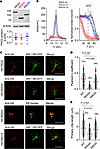 Figure 2
PKD2 truncation variants cause partial to complete loss of homomeric channel assembly and primary cilia trafficking. (A) Top: Example Western blot demonstrating differences in the electrophoretic mobility of N-terminally HA-tagged PKD2 and truncation variant channel protein harvested from PKD1null:PKD2null HEK293 cells. Bottom: Channel protein expression was quantified by anti-HA intensity (1:2000; 26183, Invitrogen) relative to β-actin expression loading control (1:5000; MA5-15739, Invitrogen). (B) Left: SEC analysis of protein lysates harvested from PKD1null:PKD2null HEK293 cells transiently transfected with plasmids encoding HA-PKD2 and truncation variant channels. Right: FSEC thermal stability analysis of the assembled channel proteins. Results were fit to a sigmoid equation to compare the destabilizing effects of heat on PKD2 protein oligomers. (C) Super-resolution structured illumination microscopy (SIM) images of PKD1null:PKD2null HEK293 cells stably expressing ARL13B-GFP to visualize the primary cilia. HA-PKD2 and variant channels immunolabeled with anti-HA. Cells expressing the R654X variant were colabeled with an ER tracker (Glipalamide, Invitrogen). Scale bars: 3 μm. (D) Cilia channel fluorescence colocalization analysis using the Pearson’s correlation coefficient. (E) Comparison of cilia length from the indicated HEK293 cell lines. P values indicate 2-tailed Student’s t test results (see Methods) comparing WT and variant channels (P < 0.05). Sample size (cilia) for each group are indicated in the parenthesis and error bars represent SD.
PKD2 truncating variants reduce channel availability in the primary cilia. Primary cilia compartments are highly insulated from the cell body, where their contributions to plasma membrane currents are nominal when measured from native collecting duct cells or when the channel subunits are overexpressed (19). Using our previously reported technique, primary cilia were visualized from PKD1null:PKD2null HEK293 by stably expressing the ARL13B-GFP reporter (20, 23). High-resistance microelectrodes were used to measure single-channel open events in the “on-cilia patch” configuration (Figure 3, A and B) (20, 23, 57). The half-maximal voltage (V1/2) required to open the PKD2 channels was determined by fitting the open probability (Po)–voltage relationship to a Boltzmann equation, where the impacts of mutations on channel gating properties can be assessed (18, 20, 46, 58). Here, R803X founder variant did not affect the unitary conductance or V1/2 when compared to the WT PKD2, suggesting that the truncated channel’s ion permeation and gating are unaltered (Figure 3, C and D, and Supplemental Table 1). We empirically noted that far fewer stochastic single-channel events were observed from cilia patches expressing the Taiwan founder variant than WT channels, and none recorded from the R654X variant (Figure 3B). To capture this difference in more quantitative terms and to further probe the biophysical regulation of the variants, we established “inside-out cilia patch” configurations and adjusted intraciliary Ca2+ using the superfusate to initiate Ca2+-dependent modulation (CDM) and subsequent Ca2+-dependent desensitization (CDD) (Figure 3, E and F) (46, 59, 60). Like WT channels, the V1/2 of the Taiwan founder variant shifted to negative potentials when internal Ca2+ was elevated, which is consistent with a normal CDM response (Figure 3F and Supplemental Table 1). In separate experiments, we held cilia membrane potentials to +40 mV and measured the number of simultaneous open-channel events after elevating intraciliary Ca2+ and their subsequent desensitization (Figure 3, G and H). Both WT and R803X channels were responsive, suggesting both channels can undergo CDM and CDD, and that structural motifs downstream of R803 are not involved in either mechanism (Figure 1D and Supplemental Figure 1). However, the mean maximum number of simultaneous open-channel events activated by 30 μM intraciliary Ca2+ was reduced from 3 channels (WT) to 1 (R803X), reflecting the partial trafficking defect of this variant (Figure 3, F and G). As observed in the on-cilia patch configuration, no R654X single-channel events were observed in cilia membranes’ inside-out patches, even after Ca2+ stimulation (Figure 3, A and F). These results reinforce our conclusion that the R654X variant causes complete channel retention by abolishing oligomeric destabilization, which excludes its functionality in the cilia membrane. In contrast, the R803X variant causes partial loss of channel oligomerization and cilia trafficking defects, resulting in reduced numbers of activatable channels in the cilia membrane. Based on these results, we hypothesized that degree of defective channel biosynthesis, cilia trafficking, and function induced by the truncation variants should track with in vivo pathology, which we assess in the next section.
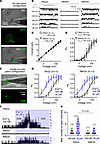 Figure 3
Founder mutation R803X reduces the number of available primary cilia channels without impacting their function. (A) Left: Images of a voltage-clamped primary cilia in the on-cilia configuration. Primary cilium of PKD1null:PKD2null HEK293 cells expressing PKD2 channels are illuminated by ARL13B-GFP under 475 nm laser excitation. Scale bar: 12 μm. (B) Example single-channel recordings from cilia membranes activated by depolarizing voltage steps. Note, no open-channel events were observed in cilia patch recordings from cells expressing R654X channels. (C) Unitary conductance was estimated from the slope (γ) of a linear fit of the single-channel current magnitudes. (D) Open probability (Po)–voltage relationships were fit to a Boltzmann equation to estimate half-activation voltage (V1/2). (E) Left: Images of a voltage-clamped primary cilia membrane in the inside-out configuration. Note that the cilium is separated from the cell body, exposing the inner side of the membrane where internal calcium concentration ([Ca2+]in) was modulated through bath conditions, as previously described (46). (F) Exemplar continuous inside-out PKD2 single-channel recording where initial stimulatory calcium-dependent modulation (CDM) and subsequent desensitization (CDM) effects are initiated by increasing [Ca2+]in from 100 nM to 30 μM. Note: Fewer simultaneous channel openings are stimulated from R803X cilia membrane patch (2 channels, O2) compared with WT PKD2 (6 channels, O6). Scale bar: 5 μm. (G) CDM of WT and R803X single channels as demonstrated by robust shifts in the V1/2. (H) Violin plots of the maximum number of simultaneous open-channel events before and after calcium stimulation. The number of cilia records for each data set is indicated within the parenthesis. P values indicate results from 2-tailed, unpaired Student’s t tests comparing WT and variant channel data sets.
Homozygous expression of PKD2 truncation variant alleles cause embryonic lethality. From our in vitro results, ADPKD C-terminal truncation variants have ranging effects on PKD2 — from partial to complete loss of channel assembly and primary cilia trafficking. Using the CRIPSR/Cas9 gene-editing method, we generated Pkd2+/R652X and Pkd2+/R801X transgenic mice that express heterozygous germline mutations equivalent to clinically relevant human variants R654X (pore truncation) and R803X (Taiwan founder), respectively (Figure 4A and Supplemental Figure 2). Genotypic analysis of the outbred offspring produced Pkd2+/+ (19 out of 89), heterozygous Pkd2+/R652X (33 out of 89), and Pkd2+/R801X (37 out of 89) progeny. However, no homozygous (Pkd2R652X/R652X and Pkd2R801X/R801X) truncation mutant mice were detected in the litters of either strain (0 out of 89). Timed pregnancy trials captured homozygous truncation variant lethality between E14 and E17, where the genetic identity of embryos in stages of reabsorption was confirmed by sequence analysis. Pkd2R652X/R652X and Pkd2R801X/R801X embryos frequently exhibited whole-body edema, polyhydramnios, and/or hemorrhaging (Figure 4B). Additional histological examination identified underdeveloped (smaller) hearts with thinner left ventricular myocardium, features that were also observed in Pkd2-null and polycystin gene hypomorphic mouse strains (Figure 4, C and D) (9, 14). Based on this existing precedent, we hypothesize embryonic lethality we observed from the homozygous PKD2 truncation variant strains is caused by cardiovascular defects during development.
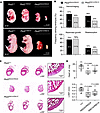 Figure 4
Mice expressing homozygous PKD2 truncation variant alleles are embryonic lethal with cardiac septal defects. (A) E14 and E17 embryos expressing human variant truncation alleles Pkd2R652X and Pkd2R801X. Note: Homozygous variant embryos are observed in stages of in utero reabsorption, undersized with edema and/or hemorrhaging. Scale bars: 6 mm. (B) Bar graphs reporting the percentage and number of embryos with edema, hemorrhage, undersized, and in nonviable stages of in utero reabsorption. (C) H&E-stained cardiac sections from E14 mice with isolated hearts are shown in the inset images. Note the underdeveloped heart size and reduced left ventricular myocardial thickness (LVMT) in the homozygous variant mice, as shown in the expanded magnification window. Scale bars: 1 mm and 0.2 mm (high magnification). (D) Box-and-whisker plots of heart weights (top) and LVMT per genotype. The sample size is indicated in the parentheses. Shown are the mean (line within box), SEM (box bounds), and SD (whiskers). P values resulting from a 1-way ANOVA statistical analysis are shown above the plots.
Complete murine renal development occurs at 2–3 weeks after birth; thus, determining nephrology defects embryonically is challenging. Nonetheless, we sought to determine the variants’ impact on embryonic renal primary cilia morphology. Here, embryonic kidneys from littermates expressing variant alleles were harvested, fixed, sectioned, and immunolabeled with anti-ARL13B antibodies to visualize the primary cilia (Figure 5A). We observed statistically fewer and shorter primary cilia from mice expressing either of the variant alleles, but the greatest impact was observed from the Pkd2R652X/R652X embryonic kidneys (Figure 5B). Thus, these ex vivo findings recapitulate the in vitro observations, where disrupted cilia morphology was observed in HEK293 cell lines expressing the channel variants. Western blot results of embryonic renal tissue did not detect differences in total PKD2 protein from mice expressing homozygous Pkd2+/+ and truncation alleles (Supplemental Figure 4A). However, the biotinylated surface expression of the R652X mutation was abolished, although there was insignificant impact on the equivalent R803X founder variant (Supplemental Figure 4B). These observations support the conclusion from our in vitro analysis, where R654X dramatically reduces protein thermal stability and channel assembly, ultimately eliminating surface expression of the pore truncation variant in vivo. Furthermore, these findings implicate aberrant cilia morphology as a cellular feature of polycystin allelic dysfunction, specifically related to reduced channel assembly and primary cilia trafficking.
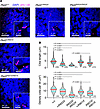 Figure 5
Truncation variants attenuate cilia length in vivo. (A) Immunohistochemistry confocal images of embryonic kidney (E14–E16) sections from mice expressing PKD2 truncation alleles. Tissues were fixed in paraformaldehyde, cell nuclei were stained with DAPI, and primary cilia were labeled with anti-ARL13B antibody (Proteintech, 667391-1-Ig). Scale bars: 30 μm (low magnification) and 3 μm (high magnification). (B) Violin plots of renal primary cilia length and cilia density. Horizontal red line indicates the average and cyan lines indicate the 25 and 75 percentiles of each data set. The sample size is indicated in the parentheses. P values resulting from a 1-way ANOVA statistical analysis of the variants and WT, and 2-tailed Students t test between the homozygous genotypes are shown above the plots.
Renal cystogenic propensity of the Taiwan founder and pore truncation variants. Given the apparent embryonic developmental dependence of at least one fully functional PKD2 allele, we examined the cystogenic propensity of heterozygous Pkd2+/R652X and Pkd2+/R801X mice. Histology was performed after 6–7 months of life where hepatic, lateral, and bilateral renal cysts were present in several individuals within the Pkd2+/R652X cohort, but fewer were observed in Pkd2+/R801X strain (Supplemental Table 2). The relatively low-penetrant renal phenotype among the heterozygous variant strains is not surprising given that heterozygous null (Pkd2+/–) mice have low incidence of PKD (9). Thus to further evaluate the cystogenic propensity of truncation variants, we crossed Pkd2+/R652X and Pkd2+/R801X mice with the kidney-specific conditional Pkd2-floxed repression strain Pax8rtTA; Tet-O-cre; Pkd2fl/fl (abbreviated Pkd2fl/fl) previously developed by the Somlo laboratory (16). The resulting compound heterozygous mice (Pkd2R652X/fl and Pkd2R801X/fl) express the human equivalent truncating mutation on one allele, while the other Pkd2fl/fl allele is repressible after doxycycline treatment. As expected, Pkd2R652X/fl and Pkd2R801X/fl mice were viable, and cohorts to evaluate cystogenesis were established. Conditional Pkd2 gene inactivation was induced in the cohorts (1–2 month aged mice, n = 7) by introducing doxycycline (2 mg/mL or 3.9 mM) into drinking water for 2 weeks (Figure 6A). Control groups were not administered doxycycline for comparative analysis. All cohorts were subjected to monthly thoracic cavity magnetic resonance imaging (MRI) analysis to compare cyst progression over 3.5 months (Figure 6, B and C). MRI results detected progressive enlargement of kidney volumes along with renal and hepatic cyst formation from the drug-treated groups of both mouse strains (Figure 6C). When comparing the MRI results from the doxycycline-treated floxed cohorts, the onset of the disease from the Pkd2R652X/fl strain was more rapid and pernicious than that observed in Pkd2R801X/fl mice. Of note, 2 mice from the Pkd2R652X/fl doxycycline treatment group were humanely euthanized 12–13 weeks into the study due to suffering. Histological analysis performed at the conclusion of the study identified enlarged kidneys with proliferative renal cysts from the Pkd2R652X/fl and Pkd2R801X/fl mice (Figure 6, D–F). Disease progression was more extensive in the Pkd2R652X/fl mice than the Pkd2R801X/fl mice, as quantified by the kidney weight–to–body weight ratio and cystic index (Figure 6, E and F). These results suggest PKD2 truncating mutations have rank order of pathogenicity, where the R654X pore variant (R652X mouse) is more cystogenic compared with the R803X Taiwan founder variant (R801X mouse). The resulting newly developed ADPKD mouse models are among the first to our knowledge based on clinically relevant PKD2 variants.
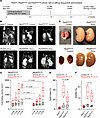 Figure 6
Compound transgenic mice expressing analogous PKD2 truncating variants have different rates of disease progression in vivo. (A) Diagram describing the vivo study. Cohorts consisted of Pkd2+/fl (untreated group n = 3 male, 4 female; doxycycline treatment group n = 4 male, 4 female); Pkd2R652X/fl (control group n = 4 male, 3 female; doxycycline n = 3 male, 4 female) and Pkd2R801X/fl (untreated group n = 3 male, 4 female; doxycycline n = 4 male, 3 female) were scanned by MRI monthly. M, months. (B) Thoracic cavity MRI of compound transgenic mice expressing a single PKD2 allele under kidney-specific doxycycline repression (Pkd2fl/fl), and one of the PKD2 truncation mutation’s (Pkd2R652X/fl and Pkd2R801X/fl) alleles. Mouse cohorts (control or doxycycline) were treated through drinking water at 1–2 months of age. Example images were take from mice 3.5 months after treatment. (C) Onset of PKD from compound transgenic mice expressing truncation variants after monoallelic ablation. Box-and-whisker plots of kidney volumes estimated from monthly MRI analysis. Results from individual male mice are represented by triangles and females represented circles. Welch’s t test statistical analysis for doxycycline-treated Pkd2R652X/fl and Pkd2R801X/fl cohorts at each month are shown. (E and F) Box-and-whisker plots of kidney section cystic index and kidney-to-body weight ratio analyzed at the termination of the study. The average for the genotype is indicated by an horizontal line. The number of animals per genotype are indicated within the parentheses. Results from Welch’s t test statistical analysis are shown. Box-and-whisker plots show the mean (line within box), SEM (box bounds), and SD (whiskers).


