
Research ArticleInfectious diseaseTherapeutics
Open Access |  10.1172/jci.insight.189420
IRF7 drives macrophages to kill bacteria and improves septic outcomes via autophagy
Guiming Chen,1,2,3,4 Kangxin Li,4,5,6 Haihua Luo,2 Lianxu Zhao,1 and Yong Jiang2,3,4,5,6
1Department of Neurology, Shenzhen Hospital, Southern Medical University, Shenzhen, Guangdong, China.
2Guangdong Provincial Key Laboratory of Proteomics, State Key Laboratory of Organ Failure Research, School of Basic Medical Sciences, Southern Medical University, Guangzhou, Guangdong, China.
3Department of Respiratory and Critical Care Medicine, The Tenth Affiliated Hospital (Dongguan People’s Hospital), Southern Medical University, Dongguan, Guangdong, China.
4State Key Laboratory of Metabolic Dysregulation & Prevention and Treatment of Esophageal Cancer and
5Henan Key Laboratory of Critical Care Medicine, Department of Emergency Medicine, The First Affiliated Hospital, Zhengzhou University, Zhengzhou, Henan, China.
6Institute of Infection and Immunity, Henan Academy of Innovations in Medical Science, Zhengzhou, Henan, China.
Address correspondence to: Yong Jiang, State Key Laboratory of Metabolic Dysregulation & Prevention and Treatment of Esophageal Cancer, The First Affiliated Hospital of Zhengzhou University, No.1 Jianshe Dong Road, Erqi District, Zhengzhou, Henan 450001, China. Phone: 86.0371.66278801; Email: jiang48231@163.com. Or to: Lianxu Zhao, Department of Neurology, Shenzhen Hospital of Southern Medical University, No.1333 Xinhu Road, Baoan District, Shenzhen, Guangdong 518000, China. Phone: 86.0755.23360590; Email: zhaolianxu@163.com.
Authorship note: GC (first position) and KL (second position) are co–first authors.
Find articles by Chen, G. in: PubMed | Google Scholar
1Department of Neurology, Shenzhen Hospital, Southern Medical University, Shenzhen, Guangdong, China.
2Guangdong Provincial Key Laboratory of Proteomics, State Key Laboratory of Organ Failure Research, School of Basic Medical Sciences, Southern Medical University, Guangzhou, Guangdong, China.
3Department of Respiratory and Critical Care Medicine, The Tenth Affiliated Hospital (Dongguan People’s Hospital), Southern Medical University, Dongguan, Guangdong, China.
4State Key Laboratory of Metabolic Dysregulation & Prevention and Treatment of Esophageal Cancer and
5Henan Key Laboratory of Critical Care Medicine, Department of Emergency Medicine, The First Affiliated Hospital, Zhengzhou University, Zhengzhou, Henan, China.
6Institute of Infection and Immunity, Henan Academy of Innovations in Medical Science, Zhengzhou, Henan, China.
Address correspondence to: Yong Jiang, State Key Laboratory of Metabolic Dysregulation & Prevention and Treatment of Esophageal Cancer, The First Affiliated Hospital of Zhengzhou University, No.1 Jianshe Dong Road, Erqi District, Zhengzhou, Henan 450001, China. Phone: 86.0371.66278801; Email: jiang48231@163.com. Or to: Lianxu Zhao, Department of Neurology, Shenzhen Hospital of Southern Medical University, No.1333 Xinhu Road, Baoan District, Shenzhen, Guangdong 518000, China. Phone: 86.0755.23360590; Email: zhaolianxu@163.com.
Authorship note: GC (first position) and KL (second position) are co–first authors.
Find articles by Li, K. in: PubMed | Google Scholar
1Department of Neurology, Shenzhen Hospital, Southern Medical University, Shenzhen, Guangdong, China.
2Guangdong Provincial Key Laboratory of Proteomics, State Key Laboratory of Organ Failure Research, School of Basic Medical Sciences, Southern Medical University, Guangzhou, Guangdong, China.
3Department of Respiratory and Critical Care Medicine, The Tenth Affiliated Hospital (Dongguan People’s Hospital), Southern Medical University, Dongguan, Guangdong, China.
4State Key Laboratory of Metabolic Dysregulation & Prevention and Treatment of Esophageal Cancer and
5Henan Key Laboratory of Critical Care Medicine, Department of Emergency Medicine, The First Affiliated Hospital, Zhengzhou University, Zhengzhou, Henan, China.
6Institute of Infection and Immunity, Henan Academy of Innovations in Medical Science, Zhengzhou, Henan, China.
Address correspondence to: Yong Jiang, State Key Laboratory of Metabolic Dysregulation & Prevention and Treatment of Esophageal Cancer, The First Affiliated Hospital of Zhengzhou University, No.1 Jianshe Dong Road, Erqi District, Zhengzhou, Henan 450001, China. Phone: 86.0371.66278801; Email: jiang48231@163.com. Or to: Lianxu Zhao, Department of Neurology, Shenzhen Hospital of Southern Medical University, No.1333 Xinhu Road, Baoan District, Shenzhen, Guangdong 518000, China. Phone: 86.0755.23360590; Email: zhaolianxu@163.com.
Authorship note: GC (first position) and KL (second position) are co–first authors.
Find articles by Luo, H. in: PubMed | Google Scholar
1Department of Neurology, Shenzhen Hospital, Southern Medical University, Shenzhen, Guangdong, China.
2Guangdong Provincial Key Laboratory of Proteomics, State Key Laboratory of Organ Failure Research, School of Basic Medical Sciences, Southern Medical University, Guangzhou, Guangdong, China.
3Department of Respiratory and Critical Care Medicine, The Tenth Affiliated Hospital (Dongguan People’s Hospital), Southern Medical University, Dongguan, Guangdong, China.
4State Key Laboratory of Metabolic Dysregulation & Prevention and Treatment of Esophageal Cancer and
5Henan Key Laboratory of Critical Care Medicine, Department of Emergency Medicine, The First Affiliated Hospital, Zhengzhou University, Zhengzhou, Henan, China.
6Institute of Infection and Immunity, Henan Academy of Innovations in Medical Science, Zhengzhou, Henan, China.
Address correspondence to: Yong Jiang, State Key Laboratory of Metabolic Dysregulation & Prevention and Treatment of Esophageal Cancer, The First Affiliated Hospital of Zhengzhou University, No.1 Jianshe Dong Road, Erqi District, Zhengzhou, Henan 450001, China. Phone: 86.0371.66278801; Email: jiang48231@163.com. Or to: Lianxu Zhao, Department of Neurology, Shenzhen Hospital of Southern Medical University, No.1333 Xinhu Road, Baoan District, Shenzhen, Guangdong 518000, China. Phone: 86.0755.23360590; Email: zhaolianxu@163.com.
Authorship note: GC (first position) and KL (second position) are co–first authors.
Find articles by Zhao, L. in: PubMed | Google Scholar
1Department of Neurology, Shenzhen Hospital, Southern Medical University, Shenzhen, Guangdong, China.
2Guangdong Provincial Key Laboratory of Proteomics, State Key Laboratory of Organ Failure Research, School of Basic Medical Sciences, Southern Medical University, Guangzhou, Guangdong, China.
3Department of Respiratory and Critical Care Medicine, The Tenth Affiliated Hospital (Dongguan People’s Hospital), Southern Medical University, Dongguan, Guangdong, China.
4State Key Laboratory of Metabolic Dysregulation & Prevention and Treatment of Esophageal Cancer and
5Henan Key Laboratory of Critical Care Medicine, Department of Emergency Medicine, The First Affiliated Hospital, Zhengzhou University, Zhengzhou, Henan, China.
6Institute of Infection and Immunity, Henan Academy of Innovations in Medical Science, Zhengzhou, Henan, China.
Address correspondence to: Yong Jiang, State Key Laboratory of Metabolic Dysregulation & Prevention and Treatment of Esophageal Cancer, The First Affiliated Hospital of Zhengzhou University, No.1 Jianshe Dong Road, Erqi District, Zhengzhou, Henan 450001, China. Phone: 86.0371.66278801; Email: jiang48231@163.com. Or to: Lianxu Zhao, Department of Neurology, Shenzhen Hospital of Southern Medical University, No.1333 Xinhu Road, Baoan District, Shenzhen, Guangdong 518000, China. Phone: 86.0755.23360590; Email: zhaolianxu@163.com.
Authorship note: GC (first position) and KL (second position) are co–first authors.
Find articles by
Jiang, Y.
in:
PubMed
|
Google Scholar
|

Published November 10, 2025 - More info
JCI Insight. 2025;10(21):e189420. https://doi.org/10.1172/jci.insight.189420.
© 2025 Chen et al. This work is licensed under the Creative Commons Attribution 4.0 International License. To view a copy of this license, visit http://creativecommons.org/licenses/by/4.0/.
Received: November 19, 2024; Accepted: September 18, 2025


-
Results
Irf7-deficient mice are more susceptible to polymicrobial sepsis. To determine whether IRF7 is associated with the pathogenesis of sepsis, we first monitored the 7-day survival rates of wild-type (WT) and Irf7–/– mice after cecal ligation and puncture (CLP), a gold standard model of sepsis (19). As shown in Figure 1A, Irf7 deficiency decreased the survival rate of the mice subjected to CLP, but injection with recombinant adeno-associated virus 9–Irf7 (rAAV9-Irf7) increased the survival rate of these Irf7–/– mice, which was close to WT mice that underwent CLP. Moreover, rAAV9-Ctrl did not affect the survival rate of the Irf7–/– mice. Additionally, the levels of myeloperoxidase (MPO), aspartate aminotransferase (AST), alanine aminotransferase (ALT), and creatinine (CR) in Irf7–/– mice were markedly higher than those in WT mice after CLP, but these values in Irf7–/– and rAAV9-Irf7 mice decreased and were similar to those in WT mice (Figure 1B). Histological analysis revealed that the lungs, livers, and kidneys of Irf7–/– mice presented more pathological changes than the WT mice did, and rAAV9-Irf7 reduced these pathological changes in Irf7–/– mice (Figure 1, C and D). Consistent with these findings, Irf7 deficiency markedly increased the number of apoptotic cells in the lungs, livers, and kidneys following CLP, while rAAV9-Irf7 reduced the number of apoptotic cells in the lungs, livers, and kidneys of Irf7–/– mice that underwent CLP (Figure 1, E and F). Moreover, cytokine profiling revealed time-dependent dysregulation. Irf7–/– mice showed markedly elevated serum TNF-α, IL-1β, or IL-6 at 16 hours, followed by IL-12 elevation specifically at 24 hours, despite comparable levels of all cytokines at earlier time points (0–12 hours). Crucially, rAAV9-Irf7 administration partially normalized these hyperinflammatory cytokines to WT CLP baselines, demonstrating IRF7’s essential role in restraining late-phase hyperinflammation (Supplemental Figure 2A). Taken together, these results clearly demonstrated that IRF7 was required for defense against polymicrobial sepsis in mice.
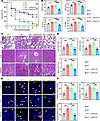 Figure 1
IRF7 is required for defense against polymicrobial sepsis. (A) Effect of interferon regulatory factor 7 (Irf7) gene deficiency on the survival of mice subjected to CLP modeling. Statistical analysis of log rank test was performed on Kaplan-Meier survival curves. rAAV9-Ctrl or rAAV9-Irf7, 1 × 10¹¹ vector genomes (vg)/mouse. WT group, n = 24; Irf7–/– group, n = 21; Irf7–/– + rAAV9-Ctrl group, n = 21; and Irf7–/– + rAAV9-Irf7 group, n = 19. (B) Myeloperoxidase (MPO) activity in lung and plasma aspartate aminotransferase (AST), alanine aminotransferase (ALT), and creatinine (CR) levels. Data represent the mean ± SEM. *P < 0.05, **P < 0.01, ***P < 0.001, 1-way ANOVA with Bonferroni’s correction. (C and D) Tissue injury and inflammation of mice that underwent CLP were measured by H&E staining (C), and the corresponding histological scores of lung, liver, and kidney were respectively shown in D. Scale bar, 50 μm. Data represent the mean ± SEM. **P < 0.01, 1-way ANOVA with Bonferroni’s correction. (E and F) The representative pictures of TUNEL staining (E) and the corresponding apoptotic cell quantification of (F) lung, liver, and kidney. White arrow, TUNEL-positive cells. Scale bar, 25 μm. Error bars, ± SEM. **P < 0.01, 1-way ANOVA with Bonferroni’s correction.
IRF7-dependent macrophages protect mice from sepsis. Macrophages, T cells, and NK cells contribute to sepsis pathogenesis (20–22). We found that IRF7 protein was exclusively upregulated in macrophages (peak 16 hours post-CLP), with baseline expression in T cells and NK cells across all time points (Supplemental Figure 3, A and B). In addition, Irf7 deficiency reduced survival in septic mice, while T cell depletion further decreased survival in Irf7–/– CLP mice, suggesting that T cells provide another protective mechanism distinct from IRF7-mediated defense (Supplemental Figure 3C). Conversely, NK cell depletion increased the final number of survivors in both WT and Irf7–/– mice (WT NK1.1 Ab vs. WT, 12 vs. 7; Irf7–/– NK1.1 Ab vs. Irf7–/–, 6 vs. 0), indicating that NK cells do not mediate IRF7-dependent protection (Supplemental Figure 3C). Critically, macrophage depletion reduced survival in WT CLP mice, phenocopying the survival reduction caused by Irf7 deficiency. Concurrently, macrophage depletion failed to alter survival outcomes in septic Irf7–/– mice (Supplemental Figure 3C), indicating the detrimental effect of Irf7 deficiency is largely mediated through impaired macrophage function. To further validate macrophage-intrinsic IRF7 dependency, WT and Irf7–/– peritoneal macrophages isolated from WT and Irf7–/– mice, respectively, were intraperitoneally infused into WT CLP mice pretreated with clodronate liposomes (WT CL CLP mice) to deplete the local macrophages, hereafter referred to as WT IN and Irf7–/– IN mice (Figure 2A). As shown in Figure 2B, the survival rate of the WT CL CLP mice was as low as that of the Irf7–/– CLP mice, but the survival rate increased significantly in WT IN but not Irf7–/– IN mice, the latter of which had a survival rate similar to that of WT CLP mice. Additionally, the MPO, AST, ALT, and CR levels in WT CL CLP mice (Figure 2C) and the degree of organ injury (Figure 2, D and E) in WT CL CLP mice were reduced by WT IN but not Irf7–/– IN. In sum, these results suggest that IRF7 drives macrophages to protect against sepsis.
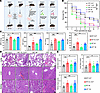 Figure 2
IRF7 drives macrophages to protect against sepsis. (A) Schematic of the treatment for the different groups of mice. WT CLP, WT mice underwent CLP. Irf7–/– CLP, Irf7–/– mice underwent CLP. WT CL CLP, WT mice pretreated with clodronate liposome (CL) for depletion of local macrophages that underwent CLP. WT IN, recipient WT CL mice were intraperitoneally injected with WT peritoneal macrophages 1 hour after CLP. Irf7–/– IN, recipient WT CL mice were intraperitoneally injected with Irf7–/– peritoneal macrophages 1 hour after CLP. (B) Survival rates of mice were determined until 7 days after CLP (n = 15, log rank test). **P < 0.01. (C) MPO activity in lung and plasma AST, ALT, CR levels. Data represent the mean ± SEM. *P < 0.05, **P < 0.01, 1-way ANOVA with Bonferroni’s correction. (D and E) Tissue injury and inflammation of mice that underwent CLP were measured by H&E staining (D), and the corresponding histological scores of lung, liver, and kidney were respectively shown in E. Scale bar, 50 μm. Error bars, ± SEM. *P < 0.05, **P < 0.01, 1-way ANOVA with Bonferroni’s correction.
IRF7 is required for macrophage-mediated bacterial killing during sepsis. Bacterial clearance, which is mainly carried out by macrophages, plays important roles in both the development of sepsis and sepsis-induced organ injury (7). Our data revealed that rAAV9-Irf7 reduced the amount of bacterial DNA in the blood of Irf7–/– mice after CLP (Figure 3A). Additionally, compared with those in WT mice, the bacterial loads in both the blood and peritoneal cavities were markedly elevated in Irf7–/– mice after CLP, but reduced in Irf7–/– + rAAV9-Irf7 mice, reaching a level similar to that in WT mice (Figure 3, B and C). However, the total number of bacteria in the ligated cecum did not significantly differ among the WT, Irf7–/–, Irf7–/– + rAAV9-Ctrl, and Irf7-–/– + rAAV9-Irf7 mice before cecal puncture (Supplemental Figure 4A). Thus, we next focused on determining if IRF7 is required for bacterial clearance during sepsis. The Irf7 gene did not affect the phagocytic capacity of bone marrow–derived macrophages (BMDMs) (Supplemental Figure 4B) but did enhance the intracellular killing of E. coli (Figure 3D). Furthermore, Irf7 siRNA significantly decreased the intracellular killing of E. coli (Figure 3E), Salmonella typhimurium (Figure 3F), and Vibrio vulnificus (Figure 3G) in macrophages. Next, BMDMs were incubated with GFP–E. coli for 45 minutes, after which the labeled bacteria were cleared over 2 hours. The immunofluorescence staining results revealed that the bacterial counts in the Irf7–/– BMDMs were substantially greater than those in WT cells but were reduced by Irf7 gene (Figure 3, H and I). Taken together, these results suggest that IRF7 promotes bacterial killing during polymicrobial sepsis.
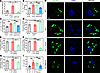 Figure 3
IRF7 promotes bacterial killing of macrophages in sepsis. (A) Relative bacteria DNA in blood from the indicated CLP mice was determined by quantitative PCR assay. Data represent the mean ± SEM. *P < 0.05, 1-way ANOVA with Bonferroni’s correction. (B and C) Bacterial loads in the blood (B) and peritoneal cavity (C) were determined by CFU assay. Data represent the mean ± SEM. **P < 0.01, 1-way ANOVA with Bonferroni’s correction. (D) Intracellular killing of E. coli by WT BMDMs transfected with either empty vector or Irf7 gene. Data represent the mean ± SEM. **P < 0.01, 1-way ANOVA with Bonferroni’s correction. (E–G) Intracellular killing of E. coli (E), S. typhimurium (F), and V. vulnificus (G) by WT BMDMs transfected with either negative control (NC) siRNA or Irf7 siRNA. Data represent the mean ± SEM. *P < 0.05, ***P < 0.001, 1-way ANOVA with Bonferroni’s correction. (H and I) BMDMs of WT, Irf7–/–, Irf7–/– + Vector, and Irf7 Rescue groups were infected with GFP–E. coli at MOI 50 for 45 minutes followed by adding 100 μg/mL gentamicin to kill extracellular bacteria for 1 hour. After 1 hour of further cultivation, cells were washed with PBS for 3 times and fixed with 4% paraformaldehyde, then stained with DAPI. (H) Representative confocal images. Scale bar, 5 μm. (I) Intracellular E. coli number per cell with SEM. **P < 0.01, 1-way ANOVA with Bonferroni’s correction.
IRF7 is involved in the autophagic response of macrophages during sepsis. Next, the potential mechanism by which IRF7 mediates its protective effects against polymicrobial sepsis was investigated. We observed that the level of microtubule-associated protein 1 light chain 3 (LC3), a component of the autophagosome membrane, was decreased in Irf7–/– mice compared with WT mice after CLP, and the level of p62, which is degraded during the autophagy process, was increased in Irf7-deficient mice (Figure 4A). In vitro, LPS-challenged BMDMs demonstrated that Irf7 overexpression not only upregulated LC3 protein levels and accelerated p62 protein degradation (Figure 4B) but also coordinately induced key autophagy regulators across initiation (Unc-51 like autophagy activating kinase 1, ULK1), nucleation (Beclin1), elongation (ATG7), maturation and fusion (Ras-related protein Rab-7, RAB7; lysosomal-associated membrane protein 2, LAMP2), and mitochondrial autophagy (dynamin-related protein 1; DRP1) (Supplemental Figure 5A). Conversely, Irf7 siRNA significantly disrupted this molecular cascade, altering expression of all 8 effectors (Figure 4C and Supplemental Figure 5B). Additionally, ultrastructural analysis revealed that interfering with Irf7 expression markedly decreased the number of autophagosomes in LPS-treated macrophages (Figure 4D). The results of immunofluorescence staining revealed that autophagosomes were absent in Irf7–/– BMDMs treated with LPS, but autophagosomes reappeared in the Irf7 rescue group (Figure 4E). In sum, these results suggest that IRF7 is a regulator of autophagy in macrophages during sepsis.
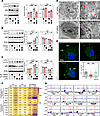 Figure 4
IRF7 promotes the autophagic response of macrophages during sepsis. (A) Immunoblot analysis of LC3 and p62 in protein extracts from peritoneal macrophages from WT and Irf7–/– mice that underwent CLP for 16 hours. The protein intensities were normalized to Actin. Data represent the mean ± SEM. *P < 0.05, **P < 0.01, ***P < 0.001, 1-way ANOVA with Bonferroni’s correction. (B and C) After treatment with LPS for 16 hours, representative immunoblot detecting LC3 and p62 in cellular lysates isolated from BMDMs transfected with (B) either empty vector or Irf7 gene or (C) either NC siRNA or Irf7 siRNA. Data represent the mean ± SEM. *P < 0.05, **P < 0.01, 1-way ANOVA with Bonferroni’s correction. (D) Transmission electron microscopy (TEM) images revealed the ultrastructure of fixed BMDMs in different groups. Red triangles mark autophagosomes surrounded by dual/multi-layer membrane. Scale bar, 2 μm. (E) Representative confocal images of WT, Irf7–/–, and Irf7 Rescue BMDMs treated with LPS for 16 hours. White arrow, LC3-positive puncta (autophagosome). Lower right panel: Scatterplot shown as the LC3-positive puncta number per cell with SEM. **P < 0.01, 1-way ANOVA with Bonferroni’s correction. Scale bar, 5 μm. (F) Heatmaps of reverse transcription quantitative PCR data for ATGs of WT, Irf7–/–, and Irf7 Rescue BMDMs administrated without (Ctrl) or with LPS. Numerals and color scale indicate fold-change over WT Ctrl group. (G) ChIP-Seq signal intensities of selected ATGs were represented by sequencing. Red boxes, transcription start regions. Cts, cathepsin gene.
IRF7 is a well-known transcription factor (23). Here, we observed that IRF7 translocated from cytoplasm into nuclei of BMDMs after LPS treatment (Supplemental Figure 6A). Next, mRNA analysis verified reduced expression of 12 ATGs in LPS-treated Irf7–/– BMDMs versus LPS-treated WT cells, with full restoration upon IRF7 reconstitution (Figure 4F). We next performed chromatin immunoprecipitation sequencing (ChIP-Seq) in LPS-treated versus untreated BMDMs. Figure 4G displays IRF7 binding signals for these 12 ATGs (Figure 4F) exhibiting IRF7-dependent expression shifts upon LPS stimulation, revealing direct promoter occupancy for 7 targets (Atg7, Atg9a, Atg10, Rab7, Ctsb, Ctsd, and Ctse) but no enrichment for 5 genes (Atg3, Lc3b, Rab8a, Lamp2, Ctsl). These data indicated that IRF7 orchestrates autophagy through both direct promoter binding and indirect coordination of downstream effectors. Kyoto Encyclopedia of Genes and Genomes (KEGG) pathway enrichment analysis of IRF7-bound targets further revealed marked enrichment in cellular pathways critical for intracellular bacterial clearance, specifically endocytosis, lysosomal processing, and autophagy (Supplemental Figure 6B). These integrated findings collectively establish IRF7 as a master transcriptional regulator of sepsis-induced autophagy.
IRF7 is required for the autophagic bacterial killing. Drugs that induce (Tat-Beclin1; BECN1) or inhibit (wortmannin; Wort) autophagy decreased and increased bacterial loads, respectively, in WT mice 16 hours after CLP (Supplemental Figure 7A), suggesting that autophagy is the critical mechanism by which pathogens are eliminated during sepsis. Next, we isolated peritoneal macrophages from mice after CLP. Fewer intracellular bacteria were contained in the autophagosomes in Irf7–/– macrophages while the number of bacteria in autophagosomes was restored in macrophages from Irf7–/– + rAAV9-Irf7 mice (Figure 5, A and B). In vitro, overexpression or knockdown of IRF7, achieved using Irf7 gene and Irf7 siRNA, respectively, was confirmed by Western blot (Supplemental Figure 8). Irf7 siRNA dramatically reduced the numbers of LC3-positive vesicles enclosing E. coli (Figure 5, C and D). Correspondingly, E. coli in WT BMDMs transfected with Irf7 siRNA were rarely encapsulated within double-membrane autophagosomes (Figure 5E). To further verify that IRF7 is associated with autophagy-mediated bacterial killing, we pretreated Irf7-transfected macrophages with Wort. As shown in Figure 5F, Wort markedly inhibited bacterial killing augmented by Irf7 in BMDMs. Collectively, our data revealed that IRF7 promoted bacterial killing via autophagy in macrophages during sepsis.
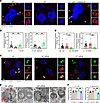 Figure 5
IRF7 triggers macrophages to kill bacteria via autophagy. (A and B) Analysis of autophagosomes containing bacteria in peritoneal macrophages of WT, Irf7–/–, and Irf7 + rAAV-Irf7 mice that underwent CLP for 16 hours. rAAV9-Irf7, 1 × 10¹¹ vg/mouse. (A) Representative fluorescent pictures. White arrow, LC3-positive vesicles (autophagosomes) packed with smaller DAPI-positive dots (bacteria). Scale bars (main image, 5 μm; inset image, 1 μm). (B) Scatterplot with bar depicts the number of bacteria surrounded with autophagosomes per cell (left panel) and the percentage of bacteria surrounded with autophagosomes of the intracellular bacteria (right panel). Error bars, ± SEM. **P < 0.01, 1-way ANOVA with Bonferroni’s correction. (C and D) Analysis of autophagosomes containing E. coli in BMDMs. IRF7 in BMDMs was silenced by Irf7 siRNA. Then, the BMDMs from the indicated groups were incubated with E. coli for 2 hours. (C) Representative fluorescence pictures. White arrow, LC3-positive vesicles packed with GFP-positive dots (E. coli). Scale bars (main image, 5 μm; inset image, 1 μm). (D) Scatterplot with bar depicts the number of bacteria surrounded with autophagosomes per cell (left panel) and percentage of bacteria surrounded with autophagosomes of the intracellular bacteria (right panel). Error bars, ± SEM. *P < 0.05, **P < 0.01, 1-way ANOVA with Bonferroni’s correction. (E) Representative TEM images of BMDMs treated with E. coli. Red arrows represent autophagosome-contained bacteria. Red arrowhead indicates the double membrane, a classic feature of autophagosome. Green arrows, no- or single-membrane-encapsulated bacteria. Green arrowhead, single membrane. Scale bar, 2 μm. (F) Intracellular killing of E. coli and S. typhimurium by BMDMs. Wortmannin (Wort) was pre-added where indicated (100 nM for 4 hours). *P < 0.05, **P < 0.01.
IRF7 defends against polymicrobial sepsis via autophagy. To determine whether the ability of IRF7 to defend against polymicrobial sepsis is dependent on autophagy, we treated mice that underwent CLP with either BECN1 or Wort. BECN1 significantly increased the survival rate of Irf7–/– mice after CLP, whereas Wort could not decrease the rate (Figure 6A). Moreover, in Irf7–/– + rAAV9-Irf7 mice, the survival rate was markedly reduced by Wort (Figure 6A). BECN1 failed to further improve survival in septic Irf7–/– mice administrated rAAV9-Irf7 at a dose of 1 × 10¹¹ vg/mouse, which had already achieved comparable maximum survival benefits (Figure 6A and Supplemental Figure 9A). This indicates that rAAV9-Irf7 mediates sepsis protection in Irf7–/– mice via a mechanism that can be activated by BECN1. Furthermore, the levels of MPO, AST, ALT, and CR (Figure 6B) and extent of organ injury (Figure 6, C and D) were dramatically inhibited by BECN1 in Irf7–/– mice and increased by Wort in Irf7–/– + rAAV9-Irf7 mice. Taken together, these data suggest that IRF7 defends against polymicrobial sepsis via autophagy.
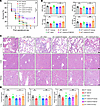 Figure 6
IRF7 defends against polymicrobial sepsis via autophagy. (A) Survival rates of mice were determined until 7 days after CLP (n = 20, log rank test). *P < 0.05. TAT-Beclin1 (BECN1), 15 mg/kg. Wort, 0.5 mg/kg. rAAV9-Irf7, 1 × 10¹¹ vg/mouse. (B) MPO activity in lung and plasma AST, ALT, CR levels. Data represent the mean ± SEM. *P < 0.05, **P < 0.01, 1-way ANOVA with Bonferroni’s correction. (C) H&E staining. Scale bar, 50 μm. (D) The corresponding histological scores of lung, liver, and kidney. Data represent the mean ± SEM. *P < 0.05, **P < 0.01, 1-way ANOVA with Bonferroni’s correction.
IRF7 overexpression alleviates sepsis-induced organ injury. Next, to determine whether IRF7 is a target for treating sepsis, we intravenously administrated rAAV9-Irf7 to WT mice. As shown in Figure 7A, rAAV9-Irf7 dramatically increased the survival rates of WT septic mice. Additionally, the MPO, AST, ALT, and CR levels (Figure 7B) and degree of organ injury (Figure 7, C and D) were significantly reduced by rAAV9-Irf7. Consistent with these findings, rAAV9-Irf7 inhibited apoptosis in the lungs, livers, and kidneys after CLP (Supplemental Figure 10, A and B). Furthermore, rAAV9-Irf7 markedly decreased the bacterial loads in both the peritoneal cavity and blood of WT septic mice (Figure 7E). In peritoneal macrophages from WT septic mice, rAAV9-Irf7 dramatically increased the number of bacteria in autophagosomes (Figure 7, F and G). Correspondingly, this protective effect was significantly abrogated by Wort treatment (Supplemental Figure 10C). In sum, inducing IRF7 expression via rAAV9-Irf7 might promote the autophagic clearance of pathogens to improve sepsis outcomes.
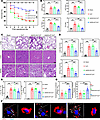 Figure 7
IRF7 overexpression improves sepsis. (A) Survival of WT mice subjected to CLP were represented by Kaplan-Meier survival curves (n = 10–33, log rank test). ***P < 0.001. rAAV9-Irf7, 1 × 10¹¹ vg/mouse. (B) MPO activity in lung and plasma AST, ALT, CR levels. Data represent the mean ± SEM. *P < 0.05, **P < 0.01, 1-way ANOVA with Bonferroni’s correction. (C and D) Tissue injury and inflammation of mice that underwent CLP were measured by H&E staining (C), and the corresponding histological scores of lung, liver, and kidney were respectively shown in D. Scale bar, 50 μm. Data represent the mean ± SEM. **P < 0.01, 1-way ANOVA with Bonferroni’s correction. (E) Bacterial loads in the blood and peritoneal cavity were determined by CFU assay. Data represent the mean ± SEM. *P < 0.05, **P < 0.01, 1-way ANOVA with Bonferroni’s correction. (F and G) Analysis of autophagosomes containing bacteria in peritoneal macrophages of mice that underwent CLP for 16 hours. (F) Representative fluorescence pictures. White arrow, LC3-positive vesicles packed with smaller DAPI-positive dots. Scale bar, 5 μm. (G) Scatterplot with bar depicts the number of bacteria surrounded with autophagosomes per cell (left panel) and percentage of bacteria surrounded with autophagosomes of the intracellular bacteria (right panel). Data represent the mean ± SEM. **P < 0.01, 1-way ANOVA with Bonferroni’s correction.


