
Research ArticleCardiologyEndocrinology
Open Access |  10.1172/jci.insight.184863
Abrogation of FGFR signaling blocks β-catenin–induced adrenocortical hyperplasia and aldosterone production
Vasileios Chortis,1,2 Dulanjalee Kariyawasam,1,2 Mesut Berber,1,2 Nick A. Guagliardo,3 Sining Leng,1,2 Betul Haykir,1,2 Claudio Ribeiro,1 Manasvi S. Shah,1,2 Emanuele Pignatti,1,2 Brenna Jorgensen,1 Lindsey Gaston,1,2 Paula Q. Barrett,3 Diana L. Carlone,1,2,4 Kleiton Silva Borges,1,2 and David T. Breault1,2,4
1Division of Endocrinology, Boston Children’s Hospital, Boston, Massachusetts, USA.
2Department of Pediatrics, Harvard Medical School, Boston, Massachusetts, USA.
3Department of Pharmacology, University of Virginia, Charlottesville, Virginia, USA.
4Harvard Stem Cell Institute, Cambridge, Massachusetts, USA.
Address correspondence to: David T. Breault, Division of Endocrinology, Boston Children’s Hospital, 300 Longwood Avenue, Boston, Massacusetts 02115, USA. Email: david.breault@childrens.harvard.edu.
Authorship note: VC, DK, and MB contributed equally to this work.
Find articles by Chortis, V. in: PubMed | Google Scholar
1Division of Endocrinology, Boston Children’s Hospital, Boston, Massachusetts, USA.
2Department of Pediatrics, Harvard Medical School, Boston, Massachusetts, USA.
3Department of Pharmacology, University of Virginia, Charlottesville, Virginia, USA.
4Harvard Stem Cell Institute, Cambridge, Massachusetts, USA.
Address correspondence to: David T. Breault, Division of Endocrinology, Boston Children’s Hospital, 300 Longwood Avenue, Boston, Massacusetts 02115, USA. Email: david.breault@childrens.harvard.edu.
Authorship note: VC, DK, and MB contributed equally to this work.
Find articles by Kariyawasam, D. in: PubMed | Google Scholar
1Division of Endocrinology, Boston Children’s Hospital, Boston, Massachusetts, USA.
2Department of Pediatrics, Harvard Medical School, Boston, Massachusetts, USA.
3Department of Pharmacology, University of Virginia, Charlottesville, Virginia, USA.
4Harvard Stem Cell Institute, Cambridge, Massachusetts, USA.
Address correspondence to: David T. Breault, Division of Endocrinology, Boston Children’s Hospital, 300 Longwood Avenue, Boston, Massacusetts 02115, USA. Email: david.breault@childrens.harvard.edu.
Authorship note: VC, DK, and MB contributed equally to this work.
Find articles by
Berber, M.
in:
PubMed
|
Google Scholar
|

1Division of Endocrinology, Boston Children’s Hospital, Boston, Massachusetts, USA.
2Department of Pediatrics, Harvard Medical School, Boston, Massachusetts, USA.
3Department of Pharmacology, University of Virginia, Charlottesville, Virginia, USA.
4Harvard Stem Cell Institute, Cambridge, Massachusetts, USA.
Address correspondence to: David T. Breault, Division of Endocrinology, Boston Children’s Hospital, 300 Longwood Avenue, Boston, Massacusetts 02115, USA. Email: david.breault@childrens.harvard.edu.
Authorship note: VC, DK, and MB contributed equally to this work.
Find articles by Guagliardo, N. in: PubMed | Google Scholar
1Division of Endocrinology, Boston Children’s Hospital, Boston, Massachusetts, USA.
2Department of Pediatrics, Harvard Medical School, Boston, Massachusetts, USA.
3Department of Pharmacology, University of Virginia, Charlottesville, Virginia, USA.
4Harvard Stem Cell Institute, Cambridge, Massachusetts, USA.
Address correspondence to: David T. Breault, Division of Endocrinology, Boston Children’s Hospital, 300 Longwood Avenue, Boston, Massacusetts 02115, USA. Email: david.breault@childrens.harvard.edu.
Authorship note: VC, DK, and MB contributed equally to this work.
Find articles by Leng, S. in: PubMed | Google Scholar
1Division of Endocrinology, Boston Children’s Hospital, Boston, Massachusetts, USA.
2Department of Pediatrics, Harvard Medical School, Boston, Massachusetts, USA.
3Department of Pharmacology, University of Virginia, Charlottesville, Virginia, USA.
4Harvard Stem Cell Institute, Cambridge, Massachusetts, USA.
Address correspondence to: David T. Breault, Division of Endocrinology, Boston Children’s Hospital, 300 Longwood Avenue, Boston, Massacusetts 02115, USA. Email: david.breault@childrens.harvard.edu.
Authorship note: VC, DK, and MB contributed equally to this work.
Find articles by Haykir, B. in: PubMed | Google Scholar
1Division of Endocrinology, Boston Children’s Hospital, Boston, Massachusetts, USA.
2Department of Pediatrics, Harvard Medical School, Boston, Massachusetts, USA.
3Department of Pharmacology, University of Virginia, Charlottesville, Virginia, USA.
4Harvard Stem Cell Institute, Cambridge, Massachusetts, USA.
Address correspondence to: David T. Breault, Division of Endocrinology, Boston Children’s Hospital, 300 Longwood Avenue, Boston, Massacusetts 02115, USA. Email: david.breault@childrens.harvard.edu.
Authorship note: VC, DK, and MB contributed equally to this work.
Find articles by Ribeiro, C. in: PubMed | Google Scholar
1Division of Endocrinology, Boston Children’s Hospital, Boston, Massachusetts, USA.
2Department of Pediatrics, Harvard Medical School, Boston, Massachusetts, USA.
3Department of Pharmacology, University of Virginia, Charlottesville, Virginia, USA.
4Harvard Stem Cell Institute, Cambridge, Massachusetts, USA.
Address correspondence to: David T. Breault, Division of Endocrinology, Boston Children’s Hospital, 300 Longwood Avenue, Boston, Massacusetts 02115, USA. Email: david.breault@childrens.harvard.edu.
Authorship note: VC, DK, and MB contributed equally to this work.
Find articles by Shah, M. in: PubMed | Google Scholar
1Division of Endocrinology, Boston Children’s Hospital, Boston, Massachusetts, USA.
2Department of Pediatrics, Harvard Medical School, Boston, Massachusetts, USA.
3Department of Pharmacology, University of Virginia, Charlottesville, Virginia, USA.
4Harvard Stem Cell Institute, Cambridge, Massachusetts, USA.
Address correspondence to: David T. Breault, Division of Endocrinology, Boston Children’s Hospital, 300 Longwood Avenue, Boston, Massacusetts 02115, USA. Email: david.breault@childrens.harvard.edu.
Authorship note: VC, DK, and MB contributed equally to this work.
Find articles by
Pignatti, E.
in:
PubMed
|
Google Scholar
|
1Division of Endocrinology, Boston Children’s Hospital, Boston, Massachusetts, USA.
2Department of Pediatrics, Harvard Medical School, Boston, Massachusetts, USA.
3Department of Pharmacology, University of Virginia, Charlottesville, Virginia, USA.
4Harvard Stem Cell Institute, Cambridge, Massachusetts, USA.
Address correspondence to: David T. Breault, Division of Endocrinology, Boston Children’s Hospital, 300 Longwood Avenue, Boston, Massacusetts 02115, USA. Email: david.breault@childrens.harvard.edu.
Authorship note: VC, DK, and MB contributed equally to this work.
Find articles by Jorgensen, B. in: PubMed | Google Scholar
1Division of Endocrinology, Boston Children’s Hospital, Boston, Massachusetts, USA.
2Department of Pediatrics, Harvard Medical School, Boston, Massachusetts, USA.
3Department of Pharmacology, University of Virginia, Charlottesville, Virginia, USA.
4Harvard Stem Cell Institute, Cambridge, Massachusetts, USA.
Address correspondence to: David T. Breault, Division of Endocrinology, Boston Children’s Hospital, 300 Longwood Avenue, Boston, Massacusetts 02115, USA. Email: david.breault@childrens.harvard.edu.
Authorship note: VC, DK, and MB contributed equally to this work.
Find articles by Gaston, L. in: PubMed | Google Scholar
1Division of Endocrinology, Boston Children’s Hospital, Boston, Massachusetts, USA.
2Department of Pediatrics, Harvard Medical School, Boston, Massachusetts, USA.
3Department of Pharmacology, University of Virginia, Charlottesville, Virginia, USA.
4Harvard Stem Cell Institute, Cambridge, Massachusetts, USA.
Address correspondence to: David T. Breault, Division of Endocrinology, Boston Children’s Hospital, 300 Longwood Avenue, Boston, Massacusetts 02115, USA. Email: david.breault@childrens.harvard.edu.
Authorship note: VC, DK, and MB contributed equally to this work.
Find articles by Barrett, P. in: PubMed | Google Scholar
1Division of Endocrinology, Boston Children’s Hospital, Boston, Massachusetts, USA.
2Department of Pediatrics, Harvard Medical School, Boston, Massachusetts, USA.
3Department of Pharmacology, University of Virginia, Charlottesville, Virginia, USA.
4Harvard Stem Cell Institute, Cambridge, Massachusetts, USA.
Address correspondence to: David T. Breault, Division of Endocrinology, Boston Children’s Hospital, 300 Longwood Avenue, Boston, Massacusetts 02115, USA. Email: david.breault@childrens.harvard.edu.
Authorship note: VC, DK, and MB contributed equally to this work.
Find articles by Carlone, D. in: PubMed | Google Scholar
1Division of Endocrinology, Boston Children’s Hospital, Boston, Massachusetts, USA.
2Department of Pediatrics, Harvard Medical School, Boston, Massachusetts, USA.
3Department of Pharmacology, University of Virginia, Charlottesville, Virginia, USA.
4Harvard Stem Cell Institute, Cambridge, Massachusetts, USA.
Address correspondence to: David T. Breault, Division of Endocrinology, Boston Children’s Hospital, 300 Longwood Avenue, Boston, Massacusetts 02115, USA. Email: david.breault@childrens.harvard.edu.
Authorship note: VC, DK, and MB contributed equally to this work.
Find articles by
Borges, K.
in:
PubMed
|
Google Scholar
|
1Division of Endocrinology, Boston Children’s Hospital, Boston, Massachusetts, USA.
2Department of Pediatrics, Harvard Medical School, Boston, Massachusetts, USA.
3Department of Pharmacology, University of Virginia, Charlottesville, Virginia, USA.
4Harvard Stem Cell Institute, Cambridge, Massachusetts, USA.
Address correspondence to: David T. Breault, Division of Endocrinology, Boston Children’s Hospital, 300 Longwood Avenue, Boston, Massacusetts 02115, USA. Email: david.breault@childrens.harvard.edu.
Authorship note: VC, DK, and MB contributed equally to this work.
Find articles by Breault, D. in: PubMed | Google Scholar
Published September 16, 2025 - More info
JCI Insight. 2025;10(21):e184863. https://doi.org/10.1172/jci.insight.184863.
© 2025 Chortis et al. This work is licensed under the Creative Commons Attribution 4.0 International License. To view a copy of this license, visit http://creativecommons.org/licenses/by/4.0/.
Received: July 17, 2024; Accepted: September 15, 2025

-
Results
FGFR2 maintains zG cell identity and proliferation during postnatal morphogenesis. To extend our earlier studies, and to determine the effect of FGFR2 loss on postnatal adrenocortical development, we used a zG-specific, conditional Fgfr2-KO mouse model combined with a lineage-tracing reporter allele (ASCre/+ Fgfr2fl/fl R26RmTmG/+, referred to as Fgfr2-cKO) (Supplemental Figure 1A; supplemental material available online with this article; https://doi.org/10.1172/jci.insight.184863DS1). In this model, Cre recombination occurs specifically in zG cells expressing Cyp11b2, the gene that encodes the steroidogenic enzyme aldosterone synthase (AS), which begins around the time of birth and is coincident with the start of postnatal zG morphogenesis (12). We have previously employed ASCre/+ R26RmTmG/+ (control) mice to show that AS+ zG cells expressing membrane-targeted GFP migrate centripetally and transdifferentiate into zF cells during adrenocortical turnover (5). Consistent with this, we found that, in control mice, the AS+ lineage and its descendants (as indicated by GFP expression) occupy most of the zG and part of the zF by 6 weeks of age and populate nearly the entire cortex by 20 weeks of age (Figure 1, A and B, and Supplemental Figure 1, B and C). In contrast, in Fgfr2-cKO adrenal glands, lineage-tracing was severely disrupted. At 6–10 weeks of age, GFP+ cells occupied only approximately 40% of the zG (versus > 80% in controls) and 5% of the zF (versus 20% in control mice) (Supplemental Figure 1, B and C). By 20 weeks of age, approximately 70% of zG cells and < 20% of zF cells in Fgfr2-cKO adrenal glands were GFP+ compared with nearly 100% of both zG and zF cells in controls (Figure 1, A and B). The decrease in lineage-tracing in Fgfr2-cKO adrenal glands raised the possibility of a defect in zG cell identity. To address this, we assessed the effect of FGFR2 loss on markers of zG cell identify and observed a significant decrease in the proportion of cells that express the zG-specific markers disabled homolog 2 (DAB2) and AS (Cyp11b2), hallmarks of a mature zG cell (16), which was similar in both sexes despite the fact that Fgfr2 was expressed at ~2-fold higher levels in male mice (Figure 1, C–F, and Supplemental Figure 1, D–H). We also confirmed that the phenotype of perturbed lineage-tracing and zG cell identity persists in aged animals (18–20 months) (Supplemental Figure 2A). We next asked whether FGFR2 loss also influenced zG cell proliferation using coimmunostaining for the proliferation marker Ki67 and GFP. We found that the fraction of Ki67/GFP-copositive cells within the zG was reduced by ~4-fold in female Fgfr2-cKO adrenal glands compared with controls (Figure 1, G and H), indicating that FGFR2 loss impedes zG cell proliferation; conversely, proliferation of GFP+ cells in the zF was not affected.
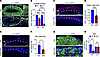 Figure 1
Tissue-specific Fgfr2 KO (Fgfr2 cKO) impairs zG cell identity and transdifferentiation. (A) Lineage-tracing by immunofluorescence for GFP+ cells in adrenal glands from 20-week-old female Fgfr2-cKO and control mice (Ctrl, ASCre/+ R26RmTmG/+). White dashed box demarcates region enlarged to the right. (B) Quantification of GFP+ cells within the zG and zF from female Ctrl and Fgfr2-cKO (cKO) mice (20–24 weeks). One-way ANOVA with post hoc Tukey’s test, ****P < 0.0001, n = 5, 6 mice, respectively. (C) Representative images of DAB2 immunostaining in adrenal glands from adult female Ctrl and Fgfr2-cKO mice (10–24 weeks). (D) Quantification of DAB2+ cells in female Ctrl and Fgfr2-cKO mice (10–24 weeks). Student’s t test, ****P < 0.0001, n = 6, 5, respectively. (E) Representative pictures of Aldosterone Synthase (AS; Cyp11b2) immunostaining in adrenal glands from female Ctrl and Fgfr2-cKO mice (10–24 weeks). (F) Quantification of AS+ cells in female Ctrl and Fgfr2-cKO mice (10–24 weeks). Student’s t test, *P < 0.05, n = 7, 5, respectively. (G) Representative images of coimmunostaining of GFP (green) and Ki67 (magenta) in Ctrl and Fgfr2-cKO adrenal glands from female mice (20–24 weeks). White arrowheads point to GFP and Ki67–copositive cells. (H) Quantification of GFP and Ki67–copositive cells as a proportion of total GFP+ cells in the zG and zF of female Ctrl and Fgfr2-cKO mice (20–24 weeks). Student’s t test, *P < 0.05. n = 5, 3 mice, respectively. Scale bars: 50 μm. DAPI (blue), nuclei. Dashed white lines correspond to the zG-zF boundary.
The fact that the zG/zF ratio of the percent of GFP+ cells was higher in Fgfr2-cKO animals in comparison with controls (e.g., 8 versus 4 at 6–10 weeks of age; Supplemental Figure 1C) suggested a defect in zG to zF cell transdifferentiation in Fgfr2-cKO animals. On the other hand, loss of FGFR2 leading to an increase in cell death might also explain this finding. To explore this possibility, we performed immunostaining for activated caspase 3 and assessed apoptosis in the adrenal cortex of control and Fgfr2-cKO mice compared with dexamethasone-treated control mice (used as a positive control for apoptosis) (Supplemental Figure 2, B–D). While the level of apoptosis was markedly lower in control and Fgfr2-cKO mice than in dexamethasone-treated mice, we did observe a significant, albeit modest, increase in apoptosis in both the zG and in the outer zF of Fgfr2-cKO adrenal glands, which may partially contribute to the decline in GFP+ cells in the zF of these animals.
To explore the effect of FGFR2 loss on the zF, which comprises the majority of the cortex, we assessed zF thickness and morphology in Fgfr2-cKO and control adrenal glands using immunostaining for the zF-specific steroidogenic enzyme CYP11B1 (a mature zF cell marker essential for glucocorticoid synthesis). zF thickness and morphology were not affected by Fgfr2-cKO (Supplemental Figure 3, A and B), despite the decreased presence of GFP+ cells in the zF of Fgfr2-cKO adrenal glands; this may be explained by activation of the “alternative” pathway for zF renewal, as previously shown (5). Wilms tumor suppressor gene 1 (Wt1) expression was not increased, suggesting that compensatory activation of WT1+ capsular cells is unlikely to account for this phenotype (Supplemental Figure 3C). Consistent with this preservation of zF morphology, male Fgfr2-cKO animals had normal circulating corticosterone levels (Supplemental Figure 3D). Moreover, we measured adrenal weight in Fgfr2-cKO and control male mice, which revealed no change with FGFR2 loss, likely due to the relatively small contribution of the zG to the total adrenal mass and the ability of FGFR2-deficient adrenal glands to maintain a morphologically normal zF (Supplemental Figure 3E).
Together, these data show that FGFR2 is important for postnatal zG morphogenesis and that its loss results in disruption of zG cell identity and an increase in cell death, which likely both affect the ability of zG cells to undergo transdifferentiation. This extends our previous findings that Fgfr2-cKO mice exhibit decreased zG rosette frequency and glomerular area, along with compensated hypoaldosteronism (elevated renin in the setting of inappropriately normal aldosterone levels) (12).
FGFR2 is important for maintenance of zG cell identity in the adult. To establish whether FGFR2 is necessary for maintenance of a mature zG cell identity in the adult, we first developed a tamoxifen-inducible, zG-specific Cre recombinase mouse model (ASCreER/+) by retargeting the ASCre/+ allele in embryonic stem (ES) cells (Supplemental Figure 4, A and B). To validate expression of Cre recombinase in this model, we generated ASCreER/+ R26RmTmG/+ mice (Supplemental Figure 4C) and assessed GFP expression (Cre reporter activity) 1 week following tamoxifen treatment, and this revealed zG-specific expression of GFP (Supplemental Figure 4, D and E). At 4 months after tamoxifen treatment, we observed a progression of GFP+ cells from the outer to the inner zF in adrenal glands from both sexes, in keeping with the model of centripetal migration and transdifferentiation of zG into zF cells (Supplemental Figure 4E). Next, to assess the role of FGFR2 in the adult, we generated Fgfr2-icKO mice (ASCreER/+ Fgfr2fl/fl R26RmTmG/+) (Supplemental Figure 4F). To evaluate changes in zG cell identity following loss of FGFR2, we performed coimmunostaining for GFP and the zG markers DAB2 or AS one month following tamoxifen treatment in male and female mice (Figure 2A). We observed only ~42% of GFP+ cells in Fgfr2-icKO adrenal glands costaining for DAB2 compared with > 75% in controls (Figure 2, B and C) and ~7% costaining for AS compared with ~18% in controls (Figure 2, D and E). These findings establish that FGFR2 is important for the maintenance of mature zG cell identity in the adult.
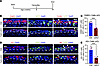 Figure 2
Inducible KO of Fgfr2 (Fgfr2-icKO) in adults leads to a loss of zG cell identity. (A) Schematic of ASCreER induction with tamoxifen. (B) Representative images of GFP and DAB2 coimmunostaining in adrenal glands from adult ASCreER/+ R26RmTmG/+ (Ctrl) and ASCreER/+ Fgfr2fl/fl R26RmTmG/+ (Fgfr2-icKO) mice at 10 weeks of age (4 weeks after tamoxifen). White arrowheads point to GFP and DAB2–copositive cells. (C) Quantification of DAB2 and GFP–copositive cells as a proportion of total GFP+ zG cells in male and female Ctrl and Fgfr2-icKO (icKO) mice. Adrenal glands from male mice are represented with black dots; adrenal glands from female mice are represented with magenta dots. Student’s t test, ***P < 0.001, n = 7, 5, respectively. (D) Representative images of GFP and AS coimmunostaining in adrenal glands from adult Ctrl and Fgfr2-icKO mice at 10 weeks of age (4 weeks post tamoxifen). White arrowheads point to GFP and AS–copositive cells. (E) Quantification of GFP and AS–copositive cells as a proportion of total GFP+ zG cells in male and female Ctrl and Fgfr2-icKO mice. Adrenal glands from male mice are represented with black dots; adrenal glands from female mice are represented with magenta dots. Student’s t test, ***P < 0.001, n = 6, 6, respectively. Scale bars: 50 μm. DAPI (blue), nuclei. Dashed white lines correspond to the zG-zF boundary.
FGFR2 loss abrogates βCat–induced zG hyperplasia. We have previously shown that conditional activation of WNT/βCat signaling in the zG, following stabilization of βCat-GOF, leads to zG hyperplasia due to a block in transdifferentiation of zG to zF cells, together with persistence of zG cell identity (6). Notably, Fgfr2 was among the most upregulated genes in the adrenal glands of these mice (12). To test whether FGFR2 is required for the development and/or maintenance of βCat–driven zG hyperplasia, we generated βCat-GOF Fgfr2-cKO bigenic mice (ASCre/+ Ctnnb1fl(ex3)/+ Fgfr2fl/fl R26RmTmG/+) and βCat-GOF monogenic mice (ASCre/+ Ctnnb1fl(ex3)/+ R26RmTmG/+) (Supplemental Figure 5A) and assessed lineage-tracing, zG cell differentiation markers, proliferation, and aldosterone production. Remarkably, we found that Fgfr2 deletion was sufficient to fully abrogate βCat–induced zG hyperplasia in bigenic mice from both sexes (Figure 3, A–E). The proportion of GFP+ cells in the zG of bigenic mice was more than 50% reduced compared with βCat-GOF mice (and controls), recapitulating the phenotype of Fgfr2-cKO animals (Figure 1 and Supplemental Figure 1). We also observed a 4-fold decrease in the proportion of GFP+ cells in the zF of bigenic mice compared with controls. We previously showed that the zG hyperplasia observed in βCat-GOF mice results from a block in transdifferentiation of zG to zF cells, rather than from an increase in proliferation (6). Consistent with this, we observed no difference in the proliferation rate of GFP+ cells from control, βCat-GOF, and βCat-GOF Fgfr2-cKO bigenic adrenal glands (Supplemental Figure 5, B and C), suggesting that in bigenic mice, the absence of zG hyperplasia cannot be ascribed to a direct effect on proliferation. These findings indicate that Fgfr2-cKO is dominant over βCat-GOF and is sufficient to prevent the development of zG hyperplasia, likely due to the defect in zG cell identity that prevents them from responding to the effects of βCat-GOF.
 Figure 3
Fgfr2 deletion abrogates β-catenin–induced zG hyperplasia. (A) Representative images of GFP (green) and DAB2 (red) immunostaining of Ctrl (ASCre/+ R26RmTmG/+), βCat-GOF, and βCat-GOF Fgfr2-cKO adrenal glands from adult mice (6–10 weeks). (B) Quantification of GFP+ cells as a proportion of total cells in the zG (left) and the zF (right) in adult male and female mice (6–10 weeks). One-way ANOVA, ***P < 0.001, ****P < 0.0001, n = 5–7 per group. (C) Quantification of DAB2+ cells in the zG of adult male and female mice (6–10 weeks). One-way ANOVA with post hoc Tukey’s test, ****P < 0.0001, n = 5–7 per group. (D) Representative images of GFP (green) and AS (red) immunostaining of Ctrl, βCat-GOF, and βCat-GOF Fgfr2-cKO adrenal glands from adult mice (6–10 weeks). (E) Quantification of AS+ cells in the zG of adult male and female mice. One-way ANOVA with post hoc Tukey’s test, **P < 0.01, ****P < 0.0001, n = 5–7 per group. Adrenal glands from male mice are represented with black dots; adrenal glands from female mice are represented with magenta dots (B, C, and E). (F) Mean 24-hour urine aldosterone corrected for creatinine in male Ctrl, βCat-GOF, and βCat-GOF Fgfr2-cKO mice (6–20 weeks). Mice were fed with normal chow for 4 days, followed by low-sodium chow for 6 days. Urine was collected daily for days 1–4 (regular diet, normal sodium) and 8–11 (low sodium). One-way ANOVA with post hoc Tukey’s test, *P < 0.05, **P < 0.01, ****P < 0.0001, n = 5–7 per group. Scale bars: 50 μm. DAPI (blue), nuclei. Dashed white lines correspond to the zG-zF boundary.
Next, to assess the effect of these genetic modifications on zG cell function, we measured 24-hour urinary aldosterone secretion in control, βCat-GOF, and βCat-GOF Fgfr2-cKO male mice. In this cohort of relatively young adult mice on a regular sodium diet, urine aldosterone levels were similar between control and βCat-GOF mice, despite the underlying zG hyperplasia (Figure 3F), likely because aldosterone excess in this model is progressive with age and less pronounced in young animals (6, 12). Compared with control mice, βCat-GOF Fgfr2-cKO mice showed a modest but significant decrease in aldosterone secretion on a regular sodium diet. Notably, βCat-GOF mice were hypersensitive to activation of the renin-angiotensin-aldosterone system (RAAS) induced by a low sodium diet, resulting in an approximately 1.6-fold increase in urinary aldosterone output compared with control mice, which was restored to control levels in βCat-GOF Fgfr2-cKO mice (Figure 3F). Together, these results demonstrate the capacity of Fgfr2 deletion in zG cells to fully prevent the development of βCat–driven adrenal hyperplasia and to block aldosterone excess following activation of RAAS.
Fgfr2-cKO adrenal glands have fewer Ang II–responsive cells. We previously showed that Fgfr2-cKO mice show an increase in plasma renin activity, consistent with an important role for FGFR2 in maintaining normal levels of aldosterone production (12). It is also known that FGFR signaling can increase intracellular Ca2+ activity through phosphorylation of phospholipase C (PLC) (13). Given the well-established role of Ca2+ signaling as a critical second messenger mediating aldosterone production (17), we sought to determine if Fgfr2 deletion alters the zG Ca2+ response to angiotensin II (Ang II), a potent aldosterone secretagogue that elicits robust Ca2+ oscillations with stereotypic bursting behavior in ex vivo adrenal slices (18). To test this, we generated Fgfr2-cKO ROSA26floxGCaMP6/HZE and control (ASCre/+ ROSA26floxGCaMP6/HZE) mice that express the genetically encoded Ca2+ indicator GCaMP6 and measured changes in GCaMP6 fluorescence intensity in response to 300 pM Ang II (18). In Fgfr2-cKOGCaMP6 slices, we found a marked decrease in the number of zG cells with oscillatory Ca2+ activity activated by Ang II compared with control adrenal slices (Supplemental Figure 6A), consistent with an overall decrease in the number of mature zG cells in Fgfr2-cKO adrenal glands (Figure 1 and Supplemental Figure 1), and possibly a defect in rosette formation and/or adherens junctions (12, 18). By contrast, analysis of Ca2+ oscillations (events) among Ang II–responsive cells (mean events per cell, mean event period, and mean number of events/burst) revealed no differences between Fgfr2-cKO and control adrenal glands (Supplemental Figure 6, B–D). These results suggest that Ca2+ signaling, and the pathways leading to its activation (e.g., Ang II), are not directly affected by FGFR2 loss and that the decreased number of cells actively showing Ca2+ oscillations is explained by the decrease in mature zG cells in Fgfr2-cKO adrenal glands.
Pharmacological inhibition of FGFR signaling blunts aldosterone production and impedes zG cell proliferation. Given that FGFR2 loss leads to a decrease in zG cell proliferation, loss of cellular identity, and hyperreninemic hypoaldosteronism in vivo (12), we next asked whether pharmacological inhibition of FGFR signaling could elicit similar effects. To address this, we selected a second-generation tyrosine kinase inhibitor (AZD4547) with high specificity against FGFR1/2/3 and minimal off-target effects on vascular endothelial growth factor receptors (VEGFR) (19). Indeed, treatment of WT C57BL/6J male mice with AZD4547 resulted in sustained suppression of urinary aldosterone output within 48 hours (Figure 4, A and B), while kidney renin expression was not significantly different (Figure 4C). Histological analysis also revealed a > 3-fold decrease in zG cell proliferation (Figure 4, D and E), recapitulating our findings from the Fgfr2-cKO model. Of note, this effect on cell proliferation was also zone specific, sparing zF cells. In addition, we observed a significant decrease in the expression of Cyp11b2, without a change in the zF marker Cyp11b1 (Supplemental Figure 7A) as well as decreased expression of downstream FGFR targets through the Ras/Raf-MEK-ERK (MAPK) pathway, Etv5 and Dusp6 (13) (Supplemental Figure 7B). Probing expression levels of other factors known to affect adrenocortical cell proliferation (Shh, Igf2, Rspo3) (20–22) also revealed a significant downregulation of Shh (encoding Sonic Hedgehog) (Supplemental Figure 7C). Assessment of adrenal glands from male mice treated with an alternative pan-FGFR inhibitor (BGJ398) (23) showed a similar suppression of zG cell proliferation, with no effect on zF cell proliferation (Supplemental Figure 7, D and E). Importantly, treatment of female βCat-GOF mice with AZD4547 also led to a significant inhibition of aldosterone production, providing proof-of-concept for the ability of FGFR targeting to inhibit aldosterone in the context of adrenal hyperplasia (Figure 4, F and G), albeit with a possible amelioration of the effect at the end of the 6-day treatment course. These intriguing findings suggest that pharmacological inhibition of FGFR signaling may represent a potentially new treatment strategy to reduce circulating aldosterone levels in patients with hyperaldosteronism.
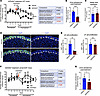 Figure 4
Pharmacological inhibition of FGFR lowers aldosterone secretion and zG proliferation. (A) Urinary aldosterone excretion (corrected for creatinine) of adult male C57BL/6J (WT) mice (12 weeks) treated with 30 mg/kg/day AZD4547 or vehicle per os starting on day 4 (red arrow). Two-way ANOVA followed by Fisher’s least significant difference test, ****P < 0.0001 (for comparison of posttreatment AZD4547 versus vehicle), n = 6, 5 mice, respectively. P values for all comparisons are shown in the table. Pretreatment: days 1–4; posttreatment: days 6–10. (B) Average urine aldosterone excretion (corrected for creatinine) from A starting 48 hours after AZD4547 (days 6–10). Student’s t test, n = 6, 5 mice, respectively. (C) Renin mRNA expression levels (qPCR) in kidneys from male C57BL/6J mice (7–8 weeks) treated with 10 mg/kg/day AZD4547 or vehicle by oral gavage for 7 days. Student’s t test, n = 6, 6 mice, respectively. (D and E) Representative images of Ki67 and β-Catenin immunostaining (D) and quantifications (E) in adrenal glands from male C57BL/6J mice (7–8 weeks) treated with 10 mg/kg/day AZD4547 or vehicle. Yellow arrowheads indicate Ki67+ zG cells. Student’s t test, n = 3, 4 mice, respectively. Scale bars: 50 μm. DAPI (blue), nuclei. Dashed white lines correspond to the zG-zF boundary. (F) Urinary aldosterone excretion (corrected for creatinine) of adult female βCat-GOF mice (36–39 weeks) treated with 30 mg/kg/day AZD4547 or vehicle per os starting on day 4 (red arrow). Two-way ANOVA followed by Fisher’s least significant difference test, *P < 0.05 (for comparison of posttreatment AZD4547 versus vehicle), n = 5, 5 mice, respectively. P values for all comparisons are shown in the table. Pretreatment: days 1–4; posttreatment: days 6–10. (G) Average urine aldosterone excretion (corrected for creatinine) from F, starting 48 hours after AZD4547 (days 6–10). Student’s t test, n = 5, 5 mice, respectively. All comparisons: *P < 0.05, **P < 0.01, ***P < 0.001, ****P < 0.0001.


