
Research ArticleCell biology
Open Access |  10.1172/jci.insight.192984
Optimization of a synoviocyte-targeted biologic for inflammatory arthritis in combination or bispecific administration with TNF inhibitors
Sterling H. Ramsey,1 Zixuan Zhao,1 Megan C. Lee,1 Thales Hein da Rosa,2 Ava C. Schneider,1,2 Miriam Bollmann,3,4 Nour Dada,3,4 Katie E. Frizzi,5 May M. Han,5 Jaeyeon Kim,1,2 Martina Zoccheddu,1 Nigel A. Calcutt,5 Gary S. Firestein,1 James W. Bryson,6 Mattias N.D. Svensson,1,3,4 Eugenio Santelli,1,2 Stephanie M. Stanford,1 and Nunzio Bottini1,2
1Department of Medicine, Altman Clinical and Translational Research Institute, UCSD, La Jolla, California, USA.
2Kao Autoimmunity Institute and Division of Rheumatology, Cedars-Sinai Medical Center, Los Angeles, California, USA.
3Department of Rheumatology and Inflammation Research, Institute of Medicine, Sahlgrenska Academy, and
4SciLifeLab, University of Gothenburg, Gothenburg, Sweden.
5Department of Pathology, UCSD, La Jolla, California, USA.
6Bryson Biomed, Inc., Asheville, North Carolina, USA.
Address correspondence to: Nunzio Bottini, Kao Autoimmunity Institute and Division of Rheumatology, Cedars-Sinai Medical Center, 8700 Beverly Boulevard, North San Vicente 206, Los Angeles, California, 90048, USA. Email: nunzio.bottini@cshs.org. Or to: Stephanie Stanford, Department of Medicine, Altman Clinical and Translational Research Institute, UCSD, 9500 Gilman Drive, mail code 0656, La Jolla, California, 92093, USA. Email: ststanford@health.ucsd.edu.
Authorship note: SHR and ZZ have been designated as co–first authors and contributed equally to this work. SMS and NB are co–corresponding authors.
Find articles by Ramsey, S. in: PubMed | Google Scholar
1Department of Medicine, Altman Clinical and Translational Research Institute, UCSD, La Jolla, California, USA.
2Kao Autoimmunity Institute and Division of Rheumatology, Cedars-Sinai Medical Center, Los Angeles, California, USA.
3Department of Rheumatology and Inflammation Research, Institute of Medicine, Sahlgrenska Academy, and
4SciLifeLab, University of Gothenburg, Gothenburg, Sweden.
5Department of Pathology, UCSD, La Jolla, California, USA.
6Bryson Biomed, Inc., Asheville, North Carolina, USA.
Address correspondence to: Nunzio Bottini, Kao Autoimmunity Institute and Division of Rheumatology, Cedars-Sinai Medical Center, 8700 Beverly Boulevard, North San Vicente 206, Los Angeles, California, 90048, USA. Email: nunzio.bottini@cshs.org. Or to: Stephanie Stanford, Department of Medicine, Altman Clinical and Translational Research Institute, UCSD, 9500 Gilman Drive, mail code 0656, La Jolla, California, 92093, USA. Email: ststanford@health.ucsd.edu.
Authorship note: SHR and ZZ have been designated as co–first authors and contributed equally to this work. SMS and NB are co–corresponding authors.
Find articles by Zhao, Z. in: PubMed | Google Scholar
1Department of Medicine, Altman Clinical and Translational Research Institute, UCSD, La Jolla, California, USA.
2Kao Autoimmunity Institute and Division of Rheumatology, Cedars-Sinai Medical Center, Los Angeles, California, USA.
3Department of Rheumatology and Inflammation Research, Institute of Medicine, Sahlgrenska Academy, and
4SciLifeLab, University of Gothenburg, Gothenburg, Sweden.
5Department of Pathology, UCSD, La Jolla, California, USA.
6Bryson Biomed, Inc., Asheville, North Carolina, USA.
Address correspondence to: Nunzio Bottini, Kao Autoimmunity Institute and Division of Rheumatology, Cedars-Sinai Medical Center, 8700 Beverly Boulevard, North San Vicente 206, Los Angeles, California, 90048, USA. Email: nunzio.bottini@cshs.org. Or to: Stephanie Stanford, Department of Medicine, Altman Clinical and Translational Research Institute, UCSD, 9500 Gilman Drive, mail code 0656, La Jolla, California, 92093, USA. Email: ststanford@health.ucsd.edu.
Authorship note: SHR and ZZ have been designated as co–first authors and contributed equally to this work. SMS and NB are co–corresponding authors.
Find articles by Lee, M. in: PubMed | Google Scholar
1Department of Medicine, Altman Clinical and Translational Research Institute, UCSD, La Jolla, California, USA.
2Kao Autoimmunity Institute and Division of Rheumatology, Cedars-Sinai Medical Center, Los Angeles, California, USA.
3Department of Rheumatology and Inflammation Research, Institute of Medicine, Sahlgrenska Academy, and
4SciLifeLab, University of Gothenburg, Gothenburg, Sweden.
5Department of Pathology, UCSD, La Jolla, California, USA.
6Bryson Biomed, Inc., Asheville, North Carolina, USA.
Address correspondence to: Nunzio Bottini, Kao Autoimmunity Institute and Division of Rheumatology, Cedars-Sinai Medical Center, 8700 Beverly Boulevard, North San Vicente 206, Los Angeles, California, 90048, USA. Email: nunzio.bottini@cshs.org. Or to: Stephanie Stanford, Department of Medicine, Altman Clinical and Translational Research Institute, UCSD, 9500 Gilman Drive, mail code 0656, La Jolla, California, 92093, USA. Email: ststanford@health.ucsd.edu.
Authorship note: SHR and ZZ have been designated as co–first authors and contributed equally to this work. SMS and NB are co–corresponding authors.
Find articles by Hein da Rosa, T. in: PubMed | Google Scholar
1Department of Medicine, Altman Clinical and Translational Research Institute, UCSD, La Jolla, California, USA.
2Kao Autoimmunity Institute and Division of Rheumatology, Cedars-Sinai Medical Center, Los Angeles, California, USA.
3Department of Rheumatology and Inflammation Research, Institute of Medicine, Sahlgrenska Academy, and
4SciLifeLab, University of Gothenburg, Gothenburg, Sweden.
5Department of Pathology, UCSD, La Jolla, California, USA.
6Bryson Biomed, Inc., Asheville, North Carolina, USA.
Address correspondence to: Nunzio Bottini, Kao Autoimmunity Institute and Division of Rheumatology, Cedars-Sinai Medical Center, 8700 Beverly Boulevard, North San Vicente 206, Los Angeles, California, 90048, USA. Email: nunzio.bottini@cshs.org. Or to: Stephanie Stanford, Department of Medicine, Altman Clinical and Translational Research Institute, UCSD, 9500 Gilman Drive, mail code 0656, La Jolla, California, 92093, USA. Email: ststanford@health.ucsd.edu.
Authorship note: SHR and ZZ have been designated as co–first authors and contributed equally to this work. SMS and NB are co–corresponding authors.
Find articles by Schneider, A. in: PubMed | Google Scholar
1Department of Medicine, Altman Clinical and Translational Research Institute, UCSD, La Jolla, California, USA.
2Kao Autoimmunity Institute and Division of Rheumatology, Cedars-Sinai Medical Center, Los Angeles, California, USA.
3Department of Rheumatology and Inflammation Research, Institute of Medicine, Sahlgrenska Academy, and
4SciLifeLab, University of Gothenburg, Gothenburg, Sweden.
5Department of Pathology, UCSD, La Jolla, California, USA.
6Bryson Biomed, Inc., Asheville, North Carolina, USA.
Address correspondence to: Nunzio Bottini, Kao Autoimmunity Institute and Division of Rheumatology, Cedars-Sinai Medical Center, 8700 Beverly Boulevard, North San Vicente 206, Los Angeles, California, 90048, USA. Email: nunzio.bottini@cshs.org. Or to: Stephanie Stanford, Department of Medicine, Altman Clinical and Translational Research Institute, UCSD, 9500 Gilman Drive, mail code 0656, La Jolla, California, 92093, USA. Email: ststanford@health.ucsd.edu.
Authorship note: SHR and ZZ have been designated as co–first authors and contributed equally to this work. SMS and NB are co–corresponding authors.
Find articles by Bollmann, M. in: PubMed | Google Scholar
1Department of Medicine, Altman Clinical and Translational Research Institute, UCSD, La Jolla, California, USA.
2Kao Autoimmunity Institute and Division of Rheumatology, Cedars-Sinai Medical Center, Los Angeles, California, USA.
3Department of Rheumatology and Inflammation Research, Institute of Medicine, Sahlgrenska Academy, and
4SciLifeLab, University of Gothenburg, Gothenburg, Sweden.
5Department of Pathology, UCSD, La Jolla, California, USA.
6Bryson Biomed, Inc., Asheville, North Carolina, USA.
Address correspondence to: Nunzio Bottini, Kao Autoimmunity Institute and Division of Rheumatology, Cedars-Sinai Medical Center, 8700 Beverly Boulevard, North San Vicente 206, Los Angeles, California, 90048, USA. Email: nunzio.bottini@cshs.org. Or to: Stephanie Stanford, Department of Medicine, Altman Clinical and Translational Research Institute, UCSD, 9500 Gilman Drive, mail code 0656, La Jolla, California, 92093, USA. Email: ststanford@health.ucsd.edu.
Authorship note: SHR and ZZ have been designated as co–first authors and contributed equally to this work. SMS and NB are co–corresponding authors.
Find articles by Dada, N. in: PubMed | Google Scholar
1Department of Medicine, Altman Clinical and Translational Research Institute, UCSD, La Jolla, California, USA.
2Kao Autoimmunity Institute and Division of Rheumatology, Cedars-Sinai Medical Center, Los Angeles, California, USA.
3Department of Rheumatology and Inflammation Research, Institute of Medicine, Sahlgrenska Academy, and
4SciLifeLab, University of Gothenburg, Gothenburg, Sweden.
5Department of Pathology, UCSD, La Jolla, California, USA.
6Bryson Biomed, Inc., Asheville, North Carolina, USA.
Address correspondence to: Nunzio Bottini, Kao Autoimmunity Institute and Division of Rheumatology, Cedars-Sinai Medical Center, 8700 Beverly Boulevard, North San Vicente 206, Los Angeles, California, 90048, USA. Email: nunzio.bottini@cshs.org. Or to: Stephanie Stanford, Department of Medicine, Altman Clinical and Translational Research Institute, UCSD, 9500 Gilman Drive, mail code 0656, La Jolla, California, 92093, USA. Email: ststanford@health.ucsd.edu.
Authorship note: SHR and ZZ have been designated as co–first authors and contributed equally to this work. SMS and NB are co–corresponding authors.
Find articles by Frizzi, K. in: PubMed | Google Scholar
1Department of Medicine, Altman Clinical and Translational Research Institute, UCSD, La Jolla, California, USA.
2Kao Autoimmunity Institute and Division of Rheumatology, Cedars-Sinai Medical Center, Los Angeles, California, USA.
3Department of Rheumatology and Inflammation Research, Institute of Medicine, Sahlgrenska Academy, and
4SciLifeLab, University of Gothenburg, Gothenburg, Sweden.
5Department of Pathology, UCSD, La Jolla, California, USA.
6Bryson Biomed, Inc., Asheville, North Carolina, USA.
Address correspondence to: Nunzio Bottini, Kao Autoimmunity Institute and Division of Rheumatology, Cedars-Sinai Medical Center, 8700 Beverly Boulevard, North San Vicente 206, Los Angeles, California, 90048, USA. Email: nunzio.bottini@cshs.org. Or to: Stephanie Stanford, Department of Medicine, Altman Clinical and Translational Research Institute, UCSD, 9500 Gilman Drive, mail code 0656, La Jolla, California, 92093, USA. Email: ststanford@health.ucsd.edu.
Authorship note: SHR and ZZ have been designated as co–first authors and contributed equally to this work. SMS and NB are co–corresponding authors.
Find articles by Han, M. in: PubMed | Google Scholar
1Department of Medicine, Altman Clinical and Translational Research Institute, UCSD, La Jolla, California, USA.
2Kao Autoimmunity Institute and Division of Rheumatology, Cedars-Sinai Medical Center, Los Angeles, California, USA.
3Department of Rheumatology and Inflammation Research, Institute of Medicine, Sahlgrenska Academy, and
4SciLifeLab, University of Gothenburg, Gothenburg, Sweden.
5Department of Pathology, UCSD, La Jolla, California, USA.
6Bryson Biomed, Inc., Asheville, North Carolina, USA.
Address correspondence to: Nunzio Bottini, Kao Autoimmunity Institute and Division of Rheumatology, Cedars-Sinai Medical Center, 8700 Beverly Boulevard, North San Vicente 206, Los Angeles, California, 90048, USA. Email: nunzio.bottini@cshs.org. Or to: Stephanie Stanford, Department of Medicine, Altman Clinical and Translational Research Institute, UCSD, 9500 Gilman Drive, mail code 0656, La Jolla, California, 92093, USA. Email: ststanford@health.ucsd.edu.
Authorship note: SHR and ZZ have been designated as co–first authors and contributed equally to this work. SMS and NB are co–corresponding authors.
Find articles by Kim, J. in: PubMed | Google Scholar
1Department of Medicine, Altman Clinical and Translational Research Institute, UCSD, La Jolla, California, USA.
2Kao Autoimmunity Institute and Division of Rheumatology, Cedars-Sinai Medical Center, Los Angeles, California, USA.
3Department of Rheumatology and Inflammation Research, Institute of Medicine, Sahlgrenska Academy, and
4SciLifeLab, University of Gothenburg, Gothenburg, Sweden.
5Department of Pathology, UCSD, La Jolla, California, USA.
6Bryson Biomed, Inc., Asheville, North Carolina, USA.
Address correspondence to: Nunzio Bottini, Kao Autoimmunity Institute and Division of Rheumatology, Cedars-Sinai Medical Center, 8700 Beverly Boulevard, North San Vicente 206, Los Angeles, California, 90048, USA. Email: nunzio.bottini@cshs.org. Or to: Stephanie Stanford, Department of Medicine, Altman Clinical and Translational Research Institute, UCSD, 9500 Gilman Drive, mail code 0656, La Jolla, California, 92093, USA. Email: ststanford@health.ucsd.edu.
Authorship note: SHR and ZZ have been designated as co–first authors and contributed equally to this work. SMS and NB are co–corresponding authors.
Find articles by Zoccheddu, M. in: PubMed | Google Scholar
1Department of Medicine, Altman Clinical and Translational Research Institute, UCSD, La Jolla, California, USA.
2Kao Autoimmunity Institute and Division of Rheumatology, Cedars-Sinai Medical Center, Los Angeles, California, USA.
3Department of Rheumatology and Inflammation Research, Institute of Medicine, Sahlgrenska Academy, and
4SciLifeLab, University of Gothenburg, Gothenburg, Sweden.
5Department of Pathology, UCSD, La Jolla, California, USA.
6Bryson Biomed, Inc., Asheville, North Carolina, USA.
Address correspondence to: Nunzio Bottini, Kao Autoimmunity Institute and Division of Rheumatology, Cedars-Sinai Medical Center, 8700 Beverly Boulevard, North San Vicente 206, Los Angeles, California, 90048, USA. Email: nunzio.bottini@cshs.org. Or to: Stephanie Stanford, Department of Medicine, Altman Clinical and Translational Research Institute, UCSD, 9500 Gilman Drive, mail code 0656, La Jolla, California, 92093, USA. Email: ststanford@health.ucsd.edu.
Authorship note: SHR and ZZ have been designated as co–first authors and contributed equally to this work. SMS and NB are co–corresponding authors.
Find articles by
Calcutt, N.
in:
PubMed
|
Google Scholar
|

1Department of Medicine, Altman Clinical and Translational Research Institute, UCSD, La Jolla, California, USA.
2Kao Autoimmunity Institute and Division of Rheumatology, Cedars-Sinai Medical Center, Los Angeles, California, USA.
3Department of Rheumatology and Inflammation Research, Institute of Medicine, Sahlgrenska Academy, and
4SciLifeLab, University of Gothenburg, Gothenburg, Sweden.
5Department of Pathology, UCSD, La Jolla, California, USA.
6Bryson Biomed, Inc., Asheville, North Carolina, USA.
Address correspondence to: Nunzio Bottini, Kao Autoimmunity Institute and Division of Rheumatology, Cedars-Sinai Medical Center, 8700 Beverly Boulevard, North San Vicente 206, Los Angeles, California, 90048, USA. Email: nunzio.bottini@cshs.org. Or to: Stephanie Stanford, Department of Medicine, Altman Clinical and Translational Research Institute, UCSD, 9500 Gilman Drive, mail code 0656, La Jolla, California, 92093, USA. Email: ststanford@health.ucsd.edu.
Authorship note: SHR and ZZ have been designated as co–first authors and contributed equally to this work. SMS and NB are co–corresponding authors.
Find articles by Firestein, G. in: PubMed | Google Scholar
1Department of Medicine, Altman Clinical and Translational Research Institute, UCSD, La Jolla, California, USA.
2Kao Autoimmunity Institute and Division of Rheumatology, Cedars-Sinai Medical Center, Los Angeles, California, USA.
3Department of Rheumatology and Inflammation Research, Institute of Medicine, Sahlgrenska Academy, and
4SciLifeLab, University of Gothenburg, Gothenburg, Sweden.
5Department of Pathology, UCSD, La Jolla, California, USA.
6Bryson Biomed, Inc., Asheville, North Carolina, USA.
Address correspondence to: Nunzio Bottini, Kao Autoimmunity Institute and Division of Rheumatology, Cedars-Sinai Medical Center, 8700 Beverly Boulevard, North San Vicente 206, Los Angeles, California, 90048, USA. Email: nunzio.bottini@cshs.org. Or to: Stephanie Stanford, Department of Medicine, Altman Clinical and Translational Research Institute, UCSD, 9500 Gilman Drive, mail code 0656, La Jolla, California, 92093, USA. Email: ststanford@health.ucsd.edu.
Authorship note: SHR and ZZ have been designated as co–first authors and contributed equally to this work. SMS and NB are co–corresponding authors.
Find articles by Bryson, J. in: PubMed | Google Scholar
1Department of Medicine, Altman Clinical and Translational Research Institute, UCSD, La Jolla, California, USA.
2Kao Autoimmunity Institute and Division of Rheumatology, Cedars-Sinai Medical Center, Los Angeles, California, USA.
3Department of Rheumatology and Inflammation Research, Institute of Medicine, Sahlgrenska Academy, and
4SciLifeLab, University of Gothenburg, Gothenburg, Sweden.
5Department of Pathology, UCSD, La Jolla, California, USA.
6Bryson Biomed, Inc., Asheville, North Carolina, USA.
Address correspondence to: Nunzio Bottini, Kao Autoimmunity Institute and Division of Rheumatology, Cedars-Sinai Medical Center, 8700 Beverly Boulevard, North San Vicente 206, Los Angeles, California, 90048, USA. Email: nunzio.bottini@cshs.org. Or to: Stephanie Stanford, Department of Medicine, Altman Clinical and Translational Research Institute, UCSD, 9500 Gilman Drive, mail code 0656, La Jolla, California, 92093, USA. Email: ststanford@health.ucsd.edu.
Authorship note: SHR and ZZ have been designated as co–first authors and contributed equally to this work. SMS and NB are co–corresponding authors.
Find articles by
Svensson, M.
in:
PubMed
|
Google Scholar
|
1Department of Medicine, Altman Clinical and Translational Research Institute, UCSD, La Jolla, California, USA.
2Kao Autoimmunity Institute and Division of Rheumatology, Cedars-Sinai Medical Center, Los Angeles, California, USA.
3Department of Rheumatology and Inflammation Research, Institute of Medicine, Sahlgrenska Academy, and
4SciLifeLab, University of Gothenburg, Gothenburg, Sweden.
5Department of Pathology, UCSD, La Jolla, California, USA.
6Bryson Biomed, Inc., Asheville, North Carolina, USA.
Address correspondence to: Nunzio Bottini, Kao Autoimmunity Institute and Division of Rheumatology, Cedars-Sinai Medical Center, 8700 Beverly Boulevard, North San Vicente 206, Los Angeles, California, 90048, USA. Email: nunzio.bottini@cshs.org. Or to: Stephanie Stanford, Department of Medicine, Altman Clinical and Translational Research Institute, UCSD, 9500 Gilman Drive, mail code 0656, La Jolla, California, 92093, USA. Email: ststanford@health.ucsd.edu.
Authorship note: SHR and ZZ have been designated as co–first authors and contributed equally to this work. SMS and NB are co–corresponding authors.
Find articles by Santelli, E. in: PubMed | Google Scholar
1Department of Medicine, Altman Clinical and Translational Research Institute, UCSD, La Jolla, California, USA.
2Kao Autoimmunity Institute and Division of Rheumatology, Cedars-Sinai Medical Center, Los Angeles, California, USA.
3Department of Rheumatology and Inflammation Research, Institute of Medicine, Sahlgrenska Academy, and
4SciLifeLab, University of Gothenburg, Gothenburg, Sweden.
5Department of Pathology, UCSD, La Jolla, California, USA.
6Bryson Biomed, Inc., Asheville, North Carolina, USA.
Address correspondence to: Nunzio Bottini, Kao Autoimmunity Institute and Division of Rheumatology, Cedars-Sinai Medical Center, 8700 Beverly Boulevard, North San Vicente 206, Los Angeles, California, 90048, USA. Email: nunzio.bottini@cshs.org. Or to: Stephanie Stanford, Department of Medicine, Altman Clinical and Translational Research Institute, UCSD, 9500 Gilman Drive, mail code 0656, La Jolla, California, 92093, USA. Email: ststanford@health.ucsd.edu.
Authorship note: SHR and ZZ have been designated as co–first authors and contributed equally to this work. SMS and NB are co–corresponding authors.
Find articles by Stanford, S. in: PubMed | Google Scholar
1Department of Medicine, Altman Clinical and Translational Research Institute, UCSD, La Jolla, California, USA.
2Kao Autoimmunity Institute and Division of Rheumatology, Cedars-Sinai Medical Center, Los Angeles, California, USA.
3Department of Rheumatology and Inflammation Research, Institute of Medicine, Sahlgrenska Academy, and
4SciLifeLab, University of Gothenburg, Gothenburg, Sweden.
5Department of Pathology, UCSD, La Jolla, California, USA.
6Bryson Biomed, Inc., Asheville, North Carolina, USA.
Address correspondence to: Nunzio Bottini, Kao Autoimmunity Institute and Division of Rheumatology, Cedars-Sinai Medical Center, 8700 Beverly Boulevard, North San Vicente 206, Los Angeles, California, 90048, USA. Email: nunzio.bottini@cshs.org. Or to: Stephanie Stanford, Department of Medicine, Altman Clinical and Translational Research Institute, UCSD, 9500 Gilman Drive, mail code 0656, La Jolla, California, 92093, USA. Email: ststanford@health.ucsd.edu.
Authorship note: SHR and ZZ have been designated as co–first authors and contributed equally to this work. SMS and NB are co–corresponding authors.
Find articles by
Bottini, N.
in:
PubMed
|
Google Scholar
|
Published September 30, 2025 - More info
JCI Insight. 2025;10(21):e192984. https://doi.org/10.1172/jci.insight.192984.
© 2025 Ramsey et al. This work is licensed under the Creative Commons Attribution 4.0 International License. To view a copy of this license, visit http://creativecommons.org/licenses/by/4.0/.
Received: March 3, 2025; Accepted: September 23, 2025


-
Results
Effectiveness of Ig1&2-Fc sequence variations in assays of FLS migration. Our previously reported Ig1&2-Fc was composed of the Ig1 and Ig2 domains of murine Ptprs (amino acids 30–226 of NP_035348.2) linked to amino acids 221–447 (EU numbering) of human IgG1 Fc fragment (here called m1; Figure 1A) (6, 12). Sequence comparison of the mouse and human Ig1&2 region of PTPRS showed 5 amino acid variations. Four of these were conservative substitutions, while the fifth was a nonconservative S132P substitution (Figure 1B). We generated a human PTPRS Ig1&2-Fc (here called h1) and a human Ig1&2-Fc containing the murine P132 residue (here called h1-S/P; Table 1) and compared their effectiveness with m1 at inhibiting FLS migration. While all constructs were effective at inhibiting mouse FLS (mFLS) migration (Figure 1C), only h1 and h1-S/P were effective at inhibiting migration in RA FLS (Figure 1D) and SW982 cells (a human synovial sarcoma line; Figure 1E), with h1 showing greater efficacy to h1-S/P in RA FLS (Figure 1D). We therefore proceeded with human PTPRS Ig1&2-Fc.
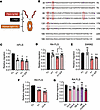 Figure 1
Inhibition of FLS migration by human Ig1&2-Fc proteins. (A) Scheme of Ig1&2-Fc. (B) Sequence alignment of murine (top) versus human (bottom) PTPRS Ig1&2 region. (C–E) Relative Transwell migration of mFLS (C; n = 3), RA FLS (D; n = 5), and SW982 cells (E; n = 3) in response to 10% FBS in the presence of Ig1&2-Fc or Fc control protein (100 nM). (F) Relative Transwell migration of RA FLS in response to 10% FBS in the presence of Ig1&2-Fc or Fc control protein (100 nM) (n = 4). (G) Relative Transwell migration of RA FLS in response to 10% FBS in the presence of Ig1&2-Fc or Fc control protein (100 nM) (n = 3). (C–G) Mean ± SEM relative to Fc control sample is shown. *P < 0.05, **P < 0.01, and ***P < 0.001; NS, nonsignificant; unpaired t test with Welch’s correction (C–G).
Our previously reported m1 (6, 12) and our new h1 Ig1&2-Fc contain a 17 aa linker between Ig1&2 and Fc composed of a G4S repeat flanked by TS and 5 aa of the human IgG1 Fc hinge region (TSGGGGSGGGGSEPKSC). We examined a shortened linker with a single G4S motif (TSGGGGSEPKSC; here called h2) as well as a minimal linker (GT) with 2 mutations on the Fc as in the drug abatacept (C226S & C229S) (13) to reduce potential constraints (here called h3-A; Table 1). All variants were effective at inhibiting RA FLS migration; however, h3-A appeared to have a greater effect at higher concentrations (Figure 1F and Supplemental Figure 1; supplemental material available online with this article; https://doi.org/10.1172/jci.insight.192984DS1).
Human PTPRS contains 2 splice variants within the Ig1&2 region, resulting in incorporation of short “miniexons” A or B (14). Miniexon A encodes for inclusion of 9 aa (ETFESTPIR) in the Ig2 domain immediately after PTPRS residue S189. Miniexon B encodes for 4 aa (ELRE) immediately after PTPRS residue R226, following the Ig2 domain. We incorporated miniexon A into h3-A (here called hA3-A; Table 1) and found that it reduced effectiveness in the RA FLS migration assay (Figure 1G). Since miniexon B lies after the last Ig2 residue of PTPRS included in h3-A, we generated Ig1&2-Fc with miniexon B in replacement of the short linker, either with (hB-A) or without (hB) the Fc C/S mutations (Table 1). hB-A was similarly effective as h3-A at inhibiting RA FLS migration, while hB — which lacks the C/S mutations — was less effective (Figure 1G). We next generated another Ig1&2-Fc-C226/229S protein containing a 3 aa (VRR) natural extension of the canonical isoform of PTPRS in replacement of the short linker (hVRR-A; Table 1) and found it was similarly effective at inhibiting RA FLS migration as h3-A (Figure 1G). Taken together, results from these experiments suggest that proteins with short linkers between Ig1&2 and the Fc-C226/229S — as in h3-A — retain effectiveness in assays of FLS migration.
Ig1&2-Fc does not display signs of toxicity in chronic treatment. To further assess the potential of Ig1&2-Fc as a therapeutic for RA, we examined its toxicology after chronic administration. Previously, we only demonstrated its therapeutic effect in mouse models with acute treatment courses and did not characterize any potential side effects that arise from long-term exposure to Ig1&2-Fc. Due to potential limitations of administering a human biologic to mice for long-term toxicology studies, we generated a version of h3-A containing the mouse sequence of PTPRS (m3-A; Table 1). We first verified that this version of Ig1&2-Fc retained efficacy in mFLS. Both were effective at inhibiting mFLS migration, with m3-A performing slightly better than h3-A on the mouse cells (Supplemental Figure 1). Having verified its efficacy, we proceeded with m3-A as the Ig1&2-Fc for the toxicology studies described below.
Eight- to 9-week-old mice were injected intraperitoneally every 2 days with PBS or 0.1 mg of Ig1&2-Fc for 4 months. Serum was collected every month to periodically assess for signs of loss of organ function. No elevation of circulating alanine aminotransferase (ALT) or aspartate aminotransferase (AST) was noticed in the mice treated with Ig1&2-Fc, indicating that liver function was not impaired (Figure 2A). Creatinine levels were similarly undisturbed, indicating no kidney toxicity (Figure 2B). Cardiac assessments were performed at the end of the study via electrocardiogram and echocardiogram, and no arrhythmias or signs of heart failure were detected in mice treated with Ig1&2-Fc (Figure 2C and Table 2). Circulating levels of atrial natriuretic peptide (ANP) were also similarly unaffected by Ig1&2-Fc administration (Figure 2D). Gross necropsy showed no correlation between organ pathology and Ig1&2-Fc treatment (Supplemental Table 1).
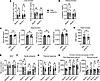 Figure 2
Four-month study shows no adverse effects of Ig1&2-Fc in mice. (A) Fold-change in serum alanine aminotransferase (ALT; left) and aspartate aminotransferase (AST; right) activity in mice treated with PBS or Ig1&2-Fc during months 1 and 4 of Ig1&2-Fc treatment. Mean ± SEM relative to PBS is shown. (B) Serum creatinine concentration in mice treated with PBS or Ig1&2-Fc during months 1 and 4 of treatment. (C) Electrocardiogram results of mice treated with PBS or Ig1&2-Fc after 4 months of treatment. (D) Serum atrial natriuretic peptide (ANP) in mice treated with PBS or Ig1&2-Fc after 4 months of treatment. (E) Nerve conduction velocity (NCV) of sciatic nerve in mice treated with PBS or Ig1&2-Fc before treatment (baseline) and after month 4 of treatment with Ig1&2-Fc. (F) Average force (in grams) of Von Frey filaments able to elicit a paw withdrawal response 50% of the time in mice treated with PBS or Ig1&2-Fc during months 2–4 of treatment (PWT, paw withdrawal threshold). (G) Paw withdrawal latency in response to heat of mice treated with PBS or Ig1&2-Fc during months 2–4 of treatment. (H) Total nerve area of sub basal nerve plexus (left) and stromal nerves (right) as observed by CCM during each month of treatment. (A–H) PBS: n = 9; Ig1&2-Fc: n = 10. Mean ± SEM is shown. NS, nonsignificant; 2-way ANOVA with Šídák’s correction (A, B, and E–H) or Mann-Whitney U test (C and D).
Because PTPRS is expressed in the nervous system (8, 9), we also assessed for peripheral neuropathy via nerve conduction, pain sensitivity studies, and assessment of corneal innervation. There was no difference in nerve conduction velocity (NCV) or paw withdrawal in response to external stimuli between mice that were treated with PBS or Ig1&2-Fc (Figure 2, E–G). Similarly, no alteration of corneal innervation was observed in mice treated with Ig1&2-Fc (Figure 2H). Taken together, these results suggest that chronic treatment with Ig1&2-Fc in mice up to 4 months does not result in evident toxicity or organ pathology as measured by this study. Having reaffirmed that Ig1&2-Fc is well tolerated in mice, we next turned to improve upon the efficacy of h3-A in vivo.
Fc engineering improves Ig1&2-Fc efficacy against experimental arthritis in mice. Next, we examined the effects of engineering the Ig1&2 IgG1-derived Fc fragment region of h3-A in efforts to improve its pharmacologic features. We generated 3 Fc-engineered h3-A proteins (Table 1). h3-A’ contained the neonatal Fc receptor (FcRn) affinity-enhancing M252Y/S254T/T256E (YTE) mutation reported to extend half-life (15) and the L234A/L235A (LALA) mutation to reduce potential binding to Fc-γ receptors (FcγRs) and consequent Fc-mediated cytotoxicity (16). h3-A-P/S contained a P238S mutation in the Fc also reported to prevent Fc-mediated cytotoxicity as in the LALA mutation (13). h3-A-P/S’ contained all 3 of these Fc-engineered mutations.
We first tested these proteins in assays of FLS migration to ensure that the efficacy of h3-A would not be impeded by the Fc mutations. h3-A’ was highly effective at inhibiting migration of RA FLS (Figure 3A) and had similar efficacy to h3-A at inhibiting RA FLS invasion through ECM (Figure 3B) and across scratch wound boundaries (Supplemental Figure 2). h3-A’ was also effective in SW982 cells (Figure 3C) and mFLS (Figure 3D). Together, these results suggest the YTE-LALA mutations do not interfere with the functionality of Ig1&2. Interestingly, inclusion of the P238S mutation in h3-A-P/S seemed to slightly hinder the inhibitory effect of Ig1&2 on human cell migration, although the protein retained consistent efficacy in the mouse FLS migration assay (Figure 3, A–D). Combining the 3 mutations in h3-A-P/S’ resulted in a deleterious effect compared with h3-A on the efficacy of the protein (Figure 3A). We therefore selected h3-A’ and h3-A-P/S for progression to in vivo experimentation.
 Figure 3
Additional Fc tag engineering improves Ig1&2-Fc effect in vivo. (A) Relative Transwell migration of RA FLS in response to 10% FBS in the presence of Ig1&2-Fc or Fc control protein (100 nM; n = 3). (B) Relative invasion through ECM of RA FLS in response to 10% FBS in the presence of Ig1&2-Fc or Fc control protein (100 nM; n = 4). (C and D) Relative Transwell migration of SW982 cells (C; n = 3) and mFLS (D; n = 4) in response to 10% FBS in the presence of Ig1&2-Fc or Fc control protein (100 nM). (A–D) Mean ± SEM relative to Fc control sample is shown. (E) Therapeutic treatment of BALB/c mice with K/BxN STIA by retro-orbital injection of 0.5 mg of Ig1&2-Fc or Fc control protein (h3-A-P/S: n = 4; others: n = 5) every 2 days for a total of 7 injections. (F) Histopathological evaluation of synovial inflammation (left) and bone erosion (right) from joints of mice in E. Average scores of both hind joints for each mouse are shown. (G) Representative H&E staining at 5× original magnification used for quantification in F. (E and F) Mean ± SEM is shown. *P < 0.05, **P < 0.01, ***P < 0.001, and ****P < 0.0001; NS, nonsignificant; unpaired t test with Welch’s correction (A, C, and D), Mann-Whitney U test (B), 2-way ANOVA with Dunnett’s correction (E), or 1-way ANOVA with Dunnett’s correction (F).
We next tested the efficacy of h3-A’ and h3-A-P/S Ig1&2-Fc in the mouse STIA model in comparison with h3-A. Due to its similar ability to h3-A at inhibiting FLS migration at a lower concentration (Supplemental Figure 1), we also generated an Ig1&2-Fc incorporating the YTE-LALA mutations onto h1 (h1’; Table 1). As shown in Figure 3E, only h3-A’ and h1’ showed efficacy in mitigating arthritis when compared with Fc control protein. Histopathological evaluation of synovial inflammation and bone erosion in ankles from these mice further demonstrated the improved effect of the YTE-LALA mutations, as only h3-A’ and h1’ showed significantly reduced histopathological scores (Figure 3, F and G). Somewhat unexpectedly, h1’ had a superior effect compared with h3-A’. These results suggest that incorporation of YTE-LALA mutations improves the effect of human Ig1&2-Fc at suppressing inflammatory arthritis in mice.
Bioavailability of Fc-engineered Ig1&2 proteins in mice. Next, we sought to confirm whether the improved efficacy of Ig1&2-Fc in the mouse STIA model could be attributed to an improved half-life by examining the serum concentrations of these different Ig1&2-Fc proteins. To accomplish this, we generated an ELISA to capture and detect Ig1&2-Fc in mouse serum (Figure 4A). To capture Ig1&2, we generated a Fab fragment of an antibody clone recognizing the Ig1&2 region of PTPRS identified by phage display (here called S-Fab). To detect the Fc tag of the protein, we used an HRP-conjugated anti-human IgG Fcγ antibody (32935S; Cell Signaling Technology [CST]). We verified that S-Fab was able to detect Ig1&2-Fc in the presence of mouse serum by ELISA but did not nonspecifically bind to mouse serum matrix (Supplemental Figure 3).
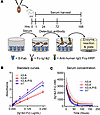 Figure 4
Half-life of Ig1&2-Fc proteins in vivo. (A) Schematic of the Ig1&2-Fc ELISA. Following retro-orbital injection with Ig1&2-Fc proteins, mouse serum was collected at the indicated time points. S-Fab was coated on high-binding, polystyrene, flat-bottom plates, followed by addition of diluted serum. HRP-conjugated anti-human IgG Fcγ was used as the detection antibody. (B) Standard curves of Ig1&2-Fc proteins were estimated by linear regression of the average of triplicate wells run at serial dilutions of 0.25–0.0078 μg/mL of Ig1&2-Fc. (C) In vivo half-life of Ig1&2-Fc protein. Concentration curves were estimated using nonlinear fit with 95% CI calculated with the 1-phase decay model (n = 3 for each time point).
Sera from mice that were administered a single 0.75 mg dose of Ig1&2-Fc protein via retro-orbital administration were collected at 1, 24, 72, and 168 hours postinjection. Serum levels of Ig1&2-Fc were analyzed by the ELISA as described above. For each different Ig1&2-Fc protein, a standard curve was run alongside the samples (Figure 4B) and used to calculate concentration at the indicated time points. h3-A had the highest concentration at each time point and showed a half-life of approximately 19.6 hours when the data were fit to a 1-phase decay nonlinear fit model (Figure 4C and Table 3). h3-A’ had a comparable half-life of approximately 18.4 hours. While inclusion of the P238S mutation in h3-A-P/S appeared to improve concentration levels at the earliest time point when compared with h3-A’, its levels dropped dramatically at the later time points, resulting in a deleterious effect on the half-life compared with h3-A. Incorporation of the YTE-LALA mutations did not lead to expected improvement of half-life in this model, although similar findings in mice have been reported (17). This was more evident in the half-life from mice administered h1’, which was even lower at approximately 13.3 hours. These results were interesting since both h3-A’ and h1’ were markedly more efficacious than h3-A at attenuating disease in the mouse STIA model, suggesting that incorporation of the YTE-LALA mutations nonetheless improves the therapeutic effect of Ig1&2-Fc in vivo.
Combination treatment of Ig1&2-Fc with TNFi improves therapeutic response in mouse arthritis. We previously reported that m1 Ig1&2-Fc shows additive efficacy with Fc-tagged p75 mTnfr2 (here called mEta) when the 2 biologics are coadministered together at suboptimal doses in the CIA model, a model of RA that is highly sensitive to TNFi (12, 18, 19). Here, we sought to assess Ig1&2-Fc efficacy in combination with optimal doses of mEta in the mouse STIA model, which is relatively insensitive to TNFi and models patients who achieve incomplete response with TNFi (20). We found that combination treatment of m1 and mEta suppressed arthritis in the mouse STIA model to a greater extent than single-agent treatment of either therapeutic (Figure 5A). This effect was further supported by histopathological evaluation of synovial inflammation and bone erosion in these mice (Figure 5, B and C). These results suggest that combining Ig1&2-Fc with etanercept or potentially other forms of TNFi can be used to improve therapeutic response in RA.
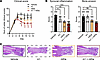 Figure 5
Combination treatment with Ig1&2-Fc and mTnfr2 improves therapeutic effect in mouse STIA model. (A) Therapeutic treatment of BALB/c mice with K/BxN STIA by intraperitoneal injection of 0.5 mg m1, 4 mg/kg mEta, combination of 0.5 mg m1 and 4 mg/kg mEta, or vehicle on days 0, 3, and every 2 days thereafter for a total of 6 injections (n = 6). (B) Histopathological evaluation of synovial inflammation (left) and bone erosion (right) from joints of mice in A. Scores from a single joint from each mouse are shown. (C) Representative H&E staining at 20× original magnification used for quantification in B. (A and B) Mean ± SEM is shown. *P < 0.05, **P < 0.01, ***P < 0.001; NS, nonsignificant; 2-way ANOVA with Dunnett’s correction (A) or 1-way ANOVA with Dunnett’s correction (B).
Assessment of Ig1&2 fusion with TNFi as a bispecific therapy. We next sought to examine the potential of fusing Ig1&2 with a TNFi DMARD to form a dual-action, bispecific therapeutic. We first incorporated the YTE-LALA mutations into our previously reported m1 Ig1&2-Fc (here called m1’) and mEta (here called mEta’). We then fused mEta to the N- or C-terminus of Ig1&2, resulting in mEta-m1’ and m1-mEta’, respectively (Figure 6A). These 4 proteins (m1’, mEta’, mEta-m1’, and m1-mEta’; Table 4) were tested in assays measuring IL-6 production in response to TNF and assays of FLS migration to assess retention of the functionality of each moiety. As expected, mEta’ abolished TNF-induced IL-6 production (Figure 6, B and C) but had no effect on FLS migration (Figure 6, D and E). On the other hand, m1’ significantly inhibited FLS migration but had no effect on IL-6 production (Figure 6, B–E). Both mEta-m1’ and m1-mEta’ blocked the response of cells to TNF, suggesting the addition of Ig1&2 at the N- or C-terminus is not deleterious to the TNF-blocking ability of mEta (Figure 6, B and C). Interestingly, insertion of mEta at the C-terminus in m1-mEta’ led to inhibition of FLS migration with the same effectiveness as m1’ — suggesting no interference from mEta on Ig1&2 function — while insertion of mEta at the Ig1&2 N-terminus in mEta-m1’ completely abolished its effect on FLS migration (Figure 6, D and E). Taken together, these data suggest addition of mEta to the Ig1&2 C-terminus results in a bispecific fusion protein with PTPRS and TNF targeting capabilities. We therefore selected m1-mEta’ for progression to in vivo experimentation.
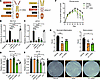 Figure 6
Bispecific fusion of Ig1&2 to mTnfr2 mimics therapeutic combination. (A) Scheme of Ig1&2 & TNFi fusion proteins. (B and C) Relative concentration of hIL-6 in RA FLS (B) or mIL-6 in mFLS (C) samples following 24-hour stimulation with 10 ng/mL TNF-α and the indicated protein (100 nM) (n = 3). Proteins were added 1 hour prior to stimulation. Mean ± SEM concentration relative to Fc control sample is shown. (D and E) Relative Transwell migration of RA FLS (Fc: n = 2; others: n = 3) (D) or mFLS (Fc: n = 3; others: n = 4) (E) in response to 10% FBS in the presence of the indicated protein (100 nM). Mean ± SEM relative to mEta’ sample is shown. (F) Therapeutic treatment of BALB/c mice with K/BxN STIA by intraperitoneal injection of 0.25 mg (10 mg/kg) m1-mEta’, 0.17 mg (6.8 mg/kg) mEta’, 0.17 mg (6.8 mg/kg) of both m1’ and mEta’, or vehicle every 2 days for a total of 7 injections (n = 5). (G) Histopathological evaluation of synovial inflammation (left) and bone erosion (right) of mice in F. Average scores of a single joint from each mouse by 2 scorers are shown. (H) Representative H&E images at 4× original magnification used for quantification in G. (F and G) Mean ± SEM is shown. *P < 0.05, **P < 0.01, ***P < 0.001, and ****P < 0.0001; NS, nonsignificant; 1-way ANOVA with Tukey’s correction (B–E), 2-way ANOVA with Dunnett’s correction (F), or 1-way ANOVA with Dunnett’s correction (G).
Due to the increased molecular weight of m1-mEta’ (~74 kDa) compared with m1’ and mEta’ (~49 kDa and ~52 kDa, respectively), we opted to administer injections in molar equivalences of each therapeutic for in vivo experimentation. In mFLS, although m1-mEta’ was highly effective at inhibiting mIL-6 secretion, it appeared to have around 50% reduction in its inhibitory effect compared with mEta’ (Figure 6C); thus, we first sought to assess the effect of m1-mEta’ in reducing disease severity of the STIA model at twice the equimolar concentration to mEta’ in order to obtain similar functional activity of the mEta moieties in each protein. To obtain equivalent efficacies of the Ig1&2 moieties, equimolar doses of m1-mEta’ and m1’ were used. We found that m1-mEta’ and equimolar m1’ both significantly reduced arthritic severity, with our bispecific agent showing greater efficacy than m1’ alone (Supplemental Figure 4). At half the equimolar concentration to bispecific m1-mEta’, mEta’ did not significantly affect arthritis in the STIA model. These data suggest improved therapeutic efficacy of the bispecific m1-mEta’ compared with the action of each single component alone.
Having confirmed the effect of m1-mEta’ in vivo, we sought to evaluate the ability of bispecific m1-mEta’ to reduce disease severity in comparison with combination treatment with m1’ and mEta’. We thus compared the efficacy of m1-mEta’ versus single-agent mEta’ or coadministration of m1’ and mEta’ in the mouse STIA model at equimolar concentrations, finding that only m1-mEta’ and combination treatment of m1’ and mEta’ were able to significantly attenuate arthritis (Figure 6F). Histopathological evaluation of mice treated with mEta’ or m1-mEta’ showed that although equimolar mEta’ had a larger effect on synovial inflammation, m1-mEta’ showed stronger mitigation of bone erosion (Figure 6, G and H) — consistent with its FLS-targeting role. These results suggest the potential for further development of a bispecific fusion protein that mimics combination treatment of Ig1&2-Fc and TNFi within a single molecule to improve therapeutic response in RA.


