

Abstract
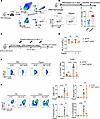
Wound healing is a highly dynamic and metabolically demanding process. However, the primary drivers of metabolic alterations involved in this process remain incompletely understood. Here, we employed multiomics profiling of clinical samples to investigate metabolic alterations during wound healing. Our analyses revealed significant activation of the TCA cycle and identified α-ketoglutarate (αKG) as a central regulator orchestrating the reparative phase. Systemic administration of αKG promoted wound closure and re-epithelialization, characterized by enhanced neo-tissue formation with an extended epithelial tongue. Mechanistically, αKG promoted cell proliferation via the cell cycle pathway and enhanced fibroblast-derived TGF-β signaling to induce epithelial-mesenchymal transition–like programs in epithelial cells. To address the spatial metabolic heterogeneity, we developed a transdermal MN platform based on gelatin methacryloyl for localized αKG delivery, further accelerating tissue repair. Collectively, these findings identify αKG as a metabolic driver of wound repair, reveal its dual role in modulating the epithelial-fibroblast microenvironment, and introduce a targeted bioengineering strategy with translational potential for both acute and chronic wound management.
Authors
Yuhan Li, Weimin Lin, Denghao Huang, Yueying Wang, Yimeng Cai, Jie Xiang, Linfeng Liu, Xinxing Shuai, Qi Yin, Shuang Jiang, Malcolm Xing, Yuan Wang, Leixiao Yu, Quan Yuan
Abstract
The cholinergic antiinflammatory pathway attenuates lung inflammation via the α7 nicotinic acetylcholine receptor (α7 nAChR) on immune cells. However, the role of α7 nAChR on lung megakaryocytes (Mks) in allergic airway inflammation remains unknown. In this study, allergen-challenged mouse models were used with conditional Mk-specific Chrna7 knockout, pharmacological activation (GTS-21), and Mk reconstitution. IL-33 expression and p38 MAPK signaling were assessed. We found that allergen challenge upregulated α7 nAChR specifically in lung Mks. Mk-specific Chrna7 deletion significantly alleviated allergic airway inflammation, whereas GTS-21 exacerbated inflammation via an Mk-dependent mechanism. Reconstitution with α7 nAChR+ Mks restored airway inflammatory responses. Mechanistically, α7 nAChR activation promoted Mk IL-33 synthesis and secretion through p38 MAPK signaling. Taken together, our results show that α7 nAChR on lung Mks plays a proinflammatory role in allergic airway inflammation, challenging its classical antiinflammatory paradigm and revealing pathogenic mechanisms.
Authors
Hang Wu, Rujia Tao, Shitao Xie, Yao Zhou, Jin-Fu Xu, Zhenwei Xia, Xiao Su
Abstract
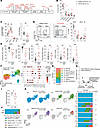
Gain-of-function (GOF) variants in STAT3 cause a complex disorder characterized by early-onset autoimmunity, lymphoproliferation, recurrent infections, and immune dysregulation. In both primary human and mouse models of STAT3 GOF, CD8+ T cells have been implicated as pathogenic drivers of autoimmunity, though the exact mechanisms remain poorly understood. Here, we found that in patients with STAT3 GOF, CD8+ T cells exist in an activated state. Functional assessment revealed that naive CD8+ T cells have an increased capacity for IFN-γ and TNF-α production, with type I and type II IFN transcriptional signatures. Evaluation of immunoregulatory pathways revealed dysregulation of the purinergic signaling axis in CD8+ T cells: CD39 was increased, whereas downstream purinergic family members, CD73 and the adenosine receptor A2AR, were downregulated, impairing the potential to produce or sense immunosuppressive adenosine. Evaluation of the impact of precision therapy, in the form of JAK inhibition, at a cellular and functional level revealed partial normalization of CD8+ T cell dysregulation in patients, including aberrant cytokine production. Our study suggests that a dysregulated purinergic signaling axis plays a key role in CD8+ T cell dysregulation in STAT3 GOF and may have implications for other rare monogenic immune disorders and common inflammatory disorders.
Authors
Jose S. Campos Duran, Montana S. Knight, Samir U. Sayed, Megan C. Dalalo, Andrea A. Mauracher, Peyton Conrey, Aaron B. Schultz, Ceire A. Hay, Robert B. Lindell, Ilona Neale, Kyle Yeakle, Eric D. Abrams, Erica G. Schmitt, Martin A. Thelin, Christian A. Howard, Sara Bluestein, Christine M. Seroogy, Tamara C. Pozos, Akaluck Thatayatikom, Ingrid S. Lundgren, Amelie Gauthier, Scott W. Canna, Helen C. Su, Michael D. Keller, Ottavia M. Delmonte, Lisa R. Forbes Satter, Steven M. Holland, Jenna R.E. Bergerson, Jennifer W. Leiding, Neil Romberg, Will Bailis, Christopher A. Hunter, Alexandra F. Freeman, Alejandro V. Villarino, Mark S. Anderson, Megan A. Cooper, Tiphanie P. Vogel, Sarah E. Henrickson

Abstract
Extracellular vesicle–mediated interorgan communication represents a promising frontier in transplant immunology; however, its role in cardiac allograft rejection remains poorly characterized. We performed proteomic profiling of plasma-derived extracellular vesicles in a rat heterotopic heart transplantation model and identified a distinct liver-predominant protein signature during acute rejection, with antithrombin III (ATIII) emerging as a top candidate. Functional validation revealed that pharmacological extracellular vesicle inhibition intensified systemic and intragraft inflammation, whereas adeno-associated virus–mediated silencing of hepatic ATIII directly accelerated allograft rejection. Conversely, adeno-associated virus–mediated hepatocyte-specific ATIII overexpression attenuated rejection pathology, reduced immune cell recruitment, and markedly prolonged median graft survival. This protective effect was achieved without evidence of coagulopathic complications, indicating an immunomodulatory mechanism beyond ATIII’s canonical anticoagulant function. Mechanistically, ATIII overexpression was associated with upregulation of heme oxygenase-1 (HO-1) in the liver and suppression of proinflammatory cytokine expression in the graft. These findings highlight hepatocyte-derived extracellular vesicles as important mediators of a liver-heart signaling axis in transplant rejection and further implicate the protein ATIII as a contributor to this axis. Our study reveals a therapeutically targetable liver-heart signaling axis in transplant rejection, whereby enhancing liver-derived ATIII or its downstream pathways (such as HO-1) could attenuate acute cardiac allograft rejection.
Authors
Shiyu Dai, Wei Zhou, Fangyu Chen, Huanyu Zhang, Zhenchun Ji, Xuejing Zong, Wanruo Zhang, Jie Hu, Shumin Jiang, Fei Wang, Zhenya Shen
Abstract
The distal nephron segments play a critical role in maintaining electrolyte balance, yet the mechanisms that preserve epithelial identity and segmental organization within this region remain poorly defined. Yes-associated protein (YAP), a key effector of Hippo signaling, is essential for kidney development, but its function in distal nephron epithelia is unknown. Using a genetic gain-of-function approach to activate YAP selectively in distal nephron segments, we found that sustained YAP activity profoundly disrupts epithelial organization and nephron patterning. Lineage tracing revealed that both distal convoluted tubule and connecting tubule cells originate from Slc12a3-expressing cells, and YAP activation in these segments led to increased proliferation, displacement of lineage-labeled cells beyond expected segment boundaries, and loss of segment-specific gene expression. These changes were accompanied by defects in apicobasal polarity and junctional integrity, consistent with epithelial plasticity. Unexpectedly, YAP activation in distal nephron segments also suppressed proximal tubule gene expression, indicating non-cell-autonomous effects on nephron differentiation. Together, these findings identify YAP as a critical regulator of epithelial identity in the distal nephron segments and reveal a role for Hippo signaling in coordinating intersegmental organization during kidney development.
Authors
Zeinab Dehghani-Ghobadi, Eunah Chung, Mohammed Sayed, Christopher Ahn, Hyojin Alex Choi, Annissa Aamoum, Benjamin R. Thomson, Yueh-Chiang Hu, Hee-Woong Lim, Joo-Seop Park

Abstract
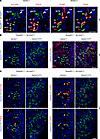
Renin cells are essential for survival and serve as key regulators of blood pressure and fluid-electrolyte homeostasis. Their function and identity are dependent on signals from their local microenvironment afforded by neighboring cells and nerves. Whether and how renin cells contribute to the development and maintenance of this microenvironment remains unclear. Because renin cells are rare — 0.01 % of kidney cells — conventional histological approaches cannot capture their interaction with nerve fibers and surrounding cells within the nephron and its vasculature. Using high-resolution 3D imaging, cell-specific multicolor reporter mice, single-cell RNA-seq, and conditional gene deletions, we mapped how renin cells assemble within arterioles and communicate with axon fibers to organize the growth and orientation of the kidney arterioles during development and disease. This coinductive process is mediated by Ngf produced by renin cell precursors and is necessary for renin cell survival and innervation. Interestingly, renin enzymatic insufficiency elevates Ngf and drives arteriolar hypertrophy with aberrant axon sprouting and hyperinnervation. These findings indicate that renin cells regulate kidney neurovascular development, revealing them as active organizers of their local neuroregulatory microenvironment in health and disease.
Authors
Manako Yamaguchi, Georgina Gyarmati, Liam McLaughlin, Hiroki Yamaguchi, Jason P. Smith, Lucas Ferreira de Almeida, Daisuke Matsuoka, Alexandre G. Martini, Sara M. Wilmsen, Sijie Hao, Kazuki Tainaka, Silvia Medrano, Sanjay Jain, Janos Peti-Peterdi, Maria Luisa S. Sequeira-Lopez, R. Ariel Gomez

Abstract
The dysferlinopathies are a spectrum of autosomal recessive muscle diseases caused by mutations in the dysferlin gene (DYSF). Clinical manifestations vary from asymptomatic hyperCKemia to severe muscle pathology and loss of muscle function. These are designated as limb-girdle muscular dystrophy type 2R (LGMDR2; formerly LGMD2B or Miyoshi myopathy). Among other functions, dysferlin is crucial for plasma membrane repair and maintenance of intracellular calcium homeostasis. In previous studies, we identified 2 independent point mutations deep within introns that cause aberrant DYSF mRNA splicing and the inclusion of pseudoexons within transcripts that diminish protein expression. In this study, we generated and characterized a mouse model for 1 of these mutations (within DYSF intron 44). In these mice, a segment of human DYSF DNA containing the mutant intronic sequence flanked by surrounding human exon sequences replaced the normal homologous mouse DNA. These mice exhibited aberrant Dysf pre-mRNA splicing, pseudoexon inclusion, loss of DYSF protein expression, and muscle pathology similar to that observed in patients. Using this model, we identified antisense oligonucleotides and a peptide-phosphorodiamidate morpholino oligomer that blocks the mouse Dysf pre-mRNA splicing complexes from binding the mutant pre-mRNA, thereby restoring nearly normal muscle pathology and function.
Authors
James E. Gooding, Gyeongsu Park, Atish Wagh, Jonathan K. Watts, Janice A. Dominov, Robert H. Brown Jr
Abstract
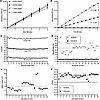
Significant loss of pigmentation can increase visual disability, skin cancer risk, and psychosocial stress. Tyrosinase (TYR) catalyzes the first and rate-limiting step of melanin synthesis. Inhibitors of TYR are well established and are currently used in clinical settings; however, there is a dearth of direct activators of TYR. Here, using a human TYR construct, we developed high-throughput screening methods, in cell confirmatory assays employing 13C-tyrosine tracing, and computational analysis techniques, and identified ampyrone (4-aminoantipyrine) as a TYR activator. Ampyrone increased the in vitro catalytic activity of the human recombinant intramelanosomal domain of TYR (hTYR) and its hypomorphic variant, Pro406Leu (P406L), a cause of oculocutaneous albinism type 1B (OCA1B). Moreover, ampyrone induced melanin synthesis in both WT and OCA1B human melanocytes, mouse OCA2 melanocytes, as well as 3-dimensional (3D) human skin cultures. Computational studies provided additional insight into the effects of direct TYR agonists on enzyme activity. Our results identify ampyrone as a lead candidate for TYR activation, potentially supporting the development of therapies for patients with genetic and acquired diseases of hypopigmentation.
Authors
Monika B. Dolinska, Yuhong Wang, Nathan P. Coussens, Vijay K. Kalaskar, Zuhal Eraslan, Samuel J. Grondin, Joseph Bonica, Sarah Toay, Matthew D. Hall, Min Shen, Matthew Boxer, Qiuying Chen, Steven S. Gross, Nabeel Attarwala, Yingyos Jittayasothorn, Ramakrishna P. Alur, Dhyanam Shukla, Robin Kee, Charles DeYoung, Cuilee Sha, David R. Adams, Stacie K. Loftus, Tiziana Cogliati, Yuri V. Sergeev, Jonathan H. Zippin, Brian P. Brooks

Abstract
Type 2 (T2) immune cells dominate the airways of patients with mild-moderate asthma (MMA) with a more complex type 1 (T1)-T2 mixed immune response evident in treatment-refractory severe asthma (SA). We hypothesized that comparing the transcriptomes of the airway epithelium of patients with SA and MMA would reveal molecular signatures associated with more severe disease in the context of a complex immune response. Using our interpretable machine learning tool, SLIDE, meaningful latent factors (context-specific gene co-expression networks) were revealed that distinguished SA from MMA. Unexpectedly, an aberrant high expression of normally host-protective, membrane-tethered, and IFN-inducible mucins, MUC1 and MUC4, was identified in SA. Gene networks in the significant latent factors discriminating SA from MMA corresponded to enrichment of a keratinization program in SA airways. Keratinization was marked by increased expression of the stress keratin KRT16, signifying squamous metaplasia suggesting adaptive reprogramming of the airway epithelium in response to chronic stress. These mucins and KRT16 were inversely associated with lung function in 2 separate asthma cohorts. Imaging of endobronchial biopsies revealed significantly higher KRT16 protein expression in SA compared with MMA that strongly correlated with MUC1 protein expression. Our study identifies dysregulated host-protective and maladaptive repair responses in SA distinguishing from MMA.
Authors
Sagar L. Kale, Augusta Vincent, Mark A. Ross, Isha Mehta, Michael J. Calderon, Richard P. Ramonell, Himanshu Setya, Jessica C. McCreary-Partyka, Huijuan Yuan, Stephanie A. Christenson, Prescott G. Woodruff, Mario Castro, Kaharu Sumino, Nizar N. Jarjour, Loren C. Denlinger, Benjamin Gaston, Eugene R. Bleecker, Deborah A. Meyers, Wendy C. Moore, Elliot Israel, Bruce D. Levy, David Mauger, Serpil Erzurum, Anthony Newbrough, Taylor J. Nee, Prabir Ray, Claudette M. St. Croix, Sally E. Wenzel, Jishnu Das, Anuradha Ray, Marc C. Gauthier

Abstract
Chronic graft-versus-host disease (cGVHD) remains a major cause of morbidity and mortality after allogeneic hematopoietic transplantation. cGVHD pathophysiology involves cooperation between T follicular helper cells (TFHs) and germinal center B cells (GCBs), allo- and autoantibody depositions in cGVHD tissues, and fibrosis. We evaluated human CD19–directed chimeric antigen receptor (CAR19) T cell therapy in a clinically relevant murine cGVHD model with bronchiolitis obliterans syndrome (BOS). Although CD8+ CAR19 T cells effectively reduced peripheral B cell and GCB frequencies, pulmonary function was unimproved. In contrast, a single infusion of CAR19 CD4+ regulatory T cells (Tregs) mitigated ongoing pulmonary disease and modulated germinal centers (GCs) associated with reduced TFH frequencies compared with control Tregs but without measurable B cell depletion. Compared with EGFR Treg infusion, mice receiving CAR19 Tregs exhibited enhanced suppression of B cell activation and preserved splenic architecture, and CAR19 Treg infusion provided greater opportunities for interaction with CD19+ B cells at the B cell follicle boundary zones. Taken together with the absence of detectable B cell cytolysis, these findings were most consistent with GC suppression rather than B cell depletion as the dominant mechanism. Overall, our findings suggest that CAR19 Tregs represent a promising and safe cGVHD/BOS therapeutic strategy, offering immunosuppressive benefits and improved disease outcomes that may be more limited with CD8+ CAR19 T cell treatment.
Authors
Sujeong Jin, Michael C. Zaiken, Cameron McDonald-Hyman, Christina R. Hartigan, Sara Bolivar-Wagers, Jemma H. Larson, Yiyun Peng, Sophia Hani, Megan Riddle, Asim Saha, Angela Panoskaltsis-Mortari, Eun Ko, Yujie Zhao, Rocio Amaro Marquez, Pooja Shree Marri Baskar, Cindy R. Eide, William J. Murphy, Keli L. Hippen, Geoffrey R. Hill, Jakub Tolar, Peter T. Sage, Christopher A. Pennell, Leslie S. Kean, Bruce R. Blazar
No posts were found with this tag.


