
Research ArticleHematologyOncology
Open Access |  10.1172/jci.insight.190833
Influence of oxidation resistance 1 on disease progression in chronic myeloid leukemia
Weiqi Huang,1,2,3 Bin Liu,1,2,3 Liping Hu,1,2 Chi-Hao Luan,4 Priyam Patel,1,2 Elizabeth Bartom,1,2 and Elizabeth A. Eklund1,2,3
1The Feinberg School of Medicine at Northwestern University, Chicago, Illinois, USA.
2The Lurie Cancer Center at Northwestern University, Chicago, Illinois, USA.
3Jesse Brown Veteran’s Hospital, Chicago, Illinois, USA.
4High Throughput Analysis Laboratory and Department of Molecular Biosciences, Northwestern University, Evanston, Illinois, USA.
Address correspondence to: E. Eklund, Northwestern University, 303 E. Superior Ave, Lurie 5-111, Chicago, Illinois 60611, USA. Phone: 213.503.3208; Email; e-eklund@northwestern.edu.
Find articles by Huang, W. in: PubMed | Google Scholar
1The Feinberg School of Medicine at Northwestern University, Chicago, Illinois, USA.
2The Lurie Cancer Center at Northwestern University, Chicago, Illinois, USA.
3Jesse Brown Veteran’s Hospital, Chicago, Illinois, USA.
4High Throughput Analysis Laboratory and Department of Molecular Biosciences, Northwestern University, Evanston, Illinois, USA.
Address correspondence to: E. Eklund, Northwestern University, 303 E. Superior Ave, Lurie 5-111, Chicago, Illinois 60611, USA. Phone: 213.503.3208; Email; e-eklund@northwestern.edu.
Find articles by Liu, B. in: PubMed | Google Scholar
1The Feinberg School of Medicine at Northwestern University, Chicago, Illinois, USA.
2The Lurie Cancer Center at Northwestern University, Chicago, Illinois, USA.
3Jesse Brown Veteran’s Hospital, Chicago, Illinois, USA.
4High Throughput Analysis Laboratory and Department of Molecular Biosciences, Northwestern University, Evanston, Illinois, USA.
Address correspondence to: E. Eklund, Northwestern University, 303 E. Superior Ave, Lurie 5-111, Chicago, Illinois 60611, USA. Phone: 213.503.3208; Email; e-eklund@northwestern.edu.
Find articles by Hu, L. in: PubMed | Google Scholar
1The Feinberg School of Medicine at Northwestern University, Chicago, Illinois, USA.
2The Lurie Cancer Center at Northwestern University, Chicago, Illinois, USA.
3Jesse Brown Veteran’s Hospital, Chicago, Illinois, USA.
4High Throughput Analysis Laboratory and Department of Molecular Biosciences, Northwestern University, Evanston, Illinois, USA.
Address correspondence to: E. Eklund, Northwestern University, 303 E. Superior Ave, Lurie 5-111, Chicago, Illinois 60611, USA. Phone: 213.503.3208; Email; e-eklund@northwestern.edu.
Find articles by Luan, C. in: PubMed | Google Scholar
1The Feinberg School of Medicine at Northwestern University, Chicago, Illinois, USA.
2The Lurie Cancer Center at Northwestern University, Chicago, Illinois, USA.
3Jesse Brown Veteran’s Hospital, Chicago, Illinois, USA.
4High Throughput Analysis Laboratory and Department of Molecular Biosciences, Northwestern University, Evanston, Illinois, USA.
Address correspondence to: E. Eklund, Northwestern University, 303 E. Superior Ave, Lurie 5-111, Chicago, Illinois 60611, USA. Phone: 213.503.3208; Email; e-eklund@northwestern.edu.
Find articles by Patel, P. in: PubMed | Google Scholar
1The Feinberg School of Medicine at Northwestern University, Chicago, Illinois, USA.
2The Lurie Cancer Center at Northwestern University, Chicago, Illinois, USA.
3Jesse Brown Veteran’s Hospital, Chicago, Illinois, USA.
4High Throughput Analysis Laboratory and Department of Molecular Biosciences, Northwestern University, Evanston, Illinois, USA.
Address correspondence to: E. Eklund, Northwestern University, 303 E. Superior Ave, Lurie 5-111, Chicago, Illinois 60611, USA. Phone: 213.503.3208; Email; e-eklund@northwestern.edu.
Find articles by Bartom, E. in: PubMed | Google Scholar
1The Feinberg School of Medicine at Northwestern University, Chicago, Illinois, USA.
2The Lurie Cancer Center at Northwestern University, Chicago, Illinois, USA.
3Jesse Brown Veteran’s Hospital, Chicago, Illinois, USA.
4High Throughput Analysis Laboratory and Department of Molecular Biosciences, Northwestern University, Evanston, Illinois, USA.
Address correspondence to: E. Eklund, Northwestern University, 303 E. Superior Ave, Lurie 5-111, Chicago, Illinois 60611, USA. Phone: 213.503.3208; Email; e-eklund@northwestern.edu.
Find articles by Eklund, E. in: PubMed | Google Scholar
Published November 25, 2025 - More info
JCI Insight. 2026;11(1):e190833. https://doi.org/10.1172/jci.insight.190833.
© 2026 Huang et al. This work is licensed under the Creative Commons Attribution 4.0 International License. To view a copy of this license, visit http://creativecommons.org/licenses/by/4.0/.
Received: January 2, 2025; Accepted: November 17, 2025

-
Results
Oxr1 is increased in CML, normalizes in remission, but increases with CP-relapse. In a murine CML model, adding a Survivin inhibitor (Ym155) to TKI (Imatinib) prolonged remission duration during therapy or after discontinuation, but treatment with TKI plus an Xiap1 inhibitor (Embelin) increased BC (9). In the current studies, we explored mechanisms for these differences. We transplanted mice with syngeneic marrow transduced with a BCR:ABL1 expression vector (coexpressing green fluorescent protein [GFP]) and transplanted marrow from primary recipients in stable, early CP (>15,000 GFP+ neutrophils, <5% blasts) into secondary recipients to generate uniform cohorts for study (8, 9). Secondary recipients were treated as above, and GFP+Lin– marrow cells from mice in remission (≥3 log BCR:ABL1 transcript reduction) were isolated for RNA-Seq (n = 5 per cohort, individually analyzed, unpooled). Differences in pathway activities were suggested by gene ontology analysis of differential gene expression under various conditions (with an uncorrected P < 0.05, or FDR adjusted P value to less than 5% false positive).
We found the major differences GFP+Lin– marrow cells from mice treated with TKI plus Embelin compared with those treated with TKI plus Ym155 included increased expression of genes involved in positive regulation of the immune response, inflammation, or myeloid cell differentiation but downregulation of genes in pathways involved in negative regulation of the inflammatory response (30% of all differences) (Figure 1A, underlined in red).
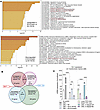 Figure 1
Increased Oxr1 is associated with sustained CML remission. Secondary recipients of bone marrow from mice with CP-CML were treated with TKI alone, or TKI plus Ym155 or Embelin. RNA-Seq was performed on GFP+Lin– marrow cells during remission. (A) Gene ontology identified differential pathway activity in treatment groups. Pathways involved in regulation of the innate immune response or inflammation are underlined in red. For gene expression comparisons, an uncorrected P < 0.05 and FDR-adjusted P < 0.05 were considered to determine statistical significance. Pathway differences were indicated by Log10, n = 6 individual mice per cohort. (B) Addition of Ym155 or Embelin to TKI-treatment alters Oxr1, Kdr, and Calr expression in murine CML marrow. Venn diagram for treatment group transcriptomes. (C) Oxr1 is increased in CML and altered by TKI-treatment or relapse. Significant differences, determined by 1-way ANOVA with Tukey correction. ***P < 0.001, ****P < 0.0001. Data are shown as mean ± SD, n = 3.
Oxr1 was the only gene that decreased with the addition of Embelin but increased upon adding Ym155 compared with TKI alone (Figure 1B). Oxr1 expression was verified in independent experiments by qPCR with GFP+Lin– RNA from secondary recipients and primers common to all Oxr1 isoforms (Figure 1C). We found more abundant Oxr1 mRNA in untreated CML mice versus controls, with a decrease in TKI-induced remission or BC, and an increase in CP relapse (P < 0.0001, n = 3 by 1-way ANOVA with Tukey correction for each comparison). Oxr1 was also more abundant in mice with prolonged versus short TFR after therapy discontinuation (P = 0.0008, n = 3). Therefore, increased total Oxr1 was associated with both uncontrolled CML and sustained TFR. We performed additional studies to address this apparent contradiction.
Oxr1 knockdown shortens TFR after TKI discontinuation in CML and facilitates BC during emergency granulopoiesis. To assess the functional effect of Oxr1 on CML, primary recipients of BCR:ABL1-transduced marrow were sacrifice in CP and marrow was transduced with a combination of 3 Oxr1 specific-shRNA vectors (to knockdown both long and short isoforms versus scrambled controls) (Figure 2A). In recipients of this marrow, Oxr1 knockdown did not influence rates of TKI-induced remission, relapse in CP, or BC progression (> 10% circulating myeloid blasts). In non–TKI-treated recipients, Oxr1 knockdown did not hasten neutrophilia or BC. Oxr1 knockdown also did not alter survival in untreated CML mice, nor did it alter those in TKI-remission (P = 0.7 and P = 0.585, respectively; n = 8). As a control, we determined Oxr1-knockdown efficiency during the experiment. We compared mRNA abundance for total, short, or long Oxr1 in GFP+Lin– marrow cells from CML mice with versus without Oxr1 knockdown at 4, 12, and 20 weeks after transplant. Over these time points, Oxr1-knockdown averaged 43.2% ± 6.4% for total, 43.5% ± 5.5% for long, and 42.4% + 7.3% for short Oxr1 (P = 0.06, P = 0.38, and P = 0.27, respectively, comparing knockdown of the isoforms at the 3 timepoints [n = 3] by 1-way ANOVA with Tukey correction).
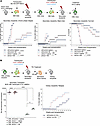 Figure 2
Oxr1-knockdown in murine CML marrow enhances TFR after therapy discontinuation. Recipients of BCR:ABL1-transduced bone marrow were sacrificed in CP. Marrow was harvested and transduced with vectors to express Oxr1-specific shRNAs or scrambled control shRNAs for transplant into secondary recipients, and cohorts were treated with TKI. Marrow from some secondary recipients in remission was transplanted into tertiary recipients to observe without treatment. (A) Oxr1 knockdown in CML marrow did not delay remission, enhance CP-relapse or BC, or shorten survival. Differences were determined by log rank analysis. ****P < 0.0001. Data are shown as mean ± SD, n = 10. (B) Oxr1 knockdown in CML marrow increased BCR:ABL1 transcript abundance during TKI treatment and shortened TFR after discontinuation. Significant differences in transcript abundance by 1-way ANOVA with Tukey correction. *P < 0.05 or ****P < 0.0001. Data are shown as mean ± SD, n = 6. Relapse in tertiary recipients was compared by log rank analysis. *P < 0.05, n = 10.
To investigate the contribution of Oxr1 to relapse after TKI discontinuation, cohorts of secondary recipients were sacrificed after 24 weeks of TKI treatment, and CP marrow was transplanted into tertiary recipients to observe without further treatment (Figure 2B) (8, 9). All secondary donors had a ≥ 3 log reduction of BCR:ABL1 transcripts in the marrow. However, transcripts were higher in secondary recipients with Oxr1 knockdown versus without (3 versus 4 log reduction) (P = 0.015, n = 4), and time to CP relapse was shorter in their tertiary recipients (P = 0.028, n = 10, by log rank analysis) (8, 9).
Since emergency granulopoiesis is characterized by marrow neutrophilia, and Oxr1 detoxifies ROS generated by the phagocyte-NADPH oxidase, we studied the effect of this stress on secondary recipients in TKI-induced remission (Figure 3A) (8, 9). Episodes were induced at 4-week intervals to mimic ongoing infectious challenges in human CML but not in the protected animal facility environment. Emergency granulopoiesis was induced by Alum injection to activate the Nlrp3 inflammasome: a standard and widely accepted approach (versus saline as a steady state control) (10, 11). Alum injection induces IL-1β–dependent emergency granulopoiesis, characterized by 10× increase in G-CSF over steady state, and increased expression of inflammatory cytokines TNF-α and IL-6 (26). This cytokine profile is also seen in humans with activation of the NLRP3 inflammasome by damps or pamps (damage or pathogen activated molecular patterns) during the innate immune response (26).
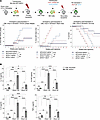 Figure 3
Oxr1 knockdown in murine CML marrow increases BC and alters cytokine expression in the microenvironment. Recipients of BCR:ABL1-transduced bone marrow were sacrificed in CP and marrow transduced with vectors to express Oxr1-specific shRNAs or scrambled control shRNAs for transplant into secondary recipients, and cohorts were treated with TKI. (A) Oxr1 knockdown in CML marrow enhanced BC during episodes of emergency granulopoiesis. CML mice in TKI-induced remission were injected every 4 weeks with Alum to induce emergency granulopoiesis, or saline as steady state control. Relapse and survival were compared by log rank analysis. *P < 0.05, **P < 0.01, ****P < 0.0001, n = 10. (B) Oxr1 knockdown increases and sustains expression of cytokines involved in emergency granulopoiesis in CML marrow. CML mice in TKI remission, with or without Oxr1 knockdown, were injected with Alum and sacrificed at 0 hours, 12 hours, or 4 days. Marrow supernatants were analyzed for IL-1β, G-CSF, IL-6 or TNF-α by ELISA. Significant differences were found by 1-way ANOVA with Tukey correction. *P < 0.05, **P < 0.01, ***P < 0.001, ****P < 0.0001. Data are shown as mean ± SD, n = 4.
We found that episodes of emergency granulopoiesis hastened CP relapse during TKI treatment in CML mice without Oxr1 knockdown, as anticipated based on our prior work (P = 0.002, n = 8, by log rank analysis versus steady state) (Figure 3A) (9). TKI-treated CML mice with Oxr1 knockdown developed BC more rapidly during repeated Alum injections than at steady state (P = 0.0017, n = 8, by log rank analysis) and at higher rates than mice without Oxr1 knockdown (P = 0.0033, n = 8, by log rank analysis). Oxr1 knockdown shortened survival during emergency granulopoiesis episodes (P = 0.014, n = 8, versus without knockdown, by log rank analysis). To determined efficiency of Oxr1 knockdown, we compared Oxr1 expression pretreatment and week 1 and 4 after Alum injection. We found Oxr1 knockdown averaged 42.9% ± 5.8% for total, 42.5% ± 6.2% for long, and 41.8% ± 6.6% for short Oxr1 over these timepoints (P = 0.26, P = 0.87, and P = 0.92, respectively, comparing knockdown at the 4 time points [n = 3] by 1-way ANOVA with Tukey correction).
We next studied the effect of Oxr1 knockdown on the bone marrow microenvironment, with a focus on expression of emergency granulopoiesis-related cytokines (Figure 3B). For these studies, secondary recipient CML mice in TKI-induced remission were compared with or without Oxr1 knockdown. Bone marrow supernatants were studied at steady state versus 12 hours or 4 days after Alum injection. We found mice with Oxr1 knockdown had enhanced expression of these emergency granulopoiesis-related cytokines, with delayed resumption of steady state levels. Since Oxr1 detoxifies ROS generated via the neutrophil NADPH oxidase, this suggests that ROS levels sustain emergency granulopoiesis.
Oxr1 isoform switch occurs during emergency granulopoiesis or CP relapse in CML. These data suggest that Oxr1 confers protection from CML progression. However, we found that increased Oxr1 was associated with CP relapse during TKI treatment but also with long TFR after TKI discontinuation. To investigate this apparent contradiction, we quantified long versus short OXR1 isoforms under various conditions (Figure 4A) (24). These 2 isoforms are driven by different promoters and are thought to have differential regulation. We first analyzed peripheral blood CD34+CD38– cells from patients with CML in TKI-induced remission at the time of therapy discontinuation (with ≥ 4 log transcript reduction). We found more total OXR1 mRNA in patients with CML with a subsequent long TFR (P < 0.0001, n = 7, versus short TFR by Mann-Whitney rank sum test, but short TFR was associated with a relative increase in the short Oxr1 isoform (P = 0.015, n = 7, for short versus long TFR) (Figure 4B).
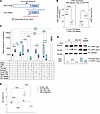 Figure 4
Expression of the short OXR1 isoform is associated with CML relapse. (A) Schema of OXR1 isoforms in humans and mice. Primers for amplification of short versus long isoforms indicated. (B) A relative increase in short OXR1 is associated with short TFR in human CML. Total and short OXR1 mRNA was quantified in CD34+CD38– peripheral blood cells from patients with CML at therapy discontinuation. Significant differences were found by 2-tailed t test. *P < 0.05 or ****P < 0.0001. Data are shown as mean ± SD, n = 7 unique patients. (C) In TKI-treated CML mice, we found an increase in short Oxr1 that occurred during emergency granulopoiesis, with IM + Embelin versus IM + Ym155 treatment, during CP relapse, or with short or long TFR. Recipients of BCR:ABL1-transduced marrow were sacrificed in CP, and marrow was transplanted into secondary recipients. Mice in TKI-induced remission were injected every 4 weeks with Alum to induce emergency granulopoiesis, or saline steady state control, and analyzed 2 weeks later. Other mice were treated with TKI plus Embelin or Ym155. Short (aqua) versus long (white) Oxr1 mRNA was quantified in GFP+Lin– marrow cells. Significant differences were found by 1-way ANOVA with Tukey correction. ***P < 0.001 or ****P < 0.0001, or #P < 0.05, ##P < 0.01, or ####P < 0.0001. Data are shown as mean ± SD, n = 6. (D) Oxr1 protein expression reflects mRNA abundance. Western blots of GFP+Lin– marrow cells were probed with antibodies to Oxr1 or GAPDH (loading control) and densitometry performed (the experiment was repeated 3 times and a representative blot shown). (E) The ratio of short to long Oxr1 isoforms is greater in CML versus non-CML stem cells and in stem cells versus progenitors. CML mice in TKI-induced remission were compared with control non-CML mice. Bone marrow Lin–Sca1+ckit+ cells (stem cells) were compared with Lin–Sca1–ckit+ cells (progenitors). Significant differences were found by 1-way ANOVA with Tukey correction. ****P < 0.0001. Data are shown as mean ± SD, n = 4.
We also quantified Oxr1 isoforms in GFP+Lin– marrow cells from CML mice prior to treatment, in TKI-induced remission, at CP relapse, or with long versus short TFR duration (Figure 4C). Lin– marrow cells from non-CML mice were controls. Total Oxr1 in untreated CML mice was greater than control non-CML mice (P < 0.0001, n = 5), but the ratio of long to short Oxr1 was comparable. Expression of the long Oxr1 isoform in CML mice in TKI remission was not different than control mice (P = 0.66, n = 5, by 1-way ANOVA with Tukey correction), but ~2× more short isoform was expressed in the former (P = 0.045, n = 5). In CP relapse, short Oxr1 mRNA was ~4× greater than in remission (P < 0.0001, n = 5), but long Oxr1 decreased 25% (P < 0.0001, n = 5). Therefore, more long versus short Oxr1 was expressed in remission, but more short versus long with CP relapse (P < 0.0001, n = 5, by 1-way ANOVA with Tukey correction). Consistent with human results, expression of short Oxr1 in mice in TKI remission with subsequent short TFR after therapy discontinuation was greater than with long TFR (P < 0.0001, n = 5).
We also quantified Oxr1 isoforms 2 weeks after Alum injection (Figure 4C). In non-CML mice, long Oxr1 increased during emergency granulopoiesis, but short Oxr1 did not (P < 0.0001, n = 5, by 1-way ANOVA with Tukey correction). Conversely, in CML mice in TKI-remission, short Oxr1 increased ~2.5× post Alum (P < 0.0001, n = 5), but long Oxr1 was unaltered. Therefore, during emergency granulopoiesis, the ratio of long/short Oxr1 increased in non-CML mice, but the ratio of short/long increased in CML mice in remission (Figure 4C). Abundance of Oxr1 isoform proteins correlated with mRNA (Figure 4D).
We also investigated the relative abundance of long versus short Oxr1 isoforms in stem cells versus differentiating progenitor populations. For these studies, we compared Lin–Sca1+ckit+ (LSK) cells to Lin–Sca1–ckit+ cells (Figure 4E). We found no difference in the ratio of short/long Oxr1 in progenitors from CML mice in TKI-induced remission compared with control, non-CML mice. In contrast, the ratio of short/long Oxr1 was greater in LSKs from CML mice in TKI-induced remission compared with control, non-CML mice (P < 0.0001, n = 4).
Knocking down long Oxr1 or overexpressing short Oxr1 increases intracellular ROS and DNA damage in CML. ROS in CML leukemia stem cells (LSCs) may be produced by mitochondria or by other marrow cells with diffusion into LSCs. Since ROS may cause TKI-resistance via point mutations of the BCR:ABL1-KD, we further studied the cohorts of secondary CP-CML recipients in TKI-induced remission. Bone marrow GFP+ LSK cells from these mice were compared with LSKs from non-CML mice at steady state or 2 weeks after Alum injection. Intracellular total versus mitochondrial ROS and DNA damage were determined by flow cytometry.
We first compared CML mice in TKI remission to non-CML mice or CML mice in CP relapse during TKI treatment (Figure 5, A and B). In LSKs from non-CML mice, total and mitochondrial ROS increased during emergency granulopoiesis (P = 0.0005 and P = 0.017, n = 3, respectively by 1-way ANOVA with Tukey correction) and DNA damage doubled (P = 0.0061, n = 3). In Alum-injected CML mice in TKI remission, we found total ROS, mitochondrial ROS, and DNA damage were also increased compared with steady state (P = 0.016, P < 0.0001, or P = 0.0035, n = 3, respectively, with versus without Alum injection by 1-way ANOVA with Tukey correction). Total ROS, mitochondrial ROS, and DNA damage were greater in these mice compared with non-CML, control mice (P < 0.0001, n = 3, for all comparisons). However, LSKs from CML mice with CP relapse during TKI treatment had more total and mitochondrial ROS, as well as DNA damage, compared with Alum-injected CML mice in TKI remission (P = 0.0005, P = 0.0015, P = 0.0016, n = 3, respectively) (Figure 5, A and B).
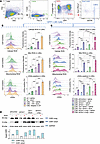 Figure 5
Oxr1-knockdown in CML bone marrow enhances intracellular ROS and DNA damage. (A) Recipients of BCR:ABL1 transduced marrow were sacrificed in CP, and marrow transduced with vectors to express shRNAs to total Oxr1, the long Oxr1 isoform, scrambled controls, or to overexpress short Oxr1. Transduced marrow was transplanted into secondary recipients. Secondary recipients in TKI-induced remission were treated with Alum to induce emergency granulopoiesis, or saline steady state control, and sacrificed 2 weeks later. (B) CML mice have increased total cellular and mitochondrial ROS, and DNA damage during emergency granulopoiesis compared with non-CML mice, and this increases further with CP relapse. GFP+LSK cells were analyzed by flow cytometry. Significant differences were found by 1-way ANOVA with Tukey correction. *P < 0.05, **P < 0.01, ***P < 0.001, or ****P < 0.0001. Data are shown as mean ± SD, n = 3 and a representative histogram is shown. (C) Total Oxr1-knockdown, long Oxr1 knockdown, or short Oxr1 overexpression increases total intracellular and mitochondrial ROS and DNA damage during emergency granulopoiesis in CML mice, but long Oxr1 knockdown has the greatest effect. GFP+LSK cells were analyzed by flow cytometry. Significant differences were found by 1-way ANOVA. *P < 0.05, **P < 0.01 or ****P < 0.0001. Data are shown as mean ± SD, n = 3 and a representative histogram is shown. (D) Oxr1 long versus short isoform expression in these cells was verified. Western blots of GFP+Lin– marrow cells were probed with Oxr1 or GAPDH (loading control) antibody and densitometry performed (experiment was repeated 3 times and a representative blot shown).
We next studied the effect of knocking down just the long isoform in the bone marrow of CML mice. Vectors for long Oxr1 knockdown were specific to unique domains in this isoform compared with short Oxr1. To explore our hypothesis that short Oxr1 functions as a dominant negative, other CML bone marrow was transduced with a vector to overexpress this isoform. We did not knock down short Oxr1 alone since the 100 bp sequence unique to short Oxr1 did not permit design of shRNA of adequate specificity. These vectors were transduced into bone marrow from primary recipients with established CP CML prior to transplant into secondary recipients. Mice were TKI treated, as above, and studied at steady state or after Alum injection.
In CML mice in TKI-induced remission, knocking down total or long Oxr1, or overexpression of short Oxr1, did not alter total or mitochondrial ROS or DNA-damage during steady state (Figure 5, A and C). However, in Alum-injected CML mice, knockdown of all Oxr1 isoforms increased total and mitochondrial ROS as well as DNA damage (P < 0.0001, P < 0.0001, or P = 0.0009 [n = 3], respectively, versus without Oxr1 knockdown). Interestingly, total Oxr1 knockdown induced comparable levels of intracellular ROS in Alum-injected CML mice in TKI remission as found in LSKs from CML mice in CP relapse (P = 0.156, n = 3). We found specifically knocking down the long Oxr1 isoform induced a greater increase in total and mitochondrial ROS as well as DNA damage in Alum-injected CML mice (P < 0.0001, P < 0.0001, P = 0.031 [n = 3], respectively, for comparison of total versus long Oxr1 knockdown). This suggested knockdown of the short Oxr1 isoform by the total Oxr1 shRNA vector partly ameliorated effects of knocking down the long isoform. To directly address this, we performed similar studies with short Oxr1 overexpression. We found that overexpressing short Oxr1 in the marrow of Alum-injected CML mice in TKI-induced remission increased total and mitochondrial ROS, and DNA damage, compared with Alum-injected CML mice without short Oxr1 overexpression (P = 0.0005, P < 0.0001, P < 0.0001 [n = 3], respectively). Oxr1 isoform expression during emergency granulopoiesis, and efficiency of knockdown, were confirmed by Western blot (Figure 5D).
Short Oxr1 exerts dominant-negative effects via increased ROS. To determine functional contributions of Oxr1 isoforms to ROS handling and DNA damage, secondary recipients of CP-CML marrow in TKI-induced remission were injected with Alum to induce emergency granulopoiesis (versus saline as a steady state control). Marrow cells harvested 2 weeks after injection were transduced with vectors to express short or long Oxr1 (or empty vector) (Figure 6A). Oxr1 isoform overexpression was confirmed by Western blot (Figure 6B) and real-time PCR (Figure 6C) of GFP+Lin– marrow cells. In control GFP+Lin– cells, Alum injection increased short Oxr1 mRNA (P = 0.00021, n = 5, by 1-way ANOVA with Tukey correction) but not long Oxr1 mRNA. Overexpression of one isoform did not influence the other.
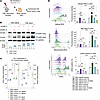 Figure 6
Short Oxr1 enhances, and long Oxr1 decreases, intracellular ROS and DNA damage in CML bone marrow. Recipients of BCR:ABL1-transduced marrow were sacrificed in CP, and marrow transplanted into secondary recipients. Secondary recipients in TKI-induced remission were treated with Alum to induce emergency granulopoiesis, or saline steady state control, and sacrificed 2 weeks later. Marrow was transduced with vectors to overexpress short or long Oxr1 isoforms, or empty control vector. (A–C) Experimental schema. Oxr1 isoform expression was verified (A), and overexpression of one isoform did not influence expression of the other isoform for protein (B) and mRNA expression (C). Western blots of GFP+Lin– cells were probed with Oxr1 or GAPDH antibodies (experiment was repeated 3 times and a representative blot shown). mRNA was quantified with isoform specific primers. Significant differences were found by 1-way ANOVA with Tukey correction. *P < 0.05, **P < 0.01, or ****P < 0.0001. Data are shown as mean ± SD, n = 5. (D) Expressing short Oxr1 increases, and long Oxr1 decreases, total and mitochondrial ROS and DNA damage. The effect of short Oxr1 is reversed by N-acetylcysteine. *P < 0.05, **P < 0.01, ***P < 0.001, or ****P < 0.0001. Data are shown as mean ± SD, n = 3 and a representative histogram is shown.
Overexpressing long Oxr1 in GFP+LSKs from Alum-injected CML mice in TKI-induced remission decreased total and mitochondrial ROS and DNA damage compared with control vector (P = 0.005, P = 0.0009, P = 0.04 [n = 3], respectively) (Figure 6D). Conversely, overexpressing short Oxr1 increased total and mitochondrial ROS and DNA damage compared with control vector, consistent with the studies above (P = 0.0048, P = 0.0019, P = 0.0002 [n = 3], respectively). To determine if the effect of short Oxr1 on DNA damage was via enhanced ROS, we treated some cells with N-acetylcysteine (NAC; a free radical scavenger). NAC treatment decreased total and mitochondrial ROS, and DNA damage in CML marrow from Alum injected mice overexpressing short Oxr1 (P = 0.0002, P = 0.0004, P = 0.0001 [n = 3], respectively, with versus without NAC). Levels of DNA damage in short Oxr1-overexpressing, NAC-treated LSKs were not different than in cells from Alum-injected CML mice without short Oxr1 overexpression.
Oxr1-knockdown and emergency granulopoiesis enhance BCR:ABL1-KD mutations in CML. To determine if increased intracellular ROS during emergency granulopoiesis favored BCR:ABL1-KD mutations, we analyzed GFP+ marrow cells of individual TKI-treated CML mice by next-generation sequencing of the KD. Such KD mutations occur in human CML and murine models and are known to be responsible for TKI resistance. We performed sequence analysis using murine marrow cells and primer sets that only amplified the KD in the context of the BCR:ABL1 fusion.
We studied CML mice during emergency granulopoiesis or steady state, and we compared recipients with or without Oxr1 knockdown in the marrow. Marrow was obtained after the second injection when 50% of Alum-injected CML mice had relapsed in CP, and 100% of CML mice with Oxr1 knockdown had relapsed in CP or progressed to BC (Figure 3A). We found the number of BCR:ABL1-KD mutations per mouse increased during emergency granulopoiesis episodes (P < 0.0001 with or P = 0.008 without Oxr1 knockdown [n = 5], by 1-way ANOVA with Tukey correction), but Oxr1 knockdown exaggerated this effect (P = 0.007, n = 5 with versus without Oxr1 knockdown) (Figure 7A). We found different KD mutation profiles during emergency granulopoiesis versus steady state, and with versus without Oxr1 knockdown. Alum-injected CML mice with Oxr1 knockdown had the most mutations, with each arising in 1 mouse except for E505K, which arose in 5 of 6 mice with Oxr1 knockdown (Figure 7B). This mutation was described in patients with CML with TKI resistance (27). Mutations were verified by Sanger Sequencing (Figure 7C).
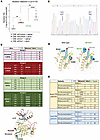 Figure 7
Oxr1 knockdown and emergency granulopoiesis increase BCR:ABL1-KD mutations in CML. Recipients of BCR:ABL1-transduced marrow were sacrificed in CP, and marrow transduced with Oxr1-specific shRNA or scrambled control vectors was transplanted into secondary recipients. Secondary recipients were TKI treated and injected every 4 weeks with Alum to induce emergency granulopoiesis or saline as a steady state control. Marrow was analyzed 2 weeks later. (A) Oxr1 knockdown and emergency granulopoiesis cooperate to increase BCR:ABL1-KD mutations. KD-cDNA libraries from individual mice were sequenced and compared with human ABL1 sequence. Significant differences in mutations shown by 1-way ANOVA with Tukey correction. **P < 0.01 or ****P < 0.0001. Data are shown as mean ± SD, n = 4. (B) CML mice with Oxr1 knockdown in TKI-remission develop an E505K KD mutation during emergency granulopoiesis. Mutations in individual mice under various conditions are indicated. Frame-shift mutations are individual base pair losses. Ribbon diagram indicating identified mutations (labels color coded by cohort as in A). (C) Sanger sequencing confirmed specific BCR:ABL1-KD mutations. Representative sequencing shown, n = 4. (D) Mutations specific to Oxr1-knockdown plus emergency granulopoiesis block the autoinhibitory BCR:ABL1 myristoyl domain. Ribbon diagram showing most frequent mutations. (E) Patients with CML with long TFR have fewer BCR:ABL1-KD mutations than patients with short TFR. Mutations in individual patients are indicated, n = 7.
By AlphaFold analysis, we determined the identified mutations did not influence BCR:ABL1-KD secondary structure (Figure 7D). However, E505K is predicted to block myristoyl-group binding to a hydrophobic pocket in the KD: an autoinhibitory mechanism (27). For this analysis, the per-atom confidence score was > 90, indicating high confidence, and the predicted template modeling score was > 0.90, indicating high similarity of the predicted fold and true structure.
We similarly analyzed KD mutations in samples from patients with CML at the time of TKI discontinuation, using the same primer sets for KD amplification. These patients were in TKI induced remission with a ≥ 4 log reduction in BCR:ABL1 transcripts, and no KD mutations associated with TKI resistance were identified (Figure 7E). We separately analyzed patients with short versus long TFR and found an increased number of total KD mutations in those with rapid relapse. This was not unexpected, given that these patients also had a higher short/long Oxr1 isoform ratio compared with those with sustained TFR.
Oxr1 knockdown enhances mutagenesis in CML. Since BC progression involves accumulation of point mutations and chromosomal deletions or rearrangements, we analyzed the effect of Oxr1 knockdown on mutagenesis by whole exome sequencing of marrow mononuclear cells (28). We quantified mutations and clones (defined as variant allelic frequency > 12%) arising during repeated emergency granulopoiesis episodes in non-CML mice or CML mice in TKI-induced remission, with or without Oxr1 knockdown. We analyzed GFP+ (BCR:ABL1+) and GFP– (BCR:ABL1–) cells separately to assess mutagenesis in the CML clone and the effect of this clone on non-CML cells in the marrow. Marrow cells from 30-week-old non-CML mice were controls for GFP– cells in CML marrow (age match for secondary recipients), and 50-week-old non-CML mice were controls for GFP+ cells in CML mice (age match for transduced cells from initial donors).
Without Oxr1 knockdown, half of the CML mice in TKI remission relapsed in CP during 3 Alum injections, but all of the CML mice with Ox1 knockdown developed transient CP relapse with rapid BC progression (Figure 3A). In GFP+ cells from CML mice in CP relapse during emergency granulopoiesis, Oxr1 knockdown did not alter numbers of mutations (P = 0.357, n = 3 by 1-way ANOVA with Tukey correction) or clones (P = 0.107, n = 3) (Figure 8A). These mice also had no difference in clone numbers compared with non-CML mice under these conditions (P = 0.103, n = 3 for comparison of 3 groups by 1-way ANOVA) and a minor difference in mutations (P = 0.045, n = 3). CML mice with Oxr1 knockdown and BC progression had increased mutations and clones in GFP+ cells compared with CML mice with Oxr1 knockdown and CP relapse, or CML mice without Oxr1 knockdown in CP relapse (P = 0.0006 BC versus CP with or without Oxr1 knockdown, n = 3 by 1-way ANOVA for comparison of groups). Consistent with these data, mutation rates were; 7.6 ± 0.21 mutations/megabase for 50-week-old control mice; 8.4 ± 0.20 for CML mice without Oxr1-knockdown in CP relapse; 9.0 ± 0.81 for CML mice with Oxr1 knockdown in CP relapse; and 257.6 ± 99.5 for CML mice with Oxr1 knockdown in BC.
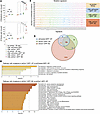 Figure 8
Mutagenesis in CML is increased by Oxr1 knockdown and emergency granulopoiesis. Recipients of BCR:ABL1-transduced marrow were sacrificed in CP, and marrow transduced with Oxr1-specific shRNAs or scrambled control vectors was transplanted into secondary recipients. Secondary recipients were TKI-treated and injected every 4 weeks with Alum to induce emergency granulopoiesis episodes. Whole exome sequencing performed on GFP+ versus GFP– marrow mononuclear cells, or age-matched cells from non-CML mice were identified. (A) Increased mutations and clones in GFP+ cells during BC versus other conditions and in GFP– cells from CML mice during CP relapse versus cells from non-CML mice. Significant differences in mutations were found by 1-way ANOVA with Tukey correction. *P < 0.05, **P < 0.01, or ***P < 0.001. Data are shown as mean ± SD and n = 3. (B) Distinct mutation profiles are found during CP relapse with versus without Oxr1 knockdown or with CP relapse versus BC progression. Gene ontology identified differences in pathways regulated by identified mutations. For comparisons, an uncorrected P < 0.05 and FDR-adjusted P < 0.05 were considered significant, and differences are indicated by Log10. Three mice per cohort were analyzed. (C) Mutation profiles in CML mice with Oxr1 knockdown and BC during emergency granulopoiesis are consistent with ROS-induced DNA damage. Mutation profiles were subjected to COSMIC analysis to implicate mutagenesis mechanisms. Three mice per cohort were analyzed. (D) Venn diagram demonstrating BC-unique mutations. Few common mutations were identified in CP relapse with versus without Oxr1 knockdown.
During emergency granulopoiesis, we found more mutations in GFP– marrow cells from CML mice compared with similarly aged cells from non-CML mice, and this was not influenced by Oxr1 knockdown (P = 0.002 versus with Oxr1 knockdown, or P = 0.001 without, n = 3). We also found GFP– cells from CML marrow with Oxr1 knockdown, but not without, had increased clones during emergency granulopoiesis compared with non-CML marrow (P = 0.042 non-CML versus CML with Oxr1 knockdown, or P = 0.93 non-CML versus CML without Oxr1 knockdown, n = 3).
Mutation profiles were analyzed by gene ontology to suggest an effect on related pathways (Figure 8B). In CML mice in CP relapse during TKI treatment, mutation profiles with Oxr1 knockdown were enriched for genes involved in cell cycle progression and inflammatory cytokine activity versus without Oxr1 knockdown. With BC progression, mutation profiles were additionally enriched for genes involved in receptor tyrosine kinase and Rho-GTPase signaling, RNA metabolism and catabolism, and differentiation block.
To identify possible mutagenesis mechanisms under the various experimental conditions, mutation profiles were subjected to Catalog of Somatic Mutations in Cancer (COSMIC) analysis (29). This compares mutation profiles to the COSMIC database of 6 million mutations found in 1.4 million tumor samples and curated using 25,000 publications (29). Mutations were globally enhanced in CML-BC compared with other conditions, but 2 profiles suggested unique mutagenesis mechanisms in BC: SBS22 and SBS25 (Figure 8C). The former is associated with ROS-induced DNA adducts, and the latter with exposure to alkylating or intercalating agents. Profiles with the greatest overlap were from TKI-treated CML mice with Oxr1 knockdown in CP relapse and those in BC, consistent with a continuum between the two (Figure 8D).


