
Research ArticleImmunologyMetabolism
Open Access |  10.1172/jci.insight.196605
ANGPTL8 links refeeding to monocyte dynamics and metabolic inflammation via the CCL5-CCR5 axis
Ran-Ran Kan,1,2,3 Si-Yi Wang,1,2,3 Xiao-Yu Meng,1,2,3 Li Huang,1,2,3 Yu-Xi Xiang,1,2,3 Bei-Bei Mao,1,2,3 Hua-Jie Zou,1,2,3 Ya-Ming Guo,1,2,3 Li-Meng Pan,1,2,3 Pei-Qiong Luo,1,2,3 Yan Yang,1,2,3 Zhe-Long Liu,1,2,3 De-Lin Ma,1,2,3 Wen-Jun Li,4 Yong Chen,1,2,3 Dan-Pei Li,1,2,3 and Xue-Feng Yu1,2,3
1Division of Endocrinology, Department of Internal Medicine, Tongji Hospital, Tongji Medical College, Huazhong University of Science and Technology, Wuhan, China.
2Hubei Clinical Medical Research Center for Endocrinology and Metabolic Diseases, Hubei, China.
3Branch of National Clinical Research Center for Metabolic Diseases, Hubei, China.
4Computer Center, Tongji Hospital, Tongji Medical College, Huazhong University of Science and Technology, Wuhan, China.
Address correspondence to: Dan-Pei Li or Feng Yu, Division of Endocrinology, Department of Internal Medicine, Tongji Hospital, Tongji Medical College, Huazhong University of Science and Technology, 1095 Jiefang Avenue, Wuhan, 430030, China. Email: ldp19940730@163.com (DPL). Email: xfyu188@163.com (XFY).
Authorship note: RRK and SYW contributed equally to this work.
Find articles by Kan, R. in: PubMed | Google Scholar
1Division of Endocrinology, Department of Internal Medicine, Tongji Hospital, Tongji Medical College, Huazhong University of Science and Technology, Wuhan, China.
2Hubei Clinical Medical Research Center for Endocrinology and Metabolic Diseases, Hubei, China.
3Branch of National Clinical Research Center for Metabolic Diseases, Hubei, China.
4Computer Center, Tongji Hospital, Tongji Medical College, Huazhong University of Science and Technology, Wuhan, China.
Address correspondence to: Dan-Pei Li or Feng Yu, Division of Endocrinology, Department of Internal Medicine, Tongji Hospital, Tongji Medical College, Huazhong University of Science and Technology, 1095 Jiefang Avenue, Wuhan, 430030, China. Email: ldp19940730@163.com (DPL). Email: xfyu188@163.com (XFY).
Authorship note: RRK and SYW contributed equally to this work.
Find articles by Wang, S. in: PubMed | Google Scholar
1Division of Endocrinology, Department of Internal Medicine, Tongji Hospital, Tongji Medical College, Huazhong University of Science and Technology, Wuhan, China.
2Hubei Clinical Medical Research Center for Endocrinology and Metabolic Diseases, Hubei, China.
3Branch of National Clinical Research Center for Metabolic Diseases, Hubei, China.
4Computer Center, Tongji Hospital, Tongji Medical College, Huazhong University of Science and Technology, Wuhan, China.
Address correspondence to: Dan-Pei Li or Feng Yu, Division of Endocrinology, Department of Internal Medicine, Tongji Hospital, Tongji Medical College, Huazhong University of Science and Technology, 1095 Jiefang Avenue, Wuhan, 430030, China. Email: ldp19940730@163.com (DPL). Email: xfyu188@163.com (XFY).
Authorship note: RRK and SYW contributed equally to this work.
Find articles by Meng, X. in: PubMed | Google Scholar
1Division of Endocrinology, Department of Internal Medicine, Tongji Hospital, Tongji Medical College, Huazhong University of Science and Technology, Wuhan, China.
2Hubei Clinical Medical Research Center for Endocrinology and Metabolic Diseases, Hubei, China.
3Branch of National Clinical Research Center for Metabolic Diseases, Hubei, China.
4Computer Center, Tongji Hospital, Tongji Medical College, Huazhong University of Science and Technology, Wuhan, China.
Address correspondence to: Dan-Pei Li or Feng Yu, Division of Endocrinology, Department of Internal Medicine, Tongji Hospital, Tongji Medical College, Huazhong University of Science and Technology, 1095 Jiefang Avenue, Wuhan, 430030, China. Email: ldp19940730@163.com (DPL). Email: xfyu188@163.com (XFY).
Authorship note: RRK and SYW contributed equally to this work.
Find articles by Huang, L. in: PubMed | Google Scholar
1Division of Endocrinology, Department of Internal Medicine, Tongji Hospital, Tongji Medical College, Huazhong University of Science and Technology, Wuhan, China.
2Hubei Clinical Medical Research Center for Endocrinology and Metabolic Diseases, Hubei, China.
3Branch of National Clinical Research Center for Metabolic Diseases, Hubei, China.
4Computer Center, Tongji Hospital, Tongji Medical College, Huazhong University of Science and Technology, Wuhan, China.
Address correspondence to: Dan-Pei Li or Feng Yu, Division of Endocrinology, Department of Internal Medicine, Tongji Hospital, Tongji Medical College, Huazhong University of Science and Technology, 1095 Jiefang Avenue, Wuhan, 430030, China. Email: ldp19940730@163.com (DPL). Email: xfyu188@163.com (XFY).
Authorship note: RRK and SYW contributed equally to this work.
Find articles by Xiang, Y. in: PubMed | Google Scholar
1Division of Endocrinology, Department of Internal Medicine, Tongji Hospital, Tongji Medical College, Huazhong University of Science and Technology, Wuhan, China.
2Hubei Clinical Medical Research Center for Endocrinology and Metabolic Diseases, Hubei, China.
3Branch of National Clinical Research Center for Metabolic Diseases, Hubei, China.
4Computer Center, Tongji Hospital, Tongji Medical College, Huazhong University of Science and Technology, Wuhan, China.
Address correspondence to: Dan-Pei Li or Feng Yu, Division of Endocrinology, Department of Internal Medicine, Tongji Hospital, Tongji Medical College, Huazhong University of Science and Technology, 1095 Jiefang Avenue, Wuhan, 430030, China. Email: ldp19940730@163.com (DPL). Email: xfyu188@163.com (XFY).
Authorship note: RRK and SYW contributed equally to this work.
Find articles by Mao, B. in: PubMed | Google Scholar
1Division of Endocrinology, Department of Internal Medicine, Tongji Hospital, Tongji Medical College, Huazhong University of Science and Technology, Wuhan, China.
2Hubei Clinical Medical Research Center for Endocrinology and Metabolic Diseases, Hubei, China.
3Branch of National Clinical Research Center for Metabolic Diseases, Hubei, China.
4Computer Center, Tongji Hospital, Tongji Medical College, Huazhong University of Science and Technology, Wuhan, China.
Address correspondence to: Dan-Pei Li or Feng Yu, Division of Endocrinology, Department of Internal Medicine, Tongji Hospital, Tongji Medical College, Huazhong University of Science and Technology, 1095 Jiefang Avenue, Wuhan, 430030, China. Email: ldp19940730@163.com (DPL). Email: xfyu188@163.com (XFY).
Authorship note: RRK and SYW contributed equally to this work.
Find articles by Zou, H. in: PubMed | Google Scholar
1Division of Endocrinology, Department of Internal Medicine, Tongji Hospital, Tongji Medical College, Huazhong University of Science and Technology, Wuhan, China.
2Hubei Clinical Medical Research Center for Endocrinology and Metabolic Diseases, Hubei, China.
3Branch of National Clinical Research Center for Metabolic Diseases, Hubei, China.
4Computer Center, Tongji Hospital, Tongji Medical College, Huazhong University of Science and Technology, Wuhan, China.
Address correspondence to: Dan-Pei Li or Feng Yu, Division of Endocrinology, Department of Internal Medicine, Tongji Hospital, Tongji Medical College, Huazhong University of Science and Technology, 1095 Jiefang Avenue, Wuhan, 430030, China. Email: ldp19940730@163.com (DPL). Email: xfyu188@163.com (XFY).
Authorship note: RRK and SYW contributed equally to this work.
Find articles by Guo, Y. in: PubMed | Google Scholar
1Division of Endocrinology, Department of Internal Medicine, Tongji Hospital, Tongji Medical College, Huazhong University of Science and Technology, Wuhan, China.
2Hubei Clinical Medical Research Center for Endocrinology and Metabolic Diseases, Hubei, China.
3Branch of National Clinical Research Center for Metabolic Diseases, Hubei, China.
4Computer Center, Tongji Hospital, Tongji Medical College, Huazhong University of Science and Technology, Wuhan, China.
Address correspondence to: Dan-Pei Li or Feng Yu, Division of Endocrinology, Department of Internal Medicine, Tongji Hospital, Tongji Medical College, Huazhong University of Science and Technology, 1095 Jiefang Avenue, Wuhan, 430030, China. Email: ldp19940730@163.com (DPL). Email: xfyu188@163.com (XFY).
Authorship note: RRK and SYW contributed equally to this work.
Find articles by Pan, L. in: PubMed | Google Scholar
1Division of Endocrinology, Department of Internal Medicine, Tongji Hospital, Tongji Medical College, Huazhong University of Science and Technology, Wuhan, China.
2Hubei Clinical Medical Research Center for Endocrinology and Metabolic Diseases, Hubei, China.
3Branch of National Clinical Research Center for Metabolic Diseases, Hubei, China.
4Computer Center, Tongji Hospital, Tongji Medical College, Huazhong University of Science and Technology, Wuhan, China.
Address correspondence to: Dan-Pei Li or Feng Yu, Division of Endocrinology, Department of Internal Medicine, Tongji Hospital, Tongji Medical College, Huazhong University of Science and Technology, 1095 Jiefang Avenue, Wuhan, 430030, China. Email: ldp19940730@163.com (DPL). Email: xfyu188@163.com (XFY).
Authorship note: RRK and SYW contributed equally to this work.
Find articles by Luo, P. in: PubMed | Google Scholar
1Division of Endocrinology, Department of Internal Medicine, Tongji Hospital, Tongji Medical College, Huazhong University of Science and Technology, Wuhan, China.
2Hubei Clinical Medical Research Center for Endocrinology and Metabolic Diseases, Hubei, China.
3Branch of National Clinical Research Center for Metabolic Diseases, Hubei, China.
4Computer Center, Tongji Hospital, Tongji Medical College, Huazhong University of Science and Technology, Wuhan, China.
Address correspondence to: Dan-Pei Li or Feng Yu, Division of Endocrinology, Department of Internal Medicine, Tongji Hospital, Tongji Medical College, Huazhong University of Science and Technology, 1095 Jiefang Avenue, Wuhan, 430030, China. Email: ldp19940730@163.com (DPL). Email: xfyu188@163.com (XFY).
Authorship note: RRK and SYW contributed equally to this work.
Find articles by Yang, Y. in: PubMed | Google Scholar
1Division of Endocrinology, Department of Internal Medicine, Tongji Hospital, Tongji Medical College, Huazhong University of Science and Technology, Wuhan, China.
2Hubei Clinical Medical Research Center for Endocrinology and Metabolic Diseases, Hubei, China.
3Branch of National Clinical Research Center for Metabolic Diseases, Hubei, China.
4Computer Center, Tongji Hospital, Tongji Medical College, Huazhong University of Science and Technology, Wuhan, China.
Address correspondence to: Dan-Pei Li or Feng Yu, Division of Endocrinology, Department of Internal Medicine, Tongji Hospital, Tongji Medical College, Huazhong University of Science and Technology, 1095 Jiefang Avenue, Wuhan, 430030, China. Email: ldp19940730@163.com (DPL). Email: xfyu188@163.com (XFY).
Authorship note: RRK and SYW contributed equally to this work.
Find articles by Liu, Z. in: PubMed | Google Scholar
1Division of Endocrinology, Department of Internal Medicine, Tongji Hospital, Tongji Medical College, Huazhong University of Science and Technology, Wuhan, China.
2Hubei Clinical Medical Research Center for Endocrinology and Metabolic Diseases, Hubei, China.
3Branch of National Clinical Research Center for Metabolic Diseases, Hubei, China.
4Computer Center, Tongji Hospital, Tongji Medical College, Huazhong University of Science and Technology, Wuhan, China.
Address correspondence to: Dan-Pei Li or Feng Yu, Division of Endocrinology, Department of Internal Medicine, Tongji Hospital, Tongji Medical College, Huazhong University of Science and Technology, 1095 Jiefang Avenue, Wuhan, 430030, China. Email: ldp19940730@163.com (DPL). Email: xfyu188@163.com (XFY).
Authorship note: RRK and SYW contributed equally to this work.
Find articles by Ma, D. in: PubMed | Google Scholar
1Division of Endocrinology, Department of Internal Medicine, Tongji Hospital, Tongji Medical College, Huazhong University of Science and Technology, Wuhan, China.
2Hubei Clinical Medical Research Center for Endocrinology and Metabolic Diseases, Hubei, China.
3Branch of National Clinical Research Center for Metabolic Diseases, Hubei, China.
4Computer Center, Tongji Hospital, Tongji Medical College, Huazhong University of Science and Technology, Wuhan, China.
Address correspondence to: Dan-Pei Li or Feng Yu, Division of Endocrinology, Department of Internal Medicine, Tongji Hospital, Tongji Medical College, Huazhong University of Science and Technology, 1095 Jiefang Avenue, Wuhan, 430030, China. Email: ldp19940730@163.com (DPL). Email: xfyu188@163.com (XFY).
Authorship note: RRK and SYW contributed equally to this work.
Find articles by Li, W. in: PubMed | Google Scholar
1Division of Endocrinology, Department of Internal Medicine, Tongji Hospital, Tongji Medical College, Huazhong University of Science and Technology, Wuhan, China.
2Hubei Clinical Medical Research Center for Endocrinology and Metabolic Diseases, Hubei, China.
3Branch of National Clinical Research Center for Metabolic Diseases, Hubei, China.
4Computer Center, Tongji Hospital, Tongji Medical College, Huazhong University of Science and Technology, Wuhan, China.
Address correspondence to: Dan-Pei Li or Feng Yu, Division of Endocrinology, Department of Internal Medicine, Tongji Hospital, Tongji Medical College, Huazhong University of Science and Technology, 1095 Jiefang Avenue, Wuhan, 430030, China. Email: ldp19940730@163.com (DPL). Email: xfyu188@163.com (XFY).
Authorship note: RRK and SYW contributed equally to this work.
Find articles by Chen, Y. in: PubMed | Google Scholar
1Division of Endocrinology, Department of Internal Medicine, Tongji Hospital, Tongji Medical College, Huazhong University of Science and Technology, Wuhan, China.
2Hubei Clinical Medical Research Center for Endocrinology and Metabolic Diseases, Hubei, China.
3Branch of National Clinical Research Center for Metabolic Diseases, Hubei, China.
4Computer Center, Tongji Hospital, Tongji Medical College, Huazhong University of Science and Technology, Wuhan, China.
Address correspondence to: Dan-Pei Li or Feng Yu, Division of Endocrinology, Department of Internal Medicine, Tongji Hospital, Tongji Medical College, Huazhong University of Science and Technology, 1095 Jiefang Avenue, Wuhan, 430030, China. Email: ldp19940730@163.com (DPL). Email: xfyu188@163.com (XFY).
Authorship note: RRK and SYW contributed equally to this work.
Find articles by Li, D. in: PubMed | Google Scholar
1Division of Endocrinology, Department of Internal Medicine, Tongji Hospital, Tongji Medical College, Huazhong University of Science and Technology, Wuhan, China.
2Hubei Clinical Medical Research Center for Endocrinology and Metabolic Diseases, Hubei, China.
3Branch of National Clinical Research Center for Metabolic Diseases, Hubei, China.
4Computer Center, Tongji Hospital, Tongji Medical College, Huazhong University of Science and Technology, Wuhan, China.
Address correspondence to: Dan-Pei Li or Feng Yu, Division of Endocrinology, Department of Internal Medicine, Tongji Hospital, Tongji Medical College, Huazhong University of Science and Technology, 1095 Jiefang Avenue, Wuhan, 430030, China. Email: ldp19940730@163.com (DPL). Email: xfyu188@163.com (XFY).
Authorship note: RRK and SYW contributed equally to this work.
Find articles by Yu, X. in: PubMed | Google Scholar
Published November 25, 2025 - More info
JCI Insight. 2026;11(1):e196605. https://doi.org/10.1172/jci.insight.196605.
© 2025 Kan et al. This work is licensed under the Creative Commons Attribution 4.0 International License. To view a copy of this license, visit http://creativecommons.org/licenses/by/4.0/.
Received: June 10, 2025; Accepted: November 20, 2025

-
Results
Fasting-refeeding alters ANGPTL8 and monocyte levels in healthy humans and mice. To explore whether ANGPTL8 was associated with changes in peripheral blood leukocyte populations, we tested plasma ANGPTL8 levels and profiled the composition of blood circulating immune cells of 9 healthy weight volunteers (mean age, 31 ± 7 years; BMI, 22.9 ± 2.1 kg/m2) after 20 hours of fasting (fasting state) and 2–4 hours after food intake (refeeding state) using automated blood cell counters. To control for circadian variations and dietary intake, all blood samples were drawn at the same time of the day (12:00 am), and volunteers were given standardized food. Strikingly, we found that refeeding led to a significant increase in plasma ANGPTL8 (from 362.93 ± 133.61 pg/mL to 872.58 ± 269.59 pg/mL) and circulating monocytes (from 5.24% ± 0.99% to 6.47% ± 0.83%) compared with the fasting state, whereas neutrophil and lymphocyte counts were not significantly altered (Figure 1, A and B).
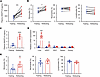 Figure 1
Nutritional state regulates ANGPTL8 and monocytes. (A) Plasma ANGPTL8 levels and (B) peripheral blood leukocyte populations of healthy humans in fasting-refeeding models (n = 9 individuals). (C) Plasma ANGPTL8 levels of mice in fasting-refeeding models (n = 6 mice/group). (D) Angptl8 mRNA expression in different tissues (n = 6 mice/group). (E) Peripheral blood leukocyte populations of mice in fasting-refeeding models (n = 8 mice/group). All fasting/refeeding experiments were performed using a 12-hour fast during the dark phase (ZT2–14) followed by a 2-hour refeed. All samples are biologically independent replicates and n indicates the number of biologically independent samples examined. The data are shown as the mean ± SEM and were statistically analyzed by paired t test (A and B) or 2-tailed Student’s t test (C–E). All the P values were 2 sided. *P < 0.05, **P < 0.01, ***P < 0.001, ****P < 0.0001. iWAT, inguinal white adipose tissue; eWAT, epididymal white adipose tissue.
We then asked whether similar dynamics also occurred in mice. We chose a 2-hour refeeding protocol after 12 hours of fasting during the dark period (Zeitgeber 2–14 [ZT2–14]), which is comparable to overnight fasting for humans and is less stressful fasting strategy in animals (11). We found that both plasma levels (from 0.94 ± 0.36 ng/mL to 3.45 ± 0.65 ng/mL) and hepatic mRNA expression of ANGPTL8 were significantly elevated upon refeeding (Figure 1, C and D). Importantly, refeeding also led to significant increase of circulating monocytes (from 2.18% ± 0.97% to 4.33% ± 1.46%) compared with fasting state, whereas neutrophils and lymphocytes were not significantly affected (Figure 1E).
ANGPTL8 overexpression increases monocytes and inflammatory cytokines in fasting mice. To elucidate whether ANGPTL8 is involved in the regulation of diet-induced immune cell dynamics in vivo, we i.p. injected 12-hour-fasting male C57BL/6J mice with varying concentrations of recombinant ANGPTL8 protein (rA8). Blood was collected 2 hours after injection for analysis. A single injection of rA8 (1.0 mg/kg) increased plasma ANGPTL8 levels to 3.0–4.0 ng/mL (Figure 2A), a range comparable to the incremental change observed in refed mice (Figure 1C). We found that treatment of fasting mice with 1 mg/kg rA8 induced a significant increase in circulating monocytes (Figure 2B) and inflammatory cytokines (Figure 2C). Neutrophil and lymphocyte levels did not show statistically significant changes, although there was a trend toward increased neutrophils and decreased lymphocytes (Figure 2B). Based on the concept that nutrient availability affects bone marrow precursor metabolism (4), we explored whether ANGPTL8 influences myelopoiesis by altering fuel delivery or usage. Our results indicated that triglyceride and glucose levels in the bone marrow reflected systemic levels following rA8 administration, and the nutrient uptake capacity of bone marrow CXCR4+ monocytic precursors remained unchanged (Supplemental Figure 1; supplemental material available online with this article; https://doi.org/10.1172/jci.insight.196605DS1).
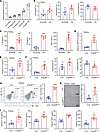 Figure 2
ANGPTL8 overexpression elevates monocytes and inflammation. (A) Plasma ANGPTL8 levels of fasting mice with i.p. injections of rA8 at different doses (0.1, 0.3, 1.0, 3.0 mg/kg) (n = 6 mice/group). (B) Peripheral blood leukocyte populations and (C) plasma chemokines levels of fasting mice with rA8 injection (n = 8 mice/group). (D) Plasma ANGPTL8, (E) TG levels, and (F) peripheral blood leukocyte populations of fasting Angptl8HepOE mice (n = 8 mice/group). (G) Flow cytometry analysis of proinflammatory Ly6C+ monocytes in livers of fasting Loxp and Angptl8HepOE mice. (H) Representative liver images of liver sections and quantification of CD68 staining of fasting Loxp and Angptl8HepOE mice (n = 8 mice/group). Scale bar: 100 μm. (I) Plasma chemokines levels of fasting Loxp and Angptl8HepOE mice (n = 8 mice/group). Data are shown as the mean ± SEM and were statistically analyzed by 2-tailed Student’s t test (B–F, H, and I). All samples are biologically independent replicates, and n indicates the number of biologically independent samples examined. Data shown are representative of 3 independent experiments with similar results (G). All the P values were 2 sided. *P < 0.05, **P < 0.01, ***P < 0.001, ****P < 0.0001. rA8, recombinant ANGPTL8.
Considering that the refeeding-induced increase of ANGPTL8 was mainly from liver (Figure 1D), to examine the physiological effects of endogenous ANGPTL8 on immune cell dynamics, we generated mice with hepatocyte-specific overexpression of ANGPTL8 (hereafter referred to as Angptl8HepOE mice). Compared with their Loxp littermates, Angptl8HepOE mice exhibited 3-fold increase in plasma ANGPTL8 and TG levels at fasting state (Figure 2, D and E); meanwhile, circulating monocytes were increased, but neutrophils and lymphocytes were not significant changed (Figure 2F). Importantly, fasting Angptl8HepOE mice also exhibited a significant increase of proinflammatory Ly6C+ monocytes and in peripheral tissues such as livers (Figure 2G). Based on previous studies, circulating monocytes have been suggested to give rise to tissue infiltrating macrophages (12). As expected, we found that the livers of Angptl8HepOE mice harbored more macrophages than their Loxp littermates (Figure 2H). In addition, we found that the plasma levels of inflammatory cytokines and chemokines were significantly increased in Angptl8HepOE mice comparing with those of Loxp littermates, including IL1B, IL6, TNFA, and CCL5 (Figure 2I).
To assess if monocytosis and inflammation were due to ANGPTL8-induced hypertriglyceridemia, we treated Angptl8HepOE mice and controls with fenofibrate. Although fenofibrate normalized triglyceride levels, it did not reduce circulating monocytes or proinflammatory cytokines, indicating that ANGPTL8’s proinflammatory effects are independent of its effect on triglycerides (Supplemental Figure 2). To investigate if the immunomodulatory pathway depends on the ANGPTL3/8 complex, we studied ANGPTL8 effects in Angptl3-knockdown mice. Removing ANGPTL3 eliminated ANGPTL8’s hypertriglyceridemic effect but did not affect its ability to cause monocytosis, activate P38, or increase inflammatory cytokines (Supplemental Figure 4). These results suggested that ANGPTL8 independently mediated the fasting/refeeding-induced dynamics of monocyte and cytokine production. Restoring plasma ANGPTL8 levels by administration of recombinant protein or genetic overexpression rescued decreasing monocyte numbers in fasting mice.
ANGPTL8 promotes monocyte migration via the CCL5-CCR5 axis. Previously published data suggested that dietary intake affects the circulating inflammatory monocyte pool through regulation of CCL5 production (13). Considering that Angptl8HepOE mice exhibited higher fasting CCL5 levels than Loxp controls (Figure 2I), we asked whether ANGPTL8 regulated postprandial circulating monocytes by increasing CCL5 secretion. Conditioned media (CM) collected from rA8-treated bone marrow–derived macrophages (hereafter referred to as BMDMs) induced significantly greater monocyte migration, with the most pronounced effect observed at 24 hours (Figure 3A). Based on this, subsequent migration assays were performed following 24-hour rA8 treatment. It has been accepted that macrophages are the predominant source of CCL5 (14, 15); we further analyzed ANGPTL8-induced changes in the transcriptional profile of BMDMs through mRNA sequencing to identify the potential functions of ANGPTL8. We thus treated BMDMs with rA8 and found that ANGPTL8 upregulated mRNA expression of several inflammation-associated chemokines and their receptors (Figure 3B), with CCL5 showing the most pronounced increase (Figure 3C). Meanwhile, in the CM of rA8-treated BMDMs, CCL5 levels increased in a time-dependent manner, reaching a peak at 24 hours (Figure 3D). More importantly, it can be abrogated by CCR5 antagonist (TAK-220) (Figure 3E), suggesting that the migration-promoting effect of ANGPTL8 was dependent on the CCL5-CCR5 signaling axis. To determine whether other upregulated cytokines also contributed to monocyte migration, we tested antagonists for CCR8 (R243), CCL12 (AMR69), CXCR2 (SB225002), CXCR3 (AMG487), CXCL9 (MIG-2F5.5), and CCR7 (SLW131). None of these inhibitors affected 24-hour rA8-induced monocyte migration (Figure 3F), suggesting that the CCL5-CCR5 axis functions as an independent mediator of this effect. Likewise, we did not observe any effect of all the antagonists on monocyte migration induced by 6-hour rA8-treatment of BMDMs (Supplemental Figure 3).
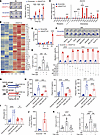 Figure 3
ANGPTL8 promotes monocyte migration via CCL5-CCR5. (A) Representative images and quantification of monocyte migration induced by conditioned medium (CM) from BMDMs pretreated with or without rA8 over time (n = 4). (B) Heatmap of chemokine-related DEGs (adjusted P < 0.05) in BMDMs cultured with or without rA8 (40 nM) stimulation for 24 hours (n = 3). (C) mRNA expression of chemokines and their receptors after BMDMs were treated with rA8 or scrambled protein (n = 6 cells examined over 3 independent experiments). (D) CCL5 levels in CM from BMDMs with rA8 stimulation over time (n = 4). (E) Migration of BMDMs with or without CCR5 antagonist (TAK-220) before rA8 stimulation (n = 5 cells examined over 3 independent experiments). (F) Effects of chemokine antagonists on migration of BMDMs with rA8 treatment (n = 4). (G) Experimental scheme for CCR5 antagonist (TAK-220) gavage and rA8 injection in Loxp and Angptl8HepOE mice. (H) Plasma proinflammation cytokine levels and (I) circulating monocyte populations of indicated groups (n = 8 mice/group). (J) CCL5 levels in CM from human MDMs with or without rA8 stimulation (n = 4). (K) Migration of U937 and THP-1 cells pretreated with or without CCR5 antagonist (TAK-220) before rA8 stimulation (n = 5 cells examined over 3 independent experiments). Migrated cells were fixed and stained with 0.1% crystal violet (A and F). The data are shown as the mean ± SEM and were statistically analyzed by 2-tailed Student’s t test (A, C, D, F, and J) or 1-way ANOVA with Tukey’s multiple-comparison test (E, H, I, and K). All samples are biologically independent replicates, and n indicates the number of biologically independent samples examined. All the P values were 2 sided, and adjustments were made for multiple comparisons. *P < 0.05, **P < 0.01, ***P < 0.001, ****P < 0.0001. DEGs, differentially expressed genes; MDMs, monocyte-derived macrophages; rA8, recombinant ANGPTL8; MCP1, monocyte chemoattractant protein-1 (CCL2); MIPs, macrophage inflammatory proteins, RANTES, regulated on activation normal T cell expressed and secreted (CCL5); CM, conditioned medium; TAK-220, CCR5 antagonist; R243, CCR8 antagonist; AMR69, CCL12 inhibitor; SB225002, CXCR2 antagonist; AMG487, CXCR3 antagonist; MIG-2F5.5, anti-CXCL9 antibody; SLW131, CCR7 antagonist.
The in vivo relevance of these findings was corroborated in mice with disrupted CCL5-CCR5 signaling (Figure 3, G–I). Pharmacological disruption of CCL5 signaling (TAK-220) shortly before rA8 injection reduced the rA8-induced increase in fasting proinflammatory cytokines (Figure 3H) and circulating monocytes (Figure 3I). To further verify these findings in humans, we isolated and differentiated primary human MDMs. Consistent with results in mice, CM collected from rA8-treated human MDMs, exhibiting significantly higher CCL5 levels (Figure 3J), evoked more U937 and THP-1 cell migration compared with CM from controls, which was also abrogated by CCR5 antagonist (TAK-220) (Figure 3K).
ANGPTL8 activates P38 to drive CCL5 secretion and macrophage polarization. To figure out signals that could mediate the promoting effects of ANGPTL8 on CCL5 production, we tested the phosphorylation of downstream signals, which revealed the MAPK pathway to be markedly enriched (Figure 4A). Given that P38 and ERK are key components of the MAPK family, we next performed Western blot analysis to assess the phosphorylation levels of these 2 pathways, confirming their upregulation upon rA8 stimulation (Figure 4B). Furthermore, SB203580 (a P38 inhibitor) abrogated the rA8-induced CCL5 increase in culture medium of BMDMs (Figure 4C) and abolished the migration-promoting effect of CM on monocytes (Figure 4D), whereas U0126 (ERK inhibitor) failed to have obvious effect (Figure 4, C and D). Likewise, we found that inhibition of P38, rather than ERK signaling in vivo, reduced plasma CCL5 levels which evoked by rA8 injection (Figure 4, E and F). Therefore, ANGPTL8-induced CCL5 production depends on P38 signaling. Consistent with results in mice, CM collected from rA8-treated human MDMs evoked more U937 and THP-1 cell migration compared with CM from controls, which was also abrogated by P38 inhibitor (SB203580) (Figure 4G).
 Figure 4
ANGPTL8 activates P38 to induce CCL5 and macrophage polarization. (A) Pathway enrichment analysis in BMDMs treated with rA8 (n = 3). (B) Western blot analysis of the phosphorylation of signaling molecules in BMDMs with rA8 stimulation. (C) CCL5 levels in the CM and (D) migration of BMDMs pretreated with phosphorylation inhibitors before rA8 stimulation (n = 6 cells examined over 3 independent experiments). U0126, p-ERK inhibitor; SB203580, p-P38 inhibitor. (E) Experimental scheme for phosphorylation inhibitor injection before rA8 stimulation in wild-type mice. (F) Plasma CCL5 levels of indicated groups (n = 8 mice/group). (G) Migration of U937 and THP-1 cells pretreated with or without phosphorylation inhibitors before rA8 stimulation (n = 5 cells examined over 3 independent experiments). (H) Flow cytometry analysis of M1 (proinflammation phenotype) macrophages (CD11bhiCD206lo) and M2 (antiinflammation phenotype) macrophages (CD11bloCD206hi) in livers of wild-type mice with scramble or rA8 injection. (I) Quantification of the proportions of M1 and M2 macrophages. (J) Proinflammation chemokines levels in the CM from BMDMs pretreated with or without phosphorylation inhibitors before rA8 stimulation (n = 5 cells examined over 3 independent experiments). The data are shown as the mean ± SEM and were statistically analyzed by 1-way ANOVA with Tukey’s multiple-comparison test (C, D, G, and J) or 2-tailed Student’s t test (F and I). All samples are biologically independent replicates, and n indicates the number of biologically independent samples examined. Data shown are representative of 3 independent experiments with similar results (B and H). All the P values were 2 sided, and adjustments were made for multiple comparisons. **P < 0.01, ***P < 0.001, **** P < 0.0001. CM, conditioned medium; kDa, relative molecular weight in kilodaltons.
Intriguingly, while STAT1 phosphorylation remained unaffected in rA8-stimulated BMDMs (Figure 4B), flow cytometric analysis and its quantification revealed a significant increase in M1-polarized (inflammatory) macrophages, accompanied by a decrease in M2-polarized (antiinflammatory) macrophages (Figure 4, H and I). Furthermore, to evaluate the effect of ANGPTL8 on different macrophage subsets, we stimulated prepolarized M0, M1, and M2 BMDMs with rA8. Our results indicate that ANGPTL8 treatment further enhanced the expression of proinflammatory genes (including Il1b, Il6, and Tnfa) in M0 and M2 macrophages. In contrast, it had a negligible additional effect on the already activated M1 macrophages (Supplemental Figure 5). These results suggest that ANGPTL8 preferentially enhances inflammatory responses in nonclassically activated macrophages. Notably, the levels of proinflammatory cytokines (IL1B, IL6, and TNFA) in the conditioned medium from rA8-treated BMDMs were specifically reduced by the P38 inhibitor (SB203580), but not by the ERK inhibitor (U0126), indicating that M1 polarization is mediated through the P38 signaling pathway (Figure 4J).
ANGPTL8 overexpression aggravates metabolic inflammation via CCL5-CCR5. To elucidate whether overexpression of ANGPTL8 aggravated obesity-related low-grade chronic inflammation and insulin resistance, Angptl8HepOE mice, together with their Loxp littermates (as controls), were challenged with a high-fat diet (HFD) for 12 weeks. Plasma ANGPTL8 and CCL5 levels as well as circulating monocytes were significantly increased in HFD-feeding Angptl8HepOE mice contrasted with controls, especially at fasting state (Figure 5, A–C). Meanwhile, fasting Angptl8HepOE mice exhibited more severe metabolic inflammation, determined by markedly higher fasting cytokine plasma levels (Figure 5D). The blunted response to refeeding in Angptl8HepOE mice suggests that the proinflammatory state in these animals is already maximally elevated under fasting conditions, leaving little capacity for further activation.
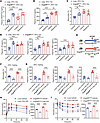 Figure 5
ANGPTL8 exacerbates metabolic inflammation via CCL5-CCR5. Effect of fasting-refeeding in the (A) plasma ANGPTL8 and (B) CCL5 levels of HFD-induced obese mice (n = 8 mice/group). (C) Circulating monocyte populations and (D) proinflammation cytokines of fasting-refeeding mice fed with HFD. (E) Experimental scheme for CCR5 antagonist (TAK-220) gavage in Loxp and Angptl8HepOE mice with fed with HFD. (F) Circulating monocyte populations and (G) proinflammation cytokine levels of the indicated groups (n = 8 mice/group). (H) IPGTTs and (I) ITTs of the indicated groups (n = 4 mice/group). All fasting/refeeding experiments were performed using a 12-hour fast during the dark phase (ZT2–14) followed by a 2-hour refeed. The data are shown as the mean ± SEM and were statistically analyzed by 1-way ANOVA with Tukey’s multiple-comparison test. All samples are biologically independent replicates, and n indicates the number of biologically independent samples examined. All the P values were 2 sided, and adjustments were made for multiple comparisons. **P < 0.01, ***P < 0.001, ****P < 0.0001. HFD, high-fat diet; TAK-220, CCR5 antagonist; IPGTTs, i.p. glucose tolerance tests; ITTs, insulin tolerance tests; AUC, area under curve.
In light of the reported importance of the CCL5-CCR5 axis in metabolic inflammation (15, 16), we aimed at comparing the effect of CCR5 antagonist on HFD-feeding mice. Therefore, we designed a 4-week pharmacological treatment protocol on HFD-feeding Loxp and Angptl8HepOE mice (Figure 5E). Counts of fasting circulating monocytes were reduced by CCR5 antagonist delivery both in HFD-feeding Loxp and Angptl8HepOE mice (Figure 5F). Of note, while it was without significant effect on plasma IL1B and TNFA levels of 12-week-HFD Loxp mice, CCR5 antagonist was sufficient to lower plasma proinflammatory cytokines (IL1B, IL6, and TNFA) of Angptl8HepOE mice fed a HFD, suggesting that ANGPTL8-induced metabolic inflammation was dependent on the CCL5-CCR5 axis (Figure 5G).
The involvement of inflammation in insulin resistance has been shown previously (1). To validate our findings further, we performed i.p. glucose and insulin tolerance tests (IPGTTs and ITTs, respectively) and found that HFD-feeding Angptl8HepOE mice exhibited exacerbated insulin resistance relative to controls, as evident from higher blood glycemia detected throughout the time course of the experiment and lower glucose-lowering effect of insulin (Figure 5, H and I). Observations that CCR5 antagonist improves ANGPTL8-induced metabolic inflammation prompted us to further investigate whether it functions in resistance to associated insulin resistance. As expected, IPGTTs and ITTs revealed that CCR5 disruption protected Angptl8HepOE mice from serious insulin resistance due to HFD, suggesting that CCL5-CCR5 axis is necessary for obesity-mediated insulin resistance in Angptl8HepOE mice (Figure 5, H and I).
Deleting ANGPTL8 alleviates HFD-induced inflammation and insulin resistance. Hepatocyte-specific Angptl8-knockout mice were generated to investigate whether deletion of ANGPTL8 reduced peripheral blood leukocyte populations. Refeeding Angptl8HepKO mice exhibited significantly decreased plasma ANGPTL8 levels, with no notable effect on plasma triglycerides (Figure 6, A and B) or gut-derived LPS (Supplemental Figure 6). Circulating monocytes were also markedly reduced in these mice, whereas neutrophil and lymphocyte populations remained unaffected (Figure 6C). However, we were unable to detect significant differences in plasma proinflammatory cytokine levels between normal diet–fed Angptl8HepKO mice and controls (Supplemental Figure 7). Importantly, plasma CCL5 protein levels were significantly induced by refeeding in Loxp mice, but this induction was completely abrogated in Angptl8HepKO mice (Supplemental Figure 8), demonstrating that ANGPTL8 is essential for the feeding-induced upregulation of CCL5.
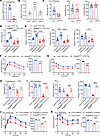 Figure 6
Deleting ANGPTL8 reduces inflammation and insulin resistance. (A) Circulating ANGPTL8 levels, (B) plasma TG levels, and (C) leukocyte populations of refeeding Angptl8HepKO and Loxp mice (n = 8 mice/group). Effect of fasting-refeeding in the (D) circulating monocyte populations and (E) proinflammation cytokine levels of Angptl8HepKO and Loxp mice fed with HFD (n = 8 mice/group). (F) IPGTTs and (G) ITTs of Angptl8HepKO and Loxp mice fed with HFD (n = 4 mice/group). (H) Circulating monocytes and (I) plasma cytokines of refeeding Angptl8HepKO and Loxp mice with or without CCL5 injection (n = 8 mice/group). (J) IPGTTs and (K) ITTs of refeeding Angptl8HepKO and Loxp mice with or without CCL5 injection (n = 4 mice/group). All fasting/refeeding experiments were performed using a 12-hour fast during the dark phase (ZT2–14) followed by a 2-hour refeed. The data are shown as the mean ± SEM and were statistically analyzed by 2-tailed Student’s t test (A, C, F, G) or 1-way ANOVA with Tukey’s multiple-comparison test (B–E and H–K). All samples are biologically independent replicates, and n indicates the number of biologically independent samples examined. All the P values were 2 sided, and adjustments were made for multiple comparisons. **P < 0.01, ****P < 0.0001. HFD, high-fat diet; IPGTTs, i.p. glucose tolerance tests; ITTs, insulin tolerance tests; AUC, area under curve.
To investigate the effect of Angptl8 deletion on obesity-related metabolic inflammation and insulin resistance, we exposed Angptl8HepKO mice and their control (Loxp) littermates to a HFD for 12 weeks to induce metabolic inflammation. Notably, Angptl8 deletion did not alter body weight gain in these mice (Supplemental Figure 9), indicating that the observed metabolic and immune phenotypes were independent of changes in overall adiposity. Angptl8HepKO mice showed impaired the fasting-refeeding dynamics monocytes, as evidenced by lower portion of refeeding monocytes (Figure 6D). Meanwhile, deletion of Angptl8 conferred resistance to HFD-induced metabolic inflammation, as evidenced by significantly attenuated plasma levels of IL1B, IL6, and TNFA in Angptl8HepKO mice versus controls, regardless of nutritional status (Figure 6E). Additionally, IPGTTs and ITTs revealed that insulin resistance was markedly improved by Angptl8 depletion (Figure 6, F and G). Administration of recombinant CCL5 at a determined effective dose (Supplemental Figure 8B) fully restored monocyte numbers and inflammatory cytokine levels in the knockout mice (Figure 6, H and I). Moreover, this CCL5 reconstitution abolished the improved insulin sensitivity in Angptl8HepKO mice, worsening their glucose tolerance and insulin resistance to the level of controls (Figure 6, J and K).
These data pointed to ANGPTL8 as a potential therapeutic target for efficient inhibition of postprandial circulating monocyte recruitment and obesity-related metabolic inflammation as well as insulin resistance.


