
Research ArticleCardiology
Open Access |  10.1172/jci.insight.196619
PhIP-Seq uncovers marked heterogeneity in acute rheumatic fever autoantibodies
Reuben McGregor,1,2 Lauren H. Carlton,1,2 Timothy J. O’Donnell,3 Elliot Merritt,3 Campbell R. Sheen,4 Florina Chan Mow,5 William John Martin,6 Michael G. Baker,2,7 Nigel Wilson,8 Uri Laserson,3 and Nicole J. Moreland1,2
1Department of Molecular Medicine, and
2Maurice Wilkins Centre for Biodiscovery, The University of Auckland, Auckland, New Zealand.
3Department of Genetics and Genomic Sciences, Icahn School of Medicine at Mount Sinai, New York, New York, USA.
4Canterbury Health Laboratories, Christchurch, NZ & Biomolecular Interaction Centre, University of Canterbury, Christchurch, New Zealand.
5Health New Zealand – Te Whatu Ora, Auckland, New Zealand.
6Independent Advisor, Wellington, New Zealand.
7Department of Public Health, University of Otago, Wellington, New Zealand.
8Starship Children’s Hospital, Health New Zealand – Te Whatu Ora, Auckland, New Zealand.
Address correspondence to: Reuben McGregor or to Nicole J. Moreland, Building 502, 85 Park Road, Grafton, Auckland, 1023, New Zealand. Email: reuben.mcgregor@auckland.ac.nz (RM); n.moreland@auckland.ac.nz (NJM).
Find articles by McGregor, R. in: PubMed | Google Scholar
1Department of Molecular Medicine, and
2Maurice Wilkins Centre for Biodiscovery, The University of Auckland, Auckland, New Zealand.
3Department of Genetics and Genomic Sciences, Icahn School of Medicine at Mount Sinai, New York, New York, USA.
4Canterbury Health Laboratories, Christchurch, NZ & Biomolecular Interaction Centre, University of Canterbury, Christchurch, New Zealand.
5Health New Zealand – Te Whatu Ora, Auckland, New Zealand.
6Independent Advisor, Wellington, New Zealand.
7Department of Public Health, University of Otago, Wellington, New Zealand.
8Starship Children’s Hospital, Health New Zealand – Te Whatu Ora, Auckland, New Zealand.
Address correspondence to: Reuben McGregor or to Nicole J. Moreland, Building 502, 85 Park Road, Grafton, Auckland, 1023, New Zealand. Email: reuben.mcgregor@auckland.ac.nz (RM); n.moreland@auckland.ac.nz (NJM).
Find articles by Carlton, L. in: PubMed | Google Scholar
1Department of Molecular Medicine, and
2Maurice Wilkins Centre for Biodiscovery, The University of Auckland, Auckland, New Zealand.
3Department of Genetics and Genomic Sciences, Icahn School of Medicine at Mount Sinai, New York, New York, USA.
4Canterbury Health Laboratories, Christchurch, NZ & Biomolecular Interaction Centre, University of Canterbury, Christchurch, New Zealand.
5Health New Zealand – Te Whatu Ora, Auckland, New Zealand.
6Independent Advisor, Wellington, New Zealand.
7Department of Public Health, University of Otago, Wellington, New Zealand.
8Starship Children’s Hospital, Health New Zealand – Te Whatu Ora, Auckland, New Zealand.
Address correspondence to: Reuben McGregor or to Nicole J. Moreland, Building 502, 85 Park Road, Grafton, Auckland, 1023, New Zealand. Email: reuben.mcgregor@auckland.ac.nz (RM); n.moreland@auckland.ac.nz (NJM).
Find articles by O’Donnell, T. in: PubMed | Google Scholar
1Department of Molecular Medicine, and
2Maurice Wilkins Centre for Biodiscovery, The University of Auckland, Auckland, New Zealand.
3Department of Genetics and Genomic Sciences, Icahn School of Medicine at Mount Sinai, New York, New York, USA.
4Canterbury Health Laboratories, Christchurch, NZ & Biomolecular Interaction Centre, University of Canterbury, Christchurch, New Zealand.
5Health New Zealand – Te Whatu Ora, Auckland, New Zealand.
6Independent Advisor, Wellington, New Zealand.
7Department of Public Health, University of Otago, Wellington, New Zealand.
8Starship Children’s Hospital, Health New Zealand – Te Whatu Ora, Auckland, New Zealand.
Address correspondence to: Reuben McGregor or to Nicole J. Moreland, Building 502, 85 Park Road, Grafton, Auckland, 1023, New Zealand. Email: reuben.mcgregor@auckland.ac.nz (RM); n.moreland@auckland.ac.nz (NJM).
Find articles by Merritt, E. in: PubMed | Google Scholar
1Department of Molecular Medicine, and
2Maurice Wilkins Centre for Biodiscovery, The University of Auckland, Auckland, New Zealand.
3Department of Genetics and Genomic Sciences, Icahn School of Medicine at Mount Sinai, New York, New York, USA.
4Canterbury Health Laboratories, Christchurch, NZ & Biomolecular Interaction Centre, University of Canterbury, Christchurch, New Zealand.
5Health New Zealand – Te Whatu Ora, Auckland, New Zealand.
6Independent Advisor, Wellington, New Zealand.
7Department of Public Health, University of Otago, Wellington, New Zealand.
8Starship Children’s Hospital, Health New Zealand – Te Whatu Ora, Auckland, New Zealand.
Address correspondence to: Reuben McGregor or to Nicole J. Moreland, Building 502, 85 Park Road, Grafton, Auckland, 1023, New Zealand. Email: reuben.mcgregor@auckland.ac.nz (RM); n.moreland@auckland.ac.nz (NJM).
Find articles by Sheen, C. in: PubMed | Google Scholar
1Department of Molecular Medicine, and
2Maurice Wilkins Centre for Biodiscovery, The University of Auckland, Auckland, New Zealand.
3Department of Genetics and Genomic Sciences, Icahn School of Medicine at Mount Sinai, New York, New York, USA.
4Canterbury Health Laboratories, Christchurch, NZ & Biomolecular Interaction Centre, University of Canterbury, Christchurch, New Zealand.
5Health New Zealand – Te Whatu Ora, Auckland, New Zealand.
6Independent Advisor, Wellington, New Zealand.
7Department of Public Health, University of Otago, Wellington, New Zealand.
8Starship Children’s Hospital, Health New Zealand – Te Whatu Ora, Auckland, New Zealand.
Address correspondence to: Reuben McGregor or to Nicole J. Moreland, Building 502, 85 Park Road, Grafton, Auckland, 1023, New Zealand. Email: reuben.mcgregor@auckland.ac.nz (RM); n.moreland@auckland.ac.nz (NJM).
Find articles by Chan Mow, F. in: PubMed | Google Scholar
1Department of Molecular Medicine, and
2Maurice Wilkins Centre for Biodiscovery, The University of Auckland, Auckland, New Zealand.
3Department of Genetics and Genomic Sciences, Icahn School of Medicine at Mount Sinai, New York, New York, USA.
4Canterbury Health Laboratories, Christchurch, NZ & Biomolecular Interaction Centre, University of Canterbury, Christchurch, New Zealand.
5Health New Zealand – Te Whatu Ora, Auckland, New Zealand.
6Independent Advisor, Wellington, New Zealand.
7Department of Public Health, University of Otago, Wellington, New Zealand.
8Starship Children’s Hospital, Health New Zealand – Te Whatu Ora, Auckland, New Zealand.
Address correspondence to: Reuben McGregor or to Nicole J. Moreland, Building 502, 85 Park Road, Grafton, Auckland, 1023, New Zealand. Email: reuben.mcgregor@auckland.ac.nz (RM); n.moreland@auckland.ac.nz (NJM).
Find articles by Martin, W. in: PubMed | Google Scholar
1Department of Molecular Medicine, and
2Maurice Wilkins Centre for Biodiscovery, The University of Auckland, Auckland, New Zealand.
3Department of Genetics and Genomic Sciences, Icahn School of Medicine at Mount Sinai, New York, New York, USA.
4Canterbury Health Laboratories, Christchurch, NZ & Biomolecular Interaction Centre, University of Canterbury, Christchurch, New Zealand.
5Health New Zealand – Te Whatu Ora, Auckland, New Zealand.
6Independent Advisor, Wellington, New Zealand.
7Department of Public Health, University of Otago, Wellington, New Zealand.
8Starship Children’s Hospital, Health New Zealand – Te Whatu Ora, Auckland, New Zealand.
Address correspondence to: Reuben McGregor or to Nicole J. Moreland, Building 502, 85 Park Road, Grafton, Auckland, 1023, New Zealand. Email: reuben.mcgregor@auckland.ac.nz (RM); n.moreland@auckland.ac.nz (NJM).
Find articles by Baker, M. in: PubMed | Google Scholar
1Department of Molecular Medicine, and
2Maurice Wilkins Centre for Biodiscovery, The University of Auckland, Auckland, New Zealand.
3Department of Genetics and Genomic Sciences, Icahn School of Medicine at Mount Sinai, New York, New York, USA.
4Canterbury Health Laboratories, Christchurch, NZ & Biomolecular Interaction Centre, University of Canterbury, Christchurch, New Zealand.
5Health New Zealand – Te Whatu Ora, Auckland, New Zealand.
6Independent Advisor, Wellington, New Zealand.
7Department of Public Health, University of Otago, Wellington, New Zealand.
8Starship Children’s Hospital, Health New Zealand – Te Whatu Ora, Auckland, New Zealand.
Address correspondence to: Reuben McGregor or to Nicole J. Moreland, Building 502, 85 Park Road, Grafton, Auckland, 1023, New Zealand. Email: reuben.mcgregor@auckland.ac.nz (RM); n.moreland@auckland.ac.nz (NJM).
Find articles by Wilson, N. in: PubMed | Google Scholar
1Department of Molecular Medicine, and
2Maurice Wilkins Centre for Biodiscovery, The University of Auckland, Auckland, New Zealand.
3Department of Genetics and Genomic Sciences, Icahn School of Medicine at Mount Sinai, New York, New York, USA.
4Canterbury Health Laboratories, Christchurch, NZ & Biomolecular Interaction Centre, University of Canterbury, Christchurch, New Zealand.
5Health New Zealand – Te Whatu Ora, Auckland, New Zealand.
6Independent Advisor, Wellington, New Zealand.
7Department of Public Health, University of Otago, Wellington, New Zealand.
8Starship Children’s Hospital, Health New Zealand – Te Whatu Ora, Auckland, New Zealand.
Address correspondence to: Reuben McGregor or to Nicole J. Moreland, Building 502, 85 Park Road, Grafton, Auckland, 1023, New Zealand. Email: reuben.mcgregor@auckland.ac.nz (RM); n.moreland@auckland.ac.nz (NJM).
Find articles by Laserson, U. in: PubMed | Google Scholar
1Department of Molecular Medicine, and
2Maurice Wilkins Centre for Biodiscovery, The University of Auckland, Auckland, New Zealand.
3Department of Genetics and Genomic Sciences, Icahn School of Medicine at Mount Sinai, New York, New York, USA.
4Canterbury Health Laboratories, Christchurch, NZ & Biomolecular Interaction Centre, University of Canterbury, Christchurch, New Zealand.
5Health New Zealand – Te Whatu Ora, Auckland, New Zealand.
6Independent Advisor, Wellington, New Zealand.
7Department of Public Health, University of Otago, Wellington, New Zealand.
8Starship Children’s Hospital, Health New Zealand – Te Whatu Ora, Auckland, New Zealand.
Address correspondence to: Reuben McGregor or to Nicole J. Moreland, Building 502, 85 Park Road, Grafton, Auckland, 1023, New Zealand. Email: reuben.mcgregor@auckland.ac.nz (RM); n.moreland@auckland.ac.nz (NJM).
Find articles by Moreland, N. in: PubMed | Google Scholar
Published November 18, 2025 - More info
JCI Insight. 2026;11(1):e196619. https://doi.org/10.1172/jci.insight.196619.
© 2026 McGregor et al. This work is licensed under the Creative Commons Attribution 4.0 International License. To view a copy of this license, visit http://creativecommons.org/licenses/by/4.0/.
Received: June 10, 2025; Accepted: November 6, 2025


-
Results
Heterogeneous autoantibody repertoire in ARF reveals limited public epitopes. To gain a global view of the autoantibody response in ARF, PhIP-Seq was performed with the HuScan library, which spans the entire human proteome in overlapping 90-mer peptides (15). The IgG autoantibody profile was examined in a discovery cohort of patients with first-episode ARF (n = 52) and matched healthy controls (n = 75) (Table 1).
Initial analysis aimed to explore similarities and differences in autoantibodies between individuals with ARF. The overall similarity of autoantibody repertoires between individual cases was assessed by identifying peptides with significantly elevated reactivity relative to the healthy control cohort. A peptide was considered enriched in an individual if reactivity was significantly elevated compared with the healthy control cohort (z score ≥ 3 relative to the healthy control distribution and within-donor q value ≤ 0.1). The vast majority (198,038; 81%) of peptides were not enriched in ARF over healthy controls, with the remaining 46,515 (19%) being enriched in at least one ARF case (Figure 1A). Enriched peptides were further classified as public, shared, or private: “public” peptide if enriched in more than 10% of ARF cases, “shared” if enriched in more than one but fewer than 10% of cases, and “private” if enriched in only one case. Only 372 peptides (0.1% of all peptides and 0.8% of enriched peptides), mapping to 322 proteins, met the criterion for public epitopes (Figure 1A and Supplemental Dataset 1; supplemental material available online with this article; https://doi.org/10.1172/jci.insight.196619DS1), indicating a high degree of heterogeneity between ARF cases with respect to autoantibodies.
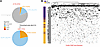 Figure 1
Autoantibody repertoire enrichment. (A) All PhIP-Seq peptides were classified based on their enrichment in ARF cases relative to healthy controls using a per-donor z score on the VST scale. A peptide was considered enriched for a given case if z was 3 or greater versus the control distribution and the 1-sided upper-tail P value remained significant after Benjamini-Hochberg adjustment within donor at q of 0.20 or less. Peptides were further categorized as Not Enriched (no cases enriched, grey), Private (enriched in a single case, blue), Shared (enriched in <10% of cases, orange), or Public (enriched in ≥10% of cases, red). Pie charts show the distribution of these categories across all peptides (top) and among enriched peptides only (bottom). (B) Heatmap showing reactivity to only public peptides (enriched in ≥10% of ARF cases, n = 372) across all individuals. Samples are grouped by case status (ARF, n = 52; healthy control, n = 75) and indicated by a left annotation bar (ARF = purple, control = gold). Columns (donors) and rows (peptides) were hierarchically clustered using a binary distance and average-linkage agglomeration. Each square represents binary reactivity; black = enriched, white = not (enriched based on z score ≥ 3 and q ≤ 0.1).
The heterogeneity is clearly evident when reactivity against public peptides is viewed as a binary heatmap. Hierarchical clustering of the heatmap segregates most ARF cases from healthy controls, illustrating that the autoantibody profiles are distinct between the groups (Figure 1B). Importantly, clustering does not resolve into distinct subgroups of reactivity within the cases, with each individual displaying a relatively unique barcode of autoreactivities, and no clear pattern of reactivity evident between cases. Some healthy controls also reacted with these public peptides, although the overall level was markedly lower than in ARF (Figure 1B).
Protein-level analysis reflects the heterogeneous autoantibody signature in ARF. ARF is clinically heterogeneous, with a range of symptoms and disease severity (9). To further explore the autoantibody heterogeneity observed above and in prior work (14), the autoantibody repertoire was examined at the protein level. While the initial peptide-level analysis revealed the scale of private autoreactivity, aggregating these signals to the protein level allows exploration of how these diverse targets could be combined to create a disease-specific signature. The goal was to explore the utility of multivariate modeling to generate a broad, protein-level classifier that distinguishes ARF cases from healthy controls and reflects clinical heterogeneity. To account for varying antigen size, protein-level reactivity was determined by averaging the top 4 peptide signal intensities for each protein. The resulting protein-level matrix (18,769 proteins) was analyzed with sparse partial least squares discriminant analysis (sPLS-DA) to identify a minimal set of autoantibodies discriminating ARF cases from healthy controls in the discovery cohort. A set of 300 proteins (200 on latent variable 1 [LV1] and 100 on LV2, Supplemental Table 1) yielded clear separation in the sPLS-DA projection. This requirement for hundreds of proteins is consistent with a distributed, partially shared signal within a background of person-to-person variability (Figure 2, A and B).
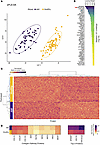 Figure 2
Identification of discriminatory protein-level autoantibodies between ARF and healthy controls. (A) Scatter plot of sPLS-DA latent variable 1 (LV1) versus LV2 scores for individual samples. ARF cases (purple) and healthy controls (gold) are separated, with 95% confidence ellipses shown for each group. (B) Top 50 negative loading weights on LV1, representing protein-level autoantibodies most strongly associated with ARF cases. Bars are ordered by magnitude and colored according to loading strength. (C) Heatmap of protein-level autoantibodies expression for features selected by sPLS-DA across participants. Rows represent individuals colored by case/control status; columns represent selected features. Euclidean distance and complete linkage hierarchical clustering were applied to both rows and columns. (D) Heatmap of collagen-associated proteins identified from pathway enrichment analysis of top LV1 features. Rows represent the mean autoantibody reactivity in ARF and healthy control groups, and columns represent autoantibodies targeting collagen-related proteins. Reactivity against the top 3 proteins contributing to LV-10, noncollagen proteins, are included (right) for comparison of autoantibody magnitude. Color intensity reflects relative autoantibody reactivity.
A heatmap of all the 300 proteins selected in the sPLS-DA shows cohort-consistent grouping of ARF and controls by unsupervised hierarchical clustering, with substantial within-group heterogeneity (Figure 2C). Pathway enrichment analysis (17), utilizing the LV1 proteins for which autoantibodies were elevated in ARF compared with controls (n = 171), revealed a top-ranked cluster of significantly enriched, closely related terms associated with collagen biology (P < 0.0001, Supplemental Table 1). When the autoantibody reactivity of all proteins in this pathway that were identified in the sPLS-DA was compared, clear elevation in ARF was observed compared with controls (Figure 2D and Supplemental Figure 1), with the majority (6 of 9) reaching statistical significance. However, the magnitude of reactivity for individual proteins in this collagen biology pathway was lower than that observed for the top 3 proteins detected overall (Figure 2D and Supplemental Figure 1).
These results indicate that large, high-dimensional protein sets (hundreds of proteins) are required to capture cohort-level differences between cases and controls. This likely reflects the heterogeneous nature of autoantibody responses in ARF, which is compounded by the inherent heterogeneity in autoantibody repertoires known to be present in healthy individuals (18, 19). The identification of low-level but broad autoreactivity to collagen pathways points to a diffuse autoantibody signature against this abundant protein family that may contribute to disease pathogenesis.
Elevated autoantibodies in ARF target heart muscle antigens and sarcomere components. The initial peptide analysis and protein-level multivariate modeling confirmed marked heterogeneity in the ARF autoantibody response, with a limited number of shared or public epitopes between individuals. To best identify peptides with consistently elevated enrichment across the ARF group, a statistically rigorous differential analysis was performed (using DESeq2). In total, 114 peptides mapping to 81 proteins were identified as being significantly enriched (adjusted P < 0.05, fold change > 1) in ARF sera compared with healthy controls, with 50 of these peptides also classified as public in the prior analysis (Figure 3A and Supplemental Dataset 1). In contrast, there were only 13 peptides (mapping to 10 proteins) that were enriched in healthy controls, indicating a general increase in the breadth of autoantibodies in ARF (Supplemental Dataset 1). An increased magnitude in autoantibodies was also observed in ARF, with higher reactivity against target peptides compared with healthy controls (1-sided Wilcoxon’s test, P = 0.018; r = 0.35; total magnitude indicated by the red scale in Figure 3A). The validity of the analysis approach was confirmed by the identification of both myosin heavy chain (MYH1 and MYH4) and collagen (type 1, α1 [COL1A1], COL2A1, and COL28A1) subunits as being enriched in ARF (Supplemental Dataset 1). Autoantibodies against members of both of these protein families have been previously associated with ARF pathogenesis (14, 20, 21).
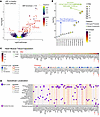 Figure 3
Autoantibody pathway, tissue expression, and localization analysis. (A) Volcano plot of differential autoantibody reactivity (PhIP-Seq peptides) between ARF cases and healthy controls. Significant peptides (using DESeq2, adjusted P < 0.05) colored by average binding magnitude, nonsignificant by sample density. Number of peptides significantly elevated in ARF cases compares with healthy controls is indicated; 118 peptides mapping to 81 proteins. Dashed lines indicate thresholds for significance and no change; enriched targets PPP1R12B and COL1A1 labeled. Total magnitude indicated by red scale; ARF significantly elevated magnitude compared with healthy controls by 1-sided Wilcoxon’s test. P = 0.018, r = 0.35. (B) GO pathway enrichment for ARF-associated autoantigens (P < 0.01, 81 proteins represented by 118 peptides in A). Dot size reflects protein count per pathway; fill color indicates enrichment strength. Outlines denote GO categories: Cellular Component (blue), Biological Process (green). Highlighted pathways include Sarcomere and Heart Morphogenesis. Full pathway analysis results with enrichment metrics for all GO terms are provided in Supplemental Dataset 1. (C) Heart muscle expression of ARF-enriched targets (Human Protein Atlas). Upper panel: RNA expression ordered from low to high; tile borders indicate multiple (green) or single (gray) peptide hits. Lower panel: Protein expression by immunohistochemistry; tile borders indicate staining reliability (enhanced, red; supported, orange; approved, pink; uncertain, gray). Red arrows highlight PPP1R12B and COL1A1. (D) Subcellular localization and secretion prediction (Human Protein Atlas). Upper panel: Localization across cellular compartments (purple = presence); borders show reliability. Lower panel: Secreted proteins prediction (violet = predicted secreted). Main locations shaded if proteins predicted secreted as main location. PPP1R12B and COL1A1 indicated by red arrows.
Pathway analysis of the 81 elevated autoantigens revealed 14 significantly overrepresented (P < 0.01) Gene Ontology (GO) pathways (Figure 3B and Supplemental Dataset 1). In keeping with the protein-level analysis, collagen-related pathways were also captured in this peptide-level analysis. This is indicated within the “supramolecular fiber organization” cluster (Figure 3B and Supplemental Dataset 1), which aggregates terms such as “fibrillar collagen trimer” and “banded collagen fibril.” The “sarcomere” cellular component was the most significant (P < 0.001, enrichment score = 12.7) and was represented by 7 proteins, including 2 myosin heavy chain isoforms (MYH1 and MYH4) and protein phosphatase 1 regulatory subunit 12B (PPP1R12B) (Figure 3B and Supplemental Dataset 1). The “heart morphogenesis” biological process was also significantly overrepresented in the pathway analysis. Given the suggested involvement of autoantibodies targeting heart muscle, tissue expression of the hits was explored using data from the Human Protein Atlas (HPA) (22). Of all 81 ARF-enriched autoantigens, PPP1R12B showed the highest RNA expression in heart muscle tissue and had a high expression level by histology with enhanced reliability (highest certainty level) (Figure 3C). Of note, PPP1R12B was also highly ranked in the previous protein-level analysis (second loading on LV1, Figure 2B). The collagen subunit COL1A1 showed the fifth highest RNA expression in heart muscle tissue, but lower approved histology staining (Figure 3C). Next, the subcellular localization data of the target peptides was extracted from the HPA. Four of the 57 proteins were predicted to be secreted, while most were predicted as localizing to intracellular compartments such as the cytosol and nucleoplasm (Figure 3D). This suggests these proteins may be secondary targets in ARF, with their exposure resulting from immune-mediated tissue damage and epitope spreading. In contrast, PPP1R12B is annotated in the HPA with “approved” evidence for localization to both the plasma membrane and actin filaments (23), while COL1A1 is a known extracellular protein and key component of the extracellular matrix (24) (Figure 3D). These localization data suggest that PPP1R12B and COL1A1 might serve as primary or early autoantigens in ARF pathogenesis.
PhIP-Seq hit exploration and validation. Building on the identification of PPP1R12B as an autoantibody target in ARF and COL1A1 as a previously implicated antigen (14), these antigens were subject to further characterization and validation. PPP1R12B is a myosin phosphatase regulator preferentially expressed in the heart, skeletal muscle, and brain, and has been implicated in cardiovascular pathophysiology (25). In the HuScan library, PPP1R12B is represented by 21 tiled 90-mer peptides, with 45–amino acid overlaps. The 3 peptides significantly enriched in ARF mapped to a continuous 180–amino acid sequence in the C-terminal region (Figure 4, A and B). Normalized read data visualized as a heatmap across the full protein sequence revealed a distinct immunodominant region. Unsupervised hierarchical clustering partially segregated ARF cases from controls, with cases exhibiting higher enrichment in this antigenic region (Figure 4A). Normalized read data showed significantly elevated reactivity to these 3 peptides (17A, 18B, and 19A) in ARF, with all other peptides showing similar reactivity to healthy controls (Figure 4B). Enrichment for 3 overlapping peptides was significantly and strongly correlated in ARF (Pearson’s r > 0.9, P < 0.001; Figure 4C). Similar trends, albeit less pronounced, were seen in the 2 overlapping COL1A1 peptides. Reactivity to these peptides was higher in ARF cases than controls, with reactivity between the 2 peptides correlating (Figure 4, D and E, and Supplemental Figure 2A). It is interesting to note that PPP1R12A, a protein from the same family and with 87% sequence homology to PPP1R12B (26), showed no significant enriched autoantibody binding in ARF (Supplemental Figure 2B).
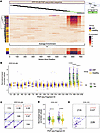 Figure 4
Epitope mapping and characterization of PhIP-Seq hits. (A) Top: Schematic of PhIP-Seq peptide tiling for PPP1R12B protein; significant peptides (green) cluster at C-terminus. Middle: Heatmap of normalized, bead-corrected enrichment across PPP1R12B for ARF cases (purple) and controls (gold), clustered by donor profiles. Bottom: Mean enrichment for ARF and controls. (B) Individual peptide enrichment for PPP1R12B peptides in ARF (purple) versus controls (gold); significantly enriched peptides (17A, 18B, 19A) highlighted green with P values from 2 analysis shown in black text above. (C) Correlation of enriched PPP1R12B peptides in ARF. Upper panels: Pearson’s correlation coefficient (r) with P values from the regression show in red text. Lower panels: Scatterplots with regression lines and R2 values. (D) Enrichment of COL1A1 peptides in ARF (purple) and controls (gold). (E) Correlation analysis between COL1A1 peptides in ARF. Upper panel: Pearson’s correlation coefficient (r) with P values from the regression shown in red text. Lower panels: scatterplots with regression lines and R2 values. Box-and-whisker plots show median (line in box), interquartile range (IQR, box bounds), and 1.5 × IQR (whiskers).
To orthogonally validate the 2 hits, a series of ELISA-based approaches were used. First, whole-protein ELISAs incorporating recombinant PPP1R12B and COL1A1 were performed using sera from the same discovery cohort used in PhIP-Seq. This stage also included an additional antigen, CD226, identified using earlier analyses. For PPP1R12B, the recombinant protein represents a C-terminally spliced protein of the larger protein represented in HuScan. This splice variant includes the vast majority of the sequence for 2 of the 3 peptide hits (19A and 18B) (Figure 5A), while the COL1A1 and CD226 antigens comprise the entire protein sequence represented in HuScan. In whole-antigen ELISA, there was significantly elevated reactivity of ARF serum to all 3 proteins. However, only PPP1R12B showed a substantive mean increase in binding in ARF above a defined cutoff (2 × median of the healthy controls) (Figure 5B), warranting further investigation with respect to biomarker potential.
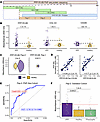 Figure 5
Orthogonal validation using ELISA. (A) Schematic representation of the PPP1R12B PhIP-Seq peptide tiling and design of synthetic peptides used for validation. The 3 overlapping PhIP-Seq peptides significantly enriched in ARF (17A, 18B, 19A) localize to a contiguous region of the protein. Two nonoverlapping 45-mer peptides (Pep-1 and Pep-2) were synthesized spanning this region, with Pep-2 fully contained within the recombinant protein used for whole-protein ELISA. Created with Biorender. (B) Whole-protein ELISA responses to PPP1R12B, COL1A1, and CD226 in the discovery cohort (ARF vs. healthy). Violin plots with points; white circle symbols show the median, with IQR as error bars. Horizontal dashed lined indicate the reference threshold of 2 times the median of healthy controls. (C) Median absorbance in PPP1R12B peptide ELISAs in the discovery cohort; dashed lines indicate the reference threshold of 2 times the median of healthy controls. Wilcoxon’s P values (ARF vs. healthy) are shown per peptide. (D) Spearman’s correlation of PhIP-Seq normalized enrichment values for peptide 18B with ELISA absorbance values for PPP1R12B whole protein and Pep-2 with fitted linear regression lines (black) and Spearman’s correlation coefficient with significance shown in black text. (E) Discovery ROC for Pep-2 on the absorbance scale (ARF vs. healthy). The prespecified operating cutoff is marked in red with dotted guides. AUC and 95% CI are shown on the plot. (F) Independent validation cohort (ARF, healthy, and Strep A–positive pharyngitis controls): distribution of Pep-2 absorbance with the prespecified discovery cutoff (red dashed line). Wilcoxon’s P values are shown throughout in black text.
To further validate the PPP1R12B autoreactivity and define the antigenic region, 2 sequential, nonoverlapping 45-mer peptides were designed and synthesized (PPP1R12B Pep-1 and Pep-2), covering the central 90 amino acids of the 3 overlapping peptides identified (Figure 5A). Peptide ELISAs showed significant elevation in ARF above the cutoff (2 × median of the healthy controls) for PPP1R12B Pep-2 only, suggesting this 45-mer is the major target for autoantibodies (Figure 5C). This is corroborated by the whole-protein ELISA with the recombinant antigen containing 80% (36 out of 45 amino acids) of Pep-1 compared with the entirety of Pep-2. To confirm orthogonal validation of PPP1R12B, ELISA data were correlated with normalized read counts of peptide 18B in PhIP-Seq. Both the whole-protein ELISA and PPP1R12B Pep-2 reactivity were well correlated with 18B read counts (Figure 5D), with the stronger correlation for the peptide likely reflecting the peptide-based nature of PhIP-Seq.
Finally, to evaluate Pep-2 as a diagnostic tool, a receiver operating characteristic (ROC) curve was generated based on the ELISA results in the discovery cohort (PhIP-Seq, ARF vs. healthy) to identify a prespecified cutoff (Figure 5E). This cutoff was then applied to an independent validation cohort that included ARF and both healthy children and those with uncomplicated Strep A–positive pharyngitis to provide a more clinically realistic control group (Supplemental Table 1). In this validation cohort, Pep-2 distinguished ARF from combined controls with a sensitivity of 0.667 (95% CI 0.500–0.806), specificity of 0.814 (95% CI 0.714–0.900), and accuracy of 0.764 (95% CI 0.679–0.840); the AUC was 0.804 (95% CI 0.718–0.889) (Figure 5F).


