
Research ArticleAIDS/HIVImmunology
Open Access |  10.1172/jci.insight.198743
RhCMV expands CCR5+ memory T cells and promotes SIV reservoir seeding in the gut mucosa
Chrysostomos Perdios,1 Naveen Suresh Babu,1 Celeste D. Coleman,1 Anna T. Brown,1 Shevon N. Alexander,1 Matilda J. Moström,1 Carolina Allers,1 Lara Doyle-Meyers,2 Christine M. Fennessey,3 Lori A. Rowe,4 Brandon F. Keele,3 Amitinder Kaur,1 Michael L. Freeman,5 and Joseph C. Mudd1
1Division of Immunology and
2Division of Veterinary Medicine, Tulane National Primate Research Center, Covington, Louisiana, USA.
3AIDS and Cancer Virus Program, Frederick National Laboratory for Cancer Research, Frederick, Maryland, USA.
4Division of Microbiology, Tulane National Primate Research Center, Covington, Louisiana, USA.
5Rustbelt Center for AIDS Research, Division of Infectious Diseases & HIV Medicine, Department of Medicine, Case Western Reserve University, Cleveland, Ohio, USA.
Address correspondence to: Joseph C. Mudd, 18703 Three Rivers Road, Covington, Louisiana 70433, USA. Phone: 985.871.6249; Email: jmudd1@tulane.edu.
Find articles by Perdios, C. in: PubMed | Google Scholar
1Division of Immunology and
2Division of Veterinary Medicine, Tulane National Primate Research Center, Covington, Louisiana, USA.
3AIDS and Cancer Virus Program, Frederick National Laboratory for Cancer Research, Frederick, Maryland, USA.
4Division of Microbiology, Tulane National Primate Research Center, Covington, Louisiana, USA.
5Rustbelt Center for AIDS Research, Division of Infectious Diseases & HIV Medicine, Department of Medicine, Case Western Reserve University, Cleveland, Ohio, USA.
Address correspondence to: Joseph C. Mudd, 18703 Three Rivers Road, Covington, Louisiana 70433, USA. Phone: 985.871.6249; Email: jmudd1@tulane.edu.
Find articles by Suresh Babu, N. in: PubMed | Google Scholar
1Division of Immunology and
2Division of Veterinary Medicine, Tulane National Primate Research Center, Covington, Louisiana, USA.
3AIDS and Cancer Virus Program, Frederick National Laboratory for Cancer Research, Frederick, Maryland, USA.
4Division of Microbiology, Tulane National Primate Research Center, Covington, Louisiana, USA.
5Rustbelt Center for AIDS Research, Division of Infectious Diseases & HIV Medicine, Department of Medicine, Case Western Reserve University, Cleveland, Ohio, USA.
Address correspondence to: Joseph C. Mudd, 18703 Three Rivers Road, Covington, Louisiana 70433, USA. Phone: 985.871.6249; Email: jmudd1@tulane.edu.
Find articles by Coleman, C. in: PubMed | Google Scholar
1Division of Immunology and
2Division of Veterinary Medicine, Tulane National Primate Research Center, Covington, Louisiana, USA.
3AIDS and Cancer Virus Program, Frederick National Laboratory for Cancer Research, Frederick, Maryland, USA.
4Division of Microbiology, Tulane National Primate Research Center, Covington, Louisiana, USA.
5Rustbelt Center for AIDS Research, Division of Infectious Diseases & HIV Medicine, Department of Medicine, Case Western Reserve University, Cleveland, Ohio, USA.
Address correspondence to: Joseph C. Mudd, 18703 Three Rivers Road, Covington, Louisiana 70433, USA. Phone: 985.871.6249; Email: jmudd1@tulane.edu.
Find articles by Brown, A. in: PubMed | Google Scholar
1Division of Immunology and
2Division of Veterinary Medicine, Tulane National Primate Research Center, Covington, Louisiana, USA.
3AIDS and Cancer Virus Program, Frederick National Laboratory for Cancer Research, Frederick, Maryland, USA.
4Division of Microbiology, Tulane National Primate Research Center, Covington, Louisiana, USA.
5Rustbelt Center for AIDS Research, Division of Infectious Diseases & HIV Medicine, Department of Medicine, Case Western Reserve University, Cleveland, Ohio, USA.
Address correspondence to: Joseph C. Mudd, 18703 Three Rivers Road, Covington, Louisiana 70433, USA. Phone: 985.871.6249; Email: jmudd1@tulane.edu.
Find articles by Alexander, S. in: PubMed | Google Scholar
1Division of Immunology and
2Division of Veterinary Medicine, Tulane National Primate Research Center, Covington, Louisiana, USA.
3AIDS and Cancer Virus Program, Frederick National Laboratory for Cancer Research, Frederick, Maryland, USA.
4Division of Microbiology, Tulane National Primate Research Center, Covington, Louisiana, USA.
5Rustbelt Center for AIDS Research, Division of Infectious Diseases & HIV Medicine, Department of Medicine, Case Western Reserve University, Cleveland, Ohio, USA.
Address correspondence to: Joseph C. Mudd, 18703 Three Rivers Road, Covington, Louisiana 70433, USA. Phone: 985.871.6249; Email: jmudd1@tulane.edu.
Find articles by
Moström, M.
in:
PubMed
|
Google Scholar
|

1Division of Immunology and
2Division of Veterinary Medicine, Tulane National Primate Research Center, Covington, Louisiana, USA.
3AIDS and Cancer Virus Program, Frederick National Laboratory for Cancer Research, Frederick, Maryland, USA.
4Division of Microbiology, Tulane National Primate Research Center, Covington, Louisiana, USA.
5Rustbelt Center for AIDS Research, Division of Infectious Diseases & HIV Medicine, Department of Medicine, Case Western Reserve University, Cleveland, Ohio, USA.
Address correspondence to: Joseph C. Mudd, 18703 Three Rivers Road, Covington, Louisiana 70433, USA. Phone: 985.871.6249; Email: jmudd1@tulane.edu.
Find articles by Allers, C. in: PubMed | Google Scholar
1Division of Immunology and
2Division of Veterinary Medicine, Tulane National Primate Research Center, Covington, Louisiana, USA.
3AIDS and Cancer Virus Program, Frederick National Laboratory for Cancer Research, Frederick, Maryland, USA.
4Division of Microbiology, Tulane National Primate Research Center, Covington, Louisiana, USA.
5Rustbelt Center for AIDS Research, Division of Infectious Diseases & HIV Medicine, Department of Medicine, Case Western Reserve University, Cleveland, Ohio, USA.
Address correspondence to: Joseph C. Mudd, 18703 Three Rivers Road, Covington, Louisiana 70433, USA. Phone: 985.871.6249; Email: jmudd1@tulane.edu.
Find articles by
Doyle-Meyers, L.
in:
PubMed
|
Google Scholar
|
1Division of Immunology and
2Division of Veterinary Medicine, Tulane National Primate Research Center, Covington, Louisiana, USA.
3AIDS and Cancer Virus Program, Frederick National Laboratory for Cancer Research, Frederick, Maryland, USA.
4Division of Microbiology, Tulane National Primate Research Center, Covington, Louisiana, USA.
5Rustbelt Center for AIDS Research, Division of Infectious Diseases & HIV Medicine, Department of Medicine, Case Western Reserve University, Cleveland, Ohio, USA.
Address correspondence to: Joseph C. Mudd, 18703 Three Rivers Road, Covington, Louisiana 70433, USA. Phone: 985.871.6249; Email: jmudd1@tulane.edu.
Find articles by
Fennessey, C.
in:
PubMed
|
Google Scholar
|
1Division of Immunology and
2Division of Veterinary Medicine, Tulane National Primate Research Center, Covington, Louisiana, USA.
3AIDS and Cancer Virus Program, Frederick National Laboratory for Cancer Research, Frederick, Maryland, USA.
4Division of Microbiology, Tulane National Primate Research Center, Covington, Louisiana, USA.
5Rustbelt Center for AIDS Research, Division of Infectious Diseases & HIV Medicine, Department of Medicine, Case Western Reserve University, Cleveland, Ohio, USA.
Address correspondence to: Joseph C. Mudd, 18703 Three Rivers Road, Covington, Louisiana 70433, USA. Phone: 985.871.6249; Email: jmudd1@tulane.edu.
Find articles by Rowe, L. in: PubMed | Google Scholar
1Division of Immunology and
2Division of Veterinary Medicine, Tulane National Primate Research Center, Covington, Louisiana, USA.
3AIDS and Cancer Virus Program, Frederick National Laboratory for Cancer Research, Frederick, Maryland, USA.
4Division of Microbiology, Tulane National Primate Research Center, Covington, Louisiana, USA.
5Rustbelt Center for AIDS Research, Division of Infectious Diseases & HIV Medicine, Department of Medicine, Case Western Reserve University, Cleveland, Ohio, USA.
Address correspondence to: Joseph C. Mudd, 18703 Three Rivers Road, Covington, Louisiana 70433, USA. Phone: 985.871.6249; Email: jmudd1@tulane.edu.
Find articles by
Keele, B.
in:
PubMed
|
Google Scholar
|
1Division of Immunology and
2Division of Veterinary Medicine, Tulane National Primate Research Center, Covington, Louisiana, USA.
3AIDS and Cancer Virus Program, Frederick National Laboratory for Cancer Research, Frederick, Maryland, USA.
4Division of Microbiology, Tulane National Primate Research Center, Covington, Louisiana, USA.
5Rustbelt Center for AIDS Research, Division of Infectious Diseases & HIV Medicine, Department of Medicine, Case Western Reserve University, Cleveland, Ohio, USA.
Address correspondence to: Joseph C. Mudd, 18703 Three Rivers Road, Covington, Louisiana 70433, USA. Phone: 985.871.6249; Email: jmudd1@tulane.edu.
Find articles by
Kaur, A.
in:
PubMed
|
Google Scholar
|
1Division of Immunology and
2Division of Veterinary Medicine, Tulane National Primate Research Center, Covington, Louisiana, USA.
3AIDS and Cancer Virus Program, Frederick National Laboratory for Cancer Research, Frederick, Maryland, USA.
4Division of Microbiology, Tulane National Primate Research Center, Covington, Louisiana, USA.
5Rustbelt Center for AIDS Research, Division of Infectious Diseases & HIV Medicine, Department of Medicine, Case Western Reserve University, Cleveland, Ohio, USA.
Address correspondence to: Joseph C. Mudd, 18703 Three Rivers Road, Covington, Louisiana 70433, USA. Phone: 985.871.6249; Email: jmudd1@tulane.edu.
Find articles by
Freeman, M.
in:
PubMed
|
Google Scholar
|
1Division of Immunology and
2Division of Veterinary Medicine, Tulane National Primate Research Center, Covington, Louisiana, USA.
3AIDS and Cancer Virus Program, Frederick National Laboratory for Cancer Research, Frederick, Maryland, USA.
4Division of Microbiology, Tulane National Primate Research Center, Covington, Louisiana, USA.
5Rustbelt Center for AIDS Research, Division of Infectious Diseases & HIV Medicine, Department of Medicine, Case Western Reserve University, Cleveland, Ohio, USA.
Address correspondence to: Joseph C. Mudd, 18703 Three Rivers Road, Covington, Louisiana 70433, USA. Phone: 985.871.6249; Email: jmudd1@tulane.edu.
Find articles by Mudd, J. in: PubMed | Google Scholar
Published November 25, 2025 - More info
JCI Insight. 2026;11(1):e198743. https://doi.org/10.1172/jci.insight.198743.
© 2026 Perdios et al. This work is licensed under the Creative Commons Attribution 4.0 International License. To view a copy of this license, visit http://creativecommons.org/licenses/by/4.0/.
Received: August 4, 2025; Accepted: November 17, 2025

-
Results
RhCMV+ animals have naturally higher percentages of CCR5+ Th1-like memory CD4+ T cells in lymphoid tissues. To characterize phenotypic differences in lymphocyte populations associated with differential RhCMV infection, tissue samples from blood, peripheral lymph nodes (LN), bone marrow (BM), duodenum, and colon were biopsied in 8 RhCMV– and 12 RhCMV+ healthy adult male and female rhesus macaques (Table 1). RhCMV+ animals in this study were derived from an outdoor colony in which CMV seroprevalence is endemic, acquired across mucosal surfaces within the first year of life by horizontal transfer of the virus through bodily fluids (21, 22). RhCMV– animals were derived from a specialized colony that were nursery-reared or born to RhCMV– mothers and remained seronegative for RhCMV and other persistent viruses throughout life (commonly referred to as eSPF colonies; Table 1). Both conventional and eSPF colonies at the Tulane National Primate Research Center (TNPRC) were housed throughout life in outdoor enclosures and in close proximity to one another, which is presumed to rule out differing exposure to environmental antigens. Seroprevalence of rhesus lymphocryptovirus (RhLCV; macacine γ-herpesvirus 4), a persistent γ-herpesvirus that is highly homologous to human Epstein-Barr virus (EBV) (23), was variable among RhCMV+ and RhCMV– groups (Table 1).
We first confirmed the lack of an RhCMV-driven immunological footprint in eSPF animals as defined by the degree of effector memory CD4+ and CD8+ T cell expansion in blood (gating strategy, Supplemental Figure 1; supplemental material available online with this article; https://doi.org/10.1172/jci.insight.198743DS1). RhCMV+ animals exhibited comparable numbers of naive (TN), central (TCM), and transitional memory T (TTM) cells in blood, to RhCMV– animals; however, CD4+ and CD8+ effector memory T (TEM) cells were highly expanded (Supplemental Figure 2, A and B). These differences were not observed when animals were stratified by RhLCV serostatus (Supplemental Figure 2, C and D) or sex (Supplemental Figure 2, E and F). We next assessed whether RhCMV was associated with particular CD4+ T cell activation states known to influence HIV-1/SIV permissiveness and productive infection. We defined expression of 3 phenotypic markers on total CD95+ memory CD4+ T cells, including the HIV-1/SIV co-receptor CCR5, activation marker HLA-DR, and cell cycling marker Ki-67, and performed hierarchal clustering of these markers across tissues. We detected no discernable pattern of HLA-DR and Ki-67 expression that distinguished these markers by RhCMV serostatus (Figure 1A). Memory CD4+ T cell CCR5 expression, however, clustered highly by serostatus, with only 2 of the total 21 animals that did not stratify by RhCMV serotype (Figure 1A).
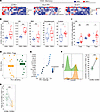 Figure 1
RhCMV infection is associated with increased CCR5 expression and phenotypic remodeling of CD4+ memory T cells across tissues pre-SIV. (A) Heatmaps with unsupervised clustering by RhCMV– serostatus on %CCR5/HLA-DR/Ki-67 CD4+ memory T cells across sampled tissues (RhCMV+ n = 12; RhCMV– n = 9). (B) %CCR5+CD4+ memory box plots in each sampled tissue (RhCMV+ n = 12; RhCMV– n = 9). (C) %CCR5+ across CD4+ TCM, TTM, and TEM subpopulations (RhCMV+ n = 12; RhCMV– n = 9). (D) PCA plot of CCR5+ and CCR5– RhCMV+CD4+ TTM cells in the RhCMV+ LN (n = 11). (E) PC1 loadings with color-coded contribution percentage for the PCA plot (n = 11). (F) Histogram and %CXCR3+ between CCR5+/– CD4+ TTM in RhCMV+ LN (n = 11). (G) %Treg between CCR5+/– CD4+ TTM in RhCMV+ LN (n = 11). Error bars represent 1.5 times the interquartile range. For B and C statistical comparisons performed using 2-sided Mann-Whitney U test. For F and G statistical comparisons performed using 2-sided Wilcoxon matched pairs signed-rank test. PBMC, peripheral blood mononuclear cells; LN, lymph node; BM, bone marrow; TCM, central memory; TTM, transitional memory; TEM, effector memory. * P < 0.05; *** P < 0.001.
Frequencies of CCR5+ memory CD4+ T cells within the blood, the colon, and especially the LN were significantly higher in RhCMV+ animals (Figure 1B), but not when animals were stratified by RhLCV serotype (Supplemental Figure 3A) or sex (Supplemental Figure 3B). These differences were also noted on memory CD8+ T cells within the LN and duodenum of RhCMV+ (Supplemental Figure 3C) but not in RhLCV+ animals (Supplemental Figure 3D) or when segregated by sex (Supplemental Figure 3E). In addition, the MFI of CCR5 in CD4+CCR5+ cells was elevated in the blood, LN, and BM of CMV-seropositive animals, indicating that these animals exhibited higher per-cell CCR5 expression compared with CMV-seronegative controls (Supplemental Figure 3F). Plasma levels of 2 CCR5 ligands, CCL3 and CCL4, which directly bind and internalize the CCR5 receptor, were similar among RhCMV– and RhCMV+ groups (Supplemental Figure 3, G and H) (24, 25), suggesting that RhCMV-associated increases in CCR5 surface density directly ex vivo were not due to altered ligand-receptor occupancy. We also assessed CCR5 surface expression on memory CD4+ T cell phenotypes in a human cohort of human CMV (HCMV) -seropositive and -seronegative adults without HIV-1. Surface expression of CCR5 was upregulated on terminal effector memory CD4+ T (TEMRA) cells in blood (Supplemental Figure 3I), suggesting similar immunologic impact between rhesus and human CMV.
Because the total CD95+ memory CD4+ T cell pool in RMs contains subpopulations of varying maturation, we measured CCR5 expression on distinct maturation subsets (TCM, TTM, and TEM). In the RhCMV+ LN where CCR5 expression was most starkly enriched, expression of CCR5 was found to be significantly higher in TTM and, to a lesser degree, TEM CD4+ T cells, with no differences in the CD4+ TCM subpopulation (Figure 1C). CCR5+CD4+ TTM cells in the LN of RhCMV+ animals were phenotypically distinct from their CCR5– counterparts and demonstrated complete separation by principal component analysis (PCA) when characterized by an array of phenotypic markers related to lineage, survival, migration, activation, and exhaustion (Figure 1, D and E; gating strategy, Supplemental Figure 4). The phenotypic marker that most strongly segregated CCR5+ from CCR5–CD4+ TTM cells was CXCR3, a chemokine receptor enriched on IFN-γ–producing type 1 helper (Th1) CD4+ T cells (Figure 1E) (26, 27). Indeed, CCR5+CD4+ TTM cells in RhCMV+ animals were near-uniformly positive for CXCR3 surface expression (Figure 1F). Conversely, expression of the markers CD25 and FoxP3 that define a T regulatory phenotype were the most distinguishing features in CCR5–D4+ TTM cells (Figure 1, E and G).
CCR5+CD4+ memory T cells expanded in RhCMV+ animals are polyclonal, and the majority do not react to an RhCMV lysate. Because CMV-specific CD4+ T cells exhibit canonical Th1 gene signatures (28–30), and CCR5 is a surface marker of Th1 cells (31), we asked whether RhCMV-specific cells could explain the expansion of CCR5+CD4+ T cells in the RhCMV+ LN. We first measured memory CCR5+CD4+ T cell reactivity to an RhCMV lysate ex vivo by the activation-induced markers (32). To confirm specificity, we assessed the expression of these markers under unstimulated conditions, where significantly fewer reacting CD4+ T cells were observed relative to RhCMV lysate exposure (Supplemental Figure 5). In PBMCs from RhCMV+ animals, the majority of CCR5+ memory CD4+ T cells did not respond to an RhCMV lysate (Figure 2A), pointing to specificity beyond RhCMV antigens.
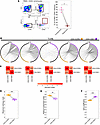 Figure 2
CD4+CCR5+ T cells exhibit high clonal diversity and limited overlap with CD4+ CMV-specific T cells pre-SIV. (A) Activation-induced marker assay gating strategy and %CCR5+CD4+ memory T cells RhCMV specificity box plot based on CD40L and CD69 expression (n = 7). The gate in the CD95/CD28 biplot was drawn to exclude CD95–CD28+ naive CD4+ T cells. (B) Circos plots where each segment around the circle represents a unique T cell receptor-β (TCRB) complementarity-determining region 3 amino acid (CDR3aa) sequence identified between CD4+CCR5+ and CD4+CMV-specific (CD4+CMV+) groups. Ribbons connecting segments indicate shared CDR3aa sequences, illustrating the extent of clonal overlap between the 2 groups. The most expanded clones appear in bright orange or purple, while progressively smaller clones are shaded darker, culminating in black for the least abundant clonotypes (n = 5). (C) Heatmap displaying the Jaccard index of CDR3aa overlap between CD4+CCR5+ and CD4+CMV+ per animal (n = 5). (D) Shannon entropy based on natural logarithm (nat) box plots for each paired sample (n = 5). (E) Pielou’s evenness index box plots for each paired sample (n = 5). (F) Gini coefficient box plots for each paired sample (n = 5). For A and D–F error bars represent 1.5 times the interquartile range. For A statistical comparisons performed using 2-sided Wilcoxon matched pairs signed-rank test. For D–F statistical comparisons performed using 2-sided paired t test. PBMC, peripheral blood mononuclear cells; * P < 0.05; ** P < 0.01; *** P < 0.001.
To probe reactivity of the CD4+CCR5+ T cell pool in more granular detail, we independently sorted resting CCR5-expressing CD4+ T cells and CD4+ T cells that were exposed ex vivo to the RhCMV lysate and performed bulk RNA sequencing of the CDR3 variable region of TRA and TRB genes from 5 healthy RhCMV+ animals. Ranking the abundance of TRB clonotypes and assessing overlap between CMV-responding and resting CCR5+CD4+ T clones revealed that many CMV-responding clonotypes were shared within the repertoire of the CCR5-expressing pool (Figure 2B), suggesting that the majority of CMV-specific CD4+ T cells express CCR5 on the cell surface at resting states in vivo. Conversely, only a small minority of resting CCR5+ clonotypes were shared among clones that responded to the RhCMV lysate (Figure 2B). Shared clonotypes were interspersed among the rank order of CCR5+ clonotypes, and rarely present in high abundance (Figure 2B). To quantify the representation of CMV-reactive clones within the CCR5-expressing repertoire, we calculated the Jaccard index of the 2 sorted populations, where a value of 1 equals identical repertoires, and 0 equals repertoires that are completely unique from one another. This revealed among all animals that the repertoires between populations were largely distinct and non-overlapping (Figure 2C). Furthermore, diversity metrics indicated that distinct clonotypes were less dominant within the repertoire of resting CCR5+CD4+ T cells when compared with those of CMV-responding cells (Shannon diversity, Pielou’s evenness; Figure 2, D and E), whereas CMV-responding cells were more clonally skewed (Gini coefficient; Figure 2F). Taken together, the data indicate that RhCMV expands CCR5+CD4+ T cells beyond those that are specific for RhCMV antigens.
Enhanced seeding of SIV DNA in the RhCMV+ gut during acute SIV. In both CD4+ and CD8+ T cells, molecules that distinguish a Th1 program are commonly associated with more effective viremic control of HIV (33–35). On the other hand, Th1 cells are readily infected by HIV-1/SIV and can harbor large clonally expanded populations of HIV-1 proviruses during ART (36, 37). To determine the relative benefit or detriment of an RhCMV-driven, Th1-skewed environment on acute SIV replication dynamics, we infected study animals intravenously with barcoded SIV239M and sampled whole blood at time windows of exponential SIV growth (4, 6, 8 days postinfection; dpi), peak viremia (11, 13/14 dpi), and post-peak SIV decline (21, 28 dpi; Figure 3A). Within time windows of peak SIV replication, there were no significant differences in viremia among RhCMV– and RhCMV+ animals at 11 dpi (Figure 3B). However, at 13/14 dpi, plasma SIV load was higher in co-infected animals (Figure 3C). SIV viral load at 13/14 dpi was not associated with RhLCV status (Supplemental Figure 6A) or sex (Supplemental Figure 6B). Elevated viremia in this group was transient as both groups exhibited similar viral loads after post-peak SIV decline at 28 dpi (Figure 3D). Only in the LN did we observe a direct association between peak viremia and pre-infection frequencies of CCR5+CD4+ T cells (Figure 3E), suggesting that out of all anatomic sites, target cell densities in lymphoid tissues were the most determinative of peak viral loads.
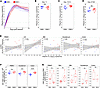 Figure 3
RhCMV serostatus is associated with increased SIV replication. (A) Line graph of plasma SIV viral loads (VL) over days after infection. (B–D) Plasma VL on day 11, day 13/14, and day 27/28 by RhCMV serostatus. (E) Two-sided Spearman’s correlation between pre-SIV %CCR5+CD4+ memory against plasma VL on day 13/14. Shaded area represents 95% confidence interval. (F) Cell-associated SIV DNA metrics by RhCMV serostatus. (G) The number of CMV copies per microgram of tissue DNA between uninfected (SIV–) and day 13/14 SIV-infected (SIV+) animals (SIV– n = 6; SIV+ n = 6). For A–F RhCMV+ n = 11; RhCMV– n = 8, statistical comparison performed using 2-sided Mann-Whitney U test. For G statistical comparisons performed using 2-sided Wilcoxon matched pairs signed-rank test. For B–D, F, and G error bars represent 1.5 times the interquartile range. LN, lymph node; BM, bone marrow; PBMC, peripheral blood mononuclear cells; BAL, bronchoalveolar lavage; * P < 0.05; *** P < 0.001; **** P < 0.0001.
We next determined the levels of total cell-associated SIV DNA in PBMCs and gut mucosal tissues at 14 dpi. There were no significant differences in the frequencies of cells harboring SIV DNA within the blood of RhCMV– and RhCMV+ animals (Figure 3F). In duodenal and colonic tissues, however, total SIV DNA levels were higher at peak viremia in RhCMV+ (Figure 3F) but not RhLCV+ RMs (Supplemental Figure 6C) or when segregated by sex (Supplemental Figure 6D). The RhCMV+ colon in particular exhibited median SIV DNA levels that were roughly log10 0.8 (6.3-fold) higher than colonic tissue of the RhCMV– group (RhCMV+: 4.94; RhCMV–: 4.18; Figure 3F). We next considered the possibility that the higher SIV burden in the RhCMV+ gut was due to the fact that the GI tract was a preferential site of RhCMV reactivation during acute SIV. In a subset of co-infected animals, we assessed levels of RhCMV DNA prior to SIV and at peak SIV viremia across anatomic sites. However, we did not observe acute SIV to induce discernable patterns in RhCMV reactivation rates that were preferential to a particular tissue site and notably the gut mucosa (Figure 3G). Taken together, the data suggest that RhCMV promotes seeding of the SIV reservoir in a site-specific manner but that this is not necessarily related to a shared tissue tropism of the 2 co-infecting viruses.
Limited CD8+ T cell cycling and enhanced maintenance of CCR5+CD4+ T cells in the RhCMV+ gut during acute SIV. We next sought to determine how RhCMV infection influenced the acute SIV dynamics of innate and adaptive immune cells. We first probed how co-infection influenced phenotypic profiles of circulating monocytes at 13/14 dpi with SIV. The type I IFN–stimulated surface marker CD169 was found to be elevated on monocytes of RhCMV+ animals and correlated directly with viremia at 13/14 dpi (Figure 4, A and B). We also measured systemic levels of IFN-α in plasma at this period by conventional ELISA. Co-infected animals exhibited higher plasma concentrations of IFN-α at peak viremia (Figure 4C), together indicating that RhCMV enhanced the type I IFN response during acute SIV.
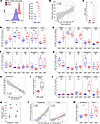 Figure 4
RhCMV serostatus during SIV infection is associated with heightened monocyte activation and increased persistence of CCR5+CD4+ T cells in the gut. (A) Histogram and CD169+ monocyte median fluorescence intensity (MFI) by RhCMV serostatus in PBMC. (B) Two-sided Spearman’s correlation between CD169+ monocyte MFI against plasma VL. (C) Plasma IFN-α expression by RhCMV serostatus. (D) %HLA-DR+CD4+ memory T cells across sampled tissue by RhCMV serostatus. (E) %HLA-DR+CD8+ memory T cells across sampled tissue by RhCMV serostatus. (F) %Ki-67+CD4+ memory T cells across sampled tissue by RhCMV serostatus. (G) %Ki-67+CD8+ memory T cells across sampled tissue by RhCMV serostatus. (H) Two-sided Spearman’s correlation between %Ki-67+CD8+ memory T cells against cell-associated SIV DNA. (I) %Ki-67+CD8+ memory T cells by plasma IFN-α above or below 10 pg/mL (>10 and <10 respectively). (J) %CCR5+CD4+ memory T cells across sampled tissue by RhCMV serostatus. (K) %CCR5+CD4+ T cells log2 fold change (FC) pre-SIV mean ± SEM across duodenum and colon by RhCMV serostatus. (L) Two-sided Spearman’s correlation between %CCR5+CD4+ memory cells against cell-associated SIV DNA. (M) %CXCR3+ of CD4+ memory T cells across duodenum and colon by RhCMV serostatus. For all figures RhCMV+ n = 11, RhCMV– n = 8. For A, B, D–G, I, J, and M error bars represent 1.5 times the interquartile range. Statistical comparison performed using 2-sided Mann-Whitney U test. For B, H, and L shaded area represents 95% confidence interval. LN, lymph node; BM, bone marrow; PBMC, peripheral blood mononuclear cells; * P < 0.05; ** P < 0.01; *** P < 0.001; **** P < 0.0001.
Co-infection with RhCMV did not impact the degree of CD4+ T cell depletion across tissues during acute SIV, although both study groups exhibited a precipitous drop in CD4+ T cell frequencies at gut mucosal tissues in line with early target cell depletion at these sites (Supplemental Figure 7A) (38, 39). Surface expression of the activation marker HLA-DR was higher on CD4+ and CD8+ memory T cells in the BM of co-infected animals at 13/14 dpi but not within the colon and duodenum (Figure 4, D and E). HLA-DR surface expression was also highly increased on circulating CD4+ and CD8+ memory T cells of RhCMV+ animals during acute SIV (Figure 4, D and E), although this was likely related in large part to the expansion of HLA-DR+ TEM cells in blood prior to SIV infection (Supplemental Figure 7, B and C), consistent with the chronic immune activation characteristic of CMV+ animals. We did not observe the frequencies of Ki-67+ cycling memory CD4+ T cells to differ across tissues by RhCMV serostatus at 13/14 dpi (Figure 4F). However, co-infected animals exhibited significantly reduced cycling of memory CD8+ T cells in the blood and duodenum during acute SIV (Figure 4G), which in the duodenum correlated inversely with levels of SIV DNA (Figure 4H). Type I IFNs upregulate several proteins that induce G1 cell cycle arrest (40–42). To probe the relationship between IFN-α and the limited cycling of memory CD8+ T cells in co-infected animals during acute SIV, we binned all study animals by low (<10 pg/mL) or high (>10 pg/mL) IFN-α plasma concentrations at 13/14 dpi and compared the degree of duodenum memory CD8+ T cell cycling between the 2 bins. We observed that in animals with high concentrations of plasma IFN-α, cycling memory CD8+ T cells in the duodenum were significantly lower relative to that of the IFN-α–low group (Figure 4I), suggesting that in co-infected animals the enhanced type I IFN response limited CD8+ T cell proliferation at prominent early sites of SIV replication.
We last assessed CCR5+ target cells across tissues during acute SIV and how their frequencies were influenced by RhCMV coinfection. CCR5+ memory CD4+ T cells within blood and LNs were equally reduced among RhCMV– and RhCMV+ animals at 13/14 days post-SIV infection (Figure 4J). At gut mucosal sites, however, RhCMV+ animals continued to exhibit expanded target cell frequencies in the colon during acute SIV (Figure 4J). Frequencies of target cells were also elevated in the duodenum of coinfected animals (Figure 4J), a feature that was not observed at this site prior to SIV (Figure 1B). Together, the maintenance of CCR5+CD4+ T cells in the RhCMV+ gut led to a significantly smaller fold change in target cell depletion within the colon and duodenum (Figure 4K) and was associated with higher levels of SIV DNA in the gut (Figure 4L).
We sought to determine potential mechanisms underlying the apparent discordant finding of greater SIV DNA seeding, yet less target cell reduction in the RhCMV+ gut. We first considered the possibility that mucosal resident memory CD4+ T cells of RhCMV+ animals exhibited superior survival capabilities that would allow them to withstand cell death during SIV infection. We examined expression of the interleukin-7 receptor CD127 and anti-apoptotic molecule Bcl-2, known to promote T cell survival (43, 44), yet found no differences in memory CD4+ T cell expression of these markers at gut mucosal sites during acute SIV by RhCMV serostatus (Supplemental Figure 8, A and B). We next considered the possibility that CCR5+ target cell depletion could be offset by a greater rate of influx of memory CD4+ T cells into the RhCMV+ gut during acute SIV. We assessed surface expression levels of the chemokine receptor CXCR3, because ligands of this receptor (CXCL9–11) are IFN inducible and highly upregulated during viral infection, and expanded CCR5+CD4+ T cells expanded uniformly expressed CXCR3 (Figure 1F). Indeed, frequencies of CXCR3-expressing memory CD4+ T cells were increased in the RhCMV+ gut (Figure 4M), despite exhibiting comparable frequencies to those of RhCMV– animals prior to SIV infection (Supplemental Figure 8C). Taken together, the data suggest that RhCMV can influence the trafficking potential of CD4+CCR5+ T cells and promote the maintenance of target cells at early sites of SIV replication.
RhCMV enhances the CXCL9/CXCR3 chemokine axis before and after SIV infection. The ligands for CXCR3 are the IFN-inducible chemokines CXCL9–11, and this axis contributes to the recruitment of immune cells to gut mucosal surfaces during inflammation (45, 46). We thus performed high-throughput proteomic profiling of over 60 inflammatory proteins, including CXCR3 ligands, in plasma by proximity extension assay to assess cytokine/chemokine profiles by RhCMV serotype. In healthy animals prior to SIV infection, asymptomatic RhCMV infection in general exerted a relatively muted impact on most of the inflammatory analytes, with soluble mediators of neutrophil chemotaxis (CXCL1), the co-stimulatory molecule CD40, and the chemotactic/adhesive molecule sCX3CL1 as factors being underexpressed in RhCMV (Figure 5A). The soluble protein most significantly differentially upregulated in plasma of SIV-uninfected RhCMV+ animals was the CXCR3 ligand CXCL9 (Figure 5A).
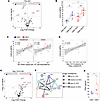 Figure 5
RhCMV serostatus modulates IFN-γ–associated chemokine signatures correlating with SIV burden. (A) Volcano plot representing the mean log2 fold change in plasma chemokines found in SIV-uninfected animals based on RhCMV serostatus. Red overexpressed; blue underexpressed; gray nonsignificant. (B) CXCL9 plasma expression between SIV serostatus and RhCMV serostatus. (C) Two-sided Spearman’s correlation between post-SIV plasma CXCL9 against plasma SIV VL. (D) Two-sided Spearman’s correlation between post-SIV plasma CXCL9 against cell-associated SIV DNA across duodenum and colon. (E) Volcano plot representing the mean log2 fold change in plasma chemokines found in day 13/14 dpi SIV-infected animals based on RhCMV serostatus. Red overexpressed; blue underexpressed; gray nonsignificant. (F) STRING network representing the interaction of the RhCMV-associated overexpressed proteins with IFN-γ. (G) Post-SIV plasma IFN-γ by RhCMV serostatus. For all figures RhCMV+ n = 11, RhCMV– n = 8. For B and G error bars represent 1.5 times the interquartile range. For B statistical comparisons performed using 2-sided Wilcoxon matched pairs signed-rank test, between SIV– and SIV+, and 2-sided Mann-Whitney U test between RhCMV– and RhCMV+. For A, E, and G statistical comparison performed using 2-sided Mann-Whitney U test. For C and D the shaded area represents 95% confidence interval. NPX, normalized protein expression; * P < 0.05; ** P < 0.01; *** P < 0.001.
To verify this finding, we further assessed CXCL9 plasma concentrations in a larger cohort of SIV-uninfected RhCMV+ RMs that exhibited varying frequencies of CD8+ TEM expansion in blood, the hallmark immunological footprint of CMV. The chemokines CXCL10 and CXCL11 were also examined, which are coordinately regulated with CXCL9 and are additional ligands for CXCR3. We then stratified CD8+ TEM frequencies in RhCMV+ RMs by quartile, with Q1 being the lowest and Q4 the highest (Supplemental Figure 9A). Both plasma CXCL9 and CXCL10 levels were highest among RhCMV+ animals falling within the quartile of greatest CD8+ TEM expansion (Q4; Supplemental Figure 9, B and C). CXCL11 levels across quartiles did not reach statistical significance based on the Kruskal-Wallis test; however, a post hoc analysis revealed a significant difference between the lowest and highest quartiles (Supplemental Figure 9D).
In RMs that went on to be experimentally infected with SIV, CXCL9 plasma concentrations increased in all RMs regardless of CMV serotype yet remained elevated in RhCMV+ animals at 14 dpi (Figure 5B). We observed significant, direct relationships between CXCL9 levels in plasma and both SIV DNA copies in the gut and viremia at 13/14 dpi (Figure 5, C and D). Furthermore, CXCL9 elevations existed within a larger network of soluble proteins that were differentially overexpressed in co-infected animals, including sPDL1, CSF1, CCL19, and the CCR2/CCR5 ligand CCL8 (Figure 5E). We next performed STRING analysis to infer interactions among overexpressed proteins in RhCMV animals during acute SIV. Many of these proteins were found to exhibit interconnectivity with high confidence as defined by predicted/known protein-protein interaction (Figure 5F). Of note, the canonical Th1 cytokine IFN-γ was predicted to occupy a central node within this network (Figure 5F). Measuring IFN-γ levels by ELISA revealed that IFN-γ was indeed systemically higher in co-infected animals at 13/14 dpi (Figure 5G). Overall, the cellular and cytokine/chemokine data are consistent with RhCMV driving a global IFN-γ–directed Th1 signature, which becomes more pronounced during acute SIV and is associated with the maintenance of target cells and enhanced seeding of SIV DNA in gut mucosal tissues.


