
Research ArticleCell biologyNeuroscience
Open Access |  10.1172/jci.insight.195998
FGF13 is not secreted from mouse neurons
Mattia Malvezzi,1 Haiying Zhang,2 Patrick Towers,1 David C. Lyden,2 Steven O. Marx,3 and Geoffrey S. Pitt1
1Cardiovascular Research Institute, and
2Children’s Cancer and Blood Foundation Laboratories, Departments of Pediatrics, and Cell and Developmental Biology, Drukier Institute for Children’s Health, Meyer Cancer Center, Weill Cornell Medicine, New York, New York, USA.
3Division of Cardiology, Department of Medicine, and Department of Molecular Pharmacology and Therapeutics, Vagelos College of Physicians and Surgeons, Columbia University, New York, New York, USA.
Address correspondence to: Geoffrey S. Pitt, Cardiovascular Research Institute, Weill Cornell Medicine, 413 E. 69th St., Belfer Research Bldg 502, New York, New York 10021, USA. Phone: 646.962.7641; Email: geoffrey.pitt@med.cornell.edu.
Find articles by Malvezzi, M. in: PubMed | Google Scholar
1Cardiovascular Research Institute, and
2Children’s Cancer and Blood Foundation Laboratories, Departments of Pediatrics, and Cell and Developmental Biology, Drukier Institute for Children’s Health, Meyer Cancer Center, Weill Cornell Medicine, New York, New York, USA.
3Division of Cardiology, Department of Medicine, and Department of Molecular Pharmacology and Therapeutics, Vagelos College of Physicians and Surgeons, Columbia University, New York, New York, USA.
Address correspondence to: Geoffrey S. Pitt, Cardiovascular Research Institute, Weill Cornell Medicine, 413 E. 69th St., Belfer Research Bldg 502, New York, New York 10021, USA. Phone: 646.962.7641; Email: geoffrey.pitt@med.cornell.edu.
Find articles by Zhang, H. in: PubMed | Google Scholar
1Cardiovascular Research Institute, and
2Children’s Cancer and Blood Foundation Laboratories, Departments of Pediatrics, and Cell and Developmental Biology, Drukier Institute for Children’s Health, Meyer Cancer Center, Weill Cornell Medicine, New York, New York, USA.
3Division of Cardiology, Department of Medicine, and Department of Molecular Pharmacology and Therapeutics, Vagelos College of Physicians and Surgeons, Columbia University, New York, New York, USA.
Address correspondence to: Geoffrey S. Pitt, Cardiovascular Research Institute, Weill Cornell Medicine, 413 E. 69th St., Belfer Research Bldg 502, New York, New York 10021, USA. Phone: 646.962.7641; Email: geoffrey.pitt@med.cornell.edu.
Find articles by Towers, P. in: PubMed | Google Scholar
1Cardiovascular Research Institute, and
2Children’s Cancer and Blood Foundation Laboratories, Departments of Pediatrics, and Cell and Developmental Biology, Drukier Institute for Children’s Health, Meyer Cancer Center, Weill Cornell Medicine, New York, New York, USA.
3Division of Cardiology, Department of Medicine, and Department of Molecular Pharmacology and Therapeutics, Vagelos College of Physicians and Surgeons, Columbia University, New York, New York, USA.
Address correspondence to: Geoffrey S. Pitt, Cardiovascular Research Institute, Weill Cornell Medicine, 413 E. 69th St., Belfer Research Bldg 502, New York, New York 10021, USA. Phone: 646.962.7641; Email: geoffrey.pitt@med.cornell.edu.
Find articles by Lyden, D. in: PubMed | Google Scholar
1Cardiovascular Research Institute, and
2Children’s Cancer and Blood Foundation Laboratories, Departments of Pediatrics, and Cell and Developmental Biology, Drukier Institute for Children’s Health, Meyer Cancer Center, Weill Cornell Medicine, New York, New York, USA.
3Division of Cardiology, Department of Medicine, and Department of Molecular Pharmacology and Therapeutics, Vagelos College of Physicians and Surgeons, Columbia University, New York, New York, USA.
Address correspondence to: Geoffrey S. Pitt, Cardiovascular Research Institute, Weill Cornell Medicine, 413 E. 69th St., Belfer Research Bldg 502, New York, New York 10021, USA. Phone: 646.962.7641; Email: geoffrey.pitt@med.cornell.edu.
Find articles by
Marx, S.
in:
PubMed
|
Google Scholar
|

1Cardiovascular Research Institute, and
2Children’s Cancer and Blood Foundation Laboratories, Departments of Pediatrics, and Cell and Developmental Biology, Drukier Institute for Children’s Health, Meyer Cancer Center, Weill Cornell Medicine, New York, New York, USA.
3Division of Cardiology, Department of Medicine, and Department of Molecular Pharmacology and Therapeutics, Vagelos College of Physicians and Surgeons, Columbia University, New York, New York, USA.
Address correspondence to: Geoffrey S. Pitt, Cardiovascular Research Institute, Weill Cornell Medicine, 413 E. 69th St., Belfer Research Bldg 502, New York, New York 10021, USA. Phone: 646.962.7641; Email: geoffrey.pitt@med.cornell.edu.
Find articles by
Pitt, G.
in:
PubMed
|
Google Scholar
|
Published November 25, 2025 - More info
JCI Insight. 2026;11(1):e195998. https://doi.org/10.1172/jci.insight.195998.
© 2025 Malvezzi et al. This work is licensed under the Creative Commons Attribution 4.0 International License. To view a copy of this license, visit http://creativecommons.org/licenses/by/4.0/.
Received: May 23, 2025; Accepted: November 20, 2025


-
Results
Assays for determining whether a transfected protein is secreted from cultured cells and available to bind to extracellular receptors generally rely on detecting the protein in the extracellular medium of the transfected cells, after clearing the medium of dead or dying cells, and of extracellular vesicles in which the queried protein may be present yet unavailable to interact directly with extracellular receptors. To test if FGF13S is secreted from HEK293 cells (in which FGF13S is not endogenously expressed), we transiently transfected FGF13S and then used a multistep differential centrifugation protocol designed to minimize contamination from FGF13S released from dead or dying cells or FGF13S within extracellular vesicles. We also transfected HA-tagged adipsin, an adipokine secreted from adipose tissue (28), as a positive control for secretion. Cells were cultured for 24 hours after transfection with either FGF13S or adipsin and then incubated for 24 hours in fresh, serum-free medium. Serum was removed for 2 reasons: (a) to allow us to concentrate the cleared extracellular medium and load comparable amounts of protein among the different fractions, which is not possible when serum is present because of the large amount of albumin, that creates artifacts when running the samples on a polyacrylamide gel, even when the samples are not concentrated (Supplemental Figure 1A; supplemental material available online with this article; https://doi.org/10.1172/jci.insight.195998DS1); and (b) to reproduce the experimental conditions in previous studies in which FGF13S was reportedly detected in the serum-deprived extracellular medium of cultured cells (25).
Extracellular medium was collected and subjected to sequential centrifugations. A first, low-speed (4,000g) centrifugation cleared the medium of any cell debris. The pellet was discarded, and the cleared medium was then centrifuged at 12,000g to precipitate LEVs and then at 100,000g to collect SEVs, including exosomes. LEVs and SEVs were resuspended, lysed, and loaded on gels for Western blot analysis together with the concentrated (30×) cleared medium, in which true secreted proteins are expected. Indeed, abundant adipsin signal was detected in the cleared medium, but FGF13S was not (Figure 1A). It is worth noting that not only did we not detect adipsin in the extracellular medium, we found it had a higher molecular weight (~40–50 kDa) than the adipsin detected in the cell lysate, reflecting the processing (glycosylation) of the intracellular, presecreted 28 kDa protein (28), (the apparent molecular weight of the protein is larger than native adipsin due to the presence of the HA tag), providing validation for our medium-clearing protocol. The broad band spanning approximately 10 kDa observed in the cleared medium likely reflects variable glycosylation states (28).
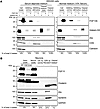 Figure 1
FGF13S is not detected in cleared extracellular medium of HEK293 cells or cultured mouse neurons. (A) Western blot of cell lysates, extracellular vesicles, and cleared medium derived from HEK293 transiently transfected with FGF13S or the secreted protein HA-tagged adipsin (adipsin-HA) and subjected to multistep centrifugation protocol in serum-deprived conditions (left) or in normal culture conditions (10% serum; right). Alix (96 kDa) and CD9 (24 kDa) were used as SEV or exosome markers; calnexin (90 kDa) was used as an intracellular marker. Secreted adipsin-HA had a higher molecular weight as a consequence of post-translational modifications (28). Cell lysate (8 μg) was loaded. (B) Western blot of cell lysates, extracellular vesicles, and cleared medium from cultured mouse hippocampal neurons after 12 DIV in culture. Whole-brain lysates from WT and FGF13 brain KO were used to validate the detection of FGF13 isoforms. Clusterin was used as a positive control for secretion in neurons (nonsecreted clusterin precursor: 55 kDa; cleaved, secreted clusterin: 35 kDa). Alix (96 kDa) and syntenin (34 kDa) were used as SEV and exosome markers; GAPDH (36 kDa) was used as an intracellular marker. Brain or neuronal lysate (15 μg) was loaded. The percentage of total volume (V) loaded indicates the fraction of the sample loaded on each gel relative to the total volume.
In addition to detecting FGF13S in the cell lysate, we detected FGF13S in LEVs and, to a lesser extent, in SEVs, whereas adipsin was barely detected in either fraction. We further confirmed the identity of the extracellular vesicle (EV) fractions with validated markers. Specifically, Alix and CD9, 2 well-established exosomal markers (29), were found in the SEVs/exosome fraction but not in LEVs or in the cleared medium (Figure 1A). Calnexin, an ER membrane protein, was observed in the cell lysate but not found in any fraction (Figure 1A), confirming the successful removal of cell debris or cytoplasmic-only proteins from the EVs and medium. Thus, our clearing protocol enriches for LEVs, SEVs, and cleared extracellular medium while eliminating cytoplasmic debris from dead or dying cells. Taken together, these results show FGF13S is not secreted from HEK293 cells but it is found in EV vesicles, possibly explaining its detection in previous secretion studies that did not use sequential centrifugation to separate EVs from extracellular material (25, 27).
Because these experiments were performed under conditions of serum deprivation for the technical reasons we have noted, the cells were under stress conditions. Although this strategy was integral to previous studies in which FGF13S was detected in the extracellular medium (25), we asked whether stress was required for HEK293 cells to release FGF13S in EVs by also performing the sequential centrifugation protocol on cells for which the 10% serum was not removed. Although the amount of cleared medium able to be loaded on the gel was 10-fold less due to the presence of serum components, primarily large amounts of albumin, that interfere with subsequent Western blotting, we still clearly detected adipsin in the extracellular medium (Figure 1A, right). For direct comparison between the serum-free and the serum-maintained conditions, we loaded the same reduced fraction (0.8%) of extracellular material and observed secreted adipsin for both conditions (Figure 1A, left). Importantly, detection of FGF13S in both LEVs and SEVs was unaffected by the presence or absence of serum, as was the detection of the positive and negative markers for EVs (Figure 1A). Taken together, these results show FGF13S can be detected in EVs of HEK239 cells independent of stress, and FGF13 is not detected in the cleared extracellular medium. Thus, we conclude FGF13S is not secreted from HEK293 cells.
The proposed physiological role for secreted FGF13S is to regulate VGSCs in the brain, so we specifically assessed whether FGF13 is secreted from neurons. Hippocampal neurons from WT mouse brain (P0) were cultured for 12 days (12 DIV), allowing neuronal maturation and testing for secretion. After 12 DIV, the medium was collected, cell debris was removed via centrifugation at 4,000g, and the extracellular medium was cleared via the same sequential spin protocol used for HEK293 cells to separate LEVs (12,000g) and SEVs (100,000g). Cleared extracellular medium was not concentrated, due to the high amounts of supplements in the medium (albumin and hormones) necessary to culture neurons, but which generate gel artifacts (Supplemental Figure 1B). Cell lysates and the fractions obtained from the sequential spins were analyzed by Western blots. Whole-brain lysates from WT or neuronal-specific Fgf13 knockout (Nes-cre;Fgf13fl/Y) mice provided validation of the antibody for detection of FGF13 brain isoforms, including FGF13S. GAPDH, a cytoplasmic protein, was not detected in the extracellular medium or in EVs (Figure 1B), confirming successful removal of cell debris. Alix and syntenin, 2 exosomal markers (29), were readily detected in the SEVs fraction but not in the cleared medium, showing successful separation of EVs. Similar to the HEK293 cell experiments, the lack of detection of the cytoplasmic marker and the exosomal markers in the cleared medium demonstrates that the cleared medium is free from cellular debris and EVs. In contrast, clusterin, a disulfide-linked heterodimeric protein conventionally secreted from neurons (30, 31) and that undergoes cleavage and glycosylation of its 55 kDa precursor (32), was detected in the cleared extracellular medium (Figure 1B). Consistent with previous reports (33, 34), we also detected clusterin in the SEV fraction. We additionally established that clusterin was secreted and accumulated in the extracellular medium, because removing the medium after 11 DIV and replacing it with fresh medium for 1 additional day before collection yielded too little clusterin accumulation for detection (Supplemental Figure 2). Under these conditions, we did not detect FGF13S (or any other known FGF13 splice variant) in the medium, even though multiple FGF13 isoforms are present in neuronal lysates (Figure 1B). In contrast to the HEK293 experiments, we did not detect any FGF13 in the EV fractions, suggesting that its presence in EVs might be cell-type or tissue specific or dependent on stimuli such as stress. Together, these results do not support the hypothesis FGF13S is secreted from neurons or that FGF13S is released into the extracellular space from exosomes.
To provide an alternative means to assess if FGF13S is secreted from neurons, we performed in vivo proximity labeling proteomic profiling in mouse brain. We reasoned that if FGF13S is secreted, either through the conventional pathway or via a nonconventional pathway, it should be in the vicinity of proteins involved in these processes or other secreted proteins, and that at least a subset of those proteins would be detected by proximity labeling. Indeed, in vivo proximity labeling proteomic profiling has been used successfully to characterize secreted or extracellular proteins in various tissues and organs, including the brain (35, 36). Therefore, we generated transgenic mice with a cDNA encoding the biotin ligase TurboID (37) and an HA tag fused to the N-terminus of FGF13S under the control of a tetracycline-inducible promoter. We note that placing TurboID at the N-terminus could prevent FGF13S secretion by blocking a signal sequence, yet a distinguishing feature of FGF13S (like other members of the FHF subfamily) is the absence of a signal sequence (38). These mice were crossed with mice carrying a brain-specific (neurofilament heavy polypeptide, Nefh, promoter), tetracycline-controlled transactivator protein (tTA) transgene to achieve expression in the brain.
We first validated the TurboID-FGF13S expression in isolated hippocampal neurons by staining for HA (Supplemental Figure 3). The transgene expression pattern recapitulates the somatic and AIS enrichment of endogenous FGF13S (23), albeit with an overall stronger signal due to overexpression. After in vivo biotin injections (or vehicle control) to promote TurboID-FGF13S labeling of near neighbors, we captured biotinylated proteins with streptavidin and quantified them by mass spectrometry (MS). We detected robust protein labeling in brains from mice injected with biotin compared with DMSO-injected mice (Supplemental Figure 4A). Quantitative MS analysis detected 1,568 proteins (Supplemental Dataset 1 and Supplemental Figure 4B), 457 of which were significantly enriched in biotin-injected samples [P < 0.05 and log2(biotin/DMSO) > 1] (Figure 2A). Among the most enriched proteins was NaV1.6 (encoded by Scn8a), consistent with FGF13S’s known concentration in the AIS (10) and interaction with VGSC cytoplasmic C-termini (13, 14). Other AIS enriched proteins, such as ankyrin G (Ank3) and β4 spectrin (Sptbn4); the potassium channels KCNQ2 (Kcnq2), KV2.1 (Kcnb1), and KV2.2 (Kcnb2); MAP7D2 (Map7d2); and MICAL3 (Mical3) (39, 40), were prominently enriched in the dataset (Figure 3A). Other prominent AIS proteins such as gephyrin (Gphn), contactin (Cntn1), synaptopodin (Synpo), α2 spectrin (Sptan1), and PRICKLE2 were also identified, although at slightly above the P < 0.05 threshold. Sodium channel regulatory subunit β1 (Scn1b), a VGSC β subunit to which secreted FGF13S is proposed to cluster around via LRRC37B binding (27), was not detected.
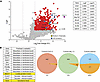 Figure 2
In vivo brain TurboID proximity proteomics shows FGF13S is not in the vicinity of secreted proteins or in proteins involved in secretion processes. (A) Volcano plot of proteins enriched in biotin-injected animals compared with control animals. Red indicates highly enriched proteins, with a fold-change >2; pink indicates FGF13; yellow indicates sodium channels; and blue indicates axon initial segment proteins. Statistics for these proteins are shown in the accompanying table. (B) Pie charts showing the overlap between the human secretome database of secreted protein (41) and our TurboID-FGF13S (red) dataset, the TurboID-Nav1.5 dataset (42) (green), and a dataset of secreted protein detected by TurboID proximity proteomics (cyan) (36). The full list of overlapping proteins found in our study, with their predicted localization, is shown in the accompanying table.
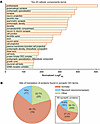 Figure 3
FGF13S is near soma-translated synaptic proteins. (A) Top 25 cellular component terms from gene set enrichment analysis showing a high representation of synaptic and distal axonal terms. (B) Pie chart showing the majority of the proteins found in the cellular component terms shown in A are translated in the soma and not locally at the synapses. Sites of translation were obtained from Glock et al. (51). Thirty-two proteins were not present in the translation database; therefore, 131 proteins were annotated. Inset: site of translation of all synaptic proteins, defined as the 2,025 proteins comprising the Mus musculus GO:0045202 term synapse. A total of 925 proteins are not present in the translation database; therefore, 1,100 proteins were annotated.
With this validation of the dataset, we then asked whether any candidate FGF13S near-neighbors are secreted proteins, which could suggest that FGF13 is similarly processed for secretion, despite its lack of a signal peptide. We exploited a recent study by Uhlen et al. in which they identified the human secretome (41), compiling a list of all proteins that are secreted either extracellularly or intracellularly. The latter represents proteins going through the ER-Golgi canonical pathway but retained in intracellular organelles or vesicles. Of the 457 proteins significantly enriched in the FGF13S TurboID dataset, 14 (3%) are present in the secretome database, and only 2 (APOB and BTBD17) are designated as extracellularly secreted (we excluded proteins predicted to be secreted intracellularly or that have an unknown location) (Figure 2B). To assess the relevance of identifying 3% of proteins in the secretome database, we performed a similar analysis on a TurboID dataset for a known nonsecreted protein, the cardiac sodium channel NaV1.5, obtained in cardiomyocytes (42). Among the 1,015 proteins identified as NaV1.5 near neighbors, 50 (4.9%) were also present in the secretome database and 12 were annotated as secreted extracellularly. Thus, the 3% of proteins in the FGF13 TurboID dataset identified in the secretome appear to be within the range expected for nonspecific detection of secreted proteins. In contrast, the overlap between a different TurboID dataset designed to detect proteins secreted from various cell types (36) and the human secretome dataset was 48.7% (Figure 2B).
Additionally, we performed gene set enrichment analysis on the candidate FGF13 near neighbors and found that Gene Ontology (GO) terms with “secretion” were not among the top 100 biological processes identified (Supplemental Dataset 1). Furthermore, for those GO terms with the word secretion in their identifiers, there were 52 members (proteins) detected by TurboID. Analysis of these 52 proteins showed all were annotated as cytoplasmic or nuclear and none as secreted proteins (Supplemental Figure 5). We also noted that 2 key proteins necessary for the unconventional secretion of FGF2, TEC kinase and ATP1A1, are not among the significantly enriched FGF13S neighbors. Because FGF13S (like all FHFs) lacks a signal sequence, and secretion of the homologous FGF12 was proposed to use this unconventional pathway, the absence of TEC kinase and ATP1A1 among the candidate FGF13S near neighbors suggests FGF13S is unlikely to be secreted in a FGF2-like fashion. Rather, the 52 candidate FGF13S near neighbors found in GO terms with “secretion” in their identifiers are most likely cytoplasmic proteins that participate in secretory or other types of vesicle formation. Indeed, analysis of GO terms for biological processes or cellular components identified multiple terms containing “vesicle” among the top hits (Supplemental Figure 6). In a recent study of the related FGF13-VY in cardiomyocytes, we found that FGF13VY regulated trafficking of Cx43 (Gja1) containing vesicles via affecting microtubule stability (42). Thus, FGF13S may perform similar vesicle-trafficking roles in neurons, and the identification of FGF13 in LEV and SEV fractionation experiments (Figure 1) is consistent with a role of FGF13 in regulating vesicle formation and/or vesicle trafficking.


