
Research ArticleHepatologyImmunologyInflammation
Open Access |  10.1172/jci.insight.194227
Posttranscriptional control of hepatic CEACAM1 3′UTR by human antigen R (HuR) mitigates sterile liver inflammation
Brian Cheng,1 Tristan D. Tibbe,2 Siyuan Yao,1 Megan Wei,1 Zeriel Y. Wong,1 Taylor Torgerson,1 Richard Chiu,1 Aanchal S. Kasargod,1 Kojiro Nakamura,1 Monica Cappelletti,3 Myung Sim,2 Douglas G. Farmer,1 Fady Kaldas,1 Jerzy W. Kupiec-Weglinski,1 and Kenneth J. Dery1
1The Dumont-UCLA Transplantation Center, Department of Surgery, Division of Liver and Pancreas Transplantation, and
2Department of Medicine Statistics Core, David Geffen School of Medicine at UCLA, Los Angeles, California, USA.
3Department of Pathology and Laboratory Medicine, UCLA Immunogenetics Center, Los Angeles, California, USA.
Address correspondence to: Kenneth J. Dery or Jerzy W. Kupiec-Weglinksi, Department of Surgery David Geffen School of Medicine at UCLA, Los Angeles, California 90095, USA. Phone: 310.794.7557 ext. 47557; Email: kdery@mednet.ucla.edu (KJD). Phone: 310.825.4196; Email: jkupiec@mednet.ucla.edu (JKW).
Authorship note: JKW and KJD contributed equally to this work.
Find articles by Cheng, B. in: PubMed | Google Scholar
1The Dumont-UCLA Transplantation Center, Department of Surgery, Division of Liver and Pancreas Transplantation, and
2Department of Medicine Statistics Core, David Geffen School of Medicine at UCLA, Los Angeles, California, USA.
3Department of Pathology and Laboratory Medicine, UCLA Immunogenetics Center, Los Angeles, California, USA.
Address correspondence to: Kenneth J. Dery or Jerzy W. Kupiec-Weglinksi, Department of Surgery David Geffen School of Medicine at UCLA, Los Angeles, California 90095, USA. Phone: 310.794.7557 ext. 47557; Email: kdery@mednet.ucla.edu (KJD). Phone: 310.825.4196; Email: jkupiec@mednet.ucla.edu (JKW).
Authorship note: JKW and KJD contributed equally to this work.
Find articles by
Tibbe, T.
in:
PubMed
|
Google Scholar
|

1The Dumont-UCLA Transplantation Center, Department of Surgery, Division of Liver and Pancreas Transplantation, and
2Department of Medicine Statistics Core, David Geffen School of Medicine at UCLA, Los Angeles, California, USA.
3Department of Pathology and Laboratory Medicine, UCLA Immunogenetics Center, Los Angeles, California, USA.
Address correspondence to: Kenneth J. Dery or Jerzy W. Kupiec-Weglinksi, Department of Surgery David Geffen School of Medicine at UCLA, Los Angeles, California 90095, USA. Phone: 310.794.7557 ext. 47557; Email: kdery@mednet.ucla.edu (KJD). Phone: 310.825.4196; Email: jkupiec@mednet.ucla.edu (JKW).
Authorship note: JKW and KJD contributed equally to this work.
Find articles by Yao, S. in: PubMed | Google Scholar
1The Dumont-UCLA Transplantation Center, Department of Surgery, Division of Liver and Pancreas Transplantation, and
2Department of Medicine Statistics Core, David Geffen School of Medicine at UCLA, Los Angeles, California, USA.
3Department of Pathology and Laboratory Medicine, UCLA Immunogenetics Center, Los Angeles, California, USA.
Address correspondence to: Kenneth J. Dery or Jerzy W. Kupiec-Weglinksi, Department of Surgery David Geffen School of Medicine at UCLA, Los Angeles, California 90095, USA. Phone: 310.794.7557 ext. 47557; Email: kdery@mednet.ucla.edu (KJD). Phone: 310.825.4196; Email: jkupiec@mednet.ucla.edu (JKW).
Authorship note: JKW and KJD contributed equally to this work.
Find articles by Wei, M. in: PubMed | Google Scholar
1The Dumont-UCLA Transplantation Center, Department of Surgery, Division of Liver and Pancreas Transplantation, and
2Department of Medicine Statistics Core, David Geffen School of Medicine at UCLA, Los Angeles, California, USA.
3Department of Pathology and Laboratory Medicine, UCLA Immunogenetics Center, Los Angeles, California, USA.
Address correspondence to: Kenneth J. Dery or Jerzy W. Kupiec-Weglinksi, Department of Surgery David Geffen School of Medicine at UCLA, Los Angeles, California 90095, USA. Phone: 310.794.7557 ext. 47557; Email: kdery@mednet.ucla.edu (KJD). Phone: 310.825.4196; Email: jkupiec@mednet.ucla.edu (JKW).
Authorship note: JKW and KJD contributed equally to this work.
Find articles by Wong, Z. in: PubMed | Google Scholar
1The Dumont-UCLA Transplantation Center, Department of Surgery, Division of Liver and Pancreas Transplantation, and
2Department of Medicine Statistics Core, David Geffen School of Medicine at UCLA, Los Angeles, California, USA.
3Department of Pathology and Laboratory Medicine, UCLA Immunogenetics Center, Los Angeles, California, USA.
Address correspondence to: Kenneth J. Dery or Jerzy W. Kupiec-Weglinksi, Department of Surgery David Geffen School of Medicine at UCLA, Los Angeles, California 90095, USA. Phone: 310.794.7557 ext. 47557; Email: kdery@mednet.ucla.edu (KJD). Phone: 310.825.4196; Email: jkupiec@mednet.ucla.edu (JKW).
Authorship note: JKW and KJD contributed equally to this work.
Find articles by Torgerson, T. in: PubMed | Google Scholar
1The Dumont-UCLA Transplantation Center, Department of Surgery, Division of Liver and Pancreas Transplantation, and
2Department of Medicine Statistics Core, David Geffen School of Medicine at UCLA, Los Angeles, California, USA.
3Department of Pathology and Laboratory Medicine, UCLA Immunogenetics Center, Los Angeles, California, USA.
Address correspondence to: Kenneth J. Dery or Jerzy W. Kupiec-Weglinksi, Department of Surgery David Geffen School of Medicine at UCLA, Los Angeles, California 90095, USA. Phone: 310.794.7557 ext. 47557; Email: kdery@mednet.ucla.edu (KJD). Phone: 310.825.4196; Email: jkupiec@mednet.ucla.edu (JKW).
Authorship note: JKW and KJD contributed equally to this work.
Find articles by Chiu, R. in: PubMed | Google Scholar
1The Dumont-UCLA Transplantation Center, Department of Surgery, Division of Liver and Pancreas Transplantation, and
2Department of Medicine Statistics Core, David Geffen School of Medicine at UCLA, Los Angeles, California, USA.
3Department of Pathology and Laboratory Medicine, UCLA Immunogenetics Center, Los Angeles, California, USA.
Address correspondence to: Kenneth J. Dery or Jerzy W. Kupiec-Weglinksi, Department of Surgery David Geffen School of Medicine at UCLA, Los Angeles, California 90095, USA. Phone: 310.794.7557 ext. 47557; Email: kdery@mednet.ucla.edu (KJD). Phone: 310.825.4196; Email: jkupiec@mednet.ucla.edu (JKW).
Authorship note: JKW and KJD contributed equally to this work.
Find articles by Kasargod, A. in: PubMed | Google Scholar
1The Dumont-UCLA Transplantation Center, Department of Surgery, Division of Liver and Pancreas Transplantation, and
2Department of Medicine Statistics Core, David Geffen School of Medicine at UCLA, Los Angeles, California, USA.
3Department of Pathology and Laboratory Medicine, UCLA Immunogenetics Center, Los Angeles, California, USA.
Address correspondence to: Kenneth J. Dery or Jerzy W. Kupiec-Weglinksi, Department of Surgery David Geffen School of Medicine at UCLA, Los Angeles, California 90095, USA. Phone: 310.794.7557 ext. 47557; Email: kdery@mednet.ucla.edu (KJD). Phone: 310.825.4196; Email: jkupiec@mednet.ucla.edu (JKW).
Authorship note: JKW and KJD contributed equally to this work.
Find articles by Nakamura, K. in: PubMed | Google Scholar
1The Dumont-UCLA Transplantation Center, Department of Surgery, Division of Liver and Pancreas Transplantation, and
2Department of Medicine Statistics Core, David Geffen School of Medicine at UCLA, Los Angeles, California, USA.
3Department of Pathology and Laboratory Medicine, UCLA Immunogenetics Center, Los Angeles, California, USA.
Address correspondence to: Kenneth J. Dery or Jerzy W. Kupiec-Weglinksi, Department of Surgery David Geffen School of Medicine at UCLA, Los Angeles, California 90095, USA. Phone: 310.794.7557 ext. 47557; Email: kdery@mednet.ucla.edu (KJD). Phone: 310.825.4196; Email: jkupiec@mednet.ucla.edu (JKW).
Authorship note: JKW and KJD contributed equally to this work.
Find articles by Cappelletti, M. in: PubMed | Google Scholar
1The Dumont-UCLA Transplantation Center, Department of Surgery, Division of Liver and Pancreas Transplantation, and
2Department of Medicine Statistics Core, David Geffen School of Medicine at UCLA, Los Angeles, California, USA.
3Department of Pathology and Laboratory Medicine, UCLA Immunogenetics Center, Los Angeles, California, USA.
Address correspondence to: Kenneth J. Dery or Jerzy W. Kupiec-Weglinksi, Department of Surgery David Geffen School of Medicine at UCLA, Los Angeles, California 90095, USA. Phone: 310.794.7557 ext. 47557; Email: kdery@mednet.ucla.edu (KJD). Phone: 310.825.4196; Email: jkupiec@mednet.ucla.edu (JKW).
Authorship note: JKW and KJD contributed equally to this work.
Find articles by Sim, M. in: PubMed | Google Scholar
1The Dumont-UCLA Transplantation Center, Department of Surgery, Division of Liver and Pancreas Transplantation, and
2Department of Medicine Statistics Core, David Geffen School of Medicine at UCLA, Los Angeles, California, USA.
3Department of Pathology and Laboratory Medicine, UCLA Immunogenetics Center, Los Angeles, California, USA.
Address correspondence to: Kenneth J. Dery or Jerzy W. Kupiec-Weglinksi, Department of Surgery David Geffen School of Medicine at UCLA, Los Angeles, California 90095, USA. Phone: 310.794.7557 ext. 47557; Email: kdery@mednet.ucla.edu (KJD). Phone: 310.825.4196; Email: jkupiec@mednet.ucla.edu (JKW).
Authorship note: JKW and KJD contributed equally to this work.
Find articles by
Farmer, D.
in:
PubMed
|
Google Scholar
|
1The Dumont-UCLA Transplantation Center, Department of Surgery, Division of Liver and Pancreas Transplantation, and
2Department of Medicine Statistics Core, David Geffen School of Medicine at UCLA, Los Angeles, California, USA.
3Department of Pathology and Laboratory Medicine, UCLA Immunogenetics Center, Los Angeles, California, USA.
Address correspondence to: Kenneth J. Dery or Jerzy W. Kupiec-Weglinksi, Department of Surgery David Geffen School of Medicine at UCLA, Los Angeles, California 90095, USA. Phone: 310.794.7557 ext. 47557; Email: kdery@mednet.ucla.edu (KJD). Phone: 310.825.4196; Email: jkupiec@mednet.ucla.edu (JKW).
Authorship note: JKW and KJD contributed equally to this work.
Find articles by Kaldas, F. in: PubMed | Google Scholar
1The Dumont-UCLA Transplantation Center, Department of Surgery, Division of Liver and Pancreas Transplantation, and
2Department of Medicine Statistics Core, David Geffen School of Medicine at UCLA, Los Angeles, California, USA.
3Department of Pathology and Laboratory Medicine, UCLA Immunogenetics Center, Los Angeles, California, USA.
Address correspondence to: Kenneth J. Dery or Jerzy W. Kupiec-Weglinksi, Department of Surgery David Geffen School of Medicine at UCLA, Los Angeles, California 90095, USA. Phone: 310.794.7557 ext. 47557; Email: kdery@mednet.ucla.edu (KJD). Phone: 310.825.4196; Email: jkupiec@mednet.ucla.edu (JKW).
Authorship note: JKW and KJD contributed equally to this work.
Find articles by Kupiec-Weglinski, J. in: PubMed | Google Scholar
1The Dumont-UCLA Transplantation Center, Department of Surgery, Division of Liver and Pancreas Transplantation, and
2Department of Medicine Statistics Core, David Geffen School of Medicine at UCLA, Los Angeles, California, USA.
3Department of Pathology and Laboratory Medicine, UCLA Immunogenetics Center, Los Angeles, California, USA.
Address correspondence to: Kenneth J. Dery or Jerzy W. Kupiec-Weglinksi, Department of Surgery David Geffen School of Medicine at UCLA, Los Angeles, California 90095, USA. Phone: 310.794.7557 ext. 47557; Email: kdery@mednet.ucla.edu (KJD). Phone: 310.825.4196; Email: jkupiec@mednet.ucla.edu (JKW).
Authorship note: JKW and KJD contributed equally to this work.
Find articles by
Dery, K.
in:
PubMed
|
Google Scholar
|
Published September 23, 2025 - More info
JCI Insight. 2025;10(18):e194227. https://doi.org/10.1172/jci.insight.194227.
© 2025 Cheng et al. This work is licensed under the Creative Commons Attribution 4.0 International License. To view a copy of this license, visit http://creativecommons.org/licenses/by/4.0/.
Received: April 8, 2025; Accepted: August 11, 2025


-
Results
Hepatic HuR-null mutation augments cytotoxic stress, leading to the loss of Ceacam1-S. We aimed to determine how graft-specific HuR signaling may affect the severity of liver injury and the cellular adaptation of Ceacam1 during temperature-dependent oxidative stress. Owing to the lethality of homozygous Elavl1 embryos, we used a conditionally defective mouse HuR/Elavl1 allele containing target sites for the Cre/LoxP recombination system (16, 17). Pups that coexpressed the Elavl1 floxed (Elavl1fl) allele and were hemizygous or homozygous for the AlbCre (Albumin-Cre) recombinase allele (Figure 1A) showed low hepatic HuR protein levels in the naive state (Figure 1, B and C; P = 0.03, Elavl1fl versus floxed controls [Cntlfl] lacking AlbCre). These animals also showed enhanced hepatic necrosis as measured by Suzuki’s histological scoring of liver injury (P = 0.0397) (Figure 1, D and E). Lactate dehydrogenase (LDH) isoenzyme analysis was performed to separate isoforms based on their differential migration. Compared with floxed control livers, Elavl1fl showed a marked increase in LDH-5, the isoform associated with anaerobic glycolysis in mouse liver tissues (Figure 1, F and G; P = 0.0353).
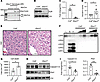 Figure 1
Hepatic HuR-null mutation augments cytotoxic stress, leading to loss of Ceacam1-S. (A) Representative RT-PCR of genomic DNA from HuR-KO mice (genotype floxed [fl/fl] Elavl1, Alb/Cre+). Littermates that contained only the floxed Elavl1 mutation served as controls (Cntlfl). Mutant (mt) and WT notations refer to the zygosity of the Elavl1 and AlbCre loci. Asterisk depicts nonspecific amplicon products. (B) Representative immunoblots of floxed control or Elavl1fl naive livers evaluated for HuR or Vnc expression. (C) Quantitation of HuR expression, relative Vnc (n = 4/group). (D) Suzuki’s histological grading (n = 4–5/group). (E) Representative H&E staining of floxed control or Elavl1fl naive livers. Scale bar: 100 μm. (F) LDH agarose isoenzyme assay of Cntlfl or Elavl1fl naive livers (n = 3/group). Mouse liver (L), brain (B), and heart (H) were used as migration controls. Black triangles denotes increasing volume of protein lysates from Cntlfl or Elavl1fl livers loaded (5, 10, or 20 μL for each). (G) Quantitation of the average from 3 biological replicates, across all volumes loaded, for the LDH-5 isoform relative to Cntlfl livers. (H and I) Representative Western blot and quantitation of Ceacam1-S, PHD1, and Vnc expression (n = 4–7/group). Vnc served as a loading control. Two-tailed Mann-Whitney U analyses were performed for C and D, and unpaired parametric 2-tailed Student’s t tests were performed for G and I. Data expressed are from at least 3 independent experiments (data are shown as mean ± SEM). *P < 0.05, ***P < 0.001.
Notably, hepatic HuR-deficient livers showed a marked decrease in Ceacam1-S (Figure 1, H and I; P = 0.013, Elavl1fl versus Cntlfl) and Prolyl Hydroxylase Domain-1 (Phd1) levels (Figure 1, H and I; P = 0.0004, Elavl1fl versus Cntlfl) in preinjury mice. We tested the Ceacam1-S isoform because our recent study showed that induction of its alternative splicing led to the protection of hepatocytes from hypoxic stress (5). Phd1 levels were tested because our recent study also implicated the oxygen-sensing HIF-1α transcription factor in the alternative splicing of Ceacam1 (5). Phd proteins stabilize hypoxia-inducible factor (HIF) proteins under basal oxygen conditions (18). Collectively, these data implicate hepatic HuR in the positive control of hepatic Ceacam1 gene expression profile through oxygen-sensing regulatory pathways that involve HIF-1α signaling.
Hepatic Ceacam1 mRNA depends on HuR during temperature-dependent cellular stress. Previously, we showed that Ceacam1 deficiency activates proapoptotic Phospho-p38 Mitogen-activated protein kinase (p-p38)/ASK1 cell death pathways in cold-stored donor livers (4), while Ceacam1-S–proficient hepatocytes are protected from warm hypoxic stress (5). To determine if oxygen-sensing regulatory pathways under differential temperature stress conditions may regulate the posttranscriptional HuR response to Ceacam1 signaling, we performed in situ hybridization with fluorescent probes designed to hybridize target Ceacam1 mRNAs at the single-cell resolution level (Figure 2, A–H). Hepatocytes were cultured using an in vitro mimic model of ischemic stress hypoxia/reoxygenation (+H/R) that restricts oxygen levels (hypoxia; <0.01% O2) for 3 hours, followed by reoxygenation (5, 14).
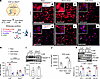 Figure 2
Hepatic Ceacam1 mRNA depends on HuR signaling during temperature-dependent cellular stress. (A) Schematic RNAscope in situ hybridization of Ceacam1 mRNAs at the single-cell resolution. Floxed control and Elavl1fl mouse hepatocytes were treated with warm (H/R was 3-hour hypoxia, 18-hour rexoygenation) versus cold stress. The workflow shows the probe platform built to amplify the signal. (B–G) Representative distribution of hepatocyte-derived Ceacam1 (red) mRNA+ cells; nuclear (DAPI) staining (blue). Scale bar: 500 μm. Arrows show the selected inset image where the original magnification is scaled upward 150× for visualization. (H) Quantitation of mean fluorescent intensity (MFI) area of cells/ n = 4 high-power field (HPF). (I) Western blots/quantification of Ceacam1-S and β-Actin. (J) ROS production in control mouse hepatocytes exposed to variable oxygen and temperature stress was measured by flow cytometry. (K) Western blots/quantification of HuR, HO-1, p70S6K, and His-H3 expression. For I and K, the time point 0 hours (+H/R) corresponds to 3 hours of hypoxia followed by 0 hours of reoxygenation. β-Actin served as an internal control for I and K blots. H was analyzed using 2-way ANOVA and Bonferroni multiple comparison test (n = 4/group). I was analyzed using the Mann-Whitney U test (n = 3/group). J and K) were analyzed by 1-way and 2-way ANOVA, followed by Tukey’s HSD test (n = 3/group). Data expressed are from at least 3 independent experiments (data are shown as mean ± SEM). *P < 0.05, **P < 0.01 and ****P < < 0.0001. +H/R, hypoxia/reoxygenation.
We observed that hepatocytes isolated from HuR-deficient livers expressed significantly less Ceacam1 mRNA compared with Cntlfl cells under resting state (Figure 2, B, E, and H; P = 0.001). In warm-stressed hepatocytes, we observed substantial amplification of Ceacam1 mRNA in Cntlfl but not HuR-null cells (Figure 2, C, F, and H; P < 0.0001). Cold H/R stress showed appreciably lower Ceacam1 mRNA levels in HuR-null cells (Figure 2, D, G, and H). Western blots revealed diminished Ceacam1-S protein levels in HuR-deficient hepatocytes cultured under warm H/R, although the data do not reach significance (Figure 2I). We next measured ROS levels in WT cells exposed to H/R under warm versus cold stress using fluorescent H2DCFDA and flow cytometry (Figure 2J). Previously, we showed that Ceacam1-null livers induce high levels of ROS in cold-stored donor livers (4). Here, we observed substantially reduced ROS levels in warm stress compared with mock-treated cells (Figure 2J), consistent with high antioxidant Ceacam1 mRNA levels observed in Figure 2C. By contrast, cold-stressed cells had significantly higher ROS levels than those in warm stress (Figure 2J, P = 0.008). Finally, the low Ceacam1 levels in Elavl1fl cells correlated with enhanced cellular-stress markers, HO-1 (P = 0.01), p70S6K (P = 0.045), and His-H3 (P < 0.0001) (Figure 2K; Elavl1fl versus Cntlfl). Thus, the induction of hepatic Ceacam1 depends on hepatic HuR signaling and provides a mechanistic clue into how antioxidants may homeostatically modulate sterile inflammation in the stressed liver.
HuR post-transcriptionally targets hypoxia-responsive elements within the Ceacam1 3′UTR necessary for mRNA stabilization. To determine whether HuR is associated with Ceacam1, luciferase reporter assays were constructed to express either Ceacam1 WT-3′UTR or vector control sequence (Figure 3A). When constructs were evaluated in Cntlfl (blue) or Elavl1fl (red) hepatocytes under normoxia, we noted a significant decline in luciferase activity when HuR was deficient (Figure 3B; P = 0.0007, WT-3′UTR). A HuR Sequence Logo was then used to screen for binding sites encoded in the Ceacam1 3′UTR (Figure 3C). Two candidate 13-nucleotide binding sites were identified in the Ceacam1 exon 9 sequence, designated proximal 3′UTRΔ1 and distal 3′UTRΔ2. Proximal and distal deletion mutants differed relative to the start of exon 9 (Figure 3A). These deletion constructs were next tested under normoxic (blue) versus hypoxic (red) conditions in Cntlfl hepatocytes (Figure 3D). We observed a significant increase in luminescence when both proximal 3′UTRΔ1 and distal 3′UTRΔ2 mutations were compared with the control WT Ceacam1 3′UTR sequence (Figure 3D; P < 0.0001). These data suggest that hepatic HuR targets multiple responsive elements in the Ceacam1 3′UTR during posttranscriptional gene processing.
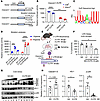 Figure 3
HuR posttranscriptionally targets hypoxia-responsive elements encoded within the Ceacam1 3′UTR for mRNA stabilization. (A) Luciferase (Luc) constructs showing WT or mutation analyses using 13-nucleotide deletions of the Ceacam1 3′UTR sequence (denoted by Δ1 or Δ2). Proximal versus distal refers to the location of the deletion mutations relative to the start of exon 9. CMV refers to cytomegalovirus promoter. (B) Cntlfl hepatocytes (blue) versus Elavl1fl (red) origin were transfected with Vector or WT-3′UTR sequence (n = 4–6/group). Relative luciferase activity was determined as relative light units. (C) A HuR Sequence Logo shows conserved nucleotide positions in its RNA binding sequence. (D) Cntlfl hepatocytes were cultured under Hypoxia (blue) versus +Hypoxia (red) conditions using WT versus deletion constructs (n = 3/group). (E) Schematic of MOs targeting the Ceacam1 3′UTR cultured under cold stress. (F) LDH cytotoxicity assay in WT hepatocytes cultured with nonspecific (NS) MOs, individual, or combined 3′UTR:MOs, treated with 3-hour cold stress (n = 3/group). (G and H) Western blots and quantitation of Ceacam1, HO-1, p-p38, and β-Actin expression in cold-stressed WT hepatocytes. The concentration of MOs was 2.5 μM (lanes 1–2, 7–8), 5 μM (lanes 3–4, 9–10), and 10 μM (lanes 5–6, 11–12) represented by the ascending black triangle. (H) Quantitation of Ceacam1, HO-1, p-p38, and β-Actin expression. B and D were analyzed using 2-way ANOVA and Tukey’s HSD test. F was analyzed by Brown-Forsythe and Welch 2-way ANOVA, followed by a Dunnett T3 post hoc test. H was analyzed by unpaired 2-tailed t test for 3′UTR:MO versus NS:MO groups (n = 6). Data are expressed are from at least 3 independent experiments (data are shown as mean ± SEM). *P < 0.05, **P < 0.01, ***P < 0.001, and ****P < 0.0001.
MOs targeting the Ceacam1 3′UTR hypoxia-responsive elements overcome transcriptional barriers that repress Ceacam1-S formation under cold stress. Next, we aimed to determine whether ASOs targeting cis-elements at proximal and/or distal regions of the Ceacam1 3′UTR could enhance Ceacam1 protein levels and promote hepatocellular health under cold stress (Figure 3, E–H). To test this, we designed synthetic antisense oligonucleotide MOs to prevent HuR binding to the Ceacam1 3′UTR (Figures 3E; 3′UTR:MOΔ1, red; and 3′UTR:MOΔ2, purple). An LDH assay assessed WT hepatocyte health in cells cultured with MOs that block proximal and/or distal hypoxia-responsive elements (Figure 3F). We determined that blocking both hypoxia-responsive elements by MOs was necessary and sufficient to reduce hepatocyte cytotoxicity (Figure 3F; P = 0.0479, 3′UTR:MOΔ1/Δ2, hereafter collectively referred to as 3′UTR:MOs, versus nonspecific MO [NS:MO]). Notably, treatment with 3′UTR:MOs restored Ceacam1 expression in cold-stressed WT hepatocytes (Figure 3, G and H), overcoming the previously observed suppression under these conditions (Figure 2, D and G). The rapid translational induction of Ceacam1-S was associated with a significant decrease in the stress-responsive protein HO-1 (P = 0.018) and the cell-death marker p-p38 (P = 0.005) (Figure 3, G and H; 3′UTR:MO versus NS:MO). Thus, hypoxia-responsive elements encoded in the Ceacam1 3′UTR act as a modular platform for hepatic HuR signaling to induce homeostatic healing during cold stress.
Altered HuR levels by ASOs influence Ceacam1 isoform expression. To gain further insight into the regulatory mechanism of Ceacam1 expression, we performed HuR loss-of-function versus gain-of-function studies in a clinically relevant humanized CEACAM1 transgene Tg(CEACAM1) mouse model. Previous studies using Tg(CEACAM1) mice on a WT Ceacam1 background demonstrated that expression of Tg(CEACAM1) serves as an effective model to study how bone marrow granulocytes bind Neisseria Opa proteins (19). We crossed global Ceacam1-KO mice with our humanized Tg(CEACAM1) colony to remove cross-reactive interactions with mouse Ceacam1. Next, muCeacam1/huCEACAM1 expression was evaluated in livers (L) from WT, global Ceacam1-KO, and humanized Tg(CEACAM1) mice. Our data show that mouse and human livers expressed 1 isoform of muCeacam1/huCEACAM1, though mouse liver showed better overall expression of the Ceacam1 (Figure 4A, lanes 1 versus 3). Kidney (K) exhibited appreciably higher levels of huCEACAM1, whereas spleen (S) and colon (C) tissues showed extensive evidence of glycosylation (Figures 4A). The distribution of human CEACAM1 in various tissues suggests that humanized CEACAM1-expressing hepatocytes may retain functional similarities to murine hepatocytes expressing endogenous Ceacam1.
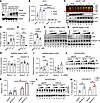 Figure 4
Altered HuR levels by ASOs influence Ceacam1 isoform expression. (A) Western blots using antibodies that recognize both mouse and human CEACAM1 were compared in Tg(CEACAM1) hepatocytes expressed in the liver (L), kidney (K), spleen (S), and colon (C). Either isoform may be present (Total). (B) qPCR of RNAs isolated from Tg(CEACAM1) hepatocytes pretreated with siRNAs directed to Elavl1 (siHuR) or a control (siCntl) (n = 3/group). (C–E) Western blots and quantitation of Tg(CEACAM1) hepatocytes treated with siHuR. Antibody 229 was used to detect CEACAM1-L (green), whereas antibody CD66A (red) shows CEACAM1-S expression. D was analyzed by the percent inclusion method of (CEACAM1-L)/(CEACAM1-S+CEACAM1-L) levels (n = 3), whereas E was analyzed relative to β-Actin expression (n = 3). (F–I) Western blot and quantitation of HuR, Ceacam1-S, and Vnc expression in mouse floxed control hepatocytes cultured with saRNAs under normoxia (F and H) versus hypoxia reoxygenation (H/R; G and I) conditions. Ascending black triangle denotes increasing concentrations of saRNAs: 15 nM (lanes 2, 6), 30 nM (lanes 3, 7), 60 nM (lanes 4, 8), versus 90 nM (lanes 5, 9). Quantitation for each blot is n = 2 mock, n = 4/saRNA group. (J–M) Western blot-assisted HuR, HO-1, Ceacam1-S, and β-Actin expression in Tg(CEACAM1) hepatocytes cultured under cold stress (CS). Quantitation for each blot is n = 3/saRNA group. Loading controls were Gapdh (A) and β-Actin (C, J, and L), whereas Vnc was used for F and G. B, K, and M were analyzed by 2-way ANOVA and Tukey’s multiple comparison test, whereas D, E, H, and I were analyzed by 1-way ANOVA and Tukey’s HSD test. Data expressed are from at least 3 independent experiments (data are shown as mean ± SEM). *P < 0.05, **P < 0.01, ***P < 0.001, and ****P < 0.0001.
Next, we evaluated how RNA interference–mediated loss of HuR signaling in humanized CEACAM1 hepatocytes affects the expression of CEACAM1 isoforms (Figure 4, B–E). siRNAs directed to Elavl1 mRNA in humanized Tg(CEACAM1) hepatocytes showed significant HuR knockdown (Figure 4B; P < 0.0001, siElavl1 versus siCntl, 3 hours). Loss of HuR promoted increased CEACAM1-L protein expression by Western blots (Figure 4, C and D; P = 0.0345, 3 hours versus Mock). Multiplexed fluorescent antibodies detected either CEACAM1-L (green, using antibody α-229) or CEACAM1-S (red) isoforms. Notably, increased CEACAM1-L levels were associated with decreased homeostatic HO-1 expression (Figure 4E; P = 0.004, 3 hours versus Mock) and elevated levels of the proapoptotic marker p-p38 (Figure 4E; P = 0.005, 3 hours versus Mock).
As a proof of principle, we designed saRNAs to increase HuR expression levels (Figure 4, F–I). SaRNAs are small double-stranded RNA molecules that activate endogenous genes through an RNA-based promoter-targeting mechanism (20). To enhance therapeutic relevance, we screened saRNAs targeting mouse and human HuR promoters to identify a single candidate effective in both species. The saRNA variant 2 (HuR-v2) was less effective at enhancing mouse HuR and Ceacam1-S isoform levels under normoxic conditions (Figure 4, F and H) compared with its effect under hypoxic stress (Figure 4, G and I; P = 0.015, HuR-v2 versus HuR-v1). Parallel LDH assays showed improved hepatocyte viability in the presence of saHuR-v2 (60 nM) compared with nonspecific controls (Supplemental Figure 1; supplemental material available online with this article; https://doi.org/10.1172/jci.insight.194227DS1).
When humanized Tg(CEACAM1) hepatocytes were treated with saRNAs targeting either a control promoter (saGFP) or the HuR promoter under cold stress (CS), HuR expression increased by approximately 2.6-fold (calculated as the mean of saHuR 1.25/saGFP 0.49) in response to saHuR-v2 treatment (Figure 4J; P = 0.002, Mock versus CS). This corresponded with an increase in HO-1 expression (Figure 4J), along with preferential induction of CEACAM1-S (Figure 4L; P = 0.003, saHuR-v2 versus saGFP, CS), reversing the trends seen in RNAi studies (Figure 4, C–E). These findings suggest that hepatic HuR can stabilize muCeacam1/huCEACAM1 expression and that small molecules targeting huCEACAM1 can enhance their protective antioxidant effects in cold-stored livers during the peritransplant period.
Acute liver injury compromises posttranscriptional HuR regulation of Ceacam1. Next, we aimed to determine whether 3′UTR:MOs targeting hepatic Ceacam1 may potentiate cytoprotective adaptive responses in a clinically relevant in vivo mouse model of sterile liver inflammation. First, hepatic HuR regulation of Ceacam1 mRNA expression was examined in our LPS/D-Galactosamine (LPS/D-GalN) murine model of acute liver injury (5, 21). This model relies on uridine-5′-triphosphate depletion primarily in the liver by D-GalN to decrease hepatocyte RNA synthesis, leading to excessive ROS and oxidative stress levels, severe hepatic congestion, and rapid cell death. LPS/D-GalN adjuvant was administered to groups of Cntlfl or Elavl1fl mice (Figure 5A). At 6 hours, gross examination showed uncontrolled hemorrhaging in the liver from all treatment groups, unlike Sham controls (Figure 5B). Sinusoidal congestion, hepatocellular necrosis, and morphological distortion were more severe in hepatic HuR-deficient livers (Figure 5C), consistent with Suzuki’s liver injury scores (Figure 5D; P = 0.014). Moreover, hepatic HuR-deficient livers revealed enhanced Il6 gene expression compared with Cntlfl counterparts (Figure 5E; P = 0.006, Elavl1fl, Sham versus LPS/D-GalN). This was accompanied by increased expression of the RNA splicing factors Ptbp1 and heterogeneous nuclear Ribonucleoprotein A1 (hnRNPA1) in Elavl1fl hepatocytes compared with controls (Figure 5F). Finally, LPS/D-GalN treatment induced a 1.5-fold (calculated as the mean of Elavl1fl + LPS/D-Gal-N 35.9/Sham 26.5) increase in Ceacam1-L mRNA in hepatocyte-deficient HuR mice (Figure 5G; P = 0.0571, Elavl1fl ± LPS/D-GalN). These data demonstrate that HuR shapes hepatocyte responses to injury through a post-transcriptional mechanism that depends on Ceacam1 alternative splicing during sterile inflammation, linking this process to cellular adhesion and signal transduction.
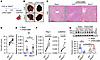 Figure 5
Acute liver injury compromises posttranscriptional HuR regulation of Ceacam1 in vivo. (A) Dosing scheme using LPS/D-Galactosamine (LPS/D-GalN) to simulate acute liver injury in mouse livers. Cntlfl and Elavl1fl mice were treated 6 hours before liver collection. (B) Gross anatomical examination of Sham versus injured livers. (C) Representative H&E staining (original magnification, ×10; scaled up 150×). Scale bars: 200 μm. (D) Suzuki’s histological grading of acute liver injury tissues (n = 5–7/group). (E and F) qPCR detection of mRNA coding for proinflammatory Il6 and RNA splicing factors Ptbp1 and hnRNPA1, relative to Actb expression (n = 3–5/group). (G) RT-PCR using exon-junction specific Ceacam1 primers. Quantitative analyses of percentage of Ceacam1-L splice variant (n = 4–5/group), relative GAPDH expression. D and F were analyzed by Mann-Whitney U analyses; E and G were analyzed by 2-way ANOVA and Tukey’s HSD test. Data expressed are from at least 3 independent experiments (data are shown as mean ± SEM). *P < 0.05, **P < 0.01.
MO-mediated targeting of ceacam1 3′UTR alleviates liver inflammation. We next examined whether in vivo stabilization of Ceacam1-S using MOs alleviates liver injury. Histological examination revealed that livers treated with 3′UTR:MOs (12.5 mg/kg each) showed significantly improved outcomes compared with controls, as evidenced by gross anatomy (Figure 6A), Suzuki’s scoring (Figure 6B; P = 0.04), and TUNEL staining (Figures 6, A and C; P < 0.0001). The serum ALT levels further corroborated these findings, showing decreased liver enzyme release in the 3′UTR:MO treatment groups, thus reflecting suppressed hepatocellular damage (Figure 6D). Notably, WT mice treated with the 3′UTR-targeting MOs had significantly higher hepatic Ceacam1-S levels than controls (Figure 6, E and F; P = 0.016). These findings highlight the therapeutic potential of 3′UTR-targeting MOs to stabilize Ceacam1-S expression, offering a promising strategy to mitigate liver injury by preserving hepatocyte integrity and function.
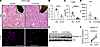 Figure 6
MO-mediated targeting of Ceacam1 3′UTR alleviates liver sterile inflammation. (A) Representative examination of WT livers treated with nonspecific (NS) versus 3′UTR:MOs by gross anatomical examination (upper right inset), H&E (original magnification, ×20; scale bars: 100 μm), and TUNEL staining (original magnification, ×40; scale bars: 50 μm, lower right inset). (B and C) Quantitation of Suzuki’s histological grading (n = 4–5/group) and TUNEL staining measured as percent (%) relative frequency (n = 3/HPF/ n = 9 per group). (D) sALT was analyzed using the Kruskal-Wallis test, followed by Dunn’s test (n = 4–5/group). IU/liter is international units per liter. (E and F) Representative Western blot and quantitation of Ceacam1-S, as compared with Vnc expression (n = 4–5/group). B and F were analyzed by a nonparametric Mann-Whitney U test, and C was analyzed by an unpaired 2-tailed t test. Data expressed are from at least 3 independent experiments (data are shown as mean ± SEM). *P < 0.05, ****P < 0.0001.
Hepatic CEACAM1 mRNA expression is associated with ELAVL1 mRNA in human OLT. In the clinical arm of the present study, we examined the relationship between ELAVL1/CEACAM1 in human OLT biopsies (Figure 7A) with a comprehensive dataset of clinical parameters from 164 patients (72 with quantitative PCR [qPCR] and 40 with RNA-Seq measurements; Figure 7B). We found a positive correlation (blue) that was statistically significant between hepatic post-OLT ELAVL1 and CEACAM1 mRNAs (Figure 7C; P = 0.002). When OLT biopsies were assigned to low (red) versus high (blue) CEACAM1 expression groups, according to the median split method (cut-off, 813.15) (Figure 7D), once again, significantly higher hepatic ELAVL1 mRNA levels were found in the high CEACAM1 biopsies (Figure 7E; P = 0.04).
 Figure 7
Hepatic CEACAM1 mRNA expression is associated with ELAVL1 mRNA levels in human OLT. (A) Human liver biopsies were collected before (pre-OLT) and after (post-OLT) transplantation. (B) Data workflow for Cohorts 1–3 used for mediation analyses, the regression analyses, and all other clinical analyses. Comparisons between the complete-case mediation analyses and the multiple-imputation mediation analyses established that the complete-case mediation analyses dataset was used for linear regression analyses. (C) Correlation of post-OLT ELAVL1/GAPDH (GA) versus CEACAM1/GA mRNA expression. (D) Post-OLT human liver biopsies were divided into low (n = 35, red) and high (n = 36, blue) CEACAM1 expression groups. (E) Post-OLT CEACAM1 compared with ELAVL1 expression. (F) Correlation of pre-OLT ELAVL1/CEACAM1 to post-OLT proinflammatory MAPK14. (G) Correlation of post-OLT ELAVL1/CEACAM1 to post-OLT MAP3K5 and IL17A. (H) Logistic regression model with CEACAM1 predicting the incidence of EAD, controlling for ELAVL1. (I) The relationship between ELAVL1 and CEACAM1 mediates lower log odds of EAD. C, F, and G were analyzed by t tests of the linear regression coefficients. (D and E) were analyzed by nonparametric Wilcoxon Rank Sum tests. (H) The P value comes from a z-test of the logistic regression model coefficient. *P < 0.05, **P < 0.01, ****P < 0.0001 (data are shown as mean ± SEM).
There was no significant correlation between ELAVL1/CEACAM1 grouping and donor data (Supplemental Table 1A), including age, sex, race, BMI, pretransplant serum alanine aminotransferase (sALT), bilirubin, or warm ischemia time. We also found no significant correlation between ELAVL1/CEACAM1 and the recipient/surgical parameters, including age, sex, race, model for end-stage liver disease (MELD) score, pretransplant blood and liver enzyme tests, bilirubin, prothrombin, and cold ischemia time (Supplemental Table 1B).
To explore the relationships between ELAVL1/CEACAM1 and proinflammatory profile, we fit linear models using the pre- and post-OLT measurements of ELAVL1/CEACAM1 to predict the negative (red) after OLT expression of TIMP1, MCP1, CXCL10, IL17A, MAPK14, and MAP3K5 (Supplemental Table 2). Indeed, the pre-OLT ELAVL1/CEACAM1 ratio represented a significant predictor of MCP1 (P = 0.00038), with MCP1 increasing as the ELAVL1/CEACAM1 ratio increased. The post-OLT ELAVL1/CEACAM1 ratio was a significant predictor of TIMP1 (P = 0.0132) and MCP1 (P < 0.0001) expression, with both increasing as ELAVL1/CEACAM1 increased. Of note, pre-OLT ELAVL1/CEACAM1 ratio negatively correlated with post-OLT MAPK14 (protein p-p38) (Figure 7F; P = 0.6615) and MAP3K5 (protein ASK1) (Supplemental Table 2), while post-OLT ELAVL1/CEACAM1 negatively correlated with MAP3K5 (P = 0.0585) and IL17A (P = 0.1673) (Figure 7G).
We did not observe a significant association between post-OLT CEACAM1 expression and the development of EAD after controlling for post-OLT ELAVL1 levels (P = 0.0994). In Figure 7H, the curve was generated with ELAVL1 held constant at its mean value (392.48). The logistic regression model in Figure 7H and the linear regression model in Figure 7C were next used to run a mediation analysis modeling the effect post-ELAVL1 has on EAD incidence through CEACAM1 (Figure 7I). Notably, the indirect effect in this model was significant (95% CI, –0.007 to –0.0003), providing preliminary evidence that post-OLT ELAVL1, acting through CEACAM1, may decrease the probability of EAD, but more rigorous, structured (and possibly experimental) analysis is needed to confirm this relationship. The direct effect of post-OLT ELAVL1 on EAD was insignificant (P = 0.845). Together, these analyses raise the possibility that the relationship between HuR and CEACAM1 signaling may be important in regulating the hepatic response to inflammation and injury in patients with OLT and that targeted modulation of this pathway may influence clinical outcomes.
Hepatic ELAVL1 and CEACAM1 mRNA expression correlate with improved tissue homeostasis in discarded human liver biopsies. Because of HUR’s posttranscriptional influence on specific target mRNAs and the role that CEACAM1-S alternative splicing plays in driving transcriptional responses and cellular adaptation to cold storage stress, we next aimed to determine whether HUR control of CEACAM1-S expression is essential during cold preservation (4°C) in 8 discarded human liver grafts that were refused due to poor quality. Demographic donor data and organ information are shown in ref. 22. H&E staining showed extensive vacuolization and necrosis as determined by Suzuki’s scoring of liver injury (Figure 8, A and B). Comparison of protein lysates from normal versus discarded livers showed increased levels of p-P38, CEACAM1-S, and HO-1 (Figure 8, C and D). There was no HO-1 expression in discarded livers (P = 0.0167) compared with no-injury tissue controls. The protein levels of HUR and CEACAM1-S were positively correlated (Figure 8E), although the association did not reach statistical significance. The levels of High Mobility Group Box 1 (HMGB1), a damage-associated molecular pattern (DAMP), secreted into the liver flush during ex vivo cold storage, highly correlated with CEACAM1 (Figure 8F; P < 0.0248). These data led to the hypothesis that HUR may synergize with CEACAM1 to suppress proinflammatory markers of hepatic cell injury and inflammation. Our data show that the ELAVL1/CEACAM1 axis negatively correlates with MCP1 (r = –0.3333), TLR2 (r = –0.5952), and CD154 (r = –0.5952) gene expression levels (Figure 8G). Finally, Figure 8H presents a model of how Ceacam1-S may undergo fine-tuning in the liver tissue in response to the HuR-stress response.
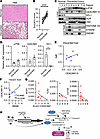 Figure 8
Hepatic ELAVL1 and CEACAM1 mRNA expression correlate with improved tissue homeostasis in human discarded liver biopsies. (A) Representative examination of H&E-stained discarded livers (original magnification, ×150; scale bars: 100 μm) and TUNEL staining (original magnification, ×150; scale bars: 200 μm). (B) Suzuki’s histological grading (n = 9/group). (C) Western blots assisted detection of markers known to be associated with IRI in normal (n = 3), discarded liver tissue, and liver flush samples (n = 8/group). The absence of VNC expression led to the exclusion of Patient 1 (discarded) liver tissue from further protein analyses. (D) Quantitation of blots shown in C, relative VNC (n = 3/normal, n = 7/discarded). (E) Correlation of HUR versus CEACAM1 protein expression in liver tissue (n = 7). (F) Correlation of CEACAM1-S versus HMGB1 protein expression in discarded liver flush samples (n = 8). (G) Correlation of discarded liver ELAVL1/CEACAM1 to proinflammatory markers MCP1, TLR2, and CD154 (n = 8). (H) Model of the relationship of hepatic HuR and Ceacam1-S under high oxygen tension. HuR-targeting saRNAs enhance HuR expression under ischemic stress. This induces HuR coordination with the spliceosome, via so-far uncharacterized mechanisms, to influence the alternative splicing of Ceacam1. Additionally, HuR stabilizes Ceacam1 mRNA during cold stress and acute liver injury, protecting hepatocytes from cell death.


