
Research ArticleDevelopmentImmunology
Open Access |  10.1172/jci.insight.192550
Conserved interactions with stromal and immune cells coordinate de novo B cell lymphopoiesis in fetal intestines
Kimberly A. Carroll,1 Weihong Gu,2 Long Phan,2 Eduardo Gonzalez Santiago,2 Wenjia Wang,3 George C. Tseng,3 Liza Konnikova,2,4,5,6,7,8 and Shruti Sharma1,9
1Graduate School of Biomedical Sciences, Tufts University, Boston, Massachusetts, USA.
2Department of Pediatrics, Yale School of Medicine, New Haven, Connecticut, USA.
3Department of Biostatistics, University of Pittsburgh, Pittsburgh, Pennsylvania, USA.
4Department of Obstetrics, Gynecology and Reproductive Sciences,
5Department of Immunobiology,
6Program in Human and Translational Immunology,
7Program in Translational Biomedicine, and
8Center for Systems and Engineering Immunology, Yale School of Medicine, New Haven, Connecticut, USA.
9Department of Immunology, Tufts University School of Medicine, Boston, Massachusetts, USA.
Address correspondence to: Shruti Sharma, Department of Immunology, Tufts Medical Center, 136 Harrison Ave., Boston, Massachusetts 02111, USA. Phone: 617.636.6612; Email: shruti.sharma@tufts.edu. Or to: Liza Konnikova, Departments of Pediatrics and Immunobiology, Yale University, 333 Cedar St., New Haven, Connecticut 06520, USA. Phone: 203.688.2320; Email: liza.konnikova@yale.edu.
Authorship note: KAC and WG are co–first authors. LK and SS are co–senior authors.
Find articles by Carroll, K. in: PubMed | Google Scholar
1Graduate School of Biomedical Sciences, Tufts University, Boston, Massachusetts, USA.
2Department of Pediatrics, Yale School of Medicine, New Haven, Connecticut, USA.
3Department of Biostatistics, University of Pittsburgh, Pittsburgh, Pennsylvania, USA.
4Department of Obstetrics, Gynecology and Reproductive Sciences,
5Department of Immunobiology,
6Program in Human and Translational Immunology,
7Program in Translational Biomedicine, and
8Center for Systems and Engineering Immunology, Yale School of Medicine, New Haven, Connecticut, USA.
9Department of Immunology, Tufts University School of Medicine, Boston, Massachusetts, USA.
Address correspondence to: Shruti Sharma, Department of Immunology, Tufts Medical Center, 136 Harrison Ave., Boston, Massachusetts 02111, USA. Phone: 617.636.6612; Email: shruti.sharma@tufts.edu. Or to: Liza Konnikova, Departments of Pediatrics and Immunobiology, Yale University, 333 Cedar St., New Haven, Connecticut 06520, USA. Phone: 203.688.2320; Email: liza.konnikova@yale.edu.
Authorship note: KAC and WG are co–first authors. LK and SS are co–senior authors.
Find articles by Gu, W. in: PubMed | Google Scholar
1Graduate School of Biomedical Sciences, Tufts University, Boston, Massachusetts, USA.
2Department of Pediatrics, Yale School of Medicine, New Haven, Connecticut, USA.
3Department of Biostatistics, University of Pittsburgh, Pittsburgh, Pennsylvania, USA.
4Department of Obstetrics, Gynecology and Reproductive Sciences,
5Department of Immunobiology,
6Program in Human and Translational Immunology,
7Program in Translational Biomedicine, and
8Center for Systems and Engineering Immunology, Yale School of Medicine, New Haven, Connecticut, USA.
9Department of Immunology, Tufts University School of Medicine, Boston, Massachusetts, USA.
Address correspondence to: Shruti Sharma, Department of Immunology, Tufts Medical Center, 136 Harrison Ave., Boston, Massachusetts 02111, USA. Phone: 617.636.6612; Email: shruti.sharma@tufts.edu. Or to: Liza Konnikova, Departments of Pediatrics and Immunobiology, Yale University, 333 Cedar St., New Haven, Connecticut 06520, USA. Phone: 203.688.2320; Email: liza.konnikova@yale.edu.
Authorship note: KAC and WG are co–first authors. LK and SS are co–senior authors.
Find articles by Phan, L. in: PubMed | Google Scholar
1Graduate School of Biomedical Sciences, Tufts University, Boston, Massachusetts, USA.
2Department of Pediatrics, Yale School of Medicine, New Haven, Connecticut, USA.
3Department of Biostatistics, University of Pittsburgh, Pittsburgh, Pennsylvania, USA.
4Department of Obstetrics, Gynecology and Reproductive Sciences,
5Department of Immunobiology,
6Program in Human and Translational Immunology,
7Program in Translational Biomedicine, and
8Center for Systems and Engineering Immunology, Yale School of Medicine, New Haven, Connecticut, USA.
9Department of Immunology, Tufts University School of Medicine, Boston, Massachusetts, USA.
Address correspondence to: Shruti Sharma, Department of Immunology, Tufts Medical Center, 136 Harrison Ave., Boston, Massachusetts 02111, USA. Phone: 617.636.6612; Email: shruti.sharma@tufts.edu. Or to: Liza Konnikova, Departments of Pediatrics and Immunobiology, Yale University, 333 Cedar St., New Haven, Connecticut 06520, USA. Phone: 203.688.2320; Email: liza.konnikova@yale.edu.
Authorship note: KAC and WG are co–first authors. LK and SS are co–senior authors.
Find articles by Santiago, E. in: PubMed | Google Scholar
1Graduate School of Biomedical Sciences, Tufts University, Boston, Massachusetts, USA.
2Department of Pediatrics, Yale School of Medicine, New Haven, Connecticut, USA.
3Department of Biostatistics, University of Pittsburgh, Pittsburgh, Pennsylvania, USA.
4Department of Obstetrics, Gynecology and Reproductive Sciences,
5Department of Immunobiology,
6Program in Human and Translational Immunology,
7Program in Translational Biomedicine, and
8Center for Systems and Engineering Immunology, Yale School of Medicine, New Haven, Connecticut, USA.
9Department of Immunology, Tufts University School of Medicine, Boston, Massachusetts, USA.
Address correspondence to: Shruti Sharma, Department of Immunology, Tufts Medical Center, 136 Harrison Ave., Boston, Massachusetts 02111, USA. Phone: 617.636.6612; Email: shruti.sharma@tufts.edu. Or to: Liza Konnikova, Departments of Pediatrics and Immunobiology, Yale University, 333 Cedar St., New Haven, Connecticut 06520, USA. Phone: 203.688.2320; Email: liza.konnikova@yale.edu.
Authorship note: KAC and WG are co–first authors. LK and SS are co–senior authors.
Find articles by Wang, W. in: PubMed | Google Scholar
1Graduate School of Biomedical Sciences, Tufts University, Boston, Massachusetts, USA.
2Department of Pediatrics, Yale School of Medicine, New Haven, Connecticut, USA.
3Department of Biostatistics, University of Pittsburgh, Pittsburgh, Pennsylvania, USA.
4Department of Obstetrics, Gynecology and Reproductive Sciences,
5Department of Immunobiology,
6Program in Human and Translational Immunology,
7Program in Translational Biomedicine, and
8Center for Systems and Engineering Immunology, Yale School of Medicine, New Haven, Connecticut, USA.
9Department of Immunology, Tufts University School of Medicine, Boston, Massachusetts, USA.
Address correspondence to: Shruti Sharma, Department of Immunology, Tufts Medical Center, 136 Harrison Ave., Boston, Massachusetts 02111, USA. Phone: 617.636.6612; Email: shruti.sharma@tufts.edu. Or to: Liza Konnikova, Departments of Pediatrics and Immunobiology, Yale University, 333 Cedar St., New Haven, Connecticut 06520, USA. Phone: 203.688.2320; Email: liza.konnikova@yale.edu.
Authorship note: KAC and WG are co–first authors. LK and SS are co–senior authors.
Find articles by Tseng, G. in: PubMed | Google Scholar
1Graduate School of Biomedical Sciences, Tufts University, Boston, Massachusetts, USA.
2Department of Pediatrics, Yale School of Medicine, New Haven, Connecticut, USA.
3Department of Biostatistics, University of Pittsburgh, Pittsburgh, Pennsylvania, USA.
4Department of Obstetrics, Gynecology and Reproductive Sciences,
5Department of Immunobiology,
6Program in Human and Translational Immunology,
7Program in Translational Biomedicine, and
8Center for Systems and Engineering Immunology, Yale School of Medicine, New Haven, Connecticut, USA.
9Department of Immunology, Tufts University School of Medicine, Boston, Massachusetts, USA.
Address correspondence to: Shruti Sharma, Department of Immunology, Tufts Medical Center, 136 Harrison Ave., Boston, Massachusetts 02111, USA. Phone: 617.636.6612; Email: shruti.sharma@tufts.edu. Or to: Liza Konnikova, Departments of Pediatrics and Immunobiology, Yale University, 333 Cedar St., New Haven, Connecticut 06520, USA. Phone: 203.688.2320; Email: liza.konnikova@yale.edu.
Authorship note: KAC and WG are co–first authors. LK and SS are co–senior authors.
Find articles by
Konnikova, L.
in:
PubMed
|
Google Scholar
|

1Graduate School of Biomedical Sciences, Tufts University, Boston, Massachusetts, USA.
2Department of Pediatrics, Yale School of Medicine, New Haven, Connecticut, USA.
3Department of Biostatistics, University of Pittsburgh, Pittsburgh, Pennsylvania, USA.
4Department of Obstetrics, Gynecology and Reproductive Sciences,
5Department of Immunobiology,
6Program in Human and Translational Immunology,
7Program in Translational Biomedicine, and
8Center for Systems and Engineering Immunology, Yale School of Medicine, New Haven, Connecticut, USA.
9Department of Immunology, Tufts University School of Medicine, Boston, Massachusetts, USA.
Address correspondence to: Shruti Sharma, Department of Immunology, Tufts Medical Center, 136 Harrison Ave., Boston, Massachusetts 02111, USA. Phone: 617.636.6612; Email: shruti.sharma@tufts.edu. Or to: Liza Konnikova, Departments of Pediatrics and Immunobiology, Yale University, 333 Cedar St., New Haven, Connecticut 06520, USA. Phone: 203.688.2320; Email: liza.konnikova@yale.edu.
Authorship note: KAC and WG are co–first authors. LK and SS are co–senior authors.
Find articles by Sharma, S. in: PubMed | Google Scholar
Published September 2, 2025 - More info
JCI Insight. 2025;10(19):e192550. https://doi.org/10.1172/jci.insight.192550.
© 2025 Carroll et al. This work is licensed under the Creative Commons Attribution 4.0 International License. To view a copy of this license, visit http://creativecommons.org/licenses/by/4.0/.
Received: February 18, 2025; Accepted: August 15, 2025


-
Results
CLPs seed human SIs late in the first trimester and develop into B cells. We compiled a single-cell RNA-Seq (scRNA-Seq) atlas of the human SI across the human life span from 8 weeks estimated gestational age (EGA) to adulthood (19). Within this atlas, we identified B cells in the fetal tissue, albeit at lower proportions than in postnatal samples (3, 19). To comprehensively evaluate the presence of developing B cells in fetal intestinal tissues, we established strict immunological criteria to classify cells based on the expression of genes and proteins associated with B cell phenotypes and immunoglobulin gene recombination (Figure 1A) (14).
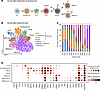 Figure 1
Characterization of fetal B cells in the SI. (A) Graphical diagram depicting canonical B cell developmental stages as it occurs in humans. (B) Uniform Manifold Approximation and Projection (UMAP) visualization of fetal B cells across all developmental time points. (C) Bar plot of relative proportions of B cell types at each developmental stage. (D) Dot plot of marker genes expression in fetal B cells. Color represents normalized mean expression of marker genes in each cell type, and size indicates the proportion of cells expressing marker genes.
We found all components of the B cell developmental trajectory, including CLPs, characterized by the expression of precursor genes, IL7R, CD7, CD34, SPINK2, and FLT3 (20–24); cycling pro- (MKI67+), pro-, pre-B cells; and mature B cells in the human fetal SI by scRNA-Seq (Figure 1, B–D). Pro-B cells were identifiable by their expression of CD19 (a key B cell marker), along with surrogate light chain proteins such as VPREB1, VPREB3, and IGLL1, as well as the recombination enzymes RAG1 and RAG2 in concordance with prior studies (14, 25). Pre-B cells were identified, as previously defined (8, 25), by increased expression of surrogate light chain proteins and higher levels of IGHM indicating the ongoing assembly of the pre-B cell receptor (pre-BCR). Finally, mature B cells, including naive B cells and marginal zone B (MZB) like cells, lost expression of receptor recombination factors RAG1/2 while increasing expression of CD19, MS4A1 (encodes CD20), IGHM, and IGHD (14, 25). Naive B cells were characterized by the expression of CCR7, whereas MZB-like (MZB-like 1 and MZB-like 2) cells were identified by the expression of CR1 (aka CD35), CR2 (aka CD21), and FCER2 (aka CD23), as well as CD1C (26). Notably, the MZB-like 2 cells exhibited higher expression of IGHD, suggesting a more mature or further developed status compared with MZB-like 1 cells. Altogether given the gestational age, these data support the likelihood that B cells are naive subsets, although we cannot exclude the possibility that they have memory features, not noted here. These data confirm that, in addition to the fetal liver and bone marrow, the fetal SI acts as a local niche for B cell development.
Interestingly, using temporal cell mapping analysis, PHATE, we show that the SI CLPs gave rise to cycling pro-B cells, plasmacytoid dendritic cells (pDCs), and innate lymphoid cells (ILCs) but not T cells (Supplemental Figure 1, A–C; supplemental material available online with this article; https://doi.org/10.1172/jci.insight.192550DS1). Furthermore, the precursor B cells (CLPs, cycling pro-B, pro-B, and pre-B cells) decreased while mature B cells (naive, MZB-like 1 or 2 B cells) increased across gestation, where at 9 weeks EGA, over 90% of B cells were of the precursor phenotype and by 23 weeks over 80% were of the naive phenotype (Figure 1C). Intestinal pro-B cells had higher expression of DNTT, RAG1, and RAG2, a set of genes that are critical for B cell development as they promote survival and proliferation of B cells and regulate immunoglobulin gene rearrangement (Figure 1D) (27).
B cell development is a conserved feature present in murine fetal intestines. To understand if local lymphopoiesis at this time point is conserved in mammalian species, we next investigated whether intestinal B cell development can be observed in fetal mice as it is in humans. We isolated fetal livers and intestines from WT mice at E16.5, a time point at which definitive B cell development occurs primarily in the fetal liver (28). Tissues from fetal mice were analyzed by high-dimensional spectral flow cytometry (15–20 fluorophores), IF, and RNAscope, whereby developmental stages of B cells were demarcated by expression of key cell-surface markers (29) (Figure 2, A and B).
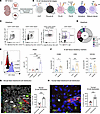 Figure 2
Fetal mouse intestines recapitulate human B cell development. (A) Schematic for tissue isolation and downstream analyses for mouse B cell analysis. (B) Graphical diagram depicting canonical B cell developmental stages as it occurs in mouse bone marrow. (C) Flow cytometry gates to identify distinct intestinal B cell subsets at E16.5; previous gating filters are listed above individual plots and depicted in Supplemental Figure 2A (n = 3, 6–8 pooled littermate tissues). Parent gates from live, CD45+lineage– cells are listed above each plot. (D) Pie chart with average frequencies of total B cells from gates in Figure 2D (n = 3). Each color corresponds to a specific cell population, and numbers are listed as a percentage of total B cells. (E) Histogram overlay of PAX5 expression across CLP, lineage+, Pre-pro–B cells, and CD19+ B cells (B220+CD19+ B cells) with quantification of MFI, (n = 3, 1-way ANOVA, ***P < 0.001, data are shown as mean ± SEM). (F) MFI of CD69, CD103, and CD5 on E16.5 B cells (CD45+CD19+B220+ live cells) (n = 6 pooled litters, unpaired Student’s t test, *P < 0.05, **P < 0.01 data are shown as mean ± SEM). (G) Representative image from IF staining of fetal mouse intestinal tissue (E18.5). Full image in Supplemental Figure 4F. The white dotted outline marks vasculature. Pseudo-colored with anti-B220-FITC (white), anti–CD31-Alexa Fluor 555 (AF555) (red), anti–CD324-AF594 (cyan), and anti–LYVE1-AF647 (green) and counterstained with DAPI (gray) with quantification of intravascular (CD31+) versus extravascular (CD31–) B cells (n = 5, paired Student’s t test, ***P <0.001; data are shown as mean ± SEM (H) Representative image from fetal human intestinal tissue with IF staining CD31 (red) and probed with RAG1 (green) and CD19 (white); nuclei stained with DAPI (blue) to identify B cells. The white dotted outline marks vasculature. B cells were identified as intravascular, based on direct colocalization with CD31 (CD19+RAG1+CD31+), or extravascular, (CD19+RAG1+CD31–) and quantified (n = 5, paired Student’s t test, ***P <0.001; data are shown as mean ± SEM). Scale bar: 50 µM.
We first gated on CD45+ cells and selected lineage marker–negative cells to exclude non-B cells (Supplemental Figures 2 and 3). CLPs were distinguished from other immune populations by the lack of B220 (CD45R) and B-lineage markers and by positive expression of c-KIT and CD127 (IL-7R). To our knowledge, no recent studies have defined a comprehensive and specific flow cytometry–based gating strategy for B cell precursors in the fetal liver. Therefore, we adapted established markers commonly used in the bone marrow, spleen, and peritoneum (8, 30, 31), including B220, CD43, IgM, IgD, CD93, CD24, CD19, cKIT, and IL-7R (Supplemental Figure 3A). Early B cell stages (pre-pro–, pro-, and pre-) were distinguished from late stages (immature and mature) based on CD43 expression, with early subsets CD43+ and later subsets CD43–. Within the early CD43+ subsets, pro- and pre-B cells were identified as CD19+CD24+, while pre-pro–B cells are CD19–CD24– but express c-Kit and CD127. Within these early subsets, cKIT expression was used to further separate pro-B (cKIThi) from pre-B (cKITlo) cells (32). Finally, levels of IgM and IgD expression defined immature and mature B cells (Figure 2C).
Using this strategy, we identified all major B cell subsets in both the fetal liver and intestine at E16.5. Notably, the fetal intestine exhibited the entire developmental range of B cells from CLPs to mature B cells at comparable numbers with some enrichment of CLPs (Figure 2D and Supplemental Figure 2, B and C). In contrast, the fetal liver was predominantly enriched for pro- and pre-B cells with diminishing percentages of other subsets (Supplemental Figures 3, A–C). We noted that while IgD was expressed in the mature B cells in the fetal intestines (Figure 2C), this level was lower than is usually observed in bone marrow (27). These findings highlight a spatially distinct developmental trajectory in the intestine, supporting its role as a de novo B cell developmental niche eventually resulting in the emergence of a local, naive B cell pool.
We next confirmed the identity of the B cell subsets above via expression of a lineage-specific transcription factor, PAX5, which represses non-B cell lineage genes while promoting the expression of B cell lineage genes (33). PAX5 is measurably expressed at the transition from pre-pro–B to pro-B stage (33). We found that intestinal B cells past the pre-pro–B cell stage (B220+CD19+) had significantly higher expression of PAX5 compared with CLPs, other lineage+ cells, and pre-pro–B cells (Figure 2E), therefore confirming their identification by expression of a B-lineage transcription factor in addition to surface proteins.
Given the essential role of early-life intestinal B cells in regulating local immunity and maintaining homeostasis through antibody- and receptor-mediated functions (17), we sought to characterize how developing intestinal B cells differ from those at other sites. Using immunophenotyping, we compared B cells from the fetal intestine and liver at E16.5. The fetal liver serves as a primary site for B-1a cell development, an innate-like B cell population found in serosal cavities, spleen, and various nonlymphoid tissues (34, 35). These cells are defined by their expression of CD5, CD43, and IgM, along with a germline-encoded polyreactive antibody repertoire (35). Spectral flow cytometry identified B-1a cells in both fetal liver and intestine (Supplemental Figure 2A and Supplemental Figure 3A). Intestinal B cells (B220+CD19+) exhibited higher CD5 mean fluorescence intensity (MFI) than their liver counterparts (Figure 2F and Supplemental Figure 4, A–C). Additionally, they showed significantly elevated CD69, a marker of tissue residency and early activation, while CD103, an epithelial adhesion protein, was not significantly increased, suggesting these cells are tissue resident but not strongly adherent to the intestinal epithelium (Figure 2F and Supplemental Figure 4, D and E).
Murine intestinal fetal B cell development results in a predominately extravascular pool of heterogenous, resident B cells. To determine where intestinal B cells reside in fetal mouse intestines and their proximity to intestinal stromal cells, we performed IF staining using cell-specific protein markers. Stromal cells were identified by their preferential expression of identifying markers: E-cadherin for intestinal epithelial cells (IECs), CD31 for vascular endothelial cells, LYVE1 for lymphatic endothelial cells (LECs), and B220 for B cells. Most B cells were found within the submucosal layer of the intestines (Figure 2G and Supplemental Figure 4F). Within this layer, B cells were observed to be predominantly perivascular and showed mixed distribution throughout the tissue (Figure 2G and Supplemental Figure 4F). Notably, fewer B cells directly overlapped with CD31+ cells, suggesting that they are likely tissue-residing rather than circulating within the intestinal vasculature. Within the human intestines, a similar phenomenon was observed with the majority of CD19+RAG1+ cells residing in extravascular areas (Figure 2H and Supplemental Figure 4G). These data reveal that mouse intestines, like human intestines, provide an additional site for B cell development during embryogenesis, where developing and mature B cells reside in the tissue as extravascular foci. Furthermore, the B cells generated in this tissue have unique phenotypic properties and are a mix of B cell subsets, likely indicative of their distinct contributions to tissue specific roles, further distinguishing them from their fetal liver counterparts.
Local stromal cells are capable of supporting B cell development in the fetal SI. Having confirmed the intestines as an additional site for B cell development, we next questioned what cellular or molecular mechanisms exist in this distinct location to facilitate lymphopoiesis. Fetal liver and bone marrow B cell lymphopoiesis rely on cues from local stromal cell populations to promote B cell survival, migration, and maturation (11, 24, 27). We leveraged published scRNA-Seq datasets of total intestinal tissue at E14.5 from Mouse Cell Developmental Atlas (MCDA) for an unbiased approach to predict interactions between developing B cells and other intestinal cell types (36). A Uniform Manifold Approximation And Projection (UMAP) was used to view the high-dimensional data, and distinct populations were classified based on differential gene expression of characteristic transcriptional markers as well as top differentially expressed genes (Figure 3A and Supplemental Figure 5, A and B). We identified B cells by expression of Ighm and Cd79b, and we further specified macrophages by expression of Adgre1 (F4/80). Cells that expressed immune-related genes, but not lineage-specific markers, were broadly classified as “Immune” and cells expressing Cd34 were defined as hematopoietic stem cells (HSCs) (Supplemental Figure 5A). In addition to these immune cells, we identified LTi cells, by Rorc expression. We also identified a variety of epithelial and stromal populations in this dataset, such as IECs, enteroendocrine cells (EECs), enteric nervous system (ENS) cells, LECs, and smooth muscle cells (SMCs) (Supplemental Figure 5A).
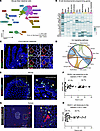 Figure 3
Epithelial and stromal cells express molecular signals that may support B cell development in fetal intestines. (A) UMAP of scRNA-Seq data from publicly available MCDA E14.5 fetal intestines with cell populations identified by differential gene expression (Supplemental Figure 4). (B) Heatmap of differential gene expression between B cells and subsetted stromal cells using curated gene list of different receptor ligand pairs involved in bone marrow B cell development. (C) Representative multiplex RNAscope images of fetal mouse intestine (E18.5). The yellow square highlights the region magnified on the right. Blue circles denote cells, red circles denote Cd19+ and Rag2+ cell. Scale bar: 50 μm (left) or 5 μM (right). (D) Chord diagram depicting the predicted IL-2 family signaling interactions between sender and receiver populations with colors corresponding to the sender population (outer ring) and arrowheads pointing to the receivers based on total cells and highlighted receptor ligand pairs within the predicted interactions. (E) Immunofluorescence of representative mouse intestinal tissue from E18.5 mice showing nuclear stain DAPI (blue), B220-FITC (red), and LYVE1-AF555 (cyan) with a selected, zoomed ROI with arrowheads to identify B cells. (F) Measured distance to nearest LYVE1 LECs with dots corresponding to individual cell distances (n = 3) with mean distance highlighted by dotted line and reported percentages below and above the mean. (G) Human intestinal tissue (21 weeks gestational age) stained with RNA probes RAG1 (green), CD19 (white), and anti-LYVE1 antibody (red). (H) Nuclei counterstained with DAPI (blue) in an identical analysis to F in human tissue sections (n = 1). Scale bars: 50 µM (C), 200 µM (E), 170 µM (G).
To determine how intestinal B cells may interact with stromal cells at fetal time points, we evaluated interactions between of B cells and stromal cells in the intestinal scRNA-Seq dataset. We then queried the expression of genes encoding receptor and ligand pairs that are required for bone marrow B cell–lymphopoiesis (27). We noted that fetal intestinal B cells expressed Ikzf1 (gene encoding IKAROS), a key transcription factor required for pre-B cell differentiation (37). We also identified the expression of Il7r in B cells, a receptor required for B cell development, survival, and proliferation (Figure 3B) and confirmed its expression in fetal intestinal B cells in mice via spectral flow cytometry (Supplemental Figure 2A). Furthermore, intestinal B cells expressed genes associated with receptor recombination, including Vpreb1, Blnk, Nhej1, and Pold1, supporting the conclusion that embryonic intestinal B cells may be actively undergoing receptor recombination at this stage (Figure 3B).
Previous studies of B cell development in neonatal intestines have shown that local expression of the endonucleases RAG1 and RAG2 contributes to shaping the preimmune repertoire in response to microbial colonization (6). To investigate whether receptor recombination can occur independently of microbial exposure, we examined the expression of Rag2 in B cells residing in fetal intestinal tissue by spatial transcriptomics. Using RNAscope, we identified B cells in fetal intestines by Cd19 expression (Figure 3C). Notably, approximately 25% of these B cells expressed Rag2 in situ (Supplemental Figure 5C), indicating active recombination. We noted that these Rag2-expressing B cells primarily reside in the submucosa, akin to the distribution of B220 in these regions (Figure 2H and Figure 3E). These findings suggest that B cell receptor recombination may occur prenatally in mice, revealing a previously unrecognized site for the generation of the preimmune repertoire in the absence of microbial signals.
Having identified Rag2-expressing B cells, we attempted to identify the local source of key cytokines and chemokines that may facilitate their local maturation. Transcriptional levels of Il7r ligand, Il7, were not detectable in the fetal intestine dataset. However, we found that Tslp (encodes TSLP), the primary IL-7R ligand in the fetal liver (38), was expressed by a variety of cells in mouse intestines and particularly by LECs (Figure 3B). We used the computational package, CellChat to predict the relative contribution of cells that were sending or receiving signaling through the Il7r/Tslp (IL2 signaling family) axis (Supplemental Figure 5, D–F). In these circos plots, the orientation of the arrows denotes the direction of the signaling of ligands to their cognate receptor, expressed by other cell types. This analysis reveals that B cells are likely receiving IL2 family signals predominantly from LECs and an unspecified immune cell subset (Figure 3D and Supplemental Figure 5F) (39). Further examination of the enriched genes in this signaling node reveals that Tslp expressed by LECs is predicted to signal to intestinal B cells through Il7r and Crlf2, which form a heterodimeric receptor for TSLP (12) (Supplemental Figure 5F). This reveals a putative signaling node, specific to the intestines that could facilitate embryonic intestinal B cell proliferation.
As proximity of B cells and LECs is predicted during postnatal Peyer’s patch (PP) or gut-associated lymphatic tissue (GALT) development in murine intestines (40), we leveraged IF staining in fetal mouse tissue to determine if B cells specifically colocalize with LECs during early embryonic developmental windows. We noted that B cells (B220+) primarily resident in the submucosal layer form a close association with LECs (LYVE1+) in mouse intestines (Figure 3, E and F). The correlation of Rag2-expressing B cells in the submucosa, proximal to LECs, suggests a possibility that local prelymphatic structures may help support and organize B cell maturation or receptor recombination.
We then used RNAscope combined with IF to delineate where B cell maturation is taking place within the human SI. Consistent with the mouse data, we found that the precursor B cells (RAG1+CD19lo) predominantly localized in the submucosal layer, with over 65% being proximal to the endothelial cells (LYVE1+), while mature B cells (RAG1–CD19+) were aggregated proximal to the epithelial cells and distal to the endothelial cells (Figure 3, G and H). Intriguingly, while populations of precursor B cells in the submucosal layer are somewhat different between mice and humans, stark similarities in the localization profile of these precursor B cells between species suggest that the cellular and molecular cues that facilitate local de novo B cell development are evolutionarily conserved (Figure 3, E–H).
LTi cells reside proximal to B cells in fetal intestines and are predicted to signal via chemotactic and lymphoid tissue promoting pathways. Given the close apposition of intestinal B cells and LECs during embryonic development, we next wondered if interactions between B cells and local cells were supported by a tissue scaffold within the mouse fetal intestines. Intriguingly, among the different populations that expressed higher levels of developmental drivers for B cell lymphopoiesis, LTi cells strongly expressed multiple ligands for B cells (Figure 4A). LTi cells belong to a family of ILCs (ILC3) that support lymphoid tissue scaffold development throughout the body but also specifically coordinate the formation of intestinal lymphoid follicles and PPs (41). Predictive analysis of these interactions revealed that lymphotoxin (LT) signaling was specifically enriched between B cells and LTi cells, with LTi cells as the preferential senders of LT ligands to receptors expressed by B cells (Figure 4B).
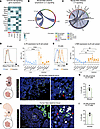 Figure 4
LTi cells in mouse intestines reside proximal to B cells with predicted interactions influencing B cell niche establishment at fetal time points. (A) A heatmap depicting the relative expression of queried receptor-ligand pairs from subset immune cell populations from mouse scRNA-Seq (Figure 3A and Supplemental Figure 4) (B) Chord diagram depicting the predicted lymphotoxin (LT) signaling interactions between sender (LTi cell) and receiver populations of LT family ligand and receptors from MCDA dataset with colors corresponding to the sender population (arrow direction corresponds to target populations, and flat ends correspond to sender population) and pointing to the receivers (outer ring color). (C) Chord diagram from CellChat of all ligand and receptor interactions from LTi cells to other intestinal cell populations (denoted by outer ring color). Arrowhead direction corresponds to predicted receiver. (D and E) IL-7R or LTBR expression in intestinal and fetal liver B cells (CD19+B220+ live cells) depicted in histogram and quantified MFI across B cell subsets (Figure 2C) (n = 3, 1-way ANOVA, **P < 0.01, ****P < 0.0001; data are shown as mean ± SEM). (F) Representative image from fetal mouse intestinal tissue (E18.5) mice stained with RNA probes Cd19 (white) to mark B cells and Rorc (green) to mark LTi cells, counterstained with DAPI (blue). Yellow box outlines selected ROI depicted to the right. Scale bar: 50 µM. Red arrows denote LTi and B cell interactions. (G) Quantification of B cell and LTi proximity analyzed by determining the percentage of Cd19+ cells within 20 μM of Rorc+ cells divided by total Cd19+ cells. (H) Representative human intestinal tissue section (21 weeks gestational age) stained with RNA probes CD19 (white) and RORC (green), counterstained with DAPI (blue) and a zoomed section outlined in yellow box, depicting LTi and B cell interactions in intestinal tissue. Scale bar: 90 µM. (I) Quantification of B cell and LTi proximity analyzed by determining the percentage of CD19+ cells within 20 μM of RORC+ cells divided by total CD19+ cells.
Development of lymphoid tissue often requires the expression of LTA1B2 by LTi cells to signal through LTBR on stromal organizer cells to promote cell aggregation and niche survival (42). However, in the bone marrow, LT signaling through membrane-bound LT heterotrimers (LTA1B2) and soluble LT-α homotrimers (LTA3) is shown to control B cell maturation and class-switching in adult mice (43, 44). Thus, we evaluated the various interactions that were upregulated between these populations. Notably, LTA (Lta) produced by LTi cells was predicted to primarily signal through TNF family receptors on B cells (Figure 4C). Furthermore, we found that LTi-derived Lta was predicted to signal through B cell–expressed Ltbr. Expression of LTA receptor, LTBR (Ltbr), on B cells can regulate their differentiation, specifically during the formation of plasma cells (45). Additionally, in recent human studies, biallelic loss-of-function mutations in LTBR were found to be associated with decreased B cell differentiation (46).
Building on our identification of IL-7R as a receptor involved in B cell proliferation, we investigated whether intestinal B cells express LTBR and whether the expression of IL-7R and LTBR varies across different stages of B cell development. As expected, we found that expression of IL-7R was more consistent across B cell populations, including pro-B, pre-B, immature, and mature B cells between intestines and livers (Figure 4D and Supplemental Figures 2 and 3). However, the expression of LTBR was categorically higher in fetal intestinal B cell subsets compared with fetal liver counterparts, specifically starting at the pro-B cell stage (Figure 4E). This positions LTBR signaling as a putative tissue-specific receptor influencing B cell development at embryonic stages.
Considering that predictive analysis revealed that LTi cells were preferential senders of ligands for LTBR, we utilized RNAscope to expanded upon these data to see if we could visualize LTi and B cell interactions in situ. We detected that B cells (Cd19+) resided near LTi cells (Rorc+) in mice and human tissue (Figure 4, F–I), revealing that these cells are situated proximal to one another, likely capable of interacting through LTBR and LT-α. In mice, approximately one-third of B cells were found to colocalize with LTi cells, residing within 20 μm of each other and appeared to be positioned more closely to the intestinal epithelium than to the submucosa (Figure 4, F and G). In humans, approximately 60% of B cells were found near LTi cells (Figure 4, H and I). This stronger association may be attributed to species-specific developmental differences, as PPs form prenatally in humans, whereas in mice, they develop after birth (42).
When considered alongside the earlier observation that B cells are frequently associated with LECs, these data reveal a heterogeneous spatial distribution of developing B cells in situ. Specifically, early-stage B cells (~67%) tend to localize proximal to LECs in mice (Figure 3F), while a separate, likely more mature subset, shows stronger spatial associations with LTi cells subset (Figure 4, G and I). Altogether, these findings suggest that the fetal intestinal environment contains multiple microanatomical niches that support distinct stages of B cell development. The dynamic interactions between B cells and diverse stromal or immune cell types, such as LECs and LTi cells, highlight a complex and temporally regulated network of cellular cues that have the capacity to shape early B cell maturation and positioning prior to birth.
LTi cells are required for complete B cell development in fetal mouse intestines. Based on these findings, we next sought to test if LTi function in the embryonic intestines is in line with their known roles in B cell maturation and lymphoid tissue formation. Fetal LTi cells specifically require the transcription factor, RORγt to fully mature from hematopoietic precursors (41). Thus, we utilized RORγt-deficient mice (RORγtKO) that specifically lack LTi cells in the fetal windows due to a blockade in differentiation from fetal liver precursors (47) (Figure 5, A–C, and Supplemental Figure 7, A and B). Using flow cytometry of pooled embryonic intestinal tissues, we observe a significant decrease in intestinal B cells in RORγtKO fetal mice when compared with WT (Figure 5, D and E, and Supplemental Figure 7, C and D). Evaluation of the relative composition of B cell subsets revealed that there was a reduction in early B cell differentiation, specifically after the pre-pro–B cell stage, in the RORγtKO mice compared with WT controls (Figure 5F and Supplemental Figure 7D). Notably, this reduction was unique to the intestine, as B cell development in the fetal liver remained unaffected since no significant differences in B cell subsets were observed between WT and RORγtKO mice in that tissue (Supplemental Figure 7, A and B). These findings underscore the critical, intestinal tissue–specific role of LTi cells in supporting B cell differentiation during fetal development. Furthermore, we saw that, of the remaining CD19+ intestinal B cells, there were significantly fewer B-1a cells (CD43+IgM+CD5+ B cells), indicating that this essential tissue resident B cell population, which is substantially reduced at E16.5 in RORγtKO mice (Figure 5, G and H), is uniquely reliant on LTi. These data reveal that LTi cells are essential for intestinal B cell lymphopoiesis, distinct from the cells regulating bone marrow and fetal liver hematopoiesis.
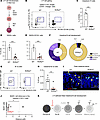 Figure 5
LTi cells are essential for intestinal B cell development in fetal mice. (A) Graphical diagram of LTi development as it is known in the fetal liver through transcriptional activation of RORγt. (B) Gating strategy to identify LTi cells in intestinal tissues of WT or RORγtKO mice. (C) Percentage of LTi cells out of CD45+ cells based on gating in B by Student’s t test; ***P < 0.001 (n = 3–4). (D and E) Percentage of total B220+ cells (D) or B220+CD19+ (E) cells out of live cells based on gating in Supplemental Figure 2B. (Student’s t test, **P < 0.01, n = 3–7). (F) Pie chart with average frequencies of total B cells from gates in Figure 2D (n = 3–7) in WT or KO mice. Each color corresponds to a specific cell population, and numbers are listed as a percentage of total B cells. (G) Gating strategy to identify B-1a cells (CD45+, CD19+, and CD5+) in intestinal tissues of WT or RORγtKO mice. (H) Percentage of B-1a cells out of CD19+ cells (Student’s t test, ****P < 0.0001, n = 3–4). (I) Representative immunofluorescence image of intestinal tissue (E18.5) from RORγtKO mice showing nuclear stain DAPI (blue), B220-FITC (red), and LYVE1-AF555 (cyan) with a selected, zoomed ROI with arrowheads to identify B cells. (J) Measured distance to nearest LYVE1 LECs with dots corresponding to individual cell distances (n = 3) with mean distance highlighted by dotted line. Statistics calculated based on the average distance between B cells and LYVE1 cells within (n = 3–4) tissue sections (Supplemental Figure 6B), with Student’s t test; *P < 0.05. (K) Modified graphical diagram (Figure 2B) depicting reduction in B cell development in intestinal tissue. Scale bar: 100 µM.
We then queried whether B cell distribution is altered in RORγtKO intestines. Upon analysis of the distribution of fetal RORγtKO B cells in situ, we saw that B cells primarily localized to LECs (LYVE1+) (Figure 5, I and J, and Supplemental Figure 7C), significantly closer than the mean distance of intestinal B cells in WT counterparts (Figure 3, E and F). Thus, the absence of LTi cells in intestinal tissue results in an altered distribution pattern within the tissue, indicating altered migration in the tissue. Importantly, this suggests that LTi cells are involved in the development and patterning of B cells in intestinal tissue during embryogenesis, as shown by the reduced differentiation of precursor B cells (Figure 5K) and their increased association of B cells with LECs in RORγtKO animals. Taken together, this identifies a tissue-specific cell type regulating B cell lymphopoiesis at this site.
Fetal human intestinal cells can promote intestinal B cell development through mechanisms similar to those in mouse tissue. Altogether, our data suggest several mechanisms and cell types that support B cell development in fetal mouse intestinal tissue. Thus, we next aimed to translate these findings to human intestines. We performed cellular-interaction analysis and noted that, in human SI, precursor B cells were more likely to interact with stromal cells and mature B cells were more likely to interact with LTi (NCR+ ILC3) cells compared with other immune cells (Supplemental Figure 8). We then used predicted receptor/ligand interactions from human scRNA-Seq data and we used RNAscope combined with IF to identify the various factors required for B cell lymphopoiesis.
We observed that IL7-IL7R interactions preferentially occurred between endothelial cells (IL7+) and CLPs (IL7R+CD34+) (Supplemental Figure 8, A–C, and Supplemental Figure 9, A–C), as well as cycling pro B cells (IL7R+RAG1+) in the submucosal layer (Figure 6, A and B), similar to the mouse intestinal tissue. This node may support the egress of CLPs into the SI. Within the intestine, we also found that CXCR4 was expressed by all the different subsets of B cells, and its ligand CXCL12 was expressed by some mesenchymal and endothelial cells (Figure 6C) with expression broadly distributed across the submucosal layer (Figure 6D). This corroborated what we saw in the mouse scRNA-Seq, where B cells highly expressed Cxcr4, a chemokine receptor for B cell migration, and stromal populations had higher transcription of the chemokine Cxcl12, the cognate receptor, indicative of their participation in B cell recruitment to the tissue (Figure 3B). We identified precursor B cells (CXCR4+CD34+ and CXCR4+RAG1+) proximal to the submucosal layer, while more mature cells marked by CXCR4+RAG1– were proximal to the epithelial layer (Figure 6D and Supplemental Figure 9D), suggesting that this interaction may support the migration of B cells as they mature from the submucosal to the mucosal layer. This also highlights a difference between human and mouse biology at fetal time points, where larger B cell clusters are found in the lamina propria of the former and undetectable in the latter.
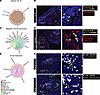 Figure 6
Humans share a common scaffold with mice that are capable of supporting B cell development in fetal intestines. (A, C, and E) Circle plots showing the selected interactions of IL-7 signaling (A), CXCL12 signaling (C), and BAFF signaling (E). (B) Representative multiplex RNAscope images of fetal small intestine (21 weeks gestational age). The yellow square highlights the region magnified on the right. Yellow arrows represent precursor B cells (RAG1+IL-7R+), red arrows yellow arrows represent IL-7+ cells. Scale bar: 90 μm. (D) Representative multiplex RNAscope images of fetal small intestine (21 weeks gestational age). The yellow square highlights the region magnified on the right. Yellow arrows represent precursor B cells (RAG1+CXCR4+), red arrows yellow arrows represent CXCL12+ cells. The white circle highlights the epithelial layer. Scale bar: 90 μm. (F) Representative multiplex RNAscope images of fetal small intestine (21 weeks gestational age). The yellow square highlights the region magnified on the right. All images counterstained with DAPI (blue). White arrows represent CD19+ B cells, green arrows in the upper image represent RORC+ cells, and green arrows in the lower image represent TNFSF13B+ cells. Scale bar: 90 μm.
Finally, to determine what signaling is leading to mature B cell retention in the lamina propria, we examined B cell activating factor (BAFF) signaling in the intestines as it is critical for B cell survival and homeostasis (48). BAFF (encoded by TNFSF13B) was predominantly expressed in LTI (NCR+ ILC3) cells, and its receptor, BAFFR (encoded by TNFRSF13C) was enriched for in mature B cells (Figure 6, E and F, and Supplemental Figure 9B), an interaction that is previously described in spleen (49) but not in intestinal tissue. Using RNAscope, we identified that B cells (CD19+) present in the lamina propria were adjacent to BAFF producing ILC3s (RORC+; TNFSF13B+), another immune interaction in this tissue at this embryonic time point (Figure 3D). Collectively, our data suggest that the SI acts as a local hematopoietic niche for B cell development from CLPs to mature B cells supported by IL-7, CXCR4, and BAFF signaling, utilizing mechanisms that are shared with hematopoiesis occurring in the bone marrow and conserved between fetal mouse and human intestinal tissue.


