
Research ArticleCell biologyHepatologyMetabolism
Open Access |  10.1172/jci.insight.191479
PAD4+ neutrophils promote hepatic stellate cell activation and accelerate MASH fibrosis progression viaNET-DNA/TAOK1/MAPK pathways
Jiajia Shen,1 Shanshan Huang,2,3 Yaohui Wang,4 Qingyuan Wang,1 Shibo Lin,1 Wei Guan,1 Yingyun Gong,5 Yiming Si,1 Ming Zhao,4 Hongwen Zhou,5 and Hui Liang1
1Department of General Surgery, First Affiliated Hospital, Nanjing Medical University, Nanjing, China.
2Department of Endocrinology, Endocrine and Metabolic Disease Medical Center, Nanjing Drum Tower Hospital, Affiliated Hospital of Medical School, Nanjing University, Nanjing, China.
3Branch of National Clinical Research Centre for Metabolic Diseases, Nanjing, China.
4Department of Pathology, Jiangsu Province Hospital of Chinese Medicine, Affiliated Hospital of Nanjing University of Chinese Medicine, Nanjing, China.
5Department of Endocrinology and Metabolism, First Affiliated Hospital, Nanjing Medical University, Nanjing, China.
Address correspondence to: Hui Liang, Division of Bariatric and Metabolic Surgery, Department of General Surgery, First Affiliated Hospital, Nanjing Medical University, 300 Guangzhou Road, Nanjing, Jiangsu 210029, China. Email: lianghui@jsph.org.cn.
Authorship note: JS, SH, YW, and QW contributed equally to this work.
Find articles by Shen, J. in: PubMed | Google Scholar
1Department of General Surgery, First Affiliated Hospital, Nanjing Medical University, Nanjing, China.
2Department of Endocrinology, Endocrine and Metabolic Disease Medical Center, Nanjing Drum Tower Hospital, Affiliated Hospital of Medical School, Nanjing University, Nanjing, China.
3Branch of National Clinical Research Centre for Metabolic Diseases, Nanjing, China.
4Department of Pathology, Jiangsu Province Hospital of Chinese Medicine, Affiliated Hospital of Nanjing University of Chinese Medicine, Nanjing, China.
5Department of Endocrinology and Metabolism, First Affiliated Hospital, Nanjing Medical University, Nanjing, China.
Address correspondence to: Hui Liang, Division of Bariatric and Metabolic Surgery, Department of General Surgery, First Affiliated Hospital, Nanjing Medical University, 300 Guangzhou Road, Nanjing, Jiangsu 210029, China. Email: lianghui@jsph.org.cn.
Authorship note: JS, SH, YW, and QW contributed equally to this work.
Find articles by Huang, S. in: PubMed | Google Scholar
1Department of General Surgery, First Affiliated Hospital, Nanjing Medical University, Nanjing, China.
2Department of Endocrinology, Endocrine and Metabolic Disease Medical Center, Nanjing Drum Tower Hospital, Affiliated Hospital of Medical School, Nanjing University, Nanjing, China.
3Branch of National Clinical Research Centre for Metabolic Diseases, Nanjing, China.
4Department of Pathology, Jiangsu Province Hospital of Chinese Medicine, Affiliated Hospital of Nanjing University of Chinese Medicine, Nanjing, China.
5Department of Endocrinology and Metabolism, First Affiliated Hospital, Nanjing Medical University, Nanjing, China.
Address correspondence to: Hui Liang, Division of Bariatric and Metabolic Surgery, Department of General Surgery, First Affiliated Hospital, Nanjing Medical University, 300 Guangzhou Road, Nanjing, Jiangsu 210029, China. Email: lianghui@jsph.org.cn.
Authorship note: JS, SH, YW, and QW contributed equally to this work.
Find articles by Wang, Y. in: PubMed | Google Scholar
1Department of General Surgery, First Affiliated Hospital, Nanjing Medical University, Nanjing, China.
2Department of Endocrinology, Endocrine and Metabolic Disease Medical Center, Nanjing Drum Tower Hospital, Affiliated Hospital of Medical School, Nanjing University, Nanjing, China.
3Branch of National Clinical Research Centre for Metabolic Diseases, Nanjing, China.
4Department of Pathology, Jiangsu Province Hospital of Chinese Medicine, Affiliated Hospital of Nanjing University of Chinese Medicine, Nanjing, China.
5Department of Endocrinology and Metabolism, First Affiliated Hospital, Nanjing Medical University, Nanjing, China.
Address correspondence to: Hui Liang, Division of Bariatric and Metabolic Surgery, Department of General Surgery, First Affiliated Hospital, Nanjing Medical University, 300 Guangzhou Road, Nanjing, Jiangsu 210029, China. Email: lianghui@jsph.org.cn.
Authorship note: JS, SH, YW, and QW contributed equally to this work.
Find articles by Wang, Q. in: PubMed | Google Scholar
1Department of General Surgery, First Affiliated Hospital, Nanjing Medical University, Nanjing, China.
2Department of Endocrinology, Endocrine and Metabolic Disease Medical Center, Nanjing Drum Tower Hospital, Affiliated Hospital of Medical School, Nanjing University, Nanjing, China.
3Branch of National Clinical Research Centre for Metabolic Diseases, Nanjing, China.
4Department of Pathology, Jiangsu Province Hospital of Chinese Medicine, Affiliated Hospital of Nanjing University of Chinese Medicine, Nanjing, China.
5Department of Endocrinology and Metabolism, First Affiliated Hospital, Nanjing Medical University, Nanjing, China.
Address correspondence to: Hui Liang, Division of Bariatric and Metabolic Surgery, Department of General Surgery, First Affiliated Hospital, Nanjing Medical University, 300 Guangzhou Road, Nanjing, Jiangsu 210029, China. Email: lianghui@jsph.org.cn.
Authorship note: JS, SH, YW, and QW contributed equally to this work.
Find articles by Lin, S. in: PubMed | Google Scholar
1Department of General Surgery, First Affiliated Hospital, Nanjing Medical University, Nanjing, China.
2Department of Endocrinology, Endocrine and Metabolic Disease Medical Center, Nanjing Drum Tower Hospital, Affiliated Hospital of Medical School, Nanjing University, Nanjing, China.
3Branch of National Clinical Research Centre for Metabolic Diseases, Nanjing, China.
4Department of Pathology, Jiangsu Province Hospital of Chinese Medicine, Affiliated Hospital of Nanjing University of Chinese Medicine, Nanjing, China.
5Department of Endocrinology and Metabolism, First Affiliated Hospital, Nanjing Medical University, Nanjing, China.
Address correspondence to: Hui Liang, Division of Bariatric and Metabolic Surgery, Department of General Surgery, First Affiliated Hospital, Nanjing Medical University, 300 Guangzhou Road, Nanjing, Jiangsu 210029, China. Email: lianghui@jsph.org.cn.
Authorship note: JS, SH, YW, and QW contributed equally to this work.
Find articles by Guan, W. in: PubMed | Google Scholar
1Department of General Surgery, First Affiliated Hospital, Nanjing Medical University, Nanjing, China.
2Department of Endocrinology, Endocrine and Metabolic Disease Medical Center, Nanjing Drum Tower Hospital, Affiliated Hospital of Medical School, Nanjing University, Nanjing, China.
3Branch of National Clinical Research Centre for Metabolic Diseases, Nanjing, China.
4Department of Pathology, Jiangsu Province Hospital of Chinese Medicine, Affiliated Hospital of Nanjing University of Chinese Medicine, Nanjing, China.
5Department of Endocrinology and Metabolism, First Affiliated Hospital, Nanjing Medical University, Nanjing, China.
Address correspondence to: Hui Liang, Division of Bariatric and Metabolic Surgery, Department of General Surgery, First Affiliated Hospital, Nanjing Medical University, 300 Guangzhou Road, Nanjing, Jiangsu 210029, China. Email: lianghui@jsph.org.cn.
Authorship note: JS, SH, YW, and QW contributed equally to this work.
Find articles by
Gong, Y.
in:
PubMed
|
Google Scholar
|

1Department of General Surgery, First Affiliated Hospital, Nanjing Medical University, Nanjing, China.
2Department of Endocrinology, Endocrine and Metabolic Disease Medical Center, Nanjing Drum Tower Hospital, Affiliated Hospital of Medical School, Nanjing University, Nanjing, China.
3Branch of National Clinical Research Centre for Metabolic Diseases, Nanjing, China.
4Department of Pathology, Jiangsu Province Hospital of Chinese Medicine, Affiliated Hospital of Nanjing University of Chinese Medicine, Nanjing, China.
5Department of Endocrinology and Metabolism, First Affiliated Hospital, Nanjing Medical University, Nanjing, China.
Address correspondence to: Hui Liang, Division of Bariatric and Metabolic Surgery, Department of General Surgery, First Affiliated Hospital, Nanjing Medical University, 300 Guangzhou Road, Nanjing, Jiangsu 210029, China. Email: lianghui@jsph.org.cn.
Authorship note: JS, SH, YW, and QW contributed equally to this work.
Find articles by Si, Y. in: PubMed | Google Scholar
1Department of General Surgery, First Affiliated Hospital, Nanjing Medical University, Nanjing, China.
2Department of Endocrinology, Endocrine and Metabolic Disease Medical Center, Nanjing Drum Tower Hospital, Affiliated Hospital of Medical School, Nanjing University, Nanjing, China.
3Branch of National Clinical Research Centre for Metabolic Diseases, Nanjing, China.
4Department of Pathology, Jiangsu Province Hospital of Chinese Medicine, Affiliated Hospital of Nanjing University of Chinese Medicine, Nanjing, China.
5Department of Endocrinology and Metabolism, First Affiliated Hospital, Nanjing Medical University, Nanjing, China.
Address correspondence to: Hui Liang, Division of Bariatric and Metabolic Surgery, Department of General Surgery, First Affiliated Hospital, Nanjing Medical University, 300 Guangzhou Road, Nanjing, Jiangsu 210029, China. Email: lianghui@jsph.org.cn.
Authorship note: JS, SH, YW, and QW contributed equally to this work.
Find articles by Zhao, M. in: PubMed | Google Scholar
1Department of General Surgery, First Affiliated Hospital, Nanjing Medical University, Nanjing, China.
2Department of Endocrinology, Endocrine and Metabolic Disease Medical Center, Nanjing Drum Tower Hospital, Affiliated Hospital of Medical School, Nanjing University, Nanjing, China.
3Branch of National Clinical Research Centre for Metabolic Diseases, Nanjing, China.
4Department of Pathology, Jiangsu Province Hospital of Chinese Medicine, Affiliated Hospital of Nanjing University of Chinese Medicine, Nanjing, China.
5Department of Endocrinology and Metabolism, First Affiliated Hospital, Nanjing Medical University, Nanjing, China.
Address correspondence to: Hui Liang, Division of Bariatric and Metabolic Surgery, Department of General Surgery, First Affiliated Hospital, Nanjing Medical University, 300 Guangzhou Road, Nanjing, Jiangsu 210029, China. Email: lianghui@jsph.org.cn.
Authorship note: JS, SH, YW, and QW contributed equally to this work.
Find articles by Zhou, H. in: PubMed | Google Scholar
1Department of General Surgery, First Affiliated Hospital, Nanjing Medical University, Nanjing, China.
2Department of Endocrinology, Endocrine and Metabolic Disease Medical Center, Nanjing Drum Tower Hospital, Affiliated Hospital of Medical School, Nanjing University, Nanjing, China.
3Branch of National Clinical Research Centre for Metabolic Diseases, Nanjing, China.
4Department of Pathology, Jiangsu Province Hospital of Chinese Medicine, Affiliated Hospital of Nanjing University of Chinese Medicine, Nanjing, China.
5Department of Endocrinology and Metabolism, First Affiliated Hospital, Nanjing Medical University, Nanjing, China.
Address correspondence to: Hui Liang, Division of Bariatric and Metabolic Surgery, Department of General Surgery, First Affiliated Hospital, Nanjing Medical University, 300 Guangzhou Road, Nanjing, Jiangsu 210029, China. Email: lianghui@jsph.org.cn.
Authorship note: JS, SH, YW, and QW contributed equally to this work.
Find articles by Liang, H. in: PubMed | Google Scholar
Published January 9, 2026 - More info
JCI Insight. 2026;11(1):e191479. https://doi.org/10.1172/jci.insight.191479.
© 2026 Shen et al. This work is licensed under the Creative Commons Attribution 4.0 International License. To view a copy of this license, visit http://creativecommons.org/licenses/by/4.0/.
Received: January 22, 2025; Accepted: November 12, 2025


-
Results
Neutrophil infiltration correlates with MASLD severity. To assess the clinical relevance of neutrophil infiltration in MASLD, we analyzed liver biopsies from patients with different disease severities. Neutrophil infiltration was significantly elevated in MASH compared with both metabolic dysfunction–associated steatotic liver (MASL) and non-MASLD groups, with neutrophils predominantly localized in the periportal regions and occasionally observed in the lobular areas (Figure 1, A and B). Immunohistochemical staining corroborated these findings, demonstrating an increased presence of neutrophils in the livers of MASH patients (Figure 1, C and D).
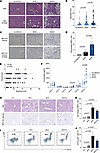 Figure 1
The presence of neutrophils in fatty liver tissue is proportionally linked to the severity of MASLD progression. (A) Hematoxylin and eosin (H&E) staining identified neutrophils in MASLD patient liver samples. These neutrophils were distinguishable by their segmented nuclei and granule-rich cytoplasm, exhibiting a reddish hue (indicated by yellow arrows). Scale bars: 100 μm. (B) The study involved comparing neutrophil levels in 3 patient groups: non-MASLD (n = 63), MASL (n = 77), and MASH (n = 125). Each sample underwent thorough examination by 2 experienced histologists, analyzing 6 high-power fields at ×400 magnification, each with a 0.55 μm field diameter. (C) Immunohistochemical (IHC) staining for MPO was used to identify neutrophils. Scale bars: 100 μm. (D) MPO+ cells’ staining intensity was quantified using ImageJ software (NIH). (E) Spearman’s bivariate correlation test was conducted to explore the relationship between neutrophil counts and fibrosis scores in a total of 265 cases. (F) ELISA was used to measure chemokine expression levels in human liver samples, comparing non-MASLD (n = 10), MASL (n = 10), and MASH (n = 10) patients. (G) IHC staining for MPO was used to identify neutrophils in the livers of mice fed with high-fat diet (HFD), methionine- and choline-deficient diet (MCD), and Western diet/carbon tetrachloride (WD/CCl4). Scale bars: 100 μm. (H) ImageJ software was used to evaluate MPO+ cell staining intensity in the livers of HFD-, MCD-, and WD/CCl4–fed mice. (I and J) Nonparenchymal cells (NPCs) were isolated from the livers of mice fed with HFD, MCD, and WD/CCl4. Flow cytometry assessed the levels of neutrophil infiltration (CD11b+Ly6G+) in CD45+ NPCs, comparing the results across these groups from 5 independent experiments. Statistical analyses were performed using 1-way ANOVA. Data are shown as the mean ± SEM.
We assessed clinical and pathological characteristics in 265 liver biopsy samples, classifying them into non-MASLD (23.8%, n = 63), non-MASH (29.1%, n = 77), and MASH (47.1%, n = 125) cohorts (Supplemental Tables 1 and 2; supplemental material available online with this article; https://doi.org/10.1172/jci.insight.191479DS1). Patients with MASH were younger and exhibited worse metabolic profiles, including higher BMI and alanine aminotransferase (ALT), aspartate aminotransferase (AST), γ-glutamyltransferase (GGT), and total cholesterol (TC) levels (P < 0.05). Notably, neutrophil infiltration was significantly greater in the MASH group compared with both non-MASH and non-MASLD groups (P = 0.000; Supplemental Table 1). When clinicopathological data were stratified by tertiles of neutrophil counts, a positive correlation was observed between the degree of neutrophil infiltration and elevated levels of BMI, ALT, AST, GGT, and TC (P < 0.05). Additionally, neutrophil counts positively correlated with MASLD severity, including steatosis, ballooning, lobular inflammation, and fibrosis (P < 0.05; Table 1). Correlation analysis confirmed a strong association between neutrophil infiltration and liver fibrosis (r = 0.691) (Figure 1E and Table 2). We then assessed chemokine expression in human liver tissues using enzyme-linked immunosorbent assay and found elevated levels of CXCL5 and CXCL8 in the MASH group compared with both the non-MASLD and MASL groups (Figure 1F). Notably, CXCL8 was identified as a potent recruiter of neutrophils (13). Therefore, in human liver tissue, we observed a correlation between neutrophil infiltration and the pathological severity of MASLD.
To validate these findings, we established the MASL model by feeding mice a high-fat diet (HFD), and the MASH model by administering a methionine- and choline-deficient diet (MCD) or a Western diet combined with low-dose CCl4 (WD/CCl4). Neutrophil infiltration was significantly elevated in MASH mice compared with controls fed a standard diet, with the most pronounced infiltration observed in the MASH group (Figure 1, G and H). Flow cytometric analysis further confirmed these findings, revealing an increase in neutrophil populations in both MASL and MASH models (Figure 1, I and J). Collectively, these data suggest that neutrophil infiltration is a key feature of MASH, strongly correlating with disease severity, particularly fibrosis, and may serve as a potential clinical marker for disease progression.
Neutrophil depletion inhibits the progression of hepatic steatosis and fibrosis but increases liver damage in MASH. To investigate the effects of neutrophil depletion on liver pathology at the MASL and MASH stages, Ly6G antibodies were administered intraperitoneally during the development of the HFD and WD/CCl4 models (Supplemental Figure 1, A–C). In the HFD model, neutrophil depletion did not influence body weight gain (Figure 2A) or liver weight (Figure 2B). Serum levels of ALT and AST remained stable and were not significantly altered by neutrophil depletion (Figure 2, C and D). Notably, neutrophil depletion resulted in a reduction of the NAFLD activity score (NAS), primarily due to alleviated hepatic steatosis, while fibrosis levels exhibited only minor changes (Figure 2, E–G). Flow cytometric analysis revealed an increase in macrophage and monocyte infiltration into the liver under the HFD diet, although neutrophil depletion did not significantly affect this infiltration (Figure 2, H–J). Therefore, at the MASL stage, neutrophil clearance reduces hepatic steatosis while having minimal impact on inflammation and fibrosis.
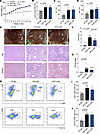 Figure 2
Effects of neutrophil depletion on liver under HFD model. (A) Weekly monitored body weight of CD-IgG–, HFD-IgG–, and HFD-Ly6G–treated mice (10 mice per group). (B) Liver weight/body weight ratio of mice in each group. (C) Serum ALT levels across different groups. (D) Serum AST levels across different groups. (E) Representative liver sections showing phenotypic changes, lipid accumulation, and fibrosis, assessed by Masson staining. Scale bars: 50 μm. (F) NAS scores of each group. (G) Fibrosis stage of each group. (H–J) Flow cytometry analysis of CD45+ NPCs extracted from HFD-fed mouse livers, showing monocyte (Ly6C+Ly6G–) and macrophage (CD11b+F4/80+) populations based on 10 independent experiments. Statistical analyses were performed using 1-way ANOVA. Data are shown as the mean ± SEM.
In the WD/CCl4 model, body weight gain remained comparable between the control diet (CD) and WD/CCl4 groups, with neutrophil depletion having no significant effect on this parameter (Figure 3A). During the MASH stage, liver weight significantly increased; however, neutrophil depletion led to a slight reduction in liver weight (Figure 3B). Importantly, levels of ALT and AST were significantly elevated following neutrophil depletion, indicating exacerbated hepatocyte damage (Figure 3, C and D). Pathological analysis further revealed a reduction in MASH severity, as evidenced by decreased NAS scores and lower fibrosis grades (Figure 3, E–G). Flow cytometric analysis demonstrated a reduction in liver infiltration by monocytes and macrophages following neutrophil depletion (Figure 3, H–J). Taken together, these findings suggest that neutrophil depletion alleviates liver steatosis and fibrosis, while potentially exacerbating hepatocyte injury in the context of MASH.
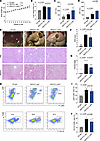 Figure 3
Effects of neutrophil depletion on liver under WD/CCl4 model. (A) Weekly monitored body weight of CD-IgG–, WD/CCl4–IgG–, and WD/CCl4–Ly6G–treated mice (10 mice per group). (B) Liver weight/body weight ratio of mice in each group. (C) Serum ALT levels across different groups. (D) Serum AST levels across different groups. (E) Representative liver sections showing phenotypic changes, lipid accumulation, and fibrosis, assessed by Masson staining. Scale bars: 50 μm. (F) NAS scores of each group. (G) Fibrosis stage of each group. (H–J) Flow cytometry analysis of CD45+ NPCs extracted from WD/CCl4–fed mouse livers, showing monocyte (Ly6C+Ly6G–) and macrophage (CD11b+F4/80+) populations, based on 10 mice per group. Statistical analyses were performed using 1-way ANOVA. Data are shown as the mean ± SEM.
Single-cell RNA sequencing identifies 5 distinct neutrophil subsets infiltrating the human liver, with PAD4+ neutrophils specifically associated with the development of MASLD. To investigate alterations in immune cell composition during the progression of MASLD, we performed single-cell RNA sequencing (scRNA-Seq) on non-parenchymal cells isolated from patients with MASL (n = 6) and MASH (n = 6). After filtering out dead cells and doublets, we obtained a total of 121,020 cell transcriptomes (51.1% from MASL and 48.9% from MASH; Supplemental Figure 2A). Cell populations were annotated based on canonical marker genes (Supplemental Figure 2B). The analysis revealed 9 major cell types: B cells, cholangiocytes, hepatocytes, mast cells, myeloid cells, plasma cells, stromal cells, T and NK cells, and plasmacytoid dendritic cells (pDCs) (Supplemental Figure 2C). Notably, the frequency of myeloid cells was significantly elevated in MASH compared with MASL, while the frequencies of other cell types remained relatively unchanged (Supplemental Figure 2D).
We next examined neutrophils in MASL- and MASH-affected livers. Myeloid cells were classified into 6 subclusters, including Kupffer cells (KCs), macrophages, monocytes, neutrophils, and 2 dendritic cell clusters (Figure 4A and Supplemental Figure 3A). The proportion of neutrophils and macrophages significantly increased in MASH, with neutrophil expansion being more pronounced (19.6% vs. 11.4%, P = 0.047) (Figure 4B). Differential gene expression analysis revealed upregulation of interferon-related and proinflammatory genes, such as IFITM3, HSPA1A, and CD69, in MASL (Supplemental Figure 3, B and C). In contrast, genes associated with neutrophil activation and phagocytosis, including S100A8, S100A9, and SOD2, were upregulated in MASH (Supplemental Figure 3, B and D). These findings indicate increased and activated neutrophil infiltration in MASH.
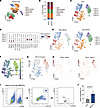 Figure 4
scRNA-Seq reveals neutrophil heterogeneity in human MASLD liver, with PAD4+ neutrophils correlating with MASH development. (A) Uniform manifold approximation and projection (UMAP) analysis of transcriptional profiles of myeloid cells (n = 15,479) from human MASL (n = 6) and MASH (n = 6) livers, with each cluster represented by a different color. (B) Bar plots showing the proportion of 6 myeloid cell subpopulations in human MASL and MASH livers. (C) UMAP analysis of transcriptional profiles of neutrophils (n = 2,428) from human MASL (n = 6) and MASH (n = 6) livers, with each cluster represented by a different color. (D) Violin plots showing expression levels and distribution of representative marker genes across neutrophil clusters. (E) UMAP analysis showing the distribution of 5 neutrophil subclusters in human MASL and MASH livers. (F) Pseudotime trajectory analysis of neutrophils using Palantir software (https://palantir.readthedocs.io), with cells colored by pseudotime progression. (G) UMAP showing NET formation signature scores in neutrophils, with color intensity reflecting scaled signature scores. Seurat (v4.3) AddModuleScore function was used to calculate NET gene signature scores. (H) UMAP of neutrophils colored by PAD4 cluster in MASL and MASH livers. (I) Flow cytometry analysis of PAD4+ neutrophils from livers of WD/CCl4–fed mice. (J) The proportion of PAD4+ neutrophils within the liver-infiltrating neutrophils in HFD- and WD/CCl4–fed mice. Statistical analyses were performed using 2-tailed Student’s t test. Data are shown as the mean ± SEM.
Further analysis of the 2,428 neutrophils across all samples (34.7% from MASL, 65.3% from MASH) using uniform manifold approximation and projection (UMAP) identified 5 distinct neutrophil clusters, with each cluster containing cells from all donors, indicating that there is no donor-specific transcriptomic profile (Figure 4C). Neutrophil populations were annotated based on the expression levels of marker genes (Figure 4D). The MASH group showed significantly higher proportions of Neut-3 and Neut-5 compared with MASL (Figure 4E and Supplemental Figure 4A). Notably, PAD4, MMP-9, and RBP7 were highly expressed in Neut-5, distinguishing it from the other clusters (Figure 4D). Kyoto Encyclopedia of Genes and Genomes (KEGG) analysis revealed that genes in Neut-5 were enriched in pathways related to NET formation and IL-17 signaling (Supplemental Figure 4B). Gene Ontology (GO) analysis further indicated enrichment for stress responses and cell chemotaxis in Neut-5 (Supplemental Figure 4C). Pseudotemporal trajectory analysis suggested differentiation from Neut-4 into Neut-2, Neut-3, or Neut-5 (Figure 4F).
After further validation, gene signature scoring confirmed that NET formation was predominantly localized within the Neut-5 subset (Figure 4G). PAD4, a marker gene for Neut-5, exhibited significantly increased expression in the MASH group (Figure 4H). Flow cytometry analysis corroborated these findings, revealing a significantly higher frequency of PAD4+ neutrophils in mice affected by MASH compared with those with MASL (Figure 4, I and J, and Supplemental Figure 4D). Collectively, our results suggest that human liver-infiltrating neutrophils constitute a heterogeneous population composed of 5 distinct subsets, with PAD4+ neutrophils potentially playing a role in the progression of MASLD through NET formation.
Inflammatory cytokines in MASH-affected livers drive the increased expression of PAD4+ neutrophils and the formation of NETs. To validate the role of PAD4+ neutrophils in the progression of MASLD, we assessed PAD4 expression in liver biopsies from patients at various stages of MASLD. PAD4 expression was significantly elevated in the MASH stage (Figure 5, A and B). PAD4-mediated histone citrullination is widely recognized as a crucial step in NET formation (14). To further investigate, we performed immunofluorescence staining for myeloperoxidase (MPO) and citrullinated histone H3, specific markers for neutrophils and NETosis. NET formation was minimally detected in non-MASLD and MASL tissues, but was prominently present in MASH tissues (Figure 5, C and D). These findings were further corroborated in mouse models, where WD/CCl4 mice exhibited significantly higher levels of hepatic NETs and PAD4 compared with CD- or HFD-fed mice (Figure 5, E–H). Together, these results suggest that PAD4+ neutrophils and NET formation are closely associated with the progression of MASLD.
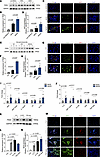 Figure 5
Inflammatory cytokines in MASH livers promote increased expression of PAD4+ neutrophil and NET formation. (A) Western blot analysis of PAD4 expression in liver tissues from non-MASLD, MASL, and MASH patients (n = 3 per group). (B) Quantitative grayscale analysis of PAD4 protein bands from Western blot. (C) Representative immunofluorescence images of citrullinated histone H3 (H3Cit) and MPO staining in liver tissues from non-MASLD, MASL, and MASH patients. NETs are identified by costaining with H3Cit, MPO, and DAPI, with red fluorescence indicating neutrophils. Scale bar: 20 μm. (D) Quantification of H3Cit+MPO+ staining intensity using ImageJ software. (E) Western blot analysis of PAD4 expression in non-parenchymal liver cells from CD-, HFD-, and WD/CCl4–fed mice (n = 3 per group). (F) Quantitative grayscale analysis of PAD4 protein bands in non-parenchymal liver cells. (G) Representative immunofluorescence images of H3Cit and MPO staining in livers from CD-, HFD-, and WD/CCl4–fed mice. NETs are identified by costaining with H3Cit, MPO, and DAPI, with red fluorescence indicating neutrophils. Scale bar: 20 μm. (H) Quantification of H3Cit+MPO+ staining intensity in mouse liver tissues using ImageJ software. (I and J) Luminex assay (Bio-Rad Laboratories) quantification of inflammation-related cytokines in liver tissues from MASL (n = 10) and MASH (n = 10) patients. Statistically significant cytokines are highlighted. (K) Western blot analysis of PAD4 expression in neutrophils stimulated with IL-8, G-CSF, and TNF-β. (L) Quantitative grayscale analysis of PAD4 protein bands in stimulated neutrophils. (M) Immunofluorescence assessment of NET formation potential in neutrophils stimulated with IL-8, G-CSF, and TNF-β (H3Cit in red, MPO in green, DAPI in blue). Scale bar: 200 μm. (N) Quantification of H3Cit+MPO+ staining intensity after IL-8, G-CSF, and TNF-β stimulation using ImageJ software. Statistical analyses were performed using 1-way ANOVA. Data are shown as the mean ± SEM.
Neutrophils function by responding to inflammatory signals and migrating to sites of injury or infection (15). To investigate the causes of elevated PAD4+ neutrophil and NET formation in MASH livers, we examined the expression of inflammatory cytokines in human liver samples. Analysis of 48 cytokines in MASL and MASH patient livers revealed 10 cytokines that were significantly elevated in MASH: MIG, MIP-1β, IL-12p40, LIF, IP-10, IL-8, MIP-1α, G-CSF, HGF, and TNF-β (Figure 5, I and J, and Supplemental Table 3). Among these, IL-8, G-CSF, and TNF-β have been identified as inducers of NET formation (16–18). Fluorescence analysis confirmed that IL-8, G-CSF, and TNF-β promoted increased PAD4 expression and NET formation in vitro (Figure 5, K–N). No significant differences were observed in most other inflammatory cytokines (Supplemental Figure 5, A–E). Collectively, these findings demonstrate that inflammatory cytokines in MASH livers contribute to the elevated expression of PAD4+ neutrophils and enhanced NET formation, underscoring the role of the inflammatory microenvironment in disease progression.
Inhibition of PAD4+ neutrophils slows fibrosis progression in MASH livers without exacerbating liver damage. To investigate the role of PAD4+ neutrophils in MASH, we developed mice with neutrophil-specific knockout of PAD4 (PAD4fl/fl; MRP8-Cre, PAD4ΔPMN) (Supplemental Figure 6A). This model has been well validated in multiple published studies to achieve efficient and specific deletion of PAD4 in neutrophils (19–22). In the HFD and WD/CCl4 models, weight changes in PAD4ΔPMN mice were comparable to those observed in CD models (Supplemental Figure 6B). The neutrophil-specific deficiency of PAD4 in the offspring was confirmed by quantitative reverse transcription PCR (qRT-PCR), verifying successful gene deletion (Supplemental Figure 6C). PAD4ΔPMN mice exhibited normal peripheral neutrophil counts (Supplemental Figure 6D). In the WD/CCl4–induced MASH model established in PAD4ΔPMN mice, NET formation in the liver was almost completely abolished (Supplemental Figure 6E). Neutrophils from PAD4ΔPMN mice exhibited minimal NET formation. In the HFD model, no significant differences in liver weight were noted between PAD4ΔPMN and PAD4+/+ mice. However, in the WD/CCl4 model, liver weight was significantly reduced in PAD4ΔPMN mice compared with PAD4+/+ mice (Figure 6A). Furthermore, serum ALT and AST levels were significantly lower in PAD4ΔPMN mice under the WD/CCl4 model, suggesting reduced liver injury, while no significant differences were observed in the HFD model (Figure 6, B and C). These results indicate that the inhibition of PAD4+ neutrophils in the liver does not exacerbate liver damage and may reduce hepatic inflammation in the context of MASH.
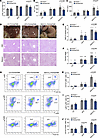 Figure 6
Effects of inhibiting PAD4+ neutrophil and NET formation on liver under CD, HFD, and WD/CCl4 models. (A) Liver weight/body weight ratio of mice in each group. (B) Serum ALT levels across different groups. (C) Serum AST levels across different groups. (D) Representative liver sections showing phenotypic changes, lipid accumulation, and fibrosis, assessed by Masson staining. Scale bars: 100 μm. (E) NAS scores of each group. (F) Fibrosis stage of each group. (G–J) Flow cytometry analysis of CD45+ NPCs extracted from the livers of PAD4ΔPMN mice and PAD4+/+ mice fed different models, showing neutrophil (CD11b+Ly6G+), monocyte (Ly6C+Ly6G–), and macrophage (CD11b+F4/80+) populations. Data are presented as mean ± SEM, based on 10 independent experiments. Statistical analyses were performed using 1-way ANOVA. Data are shown as the mean ± SEM.
Histopathological analysis revealed reduced severity of MASH in PAD4ΔPMN mice, as indicated by lower NAS scores and fibrosis grades compared with PAD4+/+ mice (Figure 6, D–F). Flow cytometric analysis showed a significant reduction in liver infiltration by neutrophils, monocytes, and macrophages in PAD4ΔPMN mice, suggesting that inhibition of PAD4+ neutrophil and NET formation limits inflammatory cell infiltration (Figure 6, G–J). To determine whether the observed effects were due to reduced NET formation or impaired neutrophil recruitment to the liver, we performed neutrophil adoptive cell transfer (ACT). Bone marrow cells were isolated from PAD4+/+ and PAD4ΔPMN mice, and bone marrow–derived neutrophils (BMDNs) were purified using anti-Ly6G. The results showed that liver fibrosis of PAD4ΔPMN mice was aggravated after injection of BMDNs from PAD4+/+ mice. However, the degree of liver fibrosis in PAD4+/+ mice did not change after injection of BMDNs from PAD4ΔPMN mice (Supplemental Figure 6, F and G). Collectively, these findings demonstrate that inhibiting PAD4+ neutrophil and NET formation slows fibrosis progression in MASH without exacerbating liver injury or inflammation.
PAD4+ neutrophils promote HepSC activation through NET formation and the activation of the MAPK pathway. To elucidate the role of liver-infiltrating PAD4+ neutrophils in MASH progression, we investigated intercellular communication involving neutrophils. Cell-cell communication analysis was conducted to assess the potential and strength of ligand-receptor interactions among various cell types. Notably, neutrophils exhibited the most prominent interactions with stromal cells (Figure 7A). Further analysis of the interactions between neutrophil subpopulations and stromal cells revealed that PAD4+ neutrophils (Neut-5) had significantly stronger connections with stromal cell types, including mesothelial cells, HepSCs, fibroblasts, and endothelial cells (ECs), compared with other neutrophil subpopulations (Figure 7, B and C).
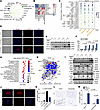 Figure 7
PAD4+ neutrophils promote HepSC activation via NET formation and MAPK pathway activation. (A) Networks revealing interactions among neutrophils and various cell types. The thicker the line, the higher the number of interactions among cell types. (B) Heatmap exhibiting cell-cell communication calculated by CellphoneDB (www.cellphonedb.org). Color represents cumulative count of significant ligand-receptor pairs across different cell types. (C) Dot plot showing significant ligand-receptor interactions (P < 0.05) between Neut-5 and stromal cell subtypes. The data are segmented with Neut-5 as source cells, according to CellphoneDB. Stromal cell subtypes are shown on the x axis, and ligand-receptor pairs on the y axis. Dot size and color intensity represent mean score. (D) Neutrophils pretreated with IL-8, G-CSF, and TNF-β and induced NETs were cocultured with LX-2 HepSCs for 6 hours. Immunofluorescence detected LX-2 cell activation (α-SMA in red, DAPI in blue). Scale bar: 100 μm. (E) Time course study (0, 1, 2, 4, 6 hours) of neutrophils or NETs cocultured with LX-2. LX-2 activation markers (α-SMA, TIMP-1, COL1A1) were analyzed using Western blot. (F) Quantitative grayscale analysis of α-SMA protein bands from Western blots. (G) Dot plot showing significant KEGG pathway terms. (H) Key driver gene analysis of differentially expressed genes was performed to identify genes with major regulatory roles. (I) Time course studies (0, 1, 2, 4, 6 hours) of neutrophils or NETs cocultured with LX-2. Key proteins in the MAPK pathway were analyzed by Western blotting. (J) Coculturing of NETs and LX-2 cells with the MAPK pathway inhibitor U0126 added; subsequent changes in LX-2 activation were assessed via immunofluorescence (α-SMA in red, DAPI in blue). Scale bars: 100 μm. (K) Quantification of α-SMA+ staining intensity using ImageJ software. (L) IHC detection of α-SMA in liver sections from PAD4+/+ and PAD4ΔPMN mice before and after WD/CCl4 dietary intervention. Scale bar: 50 μm. (M) Quantification of α-SMA+ staining intensity using ImageJ software. Statistical analyses were performed using 1-way ANOVA. Data are shown as the mean ± SEM.
Given the pivotal role of HepSCs in fibrosis formation, we investigated whether PAD4+ neutrophils could induce HepSC activation. Peripheral blood neutrophils from MASH patients were treated with IL-8, G-CSF, and TNF-β to promote the formation of PAD4+ neutrophils. Coculture experiments were then performed with PAD4+ neutrophils, NETs, and LX-2, a human HepSC line. NETs significantly enhanced LX-2 activation, while direct coculture with neutrophils alone exhibited minimal effects (Figure 7, D and K). Western blot analysis revealed upregulation of LX-2 activation markers, including α-SMA, TIMP-1, and COL1A1, in response to NETs compared with neutrophils alone (Figure 7, E and F, and Supplemental Figure 7, A and B).
To further investigate the molecular mechanisms underlying LX-2 activation, RNA sequencing was performed on LX-2 cells exposed to NETs. Differential expression analysis revealed upregulation of 539 genes and downregulation of 165 genes (Supplemental Figure 7C). GO enrichment analysis indicated that the differentially expressed genes were predominantly involved in inflammatory responses, cytokine-mediated signaling, and the regulation of cell proliferation (Supplemental Figure 7D). KEGG pathway analysis revealed significant enrichment in pathways such as TNF signaling, cytokine-receptor interactions, and NF-κB signaling, with notable involvement of the MAPK pathway (Figure 7G), which is known to regulate cell growth, differentiation, and responses to environmental stress (23).
Among the upregulated genes, key drivers such as CXCL6, FGF-2, and MMP-10 were identified as being associated with the activation of the MAPK pathway (Figure 7H). Western blot analysis confirmed MAPK pathway activation following NET treatment in LX-2 cells (Figure 7I and Supplemental Figure 7, E–G). To investigate the role of MAPK signaling in LX-2 activation, we used the MAPK inhibitor U0126. Inhibition of the MAPK pathway resulted in a significant reduction in LX-2 activation (Figure 7, J and K). Following WD/CCl4 dietary intervention, PAD4ΔPMN mice exhibited significantly reduced expression of α-SMA compared with PAD4+/+ mice (Figure 7, L and M). Collectively, these findings suggest that PAD4+ neutrophils promote HepSC activation through NET formation and subsequent MAPK pathway activation.
NET-DNA activates the MAPK pathway in a TAOK1-dependent manner, thereby promoting liver fibrosis. To investigate the role of NETs in activating the MAPK pathway, we first analyzed their protein composition. Neutrophils were isolated from peripheral blood samples of MASH patients and induced to form NETs using IL-8, G-CSF, and TNF-β. Proteomic analysis of NETs by liquid chromatography–mass spectrometry (LC-MS) identified a total of 492 proteins, with coexpressed proteins accounting for the majority (77.6%) (Figure 8A). Among these, we identified several known NET protein components, such as PRTN3, ELANE, and MPO (Figure 8B), which is consistent with previous reports indicating that NETs primarily function through granular proteins like ELANE and MPO (24).
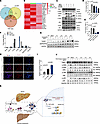 Figure 8
The critical role of NET-DNA and TAOK1 interaction in MAPK pathway activation. (A) Neutrophils isolated from MASH patient peripheral blood were induced to form NETs upon stimulation with IL-8, G-CSF, and TNF-β. Proteomic analysis using liquid chromatography/mass spectrometry (LC-MS) identified the amounts of proteins in these NETs, which are depicted in a Venn diagram. (B) A heatmap illustrates the top 20 protein components identified in the NETs by LC-MS, highlighting key proteins associated with NET formation. (C) Western blot analysis was performed to assess the impact of MPO inhibitor (PF1355), NE inhibitor (ONO5046), and DNase I treatment on MAPK pathway activation in LX-2 cells exposed to NETs. (D and E) Quantitative grayscale analysis of Western blot bands for α-SMA and TIMP-1 expression in response to NETs and inhibitors. (F) LC-MS analysis of enriched proteins associated with the MAPK pathway following NET-DNA pull-down, with key MAPK pathway components highlighted. (G) Coculture of neutrophils or NETs with LX-2 cells for varying durations (0, 30 minutes, 1, 2, 4, and 6 hours), followed by Western blot detection of TAOK1 and MAPKAPK5 expression levels. (H) Immunofluorescence microscopy showed changes in TAOK1 expression during co-cultivation of NETs and LX-2 cells (TAOK1 shown in red, DAPI for cell nuclei in blue). Scale bar: 100 μm. (I) Quantification of TAOK1+ staining intensity using ImageJ software, showing the increase in TAOK1 expression in LX-2 cells following NET exposure. (J) Western blot analysis after TAOK1 inhibitor treatment to examine the impact of NETs on MAPK pathway activation in LX-2 cells. (K) Schematic diagram illustrating the mechanism by which NET-DNA activates the MAPK pathway through TAOK1 interaction, promoting HepSC activation and fibrosis (created with BioRender; biorender.com). Statistical analyses were performed using 1-way ANOVA. Data are shown as the mean ± SEM.
Western blot analysis demonstrated that NET stimulation led to the phosphorylation of ERK, JNK, and p38, along with an increase in the expression of α-SMA and TIMP-1. Interestingly, inhibition of ELANE and MPO using specific inhibitors (ONO5046 and PF1355) did not suppress the activation of the MAPK pathway or reduce the expression of fibrosis-related proteins. However, treatment with DNase I inhibited the MAPK pathway and significantly decreased the expression of fibrosis-related proteins (Figure 8, C–E, and Supplemental Figure 8A). These findings suggest that NETs function through NET-DNA, which activates HepSCs via the MAPK pathway.
To further explore the underlying mechanism, we extracted membrane proteins from LX-2 cells and coincubated them with NET-DNA. Interacting proteins were identified through DNA pull-down assays followed by mass spectrometry (Supplemental Figure 8B). A total of 414 interacting proteins were detected, including several associated with the MAPK pathway (Supplemental Figure 8, C and D). Among these, TAOK1 and MAPKAPK5 exhibited higher and more stable expression levels (Figure 8F). Western blot analysis confirmed that NET exposure increased TAOK1 expression in LX-2 cells (Figure 8G and Supplemental Figure 8E). In vitro immunofluorescence further supported these findings, showing enhanced TAOK1 expression in LX-2 cells following NET exposure (Figure 8, H and I).
To verify the role of TAOK1 in MAPK pathway activation, we treated LX-2 cells with a specific TAOK1 inhibitor (TAO kinase inhibitor 1). This treatment resulted in the inhibition of the MAPK pathway and a reduction in the expression of fibrosis-related proteins (Figure 8J and Supplemental Figure 8F). Collectively, these data indicate that NET-DNA activates the MAPK pathway through TAOK1 binding, thereby promoting HepSC activation and liver fibrosis.


