
Research ArticleGastroenterologyNeuroscience
Open Access |  10.1172/jci.insight.190469
Structural and functional gastrointestinal abnormalities in ACTA2 R179H mice modeling multisystemic smooth muscle dysfunction syndrome
Ahmed A. Rahman,1 Rhian Stavely,1 Leah C. Ott,1 Christopher Y. Han,1 Kensuke Ohishi,1,2 Ryo Hotta,1 Alan J. Burns,1 Sabyasachi Das,3 Emily Da Cruz,3,4 Diana Tambala,3,4 Mark E. Lindsay,5,6 Patricia L. Musolino,3,4,7 and Allan M. Goldstein1
1Department of Pediatric Surgery, Massachusetts General Hospital, Harvard Medical School, Boston, Massachusetts, USA.
2Drug Discovery Laboratory, Wakunaga Pharmaceutical Co., Ltd., Akitakata, Hiroshima, Japan.
3Center for Genomic Medicine, Massachusetts General Hospital, Boston, Massachusetts, USA.
4Department of Neurology, Massachusetts General Hospital, Harvard Medical School, Boston, Massachusetts, USA.
5Cardiovascular Genetics Program;
6Cardiovascular Research Center, Division of Cardiology, Department of Medicine; and
7Division of Neurocritical Care, Department of Neurology, Massachusetts General Hospital, Boston, Massachusetts, USA.
Address correspondence to: Allan M. Goldstein, Department of Pediatric Surgery, Massachusetts General Hospital, 55 Fruit St., Warren 1151, Boston, Massachusetts, 02114, USA. Email: amgoldstein@mgb.org.
Find articles by Rahman, A. in: PubMed | Google Scholar
1Department of Pediatric Surgery, Massachusetts General Hospital, Harvard Medical School, Boston, Massachusetts, USA.
2Drug Discovery Laboratory, Wakunaga Pharmaceutical Co., Ltd., Akitakata, Hiroshima, Japan.
3Center for Genomic Medicine, Massachusetts General Hospital, Boston, Massachusetts, USA.
4Department of Neurology, Massachusetts General Hospital, Harvard Medical School, Boston, Massachusetts, USA.
5Cardiovascular Genetics Program;
6Cardiovascular Research Center, Division of Cardiology, Department of Medicine; and
7Division of Neurocritical Care, Department of Neurology, Massachusetts General Hospital, Boston, Massachusetts, USA.
Address correspondence to: Allan M. Goldstein, Department of Pediatric Surgery, Massachusetts General Hospital, 55 Fruit St., Warren 1151, Boston, Massachusetts, 02114, USA. Email: amgoldstein@mgb.org.
Find articles by Stavely, R. in: PubMed | Google Scholar
1Department of Pediatric Surgery, Massachusetts General Hospital, Harvard Medical School, Boston, Massachusetts, USA.
2Drug Discovery Laboratory, Wakunaga Pharmaceutical Co., Ltd., Akitakata, Hiroshima, Japan.
3Center for Genomic Medicine, Massachusetts General Hospital, Boston, Massachusetts, USA.
4Department of Neurology, Massachusetts General Hospital, Harvard Medical School, Boston, Massachusetts, USA.
5Cardiovascular Genetics Program;
6Cardiovascular Research Center, Division of Cardiology, Department of Medicine; and
7Division of Neurocritical Care, Department of Neurology, Massachusetts General Hospital, Boston, Massachusetts, USA.
Address correspondence to: Allan M. Goldstein, Department of Pediatric Surgery, Massachusetts General Hospital, 55 Fruit St., Warren 1151, Boston, Massachusetts, 02114, USA. Email: amgoldstein@mgb.org.
Find articles by Ott, L. in: PubMed | Google Scholar
1Department of Pediatric Surgery, Massachusetts General Hospital, Harvard Medical School, Boston, Massachusetts, USA.
2Drug Discovery Laboratory, Wakunaga Pharmaceutical Co., Ltd., Akitakata, Hiroshima, Japan.
3Center for Genomic Medicine, Massachusetts General Hospital, Boston, Massachusetts, USA.
4Department of Neurology, Massachusetts General Hospital, Harvard Medical School, Boston, Massachusetts, USA.
5Cardiovascular Genetics Program;
6Cardiovascular Research Center, Division of Cardiology, Department of Medicine; and
7Division of Neurocritical Care, Department of Neurology, Massachusetts General Hospital, Boston, Massachusetts, USA.
Address correspondence to: Allan M. Goldstein, Department of Pediatric Surgery, Massachusetts General Hospital, 55 Fruit St., Warren 1151, Boston, Massachusetts, 02114, USA. Email: amgoldstein@mgb.org.
Find articles by Han, C. in: PubMed | Google Scholar
1Department of Pediatric Surgery, Massachusetts General Hospital, Harvard Medical School, Boston, Massachusetts, USA.
2Drug Discovery Laboratory, Wakunaga Pharmaceutical Co., Ltd., Akitakata, Hiroshima, Japan.
3Center for Genomic Medicine, Massachusetts General Hospital, Boston, Massachusetts, USA.
4Department of Neurology, Massachusetts General Hospital, Harvard Medical School, Boston, Massachusetts, USA.
5Cardiovascular Genetics Program;
6Cardiovascular Research Center, Division of Cardiology, Department of Medicine; and
7Division of Neurocritical Care, Department of Neurology, Massachusetts General Hospital, Boston, Massachusetts, USA.
Address correspondence to: Allan M. Goldstein, Department of Pediatric Surgery, Massachusetts General Hospital, 55 Fruit St., Warren 1151, Boston, Massachusetts, 02114, USA. Email: amgoldstein@mgb.org.
Find articles by Ohishi, K. in: PubMed | Google Scholar
1Department of Pediatric Surgery, Massachusetts General Hospital, Harvard Medical School, Boston, Massachusetts, USA.
2Drug Discovery Laboratory, Wakunaga Pharmaceutical Co., Ltd., Akitakata, Hiroshima, Japan.
3Center for Genomic Medicine, Massachusetts General Hospital, Boston, Massachusetts, USA.
4Department of Neurology, Massachusetts General Hospital, Harvard Medical School, Boston, Massachusetts, USA.
5Cardiovascular Genetics Program;
6Cardiovascular Research Center, Division of Cardiology, Department of Medicine; and
7Division of Neurocritical Care, Department of Neurology, Massachusetts General Hospital, Boston, Massachusetts, USA.
Address correspondence to: Allan M. Goldstein, Department of Pediatric Surgery, Massachusetts General Hospital, 55 Fruit St., Warren 1151, Boston, Massachusetts, 02114, USA. Email: amgoldstein@mgb.org.
Find articles by Hotta, R. in: PubMed | Google Scholar
1Department of Pediatric Surgery, Massachusetts General Hospital, Harvard Medical School, Boston, Massachusetts, USA.
2Drug Discovery Laboratory, Wakunaga Pharmaceutical Co., Ltd., Akitakata, Hiroshima, Japan.
3Center for Genomic Medicine, Massachusetts General Hospital, Boston, Massachusetts, USA.
4Department of Neurology, Massachusetts General Hospital, Harvard Medical School, Boston, Massachusetts, USA.
5Cardiovascular Genetics Program;
6Cardiovascular Research Center, Division of Cardiology, Department of Medicine; and
7Division of Neurocritical Care, Department of Neurology, Massachusetts General Hospital, Boston, Massachusetts, USA.
Address correspondence to: Allan M. Goldstein, Department of Pediatric Surgery, Massachusetts General Hospital, 55 Fruit St., Warren 1151, Boston, Massachusetts, 02114, USA. Email: amgoldstein@mgb.org.
Find articles by Burns, A. in: PubMed | Google Scholar
1Department of Pediatric Surgery, Massachusetts General Hospital, Harvard Medical School, Boston, Massachusetts, USA.
2Drug Discovery Laboratory, Wakunaga Pharmaceutical Co., Ltd., Akitakata, Hiroshima, Japan.
3Center for Genomic Medicine, Massachusetts General Hospital, Boston, Massachusetts, USA.
4Department of Neurology, Massachusetts General Hospital, Harvard Medical School, Boston, Massachusetts, USA.
5Cardiovascular Genetics Program;
6Cardiovascular Research Center, Division of Cardiology, Department of Medicine; and
7Division of Neurocritical Care, Department of Neurology, Massachusetts General Hospital, Boston, Massachusetts, USA.
Address correspondence to: Allan M. Goldstein, Department of Pediatric Surgery, Massachusetts General Hospital, 55 Fruit St., Warren 1151, Boston, Massachusetts, 02114, USA. Email: amgoldstein@mgb.org.
Find articles by Das, S. in: PubMed | Google Scholar
1Department of Pediatric Surgery, Massachusetts General Hospital, Harvard Medical School, Boston, Massachusetts, USA.
2Drug Discovery Laboratory, Wakunaga Pharmaceutical Co., Ltd., Akitakata, Hiroshima, Japan.
3Center for Genomic Medicine, Massachusetts General Hospital, Boston, Massachusetts, USA.
4Department of Neurology, Massachusetts General Hospital, Harvard Medical School, Boston, Massachusetts, USA.
5Cardiovascular Genetics Program;
6Cardiovascular Research Center, Division of Cardiology, Department of Medicine; and
7Division of Neurocritical Care, Department of Neurology, Massachusetts General Hospital, Boston, Massachusetts, USA.
Address correspondence to: Allan M. Goldstein, Department of Pediatric Surgery, Massachusetts General Hospital, 55 Fruit St., Warren 1151, Boston, Massachusetts, 02114, USA. Email: amgoldstein@mgb.org.
Find articles by Da Cruz, E. in: PubMed | Google Scholar
1Department of Pediatric Surgery, Massachusetts General Hospital, Harvard Medical School, Boston, Massachusetts, USA.
2Drug Discovery Laboratory, Wakunaga Pharmaceutical Co., Ltd., Akitakata, Hiroshima, Japan.
3Center for Genomic Medicine, Massachusetts General Hospital, Boston, Massachusetts, USA.
4Department of Neurology, Massachusetts General Hospital, Harvard Medical School, Boston, Massachusetts, USA.
5Cardiovascular Genetics Program;
6Cardiovascular Research Center, Division of Cardiology, Department of Medicine; and
7Division of Neurocritical Care, Department of Neurology, Massachusetts General Hospital, Boston, Massachusetts, USA.
Address correspondence to: Allan M. Goldstein, Department of Pediatric Surgery, Massachusetts General Hospital, 55 Fruit St., Warren 1151, Boston, Massachusetts, 02114, USA. Email: amgoldstein@mgb.org.
Find articles by Tambala, D. in: PubMed | Google Scholar
1Department of Pediatric Surgery, Massachusetts General Hospital, Harvard Medical School, Boston, Massachusetts, USA.
2Drug Discovery Laboratory, Wakunaga Pharmaceutical Co., Ltd., Akitakata, Hiroshima, Japan.
3Center for Genomic Medicine, Massachusetts General Hospital, Boston, Massachusetts, USA.
4Department of Neurology, Massachusetts General Hospital, Harvard Medical School, Boston, Massachusetts, USA.
5Cardiovascular Genetics Program;
6Cardiovascular Research Center, Division of Cardiology, Department of Medicine; and
7Division of Neurocritical Care, Department of Neurology, Massachusetts General Hospital, Boston, Massachusetts, USA.
Address correspondence to: Allan M. Goldstein, Department of Pediatric Surgery, Massachusetts General Hospital, 55 Fruit St., Warren 1151, Boston, Massachusetts, 02114, USA. Email: amgoldstein@mgb.org.
Find articles by Lindsay, M. in: PubMed | Google Scholar
1Department of Pediatric Surgery, Massachusetts General Hospital, Harvard Medical School, Boston, Massachusetts, USA.
2Drug Discovery Laboratory, Wakunaga Pharmaceutical Co., Ltd., Akitakata, Hiroshima, Japan.
3Center for Genomic Medicine, Massachusetts General Hospital, Boston, Massachusetts, USA.
4Department of Neurology, Massachusetts General Hospital, Harvard Medical School, Boston, Massachusetts, USA.
5Cardiovascular Genetics Program;
6Cardiovascular Research Center, Division of Cardiology, Department of Medicine; and
7Division of Neurocritical Care, Department of Neurology, Massachusetts General Hospital, Boston, Massachusetts, USA.
Address correspondence to: Allan M. Goldstein, Department of Pediatric Surgery, Massachusetts General Hospital, 55 Fruit St., Warren 1151, Boston, Massachusetts, 02114, USA. Email: amgoldstein@mgb.org.
Find articles by
Musolino, P.
in:
PubMed
|
Google Scholar
|

1Department of Pediatric Surgery, Massachusetts General Hospital, Harvard Medical School, Boston, Massachusetts, USA.
2Drug Discovery Laboratory, Wakunaga Pharmaceutical Co., Ltd., Akitakata, Hiroshima, Japan.
3Center for Genomic Medicine, Massachusetts General Hospital, Boston, Massachusetts, USA.
4Department of Neurology, Massachusetts General Hospital, Harvard Medical School, Boston, Massachusetts, USA.
5Cardiovascular Genetics Program;
6Cardiovascular Research Center, Division of Cardiology, Department of Medicine; and
7Division of Neurocritical Care, Department of Neurology, Massachusetts General Hospital, Boston, Massachusetts, USA.
Address correspondence to: Allan M. Goldstein, Department of Pediatric Surgery, Massachusetts General Hospital, 55 Fruit St., Warren 1151, Boston, Massachusetts, 02114, USA. Email: amgoldstein@mgb.org.
Find articles by Goldstein, A. in: PubMed | Google Scholar
Published January 6, 2026 - More info
JCI Insight. 2026;11(4):e190469. https://doi.org/10.1172/jci.insight.190469.
© 2026 Rahman et al. This work is licensed under the Creative Commons Attribution 4.0 International License. To view a copy of this license, visit http://creativecommons.org/licenses/by/4.0/.
Received: December 19, 2024; Accepted: January 2, 2026


-
Results
Intestinal dysmotility is a prominent feature in patients with MSMDS. A retrospective chart review was performed on all patients with MSMDS with R179 variants participating in the Young Genetic Stroke Alliance (YGSA) natural history and biomarkers studies at our institution. This review comprised 24 patients, representing the largest cohort reported to date (Supplemental Table 1; supplemental material available online with this article; https://doi.org/10.1172/jci.insight.190469DS1). Of all patients, 63% were female and ages ranged from 6 months to 26 years. The R179H mutation was present in 88% of patients, and the remainder of patients had R179C. Constipation severe enough to require bowel management, consisting of oral laxatives with or without rectal enemas, was present in 75% of patients. Six patients (25%) were on a prokinetic agent for delayed gastric emptying, intestinal dysmotility, or chronic constipation. Enteral nutrition was required by 50% of patients, defined as partial or complete reliance on tube feeding.
Symptom burden was further characterized in 14 patients based on caregiver survey data (Supplemental Table 2). Many patients remained symptomatic despite therapy, with 46% reporting a history of constipation lasting 5 years or longer, 54% reporting abdominal pain at least “sometimes,” and 46% reporting feelings of incomplete evacuation. More than half had more than 1 bowel movement per day, but stool consistency was most often loose (Bristol Stool Chart type 6), reflecting the impact of combined medical therapy. Symptom onset often occurred at birth, with congenital mydriasis and patent ductus arteriosus as early manifestations. In older patients, GI symptoms frequently preceded genetic diagnosis by many years. These findings highlight the high incidence and symptomatic burden of GI dysmotility in this patient population.
ACTA2 mutant mice exhibit reduced lifespan and smooth muscle–specific recombination. To characterize the overall phenotype of the Myh11-Cre Acta2R179Hfl/+ mouse model (referred to as ACTA2 mice hereafter), we compared them with Acta2R179Hfl/+ littermates (control mice). We first assessed gross appearance and survival. Mutant mice were smaller than littermate controls, with reduced body condition evident by 4–5 weeks of age. Kaplan-Meier survival analysis revealed a marked reduction in lifespan, with death as early as 5 weeks of age. Median survival was 6–7 weeks, and no mutant mice survived beyond 15 weeks. In contrast, all control mice survived to the end of the observation period. Early mortality due to the ACTA2 R179H mutation is consistent with severe, systemic smooth muscle dysfunction (Supplemental Figure 1A).
To confirm that Myh11-Cre–driven recombination and mutant ACTA2 expression were restricted to smooth muscle cells, we performed co-immunolabeling of EGFP with lineage-specific markers in the distal colon. EGFP signal showed complete overlap with α-SMA and Myh11, confirming smooth muscle identity (Supplemental Figure 1B). No colocalization of EGFP was observed with markers for ICCs (C-Kit) (Supplemental Figure 1B) or with enteric neurons (Hu) and glial cells (S-100B) (Supplemental Figure 1B). These findings confirmed that Cre-mediated recombination occurs specifically in smooth muscle cells within the adult colonic muscularis propria, with no off-target reporter activity detected in neuronal, glial, or ICC populations.
To further exclude the possibility that apparent overlap could arise from image alignment artifacts or close spatial apposition between smooth muscle fibers and enteric ganglia, we performed whole-mount longitudinal muscle-myenteric plexus (LMMP) preparations from adult Myh11-Cre Acta2R179H fl/+ mice. LMMP tissues were immunolabeled for Hu, S-100B, and EGFP, and high-resolution confocal Z-stack imaging was acquired across the full depth of the myenteric plexus. Three-dimensional reconstructions and orthogonal views demonstrated that Myh11-GFP signal was confined to smooth muscle fibers surrounding myenteric ganglia and did not colocalize with Hu+ neuronal cell bodies, nor with S-100B+ glial cells, at any Z-plane (Supplemental Video 1). These data provide unambiguous 3D confirmation that Myh11-Cre–driven recombination in the adult colon is restricted to smooth muscle cells.
Gut structural changes in ACTA2 mutant mice. ACTA2 mice at 6–8 weeks of age exhibited gross distension of the cecum and proximal colon, with a constricted distal colon (Figure 1A). The length of both the small intestine (23.5 ± 1.2 cm) and large intestine (6.6 ± 0.2 cm) was significantly less than control mice (small intestine: 29.3 ± 1.4 cm, P < 0.01; large intestine: 7.6 ± 0.3 cm, P < 0.05) (Figure 1, B and C). H&E staining of the distalmost 2 cm of colon, which was visibly narrowed in ACTA2 mutant mice, revealed a thinner muscle layer (95.1 ± 1.6 μm) and thicker mucosal layer (289.9 ± 15.7 μm) in ACTA2 mice compared with controls (muscle: 140.7 ± 4.0 μm, P < 0.001; mucosa: 235.4 ± 16.2 μm, P < 0.05) (Figure 1, D and E). Occasional epithelial disorganization and increased goblet cell content were observed in ACTA2 mutants, suggesting mucosal remodeling secondary to smooth muscle dysfunction.
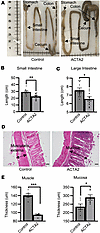 Figure 1
Altered gut architecture in ACTA2 mutant mice. (A) Gross morphology of small and large intestine from control and ACTA2 mice, with mutants displaying fecal obstruction/impaction in the cecum and proximal colon. (B and C) Reduction in the length of the small and large intestine in ACTA2 mice compared with control mice. (D) H&E staining of distal colon sections from control and ACTA2 mice. Scale bars: 50 μm. (E) Assessment of gut histology revealed thinner muscle layers and thickened mucosa in the distal colon of ACTA2 mice compared with control mice. Each dot represents the average thickness value from 3 measurements (top, middle, and bottom of a representative section) in a single animal. Data are presented as mean ± SEM. Statistical comparisons were made using unpaired 2-tailed t tests, as detailed in Methods. *P < 0.05, **P < 0.01, ***P < 0.001.
To further define these regional alterations, we measured the luminal diameters of the proximal, mid, and distal colon following fixation of maximally stretched and pinned colons. ACTA2 mutants exhibited a significant increase in proximal colonic diameter (13.63 ± 0.35 mm) compared with controls (8.67 ± 0.51 mm, P < 0.01), and a significant reduction in distal colonic diameter (7.15 ± 0.11 mm) relative to controls (8.93 ± 0.56 mm, P < 0.05). Mid-colon diameters were comparable between groups (P > 0.05) (Supplemental Figure 1C). These region-specific changes further support segmental remodeling of the colon in ACTA2 R179H mutant mice.
To assess the status of smooth muscle integrity, we performed α-SMA (ACTA2) immunohistochemistry. ACTA2 mutant mice exhibited visibly reduced α-SMA staining intensity and discontinuity in the circular muscle layer of the distal colon compared with controls (Supplemental Figure 1D), consistent with compromised smooth muscle structure and/or reduced α-SMA expression.
Colonic motility is disrupted in ACTA2 mutant mice. To investigate gut motility, kymographs were generated from spatiotemporal maps of colonic motility in 6- to 8-week-old ACTA2 mutant mice and controls. Normal, regular, propagating colonic migrating motor complexes (CMMCs) were observed in control mice (Figure 2A) but were notably absent in ACTA2 mice (Figure 2A). CMMCs were defined as coordinated contractions that propagated in the oral-to-anal direction and extended along at least 50% of the colon length. Although ACTA2 mutants exhibited some irregular contractions, these events lacked sustained propagation and failed to meet the 50% threshold and therefore were not counted as CMMCs. Each CMMC in control mice was associated with an increase in intraluminal pressure (46 ± 3.0 mmHg), whereas ACTA2 mice had markedly attenuated pressure changes (6 ± 1.6 mmHg, P < 0.01) (Figure 2A). CMMC velocity and frequency were significantly reduced in ACTA2 mice (CMMC velocity: 0.52 ± 0.3 mm/s, P < 0.01; frequency: 1.8 ± 0.6 per 10 minutes, P < 0.001) compared with littermate controls (CMMC velocity: 2.6 ± 0.3 mm/s; frequency: 6.1 ± 0.2 per 10 minutes) (Figure 2B).
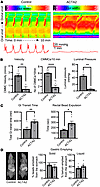 Figure 2
Colonic dysmotility in ACTA2 mutant mice. (A) Representative spatiotemporal map kymographs generated from video recordings of colonic motility in control and ACTA2 mice, depicting changes in gut width along the entire length of the colon, with the labeled color scale bar (in mm) representing diameter (cool colors indicating smaller diameter/contraction, warm colors indicating larger diameter/relaxation). Intraluminal pressure represents the maximum pressure (mmHg) recorded during a 10-minute observation period. (B) CMMC velocity, frequency, and luminal pressure were significantly decreased in ACTA2 mice compared with control mice. (C) Prolonged rectal bead expulsion time in ACTA2 mice. (D) Radiographic gastric emptying assay using gavaged radio-opaque beads and contrast showed that both solid and liquid gastric emptying were unaltered in ACTA2 mice. Data are presented as mean ± SEM. Statistical comparisons were made using unpaired 2-tailed t tests, as detailed in Methods. *P < 0.05, **P < 0.01, ****P < 0.0001.
Further in vivo GI functional analysis demonstrated that gut transit was delayed in ACTA2 mice, as evidenced by prolonged whole-gut transit time (386.1 ± 38.1 minutes, P < 0.01), measured by the expulsion time of carmine red–containing fecal pellets compared with controls (219.7 ± 34.2 minutes) (Figure 2C). Additionally, rectal bead expulsion time was also significantly prolonged in ACTA2 mice (283.8 ± 40.6 minutes, P < 0.05) compared with the control (156.5 ± 10.8 minutes) (Figure 2C). Radiographic assessment of gastric emptying using gavaged radio-opaque beads and contrast revealed that both solid and liquid gastric emptying were unaltered in ACTA2 mice (Figure 2D).
Smooth muscle contractile responses are attenuated in ACTA2 mutant mice. To investigate the mechanisms underlying gut dysmotility in ACTA2 mutant mice, smooth muscle contractility in the distal colon was assessed using electrical field stimulation (EFS), acetylcholine (ACh), and the global depolarizing agent potassium chloride (KCl) using standard organ bath techniques. Colons from ACTA2 mutants displayed striking spontaneous activity, marked by rhythmic, high-amplitude contractions that persisted throughout the recordings. Such activity was absent in controls (Supplemental Figure 2A). Quantitative analysis confirmed this abnormal phenotype, with ACTA2 mutants showing significantly greater baseline contractile activity (AUC 176.5 ± 50.5 g × s) compared with controls (AUC 36.9 ± 11.2 g × s, P < 0.001, Supplemental Figure 2B), indicating both enhanced magnitude and sustained rhythmicity of spontaneous contractions.
When EFS was applied, robust muscle contractions were observed in control colon (3.3 ± 0.7 g), but these contractions were significantly reduced in amplitude in ACTA2 mice (0.6 ± 0.2 g, P < 0.001, Figure 3A).
 Figure 3
Reduced smooth muscle contraction in ACTA2 mutant mice in response to EFS, ACh, and KCl (distal colon). (A–C) Representative traces of smooth muscle contraction in response to EFS (A), ACh (B), and KCl (C) in distal colon rings from control and ACTA2 mice. Bar graphs depict the maximum contractile force (g) recorded within 5 minutes after stimulus addition, compared with the maximum value during the 60-second baseline period prior to stimulation. This difference was used to calculate the absolute change in response (Δg). (A) Application of EFS caused significant muscle contraction in the distal colon of control mice but no response in ACTA2 mice. Maximum effects are shown as the absolute change from basal values. (B) Both low and high doses of ACh failed to induce contraction in ACTA2 mice (left panel, representative trace). (C) Muscle contraction in response to KCl was also attenuated in ACTA2 mice. (D) TTX increased the frequency and amplitude of tonic contractions in control mice but had no effect on tissues from ACTA2 mice. Data are presented as mean ± SEM. Statistical comparisons were made using unpaired 2-tailed t tests, as detailed in Methods. **P < 0.01, ***P < 0.001.
To assess cholinergic receptor–mediated contractility, we generated a full dose–response curve to Ach (0.01–100 μM) in colonic smooth muscle from control and ACTA2 mutant mice (Supplemental Figure 2C). Control tissues exhibited the expected graded, dose-dependent increase in contractile force, culminating in robust contractions at the highest concentration (~2.3 g at 100 μM). In contrast, ACTA2 mutant tissues showed a profoundly blunted and heterogeneous profile. Some mutants displayed only small, incremental increases in force (Supplemental Figure 2, trace i), while most showed little to no response (trace ii), and a subset even exhibited paradoxical reductions in tone at higher doses (trace iii). This paradoxical effect likely reflects suppression of the spontaneous rhythmic contractions that are prominent in ACTA2 colon. As a result, the group dose-response curve in ACTA2 mutants remained essentially flat, in stark contrast to the steep upward trajectory observed in controls (Supplemental Figure 2D). Figure 3B provides representative traces at the lowest (0.1 μM) and highest (100 μM) ACh concentrations. In control colon, 0.1 μM ACh produced no effect, whereas 100 μM triggered strong phasic contractions. In ACTA2 mutants, high-dose stimulation was frequently accompanied by suppression of baseline rhythmic activity rather than contraction. Quantification confirmed a significant reduction in peak contractile force in ACTA2 mutants (0.2 ± 0.3 g) compared with controls (2.3 ± 0.4 g, P < 0.01, Figure 3B).
To assess whether the high-dose ACh response reflected a tonic contraction or impaired relaxation, we performed a complementary dose–response analysis using sodium nitroprusside. In both control and ACTA2 mutant tissues, sodium nitroprusside induced dose-dependent relaxation, with a noticeable decrease in basal tone beginning at low concentrations and near-complete abolition of spontaneous activity at doses of 50 μM or higher (Supplemental Figure 2, E and F). These findings indicate that the smooth muscle in ACTA2 mutants retains the capacity to relax in response to nitric oxide signaling and that the suppression of phasic activity seen with high-dose ACh likely reflects a failure in excitatory contractile signaling, rather than abnormal hypercontractility or sustained tetany.
To assess receptor-independent smooth muscle excitability, we tested responses to potassium chloride (KCl). In control tissue, KCl induced strong contractions (5.8 ± 0.6 g), while ACTA2 mutant muscle showed significantly reduced responses (0.8 ± 0.4 g, P < 0.001) and loss of organized phasic activity (Figure 3C).
We also investigated whether these impairments were region specific by assessing EFS-induced contractions in the mid and proximal colon and showed that in ACTA2 mutants, contractile responses were significantly reduced in the mid-colon (0.2 ± 0.3 g; P < 0.01 vs. control) but were not significantly different from controls in the proximal colon (0.6 ± 0.1 g; P = nonsignificant) (Supplemental Figure 2G). These findings reveal a region-dependent gradient of smooth muscle dysfunction in ACTA2 mutant mice, with impairments most severe in the distal colon and progressively less pronounced in more proximal segments. Consistent with this observation, ileal muscle contractile responses to EFS, ACh, and KCl were not significantly different between ACTA2 mutants and controls (data not shown).
As noted above, a consistent feature of gut contractility in ACTA2 mice is the occurrence of spontaneous, regular contractions (Figure 3, A–C). To test whether this contractile activity is mediated by enteric neurons, tetrodotoxin (TTX) was added to the organ bath. In the presence of TTX, the tonic contractile activity in control mice became more frequent and of higher amplitude. However, there was no change in the spontaneous muscle contractions in ACTA2 mice, as shown in Figure 3D.
Assessment of ENS and other cell types in ACTA2 mutant mice. We performed immunohistochemical analysis to evaluate potential changes in the ENS of ACTA2 mutant mice. No significant differences were observed in the total number of Hu+ myenteric neurons or in the proportion of Hu+ neurons expressing nNOS (nitrergic) or calretinin (cholinergic) compared with control mice (Figure 4).
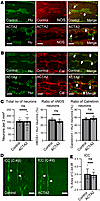 Figure 4
Enteric nervous system in ACTA2 mutant mice. (A and B) Morphometric analysis of the colonic myenteric plexus stained with neuronal markers Hu (total neurons), nNOS (inhibitory motor neurons), and calretinin (commonly associated with sensory neurons, interneurons, and some excitatory motor neurons). (C) Quantification of Hu+, nNOS+, and calretinin+ neurons per 2 mm2 area in whole-mount myenteric plexus preparations. Bar graphs on the right show the percentage of Hu+ neurons that were also positive for nNOS or calretinin. (D) Confocal images of ICC in the distal colon labeled with C-Kit. ICCs located at the myenteric plexus (ICC-MY) are indicated with arrows, and those near the submucosa (ICC-SM) with arrowheads. (E) Quantification of total C-Kit+ ICC immunoreactivity in control and ACTA2 mice. Scale bars: 50 μm. Data are presented as mean ± SEM. Statistical comparisons were made using unpaired 2-tailed t tests, as detailed in Methods.
Together, these data demonstrate that ACTA2 mutations do not cause overt loss or structural disruption of enteric neurons. However, single-nuclei RNA-seq (snRNA-seq) analysis revealed modest changes in the expression of several neuronal and glial genes (e.g., Tac1, Vip), suggesting that although the structural framework of the ENS was preserved, transcriptional adaptations within these cell populations may accompany the broader smooth muscle dysfunction.
Gene expression is altered in the colonic muscularis propria of ACTA2 mutant mice. We performed snRNA-seq on control and ACTA2 mutant mice, focusing specifically on the muscularis propria of the colon. The analysis captured smooth muscle cells (Myh11, Acta2, Actg2), mesothelial cells (Upk3b), enteric glial cells (Cdh19, Plp1), enteric neurons (Elavl4, Chat, and Nos1), lymphatic endothelial cells (Prox1, Reln), fibroblasts (Lama2, Pdgfra, Svep1), macrophages (Ptprc, Mrc1), ICCs (Kit and Ano1), and vascular endothelial cells (Vwf, Pecam1) (Figure 5A). Full differential expression results for all annotated clusters are provided in Supplemental Figure 3 and Supplemental Table 3.
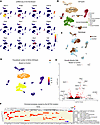 Figure 5
Transcriptional changes in intestinal smooth muscle cells in ACTA2 mutant mice. (A) Expression of gene markers for smooth muscle cells (Myh11 and Acta2), mesothelial cells (Upk3b), enteric glial cells (Cdh19), excitatory and inhibitory enteric neurons (Chat and Nos1), lymphatic endothelial cells (Prox1), fibroblasts (Pdgfra), immune cells (Ptprc), ICCs (Kit and Ano1), and vascular endothelial cells (Vwf) in nuclei isolated from the muscularis propria of the colon from control and ACTA2 mutant mice represented as UMAP plots. (B and C) Unsupervised clustering of cell populations annotated for cell type identity (B) and genotype (C) in UMAP space. (D) Total number of differentially expressed genes (DEGs) between ACTA2 mutant mice and controls for each cell population cluster. (E) Volcano plot showing DEGs in smooth muscle cells from ACTA2 mutants compared with controls. The x axis indicates log2 fold change (mutant vs. control), with positive values (right) representing genes upregulated in ACTA2 mutants and negative values (left) representing genes downregulated in mutants. The y axis indicates the –log10 adjusted P value. Red dots denote significantly differentially expressed genes (adjusted P < 0.05), and black dots represent nonsignificant genes. Selected genes of interest are labeled. (F) Overrepresentation analysis of DEGs between ACTA2 mutant mice and controls against the GO database. Heatmap shows the logFC changes in mutants compared with controls for each gene associated with the gene ontology.
All cell populations were present in both control and mutant colons (Figure 5, B and C). In addition to genotype-based segregation (Figure 5C), we examined whether cell clustering patterns were influenced by sex. Uniform manifold approximation and projection (UMAP) visualization colored by sex revealed no clear separation of clusters between male and female mice, with both sexes represented across all cell populations (Supplemental Figure 4). This aligns with our statistical analyses showing no significant sex-based differences in the measured anatomical or molecular parameters. Differential gene expression analysis was conducted across all identified cell populations. Smooth muscle cells exhibited the greatest number of differentially expressed genes (DEGs; 213 upregulated and 136 downregulated) in mutant compared with control mice, consistent with the known role of ACTA2 in smooth muscle cell function (Figure 5, D and E, and Supplemental Tables 4 and 5). Interestingly, we also observed gene expression changes in mesothelial cells (161 upregulated and 130 downregulated in mutants) (Figure 5D). Given that mesothelial cells do not express Acta2, this suggests that non–smooth muscle cell types may exhibit important alterations secondary to the effects of smooth muscle dysfunction. Overrepresentation analysis was performed for each cell type separately. Genes upregulated and downregulated in ACTA2 mutants versus controls were analyzed independently. Enrichment for Gene Ontology (GO) terms was only observed in smooth muscle cells and mesothelial cells (Figure 5F). This analysis confirmed that upregulated genes in ACTA2 mutant smooth muscle cells were enriched for pathways involving actin binding, cytoskeletal organization, and cell-substrate adhesion (Supplemental Table 6). Among the most significantly upregulated genes in smooth muscle cells of ACTA2 mutant mice were Pde10a and Prkn (Figure 5E). Pde10a showed a greater than 3-fold increase in expression (avg log2FC = 3.32, adjusted P = 1.58 × 10–184), with expression detected in 45.1% of mutant smooth muscle nuclei compared with 9.9% in controls. Prkn, a gene involved in mitochondrial homeostasis and cellular stress response, was even more enriched (avg log2FC = 6.74, adjusted P = 0), expressed in 83% of mutant smooth muscle cells versus 30% in controls. This suggests that ACTA2 mutation leads to transcriptional activation of genes associated with cell stress, metabolism, and remodeling pathways.
Although smooth muscle cells had the most pronounced transcriptional changes in ACTA2 mutants (217 upregulated and 141 downregulated genes), other cell types also exhibited measurable alterations (Supplemental Figure 5 and Supplemental Tables 4 and 5). Glial cells displayed 48 upregulated and 18 downregulated genes; fibroblasts had 22 upregulated and 9 downregulated genes; neurons exhibited 12 upregulated genes; lymphatic endothelial cells had 6 upregulated and 9 downregulated genes; and ICC1 and ICC2 clusters exhibited very few DEGs (1 upregulated and 4 downregulated and 1 upregulated/1 downregulated, respectively). These findings indicate that ACTA2 mutation leads to broader transcriptional effects across multiple cell types within the colonic muscularis propria, though the magnitude of change is greatest in smooth muscle cells.
Cross-tissue integration of intestinal and vascular smooth muscle datasets reveals conserved and tissue-specific effects of ACTA2 R179 mutations. To compare the transcriptional effects of ACTA2 mutations across tissues, we integrated our intestinal snRNA-seq data with the aortic vascular smooth muscle cell dataset from Kwartler et al., 2023 (25). The combined UMAP showed that intestinal and vascular smooth muscle cells share a common transcriptional space while retaining tissue-specific subclusters (Supplemental Figure 6A). Smooth muscle identity was confirmed by expression of Myh11, Acta2, and Actg2, with no contamination from other lineages (Supplemental Figure 6B).
Contractile module scores were reduced in ACTA2 mutant vascular smooth muscle cells but preserved in intestinal smooth muscle cells, while proliferative module scores were elevated only in vascular smooth muscle cells (Supplemental Figure 7, A and B). Among shared DEGs, 76.3% showed the same direction of regulation (Supplemental Figure 7C). Genes upregulated in ACTA2 mutants were enriched for actin cytoskeleton and adhesion pathways, whereas genes upregulated in controls were linked to extracellular matrix organization (Supplemental Figure 7D). These findings highlight both conserved and tissue-specific transcriptional effects of ACTA2 mutations, with distinct remodeling mechanisms in intestinal versus vascular smooth muscle.
Validation of snRNA-seq findings for PDE10a and Prkn. To validate the differential expression of Pde10a and Prkn identified in our snRNA-seq analysis, we examined protein-level changes using quantitative immunofluorescence in the distal colonic muscularis propria of ACTA2 mutant and control mice. These genes were selected because they represent 2 of the most significantly altered transcripts in intestinal smooth muscle clusters and are implicated in smooth muscle signaling (Pde10a) and mitochondrial homeostasis (Prkn).
Consistent with the transcriptomic findings, PDE10A MFI was significantly elevated in ACTA2 mutants compared with controls (1.5 ± 0.1 vs. 0.9 ± 0.1, P < 0.05). Parkin immunoreactivity was also significantly increased in mutants (1.8 ± 0.1 vs. 1.2 ± 0.1, P < 0.05) (Supplemental Figure 8), with staining largely localized to smooth muscle, although the extent of cell type specificity may vary. These findings support increased PDE10a and Parkin expression in ACTA2 mutant colonic smooth muscle, consistent with the snRNA-seq data, while acknowledging contributions from other cell types in the case of PDE10a.
Colonic immune cell populations are perturbed in ACTA2 mutants. To determine whether the functional changes in ACTA2 colon are associated with alterations in immune cell populations, immunohistochemistry was performed on full-thickness colon sections. Staining for the pan-leukocyte marker CD45 (Supplemental Figure 9A) revealed higher numbers of immune cells in the colon of ACTA2 mutant mice compared with littermate controls (Supplemental Figure 9B), consistent with enhanced immune cell infiltration. To quantify relative changes in lymphoid and myeloid populations, immunophenotyping was performed on full-thickness colon tissue from ACTA2 mice and littermate controls by flow cytometry. ACTA2 mice had higher proportions of CD45+ immune cells within the colon (mean 30.7% vs. 9.67%, P = 0.003), consistent with colitis (Supplemental Figure 9, C and D). Further characterization of lymphoid and myeloid subpopulations was performed using the gating strategy (outlined in Supplemental Figure 9E) to isolate live, single CD45+ immune cells. We observed a trend toward increased colonic CD8+ T cells in ACTA2 mice (Supplemental Figure 9, F and G) compared with littermate controls (mean 1.11% vs. 0.96%, P = 0.58), with a statistically significant expansion within the CD3+ T cell compartment (mean 8.03% vs. 5.60%, P = 0.047; Supplemental Figure 9G). The proportion of CD4+ T cells, amongst all colonic immune cells and within the T lymphocyte compartment, was preserved between groups (Supplemental Figure 9H). We next characterized the myeloid compartment of the colon, identifying macrophages as CD11b+F4/80+ cells (Supplemental Figure 9I) and neutrophils as CD11b+Ly6chiLy6G+ cells. We observed down-trending numbers of colonic macrophages (Supplemental Figure 9J) throughout our studies, a major resident population of the colon under physiological conditions. There was no significant neutrophilic infiltration in the colon of ACTA2 mice (mean 1.19% vs. 1.25%, P = 0.945; Supplemental Figure 9K). Overall, our findings were consistent with elevated lymphocytic infiltration in the colon of ACTA2 mice.


