
Clinical Research and Public Health

Abstract
BACKGROUND Suboptimal fetal growth (SFG), being born small for gestational age (SGA), and catch-up (CU) growth are, individually and together, linked to cardiometabolic risks. However, not all develop adverse outcomes. This study aimed to validate a transcriptomic signature to identify individuals at greatest cardiometabolic risk.METHODS Using National Heart, Lung and Blood Institute (NHLBI) criteria to define cardiometabolic risk, healthy and prehypertensive 17-year-olds were identified in the Avon Longitudinal Study of Parents and Children (ALSPAC) (UK) childhood cohort. Epigenomic and transcriptomic differences were analyzed. A hypergraph identified functionally related genes, which were used in random forest classification to predict prehypertensive phenotypes. The BabyGRO (UK) cohort included 80 children aged 3–7 years, born at term following pregnancies with SFG risks. Anthropometric and cardiometabolic markers and transcriptomic profiles were collected, fetal and childhood weight trajectories and their relationship to cardiometabolic markers were assessed, and transcriptome was used for prediction.RESULTS Individuals with CU-SGA in ALSPAC were 1.6 times more likely than all others to be prehypertensive at 17 years (P < 1 × 10⁻⁵). A 42-gene hypergraph cluster was highly predictive of prehypertension (AUC 0.984, error rate 5.4%). In BabyGRO, 20 of these genes accurately predicted higher systolic blood pressure (AUC 0.971, error rate 3.6%). This transcriptomic signature could help identify children with adverse pre- and postnatal growth who may develop prehypertension.CONCLUSION A blood transcriptomic signature exists in childhood which distinguishes those at risk of adult cardiometabolic disease among children with adverse pre- and postnatal growth.TRIAL REGISTRATION Regional ethics committee reference 17/NW/0153, IRAS project ID 187679.FUNDING Centre grant to the Maternal and Fetal Health Research Centre by Tommy’s The Pregnancy and Baby Charity, Child Growth Foundation, European Research Council funding as part of the Health and Environment-wide Associations based on Large Population Surveys (HEALS) study
Authors
Reena Perchard, Terence Garner, Philip G. Murray, Amirul Roslan, Lucy E. Higgins, Edward D. Johnstone, Adam Stevens, Peter E. Clayton

Abstract
The biological age of organs may better quantify risk for health deterioration compared with chronological age. We investigated organ-specific aging patterns in a community-based cohort and assessed the associations with adverse health outcomes. Biological ages of 11 organs were estimated for 11,757 participants of the Atherosclerosis Risk in Communities (ARIC) study (55.6% women, mean age, 57.1 years) using a circulating protein–based model. Older organ ages were significantly associated with related adverse outcomes, even after accounting for chronological age; for example, older arteries and hearts were associated with an increased risk for coronary heart disease (CHD; hazard ratio [HR] per 5-year-higher age gap, 1.22; 95% CI [1.13–1.31] and 1.16 [1.07–1.26], respectively, and older lungs with lung cancer (HR 1.12 [1.09–1.16]). Hierarchical agglomerative clustering based on organ ages revealed 3 patient phenotypes: those with older organs, normal/slightly older organs, and younger organs. The patients with older organs were at higher risk for cancer (HR 1.19; 95% CI [1.08–1.31]), death (HR 1.75 [1.64–1.86]), end-stage kidney disease (HR 6.12 [4.65–8.06]), CHD (HR 1.21 [1.06–1.38]), heart failure (HR 1.92 [1.73–2.13]), infection (HR 1.56 [1.44–1.68]), and stroke (HR 1.36 [1.16–1.61]). Proteomic organ aging signatures demonstrated significant associations with multiple adverse health outcomes and may be useful for health risk identification.
Authors
Celina S. Liu, Wan-Jin Yeo, Aditya Surapaneni, B. Gwen Windham, Hamilton S.-H. Oh, Anna Prizment, Sanaz Sedaghat, Pascal Schlosser, Eugene P. Rhee, Sushrut S. Waikar, Josef Coresh, Keenan A. Walker, Morgan E. Grams
Abstract
Immune checkpoint inhibitors (ICIs) such as anti-PD-1 and anti-CTLA-4 antibodies are used to induce an immune response against many types of tumors. However, ICIs often also induce autoimmune responses, referred to as immune-related adverse events (irAEs), which occur unpredictably and at varying levels of severity in ICI-treated patients. The immunologic factors that predispose patients to the development of severe irAE are largely unclear. Here, we utilized high dimensional mass cytometry immunophenotyping of longitudinal blood samples from patients with metastatic melanoma treated with combination anti-PD-1/CTLA4 ICI therapy in the context of a clinical trial to characterize alterations in immune profiles induced by combination ICI therapy and to identify immune features associated with development of severe irAEs. Deep T cell profiling highlighted that ICI therapy induces prominent expansions of activated, CD38hi CD4+ and CD8+ T cells, which are frequently bound by the therapeutic anti-PD-1 antibody, as well as substantial changes in regulatory T cell phenotypes. However, neither the baseline frequency nor the extent of expansion of these cell populations was associated with development of severe irAEs. Rather, single cell-association testing revealed naïve CD4+ T cell abundance pre-treatment as significantly associated with the development of severe irAEs. Biaxial gating of naïve CD4+ T cells confirmed a significant positive association of naïve CD4+ T cell proportion and development of a severe irAE and with the number of irAEs developed in this cohort. Results from this broad profiling study indicate the abundance of naïve CD4+ T cells as a predictive feature for the development of severe irAEs following combination anti-PD-1/CTLA4 ICI therapy.
Authors
Kathryne E. Marks, Alice Horisberger, Mehreen Elahee, Ifeoluwakiisi A. Adejoorin, Nilasha Ghosh, Michael A. Postow, Laura Donlin, Anne R. Bass, Deepak A. Rao
Abstract
BACKGROUND. Individuals with autoimmune diseases (AD) on immunosuppressants often have suboptimal responses to COVID-19 vaccine. We evaluated the efficacy and safety of additional COVID-19 vaccines in those treated with mycophenolate mofetil/mycophenolic acid (MMF/MPA), methotrexate (MTX), and B cell-depleting therapy (BCDT), including the impact of withholding MMF/MPA and MTX. METHODS. In this open-label, multicenter, randomized trial, 22 participants taking MMF/MPA, 26 taking MTX, and 93 treated with BCDT who had suboptimal antibody responses to initial COVID-19 vaccines (2 doses of BNT162b2 or mRNA-1273 or 1 dose of AD26.COV2.S) received an additional homologous vaccine. Participants taking MMF/MPA and MTX were randomized (1:1) to continue or withhold treatment around vaccination. The primary outcome was the change in anti-Wuhan-Hu-1 receptor-binding domain (RBD) concentrations at 4 weeks post-additional vaccination. Secondary outcomes included adverse events, COVID-19 , and AD activity through 48 weeks. RESULTS. Additional vaccination increased anti-RBD concentrations in participants taking MMF/MPA and MTX , irrespective of immunosuppressant withholding. BCDT-treated participants also demonstrated increased anti-RBD concentrations, albeit lower than MMF/MPA- and MTX-treated cohorts. COVID-19 occurred in 33% of participants; infections were predominantly mild and included only three non-fatal hospitalizations. Additional vaccination was well-tolerated, with low frequencies of severe disease flares and adverse events. CONCLUSION. Additional COVID-19 vaccination is effective and safe in individuals with ADs treated with immunosuppressants, regardless of whether MMF/MPA or MTX is withheld. TRIAL REGISTRATION. ClinicalTrials.gov (NCT05000216; registered August 6, 2021: https://clinicaltrials.gov/ct2/show/NCT05000216)
Authors
Meggan Mackay, Catriona A. Wagner, Ashley Pinckney, Jeffrey A. Cohen, Zachary S. Wallace, Arezou Khosroshahi, Jeffrey A. Sparks, Sandra Lord, Amit Saxena, Roberto Caricchio, Alfred H.J. Kim, Diane L. Kamen, Fotios Koumpouras, Anca D. Askanase, Kenneth Smith, Joel M. Guthridge, Gabriel Pardo, Yang Mao-Draayer, Susan Macwana, Sean McCarthy, Matthew A. Sherman, Sanaz Daneshfar Hamrah, Maria Veri, Sarah Walker, Kate York, Sara K. Tedeschi, Jennifer Wang, Gabrielle E. Dziubla, Mike Castro, Robin Carroll, Sandeep R. Narpala, Bob C. Lin, Leonid Serebryannyy, Adrian B. McDermott, William T. Barry, Ellen Goldmuntz, James McNamara, Aimee S. Payne, Amit Bar-Or, Dinesh Khanna, Judith A. James
Abstract
BACKGROUND. Cannabidiol (CBD) is increasingly used for pain management, including in transplant recipients with limited analgesic options. Its immunomodulatory effects in humans are not well defined at a single cell level at CBD steady state with concomitant tacrolimus treatment. METHODS. In a Phase 1 ex vivo study, peripheral blood mononuclear cells from 23 participants who received oral CBD (Epidiolex®) up to 5 mg/kg twice daily for 11 days were collected before CBD (pre-CBD) and at steady state (post-CBD). Lymphocytes were isolated and stimulated with anti-CD3/CD28 antibodies, with or without tacrolimus (5 ng/mL). Pharmacodynamic responses were assessed using CellTiter-Glo® proliferation, single-cell/nucleus RNA sequencing, cytokine assays, and flow cytometry. Steady-state plasma concentrations of CBD were quantified via tandem mass spectrometry. RESULTS. We identified an increased proportion of T effector memory (TEM) cells post-cannabidiol (22% increase), which correlated with CBD plasma concentrations (R = 0.77, P-value = 0.01). Cannabidiol reduced proliferation of T (37% decrease) and CD70hi B (17% decrease) lymphocytes with additive immunosuppressive effects to tacrolimus. Single-cell RNA sequencing revealed reduced IL2 and TNF signaling and altered receptor–ligand networks in TEM cells. Post-cannabidiol cytokine assays revealed elevated proinflammatory IL-6 protein levels and anti-inflammatory IL-10 levels, with reduced TNF-α, LTA, and IL-2. In flow cytometry, the proportion of TEM and TEMRA increased post-cannabidiol with tacrolimus. CONCLUSION. Cannabidiol exhibits mixed immunomodulatory effects with pro- and anti-inflammatory signals. Understanding the clinical safety of cannabidiol use is important given the paucity of pain control options available for immunocompromised transplant populations.
Authors
Debora L. Gisch, Sachiko Koyama, Jumar Etkins, Gerald C. So, Daniel J. Fehrenbach, Jessica Bo Li Lu, Ying-Hua Cheng, Ricardo Melo Ferreira, Evan Rajadhyaksha, Kelsey McClara, Mahla Asghari, Asif A. Sharfuddin, Pierre C. Dagher, Laura M. Snell, Meena S. Madhur, Rafael B. Polidoro, Zeruesenay Desta, Michael T. Eadon
Abstract
BACKGROUND. Fecal Microbiota Transplantation (FMT) is the most effective therapy for recurrent Clostridioides difficile infection (rCDI), yet its mechanism of action remains poorly understood. METHODS. We report the results of a clinical trial of subjects undergoing FMT therapy for rCDI (n=16), analyzing colon biopsies, plasma, peripheral blood mononuclear cells, and stool at the time of FMT and two-month follow-up. Plasma and colon biopsy samples were also collected from healthy controls for comparison with rCDI patients. Microbiome composition, colonic gene expression, and immune changes were evaluated through high-throughput sequencing and immunoprofiling via flow cytometry. RESULTS. No subjects experienced recurrence at follow-up. FMT significantly altered the intestinal microbiome but had no significant impact on the systemic immune system. In contrast, FMT promoted broad changes in colonic transcriptional profiles compared to both pre-FMT and healthy control biopsies, inhibiting genes associated with pro-inflammatory signaling and upregulating type 2 immunity and proliferative pathways (Myc and mTORC1). FMT increased expression of IL-33 and the type 2 immune EGFR family ligand amphiregulin, potentially explaining upregulation of Myc and mTORC1 pathways. Spatial transcriptomics demonstrated that these changes were localized to the colonic epithelium. Comparison of transcriptional profiles with available single cell gene sets determined that post-FMT biopsies were enriched in signatures associated with proliferative cell types while repressing signatures of differentiated colonocytes. CONCLUSIONS. We conclude that FMT promotes proliferation of the colonic epithelium in rCDI patients, which may drive regeneration and protect against subsequent CDI. REGISTRATION. Clinicaltrials.gov NCT02797288. FUNDING. NIH grants R01 AI152477, R01 AI124214, and K23 AI163368.
Authors
G. Brett Moreau, Jiayi Tian, Nick R. Natale, Farha Naz, Mary K. Young, Uma Nayak, Mehmet Tanyüksel, Isaura Rigo, Gregory R. Madden, Mayuresh M. Abhyankar, Nicholas Hagspiel, Savannah Brovero, Mark Worthington, Brian Behm, Chelsea Marie, William A. Petri Jr., Girija Ramakrishnan
Abstract
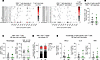
BACKGROUND Among people living with HIV (PLWH), immunological nonresponders (INR) fail to adequately restore CD4+ T cell counts despite effective antiretroviral therapy (ART), placing them at greater risk for adverse outcomes and reduced vaccine efficacy. We aimed to study the robustness and longevity of vaccine-induced virus-specific cellular immune responses in INR.METHODS Virus-specific CD8+ T cell responses were analyzed in INR (CD4+ T cell count < 300 cells/μL) and immunological responders (IR) (CD4+ T cell count > 500 cells/μL), receiving ART, and HIV-uninfected controls following COVID-19 mRNA vaccination and infection. Virus-specific CD8+ T cells were characterized using peptide-loaded MHC I tetramer technology, after in vitro expansion and cytokine production assays. Virus-specific CD4+ T cells and IgG levels were determined by activation-induced marker (AIM) assay and ELISA, respectively.RESULTS We demonstrated that, while long-lasting virus-specific cellular immune responses were generated in INR, CD8+ T cell immunity remained limited compared with robust CD4+ T cell reactivity. CD8+ T cell responses in INR exhibited reduced breadth and frequency, accompanied by altered memory differentiation and suboptimal activation and effector response upon antigen exposure. This deficiency correlated with low CD4+ T cell counts, independent of other disease markers, highlighting the pivotal role of CD4+ T cells in orchestrating vaccine-induced immunity. Notably, repeated booster vaccinations enhanced virus-specific CD8+ T cell responses.CONCLUSION INR elicit limited vaccine-induced virus-specific CD8+ T cell immunity, but booster vaccinations can enhance these responses, suggesting better immune outcomes with tailored vaccination strategies.FUNDING Helmholtz Society, German Research Foundation, Federal Ministry of Education and Research.
Authors
Vivien Karl, Anne Graeser, Anastasia Kremser, Liane Bauersfeld, Florian Emmerich, Nadine Herkt, Siegbert Rieg, Susanne Usadel, Bertram Bengsch, Tobias Boettler, Hendrik Luxenburger, Christoph Neumann-Haefelin, Matthias C. Müller, Robert Thimme, Maike Hofmann

Abstract
BACKGROUND Accurate prognostic assays for COVID-19 represent an unmet clinical need. We sought to identify and validate early parsimonious transcriptomic signatures that accurately predict fatal outcomes.METHODS We studied 894 patients enrolled in the prospective, multicenter Immunophenotyping Assessment in a COVID-19 Cohort (IMPACC) with peripheral blood mononuclear cells (PBMC) and nasal swabs collected within 48 hours of admission. Host gene expression was measured with RNA-Seq. We trained parsimonious prognostic classifiers incorporating host gene expression, age, and SARS-CoV-2 viral load to predict 28-day mortality in 70% of the cohort. Classifier performance was determined in the remaining 30% and externally validated in a contemporary COVID-19 cohort (n = 137) with vaccinated patients.RESULTS Fatal COVID-19 was characterized by 4,189 differentially expressed genes in the peripheral blood. A COVID-specific 3-gene peripheral blood classifier (CD83, ATP1B2, DAAM2) combined with age and SARS-CoV-2 viral load achieved an area under the receiver operating characteristic curve (AUC) of 0.88 (95% CI, 0.82–0.94). A 3-gene nasal classifier (SLC5A5, CD200R1, FCER1A), in comparison, yielded an AUC of 0.74 (95% CI, 0.64–0.83). Notably, OLAH, the most strongly upregulated gene in both PBMC and nasal swab and recently implicated in severe viral infection pathogenesis, yielded AUCs of 0.86 (0.79–0.93) and 0.78 (95% CI, 0.69–0.86), respectively. Both peripheral blood classifiers demonstrated comparable performance in an independent contemporary cohort of vaccinated patients (AUCs 0.74–0.80).CONCLUSION Our parsimonious blood- and nasal-based classifiers accurately predicted COVID-19 mortality and merit further study as accessible prognostic tools to guide triage, resource allocation, and early therapeutic interventions.FUNDING NIH: 5R01AI135803-03, R35HL140026, 5U19AI118608-04, 5U19AI128910-04, 4U19AI090023-11, 4U19AI118610-06, R01AI145835-01A1S1, 5U19AI062629-17, 5U19AI057229-17, 5U19AI125357-05, 5U19AI128913-03, 3U19AI077439-13, 5U54AI142766-03, 5R01AI104870-07, 3U19AI089992-09, 3U19AI128913-03, 5T32DA018926-18, and K0826161611. National Institute of Allergy and Infectious Diseases, NIH: 3U19AI1289130, U19AI128913-04S1, and R01AI122220. National Center for Advancing Translational Sciences, NIH: UM1TR004528. The National Science Foundation: DMS2310836. The Chan Zuckerberg Biohub San Francisco.
Authors
Rithwik Narendra, Emily C. Lydon, Hoang Van Phan, Natasha Spottiswoode, Lucile P. Neyton, Joann Diray-Arce, IMPACC Network, COMET Consortium, EARLI Consortium, Patrice M. Becker, Seunghee Kim-Schulze, Annmarie Hoch, Harry Pickering, Patrick van Zalm, Charles B. Cairns, Matthew C. Altman, Alison D. Augustine, Steve Bosinger, Walter Eckalbar, Leying Guan, Naresh Doni Jayavelu, Steven H. Kleinstein, Florian Krammer, Holden T. Maecker, Al Ozonoff, Bjoern Peters, Nadine Rouphael, Ruth R. Montgomery, Elaine Reed, Joanna Schaenman, Hanno Steen, Ofer Levy, Sidney C. Haller, David Erle, Carolyn M. Hendrickson, Matthew F. Krummel, Michael A. Matthay, Prescott Woodruff, Elias K. Haddad, Carolyn S. Calfee, Charles R. Langelier
Abstract
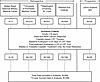
BACKGROUND. Predictive biomarkers to guide chemotherapy decisions for metastatic castration resistant prostate cancer (mCRPC) are lacking. Preclinical studies indicate that circulating tumor cell (CTC) studies of chromosomal instability (CTC-CIN) can predict taxane resistance. METHODS. The CARD trial randomized subjects with mCRPC progressing within a year of treatment with an androgen receptor pathway inhibitor (ARPI; enzalutamide or abiraterone acetate plus prednisolone/prednisone) to cabazitaxel or the alternative ARPI. As a pre-planned biomarker analysis, CTCs were isolated from blood samples obtained at baseline; cycle two, and end of treatment. Associations between baseline CTC and CTC-CIN counts with imaging-based progression free survival (ibPFS), overall survival (OS), time to prostate-specific antigen (PSA) progression, RECIST 1.1 objective response rate (ORR), and PSA50 response rate (PRR) were assessed. RESULTS. High baseline CTC-CIN counts significantly associated with worse OS after adjustment for confounding variables (median OS, 15.3 vs 8.9 months; univariate HR, 2.16; 95% CI, 1.52 – 3.06; p < 0.001; multivariate HR, 1.56; 95% CI, 1.01 – 2.43; p = 0.047). Detectable CTC-CIN counts at baseline may predict a lack of ibPFS and OS benefit when comparing cabazitaxel to ARPI. CONCLUSION. This preplanned biomarker analysis of CARD confirms that CTC-CIN counts are a clinically useful prognostic and predictive biomarker of taxane resistance in mCRPC. Detectable CTC-CIN at baseline defines a patient subpopulation with unmet clinical needs in which alternative therapeutics should be tested. TRIAL REGISTRATION. CARD ClinicalTrials.gov number, NCT02485691. FUNDING. Funded by Sanofi and Epic Sciences.
Authors
Ossian Longoria, Jan Rekowski, Santosh Gupta, Nick Beije, Klaus Pantel, Eleni Efstathiou, Cora Sternberg, Daniel Castellano, Karim Fizazi, Bertrand Tombal, Adam Sharp, Oliver Sartor, Sandrine Macé, Christine Geffriaud-Ricouard, Richard Wenstrup, Ronald de Wit, Johann de Bono
Abstract
BACKGROUND Cisplatin is often the cytotoxic drug of choice for chemoradiation therapy (CRT) for head and neck squamous cell carcinoma (HNSCC), but it can lead to irreversible hearing loss. There may be similar oncologic outcomes but different toxicity profiles depending on whether cisplatin is given at 75–100 mg/m2 every 3 weeks or 30–40 mg/mg2 weekly. This study compares cisplatin-induced hearing loss in patients with HNSCC receiving similar cumulative doses of cisplatin administered either on higher-dose or lower-dose treatment schedules.METHODS Using the Enhancing Cancer Hearing Outcomes (ECHO) dataset from 5 academic centers, we conducted a multicenter retrospective cohort study of adults (≥18 years) with HNSCC receiving cisplatin-based CRT. Participants were grouped by cisplatin dose schedule: every 3 weeks (≥75 mg/m²) or weekly (<75 mg/m²). Hearing loss was assessed using American Speech-Language-Hearing Association (ASHA) and Common Terminology Criteria for Adverse Events (CTCAE) v5.0 threshold shift criteria based on audiograms obtained ≤120 days before and after treatment. Risk differences and predictors of hearing loss were evaluated using χ2 analyses and multivariate regression. Kaplan-Meier curves assessed overall and disease-free survival.RESULTS Among 564 participants (1,127 ears), lower-dose weekly cisplatin was associated with significantly lower incidence of hearing loss (ASHA criteria: 57% vs. 82%; CTCAE criteria: 39% vs. 69%). CTCAE grade ≥2 hearing loss occurred in 18% of the weekly group versus 50% of the 3-week group. Multivariate analysis confirmed treatment schedule as an independent predictor of ototoxicity. Two-year survival outcomes did not differ between groups.CONCLUSIONS Weekly low-dose cisplatin significantly reduced the incidence and severity of hearing loss without compromising survival, supporting its broader use in CRT for HNSCC.
Authors
Katharine A. Fernandez, Abu S. Chowdhury, Amanda Bonczkowski, Paul D. Allen, Maura H. Campbell, David S. Lee, Charvi Malhotra, Brandi R. Page, Deborah A. Mulford, Candice Evita Ortiz, Peter L. Santa Maria, Peter Kullar, Saad A. Khan, Shawn D. Newlands, Nicole C. Schmitt, Lisa L. Cunningham
No posts were found with this tag.


