
Clinical Research and Public HealthClinical ResearchOncology
Open Access |  10.1172/jci.insight.196230
Lower, more frequent cisplatin dosing minimizes hearing loss in head and neck cancer
Katharine A. Fernandez,1 Abu S. Chowdhury,1 Amanda Bonczkowski,1 Paul D. Allen,2 Maura H. Campbell,2 David S. Lee,3 Charvi Malhotra,4 Brandi R. Page,5 Deborah A. Mulford,6 Candice Evita Ortiz,7 Peter L. Santa Maria,8 Peter Kullar,9 Saad A. Khan,4 Shawn D. Newlands,2 Nicole C. Schmitt,10 and Lisa L. Cunningham1
1National Institute on Deafness and Other Communication Disorders, Bethesda, Maryland, USA.
2Department of Otolaryngology, University of Rochester Medical Center, Rochester, New York, USA.
3Department of Otolaryngology — Head and Neck Surgery, Washington University in St. Louis, St. Louis, Missouri, USA.
4Stanford University, Division of Oncology, Stanford, California, USA.
5Department of Radiation Oncology and Molecular Sciences, Johns Hopkins University, Baltimore, Maryland, USA.
6Wilmot Cancer Institute, University of Rochester Medical Center, Rochester, New York, USA.
7Capital Institute of Hearing and Balance, Silver Spring, Maryland, USA.
8Department of Otolaryngology, University of Pittsburgh, Pittsburgh, Pennsylvania, USA.
9Manchester Foundation Trust, Manchester, United Kingdom.
10Department of Otolaryngology — Head and Neck Surgery, Emory University, Atlanta, Georgia, USA.
Address correspondence to: Katharine Fernandez, 35A Convent Drive, 1D-971, National Institute on Deafness and Other Communication Disorders, National Institutes of Health, Bethesda, Maryland 20892, USA. Phone: 301.496.5699; Email: Katharine.fernandez@nih.gov.
Find articles by
Fernandez, K.
in:
PubMed
|
Google Scholar
|

1National Institute on Deafness and Other Communication Disorders, Bethesda, Maryland, USA.
2Department of Otolaryngology, University of Rochester Medical Center, Rochester, New York, USA.
3Department of Otolaryngology — Head and Neck Surgery, Washington University in St. Louis, St. Louis, Missouri, USA.
4Stanford University, Division of Oncology, Stanford, California, USA.
5Department of Radiation Oncology and Molecular Sciences, Johns Hopkins University, Baltimore, Maryland, USA.
6Wilmot Cancer Institute, University of Rochester Medical Center, Rochester, New York, USA.
7Capital Institute of Hearing and Balance, Silver Spring, Maryland, USA.
8Department of Otolaryngology, University of Pittsburgh, Pittsburgh, Pennsylvania, USA.
9Manchester Foundation Trust, Manchester, United Kingdom.
10Department of Otolaryngology — Head and Neck Surgery, Emory University, Atlanta, Georgia, USA.
Address correspondence to: Katharine Fernandez, 35A Convent Drive, 1D-971, National Institute on Deafness and Other Communication Disorders, National Institutes of Health, Bethesda, Maryland 20892, USA. Phone: 301.496.5699; Email: Katharine.fernandez@nih.gov.
Find articles by Chowdhury, A. in: PubMed | Google Scholar
1National Institute on Deafness and Other Communication Disorders, Bethesda, Maryland, USA.
2Department of Otolaryngology, University of Rochester Medical Center, Rochester, New York, USA.
3Department of Otolaryngology — Head and Neck Surgery, Washington University in St. Louis, St. Louis, Missouri, USA.
4Stanford University, Division of Oncology, Stanford, California, USA.
5Department of Radiation Oncology and Molecular Sciences, Johns Hopkins University, Baltimore, Maryland, USA.
6Wilmot Cancer Institute, University of Rochester Medical Center, Rochester, New York, USA.
7Capital Institute of Hearing and Balance, Silver Spring, Maryland, USA.
8Department of Otolaryngology, University of Pittsburgh, Pittsburgh, Pennsylvania, USA.
9Manchester Foundation Trust, Manchester, United Kingdom.
10Department of Otolaryngology — Head and Neck Surgery, Emory University, Atlanta, Georgia, USA.
Address correspondence to: Katharine Fernandez, 35A Convent Drive, 1D-971, National Institute on Deafness and Other Communication Disorders, National Institutes of Health, Bethesda, Maryland 20892, USA. Phone: 301.496.5699; Email: Katharine.fernandez@nih.gov.
Find articles by Bonczkowski, A. in: PubMed | Google Scholar
1National Institute on Deafness and Other Communication Disorders, Bethesda, Maryland, USA.
2Department of Otolaryngology, University of Rochester Medical Center, Rochester, New York, USA.
3Department of Otolaryngology — Head and Neck Surgery, Washington University in St. Louis, St. Louis, Missouri, USA.
4Stanford University, Division of Oncology, Stanford, California, USA.
5Department of Radiation Oncology and Molecular Sciences, Johns Hopkins University, Baltimore, Maryland, USA.
6Wilmot Cancer Institute, University of Rochester Medical Center, Rochester, New York, USA.
7Capital Institute of Hearing and Balance, Silver Spring, Maryland, USA.
8Department of Otolaryngology, University of Pittsburgh, Pittsburgh, Pennsylvania, USA.
9Manchester Foundation Trust, Manchester, United Kingdom.
10Department of Otolaryngology — Head and Neck Surgery, Emory University, Atlanta, Georgia, USA.
Address correspondence to: Katharine Fernandez, 35A Convent Drive, 1D-971, National Institute on Deafness and Other Communication Disorders, National Institutes of Health, Bethesda, Maryland 20892, USA. Phone: 301.496.5699; Email: Katharine.fernandez@nih.gov.
Find articles by
Allen, P.
in:
PubMed
|
Google Scholar
|
1National Institute on Deafness and Other Communication Disorders, Bethesda, Maryland, USA.
2Department of Otolaryngology, University of Rochester Medical Center, Rochester, New York, USA.
3Department of Otolaryngology — Head and Neck Surgery, Washington University in St. Louis, St. Louis, Missouri, USA.
4Stanford University, Division of Oncology, Stanford, California, USA.
5Department of Radiation Oncology and Molecular Sciences, Johns Hopkins University, Baltimore, Maryland, USA.
6Wilmot Cancer Institute, University of Rochester Medical Center, Rochester, New York, USA.
7Capital Institute of Hearing and Balance, Silver Spring, Maryland, USA.
8Department of Otolaryngology, University of Pittsburgh, Pittsburgh, Pennsylvania, USA.
9Manchester Foundation Trust, Manchester, United Kingdom.
10Department of Otolaryngology — Head and Neck Surgery, Emory University, Atlanta, Georgia, USA.
Address correspondence to: Katharine Fernandez, 35A Convent Drive, 1D-971, National Institute on Deafness and Other Communication Disorders, National Institutes of Health, Bethesda, Maryland 20892, USA. Phone: 301.496.5699; Email: Katharine.fernandez@nih.gov.
Find articles by Campbell, M. in: PubMed | Google Scholar
1National Institute on Deafness and Other Communication Disorders, Bethesda, Maryland, USA.
2Department of Otolaryngology, University of Rochester Medical Center, Rochester, New York, USA.
3Department of Otolaryngology — Head and Neck Surgery, Washington University in St. Louis, St. Louis, Missouri, USA.
4Stanford University, Division of Oncology, Stanford, California, USA.
5Department of Radiation Oncology and Molecular Sciences, Johns Hopkins University, Baltimore, Maryland, USA.
6Wilmot Cancer Institute, University of Rochester Medical Center, Rochester, New York, USA.
7Capital Institute of Hearing and Balance, Silver Spring, Maryland, USA.
8Department of Otolaryngology, University of Pittsburgh, Pittsburgh, Pennsylvania, USA.
9Manchester Foundation Trust, Manchester, United Kingdom.
10Department of Otolaryngology — Head and Neck Surgery, Emory University, Atlanta, Georgia, USA.
Address correspondence to: Katharine Fernandez, 35A Convent Drive, 1D-971, National Institute on Deafness and Other Communication Disorders, National Institutes of Health, Bethesda, Maryland 20892, USA. Phone: 301.496.5699; Email: Katharine.fernandez@nih.gov.
Find articles by Lee, D. in: PubMed | Google Scholar
1National Institute on Deafness and Other Communication Disorders, Bethesda, Maryland, USA.
2Department of Otolaryngology, University of Rochester Medical Center, Rochester, New York, USA.
3Department of Otolaryngology — Head and Neck Surgery, Washington University in St. Louis, St. Louis, Missouri, USA.
4Stanford University, Division of Oncology, Stanford, California, USA.
5Department of Radiation Oncology and Molecular Sciences, Johns Hopkins University, Baltimore, Maryland, USA.
6Wilmot Cancer Institute, University of Rochester Medical Center, Rochester, New York, USA.
7Capital Institute of Hearing and Balance, Silver Spring, Maryland, USA.
8Department of Otolaryngology, University of Pittsburgh, Pittsburgh, Pennsylvania, USA.
9Manchester Foundation Trust, Manchester, United Kingdom.
10Department of Otolaryngology — Head and Neck Surgery, Emory University, Atlanta, Georgia, USA.
Address correspondence to: Katharine Fernandez, 35A Convent Drive, 1D-971, National Institute on Deafness and Other Communication Disorders, National Institutes of Health, Bethesda, Maryland 20892, USA. Phone: 301.496.5699; Email: Katharine.fernandez@nih.gov.
Find articles by Malhotra, C. in: PubMed | Google Scholar
1National Institute on Deafness and Other Communication Disorders, Bethesda, Maryland, USA.
2Department of Otolaryngology, University of Rochester Medical Center, Rochester, New York, USA.
3Department of Otolaryngology — Head and Neck Surgery, Washington University in St. Louis, St. Louis, Missouri, USA.
4Stanford University, Division of Oncology, Stanford, California, USA.
5Department of Radiation Oncology and Molecular Sciences, Johns Hopkins University, Baltimore, Maryland, USA.
6Wilmot Cancer Institute, University of Rochester Medical Center, Rochester, New York, USA.
7Capital Institute of Hearing and Balance, Silver Spring, Maryland, USA.
8Department of Otolaryngology, University of Pittsburgh, Pittsburgh, Pennsylvania, USA.
9Manchester Foundation Trust, Manchester, United Kingdom.
10Department of Otolaryngology — Head and Neck Surgery, Emory University, Atlanta, Georgia, USA.
Address correspondence to: Katharine Fernandez, 35A Convent Drive, 1D-971, National Institute on Deafness and Other Communication Disorders, National Institutes of Health, Bethesda, Maryland 20892, USA. Phone: 301.496.5699; Email: Katharine.fernandez@nih.gov.
Find articles by
Page, B.
in:
PubMed
|
Google Scholar
|
1National Institute on Deafness and Other Communication Disorders, Bethesda, Maryland, USA.
2Department of Otolaryngology, University of Rochester Medical Center, Rochester, New York, USA.
3Department of Otolaryngology — Head and Neck Surgery, Washington University in St. Louis, St. Louis, Missouri, USA.
4Stanford University, Division of Oncology, Stanford, California, USA.
5Department of Radiation Oncology and Molecular Sciences, Johns Hopkins University, Baltimore, Maryland, USA.
6Wilmot Cancer Institute, University of Rochester Medical Center, Rochester, New York, USA.
7Capital Institute of Hearing and Balance, Silver Spring, Maryland, USA.
8Department of Otolaryngology, University of Pittsburgh, Pittsburgh, Pennsylvania, USA.
9Manchester Foundation Trust, Manchester, United Kingdom.
10Department of Otolaryngology — Head and Neck Surgery, Emory University, Atlanta, Georgia, USA.
Address correspondence to: Katharine Fernandez, 35A Convent Drive, 1D-971, National Institute on Deafness and Other Communication Disorders, National Institutes of Health, Bethesda, Maryland 20892, USA. Phone: 301.496.5699; Email: Katharine.fernandez@nih.gov.
Find articles by Mulford, D. in: PubMed | Google Scholar
1National Institute on Deafness and Other Communication Disorders, Bethesda, Maryland, USA.
2Department of Otolaryngology, University of Rochester Medical Center, Rochester, New York, USA.
3Department of Otolaryngology — Head and Neck Surgery, Washington University in St. Louis, St. Louis, Missouri, USA.
4Stanford University, Division of Oncology, Stanford, California, USA.
5Department of Radiation Oncology and Molecular Sciences, Johns Hopkins University, Baltimore, Maryland, USA.
6Wilmot Cancer Institute, University of Rochester Medical Center, Rochester, New York, USA.
7Capital Institute of Hearing and Balance, Silver Spring, Maryland, USA.
8Department of Otolaryngology, University of Pittsburgh, Pittsburgh, Pennsylvania, USA.
9Manchester Foundation Trust, Manchester, United Kingdom.
10Department of Otolaryngology — Head and Neck Surgery, Emory University, Atlanta, Georgia, USA.
Address correspondence to: Katharine Fernandez, 35A Convent Drive, 1D-971, National Institute on Deafness and Other Communication Disorders, National Institutes of Health, Bethesda, Maryland 20892, USA. Phone: 301.496.5699; Email: Katharine.fernandez@nih.gov.
Find articles by Ortiz, C. in: PubMed | Google Scholar
1National Institute on Deafness and Other Communication Disorders, Bethesda, Maryland, USA.
2Department of Otolaryngology, University of Rochester Medical Center, Rochester, New York, USA.
3Department of Otolaryngology — Head and Neck Surgery, Washington University in St. Louis, St. Louis, Missouri, USA.
4Stanford University, Division of Oncology, Stanford, California, USA.
5Department of Radiation Oncology and Molecular Sciences, Johns Hopkins University, Baltimore, Maryland, USA.
6Wilmot Cancer Institute, University of Rochester Medical Center, Rochester, New York, USA.
7Capital Institute of Hearing and Balance, Silver Spring, Maryland, USA.
8Department of Otolaryngology, University of Pittsburgh, Pittsburgh, Pennsylvania, USA.
9Manchester Foundation Trust, Manchester, United Kingdom.
10Department of Otolaryngology — Head and Neck Surgery, Emory University, Atlanta, Georgia, USA.
Address correspondence to: Katharine Fernandez, 35A Convent Drive, 1D-971, National Institute on Deafness and Other Communication Disorders, National Institutes of Health, Bethesda, Maryland 20892, USA. Phone: 301.496.5699; Email: Katharine.fernandez@nih.gov.
Find articles by Santa Maria, P. in: PubMed | Google Scholar
1National Institute on Deafness and Other Communication Disorders, Bethesda, Maryland, USA.
2Department of Otolaryngology, University of Rochester Medical Center, Rochester, New York, USA.
3Department of Otolaryngology — Head and Neck Surgery, Washington University in St. Louis, St. Louis, Missouri, USA.
4Stanford University, Division of Oncology, Stanford, California, USA.
5Department of Radiation Oncology and Molecular Sciences, Johns Hopkins University, Baltimore, Maryland, USA.
6Wilmot Cancer Institute, University of Rochester Medical Center, Rochester, New York, USA.
7Capital Institute of Hearing and Balance, Silver Spring, Maryland, USA.
8Department of Otolaryngology, University of Pittsburgh, Pittsburgh, Pennsylvania, USA.
9Manchester Foundation Trust, Manchester, United Kingdom.
10Department of Otolaryngology — Head and Neck Surgery, Emory University, Atlanta, Georgia, USA.
Address correspondence to: Katharine Fernandez, 35A Convent Drive, 1D-971, National Institute on Deafness and Other Communication Disorders, National Institutes of Health, Bethesda, Maryland 20892, USA. Phone: 301.496.5699; Email: Katharine.fernandez@nih.gov.
Find articles by Kullar, P. in: PubMed | Google Scholar
1National Institute on Deafness and Other Communication Disorders, Bethesda, Maryland, USA.
2Department of Otolaryngology, University of Rochester Medical Center, Rochester, New York, USA.
3Department of Otolaryngology — Head and Neck Surgery, Washington University in St. Louis, St. Louis, Missouri, USA.
4Stanford University, Division of Oncology, Stanford, California, USA.
5Department of Radiation Oncology and Molecular Sciences, Johns Hopkins University, Baltimore, Maryland, USA.
6Wilmot Cancer Institute, University of Rochester Medical Center, Rochester, New York, USA.
7Capital Institute of Hearing and Balance, Silver Spring, Maryland, USA.
8Department of Otolaryngology, University of Pittsburgh, Pittsburgh, Pennsylvania, USA.
9Manchester Foundation Trust, Manchester, United Kingdom.
10Department of Otolaryngology — Head and Neck Surgery, Emory University, Atlanta, Georgia, USA.
Address correspondence to: Katharine Fernandez, 35A Convent Drive, 1D-971, National Institute on Deafness and Other Communication Disorders, National Institutes of Health, Bethesda, Maryland 20892, USA. Phone: 301.496.5699; Email: Katharine.fernandez@nih.gov.
Find articles by Khan, S. in: PubMed | Google Scholar
1National Institute on Deafness and Other Communication Disorders, Bethesda, Maryland, USA.
2Department of Otolaryngology, University of Rochester Medical Center, Rochester, New York, USA.
3Department of Otolaryngology — Head and Neck Surgery, Washington University in St. Louis, St. Louis, Missouri, USA.
4Stanford University, Division of Oncology, Stanford, California, USA.
5Department of Radiation Oncology and Molecular Sciences, Johns Hopkins University, Baltimore, Maryland, USA.
6Wilmot Cancer Institute, University of Rochester Medical Center, Rochester, New York, USA.
7Capital Institute of Hearing and Balance, Silver Spring, Maryland, USA.
8Department of Otolaryngology, University of Pittsburgh, Pittsburgh, Pennsylvania, USA.
9Manchester Foundation Trust, Manchester, United Kingdom.
10Department of Otolaryngology — Head and Neck Surgery, Emory University, Atlanta, Georgia, USA.
Address correspondence to: Katharine Fernandez, 35A Convent Drive, 1D-971, National Institute on Deafness and Other Communication Disorders, National Institutes of Health, Bethesda, Maryland 20892, USA. Phone: 301.496.5699; Email: Katharine.fernandez@nih.gov.
Find articles by Newlands, S. in: PubMed | Google Scholar
1National Institute on Deafness and Other Communication Disorders, Bethesda, Maryland, USA.
2Department of Otolaryngology, University of Rochester Medical Center, Rochester, New York, USA.
3Department of Otolaryngology — Head and Neck Surgery, Washington University in St. Louis, St. Louis, Missouri, USA.
4Stanford University, Division of Oncology, Stanford, California, USA.
5Department of Radiation Oncology and Molecular Sciences, Johns Hopkins University, Baltimore, Maryland, USA.
6Wilmot Cancer Institute, University of Rochester Medical Center, Rochester, New York, USA.
7Capital Institute of Hearing and Balance, Silver Spring, Maryland, USA.
8Department of Otolaryngology, University of Pittsburgh, Pittsburgh, Pennsylvania, USA.
9Manchester Foundation Trust, Manchester, United Kingdom.
10Department of Otolaryngology — Head and Neck Surgery, Emory University, Atlanta, Georgia, USA.
Address correspondence to: Katharine Fernandez, 35A Convent Drive, 1D-971, National Institute on Deafness and Other Communication Disorders, National Institutes of Health, Bethesda, Maryland 20892, USA. Phone: 301.496.5699; Email: Katharine.fernandez@nih.gov.
Find articles by Schmitt, N. in: PubMed | Google Scholar
1National Institute on Deafness and Other Communication Disorders, Bethesda, Maryland, USA.
2Department of Otolaryngology, University of Rochester Medical Center, Rochester, New York, USA.
3Department of Otolaryngology — Head and Neck Surgery, Washington University in St. Louis, St. Louis, Missouri, USA.
4Stanford University, Division of Oncology, Stanford, California, USA.
5Department of Radiation Oncology and Molecular Sciences, Johns Hopkins University, Baltimore, Maryland, USA.
6Wilmot Cancer Institute, University of Rochester Medical Center, Rochester, New York, USA.
7Capital Institute of Hearing and Balance, Silver Spring, Maryland, USA.
8Department of Otolaryngology, University of Pittsburgh, Pittsburgh, Pennsylvania, USA.
9Manchester Foundation Trust, Manchester, United Kingdom.
10Department of Otolaryngology — Head and Neck Surgery, Emory University, Atlanta, Georgia, USA.
Address correspondence to: Katharine Fernandez, 35A Convent Drive, 1D-971, National Institute on Deafness and Other Communication Disorders, National Institutes of Health, Bethesda, Maryland 20892, USA. Phone: 301.496.5699; Email: Katharine.fernandez@nih.gov.
Find articles by Cunningham, L. in: PubMed | Google Scholar
Published October 22, 2025 - More info
JCI Insight. 2025;10(20):e196230. https://doi.org/10.1172/jci.insight.196230.
© 2025 Fernandez et al. This work is licensed under the Creative Commons Attribution 4.0 International License. To view a copy of this license, visit http://creativecommons.org/licenses/by/4.0/.
Received: May 30, 2025; Accepted: September 9, 2025

-
Results
Characteristics of the clinical data set. Retrospective clinical data were compiled for a total of 564 participants, all of whom met study inclusion criteria (Figure 1): patients ≥18 years of age, diagnosed with head and neck squamous cell carcinoma (HNSCC) and treated with cisplatin-based chemoradiation therapy (CRT). Participants were excluded if they had non-HNSCC cancers, insufficient clinical or treatment data, lacked a valid audiogram within 120 days before and after treatment, or presented with a bilateral profound hearing loss at baseline (>90 dB HL average threshold at 1, 2, and 4 kHz) (17).
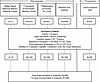 Figure 1
Schematic diagram of the ECHO dataset. Data were collected from 5 US-based academic and clinical centers. The dataset was filtered to include only adults (≥18 years) with confirmed HNSCC who received CRT on a consistent weekly or triweekly schedule. Patients whose dosing schedules were modified (e.g., from triweekly to weekly) were excluded. After filtering, 564 individuals remained, of whom 289 had survival data available through 2 years of follow-up.
Participants were categorized by cisplatin treatment regimen: 228 (40%) received low-dose cisplatin (<75 mg/m2) and 336 (60%) received triweekly high-dose cisplatin (≥75 mg/m2) (Table 1). To maintain consistency in treatment exposure, patients who underwent intratherapy dose reductions or schedule changes were excluded from the analysis. The cohort’s mean age was 59 years (IQR, 52–64), with the low-dose group slightly older than the high-dose group (median age 60 vs. 58 years; Wilcoxon’s 2-sample test, P < 0.02). Across both groups, there was a predominance of males (≥79%) and near-universal use of concurrent radiation therapy (98%). Most tumors were localized to the oropharynx (52%), followed by the oral cavity (16%), larynx (7%), nasopharynx (13%), hypopharynx (2%), and other sites (10%), including salivary glands, maxilla, mandible, sinuses, and pharynx. Fewer than 1% had tumors of unknown primary origin. A Wilcoxon’s 2-sample test indicated a significant difference in tumor site distribution between the treatment groups, driven largely by the higher prevalence of oropharyngeal tumors in the high-dose group (P < 0.01).
The overall median cumulative cisplatin dose was 200 mg/m2. However, cumulative dose distributions differed significantly between treatment groups (χ2, P < 0.01), with low-dose, weekly regimens ranging from 30 to 520 mg/m2 and high-dose, triweekly regimens ranging from 75 to 540 mg/m2.
Baseline hearing status was assessed per ear using pure-tone average (PTA) at 0.5, 1, 2, and 4 kHz. Across the full cohort and within subgroups, most ears (≥85%) exhibited normal hearing or mild hearing loss at baseline. The low-dose group showed a significantly higher incidence of moderate hearing loss, resulting in a statistically significant difference in baseline hearing status distribution between treatment regimens (Wilcoxon’s 2-sample test, P < 0.0001)
Individuals receiving lower-dose, weekly cisplatin experience less cisplatin-induced hearing loss than those treated with higher-dose, triweekly cisplatin. In total, 1,127 ears of 564 participants were included in the analyses. The primary outcome was the incidence of Common Terminology Criteria for Adverse Events–defined (CTCAE-defined) hearing change, based on differences in auditory thresholds (“threshold shifts”) between baseline and posttreatment audiograms.
We began by evaluating threshold shift data as a function of cisplatin treatment schedule. Two-way ANOVA revealed a significant effect of dose schedule (weekly low-dose vs. triweekly high-dose) on threshold shifts (F1,8727 = 401.3, P < 0.0001), as well as a significant effect of frequency (F8,8727 = 145.9, P < 0.0001) (Figure 2A). There was also a significant interaction between these factors (F8,8727 = 25.97, P < 0.0001). Šidák’s multiple-comparison post hoc analysis demonstrated that individuals receiving low-dose, weekly cisplatin had significantly smaller threshold shifts at frequencies ≥2 kHz (P < 0.0001). The largest differences were observed at 8 kHz, with average shifts of 21.7 ± 21.5 dB in the triweekly group compared with 9.7 ± 15.7 dB in the weekly group. These data indicate that participants receiving high-dose, triweekly cisplatin treatment experienced significantly more cisplatin-induced hearing loss compared with those on the low-dose weekly treatment schedule.
 Figure 2
Weekly cisplatin administration is associated with reduced auditory threshold shifts. Audiometric thresholds collected before and after cisplatin treatment were used to determine cisplatin-induced hearing loss (threshold shifts). (A) High-dose, triweekly cisplatin administration (n = 654 ears) resulted in significant hearing loss from 2 to 12.5 kHz, ranging on average from 6 to 21 dB. In contrast, low-dose, weekly cisplatin administration (n = 454 ears) resulted in significantly less cisplatin-induced hearing loss at 2–12.5 kHz, ranging on average 1–10 dB. Data are presented as mean ± SEM; 2-way ANOVA, Šidák’s multiple-comparison post hoc analysis. (B) The impact of cumulative cisplatin dose on high-frequency (4–12.5 kHz) hearing loss was assessed per treatment schedule. When cumulative cisplatin dose was comparable across groups (dose bin = 50 mg/m2), individuals receiving high-dose, triweekly cisplatin consistently experienced significantly greater hearing loss (threshold shifts). Data are presented as mean ± SEM; 2-way ANOVA; Šidák’s multiple-comparison post hoc analysis. *P < 0.05, **P < 0.01, ****P < 0.0001.
Cumulative cisplatin doses ranged from 30 to 540 mg/m² across the cohort. We next assessed the relationship between cumulative dose and high-frequency hearing loss (PTA at 4, 6, 8, and 12.5 kHz) within each treatment group (Figure 2B). High-frequency hearing loss increased significantly with cumulative dose (F6,1064 = 7.396, P < 0.001), but the effect varied by treatment schedule. At comparable cumulative doses, weekly low-dose cisplatin was associated with significantly less hearing loss than triweekly high-dose cisplatin (F1,1064 = 22.27, P < 0.0001), particularly at cumulative doses of 100 (P < 0.05; weekly n = 78, triweekly n = 134), 150 (P < 0.05; weekly n = 75, triweekly n = 35), 200 (P < 0.0001; weekly n = 155, triweekly n = 212), and 250 mg/m² (P < 0.001; weekly n = 98, triweekly n = 28) (Šidák’s post hoc analysis). These data indicate that when the cumulative dose of cisplatin was equivalent, participants receiving triweekly cisplatin had significantly more high-frequency hearing loss compared with those receiving the weekly regimen.
To further investigate predictors of cisplatin-induced hearing loss, we performed an ordinary least squares (OLS) regression using standard PTA threshold shift data at 0.5, 1, 2, and 4 kHz. Controlling for age, sex, cumulative cisplatin dose, and baseline hearing, cisplatin dose schedule remained a significant predictor of hearing loss severity (PROC REG, SAS; β = 4.51, 95% CI (3.33, 6.69), P < 0.0001; Table 2). Additional significant predictors included age (β = 0.16, 95% CI (0.11, 0.22), P < 0.0001), cumulative cisplatin dose (β = 0.03, 95% CI (0.03, 0.04), P < 0.0001), and baseline hearing (β = –0.17, 95% CI (–0.21, –0.12), P < 0.0001).
Together, these results demonstrate that individuals treated with low-dose, weekly cisplatin had significantly less cisplatin-induced hearing loss than those receiving triweekly cisplatin.
Weekly cisplatin administration is associated with reduced incidence and severity of cisplatin-induced hearing loss. We applied American Speech-Language-Hearing Association (ASHA; 1994) and CTCAE criteria to evaluate both the incidence and severity of hearing loss. These criteria are designed to assess changes in hearing likely to be clinically meaningful. Among individuals receiving triweekly cisplatin, the incidence of clinically meaningful hearing loss was 82% per ASHA and 69% per CTCAE grade ≥1 criteria (Figure 3, A and B). In contrast, individuals treated with weekly cisplatin showed significantly lower incidence of hearing loss: 57% per ASHA criteria (χ2(1) = 14.74, P < 0.0001) and 39% per CTCAE criteria (χ2(1) = 19.38, P < 0.0001). These findings indicate that the incidence of cisplatin-induced hearing loss was significantly reduced with low-dose, weekly cisplatin relative to the triweekly regimen.
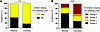 Figure 3
Weekly cisplatin is associated with reduced incidence and severity of cisplatin-induced hearing loss, per ASHA and CTCAE criteria. ASHA and CTCAE criteria for clinically meaningful changes in hearing loss were applied to threshold shift data. (A) The incidence of cisplatin-induced hearing loss among individuals receiving weekly cisplatin (n = 228), per ASHA criteria, was 57%. Individuals receiving triweekly cisplatin (n = 336) had a significantly higher incidence (82% triweekly) of cisplatin-induced hearing loss. Data are presented as percentage of individuals per group. χ2 analysis. (B) Low-dose, weekly cisplatin administration was associated with reduced incidence and severity of cisplatin-induced hearing loss, per CTCAE criteria. χ2 analysis. Analysis showed a significant difference in the distribution of CTCAE hearing loss grades, wherein the incidence of a grade ≥2 was reduced from 50% in the high-dose, triweekly group to 18% in the low-dose, weekly group. Data represent the percentage of individuals per group. **P < 0.01, ***P < 0.001, ****P < 0.0001.
Beyond incidence, the CTCAE system grades hearing loss severity on a scale from 1 (mild) to 4 (profound), where grade 1 reflects a mild change not typically requiring intervention and grade 2 or higher reflects moderate to severe hearing loss warranting intervention. The incidence of hearing loss with CTCAE grade ≥2 was significantly lower in the low-dose, weekly group (18%) compared with the triweekly group (50%) (χ2(1) = 25.61, P < 0.0001) (Figure 3B). Moreover, the overall distribution of CTCAE grades differed significantly between treatment groups, with a greater proportion of severe cisplatin-induced hearing loss among those receiving triweekly cisplatin (χ2(3) = 25.76, P < 0.0001). Notably, the proportion of patients experiencing grade 3 hearing loss was nearly 3 times higher in the triweekly group (41%) than in the weekly group (14%). This distribution highlights a significant shift toward more severe ototoxic outcomes with the high-dose, triweekly regimen.
The low-dose, weekly cisplatin schedule consistently resulted in reduced hearing loss across subgroups (Figure 4). Overall, 69% (232 of 336) of individuals in the triweekly group developed hearing loss, compared with 39% (90/228) in the weekly group. Statistically significant reductions in hearing loss with weekly treatment were observed among male participants (46% vs. 62%, P < 0.001); female participants (38% vs. 63%, P < 0.001); individuals aged 50–59 (39% vs. 71%, P < 0.001); individuals aged 60–69 (41% vs. 71%, P < 0.001); those who received cumulative cisplatin doses of 100–199 mg/m² (24% vs. 44%, P < 0.02) and 200–299 mg/m² (47% vs. 78%, P < 0.001); and participants with either normal baseline hearing (32% vs. 67%, P < 0.001) or mild hearing loss at baseline (27% vs. 46%, P < 0.003).
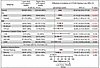 Figure 4
Weekly administration of cisplatin significantly reduces the risk of developing a clinically meaningful cisplatin-induced hearing loss. Analysis of the incidence of a CTCAE grade ≤1 hearing loss for the full cohort and different subgroups. For the overall cohort and the subgroups, the difference in the incidence (%) and 95% CIs were estimated using a stratified risk difference analysis. Significant differences (red diamonds) in the calculated incidence of a hearing loss (HL) were observed for the full cohort, as well as for the male and female subgroups; individuals 50–59 and 60–69 years; individuals receiving total cumulative cisplatin doses 100–199 and 200–299 mg/m2; and for those with normal hearing and mild hearing loss at baseline. Red indicates significant P values.
Two-year OS and DSF were comparable between the dosing schedules. To determine whether dose and schedule impact treatment efficacy, we examined OS and DFS in available datasets from University of Rochester Medical Center (URMC; n = 129) and Washington University in St. Louis (WUSTL; n = 160) (Figure 5, A and B). At 2 years, OS exceeded 80% across the cohort (Figure 5A). Median survival could not be calculated due to censoring. However, log-rank (Mantel-Cox) tests revealed no significant differences in OS (χ2(1) = 0.214, P > 0.05) or DFS (χ2(1) = 3.102, P > 0.05) between individuals receiving weekly versus triweekly cisplatin.
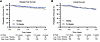 Figure 5
Two-year DSF and OS are not different among individuals receiving weekly or triweekly cisplatin. Kaplan-Meier estimates of disease-free (A) and overall (B) survival. A log-rank (Mantel-Cox) test indicated no significant difference in either disease-free or OS among groups (P > 0.05). Weekly group, n = 96; triweekly group, n = 192.


