
Clinical Research and Public HealthImmunologyInfectious disease
Open Access |  10.1172/jci.insight.195678
Fecal microbiota transplantation promotes type 2 mucosal immune responses with colonic epithelium proliferation in patients with recurrent Clostridioides difficile
G. Brett Moreau,1 Jiayi Tian,1 Nick R. Natale,1 Farha Naz,1 Mary K. Young,1 Uma Nayak,2 Mehmet Tanyüksel,1 Isaura Rigo,1 Gregory R. Madden,1 Mayuresh M. Abhyankar,1 Nicholas Hagspiel,1 Savannah Brovero,1 Mark Worthington,1 Brian Behm,1 Chelsea Marie,1 William A. Petri Jr.,1,3,4 and Girija Ramakrishnan1
1Department of Medicine,
2Department of Genome Sciences,
3Department of Pathology, and
4Department of Microbiology, Immunology, and Cancer Biology, University of Virginia, Charlottesville, Virginia, USA.
Address correspondence to: William A. Petri Jr. and Girija Ramakrishnan, Department of Medicine, University of Virginia, 345 Crispell Drive, Charlottesville, Virginia, 22908, USA; Email: wap3g@virginia.edu (WAP); gr6q@virginia.edu (GR).
Authorship note: WAP and GR have been designated as co–senior authors.
Find articles by
Moreau, G.
in:
PubMed
|
Google Scholar
|

1Department of Medicine,
2Department of Genome Sciences,
3Department of Pathology, and
4Department of Microbiology, Immunology, and Cancer Biology, University of Virginia, Charlottesville, Virginia, USA.
Address correspondence to: William A. Petri Jr. and Girija Ramakrishnan, Department of Medicine, University of Virginia, 345 Crispell Drive, Charlottesville, Virginia, 22908, USA; Email: wap3g@virginia.edu (WAP); gr6q@virginia.edu (GR).
Authorship note: WAP and GR have been designated as co–senior authors.
Find articles by Tian, J. in: PubMed | Google Scholar
1Department of Medicine,
2Department of Genome Sciences,
3Department of Pathology, and
4Department of Microbiology, Immunology, and Cancer Biology, University of Virginia, Charlottesville, Virginia, USA.
Address correspondence to: William A. Petri Jr. and Girija Ramakrishnan, Department of Medicine, University of Virginia, 345 Crispell Drive, Charlottesville, Virginia, 22908, USA; Email: wap3g@virginia.edu (WAP); gr6q@virginia.edu (GR).
Authorship note: WAP and GR have been designated as co–senior authors.
Find articles by Natale, N. in: PubMed | Google Scholar
1Department of Medicine,
2Department of Genome Sciences,
3Department of Pathology, and
4Department of Microbiology, Immunology, and Cancer Biology, University of Virginia, Charlottesville, Virginia, USA.
Address correspondence to: William A. Petri Jr. and Girija Ramakrishnan, Department of Medicine, University of Virginia, 345 Crispell Drive, Charlottesville, Virginia, 22908, USA; Email: wap3g@virginia.edu (WAP); gr6q@virginia.edu (GR).
Authorship note: WAP and GR have been designated as co–senior authors.
Find articles by Naz, F. in: PubMed | Google Scholar
1Department of Medicine,
2Department of Genome Sciences,
3Department of Pathology, and
4Department of Microbiology, Immunology, and Cancer Biology, University of Virginia, Charlottesville, Virginia, USA.
Address correspondence to: William A. Petri Jr. and Girija Ramakrishnan, Department of Medicine, University of Virginia, 345 Crispell Drive, Charlottesville, Virginia, 22908, USA; Email: wap3g@virginia.edu (WAP); gr6q@virginia.edu (GR).
Authorship note: WAP and GR have been designated as co–senior authors.
Find articles by
Young, M.
in:
PubMed
|
Google Scholar
|
1Department of Medicine,
2Department of Genome Sciences,
3Department of Pathology, and
4Department of Microbiology, Immunology, and Cancer Biology, University of Virginia, Charlottesville, Virginia, USA.
Address correspondence to: William A. Petri Jr. and Girija Ramakrishnan, Department of Medicine, University of Virginia, 345 Crispell Drive, Charlottesville, Virginia, 22908, USA; Email: wap3g@virginia.edu (WAP); gr6q@virginia.edu (GR).
Authorship note: WAP and GR have been designated as co–senior authors.
Find articles by Nayak, U. in: PubMed | Google Scholar
1Department of Medicine,
2Department of Genome Sciences,
3Department of Pathology, and
4Department of Microbiology, Immunology, and Cancer Biology, University of Virginia, Charlottesville, Virginia, USA.
Address correspondence to: William A. Petri Jr. and Girija Ramakrishnan, Department of Medicine, University of Virginia, 345 Crispell Drive, Charlottesville, Virginia, 22908, USA; Email: wap3g@virginia.edu (WAP); gr6q@virginia.edu (GR).
Authorship note: WAP and GR have been designated as co–senior authors.
Find articles by Tanyüksel, M. in: PubMed | Google Scholar
1Department of Medicine,
2Department of Genome Sciences,
3Department of Pathology, and
4Department of Microbiology, Immunology, and Cancer Biology, University of Virginia, Charlottesville, Virginia, USA.
Address correspondence to: William A. Petri Jr. and Girija Ramakrishnan, Department of Medicine, University of Virginia, 345 Crispell Drive, Charlottesville, Virginia, 22908, USA; Email: wap3g@virginia.edu (WAP); gr6q@virginia.edu (GR).
Authorship note: WAP and GR have been designated as co–senior authors.
Find articles by Rigo, I. in: PubMed | Google Scholar
1Department of Medicine,
2Department of Genome Sciences,
3Department of Pathology, and
4Department of Microbiology, Immunology, and Cancer Biology, University of Virginia, Charlottesville, Virginia, USA.
Address correspondence to: William A. Petri Jr. and Girija Ramakrishnan, Department of Medicine, University of Virginia, 345 Crispell Drive, Charlottesville, Virginia, 22908, USA; Email: wap3g@virginia.edu (WAP); gr6q@virginia.edu (GR).
Authorship note: WAP and GR have been designated as co–senior authors.
Find articles by Madden, G. in: PubMed | Google Scholar
1Department of Medicine,
2Department of Genome Sciences,
3Department of Pathology, and
4Department of Microbiology, Immunology, and Cancer Biology, University of Virginia, Charlottesville, Virginia, USA.
Address correspondence to: William A. Petri Jr. and Girija Ramakrishnan, Department of Medicine, University of Virginia, 345 Crispell Drive, Charlottesville, Virginia, 22908, USA; Email: wap3g@virginia.edu (WAP); gr6q@virginia.edu (GR).
Authorship note: WAP and GR have been designated as co–senior authors.
Find articles by Abhyankar, M. in: PubMed | Google Scholar
1Department of Medicine,
2Department of Genome Sciences,
3Department of Pathology, and
4Department of Microbiology, Immunology, and Cancer Biology, University of Virginia, Charlottesville, Virginia, USA.
Address correspondence to: William A. Petri Jr. and Girija Ramakrishnan, Department of Medicine, University of Virginia, 345 Crispell Drive, Charlottesville, Virginia, 22908, USA; Email: wap3g@virginia.edu (WAP); gr6q@virginia.edu (GR).
Authorship note: WAP and GR have been designated as co–senior authors.
Find articles by Hagspiel, N. in: PubMed | Google Scholar
1Department of Medicine,
2Department of Genome Sciences,
3Department of Pathology, and
4Department of Microbiology, Immunology, and Cancer Biology, University of Virginia, Charlottesville, Virginia, USA.
Address correspondence to: William A. Petri Jr. and Girija Ramakrishnan, Department of Medicine, University of Virginia, 345 Crispell Drive, Charlottesville, Virginia, 22908, USA; Email: wap3g@virginia.edu (WAP); gr6q@virginia.edu (GR).
Authorship note: WAP and GR have been designated as co–senior authors.
Find articles by Brovero, S. in: PubMed | Google Scholar
1Department of Medicine,
2Department of Genome Sciences,
3Department of Pathology, and
4Department of Microbiology, Immunology, and Cancer Biology, University of Virginia, Charlottesville, Virginia, USA.
Address correspondence to: William A. Petri Jr. and Girija Ramakrishnan, Department of Medicine, University of Virginia, 345 Crispell Drive, Charlottesville, Virginia, 22908, USA; Email: wap3g@virginia.edu (WAP); gr6q@virginia.edu (GR).
Authorship note: WAP and GR have been designated as co–senior authors.
Find articles by Worthington, M. in: PubMed | Google Scholar
1Department of Medicine,
2Department of Genome Sciences,
3Department of Pathology, and
4Department of Microbiology, Immunology, and Cancer Biology, University of Virginia, Charlottesville, Virginia, USA.
Address correspondence to: William A. Petri Jr. and Girija Ramakrishnan, Department of Medicine, University of Virginia, 345 Crispell Drive, Charlottesville, Virginia, 22908, USA; Email: wap3g@virginia.edu (WAP); gr6q@virginia.edu (GR).
Authorship note: WAP and GR have been designated as co–senior authors.
Find articles by Behm, B. in: PubMed | Google Scholar
1Department of Medicine,
2Department of Genome Sciences,
3Department of Pathology, and
4Department of Microbiology, Immunology, and Cancer Biology, University of Virginia, Charlottesville, Virginia, USA.
Address correspondence to: William A. Petri Jr. and Girija Ramakrishnan, Department of Medicine, University of Virginia, 345 Crispell Drive, Charlottesville, Virginia, 22908, USA; Email: wap3g@virginia.edu (WAP); gr6q@virginia.edu (GR).
Authorship note: WAP and GR have been designated as co–senior authors.
Find articles by Marie, C. in: PubMed | Google Scholar
1Department of Medicine,
2Department of Genome Sciences,
3Department of Pathology, and
4Department of Microbiology, Immunology, and Cancer Biology, University of Virginia, Charlottesville, Virginia, USA.
Address correspondence to: William A. Petri Jr. and Girija Ramakrishnan, Department of Medicine, University of Virginia, 345 Crispell Drive, Charlottesville, Virginia, 22908, USA; Email: wap3g@virginia.edu (WAP); gr6q@virginia.edu (GR).
Authorship note: WAP and GR have been designated as co–senior authors.
Find articles by
Petri, W.
in:
PubMed
|
Google Scholar
|
1Department of Medicine,
2Department of Genome Sciences,
3Department of Pathology, and
4Department of Microbiology, Immunology, and Cancer Biology, University of Virginia, Charlottesville, Virginia, USA.
Address correspondence to: William A. Petri Jr. and Girija Ramakrishnan, Department of Medicine, University of Virginia, 345 Crispell Drive, Charlottesville, Virginia, 22908, USA; Email: wap3g@virginia.edu (WAP); gr6q@virginia.edu (GR).
Authorship note: WAP and GR have been designated as co–senior authors.
Find articles by Ramakrishnan, G. in: PubMed | Google Scholar
Published November 18, 2025 - More info
JCI Insight. 2026;11(1):e195678. https://doi.org/10.1172/jci.insight.195678.
© 2025 Moreau et al. This work is licensed under the Creative Commons Attribution 4.0 International License. To view a copy of this license, visit http://creativecommons.org/licenses/by/4.0/.
Received: May 15, 2025; Accepted: November 11, 2025


-
Results
Patient characteristics. A total of 16 patients with rCDI undergoing FMT therapy provided colonic biopsy samples both immediately prior to FMT and at the 2-month follow-up. The clinical characteristics of this cohort are summarized in Table 1. Patients in the cohort were 62.5% female and entirely white, reflecting the demographics of FMT recipients at our institution and consistent with other studies (31). Although 94% of patients had at least 2 recurrences prior to FMT (mean = 2.8 ± 1.1), FMT therapy was successful in all patients as defined by no recurrences within the 2-month follow-up window. All patients were treated with vancomycin prior to FMT treatment (standard of care at University of Virginia hospital), and no patients used antibiotics during the follow-up period after FMT. C. difficile was not detected by qPCR in any patients before FMT and in only 1 patient after FMT, indicating that therapy also inhibited C. difficile vegetative growth. Inflammatory bowel disease (IBD) was not a major confounder of this study, as only 1 patient had an IBD diagnosis in this cohort.
FMT broadly altered intestinal microbiome composition by changing Bacteroidota and Pseudomonadota abundances. We first examined the effect of FMT on the intestinal microbiome using 16S amplicon sequencing from intestinal brushings. Microbiota β diversity was significantly different between pre- and post-FMT samples as measured by Bray-Curtis dissimilarity (Figure 1A), and microbial richness trended higher after FMT (Figure 1B), suggesting that FMT successfully increased the number of unique community members. Of note, microbiome richness of the patient with an IBD diagnosis did not increase after FMT, and post-FMT β diversity clustered with pre-FMT samples.
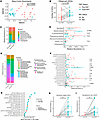 Figure 1
FMT significantly alters the intestinal microbiome of patients with rCDI. (A) Non-metric multidimensional scaling (NMDS) plot of Bray-Curtis dissimilarity among intestinal brushing samples from paired patients before and after FMT therapy (n = 16 each). Patient with IBD is represented with open triangles. (B) Microbiome richness (number of observed ASVs) for patient samples before and after FMT. (C and D) Phylum-level community composition, represented as either (C) averaged relative abundance across samples within each group or (D) boxplots representing the relative abundance median and quartiles for each group. (E and F) Family-level community composition represented as either (E) averaged relative abundance across samples within each group or (F) boxplots representing the relative abundance median and quartiles for each group. (G) Ranked variable importance from a random forest model using ASV-level data to predict FMT status. (H and I) Relative abundance plots for highly ranked ASVs from the random forest analysis. Lines represent paired patient samples before or after FMT. Statistics derived from a Wilcoxon ranked-sum test after correction for multiple comparisons. *P < 0.05; **P < 0.01; ****P < 0.0001.
To better understand what underlies these changes after FMT, community composition at the phylum and family levels was investigated. This revealed a relative increase in Bacteroidota, specifically the Bacteroidaceae family, and a relative decrease in Pseudomonadota (formerly Proteobacteria), specifically the Enterobacteriaceae family in post-FMT samples (Figure 1, C–F). Random forest was used as a multivariate approach to identify unique amplicon sequence variants (ASVs) that distinguished the groups. This model was able to distinguish between pre- and post-FMT samples with high accuracy (9.38% out-of-bag error) and identified ASVs that best separated the groups (Figure 1G). Of these ASVs, many were from the Bacteroidota phylum and significantly enriched after FMT, including Bacteroides vulgatus (Figure 1H). Bacillota (formerly Firmicutes) were unchanged as a phylum by the FMT therapeutics used in this study, whereas several Bacillota families were significantly altered (Figure 1F), and ASVs from this phylum were enriched after FMT (Figure 1I). Results from 16S analysis of stool samples were broadly similar to those from the brushings, with significantly altered community composition driven by a relative increase in Bacteroidaceae and decrease in Enterobacteriaceae within the post-FMT samples (Supplemental Figure 1; supplemental material available online with this article; https://doi.org/10.1172/jci.insight.195678DS1). Overall, these results indicate that FMT successfully modified the microbiome of patients with rCDI as assessed at 2-month follow-up.
Modest peripheral immune cell changes correlated with restoration of the intestinal microbiome. We next investigated whether any systemic changes in immune response were observed after FMT. When compared with plasma from healthy volunteers, plasma from patients with rCDI showed significantly higher levels of nearly half of assayed chemokines (Supplemental Figure 2), including growth factors (TGF-α, HGF, VEGF) and cytokines with multiple immune skews (IL-6, IL-10, IL-33). Despite these changes relative to controls, there were no significant differences between pre- and post-FMT samples (Supplemental Figure 3). No changes in circulating antibodies against C. difficile toxin B (TcdB) were identified (Supplemental Figure 4). Flow cytometry was performed on PBMCs from a subset of patients (n = 10) to determine the effect of FMT on circulating immune cell populations. Of note, the patient with IBD was excluded from this analysis. Circulating immune cell populations were broadly similar before and after FMT, with no significant changes in UMAP-based immune cell clusters after correction for multiple comparisons (Figure 2A). Although no clusters were significantly altered as a whole, individual patients showed changes in several immune populations that drove trends between the pre- and post-FMT periods. Two clusters were significant before correction: cluster 18, which trended higher after FMT, and cluster 24, which trended lower after FMT (Figure 2B). Analysis of expression markers revealed that cluster 18 expressed CD45, CD14, CD11C, CD95, and HLA-DR, suggesting a population of monocyte-derived DCs. This population also expressed integrin α4β7 and was potentially gut homing. Cluster 24 was characterized by the expression of CD45, CD3, CD25, TCRγδ, CXCR3, CD69, CD137, and CD40L, indicative of an activated γδ T cell subset. To confirm this, we examined differences in MFI of these activation markers on all detected γδ T cells and found that MFI trended lower after FMT, again driven by substantial decreases within a subset of patients (Figure 2C). We hypothesized that these immune cell populations were responsive to changes in the intestinal microbiome and examined correlations between these 2 clusters and the significantly altered microbiome families from our 16S sequencing. Cluster 18 was positively correlated with Bacteroidaceae and Marinifilaceae families, and cluster 24 was positively correlated with the Enterobacteriaceae family (Figure 2D), suggesting that these immune cell populations may be responsive to these taxa.
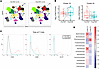 Figure 2
FMT alters several microbiome-responsive immune cell populations. (A) UMAP visualization of PBMC populations before and after FMT (n = 10 samples each). Altered cell clusters are indicated by cluster number. (B) Cell counts for highlighted immune cell clusters before and after FMT. Numbers represent total cell counts, with 100,000 live cells analyzed from each sample; y axis is presented on a log scale. (C) MFI of activation markers in total γδ T cells before and after FMT. (D) Heatmap of Pearson correlation coefficient values between highlighted immune cell clusters and significantly altered microbiome families from intestinal brushing 16S samples. Statistics represent the results of a Pearson’s correlation without correction for multiple comparisons. *P < 0.05.
We next assessed changes in the colonic immune response by measuring cytokines from a subset of biopsy samples before and after FMT. Although no cytokines were significantly altered after adjustment for multiple comparisons, 3 cytokines (MCP-1, IL-8, MIP-1β) were significant prior to correction, all of which trended higher after FMT (Supplemental Figure 5). These cytokines act as chemoattractants for immune cells, potentially recruiting peripheral immune cells to the gut. Together, these data suggest that systemic and colonic immune responses were largely unchanged at 2-month follow-up relative to immediately prior to FMT.
FMT promotes broad changes in colonic gene expression. To evaluate the effect of FMT on host gene expression, bulk RNA-Seq was performed on biopsies collected both before and after FMT. The paired study design was used to control for within-patient variability and increase power to detect differences. A total of 1,877 genes were significantly upregulated after FMT (adjusted P < 0.05), and 1,788 were downregulated. Of these differentially expressed genes (DEGs), 154 (8.2%) and 182 (10.2%) genes had at least a 2-fold increase or decrease in gene expression, respectively (Figure 3A). The 3,665 total DEGs represent approximately 15% of annotated genes included in the analysis. Hierarchical clustering of the 50 genes most differentially expressed was performed with these data, and samples clustered primarily according to FMT status (Figure 3B).
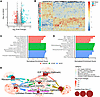 Figure 3
FMT drives changes in host transcriptional profiles. (A) Volcano plot showing DEGs from bulk RNA-Seq of colonic biopsies before or after FMT (n = 16 each). Colored points represent genes that were significantly altered, with greater than 2-fold change in expression. Open circles represent genes with a log2 fold change greater than 5. (B) Heatmap of 50 genes most differentially expressed between pre- and post-FMT biopsy samples. Values represent z scores for each gene (columns) normalized across all samples (rows). (C and D) Ranked bar plot of the most significantly decreased (C) or increased (D) gene sets after FMT as determined by Gene Set Enrichment Analysis (GSEA). Top 5 gene sets are shown for the Hallmark (red), Gene Ontology: Biological Processes (green), and KEGG (blue) databases. (E) Network analysis of leading-edge genes for selected gene sets enriched after FMT. Central nodes represent gene sets; individual points represent leading-edge genes, which drive gene set enrichment.
We next took a more systematic approach to identify biological pathways that were altered by FMT using Gene Set Enrichment Analysis (GSEA). Three different gene collections were used for this analysis: Hallmark, Gene Ontology: Biological Processes, and Kyoto Encyclopedia of Genes and Genomes (KEGG). This approach provided a more comprehensive view of pathways whose expression was modified by FMT. The top 5 enriched gene sets for each database are presented in Figure 3 C and D, and all gene sets are presented in Supplemental Table 1. Several gene sets were downregulated after FMT (Figure 3C), with the most prominent downregulated signature being bile acid and fatty acid metabolism driven by enzymes in the fatty acid β-oxidation pathway. Inflammatory responses such as IFN-α and IFN-γ signaling were also decreased after FMT, primarily driven by a core set of IFN-stimulated (IFIT1, IFIT2, GZMA) and apoptosis-associated (CASP7, CASP3) genes. These enriched gene sets were previously shown to be enriched in antibiotic-treated mice compared with naive controls (32), indicating that these transcriptional changes may be promoted by antibiotic-mediated disruption of the intestinal microbiota.
Post-FMT transcriptional profiles were enriched in downstream targets of several signal transduction molecules, including Myc, mTORC1, and E2F (Figure 3D). These pathways have been implicated in cell proliferation, with Myc signaling promoting ribosome and protein biosynthesis (33). Gene sets associated with these pathways, including ribosome biogenesis, spliceosome, and protein export, were also significantly enriched after FMT. Network analysis was performed on leading-edge genes (those driving enrichment of each gene set in GSEA) from several of the most enriched gene sets after FMT (Figure 3E). Myc leading-edge genes were centrally located within the network and had considerable overlap with all other gene sets, particularly mTORC1 signaling, E2F targets, and ribosomal gene sets. Consistent with this finding, many Myc- and mTORC1-target genes were associated with ribosome and protein biosynthesis, and other genes were identified with roles in other functions, including nucleotide synthesis and import into the nucleus (CTPS1, NME1, RANBP1), nutrient acquisition (ODC1, SRM, SLC7A5), and proteasome activation (PSMD14, PSMC6, PSMC4), which have all been associated with increased cell growth. Together, these results suggest that FMT promotes proliferation through activation of Myc, mTORC1, and E2F signaling pathways.
FMT-induced transcriptional changes are distinct from healthy controls. We next investigated whether the changes observed after FMT represent a return to baseline observed in healthy individuals or a distinct change in gene expression. Pre- and post-FMT transcriptional data were compared with bulk RNA-Seq data from control biopsies collected at the time of routine colonoscopy. Biopsy samples were collected from the sigmoid colon to be consistent with sample collection in patients with rCDI, and differential gene expression analysis was re-run with all 3 groups. Transcriptional profiles of control samples were distinct from that of patients with rCDI either before or after FMT as visualized by principal components analysis (Figure 4A). This was further confirmed after examining the number of DEGs from each comparison, as more genes were differentially expressed between samples from patients with rCDI and controls (n = 5,352 and 7,154 for comparisons with pre- and post-FMT groups, respectively) than compared with differences between FMT time points (Figure 4B). The largest number of DEGs was observed between control and post-FMT samples, suggesting that transcriptional changes in response to FMT are not necessarily a return to baseline seen in healthy patients. Of note, the number of DEGs observed between pre- and post-FMT samples in this analysis (1,730 genes) was less than half the number identified when controlling for paired pre- and post-FMT samples, highlighting the significant impact of within-patient variability on these findings.
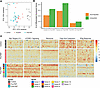 Figure 4
Colonic expression profiles are significantly different in patients after FMT compared with healthy controls. (A) Principal component analysis of rCDI cohort biopsy samples before and after FMT (n = 16 each) and healthy control biopsy samples (n = 10). (B) Number of DEGs for each group comparison. Downregulated and upregulated genes are relative to the group listed first in each comparison. (C) Heatmap of top leading-edge genes for select gene sets identified as differentially enriched between pre- and post-FMT samples. Values represent z scores for each gene (columns) normalized across all samples (rows).
We next wanted to compare expression of major FMT-altered gene sets in healthy control samples. To test this, normalized gene counts for top genes driving the enrichment of representative gene sets observed in Figure 3, C and D were compared between groups. As observed previously, gene sets associated with proliferation and protein synthesis were increased after FMT compared with before FMT, and gene sets associated with lipid catabolism and IFN-γ responses were diminished (Figure 4C). Expression of these genes after FMT was also distinct from expression observed in healthy controls, indicating that these changes are not simply a return to homeostasis. Of note, we observed variation in expression of these genes among patients after receiving FMT, and this variation appeared to be at least partially associated with the FMT donor. Changes in expression of these genes before and after FMT remained significant when controlling for the FMT donor, indicating that although the source of FMT does influence expression, these changes are conserved across donors. Overall, these data indicate that colonic transcriptional profiles in patients with rCDI are distinct from healthy controls, and that FMT-induced transcriptional changes are distinct from expression observed in control samples.
FMT-promoted transcriptional changes are enriched in the colonic epithelium. Our transcriptional data indicate significant changes in colonic gene expression in response to FMT; however, it is unclear where these changes were localized. To examine this in more detail, tissue-localized transcriptional profiles were determined through spatial transcriptomics of FFPE biopsies from a small subset (n = 3) of patients using the NanoString GeoMx digital spatial profiling (DSP) platform. Tissue compartments were defined using fluorescent antibodies specific to morphological markers. Areas of illumination (AOI) outlining specific tissue types were determined: PanCK+ cells represented epithelial cells, PanCK– cells represented the lamina propria (inclusive of CD45+ immune and CD3+ T cells), and the muscularis mucosa lacked any membrane stain (Figure 5A).
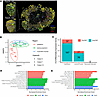 Figure 5
Colonic transcriptional changes are driven by changes in the epithelium. (A) Representative sample of tissue used for spatial transcriptomics. Regions of interest (ROI) are outlined in white solid lines, with the insert highlighting 1 ROI. Areas of illumination (AOI) are grayed out regions of the insert, highlighting PanCK+ (top) and PanCK– (bottom) regions. Two independent biopsies before and after FMT were analyzed from a subset (n = 3) of patients in the study. (B) UMAP of sequenced AOI. Colors correspond to tissue region; shapes correspond to the patient from which the sample was taken. (C) Number of DEGs upregulated either before FMT (red) or after FMT (blue) per tissue type. (D and E) Ranked bar plot of the most significantly decreased (D) or increased (E) gene sets within the epithelium after FMT as determined by GSEA. Top 5 gene sets are shown for the Hallmark (red), Gene Ontology: Biological Processes (green), and KEGG (blue) databases. Fewer than 5 gene sets indicate that there were fewer than 5 significant gene sets for that database.
UMAP visualization of normalized counts revealed that AOI primarily separated based on tissue type, with epithelial AOI most clearly separating from other tissue (Figure 5B). The epithelium had the largest number of DEGs (n = 204), with a smaller number in the lamina propria (n = 97) and no DEGs detected in the muscularis mucosa (Figure 5C). Although fewer genes were detected in the spatial transcriptomics analysis, a substantial proportion of DEGs in both the epithelium (41.2%) and lamina propria (25.8%) were also differentially expressed within the bulk RNA-Seq dataset. To better understand the functional consequences of these changes, GSEA was repeated within each tissue type and revealed that the epithelium broadly recapitulated changes observed in the bulk RNA-Seq analysis. Inflammatory gene sets such as IFN-γ response and antigen processing and presentation were significantly enriched before FMT (Figure 5D). In addition, pathways including Myc targets, mTORC1 signaling, and gene sets associated with mRNA translation were significantly enriched after FMT (Figure 5E), results that were all observed in bulk RNA-Seq data. Together, these data indicated that transcriptional changes were enriched within the colonic epithelium, suggesting that this tissue was most affected by FMT at 2-month follow-up.
FMT promotes intestinal renewal associated with enrichment of proliferative cells. Because post-FMT transcriptional profiles were enriched in genes associated with cell proliferation and these changes were enriched in the colonic epithelium, we hypothesized that FMT promotes changes in epithelial cell composition. The colonic epithelium is replenished by rapidly reproducing stem cells that give rise to transit-amplifying cells, which differentiate into enterocytes and specialized secretory cell types such as goblet cells or enteroendocrine cells (34). We leveraged GSEA with our RNA-Seq data to estimate changes in cellular composition using the MSigDB C8 Collection, with classifications based on cell type signatures rather than gene functions. We focused our analysis on gene sets from 2 intestinal single-cell RNA-Seq studies: Gao et al., which assessed adult and fetal colonic samples (35), and Busslinger et al., which evaluated adult duodenal biopsies (36). Post-FMT samples were enriched in gene sets from proliferative cell populations (MKI67+ progenitors in the colon; stem cells, differentiating stem cells, and transit-amplifying cells in the duodenum) and enteroendocrine cells (Figure 6A). In contrast, gene sets associated with enterocytes were significantly decreased after FMT, suggesting that FMT shifts crypt cell composition toward cells with greater proliferative capacity.
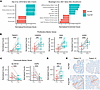 Figure 6
FMT promotes enrichment of proliferative crypt cell types. (A) GSEA rankings from bulk RNA-Seq data against cell type profiles from Gao et al. and Busslinger et al. gene sets. All listed gene sets were significantly enriched after correction for multiple comparisons. (B and C) Normalized gene expression for genes associated with (B) proliferative cells and (C) colonocytes. (D) Normalized gene expression for REG4. (E) Representative tissue sections (10× original magnification) labeled for REG4 protein expression (red) by IHC. Columns represent individual patients. Statistics are derived from the DESeq2 multivariate model, which adjusts for multiple comparisons. *P < 0.05; **P < 0.01; ***P < 0.001; ****P < 0.0001 (n = 16 per group for transcriptomics, n = 4 for IHC).
Leading-edge gene analysis was performed to understand the transcriptional changes underlying this enrichment. Proliferative gene sets were driven by moderate upregulation of genes associated with cell cycle progression: TM4SF1 (37), CENPW (38), RAN (39), and AGR2 (40), and enterocyte gene set enrichment was driven by genes such as SLC6A19 and AQP8, which encode nutrient transporters that are enriched in colonocytes and strongly downregulated after FMT (Figure 6, B and C). Expression of REG4 was also significantly upregulated following FMT treatment (Figure 6D), and this was confirmed at the protein level via IHC (Figure 6E). REG4 is expressed in enteroendocrine and goblet cells in response to inflammation (41) and is associated with repair following infectious or inflammatory dysbiosis (42). REG4 is also associated with cell proliferation through activation of the EGFR pathway (43), and REG4-expressing deep crypt cells are important for maintenance of the stem cell compartment in the colon (44). Together, these results indicate that FMT increases expression of genes associated with proliferative cells, promoting cell growth and renewal of the colonic epithelium.
EGFR ligands and IL-33 signaling are upregulated after FMT. Based on the increased proliferation and upregulation of Myc and mTORC1 target genes after FMT, we were interested in identifying upstream pathways that may be driving their expression. mTORC1 and E2F signaling cascades can both be stimulated by EGFR family signaling through PI3K/Akt and Ras/Raf/Erk signaling cascades, respectively (45). In addition, Ras/Raf/Erk and PI3K/Akt signaling can significantly increase the half-life of Myc protein and thus enhance its effects on transcription (46). Based on these data, we hypothesized that EGFR signaling may be partially responsible for the significant enrichment of these pathways in our GSEA. We observed that amphiregulin (AREG), epiregulin (EREG), heparin-binding EGF-like growth factor (HBEGF), and neuregulin 1 (NRG1), genes encoding EGFR family ligands, were significantly upregulated after FMT (Figure 7A), suggesting that EGFR signaling may activate downstream proliferative pathways.
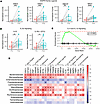 Figure 7
FMT promotes EGFR family ligand and IL-33 signaling gene expression. (A and B) Normalized gene counts of (A) select EGFR family ligands or (B) select IL-33 signaling genes. Statistics are derived from the DESeq2 multivariate model, which adjusts for multiple comparisons. (C) GSEA plot of the Reactome IL-4 and IL-13 signaling gene set. (D) Heatmap of Pearson correlation coefficient values between select gene pathways and significantly altered microbiome families derived from 16S sequencing of intestinal brushing samples. Statistics represent the results of a Pearson’s correlation without correction for multiple comparisons. *P < 0.05; **P < 0.01, ***P < 0.001; ****P < 0.0001 (n = 16 per group).
Although many EGFR family ligands are produced by mesenchymal cells to promote proliferation in the colonic epithelium (47), previous work has identified that type 2 innate lymphoid cells (ILC2s) can also produce ligands such as AREG in response to IL-33 treatment (48). This led us to hypothesize that type 2 immunity, particularly IL-33 signaling, may be upregulated after FMT. A targeted analysis revealed that IL33 and its receptor (IL1RL1, ST2) were both significantly upregulated after FMT (Figure 7B), suggesting that this may be a potential mechanism by which AREG is produced. Expression of genes downstream of IL-4 and IL-13 signaling, particularly matrix metalloprotease genes, were also enriched following FMT (Figure 7C), further suggesting a role for type 2 immunity after FMT.
To better understand the transcriptional changes most closely associated with changes in the microbiome, correlation analysis was performed between significantly altered microbiome families and key genes from pathways of interest. Genes associated with cell proliferation, EGFR signaling, and IL-33 signaling were significantly correlated with several families that were significantly enriched after FMT, particularly Bacteroidaceae, Oscillospiraceae, and Ruminococcaceae (Figure 7D). Taken together, these results indicate that IL-33 and EGFR signaling may underlie activation of these proliferative pathways after FMT, and that these transcriptional changes may be driven by specific members of the microbiota.


