
Clinical Research and Public HealthCOVID-19Vaccines
Open Access |  10.1172/jci.insight.191266
Prospective SARS-CoV-2 additional vaccination in immunosuppressant-treated individuals with autoimmune diseases in a randomized controlled trial
Meggan Mackay,1 Catriona A. Wagner,2 Ashley Pinckney,3 Jeffrey A. Cohen,4 Zachary S. Wallace,5,6 Arezou Khosroshahi,7 Jeffrey A. Sparks,6,8 Sandra Lord,9 Amit Saxena,10 Roberto Caricchio,11 Alfred H.J. Kim,12 Diane L. Kamen,13 Fotios Koumpouras,14 Anca D. Askanase,15 Kenneth Smith,2 Joel M. Guthridge,2 Gabriel Pardo,2 Yang Mao-Draayer,2,16 Susan Macwana,2 Sean McCarthy,17 Matthew A. Sherman,17 Sanaz Daneshfar Hamrah,17 Maria Veri,17 Sarah Walker,3 Kate York,3 Sara K. Tedeschi,6,8 Jennifer Wang,18 Gabrielle Dziubla,18 Mike Castro,18 Robin Carroll,18 Sandeep Narpala,18 Bob C. Lin,18 Leonid Serebryannyy,18 Adrian B. McDermott,18 ACV01 Study Team,19 William T. Barry,3 Ellen Goldmuntz,17 James McNamara,17 Aimee S. Payne,20 Amit Bar-Or,21 Dinesh Khanna,22 and Judith A. James2,23
1Institute of Molecular Medicine, Feinstein Institutes for Medical Research, Manhasset, New York, USA.
2Arthritis and Clinical Immunology, Oklahoma Medical Research Foundation, Oklahoma City, Oklahoma, USA.
3Rho, Durham, NC, USA.
4Neurologic Institute, Cleveland Clinic, Cleveland, Ohio, USA.
5Division of Rheumatology, Allergy, and Immunology, Massachusetts General Hospital, Boston, Massachusetts, USA.
6Harvard Medical School, Boston, Massachusetts, USA.
7Emory University, Atlanta, Georgia, USA.
8Division of Rheumatology, Inflammation, and Immunity, Brigham and Women’s Hospital, Boston, Massachusetts, USA.
9Center for Interventional Immunology, Benaroya Research Institute, Seattle, Washington, USA,
10Division of Rheumatology, Department of Medicine, New York University, New York, USA.
11Division of Rheumatology, UMass Chan Medical School, Worcester, Massachusetts, USA.
12Division of Rheumatology, Department of Medicine, Washington University School of Medicine, St. Louis, Missouri, USA.
13Medical University of South Carolina, Charleston, South Carolina, USA.
14Department of Internal Medicine, Section of Rheumatology, Allergy & Immunology, Yale School of Medicine, New Haven, Connecticut, USA.
15Department of Medicine, Columbia University Irving Medical Center, New York, New York, USA.
16Department of Neurology, University of Michigan, Ann Arbor, Michigan, USA.
17Division of Allergy, Immunology, and Transplantation, NIH/NIAID, Bethesda, Maryland, USA.
18Vaccine Research Center, NIH/NIAID, Bethesda, Maryland, USA.
19The ACV01 Study Team members (detailed in Supplemental Acknowledgments).
20Department of Dermatology, Columbia University, New York, New York, USA.
21Department of Neurology, Perelman School of Medicine, University of Pennsylvania, Philadelphia, Pennsylvania, USA.
22Division of Rheumatology, Department of Internal Medicine, University of Michigan, Ann Arbor, Michigan, USA.
23Departments of Medicine and Pathology, University of Oklahoma Health Science Center, Oklahoma City, Oklahoma, USA.
Address correspondence to: Judith A. James, Arthritis and Clinical Immunology, Oklahoma Medical Research Foundation, 825 NE 13th Street, Oklahoma City, Oklahoma 73104, USA. Phone: 405.271.4987; Email: jamesj@omrf.org.
Authorship note: ABO, DK, and JAJ contributed equally to this work.
Find articles by Mackay, M. in: PubMed | Google Scholar
1Institute of Molecular Medicine, Feinstein Institutes for Medical Research, Manhasset, New York, USA.
2Arthritis and Clinical Immunology, Oklahoma Medical Research Foundation, Oklahoma City, Oklahoma, USA.
3Rho, Durham, NC, USA.
4Neurologic Institute, Cleveland Clinic, Cleveland, Ohio, USA.
5Division of Rheumatology, Allergy, and Immunology, Massachusetts General Hospital, Boston, Massachusetts, USA.
6Harvard Medical School, Boston, Massachusetts, USA.
7Emory University, Atlanta, Georgia, USA.
8Division of Rheumatology, Inflammation, and Immunity, Brigham and Women’s Hospital, Boston, Massachusetts, USA.
9Center for Interventional Immunology, Benaroya Research Institute, Seattle, Washington, USA,
10Division of Rheumatology, Department of Medicine, New York University, New York, USA.
11Division of Rheumatology, UMass Chan Medical School, Worcester, Massachusetts, USA.
12Division of Rheumatology, Department of Medicine, Washington University School of Medicine, St. Louis, Missouri, USA.
13Medical University of South Carolina, Charleston, South Carolina, USA.
14Department of Internal Medicine, Section of Rheumatology, Allergy & Immunology, Yale School of Medicine, New Haven, Connecticut, USA.
15Department of Medicine, Columbia University Irving Medical Center, New York, New York, USA.
16Department of Neurology, University of Michigan, Ann Arbor, Michigan, USA.
17Division of Allergy, Immunology, and Transplantation, NIH/NIAID, Bethesda, Maryland, USA.
18Vaccine Research Center, NIH/NIAID, Bethesda, Maryland, USA.
19The ACV01 Study Team members (detailed in Supplemental Acknowledgments).
20Department of Dermatology, Columbia University, New York, New York, USA.
21Department of Neurology, Perelman School of Medicine, University of Pennsylvania, Philadelphia, Pennsylvania, USA.
22Division of Rheumatology, Department of Internal Medicine, University of Michigan, Ann Arbor, Michigan, USA.
23Departments of Medicine and Pathology, University of Oklahoma Health Science Center, Oklahoma City, Oklahoma, USA.
Address correspondence to: Judith A. James, Arthritis and Clinical Immunology, Oklahoma Medical Research Foundation, 825 NE 13th Street, Oklahoma City, Oklahoma 73104, USA. Phone: 405.271.4987; Email: jamesj@omrf.org.
Authorship note: ABO, DK, and JAJ contributed equally to this work.
Find articles by Wagner, C. in: PubMed | Google Scholar
1Institute of Molecular Medicine, Feinstein Institutes for Medical Research, Manhasset, New York, USA.
2Arthritis and Clinical Immunology, Oklahoma Medical Research Foundation, Oklahoma City, Oklahoma, USA.
3Rho, Durham, NC, USA.
4Neurologic Institute, Cleveland Clinic, Cleveland, Ohio, USA.
5Division of Rheumatology, Allergy, and Immunology, Massachusetts General Hospital, Boston, Massachusetts, USA.
6Harvard Medical School, Boston, Massachusetts, USA.
7Emory University, Atlanta, Georgia, USA.
8Division of Rheumatology, Inflammation, and Immunity, Brigham and Women’s Hospital, Boston, Massachusetts, USA.
9Center for Interventional Immunology, Benaroya Research Institute, Seattle, Washington, USA,
10Division of Rheumatology, Department of Medicine, New York University, New York, USA.
11Division of Rheumatology, UMass Chan Medical School, Worcester, Massachusetts, USA.
12Division of Rheumatology, Department of Medicine, Washington University School of Medicine, St. Louis, Missouri, USA.
13Medical University of South Carolina, Charleston, South Carolina, USA.
14Department of Internal Medicine, Section of Rheumatology, Allergy & Immunology, Yale School of Medicine, New Haven, Connecticut, USA.
15Department of Medicine, Columbia University Irving Medical Center, New York, New York, USA.
16Department of Neurology, University of Michigan, Ann Arbor, Michigan, USA.
17Division of Allergy, Immunology, and Transplantation, NIH/NIAID, Bethesda, Maryland, USA.
18Vaccine Research Center, NIH/NIAID, Bethesda, Maryland, USA.
19The ACV01 Study Team members (detailed in Supplemental Acknowledgments).
20Department of Dermatology, Columbia University, New York, New York, USA.
21Department of Neurology, Perelman School of Medicine, University of Pennsylvania, Philadelphia, Pennsylvania, USA.
22Division of Rheumatology, Department of Internal Medicine, University of Michigan, Ann Arbor, Michigan, USA.
23Departments of Medicine and Pathology, University of Oklahoma Health Science Center, Oklahoma City, Oklahoma, USA.
Address correspondence to: Judith A. James, Arthritis and Clinical Immunology, Oklahoma Medical Research Foundation, 825 NE 13th Street, Oklahoma City, Oklahoma 73104, USA. Phone: 405.271.4987; Email: jamesj@omrf.org.
Authorship note: ABO, DK, and JAJ contributed equally to this work.
Find articles by Pinckney, A. in: PubMed | Google Scholar
1Institute of Molecular Medicine, Feinstein Institutes for Medical Research, Manhasset, New York, USA.
2Arthritis and Clinical Immunology, Oklahoma Medical Research Foundation, Oklahoma City, Oklahoma, USA.
3Rho, Durham, NC, USA.
4Neurologic Institute, Cleveland Clinic, Cleveland, Ohio, USA.
5Division of Rheumatology, Allergy, and Immunology, Massachusetts General Hospital, Boston, Massachusetts, USA.
6Harvard Medical School, Boston, Massachusetts, USA.
7Emory University, Atlanta, Georgia, USA.
8Division of Rheumatology, Inflammation, and Immunity, Brigham and Women’s Hospital, Boston, Massachusetts, USA.
9Center for Interventional Immunology, Benaroya Research Institute, Seattle, Washington, USA,
10Division of Rheumatology, Department of Medicine, New York University, New York, USA.
11Division of Rheumatology, UMass Chan Medical School, Worcester, Massachusetts, USA.
12Division of Rheumatology, Department of Medicine, Washington University School of Medicine, St. Louis, Missouri, USA.
13Medical University of South Carolina, Charleston, South Carolina, USA.
14Department of Internal Medicine, Section of Rheumatology, Allergy & Immunology, Yale School of Medicine, New Haven, Connecticut, USA.
15Department of Medicine, Columbia University Irving Medical Center, New York, New York, USA.
16Department of Neurology, University of Michigan, Ann Arbor, Michigan, USA.
17Division of Allergy, Immunology, and Transplantation, NIH/NIAID, Bethesda, Maryland, USA.
18Vaccine Research Center, NIH/NIAID, Bethesda, Maryland, USA.
19The ACV01 Study Team members (detailed in Supplemental Acknowledgments).
20Department of Dermatology, Columbia University, New York, New York, USA.
21Department of Neurology, Perelman School of Medicine, University of Pennsylvania, Philadelphia, Pennsylvania, USA.
22Division of Rheumatology, Department of Internal Medicine, University of Michigan, Ann Arbor, Michigan, USA.
23Departments of Medicine and Pathology, University of Oklahoma Health Science Center, Oklahoma City, Oklahoma, USA.
Address correspondence to: Judith A. James, Arthritis and Clinical Immunology, Oklahoma Medical Research Foundation, 825 NE 13th Street, Oklahoma City, Oklahoma 73104, USA. Phone: 405.271.4987; Email: jamesj@omrf.org.
Authorship note: ABO, DK, and JAJ contributed equally to this work.
Find articles by Cohen, J. in: PubMed | Google Scholar
1Institute of Molecular Medicine, Feinstein Institutes for Medical Research, Manhasset, New York, USA.
2Arthritis and Clinical Immunology, Oklahoma Medical Research Foundation, Oklahoma City, Oklahoma, USA.
3Rho, Durham, NC, USA.
4Neurologic Institute, Cleveland Clinic, Cleveland, Ohio, USA.
5Division of Rheumatology, Allergy, and Immunology, Massachusetts General Hospital, Boston, Massachusetts, USA.
6Harvard Medical School, Boston, Massachusetts, USA.
7Emory University, Atlanta, Georgia, USA.
8Division of Rheumatology, Inflammation, and Immunity, Brigham and Women’s Hospital, Boston, Massachusetts, USA.
9Center for Interventional Immunology, Benaroya Research Institute, Seattle, Washington, USA,
10Division of Rheumatology, Department of Medicine, New York University, New York, USA.
11Division of Rheumatology, UMass Chan Medical School, Worcester, Massachusetts, USA.
12Division of Rheumatology, Department of Medicine, Washington University School of Medicine, St. Louis, Missouri, USA.
13Medical University of South Carolina, Charleston, South Carolina, USA.
14Department of Internal Medicine, Section of Rheumatology, Allergy & Immunology, Yale School of Medicine, New Haven, Connecticut, USA.
15Department of Medicine, Columbia University Irving Medical Center, New York, New York, USA.
16Department of Neurology, University of Michigan, Ann Arbor, Michigan, USA.
17Division of Allergy, Immunology, and Transplantation, NIH/NIAID, Bethesda, Maryland, USA.
18Vaccine Research Center, NIH/NIAID, Bethesda, Maryland, USA.
19The ACV01 Study Team members (detailed in Supplemental Acknowledgments).
20Department of Dermatology, Columbia University, New York, New York, USA.
21Department of Neurology, Perelman School of Medicine, University of Pennsylvania, Philadelphia, Pennsylvania, USA.
22Division of Rheumatology, Department of Internal Medicine, University of Michigan, Ann Arbor, Michigan, USA.
23Departments of Medicine and Pathology, University of Oklahoma Health Science Center, Oklahoma City, Oklahoma, USA.
Address correspondence to: Judith A. James, Arthritis and Clinical Immunology, Oklahoma Medical Research Foundation, 825 NE 13th Street, Oklahoma City, Oklahoma 73104, USA. Phone: 405.271.4987; Email: jamesj@omrf.org.
Authorship note: ABO, DK, and JAJ contributed equally to this work.
Find articles by Wallace, Z. in: PubMed | Google Scholar
1Institute of Molecular Medicine, Feinstein Institutes for Medical Research, Manhasset, New York, USA.
2Arthritis and Clinical Immunology, Oklahoma Medical Research Foundation, Oklahoma City, Oklahoma, USA.
3Rho, Durham, NC, USA.
4Neurologic Institute, Cleveland Clinic, Cleveland, Ohio, USA.
5Division of Rheumatology, Allergy, and Immunology, Massachusetts General Hospital, Boston, Massachusetts, USA.
6Harvard Medical School, Boston, Massachusetts, USA.
7Emory University, Atlanta, Georgia, USA.
8Division of Rheumatology, Inflammation, and Immunity, Brigham and Women’s Hospital, Boston, Massachusetts, USA.
9Center for Interventional Immunology, Benaroya Research Institute, Seattle, Washington, USA,
10Division of Rheumatology, Department of Medicine, New York University, New York, USA.
11Division of Rheumatology, UMass Chan Medical School, Worcester, Massachusetts, USA.
12Division of Rheumatology, Department of Medicine, Washington University School of Medicine, St. Louis, Missouri, USA.
13Medical University of South Carolina, Charleston, South Carolina, USA.
14Department of Internal Medicine, Section of Rheumatology, Allergy & Immunology, Yale School of Medicine, New Haven, Connecticut, USA.
15Department of Medicine, Columbia University Irving Medical Center, New York, New York, USA.
16Department of Neurology, University of Michigan, Ann Arbor, Michigan, USA.
17Division of Allergy, Immunology, and Transplantation, NIH/NIAID, Bethesda, Maryland, USA.
18Vaccine Research Center, NIH/NIAID, Bethesda, Maryland, USA.
19The ACV01 Study Team members (detailed in Supplemental Acknowledgments).
20Department of Dermatology, Columbia University, New York, New York, USA.
21Department of Neurology, Perelman School of Medicine, University of Pennsylvania, Philadelphia, Pennsylvania, USA.
22Division of Rheumatology, Department of Internal Medicine, University of Michigan, Ann Arbor, Michigan, USA.
23Departments of Medicine and Pathology, University of Oklahoma Health Science Center, Oklahoma City, Oklahoma, USA.
Address correspondence to: Judith A. James, Arthritis and Clinical Immunology, Oklahoma Medical Research Foundation, 825 NE 13th Street, Oklahoma City, Oklahoma 73104, USA. Phone: 405.271.4987; Email: jamesj@omrf.org.
Authorship note: ABO, DK, and JAJ contributed equally to this work.
Find articles by Khosroshahi, A. in: PubMed | Google Scholar
1Institute of Molecular Medicine, Feinstein Institutes for Medical Research, Manhasset, New York, USA.
2Arthritis and Clinical Immunology, Oklahoma Medical Research Foundation, Oklahoma City, Oklahoma, USA.
3Rho, Durham, NC, USA.
4Neurologic Institute, Cleveland Clinic, Cleveland, Ohio, USA.
5Division of Rheumatology, Allergy, and Immunology, Massachusetts General Hospital, Boston, Massachusetts, USA.
6Harvard Medical School, Boston, Massachusetts, USA.
7Emory University, Atlanta, Georgia, USA.
8Division of Rheumatology, Inflammation, and Immunity, Brigham and Women’s Hospital, Boston, Massachusetts, USA.
9Center for Interventional Immunology, Benaroya Research Institute, Seattle, Washington, USA,
10Division of Rheumatology, Department of Medicine, New York University, New York, USA.
11Division of Rheumatology, UMass Chan Medical School, Worcester, Massachusetts, USA.
12Division of Rheumatology, Department of Medicine, Washington University School of Medicine, St. Louis, Missouri, USA.
13Medical University of South Carolina, Charleston, South Carolina, USA.
14Department of Internal Medicine, Section of Rheumatology, Allergy & Immunology, Yale School of Medicine, New Haven, Connecticut, USA.
15Department of Medicine, Columbia University Irving Medical Center, New York, New York, USA.
16Department of Neurology, University of Michigan, Ann Arbor, Michigan, USA.
17Division of Allergy, Immunology, and Transplantation, NIH/NIAID, Bethesda, Maryland, USA.
18Vaccine Research Center, NIH/NIAID, Bethesda, Maryland, USA.
19The ACV01 Study Team members (detailed in Supplemental Acknowledgments).
20Department of Dermatology, Columbia University, New York, New York, USA.
21Department of Neurology, Perelman School of Medicine, University of Pennsylvania, Philadelphia, Pennsylvania, USA.
22Division of Rheumatology, Department of Internal Medicine, University of Michigan, Ann Arbor, Michigan, USA.
23Departments of Medicine and Pathology, University of Oklahoma Health Science Center, Oklahoma City, Oklahoma, USA.
Address correspondence to: Judith A. James, Arthritis and Clinical Immunology, Oklahoma Medical Research Foundation, 825 NE 13th Street, Oklahoma City, Oklahoma 73104, USA. Phone: 405.271.4987; Email: jamesj@omrf.org.
Authorship note: ABO, DK, and JAJ contributed equally to this work.
Find articles by
Sparks, J.
in:
PubMed
|
Google Scholar
|

1Institute of Molecular Medicine, Feinstein Institutes for Medical Research, Manhasset, New York, USA.
2Arthritis and Clinical Immunology, Oklahoma Medical Research Foundation, Oklahoma City, Oklahoma, USA.
3Rho, Durham, NC, USA.
4Neurologic Institute, Cleveland Clinic, Cleveland, Ohio, USA.
5Division of Rheumatology, Allergy, and Immunology, Massachusetts General Hospital, Boston, Massachusetts, USA.
6Harvard Medical School, Boston, Massachusetts, USA.
7Emory University, Atlanta, Georgia, USA.
8Division of Rheumatology, Inflammation, and Immunity, Brigham and Women’s Hospital, Boston, Massachusetts, USA.
9Center for Interventional Immunology, Benaroya Research Institute, Seattle, Washington, USA,
10Division of Rheumatology, Department of Medicine, New York University, New York, USA.
11Division of Rheumatology, UMass Chan Medical School, Worcester, Massachusetts, USA.
12Division of Rheumatology, Department of Medicine, Washington University School of Medicine, St. Louis, Missouri, USA.
13Medical University of South Carolina, Charleston, South Carolina, USA.
14Department of Internal Medicine, Section of Rheumatology, Allergy & Immunology, Yale School of Medicine, New Haven, Connecticut, USA.
15Department of Medicine, Columbia University Irving Medical Center, New York, New York, USA.
16Department of Neurology, University of Michigan, Ann Arbor, Michigan, USA.
17Division of Allergy, Immunology, and Transplantation, NIH/NIAID, Bethesda, Maryland, USA.
18Vaccine Research Center, NIH/NIAID, Bethesda, Maryland, USA.
19The ACV01 Study Team members (detailed in Supplemental Acknowledgments).
20Department of Dermatology, Columbia University, New York, New York, USA.
21Department of Neurology, Perelman School of Medicine, University of Pennsylvania, Philadelphia, Pennsylvania, USA.
22Division of Rheumatology, Department of Internal Medicine, University of Michigan, Ann Arbor, Michigan, USA.
23Departments of Medicine and Pathology, University of Oklahoma Health Science Center, Oklahoma City, Oklahoma, USA.
Address correspondence to: Judith A. James, Arthritis and Clinical Immunology, Oklahoma Medical Research Foundation, 825 NE 13th Street, Oklahoma City, Oklahoma 73104, USA. Phone: 405.271.4987; Email: jamesj@omrf.org.
Authorship note: ABO, DK, and JAJ contributed equally to this work.
Find articles by
Lord, S.
in:
PubMed
|
Google Scholar
|
1Institute of Molecular Medicine, Feinstein Institutes for Medical Research, Manhasset, New York, USA.
2Arthritis and Clinical Immunology, Oklahoma Medical Research Foundation, Oklahoma City, Oklahoma, USA.
3Rho, Durham, NC, USA.
4Neurologic Institute, Cleveland Clinic, Cleveland, Ohio, USA.
5Division of Rheumatology, Allergy, and Immunology, Massachusetts General Hospital, Boston, Massachusetts, USA.
6Harvard Medical School, Boston, Massachusetts, USA.
7Emory University, Atlanta, Georgia, USA.
8Division of Rheumatology, Inflammation, and Immunity, Brigham and Women’s Hospital, Boston, Massachusetts, USA.
9Center for Interventional Immunology, Benaroya Research Institute, Seattle, Washington, USA,
10Division of Rheumatology, Department of Medicine, New York University, New York, USA.
11Division of Rheumatology, UMass Chan Medical School, Worcester, Massachusetts, USA.
12Division of Rheumatology, Department of Medicine, Washington University School of Medicine, St. Louis, Missouri, USA.
13Medical University of South Carolina, Charleston, South Carolina, USA.
14Department of Internal Medicine, Section of Rheumatology, Allergy & Immunology, Yale School of Medicine, New Haven, Connecticut, USA.
15Department of Medicine, Columbia University Irving Medical Center, New York, New York, USA.
16Department of Neurology, University of Michigan, Ann Arbor, Michigan, USA.
17Division of Allergy, Immunology, and Transplantation, NIH/NIAID, Bethesda, Maryland, USA.
18Vaccine Research Center, NIH/NIAID, Bethesda, Maryland, USA.
19The ACV01 Study Team members (detailed in Supplemental Acknowledgments).
20Department of Dermatology, Columbia University, New York, New York, USA.
21Department of Neurology, Perelman School of Medicine, University of Pennsylvania, Philadelphia, Pennsylvania, USA.
22Division of Rheumatology, Department of Internal Medicine, University of Michigan, Ann Arbor, Michigan, USA.
23Departments of Medicine and Pathology, University of Oklahoma Health Science Center, Oklahoma City, Oklahoma, USA.
Address correspondence to: Judith A. James, Arthritis and Clinical Immunology, Oklahoma Medical Research Foundation, 825 NE 13th Street, Oklahoma City, Oklahoma 73104, USA. Phone: 405.271.4987; Email: jamesj@omrf.org.
Authorship note: ABO, DK, and JAJ contributed equally to this work.
Find articles by Saxena, A. in: PubMed | Google Scholar
1Institute of Molecular Medicine, Feinstein Institutes for Medical Research, Manhasset, New York, USA.
2Arthritis and Clinical Immunology, Oklahoma Medical Research Foundation, Oklahoma City, Oklahoma, USA.
3Rho, Durham, NC, USA.
4Neurologic Institute, Cleveland Clinic, Cleveland, Ohio, USA.
5Division of Rheumatology, Allergy, and Immunology, Massachusetts General Hospital, Boston, Massachusetts, USA.
6Harvard Medical School, Boston, Massachusetts, USA.
7Emory University, Atlanta, Georgia, USA.
8Division of Rheumatology, Inflammation, and Immunity, Brigham and Women’s Hospital, Boston, Massachusetts, USA.
9Center for Interventional Immunology, Benaroya Research Institute, Seattle, Washington, USA,
10Division of Rheumatology, Department of Medicine, New York University, New York, USA.
11Division of Rheumatology, UMass Chan Medical School, Worcester, Massachusetts, USA.
12Division of Rheumatology, Department of Medicine, Washington University School of Medicine, St. Louis, Missouri, USA.
13Medical University of South Carolina, Charleston, South Carolina, USA.
14Department of Internal Medicine, Section of Rheumatology, Allergy & Immunology, Yale School of Medicine, New Haven, Connecticut, USA.
15Department of Medicine, Columbia University Irving Medical Center, New York, New York, USA.
16Department of Neurology, University of Michigan, Ann Arbor, Michigan, USA.
17Division of Allergy, Immunology, and Transplantation, NIH/NIAID, Bethesda, Maryland, USA.
18Vaccine Research Center, NIH/NIAID, Bethesda, Maryland, USA.
19The ACV01 Study Team members (detailed in Supplemental Acknowledgments).
20Department of Dermatology, Columbia University, New York, New York, USA.
21Department of Neurology, Perelman School of Medicine, University of Pennsylvania, Philadelphia, Pennsylvania, USA.
22Division of Rheumatology, Department of Internal Medicine, University of Michigan, Ann Arbor, Michigan, USA.
23Departments of Medicine and Pathology, University of Oklahoma Health Science Center, Oklahoma City, Oklahoma, USA.
Address correspondence to: Judith A. James, Arthritis and Clinical Immunology, Oklahoma Medical Research Foundation, 825 NE 13th Street, Oklahoma City, Oklahoma 73104, USA. Phone: 405.271.4987; Email: jamesj@omrf.org.
Authorship note: ABO, DK, and JAJ contributed equally to this work.
Find articles by Caricchio, R. in: PubMed | Google Scholar
1Institute of Molecular Medicine, Feinstein Institutes for Medical Research, Manhasset, New York, USA.
2Arthritis and Clinical Immunology, Oklahoma Medical Research Foundation, Oklahoma City, Oklahoma, USA.
3Rho, Durham, NC, USA.
4Neurologic Institute, Cleveland Clinic, Cleveland, Ohio, USA.
5Division of Rheumatology, Allergy, and Immunology, Massachusetts General Hospital, Boston, Massachusetts, USA.
6Harvard Medical School, Boston, Massachusetts, USA.
7Emory University, Atlanta, Georgia, USA.
8Division of Rheumatology, Inflammation, and Immunity, Brigham and Women’s Hospital, Boston, Massachusetts, USA.
9Center for Interventional Immunology, Benaroya Research Institute, Seattle, Washington, USA,
10Division of Rheumatology, Department of Medicine, New York University, New York, USA.
11Division of Rheumatology, UMass Chan Medical School, Worcester, Massachusetts, USA.
12Division of Rheumatology, Department of Medicine, Washington University School of Medicine, St. Louis, Missouri, USA.
13Medical University of South Carolina, Charleston, South Carolina, USA.
14Department of Internal Medicine, Section of Rheumatology, Allergy & Immunology, Yale School of Medicine, New Haven, Connecticut, USA.
15Department of Medicine, Columbia University Irving Medical Center, New York, New York, USA.
16Department of Neurology, University of Michigan, Ann Arbor, Michigan, USA.
17Division of Allergy, Immunology, and Transplantation, NIH/NIAID, Bethesda, Maryland, USA.
18Vaccine Research Center, NIH/NIAID, Bethesda, Maryland, USA.
19The ACV01 Study Team members (detailed in Supplemental Acknowledgments).
20Department of Dermatology, Columbia University, New York, New York, USA.
21Department of Neurology, Perelman School of Medicine, University of Pennsylvania, Philadelphia, Pennsylvania, USA.
22Division of Rheumatology, Department of Internal Medicine, University of Michigan, Ann Arbor, Michigan, USA.
23Departments of Medicine and Pathology, University of Oklahoma Health Science Center, Oklahoma City, Oklahoma, USA.
Address correspondence to: Judith A. James, Arthritis and Clinical Immunology, Oklahoma Medical Research Foundation, 825 NE 13th Street, Oklahoma City, Oklahoma 73104, USA. Phone: 405.271.4987; Email: jamesj@omrf.org.
Authorship note: ABO, DK, and JAJ contributed equally to this work.
Find articles by
Kim, A.
in:
PubMed
|
Google Scholar
|
1Institute of Molecular Medicine, Feinstein Institutes for Medical Research, Manhasset, New York, USA.
2Arthritis and Clinical Immunology, Oklahoma Medical Research Foundation, Oklahoma City, Oklahoma, USA.
3Rho, Durham, NC, USA.
4Neurologic Institute, Cleveland Clinic, Cleveland, Ohio, USA.
5Division of Rheumatology, Allergy, and Immunology, Massachusetts General Hospital, Boston, Massachusetts, USA.
6Harvard Medical School, Boston, Massachusetts, USA.
7Emory University, Atlanta, Georgia, USA.
8Division of Rheumatology, Inflammation, and Immunity, Brigham and Women’s Hospital, Boston, Massachusetts, USA.
9Center for Interventional Immunology, Benaroya Research Institute, Seattle, Washington, USA,
10Division of Rheumatology, Department of Medicine, New York University, New York, USA.
11Division of Rheumatology, UMass Chan Medical School, Worcester, Massachusetts, USA.
12Division of Rheumatology, Department of Medicine, Washington University School of Medicine, St. Louis, Missouri, USA.
13Medical University of South Carolina, Charleston, South Carolina, USA.
14Department of Internal Medicine, Section of Rheumatology, Allergy & Immunology, Yale School of Medicine, New Haven, Connecticut, USA.
15Department of Medicine, Columbia University Irving Medical Center, New York, New York, USA.
16Department of Neurology, University of Michigan, Ann Arbor, Michigan, USA.
17Division of Allergy, Immunology, and Transplantation, NIH/NIAID, Bethesda, Maryland, USA.
18Vaccine Research Center, NIH/NIAID, Bethesda, Maryland, USA.
19The ACV01 Study Team members (detailed in Supplemental Acknowledgments).
20Department of Dermatology, Columbia University, New York, New York, USA.
21Department of Neurology, Perelman School of Medicine, University of Pennsylvania, Philadelphia, Pennsylvania, USA.
22Division of Rheumatology, Department of Internal Medicine, University of Michigan, Ann Arbor, Michigan, USA.
23Departments of Medicine and Pathology, University of Oklahoma Health Science Center, Oklahoma City, Oklahoma, USA.
Address correspondence to: Judith A. James, Arthritis and Clinical Immunology, Oklahoma Medical Research Foundation, 825 NE 13th Street, Oklahoma City, Oklahoma 73104, USA. Phone: 405.271.4987; Email: jamesj@omrf.org.
Authorship note: ABO, DK, and JAJ contributed equally to this work.
Find articles by Kamen, D. in: PubMed | Google Scholar
1Institute of Molecular Medicine, Feinstein Institutes for Medical Research, Manhasset, New York, USA.
2Arthritis and Clinical Immunology, Oklahoma Medical Research Foundation, Oklahoma City, Oklahoma, USA.
3Rho, Durham, NC, USA.
4Neurologic Institute, Cleveland Clinic, Cleveland, Ohio, USA.
5Division of Rheumatology, Allergy, and Immunology, Massachusetts General Hospital, Boston, Massachusetts, USA.
6Harvard Medical School, Boston, Massachusetts, USA.
7Emory University, Atlanta, Georgia, USA.
8Division of Rheumatology, Inflammation, and Immunity, Brigham and Women’s Hospital, Boston, Massachusetts, USA.
9Center for Interventional Immunology, Benaroya Research Institute, Seattle, Washington, USA,
10Division of Rheumatology, Department of Medicine, New York University, New York, USA.
11Division of Rheumatology, UMass Chan Medical School, Worcester, Massachusetts, USA.
12Division of Rheumatology, Department of Medicine, Washington University School of Medicine, St. Louis, Missouri, USA.
13Medical University of South Carolina, Charleston, South Carolina, USA.
14Department of Internal Medicine, Section of Rheumatology, Allergy & Immunology, Yale School of Medicine, New Haven, Connecticut, USA.
15Department of Medicine, Columbia University Irving Medical Center, New York, New York, USA.
16Department of Neurology, University of Michigan, Ann Arbor, Michigan, USA.
17Division of Allergy, Immunology, and Transplantation, NIH/NIAID, Bethesda, Maryland, USA.
18Vaccine Research Center, NIH/NIAID, Bethesda, Maryland, USA.
19The ACV01 Study Team members (detailed in Supplemental Acknowledgments).
20Department of Dermatology, Columbia University, New York, New York, USA.
21Department of Neurology, Perelman School of Medicine, University of Pennsylvania, Philadelphia, Pennsylvania, USA.
22Division of Rheumatology, Department of Internal Medicine, University of Michigan, Ann Arbor, Michigan, USA.
23Departments of Medicine and Pathology, University of Oklahoma Health Science Center, Oklahoma City, Oklahoma, USA.
Address correspondence to: Judith A. James, Arthritis and Clinical Immunology, Oklahoma Medical Research Foundation, 825 NE 13th Street, Oklahoma City, Oklahoma 73104, USA. Phone: 405.271.4987; Email: jamesj@omrf.org.
Authorship note: ABO, DK, and JAJ contributed equally to this work.
Find articles by Koumpouras, F. in: PubMed | Google Scholar
1Institute of Molecular Medicine, Feinstein Institutes for Medical Research, Manhasset, New York, USA.
2Arthritis and Clinical Immunology, Oklahoma Medical Research Foundation, Oklahoma City, Oklahoma, USA.
3Rho, Durham, NC, USA.
4Neurologic Institute, Cleveland Clinic, Cleveland, Ohio, USA.
5Division of Rheumatology, Allergy, and Immunology, Massachusetts General Hospital, Boston, Massachusetts, USA.
6Harvard Medical School, Boston, Massachusetts, USA.
7Emory University, Atlanta, Georgia, USA.
8Division of Rheumatology, Inflammation, and Immunity, Brigham and Women’s Hospital, Boston, Massachusetts, USA.
9Center for Interventional Immunology, Benaroya Research Institute, Seattle, Washington, USA,
10Division of Rheumatology, Department of Medicine, New York University, New York, USA.
11Division of Rheumatology, UMass Chan Medical School, Worcester, Massachusetts, USA.
12Division of Rheumatology, Department of Medicine, Washington University School of Medicine, St. Louis, Missouri, USA.
13Medical University of South Carolina, Charleston, South Carolina, USA.
14Department of Internal Medicine, Section of Rheumatology, Allergy & Immunology, Yale School of Medicine, New Haven, Connecticut, USA.
15Department of Medicine, Columbia University Irving Medical Center, New York, New York, USA.
16Department of Neurology, University of Michigan, Ann Arbor, Michigan, USA.
17Division of Allergy, Immunology, and Transplantation, NIH/NIAID, Bethesda, Maryland, USA.
18Vaccine Research Center, NIH/NIAID, Bethesda, Maryland, USA.
19The ACV01 Study Team members (detailed in Supplemental Acknowledgments).
20Department of Dermatology, Columbia University, New York, New York, USA.
21Department of Neurology, Perelman School of Medicine, University of Pennsylvania, Philadelphia, Pennsylvania, USA.
22Division of Rheumatology, Department of Internal Medicine, University of Michigan, Ann Arbor, Michigan, USA.
23Departments of Medicine and Pathology, University of Oklahoma Health Science Center, Oklahoma City, Oklahoma, USA.
Address correspondence to: Judith A. James, Arthritis and Clinical Immunology, Oklahoma Medical Research Foundation, 825 NE 13th Street, Oklahoma City, Oklahoma 73104, USA. Phone: 405.271.4987; Email: jamesj@omrf.org.
Authorship note: ABO, DK, and JAJ contributed equally to this work.
Find articles by Askanase, A. in: PubMed | Google Scholar
1Institute of Molecular Medicine, Feinstein Institutes for Medical Research, Manhasset, New York, USA.
2Arthritis and Clinical Immunology, Oklahoma Medical Research Foundation, Oklahoma City, Oklahoma, USA.
3Rho, Durham, NC, USA.
4Neurologic Institute, Cleveland Clinic, Cleveland, Ohio, USA.
5Division of Rheumatology, Allergy, and Immunology, Massachusetts General Hospital, Boston, Massachusetts, USA.
6Harvard Medical School, Boston, Massachusetts, USA.
7Emory University, Atlanta, Georgia, USA.
8Division of Rheumatology, Inflammation, and Immunity, Brigham and Women’s Hospital, Boston, Massachusetts, USA.
9Center for Interventional Immunology, Benaroya Research Institute, Seattle, Washington, USA,
10Division of Rheumatology, Department of Medicine, New York University, New York, USA.
11Division of Rheumatology, UMass Chan Medical School, Worcester, Massachusetts, USA.
12Division of Rheumatology, Department of Medicine, Washington University School of Medicine, St. Louis, Missouri, USA.
13Medical University of South Carolina, Charleston, South Carolina, USA.
14Department of Internal Medicine, Section of Rheumatology, Allergy & Immunology, Yale School of Medicine, New Haven, Connecticut, USA.
15Department of Medicine, Columbia University Irving Medical Center, New York, New York, USA.
16Department of Neurology, University of Michigan, Ann Arbor, Michigan, USA.
17Division of Allergy, Immunology, and Transplantation, NIH/NIAID, Bethesda, Maryland, USA.
18Vaccine Research Center, NIH/NIAID, Bethesda, Maryland, USA.
19The ACV01 Study Team members (detailed in Supplemental Acknowledgments).
20Department of Dermatology, Columbia University, New York, New York, USA.
21Department of Neurology, Perelman School of Medicine, University of Pennsylvania, Philadelphia, Pennsylvania, USA.
22Division of Rheumatology, Department of Internal Medicine, University of Michigan, Ann Arbor, Michigan, USA.
23Departments of Medicine and Pathology, University of Oklahoma Health Science Center, Oklahoma City, Oklahoma, USA.
Address correspondence to: Judith A. James, Arthritis and Clinical Immunology, Oklahoma Medical Research Foundation, 825 NE 13th Street, Oklahoma City, Oklahoma 73104, USA. Phone: 405.271.4987; Email: jamesj@omrf.org.
Authorship note: ABO, DK, and JAJ contributed equally to this work.
Find articles by Smith, K. in: PubMed | Google Scholar
1Institute of Molecular Medicine, Feinstein Institutes for Medical Research, Manhasset, New York, USA.
2Arthritis and Clinical Immunology, Oklahoma Medical Research Foundation, Oklahoma City, Oklahoma, USA.
3Rho, Durham, NC, USA.
4Neurologic Institute, Cleveland Clinic, Cleveland, Ohio, USA.
5Division of Rheumatology, Allergy, and Immunology, Massachusetts General Hospital, Boston, Massachusetts, USA.
6Harvard Medical School, Boston, Massachusetts, USA.
7Emory University, Atlanta, Georgia, USA.
8Division of Rheumatology, Inflammation, and Immunity, Brigham and Women’s Hospital, Boston, Massachusetts, USA.
9Center for Interventional Immunology, Benaroya Research Institute, Seattle, Washington, USA,
10Division of Rheumatology, Department of Medicine, New York University, New York, USA.
11Division of Rheumatology, UMass Chan Medical School, Worcester, Massachusetts, USA.
12Division of Rheumatology, Department of Medicine, Washington University School of Medicine, St. Louis, Missouri, USA.
13Medical University of South Carolina, Charleston, South Carolina, USA.
14Department of Internal Medicine, Section of Rheumatology, Allergy & Immunology, Yale School of Medicine, New Haven, Connecticut, USA.
15Department of Medicine, Columbia University Irving Medical Center, New York, New York, USA.
16Department of Neurology, University of Michigan, Ann Arbor, Michigan, USA.
17Division of Allergy, Immunology, and Transplantation, NIH/NIAID, Bethesda, Maryland, USA.
18Vaccine Research Center, NIH/NIAID, Bethesda, Maryland, USA.
19The ACV01 Study Team members (detailed in Supplemental Acknowledgments).
20Department of Dermatology, Columbia University, New York, New York, USA.
21Department of Neurology, Perelman School of Medicine, University of Pennsylvania, Philadelphia, Pennsylvania, USA.
22Division of Rheumatology, Department of Internal Medicine, University of Michigan, Ann Arbor, Michigan, USA.
23Departments of Medicine and Pathology, University of Oklahoma Health Science Center, Oklahoma City, Oklahoma, USA.
Address correspondence to: Judith A. James, Arthritis and Clinical Immunology, Oklahoma Medical Research Foundation, 825 NE 13th Street, Oklahoma City, Oklahoma 73104, USA. Phone: 405.271.4987; Email: jamesj@omrf.org.
Authorship note: ABO, DK, and JAJ contributed equally to this work.
Find articles by
Guthridge, J.
in:
PubMed
|
Google Scholar
|
1Institute of Molecular Medicine, Feinstein Institutes for Medical Research, Manhasset, New York, USA.
2Arthritis and Clinical Immunology, Oklahoma Medical Research Foundation, Oklahoma City, Oklahoma, USA.
3Rho, Durham, NC, USA.
4Neurologic Institute, Cleveland Clinic, Cleveland, Ohio, USA.
5Division of Rheumatology, Allergy, and Immunology, Massachusetts General Hospital, Boston, Massachusetts, USA.
6Harvard Medical School, Boston, Massachusetts, USA.
7Emory University, Atlanta, Georgia, USA.
8Division of Rheumatology, Inflammation, and Immunity, Brigham and Women’s Hospital, Boston, Massachusetts, USA.
9Center for Interventional Immunology, Benaroya Research Institute, Seattle, Washington, USA,
10Division of Rheumatology, Department of Medicine, New York University, New York, USA.
11Division of Rheumatology, UMass Chan Medical School, Worcester, Massachusetts, USA.
12Division of Rheumatology, Department of Medicine, Washington University School of Medicine, St. Louis, Missouri, USA.
13Medical University of South Carolina, Charleston, South Carolina, USA.
14Department of Internal Medicine, Section of Rheumatology, Allergy & Immunology, Yale School of Medicine, New Haven, Connecticut, USA.
15Department of Medicine, Columbia University Irving Medical Center, New York, New York, USA.
16Department of Neurology, University of Michigan, Ann Arbor, Michigan, USA.
17Division of Allergy, Immunology, and Transplantation, NIH/NIAID, Bethesda, Maryland, USA.
18Vaccine Research Center, NIH/NIAID, Bethesda, Maryland, USA.
19The ACV01 Study Team members (detailed in Supplemental Acknowledgments).
20Department of Dermatology, Columbia University, New York, New York, USA.
21Department of Neurology, Perelman School of Medicine, University of Pennsylvania, Philadelphia, Pennsylvania, USA.
22Division of Rheumatology, Department of Internal Medicine, University of Michigan, Ann Arbor, Michigan, USA.
23Departments of Medicine and Pathology, University of Oklahoma Health Science Center, Oklahoma City, Oklahoma, USA.
Address correspondence to: Judith A. James, Arthritis and Clinical Immunology, Oklahoma Medical Research Foundation, 825 NE 13th Street, Oklahoma City, Oklahoma 73104, USA. Phone: 405.271.4987; Email: jamesj@omrf.org.
Authorship note: ABO, DK, and JAJ contributed equally to this work.
Find articles by Pardo, G. in: PubMed | Google Scholar
1Institute of Molecular Medicine, Feinstein Institutes for Medical Research, Manhasset, New York, USA.
2Arthritis and Clinical Immunology, Oklahoma Medical Research Foundation, Oklahoma City, Oklahoma, USA.
3Rho, Durham, NC, USA.
4Neurologic Institute, Cleveland Clinic, Cleveland, Ohio, USA.
5Division of Rheumatology, Allergy, and Immunology, Massachusetts General Hospital, Boston, Massachusetts, USA.
6Harvard Medical School, Boston, Massachusetts, USA.
7Emory University, Atlanta, Georgia, USA.
8Division of Rheumatology, Inflammation, and Immunity, Brigham and Women’s Hospital, Boston, Massachusetts, USA.
9Center for Interventional Immunology, Benaroya Research Institute, Seattle, Washington, USA,
10Division of Rheumatology, Department of Medicine, New York University, New York, USA.
11Division of Rheumatology, UMass Chan Medical School, Worcester, Massachusetts, USA.
12Division of Rheumatology, Department of Medicine, Washington University School of Medicine, St. Louis, Missouri, USA.
13Medical University of South Carolina, Charleston, South Carolina, USA.
14Department of Internal Medicine, Section of Rheumatology, Allergy & Immunology, Yale School of Medicine, New Haven, Connecticut, USA.
15Department of Medicine, Columbia University Irving Medical Center, New York, New York, USA.
16Department of Neurology, University of Michigan, Ann Arbor, Michigan, USA.
17Division of Allergy, Immunology, and Transplantation, NIH/NIAID, Bethesda, Maryland, USA.
18Vaccine Research Center, NIH/NIAID, Bethesda, Maryland, USA.
19The ACV01 Study Team members (detailed in Supplemental Acknowledgments).
20Department of Dermatology, Columbia University, New York, New York, USA.
21Department of Neurology, Perelman School of Medicine, University of Pennsylvania, Philadelphia, Pennsylvania, USA.
22Division of Rheumatology, Department of Internal Medicine, University of Michigan, Ann Arbor, Michigan, USA.
23Departments of Medicine and Pathology, University of Oklahoma Health Science Center, Oklahoma City, Oklahoma, USA.
Address correspondence to: Judith A. James, Arthritis and Clinical Immunology, Oklahoma Medical Research Foundation, 825 NE 13th Street, Oklahoma City, Oklahoma 73104, USA. Phone: 405.271.4987; Email: jamesj@omrf.org.
Authorship note: ABO, DK, and JAJ contributed equally to this work.
Find articles by Mao-Draayer, Y. in: PubMed | Google Scholar
1Institute of Molecular Medicine, Feinstein Institutes for Medical Research, Manhasset, New York, USA.
2Arthritis and Clinical Immunology, Oklahoma Medical Research Foundation, Oklahoma City, Oklahoma, USA.
3Rho, Durham, NC, USA.
4Neurologic Institute, Cleveland Clinic, Cleveland, Ohio, USA.
5Division of Rheumatology, Allergy, and Immunology, Massachusetts General Hospital, Boston, Massachusetts, USA.
6Harvard Medical School, Boston, Massachusetts, USA.
7Emory University, Atlanta, Georgia, USA.
8Division of Rheumatology, Inflammation, and Immunity, Brigham and Women’s Hospital, Boston, Massachusetts, USA.
9Center for Interventional Immunology, Benaroya Research Institute, Seattle, Washington, USA,
10Division of Rheumatology, Department of Medicine, New York University, New York, USA.
11Division of Rheumatology, UMass Chan Medical School, Worcester, Massachusetts, USA.
12Division of Rheumatology, Department of Medicine, Washington University School of Medicine, St. Louis, Missouri, USA.
13Medical University of South Carolina, Charleston, South Carolina, USA.
14Department of Internal Medicine, Section of Rheumatology, Allergy & Immunology, Yale School of Medicine, New Haven, Connecticut, USA.
15Department of Medicine, Columbia University Irving Medical Center, New York, New York, USA.
16Department of Neurology, University of Michigan, Ann Arbor, Michigan, USA.
17Division of Allergy, Immunology, and Transplantation, NIH/NIAID, Bethesda, Maryland, USA.
18Vaccine Research Center, NIH/NIAID, Bethesda, Maryland, USA.
19The ACV01 Study Team members (detailed in Supplemental Acknowledgments).
20Department of Dermatology, Columbia University, New York, New York, USA.
21Department of Neurology, Perelman School of Medicine, University of Pennsylvania, Philadelphia, Pennsylvania, USA.
22Division of Rheumatology, Department of Internal Medicine, University of Michigan, Ann Arbor, Michigan, USA.
23Departments of Medicine and Pathology, University of Oklahoma Health Science Center, Oklahoma City, Oklahoma, USA.
Address correspondence to: Judith A. James, Arthritis and Clinical Immunology, Oklahoma Medical Research Foundation, 825 NE 13th Street, Oklahoma City, Oklahoma 73104, USA. Phone: 405.271.4987; Email: jamesj@omrf.org.
Authorship note: ABO, DK, and JAJ contributed equally to this work.
Find articles by Macwana, S. in: PubMed | Google Scholar
1Institute of Molecular Medicine, Feinstein Institutes for Medical Research, Manhasset, New York, USA.
2Arthritis and Clinical Immunology, Oklahoma Medical Research Foundation, Oklahoma City, Oklahoma, USA.
3Rho, Durham, NC, USA.
4Neurologic Institute, Cleveland Clinic, Cleveland, Ohio, USA.
5Division of Rheumatology, Allergy, and Immunology, Massachusetts General Hospital, Boston, Massachusetts, USA.
6Harvard Medical School, Boston, Massachusetts, USA.
7Emory University, Atlanta, Georgia, USA.
8Division of Rheumatology, Inflammation, and Immunity, Brigham and Women’s Hospital, Boston, Massachusetts, USA.
9Center for Interventional Immunology, Benaroya Research Institute, Seattle, Washington, USA,
10Division of Rheumatology, Department of Medicine, New York University, New York, USA.
11Division of Rheumatology, UMass Chan Medical School, Worcester, Massachusetts, USA.
12Division of Rheumatology, Department of Medicine, Washington University School of Medicine, St. Louis, Missouri, USA.
13Medical University of South Carolina, Charleston, South Carolina, USA.
14Department of Internal Medicine, Section of Rheumatology, Allergy & Immunology, Yale School of Medicine, New Haven, Connecticut, USA.
15Department of Medicine, Columbia University Irving Medical Center, New York, New York, USA.
16Department of Neurology, University of Michigan, Ann Arbor, Michigan, USA.
17Division of Allergy, Immunology, and Transplantation, NIH/NIAID, Bethesda, Maryland, USA.
18Vaccine Research Center, NIH/NIAID, Bethesda, Maryland, USA.
19The ACV01 Study Team members (detailed in Supplemental Acknowledgments).
20Department of Dermatology, Columbia University, New York, New York, USA.
21Department of Neurology, Perelman School of Medicine, University of Pennsylvania, Philadelphia, Pennsylvania, USA.
22Division of Rheumatology, Department of Internal Medicine, University of Michigan, Ann Arbor, Michigan, USA.
23Departments of Medicine and Pathology, University of Oklahoma Health Science Center, Oklahoma City, Oklahoma, USA.
Address correspondence to: Judith A. James, Arthritis and Clinical Immunology, Oklahoma Medical Research Foundation, 825 NE 13th Street, Oklahoma City, Oklahoma 73104, USA. Phone: 405.271.4987; Email: jamesj@omrf.org.
Authorship note: ABO, DK, and JAJ contributed equally to this work.
Find articles by McCarthy, S. in: PubMed | Google Scholar
1Institute of Molecular Medicine, Feinstein Institutes for Medical Research, Manhasset, New York, USA.
2Arthritis and Clinical Immunology, Oklahoma Medical Research Foundation, Oklahoma City, Oklahoma, USA.
3Rho, Durham, NC, USA.
4Neurologic Institute, Cleveland Clinic, Cleveland, Ohio, USA.
5Division of Rheumatology, Allergy, and Immunology, Massachusetts General Hospital, Boston, Massachusetts, USA.
6Harvard Medical School, Boston, Massachusetts, USA.
7Emory University, Atlanta, Georgia, USA.
8Division of Rheumatology, Inflammation, and Immunity, Brigham and Women’s Hospital, Boston, Massachusetts, USA.
9Center for Interventional Immunology, Benaroya Research Institute, Seattle, Washington, USA,
10Division of Rheumatology, Department of Medicine, New York University, New York, USA.
11Division of Rheumatology, UMass Chan Medical School, Worcester, Massachusetts, USA.
12Division of Rheumatology, Department of Medicine, Washington University School of Medicine, St. Louis, Missouri, USA.
13Medical University of South Carolina, Charleston, South Carolina, USA.
14Department of Internal Medicine, Section of Rheumatology, Allergy & Immunology, Yale School of Medicine, New Haven, Connecticut, USA.
15Department of Medicine, Columbia University Irving Medical Center, New York, New York, USA.
16Department of Neurology, University of Michigan, Ann Arbor, Michigan, USA.
17Division of Allergy, Immunology, and Transplantation, NIH/NIAID, Bethesda, Maryland, USA.
18Vaccine Research Center, NIH/NIAID, Bethesda, Maryland, USA.
19The ACV01 Study Team members (detailed in Supplemental Acknowledgments).
20Department of Dermatology, Columbia University, New York, New York, USA.
21Department of Neurology, Perelman School of Medicine, University of Pennsylvania, Philadelphia, Pennsylvania, USA.
22Division of Rheumatology, Department of Internal Medicine, University of Michigan, Ann Arbor, Michigan, USA.
23Departments of Medicine and Pathology, University of Oklahoma Health Science Center, Oklahoma City, Oklahoma, USA.
Address correspondence to: Judith A. James, Arthritis and Clinical Immunology, Oklahoma Medical Research Foundation, 825 NE 13th Street, Oklahoma City, Oklahoma 73104, USA. Phone: 405.271.4987; Email: jamesj@omrf.org.
Authorship note: ABO, DK, and JAJ contributed equally to this work.
Find articles by Sherman, M. in: PubMed | Google Scholar
1Institute of Molecular Medicine, Feinstein Institutes for Medical Research, Manhasset, New York, USA.
2Arthritis and Clinical Immunology, Oklahoma Medical Research Foundation, Oklahoma City, Oklahoma, USA.
3Rho, Durham, NC, USA.
4Neurologic Institute, Cleveland Clinic, Cleveland, Ohio, USA.
5Division of Rheumatology, Allergy, and Immunology, Massachusetts General Hospital, Boston, Massachusetts, USA.
6Harvard Medical School, Boston, Massachusetts, USA.
7Emory University, Atlanta, Georgia, USA.
8Division of Rheumatology, Inflammation, and Immunity, Brigham and Women’s Hospital, Boston, Massachusetts, USA.
9Center for Interventional Immunology, Benaroya Research Institute, Seattle, Washington, USA,
10Division of Rheumatology, Department of Medicine, New York University, New York, USA.
11Division of Rheumatology, UMass Chan Medical School, Worcester, Massachusetts, USA.
12Division of Rheumatology, Department of Medicine, Washington University School of Medicine, St. Louis, Missouri, USA.
13Medical University of South Carolina, Charleston, South Carolina, USA.
14Department of Internal Medicine, Section of Rheumatology, Allergy & Immunology, Yale School of Medicine, New Haven, Connecticut, USA.
15Department of Medicine, Columbia University Irving Medical Center, New York, New York, USA.
16Department of Neurology, University of Michigan, Ann Arbor, Michigan, USA.
17Division of Allergy, Immunology, and Transplantation, NIH/NIAID, Bethesda, Maryland, USA.
18Vaccine Research Center, NIH/NIAID, Bethesda, Maryland, USA.
19The ACV01 Study Team members (detailed in Supplemental Acknowledgments).
20Department of Dermatology, Columbia University, New York, New York, USA.
21Department of Neurology, Perelman School of Medicine, University of Pennsylvania, Philadelphia, Pennsylvania, USA.
22Division of Rheumatology, Department of Internal Medicine, University of Michigan, Ann Arbor, Michigan, USA.
23Departments of Medicine and Pathology, University of Oklahoma Health Science Center, Oklahoma City, Oklahoma, USA.
Address correspondence to: Judith A. James, Arthritis and Clinical Immunology, Oklahoma Medical Research Foundation, 825 NE 13th Street, Oklahoma City, Oklahoma 73104, USA. Phone: 405.271.4987; Email: jamesj@omrf.org.
Authorship note: ABO, DK, and JAJ contributed equally to this work.
Find articles by Daneshfar Hamrah, S. in: PubMed | Google Scholar
1Institute of Molecular Medicine, Feinstein Institutes for Medical Research, Manhasset, New York, USA.
2Arthritis and Clinical Immunology, Oklahoma Medical Research Foundation, Oklahoma City, Oklahoma, USA.
3Rho, Durham, NC, USA.
4Neurologic Institute, Cleveland Clinic, Cleveland, Ohio, USA.
5Division of Rheumatology, Allergy, and Immunology, Massachusetts General Hospital, Boston, Massachusetts, USA.
6Harvard Medical School, Boston, Massachusetts, USA.
7Emory University, Atlanta, Georgia, USA.
8Division of Rheumatology, Inflammation, and Immunity, Brigham and Women’s Hospital, Boston, Massachusetts, USA.
9Center for Interventional Immunology, Benaroya Research Institute, Seattle, Washington, USA,
10Division of Rheumatology, Department of Medicine, New York University, New York, USA.
11Division of Rheumatology, UMass Chan Medical School, Worcester, Massachusetts, USA.
12Division of Rheumatology, Department of Medicine, Washington University School of Medicine, St. Louis, Missouri, USA.
13Medical University of South Carolina, Charleston, South Carolina, USA.
14Department of Internal Medicine, Section of Rheumatology, Allergy & Immunology, Yale School of Medicine, New Haven, Connecticut, USA.
15Department of Medicine, Columbia University Irving Medical Center, New York, New York, USA.
16Department of Neurology, University of Michigan, Ann Arbor, Michigan, USA.
17Division of Allergy, Immunology, and Transplantation, NIH/NIAID, Bethesda, Maryland, USA.
18Vaccine Research Center, NIH/NIAID, Bethesda, Maryland, USA.
19The ACV01 Study Team members (detailed in Supplemental Acknowledgments).
20Department of Dermatology, Columbia University, New York, New York, USA.
21Department of Neurology, Perelman School of Medicine, University of Pennsylvania, Philadelphia, Pennsylvania, USA.
22Division of Rheumatology, Department of Internal Medicine, University of Michigan, Ann Arbor, Michigan, USA.
23Departments of Medicine and Pathology, University of Oklahoma Health Science Center, Oklahoma City, Oklahoma, USA.
Address correspondence to: Judith A. James, Arthritis and Clinical Immunology, Oklahoma Medical Research Foundation, 825 NE 13th Street, Oklahoma City, Oklahoma 73104, USA. Phone: 405.271.4987; Email: jamesj@omrf.org.
Authorship note: ABO, DK, and JAJ contributed equally to this work.
Find articles by Veri, M. in: PubMed | Google Scholar
1Institute of Molecular Medicine, Feinstein Institutes for Medical Research, Manhasset, New York, USA.
2Arthritis and Clinical Immunology, Oklahoma Medical Research Foundation, Oklahoma City, Oklahoma, USA.
3Rho, Durham, NC, USA.
4Neurologic Institute, Cleveland Clinic, Cleveland, Ohio, USA.
5Division of Rheumatology, Allergy, and Immunology, Massachusetts General Hospital, Boston, Massachusetts, USA.
6Harvard Medical School, Boston, Massachusetts, USA.
7Emory University, Atlanta, Georgia, USA.
8Division of Rheumatology, Inflammation, and Immunity, Brigham and Women’s Hospital, Boston, Massachusetts, USA.
9Center for Interventional Immunology, Benaroya Research Institute, Seattle, Washington, USA,
10Division of Rheumatology, Department of Medicine, New York University, New York, USA.
11Division of Rheumatology, UMass Chan Medical School, Worcester, Massachusetts, USA.
12Division of Rheumatology, Department of Medicine, Washington University School of Medicine, St. Louis, Missouri, USA.
13Medical University of South Carolina, Charleston, South Carolina, USA.
14Department of Internal Medicine, Section of Rheumatology, Allergy & Immunology, Yale School of Medicine, New Haven, Connecticut, USA.
15Department of Medicine, Columbia University Irving Medical Center, New York, New York, USA.
16Department of Neurology, University of Michigan, Ann Arbor, Michigan, USA.
17Division of Allergy, Immunology, and Transplantation, NIH/NIAID, Bethesda, Maryland, USA.
18Vaccine Research Center, NIH/NIAID, Bethesda, Maryland, USA.
19The ACV01 Study Team members (detailed in Supplemental Acknowledgments).
20Department of Dermatology, Columbia University, New York, New York, USA.
21Department of Neurology, Perelman School of Medicine, University of Pennsylvania, Philadelphia, Pennsylvania, USA.
22Division of Rheumatology, Department of Internal Medicine, University of Michigan, Ann Arbor, Michigan, USA.
23Departments of Medicine and Pathology, University of Oklahoma Health Science Center, Oklahoma City, Oklahoma, USA.
Address correspondence to: Judith A. James, Arthritis and Clinical Immunology, Oklahoma Medical Research Foundation, 825 NE 13th Street, Oklahoma City, Oklahoma 73104, USA. Phone: 405.271.4987; Email: jamesj@omrf.org.
Authorship note: ABO, DK, and JAJ contributed equally to this work.
Find articles by Walker, S. in: PubMed | Google Scholar
1Institute of Molecular Medicine, Feinstein Institutes for Medical Research, Manhasset, New York, USA.
2Arthritis and Clinical Immunology, Oklahoma Medical Research Foundation, Oklahoma City, Oklahoma, USA.
3Rho, Durham, NC, USA.
4Neurologic Institute, Cleveland Clinic, Cleveland, Ohio, USA.
5Division of Rheumatology, Allergy, and Immunology, Massachusetts General Hospital, Boston, Massachusetts, USA.
6Harvard Medical School, Boston, Massachusetts, USA.
7Emory University, Atlanta, Georgia, USA.
8Division of Rheumatology, Inflammation, and Immunity, Brigham and Women’s Hospital, Boston, Massachusetts, USA.
9Center for Interventional Immunology, Benaroya Research Institute, Seattle, Washington, USA,
10Division of Rheumatology, Department of Medicine, New York University, New York, USA.
11Division of Rheumatology, UMass Chan Medical School, Worcester, Massachusetts, USA.
12Division of Rheumatology, Department of Medicine, Washington University School of Medicine, St. Louis, Missouri, USA.
13Medical University of South Carolina, Charleston, South Carolina, USA.
14Department of Internal Medicine, Section of Rheumatology, Allergy & Immunology, Yale School of Medicine, New Haven, Connecticut, USA.
15Department of Medicine, Columbia University Irving Medical Center, New York, New York, USA.
16Department of Neurology, University of Michigan, Ann Arbor, Michigan, USA.
17Division of Allergy, Immunology, and Transplantation, NIH/NIAID, Bethesda, Maryland, USA.
18Vaccine Research Center, NIH/NIAID, Bethesda, Maryland, USA.
19The ACV01 Study Team members (detailed in Supplemental Acknowledgments).
20Department of Dermatology, Columbia University, New York, New York, USA.
21Department of Neurology, Perelman School of Medicine, University of Pennsylvania, Philadelphia, Pennsylvania, USA.
22Division of Rheumatology, Department of Internal Medicine, University of Michigan, Ann Arbor, Michigan, USA.
23Departments of Medicine and Pathology, University of Oklahoma Health Science Center, Oklahoma City, Oklahoma, USA.
Address correspondence to: Judith A. James, Arthritis and Clinical Immunology, Oklahoma Medical Research Foundation, 825 NE 13th Street, Oklahoma City, Oklahoma 73104, USA. Phone: 405.271.4987; Email: jamesj@omrf.org.
Authorship note: ABO, DK, and JAJ contributed equally to this work.
Find articles by York, K. in: PubMed | Google Scholar
1Institute of Molecular Medicine, Feinstein Institutes for Medical Research, Manhasset, New York, USA.
2Arthritis and Clinical Immunology, Oklahoma Medical Research Foundation, Oklahoma City, Oklahoma, USA.
3Rho, Durham, NC, USA.
4Neurologic Institute, Cleveland Clinic, Cleveland, Ohio, USA.
5Division of Rheumatology, Allergy, and Immunology, Massachusetts General Hospital, Boston, Massachusetts, USA.
6Harvard Medical School, Boston, Massachusetts, USA.
7Emory University, Atlanta, Georgia, USA.
8Division of Rheumatology, Inflammation, and Immunity, Brigham and Women’s Hospital, Boston, Massachusetts, USA.
9Center for Interventional Immunology, Benaroya Research Institute, Seattle, Washington, USA,
10Division of Rheumatology, Department of Medicine, New York University, New York, USA.
11Division of Rheumatology, UMass Chan Medical School, Worcester, Massachusetts, USA.
12Division of Rheumatology, Department of Medicine, Washington University School of Medicine, St. Louis, Missouri, USA.
13Medical University of South Carolina, Charleston, South Carolina, USA.
14Department of Internal Medicine, Section of Rheumatology, Allergy & Immunology, Yale School of Medicine, New Haven, Connecticut, USA.
15Department of Medicine, Columbia University Irving Medical Center, New York, New York, USA.
16Department of Neurology, University of Michigan, Ann Arbor, Michigan, USA.
17Division of Allergy, Immunology, and Transplantation, NIH/NIAID, Bethesda, Maryland, USA.
18Vaccine Research Center, NIH/NIAID, Bethesda, Maryland, USA.
19The ACV01 Study Team members (detailed in Supplemental Acknowledgments).
20Department of Dermatology, Columbia University, New York, New York, USA.
21Department of Neurology, Perelman School of Medicine, University of Pennsylvania, Philadelphia, Pennsylvania, USA.
22Division of Rheumatology, Department of Internal Medicine, University of Michigan, Ann Arbor, Michigan, USA.
23Departments of Medicine and Pathology, University of Oklahoma Health Science Center, Oklahoma City, Oklahoma, USA.
Address correspondence to: Judith A. James, Arthritis and Clinical Immunology, Oklahoma Medical Research Foundation, 825 NE 13th Street, Oklahoma City, Oklahoma 73104, USA. Phone: 405.271.4987; Email: jamesj@omrf.org.
Authorship note: ABO, DK, and JAJ contributed equally to this work.
Find articles by Tedeschi, S. in: PubMed | Google Scholar
1Institute of Molecular Medicine, Feinstein Institutes for Medical Research, Manhasset, New York, USA.
2Arthritis and Clinical Immunology, Oklahoma Medical Research Foundation, Oklahoma City, Oklahoma, USA.
3Rho, Durham, NC, USA.
4Neurologic Institute, Cleveland Clinic, Cleveland, Ohio, USA.
5Division of Rheumatology, Allergy, and Immunology, Massachusetts General Hospital, Boston, Massachusetts, USA.
6Harvard Medical School, Boston, Massachusetts, USA.
7Emory University, Atlanta, Georgia, USA.
8Division of Rheumatology, Inflammation, and Immunity, Brigham and Women’s Hospital, Boston, Massachusetts, USA.
9Center for Interventional Immunology, Benaroya Research Institute, Seattle, Washington, USA,
10Division of Rheumatology, Department of Medicine, New York University, New York, USA.
11Division of Rheumatology, UMass Chan Medical School, Worcester, Massachusetts, USA.
12Division of Rheumatology, Department of Medicine, Washington University School of Medicine, St. Louis, Missouri, USA.
13Medical University of South Carolina, Charleston, South Carolina, USA.
14Department of Internal Medicine, Section of Rheumatology, Allergy & Immunology, Yale School of Medicine, New Haven, Connecticut, USA.
15Department of Medicine, Columbia University Irving Medical Center, New York, New York, USA.
16Department of Neurology, University of Michigan, Ann Arbor, Michigan, USA.
17Division of Allergy, Immunology, and Transplantation, NIH/NIAID, Bethesda, Maryland, USA.
18Vaccine Research Center, NIH/NIAID, Bethesda, Maryland, USA.
19The ACV01 Study Team members (detailed in Supplemental Acknowledgments).
20Department of Dermatology, Columbia University, New York, New York, USA.
21Department of Neurology, Perelman School of Medicine, University of Pennsylvania, Philadelphia, Pennsylvania, USA.
22Division of Rheumatology, Department of Internal Medicine, University of Michigan, Ann Arbor, Michigan, USA.
23Departments of Medicine and Pathology, University of Oklahoma Health Science Center, Oklahoma City, Oklahoma, USA.
Address correspondence to: Judith A. James, Arthritis and Clinical Immunology, Oklahoma Medical Research Foundation, 825 NE 13th Street, Oklahoma City, Oklahoma 73104, USA. Phone: 405.271.4987; Email: jamesj@omrf.org.
Authorship note: ABO, DK, and JAJ contributed equally to this work.
Find articles by Wang, J. in: PubMed | Google Scholar
1Institute of Molecular Medicine, Feinstein Institutes for Medical Research, Manhasset, New York, USA.
2Arthritis and Clinical Immunology, Oklahoma Medical Research Foundation, Oklahoma City, Oklahoma, USA.
3Rho, Durham, NC, USA.
4Neurologic Institute, Cleveland Clinic, Cleveland, Ohio, USA.
5Division of Rheumatology, Allergy, and Immunology, Massachusetts General Hospital, Boston, Massachusetts, USA.
6Harvard Medical School, Boston, Massachusetts, USA.
7Emory University, Atlanta, Georgia, USA.
8Division of Rheumatology, Inflammation, and Immunity, Brigham and Women’s Hospital, Boston, Massachusetts, USA.
9Center for Interventional Immunology, Benaroya Research Institute, Seattle, Washington, USA,
10Division of Rheumatology, Department of Medicine, New York University, New York, USA.
11Division of Rheumatology, UMass Chan Medical School, Worcester, Massachusetts, USA.
12Division of Rheumatology, Department of Medicine, Washington University School of Medicine, St. Louis, Missouri, USA.
13Medical University of South Carolina, Charleston, South Carolina, USA.
14Department of Internal Medicine, Section of Rheumatology, Allergy & Immunology, Yale School of Medicine, New Haven, Connecticut, USA.
15Department of Medicine, Columbia University Irving Medical Center, New York, New York, USA.
16Department of Neurology, University of Michigan, Ann Arbor, Michigan, USA.
17Division of Allergy, Immunology, and Transplantation, NIH/NIAID, Bethesda, Maryland, USA.
18Vaccine Research Center, NIH/NIAID, Bethesda, Maryland, USA.
19The ACV01 Study Team members (detailed in Supplemental Acknowledgments).
20Department of Dermatology, Columbia University, New York, New York, USA.
21Department of Neurology, Perelman School of Medicine, University of Pennsylvania, Philadelphia, Pennsylvania, USA.
22Division of Rheumatology, Department of Internal Medicine, University of Michigan, Ann Arbor, Michigan, USA.
23Departments of Medicine and Pathology, University of Oklahoma Health Science Center, Oklahoma City, Oklahoma, USA.
Address correspondence to: Judith A. James, Arthritis and Clinical Immunology, Oklahoma Medical Research Foundation, 825 NE 13th Street, Oklahoma City, Oklahoma 73104, USA. Phone: 405.271.4987; Email: jamesj@omrf.org.
Authorship note: ABO, DK, and JAJ contributed equally to this work.
Find articles by Dziubla, G. in: PubMed | Google Scholar
1Institute of Molecular Medicine, Feinstein Institutes for Medical Research, Manhasset, New York, USA.
2Arthritis and Clinical Immunology, Oklahoma Medical Research Foundation, Oklahoma City, Oklahoma, USA.
3Rho, Durham, NC, USA.
4Neurologic Institute, Cleveland Clinic, Cleveland, Ohio, USA.
5Division of Rheumatology, Allergy, and Immunology, Massachusetts General Hospital, Boston, Massachusetts, USA.
6Harvard Medical School, Boston, Massachusetts, USA.
7Emory University, Atlanta, Georgia, USA.
8Division of Rheumatology, Inflammation, and Immunity, Brigham and Women’s Hospital, Boston, Massachusetts, USA.
9Center for Interventional Immunology, Benaroya Research Institute, Seattle, Washington, USA,
10Division of Rheumatology, Department of Medicine, New York University, New York, USA.
11Division of Rheumatology, UMass Chan Medical School, Worcester, Massachusetts, USA.
12Division of Rheumatology, Department of Medicine, Washington University School of Medicine, St. Louis, Missouri, USA.
13Medical University of South Carolina, Charleston, South Carolina, USA.
14Department of Internal Medicine, Section of Rheumatology, Allergy & Immunology, Yale School of Medicine, New Haven, Connecticut, USA.
15Department of Medicine, Columbia University Irving Medical Center, New York, New York, USA.
16Department of Neurology, University of Michigan, Ann Arbor, Michigan, USA.
17Division of Allergy, Immunology, and Transplantation, NIH/NIAID, Bethesda, Maryland, USA.
18Vaccine Research Center, NIH/NIAID, Bethesda, Maryland, USA.
19The ACV01 Study Team members (detailed in Supplemental Acknowledgments).
20Department of Dermatology, Columbia University, New York, New York, USA.
21Department of Neurology, Perelman School of Medicine, University of Pennsylvania, Philadelphia, Pennsylvania, USA.
22Division of Rheumatology, Department of Internal Medicine, University of Michigan, Ann Arbor, Michigan, USA.
23Departments of Medicine and Pathology, University of Oklahoma Health Science Center, Oklahoma City, Oklahoma, USA.
Address correspondence to: Judith A. James, Arthritis and Clinical Immunology, Oklahoma Medical Research Foundation, 825 NE 13th Street, Oklahoma City, Oklahoma 73104, USA. Phone: 405.271.4987; Email: jamesj@omrf.org.
Authorship note: ABO, DK, and JAJ contributed equally to this work.
Find articles by Castro, M. in: PubMed | Google Scholar
1Institute of Molecular Medicine, Feinstein Institutes for Medical Research, Manhasset, New York, USA.
2Arthritis and Clinical Immunology, Oklahoma Medical Research Foundation, Oklahoma City, Oklahoma, USA.
3Rho, Durham, NC, USA.
4Neurologic Institute, Cleveland Clinic, Cleveland, Ohio, USA.
5Division of Rheumatology, Allergy, and Immunology, Massachusetts General Hospital, Boston, Massachusetts, USA.
6Harvard Medical School, Boston, Massachusetts, USA.
7Emory University, Atlanta, Georgia, USA.
8Division of Rheumatology, Inflammation, and Immunity, Brigham and Women’s Hospital, Boston, Massachusetts, USA.
9Center for Interventional Immunology, Benaroya Research Institute, Seattle, Washington, USA,
10Division of Rheumatology, Department of Medicine, New York University, New York, USA.
11Division of Rheumatology, UMass Chan Medical School, Worcester, Massachusetts, USA.
12Division of Rheumatology, Department of Medicine, Washington University School of Medicine, St. Louis, Missouri, USA.
13Medical University of South Carolina, Charleston, South Carolina, USA.
14Department of Internal Medicine, Section of Rheumatology, Allergy & Immunology, Yale School of Medicine, New Haven, Connecticut, USA.
15Department of Medicine, Columbia University Irving Medical Center, New York, New York, USA.
16Department of Neurology, University of Michigan, Ann Arbor, Michigan, USA.
17Division of Allergy, Immunology, and Transplantation, NIH/NIAID, Bethesda, Maryland, USA.
18Vaccine Research Center, NIH/NIAID, Bethesda, Maryland, USA.
19The ACV01 Study Team members (detailed in Supplemental Acknowledgments).
20Department of Dermatology, Columbia University, New York, New York, USA.
21Department of Neurology, Perelman School of Medicine, University of Pennsylvania, Philadelphia, Pennsylvania, USA.
22Division of Rheumatology, Department of Internal Medicine, University of Michigan, Ann Arbor, Michigan, USA.
23Departments of Medicine and Pathology, University of Oklahoma Health Science Center, Oklahoma City, Oklahoma, USA.
Address correspondence to: Judith A. James, Arthritis and Clinical Immunology, Oklahoma Medical Research Foundation, 825 NE 13th Street, Oklahoma City, Oklahoma 73104, USA. Phone: 405.271.4987; Email: jamesj@omrf.org.
Authorship note: ABO, DK, and JAJ contributed equally to this work.
Find articles by Carroll, R. in: PubMed | Google Scholar
1Institute of Molecular Medicine, Feinstein Institutes for Medical Research, Manhasset, New York, USA.
2Arthritis and Clinical Immunology, Oklahoma Medical Research Foundation, Oklahoma City, Oklahoma, USA.
3Rho, Durham, NC, USA.
4Neurologic Institute, Cleveland Clinic, Cleveland, Ohio, USA.
5Division of Rheumatology, Allergy, and Immunology, Massachusetts General Hospital, Boston, Massachusetts, USA.
6Harvard Medical School, Boston, Massachusetts, USA.
7Emory University, Atlanta, Georgia, USA.
8Division of Rheumatology, Inflammation, and Immunity, Brigham and Women’s Hospital, Boston, Massachusetts, USA.
9Center for Interventional Immunology, Benaroya Research Institute, Seattle, Washington, USA,
10Division of Rheumatology, Department of Medicine, New York University, New York, USA.
11Division of Rheumatology, UMass Chan Medical School, Worcester, Massachusetts, USA.
12Division of Rheumatology, Department of Medicine, Washington University School of Medicine, St. Louis, Missouri, USA.
13Medical University of South Carolina, Charleston, South Carolina, USA.
14Department of Internal Medicine, Section of Rheumatology, Allergy & Immunology, Yale School of Medicine, New Haven, Connecticut, USA.
15Department of Medicine, Columbia University Irving Medical Center, New York, New York, USA.
16Department of Neurology, University of Michigan, Ann Arbor, Michigan, USA.
17Division of Allergy, Immunology, and Transplantation, NIH/NIAID, Bethesda, Maryland, USA.
18Vaccine Research Center, NIH/NIAID, Bethesda, Maryland, USA.
19The ACV01 Study Team members (detailed in Supplemental Acknowledgments).
20Department of Dermatology, Columbia University, New York, New York, USA.
21Department of Neurology, Perelman School of Medicine, University of Pennsylvania, Philadelphia, Pennsylvania, USA.
22Division of Rheumatology, Department of Internal Medicine, University of Michigan, Ann Arbor, Michigan, USA.
23Departments of Medicine and Pathology, University of Oklahoma Health Science Center, Oklahoma City, Oklahoma, USA.
Address correspondence to: Judith A. James, Arthritis and Clinical Immunology, Oklahoma Medical Research Foundation, 825 NE 13th Street, Oklahoma City, Oklahoma 73104, USA. Phone: 405.271.4987; Email: jamesj@omrf.org.
Authorship note: ABO, DK, and JAJ contributed equally to this work.
Find articles by Narpala, S. in: PubMed | Google Scholar
1Institute of Molecular Medicine, Feinstein Institutes for Medical Research, Manhasset, New York, USA.
2Arthritis and Clinical Immunology, Oklahoma Medical Research Foundation, Oklahoma City, Oklahoma, USA.
3Rho, Durham, NC, USA.
4Neurologic Institute, Cleveland Clinic, Cleveland, Ohio, USA.
5Division of Rheumatology, Allergy, and Immunology, Massachusetts General Hospital, Boston, Massachusetts, USA.
6Harvard Medical School, Boston, Massachusetts, USA.
7Emory University, Atlanta, Georgia, USA.
8Division of Rheumatology, Inflammation, and Immunity, Brigham and Women’s Hospital, Boston, Massachusetts, USA.
9Center for Interventional Immunology, Benaroya Research Institute, Seattle, Washington, USA,
10Division of Rheumatology, Department of Medicine, New York University, New York, USA.
11Division of Rheumatology, UMass Chan Medical School, Worcester, Massachusetts, USA.
12Division of Rheumatology, Department of Medicine, Washington University School of Medicine, St. Louis, Missouri, USA.
13Medical University of South Carolina, Charleston, South Carolina, USA.
14Department of Internal Medicine, Section of Rheumatology, Allergy & Immunology, Yale School of Medicine, New Haven, Connecticut, USA.
15Department of Medicine, Columbia University Irving Medical Center, New York, New York, USA.
16Department of Neurology, University of Michigan, Ann Arbor, Michigan, USA.
17Division of Allergy, Immunology, and Transplantation, NIH/NIAID, Bethesda, Maryland, USA.
18Vaccine Research Center, NIH/NIAID, Bethesda, Maryland, USA.
19The ACV01 Study Team members (detailed in Supplemental Acknowledgments).
20Department of Dermatology, Columbia University, New York, New York, USA.
21Department of Neurology, Perelman School of Medicine, University of Pennsylvania, Philadelphia, Pennsylvania, USA.
22Division of Rheumatology, Department of Internal Medicine, University of Michigan, Ann Arbor, Michigan, USA.
23Departments of Medicine and Pathology, University of Oklahoma Health Science Center, Oklahoma City, Oklahoma, USA.
Address correspondence to: Judith A. James, Arthritis and Clinical Immunology, Oklahoma Medical Research Foundation, 825 NE 13th Street, Oklahoma City, Oklahoma 73104, USA. Phone: 405.271.4987; Email: jamesj@omrf.org.
Authorship note: ABO, DK, and JAJ contributed equally to this work.
Find articles by Lin, B. in: PubMed | Google Scholar
1Institute of Molecular Medicine, Feinstein Institutes for Medical Research, Manhasset, New York, USA.
2Arthritis and Clinical Immunology, Oklahoma Medical Research Foundation, Oklahoma City, Oklahoma, USA.
3Rho, Durham, NC, USA.
4Neurologic Institute, Cleveland Clinic, Cleveland, Ohio, USA.
5Division of Rheumatology, Allergy, and Immunology, Massachusetts General Hospital, Boston, Massachusetts, USA.
6Harvard Medical School, Boston, Massachusetts, USA.
7Emory University, Atlanta, Georgia, USA.
8Division of Rheumatology, Inflammation, and Immunity, Brigham and Women’s Hospital, Boston, Massachusetts, USA.
9Center for Interventional Immunology, Benaroya Research Institute, Seattle, Washington, USA,
10Division of Rheumatology, Department of Medicine, New York University, New York, USA.
11Division of Rheumatology, UMass Chan Medical School, Worcester, Massachusetts, USA.
12Division of Rheumatology, Department of Medicine, Washington University School of Medicine, St. Louis, Missouri, USA.
13Medical University of South Carolina, Charleston, South Carolina, USA.
14Department of Internal Medicine, Section of Rheumatology, Allergy & Immunology, Yale School of Medicine, New Haven, Connecticut, USA.
15Department of Medicine, Columbia University Irving Medical Center, New York, New York, USA.
16Department of Neurology, University of Michigan, Ann Arbor, Michigan, USA.
17Division of Allergy, Immunology, and Transplantation, NIH/NIAID, Bethesda, Maryland, USA.
18Vaccine Research Center, NIH/NIAID, Bethesda, Maryland, USA.
19The ACV01 Study Team members (detailed in Supplemental Acknowledgments).
20Department of Dermatology, Columbia University, New York, New York, USA.
21Department of Neurology, Perelman School of Medicine, University of Pennsylvania, Philadelphia, Pennsylvania, USA.
22Division of Rheumatology, Department of Internal Medicine, University of Michigan, Ann Arbor, Michigan, USA.
23Departments of Medicine and Pathology, University of Oklahoma Health Science Center, Oklahoma City, Oklahoma, USA.
Address correspondence to: Judith A. James, Arthritis and Clinical Immunology, Oklahoma Medical Research Foundation, 825 NE 13th Street, Oklahoma City, Oklahoma 73104, USA. Phone: 405.271.4987; Email: jamesj@omrf.org.
Authorship note: ABO, DK, and JAJ contributed equally to this work.
Find articles by Serebryannyy, L. in: PubMed | Google Scholar
1Institute of Molecular Medicine, Feinstein Institutes for Medical Research, Manhasset, New York, USA.
2Arthritis and Clinical Immunology, Oklahoma Medical Research Foundation, Oklahoma City, Oklahoma, USA.
3Rho, Durham, NC, USA.
4Neurologic Institute, Cleveland Clinic, Cleveland, Ohio, USA.
5Division of Rheumatology, Allergy, and Immunology, Massachusetts General Hospital, Boston, Massachusetts, USA.
6Harvard Medical School, Boston, Massachusetts, USA.
7Emory University, Atlanta, Georgia, USA.
8Division of Rheumatology, Inflammation, and Immunity, Brigham and Women’s Hospital, Boston, Massachusetts, USA.
9Center for Interventional Immunology, Benaroya Research Institute, Seattle, Washington, USA,
10Division of Rheumatology, Department of Medicine, New York University, New York, USA.
11Division of Rheumatology, UMass Chan Medical School, Worcester, Massachusetts, USA.
12Division of Rheumatology, Department of Medicine, Washington University School of Medicine, St. Louis, Missouri, USA.
13Medical University of South Carolina, Charleston, South Carolina, USA.
14Department of Internal Medicine, Section of Rheumatology, Allergy & Immunology, Yale School of Medicine, New Haven, Connecticut, USA.
15Department of Medicine, Columbia University Irving Medical Center, New York, New York, USA.
16Department of Neurology, University of Michigan, Ann Arbor, Michigan, USA.
17Division of Allergy, Immunology, and Transplantation, NIH/NIAID, Bethesda, Maryland, USA.
18Vaccine Research Center, NIH/NIAID, Bethesda, Maryland, USA.
19The ACV01 Study Team members (detailed in Supplemental Acknowledgments).
20Department of Dermatology, Columbia University, New York, New York, USA.
21Department of Neurology, Perelman School of Medicine, University of Pennsylvania, Philadelphia, Pennsylvania, USA.
22Division of Rheumatology, Department of Internal Medicine, University of Michigan, Ann Arbor, Michigan, USA.
23Departments of Medicine and Pathology, University of Oklahoma Health Science Center, Oklahoma City, Oklahoma, USA.
Address correspondence to: Judith A. James, Arthritis and Clinical Immunology, Oklahoma Medical Research Foundation, 825 NE 13th Street, Oklahoma City, Oklahoma 73104, USA. Phone: 405.271.4987; Email: jamesj@omrf.org.
Authorship note: ABO, DK, and JAJ contributed equally to this work.
Find articles by
McDermott, A.
in:
PubMed
|
Google Scholar
|
1Institute of Molecular Medicine, Feinstein Institutes for Medical Research, Manhasset, New York, USA.
2Arthritis and Clinical Immunology, Oklahoma Medical Research Foundation, Oklahoma City, Oklahoma, USA.
3Rho, Durham, NC, USA.
4Neurologic Institute, Cleveland Clinic, Cleveland, Ohio, USA.
5Division of Rheumatology, Allergy, and Immunology, Massachusetts General Hospital, Boston, Massachusetts, USA.
6Harvard Medical School, Boston, Massachusetts, USA.
7Emory University, Atlanta, Georgia, USA.
8Division of Rheumatology, Inflammation, and Immunity, Brigham and Women’s Hospital, Boston, Massachusetts, USA.
9Center for Interventional Immunology, Benaroya Research Institute, Seattle, Washington, USA,
10Division of Rheumatology, Department of Medicine, New York University, New York, USA.
11Division of Rheumatology, UMass Chan Medical School, Worcester, Massachusetts, USA.
12Division of Rheumatology, Department of Medicine, Washington University School of Medicine, St. Louis, Missouri, USA.
13Medical University of South Carolina, Charleston, South Carolina, USA.
14Department of Internal Medicine, Section of Rheumatology, Allergy & Immunology, Yale School of Medicine, New Haven, Connecticut, USA.
15Department of Medicine, Columbia University Irving Medical Center, New York, New York, USA.
16Department of Neurology, University of Michigan, Ann Arbor, Michigan, USA.
17Division of Allergy, Immunology, and Transplantation, NIH/NIAID, Bethesda, Maryland, USA.
18Vaccine Research Center, NIH/NIAID, Bethesda, Maryland, USA.
19The ACV01 Study Team members (detailed in Supplemental Acknowledgments).
20Department of Dermatology, Columbia University, New York, New York, USA.
21Department of Neurology, Perelman School of Medicine, University of Pennsylvania, Philadelphia, Pennsylvania, USA.
22Division of Rheumatology, Department of Internal Medicine, University of Michigan, Ann Arbor, Michigan, USA.
23Departments of Medicine and Pathology, University of Oklahoma Health Science Center, Oklahoma City, Oklahoma, USA.
Address correspondence to: Judith A. James, Arthritis and Clinical Immunology, Oklahoma Medical Research Foundation, 825 NE 13th Street, Oklahoma City, Oklahoma 73104, USA. Phone: 405.271.4987; Email: jamesj@omrf.org.
Authorship note: ABO, DK, and JAJ contributed equally to this work.
1Institute of Molecular Medicine, Feinstein Institutes for Medical Research, Manhasset, New York, USA.
2Arthritis and Clinical Immunology, Oklahoma Medical Research Foundation, Oklahoma City, Oklahoma, USA.
3Rho, Durham, NC, USA.
4Neurologic Institute, Cleveland Clinic, Cleveland, Ohio, USA.
5Division of Rheumatology, Allergy, and Immunology, Massachusetts General Hospital, Boston, Massachusetts, USA.
6Harvard Medical School, Boston, Massachusetts, USA.
7Emory University, Atlanta, Georgia, USA.
8Division of Rheumatology, Inflammation, and Immunity, Brigham and Women’s Hospital, Boston, Massachusetts, USA.
9Center for Interventional Immunology, Benaroya Research Institute, Seattle, Washington, USA,
10Division of Rheumatology, Department of Medicine, New York University, New York, USA.
11Division of Rheumatology, UMass Chan Medical School, Worcester, Massachusetts, USA.
12Division of Rheumatology, Department of Medicine, Washington University School of Medicine, St. Louis, Missouri, USA.
13Medical University of South Carolina, Charleston, South Carolina, USA.
14Department of Internal Medicine, Section of Rheumatology, Allergy & Immunology, Yale School of Medicine, New Haven, Connecticut, USA.
15Department of Medicine, Columbia University Irving Medical Center, New York, New York, USA.
16Department of Neurology, University of Michigan, Ann Arbor, Michigan, USA.
17Division of Allergy, Immunology, and Transplantation, NIH/NIAID, Bethesda, Maryland, USA.
18Vaccine Research Center, NIH/NIAID, Bethesda, Maryland, USA.
19The ACV01 Study Team members (detailed in Supplemental Acknowledgments).
20Department of Dermatology, Columbia University, New York, New York, USA.
21Department of Neurology, Perelman School of Medicine, University of Pennsylvania, Philadelphia, Pennsylvania, USA.
22Division of Rheumatology, Department of Internal Medicine, University of Michigan, Ann Arbor, Michigan, USA.
23Departments of Medicine and Pathology, University of Oklahoma Health Science Center, Oklahoma City, Oklahoma, USA.
Address correspondence to: Judith A. James, Arthritis and Clinical Immunology, Oklahoma Medical Research Foundation, 825 NE 13th Street, Oklahoma City, Oklahoma 73104, USA. Phone: 405.271.4987; Email: jamesj@omrf.org.
Authorship note: ABO, DK, and JAJ contributed equally to this work.
Find articles by Barry, W. in: PubMed | Google Scholar
1Institute of Molecular Medicine, Feinstein Institutes for Medical Research, Manhasset, New York, USA.
2Arthritis and Clinical Immunology, Oklahoma Medical Research Foundation, Oklahoma City, Oklahoma, USA.
3Rho, Durham, NC, USA.
4Neurologic Institute, Cleveland Clinic, Cleveland, Ohio, USA.
5Division of Rheumatology, Allergy, and Immunology, Massachusetts General Hospital, Boston, Massachusetts, USA.
6Harvard Medical School, Boston, Massachusetts, USA.
7Emory University, Atlanta, Georgia, USA.
8Division of Rheumatology, Inflammation, and Immunity, Brigham and Women’s Hospital, Boston, Massachusetts, USA.
9Center for Interventional Immunology, Benaroya Research Institute, Seattle, Washington, USA,
10Division of Rheumatology, Department of Medicine, New York University, New York, USA.
11Division of Rheumatology, UMass Chan Medical School, Worcester, Massachusetts, USA.
12Division of Rheumatology, Department of Medicine, Washington University School of Medicine, St. Louis, Missouri, USA.
13Medical University of South Carolina, Charleston, South Carolina, USA.
14Department of Internal Medicine, Section of Rheumatology, Allergy & Immunology, Yale School of Medicine, New Haven, Connecticut, USA.
15Department of Medicine, Columbia University Irving Medical Center, New York, New York, USA.
16Department of Neurology, University of Michigan, Ann Arbor, Michigan, USA.
17Division of Allergy, Immunology, and Transplantation, NIH/NIAID, Bethesda, Maryland, USA.
18Vaccine Research Center, NIH/NIAID, Bethesda, Maryland, USA.
19The ACV01 Study Team members (detailed in Supplemental Acknowledgments).
20Department of Dermatology, Columbia University, New York, New York, USA.
21Department of Neurology, Perelman School of Medicine, University of Pennsylvania, Philadelphia, Pennsylvania, USA.
22Division of Rheumatology, Department of Internal Medicine, University of Michigan, Ann Arbor, Michigan, USA.
23Departments of Medicine and Pathology, University of Oklahoma Health Science Center, Oklahoma City, Oklahoma, USA.
Address correspondence to: Judith A. James, Arthritis and Clinical Immunology, Oklahoma Medical Research Foundation, 825 NE 13th Street, Oklahoma City, Oklahoma 73104, USA. Phone: 405.271.4987; Email: jamesj@omrf.org.
Authorship note: ABO, DK, and JAJ contributed equally to this work.
Find articles by Goldmuntz, E. in: PubMed | Google Scholar
1Institute of Molecular Medicine, Feinstein Institutes for Medical Research, Manhasset, New York, USA.
2Arthritis and Clinical Immunology, Oklahoma Medical Research Foundation, Oklahoma City, Oklahoma, USA.
3Rho, Durham, NC, USA.
4Neurologic Institute, Cleveland Clinic, Cleveland, Ohio, USA.
5Division of Rheumatology, Allergy, and Immunology, Massachusetts General Hospital, Boston, Massachusetts, USA.
6Harvard Medical School, Boston, Massachusetts, USA.
7Emory University, Atlanta, Georgia, USA.
8Division of Rheumatology, Inflammation, and Immunity, Brigham and Women’s Hospital, Boston, Massachusetts, USA.
9Center for Interventional Immunology, Benaroya Research Institute, Seattle, Washington, USA,
10Division of Rheumatology, Department of Medicine, New York University, New York, USA.
11Division of Rheumatology, UMass Chan Medical School, Worcester, Massachusetts, USA.
12Division of Rheumatology, Department of Medicine, Washington University School of Medicine, St. Louis, Missouri, USA.
13Medical University of South Carolina, Charleston, South Carolina, USA.
14Department of Internal Medicine, Section of Rheumatology, Allergy & Immunology, Yale School of Medicine, New Haven, Connecticut, USA.
15Department of Medicine, Columbia University Irving Medical Center, New York, New York, USA.
16Department of Neurology, University of Michigan, Ann Arbor, Michigan, USA.
17Division of Allergy, Immunology, and Transplantation, NIH/NIAID, Bethesda, Maryland, USA.
18Vaccine Research Center, NIH/NIAID, Bethesda, Maryland, USA.
19The ACV01 Study Team members (detailed in Supplemental Acknowledgments).
20Department of Dermatology, Columbia University, New York, New York, USA.
21Department of Neurology, Perelman School of Medicine, University of Pennsylvania, Philadelphia, Pennsylvania, USA.
22Division of Rheumatology, Department of Internal Medicine, University of Michigan, Ann Arbor, Michigan, USA.
23Departments of Medicine and Pathology, University of Oklahoma Health Science Center, Oklahoma City, Oklahoma, USA.
Address correspondence to: Judith A. James, Arthritis and Clinical Immunology, Oklahoma Medical Research Foundation, 825 NE 13th Street, Oklahoma City, Oklahoma 73104, USA. Phone: 405.271.4987; Email: jamesj@omrf.org.
Authorship note: ABO, DK, and JAJ contributed equally to this work.
Find articles by McNamara, J. in: PubMed | Google Scholar
1Institute of Molecular Medicine, Feinstein Institutes for Medical Research, Manhasset, New York, USA.
2Arthritis and Clinical Immunology, Oklahoma Medical Research Foundation, Oklahoma City, Oklahoma, USA.
3Rho, Durham, NC, USA.
4Neurologic Institute, Cleveland Clinic, Cleveland, Ohio, USA.
5Division of Rheumatology, Allergy, and Immunology, Massachusetts General Hospital, Boston, Massachusetts, USA.
6Harvard Medical School, Boston, Massachusetts, USA.
7Emory University, Atlanta, Georgia, USA.
8Division of Rheumatology, Inflammation, and Immunity, Brigham and Women’s Hospital, Boston, Massachusetts, USA.
9Center for Interventional Immunology, Benaroya Research Institute, Seattle, Washington, USA,
10Division of Rheumatology, Department of Medicine, New York University, New York, USA.
11Division of Rheumatology, UMass Chan Medical School, Worcester, Massachusetts, USA.
12Division of Rheumatology, Department of Medicine, Washington University School of Medicine, St. Louis, Missouri, USA.
13Medical University of South Carolina, Charleston, South Carolina, USA.
14Department of Internal Medicine, Section of Rheumatology, Allergy & Immunology, Yale School of Medicine, New Haven, Connecticut, USA.
15Department of Medicine, Columbia University Irving Medical Center, New York, New York, USA.
16Department of Neurology, University of Michigan, Ann Arbor, Michigan, USA.
17Division of Allergy, Immunology, and Transplantation, NIH/NIAID, Bethesda, Maryland, USA.
18Vaccine Research Center, NIH/NIAID, Bethesda, Maryland, USA.
19The ACV01 Study Team members (detailed in Supplemental Acknowledgments).
20Department of Dermatology, Columbia University, New York, New York, USA.
21Department of Neurology, Perelman School of Medicine, University of Pennsylvania, Philadelphia, Pennsylvania, USA.
22Division of Rheumatology, Department of Internal Medicine, University of Michigan, Ann Arbor, Michigan, USA.
23Departments of Medicine and Pathology, University of Oklahoma Health Science Center, Oklahoma City, Oklahoma, USA.
Address correspondence to: Judith A. James, Arthritis and Clinical Immunology, Oklahoma Medical Research Foundation, 825 NE 13th Street, Oklahoma City, Oklahoma 73104, USA. Phone: 405.271.4987; Email: jamesj@omrf.org.
Authorship note: ABO, DK, and JAJ contributed equally to this work.
Find articles by
Payne, A.
in:
PubMed
|
Google Scholar
|
1Institute of Molecular Medicine, Feinstein Institutes for Medical Research, Manhasset, New York, USA.
2Arthritis and Clinical Immunology, Oklahoma Medical Research Foundation, Oklahoma City, Oklahoma, USA.
3Rho, Durham, NC, USA.
4Neurologic Institute, Cleveland Clinic, Cleveland, Ohio, USA.
5Division of Rheumatology, Allergy, and Immunology, Massachusetts General Hospital, Boston, Massachusetts, USA.
6Harvard Medical School, Boston, Massachusetts, USA.
7Emory University, Atlanta, Georgia, USA.
8Division of Rheumatology, Inflammation, and Immunity, Brigham and Women’s Hospital, Boston, Massachusetts, USA.
9Center for Interventional Immunology, Benaroya Research Institute, Seattle, Washington, USA,
10Division of Rheumatology, Department of Medicine, New York University, New York, USA.
11Division of Rheumatology, UMass Chan Medical School, Worcester, Massachusetts, USA.
12Division of Rheumatology, Department of Medicine, Washington University School of Medicine, St. Louis, Missouri, USA.
13Medical University of South Carolina, Charleston, South Carolina, USA.
14Department of Internal Medicine, Section of Rheumatology, Allergy & Immunology, Yale School of Medicine, New Haven, Connecticut, USA.
15Department of Medicine, Columbia University Irving Medical Center, New York, New York, USA.
16Department of Neurology, University of Michigan, Ann Arbor, Michigan, USA.
17Division of Allergy, Immunology, and Transplantation, NIH/NIAID, Bethesda, Maryland, USA.
18Vaccine Research Center, NIH/NIAID, Bethesda, Maryland, USA.
19The ACV01 Study Team members (detailed in Supplemental Acknowledgments).
20Department of Dermatology, Columbia University, New York, New York, USA.
21Department of Neurology, Perelman School of Medicine, University of Pennsylvania, Philadelphia, Pennsylvania, USA.
22Division of Rheumatology, Department of Internal Medicine, University of Michigan, Ann Arbor, Michigan, USA.
23Departments of Medicine and Pathology, University of Oklahoma Health Science Center, Oklahoma City, Oklahoma, USA.
Address correspondence to: Judith A. James, Arthritis and Clinical Immunology, Oklahoma Medical Research Foundation, 825 NE 13th Street, Oklahoma City, Oklahoma 73104, USA. Phone: 405.271.4987; Email: jamesj@omrf.org.
Authorship note: ABO, DK, and JAJ contributed equally to this work.
Find articles by Bar-Or, A. in: PubMed | Google Scholar
1Institute of Molecular Medicine, Feinstein Institutes for Medical Research, Manhasset, New York, USA.
2Arthritis and Clinical Immunology, Oklahoma Medical Research Foundation, Oklahoma City, Oklahoma, USA.
3Rho, Durham, NC, USA.
4Neurologic Institute, Cleveland Clinic, Cleveland, Ohio, USA.
5Division of Rheumatology, Allergy, and Immunology, Massachusetts General Hospital, Boston, Massachusetts, USA.
6Harvard Medical School, Boston, Massachusetts, USA.
7Emory University, Atlanta, Georgia, USA.
8Division of Rheumatology, Inflammation, and Immunity, Brigham and Women’s Hospital, Boston, Massachusetts, USA.
9Center for Interventional Immunology, Benaroya Research Institute, Seattle, Washington, USA,
10Division of Rheumatology, Department of Medicine, New York University, New York, USA.
11Division of Rheumatology, UMass Chan Medical School, Worcester, Massachusetts, USA.
12Division of Rheumatology, Department of Medicine, Washington University School of Medicine, St. Louis, Missouri, USA.
13Medical University of South Carolina, Charleston, South Carolina, USA.
14Department of Internal Medicine, Section of Rheumatology, Allergy & Immunology, Yale School of Medicine, New Haven, Connecticut, USA.
15Department of Medicine, Columbia University Irving Medical Center, New York, New York, USA.
16Department of Neurology, University of Michigan, Ann Arbor, Michigan, USA.
17Division of Allergy, Immunology, and Transplantation, NIH/NIAID, Bethesda, Maryland, USA.
18Vaccine Research Center, NIH/NIAID, Bethesda, Maryland, USA.
19The ACV01 Study Team members (detailed in Supplemental Acknowledgments).
20Department of Dermatology, Columbia University, New York, New York, USA.
21Department of Neurology, Perelman School of Medicine, University of Pennsylvania, Philadelphia, Pennsylvania, USA.
22Division of Rheumatology, Department of Internal Medicine, University of Michigan, Ann Arbor, Michigan, USA.
23Departments of Medicine and Pathology, University of Oklahoma Health Science Center, Oklahoma City, Oklahoma, USA.
Address correspondence to: Judith A. James, Arthritis and Clinical Immunology, Oklahoma Medical Research Foundation, 825 NE 13th Street, Oklahoma City, Oklahoma 73104, USA. Phone: 405.271.4987; Email: jamesj@omrf.org.
Authorship note: ABO, DK, and JAJ contributed equally to this work.
Find articles by
Khanna, D.
in:
PubMed
|
Google Scholar
|
1Institute of Molecular Medicine, Feinstein Institutes for Medical Research, Manhasset, New York, USA.
2Arthritis and Clinical Immunology, Oklahoma Medical Research Foundation, Oklahoma City, Oklahoma, USA.
3Rho, Durham, NC, USA.
4Neurologic Institute, Cleveland Clinic, Cleveland, Ohio, USA.
5Division of Rheumatology, Allergy, and Immunology, Massachusetts General Hospital, Boston, Massachusetts, USA.
6Harvard Medical School, Boston, Massachusetts, USA.
7Emory University, Atlanta, Georgia, USA.
8Division of Rheumatology, Inflammation, and Immunity, Brigham and Women’s Hospital, Boston, Massachusetts, USA.
9Center for Interventional Immunology, Benaroya Research Institute, Seattle, Washington, USA,
10Division of Rheumatology, Department of Medicine, New York University, New York, USA.
11Division of Rheumatology, UMass Chan Medical School, Worcester, Massachusetts, USA.
12Division of Rheumatology, Department of Medicine, Washington University School of Medicine, St. Louis, Missouri, USA.
13Medical University of South Carolina, Charleston, South Carolina, USA.
14Department of Internal Medicine, Section of Rheumatology, Allergy & Immunology, Yale School of Medicine, New Haven, Connecticut, USA.
15Department of Medicine, Columbia University Irving Medical Center, New York, New York, USA.
16Department of Neurology, University of Michigan, Ann Arbor, Michigan, USA.
17Division of Allergy, Immunology, and Transplantation, NIH/NIAID, Bethesda, Maryland, USA.
18Vaccine Research Center, NIH/NIAID, Bethesda, Maryland, USA.
19The ACV01 Study Team members (detailed in Supplemental Acknowledgments).
20Department of Dermatology, Columbia University, New York, New York, USA.
21Department of Neurology, Perelman School of Medicine, University of Pennsylvania, Philadelphia, Pennsylvania, USA.
22Division of Rheumatology, Department of Internal Medicine, University of Michigan, Ann Arbor, Michigan, USA.
23Departments of Medicine and Pathology, University of Oklahoma Health Science Center, Oklahoma City, Oklahoma, USA.
Address correspondence to: Judith A. James, Arthritis and Clinical Immunology, Oklahoma Medical Research Foundation, 825 NE 13th Street, Oklahoma City, Oklahoma 73104, USA. Phone: 405.271.4987; Email: jamesj@omrf.org.
Authorship note: ABO, DK, and JAJ contributed equally to this work.
Find articles by
James, J.
in:
PubMed
|
Google Scholar
|
Published November 25, 2025 - More info
JCI Insight. 2026;11(1):e191266. https://doi.org/10.1172/jci.insight.191266.
© 2025 Mackay et al. This work is licensed under the Creative Commons Attribution 4.0 International License. To view a copy of this license, visit http://creativecommons.org/licenses/by/4.0/.
Received: January 29, 2025; Accepted: November 7, 2025

-
Results
Study participants. Between August 2021 and August 2022, we screened 279 participants for Stage 1, of whom 148 were allocated to 3 cohorts based on their current treatment regimen: MMF/MPA (n = 25), MTX (n = 28), and BCDT (n = 95; Figure 1 and Supplemental Figure 1; supplemental material available online with this article; https://doi.org/10.1172/jci.insight.191266DS1). Participants in the MMF/MPA and MTX cohorts were randomized to continue or withhold treatment around the time of additional vaccination; 11 in the MMF/MPA cohort continued and 14 withheld, 14 in the MTX cohort continued, and 14 withheld (Figure 1 and Supplemental Figure 1). At baseline, 140 participants received an additional vaccination, defined as a third dose of BNT162b2 (n = 82) or mRNA-1273 (n = 48) or a second dose of AD26.COV2.S (Janssen) (n = 10). Due to the small sample sizes, participants who received either BNT162b2 (Pfizer-BioNTech) or mRNA-1273 (Moderna) were analyzed together, while those who received the AD26.COV2.S vaccine were analyzed separately.
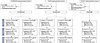 Figure 1
ACV01 trial profile. MMF, mycophenolate mofetil; MPA, mycophenolic acid; MTX, methotrexate; BCDT, B cell–depleting therapy. *Samples were excluded from the humoral response analyses if the participant experienced COVID-19, monoclonal antibody use, or a COVID-19 vaccination off-study between the baseline and week 4 visit. Some individuals were rolled over to Stage 2 of this study to assess a booster with a nonhomologous vaccine; Stage 2 results are not reported here.
Baseline demographics were similar between cohorts in the vaccinated population. Most participants were women (MMF/MPA, 91%; MTX, 96%; BCDT, 71%), with the majority identifying as White or Black and non-Hispanic or Latino (Table 1). The median age for all cohorts was 54 years. The MMF/MPA cohort consisted of 73% (n = 16) participants with systemic lupus erythematosus (SLE), 23% (n = 5) with systemic sclerosis (SSc), and 5% (n = 1) with pemphigus, while the MTX cohort consisted of 77% (n = 20) participants with rheumatoid arthritis (RA) and 23% (n = 6) with SLE (Table 1). Most participants in the BCDT cohort had multiple sclerosis (MS) (72%, n = 67) and RA (19%, n = 18). Only 1 (5%) MMF/MPA-treated and 7 (8%) BCDT-treated participants had a prior COVID-19 diagnosis as self-reported at screening. Results form the Roche Elecsys Anti-SARS-CoV-2 S assays done at screening demonstrated that few participants in the MMF/MPA- (n = 9; 41%) and MTX-treated (n = 1; 4%) cohorts exhibited a negative humoral response (<0.79 U/mL) to the initial COVID-19 vaccination, while the majority in the BCDT cohort (n = 69; 74%) had a negative humoral response (Table 1). Most participants taking MMF/MPA had SLE, with mean doses of 2375 ± 806.2 mg daily for MMF and 900 ± 763.7 mg daily for MPA. Most participants taking MTX had RA, with a mean dose of 17 ± 5.6 mg weekly (Supplemental Table 1). The majority of participants with MS were treated with ocrelizumab (n = 62), and a few were on ofatumumab (n = 3). Most of the participants receiving rituximab had RA (n = 18). The mean steroid dose was 4–6 mg daily across the participants receiving prednisone (SLE, n = 14; RA, n = 6; pemphigus, n = 1) (Supplemental Table 1).
A third mRNA vaccine dose increases the humoral response against Wuhan-Hu-1 RBD and spike proteins, regardless of withholding medications. Concentrations of antibodies against Wuhan-Hu-1 RBD were significantly higher at 4 weeks after the third mRNA vaccination compared with baseline in all cohorts (Figure 2, A–C. While increases in the humoral response did not differ statistically between participants who withheld their medication and those who did not in both the MMF/MPA (P = 0.79) and MTX cohorts (P = 0.16), there was a numerical trend toward higher geometric mean concentrations in participants who withheld therapy (Supplemental Table 2). At baseline, approximately half of the participants who received an mRNA vaccine were seropositive for Wuhan-Hu-1 RBD in MMF/MPA- (continue, n = 5 [50%]; withhold, n = 6 [60%]) and MTX-treated (continue, n = 7 [54%]; withhold, n = 7 [54%]) cohorts (Figure 2, D and E). A third mRNA vaccine dose increased seropositivity to 90% (n = 9) and 91% (n = 10) in participants who continued MMF/MPA or MTX, respectively, and 90% (n = 9) and 100% (n = 12) in those who withheld MMF/MPA or MTX, respectively; however, the increase in seropositivity from baseline to 4 weeks in each group was not statistically significant (Figure 2, D and E). Although a third mRNA vaccine dose increased the humoral response in the BCDT-treated cohort from 6% (n = 5) to 36% (n = 29; P < 0.0001) at 4 weeks, seropositivity was still lower compared with the MMF/MPA- and MTX-treated participants (Figure 2F). Similar humoral response increases were observed against the Wuhan-Hu-1 spike protein and Roche Elecsys anti-RBD and in participants who received the AD26.COV2.S vaccine (Supplemental Figures 2–4 and Supplemental Table 2). Humoral responses appeared sustained in the subgroups that remained in the study through 48 weeks, regardless of cohort and treatment withholding (Supplemental Figure 5).
 Figure 2
Anti-RBD concentrations and seropositivity in participants treated with mycophenolate mofetil/mycophenolic acid (MMF/MPA), methotrexate (MTX), or B cell–depleting therapy (BCDT) who received a third mRNA vaccine. Concentrations of anti-RBD antibodies at baseline and 4 weeks after the third vaccination in participants in the (A) MMF/MPA, (B) MTX, or (C) BCDT cohorts. Box-and-whisker plots display the interquartile range (IQR), with the line within the box indicating median values. Geometric mean values are represented by triangles and connected across study visits. Whiskers extend to 1.5 × IQR, with circles indicating outliers. The dashed line represents the positivity cutoff, and numbers indicate the number of participants analyzed at each time point. The Wilcoxon signed-rank test was used to assess the change in antibody concentration from baseline to week 4 within each group. There was no significant difference in concentrations between those who continued or withheld immunosuppressants, as determined by van Elteren’s test. Seropositivity of anti-RBD antibodies at baseline and 4 weeks after the third vaccination in participants in the (D) MMF/MPA, (E) MTX, or (F) BCDT cohorts. Statistical significance was determined using McNemar’s test. **P < 0.01; ***P < 0.001; ****P < 0.0001.
Antibody response and neutralization across SARS-CoV-2 variants. Next, we examined the effects of a third mRNA vaccine dose on anti-spike antibody concentrations across SARS-CoV-2 variants. Across all cohorts, concentrations of Wuhan-Hu-1 anti-spike antibodies were comparable to those against the Alpha, Beta, and Delta strains (Supplemental Figure 6, A and B, and Supplemental Table 3). Consistent with the general population (17), participants exhibited lower humoral responses against Omicron spike variants compared with the Wuhan-Hu-1 spike at baseline and 4 weeks after the third mRNA vaccination (Supplemental Figure 6, C and D, and Supplemental Table 3). Anti-RBD responses to the Wuhan-Hu-1 variant at week 4 after the third mRNA vaccination correlated strongly with Wuhan-Hu-1 live virus neutralization titers (r = 0.86; P < 0.0001) (Supplemental Figure 7), and fold inhibition of ACE2 binding was similar for the Wuhan-Hu-1, Alpha, Beta, and Delta SARS-CoV-2 strains (Supplemental Figure 8A). However, ACE2 neutralization was significantly reduced against Omicron subvariants BA.1, BA.2, BA.2.12.1, BA.2.75, and BA.5 across all cohorts (Supplemental Figure 8B). Neutralizing activity showed numerical trends toward higher ACE2 fold inhibition in participants who withheld therapy, with the most pronounced differences observed in the MTX cohort, while BCDT patients demonstrated uniformly low neutralizing activity regardless of variant (Supplemental Table 4).
Disease type and baseline CD19+ cell count are associated with subsequent anti-RBD response. In MMF/MPA- or MTX-treated participants who received an mRNA vaccine, individuals with RA had the highest anti-RBD concentrations at week 4 after vaccination compared with those with SLE, SSc, and pemphigus (Supplemental Table 5). In BCDT-treated participants who received an mRNA vaccine, detectable baseline B cell counts, but not the time from the last BCDT dose, was associated with higher anti-RBD concentrations (Supplemental Table 5). Week 4 humoral responses were not associated with the type of mRNA vaccine, medication withholding, sex, age, time since the initial COVID-19 vaccination, prior COVID-19, prednisone use, or type of medication in either cohort.
COVID-19 is mild following a third mRNA vaccine dose. Consistent with a low frequency of self-reported infection before additional vaccination (Table 1), seropositivity and titers of antibodies against Wuhan-Hu-1 nucleocapsid (N) were low at baseline and did not increase 4 weeks after the third mRNA vaccination in participants who received an mRNA vaccine (Supplemental Figure 9). COVID-19 occurred at a median of 62–110 days, with infections occurring in 33% of participants during study participation, with similar frequencies across treatment cohorts (Table 2 and Supplemental Figure 10). All infections (n = 7) were deemed mild in the MMF/MPA cohort, but most (6 of 10) were moderate in the MTX cohort (Table 2). Approximately half of the infections were mild in the BCDT cohort. Three hospitalizations occurred (1 in the withhold MTX- and 2 in the BCDT-treated group; Table 2), and none were life-threatening or fatal (grade 4 or 5). Infections were observed across the diseases studied and IS therapies (Table 2).
 Table 2
Frequency, severity, and timing of COVID-19 throughout the study period (up to 48 weeks after vaccination) in participants who received an mRNA vaccine
A third mRNA vaccine dose is safe in individuals with ADs and does not affect disease activity. Within 7 days of additional vaccination, local and systemic reactions were predominantly mild to moderate across all cohorts and vaccines (Supplemental Figure 11). Throughout the study, 39%–46% of participants who received an mRNA vaccine reported AEs, 6 of which (all BCDT-treated) were related to the vaccine (Supplemental Table 6). Furthermore, most AEs were grade 1 or 2, with 1 participant (8%) in the withhold MTX cohort and 9 participants (11%) in the BCDT-treated cohort experiencing an SAE, of which all were grade 3, and only 1 was categorized as vaccine-related (Supplemental Table 6). No grade 4 or grade 5 AEs occurred. In the BCDT-treated cohort, 1 (1%) participant experienced a medically attended AE (MAAE), and 7 participants (8%) experienced a new-onset chronic medical condition (NOCMC), none of which was a new autoimmune diagnosis (Supplemental Table 6). No participants experienced myocarditis or pericarditis during the study period (Supplemental Table 6). Participants who received the AD26.COV2.S vaccine did not experience vaccine-related AEs (Supplemental Table 7).
In all cohorts, the Physician’s Global Assessment and Patient’s Global Assessment of disease activity were similar at baseline and 4 weeks after the third mRNA vaccine dose, regardless of whether medications were withheld (Figure 3). Similarly, most participants had no change based on the Clinical Global Impression of Change and Patient Global Impression of Change scales 4 weeks after the third mRNA vaccination, with some participants who withheld MMF/MPA or MTX reporting that their symptoms improved (Supplemental Figure 12). Flares at 4 weeks occurred in 5 (20%) of participants with SLE, all of which were considered mild/moderate, and 2 (6%) of participants with RA (Supplemental Table 8). For other disease types, severe flares were rare, occurring in only 1 participant with pemphigus (MMF/MPA withheld) (Supplemental Table 8). Importantly, none of the reported flares across any disease were deemed clinically meaningful, as they did not necessitate changes in medication.
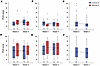 Figure 3
Disease activity in the vaccinated population that received a third mRNA vaccine. Changes in disease activity as measured by the (A–C) Physician Global Assessment (PGA) and (D–F) Patient Global Assessment (PtGA) at baseline and week 4 after booster in participants in the (A and D) mycophenolate mofetil/mycophenolic acid (MMF/MPA), (B and E) methotrexate (MTX), or (C and F) B cell–depleting therapy (BCDT) cohorts. Box-and-whisker plots display the interquartile range (IQR), with the line within the box indicating median values. Geometric mean values are represented by triangles and connected across study visits. Whiskers extend to 1.5 × IQR, with circles indicating outliers. The dashed line represents the positivity cutoff, and numbers indicate the number of participants analyzed at each time point. Change in score from baseline to week 4 did not significantly differ, as determined by the Wilcoxon signed-rank test.


