
Hepatology
Abstract
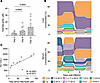
Antiviral immunity profoundly impacts host metabolism, which can, in turn, modulate immune responses and influence disease pathology. The liver orchestrates systemic bile acid (BA) metabolism, a pathway disrupted in chronic liver diseases such as viral hepatitis. BAs are increasingly recognized for their immunomodulatory properties. Thus, improved understanding of the interplay between immunity and BA metabolism may reveal novel therapeutic avenues. Using lymphocytic choriomeningitis virus (LCMV) as a model, we investigated the interplay between chronic virus infection, BA metabolism, and immunity. Chronic LCMV infection increased BA levels and shifted circulating and liver BA composition toward host-derived, conjugated BAs. Hepatic BA transport and synthesis genes were broadly downregulated, in part depending on CD8+ T cells. Pharmacological inhibition of the main hepatic transporter of conjugated BAs, NTCP (Slc10a1), increased hepatic damage, while combined genetic disruption of the BA transporters Slco1a1, Slco1a4, and Slco1b2, responsible for the hepatic reuptake of unconjugated BA, reduced liver pathology and impaired antiviral CD8+ T cell responses. These findings reveal a reciprocal interplay between BA metabolism and CD8+ T cells, expanding our understanding of adaptive immunity in viral hepatitis. They also highlight how immunometabolic changes in liver disease may affect adaptive immune responses against infections.
Authors
Felix Clemens Richter, Zsofia Keszei, Csilla Viczenczova, Maximilian Baumgartner, Henrique G. Colaço, Magdalena Siller, Lisa Holnsteiner, Hatoon Baazim, Anna Hofmann, Aubrey Burrett, Anna Schönbichler, Lukas Endler, Joel Xu En Wong, Laura Antonio-Herrera, Oleksandr Petrenko, Fabian Amman, Jakob-Wendelin Genger, Claudia D. Fuchs, Hubert Scharnagl, Hanns-Ulrich Marschall, Thomas Reiberger, Karl S. Lang, Clarissa Campbell, Michael Trauner, Andreas Bergthaler
Abstract
Aging drives systemic metabolic dysfunction (SMD) and increases the risk of chronic illnesses such as metabolic dysfunction–associated steatotic liver disease (MASLD) and chronic kidney disease (CKD). However, mechanisms that connect aging to multi-organ deterioration are poorly understood. In this study, we identify hepatocyte Hedgehog signaling as a central regulator of ferroptosis. Using mice with hepatocyte-specific deletion of Smoothened (Smo), a key Hedgehog pathway component, we show that loss of hepatocyte Hedgehog signaling induces ferroptotic stress, lipid peroxidation, and cellular senescence. These changes were sufficient to cause spontaneous MASLD and to trigger secondary kidney injury. Smo deletion also disrupted systemic iron balance, increased hepatocyte production of the angiotensinogen, and reduced liver perfusion. Similar responses (iron dysregulation, vascular dysfunction, and reduced Hedgehog signaling) were observed in patients with MASLD and advanced fibrosis. Inhibition of ferroptosis with ferrostatin-1 reversed hepatocyte senescence, restored hepatic blood flow, and improved both liver and kidney injury in Smo-deficient mice. Overall, these findings show that hepatocyte Hedgehog signaling preserves liver homeostasis by restraining ferroptotic stress and coordinating iron-dependent vasoactive pathways. The results reveal an unrecognized aging-related communication axis between liver and kidney and identify the Hedgehog–ferroptosis pathway as a promising therapeutic target for age-associated metabolic diseases.
Authors
Ji Hye Jun, Rajesh K. Dutta, Soon-Woo Cho, Rui Yao, Seh Hoon Oh, Zhi Li, Kuo Du, David S. Umbaugh, Nanchao Wang, Yirui Xu, Jingting Li, Lingyan Shi, Jen-Tsan Chi, Junjie Yao, Anna Mae Diehl
Abstract
Authors
Sarah Platt, Norhan B.B. Mohammed, Joseph Brancale, Caroline S.C. Tippett, Kevin Seo, Silvia Vilarinho
Abstract
In metabolic dysfunction-associated steatohepatitis (MASH), liver sinusoidal endothelial cells (LSECs) acquire a proinflammatory phenotype termed lipotoxic endotheliopathy. We previously identified glycogen synthase kinase 3β (GSK3β) as a central signaling hub in LSECs during MASH. To elucidate the molecular mechanisms and functional outcome of lipotoxicity-induced GSK3β activation in LSECs, we utilized endothelial cell-specific Gsk3β knockout (Gsk3β△End) mice fed MASH-inducing diets. Endothelial Gsk3β deletion significantly reduced markers of lipotoxic endotheliopathy, including adhesion molecules and chemokines, alongside liver injury, inflammation, and fibrosis. Immune profiling via flow cytometry and mass cytometry by time of flight (CyTOF) identified decreased hepatic infiltration of proinflammatory myeloid populations, particularly mature dendritic cells (DCs) in Gsk3β△End mice. In a co-culture system, GSK3β in lipotoxic LSECs promoted DCs maturation. Mechanistically, GSK3 inhibition restored lipotoxicity-induced alterations in LSEC mitochondrial morphology and respiration by regulating AMP-activated protein kinase and dynamin-related protein 1. This rescue suppressed chemokines and adhesion molecules expression, thereby limiting immune cell recruitment. Collectively, under lipotoxic stress, GSK3β amplifies mitochondrial dysfunction and inflammatory signaling in LSECs, enhancing myeloid cell homing and DC maturation. Targeting LSEC GSK3β may therefore represent a promising therapeutic strategy to mitigate LSEC driven fibro inflammatory response in human MASH.
Authors
Akitoshi Sano, Qianqian Guo, Khaled Warasnhe, Chady Meroueh, Nantawat Satthawiwat, Asma Hamdi, Ghefar Hmaydoosh, Xin Dai, Usman Yaqoob, Kevin D. Pavelko, Charlene Miciano, Tatiana Kisseleva, Zeba Firdaus, Patrick P. Starlinger, David Pereyra, Enis Kostallari, Petra Hirsova, Davide Povero, Samar H. Ibrahim
Abstract
Lipotoxicity associated with metabolic dysfunction-associated steatotic liver disease (MASLD) causes dysregulated fatty acid (FA) and glucose metabolism, inducing cellular energy imbalance, oxidative stress (OS), and hepatocellular injury. Interleukin (IL)-10 is altered in MASLD, including increased IL-10 transcripts in peripheral immune cells; however, its role in hepatic responses to lipotoxic stress remains unclear. We evaluated whether IL-10 treatment attenuates lipotoxic injury and MASLD-related phenotypes in vivo and in vitro to reveal MASLD treatment strategies. As MASLD models, in vivo high-fat diet mice and in vitro normal human hepatocytes under palmitic acid exposure, with confirmatory experiments in HepG2 cells, were used and treated with IL-10. We assessed FA and glucose metabolism, OS, and apoptosis with histological changes and mechanisms related to hepatocellular viability/metabolic activity and stress-responsive survival signaling in vitro. IL-10 modulated FA synthesis and β-oxidation, reducing lipid accumulation, and altered glucose metabolic pathways, consistent with improved glucose handling under lipotoxic stress. Furthermore, IL-10 reduced OS and cell death markers while enhancing antioxidant responses, consistent with hepatocellular protection. These data suggest that IL-10 attenuates lipotoxic injury by modulating hepatic response pathways, thereby improving MASLD-related phenotypes, and supports the potential of IL-10 as a therapeutic target for MASLD.
Authors
Akira Kado, Kazuya Okushin, Takeya Tsutsumi, Toshiyuki Kishida, Kazuhiko Ikeuchi, Hiroshi Yotsuyanagi, Kyoji Moriya, Kazuhiko Koike, Mitsuhiro Fujishiro

Abstract
Liver macrophages are central in maintaining hepatic homeostasis and mediating immune responses during liver injury, including fibrosis. Macrophages may have proinflammatory or antiinflammatory properties, but which properties influence fibrosis remains unclear. To explore the role of macrophages in liver fibrosis, we performed single-cell RNA-seq in a mouse model of liver injury and found that macrophage diversity was increased. Marco was among the most significantly upregulated genes, and a population of Marcohi macrophages increased with injury and spatially segregated to nonfibrotic areas. The macrophage receptor with collagenous structure (MARCO) protein is a scavenger receptor expressed by specific subsets of macrophages, and its role in liver fibrosis is unclear. In vitro induction of Marco in bone marrow–derived macrophages decreased proinflammatory gene expression, increased antiinflammatory and antifibrotic gene expression, and enhanced phagocytosis, indicating a restorative phenotype. Adoptive transfer of MARCO+ macrophages in a mouse model of liver fibrosis reduced the expression of extracellular matrix–associated (ECM-associated) genes in hepatic stellate cells (HSCs) and reduced collagen deposition, which did not occur with the transfer of MARCO– macrophages. Therefore, MARCO+ macrophages have a tissue restorative role in the liver and attenuate fibrogenesis through interaction with HSCs, thereby providing a potential therapeutic pathway for liver fibrosis.
Authors
Sofia Jerez, Shawna A. Cooper, Usman Yaqoob, Maleeha F. Kalaiger, Abid A. Anwar, Mandy Wong, Bushra Arif, Luke C. Doskey, Maria Hernandez-Tejero, William A. Sherman, Ruben De Boeck, Ying Li, Moira B. Hilscher, Enis Kostallari, Nidhi Jalan-Sakrikar, Sheng Cao, Vijay H. Shah
Abstract
BACKGROUND In chronic alcohol consumers, immune cells may drive the progression from mild liver injury to more severe alcohol-associated liver diseases (ALD), including alcohol-associated hepatitis (AAH) and cancer. Liver macrophages, both resident and infiltrating, express Allograft Inflammatory Factor 1 (AIF1), which is upregulated during inflammation and enhances immune activation. METHODS Using serum and urine samples from 868 individuals classified as having alcohol use disorder or not based on DSM-IV/V criteria, along with serum and liver biopsy tissue from a second cohort of 27 patients diagnosed with AAH, we evaluated the impact of the AIF1 promoter single nucleotide polymorphism (SNP) (rs3132451; C/C, C/G, G/G) on liver function markers and immune cell profiles. RESULTS AIF1 transcript levels were genotype-dependent: C/C homozygotes expressed 5.2% of the levels observed in G/G individuals, while C/G heterozygotes expressed 46%. Unlike most SNPs associated with harmful effects, the G/G genotype is highly prevalent, present in ~70% of patients. Among chronic alcohol users, G/G individuals exhibited elevated markers of liver injury and a more than threefold increase in hepatic immune cells, including infiltrating AIF1⁺ macrophages and neutrophils. Despite similar durations of alcohol misuse, G/G individuals had higher Model for End-Stage Liver Disease scores compared to C/G individuals, indicating a significantly greater 90-day mortality risk. Notably, some immune abnormalities, such as elevated neutrophils, persisted in G/G males even after alcohol abstinence. CONCLUSION These findings suggest that functional genetic variation in AIF1 may contribute to the severity and persistence of ALD. TRIAL REGISTRATION ClinicalTrials.gov NCT02231840. FUNDING Research support was provided from the National Institute on Alcohol Abuse and Alcoholism (NIAAA) of the National Institutes of Health (NIH) under grant 1ZIAAA000440-02 and R24AA025017.
Authors
Priscila C. Antonello, Colin A. Hodgkinson, Dechun Feng, Cheryl Marietta, Baskar Mohana Krishnan, Maria A. Parra, Zhaoli Sun, Bin Gao, David Goldman, Michelle W. Antoine
Abstract
Metabolic dysfunction-associated steatotic liver disease (MASLD) is a global health concern with limited interventions. While the role of gut bacteria in MASLD has been extensively studied, the contribution of gut fungi remains largely unexplored. This study investigates the impact of fungal dysbiosis and the role of CARD9, a key adaptor protein in fungal sensing on gut-liver axis dysfunction in MASLD. Patients with advanced liver fibrosis exhibited distinct mycobiota profiles. Using a CARD9-deficient mouse model subjected to high-fat high-glucose/fructose feeding, we observed exacerbated liver injury and fibrosis accompanied by fungal dysbiosis, paralleling our findings in human patients. Beyond its established expression in myeloid cells, CARD9 was also detected in intestinal enterocytes where its expression was diminished under metabolic stress. Intestinal organoids with CARD9 inhibition had reduced expression of antimicrobial Reg3g, the tight junction protein ZO-1, and the antifungal enteroendocrine hormone PYY. These findings suggest that CARD9 maintains gut barrier integrity, preventing microbial translocation and subsequent liver injury and fibrosis. Our results provide new insights into the interplay between fungal dysbiosis, gut barrier dysfunction, and MASLD, and identify CARD9 as a key protein within this axis.
Authors
Vijay Pandyarajan, So Yeon Kim, Takashi Tsuchiya, Selena Liu, Sadam H. Bhat, Jieun Kim, David M. Underhill, Mazen Noureddin, Shelly C. Lu, Ekihiro Seki
Abstract
Fontan-associated liver disease (FALD) is a frequent complication in single ventricle patients palliated with the Fontan operation. FALD severity can impact clinical decisions; however, the pathophysiology of FALD progression is unknown. Single-cell spatial transcriptomics (ST) was performed on liver explant tissue sections from FALD patients with early (n=1) and advanced fibrosis (n=1) using CosMxTM Spatial Molecular Imaging with in-situ hybridization of 6000 genes. Immunofluorescence for liver zonation and cellular stress markers was performed to confirm protein expression based on ST analysis in additional FALD tissues (n=18). Unbiased clustering yielded 12 liver cell types, comprising six subtypes of hepatocytes. FALD with advanced fibrosis demonstrated expansion of mid-zonal hepatocytes, accompanied by loss of zonal markers characteristic of canonical pericentral and periportal hepatocytes. A subset of hepatocytes in advanced FALD demonstrated increased cellular stress and a redundant zonal phenotype, which we have termed zonally ambiguous and stressed hepatocytes. CellChat analysis revealed that ectopic WNT2 signaling is likely driving disrupted hepatocyte zonation. To corroborate these bioinformatic findings, we performed immunofluorescence staining of FALD specimens, which confirmed a disruption of liver zonation, and a significant increase in heat shock protein 70 (HSP70). Lastly, HSP70 expression strongly correlated with the Congestive Hepatic Fibrosis (CHF) score. Thus, single-cell ST has identified a unique population of hepatocytes with features of cellular stress and redundant zonal gene expression specific to advanced FALD. Further studies on hepatocyte metabolic function in Fontan patients will lead to a greater understanding of FALD development and progression during chronic maladaptation.
Authors
Brandon M. Lehrich, Jordann N. Lewis, Vik Meadows, Lori Schmitt, Mylarappa B. Ningappa, Jia-Jun Liu, Silvia Liu, Catherine K. Gestrich, Victor O. Morell, Rakesh Sindhi, Satdarshan P. Monga, Anita Saraf

Abstract
Mitochondrial retrograde signaling plays crucial roles in maintaining metabolic homeostasis via regulating genome modification and oxidative responsive gene expression. In this study, we identified GCN5L1, a protein localized in both mitochondria and cytoplasm, and demonstrated its specific translocation from mitochondria to cytoplasm during lipid overload and high-fat diet feeding. Using transcriptome and proteome analyses, we identified that cytoplasmic GCN5L1 binds to and promotes the acetylation of PPARγ at lysine 289 (K289). This acetylation protected PPARγ from ubiquitination-mediated degradation by proteasome. GCN5L1 translocation enhanced protein stability of PPARγ and subsequently promoted lipid accumulation in both cultured cells and murine models. Our study further reveals that PPARγ-K289 mutation reduces the ubiquitination of PPARγ and exacerbates liver steatosis in mice. These findings unveil a mitochondrial retrograde signaling during lipid overload, which regulates the crucial lipogenic transcriptional factor. This discovery elucidates an unrecognized mitochondrial function and mechanism underlying hepatic lipid synthesis.
Authors
Jiaqi Zhang, Danni Wang, Qiqi Tang, Yaoshu Yue, Xin Lu, Xiuya Hu, Yitong Han, Jiarun Chen, Zihan Wang, Xue Bai, Kai Zhang, Yongsheng Chang, Longhao Sun, Lu Zhu, Lingdi Wang
No posts were found with this tag.


