

Abstract
Heat stroke (HS) is the most severe heat-related emergency, and its pathophysiology remains largely unknown, especially for exertional HS (EHS), which affects younger populations, athletes, and manual workers. Herein, we performed single-cell-transcriptomics, T cell receptor sequencing, and flow cytometry of PBMCs from 9 healthy control participants, 9 patients with heat exhaustion, and 9 patients with EHS to explore complex immunological responses associated with HS pathobiology. We showcased that granzyme-positive T cells and CD56dim NK cells with high cytotoxicity features and IL-1B+NLRP3+ monocytes with high inflammation and pyroptosis scores were enriched in HS, while the CD161+ T cells with innate immune-like, low cytotoxicity, and clonal expansion features were reduced in HS. Importantly, elevated granzyme-positive T and NK cells might interact with monocytes to induce pyroptosis of hepatic and renal cells and target organ injuries, and blocking the NLRP3 inflammasome pathway prior to the induction could alleviate organ injury in HS. This study offers deeper insights into the pathogenesis of HS, supporting the development of optimal treatment strategies.
Authors
Min Zhang, Bin Wang, Ding Sun, Xizhao Chen, Yena Zhou, Jin Yao, Liwen Du, Zehao Zhang, Hao Li, Zeyu Qu, Lu Chen, Qing Luo, Jie Zhang, Xinye Jin, Xiaowei Cheng, Jingxue Niu, Qinrui Xing, Xuezeng Tan, Tao Wang, Jie Liu, Lei Li, Qing Song, Xiangmei Chen, Yizhi Chen

Abstract
Modulation of miRNA expression in glomerular cells is associated with renal disease. Here, we investigated the role of miR-93-5p in mitigating glomerular damage in Alport syndrome and whether the disease-modifying activity of extracellular vesicles from human amniotic fluid stem cells (hAFSC-EVs) is mediated by their miR-93-5p cargo. We identified downregulation of miR-93-5p specifically in glomerular endothelial cells in Alport syndrome along disease progression. Silencing of miR-93-5p in hAFSC-EVs changed the transcriptomic and proteomic profile, regulating EV disease-modifying activity. Compared with naive hAFSC-EVs, silenced hAFSC-EVs did not rescue glomerular endothelial function in vitro and did not restore kidney function in vivo. We established that hAFSC-EVs regulate VEGFR1 and VEGFR2 signaling by miR-93-5p cargo transfer, highlighting that miR-93-5p can restore glomerular endothelial cell biology. Spatial transcriptomics analysis of hAFSC-EV–injected kidneys showed that these EVs can reverse pathways altered during disease progression by stimulating proregenerative processes, specifically in the glomerulus, by regulating miR-93-5p targets. Alteration of glomerular endothelial cell transcriptomics and miR-93-5p targets was also confirmed in biopsies of patients with Alport syndrome using spatial molecular imaging. We demonstrated the critical role of miR-93-5p in glomerular endothelial cells and the capability of hAFSC-EVs to regulate miR-93-5p and its targets in Alport syndrome.
Authors
Charmi Dedhia, Valentina Villani, Xiaogang Hou, Paolo Neviani, Geremy Clair, Mohammadreza Kasravi, Cristina Grange, Paolo Cravedi, Paola Aguiari, Velia Alcala, Giuseppe Orlando, Xue-Ying Song, Jonathan E. Zuckerman, Roger E. De Filippo, Stefano Da Sacco, Sargis Sedrakyan, Benedetta Bussolati, Laura Perin

Abstract
Thyroid hormone signaling is an essential regulator of skeletal muscle development, function, and metabolism, yet the specific signaling pathways required for muscle regeneration are not yet defined. We used scRNA-seq and the FUCCI (fluorescent ubiquitination-based cell cycle indicator) reporter mouse model to examine how hypothyroidism impacts repair processes after cardiotoxin-induced injury in mice. During regeneration, and up to 2 months after injury, hypothyroid muscles displayed smaller myofibers and a shift to slower oxidative fiber types. scRNA-seq of tibialis anterior muscle during regeneration revealed that hypothyroidism reduced myogenic-lineage diversity. Cell cycle analysis confirmed delayed cell cycle progression at 5 and 14 days after injury, with skeletal muscle stem cells stalled at the G1/S transition, hindering differentiation. Transcriptomic data revealed altered nonmyogenic dynamics, including elevated activated fibro-adipogenic progenitors (FAPs) early in repair and persistent proinflammatory macrophages. Integrative regulon and ligand-receptor analysis further demonstrated that triiodothyronine acted through dual modes: a direct transcriptional control of myogenic cell cycle and oxidative programs and an indirect paracrine remodeling mediated by FAP and immune signaling networks. This study identified what we believe to be novel effects of hypothyroidism on myogenic heterogeneity and impaired tissue repair, offering insights into muscle-wasting mechanisms relevant to hypothyroidism-associated myopathy and sarcopenia.
Authors
Paola Aguiari, Valentina Villani, Yan-Yun Liu, Gianni Carraro, Gregory A. Brent, Laura Perin, Anna Milanesi

Abstract
Mutations in the cystic fibrosis transmembrane conductance regulator (CFTR) gene, which encodes a cAMP-activated chloride channel, cause cystic fibrosis (CF), the most common life-threatening inherited disorder among White individuals. Current CFTR correctors and potentiators, such as elexacaftor-tezacaftor-ivacaftor (ETI), only partially restore the function of the most prevalent mutant, F508del-CFTR, resulting in residual disease in people with CF. Here, we demonstrate that a mimetic peptide targeting the A-kinase–anchoring protein (AKAP) function of PI3Kγ (PI3Kγ MP), and driving localized cAMP elevation, enhances F508del-CFTR membrane localization, maximizing ETI efficacy in restoring chloride secretion. Mechanistically, PI3Kγ MP activates an AKAP-Lbc–anchored pool of PKD1, a known regulator of membrane trafficking. Consistently, PKD1 inhibition prevents PI3Kγ MP from enhancing the membrane expression of ETI-corrected F508del-CFTR. Overall, our findings reveal a regulatory pathway controlling CFTR membrane abundance via the AKAP function of PI3Kγ, which can be targeted to overcome the limitations of current CFTR modulator therapies.
Authors
Alessandra Murabito, Marco Mergiotti, Valeria Capurro, Alessia Loffreda, Mingchuan Li, Paola Peretto, Kai Ren, Andrea Raimondi, Carlo Tacchetti, Dario Diviani, Nicoletta Pedemonte, Emilio Hirsch, Alessandra Ghigo

Abstract
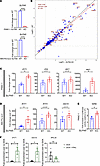
Liver macrophages are central in maintaining hepatic homeostasis and mediating immune responses during liver injury, including fibrosis. Macrophages may have proinflammatory or antiinflammatory properties, but which properties influence fibrosis remains unclear. To explore the role of macrophages in liver fibrosis, we performed single-cell RNA-seq in a mouse model of liver injury and found that macrophage diversity was increased. Marco was among the most significantly upregulated genes, and a population of Marcohi macrophages increased with injury and spatially segregated to nonfibrotic areas. The macrophage receptor with collagenous structure (MARCO) protein is a scavenger receptor expressed by specific subsets of macrophages, and its role in liver fibrosis is unclear. In vitro induction of Marco in bone marrow–derived macrophages decreased proinflammatory gene expression, increased antiinflammatory and antifibrotic gene expression, and enhanced phagocytosis, indicating a restorative phenotype. Adoptive transfer of MARCO+ macrophages in a mouse model of liver fibrosis reduced the expression of extracellular matrix–associated (ECM-associated) genes in hepatic stellate cells (HSCs) and reduced collagen deposition, which did not occur with the transfer of MARCO– macrophages. Therefore, MARCO+ macrophages have a tissue restorative role in the liver and attenuate fibrogenesis through interaction with HSCs, thereby providing a potential therapeutic pathway for liver fibrosis.
Authors
Sofia Jerez, Shawna A. Cooper, Usman Yaqoob, Maleeha F. Kalaiger, Abid A. Anwar, Mandy Wong, Bushra Arif, Luke C. Doskey, Maria Hernandez-Tejero, William A. Sherman, Ruben De Boeck, Ying Li, Moira B. Hilscher, Enis Kostallari, Nidhi Jalan-Sakrikar, Sheng Cao, Vijay H. Shah
Abstract
We provide evidence that human and murine Schlafen 5 (SLFN5) proteins are modulators of type I IFN responses and the immune response in pancreatic ductal adenocarcinoma (PDAC). Blocking expression of Slfn5 in PDAC enhanced IFN responses, suppressed tumor growth, and prolonged survival in immunocompetent mice. Notably, immunophenotypic analysis revealed a reduction in tumor-associated macrophages alongside an increase in tumor-infiltrating effector cells in tumors over time. These findings suggest SLFN5 acts as an intracellular immune checkpoint and identify it as a unique therapeutic target for the development of therapies for PDAC and possibly other malignancies.
Authors
Mariafausta Fischietti, Markella Zannikou, Elspeth M. Beauchamp, Diana Saleiro, Aneta H. Baran, Briana N. Hryhorysak, Jamie N. Guillen Magaña, Emely Lopez Fajardo, Gavin T. Blyth, Brandyn A. Castro, Jason M. Miska, Catalina Lee-Chang, Priyam Patel, Elizabeth T. Bartom, Masha Kocherginsky, Frank Eckerdt, Leonidas C. Platanias

Abstract
The survival of patients with acute myelogenous leukemia (AML) carrying mutations in TP53 is dismal. We report the results of a detailed characterization of responses to treatment ex vivo with the MDM2 inhibitor MI219, a p53 protein stabilizer, in AML blasts from 165 patients focusing analyses on patients with WT TP53. In total 33% of AML were absolute resistant to MDM2 inhibitor–induced apoptosis, of which 45% carried TP53 mutation and 55% were TP53 WT. We conducted array-based expression profiling of 10 resistant and ten sensitive AML cases with WT TP53 status, respectively, at baseline and after 2 hours and 6 hours of MDM2 inhibitor treatment. While sensitive cases showed the induction of classical TP53 response genes, this was absent or attenuated in resistant cases. In addition, the sensitive and resistant AML samples at baseline profoundly differed in the expression of inflammation-related and mitochondrial genes. No patient with TP53 mutated AML survived. The 4-year survival of AML with defective MDM2 inhibitor–induced TP53-mediated apoptosis despite WT TP53 was dismal, at 19% when NPM1 was comutated and 6% when NPM1 was WT. In summary, we identified prevalent multicausal defects in TP53-mediated apoptosis in AML resulting in extremely poor patient survival.
Authors
Josephine Dubois, Anthony Palmer, Darren King, Mohamed Rizk, Karan Bedi, Kerby A. Shedden, Sami N. Malek

Abstract
Psoriasis is a chronic inflammatory dermatosis characterized by pathological keratinocyte hyperproliferation and dysregulated immune activation. While ubiquitin-specific peptidase 16 (USP16) has been implicated in modulating multiple cellular signaling pathways, its functional role in psoriatic pathogenesis remains poorly understood. Our investigation revealed pronounced upregulation of USP16 expression in psoriatic epidermis compared with normal controls. Keratinocyte-specific USP16 knockdown demonstrated remarkable therapeutic efficacy, significantly ameliorating characteristic psoriatic phenotypes including epidermal hyperplasia and inflammatory infiltration. RNA-seq analysis showed that USP16 has substantial effects on cell cycle transition and keratinocytes proliferation. Through KEGG analysis, it was found that USP16 primarily regulates the NLRP3 signaling pathway, leading to enhanced cell proliferation and inflammation. Mechanically, USP16 directly binds to the NLRP3 protein to eliminate K48 ubiquitination modification, enhancing the stability of the NLRP3 protein, activating inflammasome activity. Further studies showed that the therapeutic effects of reducing USP16 on psoriasis progression were counteracted by an NLRP3 activator and keratinocyte-specific NLRP3 overexpression adenovirus. Collectively, these results shed light on how USP16 promotes NLRP3 signaling in keratinocytes, exacerbating psoriasis development. This positive regulation highlights the potential of USP16 as a therapeutic target for psoriasis.
Authors
Nan Wang, Fangqian Guan, Yifan Lin, Bohao Sun, Jindan Dai, Xiejun Xu, Weibo Tang, Yanhua Ren, Xuliang Huang, Wenjie Gao, Xixi Chen, Litai Jin, Weitao Cong, Zhongxin Zhu
Abstract
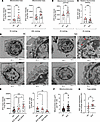
Systemic lupus erythematosus (SLE) is a chronic autoimmune disease characterized by immune dysregulation and widespread inflammation. NK cells display marked functional impairment in SLE, including defective cytotoxicity and cytokine production, but the underlying mechanisms remain poorly defined. Here, we show that mitochondrial dysfunction and impaired mitophagy are key contributors to NK cell abnormalities in SLE. Using complementary structural, metabolic, and proteomic analyses, we found that SLE NK cells accumulate enlarged and dysfunctional mitochondria, exhibit impaired lysosomal acidification, and release mitochondrial DNA into the cytosol — features consistent with defective mitochondrial quality control. Transcriptional and proteomic profiling revealed downregulation of key mitophagy-related genes and pathways. These abnormalities correlated with reduced NK cell degranulation and cytokine production. We then tested whether enhancing mitochondrial quality control could restore NK cell function. The mitophagy activator Urolithin A improved mitochondrial and lysosomal parameters and rescued NK cell effector responses in vitro. Hydroxychloroquine partially restored mitochondrial recycling and reduced cytosolic mtDNA. These findings suggest that defective mitophagy and mitochondrial dysfunction are major contributors to NK cell impairment in SLE and that targeting mitochondrial quality control may represent a promising strategy for restoring immune balance in this disease.
Authors
Natalia Fluder, Morgane Humbel, Emeline Recazens, Alexis A. Jourdain, Camillo Ribi, George Tsokos, Denis Comte

Abstract
Lung development relies on diverse cell intrinsic and extrinsic mechanisms to ensure proper cellular differentiation and compartmentalization. In addition, it requires precise integration of multiple signaling pathways to temporally regulate morphogenesis and appropriate cell specification. To accomplish this, organogenesis relies on epigenetic and transcriptional regulators to promote cell fate and inhibit alternative cell fates. Using genetic mouse and human embryonic stem cell (hESC) differentiation models, tissue explants, and single-cell transcriptomic analysis, we demonstrated that Bromodomain Containing Protein 4 (BRD4) is required for mammalian lung morphogenesis and cell fate. Endodermal deletion of BRD4 impaired epithelial-mesenchymal crosstalk, leading to disrupted proximal-distal patterning and branching morphogenesis. Moreover, temporal deletion of BRD4 revealed developmental stage–specific defects in airway and alveolar epithelial cell specification with a predominant role in proximal airway cell fate. Similarly, BRD4 promoted lung endodermal cell differentiation into airway lineages in a hESC-derived lung organoid model. Together, these data demonstrate that BRD4 orchestrates early lung morphogenesis and separately regulates cell specification, indicating a multifunctional and evolutionarily conserved role for BRD4 in mammalian lung development.
Authors
Hongbo Wen, Derek C. Liberti, Prashant Chandrasekaran, Shahana Parveen, Kwaku K. Quansah, Mijeong Kim, Ana N. Lange, Abigail T. Marquis, Sylvia N. Michki, Annabelle Jin, MinQi Lu, Ayomikun A. Fasan, Sriyaa Suresh, Shawyon P. Shirazi, Lisa R. Young, Jennifer M.S. Sucre, Maria C. Basil, Rajan Jain, David B. Frank
No posts were found with this tag.


