
Research ArticleImmunologyInflammationMetabolism
Open Access |  10.1172/jci.insight.185914
A shift in PKM2 oligomeric state instructs adipocyte inflammatory potential
Michelle S.M.A. Damen,1,2 Pablo C. Alarcon,1,2,3,4 Calvin C. Chan,1,2,3,5,6 Traci E. Stankiewicz,1,2 Hak Chung,1,2 Keisuke Sawada,1,2,3,5 Cassidy J. Ulanowicz,1,2,3 John Eom,1,2 Jarren R. Oates,1,2,3 Jennifer L. Wayland,1,2,3,5 Jessica R. Doll,1,2 Rajib Mukherjee,1,7,8 Miki Watanabe-Chailland,1,4,9 Lindsey Romick-Rosendale,1,4,9 Sara Szabo,1,9 Michael A. Helmrath,1,6,10 Joan Sanchez-Gurmaches,1,7,8 Maria E. Moreno-Fernandez,1,2 and Senad Divanovic1,2,3,5,11
1Department of Pediatrics, University of Cincinnati College of Medicine, Cincinnati, Ohio, USA.
2Division of Immunobiology, Cincinnati Children’s Hospital Medical Center, Cincinnati, Ohio, USA.
3Immunology Graduate Program, University of Cincinnati College of Medicine, Cincinnati, Ohio, USA.
4NMR Metabolomics Core, Cincinnati Children’s Hospital Medical Center, Cincinnati, Ohio, USA.
5Medical Scientist Training Program, University of Cincinnati College of Medicine, Cincinnati, Ohio, USA.
6Center for Stem Cell & Organoid Medicine (CuSTOM),
7Division of Endocrinology,
8Division of Developmental Biology,
9Division of Pathology,
10Division of Pediatric General and Thoracic Surgery, and
11Center for Inflammation and Tolerance, Cincinnati Children’s Hospital Medical Center, Cincinnati, Ohio, USA.
Address correspondence to: Senad Divanovic, Division of Immunobiology, Cincinnati Children’s Hospital Medical Center, Location S, Room #S5.409, 3333 Burnet Avenue, Cincinnati, Ohio 45229-3039, USA. Phone: 513.636.0286, Email: senad.divanovic@cchmc.org.
Find articles by Damen, M. in: PubMed | Google Scholar
1Department of Pediatrics, University of Cincinnati College of Medicine, Cincinnati, Ohio, USA.
2Division of Immunobiology, Cincinnati Children’s Hospital Medical Center, Cincinnati, Ohio, USA.
3Immunology Graduate Program, University of Cincinnati College of Medicine, Cincinnati, Ohio, USA.
4NMR Metabolomics Core, Cincinnati Children’s Hospital Medical Center, Cincinnati, Ohio, USA.
5Medical Scientist Training Program, University of Cincinnati College of Medicine, Cincinnati, Ohio, USA.
6Center for Stem Cell & Organoid Medicine (CuSTOM),
7Division of Endocrinology,
8Division of Developmental Biology,
9Division of Pathology,
10Division of Pediatric General and Thoracic Surgery, and
11Center for Inflammation and Tolerance, Cincinnati Children’s Hospital Medical Center, Cincinnati, Ohio, USA.
Address correspondence to: Senad Divanovic, Division of Immunobiology, Cincinnati Children’s Hospital Medical Center, Location S, Room #S5.409, 3333 Burnet Avenue, Cincinnati, Ohio 45229-3039, USA. Phone: 513.636.0286, Email: senad.divanovic@cchmc.org.
Find articles by Alarcon, P. in: PubMed | Google Scholar
1Department of Pediatrics, University of Cincinnati College of Medicine, Cincinnati, Ohio, USA.
2Division of Immunobiology, Cincinnati Children’s Hospital Medical Center, Cincinnati, Ohio, USA.
3Immunology Graduate Program, University of Cincinnati College of Medicine, Cincinnati, Ohio, USA.
4NMR Metabolomics Core, Cincinnati Children’s Hospital Medical Center, Cincinnati, Ohio, USA.
5Medical Scientist Training Program, University of Cincinnati College of Medicine, Cincinnati, Ohio, USA.
6Center for Stem Cell & Organoid Medicine (CuSTOM),
7Division of Endocrinology,
8Division of Developmental Biology,
9Division of Pathology,
10Division of Pediatric General and Thoracic Surgery, and
11Center for Inflammation and Tolerance, Cincinnati Children’s Hospital Medical Center, Cincinnati, Ohio, USA.
Address correspondence to: Senad Divanovic, Division of Immunobiology, Cincinnati Children’s Hospital Medical Center, Location S, Room #S5.409, 3333 Burnet Avenue, Cincinnati, Ohio 45229-3039, USA. Phone: 513.636.0286, Email: senad.divanovic@cchmc.org.
Find articles by
Chan, C.
in:
PubMed
|
Google Scholar
|

1Department of Pediatrics, University of Cincinnati College of Medicine, Cincinnati, Ohio, USA.
2Division of Immunobiology, Cincinnati Children’s Hospital Medical Center, Cincinnati, Ohio, USA.
3Immunology Graduate Program, University of Cincinnati College of Medicine, Cincinnati, Ohio, USA.
4NMR Metabolomics Core, Cincinnati Children’s Hospital Medical Center, Cincinnati, Ohio, USA.
5Medical Scientist Training Program, University of Cincinnati College of Medicine, Cincinnati, Ohio, USA.
6Center for Stem Cell & Organoid Medicine (CuSTOM),
7Division of Endocrinology,
8Division of Developmental Biology,
9Division of Pathology,
10Division of Pediatric General and Thoracic Surgery, and
11Center for Inflammation and Tolerance, Cincinnati Children’s Hospital Medical Center, Cincinnati, Ohio, USA.
Address correspondence to: Senad Divanovic, Division of Immunobiology, Cincinnati Children’s Hospital Medical Center, Location S, Room #S5.409, 3333 Burnet Avenue, Cincinnati, Ohio 45229-3039, USA. Phone: 513.636.0286, Email: senad.divanovic@cchmc.org.
Find articles by Stankiewicz, T. in: PubMed | Google Scholar
1Department of Pediatrics, University of Cincinnati College of Medicine, Cincinnati, Ohio, USA.
2Division of Immunobiology, Cincinnati Children’s Hospital Medical Center, Cincinnati, Ohio, USA.
3Immunology Graduate Program, University of Cincinnati College of Medicine, Cincinnati, Ohio, USA.
4NMR Metabolomics Core, Cincinnati Children’s Hospital Medical Center, Cincinnati, Ohio, USA.
5Medical Scientist Training Program, University of Cincinnati College of Medicine, Cincinnati, Ohio, USA.
6Center for Stem Cell & Organoid Medicine (CuSTOM),
7Division of Endocrinology,
8Division of Developmental Biology,
9Division of Pathology,
10Division of Pediatric General and Thoracic Surgery, and
11Center for Inflammation and Tolerance, Cincinnati Children’s Hospital Medical Center, Cincinnati, Ohio, USA.
Address correspondence to: Senad Divanovic, Division of Immunobiology, Cincinnati Children’s Hospital Medical Center, Location S, Room #S5.409, 3333 Burnet Avenue, Cincinnati, Ohio 45229-3039, USA. Phone: 513.636.0286, Email: senad.divanovic@cchmc.org.
Find articles by
Chung, H.
in:
PubMed
|
Google Scholar
|
1Department of Pediatrics, University of Cincinnati College of Medicine, Cincinnati, Ohio, USA.
2Division of Immunobiology, Cincinnati Children’s Hospital Medical Center, Cincinnati, Ohio, USA.
3Immunology Graduate Program, University of Cincinnati College of Medicine, Cincinnati, Ohio, USA.
4NMR Metabolomics Core, Cincinnati Children’s Hospital Medical Center, Cincinnati, Ohio, USA.
5Medical Scientist Training Program, University of Cincinnati College of Medicine, Cincinnati, Ohio, USA.
6Center for Stem Cell & Organoid Medicine (CuSTOM),
7Division of Endocrinology,
8Division of Developmental Biology,
9Division of Pathology,
10Division of Pediatric General and Thoracic Surgery, and
11Center for Inflammation and Tolerance, Cincinnati Children’s Hospital Medical Center, Cincinnati, Ohio, USA.
Address correspondence to: Senad Divanovic, Division of Immunobiology, Cincinnati Children’s Hospital Medical Center, Location S, Room #S5.409, 3333 Burnet Avenue, Cincinnati, Ohio 45229-3039, USA. Phone: 513.636.0286, Email: senad.divanovic@cchmc.org.
Find articles by Sawada, K. in: PubMed | Google Scholar
1Department of Pediatrics, University of Cincinnati College of Medicine, Cincinnati, Ohio, USA.
2Division of Immunobiology, Cincinnati Children’s Hospital Medical Center, Cincinnati, Ohio, USA.
3Immunology Graduate Program, University of Cincinnati College of Medicine, Cincinnati, Ohio, USA.
4NMR Metabolomics Core, Cincinnati Children’s Hospital Medical Center, Cincinnati, Ohio, USA.
5Medical Scientist Training Program, University of Cincinnati College of Medicine, Cincinnati, Ohio, USA.
6Center for Stem Cell & Organoid Medicine (CuSTOM),
7Division of Endocrinology,
8Division of Developmental Biology,
9Division of Pathology,
10Division of Pediatric General and Thoracic Surgery, and
11Center for Inflammation and Tolerance, Cincinnati Children’s Hospital Medical Center, Cincinnati, Ohio, USA.
Address correspondence to: Senad Divanovic, Division of Immunobiology, Cincinnati Children’s Hospital Medical Center, Location S, Room #S5.409, 3333 Burnet Avenue, Cincinnati, Ohio 45229-3039, USA. Phone: 513.636.0286, Email: senad.divanovic@cchmc.org.
Find articles by Ulanowicz, C. in: PubMed | Google Scholar
1Department of Pediatrics, University of Cincinnati College of Medicine, Cincinnati, Ohio, USA.
2Division of Immunobiology, Cincinnati Children’s Hospital Medical Center, Cincinnati, Ohio, USA.
3Immunology Graduate Program, University of Cincinnati College of Medicine, Cincinnati, Ohio, USA.
4NMR Metabolomics Core, Cincinnati Children’s Hospital Medical Center, Cincinnati, Ohio, USA.
5Medical Scientist Training Program, University of Cincinnati College of Medicine, Cincinnati, Ohio, USA.
6Center for Stem Cell & Organoid Medicine (CuSTOM),
7Division of Endocrinology,
8Division of Developmental Biology,
9Division of Pathology,
10Division of Pediatric General and Thoracic Surgery, and
11Center for Inflammation and Tolerance, Cincinnati Children’s Hospital Medical Center, Cincinnati, Ohio, USA.
Address correspondence to: Senad Divanovic, Division of Immunobiology, Cincinnati Children’s Hospital Medical Center, Location S, Room #S5.409, 3333 Burnet Avenue, Cincinnati, Ohio 45229-3039, USA. Phone: 513.636.0286, Email: senad.divanovic@cchmc.org.
Find articles by Eom, J. in: PubMed | Google Scholar
1Department of Pediatrics, University of Cincinnati College of Medicine, Cincinnati, Ohio, USA.
2Division of Immunobiology, Cincinnati Children’s Hospital Medical Center, Cincinnati, Ohio, USA.
3Immunology Graduate Program, University of Cincinnati College of Medicine, Cincinnati, Ohio, USA.
4NMR Metabolomics Core, Cincinnati Children’s Hospital Medical Center, Cincinnati, Ohio, USA.
5Medical Scientist Training Program, University of Cincinnati College of Medicine, Cincinnati, Ohio, USA.
6Center for Stem Cell & Organoid Medicine (CuSTOM),
7Division of Endocrinology,
8Division of Developmental Biology,
9Division of Pathology,
10Division of Pediatric General and Thoracic Surgery, and
11Center for Inflammation and Tolerance, Cincinnati Children’s Hospital Medical Center, Cincinnati, Ohio, USA.
Address correspondence to: Senad Divanovic, Division of Immunobiology, Cincinnati Children’s Hospital Medical Center, Location S, Room #S5.409, 3333 Burnet Avenue, Cincinnati, Ohio 45229-3039, USA. Phone: 513.636.0286, Email: senad.divanovic@cchmc.org.
Find articles by Oates, J. in: PubMed | Google Scholar
1Department of Pediatrics, University of Cincinnati College of Medicine, Cincinnati, Ohio, USA.
2Division of Immunobiology, Cincinnati Children’s Hospital Medical Center, Cincinnati, Ohio, USA.
3Immunology Graduate Program, University of Cincinnati College of Medicine, Cincinnati, Ohio, USA.
4NMR Metabolomics Core, Cincinnati Children’s Hospital Medical Center, Cincinnati, Ohio, USA.
5Medical Scientist Training Program, University of Cincinnati College of Medicine, Cincinnati, Ohio, USA.
6Center for Stem Cell & Organoid Medicine (CuSTOM),
7Division of Endocrinology,
8Division of Developmental Biology,
9Division of Pathology,
10Division of Pediatric General and Thoracic Surgery, and
11Center for Inflammation and Tolerance, Cincinnati Children’s Hospital Medical Center, Cincinnati, Ohio, USA.
Address correspondence to: Senad Divanovic, Division of Immunobiology, Cincinnati Children’s Hospital Medical Center, Location S, Room #S5.409, 3333 Burnet Avenue, Cincinnati, Ohio 45229-3039, USA. Phone: 513.636.0286, Email: senad.divanovic@cchmc.org.
Find articles by Wayland, J. in: PubMed | Google Scholar
1Department of Pediatrics, University of Cincinnati College of Medicine, Cincinnati, Ohio, USA.
2Division of Immunobiology, Cincinnati Children’s Hospital Medical Center, Cincinnati, Ohio, USA.
3Immunology Graduate Program, University of Cincinnati College of Medicine, Cincinnati, Ohio, USA.
4NMR Metabolomics Core, Cincinnati Children’s Hospital Medical Center, Cincinnati, Ohio, USA.
5Medical Scientist Training Program, University of Cincinnati College of Medicine, Cincinnati, Ohio, USA.
6Center for Stem Cell & Organoid Medicine (CuSTOM),
7Division of Endocrinology,
8Division of Developmental Biology,
9Division of Pathology,
10Division of Pediatric General and Thoracic Surgery, and
11Center for Inflammation and Tolerance, Cincinnati Children’s Hospital Medical Center, Cincinnati, Ohio, USA.
Address correspondence to: Senad Divanovic, Division of Immunobiology, Cincinnati Children’s Hospital Medical Center, Location S, Room #S5.409, 3333 Burnet Avenue, Cincinnati, Ohio 45229-3039, USA. Phone: 513.636.0286, Email: senad.divanovic@cchmc.org.
Find articles by
Doll, J.
in:
PubMed
|
Google Scholar
|
1Department of Pediatrics, University of Cincinnati College of Medicine, Cincinnati, Ohio, USA.
2Division of Immunobiology, Cincinnati Children’s Hospital Medical Center, Cincinnati, Ohio, USA.
3Immunology Graduate Program, University of Cincinnati College of Medicine, Cincinnati, Ohio, USA.
4NMR Metabolomics Core, Cincinnati Children’s Hospital Medical Center, Cincinnati, Ohio, USA.
5Medical Scientist Training Program, University of Cincinnati College of Medicine, Cincinnati, Ohio, USA.
6Center for Stem Cell & Organoid Medicine (CuSTOM),
7Division of Endocrinology,
8Division of Developmental Biology,
9Division of Pathology,
10Division of Pediatric General and Thoracic Surgery, and
11Center for Inflammation and Tolerance, Cincinnati Children’s Hospital Medical Center, Cincinnati, Ohio, USA.
Address correspondence to: Senad Divanovic, Division of Immunobiology, Cincinnati Children’s Hospital Medical Center, Location S, Room #S5.409, 3333 Burnet Avenue, Cincinnati, Ohio 45229-3039, USA. Phone: 513.636.0286, Email: senad.divanovic@cchmc.org.
Find articles by Mukherjee, R. in: PubMed | Google Scholar
1Department of Pediatrics, University of Cincinnati College of Medicine, Cincinnati, Ohio, USA.
2Division of Immunobiology, Cincinnati Children’s Hospital Medical Center, Cincinnati, Ohio, USA.
3Immunology Graduate Program, University of Cincinnati College of Medicine, Cincinnati, Ohio, USA.
4NMR Metabolomics Core, Cincinnati Children’s Hospital Medical Center, Cincinnati, Ohio, USA.
5Medical Scientist Training Program, University of Cincinnati College of Medicine, Cincinnati, Ohio, USA.
6Center for Stem Cell & Organoid Medicine (CuSTOM),
7Division of Endocrinology,
8Division of Developmental Biology,
9Division of Pathology,
10Division of Pediatric General and Thoracic Surgery, and
11Center for Inflammation and Tolerance, Cincinnati Children’s Hospital Medical Center, Cincinnati, Ohio, USA.
Address correspondence to: Senad Divanovic, Division of Immunobiology, Cincinnati Children’s Hospital Medical Center, Location S, Room #S5.409, 3333 Burnet Avenue, Cincinnati, Ohio 45229-3039, USA. Phone: 513.636.0286, Email: senad.divanovic@cchmc.org.
Find articles by
Watanabe-Chailland, M.
in:
PubMed
|
Google Scholar
|
1Department of Pediatrics, University of Cincinnati College of Medicine, Cincinnati, Ohio, USA.
2Division of Immunobiology, Cincinnati Children’s Hospital Medical Center, Cincinnati, Ohio, USA.
3Immunology Graduate Program, University of Cincinnati College of Medicine, Cincinnati, Ohio, USA.
4NMR Metabolomics Core, Cincinnati Children’s Hospital Medical Center, Cincinnati, Ohio, USA.
5Medical Scientist Training Program, University of Cincinnati College of Medicine, Cincinnati, Ohio, USA.
6Center for Stem Cell & Organoid Medicine (CuSTOM),
7Division of Endocrinology,
8Division of Developmental Biology,
9Division of Pathology,
10Division of Pediatric General and Thoracic Surgery, and
11Center for Inflammation and Tolerance, Cincinnati Children’s Hospital Medical Center, Cincinnati, Ohio, USA.
Address correspondence to: Senad Divanovic, Division of Immunobiology, Cincinnati Children’s Hospital Medical Center, Location S, Room #S5.409, 3333 Burnet Avenue, Cincinnati, Ohio 45229-3039, USA. Phone: 513.636.0286, Email: senad.divanovic@cchmc.org.
Find articles by Romick-Rosendale, L. in: PubMed | Google Scholar
1Department of Pediatrics, University of Cincinnati College of Medicine, Cincinnati, Ohio, USA.
2Division of Immunobiology, Cincinnati Children’s Hospital Medical Center, Cincinnati, Ohio, USA.
3Immunology Graduate Program, University of Cincinnati College of Medicine, Cincinnati, Ohio, USA.
4NMR Metabolomics Core, Cincinnati Children’s Hospital Medical Center, Cincinnati, Ohio, USA.
5Medical Scientist Training Program, University of Cincinnati College of Medicine, Cincinnati, Ohio, USA.
6Center for Stem Cell & Organoid Medicine (CuSTOM),
7Division of Endocrinology,
8Division of Developmental Biology,
9Division of Pathology,
10Division of Pediatric General and Thoracic Surgery, and
11Center for Inflammation and Tolerance, Cincinnati Children’s Hospital Medical Center, Cincinnati, Ohio, USA.
Address correspondence to: Senad Divanovic, Division of Immunobiology, Cincinnati Children’s Hospital Medical Center, Location S, Room #S5.409, 3333 Burnet Avenue, Cincinnati, Ohio 45229-3039, USA. Phone: 513.636.0286, Email: senad.divanovic@cchmc.org.
Find articles by Szabo, S. in: PubMed | Google Scholar
1Department of Pediatrics, University of Cincinnati College of Medicine, Cincinnati, Ohio, USA.
2Division of Immunobiology, Cincinnati Children’s Hospital Medical Center, Cincinnati, Ohio, USA.
3Immunology Graduate Program, University of Cincinnati College of Medicine, Cincinnati, Ohio, USA.
4NMR Metabolomics Core, Cincinnati Children’s Hospital Medical Center, Cincinnati, Ohio, USA.
5Medical Scientist Training Program, University of Cincinnati College of Medicine, Cincinnati, Ohio, USA.
6Center for Stem Cell & Organoid Medicine (CuSTOM),
7Division of Endocrinology,
8Division of Developmental Biology,
9Division of Pathology,
10Division of Pediatric General and Thoracic Surgery, and
11Center for Inflammation and Tolerance, Cincinnati Children’s Hospital Medical Center, Cincinnati, Ohio, USA.
Address correspondence to: Senad Divanovic, Division of Immunobiology, Cincinnati Children’s Hospital Medical Center, Location S, Room #S5.409, 3333 Burnet Avenue, Cincinnati, Ohio 45229-3039, USA. Phone: 513.636.0286, Email: senad.divanovic@cchmc.org.
Find articles by Helmrath, M. in: PubMed | Google Scholar
1Department of Pediatrics, University of Cincinnati College of Medicine, Cincinnati, Ohio, USA.
2Division of Immunobiology, Cincinnati Children’s Hospital Medical Center, Cincinnati, Ohio, USA.
3Immunology Graduate Program, University of Cincinnati College of Medicine, Cincinnati, Ohio, USA.
4NMR Metabolomics Core, Cincinnati Children’s Hospital Medical Center, Cincinnati, Ohio, USA.
5Medical Scientist Training Program, University of Cincinnati College of Medicine, Cincinnati, Ohio, USA.
6Center for Stem Cell & Organoid Medicine (CuSTOM),
7Division of Endocrinology,
8Division of Developmental Biology,
9Division of Pathology,
10Division of Pediatric General and Thoracic Surgery, and
11Center for Inflammation and Tolerance, Cincinnati Children’s Hospital Medical Center, Cincinnati, Ohio, USA.
Address correspondence to: Senad Divanovic, Division of Immunobiology, Cincinnati Children’s Hospital Medical Center, Location S, Room #S5.409, 3333 Burnet Avenue, Cincinnati, Ohio 45229-3039, USA. Phone: 513.636.0286, Email: senad.divanovic@cchmc.org.
Find articles by Sanchez-Gurmaches, J. in: PubMed | Google Scholar
1Department of Pediatrics, University of Cincinnati College of Medicine, Cincinnati, Ohio, USA.
2Division of Immunobiology, Cincinnati Children’s Hospital Medical Center, Cincinnati, Ohio, USA.
3Immunology Graduate Program, University of Cincinnati College of Medicine, Cincinnati, Ohio, USA.
4NMR Metabolomics Core, Cincinnati Children’s Hospital Medical Center, Cincinnati, Ohio, USA.
5Medical Scientist Training Program, University of Cincinnati College of Medicine, Cincinnati, Ohio, USA.
6Center for Stem Cell & Organoid Medicine (CuSTOM),
7Division of Endocrinology,
8Division of Developmental Biology,
9Division of Pathology,
10Division of Pediatric General and Thoracic Surgery, and
11Center for Inflammation and Tolerance, Cincinnati Children’s Hospital Medical Center, Cincinnati, Ohio, USA.
Address correspondence to: Senad Divanovic, Division of Immunobiology, Cincinnati Children’s Hospital Medical Center, Location S, Room #S5.409, 3333 Burnet Avenue, Cincinnati, Ohio 45229-3039, USA. Phone: 513.636.0286, Email: senad.divanovic@cchmc.org.
Find articles by Moreno-Fernandez, M. in: PubMed | Google Scholar
1Department of Pediatrics, University of Cincinnati College of Medicine, Cincinnati, Ohio, USA.
2Division of Immunobiology, Cincinnati Children’s Hospital Medical Center, Cincinnati, Ohio, USA.
3Immunology Graduate Program, University of Cincinnati College of Medicine, Cincinnati, Ohio, USA.
4NMR Metabolomics Core, Cincinnati Children’s Hospital Medical Center, Cincinnati, Ohio, USA.
5Medical Scientist Training Program, University of Cincinnati College of Medicine, Cincinnati, Ohio, USA.
6Center for Stem Cell & Organoid Medicine (CuSTOM),
7Division of Endocrinology,
8Division of Developmental Biology,
9Division of Pathology,
10Division of Pediatric General and Thoracic Surgery, and
11Center for Inflammation and Tolerance, Cincinnati Children’s Hospital Medical Center, Cincinnati, Ohio, USA.
Address correspondence to: Senad Divanovic, Division of Immunobiology, Cincinnati Children’s Hospital Medical Center, Location S, Room #S5.409, 3333 Burnet Avenue, Cincinnati, Ohio 45229-3039, USA. Phone: 513.636.0286, Email: senad.divanovic@cchmc.org.
Find articles by
Divanovic, S.
in:
PubMed
|
Google Scholar
|
Published November 24, 2025 - More info
JCI Insight. 2025;10(22):e185914. https://doi.org/10.1172/jci.insight.185914.
© 2025 Damen et al. This work is licensed under the Creative Commons Attribution 4.0 International License. To view a copy of this license, visit http://creativecommons.org/licenses/by/4.0/.
Received: September 30, 2024; Accepted: September 25, 2025


-
Results
IFN-I sensing unlocks white adipocyte inflammatory function. IFN-I (12) and LPS levels (36) and adipocyte size and number are increased in obesity. Adipocytes respond to various IFN-Is (e.g., IFN-α and IFN-β) and LPS (12), with combined IFN-I and LPS sensing shown to additively increase adipocyte inflammatory cytokine production (12). However, whether such effects are conserved in males and females and are maintained across diverse adipocyte sources in mice is not well defined. To answer these foundational questions, we established a reductionist model that mimics IFN-I levels (recombinant IFN-β; a representative of IFN-Is) and/or increased endotoxemia (purified, TLR4 specific, LPS; mimic of endotoxemia) in an obese microenvironment (12). SVF-derived adipocytes from inguinal WAT (iWAT) from male or female WT mice were either mock-stimulated or stimulated with IFN-I or LPS alone or a combination of IFN-I + LPS. Unlike IFN-I stimulation, which did not alter cytokine production (data not shown [DNS] and ref. 12), LPS stimulation alone was sufficient to robustly induce pro-inflammatory cytokine production by adipocytes. Notably, combined sensing of IFN-I + LPS additively enhanced adipocyte inflammatory cytokine production in male (Supplemental Figure 1A; supplemental material available online with this article; https://doi.org/10.1172/jci.insight.185914DS1) and female (Supplemental Figure 1B) mice and correlated with increased expression of IFN-I axis genes (e.g., Isg15, Oas1a) in male (Supplemental Figure 1, C and D) and female mice (DNS). Further, these effects were not limited to SVF-derived white adipocytes, as primary mature white adipocytes isolated from epididymal WAT (eWAT) of WT male mice responded in a similar fashion (Supplemental Figure 1E). Together, these data demonstrate that combined sensing of IFN-I + LPS triggers enhanced cytokine production in white adipocytes and that such effects are conserved in both sexes and across adipocyte sources in mice. Given these foundational findings, for simplicity reasons, all subsequent studies focused on primary and/or SVF-derived white adipocytes from male mice. Further, the depiction of percentage change in cytokine production was used to allow for comparison among independently conducted studies.
How IFN-I + LPS sensing additively amplifies white adipocyte pro-inflammatory cytokine production is not understood. IFN-Is are sensed via ubiquitously expressed IFN-I receptor (IFNAR), while LPS is sensed via TLR4. Whether IFN-I or LPS sensing modulates IFNAR and TLR4 expression to in turn augment cytokine production is not known. Notably, combined sensing of these mediators, compared with LPS alone, did not alter Ifnar but decreased Tlr4 gene expression in white adipocytes (Supplemental Figure 1, F and G). Thus, the contribution of IFNAR signaling to IFN-I + LPS sensing was examined next. In contrast with WT, SVF-derived, white adipocytes, adipocytes lacking IFNAR expression (IFNAR KO) failed to exhibit amplified inflammatory cytokine production following IFN-I + LPS stimulation (Supplemental Figure 1H). As various cytokines can additively amplify cytokine production in immune cells (37, 38) whether IFN-Is, among other cytokines, are somewhat unique and/or dominant in their ability to instruct white adipocyte cytokine production was examined next. Intriguingly, divergent from IFN-I observed effects, sensing of various pro- or antiinflammatory cytokines (IFN-γ, IL-12, TNF, IL-4, IL-10) combined with LPS failed to amplify cytokine production by adipocytes (Supplemental Figure 1I). These unexpected findings uncover a potentially unique ability of the IFN-I/IFNAR axis to regulate cytokine production in response to a secondary inflammatory stimulus (e.g., LPS) in white adipocytes.
The signaling mechanisms behind IFN-Is’ ability to amplify white adipocyte cytokine production are poorly defined. RNA-Seq analysis of white adipocyte gene expression following IFN-I, LPS, and combined IFN-I + LPS treatment revealed that white adipocytes stimulated with IFN-I + LPS exhibited increased expression of inflammatory pathways, including JAK/STAT and TLR, compared with vehicle-stimulated controls (Figure 1A and Supplemental Figure 2, A–C). Such changes correlated with increased expression of various inflammatory genes known to contribute to pathogenic inflammation and disease severity in obesity, including Tnf, Il-6, Cxcl10, and Nod1 (Figure 1B). Of note, the sensing of IFN-I alone or LPS alone increased expression of abovementioned inflammatory pathways above the unstimulated controls (Supplemental Figure 2, A and B). Importantly, the combined IFN-I and LPS stimulation was sufficient to further enhance the expression of abovementioned inflammatory pathways above the threshold observed in the LPS alone–treated group (Supplemental Figure 2C). Thus, the potential contribution of adipocyte IFNAR expression for systemic cytokine production was examined next. Mice with full-body IFNAR deletion (IFNAR KO), immune cell–specific IFNAR deletion (Vav1-Cre), or adipocyte-specific IFNAR deletion (Adipoq-Cre) and WT controls were challenged with LPS in vivo. As expected, whole-body IFNAR deletion yielded the most pronounced reduction in systemic inflammatory cytokine levels after LPS challenge. Surprisingly, however, in this setting, IFNAR deletion in adipocytes and IFNAR deletion in immune cells showed similar impact on systemic cytokine levels (Figure 1C). Together, these data suggest that adipocyte IFNAR signaling may contribute to both adipocyte and systemic inflammation.
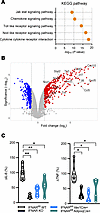 Figure 1
IFN-I/IFNAR axis modifies adipocyte transcriptome and inflammatory output. (A and B) WT mouse (SVF-derived) adipocytes were stimulated with vehicle control (saline) or recombinant IFN-β (rIFNβ) (250 U) for 3 hours and subsequently challenged with LPS (100 ng/mL) or not for 4 hours. (A) ToppGene pathway enrichment analysis of upregulated differentially expressed genes (fold change > 1.5; P value < 0.05) in rIFNβ + LPS–stimulated compared with vehicle-stimulated controls. Pathways related to inflammation are highlighted. KEGG, Kyoto Encyclopedia of Genes and Genomes. (B) Volcano plot of gene expression levels between rIFNβ + LPS–stimulated and vehicle stimulated adipocytes. Genes significantly upregulated in rIFNβ + LPS–stimulated adipocytes (fold change > 2, P value < 0.05) are represented by red dots. Genes significantly downregulated in rIFNβ + LPS–stimulated adipocytes (fold change < –2, P value < 0.05) are represented by blue dots. Upregulated genes related to inflammation depicted in A are highlighted. (C) IFNARfl/fl, IFNAR-KO, IFNARfl/fl Vav1-Cre+, and IFNARfl/fl Adipoq-Cre+ mice were injected with biotinylated anti–IL-6 and anti-TNF antibodies (0.5 μg/mice), and after 3 hours mice were vehicle (saline)- or LPS (25 μg/mouse) -challenged via i.p. injections. Four hours later serum was collected, and IL-6 and TNF levels were measured via in vivo cytokine capture assay (IVCCA) ELISA. Data depict percentage change of cytokine levels in LPS-challenged mice compared with vehicle-challenged controls. A representative of 4–9 biological replicates. In violin plots, data present mean ± SEM. One-way ANOVA. *: P < 0.01; **: P < 0.001.
IFN-I sensing skews glycolytic pathway utilization in white adipocytes. IFN-I sensing skews cellular metabolism in immune cells (39, 40) and white adipocytes (12). Cellular metabolism shapes immune cell and adipocyte function (25, 27, 41–43). Nevertheless, the specific metabolic pathways impacted by IFN-I in white adipocytes remain unknown. RNA-Seq analysis of SVF-derived white adipocytes stimulated with IFN-I alone, LPS alone, and combined IFN-I + LPS, compared with mock-stimulated control, revealed enrichment of cellular metabolic pathways, including nicotinate and nicotinamide metabolism, in IFN-I + LPS combined conditions (Figure 2A and Supplemental Figure 3, A–C). Such changes correlated with increased expression of various metabolic genes that promote pathogenic inflammation and disease severity in obesity, including Hif1a, Cd38, and Dgat2 (Figure 2B). Thus, whether these changes were sufficient to alter intracellular metabolite levels in white adipocytes was examined next. NMR spectrometric analysis revealed that IFN-I sensing alone caused a decrease in ATP/ADP ratios with no changes in ATP/AMP ratios. Yet, both ratios were additively restricted when IFN-I + LPS were sensed together (Figure 2C). Further, these changes in key components of cellular energetics were correlated with functional skewing of SVF-derived white adipocytes with sensing of either IFN-I or LPS alone yielding an increase in extracellular acidification rate (ECAR), which was additively amplified when IFN-I + LPS were sensed together (Figure 2D).
 Figure 2
IFN-Is alter cellular glycolysis to amplify adipocyte inflammatory vigor. WT mouse (SVF-derived) adipocytes were stimulated with vehicle control (saline) or rIFNβ (250 U) for 3 hours and subsequently challenged with LPS (100 ng/mL) or not for 4 hours. (A) ToppGene pathway enrichment analysis of upregulated differentially expressed genes (fold change > 1.5; P value < 0.05) in rIFNβ + LPS–stimulated compared with vehicle-stimulated controls. Pathways related to cellular metabolism are highlighted. (B) Volcano plot of gene expression levels between rIFNβ + LPS–stimulated and vehicle-stimulated adipocytes. Genes significantly upregulated in rIFNβ + LPS–stimulated adipocytes (fold change > 2, P value < 0.05) are represented by red dots. Genes significantly downregulated in rIFNβ + LPS–stimulated adipocytes (fold change < –2, P value < 0.05) are represented by blue dots. Representative upregulated genes related to cellular metabolism depicted in A are highlighted. (C) ATP/ADP (left) and ATP/AMP ratio (right) in WT SVF-derived adipocytes upon vehicle, rIFNβ, LPS, or rIFNβ + LPS stimulation, quantified via NMR. (D) Extracellular acidification rate (ECAR) in WT SVF-derived adipocytes upon vehicle-, rIFNβ, LPS, or rIFNβ + LPS stimulation, quantified via Seahorse. (E and F) WT SVF-derived adipocytes were vehicle-, LPS-, or rIFNβ + LPS–stimulated in the presence or absence of thioridazine (peroxisomal fatty acid β-oxidation inhibitor; 10 μg/mL) and/or etomoxir (mitochondrial fatty acid β-oxidation inhibitor; 10 μg/mL) (E), or CB839 (glutaminolysis inhibitor; 10 μg/mL) (F). Culture supernatants were collected, and IL-6 levels were measured via ELISA. Data depict percentage change of IL-6 levels compared with vehicle-stimulated controls. A representative of 2–3 biological replicates. (C–F) In violin plots, data represent mean ± SEM. One-way ANOVA. *: P < 0.05; **: P < 0.001; ****: P < 0.00001.
Inhibition of the entire glycolytic pathway using 2-deoxy-d-glucose (2-DG; a glucose analog that binds to hexokinase and blocks its function) decreased IFN-I–driven white adipocyte oxygen consumption rate and restricted IFN-I–driven increase in cytokine production by adipocytes (12). Whether these effects are unique to glycolysis or other cellular metabolic pathways could similarly impact white adipocyte function was examined next. In contrast with 2-DG, pharmacological inhibition of fatty acid oxidation (using etomoxir or thioridazine; Figure 2E) or glutaminolysis (using CB839; Figure 2F) failed to restrict IFN-I + LPS sensing–driven amplification of cytokine production by adipocytes. These data verify the importance of the glycolytic pathway in white adipocyte function and potentially suggest that IFN-I–dependent skewing of the glycolytic pathway activity may represent an important regulatory node of white adipocyte inflammatory function.
IFN-I sensing skews PKM2 oligomerization in white adipocytes. Glycolytic activity is responsible for converting glucose to pyruvate and providing intermediates for the activation of additional metabolic pathways — a process dependent on multiple enzymes (44). However, the contribution of specific enzymes within the glycolytic pathway (Figure 3A) to white adipocyte ability to produce inflammatory cytokines is unknown. Interference of the glycolytic pathway using specific chemical inhibitors for phosphofructokinase (PFK) (using 3PO), lactate dehydrogenase (LDH) (using oxamic acid, [OA]), or mitochondrial pyruvate transport (using UK5099) failed to restrict IFN-I + LPS–driven amplification of white adipocyte inflammatory cytokine production (Figure 3B). In contrast, chemical inhibition of PKM2 (using shikonin) was sufficient to abrogate LPS alone– and IFN-I + LPS–driven amplification of adipocyte inflammatory cytokine production (Figure 3B). These findings suggest that PKM2 function may represent a critical step within the glycolytic pathway that regulates IFN-I–dependent amplification of white adipocyte inflammatory function.
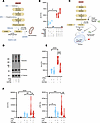 Figure 3
IFN-I sensing alters PKM2 function to instruct adipocyte inflammatory vigor. WT mouse (SVF-derived) adipocytes were stimulated with vehicle control (saline) or rIFNβ (250 U) for 3 hours and subsequently challenged with LPS (100 ng/mL) or not for 4 hours. (A) Schematic overview of glycolytic pathway with chemical inhibitors targeting different enzymatic steps in glycolysis. (B) WT SVF-derived adipocytes were vehicle-, LPS-, or rIFNβ + LPS–stimulated in the presence or absence of glycolytic metabolic inhibitors (3PO: 30 μM; oxamic acid: 10 μM; UK5099: 10 μM; shikonin: 10 μM). Culture supernatants were collected, and IL-6 levels were measured via ELISA. Data depict percentage change of IL-6 levels compared with vehicle-stimulated controls. Representative of 2 technical replicates and 3–5 biological replicates. (C) Schematic overview of TEPP-46 activity in glycolysis and cytokine production. (D and E) WT mouse (SVF-derived) adipocytes were vehicle-, LPS-, or rIFNβ + LPS–stimulated in the presence or absence of TEPP-46 (100 μM). (D) Protein expression of different configurations (monomer and tetramer) of PKM2 and α-tubulin (loading control) analyzed via Western blot. Representative of 2 independent experiments. (E) Culture supernatants were collected, and IL-6 levels were measured via ELISA. Data depict percentage change of IL-6 levels compared with vehicle-stimulated controls. (F) WT mice were twice i.p. injected with TEPP-46 (50 mg/kg/mouse; i.p.; daily), and subsequently i.p. injected with biotinylated anti–IL-6 and anti-TNF antibodies (0.5 μg/mice), with or without rIFNβ (104 U/mouse). After 3 hours, mice were challenged or not with LPS (25 μg/mouse) via i.p. injections. Four hours later serum was collected, and IL-6 (left) and TNF levels (right) were measured via IVCCA ELISA. Data depict percentage change of cytokine levels in TEPP-46–treated compared with untreated controls. (B, E, and F) In violin plots, data represent mean ± SEM. One-way ANOVA. *: P < 0.05; **: P < 0.001; ***: P < 0.0001; ****: P < 0.00001.
The existence of various PKM2 states (e.g., tetramer, dimer, monomer) with divergent downstream effector functions makes PKM2 a favorable target for manipulation of cellular metabolism. Shifts in PKM2 state that favor a high protein kinase activity (monomer/dimer) over high pyruvate kinase activity (tetramer) formation increase inflammatory gene transcription and activate inflammatory cascades (45, 46). Notably, the ratio between monomeric/dimeric versus tetrameric state determines the direction of downstream effector functions of PKM2 within the cell. Currently, 2 distinct chemical modulators of PKM2, shikonin and TEPP-46, exist. Shikonin, a less specific modulator, alters multiple aspects of the glycolytic pathway, including the inhibition of PKM2 phosphorylation (necessary for PKM2 nuclear translocation), hexokinase 2 (the first step of glycolysis), and cellular glucose uptake via actions on glucose transporter 1 (the primary glucose uptake transporter) (47). In contrast, TEPP-46 is a specific PKM2 activator that regulates PKM2 oligomeric state and immune cell inflammatory output (45, 48). Specifically, TEPP-46 binds in between 2 subunits of PKM2 dimers to force the formation of the tetrameric state, subsequently reducing PKM2 monomer/dimer formation (Figure 3C). Hence, the impact of TEPP-46 on IFN-I–driven amplification of cytokine production in white adipocytes was examined next. Sensing of IFN-I + LPS by SVF-derived white adipocytes increased total PKM2 protein level by 1.5-fold (Figure 3D and Supplemental Figure 4A) and total monomeric form of PKM2 protein by 1.4-fold (Figure 3D and Supplemental Figure 4B), which correlated with a shift in PKM2 tetramer/monomer ratio by 1.2-fold (Figure 3D and Supplemental Figure 4C). Notably, treatment of adipocytes with TEPP-46 led to a slight decrease in total PKM2 protein level (a change by 0.8-fold) (Figure 3D and Supplemental Figure 3D), an expected reduction in PKM2 monomeric form by almost 2-fold (Figure 3D and Supplemental Figure 4E), and a positively correlation with a 1.8-fold increase in ratio of PKM2 tetrameric to monomeric form (Figure 3D and Supplemental Figure 4F).
The functional consequences of TEPP-46–driven skewing of PKM2 state in white adipocytes were examined next. SVF-derived white adipocytes were either mock-stimulated or stimulated with LPS or IFN-I + LPS, with or without TEPP-46. Addition of TEPP-46 alone or not TEPP-46 to LPS-stimulated white adipocytes had no impact on adipocyte cytokine production. However, the presence of TEPP-46 in the IFN-I + LPS–stimulated white adipocytes robustly restricted adipocyte cytokine production (Figure 3E). To examine the relevance of such findings in vivo, WT mice were mock-treated or treated with LPS or IFN-I + LPS, with or without TEPP-46, and systemic cytokine levels were quantified. Importantly, treatment with TEPP-46 in vivo robustly restricted systemic levels of inflammatory cytokines only in mice that sensed IFN-I + LPS (Figure 3F). Together, these findings link IFN-I–driven amplification of white adipocyte cytokine production with PKM2 function.
IFN-I sensing skews NAD+ signaling to instruct adipocyte cytokine production. Cellular processes that instruct IFN-I–driven modification of glycolysis and PKM2 function remain poorly defined. Glycolytic activity requires utilization of NAD+ (a coenzyme critical for cellular metabolic function) to serve as an electron carrier for effective cellular glycolysis. Whether IFN-I sensing impacts NAD+ levels in white adipocytes was examined next. SVF-derived white adipocytes were either mock-stimulated or exposed to IFN-I alone, to LPS alone, or to IFN-I + LPS, and NAD+ levels were quantified. Whereas sensing of IFN-I or LPS alone reduced NAD+ levels, sensing of IFN-I + LPS resulted in additive reduction in NAD+ levels (Figure 4A). Such changes correlated with altered gene expression profiles associated with the NAD+ signaling cascade (Figure 4B). The concentration of NAD+ is a balance between NAD+ utilization and NAD+ synthesis via various pathways: the de novo biosynthetic pathway, the Preiss–Handler pathway, and the salvage pathway (49). In a setting of limited de novo NAD+ synthesis, the salvage pathway is the main source of NAD+ in maintaining cellular NAD+ levels. NAMPT is the rate-limiting enzyme in the NAD+ salvage pathway. Hence, the ability of IFN-I + LPS sensing to modify NAMPT expression in white adipocytes was examined next. Notably, unlike LPS sensing alone, both IFN-I alone or combined IFN-I + LPS sensing increased NAMPT expression in white adipocytes (Figure 4C). These findings invoke a potential link between IFN-I sensing and the NAD+ pathway.
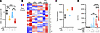 Figure 4
IFN-I sensing via skewed NAD+ utilization instructs adipocyte inflammatory vigor. WT mouse (SVF-derived) adipocytes were stimulated with vehicle control (saline) or rIFNβ (250 U) for 3 hours and subsequently challenged with LPS (100 ng/mL) or not for 4 hours. (A) Relative levels of NAD+ in rIFNβ-, LPS-, or rIFNβ + LPS–stimulated WT adipocytes compared with vehicle-stimulated controls, quantified by NMR. (B) Heatmap of NAD+ signaling–related genes measured via bulk RNA-Seq. (C) Nampt gene expression measured via bulk RNA-Seq. (D) WT mouse (SVF-derived) adipocytes were vehicle-, LPS-, or rIFNβ + LPS–stimulated in the presence or absence of E-daporinad (50 μM) or β-nicotinamide mononucleotide (10 μM). Culture supernatants were collected, and IL-6 levels were measured via ELISA. Data depict percentage change of IL-6 levels compared with vehicle-stimulated controls. (A, C, and D) In violin plots, data present mean + SEM. One-way ANOVA. *: P < 0.05; **: P < 0.001; ***: P < 0.0001; ****: P < 0.00001.
Whether NAD+ signaling contributes to IFN-I + LPS sensing–driven amplification of white adipocyte cytokine production was examined next. SVF-derived white adipocytes from WT mice were either mock-stimulated or stimulated with IFN-I alone, LPS alone, or IFN-I + LPS, with or without NAMPT inhibitor (E-daporinad, MedChemExpress [MCE]; HY-50876). Whereas addition of E-daporinad alone or to LPS-stimulated white adipocytes failed to alter adipocyte cytokine production, presence of E-daporinad in combined IFN-I + LPS–stimulated white adipocytes significantly restricted adipocyte cytokine production (Figure 4D). In contrast, supplementing adipocyte cultures with an initiator of the NAMPT reaction, a key NAD+ intermediate (β-nicotinamide mononucleotide MCE; HY-F0004 10 μM), trended toward enhancement of adipocyte cytokine production after combined IFN-I + LPS sensing (Figure 4D). These findings invoke a potential link among IFN-I/NAD+/glycolysis axes in regulation of white adipocyte inflammatory cytokine production.
Adipocyte PKM2 function may contribute to metabolic disease severity in obesity. Adipocyte inflammation promotes severity of metabolic diseases in obesity. Whether PKM2 transcriptional activity impacts metabolic disease severity in vivo was examined next using both genetic deletion and chemical manipulation. To control for potential cre transgene– and microbiome-associated (50) off-target effects, WT (C57BL/6, nonlittermate), Pkm2fl/fl AdipoqCre–, and Pkm2fl/fl AdipoqCre+ (latter littermates) mice were compared at baseline. Chow diet (CD) feeding regimen, irrespective of mouse genotype, did not affect body weight, adiposity, spleen weight, and liver weight (Supplemental Figure 5). These data suggested unlikely adverse contribution of cre transgene or microbiome impact in this system at baseline and invoked the possibility that exogenous changes in adipocyte size/function (e.g., obesity) might be required to uncover the role of PKM2 in adipocytes. Next, to control for potential loxP transgene– (51), age-, microbiome-, and treatment-associated off-target effects, nonlittermate WT and Pkm2fl/fl AdipoqCre– mice, untreated or vehicle control treated (DMSO; i.p. injection every 3 days for 2 weeks), were compared in the context of obesity. High-fat diet–fed (HFD-fed) WT and Pkm2fl/fl AdipoqCre– mice, irrespective of genotype or DMSO treatment, exhibited similar diet-driven changes in total body weight, adiposity, spleen weight, liver weight, liver, systemic alanine aminotransferase (ALT) levels (marker of hepatocellular damage), and fasting glucose levels (Supplemental Figure 6). These data suggested that transgene, microbiome, and i.p. injection effects are unlikely to impact the outcomes of our in vivo studies. As such, to maximize the utility and reduce the number of control mice in obesity-related studies, data obtained from WT and Pkm2fl/fl AdipoqCre– (untreated and vehicle treated) mice were combined (termed Pkm2fl/fl Adipoq sufficient) and compared with data from Pkm2fl/fl AdipoqCre+ mice (termed Pkm2fl/fl Adipoq deficient) in our subsequent studies.
First, the impact of genetic manipulation of adipocyte PKM2 on development of obesity and metabolic diseases was examined. HFD-fed Pkm2fl/fl Adipoq sufficient (WT + Pkm2fl/fl AdipoqCre–) and Pkm2fl/fl Adipoq deficient (Pkm2fl/fl AdipoqCre+) vehicle-treated mice (Figure 5A) exhibited similar total body weight, adiposity, spleen weight, and liver weight (Supplemental Figure 7; first compared with third violin plot). However, fasting glucose (Figure 5B; first compared with third violin plot), systemic ALT levels (Figure 5E; first compared with third violin plot), and liver triglyceride accumulation (Figure 5F; first compared with third violin plot) were reduced in mice lacking PKM2 expression in adipocytes. Further, histological analyses of the liver revealed slight reduction in macrovesicular steatosis (Figure 5H; first compared with third panel) coupled with subtle difference in steatosis grade and inflammatory score (Figure 5H, first compared with third panel; and Table 1; 3 to 2/3, 90% to 80%–90%, and 1 [focal 2] to 0; first vs. second row of data). Last, the observed improvements in metabolic parameters correlated with a trend in reduced eWAT immune cell accrual in vehicle-treated PKM2-sufficient (WT + Pkm2fl/fl AdipoqCre–) compared with PKM2-deficient (Pkm2fl/fl AdipoqCre+) mice as determined by flow cytometry (Figure 5G; first compared with third violin plot) and histological analyses (Figure 5I, first compared with third panel). These data suggested that adipocyte PKM2 expression independent of body weight changes may contribute to metabolic disease severity in obesity.
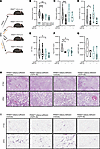 Figure 5
Improvement of metabolic disease severity following small molecule targeting of PKM2 function is in part dependent on adipocyte PKM2 expression. Adipocyte PKM2-sufficient (WT + PKM2fl/fl-AdipoqCre–) and adipocyte PKM2-deficient (PKM2fl/fl-AdipoqCre+) mice were fed HFD. After 34 weeks, mice were treated with vehicle control (DMSO) or TEPP-46 (37.5 mg/kg; i.p.) every 3 days for 2 weeks. (A) Schematic overview. (B) Fasting glucose. (C) Fasting insulin. (D) HOMA IR index values calculated using fasting glucose and fasting insulin levels. (E) Serum ALT levels. (F) Hepatic triglyceride levels. (G) Absolute number of CD45+ cells in eWAT, quantified by flow cytometry. (H) Representative H&E histology of liver taken at 7.5× (top row; scale bar = 137 μm) and 23× (bottom rows; scale bar = 45 μm). (I) Representative H&E histology of eWAT taken at 7.5× (top row; scale bar = 137 μm) and 23× (bottom rows; scale bar = 45 μm). (B–G) In violin plots, data present mean ± SEM. One-way ANOVA. *: P < 0.05; **: P < 0.001; ***P < 0.0001; ****: P < 0.00001.
Given the observed changes, therapeutic potential of PKM2 modulation on metabolic disease severity was examined next. Pkm2fl/fl Adipoq sufficient (WT + Pkm2fl/fl AdipoqCre–) and Pkm2fl/fl Adipoq deficient (Pkm2fl/fl AdipoqCre+) mice fed HFD were either vehicle-treated (DMSO; above) or treated with TEPP-46 (i.p. injection every 3 days for 2 weeks) in vivo (Figure 5A). TEPP-46 treatment regardless of mouse genotype did not impact body weight, adiposity, spleen weight, or liver weight (Supplemental Figure 7). Notably, TEPP-46 treatment of PKM2-sufficient (WT + Pkm2fl/fl AdipoqCre–) mice improved fasting glucose (Figure 5B; first compared with second violin plot), fasting insulin (Figure 5C; first compared with second violin plot), and the Homeostatic Model Assessment of Insulin Resistance (HOMA-IR) index value (Figure 5D; first compared with second violin plot) while showing a trend in reduction of systemic ALT levels (Figure 5E; first compared with second violin plot) and reduction in liver triglyceride accumulation (Figure 5F; first compared with second violin plot). Further, histological analyses of the liver revealed robust impact of TEPP-46 treatment on macrovesicular steatosis (Figure 5H; first compared with second panel) that was coupled with reduced steatosis grade and percent and inflammatory score (Figure 5H, first compared with second panel; and Table 1; 3 to 2, 90% to 55%, and 1 [focal 2] to 0; first vs. third row of data). Last, TEPP-46 treatment of PKM2-sufficient (WT + Pkm2fl/fl AdipoqCre–) mice, compared with vehicle-treated controls, yielded a trend in reduction of eWAT immune cell accrual as determined by flow cytometry (Figure 5G; first compared with second violin plot) and histological analyses (Figure 5I, first compared with second panel).
Importantly, compared with vehicle-treated PKM2-deficient (Pkm2fl/fl AdipoqCre+) mice, TEPP-46 treatment did not reveal additive improvement in fasting glucose (Figure 5B; third compared with fourth violin plot) and insulin levels (Figure 5C; third compared with fourth violin plot), HOMA-IR index value (Figure 5D; third compared with fourth violin plot), systemic ALT levels (Figure 5E; third compared with fourth violin plot), and hepatic triglyceride accumulation (Figure 5F; third compared with fourth violin plot). Similarly, histological analyses of the liver revealed that TEPP-46 treatment had limited impact on macrovesicular steatosis (Figure 5H; third compared with fourth panel) as well as steatosis grade and percent and inflammatory score (Figure 5H, third compared with fourth panel; and Table 1; 2/3 to 2/3, 80%–90% to 85%, and 0 to 0; second vs. fourth row of data) and on a reduction in eWAT immune cell accrual compared with vehicle-treated controls as determined by flow cytometry (Figure 5G; third compared with fourth violin plot) and histological analyses (Figure 5I, third compared with fourth panel). Together, these data suggested that TEPP-46 treatment in vivo may hold therapeutic promise in limiting severity of obesity-associated metabolic diseases and that the beneficial actions of TEPP-46 treatment in obese mice may in part depend on adipocyte PKM2 expression.
IFN-I/PKM2 axis regulates inflammatory cytokine production by human white adipocytes. Humans with obesity exhibit low-grade chronic inflammation, both systemically and in WAT. To begin to uncover the congruency of our mouse findings to human disease, we established a small human cohort of adolescents living with obesity and undergoing bariatric surgery. In this cohort, individuals living with obesity were stratified into 2 groups based clinical parameters of metabolic disease: metabolically healthy individuals (MH) and individuals with metabolic disease (MC) (Table 2). Despite a significant increase in HA1c in MC individuals, the systemic levels of inflammatory cytokines were similar between the groups (Table 2). These data suggest that the presence of metabolic diseases in these individuals may be linked dominantly with tissue instead of peripheral inflammation. To begin to understand potential differences in tissue inflammation, WAT obtained from MH and MC individuals was subjected to RNA-Seq analysis. Notably, WAT of MC individuals compared with MH individuals had marked increase in expression of both inflammatory and metabolic genes (Figure 6, A and B). Further, adipocytes from MC versus MH individuals when exposed to IFN-I + LPS produced higher levels of pro-inflammatory cytokines (12). Thus, whether the increase in WAT inflammation in MC individuals may be dependent on the activation of the IFN-I/PKM2 axis was examined next. White adipocytes were isolated from the omental WAT of individuals living with obesity (12, 52, 53). Notably, exposure of both primary (Figure 6C) and SVF-derived (Figure 6D) human white adipocytes to combined IFN-I + LPS resulted in increased pro-inflammatory cytokine production. Given our findings in mice, we next examined if the manipulation of the glycolytic pathway and PKM2 function would similarly impact human white adipocytes’ ability to produce pro-inflammatory cytokines. Notably, inhibition of glycolysis by either 2-DG or shikonin treatment abrogated human SVF-derived white adipocyte pro-inflammatory cytokine production (Figure 6, E and F). Further, modulation of PKM2 function by TEPP-46 treatment was also sufficient to reduce cytokine production by SVF-derived human white adipocytes (Figure 6G). Whether these outcomes were divergent in MC versus MH individuals was also studied. SVF-derived white adipocytes from MH and MC individuals showed a similar reduction in cytokine production after shikonin, 2-DG, or TEPP-46 treatment (Supplemental Figure 8, A–E). Last, we compared systemic and SVF white adipocyte–produced IL-6 levels between the 2 groups. Surprisingly, despite small cohort size, SVF-derived white adipocytes from MC individuals showed a trend toward higher IL-6 production compared with those isolated from MH counterparts (Supplemental Figure 8F). Together, these data suggest that the inflammatory function of the IFN-I/PKM2 axis is conserved in human white adipocytes and that MC adipocytes may be more inflammatory.
 Figure 6
IFN-I/PKM2 axis regulates inflammatory cytokine production in human adipocytes. (A and B) Omental WAT biopsies were obtained from MH and MC cohorts, and transcriptome was analyzed via bulk RNA-Seq analyses. (A) ToppGene pathway enrichment analysis of differentially expressed genes between MH and MC cohorts. Pathways related to inflammation signaling (orange) and cellular metabolism (purple) are highlighted. (B) Volcano plot of gene expression levels of WAT between MH and MC cohorts. Genes significantly upregulated (fold change > 1.5, P value < 0.05) in MC cohort are represented by red dots. Genes significantly downregulated (fold change < –1.5, P value < 0.05) in MC cohort are represented by blue dots. Representative upregulated genes related to immune activation and cellular metabolism depicted in A are highlighted. (C) Primary adipocytes were isolated from omental WAT biopsies obtained from MH and MC cohort. Adipocytes were stimulated with vehicle control (saline) or rIFNβ (500 U) for 3 hours and subsequently challenged with LPS (100 ng/mL) for 4 hours. Culture supernatants were collected, and IL-6 levels were measured via ELISA. Data depict percentage change of IL-6 levels compared with vehicle + LPS–stimulated condition. (D–G) Adipocytes were derived from SVF isolated from omental WAT biopsies obtained from MH cohort. (D) SVF-derived adipocytes were stimulated with vehicle control (saline) or rIFNβ (500 U) for 3 hours and subsequently challenged with LPS (100 ng/mL) for 4 hours. Culture supernatants were collected, and IL-6 levels were measured via ELISA. Data depict percentage change of IL-6 levels compared with vehicle + LPS–stimulated condition. (E–G) SVF-derived adipocytes were stimulated with rIFNβ (500 U) in presence or absence of (E) 2-DG (2 mM), (F) shikonin (10 μM), or (G) TEPP-46 (100–200 μM) and were subsequently challenged with LPS (100 ng/mL) for 4 hours. Culture supernatants were collected, and IL-6 levels were measured via ELISA. Data depict percentage change of IL-6 levels compared with rIFNβ + LPS–stimulated condition.


