
Research ArticleGeneticsOncology
Open Access |  10.1172/jci.insight.195743
Targeting p300 and CBP abolishes HOXB13-loss-induced lipogenesis and tumor metastasis
Xiaodong Lu,1 Liu Peng,1 Qi Chu,1 Samantha Ye,1 Mingyang Liu,1 Maha Hussain,2 Mehmet A. Bilen,3,4 Lara R. Harik,4,5 Jonathan Melamed,6 Jonathan C. Zhao,4,7 and Jindan Yu1,4,7
1Department of Urology, Emory University School of Medicine, Atlanta, Georgia, USA.
2Division of Hematology/Oncology, Department of Medicine, Northwestern University Feinberg School of Medicine, Chicago, Illinois, USA.
3Department of Hematology and Medical Oncology, Emory University School of Medicine, Atlanta, Georgia, USA.
4Winship Cancer Institute, Emory University School of Medicine, Atlanta, Georgia, USA.
5Department of Pathology and Laboratory Medicine, Emory University School of Medicine, Atlanta, Georgia, USA.
6Department of Pathology at NYU Grossman School of Medicine, New York, New York, USA.
7Department of Human Genetics, Emory University School of Medicine, Atlanta, Georgia, USA.
Address correspondence to: Jindan Yu, Fray Marshall Chair in Biomedical Urology Research, Professor and Vice Chair for Research in the Department of Urology, Emory University, School of Medicine, Health Sciences Research Building (HSRB1), Third Floor, E330, 1760 Haygood Dr NE, Atlanta, Georgia 30322, USA. Phone: 404.778.6871; Email: jindan.yu@emory.edu. Or to: Xiaodong Lu, Instructor, Department of Urology, Emory University, Atlanta, Georgia 30322, USA. Email: xiaodong.lu@emory.edu.
Authorship note: XL and JY are co–corresponding authors.
Find articles by Lu, X. in: PubMed | Google Scholar
1Department of Urology, Emory University School of Medicine, Atlanta, Georgia, USA.
2Division of Hematology/Oncology, Department of Medicine, Northwestern University Feinberg School of Medicine, Chicago, Illinois, USA.
3Department of Hematology and Medical Oncology, Emory University School of Medicine, Atlanta, Georgia, USA.
4Winship Cancer Institute, Emory University School of Medicine, Atlanta, Georgia, USA.
5Department of Pathology and Laboratory Medicine, Emory University School of Medicine, Atlanta, Georgia, USA.
6Department of Pathology at NYU Grossman School of Medicine, New York, New York, USA.
7Department of Human Genetics, Emory University School of Medicine, Atlanta, Georgia, USA.
Address correspondence to: Jindan Yu, Fray Marshall Chair in Biomedical Urology Research, Professor and Vice Chair for Research in the Department of Urology, Emory University, School of Medicine, Health Sciences Research Building (HSRB1), Third Floor, E330, 1760 Haygood Dr NE, Atlanta, Georgia 30322, USA. Phone: 404.778.6871; Email: jindan.yu@emory.edu. Or to: Xiaodong Lu, Instructor, Department of Urology, Emory University, Atlanta, Georgia 30322, USA. Email: xiaodong.lu@emory.edu.
Authorship note: XL and JY are co–corresponding authors.
Find articles by Peng, L. in: PubMed | Google Scholar
1Department of Urology, Emory University School of Medicine, Atlanta, Georgia, USA.
2Division of Hematology/Oncology, Department of Medicine, Northwestern University Feinberg School of Medicine, Chicago, Illinois, USA.
3Department of Hematology and Medical Oncology, Emory University School of Medicine, Atlanta, Georgia, USA.
4Winship Cancer Institute, Emory University School of Medicine, Atlanta, Georgia, USA.
5Department of Pathology and Laboratory Medicine, Emory University School of Medicine, Atlanta, Georgia, USA.
6Department of Pathology at NYU Grossman School of Medicine, New York, New York, USA.
7Department of Human Genetics, Emory University School of Medicine, Atlanta, Georgia, USA.
Address correspondence to: Jindan Yu, Fray Marshall Chair in Biomedical Urology Research, Professor and Vice Chair for Research in the Department of Urology, Emory University, School of Medicine, Health Sciences Research Building (HSRB1), Third Floor, E330, 1760 Haygood Dr NE, Atlanta, Georgia 30322, USA. Phone: 404.778.6871; Email: jindan.yu@emory.edu. Or to: Xiaodong Lu, Instructor, Department of Urology, Emory University, Atlanta, Georgia 30322, USA. Email: xiaodong.lu@emory.edu.
Authorship note: XL and JY are co–corresponding authors.
Find articles by Chu, Q. in: PubMed | Google Scholar
1Department of Urology, Emory University School of Medicine, Atlanta, Georgia, USA.
2Division of Hematology/Oncology, Department of Medicine, Northwestern University Feinberg School of Medicine, Chicago, Illinois, USA.
3Department of Hematology and Medical Oncology, Emory University School of Medicine, Atlanta, Georgia, USA.
4Winship Cancer Institute, Emory University School of Medicine, Atlanta, Georgia, USA.
5Department of Pathology and Laboratory Medicine, Emory University School of Medicine, Atlanta, Georgia, USA.
6Department of Pathology at NYU Grossman School of Medicine, New York, New York, USA.
7Department of Human Genetics, Emory University School of Medicine, Atlanta, Georgia, USA.
Address correspondence to: Jindan Yu, Fray Marshall Chair in Biomedical Urology Research, Professor and Vice Chair for Research in the Department of Urology, Emory University, School of Medicine, Health Sciences Research Building (HSRB1), Third Floor, E330, 1760 Haygood Dr NE, Atlanta, Georgia 30322, USA. Phone: 404.778.6871; Email: jindan.yu@emory.edu. Or to: Xiaodong Lu, Instructor, Department of Urology, Emory University, Atlanta, Georgia 30322, USA. Email: xiaodong.lu@emory.edu.
Authorship note: XL and JY are co–corresponding authors.
Find articles by Ye, S. in: PubMed | Google Scholar
1Department of Urology, Emory University School of Medicine, Atlanta, Georgia, USA.
2Division of Hematology/Oncology, Department of Medicine, Northwestern University Feinberg School of Medicine, Chicago, Illinois, USA.
3Department of Hematology and Medical Oncology, Emory University School of Medicine, Atlanta, Georgia, USA.
4Winship Cancer Institute, Emory University School of Medicine, Atlanta, Georgia, USA.
5Department of Pathology and Laboratory Medicine, Emory University School of Medicine, Atlanta, Georgia, USA.
6Department of Pathology at NYU Grossman School of Medicine, New York, New York, USA.
7Department of Human Genetics, Emory University School of Medicine, Atlanta, Georgia, USA.
Address correspondence to: Jindan Yu, Fray Marshall Chair in Biomedical Urology Research, Professor and Vice Chair for Research in the Department of Urology, Emory University, School of Medicine, Health Sciences Research Building (HSRB1), Third Floor, E330, 1760 Haygood Dr NE, Atlanta, Georgia 30322, USA. Phone: 404.778.6871; Email: jindan.yu@emory.edu. Or to: Xiaodong Lu, Instructor, Department of Urology, Emory University, Atlanta, Georgia 30322, USA. Email: xiaodong.lu@emory.edu.
Authorship note: XL and JY are co–corresponding authors.
Find articles by Liu, M. in: PubMed | Google Scholar
1Department of Urology, Emory University School of Medicine, Atlanta, Georgia, USA.
2Division of Hematology/Oncology, Department of Medicine, Northwestern University Feinberg School of Medicine, Chicago, Illinois, USA.
3Department of Hematology and Medical Oncology, Emory University School of Medicine, Atlanta, Georgia, USA.
4Winship Cancer Institute, Emory University School of Medicine, Atlanta, Georgia, USA.
5Department of Pathology and Laboratory Medicine, Emory University School of Medicine, Atlanta, Georgia, USA.
6Department of Pathology at NYU Grossman School of Medicine, New York, New York, USA.
7Department of Human Genetics, Emory University School of Medicine, Atlanta, Georgia, USA.
Address correspondence to: Jindan Yu, Fray Marshall Chair in Biomedical Urology Research, Professor and Vice Chair for Research in the Department of Urology, Emory University, School of Medicine, Health Sciences Research Building (HSRB1), Third Floor, E330, 1760 Haygood Dr NE, Atlanta, Georgia 30322, USA. Phone: 404.778.6871; Email: jindan.yu@emory.edu. Or to: Xiaodong Lu, Instructor, Department of Urology, Emory University, Atlanta, Georgia 30322, USA. Email: xiaodong.lu@emory.edu.
Authorship note: XL and JY are co–corresponding authors.
Find articles by Hussain, M. in: PubMed | Google Scholar
1Department of Urology, Emory University School of Medicine, Atlanta, Georgia, USA.
2Division of Hematology/Oncology, Department of Medicine, Northwestern University Feinberg School of Medicine, Chicago, Illinois, USA.
3Department of Hematology and Medical Oncology, Emory University School of Medicine, Atlanta, Georgia, USA.
4Winship Cancer Institute, Emory University School of Medicine, Atlanta, Georgia, USA.
5Department of Pathology and Laboratory Medicine, Emory University School of Medicine, Atlanta, Georgia, USA.
6Department of Pathology at NYU Grossman School of Medicine, New York, New York, USA.
7Department of Human Genetics, Emory University School of Medicine, Atlanta, Georgia, USA.
Address correspondence to: Jindan Yu, Fray Marshall Chair in Biomedical Urology Research, Professor and Vice Chair for Research in the Department of Urology, Emory University, School of Medicine, Health Sciences Research Building (HSRB1), Third Floor, E330, 1760 Haygood Dr NE, Atlanta, Georgia 30322, USA. Phone: 404.778.6871; Email: jindan.yu@emory.edu. Or to: Xiaodong Lu, Instructor, Department of Urology, Emory University, Atlanta, Georgia 30322, USA. Email: xiaodong.lu@emory.edu.
Authorship note: XL and JY are co–corresponding authors.
Find articles by Bilen, M. in: PubMed | Google Scholar
1Department of Urology, Emory University School of Medicine, Atlanta, Georgia, USA.
2Division of Hematology/Oncology, Department of Medicine, Northwestern University Feinberg School of Medicine, Chicago, Illinois, USA.
3Department of Hematology and Medical Oncology, Emory University School of Medicine, Atlanta, Georgia, USA.
4Winship Cancer Institute, Emory University School of Medicine, Atlanta, Georgia, USA.
5Department of Pathology and Laboratory Medicine, Emory University School of Medicine, Atlanta, Georgia, USA.
6Department of Pathology at NYU Grossman School of Medicine, New York, New York, USA.
7Department of Human Genetics, Emory University School of Medicine, Atlanta, Georgia, USA.
Address correspondence to: Jindan Yu, Fray Marshall Chair in Biomedical Urology Research, Professor and Vice Chair for Research in the Department of Urology, Emory University, School of Medicine, Health Sciences Research Building (HSRB1), Third Floor, E330, 1760 Haygood Dr NE, Atlanta, Georgia 30322, USA. Phone: 404.778.6871; Email: jindan.yu@emory.edu. Or to: Xiaodong Lu, Instructor, Department of Urology, Emory University, Atlanta, Georgia 30322, USA. Email: xiaodong.lu@emory.edu.
Authorship note: XL and JY are co–corresponding authors.
Find articles by Harik, L. in: PubMed | Google Scholar
1Department of Urology, Emory University School of Medicine, Atlanta, Georgia, USA.
2Division of Hematology/Oncology, Department of Medicine, Northwestern University Feinberg School of Medicine, Chicago, Illinois, USA.
3Department of Hematology and Medical Oncology, Emory University School of Medicine, Atlanta, Georgia, USA.
4Winship Cancer Institute, Emory University School of Medicine, Atlanta, Georgia, USA.
5Department of Pathology and Laboratory Medicine, Emory University School of Medicine, Atlanta, Georgia, USA.
6Department of Pathology at NYU Grossman School of Medicine, New York, New York, USA.
7Department of Human Genetics, Emory University School of Medicine, Atlanta, Georgia, USA.
Address correspondence to: Jindan Yu, Fray Marshall Chair in Biomedical Urology Research, Professor and Vice Chair for Research in the Department of Urology, Emory University, School of Medicine, Health Sciences Research Building (HSRB1), Third Floor, E330, 1760 Haygood Dr NE, Atlanta, Georgia 30322, USA. Phone: 404.778.6871; Email: jindan.yu@emory.edu. Or to: Xiaodong Lu, Instructor, Department of Urology, Emory University, Atlanta, Georgia 30322, USA. Email: xiaodong.lu@emory.edu.
Authorship note: XL and JY are co–corresponding authors.
Find articles by
Melamed, J.
in:
PubMed
|
Google Scholar
|

1Department of Urology, Emory University School of Medicine, Atlanta, Georgia, USA.
2Division of Hematology/Oncology, Department of Medicine, Northwestern University Feinberg School of Medicine, Chicago, Illinois, USA.
3Department of Hematology and Medical Oncology, Emory University School of Medicine, Atlanta, Georgia, USA.
4Winship Cancer Institute, Emory University School of Medicine, Atlanta, Georgia, USA.
5Department of Pathology and Laboratory Medicine, Emory University School of Medicine, Atlanta, Georgia, USA.
6Department of Pathology at NYU Grossman School of Medicine, New York, New York, USA.
7Department of Human Genetics, Emory University School of Medicine, Atlanta, Georgia, USA.
Address correspondence to: Jindan Yu, Fray Marshall Chair in Biomedical Urology Research, Professor and Vice Chair for Research in the Department of Urology, Emory University, School of Medicine, Health Sciences Research Building (HSRB1), Third Floor, E330, 1760 Haygood Dr NE, Atlanta, Georgia 30322, USA. Phone: 404.778.6871; Email: jindan.yu@emory.edu. Or to: Xiaodong Lu, Instructor, Department of Urology, Emory University, Atlanta, Georgia 30322, USA. Email: xiaodong.lu@emory.edu.
Authorship note: XL and JY are co–corresponding authors.
Find articles by Zhao, J. in: PubMed | Google Scholar
1Department of Urology, Emory University School of Medicine, Atlanta, Georgia, USA.
2Division of Hematology/Oncology, Department of Medicine, Northwestern University Feinberg School of Medicine, Chicago, Illinois, USA.
3Department of Hematology and Medical Oncology, Emory University School of Medicine, Atlanta, Georgia, USA.
4Winship Cancer Institute, Emory University School of Medicine, Atlanta, Georgia, USA.
5Department of Pathology and Laboratory Medicine, Emory University School of Medicine, Atlanta, Georgia, USA.
6Department of Pathology at NYU Grossman School of Medicine, New York, New York, USA.
7Department of Human Genetics, Emory University School of Medicine, Atlanta, Georgia, USA.
Address correspondence to: Jindan Yu, Fray Marshall Chair in Biomedical Urology Research, Professor and Vice Chair for Research in the Department of Urology, Emory University, School of Medicine, Health Sciences Research Building (HSRB1), Third Floor, E330, 1760 Haygood Dr NE, Atlanta, Georgia 30322, USA. Phone: 404.778.6871; Email: jindan.yu@emory.edu. Or to: Xiaodong Lu, Instructor, Department of Urology, Emory University, Atlanta, Georgia 30322, USA. Email: xiaodong.lu@emory.edu.
Authorship note: XL and JY are co–corresponding authors.
Find articles by Yu, J. in: PubMed | Google Scholar
Published November 24, 2025 - More info
JCI Insight. 2025;10(22):e195743. https://doi.org/10.1172/jci.insight.195743.
© 2025 Lu et al. This work is licensed under the Creative Commons Attribution 4.0 International License. To view a copy of this license, visit http://creativecommons.org/licenses/by/4.0/.
Received: May 19, 2025; Accepted: October 10, 2025


-
Results
p300 co-occupies and activates HOXB13/HDAC3-bound lipogenic enhancers. Our recent study demonstrated that HOXB13 suppresses lipogenic gene expression via recruitment of the HDAC3-NCoR corepressor complex, whereas HOXB13 loss activates the lipogenic programs (9). Given that p300 and CBP are principal antagonists of HDAC3 and NCoR in catalyzing H3K27ac (10, 13), we hypothesized that HOXB13 loss activates lipogenic genes by requiring p300 and CBP. To test this, we performed chromatin immunoprecipitation followed by next-generation sequencing (ChIP-seq) for HDAC3 and p300 in LNCaP cells and compared their binding sites with the HOXB13 cistrome. We observed significant co-occupancy of HDAC3 and p300 at some HOXB13 binding sites (Figure 1A, region IV). Notably, these co-bound sites exhibited markedly higher binding of both HDAC3 and p300, as well as stronger H3K27ac signal, compared with regions bound by HDAC3 or p300 alone (Figure 1B, left 3 lanes). These findings are consistent with previous studies showing that HDACs and histone acetyltransferases (HATs) often colocalize at transcriptionally active genes to fine-tune gene expression (13). To gain some insights into the function of peak-associated genes, we performed Genomic Regions Enrichment of Annotations Tool (GREAT) analysis (28) to identify nearby genes, which revealed 45 genes, including FASN, that are involved in the fatty-acyl-CoA biosynthetic process and long-chain fatty-acyl-CoA biosynthetic process (Figure 1C and Supplemental Table 1; supplemental material available online with this article; https://doi.org/10.1172/jci.insight.195743DS1). These findings are in agreement with our previous reports of HOXB13 and HDAC3 in regulating lipid metabolism (9) and further suggest that HAT proteins are also involved.
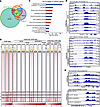 Figure 1
p300 co-occupies and activates HOXB13/HDAC3-bound lipogenic enhancers. (A) Venn diagram showing overlap of HOXB13, p300, and HDAC3 binding sites in LNCaP cells. (B) Heatmaps showing indicated ChIP-seq intensity centered (±2 kb) around the 4 clusters of overlapping sites identified in A. I, HOXB13-only sites; II, HOXB13 and HDAC3 co-binding sites; III, HOXB13 and p300 co-binding sites; IV, HOXB13, HDAC3, and p300 co-binding sites (HHP). Scale bar: enrichment intensity. (C) GO analysis genes near the HOXB13, HDAC3, and p300 co-binding site (region IV in A), identified by GREAT, with gene regulatory domain definition within 100 kb. P values by binomial test. (D) IGV showing HOXB13, p300, HDAC3, and H3K27ac ChIP-seq signal at HOXB13-repressed genes KLK3 (top) and FASN (bottom) loci in LNCaP cells with indicated genetic aberrations. (E) IGV showing H3K27ac ChIP-seq signal at HOXB13-repressed genes KLK3 (top) and FASN (bottom) loci in control or HOXB13-KD LNCaP cells with DMSO or CCS1477 treatment.
To determine whether p300 and CBP are required for H3K27ac at lipogenic enhancers following HOXB13 loss, we performed H3K27ac in HOXB13-KD cells with concurrent CBP and/or p300 KD (Supplemental Figure 1A). As expected, H3K27ac levels were increased upon HOXB13 KD (Figure 1B). Significantly, these HOXB13-loss-induced increases in H3K27ac were substantially attenuated by p300 KD, and to a lesser extent by CBP KD (Figure 1B), indicating that p300 plays a predominant role in enhancer activation following HOXB13 loss. This was further supported by Integrative Genomics Viewer (IGV) tracks, which showed increased H3K27ac at known HOXB13-repressed genes, including KLK3 and FASN, upon HOXB13 KD, which was reversed by p300 or CBP KD (Figure 1D). To further validate this finding, we performed H3K27ac ChIP-seq in control and HOXB13-KD LNCaP cells treated with either DMSO or CCS1477, a selective p300/CBP bromodomain inhibitor currently in clinical trials for advanced PCa and hematologic malignancies (16, 29). As observed with genetic depletion, pharmacologic inhibition with CCS1477 dramatically reduced HOXB13-KD-induced H3K27ac globally (Figure 1B, right 4 lanes) as well as at representative sites, such as KLK3 and FASN enhancers (Figure 1E), which was further confirmed by ChIP-qPCR (Supplemental Figure 1B). Collectively, these data demonstrate that HOXB13 loss disrupts the balance between HDAC3 and p300 at lipogenic enhancers, leading to increased H3K27 acetylation that is abolished by CBP and p300 inhibition.
p300 and CBP are required for HOXB13-loss-induced lipogenic program. Next, to evaluate whether HOXB13 loss induces lipogenic programs through p300/CBP, we performed RNA-seq in control and HOXB13-KD LNCaP cells with concomitant p300 and/or CBP KD. We identified 194 genes increased by HOXB13 KD (fold change ≥ 1.5, adjusted P < 0.05) that were significantly rescued upon p300/CBP depletion (Figure 2A). Gene Ontology (GO) analysis revealed that these genes were significantly enriched for steroid metabolism, lipid biosynthesis, and fatty acid metabolic processes (Figure 2B), suggesting that HOXB13-loss-induced lipogenic gene programs are highly dependent on p300 and CBP activity.
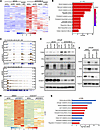 Figure 2
p300 and CBP are required for HOXB13-loss-induced lipogenic program. (A) Heatmap showing shHOXB13-induced genes that are dependent on p300 and CBP in LNCaP cells with HOXB13 KD and/or p300/CBP KD. HOXB13-repressed genes were identified by DESeq2 with fold change ≥ 1.5 and adjusted P < 0.05. Color bar: z-score. (B) GO analysis of the genes identified in A. Top enriched molecular concepts are shown on the y-axis, while the x-axis indicates number of genes in each significant GO term. (C) Genome browser showing mRNA expression of HOXB13-target genes KLK3 and FASN in LNCaP cells with indicated treatment. (D) Western blot analysis of FASN, PSA, and HOXB13 expression in LNCaP cells with HOXB13 KD and/or p300/CBP KD. (E) Heatmap showing shHOXB13-induced genes that are repressed by CCS1477 in LNCaP cells with HOXB13 KD and/or CCS1477 treatment. Control (shCtrl) or HOXB13-KD (shHOXB13) cells were subjected to control (DMSO) or CCS1477 (250 nM) treatment for 48 hours, and RNA-seq was performed in triplicate. HOXB13-repressed genes were identified by DESeq2 with fold change ≥ 2 and adjusted P < 0.05. Color bar: z-score. (F) Western blot analysis of FASN, PSA, and HOXB13 expression in control or HOXB13-KD LNCaP cells treated with DMSO or CCS1477. (G) GO analysis of the genes identified in E. Top enriched molecular concepts are shown on the y-axis, while the x-axis indicates enrichment significance. Lipid- and cell cycle–related GO terms are highlighted in Red. P values by 1-sided hypergeometric test.
Taking a closer look at these 194 genes, we found that they were more sensitive to p300 KD than CBP KD (Figure 2A), consistent with earlier findings showing that HOXB13-loss-induced H3K27ac enrichment was more substantially reversed by p300 than CBP depletion. Importantly, in control cells, these genes were barely affected by p300/CBP KD, suggesting that the loss of HOXB13 created a dependency on p300 and CBP. These findings were validated by representative HOXB13-repressed genes, such as KLK3 and FASN, that were increased upon HOXB13 KD, which was significantly attenuated by p300 KD, and to a lesser extent by CBP KD (Figure 2, C and D).
To further examine whether these HOXB13-loss-induced downstream genes can be targeted using pharmacological inhibitors, we performed RNA-seq in control and HOXB13-KD LNCaP cells treated with DMSO or 250 nM CCS1477 for 48 hours. Integrative analysis of shHOXB13-induced and CCS1477-repressed genes identified 335 genes that were markedly upregulated upon HOXB13 KD and significantly downregulated by CCS1477 (Figure 2E), consistent with our genetic perturbation results. Likewise, these genes were barely affected by CCS1477 in HOXB13-expressing control cells, indicating that loss of HOXB13 creates a vulnerability to p300/CBP inhibition. Globally, shHOXB13-induced genes accounted for the majority of the genes that were strongly repressed by CCS1477 (Supplemental Figure 1C), further supporting an on-target effect. Western blot analysis of representative proteins, including PSA and FASN, confirmed this effect; their expression was elevated in HOXB13-KD cells and reduced upon CCS1477 treatment (Figure 2F). GO analysis revealed that these shHOXB13-induced and CCS1477-targeted genes (Figure 2E) were enriched for lipid-related pathways (Figure 2G), consistent with the genetic perturbation data described earlier, Collectively, these data demonstrate that HOXB13 loss induces a lipogenic transcriptional program that is critically dependent on p300 and CBP activity.
HOXB13 is downregulated in metastatic hormone-sensitive PCa. We and others have recently reported that HOXB13 is downregulated in approximately 30% of metastatic CRPC and a majority of neuroendocrine PCa (9, 30, 31). Although a previous study has shown a trend of low HOXB13 being associated with worse metastasis-free survival (30), HOXB13 expression in hormone-sensitive metastatic versus primary PCa has not been investigated. To address this, we measured HOXB13 expression by immunohistochemistry (IHC) in an Emory University cohort (Emory cohort) that consisted of 56 high-grade primary PCa cases and 56 lymph node–metastatic (LN-metastatic) PCa cases, all from patients with no prior history of hormone therapy, that is, hormone-naive (HN). Among these, 42 cases had matched primary and LN-metastatic tumor samples from the same patient. IHC analysis showed that HOXB13 was primarily localized to the nucleus, consistent with its function as a transcription factor (Figure 3A). Critically, HOXB13 expression was overall significantly decreased in LN metastases compared with primary PCa (Figure 3, A and B). Taking a closer look at matched primary and LN cases, we confirmed significantly lower HOXB13 staining in the LN-metastatic lesions compared with the matched primary tumors (Figure 3C), suggesting that HOXB13 downregulation is associated with metastatic progression.
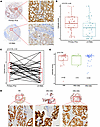 Figure 3
HOXB13 is downregulated in metastatic hormone-sensitive prostate cancer. (A) Representative images of HOXB13 staining in primary tumors (top) and lymph node–metastatic PCa (LN Mets, bottom) are shown in low (×4) and high (×40) magnification. “T” indicates tumor in LN Mets. (B) Quantification of HOXB13 IHC staining intensities in primary PCa and LN Mets. P value was calculated by unpaired, 2-sided t test. Box-and-whisker plots represent the median (line) and bottom and upper quartiles (box bounds); whisker edges indicate the minimum and maximum values. (C) Quantification of HOXB13 IHC staining intensities in paired primary PCa and LN Mets. Data are shown as in B. P value was calculated by paired, 2-sided t test. (D) Representative images of HOXB13 staining in primary PCa from hormone treatment–naive patients (hormone naive, HN; left), or from patients with hormone therapy less than 2 months (hormone received, HR<2M, middle), or from patients with hormone therapy more than 2 months (hormone received, HR>2M, right). The images are shown in low (×10, top) and high (×40, bottom) magnification. (E) Quantification of HOXB13 IHC staining intensities in PCa samples from D. Data are shown as in B. P value was calculated by 1-way ANOVA followed by Tukey’s multiple-comparison test.
Given that HOXB13 is a key cofactor of AR, we wondered whether its expression might be influenced by androgen deprivation therapy (ADT), a standard treatment for advanced PCa. To this end, we exploited the New York University cohort (NYU cohort) of primary PCa that included 30 HN, 5 samples from patients who had received hormone therapy for less than 2 months (HR<2M), and 45 samples from patients treated for more than 2 months (HR>2M). IHC staining revealed that HOXB13 expression was not significantly altered in patients who had received ADT, regardless of treatment duration, when compared to HN samples (Figure 3, D and E). These data suggest that HOXB13 is not directly regulated by ADT, nor did it undergo upregulation during the development of treatment resistance to ADT. In summary, our results indicate that HOXB13 downregulation occurs early at the metastatic processes of PCa, rather than as a consequence of hormone therapy, thus representing a critical therapeutic target in metastatic hormone-sensitive PCa.
Lipid-induced MMP genes mediate HOXB13-loss-induced cell motility. To connect HOXB13-loss-induced lipogenesis with PCa metastasis, we analyzed the expression of epithelial-mesenchymal transition (EMT) signature genes, which are well known to promote metastasis, in publicly available PCa datasets. We found that these genes were expressed at much higher levels in HOXB13-low compared with HOXB13-high tumors (Supplemental Figure 2A), indicating that HOXB13 loss may induce EMT gene expression. Further analysis of genes enriched in the EMT hallmark in our HOXB13-KD cells revealed increased expression of a few key EMT regulators, including SNAI1/2 and ZEB1, and variable expression of others (Supplemental Figure 2, B and C). However, a significant upregulation of EMT effectors such as MMP genes, specifically MMP7, MMP10, MMP12, and MMP13, was observed (Figure 4A). Of these, MMP24 and MMP16 were expressed at very low levels in LNCaP to begin with and thus their reduction is negligible. These findings suggest that HOXB13 KD may enhance cell motility primarily through MMP-mediated disruption of the extracellular matrix (ECM), rather than by broadly increasing PCa cell plasticity through EMT. Of clinical relevance, we validated elevated MMP expression in HOXB13-low compared with HOXB13-high PCa patient samples (Figure 4B). It has been shown that the expression of MMPs is regulated by lipids in adipose tissue. In line with this, we found that MMP gene expression was significantly increased upon stimulation by lipid mixture in LNCaP and PC-3M PCa cell lines (Figure 4, C and D). Critically, RT-qPCR confirmed their upregulation in PCa cells following HOXB13 KD, which was abolished by FASN inhibition using TVB-2640 (Figure 4E), suggesting that lipids, or fatty acids, increased in HOXB13-KD cells may induce MMP expression.
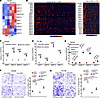 Figure 4
Lipid-induced MMP genes mediate HOXB13-loss-induced cell motility. (A) Heatmap showing MMP expression in LNCaP RNA-seq with control or HOXB13 KD. All expressed MMPs in LNCaP cells were included in analysis. Color bar: z-score. (B) Heatmaps showing expression of MMPs in the indicated PCa patient data sets with samples ordered by HOXB13 level (top row). All the expressed MMPs in patients were included in analysis. Color bar: z-score. (C and D) RT-qPCR analysis of MMP expression in LNCaP (C) and PC-3M (D) cells cultured in lipid-free medium or lipid-rich medium (2% lipid mixture). Data were normalized to GAPDH (mean ± SEM, n = 3). P values were calculated by unpaired, 2-sided t test. (E) RT-qPCR analysis of MMP expression in LNCaP cells with shHOXB13 and/or TVB-2640 treatment. Data were normalized to GAPDH (mean ± SEM, n = 3). P values were calculated by unpaired, 2-sided t test. (F and G) Cell invasion assays of control or HOXB13-KD LNCaP (F) and PC-3M (G) cells treated with DMSO or MMPi. Representative images are shown (left), and the number of invaded cells is quantified (right). Scale bars: 50 μm. Quantification data are the mean ± SD of technical replicates from 1 of 2 (n = 2) independent experiments. P values were calculated by unpaired, 2-sided t test.
Next, we sought to determine whether the induction of MMPs is critical for the increased motility of HOXB13-depleted cells that we have previously reported (9). As multiple MMPs were upregulated in HOXB13-KD cells, we chose PF-00356231 hydrochloride, a broad-spectrum MMP inhibitor (MMPi), with potent activity against MMP12, MMP13, MMP9, MMP8, and MMP3 (32), to block these MMPs simultaneously. In vitro cell invasion assays revealed that HOXB13-KD-induced cell motility was significantly abolished by MMPi in both LNCaP and PC-3M cells (Figure 4, F and G), while cell proliferation was minimally affected (Supplemental Figure 2D). As a control, lipid-rich medium induced LNCaP cell invasion, which was profoundly attenuated by MMPi treatment (Supplemental Figure 2E). In summary, our data suggest that HOXB13-loss-induced lipogenesis promotes PCa cell invasion, at least in part, via MMPs.
HOXB13-KD-induced lipid accumulation and cell invasion were abolished by p300/CBP inhibitors. To discover therapeutic approaches to target HOXB13 loss in metastatic PCa, we tested the clinically available p300/CBP inhibitor CCS1477, since p300 and CBP are required for HOXB13-loss-induced lipogenic gene expression. We first performed Oil Red O (ORO) staining to detect neutral lipids in control and HOXB13-KD LNCaP cells treated with CCS1477. Consistent with our previous report (9), the depletion of HOXB13 induced massive lipid accumulation in LNCaP cells, which, importantly, was drastically reduced upon treatment with CCS1477 (Figure 5A). Similar results were observed in the CRPC cell line 22Rv1 and the AR-negative PC-3M cells (Figure 5B and Supplemental Figure 3, A and B), suggesting an AR-independent mechanism of action. Altogether, our data demonstrated that p300/CBP inhibition significantly abolished HOXB13-loss-induced lipid accumulation in PCa cells, consistent with the transcriptome data shown earlier.
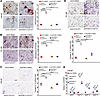 Figure 5
p300 and CBP inhibitors mitigate HOXB13-KD-induced lipid accumulation and cell invasion. (A and B) Representative images of ORO staining (left) and quantification (right) of neutral lipids in LNCaP (A) and PC-3M (B) cells with shHOXB13 and/or CCS1477 treatment. Scale bars: 30 μm. Quantification data are the mean ± SD of technical replicates from 1 of 2 (n = 2) independent experiments. P values were calculated by unpaired, 2-sided t test. (C and D) Cell invasion assays of control or HOXB13-KD LNCaP (C) and PC-3M (D) cells treated with DMSO or CCS1477. CCS1477: 250 nM for LNCaP, 500 nM for PC-3M. Representative images are shown (left/top), and the number of invaded cells is quantified (right/bottom). Scale bar: 50 μm. Quantification data are the mean ± SD of technical replicates from 1 of 2 (n = 2) independent experiments. P values were calculated by unpaired, 2-sided t test. (E) RT-qPCR analysis of MMP expression in LNCaP cells with shHOXB13 and/or CCS1477 treatment. Data were normalized to GAPDH (mean ± SEM, n = 3). P values were calculated by unpaired, 2-sided t test.
Accordingly, in vitro invasion assays revealed that CCS1477 significantly reduced HOXB13-KD-induced cell invasion in both LNCaP and PC-3M cells (Figure 5, C and D). Importantly, this effect was partially rescued by lipid supplementation (Supplemental Figure 3C), further supporting the idea that CCS1477 suppresses HOXB13-KD cell invasion by blocking lipid biosynthesis. Notably, although CCS1477 also decreased control cell invasion, the magnitude of changes was much less than that of the HOXB13-KD cells, suggesting an increased sensitivity of HOXB13-low cells to CCS1477. Moreover, HOXB13-KD cells did not exhibit increased sensitivity to CCS1477 in terms of cell proliferation, suggesting that the effect of p300/CBP inhibition in this context is specific to cell motility rather than growth (Supplemental Figure 3D). As our earlier data indicated that HOXB13-loss-induced cell motility is dependent on MMP genes, we examined whether MMP genes are involved in the cellular response to CCS1477. RT-qPCR analysis showed that the upregulation of MMPs in HOXB13-KD cells was drastically reduced by CCS1477 treatment (Figure 5E). In summary, our data support that HOXB13-KD-induced lipid accumulation and cell invasion can be effectively targeted by p300/CBP inhibitors, likely by suppressing MMP genes.
Pharmacological inhibitors of p300/CBP abolished HOXB13-loss-induced tumor metastasis. Next, we evaluated whether p300/CBP inhibition can attenuate HOXB13-loss-induced tumor metastasis in vivo. As our earlier results showed that HOXB13 KD had minimal impact on PC-3M cell proliferation, we generated intravenous PCa xenograft models by inoculating luciferase-labeled PC-3M cells with either control (pGIPZ) or HOXB13 KD into nude SCID mice through tail vein injection and monitored tumor metastasis. In vivo imaging system (IVIS) confirmed comparable tumor cell uptake in the lungs between groups immediately after tail vein injection (Figure 6A, week 0). At 10 days after PCa cell inoculation, mice bearing control or HOXB13-KD tumors were randomized to receive either vehicle (5% DMSO, 95% methylcellulose) or CCS1477 (20 mg/kg, daily) for 7 weeks by oral gavage. At week 7 after inoculation, IVIS showed apparent metastasis in 4 out of 5 HOXB13-KD mice — 2 in the lung and the other 2 in the prostate. In contrast, only 1 mouse in the control group developed detectable metastatic tumors (in the lung and prostate), confirming that HOXB13 KD increased tumor metastasis (Figure 6A, week 7). Importantly, none of the CCS1477-treated HOXB13-KD mice developed tumor metastasis, strongly supporting the idea that CCS1477 treatment eliminated HOXB13-KD-induced metastasis. Furthermore, the body weight of mice was not significantly affected by the drug (Supplemental Figure 4A), indicating the tolerability of the drug. Distant organs were dissected from the mice at the endpoint. IVIS imaging revealed that more tumor cells metastasized to distant organs, such as the liver, lung, rib, hind leg, and prostate, in the HOXB13-KD group compared with the control and CCS1477-treated mice (Figure 6, B and C, and Supplemental Figure 4, B–D). In summary, these data demonstrate that CCS1477 can effectively suppress HOXB13-loss-induced PCa metastasis in vivo without apparent toxicity, and thus may represent a promising therapeutic strategy for metastatic PCa with low HOXB13 expression.
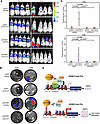 Figure 6
Pharmacological inhibitors of p300 and CBP abolished HOXB13-low tumor metastasis. (A) IVIS imaging of intravenous PC-3M xenograft tumors at weeks 0 (left) and 7 (right) after inoculation. Mice (n = 4 mice for pGIPZ vehicle group, n = 5 mice for the remaining groups) started treatment with CCS1477 on day 10. Heatmap shows IVIS signal intensity color scale. (B and C) Representative ex vivo IVIS images (B, n = 4 mice for pGIPZ vehicle group, n = 5 mice for the remaining groups) and quantifications (C) of PC-3M tumor metastasis to the lung and liver. Heatmap shows IVIS signal intensity color scale. Data are mean ± SD. Indicated P values were calculated by unpaired, 2-sided t test. (D) Graphical model illustrating HOXB13 as a molecular coordinator balancing HDAC3/NCoR and p300/CBP to fine-tune lipogenic gene expression in PCa. In HOXB13-high PCa cells, HOXB13 recruits the HDAC3-NCoR complex to lipogenic enhancers, catalyzing H3K27ac deacetylation and maintaining lipogenic gene expression at a basal level. In HOXB13-low PCa, this balance is disrupted — reduced recruitment of HDAC3 and NCoR leads to increased p300 and CBP binding and elevated H3K27ac levels at lipogenic enhancers. This results in aberrant activation of lipogenic programs, and induction of EMT-promoting genes such as MMPs.


