

Abstract
Oxidative signaling is a central mechanism in alcohol-induced injury and has strong implications for blood-brain barrier (BBB) dysregulation and neuroinflammation. Here, by targeting oxidative signaling, we hypothesized an innovative approach to develop a clinically relevant therapeutic strategy for alleviating alcohol-mediated neurovascular damage. To accomplish this, we enhanced the endogenous activity of nuclear factor E2–related factor 2 (Nrf2) by treatment with a Nrf2 activator III TAT peptide (Nrf2 peptide [NP]) and investigated the neuroprotective role of Nrf2 in promoting antioxidant defense properties and reducing BBB damage and transmigration of leukocytes to the brain following alcohol ingestion. We administered the NP subcutaneously to alcohol-ingested mice and evaluated its therapeutic potential in alleviating alcohol-associated neurovascular impairments. We compared the results with those seen in animals treated with control peptide (random sequence with TAT). The studies showed that the NP treatment preserved the oxidant-antioxidant balance, downregulated ICAM-1 and its receptors, and mitigated BBB damage and leukocyte infiltration into the brain. We validated the effect of the NP in Nrf2-knockout (Nrf2−/−) mice. Thus, this study demonstrates that NP exerts neurovascular protective effects by regulating the oxidant-antioxidant balance, reducing oxidative stress–induced BBB disruption, and limiting transmigration of immune cells to the brain in a mouse model of alcohol ingestion.
Authors
Bibhuti Ballav Saikia, Saleena Alikunju, Yemin A. Poovanthodi, Zayan Kassim, P.M. Abdul Muneer

Abstract
Sarcomas are a heterogeneous group of cancers with few shared therapeutic targets. We show that PI3K signaling is frequently activated in sarcomas due to PTEN loss (in 30%–60%), representing a common therapeutic target. The PI3K pathway has lacked a downstream oncogenic transcription factor. We show TAZ and YAP are transcriptional coactivators regulated by PI3K and drive a transcriptome necessary for tumor growth in a PI3K-driven sarcoma mouse model. This PI3K/TAZ/YAP axis exists in parallel to the known PI3K/AKT/mTORC1 axis, providing a rationale for combination therapy targeting the TAZ/YAP-TEAD interaction and mTORC1. Combination therapy using IK-930 (TEAD inhibitor) and everolimus (mTORC1 inhibitor) synergistically diminished proliferation and anchorage-independent growth of PI3K-activated sarcoma cell lines at low, physiologically achievable doses. Furthermore, this combination therapy showed a synergistic effect in vivo, suggesting that an integrated view of PI3K and Hippo signaling can be leveraged therapeutically in PI3K-activated sarcomas.
Authors
Keith C. Garcia, Ali A. Khan, Krishnendu Ghosh, Souradip Sinha, Nicholas Scalora, Gillian DeWane, Colleen Fullenkamp, Nicole Merritt, Yuliia Drebot, Samuel Y. Yu, Mariah Leidinger, Michael D. Henry, Patrick J. Breheny, Michael S. Chimenti, Munir R. Tanas
Abstract
Nicotinamide adenine dinucleotide (NAD+) is essential for cellular metabolism, DNA repair, and stress responses. NAD+ is synthesized from nicotinamide, nicotinic acid (collectively termed niacin), and tryptophan. In humans, deficiencies in these nutrients result in pellagra, marked by dermatitis, diarrhea, and dementia. The dermatitis associated with pellagra typically manifests as photodermatosis in sun-exposed areas. This study examined the effects of NAD+ deficiency on skin homeostasis using epidermis-specific Nampt–conditional KO (Nampt-cKO) mice. These mice displayed substantial NAD+ depletion, reduced poly(ADP-ribose) polymerase (PARP) activity, and increased DNA damage. Consequently, Nampt-cKO mice developed spontaneous skin inflammation and epidermal hyperplasia. RNA-seq and IHC analyses demonstrated increased IL-36 cytokine expression, suggesting that DNA repair–related genomic stress triggers keratinocyte-driven IL-36 production, which promotes inflammation. Furthermore, reduced COL17A1 expression and elevated thymic stromal lymphopoietin (TSLP) levels were observed. NAD+ repletion by transdermal supplementation of nicotinamide mononucleotide (NMN) suppressed the rise of IL-36 levels and skin inflammation. These findings underscore the importance of Nampt-mediated NAD+ metabolism for epidermal stability and indicate that NAD+ depletion may contribute to IL-36–mediated skin inflammation, offering insights for therapeutic strategies in inflammatory skin disorders.
Authors
Taiki Seki, Jun-Dal Kim, Yasuhito Yahara, Hitoshi Uchida, Keisuke Yaku, Mariam Karim, Teruhiko Makino, Tadamichi Shimizu, Takashi Nakagawa

Abstract
Infectious diseases remain a global health challenge, driven by increasing antimicrobial resistance and the threat of emerging epidemics. Mycobacterium tuberculosis and Staphylococcus aureus are leading causes of mortality worldwide. Trained immunity — a form of innate immune memory — offers a promising approach to enhance pathogen clearance. Here, we demonstrate that IFN-γ induces trained immunity in human monocytes through a mechanism involving mTORC1 activation, glutaminolysis, and epigenetic remodeling. Macrophages derived from IFN-γ–trained monocytes exhibited increased glycolytic activity with enhanced cytokine and chemokine responses upon stimulation or infection. Crucially, trained macrophages had increased production of reactive oxygen species, which mediated enhanced bactericidal activity against methicillin-resistant S. aureus and M. tuberculosis. Furthermore, ATAC-sequencing analysis of IFN-γ–trained macrophages revealed increased chromatin accessibility in regions associated with host defense. Last, IFN-γ training restored impaired innate responses in macrophages from individuals homozygous for the TIRAP 180L polymorphism, a genetic variant associated with increased susceptibility to infection. These findings establish IFN-γ as a potent inducer of trained immunity in human monocytes and support its potential as a host-directed strategy to strengthen antimicrobial defenses, particularly in genetically susceptible individuals and high-risk clinical contexts.
Authors
Dearbhla M. Murphy, Isabella Batten, Aoife O’Farrell, Simon R. Carlile, Sinead A. O’Rourke, Chloe Court, Brenda Morris, Gina Leisching, Gráinne Jameson, Sarah A. Connolly, Adam H. Dyer, John P. McGrath, Emma McNally, Olivia Sandby-Thomas, Anjali Yennemadi, Conor M. Finlay, Clíona Ní Cheallaigh, Jean Dunne, Cilian Ó Maoldomhnaigh, Laura E. Gleeson, Aisling Dunne, Nollaig Bourke, Reinout van Crevel, Donal J. Cox, Niall Conlon, Arjun Raj, Rachel M. McLoughlin, Joseph Keane, Sharee A. Basdeo

Abstract
Mutation of KRAS in endothelial cells (KRAS-ECs) leads to intracerebral hemorrhage (ICH) in brain arteriovenous malformation (bAVM), resulting in severe disabilities or even death. However, it is unclear what causes this hemorrhagic conversion of bAVMs. Here, using a locally established, clinically relevant sporadic bAVM mouse model, created by overexpressing mutant KRAS (KRASG12V) in brain ECs, we demonstrate that KRAS-ECs act as trigger for activation of microglia (MG) and infiltration of macrophages (Mϕ). Using a 3-dimensional immunostaining approach with cleared human and mouse bAVM tissues, we demonstrate an abundance of MG/Mϕ around the bAVM nidus. The presence of MG/Mϕ was correlated to the blood-brain barrier leakage in bAVM areas. Time-lapsed intravital imaging in Cx3cr1-gfp;Ccr2-rfp reporter mice demonstrated the dynamic activation of MG and infiltration of Mϕ toward mutant KRASG12V–modified dysplastic vessels. Importantly, a time-course analysis showed that these activated MG and infiltrated Mϕ are present around the bAVMs prior to hemorrhagic conversion, and controlled depletion of MG/Mϕ reduced ICH incidence in bAVMs. Inhibition of MG/Mϕ with long-term minocycline treatment attenuated the incidence of ICHs around bAVMs. Our study indicates that MG/Mϕ are involved in destabilization of KRASG12V-induced bAVM, leading to hemorrhagic conversion/ICH. Thus, modulation of MG/Mϕ may reduce ICH risk in patients with bAVM.
Authors
Hyejin Park, Jung-Eun Park, Bridger H. Freeman, Bosco Seong Kyu Yang, Shun-Ming Ting, Alexander K. Suh, Jude P.J. Savarraj, Shuning Huang, Jakob Körbelin, Huimahn Alex Choi, Sean P. Marrelli, Jaroslaw Aronowski, Peng Roc Chen, Eunhee Kim, Eun S. Park

Abstract
Degradation of cellular waste from phagocytosis, endocytosis, and autophagy occurs through hydrolases that become activated during acidification of late endosomes and lysosomes (LELs). In our cross-sectional study, we showed diminished LEL acidification and the accumulation of surface-bound nucleosome on monocytes, dendritic cells, B cells, neutrophils, and T cells from patients with systemic lupus erythematosus (SLE). Diminished acidification and exocytosis of undegraded IgG-immune complexes were evident in active, but not inactive, disease. This was supported by our murine study in which LEL acidification was diminished, promoting exocytosis and the accumulation of cell surface IgG-immune complexes. Mechanistically, LEL dysfunction was induced by chronic PI3K activation in lupus-prone MRL/lpr mice. We also showed that on a non-autoimmune C57BL/6 background, deficiency in SHP-1 and inhibition of SHIP-1 activity were sufficient to recapitulate LEL dysfunction found in MRL/lpr mice. Non-acidic LELs were evident in the majority of patients and associated with SLEDAI arthritis, rash, and nephritis. The high frequency of LEL dysfunction in SLE suggests that it could serve as a biomarker identifying a specific disease endotype.
Authors
SunAh Kang, Andrew J. Monteith, Liubov Arbeeva, Karissa Grier, Shruti Saxena Beem, Anthony C. Trujillo, Xinyun Bi, Kai Sun, Rebecca E. Sadun, Mithu Maheswaranathan, Megan E.B. Clowse, Saira Z. Sheikh, Jennifer L. Rogers, Barbara J. Vilen

Abstract
Dysfunctional white adipose tissue contributes to the development of obesity-related morbidities, including insulin resistance, dyslipidemia, and other metabolic disorders. Adipose tissue macrophages (ATMs) accumulate in obesity and play both beneficial and harmful roles in the maintenance of adipose tissue homeostasis and function. Despite their importance, the molecules and mechanisms that regulate these diverse functions are not well understood. Lipid-associated macrophages (LAMs), the dominant subset of obesity-associated ATMs, accumulate in crown-like structures and are characterized by a metabolically activated and proinflammatory phenotype. We previously identified CD9 as a surface marker of LAMs. However, the contribution of CD9 to the activation and function of LAMs during obesity is unknown. Using a myeloid-specific CD9-KO model, we show that CD9 supports ATM-adipocyte adhesion and crown-like structure formation. Furthermore, CD9 promotes the expression of profibrotic and extracellular matrix remodeling genes. Loss of myeloid CD9 reduces adipose tissue fibrosis, increases visceral adipose tissue accumulation, and improves global metabolic outcomes during diet-induced obesity. These results identify CD9 as a causal regulator of pathogenic LAM functions, highlighting CD9 as a potential therapeutic target for treating obesity-associated metabolic disease.
Authors
Julia Chini, Nicole DeMarco, Dana V. Mitchell, Sam J. McCright, Kaitlyn M. Shen, Divyansi Pandey, Rachel L. Clement, Jessica Miller, Rajan Jain, Deanne M. Taylor, Mitchell A. Lazar, David A. Hill

Abstract
Improper light focus on the retina, refractive error, is primarily caused by eye size differences and is the leading cause of vision loss worldwide. C-terminal variants in the Myelin regulatory factor (MYRF) gene, a retinal pigment epithelium–derived (RPE-derived) transcription factor, lead to isolated nanophthalmos characterized by a small, though structurally sound eye. However, other MYRF loss-of-function variants cause syndromic disease. To address this discrepancy, in vitro and animal studies were performed on a pathogenic C-terminal variant dG-MYRF (p.Gly1126fs30*, c.3376-1G>A). Human RPE cells or primary RPE transduced with dG-MYRF showed reduced target gene expression, with decreased steady-state levels of the C-terminal cleavage product, but normal cleavage and localization. A homozygous humanized MYRF C-terminal mouse model (MyrfhumdG/humdG) was embryonic lethal by E18.5, while WT (MyrfhumWT/humWT) mice were viable. Single-cell RNA-seq from E17.5 MyrfhumdG/humdG and KO RxCre;Myrffl/fl (E15.5 and P0) mice revealed shared differentially expressed genes, with decreased effect size in the MyrfhumdG/humdG eyes. These findings support dG-MYRF as a hypomorphic allele. Additionally, 2 MYRF splicing variants creating nonfunctional isoforms were found in families with isolated nanophthalmos. Overall, hypomorphic MYRF alleles underlie isolated nanophthalmos, supporting a tissue-specific threshold effect and highlighting unique roles for the MYRF C-terminus in the RPE.
Authors
Gabrielle M. Rozumek, Michelle L. Brinkmeier, Bin Guan, Su Qing Wang, Catherine Tower, Nina T. Yang, Rachel S. Lim, Dejuan Kong, Daniel Soden, Qitao Zhang, John Y.S. Han, Jason M.L. Miller, Lijin Dong, D. Ford Hannum, Sayoko E. Moroi, Julia E. Richards, Robert B. Hufnagel, Lev Prasov
Abstract
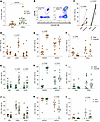
Latently infected cells persist in people living with HIV (PWH) despite suppressive antiretroviral therapy (ART) and evade immune clearance. “Shock and Kill” cure strategies are hampered by insufficient enhancement of targeted immune responses following latency reversal. We previously demonstrated that autologous Vδ2 T cells from PWH retain anti-HIV activity and can reduce CD4+ T cell reservoirs, although their use in cure approaches is limited due to their dual role as a viral reservoir. However, promising clinical data in oncology shows that their unique MHC-unrestricted antigen recognition affords potent on-target cytotoxicity in the absence of graft-versus-host disease when used as an allogeneic adoptive cell therapy modality. Here, we found expanded allogeneic Vδ2 T cells specifically eliminated HIV-infected CD4+ T cells and monocyte-derived macrophages (MDM), overcoming inherent resistance to killing by other cell types such as NK and CD8+ T cells. Notably, we demonstrated that allogeneic Vδ2 T cells recognized and eliminated the HIV-latent CD4+ T cell reservoir following latency reversal. Our study provides evidence for developing an allogeneic γδ T cell therapy for HIV cure and warrants preclinical investigation in combination approaches.
Authors
Brendan T. Mann, Marta Sanz, Alisha Chitrakar, Kayley Langlands, Marc Siegel, Natalia Soriano-Sarabia

Abstract
The cardiac conduction system (CCS) develops asymmetrically along the body axes. In heterotaxy syndrome — resulting from aberrant left-right axis formation — atrial and atrioventricular conduction defects can cause life-threatening arrhythmias. However, the developmental mechanisms regulating the atrioventricular conduction system (AVCS) disposition and integrity remain unclear. To investigate the etiology of AVCS malformations in laterality defects, we analyzed CCS development and function in mouse mutants for Cryptic and Lefty1, which are key regulators of Pitx2 in the left-right axis formation. Cryptic–/– embryos exhibited bilateral sinoatrial nodes and an ectopic anterior AV node and bundle accompanied by reduced Pitx2 expression. In contrast, Lefty1–/– embryos showed a hypoplastic sinoatrial node and AV node–bundle dissociation with ectopic Pitx2 expression. Single-cell transcriptomic analysis of Pitx2–/– hearts revealed expansion of AV node and bundle populations, consistent with a repressive role of Pitx2 in AVCS specification. Genetic lineage tracing indicated that Pitx2-expressing cells from the left lateral plate mesoderm populate cranioventral cardiac regions, where AVCS development is suppressed. Together, these findings clarify how global left-right axis information is locally integrated to shape AVCS disposition and integrity, providing a mechanistic model for AVCS abnormalities in laterality-associated congenital heart disease.
Authors
Kunihiko Joo, Ryohei Matsuoka, Keiko Kitajima, Kenta Yashiro, Akira Shiose, Ryuji Tominaga, Michael M. Shen, Shinya Oki, Chikara Meno
No posts were found with this tag.


