
Research ArticleEndocrinologyMetabolism
Open Access |  10.1172/jci.insight.173423
Epigenetic programming of estrogen receptor in adipocytes by high-fat diet regulates obesity-induced inflammation
Rui Wu,1,2 Fenfen Li,2 Shirong Wang,2 Jia Jing,2 Xin Cui,2 Yifei Huang,2 Xucheng Zhang,2 Jose A. Carrillo,3 Zufeng Ding,2 Jiuzhou Song,3 Liqing Yu,4 Huidong Shi,5,6 Bingzhong Xue,2 and Hang Shi2
1School of Pharmaceutical Science and Technology, Hangzhou Institute for Advanced Study, University of Chinese Academy of Sciences, Hangzhou, China.
2Department of Biology, Georgia State University, Atlanta, Georgia, USA.
3Department of Animal and Avian Sciences, University of Maryland at College Park, College Park, Maryland, USA.
4Division of Endocrinology, Diabetes and Nutrition, Department of Medicine, University of Maryland School of Medicine, Baltimore, Maryland, USA.
5Georgia Cancer Center and
6Department of Biochemistry and Molecular Biology, Medical College of Georgia, Augusta University, Augusta, Georgia, USA.
Address correspondence to: Hang Shi or Bingzhong Xue, Department of Biology, Georgia State University, PO Box 4010, Atlanta, Georgia 30302, USA. Phone: 404.413.5799; Email: hshi3@gsu.edu (HS). Phone: 404.413.5747; Email: bxue@gsu.edu (BX).
JAC’s present address is: Council on Dairy Cattle Breeding, Bowie, Maryland, USA.
Find articles by Wu, R. in: PubMed | Google Scholar
1School of Pharmaceutical Science and Technology, Hangzhou Institute for Advanced Study, University of Chinese Academy of Sciences, Hangzhou, China.
2Department of Biology, Georgia State University, Atlanta, Georgia, USA.
3Department of Animal and Avian Sciences, University of Maryland at College Park, College Park, Maryland, USA.
4Division of Endocrinology, Diabetes and Nutrition, Department of Medicine, University of Maryland School of Medicine, Baltimore, Maryland, USA.
5Georgia Cancer Center and
6Department of Biochemistry and Molecular Biology, Medical College of Georgia, Augusta University, Augusta, Georgia, USA.
Address correspondence to: Hang Shi or Bingzhong Xue, Department of Biology, Georgia State University, PO Box 4010, Atlanta, Georgia 30302, USA. Phone: 404.413.5799; Email: hshi3@gsu.edu (HS). Phone: 404.413.5747; Email: bxue@gsu.edu (BX).
JAC’s present address is: Council on Dairy Cattle Breeding, Bowie, Maryland, USA.
Find articles by Li, F. in: PubMed | Google Scholar
1School of Pharmaceutical Science and Technology, Hangzhou Institute for Advanced Study, University of Chinese Academy of Sciences, Hangzhou, China.
2Department of Biology, Georgia State University, Atlanta, Georgia, USA.
3Department of Animal and Avian Sciences, University of Maryland at College Park, College Park, Maryland, USA.
4Division of Endocrinology, Diabetes and Nutrition, Department of Medicine, University of Maryland School of Medicine, Baltimore, Maryland, USA.
5Georgia Cancer Center and
6Department of Biochemistry and Molecular Biology, Medical College of Georgia, Augusta University, Augusta, Georgia, USA.
Address correspondence to: Hang Shi or Bingzhong Xue, Department of Biology, Georgia State University, PO Box 4010, Atlanta, Georgia 30302, USA. Phone: 404.413.5799; Email: hshi3@gsu.edu (HS). Phone: 404.413.5747; Email: bxue@gsu.edu (BX).
JAC’s present address is: Council on Dairy Cattle Breeding, Bowie, Maryland, USA.
Find articles by Wang, S. in: PubMed | Google Scholar
1School of Pharmaceutical Science and Technology, Hangzhou Institute for Advanced Study, University of Chinese Academy of Sciences, Hangzhou, China.
2Department of Biology, Georgia State University, Atlanta, Georgia, USA.
3Department of Animal and Avian Sciences, University of Maryland at College Park, College Park, Maryland, USA.
4Division of Endocrinology, Diabetes and Nutrition, Department of Medicine, University of Maryland School of Medicine, Baltimore, Maryland, USA.
5Georgia Cancer Center and
6Department of Biochemistry and Molecular Biology, Medical College of Georgia, Augusta University, Augusta, Georgia, USA.
Address correspondence to: Hang Shi or Bingzhong Xue, Department of Biology, Georgia State University, PO Box 4010, Atlanta, Georgia 30302, USA. Phone: 404.413.5799; Email: hshi3@gsu.edu (HS). Phone: 404.413.5747; Email: bxue@gsu.edu (BX).
JAC’s present address is: Council on Dairy Cattle Breeding, Bowie, Maryland, USA.
Find articles by Jing, J. in: PubMed | Google Scholar
1School of Pharmaceutical Science and Technology, Hangzhou Institute for Advanced Study, University of Chinese Academy of Sciences, Hangzhou, China.
2Department of Biology, Georgia State University, Atlanta, Georgia, USA.
3Department of Animal and Avian Sciences, University of Maryland at College Park, College Park, Maryland, USA.
4Division of Endocrinology, Diabetes and Nutrition, Department of Medicine, University of Maryland School of Medicine, Baltimore, Maryland, USA.
5Georgia Cancer Center and
6Department of Biochemistry and Molecular Biology, Medical College of Georgia, Augusta University, Augusta, Georgia, USA.
Address correspondence to: Hang Shi or Bingzhong Xue, Department of Biology, Georgia State University, PO Box 4010, Atlanta, Georgia 30302, USA. Phone: 404.413.5799; Email: hshi3@gsu.edu (HS). Phone: 404.413.5747; Email: bxue@gsu.edu (BX).
JAC’s present address is: Council on Dairy Cattle Breeding, Bowie, Maryland, USA.
Find articles by Cui, X. in: PubMed | Google Scholar
1School of Pharmaceutical Science and Technology, Hangzhou Institute for Advanced Study, University of Chinese Academy of Sciences, Hangzhou, China.
2Department of Biology, Georgia State University, Atlanta, Georgia, USA.
3Department of Animal and Avian Sciences, University of Maryland at College Park, College Park, Maryland, USA.
4Division of Endocrinology, Diabetes and Nutrition, Department of Medicine, University of Maryland School of Medicine, Baltimore, Maryland, USA.
5Georgia Cancer Center and
6Department of Biochemistry and Molecular Biology, Medical College of Georgia, Augusta University, Augusta, Georgia, USA.
Address correspondence to: Hang Shi or Bingzhong Xue, Department of Biology, Georgia State University, PO Box 4010, Atlanta, Georgia 30302, USA. Phone: 404.413.5799; Email: hshi3@gsu.edu (HS). Phone: 404.413.5747; Email: bxue@gsu.edu (BX).
JAC’s present address is: Council on Dairy Cattle Breeding, Bowie, Maryland, USA.
Find articles by Huang, Y. in: PubMed | Google Scholar
1School of Pharmaceutical Science and Technology, Hangzhou Institute for Advanced Study, University of Chinese Academy of Sciences, Hangzhou, China.
2Department of Biology, Georgia State University, Atlanta, Georgia, USA.
3Department of Animal and Avian Sciences, University of Maryland at College Park, College Park, Maryland, USA.
4Division of Endocrinology, Diabetes and Nutrition, Department of Medicine, University of Maryland School of Medicine, Baltimore, Maryland, USA.
5Georgia Cancer Center and
6Department of Biochemistry and Molecular Biology, Medical College of Georgia, Augusta University, Augusta, Georgia, USA.
Address correspondence to: Hang Shi or Bingzhong Xue, Department of Biology, Georgia State University, PO Box 4010, Atlanta, Georgia 30302, USA. Phone: 404.413.5799; Email: hshi3@gsu.edu (HS). Phone: 404.413.5747; Email: bxue@gsu.edu (BX).
JAC’s present address is: Council on Dairy Cattle Breeding, Bowie, Maryland, USA.
Find articles by Zhang, X. in: PubMed | Google Scholar
1School of Pharmaceutical Science and Technology, Hangzhou Institute for Advanced Study, University of Chinese Academy of Sciences, Hangzhou, China.
2Department of Biology, Georgia State University, Atlanta, Georgia, USA.
3Department of Animal and Avian Sciences, University of Maryland at College Park, College Park, Maryland, USA.
4Division of Endocrinology, Diabetes and Nutrition, Department of Medicine, University of Maryland School of Medicine, Baltimore, Maryland, USA.
5Georgia Cancer Center and
6Department of Biochemistry and Molecular Biology, Medical College of Georgia, Augusta University, Augusta, Georgia, USA.
Address correspondence to: Hang Shi or Bingzhong Xue, Department of Biology, Georgia State University, PO Box 4010, Atlanta, Georgia 30302, USA. Phone: 404.413.5799; Email: hshi3@gsu.edu (HS). Phone: 404.413.5747; Email: bxue@gsu.edu (BX).
JAC’s present address is: Council on Dairy Cattle Breeding, Bowie, Maryland, USA.
Find articles by Carrillo, J. in: PubMed | Google Scholar
1School of Pharmaceutical Science and Technology, Hangzhou Institute for Advanced Study, University of Chinese Academy of Sciences, Hangzhou, China.
2Department of Biology, Georgia State University, Atlanta, Georgia, USA.
3Department of Animal and Avian Sciences, University of Maryland at College Park, College Park, Maryland, USA.
4Division of Endocrinology, Diabetes and Nutrition, Department of Medicine, University of Maryland School of Medicine, Baltimore, Maryland, USA.
5Georgia Cancer Center and
6Department of Biochemistry and Molecular Biology, Medical College of Georgia, Augusta University, Augusta, Georgia, USA.
Address correspondence to: Hang Shi or Bingzhong Xue, Department of Biology, Georgia State University, PO Box 4010, Atlanta, Georgia 30302, USA. Phone: 404.413.5799; Email: hshi3@gsu.edu (HS). Phone: 404.413.5747; Email: bxue@gsu.edu (BX).
JAC’s present address is: Council on Dairy Cattle Breeding, Bowie, Maryland, USA.
Find articles by Ding, Z. in: PubMed | Google Scholar
1School of Pharmaceutical Science and Technology, Hangzhou Institute for Advanced Study, University of Chinese Academy of Sciences, Hangzhou, China.
2Department of Biology, Georgia State University, Atlanta, Georgia, USA.
3Department of Animal and Avian Sciences, University of Maryland at College Park, College Park, Maryland, USA.
4Division of Endocrinology, Diabetes and Nutrition, Department of Medicine, University of Maryland School of Medicine, Baltimore, Maryland, USA.
5Georgia Cancer Center and
6Department of Biochemistry and Molecular Biology, Medical College of Georgia, Augusta University, Augusta, Georgia, USA.
Address correspondence to: Hang Shi or Bingzhong Xue, Department of Biology, Georgia State University, PO Box 4010, Atlanta, Georgia 30302, USA. Phone: 404.413.5799; Email: hshi3@gsu.edu (HS). Phone: 404.413.5747; Email: bxue@gsu.edu (BX).
JAC’s present address is: Council on Dairy Cattle Breeding, Bowie, Maryland, USA.
Find articles by Song, J. in: PubMed | Google Scholar
1School of Pharmaceutical Science and Technology, Hangzhou Institute for Advanced Study, University of Chinese Academy of Sciences, Hangzhou, China.
2Department of Biology, Georgia State University, Atlanta, Georgia, USA.
3Department of Animal and Avian Sciences, University of Maryland at College Park, College Park, Maryland, USA.
4Division of Endocrinology, Diabetes and Nutrition, Department of Medicine, University of Maryland School of Medicine, Baltimore, Maryland, USA.
5Georgia Cancer Center and
6Department of Biochemistry and Molecular Biology, Medical College of Georgia, Augusta University, Augusta, Georgia, USA.
Address correspondence to: Hang Shi or Bingzhong Xue, Department of Biology, Georgia State University, PO Box 4010, Atlanta, Georgia 30302, USA. Phone: 404.413.5799; Email: hshi3@gsu.edu (HS). Phone: 404.413.5747; Email: bxue@gsu.edu (BX).
JAC’s present address is: Council on Dairy Cattle Breeding, Bowie, Maryland, USA.
Find articles by Yu, L. in: PubMed | Google Scholar
1School of Pharmaceutical Science and Technology, Hangzhou Institute for Advanced Study, University of Chinese Academy of Sciences, Hangzhou, China.
2Department of Biology, Georgia State University, Atlanta, Georgia, USA.
3Department of Animal and Avian Sciences, University of Maryland at College Park, College Park, Maryland, USA.
4Division of Endocrinology, Diabetes and Nutrition, Department of Medicine, University of Maryland School of Medicine, Baltimore, Maryland, USA.
5Georgia Cancer Center and
6Department of Biochemistry and Molecular Biology, Medical College of Georgia, Augusta University, Augusta, Georgia, USA.
Address correspondence to: Hang Shi or Bingzhong Xue, Department of Biology, Georgia State University, PO Box 4010, Atlanta, Georgia 30302, USA. Phone: 404.413.5799; Email: hshi3@gsu.edu (HS). Phone: 404.413.5747; Email: bxue@gsu.edu (BX).
JAC’s present address is: Council on Dairy Cattle Breeding, Bowie, Maryland, USA.
Find articles by
Shi, H.
in:
PubMed
|
Google Scholar
|

1School of Pharmaceutical Science and Technology, Hangzhou Institute for Advanced Study, University of Chinese Academy of Sciences, Hangzhou, China.
2Department of Biology, Georgia State University, Atlanta, Georgia, USA.
3Department of Animal and Avian Sciences, University of Maryland at College Park, College Park, Maryland, USA.
4Division of Endocrinology, Diabetes and Nutrition, Department of Medicine, University of Maryland School of Medicine, Baltimore, Maryland, USA.
5Georgia Cancer Center and
6Department of Biochemistry and Molecular Biology, Medical College of Georgia, Augusta University, Augusta, Georgia, USA.
Address correspondence to: Hang Shi or Bingzhong Xue, Department of Biology, Georgia State University, PO Box 4010, Atlanta, Georgia 30302, USA. Phone: 404.413.5799; Email: hshi3@gsu.edu (HS). Phone: 404.413.5747; Email: bxue@gsu.edu (BX).
JAC’s present address is: Council on Dairy Cattle Breeding, Bowie, Maryland, USA.
Find articles by
Xue, B.
in:
PubMed
|
Google Scholar
|
1School of Pharmaceutical Science and Technology, Hangzhou Institute for Advanced Study, University of Chinese Academy of Sciences, Hangzhou, China.
2Department of Biology, Georgia State University, Atlanta, Georgia, USA.
3Department of Animal and Avian Sciences, University of Maryland at College Park, College Park, Maryland, USA.
4Division of Endocrinology, Diabetes and Nutrition, Department of Medicine, University of Maryland School of Medicine, Baltimore, Maryland, USA.
5Georgia Cancer Center and
6Department of Biochemistry and Molecular Biology, Medical College of Georgia, Augusta University, Augusta, Georgia, USA.
Address correspondence to: Hang Shi or Bingzhong Xue, Department of Biology, Georgia State University, PO Box 4010, Atlanta, Georgia 30302, USA. Phone: 404.413.5799; Email: hshi3@gsu.edu (HS). Phone: 404.413.5747; Email: bxue@gsu.edu (BX).
JAC’s present address is: Council on Dairy Cattle Breeding, Bowie, Maryland, USA.
Find articles by Shi, H. in: PubMed | Google Scholar
Published August 26, 2025 - More info
JCI Insight. 2025;10(19):e173423. https://doi.org/10.1172/jci.insight.173423.
© 2025 Wu et al. This work is licensed under the Creative Commons Attribution 4.0 International License. To view a copy of this license, visit http://creativecommons.org/licenses/by/4.0/.
Received: June 27, 2023; Accepted: August 20, 2025

-
Results
Dynamic changes of the DNA methylome in white fat of HFD-fed mice. To study whether HFD reprograms the DNA methylome in fat tissue, we performed a DNA methylation profiling experiment in gonadal white adipose tissue (gWAT) of male mice fed with either low-fat diet (LFD) or HFD for 12 weeks using the RRBS approach (11–13). Our bioinformatic analysis showed that there were up to 1,630 differentially methylated regions (DMRs) in HFD- versus chow-fed mice. Around 44.1% of the DMRs were located in intergenic regions, with the rest of the DMRs distributed within genes including 5′-end/5′-untranslated region (5′-UTR), cDNA coding sequences (CDS), introns, and 3′-end/3′-UTR (Figure 1A). Within the genes with altered DNA methylation level, 700 genes exhibited upregulated DNA methylation rates by HFD and 211 genes exhibited downregulated DNA methylation rates by HFD. These data suggest that HFD feeding dynamically changes DNA methylome in fat, with the majority of the genes (77%) exhibiting an increase in DNA methylation status. In addition, Gene Ontology (GO) and Kyoto Encyclopedia of Genes and Genomes (KEGG) analysis suggested that genes with methylation changes were involved in various pathways, including biological process, molecular function, and cellular component (Supplemental Figure 1; supplemental material available online with this article; https://doi.org/10.1172/jci.insight.173423DS1).
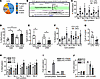 Figure 1
HFD regulates Esr1 expression via promoter DNA methylation. (A and B) Distribution of DMRs in the genome (A) and RRBS profiling of DNA methylation levels at Esr1 promoter (B) in gWAT of male mice fed with LFD or HFD for 12 weeks. RRBS was performed in gWAT from male C57BL/6J mice fed with LFD or HFD for 12 weeks. Genomic DNA from 4 animals was pooled in each group for RRBS analysis. (C) DNA methylation levels at individual CpG sites at Esr1 promoter in gWAT of male C57BL/6J mice fed LFD or HFD for 12 weeks, n = 4/group. *P < 0.05 vs. LFD by Student’s t test. (D and E) Average DNA methylation levels at Esr1 promoter (D, n = 5/group) and Esr1 expression (E, n = 4/group) in gWAT of male C57BL/6J mice fed LFD or HFD for 12 or 24 weeks. *P < 0.05 vs. LFD by Student’s t test. (F and G) DNA methylation levels at individual CpG sites at Esr1 promoter (F) and Esr1 expression (G) in gWAT of female C57BL/6J mice fed LFD or HFD for 12 weeks, n = 5/group. *P < 0.05 vs. LFD by Student’s t test. (H) DNA methylation levels at individual CpG sites at Esr1 promoter in 3T3-L1 adipocytes treated with palmitate (C16) or stearate (C18), n = 3/group. Groups labeled with different letters are statistically different from each other as analyzed by 1-way ANOVA with Fisher’s least significant difference (LSD) post hoc test. (I) Esr1 promoter luciferase activity in 3T3-L1 adipocytes transfected with fully methylated or unmethylated constructs, n = 3. *P < 0.05 vs. all other groups as analyzed by 2-way ANOVA with Fisher’s LSD post hoc test. (J) Esr1 promoter luciferase activity in 3T3-L1 adipocytes transfected with unmethylated constructs treated with BSA, palmitate (C:16, 200 μM), or stearate (C:18, 200 μM). n = 3. *P < 0.05 vs. BSA by 2-way ANOVA with Fisher’s LSD post hoc test. All data are expressed as mean ± SEM.
Methylation of the Esr1 promoter is enhanced by HFD feeding possibly via DNMT1 and DNMT3a. Notably, our RRBS profiling indicated that methylation rate at the 5′-end of the Esr1 promoter was significantly increased in gWAT of HFD-fed mice as indicated using the University of California Santa Cruz (UCSC) Genome Browser (Figure 1B). Since adipocyte Esr1 has emerged as an antiinflammatory molecule in obesity (14–16), we focus on Esr1 as the main methylation target during diet-induced obesity in this study. Interestingly, the proximal promoter and 5′-UTR of Esr1 are enriched with CpG islands, among which 5 CpG sites are located downstream adjacent to the TATA box (Supplemental Figure 2), raising a possibility that the Esr1 promoter might be subjected to epigenetic regulation through DNA methylation by HFD. Indeed, our pyrosequencing analysis indicated that HFD feeding significantly increased DNA methylation at several CpG sites at Esr1 promoter in gWAT of male C57BL6J mice (Figure 1C). In consistency, the average DNA methylation rate at Esr1 promoter in gWAT was increased in both 12-week and 24-week HFD-fed mice (Figure 1D). This was associated with downregulation of Esr1 mRNA expression in gWAT of both 12-week and 24-week HFD-fed mice, with a more profound reduction observed in 12-week HFD-fed mice (Figure 1E). Interestingly, we observed that average DNA methylation level at Esr1 promoter was already increased in 24-week LFD-fed mice compared with that of 12-week (Figure 1D), suggesting that besides dietary factors, aging may be another important factor that regulates DNA methylation at Esr1 promoter, which may contribute to aging-associated metabolic dysfunction. This age-related change may contribute to the more profoundly increased Esr1 promoter DNA methylation and more profoundly reduced Esr1 expression observed between HFD- and LFD-fed mice at 12 weeks compared with that of 24 weeks (Figure 1, D and E). Similarly, we also found that HFD-fed female mice, like male mice, also displayed increased DNA methylation rate at Esr1 promoter coupled with decreased Esr1 expression in the gonadal fat depots (gWAT) (Figure 1, F and G).
We then tested whether saturated free fatty acids, whose levels are abundant in HFDs and are commonly elevated in obesity, regulate DNA methylation levels at the Esr1 promoter. 3T3-L1 preadipocytes were differentiated and treated with palmitate (C16, 200 μM) and stearate (C18, 200 μM) for 2 days. Pyrosequencing analysis showed that stearate significantly upregulated methylation rates at individual CpG sites at Esr1 promoter, while palmitate exerted a lesser effect (Figure 1H). To determine whether Esr1 promoter activity is indeed regulated by methylation, we cloned a 1 kb proximal promoter region at the Esr1 locus, including the CpG-enriched regions, into pGL3-luciferase expression vector and examined the fully methylated versus unmethylated Esr1 promoter activity by transfecting these constructs into 3T3-L1 cells. Our luciferase assays showed that the luciferase activity of the unmethylated promoter was more than 4-fold higher than that of the fully methylated promoter (Figure 1I). Interestingly, the increased luciferase activity in unmethylated Esr1 promoter was significantly suppressed in the presence of 200 μM palmitate or stearate (Figure 1J), further verifying that saturated fatty acids suppress Esr1 promoter activity via regulating Esr1 promoter DNA methylation.
To determine which DNA methyltransferases (DNMT1, 3A, or 3B) and demethylases (TET1, 2, and 3) may mediate the increased DNA methylation at the Esr1 promoter caused by HFD feeding, we examined the binding of DNMTs to the Esr1 promoter using ChIP assay in gWAT of mice fed with either LFD or HFD. We found that HFD feeding significantly enhanced the binding of DNMT1 and DNMT3A to the Esr1 promoter in gWAT (Figure 2, A and B), while we could not detect any DNMT3B binding to Esr1 promoter because of low expression (data not shown). Interestingly, HFD feeding also increased mRNA expression of Dnmt1 and Dnmt3a in gWAT of HFD-fed mice (Figure 2, C and D). A similar increase was also observed in DNMT1 protein levels in gWAT of HFD-fed mice (Figure 2E). Moreover, HFD feeding also downregulated the expression of Tet1 and Tet2 and tended to downregulate Tet3 expression in gWAT (Supplemental Figure 3). To further narrow down whether DNMT1 or -3A mediates Esr1 promoter methylation, we knocked down Dnmt1 or Dnmt3a in 3T3-L1 adipocytes after day 5 or day 8 of differentiation. We found that Dnmt1 knockdown markedly promoted the expression of Esr1 mRNA in adipocytes with Dnmt1 knockdown at either day 5 or day 8 of differentiation, while Dnmt3a knockdown either had no effect on or even decreased Esr1 expression (Figure 2, F and G). To further study how Dnmt1 regulates Esr1 expression in more physiologically relevant settings, we generated AD1KO mice by crossing Dnmt1-floxed mice (17) with adiponectin-Cre mice (18). We found that adipocytes differentiated from AD1KO mice significantly increased the expression of Esr1 compared with adipocytes differentiated from fl/fl mice (Figure 2H). These data suggest that DNMT1 may be a key enzyme in mediating Esr1 promoter methylation induced by HFD feeding.
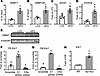 Figure 2
DNMT1 mediates HFD-induced increase of DNA methylation at Esr1 promoter. (A and B) ChIP analysis of binding of DNMT1 (A) and DNMT3a (B) at Esr1 promoter in gWAT of male mice fed with LFD or HFD for 12 weeks, n = 3/group. *P < 0.05 vs. LFD by Student’s t test. (C and D) Expression of Dnmt1 (C) and Dnmt3a (D) in gWAT of male mice fed with LFD or HFD for 12 weeks, n = 4/group. *P < 0.05 vs. LFD by Student’s t test. (E) DNMT1 protein levels in gWAT of male mice fed with LFD or HFD for 12 weeks, n = 3/group. (F and G) Expression of Esr1 in 3T3-L1 adipocytes with Dnmt1 or Dnmt3a knockdown at day 5 (F) or day 8 (G) of differentiation, n = 3/group. Groups labeled with different letters are statistically different from each other as analyzed by 1-way ANOVA with Fisher’s LSD post hoc test. (H) Expression of Esr1 in primary adipocytes differentiated from AD1KO and their fl/fl littermates, n = 4/group. *P < 0.05 vs. fl/fl by Student’s t test. All data are expressed as mean ± SEM.
Inhibiting DNA methylation increases Esr1 expression and decreases inflammation in adipocytes. Since Esr1 has been implicated in the regulation of inflammatory pathways (14–16), we interrogated whether inhibiting DNA methylation could increase Esr1 expression, thereby decreasing inflammation in adipocytes. Indeed, knockdown of Esr1 in 3T3-L1 adipocytes (Supplemental Figure 4A) promoted the expression of inflammatory genes, such as tumor necrosis factor (Tnfα) and interleukin-1β (Il1β) (Figure 3A), while overexpression of Esr1 (Supplemental Figure 4B) significantly suppressed these inflammatory genes’ expression (Figure 3B). We then investigated whether inhibiting DNA methylation pharmacologically by 5-aza-2′-deoxycytidine (5-aza-dC), a nucleoside-based DNMT inhibitor that induces demethylation, would cause demethylation at the Esr1 promoter and increase its expression, leading to an antiinflammatory effect in adipose tissue. We fed 6-week-old male C57BL/6J mice with either LFD or HFD for 16 weeks to establish diet-induced obesity and then treated them with either saline or low-dose 5-aza-dC (i.p.) (0.25 mg/kg BW, 3 times per week) for 6 weeks. This low-dose 5-aza-dC treatment has been shown to exert very low toxicity as it did not change body weight and fat mass (10, 19). As expected, 5-aza-dC treatment did not change body weight and adiposity in these mice (Supplemental Figure 5, A–C). However, while 5-aza-dC treatment did not change fed glucose levels, it significantly reduced fed insulin levels, and calculated glucose × insulin products (Figure 3C), indicating 5-aza-dC treatment improved insulin sensitivity in HFD-fed mice without changes in body weight and adiposity. This was verified by ITT (Figure 3C). Interestingly, we found that HFD feeding suppressed the expression of Esr1 in gWAT, which was restored by 5-aza-dC treatment (Figure 3D). Moreover, 5-aza-dC treatment prevented HFD-induced expression of inflammatory genes, such as Tnfα and Il1β (Figure 3D).
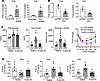 Figure 3
Inhibiting DNA methylation increases Esr1 expression and decreases inflammation in adipocytes. (A and B) Pro-inflammatory gene expression in 3T3-L1 adipocytes with Esr1 knockdown (A) or overexpression (B), n = 3/group. *P < 0.05 vs. Scramble in A or pcDNA in B by Student’s t test. (C) Plasma glucose, insulin, glucose × insulin products, and insulin tolerance test (ITT) in DIO mice treated with 5-aza-dC (0.25 mg/kg BW, 3 times per week) for 6 weeks, n = 4–6/group. Groups labeled with different letters are statistically different from each other; *P < 0.05 vs. other groups. Statistical significance was analyzed by 1-way ANOVA with Fisher’s LSD post hoc test. (D) Esr1 and pro-inflammatory gene expression in gWAT of DIO mice treated with 5-aza-dC (0.25 mg/kg BW, 3 times per week) for 6 weeks, n = 5/group. Groups labeled with different letters are statistically different from each other as analyzed by Kruskal-Wallis nonparametric ANOVA by rank for Esr1 and ANOVA with Fisher’s LSD post hoc test for Tnfα and Il1β. All data are expressed as mean ± SEM.
This was further verified with a genetic approach using Dnmt1-deficient adipocytes differentiated from primary preadipocytes of AD1KO. Primarily differentiated adipocytes from Dnmt1-deficient or fl/fl mice were treated with saturated fatty acids and pro-inflammatory cytokines, obesity-associated factors whose levels are commonly elevated in obesity. We found that the saturated fatty acids palmitate (C16) and stearate (C18) promoted inflammatory gene expression in adipocytes from fl/fl mice; this effect was prevented in adipocytes from AD1KO mice (Figure 4, A and B). Similar results were observed in Dnmt1-deficient adipocytes treated with TNF-α. Dnmt1 deficiency significantly attenuated TNF-α–induced expression of inflammatory genes, including Tnfα, Il6, inducible nitric oxide synthase 2 (Nos2/iNos), and monocyte chemoattractant protein-1 (Mcp1) (Figure 4, C–F).
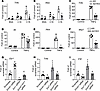 Figure 4
Adipocyte Esr1 mediates the beneficial effects of inhibiting DNA methylation–induced decrease in adipocyte inflammation. (A and B) Pro-inflammatory gene Tnfα (A) and iNos (B) expression in adipocytes differentiated from AD1KO and fl/fl mice and treated with palmitate (C16) or stearate (C18), n = 3/group. *P < 0.05 vs. fl/fl by Student’s t test. (C–F) Pro-inflammatory gene Tnfα (C), Il6 (D), iNos (E), and Mcp1 (F) expression in adipocytes differentiated from AD1KO and fl/fl mice and treated with TNF-α, n = 4–5/group. *P < 0.05 vs. fl/fl by Student’s t test. (G–I) Esr1 (G), Tnfα (H), and Il1β (I) expression in 3T3-L1 adipocytes with Dnmt1 and/or Esr1 knockdown. Day 5 differentiated 3T3-L1 cells were transfected with scramble, Dnmt1, Esr1, or both Dnmt1 and Esr1 siRNA. Two days later, cells were treated with TNF-α, and samples were collected for gene expression analysis. n = 6. Groups labeled with different letters are statistically different from each other as analyzed by 1-way ANOVA with Fisher’s LSD post hoc test. All data are expressed as mean ± SEM.
We have previously shown that inhibiting DNA methylation in macrophages by 5-aza-dC or Dnmt1 deficiency exerts significant antiinflammatory effects (10). To further study whether the beneficial effects of inhibiting DNA methylation with either 5-aza-dC or adipocyte-specific Dnmt1 deletion are mediated via adipocyte Esr1, we knocked down both Dnmt1 and Esr1 in differentiated 3T3-L1 adipocytes. As shown in Figure 4, G–I, knocking down Dnmt1 significantly increased Esr1 expression in 3T3-L1 adipocytes, with the concomitant downregulation of Tnfα and Il1β. As expected, Esr1 knockdown in 3T3-L1 adipocytes significantly upregulated Tnfα and Il1β expression and further abolished the inhibitory effects of Dnmt1 knockdown on these pro-inflammatory cytokines’ expression, indicating that the beneficial effects of inhibiting DNA methylation on adipose tissue are mediated by adipocyte Esr1.
Adipocyte-specific deletion of DNA methylation ameliorates HFD-induced obesity, adipose inflammation, and insulin resistance. To more specifically study the role of adipocyte Dnmt1 in regulating adipose tissue inflammation, we generated AD1KO mice by crossing Dnmt1-floxed mice with adiponectin-Cre mice. As expected, Dnmt1 mRNA and protein levels were decreased in gWAT of AD1KO mice (Supplemental Figure 6, A and B). We then further characterized the metabolic phenotypes of body weight, adipose inflammation, and insulin sensitivity in both female and male AD1KO and their control fl/fl littermate mice fed HFD. Figure 5A showed that upon challenge with HFD, there was no significant difference in body weight in female mice between the 2 genotypes. However, female AD1KO mice exhibited a significant decrease in fat mass in various fat depots (Figure 5B) with smaller adipocytes (Figure 5C), whereas no difference in liver weight was observed (Figure 5B). Using a PhenoMaster metabolic cage system, we found that female AD1KO mice exhibited higher energy expenditure (Figure 5D) with higher oxygen consumption (Supplemental Figure 6C) with no changes in locomotor activity and food intake (Supplemental Figure 6, D and E), suggesting that the enhanced energy expenditure in female AD1KO mice largely accounted for their reduced adiposity. Further, female AD1KO mice also displayed improved glucose tolerance and insulin sensitivity as assessed by glucose and insulin tolerance tests (Figure 5, E and F). These data indicate that female mice with adipocyte Dnmt1 deficiency have reduced adiposity when fed HFD and are protected from obesity-induced insulin resistance.
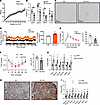 Figure 5
Adipocyte Dnmt1 deletion improves metabolic phenotypes in female mice fed HFD. (A and B) Body weight (A) and adipose tissue and liver weight (B) in female AD1KO and fl/fl mice fed HFD, n = 6/group. *P < 0.05 vs. fl/fl by Student’s t test. (C) H&E staining of gWAT of female AD1KO and fl/fl mice fed HFD. Images are representative from 3 replicate samples. (D) Energy expenditure in female AD1KO and fl/fl mice fed HFD, n = 4/group. *P < 0.05 vs. fl/fl by Student’s t test. (E and F) Glucose tolerance test (GTT) (E) and ITT (F) in female AD1KO and fl/fl mice fed HFD, n = 6/group. *P < 0.05 vs. fl/fl by 1-way ANOVA with repeated measures followed by Fisher’s LSD post hoc test. (G) Thermogenic expression in iBAT of female AD1KO and fl/fl mice fed HFD. n = 5. *P < 0.05 vs. fl/fl by Student’s t test. (H) UCP1 immunostaining in iBAT of female AD1KO and fl/fl mice on HFD. Images are representative from 3 replicate samples. (I) Thermogenic expression in gWAT of female AD1KO and fl/fl mice fed HFD. n = 5. *P < 0.05 vs. fl/fl by Student’s t test. All data are expressed as mean ± SEM.
To further study whether adipose tissue thermogenesis contributes to increased energy expenditure in female AD1KO mice, we measured thermogenic gene expression in brown and white adipose tissues of female AD1KO and fl/fl mice. As shown in Figure 5G, the expression of thermogenic genes, including uncoupling protein 1 (Ucp1), peroxisome proliferative activated receptor γ coactivator 1α (Pgc1α), Pgc1β, ELOVL fatty acid elongase 3 (Elovl3), cell death-inducing DNA fragmentation factor, α subunit-like effector A (Cidea), and epithelial V-like antigen 1 (Eva1) was upregulated in interscapular brown adipose tissue (iBAT). In consistency, IHC staining with anti-UCP1 antibodies also demonstrated increased UCP1 levels in iBAT of AD1KO mice (Figure 5H). In addition, the expression of several thermogenic genes and beige adipocyte markers, including Pgc1α; PR domain containing 16 (Prdm16); type 2 deiodinase (Dio2); cytochrome c oxidase subunit I (Cox1); acyl-Coenzyme A oxidase 1 (Acox1); kelch-like 13 (Klhl13); eosinophil-associated, ribonuclease A family, member 2 (Ear2); and T-box 1 (Tbx1), were also upregulated in gWAT of AD1KO mice (Figure 5I). These data suggest that adipocyte Dnmt1 deletion promotes brown and beige adipocyte thermogenesis, which in turn contributes to increased energy expenditure observed in AD1KO mice.
Since Dnmt1 deficiency suppresses adipocyte inflammation as shown above, we next examined adipose tissue inflammation in female AD1KO mice. Dnmt1 deletion markedly decreased methylation rates on the individual CpG sites at the Esr1 promoter as measured by pyrosequencing (Figure 6A). As expected, this was associated with an upregulation of Esr1 expression and a reciprocal downregulation of inflammatory gene expression in gWAT of female AD1KO mice (Figure 6, B–F).
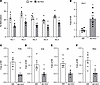 Figure 6
Adipocyte Dnmt1 deletion upregulates Esr1 expression and reduces adipose tissue inflammation in female mice fed HFD. (A–F) Esr1 promoter DNA methylation level (A) and mRNA expression level, including Esr1 (B), Tnfα (C), Il1β (D), Il6 (E), and iNos (F) in female AD1KO and fl/fl mice fed HFD, n = 6/group. *P < 0.05 vs. fl/fl by Student’s t test. All data are expressed as mean ± SEM.
We further conducted RNA-Seq analysis in gWAT in female AD1KO and their fl/fl littermate mice to thoroughly characterize inflammatory status through gene expression profiling. The volcano plot revealed a downregulation of a panel of inflammatory/chemotactic genes in female Dnmt1-deficient gWAT (Figure 7A). This was consistent with the KEGG pathway analysis showing cytokine-cytokine receptor interaction, chemokine signaling pathway, and NF-κB signaling pathway among top ranked pathways identified (Figure 7B). Indeed, a hierarchical cluster analysis revealed a broad downregulation of chemotactic (e.g., chemokine [CC motif] ligand 2 [Ccl2/Mcp1], Ccl3, Ccl4) and pro-inflammatory genes (e.g., Tnfα, Il1β, Nos2/iNos) in gWAT of female AD1KO mice on HFD (Figure 7C).
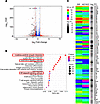 Figure 7
RNA-Seq analysis in gWAT of female AD1KO and fl/fl mice fed with HFD. (A–C) Volcano plot (A), pathway analysis (B), and heatmap (C) analyzed from RNA-Seq data from gWAT of female AD1KO and fl/fl mice fed with HFD. Equal amounts of RNAs from 4 animals/group were pooled and used for RNA-Seq analysis. RNA-Seq analysis was performed as described under Methods.
We further assessed the status of macrophage infiltration into adipose tissue in female AD1KO mice. Histochemical staining with antibodies against macrophage marker CD68 revealed a substantial decrease of adipose tissue macrophage (ATM) content in gWAT of female AD1KO mice compared with that of fl/fl mice (Figure 8A). This was further verified by FACS analysis, which showed a significant reduction of F4/80+ ATMs, F4/80+CD11C+ double-positive ATMs, and CD8+ T lymphocytes, as well as a tendency of decreased B220+ B lymphocytes in adipose tissue stromal vascular fraction cells in gWAT of female AD1KO mice compared with that of fl/fl mice (Figure 8, B and C). These data suggest that adipocyte Dnmt1 deletion reduces macrophage and lymphocyte infiltration in adipose tissue, thereby suppressing adipose inflammation.
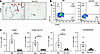 Figure 8
Adipocyte-specific deletion of Dnmt1 results in reduced immune cell infiltration in gWAT of female AD1KO compared with that of fl/fl mice fed HFD. (A) CD68 immunostaining of gWAT of female AD1KO and fl/fl mice fed HFD. Images are representative from 3 replicate samples. Scale bar, 20 μm. (B) FACS analysis of F4/80+CD11C+ ATMs in gWAT of female AD1KO and fl/fl mice fed HFD. Images are representative from 5 replicate samples. (C) Percentage of F4/80+ ATMs, F4/80+CD11C+ ATMs, CD8+ T lymphocytes, and CD45R/B220+ B lymphocytes in gWAT of female AD1KO and fl/fl mice fed HFD, n = 5/group. *P < 0.05 vs. fl/fl by Student’s t test. All data are expressed as mean ± SEM.
We also characterized metabolic phenotypes of male AD1KO mice. There was no difference in body weight (Supplemental Figure 7A) and fat mass (Supplemental Figure 7B) between male AD1KO mice and their littermate control fl/fl mice. However, male AD1KO mice displayed a slight improvement in GTT (Supplemental Figure 7C). Quantitative PCR analysis also showed a slight decrease in the expression of Il6 (Supplemental Figure 7D).
We generated AD3aKO mice by crossing Dnmt3a-floxed mice (20) with adiponectin-Cre mice (18) and observed around 75% reduction of Dnmt3a expression in gWAT of AD3aKO mice (Supplemental Figure 8A). HFD-fed female AD3aKO mice did not show differences in body weight, fat pad weight, glucose tolerance/insulin sensitivity, Esr1 expression, and inflammatory gene expression in WAT (Supplemental Figure 8, B–E). There was also no difference in body weight between HFD-fed male AD3aKO and fl/fl mice (Supplemental Figure 9A). However, HFD-fed male AD3aKO mice had slightly improved glucose tolerance and insulin sensitivity (Supplemental Figure 9, B and C), with no changes in the expression of Esr1 and inflammatory genes in gWAT (Supplemental Figure 9D).
Targeted methylation at the Esr1 promoter regulates adipocyte inflammation/chemotaxis and insulin sensitivity. Our data thus far suggest a key role of DNMT1 in the regulation of adipocyte inflammation and insulin sensitivity; however, it is not clear whether specific methylation at the Esr1 promoter mediates the effect of DNMT1 in these processes. In addition, DNMT1 may have many downstream targets that confound the metabolic phenotypes observed in AD1KO mice. We therefore employed a modified CRISPR/RNA-guided system (21, 22) to specifically induce methylation/demethylation at the Esr1 promoter. We first tested several single guide RNAs (sgRNAs) that surround the CpG sites at the Esr1 promoter. We infected 3T3-L1 adipocytes with lentivirus expressing sgRNAs (Scramble or Esr1 targeting) and dCas9-DNMT3a or dCas9-TET1 with Esr1 mRNA as the readout. We identified 1 sgRNA (S7) that mediated the most potent inhibition or stimulation of Esr1 expression for dCas9-DNMT3a and adCas9-TET1, respectively (Supplemental Figure 10).
To mimic the physiological milieu of adipose tissue where ATMs are recruited to fat tissue and constantly interact with adipocytes in a paracrine fashion, we examined adipocyte chemotaxis by a macrophage migration assay. We employed a coculture system where RAW264.7 murine macrophages were grown in Transwell inserts, which were then placed into lower well chambers containing differentiated L1 adipocytes infected with lentivirus expressing dCas9-DNMT3a or dCas9-TET1 along with S7 sgRNA. We found more macrophage migration in Transwells cocultured with adipocytes infected with dCas9-DNMT3a and S7 sgRNA (Figure 9A). Meanwhile, the adipocytes infected with lentivirus expressing dCas9-DNMT3a and S7 sgRNA displayed enhanced pro-inflammatory gene expression over control adipocytes expressing scramble nontargeting sgRNA (Figure 9B). In contrast, we observed less macrophage migration in Transwells cocultured with adipocytes infected with dCas9-TET1 and S7 sgRNA (Figure 9C). The adipocytes expressing dCas9-TET1 and S7 sgRNA exhibited a significant decrease in pro-inflammatory gene expression (Figure 9D). These data suggest that DNA methylation at the Esr1 promoter regulates adipocyte inflammation and chemotaxis.
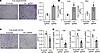 Figure 9
Targeted methylation at the Esr1 promoter in adipocytes regulates macrophage inflammation and chemotaxis in an adipocyte-macrophage coculture system. (A and B) Macrophage migration assay (A) and inflammatory gene expression (B) in RAW264.7 macrophages cocultured with 3T3-L1 adipocytes infected with lentivirus expressing scramble sgRNA or S7 sgRNA targeting Esr1 promoter along with dCas9-DNMT3a. n = 3/group, *P < 0.05 vs. Scramble by Student’s t test. Images in A are representative from 3 replicate samples. (C and D) Macrophage migration assay (C) and inflammatory gene expression (D) in RAW264.7 macrophages cocultured with 3T3-L1 adipocytes infected with lentivirus expressing scramble sgRNA or S7 sgRNA targeting Esr1 promoter along with dCas9-TET1. n = 3/group, *P < 0.05 vs. Scramble by Student’s t test. Images in C are representative from 3 replicate samples. All data are expressed as mean ± SEM.
To further investigate the role of DNA methylation at the Esr1 promoter in the regulation of adipocyte inflammation and insulin sensitivity in vivo, we surgically injected lentivirus expressing dCas9-TET1 plus either the targeting S7 sgRNA or the scramble nontargeting sgRNA into gWAT of female C57BL6/J mice. Animals were then put on HFD for 12 weeks and were characterized for their metabolic phenotypes and adipose tissue inflammation. We successfully infected the fat depots with lentivirus expressing dCas9-TET1 as shown by mCherry IHC staining (Supplemental Figure 11A). Mice injected with lentivirus expressing dCas9-TET1 and S7 sgRNA had no difference in body weight (Supplemental Figure 11B); however, they exhibited improved glucose tolerance and insulin sensitivity as assessed by glucose and insulin tolerance tests compared with mice injected with lentivirus expressing dCas9-TET1 and scramble sgRNA (Figure 10, A and B). Moreover, lentiviral infection with dCas9-TET1 and S7 sgRNA increased Esr1 gene expression in gWAT (Figure 10C). This was associated with decreased expression of inflammatory genes, such as Tnfα and Il1β, in gWAT (Figure 10C). FACS analysis also revealed a significant reduction of F4/80+ ATMs, F4/80+CD11C+ double-positive ATMs, and CD8+ T lymphocytes in gWAT of HFD-fed mice injected with lentivirus expressing dCas9-TET1 and S7 sgRNA (Figure 10, D and E).
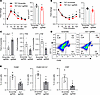 Figure 10
Targeted methylation at the Esr1 promoter regulates adipose tissue inflammation and insulin sensitivity. (A and B) GTT (A) and ITT (B) in HFD-fed female C57BL/6J mice surgically injected with dCas9-TET1 along with either scramble sgRNA or S7 sgRNA targeting Esr1 promoter in gWAT, n = 4. *P < 0.05 vs. Scramble sgRNA by 1-way ANOVA with repeated measures followed by Fisher’s LSD post hoc test. (C–E) Gene expression (C), FACS analysis of F4/80+CD11C+ ATMs (D), and percentage of F4/80+ ATMs, F4/80+CD11C+ ATMs, and CD8+ T lymphocytes (E) in gWAT of HFD-fed female C57BL/6J mice surgically injected with dCas9-TET1 along with either scramble sgRNA or S7 sgRNA targeting Esr1 promoter in gWAT, n = 4. *P < 0.05 vs. Scramble sgRNA by Student’s t test. All data are expressed as mean ± SEM.


