
Research ArticleCardiologyInflammation
Open Access |  10.1172/jci.insight.184329
Perivascular inflammation in the progression of aortic aneurysms in Marfan syndrome
Hiroyuki Sowa,1 Hiroki Yagi,1,2 Kazutaka Ueda,1 Masaki Hashimoto,1 Kohei Karasaki,1 Qing Liu,1 Atsumasa Kurozumi,1 Yusuke Adachi,1 Tomonobu Yanase,1 Shun Okamura,1 Bowen Zhai,1 Norifumi Takeda,1,2 Masahiko Ando,2,3 Haruo Yamauchi,2,3 Nobuhiko Ito,4 Minoru Ono,3 Hiroshi Akazawa,1 and Issei Komuro5,6
1Department of Cardiovascular Medicine, Graduate School of Medicine,
2Marfan Syndrome Center, Graduate School of Medicine, and
3Department of Cardiac & Thoracic Surgery, Graduate School of Medicine, The University of Tokyo, Tokyo, Japan.
4Department of Cardiovascular Medicine, Kanto Central Hospital of the Mutual Aid Association of Public School Teachers, Tokyo, Japan.
5International University of Health and Welfare, Tokyo, Japan.
6Department of Frontier Cardiovascular Science, Graduate School of Medicine, The University of Tokyo, Tokyo, Japan.
Address correspondence to: Issei Komuro, Kazutaka Ueda, or Hiroshi Akazawa,Department of Cardiovascular Medicine, Graduate School of Medicine, The University of Tokyo, 7-3-1, Hongo, Bunkyo, Tokyo, 113-8655, Japan. Phone: 81.3.3815.5411; Email: komuro-tky@umin.ac.jp (IK); uedak-tky@umin.ac.jp (KU). Phone: 81.3.5800.9260; Email: akazawah-tky@umin.ac.jp (HA).
Authorship note: HS, HY, and KU contributed equally to this work.
Find articles by Sowa, H. in: PubMed | Google Scholar
1Department of Cardiovascular Medicine, Graduate School of Medicine,
2Marfan Syndrome Center, Graduate School of Medicine, and
3Department of Cardiac & Thoracic Surgery, Graduate School of Medicine, The University of Tokyo, Tokyo, Japan.
4Department of Cardiovascular Medicine, Kanto Central Hospital of the Mutual Aid Association of Public School Teachers, Tokyo, Japan.
5International University of Health and Welfare, Tokyo, Japan.
6Department of Frontier Cardiovascular Science, Graduate School of Medicine, The University of Tokyo, Tokyo, Japan.
Address correspondence to: Issei Komuro, Kazutaka Ueda, or Hiroshi Akazawa,Department of Cardiovascular Medicine, Graduate School of Medicine, The University of Tokyo, 7-3-1, Hongo, Bunkyo, Tokyo, 113-8655, Japan. Phone: 81.3.3815.5411; Email: komuro-tky@umin.ac.jp (IK); uedak-tky@umin.ac.jp (KU). Phone: 81.3.5800.9260; Email: akazawah-tky@umin.ac.jp (HA).
Authorship note: HS, HY, and KU contributed equally to this work.
Find articles by
Yagi, H.
in:
PubMed
|
Google Scholar
|

1Department of Cardiovascular Medicine, Graduate School of Medicine,
2Marfan Syndrome Center, Graduate School of Medicine, and
3Department of Cardiac & Thoracic Surgery, Graduate School of Medicine, The University of Tokyo, Tokyo, Japan.
4Department of Cardiovascular Medicine, Kanto Central Hospital of the Mutual Aid Association of Public School Teachers, Tokyo, Japan.
5International University of Health and Welfare, Tokyo, Japan.
6Department of Frontier Cardiovascular Science, Graduate School of Medicine, The University of Tokyo, Tokyo, Japan.
Address correspondence to: Issei Komuro, Kazutaka Ueda, or Hiroshi Akazawa,Department of Cardiovascular Medicine, Graduate School of Medicine, The University of Tokyo, 7-3-1, Hongo, Bunkyo, Tokyo, 113-8655, Japan. Phone: 81.3.3815.5411; Email: komuro-tky@umin.ac.jp (IK); uedak-tky@umin.ac.jp (KU). Phone: 81.3.5800.9260; Email: akazawah-tky@umin.ac.jp (HA).
Authorship note: HS, HY, and KU contributed equally to this work.
Find articles by
Ueda, K.
in:
PubMed
|
Google Scholar
|
1Department of Cardiovascular Medicine, Graduate School of Medicine,
2Marfan Syndrome Center, Graduate School of Medicine, and
3Department of Cardiac & Thoracic Surgery, Graduate School of Medicine, The University of Tokyo, Tokyo, Japan.
4Department of Cardiovascular Medicine, Kanto Central Hospital of the Mutual Aid Association of Public School Teachers, Tokyo, Japan.
5International University of Health and Welfare, Tokyo, Japan.
6Department of Frontier Cardiovascular Science, Graduate School of Medicine, The University of Tokyo, Tokyo, Japan.
Address correspondence to: Issei Komuro, Kazutaka Ueda, or Hiroshi Akazawa,Department of Cardiovascular Medicine, Graduate School of Medicine, The University of Tokyo, 7-3-1, Hongo, Bunkyo, Tokyo, 113-8655, Japan. Phone: 81.3.3815.5411; Email: komuro-tky@umin.ac.jp (IK); uedak-tky@umin.ac.jp (KU). Phone: 81.3.5800.9260; Email: akazawah-tky@umin.ac.jp (HA).
Authorship note: HS, HY, and KU contributed equally to this work.
Find articles by Hashimoto, M. in: PubMed | Google Scholar
1Department of Cardiovascular Medicine, Graduate School of Medicine,
2Marfan Syndrome Center, Graduate School of Medicine, and
3Department of Cardiac & Thoracic Surgery, Graduate School of Medicine, The University of Tokyo, Tokyo, Japan.
4Department of Cardiovascular Medicine, Kanto Central Hospital of the Mutual Aid Association of Public School Teachers, Tokyo, Japan.
5International University of Health and Welfare, Tokyo, Japan.
6Department of Frontier Cardiovascular Science, Graduate School of Medicine, The University of Tokyo, Tokyo, Japan.
Address correspondence to: Issei Komuro, Kazutaka Ueda, or Hiroshi Akazawa,Department of Cardiovascular Medicine, Graduate School of Medicine, The University of Tokyo, 7-3-1, Hongo, Bunkyo, Tokyo, 113-8655, Japan. Phone: 81.3.3815.5411; Email: komuro-tky@umin.ac.jp (IK); uedak-tky@umin.ac.jp (KU). Phone: 81.3.5800.9260; Email: akazawah-tky@umin.ac.jp (HA).
Authorship note: HS, HY, and KU contributed equally to this work.
Find articles by Karasaki, K. in: PubMed | Google Scholar
1Department of Cardiovascular Medicine, Graduate School of Medicine,
2Marfan Syndrome Center, Graduate School of Medicine, and
3Department of Cardiac & Thoracic Surgery, Graduate School of Medicine, The University of Tokyo, Tokyo, Japan.
4Department of Cardiovascular Medicine, Kanto Central Hospital of the Mutual Aid Association of Public School Teachers, Tokyo, Japan.
5International University of Health and Welfare, Tokyo, Japan.
6Department of Frontier Cardiovascular Science, Graduate School of Medicine, The University of Tokyo, Tokyo, Japan.
Address correspondence to: Issei Komuro, Kazutaka Ueda, or Hiroshi Akazawa,Department of Cardiovascular Medicine, Graduate School of Medicine, The University of Tokyo, 7-3-1, Hongo, Bunkyo, Tokyo, 113-8655, Japan. Phone: 81.3.3815.5411; Email: komuro-tky@umin.ac.jp (IK); uedak-tky@umin.ac.jp (KU). Phone: 81.3.5800.9260; Email: akazawah-tky@umin.ac.jp (HA).
Authorship note: HS, HY, and KU contributed equally to this work.
Find articles by Liu, Q. in: PubMed | Google Scholar
1Department of Cardiovascular Medicine, Graduate School of Medicine,
2Marfan Syndrome Center, Graduate School of Medicine, and
3Department of Cardiac & Thoracic Surgery, Graduate School of Medicine, The University of Tokyo, Tokyo, Japan.
4Department of Cardiovascular Medicine, Kanto Central Hospital of the Mutual Aid Association of Public School Teachers, Tokyo, Japan.
5International University of Health and Welfare, Tokyo, Japan.
6Department of Frontier Cardiovascular Science, Graduate School of Medicine, The University of Tokyo, Tokyo, Japan.
Address correspondence to: Issei Komuro, Kazutaka Ueda, or Hiroshi Akazawa,Department of Cardiovascular Medicine, Graduate School of Medicine, The University of Tokyo, 7-3-1, Hongo, Bunkyo, Tokyo, 113-8655, Japan. Phone: 81.3.3815.5411; Email: komuro-tky@umin.ac.jp (IK); uedak-tky@umin.ac.jp (KU). Phone: 81.3.5800.9260; Email: akazawah-tky@umin.ac.jp (HA).
Authorship note: HS, HY, and KU contributed equally to this work.
Find articles by Kurozumi, A. in: PubMed | Google Scholar
1Department of Cardiovascular Medicine, Graduate School of Medicine,
2Marfan Syndrome Center, Graduate School of Medicine, and
3Department of Cardiac & Thoracic Surgery, Graduate School of Medicine, The University of Tokyo, Tokyo, Japan.
4Department of Cardiovascular Medicine, Kanto Central Hospital of the Mutual Aid Association of Public School Teachers, Tokyo, Japan.
5International University of Health and Welfare, Tokyo, Japan.
6Department of Frontier Cardiovascular Science, Graduate School of Medicine, The University of Tokyo, Tokyo, Japan.
Address correspondence to: Issei Komuro, Kazutaka Ueda, or Hiroshi Akazawa,Department of Cardiovascular Medicine, Graduate School of Medicine, The University of Tokyo, 7-3-1, Hongo, Bunkyo, Tokyo, 113-8655, Japan. Phone: 81.3.3815.5411; Email: komuro-tky@umin.ac.jp (IK); uedak-tky@umin.ac.jp (KU). Phone: 81.3.5800.9260; Email: akazawah-tky@umin.ac.jp (HA).
Authorship note: HS, HY, and KU contributed equally to this work.
Find articles by Adachi, Y. in: PubMed | Google Scholar
1Department of Cardiovascular Medicine, Graduate School of Medicine,
2Marfan Syndrome Center, Graduate School of Medicine, and
3Department of Cardiac & Thoracic Surgery, Graduate School of Medicine, The University of Tokyo, Tokyo, Japan.
4Department of Cardiovascular Medicine, Kanto Central Hospital of the Mutual Aid Association of Public School Teachers, Tokyo, Japan.
5International University of Health and Welfare, Tokyo, Japan.
6Department of Frontier Cardiovascular Science, Graduate School of Medicine, The University of Tokyo, Tokyo, Japan.
Address correspondence to: Issei Komuro, Kazutaka Ueda, or Hiroshi Akazawa,Department of Cardiovascular Medicine, Graduate School of Medicine, The University of Tokyo, 7-3-1, Hongo, Bunkyo, Tokyo, 113-8655, Japan. Phone: 81.3.3815.5411; Email: komuro-tky@umin.ac.jp (IK); uedak-tky@umin.ac.jp (KU). Phone: 81.3.5800.9260; Email: akazawah-tky@umin.ac.jp (HA).
Authorship note: HS, HY, and KU contributed equally to this work.
Find articles by
Yanase, T.
in:
PubMed
|
Google Scholar
|
1Department of Cardiovascular Medicine, Graduate School of Medicine,
2Marfan Syndrome Center, Graduate School of Medicine, and
3Department of Cardiac & Thoracic Surgery, Graduate School of Medicine, The University of Tokyo, Tokyo, Japan.
4Department of Cardiovascular Medicine, Kanto Central Hospital of the Mutual Aid Association of Public School Teachers, Tokyo, Japan.
5International University of Health and Welfare, Tokyo, Japan.
6Department of Frontier Cardiovascular Science, Graduate School of Medicine, The University of Tokyo, Tokyo, Japan.
Address correspondence to: Issei Komuro, Kazutaka Ueda, or Hiroshi Akazawa,Department of Cardiovascular Medicine, Graduate School of Medicine, The University of Tokyo, 7-3-1, Hongo, Bunkyo, Tokyo, 113-8655, Japan. Phone: 81.3.3815.5411; Email: komuro-tky@umin.ac.jp (IK); uedak-tky@umin.ac.jp (KU). Phone: 81.3.5800.9260; Email: akazawah-tky@umin.ac.jp (HA).
Authorship note: HS, HY, and KU contributed equally to this work.
Find articles by Okamura, S. in: PubMed | Google Scholar
1Department of Cardiovascular Medicine, Graduate School of Medicine,
2Marfan Syndrome Center, Graduate School of Medicine, and
3Department of Cardiac & Thoracic Surgery, Graduate School of Medicine, The University of Tokyo, Tokyo, Japan.
4Department of Cardiovascular Medicine, Kanto Central Hospital of the Mutual Aid Association of Public School Teachers, Tokyo, Japan.
5International University of Health and Welfare, Tokyo, Japan.
6Department of Frontier Cardiovascular Science, Graduate School of Medicine, The University of Tokyo, Tokyo, Japan.
Address correspondence to: Issei Komuro, Kazutaka Ueda, or Hiroshi Akazawa,Department of Cardiovascular Medicine, Graduate School of Medicine, The University of Tokyo, 7-3-1, Hongo, Bunkyo, Tokyo, 113-8655, Japan. Phone: 81.3.3815.5411; Email: komuro-tky@umin.ac.jp (IK); uedak-tky@umin.ac.jp (KU). Phone: 81.3.5800.9260; Email: akazawah-tky@umin.ac.jp (HA).
Authorship note: HS, HY, and KU contributed equally to this work.
Find articles by Zhai, B. in: PubMed | Google Scholar
1Department of Cardiovascular Medicine, Graduate School of Medicine,
2Marfan Syndrome Center, Graduate School of Medicine, and
3Department of Cardiac & Thoracic Surgery, Graduate School of Medicine, The University of Tokyo, Tokyo, Japan.
4Department of Cardiovascular Medicine, Kanto Central Hospital of the Mutual Aid Association of Public School Teachers, Tokyo, Japan.
5International University of Health and Welfare, Tokyo, Japan.
6Department of Frontier Cardiovascular Science, Graduate School of Medicine, The University of Tokyo, Tokyo, Japan.
Address correspondence to: Issei Komuro, Kazutaka Ueda, or Hiroshi Akazawa,Department of Cardiovascular Medicine, Graduate School of Medicine, The University of Tokyo, 7-3-1, Hongo, Bunkyo, Tokyo, 113-8655, Japan. Phone: 81.3.3815.5411; Email: komuro-tky@umin.ac.jp (IK); uedak-tky@umin.ac.jp (KU). Phone: 81.3.5800.9260; Email: akazawah-tky@umin.ac.jp (HA).
Authorship note: HS, HY, and KU contributed equally to this work.
Find articles by
Takeda, N.
in:
PubMed
|
Google Scholar
|
1Department of Cardiovascular Medicine, Graduate School of Medicine,
2Marfan Syndrome Center, Graduate School of Medicine, and
3Department of Cardiac & Thoracic Surgery, Graduate School of Medicine, The University of Tokyo, Tokyo, Japan.
4Department of Cardiovascular Medicine, Kanto Central Hospital of the Mutual Aid Association of Public School Teachers, Tokyo, Japan.
5International University of Health and Welfare, Tokyo, Japan.
6Department of Frontier Cardiovascular Science, Graduate School of Medicine, The University of Tokyo, Tokyo, Japan.
Address correspondence to: Issei Komuro, Kazutaka Ueda, or Hiroshi Akazawa,Department of Cardiovascular Medicine, Graduate School of Medicine, The University of Tokyo, 7-3-1, Hongo, Bunkyo, Tokyo, 113-8655, Japan. Phone: 81.3.3815.5411; Email: komuro-tky@umin.ac.jp (IK); uedak-tky@umin.ac.jp (KU). Phone: 81.3.5800.9260; Email: akazawah-tky@umin.ac.jp (HA).
Authorship note: HS, HY, and KU contributed equally to this work.
Find articles by Ando, M. in: PubMed | Google Scholar
1Department of Cardiovascular Medicine, Graduate School of Medicine,
2Marfan Syndrome Center, Graduate School of Medicine, and
3Department of Cardiac & Thoracic Surgery, Graduate School of Medicine, The University of Tokyo, Tokyo, Japan.
4Department of Cardiovascular Medicine, Kanto Central Hospital of the Mutual Aid Association of Public School Teachers, Tokyo, Japan.
5International University of Health and Welfare, Tokyo, Japan.
6Department of Frontier Cardiovascular Science, Graduate School of Medicine, The University of Tokyo, Tokyo, Japan.
Address correspondence to: Issei Komuro, Kazutaka Ueda, or Hiroshi Akazawa,Department of Cardiovascular Medicine, Graduate School of Medicine, The University of Tokyo, 7-3-1, Hongo, Bunkyo, Tokyo, 113-8655, Japan. Phone: 81.3.3815.5411; Email: komuro-tky@umin.ac.jp (IK); uedak-tky@umin.ac.jp (KU). Phone: 81.3.5800.9260; Email: akazawah-tky@umin.ac.jp (HA).
Authorship note: HS, HY, and KU contributed equally to this work.
Find articles by Yamauchi, H. in: PubMed | Google Scholar
1Department of Cardiovascular Medicine, Graduate School of Medicine,
2Marfan Syndrome Center, Graduate School of Medicine, and
3Department of Cardiac & Thoracic Surgery, Graduate School of Medicine, The University of Tokyo, Tokyo, Japan.
4Department of Cardiovascular Medicine, Kanto Central Hospital of the Mutual Aid Association of Public School Teachers, Tokyo, Japan.
5International University of Health and Welfare, Tokyo, Japan.
6Department of Frontier Cardiovascular Science, Graduate School of Medicine, The University of Tokyo, Tokyo, Japan.
Address correspondence to: Issei Komuro, Kazutaka Ueda, or Hiroshi Akazawa,Department of Cardiovascular Medicine, Graduate School of Medicine, The University of Tokyo, 7-3-1, Hongo, Bunkyo, Tokyo, 113-8655, Japan. Phone: 81.3.3815.5411; Email: komuro-tky@umin.ac.jp (IK); uedak-tky@umin.ac.jp (KU). Phone: 81.3.5800.9260; Email: akazawah-tky@umin.ac.jp (HA).
Authorship note: HS, HY, and KU contributed equally to this work.
Find articles by Ito, N. in: PubMed | Google Scholar
1Department of Cardiovascular Medicine, Graduate School of Medicine,
2Marfan Syndrome Center, Graduate School of Medicine, and
3Department of Cardiac & Thoracic Surgery, Graduate School of Medicine, The University of Tokyo, Tokyo, Japan.
4Department of Cardiovascular Medicine, Kanto Central Hospital of the Mutual Aid Association of Public School Teachers, Tokyo, Japan.
5International University of Health and Welfare, Tokyo, Japan.
6Department of Frontier Cardiovascular Science, Graduate School of Medicine, The University of Tokyo, Tokyo, Japan.
Address correspondence to: Issei Komuro, Kazutaka Ueda, or Hiroshi Akazawa,Department of Cardiovascular Medicine, Graduate School of Medicine, The University of Tokyo, 7-3-1, Hongo, Bunkyo, Tokyo, 113-8655, Japan. Phone: 81.3.3815.5411; Email: komuro-tky@umin.ac.jp (IK); uedak-tky@umin.ac.jp (KU). Phone: 81.3.5800.9260; Email: akazawah-tky@umin.ac.jp (HA).
Authorship note: HS, HY, and KU contributed equally to this work.
Find articles by
Ono, M.
in:
PubMed
|
Google Scholar
|
1Department of Cardiovascular Medicine, Graduate School of Medicine,
2Marfan Syndrome Center, Graduate School of Medicine, and
3Department of Cardiac & Thoracic Surgery, Graduate School of Medicine, The University of Tokyo, Tokyo, Japan.
4Department of Cardiovascular Medicine, Kanto Central Hospital of the Mutual Aid Association of Public School Teachers, Tokyo, Japan.
5International University of Health and Welfare, Tokyo, Japan.
6Department of Frontier Cardiovascular Science, Graduate School of Medicine, The University of Tokyo, Tokyo, Japan.
Address correspondence to: Issei Komuro, Kazutaka Ueda, or Hiroshi Akazawa,Department of Cardiovascular Medicine, Graduate School of Medicine, The University of Tokyo, 7-3-1, Hongo, Bunkyo, Tokyo, 113-8655, Japan. Phone: 81.3.3815.5411; Email: komuro-tky@umin.ac.jp (IK); uedak-tky@umin.ac.jp (KU). Phone: 81.3.5800.9260; Email: akazawah-tky@umin.ac.jp (HA).
Authorship note: HS, HY, and KU contributed equally to this work.
Find articles by Akazawa, H. in: PubMed | Google Scholar
1Department of Cardiovascular Medicine, Graduate School of Medicine,
2Marfan Syndrome Center, Graduate School of Medicine, and
3Department of Cardiac & Thoracic Surgery, Graduate School of Medicine, The University of Tokyo, Tokyo, Japan.
4Department of Cardiovascular Medicine, Kanto Central Hospital of the Mutual Aid Association of Public School Teachers, Tokyo, Japan.
5International University of Health and Welfare, Tokyo, Japan.
6Department of Frontier Cardiovascular Science, Graduate School of Medicine, The University of Tokyo, Tokyo, Japan.
Address correspondence to: Issei Komuro, Kazutaka Ueda, or Hiroshi Akazawa,Department of Cardiovascular Medicine, Graduate School of Medicine, The University of Tokyo, 7-3-1, Hongo, Bunkyo, Tokyo, 113-8655, Japan. Phone: 81.3.3815.5411; Email: komuro-tky@umin.ac.jp (IK); uedak-tky@umin.ac.jp (KU). Phone: 81.3.5800.9260; Email: akazawah-tky@umin.ac.jp (HA).
Authorship note: HS, HY, and KU contributed equally to this work.
Find articles by Komuro, I. in: PubMed | Google Scholar
Published August 28, 2025 - More info
JCI Insight. 2025;10(19):e184329. https://doi.org/10.1172/jci.insight.184329.
© 2025 Sowa et al. This work is licensed under the Creative Commons Attribution 4.0 International License. To view a copy of this license, visit http://creativecommons.org/licenses/by/4.0/.
Received: July 2, 2024; Accepted: August 22, 2025


-
Results
Predominant inflammatory response in periaortic tissues in MFS. To determine the primary location of inflammation in MFS aortic disease, we first evaluated the accumulation of immune cells in aortic root specimens from patients with MFS. IHC staining for CD68 revealed marked accumulation of macrophages in perivascular tissues, especially in PVAT, at the aortic root (Figure 1A). Accumulation of CD68+ cells was also observed in the adventitia and the intima; however, their accumulation in the tunica media was less than that in perivascular tissues (Figure 1, A and B). CD68+ cell accumulation in periaortic tissues of patients with MFS tended to be greater than that in those of control patients without MFS (Figure 1, A and B). Consistently, in mice with Fbn1 missense mutation p.(Cys1041Gly), more F4/80+ macrophages accumulated in periaortic tissues compared with that in Fbn1+/+ control WT mice (Figure 1C). In the perivascular tissues of Fbn1C1041G/+ mice, the expression levels of marker genes of macrophages and inflammatory cytokines such as Il1a, Il1b, and Serpine1 (Pai1) were significantly upregulated (Figure 1, D and E). In the perivascular tissues of Fbn1C1041G/+ mice, the protein expression of IL-1β and MCP-1 was also significantly upregulated compared with Fbn1+/+ mice (Figure 1F). These results suggest that, in MFS aortopathy, there was an enhanced inflammatory response in the perivascular tissue.
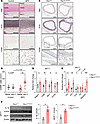 Figure 1
The periaortic inflammatory response of MFS mice and patients. (A) Histological analysis with H&E and Elastica van Gieson (EVG) staining and CD68 immunohistochemical staining in ascending aorta of patients with Marfan syndrome (MFS) and heart transplant recipients (control). Scale bars: 1,000 μm (thick bars) and 100 μm (thin bars). (B) The number of CD68+ cells/mm2 in media and perivascular (peri V) area was calculated in each group (control, n = 3; MFS, n = 10). The data are presented as mean ± SD. **P < 0.01, 1-way ANOVA with Tukey’s multiple-comparison test. (C) Histological analysis with H&E and EVG staining and F4/80 immunohistochemical staining in ascending aorta of Fbn1+/+ and Fbn1C1041G/+ mice (24 weeks of age). Scale bars: 200 μm (thick bars) and 100 μm (thin bars). Blue dashed lines indicate the external elastic lamina. (D) The mRNA expressions of marker genes of macrophages in the peri V tissues of Fbn1+/+ and Fbn1C1041G/+ mice (24 weeks of age) (n = 6–7). The data are presented as fold induction over control. The results were systematically normalized using glyceraldehyde-3-phosphate dehydrogenase (Gapdh). The data are presented as mean ± SEM. *P < 0.05, **P < 0.01, unpaired 2-tailed t test with Welch’s correction. (E) The mRNA expressions of marker genes of inflammatory cytokines in the peri V tissues of Fbn1+/+ and Fbn1C1041G/+ mice (24 weeks of age) (n = 6–7). The data are presented as fold induction over control. The results were systematically normalized using Gapdh. The data are presented as mean ± SEM. *P < 0.05, **P < 0.01, ***P < 0.001, unpaired 2-tailed t test with Welch’s correction. (F) Immunoblot analysis of IL-1β, MCP-1, and β actin in the peri V tissues of Fbn1+/+ and Fbn1C1041G/+ mice (24 weeks of age). The quantifications of IL-1β/β actin (n = 3) and MCP-1/β actin (n = 3) are shown as bar graphs. The data are presented as mean ± SEM. *P < 0.05, unpaired 2-tailed t test with Welch’s correction.
Inflammation in PVAT causes aortic dilatation in MFS. To assess the involvement of periaortic inflammation in the development of aortic dilatation in MFS, we induced PVAT inflammation in Fbn1C1041G/+ mice by applying metabolic stress via high-fat diet (HFD) feeding (38, 39). A 16-week feeding regimen consisting of HFD induced the accumulation of F4/80+ cells and upregulation of mRNA and protein expression levels of various inflammatory markers and MMPs in perivascular tissues of Fbn1C1041G/+ mice (Figure 2, A–E). Along with increased PVAT inflammation, the diameter of the aortic root significantly increased in Fbn1C1041G/+ mice on an HFD regimen compared with those fed with a normal chow (NC) diet (Figure 3, A and B). Pitavastatin (0.3 mg/kg/day), which exerts antiinflammatory effects on adipose tissues (40), suppressed HFD-induced accumulation of F4/80+ cells, mRNA and protein expression of inflammatory cytokines and MMPs in perivascular tissues, and the expansion of the aortic root (Figure 2, A–E, and Figure 3, A and B). The expansion of the ascending aorta was partially suppressed in pitavastatin-treated HFD-fed Fbn1C1041G/+ mice, as compared with HFD-fed Fbn1C1041G/+ mice (Figure 3, A and B). The dose of pitavastatin used in this study did not affect the metabolic profiles—including serum cholesterol, blood sugar levels, or blood pressure—of HFD-fed Fbn1C1041G/+ mice (Supplemental Figure 1; supplemental material available online with this article; https://doi.org/10.1172/jci.insight.184329DS1). Additionally, pitavastatin exhibited a trend toward suppression of inflammation in the perivascular tissues of NC-fed Fbn1C1041G/+ mice, as evidenced by reduced accumulation of F4/80+ cells and decreased mRNA and protein expression levels of inflammatory cytokines, although these differences did not reach statistical significance (Supplemental Figure 2). These results suggest a strong correlation between PVAT inflammation and aortic dilatation in MFS, independent of changes in metabolic profiles.
 Figure 2
Inflammation in PVAT induced by metabolic stress accelerated aortic dilatation in Fbn1C1041G/+ mice. (A) Hematoxylin–eosin (H&E) and immunohistochemical staining for F4/80 in ascending aorta of Fbn1+/+ and Fbn1C1041G/+ mice (24 weeks of age) receiving normal chow (NC), high fat diet (HFD), or HFD with pitavastatin (pita). Scale bars: 200 μm. Blue dashed lines indicate the external elastic lamina. (B) Time-coursed changes of body weight in Fbn1+/+ (NC, n = 20; HFD, n = 20) and Fbn1C1041G/+ (NC, n = 19; HFD, n = 24; HFD with pita, n = 24) mice. **P < 0.01, ***P < 0.001 (NC in Fbn1C1041G/+ vs HFD in Fbn1C1041G/+), ###P < 0.001 (NC in Fbn1C1041G/+ vs HFD + pita in Fbn1C1041G/+), $$P < 0.01, $$$P<0.001 (NC in Fbn1C1041G/+ vs HFD in Fbn1+/+), 2-way ANOVA followed by Tukey’s multiple-comparisons. . Weight of the perivascular tissues (peri V) (n = 14 to 21) and the number of F4/80-positive cells in the peri V and media (n = 4 to 5) of Fbn1+/+ and Fbn1C1041G/+ mice (24 weeks of age) receiving NC, HFD, or HFD with pita was calculated. **P < 0.01, ***P < 0.001, 1-way ANOVA with Tukey's multiple comparisons. (C) The mRNA expressions of inflammatory cytokines in the peri V (n = 5 to 11). The results were normalized using β-2 microglobulin (B2m). *P < 0.05, **P < 0.01, 1-way ANOVA with Tukey’s multiple-comparisons. (D) Immunoblot analysis of IL-1β, MCP-1, and β actin in the peri V. The quantifications of IL-1β/β actin (n = 5) and MCP-1/β actin (n = 5 to 7) are shown. **P < 0.01, ***P < 0.001, 1-way ANOVA with Tukey’s multiple-comparisons. (E) Immunoblot analysis of MMP-2, MMP-9, and β actin in the peri V. The quantifications of MMP-2/β actin (n = 3 to 4) and MMP-9/β actin (n = 3 to 4) are shown as bar graphs. *P < 0.05, **P < 0.01, 1-way ANOVA with Tukey’s multiple-comparison test. All data are presented as mean ± SEM.
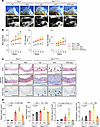 Figure 3
Pathological changes in the aorta of Fbn1C1041G/+ mice induced by PVAT inflammation. (A) Macroscopic appearance and ultrasound images of aorta in Fbn1+/+ and Fbn1C1041G/+ mice (24 weeks of age) receiving normal chow (NC), high-fat diet (HFD), or HFD with pitavastatin (pita). Arrowheads indicate ascending aorta (upper panel; black) and aortic root (lower panel; yellow). Scale bars: 1,000 μm. (B) Time-coursed changes (8–24 weeks of age) of aortic root, sinotublar junction (STJ) and ascending aorta diameter in Fbn1+/+ (NC, n = 20; HFD, n = 20) and Fbn1C1041G/+ (NC, n = 19; HFD, n = 24; HFD with pita, n = 24) mice. The data are presented as mean ± SEM. *P < 0.05 (NC vs HFD in Fbn1C1041G/+), **P < 0.01 (NC vs HFD in Fbn1C1041G/+), #P < 0.05 (HFD vs HFD with pita in Fbn1C1041G/+), ##P < 0.01 (HFD vs HFD with pita in Fbn1C1041G/+), 2-way ANOVA followed by Tukey’s multiple-comparison test. (C) Histological analysis with elastic van Gieson (EVG) staining, Masson’s trichrome staining, and Alcian blue staining in ascending aorta of Fbn1+/+ and Fbn1C1041G/+ mice (24 weeks of age) receiving NC, HFD, or HFD with pita. Scale bars: 200 μm. L; lumen, EEL; external elastic lamina. (D) Measurement of aortic wall thickness, aortic wall architecture indicated by the number of breaks of the elastic fiber per mm2, fibrosis area, and proteoglycan content in ascending aorta of Fbn1+/+ and Fbn1C1041G/+ mice (24 weeks of age) receiving NC, HFD, or HFD with pita (n = 3–7). The data are presented as mean ± SEM. *P < 0.05, **P < 0.01, ***P < 0.001, 1-way ANOVA with Tukey’s multiple-comparison test.
We subsequently analyzed the pathological changes in the vascular structure of HFD-fed MFS mice. Fbn1C1041G/+ mice showed elastic fiber fragmentation and disorganization, fibrosis, and proteoglycan accumulation compared with Fbn1+/+ mice as shown by Elastica-Van Gieson (EVG), Masson trichrome, and Alcian blue staining, respectively (Figure 3, C and D). Notably, these features were more pronounced in HFD-fed Fbn1C1041G/+ mice than in NC-fed mice (Figure 3, C and D). Similarly, expression of phosphorylated ERK1/2 and SMAD2, and MMP activity in the vascular medial layer, increased in Fbn1C1041G/+ mice compared with Fbn1+/+ mice and was enhanced by HFD feeding, and these changes were significantly attenuated by pitavastatin treatment (Figure 4, A–C). These results suggest that HFD feeding exacerbates structural disorganization of the tunica media with the enhanced activation of TGF-β downstream targets in MFS mice.
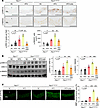 Figure 4
TGF-β downstream changes in the aorta of Fbn1C1041G/+ mice induced by PVAT inflammation. (A) Immunostaining for phosphorylated-ERK1/2 (p-ERK1/2), and phosphorylated-SMAD2 (p-SMAD2), in ascending aorta of Fbn1+/+ and Fbn1C1041G/+ mice (24 weeks of age) receiving normal chow (NC), high-fat diet (HFD), or HFD with pitavastatin (pita). Scale bars: 200 μm. L; lumen, EEL; external elastic lamina. The quantifications of p-ERK1/2 (n = 3 to 5) and p-SMAD2 (n = 3 to 5) are shown as bar graphs. The data are presented as mean ± SEM. *P < 0.05, **P < 0.01, 1-way ANOVA with Tukey’s multiple-comparison test. (B) Immunoblot analysis of p-ERK1/2, ERK1/2, p-SMAD2, SMAD2 in ascending aorta of Fbn1+/+ and Fbn1C1041G/+ mice (24 weeks of age) receiving NC, HFD, or HFD with pita. The quantifications of p-ERK1/2/ERK1/2 (n = 5) and p-SMAD2/SMAD2 (n = 5) are shown as bar graphs. The data are presented as mean ± SEM. *P < 0.05, **P < 0.01, ***P < 0.001, 1-way ANOVA with Tukey’s multiple-comparison test. (C) In situ zymography for gelatinase activity in ascending aorta of Fbn1+/+ and Fbn1C1041G/+ mice (24 weeks of age) receiving NC, HFD, or HFD with pita. Scale bars: 100 μm. The quantification of MMP activity (n = 3) is shown as bar graphs. The data are presented as mean ± SEM. **P < 0.01, ***P < 0.001, 1-way ANOVA with Tukey’s multiple-comparison test.
Evaluation of aortic PVAT inflammation in patients with MFS via a noninvasive approach. To understand the relationship between aortic enlargement and PVAT inflammation in patients with MFS, we adopted FAI, a potentially novel marker for coronary vascular inflammation (34, 35, 41), for the noninvasive evaluation of PVAT inflammation of the aorta. Since, in a small case series, perivascular FAI around the ascending aorta was elevated in patients with MFS compared with controls, and the amount of aortic PVAT tissue was decreased (37), we employed machine learning techniques to develop an automated analysis program for calculating the FAI of the ascending aorta (AA-FAI) on a larger scale. The program recognizes the AA, selects areas with CT attenuation corresponding to fat tissue within a 10 mm range around the vessel wall, defines them as PVAT on CT (ct-PVAT), and outputs the average values of attenuation of all pixels in the ct-PVAT as the AA-FAI (Figure 5A). The program correctly identified the AA in 94.4% of cases and successfully calculated the AA-FAI. We collected and analyzed CT imaging data and background information from 204 patients; 45 with hereditary connective tissue disorders (HCTDs), consisting of MFS (n = 36) and Loeys–Dietz Syndrome (LDS) (n = 9), and 159 without HCTDs (Supplemental Figure 3). All CT images of patients with HCTDs were from those scheduled for aortic surgery, and patients without HCTDs had none, mild, or severe dilatation with surgical indications (n = 69, 55, 35, respectively). The characteristics of patients in each group are shown in Table 1 and Supplemental Table 2.
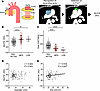 Figure 5
Noninvasive evaluation of aortic PVAT inflammation in MFS. (A) Procedure for calculating the fat attenuation index to the ascending aorta (AA-FAI). Machine learning–based program recognizes the ascending aorta, selects areas with CT attenuation corresponding to fat tissue within a 10 mm range around the vessel wall, defines them as perivascular adipose tissues (PVAT) on CT (ct-PVAT), and outputs the average values of attenuation of all pixels in the ct-PVAT as the AA-FAI. (B and C) The AA-FAI (B) and the area of ct-PVAT (C) was calculated in each group (non-HCTDs, n = 159; MFS, n = 36; LDS, n = 9). The data are presented as mean ± SD. **P < 0.01, ****P < 0.0001, 1-way ANOVA with Tukey’s multiple-comparison test. (D) Scatterplots showing the correlation between the aortic diameter and AA-FAI in patients without HCTDs (n = 159). (E) Scatterplots showing the correlation between the aortic size index (ASI) and AA-FAI in patients without HCTDs (n = 159). HCTDs, hereditary connective tissue disorders; HFD, high-fat diet; LDS, Loeys-Dietz Syndrome; MFS, Marfan syndrome.
AA-FAI was significantly higher in patients with MFS than in those without HCTDs (non-HCTDs, –62.02 ± 8.54 Hounsfield unit [HU] vs MFS, –52.90 ± 12.69 HU; P < 0.0001) (Figure 5B), while the area of the ct-PVAT was smaller in patients with MFS than in those without HCTDs (non-HCTDs, 414.10 ± 153.31 mm2/slice, vs MFS, 251.19 ± 127.89 mm2/slice; P < 0.0001) (Figure 5C). These differences were also observed between the LDS and non-HCTDs patient groups (non-HCTDs, –62.02 ± 8.54 HU, vs LDS, –51.70 ± 7.99 HU, P < 0.0001; non-HCTDs, 414.10 ± 153.31 mm2/slice, vs LDS, 148.35 ± 145.35 mm2/slice, P < 0.0001) (Figure 5, B and C). While no significant association was observed between aortic diameter and AA-FAI in patients without HCTDs (Figure 5D), a significant correlation was found between the aortic size index (ASI), which adjusts aortic diameter for body surface area, and AA-FAI (Figure 5E), suggesting a link between aortic enlargement and increased AA-FAI. Notably, the AA-FAI in patients with MFS was significantly higher than in patients without HCTDs, even when compared with those with advanced aortic enlargement (≥50 mm) or those in the highest ASI tertile (Supplemental Figure 4, A and B). These findings indicate that aortic PVAT inflammation increases with aortic enlargement in patients without HCTDs, whereas it is more pronounced in those with HCTDs.
Clinical relevance of PVAT inflammation assessment in MFS. There was a positive correlation between the expansion speed of the aortic diameter measured by ultrasound imaging and the AA-FAI in the 2 years before aortic surgery (Figure 6A). The receiver operating characteristic (ROC) analysis of the AA-FAI prediction for HCTDs or MFS is shown in Supplemental Figure 5. The AUC was 0.74 (95% CI, 0.66–0.83) and 0.73 (95% CI, 0.63–0.83) for HCTDs and MFS, respectively. AA-FAI had a highly sensitive and specific predictive value for MFS, with an optimal cutoff of –55.3 HU (sensitivity, 0.61; specificity, 0.81). These results suggest that aortic PVAT inflammatory status is correlated with the rate of aortic enlargement and that AA-FAI may be a potential specific biomarker for HCTDs.
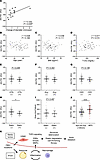 Figure 6
Effect of background factors on AA-FAI. (A) Scatterplots showing the correlation between the expansion speed of the aortic diameter and the AA-FAI in the 2 years leading to prophylactic aortic surgery (n = 13). Patients with at least 2 follow-ups for echo cardiography within the last 2 years of imaging the analyzed CT were recruited. (B–D) Scatterplots showing the correlation between age, BMI, total cholesterol (T-chol), and the fat attenuation index to the ascending aorta (AA-FAI) in patients without enlargement of ascending aorta (age and BMI, n = 69; T-chol, n = 61). (E–G) Among the patients without enlargement of ascending aorta, the AA-FAI was compared in 2 groups according to the absence or presence of hypertension (HTN) [(–), n = 37; (+), n = 32], dyslipidemia (DLp) [(–), n = 32; (+), n = 37], and chronic kidney disease (CKD) [(–), n = 44; (+), n = 25]. The data are presented as mean ± SD. Unpaired 2-tailed t test with Welch’s correction. (H and I) Among the patients without enlargement of ascending aorta, the AA-FAI and ct-PVAT area were compared in 2 groups according to the absence or presence of statin treatment [(–), n = 52; (+), n = 17]. The data are presented as mean ± SD. *P < 0.05, unpaired 2-tailed t test with Welch’s correction. (J) The AA-FAI was compared in patients with non-HCTDs and MFS who were not taking statins (non-HCTDs, n = 121; MFS, n = 34). The data are presented as mean ± SD. ****P < 0.0001, unpaired 2-tailed t test with Welch’s correction. (K) The scheme of MFS pathology suggested by this study. Perivascular adipose tissue (PVAT) inflammation enhances TGF-β signaling in the tunica media and leads to aortic dilatation. Immune cells including macrophages that migrate into perivascular tissues due to signals of inflammatory adipokines may secret TGF-β that further enhances signaling in the tunica media. ERKs, extracellular signal-regulated kinases; HCTDs, hereditary connective tissue disorders; HFD, high-fat diet; LDS, Loeys-Dietz Syndrome; MFS, Marfan syndrome; MMPs, matrix metalloproteinases; VSMC, vascular smooth muscle cell.
As characteristics differ significantly between patients with HCTDs and without HCTDs (Table 1), we then examined the effect of these characteristics on the AA-FAI. For factors such as, age, BMI, hypertension, dyslipidemia, statin use, total cholesterol level, and chronic kidney disease (CKD), propensity score matching did not provide sufficient sample size to perform adequate statistical analysis. Hence, data from the patients without HCTDs who have normal aortic diameter (<35 mm) were used to analyze the effect of each factor on the AA-FAI. No statistical association was found between age, BMI, or total cholesterol level and the AA-FAI (Figure 6, B–D). Furthermore, the AA-FAI was not correlated with hypertension, dyslipidemia, or CKD (Figure 6, E–G). Interestingly, the AA-FAI was lower in the statin use group (non-statin use, –60.46 ± 8.76 HU, vs statin use, –65.37 ± 6.84 HU; P = 0.039) (Figure 6H), while statin did not affect ct-PVAT area (non-statin use, 431.7 ± 138.2 mm2/slice, vs statin use, 406.3 ± 128.4 mm2/slice; P = 0.493) (Figure 6I). Patients with MFS still demonstrated higher AA-FAI than patients without HCTDs, even after excluding statin users from the analysis (non-HCTDs, –61.22 ± 8.69 HU, vs MFS, –52.61 ± 13.00 HU; P < 0.0001) (Figure 6J).


