
Research ArticleBone biologyPulmonology
Open Access |  10.1172/jci.insight.192981
Hydroxyapatite microspheres induce durable pleurodesis and are rapidly cleared by pleural osteoclasts
Yusuke Tanaka,1 Yuki Takahashi,1 Yuma Shindo,1 Lori B. Pitstick,1 Steven L. Teitelbaum,2 Wei Zou,2 Xiangning Wang,3 Jason C. Woods,4 Kathryn A. Wikenheiser-Brokamp,5,6 and Francis X. McCormack1
1Division of Pulmonary, Critical Care and Sleep Medicine, Department of Internal Medicine, University of Cincinnati, Cincinnati, Ohio, USA.
2Department of Pathology and Immunology, and Division of Bone and Mineral Diseases, Department of Medicine, Washington University School of Medicine, St. Louis, Missouri, USA.
3Vontz Core Imaging Laboratory, Vontz Center for Molecular Studies, The University of Cincinnati, Cincinnati, Ohio, USA.
4Center for Pulmonary Imaging Research, Cincinnati Children’s Hospital Medical Center, Cincinnati, Ohio, USA.
5Division of Pathology & Laboratory Medicine and Perinatal Institute, and
6Division of Pulmonary Biology, Cincinnati Children’s Hospital Medical Center, Department of Pathology & Laboratory Medicine, University of Cincinnati, Cincinnati, Ohio, USA.
Address correspondence to: Francis X. McCormack, MSB 6262, 231 Albert Sabin Way, Division of Pulmonary, Critical Care and Sleep Medicine, Department of Internal Medicine, University of Cincinnati, Ohio 45267-0564, USA. Phone: 513.558.4831; Email: frank.mccormack@uc.edu. Or to: Yusuke Tanaka, Department of Respiratory Medicine and Allergology, Sapporo Medical University, S1 W16, Chuo-Ku, Sapporo, Hokkaido, 060-8543, Japan. Phone: 81.11.611.2111 ext., 32390; Email: tanayou@sapmed.ac.jp.
Authorship note: Y Tanaka and Y Takahashi are co–first authors. FXM and Y Tanaka are co–corresponding authors.
Find articles by Tanaka, Y. in: PubMed | Google Scholar
1Division of Pulmonary, Critical Care and Sleep Medicine, Department of Internal Medicine, University of Cincinnati, Cincinnati, Ohio, USA.
2Department of Pathology and Immunology, and Division of Bone and Mineral Diseases, Department of Medicine, Washington University School of Medicine, St. Louis, Missouri, USA.
3Vontz Core Imaging Laboratory, Vontz Center for Molecular Studies, The University of Cincinnati, Cincinnati, Ohio, USA.
4Center for Pulmonary Imaging Research, Cincinnati Children’s Hospital Medical Center, Cincinnati, Ohio, USA.
5Division of Pathology & Laboratory Medicine and Perinatal Institute, and
6Division of Pulmonary Biology, Cincinnati Children’s Hospital Medical Center, Department of Pathology & Laboratory Medicine, University of Cincinnati, Cincinnati, Ohio, USA.
Address correspondence to: Francis X. McCormack, MSB 6262, 231 Albert Sabin Way, Division of Pulmonary, Critical Care and Sleep Medicine, Department of Internal Medicine, University of Cincinnati, Ohio 45267-0564, USA. Phone: 513.558.4831; Email: frank.mccormack@uc.edu. Or to: Yusuke Tanaka, Department of Respiratory Medicine and Allergology, Sapporo Medical University, S1 W16, Chuo-Ku, Sapporo, Hokkaido, 060-8543, Japan. Phone: 81.11.611.2111 ext., 32390; Email: tanayou@sapmed.ac.jp.
Authorship note: Y Tanaka and Y Takahashi are co–first authors. FXM and Y Tanaka are co–corresponding authors.
Find articles by Takahashi, Y. in: PubMed | Google Scholar
1Division of Pulmonary, Critical Care and Sleep Medicine, Department of Internal Medicine, University of Cincinnati, Cincinnati, Ohio, USA.
2Department of Pathology and Immunology, and Division of Bone and Mineral Diseases, Department of Medicine, Washington University School of Medicine, St. Louis, Missouri, USA.
3Vontz Core Imaging Laboratory, Vontz Center for Molecular Studies, The University of Cincinnati, Cincinnati, Ohio, USA.
4Center for Pulmonary Imaging Research, Cincinnati Children’s Hospital Medical Center, Cincinnati, Ohio, USA.
5Division of Pathology & Laboratory Medicine and Perinatal Institute, and
6Division of Pulmonary Biology, Cincinnati Children’s Hospital Medical Center, Department of Pathology & Laboratory Medicine, University of Cincinnati, Cincinnati, Ohio, USA.
Address correspondence to: Francis X. McCormack, MSB 6262, 231 Albert Sabin Way, Division of Pulmonary, Critical Care and Sleep Medicine, Department of Internal Medicine, University of Cincinnati, Ohio 45267-0564, USA. Phone: 513.558.4831; Email: frank.mccormack@uc.edu. Or to: Yusuke Tanaka, Department of Respiratory Medicine and Allergology, Sapporo Medical University, S1 W16, Chuo-Ku, Sapporo, Hokkaido, 060-8543, Japan. Phone: 81.11.611.2111 ext., 32390; Email: tanayou@sapmed.ac.jp.
Authorship note: Y Tanaka and Y Takahashi are co–first authors. FXM and Y Tanaka are co–corresponding authors.
Find articles by Shindo, Y. in: PubMed | Google Scholar
1Division of Pulmonary, Critical Care and Sleep Medicine, Department of Internal Medicine, University of Cincinnati, Cincinnati, Ohio, USA.
2Department of Pathology and Immunology, and Division of Bone and Mineral Diseases, Department of Medicine, Washington University School of Medicine, St. Louis, Missouri, USA.
3Vontz Core Imaging Laboratory, Vontz Center for Molecular Studies, The University of Cincinnati, Cincinnati, Ohio, USA.
4Center for Pulmonary Imaging Research, Cincinnati Children’s Hospital Medical Center, Cincinnati, Ohio, USA.
5Division of Pathology & Laboratory Medicine and Perinatal Institute, and
6Division of Pulmonary Biology, Cincinnati Children’s Hospital Medical Center, Department of Pathology & Laboratory Medicine, University of Cincinnati, Cincinnati, Ohio, USA.
Address correspondence to: Francis X. McCormack, MSB 6262, 231 Albert Sabin Way, Division of Pulmonary, Critical Care and Sleep Medicine, Department of Internal Medicine, University of Cincinnati, Ohio 45267-0564, USA. Phone: 513.558.4831; Email: frank.mccormack@uc.edu. Or to: Yusuke Tanaka, Department of Respiratory Medicine and Allergology, Sapporo Medical University, S1 W16, Chuo-Ku, Sapporo, Hokkaido, 060-8543, Japan. Phone: 81.11.611.2111 ext., 32390; Email: tanayou@sapmed.ac.jp.
Authorship note: Y Tanaka and Y Takahashi are co–first authors. FXM and Y Tanaka are co–corresponding authors.
Find articles by Pitstick, L. in: PubMed | Google Scholar
1Division of Pulmonary, Critical Care and Sleep Medicine, Department of Internal Medicine, University of Cincinnati, Cincinnati, Ohio, USA.
2Department of Pathology and Immunology, and Division of Bone and Mineral Diseases, Department of Medicine, Washington University School of Medicine, St. Louis, Missouri, USA.
3Vontz Core Imaging Laboratory, Vontz Center for Molecular Studies, The University of Cincinnati, Cincinnati, Ohio, USA.
4Center for Pulmonary Imaging Research, Cincinnati Children’s Hospital Medical Center, Cincinnati, Ohio, USA.
5Division of Pathology & Laboratory Medicine and Perinatal Institute, and
6Division of Pulmonary Biology, Cincinnati Children’s Hospital Medical Center, Department of Pathology & Laboratory Medicine, University of Cincinnati, Cincinnati, Ohio, USA.
Address correspondence to: Francis X. McCormack, MSB 6262, 231 Albert Sabin Way, Division of Pulmonary, Critical Care and Sleep Medicine, Department of Internal Medicine, University of Cincinnati, Ohio 45267-0564, USA. Phone: 513.558.4831; Email: frank.mccormack@uc.edu. Or to: Yusuke Tanaka, Department of Respiratory Medicine and Allergology, Sapporo Medical University, S1 W16, Chuo-Ku, Sapporo, Hokkaido, 060-8543, Japan. Phone: 81.11.611.2111 ext., 32390; Email: tanayou@sapmed.ac.jp.
Authorship note: Y Tanaka and Y Takahashi are co–first authors. FXM and Y Tanaka are co–corresponding authors.
Find articles by
Teitelbaum, S.
in:
PubMed
|
Google Scholar
|

1Division of Pulmonary, Critical Care and Sleep Medicine, Department of Internal Medicine, University of Cincinnati, Cincinnati, Ohio, USA.
2Department of Pathology and Immunology, and Division of Bone and Mineral Diseases, Department of Medicine, Washington University School of Medicine, St. Louis, Missouri, USA.
3Vontz Core Imaging Laboratory, Vontz Center for Molecular Studies, The University of Cincinnati, Cincinnati, Ohio, USA.
4Center for Pulmonary Imaging Research, Cincinnati Children’s Hospital Medical Center, Cincinnati, Ohio, USA.
5Division of Pathology & Laboratory Medicine and Perinatal Institute, and
6Division of Pulmonary Biology, Cincinnati Children’s Hospital Medical Center, Department of Pathology & Laboratory Medicine, University of Cincinnati, Cincinnati, Ohio, USA.
Address correspondence to: Francis X. McCormack, MSB 6262, 231 Albert Sabin Way, Division of Pulmonary, Critical Care and Sleep Medicine, Department of Internal Medicine, University of Cincinnati, Ohio 45267-0564, USA. Phone: 513.558.4831; Email: frank.mccormack@uc.edu. Or to: Yusuke Tanaka, Department of Respiratory Medicine and Allergology, Sapporo Medical University, S1 W16, Chuo-Ku, Sapporo, Hokkaido, 060-8543, Japan. Phone: 81.11.611.2111 ext., 32390; Email: tanayou@sapmed.ac.jp.
Authorship note: Y Tanaka and Y Takahashi are co–first authors. FXM and Y Tanaka are co–corresponding authors.
Find articles by Zou, W. in: PubMed | Google Scholar
1Division of Pulmonary, Critical Care and Sleep Medicine, Department of Internal Medicine, University of Cincinnati, Cincinnati, Ohio, USA.
2Department of Pathology and Immunology, and Division of Bone and Mineral Diseases, Department of Medicine, Washington University School of Medicine, St. Louis, Missouri, USA.
3Vontz Core Imaging Laboratory, Vontz Center for Molecular Studies, The University of Cincinnati, Cincinnati, Ohio, USA.
4Center for Pulmonary Imaging Research, Cincinnati Children’s Hospital Medical Center, Cincinnati, Ohio, USA.
5Division of Pathology & Laboratory Medicine and Perinatal Institute, and
6Division of Pulmonary Biology, Cincinnati Children’s Hospital Medical Center, Department of Pathology & Laboratory Medicine, University of Cincinnati, Cincinnati, Ohio, USA.
Address correspondence to: Francis X. McCormack, MSB 6262, 231 Albert Sabin Way, Division of Pulmonary, Critical Care and Sleep Medicine, Department of Internal Medicine, University of Cincinnati, Ohio 45267-0564, USA. Phone: 513.558.4831; Email: frank.mccormack@uc.edu. Or to: Yusuke Tanaka, Department of Respiratory Medicine and Allergology, Sapporo Medical University, S1 W16, Chuo-Ku, Sapporo, Hokkaido, 060-8543, Japan. Phone: 81.11.611.2111 ext., 32390; Email: tanayou@sapmed.ac.jp.
Authorship note: Y Tanaka and Y Takahashi are co–first authors. FXM and Y Tanaka are co–corresponding authors.
Find articles by Wang, X. in: PubMed | Google Scholar
1Division of Pulmonary, Critical Care and Sleep Medicine, Department of Internal Medicine, University of Cincinnati, Cincinnati, Ohio, USA.
2Department of Pathology and Immunology, and Division of Bone and Mineral Diseases, Department of Medicine, Washington University School of Medicine, St. Louis, Missouri, USA.
3Vontz Core Imaging Laboratory, Vontz Center for Molecular Studies, The University of Cincinnati, Cincinnati, Ohio, USA.
4Center for Pulmonary Imaging Research, Cincinnati Children’s Hospital Medical Center, Cincinnati, Ohio, USA.
5Division of Pathology & Laboratory Medicine and Perinatal Institute, and
6Division of Pulmonary Biology, Cincinnati Children’s Hospital Medical Center, Department of Pathology & Laboratory Medicine, University of Cincinnati, Cincinnati, Ohio, USA.
Address correspondence to: Francis X. McCormack, MSB 6262, 231 Albert Sabin Way, Division of Pulmonary, Critical Care and Sleep Medicine, Department of Internal Medicine, University of Cincinnati, Ohio 45267-0564, USA. Phone: 513.558.4831; Email: frank.mccormack@uc.edu. Or to: Yusuke Tanaka, Department of Respiratory Medicine and Allergology, Sapporo Medical University, S1 W16, Chuo-Ku, Sapporo, Hokkaido, 060-8543, Japan. Phone: 81.11.611.2111 ext., 32390; Email: tanayou@sapmed.ac.jp.
Authorship note: Y Tanaka and Y Takahashi are co–first authors. FXM and Y Tanaka are co–corresponding authors.
Find articles by Woods, J. in: PubMed | Google Scholar
1Division of Pulmonary, Critical Care and Sleep Medicine, Department of Internal Medicine, University of Cincinnati, Cincinnati, Ohio, USA.
2Department of Pathology and Immunology, and Division of Bone and Mineral Diseases, Department of Medicine, Washington University School of Medicine, St. Louis, Missouri, USA.
3Vontz Core Imaging Laboratory, Vontz Center for Molecular Studies, The University of Cincinnati, Cincinnati, Ohio, USA.
4Center for Pulmonary Imaging Research, Cincinnati Children’s Hospital Medical Center, Cincinnati, Ohio, USA.
5Division of Pathology & Laboratory Medicine and Perinatal Institute, and
6Division of Pulmonary Biology, Cincinnati Children’s Hospital Medical Center, Department of Pathology & Laboratory Medicine, University of Cincinnati, Cincinnati, Ohio, USA.
Address correspondence to: Francis X. McCormack, MSB 6262, 231 Albert Sabin Way, Division of Pulmonary, Critical Care and Sleep Medicine, Department of Internal Medicine, University of Cincinnati, Ohio 45267-0564, USA. Phone: 513.558.4831; Email: frank.mccormack@uc.edu. Or to: Yusuke Tanaka, Department of Respiratory Medicine and Allergology, Sapporo Medical University, S1 W16, Chuo-Ku, Sapporo, Hokkaido, 060-8543, Japan. Phone: 81.11.611.2111 ext., 32390; Email: tanayou@sapmed.ac.jp.
Authorship note: Y Tanaka and Y Takahashi are co–first authors. FXM and Y Tanaka are co–corresponding authors.
Find articles by Wikenheiser-Brokamp, K. in: PubMed | Google Scholar
1Division of Pulmonary, Critical Care and Sleep Medicine, Department of Internal Medicine, University of Cincinnati, Cincinnati, Ohio, USA.
2Department of Pathology and Immunology, and Division of Bone and Mineral Diseases, Department of Medicine, Washington University School of Medicine, St. Louis, Missouri, USA.
3Vontz Core Imaging Laboratory, Vontz Center for Molecular Studies, The University of Cincinnati, Cincinnati, Ohio, USA.
4Center for Pulmonary Imaging Research, Cincinnati Children’s Hospital Medical Center, Cincinnati, Ohio, USA.
5Division of Pathology & Laboratory Medicine and Perinatal Institute, and
6Division of Pulmonary Biology, Cincinnati Children’s Hospital Medical Center, Department of Pathology & Laboratory Medicine, University of Cincinnati, Cincinnati, Ohio, USA.
Address correspondence to: Francis X. McCormack, MSB 6262, 231 Albert Sabin Way, Division of Pulmonary, Critical Care and Sleep Medicine, Department of Internal Medicine, University of Cincinnati, Ohio 45267-0564, USA. Phone: 513.558.4831; Email: frank.mccormack@uc.edu. Or to: Yusuke Tanaka, Department of Respiratory Medicine and Allergology, Sapporo Medical University, S1 W16, Chuo-Ku, Sapporo, Hokkaido, 060-8543, Japan. Phone: 81.11.611.2111 ext., 32390; Email: tanayou@sapmed.ac.jp.
Authorship note: Y Tanaka and Y Takahashi are co–first authors. FXM and Y Tanaka are co–corresponding authors.
Find articles by
McCormack, F.
in:
PubMed
|
Google Scholar
|
Published August 26, 2025 - More info
JCI Insight. 2025;10(19):e192981. https://doi.org/10.1172/jci.insight.192981.
© 2025 Tanaka et al. This work is licensed under the Creative Commons Attribution 4.0 International License. To view a copy of this license, visit http://creativecommons.org/licenses/by/4.0/.
Received: March 4, 2025; Accepted: August 15, 2025


-
Results
We compared the efficacy of laboratory talc and commercially available hydroxyapatite microspheres (HAM) for pleurodesis in mice. The particles used were of similar mean sizes (8.2 ± 2.2 μm vs. 6.0 ± 2.7 μm, mean ± SD for talc vs. HAM, respectively) (Supplemental Table 1; supplemental material available online with this article; https://doi.org/10.1172/jci.insight.192981DS1), but the physical characteristics were quite distinct, with talc exhibiting a rough, irregular, plate-like shape with a fractured, layered surface and with HAM showing a near perfectly spherical shape with a smooth, textured, porous surface (Supplemental Figure 1). Talc and HAM doses that were delivered (2 mg per gram body weight [BW] vs. 4 mg/g BW) were based on the maximal recommended dose for talc in humans (10 g) corrected for body surface area (1.73 m2 for humans and 0.007 m2 for mice), and designed to compensate for the greater surface area of talc (7–25 m2/g) vs. HAM (0.2–0.4 m2/g) based on weight, and greater formula weight of HAM (1,004 g/mol) compared with talc (347 g/mol), which results in fewer particles delivered per unit weight (Supplemental Table 2). The particles were instilled into the pleural space, and pleural fibrosis was assessed by several measures at multiple time points (Figure 1A). Upregulation of collagen genes in pleural lavage cells was induced by both intrapleural HAM and talc, peaking at day 14 and dropping toward baseline through day 56 (Figure 1B). Pleural thickness and expansion of the collagen matrix was measured on Masson’s trichrome stained sections, and they were found to increase sharply after intrapleural instillation over 7 days and to remain elevated through day 56 to a very similar degree for both particles (Figure 1, C and D, and Supplemental Figure 2, A and B). The hydroxyproline content of the lung surface (Figure 1E) and whole lung (Supplemental Figure 2C) was also increased to a similar extent for talc and HAM. Pleural adhesion scores in mice treated with intrapleural particles were higher in the HAM group in the first 2 months after intrapleural but converged with those due to talc by day 84 and day 168 after challenge (Figure 1F and Supplemental Figure 2D). The static compliance of the lung was decreased at day 56 to a similar degree for both particles (Supplemental Figure 2E), consistent with the development of a mild restrictive defect.
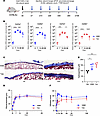 Figure 1
Comparison of HAM and talc induced pleural fibrosis and fusion. (A) Scheme for pleurodesis experiments with HAM and talc. (B) qPCR of collagen genes, Col1a1 and Col3a1, from pleural lavage cells at indicated intervals after HAM and talc administration (n = 4 mice per group). (C) Masson’s trichrome reagent–stained lung sections collected from HAM and talc challenged mice at 56 days. Scale bar: 200 μm for ×4 magnification and 20 μm for ×40 magnification. (Supplemental Figure 2A). (D) Pleural thickness change after intrapleural administration of HAM and talc (Supplemental Figure 2B) (n = 4 mice per group). (E) Lung surface and whole lung (Supplemental Figure 2C) hydroxyproline levels were quantified at day 14 after intrapleural administration of HAM or talc (n = 4–8 mice per group). (F) Adhesions between the visceral and parietal pleura were quantified at defined time points after the intrapleural administration of HAM or talc (Supplemental Figure 2D). Data are shown as mean ± SD. Comparisons were by unpaired t test for 2 groups and by 1-way ANOVA followed by Tukey’s multiple-comparison test. *P < 0.05, **P < 0.01, ***P < 0.001, and ****P < 0.0001.
We compared the inflammatory responses induced by HAM and talc pleurodesis. Both HAM and talc induced an increase in IL-1β, IL-6, and TNF-α in pleural lavage fluid that peaked over the first week and returned to baseline for the next 7–14 days after instillation (Figure 2, A–C, and Supplemental Figure 3, A–C). Serum IL-1β and the acute phase reactant C-reactive protein (CRP) followed a similar pattern for both particles (Figure 2, D and E, and Supplemental Figure 3, D and E). Residual ¹8F-fluorodeoxyglucose (FDG) uptake in the thoracic cavity on PET scanning at 3 months after talc instillation was significantly greater than that for HAM, based on comparison of volume of voxels with standardized uptake value (SUV) > 1.5, consistent with greater ongoing inflammation in the pleural space with the nondegradable particle (Figure 2, F and G).
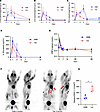 Figure 2
Pleural and systemic inflammation associated with HAM and talc pleurodesis. (A–C) Analysis of IL-1β, IL-6, and TNF-α in pleural lavage fluid measured by ELISA at indicated time points after administration of HAM or talc (n = 4 mice per group) (Supplemental Figure 3, A–C). (D and E) IL-1β and CRP in serum measured by ELISA at indicated time points after administration of HAM or talc (n = 4 mice per group) (Supplemental Figure 3, D and E). (F) Residual inflammation on FDG-PET at 3 months after administration of HAM or talc (red arrows). (G) The volume voxels with standardized uptake value (SUV) > 1.5 is shown (n = 3). Data are shown as mean ± SD. *P < 0.05.
We explored the hypothesis that intrapleural particles induce an osteoclastogenic gene program that both contributes to clearance (as we have shown for hydroxyapatite; refs. 10, 11) and results in release of damaging cellular products that promote fibrosis (as we have shown for silica; ref. 12) and pleural symphysis. Osteoclastogenic cytokine genes, Tnfsf11 (RANKL), Tnfrsf11a (RANK), Tnfrsf11b (OPG), Csf1 (M-CSF), and Csf1r (M-CSFR) were induced in pleural lavage cells by day 7 for both HAM and talc, plateaued on day 14–28, and remained elevated above baseline through day 56 (Figure 3, A and B). Pleural lavage fluid levels of RANKL, OPG, and M-CSF proteins were elevated to a greater degree (3- to 5-fold) by HAM (Figure 3C) than by talc (Figure 3D), peaking at day 5 and falling to baseline in the second week after instillation.
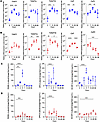 Figure 3
Osteoclastogenic cytokines induced by HAM and talc pleurodesis. (A and B) qPCR for osteoclastogenic genes Tnfsf11 (RANKL), Tnfrsf11a (RANK), Tnfrsf11b (OPG), Csf1 (M-CSF), and Csf1r (M-CSFR), in pleural lavage cells collected at indicated time points after intrapleural instillation of HAM (blue) (A) or talc (red) (B) (n = 4 mice per group). ELISA of RANKL, OPG, and M-CSF proteins in pleural lavage fluid over time after instillation of HAM (blue) (C) or talc (red) (D). Data are shown as mean ± SD. Comparisons were by unpaired t test for 2 groups and by 1-way ANOVA followed by Tukey’s multiple-comparison test. *P < 0.05, **P < 0.01, ***P < 0.001, and ****P < 0.0001.
As shown in Figure 4, A and B, HAM and talc induced a 1–4 log upregulation of multiple osteoclast effector genes in pleural lavage cells that peaked at day 14 after challenge and remained elevated through day 56, including tartrate resistant acid phosphatase (TRAP; Acp5), cathepsin K (Ctsk), ATPase, H+ transporting, lysosomal 38 kDa, V0 subunit d2 (Atp6v0d2), matrix metalloproteinase 9 (Mmp9), calcitonin receptor (Calcr), and osteoclast-associated immunoglobulin-like receptor (Oscar). Both HAM and talc induced formation of multinucleated TRAP+, CALCR+, and CTSK+ giant cells in pleural lavage fluid (Figure 4C), as well as an increase in pleural lavage fluid levels of the osteoclast specific isoform of TRAP, TRAP5b (Figure 4D).
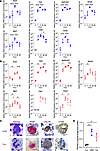 Figure 4
Osteoclast genes and proteins induced by HAM and talc pleurodesis. (A and B) qPCR for osteoclast genes Acp5 (TRAP), Ctsk, Atp6v0d2, Mmp9, Itgb3 (Integrin β3) and Calcr (Calcitonin receptor), and Oscar (Osteoclast-associated immunoglobulin-like receptor) in pleural lavage cells collected at the indicated time points after intrapleural instillation of HAM (blue) (A) or talc (red) (B). (C) Pleural multinucleated giant cells at 14 days after intrapleural challenge of HAM or talc stained with Giemsa, or for TRAP, CALCR, and CTSK. Scale bars: 20 μm. (D) TRAP5b, quantified by ELISA, in pleural lavage fluid from control, HAM- or talc-treated mice collected at 14 days after challenge (n = 3–4 mice per group). Data are shown as mean ± SD. Comparisons were by unpaired t test for 2 groups and by 1-way ANOVA followed by Tukey’s multiple-comparison test. *P < 0.05, **P < 0.01, ***P < 0.001, and ****P < 0.0001.
Postmortem transthoracic needle puncture (TTNP) is a method developed for inducing pneumothoraces in freshly sacrificed animals at defined time points after intrapleural instillation of saline or particles by multiple passes of a 20-gauge needle through each hemithorax. Quantitative μCT is used to estimate the volume of pneumothorax before and after intrapleural administration of particles to evaluate the effectiveness of pleurodesis (Figure 5). In control animals given intrapleural saline, TTNP induced large pneumothoraces with volumes of greater than 900 mm3 (Figure 5). Following intrapleural instillation of either HAM or talc, residual pneumothorax volume was reduced to less than 100 mm3 at the 1-week time point (Figure 5, A–C). Over the course of the ensuing 12 weeks, HAM pleurodesis was generally more durable than that due to talc, such that by the 12-week point, pneumothorax volume was approximately two-thirds of control for talc and one-eighth of control for HAM (Figure 5, A–C). Colorized CT images taken at the day 7, 28, 56, and 84 time points after particle instillation highlight the greater reduction in pneumothorax volume by HAM compared with talc (Figure 5, D and E, and Supplemental Figure 4, A and B). Thus, effectiveness of HAM pleurodesis appeared to be superior to talc pleurodesis in the mouse model over a 3-month period.
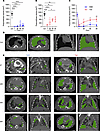 Figure 5
Effectiveness of HAM and talc for pleurodesis. Mice were sacrificed at the indicated time points after intrapleural instillation of particles and transthoracic needle puncture (TTNP) was performed with multiple passes of a 20 gauge needle through both hemithoraces. (A–C) μCT was used to quantify the volume of pneumothorax for HAM (A) and talc (B), which were compared head to head in C. (D) For control, axial and coronal CT images of saline challenged mice after TTNP are shown, as well as companion images colorized to highlight air in the pleural space. (E) For HAM and talc treated mice, colorized axial and coronal CT images are shown, as well as corresponding unadulterated images (Supplemental Figures 4A [HAM] and 4B [talc]). Data are shown as mean ± SD. Comparisons were by unpaired t test for 2 groups and by 1-way ANOVA followed by Tukey’s multiple-comparison test. *P < 0.05, **P < 0.01, ***P < 0.001, and ****P < 0.0001.
Talc pleurodesis is commonly used to treat malignant pleural effusions. We tested this application of hydroxyapatite pleurodesis in a mouse model that employs intrapleural instillation of Lewis lung carcinoma (LL/2) cells (13) (Figure 6A) to establish a malignant pleural effusion. Four days after LL/2 cells were delivered to the pleural space, we instilled HAM or talc, and we then measured the adhesion scores (Figure 6B) and effusion volumes (Figure 6C) over time. We found that both HAM and talc performed similarly, with nearly identical adhesion scores and an approximate 50% reduction in malignant pleural fluid volume. BW fell to a similar degree after particle instillation (Supplemental Figure 5). These data suggest that HAM is as effective as talc for pleurodesis in mice with malignant pleural effusion.
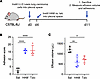 Figure 6
Effectiveness of HAM and talc pleurodesis for malignant effusion. (A) Mice were treated with intrapleural HAM or talc 4 days after intrapleural instillation of 5 × 10⁴ Lewis lung carcinoma (LL/2) cells into the pleural space. (B and C) One week later, the animals were sacrificed and number of pleural adhesions (B) and volume of pleural effusion (C) were quantified. Data are shown as mean ± SD. Comparisons were by unpaired t test for 2 groups and by 1-way ANOVA followed by Tukey’s multiple-comparison test. *P < 0.05, **P < 0.01, and ****P < 0.0001.
We also compared the clearance of radio-opaque intrapleural HAM or talc particles by quantitative μCT over the course of 3 months (Figure 7 and Supplemental Figure 6). Colorization of CT images was used to highlight residual particles. HAM particles were widely distributed and profuse at day 7 and progressively cleared through day 28, reaching nearly undetectable levels by day 56, while talc particle volumes remained unchanged through day 84.
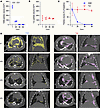 Figure 7
Clearance of HAM and talc particles over time. Mice that had been treated with intrapleural HAM or talc were anesthetized and imaged with μCT, and the volume of voxels attributable to particles was estimated using quantitative methods. (A–C) The particle voxel volume for HAM (A) and talc (B) are shown, and compared head to head in C. (D) Axial and coronal CT colorized images are shown, as well as unadulterated CT images for HAM- (Supplemental Figure 6A) and talc-treated (Supplemental Figure 6B) animals. Data are shown as mean ± SD. Comparisons were by unpaired t test for 2 groups and by 1-way ANOVA followed by Tukey’s multiple-comparison test. ****P < 0.0001.
To determine if osteoclast products may be contributing to pleural symphysis, we measured the adhesion scores in particle-challenged animals that were deficient in matrix degrading enzyme production (Ctsk–/– mice) (Figure 8, A and B). We found that there was a significant decline in pleural surface hydroxyproline and pleural adhesion formation at 14 days after HAM challenge in Ctsk–/– mice. We did not find any effect of deletion of CTSK on the formation of adhesions due to talc (not shown). In addition, we found that HAM clearance was delayed in mice treated with anti-RANKL mAb 3 days per week for 4 weeks (Figure 8C). These data suggest that induction of osteoclast activity plays a role in adhesion formation as well as in particle clearance in animals treated with intrapleural HAM.
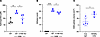 Figure 8
Effects of blocking osteoclast activity on pleural fibrosis and particle clearance. (A and B) Ctsk–/– mice and control littermates were treated with intrapleural HAM and sacrificed on day 14, and pleural surface hydroxyproline (A) and adhesion scores (B) were determined as in Figure 1. (C) In separate experiments, mice were treated with intrapleural HAM and treated with control IgG or anti-RANKL mAb 3 times weekly over 28 days. μCT was performed, and HAM voxel density was estimated by quantitative methods as outlined in Figure 7. Data are shown as mean ± SD. Comparisons were by unpaired t test for 2 groups and by 1-way ANOVA followed by Tukey’s multiple-comparison test. *P < 0.05, **P < 0.01, and ***P < 0.001
Several studies were conducted to determine the systemic effects and toxicities of HAM and talc pleurodesis (Supplemental Figure 7). Intrapleural administration of both particles induced a small, transient increase in serum calcium levels to a similar degree that returned to baseline by 4 weeks after challenge (Supplemental Figure 7A), but there was no effect of HAM or talc on serum phosphate levels (Supplemental Figure 7B). BW declined initially after intrapleural particle instillation, but it then recovered in both HAM and talc challenged mice over time (Supplemental Figure 8). Talc limited natural BW gain over time to a greater extent than HAM, although the effect size was small and did not reach significance by multiple-comparison testing (Supplemental Figure 8A). In a separate cohort of mice, weights, total activity levels, and total food intake were assessed and were not different between the intrapleural HAM, talc, and saline control groups at day 42 (Supplemental Figure 8B). Collectively, these data suggest that HAM is at least as safe as talc in the mouse model.
Finally, we conducted experiments to determine the influence of time and HAM particle size and dose on BW, efficacy of pleurodesis, and degree of dissemination (Figure 9 and Supplemental Figures 9–11). Smaller particles and higher doses of HAM were associated with greater transient weight loss than larger particles and lower doses of HAM, but weights all converged by day 7 (Supplemental Figure 9A and Supplemental Figure 10A). We sized particles using scanning electron microscopy (SEM) (Supplemental Table 1) and compared the properties of the 5 μm (6 μm by SEM) HAM particles and 8.2 μm laboratory talc that were used for all studies to this point, with size fractionated 10 μm (13.6 μm by SEM) and 24 μm (24.8 μm) HAM particles, and 37.1 μm clinical grade talc. There was an inverse relationship between HAM particle size and the degree of adhesion formation by 5, 10, and 24 μm HAM particles at 7 days after intrapleural instillation with the smaller particles demonstrating greater efficacy than larger particles (Figure 9A). Notably, all HAM particles were at least as effective for adhesion formation as clinical grade talc (Steritalc). Although smaller particles induced more adhesion formation than larger particles, it is unlikely that particles < 10 μm will be acceptable for human use based on available safety data from rodent models (14) and clinical studies suggesting an inferior safety profile (7, 8, 11, 15–18). We therefore focused on better characterizing the safety and efficacy of the 10 and 24 μm HAM particles. Both the 10 and 24 μm HAM particles induced durable pleurodesis, based on stability of adhesion scores through days 28 and 84 (Figure 9B). To determine size dependence of dissemination, we delivered 80 mg of either 10 or 24 μm HAM to the pleural space, which — on a mg per m2 basis — is approximately twice the maximal (10 g) recommended dose for Steritalc in humans (Supplemental Table 2). Tissues were harvested 1 week later and von Kossa stained to highlight particles (Figure 9, C–E and Supplemental Figure 9, B–D). In the dot blots shown in Figure 9, C–E, the size of dots relates to the number of animals of the 3–4 mice surveyed per point that had any particles found, and the intensity of color relates to the maximal profusion of particles found in any of the positive animals in the group (on a scale of 1–4+). We found that particles of both sizes were abundant on pleural surfaces of the thorax and studded the peritoneal surfaces of the liver, kidney, and spleen, occurring in 1/4 to 2/3 of animals without a clear size dependence (Figure 9C and Supplemental Figure 9, B–D). These particles almost certainly gained access to the abdominal structures through hiatal openings, lymphatic channels, or stomata in the diaphragm, rather than through intravascular dissemination. The smaller particles were more likely to enter the chest wall, found there in 4/4 animals given 10 μm HAM and 1/3 animals given the 24 μm HAM. In addition, intravascular particles indicative of true dissemination were found within the heart in 4/4 animals given 10 μm particles and 1/3 animals given the 24 μm particles (Figure 9C and Supplemental Figure 9B). Both sized particles were found in the interior tissues of the heart, in 2/4 of the mice in 10 μm group and 2/3 of the mice in the 24 μm group (Figure 9C and Supplemental Figure 9B). von Kossa staining of the heart valve is difficult to interpret, since melanin present in those structures also stain with that reagent (19). Finally particles in the interior tissues of the kidney were found in 2/4 of animals given the 10 μm particles and none of animals given the 24 μm particles. No particles were found in the brain (data not shown). These data suggest that smaller particles (with higher surface area on a mg-for-mg basis) produce more pleural adhesions, but that they also induce more weight loss and are more prone to disseminate intravascularly and into the chest wall, most likely through lymphatic stomata on the parietal pleural surface.
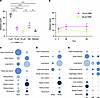 Figure 9
Adhesion formation, dissemination, and clearance of HAM particles. (A) Pleural adhesion formation was assessed on day 7 after intrapleural instillation of 80 mg of 5 μm HAM, 10 μm HAM, or 24 μm HAM particles or 40 mg laboratory grade or clinical grade particles as outlined in Methods. (B) Intrapleural delivery of 80 mg of 10 μm (pink) or 24 μm (green) HAM particles to mice at time zero was followed by determination of pleural adhesion scores at 7, 28, and 84 days. (C–E). The effects of particle size (C), particle dose (D), and time (E) on dissemination and clearance are depicted in dot plots that summarize the data shown in Supplemental Figures 9–11. The size of dots relates to the number of animals of the 3–4 mice surveyed per point that had any particles found, and the intensity of color relates to the maximal profusion of particles found in any of the positive animals in the group (on a scale of 1–4+). Data are shown as mean ± SD. **P < 0.01, ***P < 0.001, and ****P < 0.0001.
Additional experiments were conducted to determine the dose dependence of adhesion formation and dissemination by the larger (24 μm) particle over a 7-day period (Figure 9D and Supplemental Figure 10, B and C). There was a direct relationship between 24 μm HAM dose (10 mg, 40 mg and 80 mg) and extent of adhesion formation (Supplemental Figure 10B). There was more peritoneal studding, intravascular dissemination, and heart wall invasion for animals given the highest HAM dose, but for unclear reasons, chest wall invasion was seen more often in 40 mg than the 80 mg group (2/4 vs. 1/3, respectively) (Figure 9D and Supplemental Figure 10C). These data suggest that there is a direct relationship between intrapleural HAM dose, weight loss, pleural adhesion formation, and dissemination.
Experiments were performed to assess the time dependence of particle clearance from pleural, peritoneal, intravascular, and interparenchymal compartments (Figure 9E and Supplemental Figure 11). Over the 3 time points examined at 7, 28, and 84 days after intrapleural instillation of 80 mg of 24 µm HAM, there was a reduction in particle scores for lung interior (3/3, 2/4, 2/4, respectively), heart interior (2/4, 1/4, 1/4, respectively), and intravascular space in the heart (1/3, 0/3, 0/3, respectively), but inconsistent temporal patterns were found in the interior of the chest wall (1/3, 1/4, 2/4) and diaphragm (0/3, 1/4, 2/4) (Supplemental Figure 11A). Compared with the abundant peritoneal studding present on day 7, partial clearance from that membrane was apparent by day 28 (only 1 kidney section positive), and complete clearance had occurred by day 84. Taken together, these data suggest that HAM particles that disseminate and migrate through the diaphragm to stud the peritoneum are cleared over time.
A histological survey was conducted on > 100 H&E and Masson’s trichrome sections of the hearts, lungs, livers, kidneys, and spleens of animals treated with intrapleural HAM, including from mice sacrificed on day 7, 28, and 84 after high dose 24 μm HAM, day 7 after low dose 24 μm HAM, and day 7 after high dose 10 μm HAM (not shown). The degree of inflammation and fibrosis in the pleural space was directly correlated with the burden of particles, but there was no evidence of significant inflammation or fibrosis in other random tissues sections surveyed.


