
Research ArticleBone biologyCell biologyDevelopment
Open Access |  10.1172/jci.insight.198959
Collagen-binding C-type natriuretic peptide enhances chondrogenesis and osteogenesis
Kenta Hirai,1 Kenta Sawamura,2 Ryusaku Esaki,2 Ryusuke Sawada,3 Yuka Okusha,3 Eriko Aoyama,4 Hiroki Saito,5 Kentaro Uchida,5 Takehiko Mima,6 Satoshi Kubota,7 Hirokazu Tsukahara,1 Shiro Imagama,2 Masaki Matsushita,2 Osamu Matsushita,8 and Yasuyuki Hosono3
1Department of Pediatrics, Okayama University Graduate School of Medicine, Dentistry, and Pharmaceutical Sciences, Okayama, Japan.
2Department of Orthopaedic Surgery, Nagoya University Graduate School of Medicine, Nagoya, Japan.
3Department of Pharmacology, Okayama University Graduate School of Medicine, Dentistry, and Pharmaceutical Sciences, Okayama, Japan.
4Advanced Research Center for Oral and Craniofacial Sciences, Okayama University Dental School, Okayama, Japan.
5Department of Orthopaedic Surgery, Kitasato University School of Medicine, Sagamihara, Japan.
6Department of Medical Technology, Faculty of Health Sciences, Ehime Prefectural University of Health Sciences, Ehime, Japan.
7Department of Biochemistry and Molecular Dentistry and
8Department of Bacteriology, Okayama University Graduate School of Medicine, Dentistry, and Pharmaceutical Sciences, Okayama, Japan.
Address correspondence to: Masaki Matsushita, Department of Orthopaedic Surgery, Nagoya University Graduate School of Medicine, 65 Tsurumai-cho, Showa-ku, Nagoya, Aichi 466-8550, Japan. Phone: 81.52.741.2111; Email: matsushita.masaki.a7@f.mail.nagoya-u.ac.jp. Or to: Osamu Matsushita or Yasuyuki Hosono, Okayama University Graduate School of Medicine, Dentistry and Pharmaceutical Science, 2-5-1 Shikata-cho, Kita-ku, Okayama 700-8558, Japan. Phone:81.86.235.7158; Email: osamu@okayama-u.ac.jp (OM). Phone: 81.86.235.7138; Email: yhosono@okayama-u.ac.jp (YH).
Authorship note: KH and KS contributed equally to this work.
Find articles by Hirai, K. in: PubMed | Google Scholar
1Department of Pediatrics, Okayama University Graduate School of Medicine, Dentistry, and Pharmaceutical Sciences, Okayama, Japan.
2Department of Orthopaedic Surgery, Nagoya University Graduate School of Medicine, Nagoya, Japan.
3Department of Pharmacology, Okayama University Graduate School of Medicine, Dentistry, and Pharmaceutical Sciences, Okayama, Japan.
4Advanced Research Center for Oral and Craniofacial Sciences, Okayama University Dental School, Okayama, Japan.
5Department of Orthopaedic Surgery, Kitasato University School of Medicine, Sagamihara, Japan.
6Department of Medical Technology, Faculty of Health Sciences, Ehime Prefectural University of Health Sciences, Ehime, Japan.
7Department of Biochemistry and Molecular Dentistry and
8Department of Bacteriology, Okayama University Graduate School of Medicine, Dentistry, and Pharmaceutical Sciences, Okayama, Japan.
Address correspondence to: Masaki Matsushita, Department of Orthopaedic Surgery, Nagoya University Graduate School of Medicine, 65 Tsurumai-cho, Showa-ku, Nagoya, Aichi 466-8550, Japan. Phone: 81.52.741.2111; Email: matsushita.masaki.a7@f.mail.nagoya-u.ac.jp. Or to: Osamu Matsushita or Yasuyuki Hosono, Okayama University Graduate School of Medicine, Dentistry and Pharmaceutical Science, 2-5-1 Shikata-cho, Kita-ku, Okayama 700-8558, Japan. Phone:81.86.235.7158; Email: osamu@okayama-u.ac.jp (OM). Phone: 81.86.235.7138; Email: yhosono@okayama-u.ac.jp (YH).
Authorship note: KH and KS contributed equally to this work.
Find articles by Sawamura, K. in: PubMed | Google Scholar
1Department of Pediatrics, Okayama University Graduate School of Medicine, Dentistry, and Pharmaceutical Sciences, Okayama, Japan.
2Department of Orthopaedic Surgery, Nagoya University Graduate School of Medicine, Nagoya, Japan.
3Department of Pharmacology, Okayama University Graduate School of Medicine, Dentistry, and Pharmaceutical Sciences, Okayama, Japan.
4Advanced Research Center for Oral and Craniofacial Sciences, Okayama University Dental School, Okayama, Japan.
5Department of Orthopaedic Surgery, Kitasato University School of Medicine, Sagamihara, Japan.
6Department of Medical Technology, Faculty of Health Sciences, Ehime Prefectural University of Health Sciences, Ehime, Japan.
7Department of Biochemistry and Molecular Dentistry and
8Department of Bacteriology, Okayama University Graduate School of Medicine, Dentistry, and Pharmaceutical Sciences, Okayama, Japan.
Address correspondence to: Masaki Matsushita, Department of Orthopaedic Surgery, Nagoya University Graduate School of Medicine, 65 Tsurumai-cho, Showa-ku, Nagoya, Aichi 466-8550, Japan. Phone: 81.52.741.2111; Email: matsushita.masaki.a7@f.mail.nagoya-u.ac.jp. Or to: Osamu Matsushita or Yasuyuki Hosono, Okayama University Graduate School of Medicine, Dentistry and Pharmaceutical Science, 2-5-1 Shikata-cho, Kita-ku, Okayama 700-8558, Japan. Phone:81.86.235.7158; Email: osamu@okayama-u.ac.jp (OM). Phone: 81.86.235.7138; Email: yhosono@okayama-u.ac.jp (YH).
Authorship note: KH and KS contributed equally to this work.
Find articles by Esaki, R. in: PubMed | Google Scholar
1Department of Pediatrics, Okayama University Graduate School of Medicine, Dentistry, and Pharmaceutical Sciences, Okayama, Japan.
2Department of Orthopaedic Surgery, Nagoya University Graduate School of Medicine, Nagoya, Japan.
3Department of Pharmacology, Okayama University Graduate School of Medicine, Dentistry, and Pharmaceutical Sciences, Okayama, Japan.
4Advanced Research Center for Oral and Craniofacial Sciences, Okayama University Dental School, Okayama, Japan.
5Department of Orthopaedic Surgery, Kitasato University School of Medicine, Sagamihara, Japan.
6Department of Medical Technology, Faculty of Health Sciences, Ehime Prefectural University of Health Sciences, Ehime, Japan.
7Department of Biochemistry and Molecular Dentistry and
8Department of Bacteriology, Okayama University Graduate School of Medicine, Dentistry, and Pharmaceutical Sciences, Okayama, Japan.
Address correspondence to: Masaki Matsushita, Department of Orthopaedic Surgery, Nagoya University Graduate School of Medicine, 65 Tsurumai-cho, Showa-ku, Nagoya, Aichi 466-8550, Japan. Phone: 81.52.741.2111; Email: matsushita.masaki.a7@f.mail.nagoya-u.ac.jp. Or to: Osamu Matsushita or Yasuyuki Hosono, Okayama University Graduate School of Medicine, Dentistry and Pharmaceutical Science, 2-5-1 Shikata-cho, Kita-ku, Okayama 700-8558, Japan. Phone:81.86.235.7158; Email: osamu@okayama-u.ac.jp (OM). Phone: 81.86.235.7138; Email: yhosono@okayama-u.ac.jp (YH).
Authorship note: KH and KS contributed equally to this work.
Find articles by Sawada, R. in: PubMed | Google Scholar
1Department of Pediatrics, Okayama University Graduate School of Medicine, Dentistry, and Pharmaceutical Sciences, Okayama, Japan.
2Department of Orthopaedic Surgery, Nagoya University Graduate School of Medicine, Nagoya, Japan.
3Department of Pharmacology, Okayama University Graduate School of Medicine, Dentistry, and Pharmaceutical Sciences, Okayama, Japan.
4Advanced Research Center for Oral and Craniofacial Sciences, Okayama University Dental School, Okayama, Japan.
5Department of Orthopaedic Surgery, Kitasato University School of Medicine, Sagamihara, Japan.
6Department of Medical Technology, Faculty of Health Sciences, Ehime Prefectural University of Health Sciences, Ehime, Japan.
7Department of Biochemistry and Molecular Dentistry and
8Department of Bacteriology, Okayama University Graduate School of Medicine, Dentistry, and Pharmaceutical Sciences, Okayama, Japan.
Address correspondence to: Masaki Matsushita, Department of Orthopaedic Surgery, Nagoya University Graduate School of Medicine, 65 Tsurumai-cho, Showa-ku, Nagoya, Aichi 466-8550, Japan. Phone: 81.52.741.2111; Email: matsushita.masaki.a7@f.mail.nagoya-u.ac.jp. Or to: Osamu Matsushita or Yasuyuki Hosono, Okayama University Graduate School of Medicine, Dentistry and Pharmaceutical Science, 2-5-1 Shikata-cho, Kita-ku, Okayama 700-8558, Japan. Phone:81.86.235.7158; Email: osamu@okayama-u.ac.jp (OM). Phone: 81.86.235.7138; Email: yhosono@okayama-u.ac.jp (YH).
Authorship note: KH and KS contributed equally to this work.
Find articles by Okusha, Y. in: PubMed | Google Scholar
1Department of Pediatrics, Okayama University Graduate School of Medicine, Dentistry, and Pharmaceutical Sciences, Okayama, Japan.
2Department of Orthopaedic Surgery, Nagoya University Graduate School of Medicine, Nagoya, Japan.
3Department of Pharmacology, Okayama University Graduate School of Medicine, Dentistry, and Pharmaceutical Sciences, Okayama, Japan.
4Advanced Research Center for Oral and Craniofacial Sciences, Okayama University Dental School, Okayama, Japan.
5Department of Orthopaedic Surgery, Kitasato University School of Medicine, Sagamihara, Japan.
6Department of Medical Technology, Faculty of Health Sciences, Ehime Prefectural University of Health Sciences, Ehime, Japan.
7Department of Biochemistry and Molecular Dentistry and
8Department of Bacteriology, Okayama University Graduate School of Medicine, Dentistry, and Pharmaceutical Sciences, Okayama, Japan.
Address correspondence to: Masaki Matsushita, Department of Orthopaedic Surgery, Nagoya University Graduate School of Medicine, 65 Tsurumai-cho, Showa-ku, Nagoya, Aichi 466-8550, Japan. Phone: 81.52.741.2111; Email: matsushita.masaki.a7@f.mail.nagoya-u.ac.jp. Or to: Osamu Matsushita or Yasuyuki Hosono, Okayama University Graduate School of Medicine, Dentistry and Pharmaceutical Science, 2-5-1 Shikata-cho, Kita-ku, Okayama 700-8558, Japan. Phone:81.86.235.7158; Email: osamu@okayama-u.ac.jp (OM). Phone: 81.86.235.7138; Email: yhosono@okayama-u.ac.jp (YH).
Authorship note: KH and KS contributed equally to this work.
Find articles by Aoyama, E. in: PubMed | Google Scholar
1Department of Pediatrics, Okayama University Graduate School of Medicine, Dentistry, and Pharmaceutical Sciences, Okayama, Japan.
2Department of Orthopaedic Surgery, Nagoya University Graduate School of Medicine, Nagoya, Japan.
3Department of Pharmacology, Okayama University Graduate School of Medicine, Dentistry, and Pharmaceutical Sciences, Okayama, Japan.
4Advanced Research Center for Oral and Craniofacial Sciences, Okayama University Dental School, Okayama, Japan.
5Department of Orthopaedic Surgery, Kitasato University School of Medicine, Sagamihara, Japan.
6Department of Medical Technology, Faculty of Health Sciences, Ehime Prefectural University of Health Sciences, Ehime, Japan.
7Department of Biochemistry and Molecular Dentistry and
8Department of Bacteriology, Okayama University Graduate School of Medicine, Dentistry, and Pharmaceutical Sciences, Okayama, Japan.
Address correspondence to: Masaki Matsushita, Department of Orthopaedic Surgery, Nagoya University Graduate School of Medicine, 65 Tsurumai-cho, Showa-ku, Nagoya, Aichi 466-8550, Japan. Phone: 81.52.741.2111; Email: matsushita.masaki.a7@f.mail.nagoya-u.ac.jp. Or to: Osamu Matsushita or Yasuyuki Hosono, Okayama University Graduate School of Medicine, Dentistry and Pharmaceutical Science, 2-5-1 Shikata-cho, Kita-ku, Okayama 700-8558, Japan. Phone:81.86.235.7158; Email: osamu@okayama-u.ac.jp (OM). Phone: 81.86.235.7138; Email: yhosono@okayama-u.ac.jp (YH).
Authorship note: KH and KS contributed equally to this work.
Find articles by Saito, H. in: PubMed | Google Scholar
1Department of Pediatrics, Okayama University Graduate School of Medicine, Dentistry, and Pharmaceutical Sciences, Okayama, Japan.
2Department of Orthopaedic Surgery, Nagoya University Graduate School of Medicine, Nagoya, Japan.
3Department of Pharmacology, Okayama University Graduate School of Medicine, Dentistry, and Pharmaceutical Sciences, Okayama, Japan.
4Advanced Research Center for Oral and Craniofacial Sciences, Okayama University Dental School, Okayama, Japan.
5Department of Orthopaedic Surgery, Kitasato University School of Medicine, Sagamihara, Japan.
6Department of Medical Technology, Faculty of Health Sciences, Ehime Prefectural University of Health Sciences, Ehime, Japan.
7Department of Biochemistry and Molecular Dentistry and
8Department of Bacteriology, Okayama University Graduate School of Medicine, Dentistry, and Pharmaceutical Sciences, Okayama, Japan.
Address correspondence to: Masaki Matsushita, Department of Orthopaedic Surgery, Nagoya University Graduate School of Medicine, 65 Tsurumai-cho, Showa-ku, Nagoya, Aichi 466-8550, Japan. Phone: 81.52.741.2111; Email: matsushita.masaki.a7@f.mail.nagoya-u.ac.jp. Or to: Osamu Matsushita or Yasuyuki Hosono, Okayama University Graduate School of Medicine, Dentistry and Pharmaceutical Science, 2-5-1 Shikata-cho, Kita-ku, Okayama 700-8558, Japan. Phone:81.86.235.7158; Email: osamu@okayama-u.ac.jp (OM). Phone: 81.86.235.7138; Email: yhosono@okayama-u.ac.jp (YH).
Authorship note: KH and KS contributed equally to this work.
Find articles by Uchida, K. in: PubMed | Google Scholar
1Department of Pediatrics, Okayama University Graduate School of Medicine, Dentistry, and Pharmaceutical Sciences, Okayama, Japan.
2Department of Orthopaedic Surgery, Nagoya University Graduate School of Medicine, Nagoya, Japan.
3Department of Pharmacology, Okayama University Graduate School of Medicine, Dentistry, and Pharmaceutical Sciences, Okayama, Japan.
4Advanced Research Center for Oral and Craniofacial Sciences, Okayama University Dental School, Okayama, Japan.
5Department of Orthopaedic Surgery, Kitasato University School of Medicine, Sagamihara, Japan.
6Department of Medical Technology, Faculty of Health Sciences, Ehime Prefectural University of Health Sciences, Ehime, Japan.
7Department of Biochemistry and Molecular Dentistry and
8Department of Bacteriology, Okayama University Graduate School of Medicine, Dentistry, and Pharmaceutical Sciences, Okayama, Japan.
Address correspondence to: Masaki Matsushita, Department of Orthopaedic Surgery, Nagoya University Graduate School of Medicine, 65 Tsurumai-cho, Showa-ku, Nagoya, Aichi 466-8550, Japan. Phone: 81.52.741.2111; Email: matsushita.masaki.a7@f.mail.nagoya-u.ac.jp. Or to: Osamu Matsushita or Yasuyuki Hosono, Okayama University Graduate School of Medicine, Dentistry and Pharmaceutical Science, 2-5-1 Shikata-cho, Kita-ku, Okayama 700-8558, Japan. Phone:81.86.235.7158; Email: osamu@okayama-u.ac.jp (OM). Phone: 81.86.235.7138; Email: yhosono@okayama-u.ac.jp (YH).
Authorship note: KH and KS contributed equally to this work.
Find articles by Mima, T. in: PubMed | Google Scholar
1Department of Pediatrics, Okayama University Graduate School of Medicine, Dentistry, and Pharmaceutical Sciences, Okayama, Japan.
2Department of Orthopaedic Surgery, Nagoya University Graduate School of Medicine, Nagoya, Japan.
3Department of Pharmacology, Okayama University Graduate School of Medicine, Dentistry, and Pharmaceutical Sciences, Okayama, Japan.
4Advanced Research Center for Oral and Craniofacial Sciences, Okayama University Dental School, Okayama, Japan.
5Department of Orthopaedic Surgery, Kitasato University School of Medicine, Sagamihara, Japan.
6Department of Medical Technology, Faculty of Health Sciences, Ehime Prefectural University of Health Sciences, Ehime, Japan.
7Department of Biochemistry and Molecular Dentistry and
8Department of Bacteriology, Okayama University Graduate School of Medicine, Dentistry, and Pharmaceutical Sciences, Okayama, Japan.
Address correspondence to: Masaki Matsushita, Department of Orthopaedic Surgery, Nagoya University Graduate School of Medicine, 65 Tsurumai-cho, Showa-ku, Nagoya, Aichi 466-8550, Japan. Phone: 81.52.741.2111; Email: matsushita.masaki.a7@f.mail.nagoya-u.ac.jp. Or to: Osamu Matsushita or Yasuyuki Hosono, Okayama University Graduate School of Medicine, Dentistry and Pharmaceutical Science, 2-5-1 Shikata-cho, Kita-ku, Okayama 700-8558, Japan. Phone:81.86.235.7158; Email: osamu@okayama-u.ac.jp (OM). Phone: 81.86.235.7138; Email: yhosono@okayama-u.ac.jp (YH).
Authorship note: KH and KS contributed equally to this work.
Find articles by Kubota, S. in: PubMed | Google Scholar
1Department of Pediatrics, Okayama University Graduate School of Medicine, Dentistry, and Pharmaceutical Sciences, Okayama, Japan.
2Department of Orthopaedic Surgery, Nagoya University Graduate School of Medicine, Nagoya, Japan.
3Department of Pharmacology, Okayama University Graduate School of Medicine, Dentistry, and Pharmaceutical Sciences, Okayama, Japan.
4Advanced Research Center for Oral and Craniofacial Sciences, Okayama University Dental School, Okayama, Japan.
5Department of Orthopaedic Surgery, Kitasato University School of Medicine, Sagamihara, Japan.
6Department of Medical Technology, Faculty of Health Sciences, Ehime Prefectural University of Health Sciences, Ehime, Japan.
7Department of Biochemistry and Molecular Dentistry and
8Department of Bacteriology, Okayama University Graduate School of Medicine, Dentistry, and Pharmaceutical Sciences, Okayama, Japan.
Address correspondence to: Masaki Matsushita, Department of Orthopaedic Surgery, Nagoya University Graduate School of Medicine, 65 Tsurumai-cho, Showa-ku, Nagoya, Aichi 466-8550, Japan. Phone: 81.52.741.2111; Email: matsushita.masaki.a7@f.mail.nagoya-u.ac.jp. Or to: Osamu Matsushita or Yasuyuki Hosono, Okayama University Graduate School of Medicine, Dentistry and Pharmaceutical Science, 2-5-1 Shikata-cho, Kita-ku, Okayama 700-8558, Japan. Phone:81.86.235.7158; Email: osamu@okayama-u.ac.jp (OM). Phone: 81.86.235.7138; Email: yhosono@okayama-u.ac.jp (YH).
Authorship note: KH and KS contributed equally to this work.
Find articles by Tsukahara, H. in: PubMed | Google Scholar
1Department of Pediatrics, Okayama University Graduate School of Medicine, Dentistry, and Pharmaceutical Sciences, Okayama, Japan.
2Department of Orthopaedic Surgery, Nagoya University Graduate School of Medicine, Nagoya, Japan.
3Department of Pharmacology, Okayama University Graduate School of Medicine, Dentistry, and Pharmaceutical Sciences, Okayama, Japan.
4Advanced Research Center for Oral and Craniofacial Sciences, Okayama University Dental School, Okayama, Japan.
5Department of Orthopaedic Surgery, Kitasato University School of Medicine, Sagamihara, Japan.
6Department of Medical Technology, Faculty of Health Sciences, Ehime Prefectural University of Health Sciences, Ehime, Japan.
7Department of Biochemistry and Molecular Dentistry and
8Department of Bacteriology, Okayama University Graduate School of Medicine, Dentistry, and Pharmaceutical Sciences, Okayama, Japan.
Address correspondence to: Masaki Matsushita, Department of Orthopaedic Surgery, Nagoya University Graduate School of Medicine, 65 Tsurumai-cho, Showa-ku, Nagoya, Aichi 466-8550, Japan. Phone: 81.52.741.2111; Email: matsushita.masaki.a7@f.mail.nagoya-u.ac.jp. Or to: Osamu Matsushita or Yasuyuki Hosono, Okayama University Graduate School of Medicine, Dentistry and Pharmaceutical Science, 2-5-1 Shikata-cho, Kita-ku, Okayama 700-8558, Japan. Phone:81.86.235.7158; Email: osamu@okayama-u.ac.jp (OM). Phone: 81.86.235.7138; Email: yhosono@okayama-u.ac.jp (YH).
Authorship note: KH and KS contributed equally to this work.
Find articles by Imagama, S. in: PubMed | Google Scholar
1Department of Pediatrics, Okayama University Graduate School of Medicine, Dentistry, and Pharmaceutical Sciences, Okayama, Japan.
2Department of Orthopaedic Surgery, Nagoya University Graduate School of Medicine, Nagoya, Japan.
3Department of Pharmacology, Okayama University Graduate School of Medicine, Dentistry, and Pharmaceutical Sciences, Okayama, Japan.
4Advanced Research Center for Oral and Craniofacial Sciences, Okayama University Dental School, Okayama, Japan.
5Department of Orthopaedic Surgery, Kitasato University School of Medicine, Sagamihara, Japan.
6Department of Medical Technology, Faculty of Health Sciences, Ehime Prefectural University of Health Sciences, Ehime, Japan.
7Department of Biochemistry and Molecular Dentistry and
8Department of Bacteriology, Okayama University Graduate School of Medicine, Dentistry, and Pharmaceutical Sciences, Okayama, Japan.
Address correspondence to: Masaki Matsushita, Department of Orthopaedic Surgery, Nagoya University Graduate School of Medicine, 65 Tsurumai-cho, Showa-ku, Nagoya, Aichi 466-8550, Japan. Phone: 81.52.741.2111; Email: matsushita.masaki.a7@f.mail.nagoya-u.ac.jp. Or to: Osamu Matsushita or Yasuyuki Hosono, Okayama University Graduate School of Medicine, Dentistry and Pharmaceutical Science, 2-5-1 Shikata-cho, Kita-ku, Okayama 700-8558, Japan. Phone:81.86.235.7158; Email: osamu@okayama-u.ac.jp (OM). Phone: 81.86.235.7138; Email: yhosono@okayama-u.ac.jp (YH).
Authorship note: KH and KS contributed equally to this work.
Find articles by Matsushita, M. in: PubMed | Google Scholar
1Department of Pediatrics, Okayama University Graduate School of Medicine, Dentistry, and Pharmaceutical Sciences, Okayama, Japan.
2Department of Orthopaedic Surgery, Nagoya University Graduate School of Medicine, Nagoya, Japan.
3Department of Pharmacology, Okayama University Graduate School of Medicine, Dentistry, and Pharmaceutical Sciences, Okayama, Japan.
4Advanced Research Center for Oral and Craniofacial Sciences, Okayama University Dental School, Okayama, Japan.
5Department of Orthopaedic Surgery, Kitasato University School of Medicine, Sagamihara, Japan.
6Department of Medical Technology, Faculty of Health Sciences, Ehime Prefectural University of Health Sciences, Ehime, Japan.
7Department of Biochemistry and Molecular Dentistry and
8Department of Bacteriology, Okayama University Graduate School of Medicine, Dentistry, and Pharmaceutical Sciences, Okayama, Japan.
Address correspondence to: Masaki Matsushita, Department of Orthopaedic Surgery, Nagoya University Graduate School of Medicine, 65 Tsurumai-cho, Showa-ku, Nagoya, Aichi 466-8550, Japan. Phone: 81.52.741.2111; Email: matsushita.masaki.a7@f.mail.nagoya-u.ac.jp. Or to: Osamu Matsushita or Yasuyuki Hosono, Okayama University Graduate School of Medicine, Dentistry and Pharmaceutical Science, 2-5-1 Shikata-cho, Kita-ku, Okayama 700-8558, Japan. Phone:81.86.235.7158; Email: osamu@okayama-u.ac.jp (OM). Phone: 81.86.235.7138; Email: yhosono@okayama-u.ac.jp (YH).
Authorship note: KH and KS contributed equally to this work.
Find articles by Matsushita, O. in: PubMed | Google Scholar
1Department of Pediatrics, Okayama University Graduate School of Medicine, Dentistry, and Pharmaceutical Sciences, Okayama, Japan.
2Department of Orthopaedic Surgery, Nagoya University Graduate School of Medicine, Nagoya, Japan.
3Department of Pharmacology, Okayama University Graduate School of Medicine, Dentistry, and Pharmaceutical Sciences, Okayama, Japan.
4Advanced Research Center for Oral and Craniofacial Sciences, Okayama University Dental School, Okayama, Japan.
5Department of Orthopaedic Surgery, Kitasato University School of Medicine, Sagamihara, Japan.
6Department of Medical Technology, Faculty of Health Sciences, Ehime Prefectural University of Health Sciences, Ehime, Japan.
7Department of Biochemistry and Molecular Dentistry and
8Department of Bacteriology, Okayama University Graduate School of Medicine, Dentistry, and Pharmaceutical Sciences, Okayama, Japan.
Address correspondence to: Masaki Matsushita, Department of Orthopaedic Surgery, Nagoya University Graduate School of Medicine, 65 Tsurumai-cho, Showa-ku, Nagoya, Aichi 466-8550, Japan. Phone: 81.52.741.2111; Email: matsushita.masaki.a7@f.mail.nagoya-u.ac.jp. Or to: Osamu Matsushita or Yasuyuki Hosono, Okayama University Graduate School of Medicine, Dentistry and Pharmaceutical Science, 2-5-1 Shikata-cho, Kita-ku, Okayama 700-8558, Japan. Phone:81.86.235.7158; Email: osamu@okayama-u.ac.jp (OM). Phone: 81.86.235.7138; Email: yhosono@okayama-u.ac.jp (YH).
Authorship note: KH and KS contributed equally to this work.
Find articles by Hosono, Y. in: PubMed | Google Scholar
Published December 23, 2025 - More info
JCI Insight. 2026;11(3):e198959. https://doi.org/10.1172/jci.insight.198959.
© 2025 Hirai et al. This work is licensed under the Creative Commons Attribution 4.0 International License. To view a copy of this license, visit http://creativecommons.org/licenses/by/4.0/.
Received: August 11, 2025; Accepted: December 16, 2025

-
Results
Purification and 3-dimensional structural prediction of CBD-CNP. CBD-CNP was designed as illustrated in Figure 1A, with a CBD placed at the N-terminus and CNP-37 at the C-terminus, connected via a flexible Gly-Gly-Ser-Pro-Gly spacer. The full amino acid sequence is shown in Supplemental Figure 1 (supplemental material available online with this article; https://doi.org/10.1172/jci.insight.198959DS1). Structural prediction using AlphaFold3 revealed a β-sandwich structure corresponding to the CBD at the N-terminus of the fusion protein (Figure 1B). Two calcium ions (shown as orange spheres) within the CBD (Protein Data Bank ID 1NQD) were accurately predicted. The collagen-binding surface was localized to the lower left, whereas the spacer (yellow) and CNP moiety (green) connected to a β sheet separate from the collagen-binding site. Therefore, there would be no interference between the bound collagen and CNP. A disulfide bond (yellow stick) of Cys residues was observed at the C-terminus of CNP. Matrix-assisted laser desorption/ionization time-of-flight mass spectrometry (MALDI-TOF-MS) confirmed the molecular mass of CBD-CNP as 18,074 Da, consistent with the theoretical value (Figure 1C).
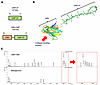 Figure 1
Design, 3-dimensional structural prediction, and molecular weight of CBD-CNP. (A) Design of CBD-CNP. The collagen-binding domain (CBD) is placed at the N-terminus and CNP-37 at the C-terminus, connected by a Gly-Gly-Ser-Pro-Gly spacer. (B) Three-dimensional structural prediction of CBD-CNP using AlphaFold3. (C) Molecular mass of CBD-CNP measured by MALDI-TOF-MS. CBD, collagen-binding domain; CNP, C-type natriuretic peptide; AA, amino acids; MALDI-TOF-MS, matrix-assisted laser desorption/ionization time-of-flight mass spectrometry.
CBD-CNP retained collagen-binding capacity even after heat processing. To evaluate collagen-binding ability and thermal stability, CBD-CNP was incubated with collagen powder. Unbound CBD-CNP was analyzed by sodium dodecyl sulfate polyacrylamide electrophoresis (SDS-PAGE). When CBD-CNP was mixed with collagen powder, it was retained on the filter, and no band was detected with the solvent that passed through the filter by SDS-PAGE, indicating that CBD-CNP bound to collagen (Figure 2A). This result was consistent regardless of whether CBD-CNP was preheated at 56°C for 30 minutes, suggesting that the protein retained its structural integrity and collagen-binding capacity even after thermal treatment. These findings demonstrate that CBD-CNP possesses strong collagen-binding capability and exhibits stability under heat conditions.
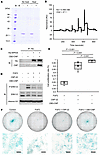 Figure 2
Collagen and ligand-receptor binding ability, and chondrocyte proliferation of CBD-CNP. (A) Collagen-binding ability and thermal stability of CBD-CNP. Unbound CBD-CNP was assessed by SDS-PAGE. M, molecular weight marker; B, buffer control; No heat, no preheating; Heat, preheating at 56°C 30 minutes; (–), no collagen powder was added; (+), collagen powder was added. (B) Surface plasmon resonance analysis of CBD-CNP binding to recombinant NPR-B immobilized on a CM5 chip. The Kd value was calculated from sensorgrams as described under the experimental procedures. (C) Ligand-receptor binding assay with CBD-CNP and NPR-B, the receptor for CNP. (D) Inhibitory effect of FGF2-FGFR3 downstream signaling pathway of RCS cells owing to the binding of CNP to NPR-B. Phosphorylation of ERK1/2 in RCS cells was assessed by FGF2 alone and combined treatment with CNP-22 or CBD-CNP. (E) Cell proliferation assessment of RCS cells after treatment with FGF2 alone or in combination with CNP-22 or CBD-CNP (n = 5). The cell proliferation rate was calculated based on the cell count with no drug treatment as 100%. (F) Alcian blue staining of RCS cells in each group. Scale bars: 200 μm in F. Statistical analysis was performed by using 1-way ANOVA followed by Tukey post hoc tests. SDS-PAGE, sodium dodecyl sulfate polyacrylamide electrophoresis; RU, response unit; IP, immunoprecipitation; IB, immunoblot; NPR-B, natriuretic peptide receptor B; CNP, C-type natriuretic peptide; FGF2, fibroblast growth factor 2; FGFR3, fibroblast growth factor receptor 3; RCS, rat chondrosarcoma; ERK, extracellular signal-regulated kinase; P-ERK, phospho-extracellular signal-regulated kinase.
CBD-CNP binds to the CNP receptor and induces downstream signaling. Surface plasmon resonance analysis confirmed the interaction between CBD-CNP and NPR-B, the receptor for CNP. Recombinant NPR-B was immobilized on a CM5 chip, and binding with CBD-CNP was assessed (Figure 2B). The analysis yielded a dissociation constant of 0.495 mM, indicating a measurable affinity between CBD-CNP and NPR-B. To further validate this interaction, an in vitro protein binding assay was performed using His-tagged NPR-B and CBD-CNP. CBD-CNP was detected only in samples containing both proteins, supporting its specific binding to NPR-B (Figure 2C). To assess the functional consequence of this interaction, we examined the effect of FGF2-mediated FGFR3 signaling, which is known to be inhibited by CNP via NPR-B. In rat chondrosarcoma (RCS) cells, phosphorylation of extracellular signal-regulated kinase (ERK) 1/2 induced by FGF2 was suppressed upon cotreatment with either CNP-22 or CBD-CNP (Figure 2D). These findings indicate that the CBD moiety does not impair the activity of CNP.
CBD-CNP enhances proliferation of RCS cells. RCS cell proliferation rate was measured following treatment with FGF2, CNP-22, or CBD-CNP, with the untreated control set as 100% for comparison. FGF2 reduced cell proliferation compared with control (64.2% ± 2.7%), whereas cotreatment with CNP-22 (P < 0.001) or CBD-CNP (P < 0.001) significantly improved cell proliferation rate, with CBD-CNP showing a more pronounced effect (90.7% ± 6.3% for CNP-22 versus 98.0% ± 2.1% for CBD-CNP, P = 0.041; Figure 2E). Alcian blue staining of RCS cells demonstrated abundant cartilage-related proteoglycan, and FGF2 suppressed proteoglycan production and induced extracellular matrix degradation (23), resulting in weak staining. In contrast, cotreatment with CBD-CNP restored the Alcian blue staining (Figure 2F).
CBD-CNP promotes sustained bone growth in fetal murine tibiae treated with FGF2. The bone elongation effect of CBD-CNP was evaluated in ex vivo fetal murine (embryonic day 16.5, FVB background) tibiae cultured with FGF2, CNP-22, or CBD-CNP. Histological analysis using 3,3’-diaminobenzidine (DAB) staining demonstrated cartilage-specific staining with anti-CBD antibody in CBD-CNP–treated tibiae but no staining with anti-CNP antibody in CNP-22-treated tibiae (Figure 3A). FGF2 significantly inhibited bone growth compared with untreated contralateral tibiae of the same patients (4.10 ± 0.22 mm versus 3.59 ± 0.26 mm, P < 0.001; Figure 3A). Daily administration of CNP-22 (3.45 ± 0.29 mm versus 3.59 ± 0.30 mm, P = 0.014) or CBD-CNP (3.48 ± 0.31 mm versus 3.70 ± 0.29 mm, P = 0.002) significantly increased the length of FGF2-treated tibiae (Figure 3B). Although a single dose of CNP-22 did not significantly enhance tibial length (3.21 ± 0.42 mm versus 3.25 ± 0.45 mm, P = 0.351), a single administration of CBD-CNP led to a sustained bone elongation effect (3.49 ± 0.30 mm versus 3.61 ± 0.27 mm, P = 0.009; Figure 3C).
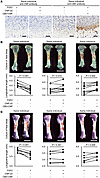 Figure 3
Bone growth effect of CBD-CNP in ex vivo bone culture. (A) Representative DAB staining images of fetal murine tibiae (E16.5, FVB background) treated with FGF2 in the presence of CNP-22 or CBD-CNP with daily medium changes. CNP-22 was detected with anti-CNP antibody, and CBD-CNP was detected with anti-CBD antibody. (B) Fetal murine tibiae were cultured and treated with FGF2 in the presence of CNP-22 or CBD-CNP with daily medium changes. After 4 days, the tibial lengths were measured and compared with those of contralateral untreated tibiae in the same patients (n = 9). (C) To assess the prolonged effects, only a single administration of CNP-22 or CBD-CNP was performed on the first day, whereas FGF2 was added daily. The tibial lengths were measured after 4 days from the first dosage (n = 7 in FGF2 and CBD-CNP groups, and n = 6 in CNP-22 group). Scale bars: 50 μm in A; 1 mm in B and C. The tibial lengths within patients were compared using a paired t test. DAB, 3,3′-diaminobenzidine.
Spatial transcriptomics revealed the pharmacological effects of CBD-CNP against FGF2. Spatial transcriptomic analysis of fetal tibiae was performed to elucidate the effect of CBD-CNP on FGF2. Visium transcriptomics–run data are summarized in Supplemental Table 1. H&E-stained images of fetal tibiae are shown in Figure 4A, with tibiae labeled by letter to indicate samples from the same patient. The tibiae were segmented into cartilage and bone regions, and the hypertrophic zone of cartilage was delineated in blue based on histology and gene expression patterns (Figure 4A) (24). Gene set enrichment analysis of the hypertrophic zone revealed that FGF2 administration downregulated pathways related to bone growth and cartilage development, whereas coadministration of CBD-CNP restored the expression of these pathways (Figure 4B). Additional pathways involved in chondrocyte development, differentiation, and growth plate cartilage formation during endochondral bone morphogenesis were also upregulated in the CBD-CNP–treated group (Supplemental Figure 2). Among gene expression profiles of total tibiae, chondromodulin (Cnmd), a cartilage-specific glycoprotein known to promote chondrocyte growth (25), was significantly downregulated by FGF2 (P < 0.001) but significantly upregulated by CBD-CNP coadministration (P = 0.004; Figure 4C). The increase in Cnmd expression is likely to contribute to the bone elongation effect observed with CBD-CNP treatment. Another bone formation marker, osteocalcin (Bglap), was also upregulated by CBD-CNP coadministration (P = 0.003). FGF2 administration significantly downregulated Col1a (P < 0.001), Col2a (P < 0.001), Col10a (P < 0.001), and Alpl (P < 0.001), but these genes were not upregulated by coadministration of CBD-CNP. All gene expression profiles are provided in the supporting data value XLSX file.
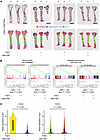 Figure 4
Pharmacological effects of CBD-CNP on bone growth revealed with spatial transcriptomics. (A) H&E staining and sectioning of Visium Spatial Gene Expression Slides of fetal murine tibiae. The tibiae labeled by letter indicates samples from the same patient. (B) Gene set enrichment analysis of hypertrophic zones in spatial transcriptomics. (C) Violin plots of gene expression in total tibiae. Scale bars: 1 mm in A. Statistical analysis was performed using the Student’s t test. NES, normalized enrichment score; Nom, nominal; Cnmd, chondromodulin.
CBD-CNP promotes bone healing in a murine fracture model. As Fgfr3-deficient (–/–) mice exhibit accelerated fracture repair (26), we assessed bone regeneration of CBD-CNP using a murine fracture model. Collagen powder loaded with either phosphate-buffered saline (PBS), CNP-22, or CBD-CNP was applied to the fracture site of C57BL/6J mice. After 4 weeks, μCT analysis showed enhanced callus formation in the CBD-CNP group (Figure 5A). CBD-CNP significantly increased bone mineral content (BMC) (9.02 ± 3.77 mg) compared with CNP-22 (5.49 ± 1.68 mg, P = 0.035; Figure 5B). Similarly, bone volume (BV) was significantly higher in mice treated with CBD-CNP (14.34 ± 5.08 mm3) compared with those treated with CNP-22 (8.87 ± 2.59 mm3, P = 0.022; Figure 5C).
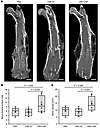 Figure 5
CBD-CNP increases bone volume in the C57BL/6J mouse model of bone fracture. (A) Representative μCT images of the fracture site of femurs treated with collagen powder mixed with either PBS, CNP-22, or CBD-CNP. (B and C) Bone mineral content and bone volume of each group measured by μCT images (n = 8). Scale bars: 1 mm in A. Statistical analysis was performed by using 1-way ANOVA followed by Tukey post hoc tests. CT, computed tomography; PBS, phosphate-buffered saline.
Intraarticular CBD-CNP administration attenuates joint degradation. The persistence of CBD-CNP in joint tissues and its effects on bone morphology were evaluated using the FVB/NJcl mouse model of knee osteoarthritis (OA). DAB staining performed 3 days after the final intraarticular injection revealed no detectable signal with anti-CNP antibody in the articular cartilage of mice treated with CNP-22. In contrast, CBD-CNP–treated joints showed clear DAB staining with anti-CBD antibody in the articular cartilage even after 3 days of the last administration (Figure 6A). μCT analysis revealed that the subchondral bone plates in OA model mice were significantly thicker compared with the contralateral, nonoperated control side (P = 0.022). Intraarticular administration of CBD-CNP significantly improved this thickness compared with PBS (P = 0.023) and CNP-22 (P = 0.021; Figure 6, B and C). Although trabecular thickness was significantly reduced in the OA model mice (P = 0.001), there was no improvement observed after administration of CNP-22 or CBD-CNP. No significant differences were observed in other trabecular parameters, bone mineral density (BMD), and BV/total volume (BV/TV), between the OA model and the nonoperated control sides (Supplemental Figure 3).
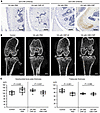 Figure 6
Intraarticular injection of CBD-CNP in the FVB/NJcl mouse model of knee osteoarthritis. (A) Representative DAB staining images of knee joint tissues from the mouse model of knee OA following intraarticular injection of PBS, CNP-22, or CBD-CNP. CNP-22 was detected with anti-CNP antibody, and CBD-CNP was detected with anti-CBD antibody. (B) Representative μCT images of the mouse model of knee OA with intraarticular injection of PBS, CNP-22, or CBD-CNP. The images of control and OA with PBS were obtained from the same patient. (C) Quantitative analyses of subchondral bone plate thickness and trabecular thickness using μCT images (n = 10 in control/OA with PBS, and OA with CBD-CNP groups, and n = 9 in OA with CNP-22 group). The data of control and OA with PBS were obtained from the same patients. Scale bars: 100 μm in A; 500 μm in B. Statistical analysis was performed using the Student’s t test. OA, osteoarthritis.


