
Research ArticleCell biologyGastroenterologyInflammation
Open Access |  10.1172/jci.insight.196350
CRB3 and NF2 orchestrate cytoskeletal dynamics to control epithelial barrier assembly
Shuling Fan,1 Saranyaraajan Varadarajan,1 Vicky Garcia-Hernandez,1 Sven Flemming,1 Arturo Raya-Sandino,1 Ben Margolis,2 Charles A. Parkos,1 and Asma Nusrat1
1Department of Pathology, and
2Department of Internal Medicine, University of Michigan Medical School, Ann Arbor, Michigan, USA.
Address correspondence to: Asma Nusrat, University of Michigan Medical School, Department of Pathology, 4057 BSRB, 109 Zina Pitcher Place, Ann Arbor, Michigan 48109, USA. Phone: 734.764.5712; Email: anusrat@umich.edu. Or to: Charles A. Parkos, University of Michigan Medical School, Department of Pathology, NCRC, Building 35, Rm 30-1537, 2800 Plymouth Road, Ann Arbor, Michigan 48109, USA. Phone: 734.763.6384; Email: cparkos@med.umich.edu.
Authorship note: S Fan and SV contributed equally to this work. CAP and AN are co–senior authors.
Find articles by Fan, S. in: PubMed | Google Scholar
1Department of Pathology, and
2Department of Internal Medicine, University of Michigan Medical School, Ann Arbor, Michigan, USA.
Address correspondence to: Asma Nusrat, University of Michigan Medical School, Department of Pathology, 4057 BSRB, 109 Zina Pitcher Place, Ann Arbor, Michigan 48109, USA. Phone: 734.764.5712; Email: anusrat@umich.edu. Or to: Charles A. Parkos, University of Michigan Medical School, Department of Pathology, NCRC, Building 35, Rm 30-1537, 2800 Plymouth Road, Ann Arbor, Michigan 48109, USA. Phone: 734.763.6384; Email: cparkos@med.umich.edu.
Authorship note: S Fan and SV contributed equally to this work. CAP and AN are co–senior authors.
Find articles by Varadarajan, S. in: PubMed | Google Scholar
1Department of Pathology, and
2Department of Internal Medicine, University of Michigan Medical School, Ann Arbor, Michigan, USA.
Address correspondence to: Asma Nusrat, University of Michigan Medical School, Department of Pathology, 4057 BSRB, 109 Zina Pitcher Place, Ann Arbor, Michigan 48109, USA. Phone: 734.764.5712; Email: anusrat@umich.edu. Or to: Charles A. Parkos, University of Michigan Medical School, Department of Pathology, NCRC, Building 35, Rm 30-1537, 2800 Plymouth Road, Ann Arbor, Michigan 48109, USA. Phone: 734.763.6384; Email: cparkos@med.umich.edu.
Authorship note: S Fan and SV contributed equally to this work. CAP and AN are co–senior authors.
Find articles by Garcia-Hernandez, V. in: PubMed | Google Scholar
1Department of Pathology, and
2Department of Internal Medicine, University of Michigan Medical School, Ann Arbor, Michigan, USA.
Address correspondence to: Asma Nusrat, University of Michigan Medical School, Department of Pathology, 4057 BSRB, 109 Zina Pitcher Place, Ann Arbor, Michigan 48109, USA. Phone: 734.764.5712; Email: anusrat@umich.edu. Or to: Charles A. Parkos, University of Michigan Medical School, Department of Pathology, NCRC, Building 35, Rm 30-1537, 2800 Plymouth Road, Ann Arbor, Michigan 48109, USA. Phone: 734.763.6384; Email: cparkos@med.umich.edu.
Authorship note: S Fan and SV contributed equally to this work. CAP and AN are co–senior authors.
Find articles by Flemming, S. in: PubMed | Google Scholar
1Department of Pathology, and
2Department of Internal Medicine, University of Michigan Medical School, Ann Arbor, Michigan, USA.
Address correspondence to: Asma Nusrat, University of Michigan Medical School, Department of Pathology, 4057 BSRB, 109 Zina Pitcher Place, Ann Arbor, Michigan 48109, USA. Phone: 734.764.5712; Email: anusrat@umich.edu. Or to: Charles A. Parkos, University of Michigan Medical School, Department of Pathology, NCRC, Building 35, Rm 30-1537, 2800 Plymouth Road, Ann Arbor, Michigan 48109, USA. Phone: 734.763.6384; Email: cparkos@med.umich.edu.
Authorship note: S Fan and SV contributed equally to this work. CAP and AN are co–senior authors.
Find articles by Raya-Sandino, A. in: PubMed | Google Scholar
1Department of Pathology, and
2Department of Internal Medicine, University of Michigan Medical School, Ann Arbor, Michigan, USA.
Address correspondence to: Asma Nusrat, University of Michigan Medical School, Department of Pathology, 4057 BSRB, 109 Zina Pitcher Place, Ann Arbor, Michigan 48109, USA. Phone: 734.764.5712; Email: anusrat@umich.edu. Or to: Charles A. Parkos, University of Michigan Medical School, Department of Pathology, NCRC, Building 35, Rm 30-1537, 2800 Plymouth Road, Ann Arbor, Michigan 48109, USA. Phone: 734.763.6384; Email: cparkos@med.umich.edu.
Authorship note: S Fan and SV contributed equally to this work. CAP and AN are co–senior authors.
Find articles by Margolis, B. in: PubMed | Google Scholar
1Department of Pathology, and
2Department of Internal Medicine, University of Michigan Medical School, Ann Arbor, Michigan, USA.
Address correspondence to: Asma Nusrat, University of Michigan Medical School, Department of Pathology, 4057 BSRB, 109 Zina Pitcher Place, Ann Arbor, Michigan 48109, USA. Phone: 734.764.5712; Email: anusrat@umich.edu. Or to: Charles A. Parkos, University of Michigan Medical School, Department of Pathology, NCRC, Building 35, Rm 30-1537, 2800 Plymouth Road, Ann Arbor, Michigan 48109, USA. Phone: 734.763.6384; Email: cparkos@med.umich.edu.
Authorship note: S Fan and SV contributed equally to this work. CAP and AN are co–senior authors.
Find articles by Parkos, C. in: PubMed | Google Scholar
1Department of Pathology, and
2Department of Internal Medicine, University of Michigan Medical School, Ann Arbor, Michigan, USA.
Address correspondence to: Asma Nusrat, University of Michigan Medical School, Department of Pathology, 4057 BSRB, 109 Zina Pitcher Place, Ann Arbor, Michigan 48109, USA. Phone: 734.764.5712; Email: anusrat@umich.edu. Or to: Charles A. Parkos, University of Michigan Medical School, Department of Pathology, NCRC, Building 35, Rm 30-1537, 2800 Plymouth Road, Ann Arbor, Michigan 48109, USA. Phone: 734.763.6384; Email: cparkos@med.umich.edu.
Authorship note: S Fan and SV contributed equally to this work. CAP and AN are co–senior authors.
Find articles by Nusrat, A. in: PubMed | Google Scholar
Published October 22, 2025 - More info
JCI Insight. 2025;10(20):e196350. https://doi.org/10.1172/jci.insight.196350.
© 2025 Fan et al. This work is licensed under the Creative Commons Attribution 4.0 International License. To view a copy of this license, visit http://creativecommons.org/licenses/by/4.0/.
Received: June 3, 2025; Accepted: September 4, 2025

-
Results
Expression of CRB3 in the AJC of IECs and generation of Villin-Cre-ERT2 inducible Crb3-KO (Crb3ERΔIEC) mice. To explore the spatial localization of intestinal epithelial CRB3 in the crypt-luminal axis, we first immunolocalized CRB3 in murine colonic tissue sections. As shown in Figure 1A, CRB3 localizes in the apical membrane and at the TJ (Figure 1A, white arrows), in contrast with β-catenin that spans the lateral membrane in murine colonic epithelial cells. An analogous CRB3 distribution was identified in healthy human colonic tissue sections (Supplemental Figure 1A; supplemental material available online with this article; https://doi.org/10.1172/jci.insight.196350DS1). Additionally, an analogous distribution of CRB3 in TJs of colonic epithelial cells was observed with polarity proteins PALS1, PATJ, and PAR3 (Supplemental Figure 1D, first column).
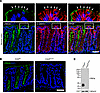 Figure 1
Inducible intestinal epithelial knockout of CRB3 (Crb3ERΔIEC). (A) Confocal image of murine colonic tissue sections immunostained for CRB3A (green), β-catenin (red), and nuclei (DAPI, blue). White rectangles represent the zoomed-in areas shown above the images. White arrows indicate tight junctions of colonic epithelial cells. Scale bar: 50 μm. (B) Immunofluorescent labeling of colonic tissue sections of tamoxifen-treated Crb3fl/fl and Crb3ERΔIEC mice showing CRB3A (green) and nuclei (DAPI, blue). Scale bar: 50 μm. (C) Immunoblotting of CRB3A and calnexin (loading control) in colonoids harvested from tamoxifen-treated Crb3fl/fl and Crb3ERΔIEC mice. Molecular weight markers are displayed on the left. n = 3 independent experiments, 2 technical replicates each.
Considering the pivotal role of CRB3 in regulating cell polarity and epithelial morphogenesis (22), we examined the effects of CRB3 loss on colonic crypt architecture. Previous studies have reported that germline deletion of CRB3 leads to neonatal lethality in mice (22). Therefore, we generated mice with tamoxifen-inducible deletion of Crb3 specifically in IECs (Crb3ERΔIEC) by crossing Crb3fl/fl mice with mice expressing an inducible mutated estrogen receptor fused to Cre recombinase under the control of the Villin promoter (Villin-Cre-ERT2) (21). Cre-ERT2–mediated recombination efficiently excised exon 3, which expresses both splice isoforms of Crb3, Crb3a and Crb3b, in Crb3ERΔIEC mice (21). The efficiency of CRB3 KO was confirmed by immunofluorescent labeling of the murine colonic mucosa (Figure 1B). Additionally, CRB3 deletion was confirmed by immunoblotting, using cells harvested from Crb3ERΔIEC mice and comparing them to Crb3fl/fl matched littermates (Figure 1C). Immunoblotting using an antibody that recognizes all 3 isoforms of Crumbs (CRB1, CRB2, and CRB3) further showed that CRB3 is the only Crumbs protein expressed in murine IECs, with a molecular weight of approximately 25 kDa (21) (Figure 1C and Supplemental Figure 1B, red arrow). Notably, the colonic mucosa of the Crb3ERΔIEC mice revealed no gross changes in mucosal architecture and was indistinguishable from that of littermate Crb3fl/fl mice, as shown by immunofluorescent labeling/confocal microscopy and histology of the colon (Figure 1B and Supplemental Figure 1, C and D). Additionally, immunostaining of colons derived from Crb3fl/fl and Crb3ERΔIEC mice revealed decreased junctional localization of CRB3 binding partner proteins (PALS1 and PATJ) in Crb3ERΔIEC mice, while PAR3 remained unchanged (Supplemental Figure 1D). Collectively, our results demonstrate efficient CRB3 KO in Crb3ERΔIEC IECs in a viable in vivo mouse model without a substantial change in the architecture of the colonic crypts.
Intestinal epithelial CRB3 regulates localization of AJC proteins, organization of perijunctional actin cytoskeleton, and barrier function during junctional assembly and remodeling. The interaction of CRB3 with PALS1-PATJ and PAR3-PAR6-aPKC protein complexes in epithelial cells is important for regulating the AJC, which includes the TJ and AJ. Immunostaining and confocal imaging of subconfluent colonoids with assembling intercellular junctions harvested from Crb3fl/fl and Crb3ERΔIEC mice revealed discontinuous junctional localization of PATJ and PAR3 in the absence of CRB3 (Figure 2A). This finding corroborates previous reports, demonstrating that CRB3 stabilizes its binding partners PATJ and PALS1 at cell-cell junctions. Additionally, PAR3 and the TJ scaffold protein, ZO-1, exhibited discontinuous labeling and reduced intensity at TJs of colonoids in the absence of CRB3 (Figure 2, A and C). E-cadherin was visualized as linear staining in the junction plasma membrane of epithelial cells derived from Crb3fl/fl mice. However, in IECs lacking CRB3 (Crb3ERΔIEC), E-cadherin was visualized as diffuse and disrupted staining in the lateral plasma membrane (Figure 2A). Additionally, immunoblotting of colonoids derived from Crb3fl/fl and Crb3ERΔIEC mice revealed decreased CRB3 binding partner proteins PATJ, PALS1, and PAR3 as well as decreased levels of TJ proteins ZO-1 and ZO-3 in Crb3ERΔIEC colonoids (Figure 2B). However, the expression level of the AJ protein E-cadherin was unchanged in colonoids in the absence of CRB3 (Figure 2B). Interestingly, discontinuous localization of ZO-1 and mislocalization of E-cadherin were rescued in Crb3ERΔIEC cells when grown to confluence (Supplemental Figure 2A). Furthermore, to analyze the role of CRB3 in junctional assembly, a calcium switch assay was performed in confluent monolayers of colonoids derived from Crb3fl/fl and Crb3ERΔIEC mice. Immunostaining of AJC proteins at 0, 2, and 4 hours following calcium switch revealed reduced and discontinuous junctional localization of ZO-1 in Crb3ERΔIEC colonoids compared with the control Crb3fl/fl colonoids (Supplemental Figure 2B). Similar to subconfluent monolayers, E-cadherin staining was diffuse and disrupted along the lateral plasma membrane of Crb3ERΔIEC colonoids compared with the control Crb3fl/fl colonoids (Supplemental Figure 2C). However, there was no delay in the targeting of these proteins to the AJC in cells lacking CRB3 (Supplemental Figure 2, B and C). These results suggest that CRB3 regulates the localization and organization of AJC proteins ZO-1 and E-cadherin during junctional assembly in IECs.
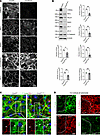 Figure 2
CRB3 regulates junctional localization of AJC proteins and organization of perijunctional actin cytoskeleton in IECs. (A) Representative confocal images of colonoids derived from Crb3fl/fl and Crb3ERΔIEC mice during junctional assembly (subconfluent) immunostained for polarity proteins (CRB3, PATJ, PAR3), AJ protein (E-cadherin), and TJ protein (ZO-1) Scale bar: 25 μm. n = 3 independent experiments, 3 technical replicates each. (B) Immunoblotting of colonoids derived from Crb3fl/fl and Crb3ERΔIEC mice during junctional assembly (subconfluent) for polarity proteins (CRB3, PATJ, PALS1, PAR3), AJ protein (E-cadherin), TJ protein (ZO-1, ZO-3), and loading control (β-actin). Graph showing the quantification of immunoblots in B. Data are mean ± SD, n = 3 experiments. *P ≤ 0.05, **P ≤ 0.01 by 2-tailed Student’s t test. (C) Representative confocal images of F-actin (phalloidin, green), TJ protein (ZO-1, red), and nuclei (DAPI, blue) in colonoids derived from Crb3fl/fl and Crb3ERΔIEC mice. White rectangles represent the zoomed-in areas shown below the composite images; arrowheads mark ZO-1; single arrow marks junctional localization of F-actin; double arrow in Crb3ERΔIEC marks railroad F-actin localization. Scale bar: 25 μm. n = 3 independent experiments, 3 technical replicates each. (D) Coculture of colonoids derived from Crb3fl/fl and Crb3ERΔIEC mice stained for F-actin (phalloidin, green), ZO-1 (red), PATJ (green), and E-cadherin (red). White dotted line marks the boundary between cells expressing CRB3 and cells lacking CRB3. Scale bar: 25 μm. n = 3 independent experiments, 3 technical replicates each.
In epithelia, organization and contractility of the apical perijunctional actomyosin cytoskeleton are crucial for the formation and maintenance of the AJ (3, 32, 33). Since CRB3 influenced the junctional localization of AJC proteins, we next determined whether CRB3 expression modulates formation of perijunctional actomyosin cytoskeleton. Colabeling of ZO-1 and F-actin in colonoids from Crb3fl/fl and Crb3ERΔIEC mice revealed marked changes in the perijunctional F-actin of Crb3ERΔIEC cells, which displayed a “railroad” appearance along the AJC compared with the control Crb3fl/fl IECs (Figure 2C, arrows and arrowheads). In Crb3ERΔIEC cells, this F-actin organization suggested a hypercontractile state (Figure 2C). To minimize interpretation bias, we cocultured colonoids derived from Crb3fl/fl and Crb3ERΔIEC mice at a 1:1 ratio and labeled for F-actin, ZO-1, E-cadherin, and PATJ. Based on F-actin morphology, disrupted ZO-1 junctional distribution, and discontinuous junctional localization of PATJ, we delineated the boundary between CRB3-expressing IECs and Crb3ERΔIEC IECs with a white dotted line in Figure 2D. In Crb3ERΔIEC cells, ZO-1 and E-cadherin were mislocalized in the AJC, which was associated with disorganization of perijunctional actomyosin belt. Consistent with Figure 2A, the junctional localization of PATJ was substantially reduced in Crb3ERΔIEC colonoids (Figure 2D). Together, these results support the role of CRB3 in regulating the junctional localization of AJC proteins ZO-1 and E-cadherin and the organization of the perijunctional F-actin cytoskeleton during junctional assembly in IECs.
Defects in formation and maintenance of intestinal epithelial barrier are associated with altered expression and localization of AJC proteins, including ZO-1, E-cadherin, PALS1, and PATJ. Since loss of CRB3 leads to disorganization of the AJC, we evaluated epithelial barrier formation by measuring the transepithelial electrical resistance (TER) and paracellular flux of 4 kDa FITC-dextran (FD4) in colonoid monolayers from Crb3fl/fl and Crb3ERΔIEC mice that were cultured on permeable supports. As shown in Figure 3A, loss of CRB3 led to a significant decrease in TER during junction maturation that was evident on day 4, compared with control cells derived from Crb3fl/fl control colonoids (Figure 3A). Moreover, the FD4 paracellular flux on day 6 of cell culture significantly increased over time in the absence of CRB3 compared with control cells during junctional maturation (Figure 3B). Apparent permeability (Papp) calculated from FD4 paracellular flux was significantly increased (6-fold) in Crb3ERΔIEC mice (Figure 3B). Altogether, these findings support a key role for CRB3 in promoting epithelial barrier function during junctional maturation in vitro.
 Figure 3
CRB3 regulates the formation of the intestinal epithelial barrier. (A) Graph showing establishment of epithelial barrier function that was measured by TER in confluent colonoids from Crb3fl/fl (shown in black) and Crb3ERΔIEC (shown in red) mice grown cultured on Transwells for 6 days (day 1 represents day of isolation). Data are mean ± SD, n = 3 experiments each with 6 technical replicates. *P ≤ 0.05, ***P ≤ 0.001 by 2-tailed Student’s t test. (B) Left: Paracellular flux rate of 4 kDa FITC-dextran across monolayers of primary murine colonoids derived from Crb3fl/fl and Crb3ERΔIEC mice at times indicated on the x axis. Data are mean ± SD. n = 3 experiments each with 6 technical replicates. **P ≤ 0.01, ****P ≤ 0.0001 by 2-way ANOVA followed by Bonferroni’s post hoc test. Rate of change of TD4 flux was determined by the slope of the linear regression (dotted line: SlopeCrb3fl/fl = 0.05 min–1; SlopeCrb3ERΔIEC = 0.24 min–1). Right: Apparent permeability (Papp) for each individual sample was calculated using the slope values of the linear regression on the left. (C) Schematic showing the in vivo ileal loop model in mice to evaluate intestinal epithelial barrier function. (D) Intestinal permeability measured by paracellular flux of 4 kDa FITC-dextran in serum of Crb3fl/fl and Crb3ERΔIEC mice 2 hours after surgery in mice pretreated with proinflammatory cytokines (TNF-α and IFN-γ, 100 ng each). Data are mean ± SD. n = 3 independent experiments, with at least 3 technical replicates. ****P ≤ 0.0001 by 2-tailed Student’s t test. (E) Immunofluorescent labeling and confocal images of ZO-1 and E-cadherin in confluent colonoids grown on permeable substrate and treated with proinflammatory cytokines (TNF-α and IFN-γ, 50 ng/mL each) for 24 hours in colonoids derived from Crb3fl/fl and Crb3ERΔIEC mice. Scale bar: 25 μm. n = 2 independent experiments.
Given that CRB3 regulates intestinal epithelial barrier function during junctional assembly in colonoids in vitro, we next assessed its role in junctional remodeling in vivo using an inflammatory model. Proinflammatory cytokines (TNF-α and IFN-γ) modulate intestinal epithelial barrier function by promoting junctional remodeling (34). Thus, to determine the role of CRB3 in junctional remodeling, Crb3fl/fl and Crb3ERΔIEC mice were administered proinflammatory cytokines (murine TNF-α and IFN-γ, 100 ng each, intraperitoneally) for 24 hours prior to analysis of intestinal barrier function, which was measured using an intestinal loop model (Figure 3C). Paracellular epithelial permeability was analyzed after administering FD4 into the lumen of a vascularized ileal segment, and its appearance in the serum was measured over a 2-hour period. Serum was collected by cardiac puncture, and FD4 fluorescence intensity was quantified in Crb3fl/fl and Crb3ERΔIEC mice and normalized to control Crb3fl/fl levels (Figure 3C) (35, 36). Following cytokine pretreatment, Crb3ERΔIEC mice exhibited a significant increase in serum FD4 levels compared with Crb3fl/fl littermate controls (Figure 3D), indicating enhanced epithelial paracellular flux. However, there was no significant change in the paracellular permeability of Crb3fl/fl and Crb3ERΔIEC mice in the absence of proinflammatory cytokines (Supplemental Figure 2D). This is consistent with our finding that the junctional localization of ZO-1 and E-cadherin is comparable between colonoids from Crb3fl/fl and Crb3ERΔIEC mice in confluent monolayers that have established junctions (Supplemental Figure 2A). These findings support an important role of CRB3 in junctional assembly and remodeling.
To complement our in vivo analysis of CRB3 in junctional remodeling, colonoids derived from Crb3fl/fl and Crb3ERΔIEC mice were cultured as confluent monolayers on permeable supports for 6 days to allow for junction maturation. Monolayers were then treated with 50 ng/mL of murine TNF-α and IFN-γ for 24 hours to induce proinflammatory cytokine–mediated junctional remodeling. Immunofluorescent labeling revealed a marked reduction in ZO-1 intensity and mislocalization of E-cadherin within the AJC of cytokine-treated Crb3ERΔIEC colonoids compared with Crb3fl/fl controls (Figure 3E). These results indicate that CRB3 regulates junctional localization of key AJC proteins, ZO-1 and E-cadherin, during epithelial junctional remodeling. Together, these findings demonstrate that CRB3 plays an important role in promoting efficient barrier formation during de novo junctional assembly and cytokine-induced AJC remodeling.
Loss of CRB3 results in a hypercontractile perijunctional actomyosin ring, driven by enhanced RhoA/ROCK-II signaling. The small GTPase RhoA is a key regulator of the perijunctional actomyosin ring dynamics during epithelial junctional remodeling (37, 38). Upon activation, RhoA (Rho GTP) engages its downstream effector ROCK-II, which promotes actomyosin contractility by phosphorylating myosin light chain II (p-MLCII), thereby generating contractile forces that modulate junctional architecture. Coimmunostaining of F-actin and p-MLCII in subconfluent colonoids from Crb3fl/fl and Crb3ERΔIEC mice demonstrated changes in perijunctional actomyosin, which exhibited a “railroad track” appearance, and mislocalization of junctional p-MLCII in Crb3ERΔIEC colonoids (Figure 4A). Additionally, colocalization of ZO-1 and p-MLCII at TJs was disrupted in Crb3ERΔIEC cells (Figure 4B). These findings implicate excessive perijunctional actomyosin contractility as a key driver of defective AJC assembly in Crb3ERΔIEC. To investigate this possibility, subconfluent colonoids derived from Crb3ERΔIEC mice were treated for 30 minutes with ROCK-II inhibitors (H1152 and Y27632), the myosin II inhibitor blebbistatin, or vehicle control (DMSO). p-MLCII staining confirmed that H1152 and Y-27632 suppressed ROCK-II/myosin light chain phosphatase/p-MLCII signaling, while blebbistatin directly inhibited MLC ATP/ADP turnover rather than MLC phosphorylation (Supplemental Figure 3A). Immunostaining for ZO-1, F-actin, and E-cadherin demonstrated that inhibiting myosin II contractility with these compounds substantially restored general architecture of the perijunctional actomyosin ring (Figure 4C and Supplemental Figure 3B) and the junctional localization of AJC proteins, including TJs (ZO-1) and AJs (E-cadherin) in Crb3ERΔIEC (Figure 4, C and D, and Supplemental Figure 3B). Line scan across the AJC further demonstrated that mislocalization of ZO-1 and F-actin from the AJC in Crb3ERΔIEC colonoids was rescued by inhibiting junctional tension using H1152 and blebbistatin (Figure 4D). To examine RhoA activation during junctional assembly, live cell imaging was performed in colonoids derived from Crb3fl/fl and Crb3ERΔIEC mice using a localization-dependent biosensor comprised of the rhotekin GTPase-binding domain (rGBD), which detects active RhoA at sites of signaling. As previously described, the fluorescently tagged probe dTomato-2xrGBD specifically associates with the GTP-bound state of RhoA (active RhoA) (39, 40). Live cell imaging of subconfluent colonoids transduced with pLV-dimericTomato-2xrGBD and labeled with the membrane probe MemBright 488 revealed a pronounced increase in junctional accumulation of active RhoA in Crb3ERΔIEC colonoids compared with controls (Crb3fl/fl mice) (Figure 5, A–C). Importantly, treatment of Crb3ERΔIEC colonoids with C3 transferase (C3T), an inhibitor of RhoA activity, significantly reduced junctional dTomato-2xrGBD signal, confirming the probe’s specificity for active RhoA (Supplemental Figure 4A).
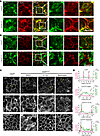 Figure 4
Inhibition of ROCK-II or p-MLC activity largely restores the defects in apical junctional assembly and the organization of the perijunctional actomyosin belt in CRB3-KO IECs. (A) Representative confocal images of subconfluent colonoids derived from Crb3fl/fl and Crb3ERΔIEC mice coimmunostained for p-MLC T18/S19 (green) and F-actin (phalloidin, red). Scale bars: 25 μm. n = 3 independent experiments, 2 technical replicates each. (B) Representative confocal images of subconfluent colonoids derived from Crb3fl/fl and Crb3ERΔIEC mice coimmunostained for p-MLC T18/S19 (green) and ZO-1 (red). Scale bars: 25 μm. n = 3 independent experiments, 2 technical replicates each. (C) Representative confocal images of perijunctional F-actin (phalloidin) and AJC proteins (ZO-1 and E-cadherin) in Crb3fl/fl colonoids and Crb3ERΔIEC colonoids treated with ROCK II inhibitor (H1152,10 μM), myosin II inhibitor (blebbistatin, 25 μM), or vehicle (DMSO, 0.1%) for 30 minutes. Scale bar: 25 μm. n = 3 independent experiments, 2 technical replicates each. (D) Graph showing the distribution and relative intensity of ZO-1 (magenta) and F-actin (green) across 20-pixel-thick lines spanning 2 cell-cell junctions. Junctional localizations are denoted by J1 and J2. Yellow box in C highlights the cell-cell junctions.
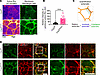 Figure 5
Loss of CRB3 results in increased junctional RhoA activity and increased cell-cell junctional tension during junctional assembly in IECs. (A) Representative Airyscan image of subconfluent colonoids derived from Crb3fl/fl and Crb3ERΔIEC mice expressing pLenti-dTomato-2xrGBD (pseudocolored as FIRE LUT) and stained with MemBright 488 plasma membrane dye (green). Images shown are sum of Z-projections. Scale bars: 20 μm. (B) Graph showing the relative intensity of active Rho at cell-cell junctions normalized to the background signal of every junction. Data are mean ± SEM. Each dot represents an independent junction from 3 independent experiments. ****P < 0.0001 by Mann-Whitney test. n = 30 junctions for Crb3fl/fl; n = 36 junctions for Crb3ERΔIEC. (C) Schematic showing the quantification method used to measure the relative intensity of junctional active RhoA. (D) Representative confocal images of subconfluent colonoids derived from Crb3fl/fl and Crb3ERΔIEC mice immunostained for Vinculin (green) and E-cadherin (red). White box represents zoomed in region shown on the right. Scale bars: 25 μm. n = 3 independent experiments, 2 technical replicates each.
To further evaluate the increased mechanical tension at the AJC in cells lacking CRB3, we examined the localization of Vinculin, which is known to be recruited to the AJ by α-catenin under conditions of increased tension (41–43). Coimmunostaining of Vinculin and E-cadherin in subconfluent colonoids derived from Crb3fl/fl and Crb3ERΔIEC mice revealed increased Vinculin localization at the AJC in Crb3ERΔIEC compared with control cells (Figure 5D). To demonstrate antibody specificity, 2 different Vinculin antibodies were used for coimmunostaining with ZO-1 and F-actin (Supplemental Figure 4, B and C). Together, these results demonstrate that CRB3 expression regulates optimal perijunctional actomyosin contractility and maintains appropriate tension at the AJC, a process mediated by RhoA/ROCK-II signaling during IEC junctional assembly.
PBM and FBD of CRB3A regulate assembly of the AJC and perijunctional F-actin ring in IECs. The CRB3A C-terminal cytoplasmic tail contains an FBD and PBM. In vertebrates, CRB3 is known to associate with Ezrin, a member of Ezrin-Radixin-Moesin (ERM) protein family, through its FBD (21). ERM proteins have been reported to play a crucial role in organizing the perijunctional actomyosin ring by anchoring it to the cell-cell junctions in epithelial cells (44, 45). To elucidate the mechanism by which CRB3 controls AJC assembly and barrier function, we examined the contribution of the CRB3 FBD and PBM in regulating these processes in primary Crb3ERΔIEC colonoids.
WT and mutant human CRB3A tagged with an N-terminal Myc epitope were cloned into a pLentiviral expression vector (pLLV). The constructs illustrated in the schematic in Figure 6A include WT human CRB3A (pLLV Myc-CRB3A WT), a CRB3A mutant with 3 amino acid point mutations in FBD (pLLV Myc-CRB3A mFBD, highlighted in blue), and a CRB3A mutant lacking the ERLI sequence (pLLV Myc-CRB3A ΔPBM). Colonoids harvested from Crb3ERΔIEC mice were transduced with lentivirus to express CRB3A WT (pLLV Myc-CRB3A WT), CRB3A FBD mutant (pLLV Myc-CRB3A mFBD), or CRB3A ΔPBM mutant (pLLV Myc-CRB3A ΔPBM).
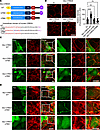 Figure 6
PDZ binding motif (PBM) and FERM binding domain (FBD) of CRB3A control assembly of the AJC and perijunctional F-actin ring in IECs. (A) Schematic of WT human CRB3A, CRB3A mutant with 3 amino acid point mutations in FBD (mFBD, blue arrowheads), and CRB3A mutant lacking PBM (ΔPBM). Amino acids in the FBD are shown in brown, mutations shown in blue, and the PBM in purple. (B) Left: Immunofluorescent labeling and confocal images of apical junctional protein, ZO-1 (red, during junction assembly in subconfluent colonoids derived from Crb3ERΔIEC mice infected with lentiviral CRB3 WT (pLLV Myc-Crb3a WT), ΔPBM motif (pLLV Myc-Crb3a ΔPBM), and mFBD (pLLV Myc-Crb3a FBD mut) constructs. Scale bar: 25 μm. n = 3 independent experiments, 3 technical replicates each. Right: Graph showing the relative intensity of ZO-1 at cell-cell junctions normalized to the background signal of every junction. Data are mean ± SEM. Each dot represents an independent junction. ****P < 0.0001 by Brown-Forsythe and Welch’s ANOVA test. (C) Costaining of apical junctional protein ZO-1 (red) and Myc-tag (anti-Myc, green) in subconfluent colonoids derived from Crb3ERΔIEC mice expressing plasmids described in Figure 4B. Cells stained positive for Myc (green) represent the Crb3-KO murine colonoids expressing the lentiviral Crb3a constructs described in Figure 4A. White box of the zoomed area shown on the right panel. Scale bars: 25 μm. n = 3 independent experiments, 2 technical replicates each. (D) Costaining of perijunctional F-actin ring (phalloidin, red) and Myc-tag (green) in colonoids derived from Crb3ERΔIEC mice described in Figure 4B. White box highlights the zoomed-in area shown in the right panel. Scale bars: 25 μm. n = 3 independent experiments, 2 technical replicates each.
Immunofluorescent labeling for ZO-1 revealed that both CRB3A mFBD and CRB3A ΔPBM mutants were unable to restore the linear junctional plasma membrane localization of ZO-1, in contrast with the expression of CRB3A WT (Figure 6B). Next, we performed coimmunostaining of Myc, ZO-1 (Figure 6C), and F-actin (Figure 6D) in colonoids from Crb3ERΔIEC mice expressing CRB3A WT or CRB3A mutants. Myc immunostaining demonstrated junctional localization of CRB3A in Crb3ERΔIEC colonoids expressing either CRB3A WT or CRB3A FBD mutant (Figure 6C). However, the CRB3A ΔPBM mutant failed to localize in the junctional plasma membrane in Crb3ERΔIEC colonoids (Figure 6C), indicating that the CRB3A PBM is required for CRB3 targeting to the epithelial AJC. Furthermore, expression of Myc-CRB3A WT in Crb3ERΔIEC colonoids rescued the junctional localization of ZO-1 (Figure 6C) and perijunctional actomyosin organization (F-actin, Figure 6D), while CRB3A mutants (Myc-CRB3A mFBD and Myc-CRB3A ΔPBM) failed to rescue these parameters (Figure 6, C and D). Collectively, our results demonstrate that CRB3A is sufficient to rescue AJC protein and perijunctional actomyosin in Crb3ERΔIEC colonoids, and the CRB3A PBM is essential for its proper junctional localization. Moreover, both the CRB3A FBD and PBM control apical junctional assembly and the organization of the perijunctional actomyosin ring in IECs.
NF2 interacts with the CRB3 FBD during AJC assembly in IECs. Our results demonstrate that the cytoplasmic CRB3 FBD regulates AJC assembly and organization of the perijunctional F-actin ring. In Drosophila, CRB interacts with Expanded (Ex) and 2 other FERM-containing proteins, Yurt and Moesin, via the CRB cytoplasmic FBD to regulate the Hippo signaling pathway (14, 18, 46). In humans, CRB3 binds to Ezrin and regulates the morphogenesis of intestinal villi and microvilli (25, 47). While Ezrin is localized in the apical domain of IECs, we did not detect its presence at the TJ (Supplemental Figure 5). Given the exclusive localization of Ezrin in the apical domain, it is likely that other ERM proteins interact with colonic epithelial CRB3 to regulate AJC assembly and perijunctional actomyosin organization. NF2, an ERM family member, is known to localize at the AJC and interact with TJ protein Angiomotin (48), as well as AJ protein α-catenin in epithelial cells (45). Indeed, we observed NF2 colocalization with ZO-1 in primary mouse colonoids (Figure 7A).
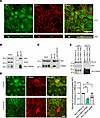 Figure 7
NF2 interacts with CRB3A in IECs and regulates epithelial junctional assembly. (A) Top: Representative confocal image of primary mouse colonoids stained for NF2 and TJ protein ZO-1. Images shown are sum of Z-projections. Bottom: X-Z projections showing the localization along the apical-basal polarity. Scale bars: 25 μm. n = 3 independent experiments, 2 technical replicates each. (B) Immunoprecipitation of CRB3A in SKCO-15 IECs expressing Myc-Crb3a WT followed by Western blotting for NF2, Ezrin, and Myc-tag. Myc-Crb3a immunoprecipitates NF2, but not Ezrin. Input shows equal loading between samples and IgG immunoprecipitation serves as a negative control; n = 3 independent experiments. (C) Immunoprecipitation of endogenous NF2 and p-NF2 (S518) in SKCO-15 IECs followed by Western blotting for CRB3A; n = 3 independent experiments. (D) Representative confocal images of immunostained proteins showing the junctional localization of NF2 (green), F-actin (red), and merge in subconfluent murine colonoids derived from Crb3fl/fl and Crb3ERΔIEC mice. Scale bar: 25 μm. n = 3 independent experiments, 2 technical replicates each. (E) Top: Immunoprecipitation of anti-Myc antibody in SKCO-15 IECs expressing Myc-Crb3a WT, Crb3a FBD mutant, or Crb3a PBM followed by Western blotting for NF2, PALS1, and Myc-tag. Decreased binding of NF2 in Crb3a FBD mutant, while Crb3a PBM did not associate with PALS1. Bottom: Graph showing densitometry of NF2 immunoblot relative to loading control and normalized to SKCO-15 IECs expressing Myc-Crb3a WT. Data are mean ± SD. n = 4. Each dot represents an independent experiment. **P ≤ 0.01 by ordinary 1-way ANOVA with Dunnett’s multiple-comparison test.
To investigate whether CRB3 is part of a protein complex with NF2, we evaluated the potential association between CRB3 and NF2. Coimmunoprecipitation of CRB3A with NF2 was performed using the model IEC line SKCO-15 expressing Myc-tagged full-length CRB3A (Myc-CRB3A WT). Anti-Myc antibodies coimmunoprecipitated with endogenous NF2, but not Ezrin (Figure 7B). Additionally, endogenous NF2 coimmunoprecipitated with endogenous CRB3 in SKCO-15 cells (Figure 7C). But the inactive form of NF2 (49), p-NF2S518, which is shown to be in the cytoplasm, failed to pull down CRB3 in SKCO-15 cells (Figure 7C). This suggests that the CRB3-NF2 interaction is restricted to the junctions. Furthermore, immunostaining of subconfluent colonoids from Crb3fl/fl and Crb3ERΔIEC mice revealed that NF2 localization at the AJC was reduced in the absence of CRB3 (Figure 7D). However, expression levels of total cellular NF2 protein were comparable between colonoids from Crb3fl/fl and Crb3ERΔIEC mice (Supplemental Figure 6A). Together, our results demonstrate that CRB3 interacts with active NF2, and this interaction is critical for the proper localization of NF2 at AJCs.
Next, we assessed the interaction of NF2 with the FBM and PBM of CRB3 by performing coimmunoprecipitation experiments in SKCO-15 cells expressing Myc-tagged CRB3A WT and Myc-tagged CRB3A mutants. Our results indicate that while anti-Myc antibodies coimmunoprecipitated endogenous NF2 with Myc-CRB3A WT and Myc-CRB3A ΔPBM, the interaction was significantly reduced with Myc-CRB3A mFBD (Figure 7E). Additionally, the interaction between CRB3 and PALS1 was reduced only in cells expressing the Myc-CRB3A ΔPBM mutant, consistent with previous studies that showed PALS1 interacts with the PBM of CRB3 (7) (Figure 7E). These results collectively demonstrate that NF2 interacts with the FBD of CRB3, and that the junctional localization of NF2 is modulated by CRB3.
NF2 KD phenocopies the effects of CRB3 deletion, disrupting AJC assembly and compromising IEC barrier function. NF2 plays an important role in anchoring the perijunctional actomyosin ring to the plasma membrane (45). Given our findings that CRB3 interacts with active NF2 in IECs, we investigated whether NF2, like CRB3, contributes to AJC assembly, organization of the perijunctional actomyosin ring, and epithelial barrier function. NF2 was knocked down in model IECs, SKCO-15, using 2 independent siRNAs targeting NF2. As shown in Figure 8A and Supplemental Figure 6B, both NF2 siRNAs downregulated NF2 expression compared with the scrambled control siRNA. Barrier function was analyzed by measuring the TER of epithelial cells cultured on permeable supports for 4 days. NF2 KD resulted in a significant reduction in TER development relative to control cells, indicating impaired barrier function (Figure 8B).
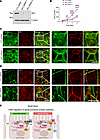 Figure 8
Loss of NF2 mimics the defects seen in CRB3-deficient IECs, including impaired apical junctional assembly, disorganization of the perijunctional actomyosin belt, and compromised epithelial barrier function. (A) Representative immunoblot showing the efficiency of NF2 knockdown in SKCO-15 IECs transfected with control scrambled or NF2 siRNA, with F-actin as a loading control. n = 3 independent experiments. (B) Graph showing TER of SKCO-15 cells with siRNA-mediated knockdown of NF2 or scramble control in cells cultured as monolayers for 4 days. Data are mean ± SD, n = 3 experiments each with 6 technical replicates. *P ≤ 0.05; ****P ≤ 0.0001 by 2-way ANOVA. (C) Representative perijunctional F-actin organization (phalloidin, green) and tight junction protein ZO-1 (red) localization in subconfluent SKCO-15 cells with siRNA knockdown of NF2 or control scramble siRNA for 48 hours. White box highlights an area that is enlarged in the right panel. Scale bars: 25 μm. n = 3 independent experiments, 3 technical replicates each. (D) Immunostaining of junctional myosin II (p-MLC [T18/S19], green) and the tight junction protein ZO-1 (red) in subconfluent SKCO-15 with NF2 siRNA–mediated knockdown or control scramble siRNA for 48 hours. White box highlights the zoomed-in area shown in the right panel. Scale bars: 25 μm. n = 3 independent experiments, 3 technical replicates each. (E) Model figure illustrating the role of CRB3 and its binding partner NF2 in regulating perijunctional actomyosin belt and barrier function via RhoA/ROCK-II signaling during apical junctional complex assembly/remodeling.
Coimmunostaining of F-actin and ZO-1 in control and NF2-KD cells revealed that NF2 depletion disrupted the organization of perijunctional actomyosin ring and resulted in discontinuous ZO-1 staining at TJs, which is a phenotype that closely resembles those observed in Crb3ERΔIEC (Figure 8C). In addition to the organization of the perijunctional actomyosin ring, contractility of actomyosin regulates AJC assembly and epithelial barrier function (1, 3). Cytoskeletal contractility is regulated by phosphorylation of MLCII at threonine 18 and serine 19 (p-MLCIIT18/S19). Coimmunostaining for p-MLCIIT18/S19 and ZO-1 in NF2-KD cells revealed disorganization and displacement of p-MLCII from the AJC compared with control cells, which is consistent with a hypercontractile actomyosin ring (Figure 8D). Similar to Crb3ERΔIEC cells, treatment with the ROCK-II inhibitor (H1152) and a myosin II inhibitor (blebbistatin) largely restored both ZO-1 distribution and F-actin ring organization in NF2-KD IECs (Supplemental Figure 7, A and B). Overall, these findings demonstrate that NF2 regulates perijunctional actomyosin organization, AJC assembly, and the establishment of epithelial barrier function, analogous to IEC CRB3. Given the interaction of CRB3 with active NF2, these data suggest that CRB3A and NF2 function cooperatively to regulate actomyosin organization and AJC assembly in IECs (Figure 8E).


