
Research ArticleInfectious diseaseMicrobiology
Open Access |  10.1172/jci.insight.195947
Development and preclinical evaluation of next-generation ΔsigH-based live candidate vaccines
Garima Arora,1 Caden W. Munson,1 Mushtaq Ahmed,2 Vinay Shivanna,1 Annu Devi,1 Venkata S.R. Devireddy,1 Basil Antony,1 Shannan Hall-Ursone,1 Olga D. Gonzalez,1 Edward J. Dick Jr.,1 Chinnaswamy Jagannath,3 Xavier Alvarez,1 Smriti Mehra,1 Shabaana A. Khader,2 Dhiraj K. Singh,1 and Deepak Kaushal1
1Texas Biomedical Research Institute, San Antonio, Texas, USA.
2 Department of Microbiology, University of Chicago, Chicago, Illinois, USA.
3Houston Methodist Research Institute, Houston, Texas, USA.
Address correspondence to: Deepak Kaushal, Texas Biomedical Research Institute, 8715 W. Military Drive, San Antonio, Texas 78227, USA. Phone: 210.258.9209; Email: dkaushal@txbiomed.org.
Find articles by Arora, G. in: PubMed | Google Scholar
1Texas Biomedical Research Institute, San Antonio, Texas, USA.
2 Department of Microbiology, University of Chicago, Chicago, Illinois, USA.
3Houston Methodist Research Institute, Houston, Texas, USA.
Address correspondence to: Deepak Kaushal, Texas Biomedical Research Institute, 8715 W. Military Drive, San Antonio, Texas 78227, USA. Phone: 210.258.9209; Email: dkaushal@txbiomed.org.
Find articles by Munson, C. in: PubMed | Google Scholar
1Texas Biomedical Research Institute, San Antonio, Texas, USA.
2 Department of Microbiology, University of Chicago, Chicago, Illinois, USA.
3Houston Methodist Research Institute, Houston, Texas, USA.
Address correspondence to: Deepak Kaushal, Texas Biomedical Research Institute, 8715 W. Military Drive, San Antonio, Texas 78227, USA. Phone: 210.258.9209; Email: dkaushal@txbiomed.org.
Find articles by Ahmed, M. in: PubMed | Google Scholar
1Texas Biomedical Research Institute, San Antonio, Texas, USA.
2 Department of Microbiology, University of Chicago, Chicago, Illinois, USA.
3Houston Methodist Research Institute, Houston, Texas, USA.
Address correspondence to: Deepak Kaushal, Texas Biomedical Research Institute, 8715 W. Military Drive, San Antonio, Texas 78227, USA. Phone: 210.258.9209; Email: dkaushal@txbiomed.org.
Find articles by
Shivanna, V.
in:
PubMed
|
Google Scholar
|

1Texas Biomedical Research Institute, San Antonio, Texas, USA.
2 Department of Microbiology, University of Chicago, Chicago, Illinois, USA.
3Houston Methodist Research Institute, Houston, Texas, USA.
Address correspondence to: Deepak Kaushal, Texas Biomedical Research Institute, 8715 W. Military Drive, San Antonio, Texas 78227, USA. Phone: 210.258.9209; Email: dkaushal@txbiomed.org.
Find articles by Devi, A. in: PubMed | Google Scholar
1Texas Biomedical Research Institute, San Antonio, Texas, USA.
2 Department of Microbiology, University of Chicago, Chicago, Illinois, USA.
3Houston Methodist Research Institute, Houston, Texas, USA.
Address correspondence to: Deepak Kaushal, Texas Biomedical Research Institute, 8715 W. Military Drive, San Antonio, Texas 78227, USA. Phone: 210.258.9209; Email: dkaushal@txbiomed.org.
Find articles by Devireddy, V. in: PubMed | Google Scholar
1Texas Biomedical Research Institute, San Antonio, Texas, USA.
2 Department of Microbiology, University of Chicago, Chicago, Illinois, USA.
3Houston Methodist Research Institute, Houston, Texas, USA.
Address correspondence to: Deepak Kaushal, Texas Biomedical Research Institute, 8715 W. Military Drive, San Antonio, Texas 78227, USA. Phone: 210.258.9209; Email: dkaushal@txbiomed.org.
Find articles by Antony, B. in: PubMed | Google Scholar
1Texas Biomedical Research Institute, San Antonio, Texas, USA.
2 Department of Microbiology, University of Chicago, Chicago, Illinois, USA.
3Houston Methodist Research Institute, Houston, Texas, USA.
Address correspondence to: Deepak Kaushal, Texas Biomedical Research Institute, 8715 W. Military Drive, San Antonio, Texas 78227, USA. Phone: 210.258.9209; Email: dkaushal@txbiomed.org.
Find articles by
Hall-Ursone, S.
in:
PubMed
|
Google Scholar
|
1Texas Biomedical Research Institute, San Antonio, Texas, USA.
2 Department of Microbiology, University of Chicago, Chicago, Illinois, USA.
3Houston Methodist Research Institute, Houston, Texas, USA.
Address correspondence to: Deepak Kaushal, Texas Biomedical Research Institute, 8715 W. Military Drive, San Antonio, Texas 78227, USA. Phone: 210.258.9209; Email: dkaushal@txbiomed.org.
Find articles by
Gonzalez, O.
in:
PubMed
|
Google Scholar
|
1Texas Biomedical Research Institute, San Antonio, Texas, USA.
2 Department of Microbiology, University of Chicago, Chicago, Illinois, USA.
3Houston Methodist Research Institute, Houston, Texas, USA.
Address correspondence to: Deepak Kaushal, Texas Biomedical Research Institute, 8715 W. Military Drive, San Antonio, Texas 78227, USA. Phone: 210.258.9209; Email: dkaushal@txbiomed.org.
Find articles by Dick, E. in: PubMed | Google Scholar
1Texas Biomedical Research Institute, San Antonio, Texas, USA.
2 Department of Microbiology, University of Chicago, Chicago, Illinois, USA.
3Houston Methodist Research Institute, Houston, Texas, USA.
Address correspondence to: Deepak Kaushal, Texas Biomedical Research Institute, 8715 W. Military Drive, San Antonio, Texas 78227, USA. Phone: 210.258.9209; Email: dkaushal@txbiomed.org.
Find articles by Jagannath, C. in: PubMed | Google Scholar
1Texas Biomedical Research Institute, San Antonio, Texas, USA.
2 Department of Microbiology, University of Chicago, Chicago, Illinois, USA.
3Houston Methodist Research Institute, Houston, Texas, USA.
Address correspondence to: Deepak Kaushal, Texas Biomedical Research Institute, 8715 W. Military Drive, San Antonio, Texas 78227, USA. Phone: 210.258.9209; Email: dkaushal@txbiomed.org.
Find articles by
Alvarez, X.
in:
PubMed
|
Google Scholar
|
1Texas Biomedical Research Institute, San Antonio, Texas, USA.
2 Department of Microbiology, University of Chicago, Chicago, Illinois, USA.
3Houston Methodist Research Institute, Houston, Texas, USA.
Address correspondence to: Deepak Kaushal, Texas Biomedical Research Institute, 8715 W. Military Drive, San Antonio, Texas 78227, USA. Phone: 210.258.9209; Email: dkaushal@txbiomed.org.
Find articles by Mehra, S. in: PubMed | Google Scholar
1Texas Biomedical Research Institute, San Antonio, Texas, USA.
2 Department of Microbiology, University of Chicago, Chicago, Illinois, USA.
3Houston Methodist Research Institute, Houston, Texas, USA.
Address correspondence to: Deepak Kaushal, Texas Biomedical Research Institute, 8715 W. Military Drive, San Antonio, Texas 78227, USA. Phone: 210.258.9209; Email: dkaushal@txbiomed.org.
Find articles by
Khader, S.
in:
PubMed
|
Google Scholar
|
1Texas Biomedical Research Institute, San Antonio, Texas, USA.
2 Department of Microbiology, University of Chicago, Chicago, Illinois, USA.
3Houston Methodist Research Institute, Houston, Texas, USA.
Address correspondence to: Deepak Kaushal, Texas Biomedical Research Institute, 8715 W. Military Drive, San Antonio, Texas 78227, USA. Phone: 210.258.9209; Email: dkaushal@txbiomed.org.
Find articles by
Singh, D.
in:
PubMed
|
Google Scholar
|
1Texas Biomedical Research Institute, San Antonio, Texas, USA.
2 Department of Microbiology, University of Chicago, Chicago, Illinois, USA.
3Houston Methodist Research Institute, Houston, Texas, USA.
Address correspondence to: Deepak Kaushal, Texas Biomedical Research Institute, 8715 W. Military Drive, San Antonio, Texas 78227, USA. Phone: 210.258.9209; Email: dkaushal@txbiomed.org.
Find articles by
Kaushal, D.
in:
PubMed
|
Google Scholar
|
Published August 28, 2025 - More info
JCI Insight. 2025;10(19):e195947. https://doi.org/10.1172/jci.insight.195947.
© 2025 Arora et al. This work is licensed under the Creative Commons Attribution 4.0 International License. To view a copy of this license, visit http://creativecommons.org/licenses/by/4.0/.
Received: June 12, 2025; Accepted: August 22, 2025

-
Results
Identifying genes to be deleted in MtbΔsigH. Throughout its life cycle in the host, Mtb encounters many stress conditions, the response to which is regulated by SigH, playing a key role in maintaining its viability (17–22). The ΔsigH mutant is attenuated ex vivo (16, 28), as well as in macaques (14), where it induces strong lung immune signatures that protect against lethal TB (15, 16). Although SIV coinfection does not reactivate infection with the MtbΔsigH in macaques (24), additional unrelated mutations are required to ensure its clinical safety (25, 29). To develop MtbΔsigH-based TB vaccine candidates that meet the Geneva Consensus recommendations for safe live TB vaccines with strong potential for clinical advancement (25, 29), we selected genes, deletion in which attenuated the ability of Mtb to colonize macaque lungs. To achieve this, we identified 8 specific genes (Table 1) to be deleted in ΔsigH. Building on these previous studies, the selected genes and strains were (i) ΔfbpAΔsapM, (ii) ΔsecA2ΔsodA, (iii) ΔleuD (21–23), (iv) ΔmetA (24), (v) Δmce4EΔmce4F, (vi) ΔhadC, (vii) ΔMT3785, and (viii) Δmce1A. The proteins encoded by the Mtb genes, fbpA and sapM, interfere with phagolysosomal maturation in host, and therefore, the Mtb ΔfbpAΔsapM strain has been shown to be significantly attenuated in murine and human macrophages due to increased phagolysosomal fusion that facilitates an increased presentation of Ag85B to CD4+ T cells (30–35). This mutant is immunogenic and protective in macrophages and mice (30). Similarly, SecA2 facilitates the arrest of phagolysosomal fusion, enhancing Mtb survival in host and transports proteins involved in pathogenesis, such as SodA, SapM, and PknG (36–38). As expected, Mtb ΔsecA2ΔsodA is highly attenuated and exhibits enhanced antigen presentation and phagolysosomal fusion capability (39). The MtbΔsecA2 mutant is also efficacious as a TB vaccine and safe in SIV-coinfected macaques (40). Mtb ΔleuD (41) and ΔmetA (42) are attenuated auxotrophs. ΔleuDΔpanCD (43) and ΔmetA strains of Mtb are safe in SCID mice, guinea pigs, and immunocompetent and SIV-coinfected macaques and exhibit protection against Mtb challenge (43–46). The remaining genes were selected because transposon interruption in these alleles rendered Mtb avirulent in macaques and in various other screening studies involving in silico, macrophage, or murine models (26, 47–51). None of the products encoded by these genes are related to sigH function or signaling. Deletion mutants of several of these genes have been individually shown to be attenuated due to dysregulation in cholesterol (mce4) or mycolic acid (mce1) transport (52–54).
Construction and in vitro characterization of ΔsigH-based double- and triple-knockout strains of M. tuberculosis. We first constructed the isogenic single mutants, ΔsapM::hygR, Δmce1A::hygR, ΔsecA2::hygR, ΔhadC::hygR, ΔMT3785::hygR, ΔmetA::hygR, ΔleuD::hygR, and ΔfbpA::kanR as well as the double mutant, Δmce4E/Δmce4F::hygR, in Mtb CDC1551 (Figure 1) using a specialized transducing phage-based system (55). The entire open reading frame of each gene was replaced by either a hygromycin (hygR) or kanamycin (kanR) resistance gene via homologous recombination using the fragments immediately up- and downstream of the coding sequence (Figure 1). The deletions of secA2 and mce1A involved the removal of hygR selectable markers using γδ resolvase via phage transduction (56), resulting in unmarked mutants, MtbΔsecA2-un and MtbΔmce1A-un (Figure 1, I–L). The sigH deletion was attained in the background of these single and double mutants by transduction with the recombinant phage phAE87-ΔsigH::apraR, a phagemid DNA carrying the upstream and downstream regions flanking sigH on either side of an apramycin resistance (apraR) cassette in a cosmid, pYUB854. We were then able to delete sigH by replacing the gene with an apraR cassette in each individually generated knockout strain of Mtb (Figure 1, R and S). The deletions and replacements were confirmed by PCR analysis using either the external primer set flanking the gene or internal locus-specific primers or a mixture of both (Figure 1). The results were also verified by sequencing (data not shown). These observations confirmed that the open reading frames for the genes, sapM, fbpA, mce4E, mce4F, mce1A, secA2, hadC, MT3785, metA and leuD, had been individually deleted in the MtbΔsigH strain.
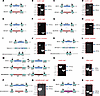 Figure 1
Construction of various double- and triple-knockout strains of M. tuberculosis. Schematic representation of gene locus and PCR-based analysis in the parental (wild-type) and deletion strains of M. tuberculosis CDC1551 are shown. Created in BioRender. Arora, G. (2025) https://BioRender.com/qa76loa The open reading frames of metA (A and B), leuD (C and D), hadC (E and F), MT3785 (G and H), mce4E-mce4F (P and Q), mce1A (I and J), secA2 (K and L), and sapM (M and N) were separately replaced with the hygromycin resistance gene (hygR) in the M. tuberculosis genome. MtbΔmce1A and MtbΔsecA2 were also unmarked in another phage transduction step using the temperature-sensitive mycobacteriophage phAE280 (unmarking phage; ref. 56). In the double-mutant strain, MtbΔsapMΔfbpA, the open reading frame of fbpA was replaced with kanamycin resistance gene (kanR) in the genome of the MtbΔsapM strain (M and O). sigH was replaced with apramycin resistance gene (apraR) in each of the 8 mutant strains. (R and S) The disruptions of various genes, in their respective single- and double-mutant strain, were confirmed by PCR amplification using locus-specific primers. The solid black arrows depict the region of binding by the primers for PCR-based screening. The lanes presented in each panel are derived from the same gel, with images cropped for clarity. Source data are provided as a Supporting Data Values file.
As an initial step in assessing the contribution of each gene to bacterial fitness, we monitored the growth of the mutants in liquid cultures. As shown in Figure 2A, the growth curves of the double (MtbΔsigHΔsecA2, MtbΔsigHΔmce1A, and MtbΔsigHΔMT3785) and triple knockouts (MtbΔsigHΔfbpAΔsapM and MtbΔsigHΔmce4EΔmce4F) were comparable to parental Mtb, with each strain reaching a similar plateau value with similar growth rates. MtbΔsigHΔmetA and MtbΔsigHΔleuD also exhibited growth patterns similar to the wild-type upon supplementation with methionine and leucine, respectively, consistent with previous findings for these auxotrophic mutants of Mtb (41, 42). MtbΔsigHΔhadC grew at a slightly slower rate compared with wild-type and other strains (Figure 2A). The colony morphology of all the mutant strains was also comparable to that of wild-type Mtb (Figure 2, B–K). Each strain produced dry rough colonies characterized by ridges and well-defined borders (Figure 2, B–K). As reported earlier for MtbΔhadC, compared with wild-type and all other strains, MtbΔsigHΔhadC strain exhibited a revival-defective phenotype and a longer lag phase (57). In addition, the colony morphology of MtbΔsigHΔhadC was noticeably different, with changes in texture and diminished pigmentation relative to the wild-type, consistent with the previous findings for the inactivation of hadC in Mtb genome (Figure 2G) (58). Biofilm formation by Mtb facilitates its survival within the host and confers increased drug tolerance while hindering immune cell activity and evading host defenses (59–61). Strikingly, we found that all mutant strains were severely compromised in their ability to form biofilm in vitro (Figure 2, L–T), including the isogenic mutant for MtbΔsigH. To test whether the mutations introduced altered the drug susceptibility of parental strain, we measured the minimum inhibitory concentrations (MICs) of Mtb KOs strains to most frequently used first- and one second-line antitubercular drugs. As shown in Supplemental Table 1 (supplemental material available online with this article; https://doi.org/10.1172/jci.insight.195947DS1), all the mutant strains were sensitive to rifampin (RIF), isoniazid (INH), and ethambutol (ETH). The MIC99 values of RIF against the mutant strains were <4 μM. The values fell between 0.39 μM and 0.78 μM for INH and were 1.56–3.12 μM for ETH (Supplemental Table 1).
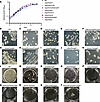 Figure 2
In vitro characterization of MtbΔsigH-based KO strains. (A) Log-phase cultures of individual knockout or wild-type M. tuberculosis CDC1551 grown in standard MB7H9 medium were diluted 1/100, and growth kinetics at 37°C was followed by measuring optical density at 600 nm (OD600) over time. Colony morphology of various Mtb KO strains was determined by cultivating 10-fold serial dilutions of the early- to mid-log phase cultures on standard MB7H11 plates at 37°C for 3–4 weeks (B–K). Loss of biofilm formation in MtbΔsigH-based KO strains depicted by growing various strains in Sauton’s medium in polystyrene-coated, 6-well plates without shaking at 37°C (L–T). The plates were imaged after 4–5 weeks of incubation. The data shown in all the panels are representative of 2 independent experiments.
Figure 2In vitro characterization of MtbΔsigH-based KO strains. (A) Log-phase cultures of individual knockout or wild-type M. tuberculosis CDC1551 grown in standard MB7H9 medium were diluted 1/100, and growth kinetics at 37°C was followed by measuring optical density at 600 nm (OD600) over time. Colony morphology of various Mtb KO strains was determined by cultivating 10-fold serial dilutions of the early- to mid-log phase cultures on standard MB7H11 plates at 37°C for 3–4 weeks (B–K). Loss of biofilm formation in MtbΔsigH-based KO strains depicted by growing various strains in Sauton’s medium in polystyrene-coated, 6-well plates without shaking at 37°C (L–T). The plates were imaged after 4–5 weeks of incubation. The data shown in all the panels are representative of 2 independent experiments.
Challenge with MtbΔsigH-based KOs does not cause TB disease. MtbΔsigH, when aerosolized, is safe and provides better protection in macaques against lethal TB than BCG in various nonhuman primate models (14–16). We investigated if the additional mutations also protected the host while remaining nonpathogenic. To test the safety of various knockout strains, as outlined in Figure 3A, we aerosol-challenged 6 macaques with a pool of 50–100 CFU of each knockout strain. Three of the 6 animals were euthanized at 4 weeks postchallenge to assess bacterial burden and disease pathology, while the remaining 3 nonhuman primates (NHPs) were given a 4-week rest period before being challenged intravenously with a high dose of SIVmac239 (Figure 3A). Infection and disease were monitored through weekly clinical assessments and serial bronchoalveolar lavage (BAL) sampling. For comparison, control data shown in the graphs include Mtb CDC1551–latently infected rhesus macaques, which were further challenged with SIV at 9 weeks postinfection (Mtb/SIV), as well as those aerosol-vaccinated with 1,000 CFU of MtbΔsigH (24) (Figure 3, B and C, and Supplemental Figure 1).
 Figure 3
Clinical outcomes of Mtb KOs and subsequent SIV challenge in rhesus macaques. (A) Study outline. Created in BioRender. Kaushal, D. (2025) https://BioRender.com/q65y137 Six Indian rhesus macaques were challenged with a mixture of all 8 MtbΔsigH-based knockouts with a targeted dose of 50–100 CFU of each strain. Shown are serum C-reactive protein (CRP) levels after Mtb KOs challenge (B), serum CRP levels after SIV challenge (C), and viral loads in plasma (D) and BAL supernatants (E) of the macaques measured at 4 weeks after SIV challenge. CD4+ and CD8+ T cells were measured in BAL at 4 weeks after Mtb KOs challenge (F) and 4 weeks after SIV challenge (G). Control data shown (for Mtb wild-type, MtbΔsigH, Mtb/SIV, and MtbΔsigH/SIV) for comparison were obtained from our previously published studies. Box plots show the interquartile range, median (line), and minimum and maximum (whiskers) (B and C). Data are represented as mean ± SEM (D–G).
Following the Mtb KOs challenge as well as subsequent high-dose intravenous SIV infection, all animals remained healthy and devoid of TB disease. All Mtb KOs-infected and Mtb KOs/SIV-coinfected NHPs either maintained or gained body weights and exhibited stable body temperatures compared with single MtbΔsigH mutant-infected and Mtb/SIV-coinfected animals, as shown by the change in these parameters relative to baseline values (Supplemental Figure 1). All Mtb KOs-infected and SIV-coinfected animals maintained normal CRP values throughout the study, indicating the absence of marked inflammation or disease, whereas CRP levels in the control groups (Mtb- and Mtb/SIV-challenged) increased over time (Figure 3, B and C). SIV titers measured in plasma and BAL supernatants were comparable between the control and test groups, indicating that the observed differences were not due to variations in viral loads (Figure 3, D and E). The serum albumin/globulin ratios were elevated in the Mtb KOs-challenged animals, suggesting reduced TB disease severity (Supplemental Figure 2A). The neutrophil/lymphocyte ratios in peripheral blood of Mtb KOs-infected animals were lower relative to Mtb/SIV-challenged animals, further indicating the healthy status of the Mtb KOs-challenged animals (Supplemental Figure 2B). At 4 weeks after Mtb KOs challenge, BAL demonstrated a considerably high percentage (30%–50%) of CD4+ T and CD8+ T cells (Figure 3F). As expected, at week 8 after Mtb KOs challenge/week 4 after SIV challenge, substantial CD4+ depletion was observed (Figure 3G).
MtbΔsigH-based KOs challenge reduces in vivo bacterial burdens and does not disseminate to extrathoracic organs. The primary indicator of protection is the thorough quantification of Mtb burden at necropsy. CFU in the BAL of animals decreased by 75% after 3 weeks of challenge and remained low even after the SIV challenge (Figure 4A). As shown in Figure 4, A and B, 1 out of 3 SIV-challenged macaques had higher bacterial burden at the time of necropsy but remained free of the disease as indicated by clinical parameters. As shown in Figure 4, C and E, the lung and bronchial lymph node (BrLN) bacillary loads in Mtb KOs/SIV-infected animals were 3.8- and 3.4-log10, respectively, in comparison with Mtb/SIV-infected animals, where these were 4.6- and 5.2-log10. Despite the high bacterial burdens, we observed 6.0-fold fewer granulomas in lungs of Mtb KOs/SIV-infected animals compared with wild-type/SIV control-infected NHPs (Figure 4D). Mtb/HIV coinfection in humans is marked by widespread dissemination to extrathoracic organs. Therefore, we next evaluated the bacterial loads in spleen, liver, and kidneys. Mtb/SIV–coinfected macaques exhibited significant extrapulmonary dissemination as evident by high bacterial burdens (2–4 log10 CFU) in spleen, liver, and kidneys (Supplemental Figure 3). In contrast, no bacilli were detected in any of the collected extrapulmonary tissues of Mtb KOs/SIV-infected macaques (Supplemental Figure 3). These results demonstrate MtbΔsigH-based KOs-challenged macaques remain asymptomatic of tuberculous disease throughout the study despite active replication in the lung and when infected with a high dose of pathogenic SIV did not experience reactivation of TB disease.
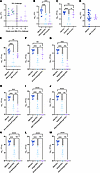 Figure 4
Thoracic bacterial burden in rhesus macaques following Mtb KOs or Mtb KOs/SIV coinfection. Rhesus macaques challenged with Mtb KOs strains via aerosol route and subsequently with SIV intravenously were euthanized at the indicated time points and analyzed for bacterial burdens. BAL CFU were measured longitudinally throughout the study (A). The dashed line indicates the time of SIV challenge. Bacillary loads recorded in endpoint BAL (B), lung (C), lung granulomas (D), and BrLN (E) from Mtb KOs/SIV (lavender) challenged animals were compared with the Mtb/SIV (blue) and MtbΔsigH/SIV (turquoise) infected animals from earlier studies. (F–M) Strain-specific bacterial burden determined by PCR analysis of lysates from colonies isolated from BAL fluid, lung tissue, and BrLN collected at necropsy. Data involving Mtb/SIV and MtbΔsigH/SIV-coinfected macaques are obtained from our previous publications (23, 82, 83), as we did not perform experiments on this group in the current study. The data were analyzed using 1-way ANOVA with Tukey’s multiple comparisons test in GraphPad Prism version 9.2.0 for macOS. A P value < 0.05 was considered as statistically significant. *P < 0.05; **P < 0.01; ***P < 0.001; ****P < 0.0001. Data are presented as mean ± SEM.
MtbΔsigHΔmce1A: the predominant replicating strain in the Mtb KOs-challenged macaques. The Mtb mce1 operon has been implicated in fatty acid uptake (52, 62). Previous studies have shown that the Δmce1A mutant of Mtb Erdman exhibits increased growth in BALB/c mice, leading to earlier mortality compared with mice infected with the parental strain (63). We hypothesized that the majority of the total thoracic bacterial burden in our animals could comprise the MtbΔsigHΔmce1A strain, given its known hypervirulent phenotype in mice. We performed PCR analysis on lysates prepared from colonies isolated from the BAL, lungs, and BrLNs at necropsy. This analysis was expected to reveal an amplification size corresponding to the Δmce1A genotype. Approximately 20% of the total CFU recovered from all animals were screened, and as anticipated, mutations were mapped to mce1A in 91% of the colonies obtained from lungs (Supplemental Figure 4). PCR analysis of the remaining 9% of the total screened clones identified them as either MtbΔsigHΔsecA2 or MtbΔsigHΔmce4EΔmce4F mutants (data not shown). Thus, MtbΔsigHΔmce1A strain accounted for 3.7-log10 CFU, while MtbΔsigHΔsecA2 and MtbΔsigHΔmce4EΔmce4F strains contributed 0.7-log10 CFU and 0.9-log10, respectively, to the total lung bacterial load (Figure 4, F–H). The remaining 5 mutant strains did not replicate in the lungs (Figure 4, I–M). None of the Mtb KOs other than ΔsigHΔmce1A survived in BAL and BrLN, as all the colonies recovered from these tissues carry the mce1A deletion (Supplemental Figure 4). These results suggest that the mce1A deletion likely enabled this strain to dominate and replicate in the thoracic region, while the sigH deletion continued to provide protection to the animals.
Challenge with MtbΔsigH-based KOs leads to reduced pulmonary pathology. It has been previously shown that MtbΔsigH induced minimal pathology, when aerosol-vaccinated in macaques despite SIV coinfection (24). Our detailed necropsies also showed that the Mtb KOs/SIV-challenged group exhibited substantially fewer pulmonary lesions and less TB-related pathology, as evident by the gross and histopathological analysis as well as computed tomography (CT) (Figure 5, A–E). CT was used to evaluate pulmonary pathology parameters in lungs, which were notably reduced in Mtb KOs and Mtb KOs/SIV group animals compared with those in Mtb wild-type and SIV-coinfected animals, respectively (Figure 5, A and B), suggesting that SIV-induced pathology was not exacerbated in Mtb KOs-challenged animals. As shown in Figure 5, C and D, we observed decreased gross pathology in lungs from Mtb KOs and Mtb KOs/SIV-infected animals in comparison with the control groups, Mtb wild-type, and Mtb/SIV-infected macaques, respectively. The lung tissues from the control group animals exhibited heavy tissue involvement with numerous tubercles (Figure 5, C and D). In contrast, lungs from Mtb KOs and Mtb KOs/SIV-infected animals exhibited reduced pathology with minimum involvement (Figure 5, C and D). In concordance, high-resolution scanning images showed a greater number of granulomas in sections from wild-type Mtb/SIV-coinfected animals in comparison with sections from Mtb KOs/SIV-coinfected macaques (Figure 5E and Supplemental Figure 5). In our histopathological analysis, we observed lesser tissue damage and reduced granuloma formation in sections from Mtb KOs and Mtb KOs/SIV-coinfected group (Figure 5F and Supplemental Figure 5). As shown in Figure 5F, severe granulomatous inflammation and loss of parenchymal space were observed in sections from Mtb/SIV-infected group. The detailed analysis of tissue damage in H&E-stained sections revealed that the extent of lung affected by TB lesions encompassed an average of 2% in the Mtb KOs/SIV group whereas it was ~31% in the case of Mtb/SIV-challenged animals (Figure 5G). Collectively, these observations suggest that MtbΔsigH-based KOs are safe and nonpathogenic in a stringent NHP model of TB.
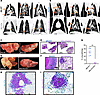 Figure 5
Lung pathology and TB lesions in Mtb KOs and Mtb KOs/SIV-cochallenged rhesus macaques. CT imaging of thoracic regions was performed on the macaques 4 weeks after Mtb KOs (A) and 4 weeks after SIV coinfection (B) prior to necropsies to examine the TB lesions. Representative images of lung tissues from macaques euthanized at 4 weeks after Mtb KOs (C) and 4 weeks after SIV coinfection (D), illustrating healthy gross pathology compared with the historical controls, are shown. To determine the effect of Mtb KOs/SIV coinfection on the lung pathology, lung tissue was collected at necropsy and subjected to H&E staining to study the cellular and granulomatous pathology. (E) A representative high-resolution photomicrograph is shown, and granulomatous lesions (2–4 mm) in these sections are marked by arrows. (F) H&E-stained lung sections from Mtb KOs/SIV-coinfected macaques show granuloma in Mtb/SIV-coinfected control animal and iBALT/iBALT-like structure in Mtb KOs/SIV-cochallenged animal, as indicated by arrows. (G) Percentage lung involvement was calculated by board-certified pathologist by quantification of the number of lesions per lobe of the lungs. Significance was determined using 1-way ANOVA with Tukey’s multiple comparisons test in GraphPad Prism v9.2.0. A P value < 0.05 was considered as statistically significant. **P < 0.01. Data are represented as mean ± SEM. Representative IHC staining lung sections from Mtb KOs-infected (H) and Mtb KOs/SIV-infected (I) macaques, highlighting staining with the iBALT markers — CD20 (purple), CD3 (teal), and CD68 (green). Images in panels C–G involving Mtb/SIV-coinfected and Mtb wild-type infected macaques are obtained from our previous publications (24, 81), as we did not perform experiments on this group in the current study.
iBALT induction in MtbΔsigH-based KOs-challenged animals. The observed granulomas in lungs from the Mtb KOs and SIV-coinfected macaques lacked the characteristic well-organized structure and appeared to be iBALTs. Thus, these lung sections were further analyzed and subjected to immunohistochemistry (IHC) staining for CD20+ B cells, CD3+ T cells, and CD68+ macrophage/dendritic cells followed by confocal imaging. As apparent in the analogous H&E-stained sections (Supplemental Figure 5), multiple organized lymphoid aggregates comprising B cells, T cells, and macrophages/monocytes were observed, consistent with the formation of iBALT structures (Figure 5, H and I). Moreover, the IHC staining revealed that the observed granulomas in the lungs of Mtb KOs and Mtb KOs/SIV-coinfected macaques were surrounded by well-organized iBALT structures per lesion (data not shown). As shown in Figure 5, H and I, these follicles were predominantly composed of CD20+ B cells, surrounded by spherical layers of CD3+ T cells, reinforcing previous findings that activated B cells are crucial for the control of TB in macaques (23, 64).
MtbΔsigH-based KOs challenge induces antigen-specific T cell responses in airways. Since Mtb is an intracellular pathogen with pulmonary pathology driven by IFN-γ, we next assessed whether the vaccination with MtbΔsigH-based KOs imparts protection against M. tuberculosis. Our previous results have conclusively shown MtbΔsigH to be immunogenic in rhesus and cynomolgus macaques, inducing robust Mtb antigen-specific T cell responses in airways, with peak responses observed at week 5 after intramucosal vaccination. Therefore, we also evaluated the antigen-specific T cell responses in BAL cells (Figure 6 and Supplemental Figures 6 and 7) and lungs (Supplemental Figures 6 and 8) isolated at week 4 after MtbΔsigH-based KOs and upon subsequent SIV challenge. As expected, intramucosal Mtb KOs challenge was found to be immunogenic in rhesus macaques, inducing antigen-specific multifunctional T cell responses in CD4+ (Figure 6, A and B) and CD8+ (Figure 6, C and D) compartments. Among the BAL CD4+ cells, almost 25%–30% were producing IFN-γ and TNF-α simultaneously in response to Mtb CDC1551 whole cell lysate (WCL) or Mtb CDC1551 cell wall fraction (CW), and 15% could produce IL-2 with IFN-γ and TNF-α simultaneously (Figure 6, A and B). In the CD8+ compartment, 2.5% of cells were responding to WCL and 7.5% to CW by producing IFN-γ and TNF-α simultaneously (Figure 6C). We found 1% of the BAL CD8+ T cells were producing IL-2 with IFN-γ and TNF-α simultaneously in response to WCL while a higher fraction of 2.5% were responsive to CW (Figure 6D). As expected, multifunctional responses to both WCL and CW were similar in the CD4+ compartment while CD8 multifunctionality was higher in CW due to presence of CD8+ dominant antigens like CFP10. In the CD4+ compartment, 25% stained positive for IFN-γ, 30% for TNF-α, 18%–20% for IL-2, and 4% for IL-17 in response to WCL and CW (Supplemental Figure 7, A–E). In the CD8+ compartment, 2.5% stained positive for IFN-γ, 5% for TNF-α, 1.5% for IL-2, and 1% for IL-17 in response to WCL while 7.5% stained positive for IFN-γ, 12% for TNF-α, 3% for IL-2, and 2.5% for IL-17 in response to CW (Supplemental Figure 7, F–J). At week 8 after Mtb KOs challenge/week 4 after SIV challenge, significant CD4+ T cell depletion was observed as expected (Figure 3G). However, the Mtb WCL-specific responses, including the multifunctional T cell responses, were retained in the CD8+ compartment (Figure 6, E and F, and Supplemental Figure 7, K–O). When compared with naive and wild-type Mtb-challenged controls, superior antigen-specific CD4+ (Figure 6, G–I) and CD8+ (Figure 6, J–L) T cell responses were induced by Mtb KOs challenge. In conclusion, challenge with pooled MtbΔsigH-based KOs elicited impressive protective multifunctional helper and cytotoxic T cell responses in the airways, further strengthening their feasibility as a safe and effective vaccine against TB.
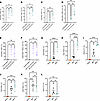 Figure 6
MtbΔsigH-based KOs induces superior antigen-specific immune responses in BAL. BAL cells collected at necropsy were stimulated with either whole cell or CW of Mtb or left unstimulated overnight for 16–18 hours. Activated cells were stained with different fluorophore-tagged antibodies (Supplemental Table 5), and the expression of surface markers was analyzed using flow cytometry. Frequencies of antigen-specific multifunctional CD4+ T cells expressing IFN-γ with TNF-α (A), IFN-γ, and TNF-α with IL-2 (B) and CD8+ T cells expressing IFN-γ with TNF-α (C), IFN-γ, and TNF-α with IL-2 (D) in BAL collected 4 weeks after Mtb KOs challenge is shown. Frequencies of multifunctional CD8+ T cells expressing IFN-γ with TNF-α (E) and IFN-γ, TNF-α with IL-2 (F) in BAL collected 8 weeks after Mtb KOs challenge (4 weeks after SIV challenge) is shown. Frequencies of antigen-specific multifunctional CD4+ T cells expressing IFN-γ (G), TNF-α (H), and IL-17 (I) and CD8+ T cells expressing IFN-γ (J), TNF-α (K), and IL-17 (L) in BAL collected 3–4 weeks postchallenge are shown for Mtb KOs (teal), Mtb (black), and naive animals (orange). Data involving Mtb wild-type infected macaques are obtained from our previous publications (77). Significance was determined using 1-way ANOVA with Tukey’s multiple comparisons test in GraphPad Prism v9.2.0. A P value < 0.05 was considered statistically significant. *P < 0.05; **P < 0.01; ***P < 0.001; ****P < 0.0001. The data shown are the mean ± SEM (n = 3).


