
Research ArticleAgingMetabolismMuscle biology
Open Access |  10.1172/jci.insight.194303
Macrophage metabolic rewiring rejuvenates muscle Raman signatures and cellular remodeling during regrowth in aged mice
Zachary J. Fennel,1,2,3 Negar Kosari,4 Paul-Emile Bourrant,1,5 Elena M. Yee,1,5 Robert J. Castro,1,5 Anu S. Kurian,1 Jonathan Palmer,6 Morgan Christensen,4 Katsuhiko Funai,1,3,5 Ryan M. O’Connell,7 Anhong Zhou,4 and Micah J. Drummond1,2,3,5
1Utah Center for Metabolic Health,
2Department of Physical Therapy and Athletic Training, and
3Molecular Medicine Program, University of Utah, Salt Lake City, Utah, USA.
4Department of Biological Engineering, Utah State University, Logan Utah, USA.
5Department of Nutrition & Integrative Physiology,
6Spencer Fox Eccles School of Medicine, and
7Department of Pathology, Division of Microbiology and Immunology, University of Utah, Salt Lake City, Utah, USA.
Address correspondence to: Micah J. Drummond, 15 N 2030 E RM 4145, Salt Lake City, Utah 84112, USA. Phone: 801.585.1310; Email: micah.drummond@hsc.utah.edu.
Find articles by Fennel, Z. in: PubMed | Google Scholar
1Utah Center for Metabolic Health,
2Department of Physical Therapy and Athletic Training, and
3Molecular Medicine Program, University of Utah, Salt Lake City, Utah, USA.
4Department of Biological Engineering, Utah State University, Logan Utah, USA.
5Department of Nutrition & Integrative Physiology,
6Spencer Fox Eccles School of Medicine, and
7Department of Pathology, Division of Microbiology and Immunology, University of Utah, Salt Lake City, Utah, USA.
Address correspondence to: Micah J. Drummond, 15 N 2030 E RM 4145, Salt Lake City, Utah 84112, USA. Phone: 801.585.1310; Email: micah.drummond@hsc.utah.edu.
Find articles by Kosari, N. in: PubMed | Google Scholar
1Utah Center for Metabolic Health,
2Department of Physical Therapy and Athletic Training, and
3Molecular Medicine Program, University of Utah, Salt Lake City, Utah, USA.
4Department of Biological Engineering, Utah State University, Logan Utah, USA.
5Department of Nutrition & Integrative Physiology,
6Spencer Fox Eccles School of Medicine, and
7Department of Pathology, Division of Microbiology and Immunology, University of Utah, Salt Lake City, Utah, USA.
Address correspondence to: Micah J. Drummond, 15 N 2030 E RM 4145, Salt Lake City, Utah 84112, USA. Phone: 801.585.1310; Email: micah.drummond@hsc.utah.edu.
Find articles by Bourrant, P. in: PubMed | Google Scholar
1Utah Center for Metabolic Health,
2Department of Physical Therapy and Athletic Training, and
3Molecular Medicine Program, University of Utah, Salt Lake City, Utah, USA.
4Department of Biological Engineering, Utah State University, Logan Utah, USA.
5Department of Nutrition & Integrative Physiology,
6Spencer Fox Eccles School of Medicine, and
7Department of Pathology, Division of Microbiology and Immunology, University of Utah, Salt Lake City, Utah, USA.
Address correspondence to: Micah J. Drummond, 15 N 2030 E RM 4145, Salt Lake City, Utah 84112, USA. Phone: 801.585.1310; Email: micah.drummond@hsc.utah.edu.
Find articles by
Yee, E.
in:
PubMed
|
Google Scholar
|

1Utah Center for Metabolic Health,
2Department of Physical Therapy and Athletic Training, and
3Molecular Medicine Program, University of Utah, Salt Lake City, Utah, USA.
4Department of Biological Engineering, Utah State University, Logan Utah, USA.
5Department of Nutrition & Integrative Physiology,
6Spencer Fox Eccles School of Medicine, and
7Department of Pathology, Division of Microbiology and Immunology, University of Utah, Salt Lake City, Utah, USA.
Address correspondence to: Micah J. Drummond, 15 N 2030 E RM 4145, Salt Lake City, Utah 84112, USA. Phone: 801.585.1310; Email: micah.drummond@hsc.utah.edu.
Find articles by
Castro, R.
in:
PubMed
|
Google Scholar
|
1Utah Center for Metabolic Health,
2Department of Physical Therapy and Athletic Training, and
3Molecular Medicine Program, University of Utah, Salt Lake City, Utah, USA.
4Department of Biological Engineering, Utah State University, Logan Utah, USA.
5Department of Nutrition & Integrative Physiology,
6Spencer Fox Eccles School of Medicine, and
7Department of Pathology, Division of Microbiology and Immunology, University of Utah, Salt Lake City, Utah, USA.
Address correspondence to: Micah J. Drummond, 15 N 2030 E RM 4145, Salt Lake City, Utah 84112, USA. Phone: 801.585.1310; Email: micah.drummond@hsc.utah.edu.
Find articles by Kurian, A. in: PubMed | Google Scholar
1Utah Center for Metabolic Health,
2Department of Physical Therapy and Athletic Training, and
3Molecular Medicine Program, University of Utah, Salt Lake City, Utah, USA.
4Department of Biological Engineering, Utah State University, Logan Utah, USA.
5Department of Nutrition & Integrative Physiology,
6Spencer Fox Eccles School of Medicine, and
7Department of Pathology, Division of Microbiology and Immunology, University of Utah, Salt Lake City, Utah, USA.
Address correspondence to: Micah J. Drummond, 15 N 2030 E RM 4145, Salt Lake City, Utah 84112, USA. Phone: 801.585.1310; Email: micah.drummond@hsc.utah.edu.
Find articles by Palmer, J. in: PubMed | Google Scholar
1Utah Center for Metabolic Health,
2Department of Physical Therapy and Athletic Training, and
3Molecular Medicine Program, University of Utah, Salt Lake City, Utah, USA.
4Department of Biological Engineering, Utah State University, Logan Utah, USA.
5Department of Nutrition & Integrative Physiology,
6Spencer Fox Eccles School of Medicine, and
7Department of Pathology, Division of Microbiology and Immunology, University of Utah, Salt Lake City, Utah, USA.
Address correspondence to: Micah J. Drummond, 15 N 2030 E RM 4145, Salt Lake City, Utah 84112, USA. Phone: 801.585.1310; Email: micah.drummond@hsc.utah.edu.
Find articles by Christensen, M. in: PubMed | Google Scholar
1Utah Center for Metabolic Health,
2Department of Physical Therapy and Athletic Training, and
3Molecular Medicine Program, University of Utah, Salt Lake City, Utah, USA.
4Department of Biological Engineering, Utah State University, Logan Utah, USA.
5Department of Nutrition & Integrative Physiology,
6Spencer Fox Eccles School of Medicine, and
7Department of Pathology, Division of Microbiology and Immunology, University of Utah, Salt Lake City, Utah, USA.
Address correspondence to: Micah J. Drummond, 15 N 2030 E RM 4145, Salt Lake City, Utah 84112, USA. Phone: 801.585.1310; Email: micah.drummond@hsc.utah.edu.
Find articles by
Funai, K.
in:
PubMed
|
Google Scholar
|
1Utah Center for Metabolic Health,
2Department of Physical Therapy and Athletic Training, and
3Molecular Medicine Program, University of Utah, Salt Lake City, Utah, USA.
4Department of Biological Engineering, Utah State University, Logan Utah, USA.
5Department of Nutrition & Integrative Physiology,
6Spencer Fox Eccles School of Medicine, and
7Department of Pathology, Division of Microbiology and Immunology, University of Utah, Salt Lake City, Utah, USA.
Address correspondence to: Micah J. Drummond, 15 N 2030 E RM 4145, Salt Lake City, Utah 84112, USA. Phone: 801.585.1310; Email: micah.drummond@hsc.utah.edu.
Find articles by O’Connell, R. in: PubMed | Google Scholar
1Utah Center for Metabolic Health,
2Department of Physical Therapy and Athletic Training, and
3Molecular Medicine Program, University of Utah, Salt Lake City, Utah, USA.
4Department of Biological Engineering, Utah State University, Logan Utah, USA.
5Department of Nutrition & Integrative Physiology,
6Spencer Fox Eccles School of Medicine, and
7Department of Pathology, Division of Microbiology and Immunology, University of Utah, Salt Lake City, Utah, USA.
Address correspondence to: Micah J. Drummond, 15 N 2030 E RM 4145, Salt Lake City, Utah 84112, USA. Phone: 801.585.1310; Email: micah.drummond@hsc.utah.edu.
Find articles by Zhou, A. in: PubMed | Google Scholar
1Utah Center for Metabolic Health,
2Department of Physical Therapy and Athletic Training, and
3Molecular Medicine Program, University of Utah, Salt Lake City, Utah, USA.
4Department of Biological Engineering, Utah State University, Logan Utah, USA.
5Department of Nutrition & Integrative Physiology,
6Spencer Fox Eccles School of Medicine, and
7Department of Pathology, Division of Microbiology and Immunology, University of Utah, Salt Lake City, Utah, USA.
Address correspondence to: Micah J. Drummond, 15 N 2030 E RM 4145, Salt Lake City, Utah 84112, USA. Phone: 801.585.1310; Email: micah.drummond@hsc.utah.edu.
Find articles by
Drummond, M.
in:
PubMed
|
Google Scholar
|
Published September 9, 2025 - More info
JCI Insight. 2025;10(20):e194303. https://doi.org/10.1172/jci.insight.194303.
© 2025 Fennel et al. This work is licensed under the Creative Commons Attribution 4.0 International License. To view a copy of this license, visit http://creativecommons.org/licenses/by/4.0/.
Received: April 9, 2025; Accepted: September 4, 2025


-
Results
Hypoxic exposure enhances functional recovery from disuse. In this experiment, we exposed aged mice to transient hypoxia as a tool to enhance macrophage metabolism and inflammatory function immediately following disuse atrophy for 24 hours, thereby improving muscle recovery outcomes. To determine whether acute hypoxic exposure could enhance early functional muscle regrowth in old mice, we first examined metrics of whole-body and muscle-specific force production during the recovery from disuse atrophy (Figure 1A). Body weight recovery patterns were similar across aged mice, with moderate and full return to baseline levels by 7 days of recovery (Figure 1B). Soleus mass was not different from baseline at 4 days of recovery for old hypoxia-treated mice, but all aged mice had similar mass to baseline levels by 7 days (Supplemental Figure 1A; supplemental material available online with this article; https://doi.org/10.1172/jci.insight.194303DS1). Gastrocnemius mass was greater at 4 and 7 days compared with hind limb unloading (HU) but remained lower compared with baseline values for all aged mice (Supplemental Figure 1B). Interestingly, despite substantial loss of grip strength following HU, old mice treated with acute hypoxia at the initiation of reloading experienced rapid strength recovery compared with age-matched controls (Figure 1C). Body weight and gastrocnemius recovery patterns were similar between young control and hypoxia-treated mice (Figure 1D and Supplemental Figure 1, C and D). Interestingly, hypoxia-treated young mice had substantially enhanced grip strength recovery compared with young controls (Figure 1E). While old mice were weaker than young mice at baseline, old hypoxia-treated mice had similar strength to young controls at the 4- and 7-day recovery time points (Supplemental Table 1). Together, these findings demonstrate that acute hypoxia following disuse atrophy improves the recovery of whole-body strength in young and aged mice.
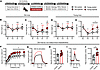 Figure 1
Muscle functional recovery from disuse. (A) Summary of experimental design. (B–E) Body weight and grip strength (n = 6–20) at baseline (BL), following hind limb unloading (HU), and 4 and 7 days of recovery from HU in old and young mice. (F and G) Ex vivo soleus specific force frequency (mN/mm2) from 10 to 200 Hz (n = 4–5) and representative absolute force tracing (mN) at 200 Hz stimulation from old mice. (H and I) Soleus-specific twitch at optimal length and representative peak twitch tracing. (J) Soleus average rate of relaxation (mN/s) between 20% and 80% of force frequency analysis. In B–F, data points represent mean of individual mice; in H and J, each data point represents an individual mouse. Data presented as mean ± SD. *P < 0.05 for difference from BL or between groups; an asterisk (*) over a solid line in B–E indicates a difference at or between those time points. Red color indicates hypoxia exposure, white color indicates control. #P < 0.05 for difference from HU. Significance assessed by mixed effects ANOVA (B and C), 2-way ANOVA with Holm-Bonferroni test (D–F), or 2-tailed t test (H and J).
To further explore the enhanced whole-body recovery of strength in old mice, we isolated soleus muscles at 7 days recovery following HU and evaluated ex vivo force production characteristics. Notably, old hypoxia-treated mice displayed greater soleus-specific force generation across a range of frequencies (100–200 Hz) compared with old controls (Figure 1F), with clear separation in representative force tracing at 200 Hz stimulation (Figure 1G). Conversely, maximal twitch force obtained at optimal length was not different between groups (Figure 1, H and I), yet the soleus from old hypoxia-treated mice had greater rates of relaxation compared with age-matched controls (Figure 1J).
Muscle cellular dynamics are improved in hypoxia-treated mice. To gain greater understanding of the muscular effects of hypoxic treatment during the recovery from disuse, we examined skeletal muscle interstitial cellular dynamics critical for muscle growth and recovery. Old mice treated with hypoxia displayed greater gastrocnemius satellite cell content at 4 days of recovery compared with old controls (Figure 2A). Similarly, young hypoxia-treated (versus young control mice) had higher satellite cell content at 4 days of recovery (Figure 2B). Of note, while satellite cell content was lower in old compared with young mice at baseline, old hypoxia-treated mice had greater satellite cell content compared with young mice at 4 days of recovery (Supplemental Table 2). Flow cytometry of gastrocnemius muscle at 4 days of recovery corroborated the satellite cell immunofluorescence data, demonstrating a greater proportion of satellite cells (α7+ cells) compared with old controls and further revealed that old hypoxia-treated mice had a heightened content of proinflammatory-like macrophages (F4/80+CD206– cells) (Figure 2C).
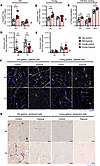 Figure 2
Muscle cellular dynamics. (A and B) Gastrocnemius satellite cells (Pax7+DAPI+) per muscle fiber in old and young mice at baseline (BL), and 4 days (4d) and 7d of recovery from hind limb unloading (n = 5). (C) Gastrocnemius flow cytometry analysis of satellite cells (SCs: CD31–CD45–α7-integrin+), fibro/adipogenic progenitor cells (FAPs: CD31–CD45–Scal1+), and proinflammatory-like macrophages (MAC: CD31–CD45+F4/80+CD206–) from old mice at 4d (n = 4–5). (D and E) SA β-Gal+ cells per gastrocnemius area in old and young mice (n = 5). (F and G) Satellite (Pax7: pink, DAPI: blue, laminin: gray) and senescent cell (SA β-Gal: blue) representative images at 4d and 7d for old and young mice, with arrows indicating satellite cells. Original magnification, ×20 (F) and ×10 (G). Scale bars: 50 μm (F and G). Each data point represents an individual mouse, presented as mean ± SD. *P < 0.05, **P < 0.01 for difference from BL; asterisks over a solid line indicate a difference at those time points. Red color indicates hypoxia exposure, white color indicates control. Significance assessed by 2-way ANOVA with Holm-Bonferroni test. (A–D) or 2-tailed t test (E).
We additionally examined the abundance of senescence-associated β-galactosidase–positive (SA β-Gal+) cells given that senescent cells accumulate in aging following muscle injury (21). As a result, we found that old hypoxia-treated mice had fewer SA β-Gal+ than aged-matched controls at 4 and 7 days of recovery from disuse (Figure 2D). Hypoxia treatment in young mice did not alter the content of SA β-Gal+ cells at 7 days of recovery compared to young controls (Figure 2E). Importantly, old hypoxia-treated mice had a similar number of senescent cells during muscle recovery compared with young mice, suggesting a return to youthful levels (Supplemental Table 2). Representative SA B-Gal+ satellite cell images are shown in Figure 2, F and G.
In regard to myofiber size, there were no differences in total gastrocnemius myofibrillar CSA (fCSA) at 4 and 7 days of recovery between control and hypoxia-treated aged mice (Supplemental Figure 1, E and F). However, when assessed by fiber type frequency, old hypoxia-treated mice had a moderately greater size at 4 and 7 days for type I and IIb fibers (Supplemental Figure 1, G–L). In young hypoxia-treated mice, there was enhanced recovery of type IIb fibers at 4 days of recovery, while 7-day recovery distributions were similar compared to baseline (Supplemental Figure 1, M–R). In total, these results show that hypoxia treatment following disuse atrophy enhanced muscle cellular dynamics at recovery in old and young mice.
Acute hypoxia promotes robust collagen remodeling during early muscle regrowth. As proinflammatory macrophages and satellite cells influence muscle ECM remodeling (18, 22), we next examined changes in muscle collagen content. At 4 and 7 days of recovery following HU, old hypoxia-treated mice had lower levels of collagen type I (COL-I) expression in gastrocnemius muscle compared with old control mice (Figure 3A). Alternatively, at 4 and 7 days of recovery the gastrocnemius expression of collagen hybridizing peptide (B-CHP; marker of collagen breakdown) in old hypoxia-treated mice was elevated compared with baseline and old control mice (Figure 3B). As a result, we calculated the ratio of collagen turnover (B-CHP/COL-I), which suggested an increased collagen turnover ratio in old hypoxia-treated mice compared with baseline and old control mice (Figure 3C). To further demonstrate that muscle collagen content was impacted by acute hypoxia treatment, we performed Sirius red staining on histological sections and a total collagen/hydroxyproline assay in gastrocnemius lysates. In both approaches, old hypoxia-treated mice had reduced collagen content during the recovery from HU compared with control mice (Figure 3, D and E). Similarly, hypoxia treatment in young mice had lower levels of COL-I at 4 and 7 days of recovery and increased B-CHP expression at 7 days of recovery compared with young controls (Figure 3, F and G). Accordingly, collagen turnover was increased in young hypoxia-treated mice at 4 and 7 days of recovery, while Sirius red content was decreased at 7 days of recovery (Figure 3, H and I). Despite greater baseline collagen content in old versus young mice, old hypoxia-treated mice had similar collagen content (COL-I, Sirius red) at 4 and 7 days of recovery compared with young control mice (Supplemental Table 3). Representative COL-I, B-CHP, and Sirius red images are shown in Figure 3, J and K.
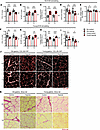 Figure 3
Muscle collagen remodeling. (A–D) Gastrocnemius type I collagen (COL-I), collagen hybridizing peptide (B-CHP), COL-I/B-CHP ratio, and Sirius red expression at baseline (BL) and at 4 days (4d) and 7d of recovery from hindlimb unloading for old mice (n = 5). (E) Fold change from BL in total collagen assay content from gastrocnemius lysate at 4d and 7d in old mice (n = 5). (F–I) COL-I, B-CHP, COL-I/B-CHP, and Sirius red expression in young mice (n = 5). (J and K) COL-I/B-CHP (COL-I: red, B-CHP: white) and Sirius red representative images at 4d and 7d for old and young mice. Original magnification, ×20 (J) and ×10 (K). Scale bars: 25 μm (J and K). Each data point represents an individual mouse, presented as mean ± SD. Red color indicates hypoxia exposure, white color indicates control. *P < 0.05, **P < 0.01, ***P < 0.001 by 2-way ANOVA with Holm-Bonferroni test for difference from BL; asterisks over a solid line indicate a difference at those time points.
Finally, we conducted correlational analyses to determine whether changes in muscle cellular dynamics and collagen remodeling correspond to each other and functional muscle recovery. We found that at both 4 and 7 days of recovery there were moderate to strong associations between variables, including grip strength, fCSA, satellite and senescent cell content, and collagen levels (Supplemental Figure 2). Therefore, it appears that the hypoxia-stimulated changes to muscle cellular dynamics, collagen content, and functional recovery following acute hypoxic exposure in young and old mice are closely associated.
Hypoxia directly and indirectly influences cellular function in vitro. To better elucidate the specific effects whole-body hypoxia had on macrophages, satellite cells, and fibroblasts we utilized murine RAW 264.7 macrophages, C2C12, and NOR-10 cells to help elucidate this scenario in vitro. When stimulated with 1% O2 for 24 hours, macrophages had improved phagocytic capacity compared with unstimulated controls (Supplemental Figure 3A). Additionally, macrophages exposed to hypoxia displayed increased expression of HIF1A and IL-6 genes as well as HIF1A but decreased phosphorylated 4EBP1 proteins compared with controls (Supplemental Figure 3, C and D). Hypoxia-treated macrophages were also enriched with relevant proinflammatory metabolites, including succinate, while resolving factors like oleic acid were reduced (Supplemental Figure 3F). Finally, the conditioned media generated from these hypoxia-treated macrophages were also enriched with metabolites that could elicit secondary effects in the local cellular environment (Supplemental Figure 3G).
Conversely, myoblasts and myotubes exposed to hypoxia did not exhibit changes to proliferation or differentiation, respectively, compared to controls (Supplemental Figure 4, A–D). Similarly, few metabolites were differentially enriched in C2C12s treated with hypoxia (Supplemental Figure 4E). To determine whether hypoxia may have secondary effects on satellite cells through macrophages, we treated murine C2C12 cells with the 48-hour culture media from hypoxia-treated and control RAW 264.7 macrophages. Treatment with hypoxic macrophage–conditioned media enhanced the basal proliferation, differentiation, and wound healing capacity compared with control conditioned media (Supplemental Figure 4, A–G). These in vitro experiments agree with previous literature suggesting that severe hypoxia does not directly stimulate proliferation (23) or differentiation of myogenic cells (24). While the proliferation of NOR-10 cells was unaffected by hypoxia treatment, their lipid droplet content was reduced and several metabolites were significantly enriched (Supplemental Figure 4, H–L). Hypoxic macrophage–conditioned media did not influence NOR-10 proliferation but mitigated the accumulation of lipids that control conditioned media appeared to promote (Supplemental Figure 4, H–K). Therefore, our results suggest that macrophages, and to a lesser extent fibroblasts, but not myogenic cells, are functionally and metabolically affected by direct hypoxia in vitro. While we cannot fully recapitulate the effects of hypoxia in vivo (25, 26), our results and others (27) support that macrophages can be targeted with hypoxia and promote secondary effects in muscle cells and fibroblasts.
The global Raman molecular signature of muscle recovery in aged hypoxia-treated mice recapitulates a young muscle phenotype. In order to characterize the molecular landscape and biochemical recovery pattern of muscle regrowth, we employed Raman spectroscopy analysis. Raman spectroscopy is a label-free technique that captures the vibrational spectrum of chemical bonds, thus providing a molecular fingerprint that can be used to characterize the biochemical composition of complex biological tissues (28, 29). Furthermore, secondary machine learning analysis (30) of Raman spectral readouts can provide unique insights, considering molecular relationships that have emerging clinical relevance (28, 29). As an example, Raman analysis can provide robust compositional information, considering the molecular signature of various tissue pathologies (31–33). Therefore, we examined the average Raman spectra between 600 and 1800 cm–1 and noticed a distinct molecular phenotype that was substantially different between young and aged mice at 4 and 7 days of recovery (Figure 4, A–C). Notably, the molecular signature of old hypoxia-treated mice had remarkable similarity to that of young controls during the recovery from disuse. Specifically, old hypoxia-treated mice displayed distinct changes in Raman regions corresponding to nucleic acids (1340 cm–1), lipids (1450 cm–1), and proteins (1660 cm–1). To further visualize the dimensions of Raman spectral distributions, UMAPs were created to cluster data by group and time. The spectral distributions from old hypoxia-treated mice clustered closely with those of young control mice, while old control mice were quite distinct from either group (Figure 4D). Further examination of the spectra from old hypoxia-treated and young mice at 4 and 7 days of recovery without baseline data demonstrated residual separation between groups despite their overall convergence (Figure 4E). Therefore, we have characterized a Raman molecular phenotype in aged muscle during the recovery from disuse atrophy that can be rejuvenated with hypoxia treatment.
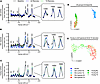 Figure 4
Global Raman molecular signature. (A–C) Raman spectral signature from 600–1800 cm–1 and isolated peaks (AU) at ~1340 cm–1, ~1450 cm–1, and ~1660 cm–1 at baseline (BL), and at 4 days (4d) and 7d of recovery from hind limb unloading for old control, old hypoxia-treated, and young control mice (n = 3). (D) UMAPs of average Raman spectral distributions at BL, 4d, and 7d of recovery for all mice (E) and young and old hypoxia-treated mice at 4d and 7d. Spectral signatures represent average of 30 individual measurements for each sample.
Raman biochemical relationships correspond to tissue and functional outcomes. In order to provide biochemical and physiological relevance to the Raman signatures, we examined the ratio of specific spectra within key regions related to cellular health (31) as well as tissue fibrosis and collagen integrity (32, 33). Interestingly, the muscles of old hypoxia-treated mice had altered ratios of common biochemical constituents, including nucleic acid/protein (~1450/1660 cm–1), lipid/protein (~1340/1660 cm–1), and nucleic acid/lipid (~1340/1450 cm–1) compared with old controls at recovery and baseline time points (Figure 5, A–C). Furthermore, old hypoxia-treated mice had lower fibrosis associated relationships (~1608/1662 cm–1) at 4 and 7 days of recovery from disuse compared with old control mice (Figure 5D). Likewise, relationships associated with collagen denaturation (~1270/1245 cm–1) and organization (~1320/1454 cm–1) displayed altered responses in old hypoxia-treated compared with old baseline and control mice (Figure 5, E and F). Notably, the ratios of old hypoxia-treated mice were similar to those of young mice across each metric (Figure 5, G–L). In agreement, correlation analysis supported that the Raman ratios associated with histological and functional outcomes with clear grouping of young control and old hypoxia-treated mice. At 4 days of recovery, lipid/protein and nucleic acid/lipid ratio were negatively and positively associated with grip strength recovery, respectively (Figure 5, M and N). Additionally, Raman tissue fibrosis was positively associated with type I collagen, and collagen denaturation negatively associated with Sirius red at 4 days of recovery (Figure 5, O and P). Similar directionality and strength of relationships were found at 7 days of recovery (Figure 5, Q–T). These data further corroborate hypoxia-mediated rejuvenation of the aging muscle phenotype during early regrowth and demonstrate strong relationships between biochemical spectral relationships and structural and functional recovery outcomes.
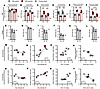 Figure 5
Raman biochemical relationships. (A–F) Raman spectral ratios for nucleic acid/protein (~1450/1660 cm–1), lipid/protein (~1340/1660 cm–1), nucleic acid/lipid (~1340/1450 cm–1), tissue fibrosis (~1608/1662 cm–1), collagen denaturation (~1270/1245 cm–1), and structured collagen (~1320/1454 cm–1) for old mice at baseline (BL), and at 4 days (4d) and 7d of recovery from hindlimb unloading (n = 3). (G–L) Raman spectral ratios for young mice (n = 3). Correlations between lipid/protein ratio and grip strength, nucleic acid/lipid ratio and grip strength, tissue fibrosis ratio and type I collagen, and collagen denaturation ratio and Sirius red for young and old mice at 4d (M–P) and 7d (Q–T) of recovery. Spectral signatures derived from average of 30 individual measurements for each sample; each data point represents spectral average or reading from an individual mouse, presented as mean ± SD. Red color indicates hypoxia exposure, white color indicates control. *P < 0.05, **P < 0.01, ***P < 0.001 by 2-way ANOVA with Holm-Bonferroni test for difference from BL (A–L); asterisks over a line in A–F indicate a difference between groups at that time point. Significance in M–T was assessed using Pearson’s correlation.
Proinflammatory metabolic rewiring in aged macrophages from hypoxia-treated mice. As infiltrating proinflammatory macrophages play a key role in muscle cellular dynamics and remodeling (13, 15), we isolated bone marrow–derived macrophages (BMDMs) from old hypoxia-treated mice and age-matched controls at 4 days of recovery (Figure 6A). Of interest, we found that hypoxia-treated aged mice had a greater capacity for phagocytosis than old controls and that this functional response approached young phagocytic capacity levels (Figure 6, B and C). We then utilized targeted metabolomics to examine changes in metabolite accumulation and pathway responses in these cells. In Figure 6D, we show that BMDMs from hypoxia-treated mice collected at 4 days of recovery had greater levels inflammation-related metabolites and were distinct from old control BMDMs with increased levels of key glycolytic and TCA metabolites, including lactate, itaconate, and succinate (Figure 6, E and F). Additionally, enrichment analysis supported the idea that BMDMs from hypoxia-treated mice had greater stimulation of glycolytic, citric acid cycle, and Warburg effect pathways compared with old controls (Figure 6G).
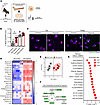 Figure 6
Macrophage function and metabolism. (A) Summary of experimental design. (B and C) Phagocytic capacity of BMDMs from old and young mice isolated at 4 days (4d) of recovery from hind limb unloading (n = 6) and representative image (cell: purple, beads: green, DAPI: blue). Original magnification, ×20. Scale bars: 20 μm. Each data point in B represents cells from an individual mouse, presented as mean ± SD. **P < 0.01 by 1-way ANOVA with Dunnett’s test for difference from young control; #P < 0.05 for difference from young hypoxia. Red color indicates hypoxia exposure, white color indicates control. Asterisks over a line in B indicate a difference between groups at that time point. (D–G) Metabolomics analysis of old BMDMs isolated at 4d of recovery (n = 4–6), including metabolite content, PCA distribution, summary of increased glycolytic/TCA-related metabolites, and key enriched metabolic pathways (KEGG and SMBPD). (D and E) Heatmap and PCA clustering (log2[fold change]). (F) Significantly increased metabolites (log2[fold change] ≥ 1.5, Padj ≤ 0.05). (G) Significant pathway enrichment (normalized enrichment score ≥ 2, P ≤ 1.3 log2). P < 0.05 or P ≤ 1.3 log2 was considered significant.
The intramuscular delivery of hypoxia-treated macrophages enhances functional muscle recovery in aged mice. To support the notion that macrophages may be directly targeted by whole-body hypoxia in aged mice, we isolated BMDMs from old baseline mouse donors and then exposed these cells to acute in vitro hypoxia (Figure 7A). BMDMs were functionally responsive to hypoxia, as indicated by greater phagocytosis compared with untreated controls (Figure 7, B and C) as well as enhanced glycolytic, TCA, and inflammatory gene expression profiles (Figure 7D). BMDMs were then transferred via intramuscular injection to the triceps surae (gastrocnemius) group to aged control donor mice immediately following the HU period. The intramuscular delivery of hypoxia-stimulated BMDMs immediately following HU had no effect on body mass but improved grip strength recovery in old mice (vs. unstimulated BMDM mice; Figure 7, E and F) such that by 7 days of recovery, mice treated with hypoxia-stimulated BMDMs were not different from baseline. Furthermore, at 7 days of recovery, the specific force of isolated soleus muscles across a range of stimulated frequencies (60–200 Hz) as well as peak twitch at optimal length and their isolated force tracings were greater in aged mice delivered hypoxia-treated BMDMs compared with control nonstimulated-BMDM-treated mice (Figure 7, G–J). Finally, at the whole-muscle histological level at 7 days of recovery, old mice delivered hypoxia-treated BMDMs had greater gastrocnemius fCSA (Figure 7, K and L) and decreased collagen deposition (Figure 7, M and N).
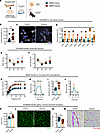 Figure 7
Adoptive transfer of hypoxia-treated macrophages. (A) Summary of experimental design. (B–D) Phagocytic capacity (n = 10) and gene expression profile (n = 6) of replicate BMDMs isolated from old mice at baseline (BL) with or without ex vitro hypoxia treatment (cell: white, beads: green, DAPI: blue). Original magnification, ×20. Scale bar: 50 μm. (E and F) Body weight and grip strength (n = 5) at BL, following hind limb unloading (HU), and at 4 days (4d) and 7d of recovery from HU in old mice treated with control or hypoxia-stimulated BMDMs. (G and H) Ex vivo soleus-specific force frequency (Nm/mm2) from 10 to 200 Hz (n = 4) and representative absolute force tracing (mN) at 200 Hz stimulation. (I and J) Soleus-specific twitch at optimal length and representative peak twitch tracing. (K–N) Gastrocnemius fCSA (wheat germ agglutinin [WGA]: green) and Sirius red at 7d of recovery. Original magnification, ×10 (L) and ×20 (N). Scale bars: 25 μm (L and N). Each data point represents an individual replicate or mouse, presented as mean ± SD. Orange color indicates hypoxia-treated macrophage injection, teal color indicates control. *P < 0.05 for difference from BL; #P < 0.05 for difference from HU. An asterisks over a line in F indicates a difference between groups at that time point. Significance was assessed by 2-tailed t test (B, D, I, K, and M) or 2-way ANOVA with Holm-Bonferroni test (E–G).


