
Research ArticleGastroenterologyInflammation
Open Access |  10.1172/jci.insight.190894
UHRF1 deficiency exacerbates intestinal inflammation by epigenetic modulation of NPY1R gene methylation
Yanan Han,1,2 Lina Sun,1 Yanxing Liu,2 Xiaohui Zhang,3 Hao Liu,2 Haohao Zhang,2 Xiaoxia Ren,1 Fenfan Wang,1 Huafeng Fan,1 Jie Chen,2 Dan Liu,2 Daiming Fan,2 Yuanyuan Lu,2 Xue Bai,2 Ying Fang,1 Kaichun Wu,2 and Xiaodi Zhao2
1The Affiliated Children’s Hospital of Xi’an Jiaotong University, Xi’an, Shaanxi, China.
2State Key Laboratory of Holistic Integrative Management of Gastrointestinal Cancers, Xijing Hospital, Fourth Military Medical University, Xi’an, Shaanxi, China.
3Department of Gastroenterology, Tangdu Hospital, Fourth Military Medical University, Xi’an, Shaanxi, China.
Address correspondence to: Xiaodi Zhao, State Key Laboratory of Holistic Integrative Management of Gastrointestinal Cancers, Xijing Hospital, Fourth Military Medical University, No. 127 Changle West Road, Xi’an 710032, Shaanxi, China. Phone: 86.29.8477.1522; Email: leedyzhao@fmmu.edu.cn. Or to: Kaichun Wu, State Key Laboratory of Holistic Integrative Management of Gastrointestinal Cancers, Xijing Hospital, Fourth Military Medical University, No. 127 Changle West Road, Xi’an 710032, Shaanxi, China. Phone: 86.29.8477.1502; Email: kaicwu@fmmu.edu.cn. Or to:Ying Fang, The Affiliated Children’s Hospital of Xi’an Jiaotong University, No. 69 Xijuyuan Lane, Xi’an 710003, Shaanxi, China. Phone: 86.29.8769.2103; Email: 970910576@qq.com. Or to: Xue Bai, State Key Laboratory of Holistic Integrative Management of Gastrointestinal Cancers, Xijing Hospital, Fourth Military Medical University, No. 127 Changle West Road, Xi’an 710032, Shaanxi, China. Phone: 86.29.8477.1522; Email: 773076672@qq.com.
Authorship note: YH, LS, Y Liu, and X Zhang contributed equally to this work.
Find articles by Han, Y. in: PubMed | Google Scholar
1The Affiliated Children’s Hospital of Xi’an Jiaotong University, Xi’an, Shaanxi, China.
2State Key Laboratory of Holistic Integrative Management of Gastrointestinal Cancers, Xijing Hospital, Fourth Military Medical University, Xi’an, Shaanxi, China.
3Department of Gastroenterology, Tangdu Hospital, Fourth Military Medical University, Xi’an, Shaanxi, China.
Address correspondence to: Xiaodi Zhao, State Key Laboratory of Holistic Integrative Management of Gastrointestinal Cancers, Xijing Hospital, Fourth Military Medical University, No. 127 Changle West Road, Xi’an 710032, Shaanxi, China. Phone: 86.29.8477.1522; Email: leedyzhao@fmmu.edu.cn. Or to: Kaichun Wu, State Key Laboratory of Holistic Integrative Management of Gastrointestinal Cancers, Xijing Hospital, Fourth Military Medical University, No. 127 Changle West Road, Xi’an 710032, Shaanxi, China. Phone: 86.29.8477.1502; Email: kaicwu@fmmu.edu.cn. Or to:Ying Fang, The Affiliated Children’s Hospital of Xi’an Jiaotong University, No. 69 Xijuyuan Lane, Xi’an 710003, Shaanxi, China. Phone: 86.29.8769.2103; Email: 970910576@qq.com. Or to: Xue Bai, State Key Laboratory of Holistic Integrative Management of Gastrointestinal Cancers, Xijing Hospital, Fourth Military Medical University, No. 127 Changle West Road, Xi’an 710032, Shaanxi, China. Phone: 86.29.8477.1522; Email: 773076672@qq.com.
Authorship note: YH, LS, Y Liu, and X Zhang contributed equally to this work.
Find articles by Sun, L. in: PubMed | Google Scholar
1The Affiliated Children’s Hospital of Xi’an Jiaotong University, Xi’an, Shaanxi, China.
2State Key Laboratory of Holistic Integrative Management of Gastrointestinal Cancers, Xijing Hospital, Fourth Military Medical University, Xi’an, Shaanxi, China.
3Department of Gastroenterology, Tangdu Hospital, Fourth Military Medical University, Xi’an, Shaanxi, China.
Address correspondence to: Xiaodi Zhao, State Key Laboratory of Holistic Integrative Management of Gastrointestinal Cancers, Xijing Hospital, Fourth Military Medical University, No. 127 Changle West Road, Xi’an 710032, Shaanxi, China. Phone: 86.29.8477.1522; Email: leedyzhao@fmmu.edu.cn. Or to: Kaichun Wu, State Key Laboratory of Holistic Integrative Management of Gastrointestinal Cancers, Xijing Hospital, Fourth Military Medical University, No. 127 Changle West Road, Xi’an 710032, Shaanxi, China. Phone: 86.29.8477.1502; Email: kaicwu@fmmu.edu.cn. Or to:Ying Fang, The Affiliated Children’s Hospital of Xi’an Jiaotong University, No. 69 Xijuyuan Lane, Xi’an 710003, Shaanxi, China. Phone: 86.29.8769.2103; Email: 970910576@qq.com. Or to: Xue Bai, State Key Laboratory of Holistic Integrative Management of Gastrointestinal Cancers, Xijing Hospital, Fourth Military Medical University, No. 127 Changle West Road, Xi’an 710032, Shaanxi, China. Phone: 86.29.8477.1522; Email: 773076672@qq.com.
Authorship note: YH, LS, Y Liu, and X Zhang contributed equally to this work.
Find articles by Liu, Y. in: PubMed | Google Scholar
1The Affiliated Children’s Hospital of Xi’an Jiaotong University, Xi’an, Shaanxi, China.
2State Key Laboratory of Holistic Integrative Management of Gastrointestinal Cancers, Xijing Hospital, Fourth Military Medical University, Xi’an, Shaanxi, China.
3Department of Gastroenterology, Tangdu Hospital, Fourth Military Medical University, Xi’an, Shaanxi, China.
Address correspondence to: Xiaodi Zhao, State Key Laboratory of Holistic Integrative Management of Gastrointestinal Cancers, Xijing Hospital, Fourth Military Medical University, No. 127 Changle West Road, Xi’an 710032, Shaanxi, China. Phone: 86.29.8477.1522; Email: leedyzhao@fmmu.edu.cn. Or to: Kaichun Wu, State Key Laboratory of Holistic Integrative Management of Gastrointestinal Cancers, Xijing Hospital, Fourth Military Medical University, No. 127 Changle West Road, Xi’an 710032, Shaanxi, China. Phone: 86.29.8477.1502; Email: kaicwu@fmmu.edu.cn. Or to:Ying Fang, The Affiliated Children’s Hospital of Xi’an Jiaotong University, No. 69 Xijuyuan Lane, Xi’an 710003, Shaanxi, China. Phone: 86.29.8769.2103; Email: 970910576@qq.com. Or to: Xue Bai, State Key Laboratory of Holistic Integrative Management of Gastrointestinal Cancers, Xijing Hospital, Fourth Military Medical University, No. 127 Changle West Road, Xi’an 710032, Shaanxi, China. Phone: 86.29.8477.1522; Email: 773076672@qq.com.
Authorship note: YH, LS, Y Liu, and X Zhang contributed equally to this work.
Find articles by Zhang, X. in: PubMed | Google Scholar
1The Affiliated Children’s Hospital of Xi’an Jiaotong University, Xi’an, Shaanxi, China.
2State Key Laboratory of Holistic Integrative Management of Gastrointestinal Cancers, Xijing Hospital, Fourth Military Medical University, Xi’an, Shaanxi, China.
3Department of Gastroenterology, Tangdu Hospital, Fourth Military Medical University, Xi’an, Shaanxi, China.
Address correspondence to: Xiaodi Zhao, State Key Laboratory of Holistic Integrative Management of Gastrointestinal Cancers, Xijing Hospital, Fourth Military Medical University, No. 127 Changle West Road, Xi’an 710032, Shaanxi, China. Phone: 86.29.8477.1522; Email: leedyzhao@fmmu.edu.cn. Or to: Kaichun Wu, State Key Laboratory of Holistic Integrative Management of Gastrointestinal Cancers, Xijing Hospital, Fourth Military Medical University, No. 127 Changle West Road, Xi’an 710032, Shaanxi, China. Phone: 86.29.8477.1502; Email: kaicwu@fmmu.edu.cn. Or to:Ying Fang, The Affiliated Children’s Hospital of Xi’an Jiaotong University, No. 69 Xijuyuan Lane, Xi’an 710003, Shaanxi, China. Phone: 86.29.8769.2103; Email: 970910576@qq.com. Or to: Xue Bai, State Key Laboratory of Holistic Integrative Management of Gastrointestinal Cancers, Xijing Hospital, Fourth Military Medical University, No. 127 Changle West Road, Xi’an 710032, Shaanxi, China. Phone: 86.29.8477.1522; Email: 773076672@qq.com.
Authorship note: YH, LS, Y Liu, and X Zhang contributed equally to this work.
Find articles by Liu, H. in: PubMed | Google Scholar
1The Affiliated Children’s Hospital of Xi’an Jiaotong University, Xi’an, Shaanxi, China.
2State Key Laboratory of Holistic Integrative Management of Gastrointestinal Cancers, Xijing Hospital, Fourth Military Medical University, Xi’an, Shaanxi, China.
3Department of Gastroenterology, Tangdu Hospital, Fourth Military Medical University, Xi’an, Shaanxi, China.
Address correspondence to: Xiaodi Zhao, State Key Laboratory of Holistic Integrative Management of Gastrointestinal Cancers, Xijing Hospital, Fourth Military Medical University, No. 127 Changle West Road, Xi’an 710032, Shaanxi, China. Phone: 86.29.8477.1522; Email: leedyzhao@fmmu.edu.cn. Or to: Kaichun Wu, State Key Laboratory of Holistic Integrative Management of Gastrointestinal Cancers, Xijing Hospital, Fourth Military Medical University, No. 127 Changle West Road, Xi’an 710032, Shaanxi, China. Phone: 86.29.8477.1502; Email: kaicwu@fmmu.edu.cn. Or to:Ying Fang, The Affiliated Children’s Hospital of Xi’an Jiaotong University, No. 69 Xijuyuan Lane, Xi’an 710003, Shaanxi, China. Phone: 86.29.8769.2103; Email: 970910576@qq.com. Or to: Xue Bai, State Key Laboratory of Holistic Integrative Management of Gastrointestinal Cancers, Xijing Hospital, Fourth Military Medical University, No. 127 Changle West Road, Xi’an 710032, Shaanxi, China. Phone: 86.29.8477.1522; Email: 773076672@qq.com.
Authorship note: YH, LS, Y Liu, and X Zhang contributed equally to this work.
Find articles by Zhang, H. in: PubMed | Google Scholar
1The Affiliated Children’s Hospital of Xi’an Jiaotong University, Xi’an, Shaanxi, China.
2State Key Laboratory of Holistic Integrative Management of Gastrointestinal Cancers, Xijing Hospital, Fourth Military Medical University, Xi’an, Shaanxi, China.
3Department of Gastroenterology, Tangdu Hospital, Fourth Military Medical University, Xi’an, Shaanxi, China.
Address correspondence to: Xiaodi Zhao, State Key Laboratory of Holistic Integrative Management of Gastrointestinal Cancers, Xijing Hospital, Fourth Military Medical University, No. 127 Changle West Road, Xi’an 710032, Shaanxi, China. Phone: 86.29.8477.1522; Email: leedyzhao@fmmu.edu.cn. Or to: Kaichun Wu, State Key Laboratory of Holistic Integrative Management of Gastrointestinal Cancers, Xijing Hospital, Fourth Military Medical University, No. 127 Changle West Road, Xi’an 710032, Shaanxi, China. Phone: 86.29.8477.1502; Email: kaicwu@fmmu.edu.cn. Or to:Ying Fang, The Affiliated Children’s Hospital of Xi’an Jiaotong University, No. 69 Xijuyuan Lane, Xi’an 710003, Shaanxi, China. Phone: 86.29.8769.2103; Email: 970910576@qq.com. Or to: Xue Bai, State Key Laboratory of Holistic Integrative Management of Gastrointestinal Cancers, Xijing Hospital, Fourth Military Medical University, No. 127 Changle West Road, Xi’an 710032, Shaanxi, China. Phone: 86.29.8477.1522; Email: 773076672@qq.com.
Authorship note: YH, LS, Y Liu, and X Zhang contributed equally to this work.
Find articles by Ren, X. in: PubMed | Google Scholar
1The Affiliated Children’s Hospital of Xi’an Jiaotong University, Xi’an, Shaanxi, China.
2State Key Laboratory of Holistic Integrative Management of Gastrointestinal Cancers, Xijing Hospital, Fourth Military Medical University, Xi’an, Shaanxi, China.
3Department of Gastroenterology, Tangdu Hospital, Fourth Military Medical University, Xi’an, Shaanxi, China.
Address correspondence to: Xiaodi Zhao, State Key Laboratory of Holistic Integrative Management of Gastrointestinal Cancers, Xijing Hospital, Fourth Military Medical University, No. 127 Changle West Road, Xi’an 710032, Shaanxi, China. Phone: 86.29.8477.1522; Email: leedyzhao@fmmu.edu.cn. Or to: Kaichun Wu, State Key Laboratory of Holistic Integrative Management of Gastrointestinal Cancers, Xijing Hospital, Fourth Military Medical University, No. 127 Changle West Road, Xi’an 710032, Shaanxi, China. Phone: 86.29.8477.1502; Email: kaicwu@fmmu.edu.cn. Or to:Ying Fang, The Affiliated Children’s Hospital of Xi’an Jiaotong University, No. 69 Xijuyuan Lane, Xi’an 710003, Shaanxi, China. Phone: 86.29.8769.2103; Email: 970910576@qq.com. Or to: Xue Bai, State Key Laboratory of Holistic Integrative Management of Gastrointestinal Cancers, Xijing Hospital, Fourth Military Medical University, No. 127 Changle West Road, Xi’an 710032, Shaanxi, China. Phone: 86.29.8477.1522; Email: 773076672@qq.com.
Authorship note: YH, LS, Y Liu, and X Zhang contributed equally to this work.
Find articles by Wang, F. in: PubMed | Google Scholar
1The Affiliated Children’s Hospital of Xi’an Jiaotong University, Xi’an, Shaanxi, China.
2State Key Laboratory of Holistic Integrative Management of Gastrointestinal Cancers, Xijing Hospital, Fourth Military Medical University, Xi’an, Shaanxi, China.
3Department of Gastroenterology, Tangdu Hospital, Fourth Military Medical University, Xi’an, Shaanxi, China.
Address correspondence to: Xiaodi Zhao, State Key Laboratory of Holistic Integrative Management of Gastrointestinal Cancers, Xijing Hospital, Fourth Military Medical University, No. 127 Changle West Road, Xi’an 710032, Shaanxi, China. Phone: 86.29.8477.1522; Email: leedyzhao@fmmu.edu.cn. Or to: Kaichun Wu, State Key Laboratory of Holistic Integrative Management of Gastrointestinal Cancers, Xijing Hospital, Fourth Military Medical University, No. 127 Changle West Road, Xi’an 710032, Shaanxi, China. Phone: 86.29.8477.1502; Email: kaicwu@fmmu.edu.cn. Or to:Ying Fang, The Affiliated Children’s Hospital of Xi’an Jiaotong University, No. 69 Xijuyuan Lane, Xi’an 710003, Shaanxi, China. Phone: 86.29.8769.2103; Email: 970910576@qq.com. Or to: Xue Bai, State Key Laboratory of Holistic Integrative Management of Gastrointestinal Cancers, Xijing Hospital, Fourth Military Medical University, No. 127 Changle West Road, Xi’an 710032, Shaanxi, China. Phone: 86.29.8477.1522; Email: 773076672@qq.com.
Authorship note: YH, LS, Y Liu, and X Zhang contributed equally to this work.
Find articles by Fan, H. in: PubMed | Google Scholar
1The Affiliated Children’s Hospital of Xi’an Jiaotong University, Xi’an, Shaanxi, China.
2State Key Laboratory of Holistic Integrative Management of Gastrointestinal Cancers, Xijing Hospital, Fourth Military Medical University, Xi’an, Shaanxi, China.
3Department of Gastroenterology, Tangdu Hospital, Fourth Military Medical University, Xi’an, Shaanxi, China.
Address correspondence to: Xiaodi Zhao, State Key Laboratory of Holistic Integrative Management of Gastrointestinal Cancers, Xijing Hospital, Fourth Military Medical University, No. 127 Changle West Road, Xi’an 710032, Shaanxi, China. Phone: 86.29.8477.1522; Email: leedyzhao@fmmu.edu.cn. Or to: Kaichun Wu, State Key Laboratory of Holistic Integrative Management of Gastrointestinal Cancers, Xijing Hospital, Fourth Military Medical University, No. 127 Changle West Road, Xi’an 710032, Shaanxi, China. Phone: 86.29.8477.1502; Email: kaicwu@fmmu.edu.cn. Or to:Ying Fang, The Affiliated Children’s Hospital of Xi’an Jiaotong University, No. 69 Xijuyuan Lane, Xi’an 710003, Shaanxi, China. Phone: 86.29.8769.2103; Email: 970910576@qq.com. Or to: Xue Bai, State Key Laboratory of Holistic Integrative Management of Gastrointestinal Cancers, Xijing Hospital, Fourth Military Medical University, No. 127 Changle West Road, Xi’an 710032, Shaanxi, China. Phone: 86.29.8477.1522; Email: 773076672@qq.com.
Authorship note: YH, LS, Y Liu, and X Zhang contributed equally to this work.
Find articles by Chen, J. in: PubMed | Google Scholar
1The Affiliated Children’s Hospital of Xi’an Jiaotong University, Xi’an, Shaanxi, China.
2State Key Laboratory of Holistic Integrative Management of Gastrointestinal Cancers, Xijing Hospital, Fourth Military Medical University, Xi’an, Shaanxi, China.
3Department of Gastroenterology, Tangdu Hospital, Fourth Military Medical University, Xi’an, Shaanxi, China.
Address correspondence to: Xiaodi Zhao, State Key Laboratory of Holistic Integrative Management of Gastrointestinal Cancers, Xijing Hospital, Fourth Military Medical University, No. 127 Changle West Road, Xi’an 710032, Shaanxi, China. Phone: 86.29.8477.1522; Email: leedyzhao@fmmu.edu.cn. Or to: Kaichun Wu, State Key Laboratory of Holistic Integrative Management of Gastrointestinal Cancers, Xijing Hospital, Fourth Military Medical University, No. 127 Changle West Road, Xi’an 710032, Shaanxi, China. Phone: 86.29.8477.1502; Email: kaicwu@fmmu.edu.cn. Or to:Ying Fang, The Affiliated Children’s Hospital of Xi’an Jiaotong University, No. 69 Xijuyuan Lane, Xi’an 710003, Shaanxi, China. Phone: 86.29.8769.2103; Email: 970910576@qq.com. Or to: Xue Bai, State Key Laboratory of Holistic Integrative Management of Gastrointestinal Cancers, Xijing Hospital, Fourth Military Medical University, No. 127 Changle West Road, Xi’an 710032, Shaanxi, China. Phone: 86.29.8477.1522; Email: 773076672@qq.com.
Authorship note: YH, LS, Y Liu, and X Zhang contributed equally to this work.
Find articles by Liu, D. in: PubMed | Google Scholar
1The Affiliated Children’s Hospital of Xi’an Jiaotong University, Xi’an, Shaanxi, China.
2State Key Laboratory of Holistic Integrative Management of Gastrointestinal Cancers, Xijing Hospital, Fourth Military Medical University, Xi’an, Shaanxi, China.
3Department of Gastroenterology, Tangdu Hospital, Fourth Military Medical University, Xi’an, Shaanxi, China.
Address correspondence to: Xiaodi Zhao, State Key Laboratory of Holistic Integrative Management of Gastrointestinal Cancers, Xijing Hospital, Fourth Military Medical University, No. 127 Changle West Road, Xi’an 710032, Shaanxi, China. Phone: 86.29.8477.1522; Email: leedyzhao@fmmu.edu.cn. Or to: Kaichun Wu, State Key Laboratory of Holistic Integrative Management of Gastrointestinal Cancers, Xijing Hospital, Fourth Military Medical University, No. 127 Changle West Road, Xi’an 710032, Shaanxi, China. Phone: 86.29.8477.1502; Email: kaicwu@fmmu.edu.cn. Or to:Ying Fang, The Affiliated Children’s Hospital of Xi’an Jiaotong University, No. 69 Xijuyuan Lane, Xi’an 710003, Shaanxi, China. Phone: 86.29.8769.2103; Email: 970910576@qq.com. Or to: Xue Bai, State Key Laboratory of Holistic Integrative Management of Gastrointestinal Cancers, Xijing Hospital, Fourth Military Medical University, No. 127 Changle West Road, Xi’an 710032, Shaanxi, China. Phone: 86.29.8477.1522; Email: 773076672@qq.com.
Authorship note: YH, LS, Y Liu, and X Zhang contributed equally to this work.
Find articles by Fan, D. in: PubMed | Google Scholar
1The Affiliated Children’s Hospital of Xi’an Jiaotong University, Xi’an, Shaanxi, China.
2State Key Laboratory of Holistic Integrative Management of Gastrointestinal Cancers, Xijing Hospital, Fourth Military Medical University, Xi’an, Shaanxi, China.
3Department of Gastroenterology, Tangdu Hospital, Fourth Military Medical University, Xi’an, Shaanxi, China.
Address correspondence to: Xiaodi Zhao, State Key Laboratory of Holistic Integrative Management of Gastrointestinal Cancers, Xijing Hospital, Fourth Military Medical University, No. 127 Changle West Road, Xi’an 710032, Shaanxi, China. Phone: 86.29.8477.1522; Email: leedyzhao@fmmu.edu.cn. Or to: Kaichun Wu, State Key Laboratory of Holistic Integrative Management of Gastrointestinal Cancers, Xijing Hospital, Fourth Military Medical University, No. 127 Changle West Road, Xi’an 710032, Shaanxi, China. Phone: 86.29.8477.1502; Email: kaicwu@fmmu.edu.cn. Or to:Ying Fang, The Affiliated Children’s Hospital of Xi’an Jiaotong University, No. 69 Xijuyuan Lane, Xi’an 710003, Shaanxi, China. Phone: 86.29.8769.2103; Email: 970910576@qq.com. Or to: Xue Bai, State Key Laboratory of Holistic Integrative Management of Gastrointestinal Cancers, Xijing Hospital, Fourth Military Medical University, No. 127 Changle West Road, Xi’an 710032, Shaanxi, China. Phone: 86.29.8477.1522; Email: 773076672@qq.com.
Authorship note: YH, LS, Y Liu, and X Zhang contributed equally to this work.
Find articles by Lu, Y. in: PubMed | Google Scholar
1The Affiliated Children’s Hospital of Xi’an Jiaotong University, Xi’an, Shaanxi, China.
2State Key Laboratory of Holistic Integrative Management of Gastrointestinal Cancers, Xijing Hospital, Fourth Military Medical University, Xi’an, Shaanxi, China.
3Department of Gastroenterology, Tangdu Hospital, Fourth Military Medical University, Xi’an, Shaanxi, China.
Address correspondence to: Xiaodi Zhao, State Key Laboratory of Holistic Integrative Management of Gastrointestinal Cancers, Xijing Hospital, Fourth Military Medical University, No. 127 Changle West Road, Xi’an 710032, Shaanxi, China. Phone: 86.29.8477.1522; Email: leedyzhao@fmmu.edu.cn. Or to: Kaichun Wu, State Key Laboratory of Holistic Integrative Management of Gastrointestinal Cancers, Xijing Hospital, Fourth Military Medical University, No. 127 Changle West Road, Xi’an 710032, Shaanxi, China. Phone: 86.29.8477.1502; Email: kaicwu@fmmu.edu.cn. Or to:Ying Fang, The Affiliated Children’s Hospital of Xi’an Jiaotong University, No. 69 Xijuyuan Lane, Xi’an 710003, Shaanxi, China. Phone: 86.29.8769.2103; Email: 970910576@qq.com. Or to: Xue Bai, State Key Laboratory of Holistic Integrative Management of Gastrointestinal Cancers, Xijing Hospital, Fourth Military Medical University, No. 127 Changle West Road, Xi’an 710032, Shaanxi, China. Phone: 86.29.8477.1522; Email: 773076672@qq.com.
Authorship note: YH, LS, Y Liu, and X Zhang contributed equally to this work.
Find articles by Bai, X. in: PubMed | Google Scholar
1The Affiliated Children’s Hospital of Xi’an Jiaotong University, Xi’an, Shaanxi, China.
2State Key Laboratory of Holistic Integrative Management of Gastrointestinal Cancers, Xijing Hospital, Fourth Military Medical University, Xi’an, Shaanxi, China.
3Department of Gastroenterology, Tangdu Hospital, Fourth Military Medical University, Xi’an, Shaanxi, China.
Address correspondence to: Xiaodi Zhao, State Key Laboratory of Holistic Integrative Management of Gastrointestinal Cancers, Xijing Hospital, Fourth Military Medical University, No. 127 Changle West Road, Xi’an 710032, Shaanxi, China. Phone: 86.29.8477.1522; Email: leedyzhao@fmmu.edu.cn. Or to: Kaichun Wu, State Key Laboratory of Holistic Integrative Management of Gastrointestinal Cancers, Xijing Hospital, Fourth Military Medical University, No. 127 Changle West Road, Xi’an 710032, Shaanxi, China. Phone: 86.29.8477.1502; Email: kaicwu@fmmu.edu.cn. Or to:Ying Fang, The Affiliated Children’s Hospital of Xi’an Jiaotong University, No. 69 Xijuyuan Lane, Xi’an 710003, Shaanxi, China. Phone: 86.29.8769.2103; Email: 970910576@qq.com. Or to: Xue Bai, State Key Laboratory of Holistic Integrative Management of Gastrointestinal Cancers, Xijing Hospital, Fourth Military Medical University, No. 127 Changle West Road, Xi’an 710032, Shaanxi, China. Phone: 86.29.8477.1522; Email: 773076672@qq.com.
Authorship note: YH, LS, Y Liu, and X Zhang contributed equally to this work.
Find articles by Fang, Y. in: PubMed | Google Scholar
1The Affiliated Children’s Hospital of Xi’an Jiaotong University, Xi’an, Shaanxi, China.
2State Key Laboratory of Holistic Integrative Management of Gastrointestinal Cancers, Xijing Hospital, Fourth Military Medical University, Xi’an, Shaanxi, China.
3Department of Gastroenterology, Tangdu Hospital, Fourth Military Medical University, Xi’an, Shaanxi, China.
Address correspondence to: Xiaodi Zhao, State Key Laboratory of Holistic Integrative Management of Gastrointestinal Cancers, Xijing Hospital, Fourth Military Medical University, No. 127 Changle West Road, Xi’an 710032, Shaanxi, China. Phone: 86.29.8477.1522; Email: leedyzhao@fmmu.edu.cn. Or to: Kaichun Wu, State Key Laboratory of Holistic Integrative Management of Gastrointestinal Cancers, Xijing Hospital, Fourth Military Medical University, No. 127 Changle West Road, Xi’an 710032, Shaanxi, China. Phone: 86.29.8477.1502; Email: kaicwu@fmmu.edu.cn. Or to:Ying Fang, The Affiliated Children’s Hospital of Xi’an Jiaotong University, No. 69 Xijuyuan Lane, Xi’an 710003, Shaanxi, China. Phone: 86.29.8769.2103; Email: 970910576@qq.com. Or to: Xue Bai, State Key Laboratory of Holistic Integrative Management of Gastrointestinal Cancers, Xijing Hospital, Fourth Military Medical University, No. 127 Changle West Road, Xi’an 710032, Shaanxi, China. Phone: 86.29.8477.1522; Email: 773076672@qq.com.
Authorship note: YH, LS, Y Liu, and X Zhang contributed equally to this work.
Find articles by Wu, K. in: PubMed | Google Scholar
1The Affiliated Children’s Hospital of Xi’an Jiaotong University, Xi’an, Shaanxi, China.
2State Key Laboratory of Holistic Integrative Management of Gastrointestinal Cancers, Xijing Hospital, Fourth Military Medical University, Xi’an, Shaanxi, China.
3Department of Gastroenterology, Tangdu Hospital, Fourth Military Medical University, Xi’an, Shaanxi, China.
Address correspondence to: Xiaodi Zhao, State Key Laboratory of Holistic Integrative Management of Gastrointestinal Cancers, Xijing Hospital, Fourth Military Medical University, No. 127 Changle West Road, Xi’an 710032, Shaanxi, China. Phone: 86.29.8477.1522; Email: leedyzhao@fmmu.edu.cn. Or to: Kaichun Wu, State Key Laboratory of Holistic Integrative Management of Gastrointestinal Cancers, Xijing Hospital, Fourth Military Medical University, No. 127 Changle West Road, Xi’an 710032, Shaanxi, China. Phone: 86.29.8477.1502; Email: kaicwu@fmmu.edu.cn. Or to:Ying Fang, The Affiliated Children’s Hospital of Xi’an Jiaotong University, No. 69 Xijuyuan Lane, Xi’an 710003, Shaanxi, China. Phone: 86.29.8769.2103; Email: 970910576@qq.com. Or to: Xue Bai, State Key Laboratory of Holistic Integrative Management of Gastrointestinal Cancers, Xijing Hospital, Fourth Military Medical University, No. 127 Changle West Road, Xi’an 710032, Shaanxi, China. Phone: 86.29.8477.1522; Email: 773076672@qq.com.
Authorship note: YH, LS, Y Liu, and X Zhang contributed equally to this work.
Find articles by Zhao, X. in: PubMed | Google Scholar
Published February 9, 2026 - More info
JCI Insight. 2026;11(3):e190894. https://doi.org/10.1172/jci.insight.190894.
© 2026 Han et al. This work is licensed under the Creative Commons Attribution 4.0 International License. To view a copy of this license, visit http://creativecommons.org/licenses/by/4.0/.
Received: January 10, 2025; Accepted: December 9, 2025


-
Results
UHRF1 is downregulated in IECs under inflammatory conditions. To establish the clinical relevance of UHRF1 in IBD, we measured UHRF1 expression in patients with UC. Our analysis included paired inflamed and noninflamed mucosal samples from 15 patients with active UC, inflamed tissues from 10 independent patients with UC, and normal colonic tissues from 25 healthy donors (Supplemental Table 1; supplemental material available online with this article; https://doi.org/10.1172/jci.insight.190894DS1). IHC revealed strong nuclear UHRF1 expression in IECs of healthy donors and noninflamed UC mucosa, whereas a marked reduction was observed in inflamed UC tissues (Figure 1A and Supplemental Figure 1A). Ki-67 staining revealed no significant difference between inflamed and noninflamed tissues from patients with UC, suggesting that UHRF1 suppression is independent of proliferative status (Supplemental Figure 1B). Next, we assessed UHRF1 expression patterns across multiple mouse models of experimental intestinal inflammation. In the DSS-induced acute colitis model, characterized by colonic shortening and elevated inflammation scores (Supplemental Figure 1, C and D), IHC and Western blot analyses revealed a progressive time-dependent decrease in UHRF1 expression in colonic tissues on days 3 and 7 (Figure 1B and Supplemental Figure 1E). Consistently, in a model of adherent-invasive E. coli (AIEC) infection, UHRF1 expression was also significantly reduced compared with the control group (Figure 1C). Furthermore, to validate our observations in human contexts, we established in vitro inflammation models using the human IEC lines NCM460 and FHC. Stimulation with specific inflammatory mediators, including the microbial infection factor LPS, the chemical agent DSS, and the immunological inflammatory cytokine TNF-α, consistently suppressed UHRF1 expression in both NCM460 and FHC cells (Figure 1, D and E). Notably, this reduction in UHRF1 was also observed in serum-starved, cell cycle–arrested NCM460 cells (Supplemental Figure 1F), indicating that inflammatory stimuli suppress UHRF1 independently of cell cycle progression. These results establish that UHRF1 downregulation is a consistent response of IECs to inflammatory stress.
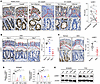 Figure 1
UHRF1 is downregulated in IECs under inflammatory conditions. (A) Representative staining images and quantification of UHRF1 in the indicated tissues from healthy donors and patients with UC. Scale bar: 50 μm. (B) Representative staining images and quantification of UHRF1 in colon tissues from mice treated with DSS and sacrificed at different time points (n = 5). Scale bar: 50 μm. (C) Representative staining images and quantification of UHRF1 in colon tissues from mice treated with AIEC or controls (n = 7). Scale bar: 50 μm. (D and E) mRNA (D) and protein (E) expression of UHRF1 in NCM460 and FHC cells treated with LPS, TNF-α, or DSS. P values were determined by 2-tailed Student’s t tests (A and C) or 1-way ANOVA (B and D). Data are shown as mean ± SD. *P < 0.05, **P < 0.01.
UHRF1 deficiency sensitize IECs to inflammatory damage. To investigate the functional role of UHRF1 in IECs, we established stable UHRF1-overexpression and knockdown models in NCM460 and FHC cell lines using lentiviral transduction (Supplemental Figure 2, A and B). Cell apoptosis assay and Cell Counting Kit 8 (CCK-8) assays revealed that UHRF1 knockdown suppressed proliferation in both NCM460 and FHC cells (Figure 2A). Notably, UHRF1 overexpression enhanced proliferation and rescued the DSS-induced impairment of cell growth in both cell lines (Figure 2B). Flow cytometry analysis revealed that UHRF1 knockdown promoted apoptosis compared with controls (Figure 2C and Supplemental Figure 2C). Conversely, UHRF1 overexpression not only reduced baseline apoptosis but also rescued DSS-induced apoptosis in both cell lines (Figure 2D and Supplemental Figure 2D). These results establish that UHRF1 enhances cell viability and suppresses apoptosis in IECs under inflammatory conditions in vitro.
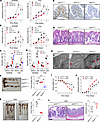 Figure 2
UHRF1 deficiency sensitize IECs to inflammatory damage. (A) Proliferation of NCM460 and FHC cells infected with shUHRF1 or shCtrl. (B) Proliferation of NCM460 and FHC cells infected with UHRF1-overexpressing (UHRF1) vector or empty control (Ctrl) vector and treated with or without DSS. (C) Apoptotic rates of NCM460 and FHC cells with shUHRF1 or shCtrl and treated with or without DSS.(D) Apoptotic rates of NCM460 and FHC cells with UHRF1 or Ctrl and treated with or without DSS. (E) Representative staining images of UHRF1 in colonic tissues from Uhrf1IEC(+/+), Uhrf1IEC(+/–) and Uhrf1IEC(–/–) mice. Scale bar: 100 μm. (F) Representative image and quantification of colon length from Uhrf1IEC(+/+), Uhrf1IEC(+/–) and Uhrf1IEC(–/–) mice (n = 4). (G) Representative H&E-stained colon tissues from Uhrf1IEC(+/+), Uhrf1IEC(+/–) and Uhrf1IEC(–/–) mice. Scale bar: 50 μm. (H) Representative images of IECs from Uhrf1IEC(+/+), Uhrf1IEC(+/–), and Uhrf1IEC(–/–) mice by transmission electron microscopy. Arrows indicate typical apoptotic ultrastructural characteristics present in apoptosis. Scale bar: 5 μm. (I and J) Body weight curve (I) and disease activity index (J) of Uhrf1IEC(+/+) and Uhrf1IEC(+/−) mice treated with DSS for 7 days (n = 5). (K) Colon length of Uhrf1IEC(+/+) and Uhrf1IEC(+/−) mice sacrificed at the end of DSS-induced colitis model (n = 5). (L) Representative H&E staining and histological score of colon tissues from Uhrf1IEC(+/+) and Uhrf1IEC(+/−) mice (n = 5). Scale bar: 100 μm. P values were determined by 2-way ANOVA (A, B, I, and J), 1-way ANOVA (C and F), or 2-tailed Student’s t tests (D, K, and L). Data are shown as mean ± SD. *P < 0.05, **P < 0.01.
To investigate the in vivo function of UHRF1, we generated IEC-specific Uhrf1-KO mice by crossing Uhrf1fl/fl mice with Villin-Cre mice (Supplemental Figure 2E). IHC analysis confirmed that UHRF1 expression was predominantly localized to the colonic epithelium, with reduced levels in Uhrf1IEC(+/−) mice and complete absence in Uhrf1IEC(−/−) mice (Figure 2E). Compared with WT littermates, Uhrf1IEC(+/−) mice exhibited moderate colonic shortening, whereas Uhrf1IEC(−/−) mice showed a more severe reduction in colon length (Figure 2F). Histological examination revealed that Uhrf1IEC(+/−) mice developed mild villus shortening and crypt distortion compared with WT mice, while Uhrf1IEC(−/−) mice exhibited more pronounced villus atrophy and disrupted crypt architecture (Figure 2G). Notably, IECs from both Uhrf1IEC(+/−) and Uhrf1IEC(−/−) mice exhibited pronounced nuclear fragmentation (Figure 2H), consistent with UHRF1 deficiency promoting cellular apoptosis. Due to early mortality and non-Mendelian segregation in Uhrf1IEC(−/−) mice, we utilized Uhrf1IEC(+/−) mice for further experimental analysis. To investigate the protective role of UHRF1 in IBD, we subjected WT and Uhrf1IEC(+/−) mice to DSS-induced colitis. Compared with WT littermates, Uhrf1IEC(+/−) mice displayed aggravated intestinal pathology, manifested by greater weight loss, elevated disease activity index (DAI) scores, pronounced colonic shortening, and severe crypt disruption (Figure 2, I–L). These findings indicate that UHRF1 deficiency enhances the susceptibility of IECs to inflammatory damage.
UHRF1 epigenetically represses NPY1R expression through promoter methylation in IECs. To elucidate how UHRF1 exerts its protective effects, we investigated its functional mechanism. Given its central role in DNA methylation (11), we integrated transcriptomic and methylomic analyses to identify downstream epigenetic targets of UHRF1 (Supplemental Figure 3A). Gene Ontology (GO) analysis of inflammation-associated terms identified 7 candidate genes exhibiting concomitant upregulation of expression and reduction in DNA methylation, among which NPY1R showed the most considerable upregulation (Figure 3A). IHC analysis revealed higher NPY1R expression in UC tissues compared with healthy controls, showing an inverse correlation with UHRF1 levels (Figure 3B). Moreover, in paired samples from patients with active UC, inflamed mucosa demonstrated decreased UHRF1 and increased NPY1R expression relative to their noninflamed counterparts (Figure 3C). Consistent with the human data, Uhrf1IEC(+/−) mice exhibited elevated NPY1R expression compared with WT littermates, confirming an inverse correlation with UHRF1 (Figure 3D). Furthermore, in experimental colitis models, NPY1R expression increased in a time-dependent manner following DSS challenge (Figure 3E) and was significantly upregulated in mice infected with AIEC (Figure 3F). In line with in vivo findings, NPY1R expression was also markedly induced in both NCM460 and FHC cells upon exposure to LPS, DSS, or TNF-α stimuli (Supplemental Figure 3B). UHRF1 knockdown further augmented NPY1R expression in both NCM460 and FHC cell lines (Figure 3G), confirming its role as a key regulator of NPY1R.
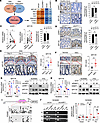 Figure 3
UHRF1 represses NPY1R expression through promoter methylation in IECs. (A) Venn diagram for upregulated and hypomethylated genes in NCM460 cells infected with shUHRF1 or shCtrl, and Gene Ontology (GO) enrichment analysis of genes common to these 2 gene sets. (B) Representative staining images and correlation analysis of UHRF1 and NPY1R expression in colonic tissues from patients with UC and healthy donors (n = 25). Scale bar: 50 μm. (C) mRNA expression and correlation analysis of UHRF1 and NPY1R in paired inflamed and noninflamed colon tissue samples from patients with UC (n = 15). (D) Representative staining images and correlation analysis of UHRF1 and NPY1R in Uhrf1IEC(+/+) (n = 16) and Uhrf1IEC(+/−) (n = 15) mice. Scale bar: 50 μm. (E) Representative staining images and quantification of NPY1R in colon tissues from mice treated with DSS and sacrificed at different time points (n = 5). Scale bar: 50 μm. (F) Representative staining images and quantification of NPY1R in colon tissues from mice treated with AIEC or controls (n = 7). Scale bar: 50 μm. (G) mRNA and protein expression of NPY1R in NCM460 and FHC cells transfected with siUHRF1 or siCtrl. (H) mRNA and protein expression of NPY1R in NCM460 and FHC cells transfected with siDNMT1 or siCtrl. (I) Upper: Schematic depicts the CpG island (purple bar) and CpG sites (purple ticks) in the NPY1R promoter. Lower: Methylation status of specific CpG sites was assessed by bisulfite cloning and sequencing. (J) Analysis of ChIP-enriched DNA from the NPY1R promoter CpG island by conventional PCR (left) and qPCR (right) in NCM460 cells infected with shUHRF1 or shCtrl. P values were determined by χ2 test (B, C [right], and D), 1-way ANOVA (E, G, H, and J), or 2-tailed Student’s t tests (C [left and middle] and F). Data are shown as mean ± SD. *P < 0.05, **P < 0.01.
To investigate the mechanism underlying UHRF1-mediated suppression of NPY1R, we considered its established role in maintenance DNA methylation via recruitment of DNMT1 to replication foci (18–20). We therefore examined whether UHRF1 regulates NPY1R in a DNMT1-dependent manner. As anticipated, DNMT1 knockdown in NCM460 and FHC cells markedly upregulated NPY1R expression (Figure 3H). Given the predominant expression of NPY1R in the central nervous system (21), we asked if its expression in colonic tissues is regulated by DNA methylation–based silencing, similar to the oxytocin receptor gene promoter (22). We therefore hypothesized that UHRF1 directly regulates the methylation status of the NPY1R promoter. To test this, we performed bisulfite sequencing in NCM460 cells following UHRF1 knockdown. The results confirmed a significant reduction in DNA methylation at multiple CpG sites within the promoter CpG island (Figure 3I). Furthermore, chromatin immunoprecipitation (ChIP) assays demonstrated direct binding of UHRF1 to the NPY1R promoter (Figure 3J). Collectively, these findings indicate that UHRF1 binds to the NPY1R promoter, induces CpG hypermethylation, and transcriptionally suppresses NPY1R, thereby establishing it as a key downstream effector of UHRF1-mediated epigenetic silencing.
NPY1R activation antagonizes UHRF1-mediated protection in IECs. To validate the function of NPY1R in IECs, we established NPY1R-overexpression and knockdown models in NCM460 and FHC cells (Supplemental Figure 4, A and B). In vitro analysis demonstrated that NPY1R overexpression suppressed proliferation in NCM460 and FHC cells (Supplemental Figure 4, C and D), whereas NPY1R knockdown enhanced proliferation both under basal and DSS-induced inflammatory conditions (Figure 4, A and B). Consistently, NPY1R knockdown attenuated apoptosis in NCM460 and FHC cells under identical experimental settings (Figure 4, C and D). We then investigated whether UHRF1 regulates IECs via NPY1R suppression. In UHRF1-overexpressing NCM460 cells, NPY1R expression counteracted the protective effects of UHRF1 on cell proliferation and apoptosis, both under baseline and DSS-induced inflammatory conditions (Figure 4, E–G). As a G protein–coupled receptor (GPCR), NPY1R functions through binding its ligand neuropeptide Y (NPY), which has been reported to be elevated in the plasma of patients with IBD and implicated in disease-related inflammation (23). We therefore investigated the functional consequences of NPY/NPY1R signaling and found that NPY-mediated suppression of proliferation and promotion of apoptosis was significantly enhanced under conditions of NPY1R overexpression (Figure 4, H and I). Collectively, these results demonstrate that NPY1R activation via NPY signaling opposes the cytoprotective effects of UHRF1 and disrupts epithelial homeostasis.
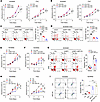 Figure 4
NPY1R activation antagonizes UHRF1-mediated protection in IECs. (A) Proliferation of NCM460 and FHC cells infected with shNPY1R or shCtrl. (B) Proliferation of NCM460 and FHC cells infected with shNPY1R or shCtrl and treated with DSS. (C) Apoptotic rates of NCM460 cells infected with shNPY1R or shCtrl. (D) Apoptotic rates of NCM460 cells infected with shNPY1R or shCtrl and treated with or without DSS (E) Proliferation of UHRF1-overexpressing NCM460 cells, with or without concurrent NPY1R overexpression. (F) Proliferation of UHRF1-overexpressing NCM460 cells with or without concurrent NPY1R overexpression under DSS treatment. (G) Apoptotic rates of UHRF1-overexpressing NCM460 cells, with or without concurrent NPY1R overexpression, and treated with or without DSS. (H) Proliferation of NCM460 and FHC cells treated with NPY, transfected with NPY1R-overexpressing plasmid, or transfected with the plasmid and treated with NPY. (I) Apoptotic rates of NCM460 cells treated with NPY, transfected with NPY1R-overexpressing plasmid, or transfected with the plasmid and treated with NPY. P values were determined by 2-way ANOVA (A, B, E, F, and H) or 1-way ANOVA (C, D, G, and I). Data are shown as mean ± SD. *P < 0.05, **P < 0.01.
The UHRF1/NPY1R axis protects IECs via CREB activation and NF-κB suppression. To investigate the mechanism by which NPY1R mediates inflammatory damage in IECs, we utilized a human kinase antibody array to identify signaling pathways activated by NPY/NPY1R. Silencing NPY1R in NCM460 cells resulted in substantial changes in the phosphorylation of 9 kinases, most notably a pronounced increase in phosphorylation of cAMP-response element-binding protein (CREB) at Ser133 compared with controls (Figure 5A). Based on the critical function of CREB in controlling cellular responses such as proliferation, survival, and differentiation (24), we sought to determine whether the UHRF1/NPY1R axis regulates IEC viability in a CREB-dependent manner. Western blot analysis showed that NPY1R overexpression reduced CREB phosphorylation (p-CREB), while NPY1R knockdown increased p-CREB levels, with no change in total CREB expression (Figure 5B). Furthermore, UHRF1 overexpression elevated p-CREB and upregulated its downstream antiapoptotic effectors Bcl-2 and Bcl-XL, but these enhancements were almost completely abolished by NPY1R overexpression (Figure 5C). Consistent with these findings, treatment with the CREB inhibitor KG501 abrogated the upregulation of p-CREB, Bcl-2, and Bcl-XL resulting from NPY1R knockdown (Figure 5D). CREB is known to be regulated by upstream pathways including cAMP-PKA, IP3-Ca²+, and PKC (25–27). To identify which signaling mediator is responsible for NPY/NPY1R-induced CREB activation, we treated NPY1R-knockdown NCM460 cells with specific inhibitors of PKA, IP3, or PKC. We found that only PKA inhibition attenuated the increase in p-CREB induced by NPY1R silencing (Figure 5E). Consistent with this, NPY1R overexpression led to significantly reduced cAMP levels and increased PKA phosphorylation (p-PKA) in NCM460 cells (Figure 5, F and G). These results demonstrate that NPY1R suppresses CREB phosphorylation through inhibition of the cAMP/PKA signaling pathway.
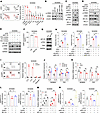 Figure 5
The UHRF1/NPY1R axis protects IECs via CREB activation and NF-κB suppression. (A) Immunoblotting and quantification of phosphoproteins in NCM460 cells transfected with siNPY1R or siCtrl. (B) Levels of CREB and p-CREB in NCM460 cells after manipulation of NPY1R. (C) Levels of the indicated proteins in UHRF1-overexpressing NCM460 cells with or without concurrent NPY1R overexpression. (D) Levels of the indicated proteins in NCM460 cells transfected with siNPY1R or siCtrl and treated with or without KG501. (E) Levels of NPY1R, CREB, and p-CREB in NCM460 cells transfected with siNPY1R or siCtrl and treated with the indicated inhibitors. (F) cAMP concentration in NCM460 cells transfected with NPY1R-overexpressing (NPY1R) or negative control (NC) vector by ELISA. (G) Levels of NPY1R, PKA, and p-PKA in NCM460 cells transfected with NPY1R or NC vector. (H) Relative luciferase activity in NCM460 cells transfected with siUHRF1, siNPY1R, or siCtrl and treated with or without DSS, LPS, or TNF-α. (I) Immunoblotting and quantification of cytokines in NCM460 cells transfected with siUHRF1 or siCtrl. (J) mRNA expression of IL-6 and IL-8 in NCM460 and FHC cells infected with shUHRF1 or shCtrl. (K) mRNA expression of IL-6 and IL-8 in NCM460 and FHC cells infected with UHRF1 or Ctrl. (L) mRNA expression of IL-6 and IL-8 in NCM460 cells with or without NPY1R and/or UHRF1 overexpression. (M) mRNA expression of IL-6 and IL-8 in NCM460 cells treated with NPY, transfected with NPY1R-overexpressing plasmid, or transfected with the plasmid and treated with NPY. (N) mRNA expression of IL-6 and IL-8 measured by qPCR in NCM460 cells transfected with siNPY1R or siCtrl and treated with or without KG501. P values were determined by 2-tailed Student’s t tests (F and K) or 1-way ANOVA (H, J, and L–N). Data are shown as mean ± SD. *P < 0.05, **P < 0.01.
The NF-κB pathway, a central mediator of inflammatory signaling, plays a key role in coordinating immune responses (28). Previous research indicates that CREB activation can inhibit NF-κB–dependent transcription by sequestering the shared coactivator CBP (29). We therefore hypothesized that NPY1R activates the NF-κB pathway via suppression of CREB. Consistent with this, UHRF1 knockdown enhanced NF-κB activity, while NPY1R knockdown suppressed it, as measured by NF-κB luciferase reporter assays under LPS, DSS, and TNF-α stimulation (Figure 5H). NF-κB pathway activation is characterized by increased secretion of proinflammatory cytokines. Using a cytokine array, we detected pronounced upregulation of IL-6 and IL-8 in UHRF1-knockdown NCM460 cells (Figure 5I). Notably, as both IL-6 and IL-8 are canonical NF-κB target genes (30), these results further support that the UHRF1/NPY1R axis promotes inflammation through NF-κB activation. UHRF1 knockdown upregulated IL-6 and IL-8 expression in both NCM460 and FHC cells, while UHRF1 overexpression suppressed their production (Figure 5, J and K). Notably, NPY1R overexpression reversed the inhibitory effect of UHRF1 on these cytokines (Figure 5L). Furthermore, combined stimulation with NPY and NPY1R further enhanced IL-6 and IL-8 expression (Figure 5M). Conversely, NPY1R knockdown reduced the secretion of both cytokines, and this suppression was rescued by the CREB inhibitor KG501 (Figure 5N). Collectively, these findings indicate that the UHRF1-mediated NPY1R deficiency confers protection to IECs by promoting CREB activation and inhibiting NF-κB–mediated inflammation.
miR-141 attenuates NPY1R-induced IEC damage and inflammation. microRNAs (miRNAs), which act as negative regulators of gene expression, represent promising therapeutic agents for IBD (31). To identify miRNAs targeting NPY1R, we employed multiple algorithms to predict those with putative binding sites in the 3′-UTR of NPY1R (Figure 6A). From 85 candidate miRNAs (Supplemental Table 2), we selected 5 candidates (miR-148, miR-495, miR-141, miR-375, and miR-200b), which were previously reported to be downregulated in IBD patient samples (32–36), for further validation. Among these, only miR-141, miR-375, and miR-200b significantly inhibited the luciferase activity of an NPY1R 3′-UTR reporter construct (Figure 6B). Notably, LPS stimulation markedly suppressed miR-141 expression in NCM460 cells, whereas miR-375 and miR-200b remained unchanged, suggesting that miR-141 is particularly responsive to inflammatory stimulation and may hold therapeutic potential for reexpression in UC (Figure 6C). Western blot analysis demonstrated that miR-141 overexpression suppressed NPY1R expression in both NCM460 and FHC cells (Figure 6D). Furthermore, dual-luciferase reporter assays confirmed the specificity of this interaction, as mutation of the miR-141 binding sites in the NPY1R 3′-UTR abrogated the suppression of luciferase activity (Figure 6E).
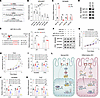 Figure 6
miR-141 attenuates NPY1R-induced IEC damage and inflammation. (A) Workflow for the identification of potential miRNAs targeting NPY1R. (B) Relative luciferase activity in HEK293T cells cotransfected with the plasmid expressing 3′-UTR of NPY1R and the indicated miRNA mimics or a scramble miRNA control (miR-Ctrl). (C) Expression levels of NPY1R and indicated miRNAs in NCM460 cells treated with or without LPS.(D) Levels of NPY1R protein in NCM460 and FHC cells transfected with miR-141 mimics (miR-141) or miR-Ctrl. (E) Left: Diagram of putative miR-141 binding sites in the 3′-UTR of NPY1R. Right: Relative luciferase activity in HEK293T cells cotransfected with the plasmid expressing WT or mutant (Mut) 3′-UTR of NPY1R and miR-141 or miR-Ctrl. (F) Levels of NPY1R protein in NCM460 and FHC cells transfected with NPY1R-overexpressing plasmid with or without WT 3′-UTR and miR-141 or miR-Ctrl. (G and H) Proliferation of NCM460 (G) and FHC (H) cells transfected with NPY1R-overexpressing plasmid with or without WT 3′-UTR and miR-141 or miR-Ctrl. (I) Apoptotic rates of NCM460 and FHC cells transfected with NPY1R-overexpressing plasmid with or without WT 3′-UTR and miR-141 or miR-Ctrl. (J and K) mRNA expression of IL-6 and IL-8 in NCM460 (J) and FHC (K) cells transfected with NPY1R-overexpressing plasmid with or without WT 3′-UTR and miR-141 or miR-Ctrl. (L) Proposed working model summarizing this study. P values were determined by 1-way ANOVA (B, I, J, and K), 2 tailed Student’s t tests (C and E), or 2-way ANOVA (G and H). Data are shown as mean ± SD. *P < 0.05, **P < 0.01.
To determine whether miR-141 counteracts NPY1R-induced effects on cell viability and inflammation, we generated NPY1R expression constructs containing or lacking the 3′-UTR (Supplemental Figure 5A). Cotransfection of miR-141 into NCM460 and FHC cells markedly reduced NPY1R expression in the presence of the WT 3′-UTR but not in constructs lacking this region (Figure 6F). Importantly, miR-141 rescued the NPY1R-mediated suppression of proliferation, enhancement of apoptosis, and upregulation of IL-6 and IL-8 (Figure 6, G–K). These effects were markedly attenuated in cells expressing the WT NPY1R construct compared with those expressing the 3′-UTR–deleted variant (Figure 6, G–K). These findings demonstrate that miR-141 represents a promising therapeutic agent for intestinal inflammation by targeting NPY1R (Figure 6L).


