
Research ArticleCell biologyNeuroscience
Open Access |  10.1172/jci.insight.188612
N6-methyladenosine (m6A) dysregulation contributes to network excitability in temporal lobe epilepsy
Justine Mathoux,1,2 Marc-Michel Wilson,1,2 Sujithra Srinivas,2,3,4 Gabrielle Litovskich,3,4 Leticia Villalba Benito,3,4 Cindy Tran,5 Jaideep Kesavan,1,2 Aileen Harnett,1,2 Theresa Auer,3,4 Amaya Sanz-Rodriguez,1,2 Mohammad Kh. A.E. Alkhayyat,3 Mairéad Sullivan,4,6 Zining Liu,5 Yifan Huang,5 Austin Lacey,2,7 Norman Delanty,2,7,8 Jane Cryan,9 Francesca M. Brett,9 Michael A. Farrell,9 Donncha F. O’Brien,10 Pablo M. Casillas-Espinosa,5,11 Eva M. Jimenez-Mateos,12 Jeffrey C. Glennon,4,6 Mary Canavan,13 David C. Henshall,1,2 and Gary P. Brennan2,3,4
1Department of Physiology and Medical Physics, RCSI University of Medicine and Health Sciences, Dublin, Ireland.
2FutureNeuro Research Ireland Centre for Translational Brain Science, and
3UCD School of Biomolecular and Biomedical Science, University College Dublin, Belfield, Dublin 4, Ireland.
4UCD Conway Institute, University College Dublin, Dublin, Ireland.
5Department of Neuroscience, Central Clinical School, Monash University, Melbourne, Victoria, Australia.
6UCD School of Medicine, University College Dublin, Belfield, Dublin, Ireland.
7School of Pharmacy and Biomolecular Sciences, RCSI University of Medicine and Health Sciences, Dublin, Ireland.
8Department of Neurology,
9Department of Neuropathology, and
10Department of Neurosurgery, Beaumont Hospital Dublin, Dublin, Ireland.
11Department of Neurology, The Alfred Hospital, Commercial Road, Melbourne, Victoria, Australia.
12Discipline of Physiology, School of Medicine, Trinity College Dublin, The University of Dublin, Dublin, Ireland.
13Translational Immunopathology, School of Biochemistry and Immunology and School of Medicine, Trinity College Dublin, Dublin, Ireland.
Address correspondence to: Gary P. Brennan, School of Biomolecular and Biomedical Sciences, Conway Institute, Belfield, Dublin 4, Ireland. Phone: 353.1.7166837; Email: gary.brennan@ucd.ie.
Authorship note: JM, MMW, and SS have been designated as co–first authors.
Find articles by Mathoux, J. in: PubMed | Google Scholar
1Department of Physiology and Medical Physics, RCSI University of Medicine and Health Sciences, Dublin, Ireland.
2FutureNeuro Research Ireland Centre for Translational Brain Science, and
3UCD School of Biomolecular and Biomedical Science, University College Dublin, Belfield, Dublin 4, Ireland.
4UCD Conway Institute, University College Dublin, Dublin, Ireland.
5Department of Neuroscience, Central Clinical School, Monash University, Melbourne, Victoria, Australia.
6UCD School of Medicine, University College Dublin, Belfield, Dublin, Ireland.
7School of Pharmacy and Biomolecular Sciences, RCSI University of Medicine and Health Sciences, Dublin, Ireland.
8Department of Neurology,
9Department of Neuropathology, and
10Department of Neurosurgery, Beaumont Hospital Dublin, Dublin, Ireland.
11Department of Neurology, The Alfred Hospital, Commercial Road, Melbourne, Victoria, Australia.
12Discipline of Physiology, School of Medicine, Trinity College Dublin, The University of Dublin, Dublin, Ireland.
13Translational Immunopathology, School of Biochemistry and Immunology and School of Medicine, Trinity College Dublin, Dublin, Ireland.
Address correspondence to: Gary P. Brennan, School of Biomolecular and Biomedical Sciences, Conway Institute, Belfield, Dublin 4, Ireland. Phone: 353.1.7166837; Email: gary.brennan@ucd.ie.
Authorship note: JM, MMW, and SS have been designated as co–first authors.
Find articles by Wilson, M. in: PubMed | Google Scholar
1Department of Physiology and Medical Physics, RCSI University of Medicine and Health Sciences, Dublin, Ireland.
2FutureNeuro Research Ireland Centre for Translational Brain Science, and
3UCD School of Biomolecular and Biomedical Science, University College Dublin, Belfield, Dublin 4, Ireland.
4UCD Conway Institute, University College Dublin, Dublin, Ireland.
5Department of Neuroscience, Central Clinical School, Monash University, Melbourne, Victoria, Australia.
6UCD School of Medicine, University College Dublin, Belfield, Dublin, Ireland.
7School of Pharmacy and Biomolecular Sciences, RCSI University of Medicine and Health Sciences, Dublin, Ireland.
8Department of Neurology,
9Department of Neuropathology, and
10Department of Neurosurgery, Beaumont Hospital Dublin, Dublin, Ireland.
11Department of Neurology, The Alfred Hospital, Commercial Road, Melbourne, Victoria, Australia.
12Discipline of Physiology, School of Medicine, Trinity College Dublin, The University of Dublin, Dublin, Ireland.
13Translational Immunopathology, School of Biochemistry and Immunology and School of Medicine, Trinity College Dublin, Dublin, Ireland.
Address correspondence to: Gary P. Brennan, School of Biomolecular and Biomedical Sciences, Conway Institute, Belfield, Dublin 4, Ireland. Phone: 353.1.7166837; Email: gary.brennan@ucd.ie.
Authorship note: JM, MMW, and SS have been designated as co–first authors.
Find articles by Srinivas, S. in: PubMed | Google Scholar
1Department of Physiology and Medical Physics, RCSI University of Medicine and Health Sciences, Dublin, Ireland.
2FutureNeuro Research Ireland Centre for Translational Brain Science, and
3UCD School of Biomolecular and Biomedical Science, University College Dublin, Belfield, Dublin 4, Ireland.
4UCD Conway Institute, University College Dublin, Dublin, Ireland.
5Department of Neuroscience, Central Clinical School, Monash University, Melbourne, Victoria, Australia.
6UCD School of Medicine, University College Dublin, Belfield, Dublin, Ireland.
7School of Pharmacy and Biomolecular Sciences, RCSI University of Medicine and Health Sciences, Dublin, Ireland.
8Department of Neurology,
9Department of Neuropathology, and
10Department of Neurosurgery, Beaumont Hospital Dublin, Dublin, Ireland.
11Department of Neurology, The Alfred Hospital, Commercial Road, Melbourne, Victoria, Australia.
12Discipline of Physiology, School of Medicine, Trinity College Dublin, The University of Dublin, Dublin, Ireland.
13Translational Immunopathology, School of Biochemistry and Immunology and School of Medicine, Trinity College Dublin, Dublin, Ireland.
Address correspondence to: Gary P. Brennan, School of Biomolecular and Biomedical Sciences, Conway Institute, Belfield, Dublin 4, Ireland. Phone: 353.1.7166837; Email: gary.brennan@ucd.ie.
Authorship note: JM, MMW, and SS have been designated as co–first authors.
Find articles by Litovskich, G. in: PubMed | Google Scholar
1Department of Physiology and Medical Physics, RCSI University of Medicine and Health Sciences, Dublin, Ireland.
2FutureNeuro Research Ireland Centre for Translational Brain Science, and
3UCD School of Biomolecular and Biomedical Science, University College Dublin, Belfield, Dublin 4, Ireland.
4UCD Conway Institute, University College Dublin, Dublin, Ireland.
5Department of Neuroscience, Central Clinical School, Monash University, Melbourne, Victoria, Australia.
6UCD School of Medicine, University College Dublin, Belfield, Dublin, Ireland.
7School of Pharmacy and Biomolecular Sciences, RCSI University of Medicine and Health Sciences, Dublin, Ireland.
8Department of Neurology,
9Department of Neuropathology, and
10Department of Neurosurgery, Beaumont Hospital Dublin, Dublin, Ireland.
11Department of Neurology, The Alfred Hospital, Commercial Road, Melbourne, Victoria, Australia.
12Discipline of Physiology, School of Medicine, Trinity College Dublin, The University of Dublin, Dublin, Ireland.
13Translational Immunopathology, School of Biochemistry and Immunology and School of Medicine, Trinity College Dublin, Dublin, Ireland.
Address correspondence to: Gary P. Brennan, School of Biomolecular and Biomedical Sciences, Conway Institute, Belfield, Dublin 4, Ireland. Phone: 353.1.7166837; Email: gary.brennan@ucd.ie.
Authorship note: JM, MMW, and SS have been designated as co–first authors.
Find articles by Villalba Benito, L. in: PubMed | Google Scholar
1Department of Physiology and Medical Physics, RCSI University of Medicine and Health Sciences, Dublin, Ireland.
2FutureNeuro Research Ireland Centre for Translational Brain Science, and
3UCD School of Biomolecular and Biomedical Science, University College Dublin, Belfield, Dublin 4, Ireland.
4UCD Conway Institute, University College Dublin, Dublin, Ireland.
5Department of Neuroscience, Central Clinical School, Monash University, Melbourne, Victoria, Australia.
6UCD School of Medicine, University College Dublin, Belfield, Dublin, Ireland.
7School of Pharmacy and Biomolecular Sciences, RCSI University of Medicine and Health Sciences, Dublin, Ireland.
8Department of Neurology,
9Department of Neuropathology, and
10Department of Neurosurgery, Beaumont Hospital Dublin, Dublin, Ireland.
11Department of Neurology, The Alfred Hospital, Commercial Road, Melbourne, Victoria, Australia.
12Discipline of Physiology, School of Medicine, Trinity College Dublin, The University of Dublin, Dublin, Ireland.
13Translational Immunopathology, School of Biochemistry and Immunology and School of Medicine, Trinity College Dublin, Dublin, Ireland.
Address correspondence to: Gary P. Brennan, School of Biomolecular and Biomedical Sciences, Conway Institute, Belfield, Dublin 4, Ireland. Phone: 353.1.7166837; Email: gary.brennan@ucd.ie.
Authorship note: JM, MMW, and SS have been designated as co–first authors.
Find articles by Tran, C. in: PubMed | Google Scholar
1Department of Physiology and Medical Physics, RCSI University of Medicine and Health Sciences, Dublin, Ireland.
2FutureNeuro Research Ireland Centre for Translational Brain Science, and
3UCD School of Biomolecular and Biomedical Science, University College Dublin, Belfield, Dublin 4, Ireland.
4UCD Conway Institute, University College Dublin, Dublin, Ireland.
5Department of Neuroscience, Central Clinical School, Monash University, Melbourne, Victoria, Australia.
6UCD School of Medicine, University College Dublin, Belfield, Dublin, Ireland.
7School of Pharmacy and Biomolecular Sciences, RCSI University of Medicine and Health Sciences, Dublin, Ireland.
8Department of Neurology,
9Department of Neuropathology, and
10Department of Neurosurgery, Beaumont Hospital Dublin, Dublin, Ireland.
11Department of Neurology, The Alfred Hospital, Commercial Road, Melbourne, Victoria, Australia.
12Discipline of Physiology, School of Medicine, Trinity College Dublin, The University of Dublin, Dublin, Ireland.
13Translational Immunopathology, School of Biochemistry and Immunology and School of Medicine, Trinity College Dublin, Dublin, Ireland.
Address correspondence to: Gary P. Brennan, School of Biomolecular and Biomedical Sciences, Conway Institute, Belfield, Dublin 4, Ireland. Phone: 353.1.7166837; Email: gary.brennan@ucd.ie.
Authorship note: JM, MMW, and SS have been designated as co–first authors.
Find articles by Kesavan, J. in: PubMed | Google Scholar
1Department of Physiology and Medical Physics, RCSI University of Medicine and Health Sciences, Dublin, Ireland.
2FutureNeuro Research Ireland Centre for Translational Brain Science, and
3UCD School of Biomolecular and Biomedical Science, University College Dublin, Belfield, Dublin 4, Ireland.
4UCD Conway Institute, University College Dublin, Dublin, Ireland.
5Department of Neuroscience, Central Clinical School, Monash University, Melbourne, Victoria, Australia.
6UCD School of Medicine, University College Dublin, Belfield, Dublin, Ireland.
7School of Pharmacy and Biomolecular Sciences, RCSI University of Medicine and Health Sciences, Dublin, Ireland.
8Department of Neurology,
9Department of Neuropathology, and
10Department of Neurosurgery, Beaumont Hospital Dublin, Dublin, Ireland.
11Department of Neurology, The Alfred Hospital, Commercial Road, Melbourne, Victoria, Australia.
12Discipline of Physiology, School of Medicine, Trinity College Dublin, The University of Dublin, Dublin, Ireland.
13Translational Immunopathology, School of Biochemistry and Immunology and School of Medicine, Trinity College Dublin, Dublin, Ireland.
Address correspondence to: Gary P. Brennan, School of Biomolecular and Biomedical Sciences, Conway Institute, Belfield, Dublin 4, Ireland. Phone: 353.1.7166837; Email: gary.brennan@ucd.ie.
Authorship note: JM, MMW, and SS have been designated as co–first authors.
Find articles by Harnett, A. in: PubMed | Google Scholar
1Department of Physiology and Medical Physics, RCSI University of Medicine and Health Sciences, Dublin, Ireland.
2FutureNeuro Research Ireland Centre for Translational Brain Science, and
3UCD School of Biomolecular and Biomedical Science, University College Dublin, Belfield, Dublin 4, Ireland.
4UCD Conway Institute, University College Dublin, Dublin, Ireland.
5Department of Neuroscience, Central Clinical School, Monash University, Melbourne, Victoria, Australia.
6UCD School of Medicine, University College Dublin, Belfield, Dublin, Ireland.
7School of Pharmacy and Biomolecular Sciences, RCSI University of Medicine and Health Sciences, Dublin, Ireland.
8Department of Neurology,
9Department of Neuropathology, and
10Department of Neurosurgery, Beaumont Hospital Dublin, Dublin, Ireland.
11Department of Neurology, The Alfred Hospital, Commercial Road, Melbourne, Victoria, Australia.
12Discipline of Physiology, School of Medicine, Trinity College Dublin, The University of Dublin, Dublin, Ireland.
13Translational Immunopathology, School of Biochemistry and Immunology and School of Medicine, Trinity College Dublin, Dublin, Ireland.
Address correspondence to: Gary P. Brennan, School of Biomolecular and Biomedical Sciences, Conway Institute, Belfield, Dublin 4, Ireland. Phone: 353.1.7166837; Email: gary.brennan@ucd.ie.
Authorship note: JM, MMW, and SS have been designated as co–first authors.
Find articles by Auer, T. in: PubMed | Google Scholar
1Department of Physiology and Medical Physics, RCSI University of Medicine and Health Sciences, Dublin, Ireland.
2FutureNeuro Research Ireland Centre for Translational Brain Science, and
3UCD School of Biomolecular and Biomedical Science, University College Dublin, Belfield, Dublin 4, Ireland.
4UCD Conway Institute, University College Dublin, Dublin, Ireland.
5Department of Neuroscience, Central Clinical School, Monash University, Melbourne, Victoria, Australia.
6UCD School of Medicine, University College Dublin, Belfield, Dublin, Ireland.
7School of Pharmacy and Biomolecular Sciences, RCSI University of Medicine and Health Sciences, Dublin, Ireland.
8Department of Neurology,
9Department of Neuropathology, and
10Department of Neurosurgery, Beaumont Hospital Dublin, Dublin, Ireland.
11Department of Neurology, The Alfred Hospital, Commercial Road, Melbourne, Victoria, Australia.
12Discipline of Physiology, School of Medicine, Trinity College Dublin, The University of Dublin, Dublin, Ireland.
13Translational Immunopathology, School of Biochemistry and Immunology and School of Medicine, Trinity College Dublin, Dublin, Ireland.
Address correspondence to: Gary P. Brennan, School of Biomolecular and Biomedical Sciences, Conway Institute, Belfield, Dublin 4, Ireland. Phone: 353.1.7166837; Email: gary.brennan@ucd.ie.
Authorship note: JM, MMW, and SS have been designated as co–first authors.
Find articles by Sanz-Rodriguez, A. in: PubMed | Google Scholar
1Department of Physiology and Medical Physics, RCSI University of Medicine and Health Sciences, Dublin, Ireland.
2FutureNeuro Research Ireland Centre for Translational Brain Science, and
3UCD School of Biomolecular and Biomedical Science, University College Dublin, Belfield, Dublin 4, Ireland.
4UCD Conway Institute, University College Dublin, Dublin, Ireland.
5Department of Neuroscience, Central Clinical School, Monash University, Melbourne, Victoria, Australia.
6UCD School of Medicine, University College Dublin, Belfield, Dublin, Ireland.
7School of Pharmacy and Biomolecular Sciences, RCSI University of Medicine and Health Sciences, Dublin, Ireland.
8Department of Neurology,
9Department of Neuropathology, and
10Department of Neurosurgery, Beaumont Hospital Dublin, Dublin, Ireland.
11Department of Neurology, The Alfred Hospital, Commercial Road, Melbourne, Victoria, Australia.
12Discipline of Physiology, School of Medicine, Trinity College Dublin, The University of Dublin, Dublin, Ireland.
13Translational Immunopathology, School of Biochemistry and Immunology and School of Medicine, Trinity College Dublin, Dublin, Ireland.
Address correspondence to: Gary P. Brennan, School of Biomolecular and Biomedical Sciences, Conway Institute, Belfield, Dublin 4, Ireland. Phone: 353.1.7166837; Email: gary.brennan@ucd.ie.
Authorship note: JM, MMW, and SS have been designated as co–first authors.
Find articles by Kh. A.E. Alkhayyat, M. in: PubMed | Google Scholar
1Department of Physiology and Medical Physics, RCSI University of Medicine and Health Sciences, Dublin, Ireland.
2FutureNeuro Research Ireland Centre for Translational Brain Science, and
3UCD School of Biomolecular and Biomedical Science, University College Dublin, Belfield, Dublin 4, Ireland.
4UCD Conway Institute, University College Dublin, Dublin, Ireland.
5Department of Neuroscience, Central Clinical School, Monash University, Melbourne, Victoria, Australia.
6UCD School of Medicine, University College Dublin, Belfield, Dublin, Ireland.
7School of Pharmacy and Biomolecular Sciences, RCSI University of Medicine and Health Sciences, Dublin, Ireland.
8Department of Neurology,
9Department of Neuropathology, and
10Department of Neurosurgery, Beaumont Hospital Dublin, Dublin, Ireland.
11Department of Neurology, The Alfred Hospital, Commercial Road, Melbourne, Victoria, Australia.
12Discipline of Physiology, School of Medicine, Trinity College Dublin, The University of Dublin, Dublin, Ireland.
13Translational Immunopathology, School of Biochemistry and Immunology and School of Medicine, Trinity College Dublin, Dublin, Ireland.
Address correspondence to: Gary P. Brennan, School of Biomolecular and Biomedical Sciences, Conway Institute, Belfield, Dublin 4, Ireland. Phone: 353.1.7166837; Email: gary.brennan@ucd.ie.
Authorship note: JM, MMW, and SS have been designated as co–first authors.
Find articles by Sullivan, M. in: PubMed | Google Scholar
1Department of Physiology and Medical Physics, RCSI University of Medicine and Health Sciences, Dublin, Ireland.
2FutureNeuro Research Ireland Centre for Translational Brain Science, and
3UCD School of Biomolecular and Biomedical Science, University College Dublin, Belfield, Dublin 4, Ireland.
4UCD Conway Institute, University College Dublin, Dublin, Ireland.
5Department of Neuroscience, Central Clinical School, Monash University, Melbourne, Victoria, Australia.
6UCD School of Medicine, University College Dublin, Belfield, Dublin, Ireland.
7School of Pharmacy and Biomolecular Sciences, RCSI University of Medicine and Health Sciences, Dublin, Ireland.
8Department of Neurology,
9Department of Neuropathology, and
10Department of Neurosurgery, Beaumont Hospital Dublin, Dublin, Ireland.
11Department of Neurology, The Alfred Hospital, Commercial Road, Melbourne, Victoria, Australia.
12Discipline of Physiology, School of Medicine, Trinity College Dublin, The University of Dublin, Dublin, Ireland.
13Translational Immunopathology, School of Biochemistry and Immunology and School of Medicine, Trinity College Dublin, Dublin, Ireland.
Address correspondence to: Gary P. Brennan, School of Biomolecular and Biomedical Sciences, Conway Institute, Belfield, Dublin 4, Ireland. Phone: 353.1.7166837; Email: gary.brennan@ucd.ie.
Authorship note: JM, MMW, and SS have been designated as co–first authors.
Find articles by Liu, Z. in: PubMed | Google Scholar
1Department of Physiology and Medical Physics, RCSI University of Medicine and Health Sciences, Dublin, Ireland.
2FutureNeuro Research Ireland Centre for Translational Brain Science, and
3UCD School of Biomolecular and Biomedical Science, University College Dublin, Belfield, Dublin 4, Ireland.
4UCD Conway Institute, University College Dublin, Dublin, Ireland.
5Department of Neuroscience, Central Clinical School, Monash University, Melbourne, Victoria, Australia.
6UCD School of Medicine, University College Dublin, Belfield, Dublin, Ireland.
7School of Pharmacy and Biomolecular Sciences, RCSI University of Medicine and Health Sciences, Dublin, Ireland.
8Department of Neurology,
9Department of Neuropathology, and
10Department of Neurosurgery, Beaumont Hospital Dublin, Dublin, Ireland.
11Department of Neurology, The Alfred Hospital, Commercial Road, Melbourne, Victoria, Australia.
12Discipline of Physiology, School of Medicine, Trinity College Dublin, The University of Dublin, Dublin, Ireland.
13Translational Immunopathology, School of Biochemistry and Immunology and School of Medicine, Trinity College Dublin, Dublin, Ireland.
Address correspondence to: Gary P. Brennan, School of Biomolecular and Biomedical Sciences, Conway Institute, Belfield, Dublin 4, Ireland. Phone: 353.1.7166837; Email: gary.brennan@ucd.ie.
Authorship note: JM, MMW, and SS have been designated as co–first authors.
Find articles by Huang, Y. in: PubMed | Google Scholar
1Department of Physiology and Medical Physics, RCSI University of Medicine and Health Sciences, Dublin, Ireland.
2FutureNeuro Research Ireland Centre for Translational Brain Science, and
3UCD School of Biomolecular and Biomedical Science, University College Dublin, Belfield, Dublin 4, Ireland.
4UCD Conway Institute, University College Dublin, Dublin, Ireland.
5Department of Neuroscience, Central Clinical School, Monash University, Melbourne, Victoria, Australia.
6UCD School of Medicine, University College Dublin, Belfield, Dublin, Ireland.
7School of Pharmacy and Biomolecular Sciences, RCSI University of Medicine and Health Sciences, Dublin, Ireland.
8Department of Neurology,
9Department of Neuropathology, and
10Department of Neurosurgery, Beaumont Hospital Dublin, Dublin, Ireland.
11Department of Neurology, The Alfred Hospital, Commercial Road, Melbourne, Victoria, Australia.
12Discipline of Physiology, School of Medicine, Trinity College Dublin, The University of Dublin, Dublin, Ireland.
13Translational Immunopathology, School of Biochemistry and Immunology and School of Medicine, Trinity College Dublin, Dublin, Ireland.
Address correspondence to: Gary P. Brennan, School of Biomolecular and Biomedical Sciences, Conway Institute, Belfield, Dublin 4, Ireland. Phone: 353.1.7166837; Email: gary.brennan@ucd.ie.
Authorship note: JM, MMW, and SS have been designated as co–first authors.
Find articles by Lacey, A. in: PubMed | Google Scholar
1Department of Physiology and Medical Physics, RCSI University of Medicine and Health Sciences, Dublin, Ireland.
2FutureNeuro Research Ireland Centre for Translational Brain Science, and
3UCD School of Biomolecular and Biomedical Science, University College Dublin, Belfield, Dublin 4, Ireland.
4UCD Conway Institute, University College Dublin, Dublin, Ireland.
5Department of Neuroscience, Central Clinical School, Monash University, Melbourne, Victoria, Australia.
6UCD School of Medicine, University College Dublin, Belfield, Dublin, Ireland.
7School of Pharmacy and Biomolecular Sciences, RCSI University of Medicine and Health Sciences, Dublin, Ireland.
8Department of Neurology,
9Department of Neuropathology, and
10Department of Neurosurgery, Beaumont Hospital Dublin, Dublin, Ireland.
11Department of Neurology, The Alfred Hospital, Commercial Road, Melbourne, Victoria, Australia.
12Discipline of Physiology, School of Medicine, Trinity College Dublin, The University of Dublin, Dublin, Ireland.
13Translational Immunopathology, School of Biochemistry and Immunology and School of Medicine, Trinity College Dublin, Dublin, Ireland.
Address correspondence to: Gary P. Brennan, School of Biomolecular and Biomedical Sciences, Conway Institute, Belfield, Dublin 4, Ireland. Phone: 353.1.7166837; Email: gary.brennan@ucd.ie.
Authorship note: JM, MMW, and SS have been designated as co–first authors.
Find articles by Delanty, N. in: PubMed | Google Scholar
1Department of Physiology and Medical Physics, RCSI University of Medicine and Health Sciences, Dublin, Ireland.
2FutureNeuro Research Ireland Centre for Translational Brain Science, and
3UCD School of Biomolecular and Biomedical Science, University College Dublin, Belfield, Dublin 4, Ireland.
4UCD Conway Institute, University College Dublin, Dublin, Ireland.
5Department of Neuroscience, Central Clinical School, Monash University, Melbourne, Victoria, Australia.
6UCD School of Medicine, University College Dublin, Belfield, Dublin, Ireland.
7School of Pharmacy and Biomolecular Sciences, RCSI University of Medicine and Health Sciences, Dublin, Ireland.
8Department of Neurology,
9Department of Neuropathology, and
10Department of Neurosurgery, Beaumont Hospital Dublin, Dublin, Ireland.
11Department of Neurology, The Alfred Hospital, Commercial Road, Melbourne, Victoria, Australia.
12Discipline of Physiology, School of Medicine, Trinity College Dublin, The University of Dublin, Dublin, Ireland.
13Translational Immunopathology, School of Biochemistry and Immunology and School of Medicine, Trinity College Dublin, Dublin, Ireland.
Address correspondence to: Gary P. Brennan, School of Biomolecular and Biomedical Sciences, Conway Institute, Belfield, Dublin 4, Ireland. Phone: 353.1.7166837; Email: gary.brennan@ucd.ie.
Authorship note: JM, MMW, and SS have been designated as co–first authors.
Find articles by Cryan, J. in: PubMed | Google Scholar
1Department of Physiology and Medical Physics, RCSI University of Medicine and Health Sciences, Dublin, Ireland.
2FutureNeuro Research Ireland Centre for Translational Brain Science, and
3UCD School of Biomolecular and Biomedical Science, University College Dublin, Belfield, Dublin 4, Ireland.
4UCD Conway Institute, University College Dublin, Dublin, Ireland.
5Department of Neuroscience, Central Clinical School, Monash University, Melbourne, Victoria, Australia.
6UCD School of Medicine, University College Dublin, Belfield, Dublin, Ireland.
7School of Pharmacy and Biomolecular Sciences, RCSI University of Medicine and Health Sciences, Dublin, Ireland.
8Department of Neurology,
9Department of Neuropathology, and
10Department of Neurosurgery, Beaumont Hospital Dublin, Dublin, Ireland.
11Department of Neurology, The Alfred Hospital, Commercial Road, Melbourne, Victoria, Australia.
12Discipline of Physiology, School of Medicine, Trinity College Dublin, The University of Dublin, Dublin, Ireland.
13Translational Immunopathology, School of Biochemistry and Immunology and School of Medicine, Trinity College Dublin, Dublin, Ireland.
Address correspondence to: Gary P. Brennan, School of Biomolecular and Biomedical Sciences, Conway Institute, Belfield, Dublin 4, Ireland. Phone: 353.1.7166837; Email: gary.brennan@ucd.ie.
Authorship note: JM, MMW, and SS have been designated as co–first authors.
Find articles by Brett, F. in: PubMed | Google Scholar
1Department of Physiology and Medical Physics, RCSI University of Medicine and Health Sciences, Dublin, Ireland.
2FutureNeuro Research Ireland Centre for Translational Brain Science, and
3UCD School of Biomolecular and Biomedical Science, University College Dublin, Belfield, Dublin 4, Ireland.
4UCD Conway Institute, University College Dublin, Dublin, Ireland.
5Department of Neuroscience, Central Clinical School, Monash University, Melbourne, Victoria, Australia.
6UCD School of Medicine, University College Dublin, Belfield, Dublin, Ireland.
7School of Pharmacy and Biomolecular Sciences, RCSI University of Medicine and Health Sciences, Dublin, Ireland.
8Department of Neurology,
9Department of Neuropathology, and
10Department of Neurosurgery, Beaumont Hospital Dublin, Dublin, Ireland.
11Department of Neurology, The Alfred Hospital, Commercial Road, Melbourne, Victoria, Australia.
12Discipline of Physiology, School of Medicine, Trinity College Dublin, The University of Dublin, Dublin, Ireland.
13Translational Immunopathology, School of Biochemistry and Immunology and School of Medicine, Trinity College Dublin, Dublin, Ireland.
Address correspondence to: Gary P. Brennan, School of Biomolecular and Biomedical Sciences, Conway Institute, Belfield, Dublin 4, Ireland. Phone: 353.1.7166837; Email: gary.brennan@ucd.ie.
Authorship note: JM, MMW, and SS have been designated as co–first authors.
Find articles by Farrell, M. in: PubMed | Google Scholar
1Department of Physiology and Medical Physics, RCSI University of Medicine and Health Sciences, Dublin, Ireland.
2FutureNeuro Research Ireland Centre for Translational Brain Science, and
3UCD School of Biomolecular and Biomedical Science, University College Dublin, Belfield, Dublin 4, Ireland.
4UCD Conway Institute, University College Dublin, Dublin, Ireland.
5Department of Neuroscience, Central Clinical School, Monash University, Melbourne, Victoria, Australia.
6UCD School of Medicine, University College Dublin, Belfield, Dublin, Ireland.
7School of Pharmacy and Biomolecular Sciences, RCSI University of Medicine and Health Sciences, Dublin, Ireland.
8Department of Neurology,
9Department of Neuropathology, and
10Department of Neurosurgery, Beaumont Hospital Dublin, Dublin, Ireland.
11Department of Neurology, The Alfred Hospital, Commercial Road, Melbourne, Victoria, Australia.
12Discipline of Physiology, School of Medicine, Trinity College Dublin, The University of Dublin, Dublin, Ireland.
13Translational Immunopathology, School of Biochemistry and Immunology and School of Medicine, Trinity College Dublin, Dublin, Ireland.
Address correspondence to: Gary P. Brennan, School of Biomolecular and Biomedical Sciences, Conway Institute, Belfield, Dublin 4, Ireland. Phone: 353.1.7166837; Email: gary.brennan@ucd.ie.
Authorship note: JM, MMW, and SS have been designated as co–first authors.
Find articles by O’Brien, D. in: PubMed | Google Scholar
1Department of Physiology and Medical Physics, RCSI University of Medicine and Health Sciences, Dublin, Ireland.
2FutureNeuro Research Ireland Centre for Translational Brain Science, and
3UCD School of Biomolecular and Biomedical Science, University College Dublin, Belfield, Dublin 4, Ireland.
4UCD Conway Institute, University College Dublin, Dublin, Ireland.
5Department of Neuroscience, Central Clinical School, Monash University, Melbourne, Victoria, Australia.
6UCD School of Medicine, University College Dublin, Belfield, Dublin, Ireland.
7School of Pharmacy and Biomolecular Sciences, RCSI University of Medicine and Health Sciences, Dublin, Ireland.
8Department of Neurology,
9Department of Neuropathology, and
10Department of Neurosurgery, Beaumont Hospital Dublin, Dublin, Ireland.
11Department of Neurology, The Alfred Hospital, Commercial Road, Melbourne, Victoria, Australia.
12Discipline of Physiology, School of Medicine, Trinity College Dublin, The University of Dublin, Dublin, Ireland.
13Translational Immunopathology, School of Biochemistry and Immunology and School of Medicine, Trinity College Dublin, Dublin, Ireland.
Address correspondence to: Gary P. Brennan, School of Biomolecular and Biomedical Sciences, Conway Institute, Belfield, Dublin 4, Ireland. Phone: 353.1.7166837; Email: gary.brennan@ucd.ie.
Authorship note: JM, MMW, and SS have been designated as co–first authors.
Find articles by Casillas-Espinosa, P. in: PubMed | Google Scholar
1Department of Physiology and Medical Physics, RCSI University of Medicine and Health Sciences, Dublin, Ireland.
2FutureNeuro Research Ireland Centre for Translational Brain Science, and
3UCD School of Biomolecular and Biomedical Science, University College Dublin, Belfield, Dublin 4, Ireland.
4UCD Conway Institute, University College Dublin, Dublin, Ireland.
5Department of Neuroscience, Central Clinical School, Monash University, Melbourne, Victoria, Australia.
6UCD School of Medicine, University College Dublin, Belfield, Dublin, Ireland.
7School of Pharmacy and Biomolecular Sciences, RCSI University of Medicine and Health Sciences, Dublin, Ireland.
8Department of Neurology,
9Department of Neuropathology, and
10Department of Neurosurgery, Beaumont Hospital Dublin, Dublin, Ireland.
11Department of Neurology, The Alfred Hospital, Commercial Road, Melbourne, Victoria, Australia.
12Discipline of Physiology, School of Medicine, Trinity College Dublin, The University of Dublin, Dublin, Ireland.
13Translational Immunopathology, School of Biochemistry and Immunology and School of Medicine, Trinity College Dublin, Dublin, Ireland.
Address correspondence to: Gary P. Brennan, School of Biomolecular and Biomedical Sciences, Conway Institute, Belfield, Dublin 4, Ireland. Phone: 353.1.7166837; Email: gary.brennan@ucd.ie.
Authorship note: JM, MMW, and SS have been designated as co–first authors.
Find articles by Jimenez-Mateos, E. in: PubMed | Google Scholar
1Department of Physiology and Medical Physics, RCSI University of Medicine and Health Sciences, Dublin, Ireland.
2FutureNeuro Research Ireland Centre for Translational Brain Science, and
3UCD School of Biomolecular and Biomedical Science, University College Dublin, Belfield, Dublin 4, Ireland.
4UCD Conway Institute, University College Dublin, Dublin, Ireland.
5Department of Neuroscience, Central Clinical School, Monash University, Melbourne, Victoria, Australia.
6UCD School of Medicine, University College Dublin, Belfield, Dublin, Ireland.
7School of Pharmacy and Biomolecular Sciences, RCSI University of Medicine and Health Sciences, Dublin, Ireland.
8Department of Neurology,
9Department of Neuropathology, and
10Department of Neurosurgery, Beaumont Hospital Dublin, Dublin, Ireland.
11Department of Neurology, The Alfred Hospital, Commercial Road, Melbourne, Victoria, Australia.
12Discipline of Physiology, School of Medicine, Trinity College Dublin, The University of Dublin, Dublin, Ireland.
13Translational Immunopathology, School of Biochemistry and Immunology and School of Medicine, Trinity College Dublin, Dublin, Ireland.
Address correspondence to: Gary P. Brennan, School of Biomolecular and Biomedical Sciences, Conway Institute, Belfield, Dublin 4, Ireland. Phone: 353.1.7166837; Email: gary.brennan@ucd.ie.
Authorship note: JM, MMW, and SS have been designated as co–first authors.
Find articles by Glennon, J. in: PubMed | Google Scholar
1Department of Physiology and Medical Physics, RCSI University of Medicine and Health Sciences, Dublin, Ireland.
2FutureNeuro Research Ireland Centre for Translational Brain Science, and
3UCD School of Biomolecular and Biomedical Science, University College Dublin, Belfield, Dublin 4, Ireland.
4UCD Conway Institute, University College Dublin, Dublin, Ireland.
5Department of Neuroscience, Central Clinical School, Monash University, Melbourne, Victoria, Australia.
6UCD School of Medicine, University College Dublin, Belfield, Dublin, Ireland.
7School of Pharmacy and Biomolecular Sciences, RCSI University of Medicine and Health Sciences, Dublin, Ireland.
8Department of Neurology,
9Department of Neuropathology, and
10Department of Neurosurgery, Beaumont Hospital Dublin, Dublin, Ireland.
11Department of Neurology, The Alfred Hospital, Commercial Road, Melbourne, Victoria, Australia.
12Discipline of Physiology, School of Medicine, Trinity College Dublin, The University of Dublin, Dublin, Ireland.
13Translational Immunopathology, School of Biochemistry and Immunology and School of Medicine, Trinity College Dublin, Dublin, Ireland.
Address correspondence to: Gary P. Brennan, School of Biomolecular and Biomedical Sciences, Conway Institute, Belfield, Dublin 4, Ireland. Phone: 353.1.7166837; Email: gary.brennan@ucd.ie.
Authorship note: JM, MMW, and SS have been designated as co–first authors.
Find articles by
Canavan, M.
in:
PubMed
|
Google Scholar
|

1Department of Physiology and Medical Physics, RCSI University of Medicine and Health Sciences, Dublin, Ireland.
2FutureNeuro Research Ireland Centre for Translational Brain Science, and
3UCD School of Biomolecular and Biomedical Science, University College Dublin, Belfield, Dublin 4, Ireland.
4UCD Conway Institute, University College Dublin, Dublin, Ireland.
5Department of Neuroscience, Central Clinical School, Monash University, Melbourne, Victoria, Australia.
6UCD School of Medicine, University College Dublin, Belfield, Dublin, Ireland.
7School of Pharmacy and Biomolecular Sciences, RCSI University of Medicine and Health Sciences, Dublin, Ireland.
8Department of Neurology,
9Department of Neuropathology, and
10Department of Neurosurgery, Beaumont Hospital Dublin, Dublin, Ireland.
11Department of Neurology, The Alfred Hospital, Commercial Road, Melbourne, Victoria, Australia.
12Discipline of Physiology, School of Medicine, Trinity College Dublin, The University of Dublin, Dublin, Ireland.
13Translational Immunopathology, School of Biochemistry and Immunology and School of Medicine, Trinity College Dublin, Dublin, Ireland.
Address correspondence to: Gary P. Brennan, School of Biomolecular and Biomedical Sciences, Conway Institute, Belfield, Dublin 4, Ireland. Phone: 353.1.7166837; Email: gary.brennan@ucd.ie.
Authorship note: JM, MMW, and SS have been designated as co–first authors.
Find articles by
Henshall, D.
in:
PubMed
|
Google Scholar
|
1Department of Physiology and Medical Physics, RCSI University of Medicine and Health Sciences, Dublin, Ireland.
2FutureNeuro Research Ireland Centre for Translational Brain Science, and
3UCD School of Biomolecular and Biomedical Science, University College Dublin, Belfield, Dublin 4, Ireland.
4UCD Conway Institute, University College Dublin, Dublin, Ireland.
5Department of Neuroscience, Central Clinical School, Monash University, Melbourne, Victoria, Australia.
6UCD School of Medicine, University College Dublin, Belfield, Dublin, Ireland.
7School of Pharmacy and Biomolecular Sciences, RCSI University of Medicine and Health Sciences, Dublin, Ireland.
8Department of Neurology,
9Department of Neuropathology, and
10Department of Neurosurgery, Beaumont Hospital Dublin, Dublin, Ireland.
11Department of Neurology, The Alfred Hospital, Commercial Road, Melbourne, Victoria, Australia.
12Discipline of Physiology, School of Medicine, Trinity College Dublin, The University of Dublin, Dublin, Ireland.
13Translational Immunopathology, School of Biochemistry and Immunology and School of Medicine, Trinity College Dublin, Dublin, Ireland.
Address correspondence to: Gary P. Brennan, School of Biomolecular and Biomedical Sciences, Conway Institute, Belfield, Dublin 4, Ireland. Phone: 353.1.7166837; Email: gary.brennan@ucd.ie.
Authorship note: JM, MMW, and SS have been designated as co–first authors.
Find articles by Brennan, G. in: PubMed | Google Scholar
Published July 22, 2025 - More info
JCI Insight. 2025;10(14):e188612. https://doi.org/10.1172/jci.insight.188612.
© 2025 Mathoux et al. This work is licensed under the Creative Commons Attribution 4.0 International License. To view a copy of this license, visit http://creativecommons.org/licenses/by/4.0/.
Received: October 29, 2024; Accepted: June 3, 2025


-
Results
Dysregulation of m6A-regulating enzymes in epilepsy. We first examined the expression patterns of m6A-associated enzymes to gain broad insight into how epilepsy may alter the regulation of this pathway (Figure 1A). Initial quantification of m6A levels in total (Figure 1B) and polyA-RNA (Figure 1C) from the hippocampi of acute post-SE (24 hours after KA) and chronic mice (2 weeks after KA) revealed no detectable changes in gross m6A abundance at either disease stage. Using quantitative PCR (qPCR) and Western blotting, we next probed the expression of m6A writers (METTL3 and METTL14) (Supplemental Figure 1A and Figure 1, D and G; supplemental material available online with this article; https://doi.org/10.1172/jci.insight.188612DS1), readers (YTHDF1 and YTHDF2) (Supplemental Figure 1B and Figure 1, E and H), and erasers (FTO and ALKBH5) (Supplemental Figure 1C and Figure 1, F and I) in acute or chronic mice versus time-matched controls. The abundance of most m6A-associated enzymes was relatively stable across both stages of the disease in mice. However, a small but significant increase in METTL3 protein levels was detected in the early acute post-SE time point (24 hours after SE) (Figure 1, D and G). We did not see any differences in mRNA levels for any m6A writer, reader, or eraser at any stage of the disease (Supplemental Figure 1, A–C). A second KA model in rats confirmed the findings in mice (Supplemental Figure 1D).
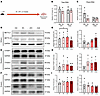 Figure 1
Subtle and transient changes in methyltransferase expression during experimental epileptogenesis. (A) Schematic depicting the experimental approach. (B) Colorimetric quantification of m6A from total RNA isolated from mouse hippocampus at acute (24 hours) and chronic time points after SE (2 weeks) compared to time-matched PBS controls (n = 3/group). Two-way ANOVA: f = 0.27, df = (3, 8), P = 0.27. (C) Colorimetric quantification of m6A on polyA-tailed RNA isolated from acute and chronic hippocampal tissue from mice as well as time-matched PBS controls (n = 3/group). Two-way ANOVA: f = 2.49, df = (3, 8), P = 0.134. (D–F) Representative Western blot analysis of m6A writers (D), readers (E) and erasers (F) at indicated time points (acute: 8 hours, 24 hours, chronic: 2 weeks) (n = 3/group). (G–I) Densitometric quantification of Western blot data for each protein. Pairwise comparison of each time point to the control. METTL3: 8 hours vs. Ctrl t = 5.24, Bonferroni-adj. P = 0.104; 24 hours vs. Ctrl t = 10.14, Bonferroni-adj. P = 0.029; 2 weeks vs. Ctrl t = –1.51, Bonferroni-adj. P = 0.810. No other significant comparisons. *P < 0.05.
We next performed the same analyses using human TLE samples compared to autopsy control tissue. Quantification of m6A abundance in total RNA was unchanged in both nonsclerotic (NS-TLE) and sclerotic (Scl-TLE) hippocampal samples from patients with TLE compared to control samples (Figure 2, A and B). We then quantified the expression of the same m6A-associated enzymes examined previously in the human TLE samples and autopsy controls. Similarly to mice, we detected no significant changes in mRNA levels of any of the m6A-associated enzymes in epilepsy (Supplemental Figure 2, A–C). We did, however, detect significant changes at the protein level. These included a significant increase in METTL3 and METTL14 protein abundance in TLE compared with control tissue (Figure 2C) as well as elevated levels of both FTO and ALKBH5 (Figure 2E) in TLE samples. There were no overt differences in the reader proteins YTHDF1 and YTHDF2 in either group (Figure 2D). Overall, in both mouse and human epilepsy, there are changes in the abundance of enzymes regulating m6A (notably METTL3 in both mouse and human and FTO and ALKBH5 in human TLE), although no gross changes in m6A were detectable using colorimetric assays.
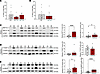 Figure 2
m6A regulators are disrupted in resected human TLE tissue compared with controls. (A) Colorimetric quantification of m6A from total RNA isolated from hippocampal tissue from controls (n = 10), nonsclerotic TLE samples (NS-TLE, n = 7) and TLE samples with sclerosis (Scl-TLE, n = 7). One-way ANOVA, F = 0.65, P = 0.5321. (B) m6A quantification from control and combined epilepsy samples. Unpaired 2-tailed Student’s t test: t = 0.8223; df = 22; P = 0.4197. (C) Western blot analysis of m6A writer proteins METTL3, METTL14, and WTAP in human TLE tissue and non-epileptic controls as well as densitometric quantification of blots (n = 11–12/group, epilepsy samples combination of Scl and NS). METTL3: Shapiro-Wilk: Ctrl: W = 0.873, P = 0.072; Epilepsy: W = 0.899, P = 0.179; F test P = 0.046; Welch’s t test: P = 0.0001, t = –5.43. METTL14: Shapiro-Wilk Ctrl: P = 0.00005; Epilepsy: P = 0.00089; Mann-Whitney test: U = 28; P = 0.0188. (D) Western blot and densitometric quantification of m6A readers YTHDF1 and 2 from epilepsy samples and matched controls (n = 11–12/group). YTHDF1: Shapiro-Wilk test: Ctrl P = 0.817; Epilepsy P = 0.0002. Mann-Whitney test: U = 40; P = 1.0. YTHDF2: unpaired 2-tailed t test; t = 0.5412, df = 21, P = 0.5941. (E) Quantification by Western blot of m6A erasers FTO and ALKBH5 from human TLE hippocampal tissue and autopsy matched controls (n = 11/12 per group). FTO: Shapiro-Wilk Ctrl: W = 0.8, P = 0.02; Epilepsy: W = 0.8, P = 0.01; Mann-Whitney test: U = 27, P = 0.0156. ALKBH5: Shapiro-Wilk: Ctrl: W = 0.743, P = 0.0023; Epilepsy: W = 0.487, P < 0.0001; Mann-Whitney test: U = 6, P < 0.0001. *P < 0.05, ****P < 0.0001.
Temporal and dynamic m6A patterning occurs in the hippocampus following SE. To examine m6A patterning in the hippocampal transcriptome in the IAKA model of TLE, we performed an m6A array on RNA isolated from mice at acute (24 hours) and chronic (2 weeks) time points after IAKA as well as time-matched control animals. We first measured gene expression irrespective of m6A status by RNA sequencing (RNA-seq) and identified a large number of genes both up- and downregulated at both the acute and chronic time points (Figure 3A, green/yellow bars). As expected, and in line with previous studies, we observed changes in expression patterns of epilepsy-associated genes, including those involved in synaptic transmission, inflammation, and cell death (Supplemental Figure 3, A–D). Profiling of the m6A-ome using m6A arrays provides transcriptome-wide coverage with single-base resolution. Overall, we identified more extensive m6A dysregulation in the acute mice compared with time-matched controls, although dysregulation was also detected in chronic mice (Figure 3A, red/blue bars). There was little overlap in differential m6A patterns in acute mice compared to chronic mice, with only 5 hypermethylated transcripts retaining their hypermethylation status into the chronic phase of the disease (Figure 3B). Hypermethylation was more prominent than hypomethylation at both time points (Figure 3C). Overall, in acute mice there were 133 hypermethylated sites and only 31 hypomethylated sites compared with controls, while in chronic mice there were 67 hyper- and 11 hypomethylated sites compared with controls (Figure 3, D and E). Some transcripts contained multiple differentially methylated sites. The majority of differential methylation events were transient, with m6A status mostly returning to baseline levels in chronic mice, suggesting potential activity and disease-stage-dependent m6A patterning (Figure 3F).
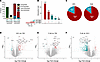 Figure 3
Epilepsy development and progression is associated with altered m6A deposition. (A) Comparison of the extent of differential gene expression compared to the number of differentially methylated transcripts at acute (24 hours) and chronic (2 weeks) time points in the IAKA model of TLE (n = 3–4/group). (B) Upset plot demonstrating the dynamic reorganization of the m6A epitranscriptome across the various stages of disease development in mice. (C) Percentage of differentially methylated transcripts at acute and chronic time points in IAKA mice exhibiting either hyper- or hypomethylation. (D–F) Volcano plots representations of differentially methylated transcripts from 24-hour (acute) (D) and chronic (2 weeks) (E) mice compared to controls and (F) comparison of differentially methylated transcripts between acute and chronic mouse hippocampus. The top 20 most differentially methylated transcripts are included on each plot.
Analysis of m6A stoichiometry on mRNA transcripts revealed asymmetric distribution of m6A across transcripts, with several-fold higher frequency in the coding sequence (CDS) followed by the 3′UTR than in the 5′UTR in control animals (Figure 4A). Acute (24 hours) and chronic (2 weeks) mice displayed a notable loss of m6A in the 5′UTR, with comparable methylation observed in the 3′UTR and CDS at each disease stage (Figure 4, B and C). To validate the array datasets, we performed methylated-RNA immunoprecipitation–qPCR (meRIP-qPCR) on several hyper- and hypomethylated transcripts. We quantified each transcript in the total RNA pool (input sample) and used this to normalize the corresponding m6A-modified transcript levels in the immunoprecipitated (IP) fraction, allowing us to assess the accuracy of the array. We observed almost complete concordance of the array data and meRIP-qPCR, which was performed from brain tissue originating from an independent cohort of animals (Figure 4, D and E). Analysis of genomic location of differentially methylated transcripts did not reveal any obvious methylation hotspots, although chromosomes 2 and 11 (Chr2 and -11) displayed more extensive differential methylation patterns (Figure 4F). Some chromosomes displayed only hypermethylation (Chr15), while others showed more extensive hypomethylation (Chr10), suggesting region-specific regulation. Ingenuity Pathway Analysis (IPA) demonstrated that differentially methylated transcripts in acute mice (24 hours) were associated with pathways such as inflammation and inflammation-related cell death and autophagy (Figure 4G), while those in chronic mice (2 weeks) were associated with IL-6 signalling and cellular communication (Figure 4H).
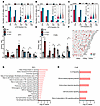 Figure 4
Disrupted m6A deposition is associated with epilepsy-associated pathways in mice. (A–C) Distribution and stoichiometry of m6A across transcripts in control (G), acute (24 hours) (H), and chronic (2 weeks) (I) hippocampus across the 3′UTR, coding sequence (CDS), and 5′UTR. (D and E) meRIP-qPCR validations of selected transcripts identified from m6A array to confirm differential methylation in acute (D) and chronic mice (E) (n = 4–5/group). Unpaired 2-tailed t test or Mann-Whitney U test applied, see Supplemental Table 3 for full statistical summary. *P < 0.05. (F) Visual mapping of genomic origin of differentially methylated transcripts from both acute and chronic mice. (G and H) Ingenuity pathway analysis (IPA) of pathway enrichment associated with differentially methylated transcripts at 24 hours (G) and 2 weeks after KA (H).
Human TLE is defined by altered m6A patterns regardless of hippocampal sclerosis and sex. Next, we profiled the m6A patterning in human TLE using surgically resected hippocampal tissue from individuals with drug-refractory TLE and compared it to age- and sex-matched autopsy control tissue (Supplemental Table 1). m6A array profiling revealed significant differential methylation across transcripts in TLE compared with autopsy control. We separated epilepsy samples into those with hippocampal sclerosis (Scl) and those without (NS) based on the neuropathology reports. Both epilepsy groups displayed significantly altered m6A patterns compared with controls (Figure 5, A and B) but we found minimal difference in m6A patterns between patients with Scl-TLE and those without (NS-TLE) (Figure 5C). Interestingly, m6A patterns were not influenced by sex (Supplemental Figure 4A). For both TLE sample types there were over 800 hyper- and more than 300 hypomethylated sites compared with controls. Hypermethylation by abundance was dominant in both the Scl and NS groups compared with control, with roughly 70% of all differential methylation events associated with an increase in m6A abundance (Figure 5D). There was significant overlap in the hypermethylated transcripts detected between the NS and Scl groups, suggesting differential m6A is a broadly conserved feature of TLE independent of pathology (Figure 5, E and F).
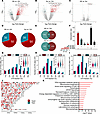 Figure 5
The m6A epitranscriptome is extensively disrupted in human TLE. (A–C) Volcano plot depictions of differentially methylated transcripts in NS human TLE versus controls (A), Scl-TLE versus controls (B), and NS- versus Scl-TLE (C) (n = 10 Ctrls, 7 NS-TLE and 7 Scl-TLE). (D) Percentages of differentially methylated transcripts in NS- and Scl-TLE that harbor hyper- or hypomethylation patterns compared to controls. (E) The overlap of differential methylation between both TLE groups compared to control tissue. (F) Upset plot showing overlap of differentially methylated transcripts and those commonly differentially methylated in NS- and Scl-TLE. (G–I) Distribution and stoichiometry of m6A across transcripts in control (G), NS-TLE (H), and Scl-TLE (I) across the 3′UTR, coding sequence (CDS), and 5′UTR. (J) Genomic origin of differentially methylated transcripts regardless of detection in Scl or NS tissue samples. (K) IPA showing significantly differentially enriched biological processes associated with m6A in NS and Scl tissue compared to controls.
Analysis of m6A stoichiometry showed a shift in deposition patterning, with an increase in the number of genes with more than 20% occupancy (Figure 5, G–I). The distribution of m6A across transcripts (i.e., 3′UTR, CDS, or 5′UTR) did not change in epilepsy regardless of Scl status (Figure 5, G–I; insets). Genomic location of encoding genes did not reveal any chromosomal hotspots of targeted methylation or demethylation, although Chr17 (which shares evolutionary roots with mouse Chr11) (36) and Chr19 contain regions of genes whose transcripts display enriched m6A activity (Figure 5J). IPA of differentially methylated transcripts from the combined epilepsy sample group highlighted autophagic pathways, mTOR signalling, and metabolism as pathways likely to be affected by disrupted methylation patterns in epilepsy (Figure 5K). The current results overall identify extensive m6A disruption in human TLE, which potentially affects several epilepsy-associated pathways.
Commonalities in m6A disturbances in experimental and human TLE. We next determined whether m6A dysregulation seen in experimental TLE is similar to that seen in the human condition by comparing our experimental TLE and human TLE datasets. Our initial analysis investigated whether m6A sites profiled in mice possess human orthologs. Between 35% and 45% of the differentially methylated m6A sites in experimental mice are orthologous in humans (Figure 6A); however, of those, only a handful were also differentially methylated in human TLE (34 gene transcripts) (Figure 6B). While specific sites were not commonly differentially methylated in both mouse and human epilepsy, there was some overlap in the functionality of transcripts that displayed differential methylation patterns such as inflammatory signalling and cell death pathways (Figure 6, C and D).
 Figure 6
Commonly differentially methylated transcripts in mouse and human are linked to inflammatory and metabolic pathways. (A) Donut plot visualization of the presence (Yes)/absence (No) of corresponding human m6A orthologous sites in differentially methylated (hyper and hypo) transcripts. (B) Overlap of differentially methylated transcripts in mouse and human with directionality and concordance. (C and D) EnrichR pathway analysis of commonly differentially methylated transcripts from mouse and human TLE.
Metabolic pathways are also perturbed at the proteomic level in human TLE. m6A may impact RNA fate in a multitude of ways, including subcellular localization, stability, and/or translational efficiency. To determine whether pathways most likely impacted by differential m6A patterning in epilepsy are functionally altered, we performed mass spectrometry (MS) to analyze the human TLE proteome using the same tissue samples used in the m6A-profiling experiment. Hierarchical clustering and principal component analysis (PCA) showed good clustering of TLE samples; while control samples also clustered together, it was evident that samples did not separate by sex regardless of condition (Supplemental Figure 4B). A large number of differentially expressed proteins were detected in the TLE groups (NS and Scl) when compared with control tissue (Figure 7, A and B). However, similar to our findings in the m6A array, the proteomes of both the NS- and Scl-TLE samples were remarkably similar (Figure 7C). IPA of differentially expressed proteins in the combined epilepsy group (Figure 7D) revealed overall disruption of many metabolism (mitochondrial dysfunction, glucose metabolism) and autophagy-related pathways. We then integrated the human m6A data with the human proteomic dataset and found an inverse correlation between m6A levels and activation or repression of the corresponding pathways (Figure 7E). These results may suggest that elevation of m6A may be a molecular brake to silence pathways.
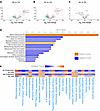 Figure 7
Proteomic analysis of human TLE reveals disruptions in metabolism and autophagic signalling. (A–C) Volcano plot overview of differentially expressed proteins in NS-TLE (A) and Scl-TLE (B) compared to controls and NS- versus Scl-TLE (C) (n = 10 Ctrls, 7 NS-TLE, 7 Scl-TLE). (D) IPA of differentially expressed proteins in combined TLE groups and pathway enrichment. (E) Representation of directional association between differential methylation and subsequent protein translation.
Bidirectional modulation of m6A alters neuronal metabolism, structure, and seizure susceptibility. The metabolic phenotype common to both mouse and human TLE prompted us to explore the effect of elevated m6A on neuronal function. First, using matured human induced pluripotent stem cell–derived (hIPSC-derived) neurons (Figure 8, A–D), we overexpressed METTL3 by transducing cells with a METTL3-overexpressing adeno-associated virus (AAV) vector (Figure 8, E and F). RNA-seq and MS analyses of lysates from these cells detected only subtle changes in both transcription and protein profiles (Figure 8, G and H). However, the pathways most perturbed by METTL3 overexpression were associated with cellular metabolism (Figure 8I). Interestingly, in METTL3-overexpressing cells many downregulated transcripts were noncoding RNAs and pseudogenes (Supplemental Figure 5). Finally, Seahorse analysis demonstrated that human neurons overexpressing METTL3 had elevated rates of glycolysis compared with nontransduced or empty AAV–transduced neurons and this was corrected by pharmacological inhibition of METTL3 (Figure 8, J and K). Overall, our data demonstrate that overexpression of METTL3 elevates the basal metabolic capabilities of even healthy neurons, making them more glycolytically active.
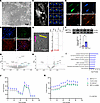 Figure 8
m6A regulates hIPSC-derived neuronal metabolism. (A) Representative bright-field image of 30-day postdifferentiation mixed hIPSC-derived cortical neurons from healthy control donor. Original magnification, ×400. (B) Expression of mature neuronal markers (vGLUT2 and TUJ1) costained with the neuronal marker Hoechst (blue) following 30 days of maturation. (C and D) Representative mature neuronal activity and firing patterns confirmed by calcium imaging (C) and patch-clamp electrophysiology (D). (E and F) AAV transduction of mature neurons was confirmed by imaging for GFP (E) and probing METTL3 overexpression by Western blot analysis and densitometric quantification (F). Scale bars: 50 μm (A and B), 50 μm (C), and 20 μm (D and E). METTL3: Mann-Whitney test: U = 3, P = 0.015 (n = 6/group. (G and H) Volcano plot depiction of differential gene expression (RNA-seq) (G), and protein levels (H) from neurons overexpressing METTL3 compared to control transduced neurons. (I) Gene ontology of differentially expressed genes and proteins by biological process. (J) Oxygen consumption rate of neurons overexpressing METTL3 compared to those that do not and those in which METTL3 is specifically inhibited. Comparison of means of normalized group data by 1-way ANOVA followed by Tukey’s multiple comparison testing: F = 0.414, P = 0.7436, n = 3 independent experiments/plates 8 wells/treatment group per plate. (K) Extracellular acidification rate of the same neurons. Comparisons of means of normalized group data by 1-way ANOVA followed by Tukey’s multiple comparison testing: F = 5.794, P = 0.0017, n = 3 independent experiments/plates with 8 wells/ treatment group per plate.
Next, to assess the effect of m6A elevation on neuronal structure we first treated mouse primary hippocampal neurons with a commercially available METTL3 inhibitor (STM2457), and then assessed the effect of elevated m6A on dendritic spine density (Figure 9A). METTL3 inhibition led to a detectable increase in m6A levels for up to 24 hours in a dose-dependent manner (Figure 9, B and C). We first measured the effect of METTL3 inhibition on spine density as a function of distance from the soma. METTL3 inhibition increased the density of spines, with no clear effect on particular branch order (Figure 9, D and E, and Supplemental Figure 6, A–D). Immunocytochemistry (ICC) for the postsynaptic density protein PSD95 uncovered increased PSD95 immunoreactivity in cultures treated with the METTL3 inhibitor along dendrites (Figure 9, D and F). This increase was apparent in branch orders 1 and 4 (Figure 9F).
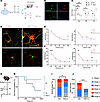 Figure 9
m6A regulates neuronal structure and network activity. (A) Schematic of experimental approach using primary hippocampal neurons from E18 mouse pups to quantify dendritic spine density in cultures treated with either vehicle or METTL3 inhibitor. (B) Representative immunostaining (original magnification, ×10) of neuronal marker BIII_Tubulin and m6A levels following either control or METTL3 inhibitor treatment. (C) Colorimetric assay quantification of neuronal m6A levels over time following treatment with various concentrations of METTL3 inhibitor. Multiple unpaired 2-tailed t tests for each time point, 10 μM 24 hours t = 7.049, df = 8, P = 0.00032; 48 hours t = 1.7, df = 7, P = 0.25; 72 hours t = 0.55, df = 7, P = 0.59. (D) Representative confocal ICC images of primary hippocampal neurons stained for βIII-tubulin and with phalloidin to visualize dendritic spines (upper panels) and βIII-tubulin and PSD95 in the bottom panels as a postsynaptic density marker. Inset shows zoomed-in image with puncta staining. Scale bars: 20 μm. (E) Dendritic spine quantification characterized by distance from soma binned into 20-μm distances and according to branch order. Distance: 2-way repeated-measures (RM) ANOVA followed by Tukey’s post hoc multiple comparisons 100 μm t = 2.174, df = (62, 55), P = 0.0335; Branch order: 2-way ANOVA no significance. n > 32 dendrites from 22 neurons per group. (F) PSD95 puncta quantification according to distance from soma and by branch order. Distance: 2-way ANOVA 20 μm t = 4.367, df = (53, 91), P = < 0.0001; 100 μm t = 2.269, df = (61, 21), P = 0.027. Branch order: 2-way ANOVA followed by multiple comparison t tests Order 1 t = 2.747, df = (63, 00), P = 0.03; Order 4 t = 3.283, df = (13, 00), P = 0.03. n > 32 dendrites from 22 neurons per group. (G) Experimental design to test whether elevated m6A levels alter seizure threshold in mice. (H) Kaplan-Meier curve depicting survival rates among vehicle- and FB23-2–treated animals following high-dose PTZ seizure challenge. Kaplan-Meier χ2 = 3.4, df = 1, P = 0.063. (I and J) Quantification of the maximum seizure stage reached (I) and total seizure numbers (J) in vehicle- or FB23-2–treated mice following PTZ administration over a 25-minute recording period, as measured using an adapted Racine scale. Seizure stage/number χ2 df = (79.37, 5), P < 0.0001. *P < 0.05; ***P < 0.01; ***P < 0.001; ****P < 0.0001.
We next tested whether recreation of the hypermethylation phenotype seen following SE alters brain excitability. To do this, we treated naive mice with an FTO inhibitor, FB23-2 (37), via intracerebroventricular (ICV) administration prior to a pentylenetetrazol-induced-seizure (PTZ-induced-seizure) challenge (Figure 9G). FB23-2 treatment reduced overall hippocampal FTO levels (Supplemental Figure 7, A and B) and elevated m6A levels compared with vehicle-treated animals (Supplemental Figure 7C and Supplemental Figure 8, A–C). A single high dose of PTZ was then administered to both groups of animals and resulting seizure dynamics were quantified using an adapted Racine scale (Supplemental Figure 8F). Overall, we found that FB23-2–treated animals were more likely to survive the PTZ challenge and recording period (Figure 9H). Although FB23-2 had no significant effect on latency to seizure onset (Supplemental Figure 8D), it did reduce the overall severity of seizures experienced by mice compared with vehicle-treated controls (Figure 9I) and the overall number of seizures mice experienced over the recording period (Figure 9J and Supplemental Figure 8E). Together, these in vitro and in vivo data demonstrate a mechanistic link between m6A levels and neuronal structure and function.


