
Research ArticleGeneticsImmunologyOncology
Open Access |  10.1172/jci.insight.184435
Ablating UNG activity in a mouse model inhibits colorectal cancer growth by increasing tumor immunogenicity
Eric S. Christenson,1,2 Brandon E. Smith,3 Thanh J. Nguyen,1,2 Alens Valentin,1 Soren Charmsaz,1 Nicole E. Gross,1 Sarah M. Shin,1 Alexei Hernandez,1 Won Jin Ho,1,2 Srinivasan Yegnasubramanian,1,2 and James T. Stivers3
1Department of Oncology, Sidney Kimmel Comprehensive Cancer Center at Johns Hopkins,
2Cancer Convergence Institute at Johns Hopkins, and
3Department of Pharmacology and Molecular Sciences, Johns Hopkins University School of Medicine, Baltimore, Maryland, USA.
Address correspondence to: Eric S. Christenson, Department of Oncology, Sidney Kimmel Comprehensive Cancer Center, Johns Hopkins University School of Medicine, 1650 Orleans Street, CRB1 Room 310, Baltimore, Maryland, 21287, USA. Phone: 410.502.8484; Email: echris14@jhmi.edu.
Find articles by Christenson, E. in: PubMed | Google Scholar
1Department of Oncology, Sidney Kimmel Comprehensive Cancer Center at Johns Hopkins,
2Cancer Convergence Institute at Johns Hopkins, and
3Department of Pharmacology and Molecular Sciences, Johns Hopkins University School of Medicine, Baltimore, Maryland, USA.
Address correspondence to: Eric S. Christenson, Department of Oncology, Sidney Kimmel Comprehensive Cancer Center, Johns Hopkins University School of Medicine, 1650 Orleans Street, CRB1 Room 310, Baltimore, Maryland, 21287, USA. Phone: 410.502.8484; Email: echris14@jhmi.edu.
Find articles by Smith, B. in: PubMed | Google Scholar
1Department of Oncology, Sidney Kimmel Comprehensive Cancer Center at Johns Hopkins,
2Cancer Convergence Institute at Johns Hopkins, and
3Department of Pharmacology and Molecular Sciences, Johns Hopkins University School of Medicine, Baltimore, Maryland, USA.
Address correspondence to: Eric S. Christenson, Department of Oncology, Sidney Kimmel Comprehensive Cancer Center, Johns Hopkins University School of Medicine, 1650 Orleans Street, CRB1 Room 310, Baltimore, Maryland, 21287, USA. Phone: 410.502.8484; Email: echris14@jhmi.edu.
Find articles by Nguyen, T. in: PubMed | Google Scholar
1Department of Oncology, Sidney Kimmel Comprehensive Cancer Center at Johns Hopkins,
2Cancer Convergence Institute at Johns Hopkins, and
3Department of Pharmacology and Molecular Sciences, Johns Hopkins University School of Medicine, Baltimore, Maryland, USA.
Address correspondence to: Eric S. Christenson, Department of Oncology, Sidney Kimmel Comprehensive Cancer Center, Johns Hopkins University School of Medicine, 1650 Orleans Street, CRB1 Room 310, Baltimore, Maryland, 21287, USA. Phone: 410.502.8484; Email: echris14@jhmi.edu.
Find articles by Valentin, A. in: PubMed | Google Scholar
1Department of Oncology, Sidney Kimmel Comprehensive Cancer Center at Johns Hopkins,
2Cancer Convergence Institute at Johns Hopkins, and
3Department of Pharmacology and Molecular Sciences, Johns Hopkins University School of Medicine, Baltimore, Maryland, USA.
Address correspondence to: Eric S. Christenson, Department of Oncology, Sidney Kimmel Comprehensive Cancer Center, Johns Hopkins University School of Medicine, 1650 Orleans Street, CRB1 Room 310, Baltimore, Maryland, 21287, USA. Phone: 410.502.8484; Email: echris14@jhmi.edu.
Find articles by
Charmsaz, S.
in:
PubMed
|
Google Scholar
|

1Department of Oncology, Sidney Kimmel Comprehensive Cancer Center at Johns Hopkins,
2Cancer Convergence Institute at Johns Hopkins, and
3Department of Pharmacology and Molecular Sciences, Johns Hopkins University School of Medicine, Baltimore, Maryland, USA.
Address correspondence to: Eric S. Christenson, Department of Oncology, Sidney Kimmel Comprehensive Cancer Center, Johns Hopkins University School of Medicine, 1650 Orleans Street, CRB1 Room 310, Baltimore, Maryland, 21287, USA. Phone: 410.502.8484; Email: echris14@jhmi.edu.
Find articles by
Gross, N.
in:
PubMed
|
Google Scholar
|
1Department of Oncology, Sidney Kimmel Comprehensive Cancer Center at Johns Hopkins,
2Cancer Convergence Institute at Johns Hopkins, and
3Department of Pharmacology and Molecular Sciences, Johns Hopkins University School of Medicine, Baltimore, Maryland, USA.
Address correspondence to: Eric S. Christenson, Department of Oncology, Sidney Kimmel Comprehensive Cancer Center, Johns Hopkins University School of Medicine, 1650 Orleans Street, CRB1 Room 310, Baltimore, Maryland, 21287, USA. Phone: 410.502.8484; Email: echris14@jhmi.edu.
Find articles by Shin, S. in: PubMed | Google Scholar
1Department of Oncology, Sidney Kimmel Comprehensive Cancer Center at Johns Hopkins,
2Cancer Convergence Institute at Johns Hopkins, and
3Department of Pharmacology and Molecular Sciences, Johns Hopkins University School of Medicine, Baltimore, Maryland, USA.
Address correspondence to: Eric S. Christenson, Department of Oncology, Sidney Kimmel Comprehensive Cancer Center, Johns Hopkins University School of Medicine, 1650 Orleans Street, CRB1 Room 310, Baltimore, Maryland, 21287, USA. Phone: 410.502.8484; Email: echris14@jhmi.edu.
Find articles by Hernandez, A. in: PubMed | Google Scholar
1Department of Oncology, Sidney Kimmel Comprehensive Cancer Center at Johns Hopkins,
2Cancer Convergence Institute at Johns Hopkins, and
3Department of Pharmacology and Molecular Sciences, Johns Hopkins University School of Medicine, Baltimore, Maryland, USA.
Address correspondence to: Eric S. Christenson, Department of Oncology, Sidney Kimmel Comprehensive Cancer Center, Johns Hopkins University School of Medicine, 1650 Orleans Street, CRB1 Room 310, Baltimore, Maryland, 21287, USA. Phone: 410.502.8484; Email: echris14@jhmi.edu.
Find articles by
Ho, W.
in:
PubMed
|
Google Scholar
|
1Department of Oncology, Sidney Kimmel Comprehensive Cancer Center at Johns Hopkins,
2Cancer Convergence Institute at Johns Hopkins, and
3Department of Pharmacology and Molecular Sciences, Johns Hopkins University School of Medicine, Baltimore, Maryland, USA.
Address correspondence to: Eric S. Christenson, Department of Oncology, Sidney Kimmel Comprehensive Cancer Center, Johns Hopkins University School of Medicine, 1650 Orleans Street, CRB1 Room 310, Baltimore, Maryland, 21287, USA. Phone: 410.502.8484; Email: echris14@jhmi.edu.
Find articles by
Yegnasubramanian, S.
in:
PubMed
|
Google Scholar
|
1Department of Oncology, Sidney Kimmel Comprehensive Cancer Center at Johns Hopkins,
2Cancer Convergence Institute at Johns Hopkins, and
3Department of Pharmacology and Molecular Sciences, Johns Hopkins University School of Medicine, Baltimore, Maryland, USA.
Address correspondence to: Eric S. Christenson, Department of Oncology, Sidney Kimmel Comprehensive Cancer Center, Johns Hopkins University School of Medicine, 1650 Orleans Street, CRB1 Room 310, Baltimore, Maryland, 21287, USA. Phone: 410.502.8484; Email: echris14@jhmi.edu.
Find articles by Stivers, J. in: PubMed | Google Scholar
Published July 15, 2025 - More info
JCI Insight. 2025;10(16):e184435. https://doi.org/10.1172/jci.insight.184435.
© 2025 Christenson et al. This work is licensed under the Creative Commons Attribution 4.0 International License. To view a copy of this license, visit http://creativecommons.org/licenses/by/4.0/.
Received: July 3, 2024; Accepted: July 9, 2025

-
Introduction
Uracil is a predominant noncanonical base found in genomic DNA that arises primarily from deoxyuridine triphosphate (dUTP) incorporation opposite to adenine by replicative DNA polymerases, producing nonmutagenic U/A base pairs (1). To a lesser extent, uracil also arises from spontaneous and enzymatic deamination of genomic cytosine bases, leading to mutagenic U/G mispairs (Figure 1). Genomic uracil arising from either pathway is efficiently excised by the uracil base excision repair (UBER) enzyme uracil DNA glycosylase (UNG) (2). The hijacking of normal thymidine biosynthesis by fluoropyrimidine (FP) drugs such as 5-fluorouracil (FU), 5-fluorodeoxyuridine (FdU), or the thymidylate synthase inhibitor pemetrexed, increases the levels of cellular dUTP and/or 5-fluorodeoxyuridine triphosphate (F-dUTP), all of which can be efficiently incorporated into DNA and excised by UNG (Figure 1) (3). In the absence of UNG, the persistence of U or FU in the template strand after 1 round of DNA replication potentiates fork arrest at the subsequent round of DNA replication and increases the toxicity of FdU in many human cancer cell lines (3–6). Thus, increased levels of U and FU in DNA are strongly associated with the therapeutic benefits of FP cancer therapy, in addition to alternative mechanisms involving incorporation of FU into RNA (7).
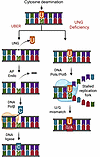 Figure 1
Loss of uracil DNA glycosylase (UNG) activity leads to persistence of uracil (U) and 5-fluorouracil (FU) bases in DNA. The uracil base excision repair pathway (UBER, left) efficiently excises U and FU (not shown) bases from DNA irrespective of whether the base pairs involve A or G. After the multiple-step pathway is complete, the excised nucleotide is replaced with either dTMP or dCMP using the coding information of the complementary strand base. In the absence of UNG activity (right), U or FU residues persist, leading to transition mutations after the DNA replication machinery encounters the lesion (U/G → T/A). U and FU lesions located on the template strand have been implicated in stalled DNA replication forks, and due to increased wobble base pairing, increase the misincorporation of guanine opposite to the U or FU base. Created with Biorender.
We and others have described how UNG protein depletion, or inhibition of its catalytic activity using the small UNG inhibitor protein (UGI), can significantly increase the potency of FdU or pemetrexed in human cancer cell lines (3–6, 8, 9). The Gerson group reported that a short-hairpin RNA (shRNA) targeting human UNG led to sensitization of p53-mutant cancer cells to FdU (5), and that depletion of UNG in a mouse xenograft model of lung cancer reduced tumor growth in combination with pemetrexed treatment (10). Lentiviral transduction of doxycycline-inducible UGI into 11 human colorectal cancer (CRC) cell lines showed a 6- to 70-fold increase in FdU potency for 6 of the cell lines, suggesting that therapeutic potential exists for small-molecule targeting of hUNG (3). Despite the general agreement between the UNG depletion and inhibition results in cell lines, the fact that UNG uses its 90–amino acid noncatalytic N-terminal domain (NTD) to interact with replication protein A (RPA) and proliferating cell nuclear antigen (PCNA), raises the possibility that loss of the protein-protein interactions in the depletion approach could be more detrimental to cancer cell growth than inhibition alone in some contexts, including in vivo studies (11–16). Indeed, recent findings from several groups have established that the prereplicative excision of uracil by UNG depends on its interaction with both PCNA and RPA and that removal of uracil in the template strand precipitates fork arrest and reversal, followed by repair and replication restart (4, 14).
There has been substantial interest in taking advantage of the defective DNA damage repair (DDR) phenotypes of some cancers (17), or using drugs that target DNA replication (18, 19), to increase the immunogenicity of tumors. Such strategies are typically based on paradigms of increasing the tumor mutational burden (TMB) and resulting tumor-associated neoantigens (20), or increasing type I IFN expression through nucleic acid–driven cGAS/STING activation (21). Both approaches are expected to be complementary with immune checkpoint blockade (ICB). The strong association of FdU and UNG with replication fork arrest suggests that nucleic acid–driven immune-potentiating effects might be expected in this context. This view, while speculative, is supported by the observation that replication-targeting agents result in rapid immune-potentiating outcomes, while increases in TMB require more time. Thus, in vivo studies with immunocompetent mice focusing on UNG inhibition/depletion in the context FdU treatment are of interest in testing these mechanisms.
In this study, we explore the therapeutic effects of FdU chemotherapy combined with UNG inhibition or depletion in 2 different syngeneic mouse models with different DDR phenotypes. When MC38 mismatch repair–deficient (MMR-deficient) CRC cells were inoculated into C57BL/6J mice and UGI expression was induced to inhibit UNG activity, delayed tumor growth and prolonged survival were observed only when combined with FdU treatment. Surprisingly, shRNA depletion of UNG (shRNAUNG) in the same MC38-C57BL/6J mouse model resulted in 70% of the mice clearing their tumors, and the addition of FdU had no further effect. In contrast, when MMR-proficient CT-26 colorectal tumor cells were injected into BALB/c mice, shRNA depletion of UNG showed no therapeutic benefit alone, or when combined with FdU, but a beneficial effect on tumor growth and survival was observed when UNG depletion was combined with anti–PD-1 (aPD1) antibody therapy. These combined findings suggest that UNG depletion alone can potentiate immunogenicity of tumors in a DDR-deficient mouse even in the absence of chemotherapy (i.e., MC38 cells in C57BL/6J mice), and that increased tumor immunogenicity is a key in vivo manifestation of UNG depletion.
-
Results
Inhibition and shRNA depletion of UNG in MC38 and CT-26 mouse CRC cells. We previously reported that inhibition of the catalytic activity of human UNG using the UGI protein increased the potency of FdU in over 50% of the human CRC lines that were tested (3). Similar effects have also been reported using shRNA knockdown of the UNG protein (4). As noted above, shRNA depletion may not always be equivalent to inhibition because the UNG NTD can still bind to RPA and PCNA in the context of UNG inhibition, allowing UNG to localize at replication forks and serve its scaffolding function (Figure 2A) (13).
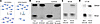 Figure 2
Two approaches for disrupting uracil DNA glycosylase (UNG) activity. (A) Two parallel approaches were used to understand whether inhibition of UNG activity or depletion of the entire enzyme molecule produced similar effects in syngeneic mouse models of colorectal cancer. Inhibition of UNG catalytic activity was achieved through inducible expression of the potent small UNG inhibitor (UGI) protein in the MC38 murine colon cancer cell line using lentiviral transduction methods. This maintains scaffolding functions of the protein and abrogates enzymatic activity. Depletion of the total UNG protein was achieved through doxycycline-inducible expression of UNG-specific shRNA (shRNAUNG sequence A) using lentiviral transduction methods. This inhibits both scaffolding and enzymatic functions. Depletion may not be equivalent to inhibition because the UNG N-terminal domain (NTD) remains intact in the context of UGI inhibition, which could still allow UNG to localize to replication forks through its known protein-protein interactions (see text). (B) To establish the inducible inhibition by UGI, we collected cell extracts from induced and noninduced MC38 cell cultures and measured the UNG activity using a 5′-FAM–labeled 19mer DNA substrate containing a single uracil. Excision of uracil from this substrate results in a 9mer 5′-FAM–labeled product that can be resolved from the substrate by denaturing polyacrylamide gel electrophoresis. Greater than 97% inhibition of UNG activity was achieved through induction of UGI. Controls included the addition of purified UNG enzyme to the substrate in the absence of extract, and a no-extract negative control. (C) The same activity assay was used to test the efficacy of inducible shRNAUNG in MC38 cells (70% knockdown), and (D) CT-26 cells (90% knockdown). Two biological replicates of each UNG activity experiment were performed.
To compare the effects of UNG inhibition and shRNA depletion in MC38 and CT-26 mouse CRC cells, we first assessed the extent of inhibition and depletion using cell extracts and a previously described UNG uracil excision activity assay (Figure 2, B–D) (22). This assay measures the glycosylase activity through the use of a 5′ fluorescein–labeled (5′-FAM–labeled) ssDNA that contains a single deoxyuridine residue. Excision of the uracil by UNG produces a 9mer DNA fragment that is diagnostic and highly specific for UNG activity. Specificity is confirmed by addition of purified UGI to the extract, which results in complete inhibition of the UNG activity in the extract, but not other glycosylases (23). These activity measurements revealed that UGI induction in MC38 cells resulted in complete inhibition of UNG activity, while shRNA depletion in MC38 and CT-26 cells resulted in 70% and 90% inhibition of the catalytic activity, respectively (Figure 2, B–D).
We also determined that UNG inhibition or depletion had no effect on the in vitro growth rate of MC38 or CT-26 cells (Supplemental Figure 1; supplemental material available online with this article; https://doi.org/10.1172/jci.insight.184435DS1), and therefore, any observed differences in tumor growth in mice cannot arise from these effects. Furthermore, unlike many human CRC cells previously studied (22), neither the MC38 nor CT-26 cells showed enhanced FdU cytotoxicity when UNG was inhibited or depleted (Supplemental Figure 2). Indeed, in vitro dose-response studies with FdU showed that MC38 cells were protected against FdU cytotoxicity when UGI was induced. Similarly increased resistance to FdU was previously observed for a human cell line (HCC2998) when UGI expression was induced, but the detailed basis for this protective response in some cell lines is not known. Importantly, these in vitro findings indicate that any beneficial therapeutic effect of UNG inhibition/depletion in syngeneic mice could not reasonably be attributed to increased tumor cell toxicity of FdU.
Antitumor effects of UNG inhibition and FdU chemotherapy in C57BL/6J mice. To determine the impact of UNG inhibition on MC38 tumor growth and mouse survival, we introduced the cDNA sequence of UGI into a CW57.1 doxycycline-inducible lentiviral expression plasmid and introduced the expression construct into MC38 cells, which were injected into the right hind limb of female C57BL/6J mice (60 mice total in 2 independent experiments) (Figure 3). The mice were divided into 4 experimental groups (Figure 3A): (a) UNG+, no doxycycline induction of UGI (UNG proficient) with no FdU treatment; (b) UNG–, doxycycline induction of UGI (UNG inhibition) with no FdU treatment; (c) UNG+/FdU, no UNG inhibition and FdU treatment; and (d) UNG–/FdU, combination of UNG inhibition and FdU treatment. In all test groups, FdU was administered by intraperitoneal injection using a 50 mg/kg daily dose on days 3 to 12, and UNG inhibition was induced with doxycycline starting on day zero. Tumor volumes and survival for the 4 experimental groups were measured over 70 days. A trend toward slower tumor growth was observed for the combination UNG–/FdU group as compared with the groups with FdU or UNG inhibition alone (UNG–/FdU vs. UNG+/FdU, P = 0.09; UNG–/FdU vs. UNG–, P = 0.12). (Figure 3B). A Kaplan-Meier survival analysis indicated significant differences between the test groups using the log-rank Mantel-Cox test (Figure 3C: UNG–/FdU vs. UNG+/FdU, P = 0.005; UNG–/FdU vs. UNG–, P = 0.005).
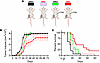 Figure 3
MC38 tumor growth and mouse survival in a syngeneic colon tumor model using FdU alone or in combination with UNG inhibition with UGI. We introduced the cDNA sequence of UGI into a CW57.1 doxycycline-inducible lentiviral expression plasmid and introduced the expression construct into MC38 cells. After confirming successful inducible inhibition of UNG in the transduced cell line (see Figure 2B), 2.5 × 10⁵ MC38 cells were injected into the right hind limb of female C57BL/6J mice. Overall, 60 mice were used in 2 independent experiments. In the first experiment, the mice were divided into 4 groups of 5 mice, and the second, 4 groups of 10 mice. The 4 experimental groups were (a) UNG+, empty vector with no UNG inhibition and no FdU treatment, (b) UNG–, UNG inhibition with no FdU treatment; 1, (c) FdU treatment with no UNG inhibition (UNG+/FdU) and, (d) combination of UNG inhibition and FdU treatment (UNG–/FdU). (A) FdU was administered by intraperitoneal injection using a 50 mg/kg daily dose on days 3 to 12 and UNG inhibition was induced with doxycycline starting on day 1. (B) Tumor volumes for the 4 experimental groups were measured on the indicated days. Measurements from the replicate experiments were pooled and plotted for statistical analysis (n = 15 for each group). Error bars for tumor growth are SEM. Tumor growth curves were compared using an unpaired 2-tailed t test between groups: UNG–/FdU vs. UNG+/FdU (P = 0.09) and UNG–/FdU vs. UNG– (P = 0.12). (C) Kaplan-Meier survival analysis for the 4 experimental groups (n = 15 per group). Statistical comparisons of survival between groups used the log-rank Mantel-Cox test: UNG–/FdU vs. UNG+/FdU (P value = 0.005 and UNG–/FdU vs. UNG– (P = 0.005).
UNG inhibition changes the immune microenvironment of MC38 tumors in C57BL/6J mice. To determine the local immunological effects of UNG inhibition by UGI in the MC38-C57BL/6J mouse model, MC38 cells containing the UGI inducible expression construct were injected into the right hind limb of female C57BL/6J mice (4 groups of 10 mice as indicated in Figure 3A). Mice were sacrificed on day 20, and the tumors were excised, homogenized, and stained with a panel of 40 immune cell–specific antibodies tagged with heavy metal isotopes for analysis by mass cytometry by time of flight (CyTOF) (Figure 4 and Supplemental Figure 3) (24).
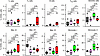 Figure 4
Measurement of the tumor microenvironment with CyTOF demonstrates inhibiting UNG catalytic activity with UGI in combination with FdU treatment alters the immune microenvironment. To determine the influence of UNG inhibition via UGI on the MC38 tumor microenvironment, 2.5 × 10⁵ MC38 cells containing the CW57.1 UGI guide were injected into the right hind limb of female C57BL/6J mice (20 total). Mice were divided into 4 groups of 10 mice; (a) Control, (b) UNG inhibition via doxycycline-induced UGI expression starting on day one, (c) floxuridine (FdU) treatment at 50 mg/kg/dose daily via intraperitoneal injection days 3 to 12, and (d) UNG inhibition combined with FdU treatment. On day 20, mice were sacrificed and tumors excised. Tumors were then homogenized and stained with a panel of 40 antibodies with the Fc region complexed with unique heavy metal isotopes. This demonstrated a numerical increase in CD4+ T lymphocytes and B cells in the combination treatment group. Selected cell subtypes are shown in the figure with an entire list and heatmap provided in Supplemental Figure 8. Data are shown as box-and-whisker plots, with the mean indicated by a horizontal line, middle quartiles represented by the box bounds, and range denoted by the whiskers. Significance calculated using pairwise 2-tailed t tests. P values were adjusted for multiple comparisons within each cell type using Benjamini-Hochberg. Tc cells, CD8+ T lymphocytes; Th cells, CD4+ T lymphocytes; Treg cells, regulatory T cells; Mac_III, CD206–CD11b+Ki67+ macrophages; Mac_VII, CD206–CD11b+Ki67+IAIE+ macrophages; Mac_IX, CD206+CD11b+Ki67+PD-L1– macrophages; Monocyte_I, CD11b+Ly6G+ monocytes; Monocyte_II, CD11b+Ly6G+PD-L1+IAIE+ monocytes.
Several changes were notable within the myeloid compartment. UNG inhibition led to a trend toward increases in subpopulations of CD11b+F4/80+ macrophages that were positive for the MHC-II marker IAIE (Mac_I, Mac_IV; P = 0.156, P = 0.092). FdU treatment alone showed a trend toward enrichment for subsets of macrophages that were negative in expression of CD206 (Mac_II) and CD80+CD86+ (Mac_VI) (P = 0.18, P = 0.046). Also, FdU treatment also showed a trend toward increases in a Ly6C+ subset of monocytes positive for IAIE (Monocyte_II) (P = 0.066). Consistent with these changes within the myeloid compartment that suggest improved antigen presentation and T cell activation, increased CD8+ cytotoxic T (Tc) cells and CD4+ helper T (Th) cells were also observed in the combination arm, although these changes were not statistically significant.
shRNA knockdown of UNG leads to clearance of MC38 tumors in C57BL/6J mice. For comparison with the UGI inhibition results, we performed shRNA depletion of UNG in the MC38-C57BL/6J mouse model (Figure 5). A doxycycline-inducible shRNA construct that targeted UNG (shRNAUNG; sequence A), and a control shRNA (shRNActrl) that did not target any genomic mRNA sequence were introduced into MC38 cells (Supplemental Table 1). The transfected cells were injected into the right hind limb of female C57BL/6J mice in 2 independent experiments with 4 groups of 10 mice. Tumor volumes were measured on the indicated days for the 4 test groups (Figure 5A): (a) shRNActrl without FdU treatment, (b) shRNActrl with FdU treatment, (c) shRNAUNG without FdU treatment, and (d) shRNAUNG with FdU treatment. In contrast with UNG inhibition, UNG depletion alone showed a significant effect on tumor growth and the addition of FdU had no further benefit (Figure 5A). Seven out of 10 mice in both the shRNAUNG and shRNAUNG/FdU treatment groups had cleared their tumors 7 days after inoculation, as compared with only 1 mouse receiving the shRNActrl (Figure 5B). The effects on tumor growth between the experimental groups were highly significant: shRNActrl versus shRNAUNG (P < 0.0001), shRNActrl plus FdU treatment versus shRNAUNG (P = 0.003), and shRNActrl plus FdU versus shRNAUNG plus FdU (P = 0.003). UNG depletion alone and in combination with FdU also produced a significant beneficial effect on survival (Figure 5C): shRNAUNG versus shRNActrl (P = 0.0009), shRNActrl plus FdU treatment versus shRNAUNG (P = 0.013), and shRNActrl plus FdU versus shRNAUNG plus FdU (P = 0.012).
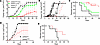 Figure 5
shRNA knockdown of UNG leads to clearance of MC38 tumors in C57BL/6J mice. To determine the antitumor effects of UNG protein depletion in the presence and absence of FdU treatment, we used 2 doxycycline-inducible shRNA constructs that targeted UNG (shRNAUNG seq A, shRNAUNG seq B), and a control shRNA (shRNActrl) that did not target any genomic mRNA sequence. After confirming successful delivery of the shRNAUNG and shRNActrl constructs, 2.5 × 10⁵ MC38 cells were injected into the right hind limb of female C57BL/6J mice. The experiment, which was performed twice, with each experiment consisting of 4 groups of 10 mice: (a) shRNActrl without FdU treatment, (b) shRNActrl with FdU treatment, (c) shRNAUNG without FdU treatment, and (d) shRNAUNG with FdU treatment. FdU treatment was performed in an identical fashion as described in the legend to Figure 3. (A) Tumor volumes for the 4 experimental groups were measured on the indicated days using shRNAUNG sequence A. (B) Tumor volumes for 10 individual mice inoculated with shRNAUNG sequence A and shRNActrl in the presence and absence of FdU. The asterisk indicates the overlapping data for 7 mice receiving shRNAUNG sequence A that had no palpable tumors. One mouse receiving the shRNActrl also had no palpable tumors. Error bars are SEM. Tumor growth was compared using an unpaired 2-tailed t test between the experimental groups: shRNActrl vs. shRNAUNG sequence A (P < 0.0001), shRNActrl + FdU treatment vs. shRNAUNG (P = 0.003), and shRNActrl + FdU vs. shRNAUNG + FdU (P = 0.003). (C) Kaplan-Meier survival analysis for the 4 experimental groups. Seven out of 10 mice in both the shRNAUNG (sequence A) and shRNAUNG/FdU treatment groups had cleared their tumors 7 days after inoculation. Survival comparisons were made the log-rank Mantel-Cox test: shRNAUNG vs. shRNActrl (P = 0.0009), shRNActrl + FdU treatment vs. shRNAUNG (P = 0.013), and shRNActrl + FdU vs. shRNAUNG + FdU (P = 0.012). (D and E) Given the absence of an effect of FdU in the experiments in A and B, shRNA depletion of UNG was repeated in an additional experiment with the alternative shRNA guide shRNAUNG sequence B in the absence of FdU (5 mice per group), showing similar results.
In a control experiment, shRNA depletion of UNG was repeated using a different shRNA (shRNAUNG; sequence B) (Supplemental Table 1). Given the absence of an effect of FdU in the experiments in Figure 5, A and B, this control experiment was performed in the absence of FdU using 5 mice per experimental group (Figure 5, D and E). The results using this alternative shRNA were comparable to shRNAUNG sequence A under the same condition. Thus, for all subsequent experiments described in the later figures and text, shRNAUNG sequence A was used exclusively.
shRNA knockdown of UNG increases immunological response to MC38 tumors in C57BL/6J mice. We also used CyTOF to analyze the immune responses to shRNAUNG and shRNActrl in 20 female C57BL/6J mice (10 mice for each shRNA construct). On day 7, mice were sacrificed, and the tumors were excised, homogenized, and analyzed with CyTOF.
Statistically significant increases in monocyte (MC) subtype 2 (subtype of CD11b+Ly6C+ monocytes [PD-L1hi]) and CD11c+ dendritic cells (DC subtype 2 [IAIEhiCD40hiPD-L1hiCD80lo]), were observed between the shRNAUNG and shRNActrl groups (P = 0.0079 and P = 0.02, respectively). We also observed decreases in “M2 subtype 2,” which have antiinflammatory M2-like cell surface markers (IAIE–CD40–CD206+/int) (P = 0.0013) (Figure 6). As observed with UGI inhibition, higher mean numbers of Tc, Th, and B cells were observed in the shRNAUNG group, but the effects were not statistically significant (P > 0.05).
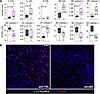 Figure 6
Determination of the influence of UNG depletion on the MC38 tumor microenvironment using CyTOF and IMC. (A) In the CyTOF experiment, 2.5 × 10⁵ MC38 cells expressing shRNAUNG or shRNActrl were injected into the right hind limb of female C57BL/6J mice (20 mice total: 10 mice for each experimental group). On day 7, the mice were sacrificed and the tumors were excised. Tumors were homogenized and stained with a panel of 40 antibodies tagged with heavy metal isotopes for analysis by CyTOF. A Kruskal-Wallis analysis demonstrated statistically significant changes in monocyte, DC, and macrophage subpopulations. Selected cell subtypes are shown in the figure. The entire list and a heatmap plot of the data is provided in Supplemental Figures 7 and 9. Data are shown as box-and-whisker plots, with the mean indicated by a horizontal line, middle quartiles represented by the box bounds, and range denoted by the whiskers. Tc cells, CD8+ T lymphocytes; Th cells, CD4+ T lymphocytes; NK cells, natural kill cells; DC subtype 1, CD11B+IAIE+CD80+CD11C+CD40+; DC subtype 2, CD11B+IAIE+CD80–CD11C+CD40+; Mac_I, CD206–CD11B+IAIE–Ki67–CD40–Ly6C– macrophages; Mac_III, CD206+PD-L1+Ki67–CD40+ macrophages; Mac_IV, CD206+PD-L1+CD40– macrophages; Monocyte_I, Ly6C+PD-L1–IAIE+CD40–Ki67–CD206– monocytes; Monocyte_II, Ly6C+PD-L1+IAIE–CD40–Ki67–CD206– monocytes; Monocyte_III, Ly6C+PD-L1+IAIE+CD40–Ki67–CD206– monocytes. (B) Shows representative images from the IMC experiment demonstrating lower levels of intratumoral Tregs and higher levels of cytotoxic T cells in the UNG-depleted tumors. Scale bar: 100 μm. IMC subpopulation densities are shown in Supplemental Figure 10.
We also used imaging mass cytometry (IMC) to analyze the intratumoral immune microenvironment of MC38 tumors when shRNAUNG and shRNActrl were expressed in female C57BL/6J mice (4 mice for each shRNA construct). It should be noted that quantitative agreement between CyTOF and IMC measurements may not be observed because the CyTOF analysis is referenced to live cells and reports on intratumoral and peritumoral cell populations, whereas IMC is referenced to CD45+ cells and reports only intratumoral populations. Nevertheless, the approaches provide a complementary picture of immune cell populations responding to the tumor phenotype. For the IMC analysis, mice were sacrificed on day 7, tumors excised, fixed in formalin, cut, and placed onto slides for analysis.
IMC identified significantly higher numbers of proliferative T cells in MC38 tumors expressing shRNAUNG as compared with shRNActrl (P = 0.014), indicating a strong general T cell response to UNG depletion. Consistent with the CyTOF findings, there were higher mean numbers of Tc lymphocytes, although these did not reach statistical significance (P = 0.25). The IMC analysis detected higher numbers of M1 macrophages (CD68+CD11c+) in the setting of UNG depletion (P = 0.021) (Supplemental Figure 4). IMC also detected lower numbers of granulocytes and Tregs in the UNG depletion condition, although these results did not reach high statistical significance (P = 0.14 and P = 0.21, respectively). (Granulocytes and Tregs were not analyzed in the CyTOF experiment.) Thus, IMC identified changes in the intratumoral compartment that trended toward higher numbers of Tc lymphocytes and M1 macrophages. There were also trends toward reduced numbers of Tregs and granulocytes, suggesting that depletion of UNG produces antitumor effects in the tumor microenvironment (representative image, Figure 6B).
Depletion of CD8+ T lymphocytes ablates the tumor growth and survival benefits of UNG knockdown in the MC38 murine model. Since the CyTOF analyses of the UGI/FdU combination and single-agent shRNAUNG regimes suggested changes in the tumor microenvironment that could promote the action of CD8+ Tc cells, we performed a depletion experiment where C57BL/6J mice were treated with anti-CD8 depletion antibodies twice weekly (Figure 7). Since there was no beneficial effect of FdU in the context of expressing shRNAUNG in MC38 tumors (Figure 5), the depletion of CD8+ Tc cells was performed without administering FdU. Accordingly, the test groups were (a) shRNActrl without CD8+ cell depletion (shRNActrl CD8proficient), (b) shRNActrl with CD8+ cell depletion (shRNActrl CD8depleted), (c) shRNAUNG without CD8+ cell depletion (shRNAUNG CD8proficient), and (d) shRNAUNG with CD8+ cell depletion (shRNAUNG CD8depleted). The experiment was performed twice with 5 mice per experimental group and the combined data from both experiments are shown in Figure 5. Consistent with a key role of CD8+ T cells in the observed antitumor effects of the UNG knockdown, tumor volumes for the shRNAUNG CD8proficient experimental group were significantly reduced as compared with the shRNAUNG CD8depleted group (P = 0.007) (Figure 5A). Indeed, in the absence of the CD8+ cell response, the shRNAUNG CD8depleted group fared no better than the shRNActrl CD8depleted group. Consistent with the effects on tumor growth, the CD8proficient tumors with UNG depletion showed significantly improved survival as compared with the CD8depleted groups (P = 0.003). Indeed, 7 of the mice in the shRNAUNG CD8proficient group cleared their tumors, while only 1 mouse in the shRNActrl CD8proficient group showed clearance. These data establish a strong CD8+ T cell component to the antitumor effects of depleting UNG in MC38 cells
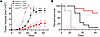 Figure 7
Depletion of CD8+ T lymphocytes ablates the tumor growth and survival benefits of UNG depletion in MC38 tumor–bearing mice in the absence of FdU. C57BL/6J mice were treated with anti-CD8 depletion antibodies twice weekly to interrogate the contribution of CD8+ lymphocytes to the tumor clearance observed with UNG knockdown. Female C57BL/6J mice were injected with 2.5 × 10⁵ MC38 cells containing either shRNAUNG or shRNActrl. The CD8+ cell depletion experiment was performed twice with 5 mice per experimental group. These panels show the combined data from both experiments: (a) shRNActrl without CD8+ cell depletion (shRNActrl CD8proficient), (b) shRNActrl with CD8+ cell depletion (shRNActrl CD8depleted), (c) shRNAUNG without CD8+ cell depletion (shRNAUNG CD8proficient), and (d) shRNAUNG with CD8+ cell depletion (shRNAUNG CD8depleted). (A) Tumor volumes for the 4 experimental groups were measured on the indicated days. Error bars for tumor growth are SEM. Tumor growth curves were compared using an unpaired 2-tailed t test. For shRNAUNG CD8proficient tumors, there was significantly reduced tumor growth as compared with both CD8depleted groups (P = 0.007). (B) Kaplan-Meier survival analysis for the 4 experimental groups. For shRNAUNG CD8proficient tumors, there was significantly improved survival in the UNG-depleted group as compared with both CD8depleted groups (P = 0.003, log-rank Mantel-Cox test). Seven of the mice in the shRNAUNG CD8proficient group cleared their tumors.
Effects of UNG knockdown in BALB/c mice inoculated with CT-26 colorectal tumors. Since different mouse syngeneic models can show different responses to chemotherapy and ICB, we explored the antitumor effects of UNG protein shRNA depletion in the presence and absence of FdU treatment in the MMR-competent CT-26 tumor syngeneic model grown in the BALB/c mouse strain, using the same doxycycline-inducible shRNA constructs, shRNAUNG sequence A and shRNActrl. (We elected not to pursue the UNG inhibition approach with UGI in this mouse line because of the more favorable effects of UNG depletion observed in the MC38 line.) The experiment was performed twice, with 5 mice and 10 mice per group, respectively, and the tumor volumes and survival data from the replicate experiments were combined and plotted for statistical analysis (n = 15 for each group). The same test groups and FdU delivery protocols were used as described in the legend to Figure 5 for the MC38 mouse model (Figure 8A).
 Figure 8
shRNAUNG knockdown in BALB/c mice inoculated with CT-26 tumors. The antitumor effects of UNG protein shRNA depletion in the presence and absence of FdU treatment was investigated in the BALB/c MMR-competent mouse strain. CT-26 cells (5 × 10⁵) were injected into the right hind limb of female BALB/c mice. The experiment was performed twice, with 5 mice and 10 mice per group. (A) The 4 groups in each experiment were (a) shRNActrl without FdU treatment, (b) shRNActrl with FdU treatment, (c) shRNAUNG without FdU treatment, and (d) shRNAUNG with FdU treatment. The FdU treatment was performed in an identical fashion as described in the legend to Figure 3. (B) Tumor volumes for the 4 experimental groups were measured on the indicated days. Tumor volumes from the replicate experiments were combined and plotted for statistical analysis (n = 15 for each group). Error bars are SEM, and differences in tumor growth were compared using an unpaired 2-tailed t test. A significant reduction in tumor growth was observed for shRNActrl + FdU vs. shRNActrl (P = 0.0005), but depletion of UNG had no statistically significant benefit in this syngeneic model. (C) Kaplan-Meier survival analysis for the 4 experimental groups. Survival comparisons between groups used the log-rank Mantel-Cox test, which showed improved survival with shRNActrl + FdU versus shRNActrl (P = 0.0002). Depletion of UNG had no statistically significant benefit on survival in this syngeneic model.
The experiment involved subcutaneous injection of CT-26 cells into the right hind limb of female BALB/c mice. In the absence of FdU, the shRNAUNG test group showed modestly slower tumor growth and increased survival as compared with shRNActrl (P = 0.022) (Figure 8, B and C). However, in the presence of FdU there was no statistically significant benefit of UNG depletion, although a significant reduction in tumor growth (P < 0.0001 and P < 0.0001) and increased survival (P < 0.0001 and P < 0.0001) were observed for both the shRNActrl plus FdU and shRNAUNG plus FdU groups as compared with shRNActrl. Thus, unlike the MC38 mouse model, depletion of UNG had minimal benefit in the CT-26 MMR-competent mouse model.
Combining aPD1 therapy with UNG depletion delays CT-26 tumor growth in BALB/c mice. Given that UNG depletion did not result in a beneficial response in the CT-26 mouse model (Figure 8), and the previously reported immunogenicity of CT-26 tumors (25), we combined aPD1 with UNG depletion to explore whether PD-1–mediated T cell suppression might play a role in the poor response to UNG depletion alone. In the combination experiment, female BALB/c mice were injected with aPD1 antibodies twice weekly via intraperitoneal injection and 5 × 10⁵ CT-26 cells containing either shRNAUNG or shRNActrl were introduced into the right hind limb by subcutaneous injection. The experiment was performed twice with 4 experimental groups of 5 mice each (Figure 9A): (a) shRNActrl without aPD1 antibodies (shRNActrl/aPD1–), (b) shRNActrl with aPD1 antibodies (shRNActrl/aPD1+), (c) shRNAUNG without aPD1 antibodies (shRNAUNG/aPD1–), and (d) shRNAUNG with aPD1 antibodies (shRNAUNG/aPD1+). Tumor growth measurements taken over 60 days showed no significant differences between the no-treatment control and the 2 monotherapy groups (shRNActrl/aPD1+ and shRNAUNG/aPD1–) (Figure 9, B and C). In contrast, the shRNAUNG plus aPD1 combination therapy group showed reduced tumor growth as compared with the 2 monotherapy groups (shRNActrl/aPD1, P = 0.06; and shRNAUNG/aPD1–, P = 0.024). A survival analysis of the 4 experimental groups showed significantly improved survival with the combination regimen as compared with the no-treatment control and aPD1 monotherapy alone (P = 0.005) (Figure 9D).
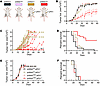 Figure 9
Anti–PD-1 therapy in the context of UNG depletion delays CT-26 tumor growth and increases BALB/c mouse survival in a CD8+ T cell–dependent manner. (A) BALB/c mice were treated with anti–PD-1 (aPD1) antibodies (0.1 mg twice weekly via intraperitoneal injection), with or without shRNA-mediated UNG depletion (shRNAUNG). Female mice were injected with 5 × 10⁵ CT-26 cells expressing either shRNAUNG or shRNActrl, and the experiment was performed twice with 4 groups consisting of 5 mice each: (a) shRNActrl without aPD1 antibodies (shRNActrl/aPD1–), (b) shRNActrl + aPD1 antibodies (shRNActrl/aPD1+), (c) shRNAUNG without aPD1 antibodies (shRNAUNG/aPD1–), and (d) shRNAUNG + aPD1 antibodies (shRNAUNG/aPD1+). (B) Tumor growth for the 4 experimental groups was measured on the indicated days (colors correspond to A). Error bars for tumor growth are SEM, and the significance between groups was evaluated using an unpaired 2-tailed t test. A reduced growth rate for shRNAUNG/aPD1+ vs. shRNActrl/aPD1+ was observed (P = 0.026), while tumor growth in the mice receiving the 2 monotherapy regimes did not differ from the no-treatment control. (C) Tumor growth kinetics for individual CD8proficient mice receiving the shRNActrl/aPD1+ (tan square) and shRNAUNG/aPD1+ (red triangle) treatments. (D) Survival of the 4 experimental treatment groups (colors correspond to A). Significance was tested using the log-rank Mantel-Cox test, which showed a significantly improved survival in CD8proficient mice treated with shRNAUNG/aPD1+ vs. shRNActrl/aPD1+ (P = 0.005). (E) Tumor growth kinetics for CD8depleted mice using the 4 treatments: shRNActrl/aPD1– (black circle), shRNActrl/aPD1+ (tan square), shRNAUNG/aPD1– (pink triangle), and shRNAUNG/aPD1+ (red triangle). Tumors volumes were measured on the indicated days and the error bars are SEM. No significant differences in the tumor growth curves for the 4 groups of CD8depleted mice were observed as determined by an unpaired 2-tailed t test (P > 0.05). (F) Survival of CD8depleted mice using the 4 treatment modalities [shRNActrl/aPD1– (black circle), shRNActrl/aPD1+ (tan square), shRNAUNG/aPD1– (pink triangle), and shRNAUNG/aPD1+ (red triangle)] showed no significant differences as determined by an unpaired 2-sided t test (P > 0.05).
CD8+ depletion ablates the benefit of aPD1 therapy with UNG depletion in CT-26 tumors. To determine whether the synergy observed between aPD1 therapy and UNG depletion in the CT-26 tumor model was CD8+ T cell dependent, the depletion of cytotoxic CD8+ T cells was performed in combination with aPD1 and/or UNG depletion. Accordingly, the test groups were (a) shRNActrl without CD8+ cell depletion (shRNActrl CD8proficient), (b) shRNActrl with CD8+ cell depletion (shRNActrl CD8depleted), (c) shRNActrl/aPD1+ without CD8+ cell depletion (shRNActrl/aPD1+ CD8proficient), (d) shRNActrl/aPD1+ with CD8+ cell depletion (shRNActrl/aPD1+ CD8depleted), (e) shRNAUNG without CD8+ cell depletion (shRNAUNG CD8proficient), (f) shRNAUNG with CD8+ cell depletion (shRNAUNG CD8depleted), (g) shRNAUNG/aPD1+ without CD8+ cell depletion (shRNAUNG/aPD1+ CD8proficient), and (h) shRNAUNG/aPD1+ with CD8+ cell depletion (shRNAUNG/aPD1+ CD8depleted). Consistent with a key role of CD8+ T cells in the observed antitumor effects of combined aPD1 and UNG knockdown, there was no difference in tumor volumes between shRNActrl alone and those with aPD1 treatment and/or UNG depletion (Figure 9, E and F). As was observed in prior experiments in the CD8proficient background, there was significantly reduced tumor growth and improved murine survival when mice with CT-26 tumors had combined shRNAUNG and aPD1. These data establish a strong CD8+ T cell component to the antitumor effects of aPD1 and UNG depletion in the CT-26 tumor model.


