
Research ArticleCOVID-19Therapeutics
Open Access |  10.1172/jci.insight.182376
The impact of remdesivir on SARS-CoV-2 evolution in vivo
Ted Ling-Hu,1,2 Lacy M. Simons,1,2 Estefany Rios-Guzman,1,2 Alexandre Machado Carvalho,1,2 Maria Francesca R. Agnes,1,2 Arghavan Alisoltanidehkordi,1,2 Egon A. Ozer,1,2 Ramon Lorenzo-Redondo,1,2 and Judd F. Hultquist1,2
1Division of Infectious Diseases, Northwestern University Feinberg School of Medicine, Chicago, Illinois, USA.
2Center for Pathogen Genomics and Microbial Evolution, Northwestern University Havey Institute for Global Health, Chicago, Illinois, USA.
Address correspondence to: Ramon Lorenzo-Redondo, 303 E. Superior St., Lurie Medical Research Building 9-117, Chicago, Illinois 60611, USA. Phone: 312.503.2692; Email: ramon.lorenzo@northwestern.edu. Or to: Judd F. Hultquist, 303 E. Superior St., Lurie Medical Research Building 9-141, Chicago, Illinois 60611, USA. Phone: 312.503.8075; Email: judd.hultquist@northwestern.edu.
Find articles by Ling-Hu, T. in: PubMed | Google Scholar
1Division of Infectious Diseases, Northwestern University Feinberg School of Medicine, Chicago, Illinois, USA.
2Center for Pathogen Genomics and Microbial Evolution, Northwestern University Havey Institute for Global Health, Chicago, Illinois, USA.
Address correspondence to: Ramon Lorenzo-Redondo, 303 E. Superior St., Lurie Medical Research Building 9-117, Chicago, Illinois 60611, USA. Phone: 312.503.2692; Email: ramon.lorenzo@northwestern.edu. Or to: Judd F. Hultquist, 303 E. Superior St., Lurie Medical Research Building 9-141, Chicago, Illinois 60611, USA. Phone: 312.503.8075; Email: judd.hultquist@northwestern.edu.
Find articles by
Simons, L.
in:
PubMed
|
Google Scholar
|

1Division of Infectious Diseases, Northwestern University Feinberg School of Medicine, Chicago, Illinois, USA.
2Center for Pathogen Genomics and Microbial Evolution, Northwestern University Havey Institute for Global Health, Chicago, Illinois, USA.
Address correspondence to: Ramon Lorenzo-Redondo, 303 E. Superior St., Lurie Medical Research Building 9-117, Chicago, Illinois 60611, USA. Phone: 312.503.2692; Email: ramon.lorenzo@northwestern.edu. Or to: Judd F. Hultquist, 303 E. Superior St., Lurie Medical Research Building 9-141, Chicago, Illinois 60611, USA. Phone: 312.503.8075; Email: judd.hultquist@northwestern.edu.
Find articles by Rios-Guzman, E. in: PubMed | Google Scholar
1Division of Infectious Diseases, Northwestern University Feinberg School of Medicine, Chicago, Illinois, USA.
2Center for Pathogen Genomics and Microbial Evolution, Northwestern University Havey Institute for Global Health, Chicago, Illinois, USA.
Address correspondence to: Ramon Lorenzo-Redondo, 303 E. Superior St., Lurie Medical Research Building 9-117, Chicago, Illinois 60611, USA. Phone: 312.503.2692; Email: ramon.lorenzo@northwestern.edu. Or to: Judd F. Hultquist, 303 E. Superior St., Lurie Medical Research Building 9-141, Chicago, Illinois 60611, USA. Phone: 312.503.8075; Email: judd.hultquist@northwestern.edu.
Find articles by Carvalho, A. in: PubMed | Google Scholar
1Division of Infectious Diseases, Northwestern University Feinberg School of Medicine, Chicago, Illinois, USA.
2Center for Pathogen Genomics and Microbial Evolution, Northwestern University Havey Institute for Global Health, Chicago, Illinois, USA.
Address correspondence to: Ramon Lorenzo-Redondo, 303 E. Superior St., Lurie Medical Research Building 9-117, Chicago, Illinois 60611, USA. Phone: 312.503.2692; Email: ramon.lorenzo@northwestern.edu. Or to: Judd F. Hultquist, 303 E. Superior St., Lurie Medical Research Building 9-141, Chicago, Illinois 60611, USA. Phone: 312.503.8075; Email: judd.hultquist@northwestern.edu.
Find articles by Agnes, M. in: PubMed | Google Scholar
1Division of Infectious Diseases, Northwestern University Feinberg School of Medicine, Chicago, Illinois, USA.
2Center for Pathogen Genomics and Microbial Evolution, Northwestern University Havey Institute for Global Health, Chicago, Illinois, USA.
Address correspondence to: Ramon Lorenzo-Redondo, 303 E. Superior St., Lurie Medical Research Building 9-117, Chicago, Illinois 60611, USA. Phone: 312.503.2692; Email: ramon.lorenzo@northwestern.edu. Or to: Judd F. Hultquist, 303 E. Superior St., Lurie Medical Research Building 9-141, Chicago, Illinois 60611, USA. Phone: 312.503.8075; Email: judd.hultquist@northwestern.edu.
Find articles by Alisoltanidehkordi, A. in: PubMed | Google Scholar
1Division of Infectious Diseases, Northwestern University Feinberg School of Medicine, Chicago, Illinois, USA.
2Center for Pathogen Genomics and Microbial Evolution, Northwestern University Havey Institute for Global Health, Chicago, Illinois, USA.
Address correspondence to: Ramon Lorenzo-Redondo, 303 E. Superior St., Lurie Medical Research Building 9-117, Chicago, Illinois 60611, USA. Phone: 312.503.2692; Email: ramon.lorenzo@northwestern.edu. Or to: Judd F. Hultquist, 303 E. Superior St., Lurie Medical Research Building 9-141, Chicago, Illinois 60611, USA. Phone: 312.503.8075; Email: judd.hultquist@northwestern.edu.
Find articles by
Ozer, E.
in:
PubMed
|
Google Scholar
|
1Division of Infectious Diseases, Northwestern University Feinberg School of Medicine, Chicago, Illinois, USA.
2Center for Pathogen Genomics and Microbial Evolution, Northwestern University Havey Institute for Global Health, Chicago, Illinois, USA.
Address correspondence to: Ramon Lorenzo-Redondo, 303 E. Superior St., Lurie Medical Research Building 9-117, Chicago, Illinois 60611, USA. Phone: 312.503.2692; Email: ramon.lorenzo@northwestern.edu. Or to: Judd F. Hultquist, 303 E. Superior St., Lurie Medical Research Building 9-141, Chicago, Illinois 60611, USA. Phone: 312.503.8075; Email: judd.hultquist@northwestern.edu.
Find articles by
Lorenzo-Redondo, R.
in:
PubMed
|
Google Scholar
|
1Division of Infectious Diseases, Northwestern University Feinberg School of Medicine, Chicago, Illinois, USA.
2Center for Pathogen Genomics and Microbial Evolution, Northwestern University Havey Institute for Global Health, Chicago, Illinois, USA.
Address correspondence to: Ramon Lorenzo-Redondo, 303 E. Superior St., Lurie Medical Research Building 9-117, Chicago, Illinois 60611, USA. Phone: 312.503.2692; Email: ramon.lorenzo@northwestern.edu. Or to: Judd F. Hultquist, 303 E. Superior St., Lurie Medical Research Building 9-141, Chicago, Illinois 60611, USA. Phone: 312.503.8075; Email: judd.hultquist@northwestern.edu.
Find articles by
Hultquist, J.
in:
PubMed
|
Google Scholar
|
Published January 21, 2025 - More info
JCI Insight. 2025;10(4):e182376. https://doi.org/10.1172/jci.insight.182376.
© 2025 Ling-Hu et al. This work is licensed under the Creative Commons Attribution 4.0 International License. To view a copy of this license, visit http://creativecommons.org/licenses/by/4.0/.
Received: April 24, 2024; Accepted: January 13, 2025

-
Results
Most mutations previously implicated in remdesivir resistance are low-frequency. Several studies have been conducted to identify potential remdesivir resistance mutations in SARS-CoV-2 using a variety of approaches, including sequencing of clinical isolates following remdesivir administration, selection of resistant viruses in cell culture, and computational modeling. We first conducted a literature review to identify mutations in nsp12, which was previously implicated in remdesivir resistance. This review identified 29 unique mutations in nsp12 across 19 peer-reviewed publications (Supplemental Table 1; supplemental material available online with this article; https://doi.org/10.1172/jci.insight.182376DS1). A majority of these studies were conducted by serial passaging of SARS-CoV-2 in the presence or absence of remdesivir and subsequent sequencing of outgrowth cultures (i.e., by in vitro methodologies) (28, 31–36). A smaller subset of studies looked for the emergence of remdesivir resistance mutations in patients with COVID-19 following treatment, usually in immunocompromised or immunosuppressed hosts with persistent infection (i.e., by sequencing of in vivo specimens) (37, 38). Unfortunately, these studies have largely been limited to single-case studies or small-cohort studies lacking control groups that did not receive remdesivir (29, 30, 39–44). Last, several published studies have relied purely on computational methods to predict potential resistance mutations based on remdesivir’s mechanism of action, the SARS-CoV-2 RdRp structure, and mutations that have been reported in existing public repositories (i.e., by in silico methodologies) (45–48).
To assess the frequency with which these 29 putative resistance mutations have been observed in clinical isolates, we extracted all available SARS-CoV-2 sequences from the Global Initiative on Sharing All Influenza Data (GISAID) database (n = 15,998,330; accessed January 4, 2024) and calculated mutational frequency relative to the Wuhan-Hu-1 reference sequence (GenBank MN908947.3) (Figure 1A). Of the 29 unique mutations, only P323L was implicated by all 3 methodologies (in vitro, in vivo, and in silico), and it occurred at the highest frequency among all publicly available SARS-CoV-2 genome sequences (98.9%). This mutation emerged early in the COVID-19 pandemic alongside the Spike:D614G mutation and has been found in every subsequent SARS-CoV-2 lineage. Seven other mutations (K59N, V166A, V166L, G671S, V792I, C799F, and E802D) were found in both in vitro and in vivo studies. Most of these were extremely rare, occurring at a frequency of less than 0.1%, with the exception of G671S (35.2%), which was identified in several lineages of the Delta (B.1.617.2 and its descendants) and Omicron (BA.2.75 and its descendants) VOCs. The only other mutation to be implicated by at least 2 methodologies was A449V, which has only occurred at a low frequency (0.044%). The 20 other mutations identified were found by only a single methodology and occurred at a frequency less than 0.1%, with the exception of L838I (2.085%), P227L (1.27%), and A97V (0.11%).
 Figure 1
Frequency and position of nsp12 mutations previously implicated in remdesivir resistance. (A) Heatmap of nsp12 mutational frequency at positions previously implicated in remdesivir resistance through in vivo, in vitro, or in silico experimentation (reported as percentage of total SARS-CoV-2 sequences in the GISAID database, n = 15,998,330 sequences [accessed January 4, 2024]). (B) Structure of nsp12 (PDB 7BV2) highlighting the mutations reported in A. Residues within 6 Å of the remdesivir binding pocket are shaded in yellow and labeled in the magnified inset. A linear domain representation of nsp12 highlighting these mutations is shown below. (C) Heatmap of nsp12 mutational frequency (Freq.) at positions that interact with or are within 6 Å of remdesivir (reported as percentage of total SARS-CoV-2 sequences in the GISAID database, n = 15,998,330 sequences [accessed January 4, 2024]).
Nsp12 consists of an N-terminal nidovirus RdRp-associated nucleotidyltransferase (NiRAN) domain, an RdRp domain, and an interface domain that links the two. The RdRp domain is conceptualized as a cupped right hand that contains finger, palm, and thumb domains with interspersed, conserved polymerase motifs (A–G) (49). he previously implicated remdesivir resistance mutations were found to be dispersed throughout the nsp12 structure (Protein Data Bank [PDB] 7BV2), with 13 mutations in the NiRAN domain, 14 mutations in the RdRp domain, and 2 mutations in the interface domain (Figure 1B) (49, 50). Notably, these mutations were all distant from the remdesivir binding site, with the exception of V557L and S759A (Figure 1B). In total, there are 23 residues in nsp12 that lie within 6 Å of the remdesivir binding site (51). While mutations of these residues could theoretically impact remdesivir efficacy, many of them are required for nucleotide and/or RNA binding and are highly conserved. The highest observed mutational frequency among these positions was 0.009% at residue V557 (Figure 1C), mutation of which had been previously link to remdesivir resistance (34). The only other residue implicated in remdesivir resistance (S759) had a low mutational frequency of only around 0.001%. No other proximal residue was implicated in a previous remdesivir resistance study or had a mutational frequency in the GISAID sequence database greater than 0.005%.
Taken together, these data suggest that mutations in and around the remdesivir binding site have too great a fitness cost relative to the selective pressure applied by remdesivir in vivo. On the contrary, a majority of previously implicated resistance mutations occur distal to the remdesivir binding site, suggesting a mode of action that may not directly affect remdesivir incorporation into viral RNA.
SARS-CoV-2 exhibits similar genetic divergence in the presence and absence of remdesivir treatment. A majority of studies looking for remdesivir resistance mutations in vivo were limited to single case studies or small cohorts and lacked a control cohort of individuals who did not receive remdesivir. To better assess the frequency of previously identified remdesivir resistance mutations among hospitalized patients with COVID-19 who did or did not receive remdesivir, we performed a single-center retrospective cohort study of inpatients who tested positive for SARS-CoV-2 at a Northwestern Medicine–affiliated (NM-affiliated) hospital between March 1, 2020, and March 1, 2023. Electronic health record data collected through NM’s centralized repository was used to identify patients who had been hospitalized in the NM system for whom there was at least 1 banked SARS-CoV-2–positive specimen collected within 60 days prior to remdesivir administration (termed “pre”) and at least 1 banked specimen collected within 90 days after remdesivir administration (termed “post”). The same parameters were used to identify a control cohort of hospitalized patients who did not receive remdesivir using hospital admission date as a stand-in for remdesivir administration date, with the rationale that most patients who received remdesivir did so on or near the date of admission (Figure 2, A and B).
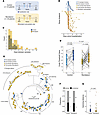 Figure 2
SARS-CoV-2 divergence in hospitalized patients with COVID-19 treated with and without remdesivir. (A) Schematic of the data filtering pipeline used to identify paired specimens for whole-genome sequencing that span hospitalization date in the control cohort (blue) or remdesivir administration date in the remdesivir cohort (orange). (B) Timeline of specimen collection for each patient in each cohort relative to hospitalization. The dotted line indicates the hospitalization date, and the “X” (dark orange) indicates remdesivir administration date. (C) Overlaid histogram and distribution curves of the days between the pre and post samples for each cohort. (D) SARS-CoV-2 N1Ct values for the paired pre and post specimens in each cohort as determined by qRT-PCR. Box-and-whisker plots represent the median (center line) and first/third quartiles (box), with tails extending 1.5 times the IQR. Specimens from the same patient are connected by lines. Statistical analysis for the paired samples within a cohort was conducted using Wilcoxon’s signed-rank test, and statistical analysis for the unpaired samples across cohorts was conducted using the Mann-Whitney U test, with P values indicated. (E) Phylogenetic tree of SARS-CoV-2 whole-genome sequences from each specimen in each cohort. Branch tips are colored by specimen type (pre versus post and cohort) and labeled by use of a randomized patient identifier. Gray patient labels denote identical consensus sequences in pre and post specimens, while black labels denote divergent sequences. Clade designations are specified on the outer ring. (F) Stacked bar chart showing the relative frequency of patients with identical (gray) versus divergent (black) pre and post sequences. The count is shown adjacent to each bar. (G) Hamming distance between paired pre and post specimens in each cohort depicted as a box-and-whisker plot representing the median (center line) and first/third quartiles (box), with tails extending 1.5 times the IQR. Statistical analysis was conducted using a linear model with a negative binomial distribution controlling for time between specimens.
Specimens with sufficient SARS-CoV-2 viral load (Ct value less than 33 as determined by quantitative reverse transcription PCR [qRT-PCR]) were subjected to whole-genome sequencing using a multiplex PCR amplicon strategy per the ARTIC protocol (52). Nextclade and PANGOLIN tools were used to assign clade and lineage designations, respectively (53, 54) (clade/lineage designations and accession numbers available in Supplemental Table 2). Only patients with at least 1 pre and 1 post sequence were considered in this analysis. This resulted in a remdesivir cohort of 49 patients with paired sequences before and after remdesivir administration; and a control cohort of 23 patients not treated with remdesivir with paired sequences before and after hospital admission (Figure 2B). The distribution of days between sampling for both cohorts roughly followed a log-normal distribution, though the remdesivir cohort skewed to slightly longer times between the pre and post specimens (Figure 2C). The remdesivir cohort also skewed slightly older (median age 68 years [IQR 56, 75] compared with 63 [IQR 42, 70]), was predominantly White (59.2% compared with 30.5%), and had more female patients (40.8% compared with 26.1%) (Table 1). The cohort that received remdesivir also had notably more comorbidities (median of 4 compared with 1). Some of these differences reflect known risk factors for severe COVID-19 that may have influenced the clinical decision to administer remdesivir. Regardless, the two cohorts had comparable clinical outcomes, with 76% and 83% of patients in the remdesivir and control cohorts requiring intensive care, respectively. Finally, we note that the remdesivir cohort had a higher proportion of Delta and Omicron infections compared with the control cohort (Table 2), likely representing the fact that remdesivir became the standard of care for inpatients by the time those two VOCs emerged.
In both cohorts, the pre sample had a significantly lower Ct value (higher viral load) compared with the post sample, consistent with previous studies (Figure 2D) (55–57). The Ct values of the pre and the post specimens across cohorts were not significantly different. Next, we used a maximum-likelihood (ML) phylogenetic analysis to assess genetic divergence between paired sequences in both cohorts (Figure 2E). Of the 72 total patients, 43 had no divergence in consensus viral sequence between the pre and post specimen (13 in the control cohort and 30 in the remdesivir cohort) (Figure 2E, gray identifiers). The other 29 patients had at least 1 mutation arise between their pre and post samples (Figure 2E, black; mutations listed in Supplemental Table 3). Only 6 patients had a mutation arise in nsp12, including some mutations that had been previously implicated in remdesivir resistance (G671S, P323L). Notably, however, these arose in both the control and remdesivir cohorts. Overall, the frequency of patients with no divergence over time was markedly similar (Figure 2F). To further quantify this, we calculated the hamming distance, a metric of genetic divergence, by counting the mutations between paired sequences. We then used a linear mixed-effects model to test for a statistical difference between the cohorts while controlling for time between sampling (Figure 2G). We observed no significant difference between cohorts, suggesting that remdesivir treatment was not driving viral genetic divergence in patients at the consensus genome level.
SARS-CoV-2 intra-host genetic diversity increases following remdesivir treatment in specific ORFs. Next, we aimed to characterize intra-host genetic diversity, utilizing individual reads to calculate mutational frequency by position and help capture mutations that were not evident at the consensus genome level. First, we calculated the mutational frequency at each position relative to the SARS-CoV-2 reference genome (Wuhan-Hu-1) in each patient isolate, where 0 indicates that all reads match the reference and 1 indicates that all reads differ from the reference. Mutational frequency was plotted by genomic position, and the resultant dot plots from each specimen were overlaid with the others from their respective category (Figure 3A). In both cohorts, we observed more diversity in the post specimens (i.e., more positions with higher levels of mutational frequency), most notably around the Spike ORF (positions 21,563–25,384). To determine whether these differences were statistically significant, we used mutational frequency to calculate the Shannon entropy value of each isolate (Figure 3B). Shannon entropy is a measurement of the positional diversity independent of a reference; in the present study, if 100% of reads corresponded to 1 nucleotide, the entropy was defined as 0, and if it is an even split between all 4 nucleotides, the entropy was 1. As this measurement is independent of a reference sequence, it is clade agnostic. A linear mixed-effects model was used to compare Shannon entropy in the pre and post specimens in each cohort while controlling for time between sampling and within-patient variability of paired samples. This model showed a significant increase in genetic diversity in the post compared with the pre specimens within each cohort, but found no statistical difference in Shannon entropy when comparing pre or post specimens between cohorts (Figure 3B).
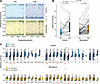 Figure 3
Changes in SARS-CoV-2 genetic diversity after remdesivir administration. (A) Dot plots depicting mutational frequency per position across the SARS-CoV-2 genome relative to the Wuhan-Hu-1 reference genome, calculated as the fraction of raw reads and colored by nucleotide. All specimens within a group are overlaid in a single plot. Mutational frequencies less than 1% are not shown. (B) Shannon entropy [Sh = SUM[–(pi) * log2(pi)], where pi where is nucleotide frequency] across the genome of each isolate; paired specimens are connected by lines. Statistical analysis was conducted using a linear mixed-effects model controlling for time between paired specimens and within-patient variability. (C) Shannon entropy per nucleotide position within each viral ORF. Statistical analysis was conducted using a linear mixed-effects model while controlling for time between samples, gene, and within-patient variability for each patient. For B and C, box-and-whisker plots represent the median (center line) and first/third quartiles (box), with tails extending 1.5 times the IQR. P values were adjusted for FDR using the Benjamini-Hochberg method; differences at positions with an adjusted P value less than 0.05 were considered significant (values shown in red). M, membrane.
These data suggest that the overall degree by which SARS-CoV-2 diversifies over time in a host is not affected by remdesivir administration, but they do not rule out potential differences in where this diversification is taking place. To better assess this, we applied the same statistical framework to look for differences in Shannon entropy between the pre and post samples within each SARS-CoV-2 ORF and nsp coding region (Figure 3C). These data indicated that increased Shannon entropy over time was concentrated in specific ORFs and nsps. In the control cohort, diversity was significantly increased over time in nsp2, nsp3, nsp12, nsp15, and Spike (gene names and P values in red). These same regions saw increased diversity in the remdesivir cohort (though the difference in nsp12 was borderline insignificant; P = 0.07). However, in the remdesivir cohort, diversity was also significantly increased in nsp4, nsp5, nsp6, nsp14, ORF3a, membrane, and ORF6. Taken together, these data suggest that while the overall degree of genetic diversification over time was not affected by remdesivir administration, remdesivir may result in the preferential accumulation of variation in specific ORFs.
Genetic diversity increases at specific nucleotide positions after remdesivir treatment. To determine whether remdesivir changes the degree of SARS-CoV-2 diversification at specific residues, we first examined mutational frequency at each nucleotide position corresponding to an amino acid either previously implicated in remdesivir resistance or within 6 Å of the remdesivir binding site (Figure 1). Mutational frequencies less than 1% are not shown; nucleotide positions that did not reach at least 1% mutational frequency in at least 1 specimen are likewise not shown. Notably, very little diversity was observed at any of the previously identified positions. In the control cohort, some mutations were seen at positions 14,120 (nsp12:227) and 15,451 (nsp12:671) in both pre and post specimens (Figure 4A). Position 14,408 (nsp12:323) was mutated in nearly every isolate, reflective of the nsp12:P323L mutation that became fixed in the SARS-CoV-2 population early in the pandemic (58, 59). In the remdesivir cohort, these same mutations were observed, though many more isolates showed diversity at 15,451 (nsp12:671) in the post specimens (10 pre isolates and 18 post isolates). Note that 5 specimens in the pre and post groups had high mutational frequency at this position due to a preexisting nsp12:G671S mutation in the Delta VOC. Low-level diversity was also seen at positions 13,936 (nsp12:166), 15,109 (nsp12:557), and 15,814 (nsp12:792). Notably, no mutations in either cohort were observed at 21 of the 27 previously identified resistance sites and at 22 of the 23 sites within 6 Å of the remdesivir binding pocket. Overall, these results confirm the low incidence of mutations previously implicated in remdesivir resistance, even in minority populations of the virus within a host.
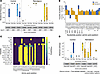 Figure 4
Identification of nucleotide positions with significantly altered genetic diversity after remdesivir administration. (A) Mutational frequency at positions in nsp12 previously implicated in remdesivir resistance relative to the Wuhan-Hu-1 reference genome in pre and post specimens from each cohort. Nucleotide and amino acid positions are shown below. Box-and-whisker plots represent the median (center line) and first/third quartiles (box), with tails extending 1.5 times the IQR. Only specimens with greater than 1% mutational frequency at a given position are shown (positions that were not detected are indicated as “ND”). (B) Stacked bar plot illustrating the number of patients in each cohort that exhibited a change in Shannon entropy at a given position in paired specimens. To be shown, at least 4 patients in either cohort had to have an increase in Shannon entropy from 0 (i.e., diversification) or decrease to 0 (i.e., purification). (C) Heatmap of mutational frequency at positions identified in B by lineage (reported as percentage of total SARS-CoV-2 sequences per variant in the GISAID database [accessed January 4, 2024]). (D) Shannon entropy in pre and post specimens from each cohort at 3 nucleotide positions that had significant changes following remdesivir administration. Box-and-whisker plots represent the median (center line) and first/third quartiles (box), with tails extending 1.5 times the IQR. Significantly changing positions in the remdesivir cohort were identified using a linear mixed-effects model (specified below the graph) controlling for time between paired specimens, viral load, and within-patient variability for each patient. P values were adjusted for FDR using the Benjamini-Hochberg method; differences at positions with an adjusted P value less than 0.1 were considered significant.
We next used an unbiased approach to screen for potential sites of intra-host diversification across the genome. Specifically, we looked for positions in paired specimens where Shannon entropy increased from 0 (i.e., diversification) or decreased to 0 (i.e., purification) in at least 4 patients (Figure 4B). In total, we identified 25 positions across the genome that met these criteria, 22 of which showed evidence of diversification, consistent with our prior measures of increased diversity over time. Mutational frequency and Shannon entropy at each position in each cohort are shown in Supplemental Figure 1. Most of these positions were in the previously identified ORFs and nsps that showed evidence of diversification (Figure 3C). Three positions were found to diversify in both cohorts, including positions 210 (in the 5′-UTR), 15,451 (nsp12:671), 28,916 (nucleocapsid:215 [N:215]). Seven positions were specific to the control cohort (6 diversifying and 1 purifying), while 15 were specific to the remdesivir cohort (13 diversifying and 2 purifying). Only 2 positions were identified in nsp12, namely, 15,451 (nsp12:671), which showed evidence of diversification in both cohorts, and 14,960 (nsp12:507), which showed evidence of purification in the remdesivir cohort specifically. Each position undergoing selection was identified in at least 2 or more variant backgrounds, suggesting that these are not specific to one lineage (Supplemental Figure 2A).
Several of these positions were associated with specific mutations in different VOCs that have been shown to confer enhanced viral fitness (i.e., N:203, nsp12:671, etc.) (60–62). To begin to discern the evolutionary history at these positions, we calculated the frequency of nonsynonymous mutations at the corresponding amino acid positions in different VOCs (based on the GISAID database, accessed January 4, 2024) (Figure 4C). Remarkably, 15 of the 25 identified positions were associated with amino acid variations in 1 or more VOCs. Five residues were specifically associated with Omicron lineages (nsp4:438, nsp5:132, nsp13:392, nsp15:112, and Spike:346), 4 were associated with Delta lineages (nsp3:1228, Spike:950, N:63, and N:215), and 3 were found in both (nsp12:671, Spike:19, and Spike:478). Three residues were associated with earlier VOCs, including nsp6:107, Spike:70, and N:203. Nine positions (nsp2:555, nsp3:1788, nsp4:317, nsp12:507, nsp15:145, Spike:384, Spike:682, Spike:704, M:44), including 2 of the 3 sites that appeared to decrease diversity, were either never observed or were observed at an extremely low frequency across all variants. Intra-host divergence at these positions and their later emergence in VOCs over the course of the pandemic may be suggestive of enhanced fitness.
To assess whether increased diversity after remdesivir administration was statistically significant at any of these positions in our cohort, we employed a linear mixed-effects model to assess variations in Shannon entropy at each position in the remdesivir cohort while controlling for time between samples, viral load, and within-patient variability. Subsequently, we applied a correction for FDR to all P values using the Benjamini-Hochberg method and considered adjusted P values less than 0.1 as significant due to the high number of comparisons performed. This analysis identified 3 positions with statistically significant changes in diversity after remdesivir administration: 14,960 (nsp12:507), 15,451 (nsp12:671), and 21,771 (Spike:70) (Figure 4D). In our remdesivir cohort, positions 15,451 (nsp12:671) and 21,771 (Spike:70) exhibited an increase in Shannon entropy in the post specimen (increased diversity), while position 14,960 (nsp12:507) showed a decrease in Shannon entropy (decreased diversity). These changes are reflected in the nucleotide frequency at these positions in each patient (Supplemental Figure 2B). Taken together, these data suggest that remdesivir administration preferentially selects for SARS-CoV-2 diversification at several residues across the genome, many of which have been associated with VOCs and linked with enhanced viral fitness in other studies.
Validation cohort containing only post samples confirms previous findings. To validate these findings, we returned to the electronic health record data to identify an independent cohort of inpatients for which we had at least 1 post specimen collected within 90 days after remdesivir administration. We likewise identified an independent control cohort for which we had at least 1 post specimen collected within 90 days after hospitalization (Figure 5A). Specimens were subject to viral whole-genome sequencing as above (accession numbers provided in Supplemental Table 2); this resulted in a remdesivir cohort of 143 patients and a control cohort of 170 patients, each represented by a single, unpaired post specimen. The distribution of days between hospitalization and sample collection was highly comparable between cohorts (Figure 5B). Again, the remdesivir cohort skewed slightly older (median age 63 compared with 57) and had more comorbidities (median of 4 compared with 2), though with more comparable distributions by sex and race (Table 1). The cohorts had comparable clinical outcomes, with 69% and 65% of patients in the remdesivir and control cohorts requiring intensive care, respectively. There was no significant difference in viral load (N1 Ct value) between specimens in either cohort (Figure 5C). As before, there was a greater proportion of Omicron specimens in the remdesivir cohort (Table 2), likely reflecting the change in standard of care for hospitalized COVID-19 patients between pandemic waves. Note that while our last analyses accounted for clade by always comparing mutations between a pre and post specimen from the same patient, here this was not an option and so we account for clade explicitly in our statistical modeling.
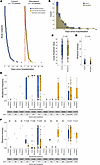 Figure 5
Comparison of nsp12 mutational frequency in patients who received remdesivir compared with a control cohort. (A) Timeline of specimen collection for each patient in each cohort relative to hospitalization. The dotted line indicates the hospitalization date, and the “X” (dark orange) indicates remdesivir administration date. (B) Overlaid histogram and distribution curves of the days between sample collection and hospitalization date for each cohort. (C) SARS-CoV-2 N1 Ct values for post specimens in each cohort as determined by qRT-PCR. Box-and-whisker plots represent the median (center line) and first/third quartiles (box), with tails extending 1.5 times the IQR. Statistical analysis was conducted using the Mann-Whitney U test, with P values indicated. (D) Shannon entropy across the genome of each isolate. Statistical analysis was conducted using a linear model while controlling for time between samples, viral load, and clade. (E) Mutational frequency at positions in nsp12 previously implicated in remdesivir resistance relative to the Wuhan-Hu-1 reference genome in the post specimen–only cohorts. Two additional positions identified from the analyses in Figure 4 are visualized on the right. Box-and-whisker plots represent the median (center line) and first/third quartiles (box), with tails extending 1.5 times the IQR. Only specimens with greater than 1% mutational frequency at a given position are shown (positions that were not detected are indicated as “ND”). (F) Shannon entropy at the same nucleotide positions as in E in the post specimen–only cohorts. Box-and-whisker plots represent the median (center line) and first/third quartiles (box), with tails extending 1.5 times the IQR. Statistical analysis was conducted using a linear model while controlling for time between samples and viral load (except for position 21771, which had too few data points to fit a model that also included viral load).
We first calculated genome-wide Shannon entropy as a measure of intra-host diversity in each specimen. No significant difference was observed between cohorts when using a linear mixed-effects model controlling for time since hospitalization, viral load, and clade (Figure 5D), similar to what was observed in the last cohort. We next examined mutational frequency at each nucleotide position corresponding to an amino acid either previously implicated in remdesivir resistance or within 6 Å of the remdesivir binding site (Figure 1). Only 10 positions showed a mutational frequency greater than 1% in at least 1 specimen (Figure 5E). Position 14,408 (nsp12:323) was mutated in nearly every isolate in both cohorts, again reflective of the nsp12:P323L mutation. Two positions at 14,120 (nsp12:227) and 15,451 (nsp12:671) had higher mutational frequencies in the remdesivir compared with the control cohort, and both were also observed in the prior paired cohort (though position 14,120 was observed equally frequently in the pre and post specimens). Notably, mutations at position 15,814 (nsp12:792) were found only in the remdesivir cohort (n = 9 specimens), suggestive of potential selection at this site. The other mutations were either found in only the control cohort (at positions 13,814 [nsp12:124], 15,652 [nsp12:738], and 15,716 [nsp12:759]) or were found only once in each cohort (at positions 13,936 [nsp12:166], 13,937 [nsp12:166], and 15,848 [nsp12:802]). Notably, mutational frequency increased at each of the positions that were found to significantly change in our paired cohort (14,960 [nsp12:570], 15,451 [nsp12:671], and 21,771 [S:70]), though mutations at position 21,771 (S:70) were relatively rare.
Finally, we calculated the Shannon entropy at each of these positions and used a linear mixed effects model to assess for statistical significance between cohorts while controlling for time since hospitalization, viral load, and clade (Figure 5F). The data were too sparse to calculate significance at positions 13,814, 13,936, 13,937, 15,652, 15,716, and 15,848. There was no statistically significant difference in Shannon entropy at positions 14,120 (nsp12:227), 14,960 (nsp12:570), and 21,771 (S:70). Shannon entropy at position 15,814 (nsp12:792) could not be statistically compared between cohorts, as it only appeared in the remdesivir cohort. However, position 15,451 (nsp12:671) had significantly lower entropy in the remdesivir compared with the control cohort, reflective of there being more specimens with near 100% mutational frequency. Taken together, these data suggest that while most previously identified remdesivir resistance mutations are either rarely occurring or have not been specifically associated with remdesivir administration, variants at 2 positions (15,451 [nsp12:671] and 15,814 [nsp12:792]) may be selected for by remdesivir in vivo.


