
Research ArticleCell biologyOncology
Open Access |  10.1172/jci.insight.180655
SPOP mediates apoptosis and protects against necroptosis by regulating ubiquitination of RIPK1 and RIPK3
Yuzhong Ye,1,2 Changjie Yue,1,3 Zaosong Zheng,4 Hailong Ruan,1 Yuanpeng Zhang,1 Qi Miao,1 Xiaoping Zhang,1,5 Wen Xiao,1 and Lei Liu1
1Department of Urology, Union Hospital, Tongji Medical College, Huazhong University of Science and Technology, Wuhan, China.
2Department of Urology, Fujian Medical University Union Hospital, Fuzhou, China.
3Department of Urology, Traditional Chinese and Western Medicine Hospital of Wuhan, Tongji Medical College, Huazhong University of Science and Technology, Wuhan, China.
4Department of Urology, Nanfang Hospital, Southern Medical University, Guangzhou, China.
5Shenzhen Huazhong University of Science and Technology Research Institute, Shenzhen, China.
Address correspondence to: Lei Liu, Wen Xiao, or Xiaoping Zhang, No.13, Hangkong Road, Wuhan, Hubei, P.R. China 430030. Phone: 86.15527275626; Email: liulei2016@hust.edu.cn (LL). Phone: 86.17088353610; Email: wxuro20@hust.edu.cn (WX). Phone: 86.18602752025; Email: xzhang@hust.edu.cn (XZ).
Authorship note: YY, CY, and ZZ contributed equally to this work.
Find articles by Ye, Y. in: PubMed | Google Scholar
1Department of Urology, Union Hospital, Tongji Medical College, Huazhong University of Science and Technology, Wuhan, China.
2Department of Urology, Fujian Medical University Union Hospital, Fuzhou, China.
3Department of Urology, Traditional Chinese and Western Medicine Hospital of Wuhan, Tongji Medical College, Huazhong University of Science and Technology, Wuhan, China.
4Department of Urology, Nanfang Hospital, Southern Medical University, Guangzhou, China.
5Shenzhen Huazhong University of Science and Technology Research Institute, Shenzhen, China.
Address correspondence to: Lei Liu, Wen Xiao, or Xiaoping Zhang, No.13, Hangkong Road, Wuhan, Hubei, P.R. China 430030. Phone: 86.15527275626; Email: liulei2016@hust.edu.cn (LL). Phone: 86.17088353610; Email: wxuro20@hust.edu.cn (WX). Phone: 86.18602752025; Email: xzhang@hust.edu.cn (XZ).
Authorship note: YY, CY, and ZZ contributed equally to this work.
Find articles by Yue, C. in: PubMed | Google Scholar
1Department of Urology, Union Hospital, Tongji Medical College, Huazhong University of Science and Technology, Wuhan, China.
2Department of Urology, Fujian Medical University Union Hospital, Fuzhou, China.
3Department of Urology, Traditional Chinese and Western Medicine Hospital of Wuhan, Tongji Medical College, Huazhong University of Science and Technology, Wuhan, China.
4Department of Urology, Nanfang Hospital, Southern Medical University, Guangzhou, China.
5Shenzhen Huazhong University of Science and Technology Research Institute, Shenzhen, China.
Address correspondence to: Lei Liu, Wen Xiao, or Xiaoping Zhang, No.13, Hangkong Road, Wuhan, Hubei, P.R. China 430030. Phone: 86.15527275626; Email: liulei2016@hust.edu.cn (LL). Phone: 86.17088353610; Email: wxuro20@hust.edu.cn (WX). Phone: 86.18602752025; Email: xzhang@hust.edu.cn (XZ).
Authorship note: YY, CY, and ZZ contributed equally to this work.
Find articles by Zheng, Z. in: PubMed | Google Scholar
1Department of Urology, Union Hospital, Tongji Medical College, Huazhong University of Science and Technology, Wuhan, China.
2Department of Urology, Fujian Medical University Union Hospital, Fuzhou, China.
3Department of Urology, Traditional Chinese and Western Medicine Hospital of Wuhan, Tongji Medical College, Huazhong University of Science and Technology, Wuhan, China.
4Department of Urology, Nanfang Hospital, Southern Medical University, Guangzhou, China.
5Shenzhen Huazhong University of Science and Technology Research Institute, Shenzhen, China.
Address correspondence to: Lei Liu, Wen Xiao, or Xiaoping Zhang, No.13, Hangkong Road, Wuhan, Hubei, P.R. China 430030. Phone: 86.15527275626; Email: liulei2016@hust.edu.cn (LL). Phone: 86.17088353610; Email: wxuro20@hust.edu.cn (WX). Phone: 86.18602752025; Email: xzhang@hust.edu.cn (XZ).
Authorship note: YY, CY, and ZZ contributed equally to this work.
Find articles by Ruan, H. in: PubMed | Google Scholar
1Department of Urology, Union Hospital, Tongji Medical College, Huazhong University of Science and Technology, Wuhan, China.
2Department of Urology, Fujian Medical University Union Hospital, Fuzhou, China.
3Department of Urology, Traditional Chinese and Western Medicine Hospital of Wuhan, Tongji Medical College, Huazhong University of Science and Technology, Wuhan, China.
4Department of Urology, Nanfang Hospital, Southern Medical University, Guangzhou, China.
5Shenzhen Huazhong University of Science and Technology Research Institute, Shenzhen, China.
Address correspondence to: Lei Liu, Wen Xiao, or Xiaoping Zhang, No.13, Hangkong Road, Wuhan, Hubei, P.R. China 430030. Phone: 86.15527275626; Email: liulei2016@hust.edu.cn (LL). Phone: 86.17088353610; Email: wxuro20@hust.edu.cn (WX). Phone: 86.18602752025; Email: xzhang@hust.edu.cn (XZ).
Authorship note: YY, CY, and ZZ contributed equally to this work.
Find articles by Zhang, Y. in: PubMed | Google Scholar
1Department of Urology, Union Hospital, Tongji Medical College, Huazhong University of Science and Technology, Wuhan, China.
2Department of Urology, Fujian Medical University Union Hospital, Fuzhou, China.
3Department of Urology, Traditional Chinese and Western Medicine Hospital of Wuhan, Tongji Medical College, Huazhong University of Science and Technology, Wuhan, China.
4Department of Urology, Nanfang Hospital, Southern Medical University, Guangzhou, China.
5Shenzhen Huazhong University of Science and Technology Research Institute, Shenzhen, China.
Address correspondence to: Lei Liu, Wen Xiao, or Xiaoping Zhang, No.13, Hangkong Road, Wuhan, Hubei, P.R. China 430030. Phone: 86.15527275626; Email: liulei2016@hust.edu.cn (LL). Phone: 86.17088353610; Email: wxuro20@hust.edu.cn (WX). Phone: 86.18602752025; Email: xzhang@hust.edu.cn (XZ).
Authorship note: YY, CY, and ZZ contributed equally to this work.
Find articles by Miao, Q. in: PubMed | Google Scholar
1Department of Urology, Union Hospital, Tongji Medical College, Huazhong University of Science and Technology, Wuhan, China.
2Department of Urology, Fujian Medical University Union Hospital, Fuzhou, China.
3Department of Urology, Traditional Chinese and Western Medicine Hospital of Wuhan, Tongji Medical College, Huazhong University of Science and Technology, Wuhan, China.
4Department of Urology, Nanfang Hospital, Southern Medical University, Guangzhou, China.
5Shenzhen Huazhong University of Science and Technology Research Institute, Shenzhen, China.
Address correspondence to: Lei Liu, Wen Xiao, or Xiaoping Zhang, No.13, Hangkong Road, Wuhan, Hubei, P.R. China 430030. Phone: 86.15527275626; Email: liulei2016@hust.edu.cn (LL). Phone: 86.17088353610; Email: wxuro20@hust.edu.cn (WX). Phone: 86.18602752025; Email: xzhang@hust.edu.cn (XZ).
Authorship note: YY, CY, and ZZ contributed equally to this work.
Find articles by Zhang, X. in: PubMed | Google Scholar
1Department of Urology, Union Hospital, Tongji Medical College, Huazhong University of Science and Technology, Wuhan, China.
2Department of Urology, Fujian Medical University Union Hospital, Fuzhou, China.
3Department of Urology, Traditional Chinese and Western Medicine Hospital of Wuhan, Tongji Medical College, Huazhong University of Science and Technology, Wuhan, China.
4Department of Urology, Nanfang Hospital, Southern Medical University, Guangzhou, China.
5Shenzhen Huazhong University of Science and Technology Research Institute, Shenzhen, China.
Address correspondence to: Lei Liu, Wen Xiao, or Xiaoping Zhang, No.13, Hangkong Road, Wuhan, Hubei, P.R. China 430030. Phone: 86.15527275626; Email: liulei2016@hust.edu.cn (LL). Phone: 86.17088353610; Email: wxuro20@hust.edu.cn (WX). Phone: 86.18602752025; Email: xzhang@hust.edu.cn (XZ).
Authorship note: YY, CY, and ZZ contributed equally to this work.
Find articles by Xiao, W. in: PubMed | Google Scholar
1Department of Urology, Union Hospital, Tongji Medical College, Huazhong University of Science and Technology, Wuhan, China.
2Department of Urology, Fujian Medical University Union Hospital, Fuzhou, China.
3Department of Urology, Traditional Chinese and Western Medicine Hospital of Wuhan, Tongji Medical College, Huazhong University of Science and Technology, Wuhan, China.
4Department of Urology, Nanfang Hospital, Southern Medical University, Guangzhou, China.
5Shenzhen Huazhong University of Science and Technology Research Institute, Shenzhen, China.
Address correspondence to: Lei Liu, Wen Xiao, or Xiaoping Zhang, No.13, Hangkong Road, Wuhan, Hubei, P.R. China 430030. Phone: 86.15527275626; Email: liulei2016@hust.edu.cn (LL). Phone: 86.17088353610; Email: wxuro20@hust.edu.cn (WX). Phone: 86.18602752025; Email: xzhang@hust.edu.cn (XZ).
Authorship note: YY, CY, and ZZ contributed equally to this work.
Find articles by Liu, L. in: PubMed | Google Scholar
Published October 22, 2025 - More info
JCI Insight. 2025;10(20):e180655. https://doi.org/10.1172/jci.insight.180655.
© 2025 Ye et al. This work is licensed under the Creative Commons Attribution 4.0 International License. To view a copy of this license, visit http://creativecommons.org/licenses/by/4.0/.
Received: February 28, 2024; Accepted: September 9, 2025

-
Results
SPOP mediates apoptosis and protects against necroptosis. To validate the role that SPOP plays in RCD, we tested the sensitivity of SPOP+/+ and SPOP–/– mouse embryonic fibroblasts (MEFs) to apoptosis and necroptosis. Upon SPOP knockout, MEFs became more susceptible to necroptosis induced by TNF-α + SM164 + zVAD.fmk (TSZ) (Figure 1A) and more resistant to apoptosis induced by TNF-α + 5Z-7-Oxozeaenol (T5z7) (Figure 1B). In SPOP–/– MEFs, the sensitivity to necroptosis could be blocked by RIPK3 inhibitor GSK872, RIPK1 inhibitor 7-Cl-O-Nec-1 (Nec-1s), as well as RIPK3 knockout (Figure 1, C–F). Notably, in SPOP+/+ MEFs, the sensitivity to apoptosis could be also rescued by inhibition of RIPK1 (Figure 1, G and H, and Supplemental Figure 1; supplemental material available online with this article; https://doi.org/10.1172/jci.insight.180655DS1). Together, these findings suggest that SPOP prevents necroptosis and mediating apoptosis.
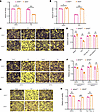 Figure 1
SPOP deficiency protects against apoptosis and mediates necroptosis. (A) SPOP+/+ and SPOP–/– MEFs were treated with DMSO or TSZ for 4 hours and then treated with MTS for 2 hours; subsequently we measured absorbance with fluorescent plate reader. (B) SPOP+/+ and SPOP–/– MEFs were treated with DMSO or T5z7 for 4 hours and then treated with MTS for 2 hours; subsequently we measured absorbance with fluorescent plate reader. (C) Images of SPOP+/+ and SPOP–/– MEFs pretreated with DMSO or Nec-1s or GSK872 for 1 hour and then treated with DMSO or TSZ or TSZ + Nec-1s or TSZ + GSK872 for 4 hours. Scale bar, 100 μm. (D) SPOP+/+ and SPOP–/– MEFs were pretreated with DMSO or Nec-1s or GSK872 for 1 hour and then treated with DMSO or TSZ or TSZ + Nec-1s or TSZ + GSK872 for 4 hours and then treated with MTS for 2 hours; subsequently we measured absorbance with fluorescent plate reader. (E) Images of SPOP+/+RIPK3+/+, SPOP+/+RIPK3–/–, SPOP–/–RIPK3+/+, and SPOP–/–RIPK3–/– MEFs treated with DMSO or TSZ or 4 hours. Scale bar, 100 μm. (F) SPOP+/+RIPK3+/+, SPOP+/+RIPK3–/–, SPOP–/–RIPK3+/+, and SPOP–/–RIPK3–/– MEFs treated with DMSO or TSZ or 4 hours and then treated with MTS for 2 hours; subsequently we measured absorbance with fluorescent plate reader. (G) Images of SPOP+/+ and SPOP–/– MEFs pretreated with DMSO or Nec-1s for 1 hour and then treated with DMSO or T5z7 or T5z7 + Nec-1s for 6 hours. Scale bar, 100 μm. (H) SPOP+/+ and SPOP–/– MEFs pretreated with DMSO or Nec-1s for 1 hour and treated with DMSO or T5z7 or T5z7 + Nec-1s for 6 hours, then treated with MTS for 2 hours; subsequently we measured absorbance with fluorescent plate reader. Experiments were performed in triplicate and repeated 3 times independently. Data are presented as mean ± SD. The significance of differences was revealed based on unpaired Student’s t test (***P < 0.001, **P < 0.01).
SPOP regulates apoptosis and necroptosis through RIPK1 and RIPK3. To further explore the mechanism by which SPOP regulates RCD, we examined markers of apoptosis and necroptosis. In SPOP+/+ MEFs stimulated by T5z7 to induce apoptosis, the apoptosis marker cleaved poly (ADP-ribose) polymerase (PARP) and cleaved caspase-3 were much stronger than in SPOP–/– MEFs, which could be partially rescued by the combination usage of Nec-1s (Figure 2A). In SPOP–/– MEFs stimulated by TSZ and T5z7 + zVAD.fmk (T5z7Z) to induce necroptosis, increased phosphorylation of S345 MLKL and S232 RIPK3 (2 markers for necroptosis) was observed, while a clear bandshift of the phosphorylation of S166 RIPK1 was also observed (Figure 2B). Furthermore, the increased phosphorylation of S345 MLKL and S232 RIPK3 could be blocked by inhibition of RIPK1, inhibition of RIPK3, and loss of RIPK3, and the bandshift of PS166 RIPK1 was reversed by Nec-1s (inhibitor of RIPK1) or GSK872 (inhibitor of RIPK3) (Figure 2, B–D). Taken together, SPOP affects apoptosis and necroptosis by influencing the RIPK1/RIPK3/MLKL axis.
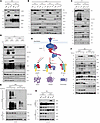 Figure 2
SPOP deficiency breaks the balance between RIPK1 and RIPK3 and facilitates the formation of necrosome. (A) SPOP+/+ and SPOP–/– MEFs were pretreated with Nec-1s or DMSO for 1 hour and then treated with DMSO or T5z7 or T5z7+N for 6 hours; subsequently whole cell lysate (WCL) was harvested for immunoblot (IB) analysis. Values on left are in kilodaltons. C-, cleaved. (B) SPOP+/+ and SPOP–/– MEFs were pretreated with Nec-1s (N) or DMSO for 1 hour and then treated with DMSO or TSZ or TSZ+N or T5z7Z or T5z7Z+N for 4 hours; subsequently WCL was harvested for IB analysis. (C) SPOP+/+ and SPOP–/– MEFs were pretreated with GSK872 (G) or DMSO for 1 hour and then treated with DMSO or TSZ or TSZ+G for 4 hours; subsequently WCL was harvested for IB analysis. (D) IB analysis of WCL derived from RIPK3+/+ and RIPK3–/– MEFs with SPOP knockout through CRISPR technology. Parental MEFs were used as the control. Cells were treated with TSZ or DMSO for 4 hours; subsequently WCL was harvested for IB analysis. (E) A schematic illustration of RIPK1-mediated multimodal signaling events downstream of TNFR1. (F) SPOP+/+ and SPOP–/– MEFs were stimulated by TNF-α for the indicated periods of time. WCL was harvested for IB analysis. (G) SPOP+/+ and SPOP–/– MEFs were stimulated by FLAG–TNF-α for the indicated periods of time, and TNF-RSC was immunoprecipitated (IP) using anti-Flag resin and analyzed using the indicated antibodies. (H) SPOP+/+ and SPOP–/– MEFs were pretreated with Nec-1s or DMSO for 1 hour and then treated with DMSO or TSZ or TSZ+N for 4 hours. Necrosome was immunoprecipitated using RIPK1 antibody and analyzed using the indicated antibodies.
SPOP controls necrosome formation to prevent necroptosis. As previously described, following TNF-α/TNFR1 activation, cells have 3 destinies: apoptosis, necroptosis, or survival via NF-κB activation (Figure 2E). To examine downstream molecular events and protein interactions, we stimulated SPOP+/+ and SPOP–/– MEFs with TNF-α or Flag–TNF-α in a time-dependent manner. We found that SPOP deficiency markedly decreased the recruitment of ubiquitinated RIPK1 within TNF-RSC (Figure 2G), but SPOP deficiency resulted in no obvious changes in NF-κB signaling or other survival-related signaling molecules (p38/p-p38, JNK/p-JNK, and ERK/p-ERK) (Figure 2F). In contrast, SPOP deficiency increased RIPK3 protein levels and enhanced the interaction between RIPK1 and RIPK3, leading to necrosome formation, which could be impeded by inhibition of RIPK1 (Figure 2H). These findings suggest that SPOP prevents necroptosis by inhibiting the interaction between RIPK1 and RIPK3, thereby blocking necrosome formation.
SPOP doubly regulates the ubiquitination level of RIPK3 and RIPK1. To investigate the mechanism by which SPOP influences the protein level of RIPK1 and RIPK3, protein stability of RIPK1 and RIPK3 was detected in SPOP+/+ and SPOP–/– MEFs. Compared with SPOP+/+ MEFs, the half-life of RIPK1 was noticeably reduced in SPOP–/– MEFs, while the half-life of RIPK3 was noticeably elevated (Figure 3A), suggesting that SPOP might control the expression of RIPK1/RIPK3 largely through a posttranslational mechanism. We performed molecular docking analysis of the interaction between SPOP and RIPK1 or RIPK3, and the results revealed that SPOP contains specific protein sites capable of directly binding to RIPK1 or RIPK3 (Supplemental Figure 2). Furthermore, the results of co-immunoprecipitation (co-IP) showed that RIPK1 and SPOP interacted with each other in SPOP+/+ MEFs (Figure 3, B and C). As mentioned above, the classic function of SPOP is to act as an E3 ubiquitin ligase adaptor protein and play an important role in the ubiquitination and degradation of many proteins. We explored the ubiquitination level of RIPK1 in SPOP+/+ and SPOP–/– MEFs, verifying that more RIPK1 was ubiquitinated in SPOP–/– MEFs (Figure 3D). These data suggest that SPOP interacts with RIPK1 and protects RIPK1 from polyubiquitination.
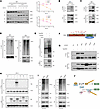 Figure 3
SPOP interacts with RIPK1/RIPK3 and influences their ubiquitination. (A) IB analysis of WCL derived from SPOP+/+ and SPOP–/– MEFs, as well as corresponding quantitative analysis. Cells were treated with 1 μM cyclohexamide (CHX) for the indicated time period before harvesting. Experiments repeated 3 times independently and data are presented as mean ± SD. (B and C) IB analysis of co-IP and WCL derived from SPOP+/+ and SPOP–/– MEFs to show that endogenous RIPK1 interacts with endogenous SPOP. Cells were treated with 20 μM MG132 for 4 hours before harvesting. (D) Ubiquitination (ub) assay was performed using RIPK1 antibody in SPOP+/+ and SPOP–/– MEFs. Cells were treated with 10 μM MG132 for 4 hours before harvesting. (E) IB analysis of WCL and His tag pull-down products derived from HEK293T cells transfected with indicated plasmids. Cells were treated with 20 μM MG132 for 6 hours before harvesting. (F) Schematic of SPOP domains and prostate-associated mutations that failed to interact with substrates as literature reported. (G) IB analysis of co-IP and WCL derived from HEK293T transfected with Flag-RIPK3 and indicated HA-SPOP. Cells were treated with 20 μM MG132 for 6 hours before harvesting. (H) IB analysis of co-IP and WCL derived from HEK293T transfected with Flag-RIPK3 and Myc-Cullin. Cells were treated with 20 μM MG132 for 6 hours before harvesting. (I) IB analysis of co-IP and WCL derived from HEK293T with overexpressed RIPK3 transfected with Cullin3 shRNA (shCullin3) or sgSPOP. (J) A model for the role of SPOP in necroptosis and apoptosis.
Since there is no good commercial RIPK3 antibody for co-IP, we used HEK293T transfected with indicated RIPK3, SPOP, and ubiquitin plasmids to explore the ubiquitination of RIPK3, and we found that SPOP overexpression could induce polyubiquitination of RIPK3 (Figure 3E). The MATH domain of SPOP is its substrate-binding domain, and multiple mutations (Y87C, F102C, W131G, F133V) can directly affect its function (Figure 3F). Next, we explored whether SPOP mutations within MATH domain could affect the interaction between SPOP and RIPK3. RIPK3 was identified to interact with WT SPOP, where most of the MATH domain mutation failed to interact with RIPK3 (Figure 3G) (18). The ubiquitin ligase Cullin family members are scaffold proteins of the E3 ubiquitin ligase complex, which recruits substrates for ubiquitination modification by binding to adaptor proteins. RIPK3 and different Cullin family members were transfected into HEK293T cells, and co-IP results showed that RIPK3 bound to Cullin3 but not to Cullin1, 2, 4A, 4B, and 5 (Figure 3H). Moreover, knocking down Cullin3 or SPOP led to upregulation of RIPK3 expression and decreased the ubiquitination of RIPK3 (Figure 3I). Thus, we consider SPOP an E3 ligase adaptor protein that might target RIPK1/RIPK3 for regulating their protein stability, respectively, in a ubiquitination activity–independent and –dependent manner (Figure 3J).
SPOP/RIPK1/RIPK3 is dysfunctional in a variety of tumors. Given that cancer is often characterized by an imbalance between apoptosis and necroptosis (37, 38), we investigated the role of the SPOP/RIPK1/RIPK3 axis in tumors. First, we conducted a pancancer exploration using data from The Cancer Genome Atlas (TCGA) (33). SPOP expression was significantly upregulated in 15 of the 34 tumor types, including kidney renal clear cell carcinoma (KIRC), head and neck squamous cell carcinoma (HNSC), liver hepatocellular carcinoma (LIHC), and breast invasive carcinoma (BRCA), and significantly downregulated in 14 tumor types, such as lung squamous cell carcinoma (LUSC), lung adenocarcinoma (LUAD), and colon adenocarcinoma (COAD) (Figure 4A). We further examined SPOP expression across clinical stages and pathological grades and observed significant differences only in KIRC among the 26 tumor types (Figure 4, B and C). The pancancer analysis results of RIPK1 and RIPK3 also revealed that the protein levels of RIPK1 and RIPK3 were dysregulated in most tumors. Additionally, RIPK1 expression in KIRC was significantly associated with clinical and pathological stages (Supplemental Figures 3 and 4). Therefore, we selected 5 types of tumors, KIRC, LIHC, LUAD, COAD, and BRCA, for further analysis. A paired analysis of tumor and adjacent normal tissues in TCGA revealed that SPOP expression remained significantly elevated in KIRC and LIHC and significantly decreased in LUSC and COAD (Figure 5A). Correlation analysis showed that SPOP and RIPK1 were positively correlated in all 5 cancer types (Figure 5B). We further assessed the protein levels of SPOP, RIPK1, and RIPK3 in representative cell lines of 5 cancer types. Immunoblotting results showed simultaneous upregulation of SPOP and RIPK1 in KIRC (A498, 786-O, Caki-1), LIHC (Huh7, HepG2), and BRCA (MDA-MB-231) cell lines and simultaneous downregulation in LUSC cell lines (H199, A549). However, similar patterns were not observed in COAD cell lines (HCT116, LOVO) or in the BRCA MCF7 cell line (Figure 5C). RIPK3 protein levels were very low and barely detectable via immunoblotting (Figure 5C), so we detected the mRNA level of RIPK3. The mRNA levels of RIPK3 displayed an expression trend opposite to that of SPOP across the tumor cell lines (Figure 5D). Additionally, we examined protein levels in 6 pairs of KIRC tumor and adjacent normal tissues. SPOP and RIPK1 were substantially overexpressed in tumor tissues, while RIPK3 expression was reduced (Figure 5E). These results suggest that the SPOP/RIPK1/RIPK3 axis is dysregulated in most tumor types.
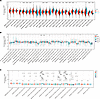 Figure 4
Pancancer analysis of SPOP. (A) Pancancer analysis of SPOP expression in 26 kinds of tumors and corresponding normal tissues after procedural exclusion. TPM, transcripts per million. (B and C) Pancancer analysis of SPOP expression among different clinical stages in 30 kinds of tumors and different pathological grades in 14 kinds of tumors after procedural exclusion. Data are presented as mean ± SD. The significance of differences was revealed based on unpaired Student’s t test for 2 independent groups, Wilcoxon rank sum and signed rank tests for 2 groups in multiple samples, and Kruskal test for multiple groups (****P < 0.001, ***P < 0.001, **P < 0.01, *P < 0.05).
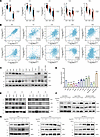 Figure 5
SPOP correlates with RIPK1 rather than RIPK3 in tumors. (A) The mRNA expression level of RIPK1, RIPK3, and SPOP between tumor tissues and adjacent normal tissues in TCGA. (B) Correlation analysis between SPOP and RIPK1/RIPK3 in tumors. (C) IB analysis of the protein expression level of RIPK1, RIPK3, and SPOP in different tumor cell lines. (D) The mRNA level of RIPK3 in different tumor cell lines. (E) IB analysis of the protein expression level of RIPK1, RIPK3, and SPOP in RCC tissue samples. (F) IB analysis of the RIPK1/RIPK3 protein level exchange derived from 786-O+RIPK3, HepG2+RIPK3, and MDA-MB-231+RIPK3 transfected with indicated Flag-SPOP. (G) IB analysis of the RIPK1 protein level exchange derived from 786-O, HepG2, and MDA-MB-231 transfected with indicated Flag-SPOP. Cells were treated with 20 μM DMSO or MG132 for 6 hours before harvesting. Results represent at least 3 independent experiments. The significance of differences was revealed based on Student’s t test for 2 unpaired or paired groups. The correlation analysis was conducted using Pearson correlation coefficient (***P < 0.001, **P < 0.01, *P < 0.05).
RIPK3 expression has been previously shown to be regulated via transcriptional repression mechanisms, including promoter hypermethylation (37). This supports the notion that the SPOP specifically regulates RIPK1 protein stability in a cell content–dependent manner, while RIPK3 might escape the regulation of SPOP by transcriptional silencing. We selected 786-O, HepG2, and MDA-MB-231, 3 cancer cell lines with high expression of SPOP and RIPK1, for further verification. Consistent with our previous findings, in these 3 cell lines, overexpressed SPOP increased the expression of RIPK1 in a dose-dependent manner, and the proteasome inhibitor MG132 could further increase RIPK1 level (Figure 5G). On the contrary, SPOP decreased the protein level of RIPK3, which could be blocked by MG132 (Figure 5F). These results indicate that SPOP-mediated regulation of RIPK1 and RIPK3 persists across various tumor types.
Investigating tumor therapy strategy in tumors with high expression of SPOP and RIPK1. Although TSZ treatment markedly increased the phosphorylation level of RIPK3 (Figure 6B), the basal expression level of RIPK3 in tumor cell lines was extremely low. In addition, TSZ triple combination is less likely to be achieved in the clinic, so we did not carry out further research about RIPK3 in tumors. Our results showed that SPOP can prevent necroptosis and mediate apoptosis. In theory, inducing apoptosis in tumors with abnormally high expression of SPOP can more easily kill tumor cells. Since there are currently no commercial small-molecule regulators for SPOP (39), we turned to RIPK1 as a potential antitumor drug target.
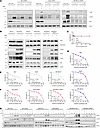 Figure 6
RIPK1 expression is associated with the sensitivity to sunitinib and SM164 cotreatment in tumor. (A) After knockdown of RIPK1 in 786-O, HepG2, and MDA-MB-231 cells, the protein levels of apoptotic markers mediated by TNF-α+SM164 (TS) stimulation were detected. (B) WT and RIPK3-overexpressing 786-O, HepG2, and MDA-MB-231 cells were treated with DMSO or TSZ for 6 hours; subsequently WCL was harvested for IB analysis. (C) Cell viability assay to assess the sensitivity of 786-O, HepG2, and MDA-MB-231 cells to SM164 treatment. (D) Cell viability assay for the effect of RIPK1 knockdown on the sensitivity of 786-O, HepG2, and MDA-MB-231 cells to sunitinib treatment. (E) Cell viability assay to assess the effect of combined use of SM164 on sunitinib sensitivity in 786-O, HepG2, and MDA-MB-231 cells. (F) Cell viability assay for the effect of RIPK1 knockdown on the sensitivity of 786-O, HepG2, and MDA-MB-231 cells to sunitinib alone, and sunitinib combined with SM164 treatment. (G) WT and RIPK1-knockdown 786-O, HepG2, and MDA-MB-231 cells were treated with DMSO, sunitinib alone, SM164 alone, or sunitinib combined with SM164 for 24 hours; subsequently WCL was harvested for IB analysis. Cell Counting Kit-8 (CCK-8) experiments were performed in triplicate and repeated 3 times independently. Data are presented as mean ± SD. The significance of differences was revealed based on paired Student’s t test.
We silenced RIPK1 in 786-O, HepG2, and MDA-MB-231 using 3 shRNAs. Immunoblotting results of cleaved PARP and cleaved caspase-3 showed that RIPK1 knockdown inhibited apoptosis following TNF-α+SM164 (TS) treatment (Figure 6A). Per the literature, sunitinib can activate the NF-κB signaling pathway of tumor cells and upregulate TNF-α, IL-6, and IL-8 (40). This led us to investigate whether sunitinib combined with SM164 could simulate TS treatment. We first tested the cell viability with a single agent. We found SM164 monotherapy did not affect the cell viability of 786-O, HepG2, and MDA-MB-231 (Figure 6C), and RIPK1 knockdown did not affect sunitinib sensitivity in these cells (Figure 6D). Further experimental results showed that SM164 increased the sunitinib sensitivity of 786-O, HepG2, and MDA-MB-231(Figure 6E), and this enhancement could be blocked by RIPK1 knockdown (Figure 6F). Immunoblotting analysis showed sunitinib and SM164 cotreatment exacerbated apoptosis compared with a single agent, which were abrogated by RIPK1 knockdown (Figure 6G). These results indicate that sunitinib and SM164 cotreatment promotes apoptosis in a RIPK1-dependent manner. Therefore, these results remind us that RIPK1 expression–based therapy displays some clinical value for screening potential beneficiaries.
Given that sunitinib and SM164 cotreatment effectively induced RIPK1-positive tumor cell death in vitro, their combined effect was then investigated in vivo using a xenograft mouse model. Pancancer analysis suggests that KIRC is the most representative cancer with abnormally high expression of SPOP and RIPK1, so we selected 786-O cells to construct a nude mouse xenograft tumor model. After inoculating 786-O_PLKO/shRIPK1 cells, we observed the growth rate of subcutaneous tumors. No significant difference was found between the 2 groups, indicating that RIPK1 cannot directly affect the growth of KIRC cells in vivo (Figure 7, A–C).
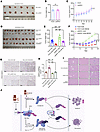 Figure 7
SM164 enhances antitumor activity of sunitinib on xenograft models. (A–C) Nude mice were injected subcutaneously with 786-O_PLKO or 786-O shRIPK1 cells without treatment. (A) Images of isolated tumors. (B and C) Tumor weights and tumor volume curves of 786-O xenografts (n = 6). (D–H) Nude mice were injected subcutaneously with indicated 786-O cells treated with sunitinib alone or combination of sunitinib and SM164. Sunitinib: 40 mg/kg, orally administered; SM164: 5 mg/kg, intraperitoneal injection. (D) Images of isolated tumors. (E and F) Tumor weights and tumor volume curves of 786-O xenografts in each treatment group (n = 10). (G) Immunohistochemical analysis of cleaved caspase-3 expression was performed. (H) Analysis of positive cleaved caspase-3 (n = 7). (I) H&E staining tissue images obtained from major organs of xenograft mice for the in vivo toxicity evaluation. Scale bars: 100 µm (G), 50 µm (G insets), and 50 µm (I). (J) Schematic diagram illustrated how SM164 and sunitinib promote apoptosis based on SPOP-mediated overexpression of RIPK1. The mean ± SD is shown. Statistical significance was determined using 1-way or 2-way ANOVA with Tukey’s post hoc test. Evaluation of morphology was performed by a board-certified pathologist in a blinded manner. The significance of differences was revealed based on unpaired Student’s t test for 2 independent groups and 1-way or 2-way ANOVA with Tukey’s post hoc test for multiple groups (***P < 0.001, **P < 0.01).
Figure 7SM164 enhances antitumor activity of sunitinib on xenograft models. (A–C) Nude mice were injected subcutaneously with 786-O_PLKO or 786-O shRIPK1 cells without treatment. (A) Images of isolated tumors. (B and C) Tumor weights and tumor volume curves of 786-O xenografts (n = 6). (D–H) Nude mice were injected subcutaneously with indicated 786-O cells treated with sunitinib alone or combination of sunitinib and SM164. Sunitinib: 40 mg/kg, orally administered; SM164: 5 mg/kg, intraperitoneal injection. (D) Images of isolated tumors. (E and F) Tumor weights and tumor volume curves of 786-O xenografts in each treatment group (n = 10). (G) Immunohistochemical analysis of cleaved caspase-3 expression was performed. (H) Analysis of positive cleaved caspase-3 (n = 7). (I) H&E staining tissue images obtained from major organs of xenograft mice for the in vivo toxicity evaluation. Scale bars: 100 µm (G), 50 µm (G insets), and 50 µm (I). (J) Schematic diagram illustrated how SM164 and sunitinib promote apoptosis based on SPOP-mediated overexpression of RIPK1. The mean ± SD is shown. Statistical significance was determined using 1-way or 2-way ANOVA with Tukey’s post hoc test. Evaluation of morphology was performed by a board-certified pathologist in a blinded manner. The significance of differences was revealed based on unpaired Student’s t test for 2 independent groups and 1-way or 2-way ANOVA with Tukey’s post hoc test for multiple groups (***P < 0.001, **P < 0.01).
After constructing subcutaneous tumors, we treated nude mice with sunitinib alone or in combination with SM164 for 2 weeks. Compared with sunitinib alone, the combination treatment exhibited increased antitumor activity in a xenograft model, especially in the 786-O_PLKO (RIPK1-positive) group (Figure 7, D–F). Moreover, IHC results showed that cotreatment with SM164 and sunitinib enhanced the expression of cleaved caspase-3, a marker of apoptosis, in tumor tissues, and this effect was attenuated upon RIPK1 knockdown (Figure 7, G and H). In addition, toxicity was not observed in livers, hearts, and kidneys of nude mice (Figure 7I), indicating that the combination treatment is well tolerated in vivo. These results indicate that combination treatment with sunitinib and SM164 can increase antitumor activity in RCC xenograft models.


