
Research ArticleNeuroscience
Open Access |  10.1172/jci.insight.179789
CD11c+ CD8 T cells cause IFN-γ–dependent autoimmune neuroinflammation that is restrained by PD-1 signaling
Daniel Hwang,1 Gholamreza Azizi,1 Larissa Lumi Watanabe Ishikawa,1 Maryam Seyedsadr,1 Arin Cox,2 Soohwa Jang,1 Ezgi Kasimoglu,1 Abdolmohamad Rostami,1 Guang-Xian Zhang,1 and Bogoljub Ciric1
1Department of Neurology, Jefferson Hospital for Neuroscience, Thomas Jefferson University, Philadelphia, Pennsylvania, USA.
2Comparative Pathology Core, School of Veterinary Medicine, University of Pennsylvania, Philadelphia, Pennsylvania, USA.
Address correspondence to: Bogoljub Ciric, Department of Neurology, Jefferson Hospital for Neuroscience, Thomas Jefferson University, 900 Walnut Street, Suite 300, Philadelphia, Pennsylvania, 19107, USA. Email: bogoljub.ciric@jefferson.edu.
Find articles by
Hwang, D.
in:
PubMed
|
Google Scholar
|

1Department of Neurology, Jefferson Hospital for Neuroscience, Thomas Jefferson University, Philadelphia, Pennsylvania, USA.
2Comparative Pathology Core, School of Veterinary Medicine, University of Pennsylvania, Philadelphia, Pennsylvania, USA.
Address correspondence to: Bogoljub Ciric, Department of Neurology, Jefferson Hospital for Neuroscience, Thomas Jefferson University, 900 Walnut Street, Suite 300, Philadelphia, Pennsylvania, 19107, USA. Email: bogoljub.ciric@jefferson.edu.
Find articles by Azizi, G. in: PubMed | Google Scholar
1Department of Neurology, Jefferson Hospital for Neuroscience, Thomas Jefferson University, Philadelphia, Pennsylvania, USA.
2Comparative Pathology Core, School of Veterinary Medicine, University of Pennsylvania, Philadelphia, Pennsylvania, USA.
Address correspondence to: Bogoljub Ciric, Department of Neurology, Jefferson Hospital for Neuroscience, Thomas Jefferson University, 900 Walnut Street, Suite 300, Philadelphia, Pennsylvania, 19107, USA. Email: bogoljub.ciric@jefferson.edu.
Find articles by Ishikawa, L. in: PubMed | Google Scholar
1Department of Neurology, Jefferson Hospital for Neuroscience, Thomas Jefferson University, Philadelphia, Pennsylvania, USA.
2Comparative Pathology Core, School of Veterinary Medicine, University of Pennsylvania, Philadelphia, Pennsylvania, USA.
Address correspondence to: Bogoljub Ciric, Department of Neurology, Jefferson Hospital for Neuroscience, Thomas Jefferson University, 900 Walnut Street, Suite 300, Philadelphia, Pennsylvania, 19107, USA. Email: bogoljub.ciric@jefferson.edu.
Find articles by Seyedsadr, M. in: PubMed | Google Scholar
1Department of Neurology, Jefferson Hospital for Neuroscience, Thomas Jefferson University, Philadelphia, Pennsylvania, USA.
2Comparative Pathology Core, School of Veterinary Medicine, University of Pennsylvania, Philadelphia, Pennsylvania, USA.
Address correspondence to: Bogoljub Ciric, Department of Neurology, Jefferson Hospital for Neuroscience, Thomas Jefferson University, 900 Walnut Street, Suite 300, Philadelphia, Pennsylvania, 19107, USA. Email: bogoljub.ciric@jefferson.edu.
Find articles by Cox, A. in: PubMed | Google Scholar
1Department of Neurology, Jefferson Hospital for Neuroscience, Thomas Jefferson University, Philadelphia, Pennsylvania, USA.
2Comparative Pathology Core, School of Veterinary Medicine, University of Pennsylvania, Philadelphia, Pennsylvania, USA.
Address correspondence to: Bogoljub Ciric, Department of Neurology, Jefferson Hospital for Neuroscience, Thomas Jefferson University, 900 Walnut Street, Suite 300, Philadelphia, Pennsylvania, 19107, USA. Email: bogoljub.ciric@jefferson.edu.
Find articles by Jang, S. in: PubMed | Google Scholar
1Department of Neurology, Jefferson Hospital for Neuroscience, Thomas Jefferson University, Philadelphia, Pennsylvania, USA.
2Comparative Pathology Core, School of Veterinary Medicine, University of Pennsylvania, Philadelphia, Pennsylvania, USA.
Address correspondence to: Bogoljub Ciric, Department of Neurology, Jefferson Hospital for Neuroscience, Thomas Jefferson University, 900 Walnut Street, Suite 300, Philadelphia, Pennsylvania, 19107, USA. Email: bogoljub.ciric@jefferson.edu.
Find articles by Kasimoglu, E. in: PubMed | Google Scholar
1Department of Neurology, Jefferson Hospital for Neuroscience, Thomas Jefferson University, Philadelphia, Pennsylvania, USA.
2Comparative Pathology Core, School of Veterinary Medicine, University of Pennsylvania, Philadelphia, Pennsylvania, USA.
Address correspondence to: Bogoljub Ciric, Department of Neurology, Jefferson Hospital for Neuroscience, Thomas Jefferson University, 900 Walnut Street, Suite 300, Philadelphia, Pennsylvania, 19107, USA. Email: bogoljub.ciric@jefferson.edu.
Find articles by Rostami, A. in: PubMed | Google Scholar
1Department of Neurology, Jefferson Hospital for Neuroscience, Thomas Jefferson University, Philadelphia, Pennsylvania, USA.
2Comparative Pathology Core, School of Veterinary Medicine, University of Pennsylvania, Philadelphia, Pennsylvania, USA.
Address correspondence to: Bogoljub Ciric, Department of Neurology, Jefferson Hospital for Neuroscience, Thomas Jefferson University, 900 Walnut Street, Suite 300, Philadelphia, Pennsylvania, 19107, USA. Email: bogoljub.ciric@jefferson.edu.
Find articles by Zhang, G. in: PubMed | Google Scholar
1Department of Neurology, Jefferson Hospital for Neuroscience, Thomas Jefferson University, Philadelphia, Pennsylvania, USA.
2Comparative Pathology Core, School of Veterinary Medicine, University of Pennsylvania, Philadelphia, Pennsylvania, USA.
Address correspondence to: Bogoljub Ciric, Department of Neurology, Jefferson Hospital for Neuroscience, Thomas Jefferson University, 900 Walnut Street, Suite 300, Philadelphia, Pennsylvania, 19107, USA. Email: bogoljub.ciric@jefferson.edu.
Find articles by Ciric, B. in: PubMed | Google Scholar
Published May 22, 2026 - More info
JCI Insight. 2026;11(10):e179789. https://doi.org/10.1172/jci.insight.179789.
© 2026 Hwang et al. This work is licensed under the Creative Commons Attribution 4.0 International License. To view a copy of this license, visit http://creativecommons.org/licenses/by/4.0/.
Received: February 28, 2024; Accepted: March 18, 2026

-
Results
Adoptive transfer of 8.8 Tc1 cells causes EAE-like disease characterized by ataxia and weight loss. In adoptive CD4-EAE, both Th1 and Th17 cells can cause disease (15). In MS lesions, both CD4 and CD8 T cells produce IFN-γ and IL-17A (7), suggesting that both T cell subsets are pathogenic. Thus, we tested whether Tc1 and Tc17 cells could induce CNS autoimmunity. We polarized 8.8 CD8 T cells into either the Tc1 or Tc17 lineage and expanded them to large numbers (Figure 1, A and B, Supplemental Figure 1C). Tc1 cells uniformly produced IFN-γ, while Tc17-polarized cells produced IL-17A, IFN-γ, or both cytokines. Adoptive transfer of Tc1 or Tc17 cells into naive recipients resulted in an acute, monophasic disease characterized by severe ataxia and rapid weight loss (Figure 1, C and D, and Supplemental Video 1; supplemental material available online with this article; https://doi.org/10.1172/jci.insight.179789DS1). Tc1 cells caused more severe clinical disease, weight loss, and CNS inflammation than Tc17 cells (Figure 1, C–E). Mice transferred with Tc1 cells had greater numbers of CD45+ cells in the brain versus the spinal cord (Figure 1F). Unlike the ascending paralyses characteristic of CD4-EAE (1), mice that developed CD8-EAE retained the ability to move their tails and limbs, but they lost coordinated movement to a varying degree, including loss of the ability to right themselves. At the disease peak, some mice became moribund or died (Supplemental Video 1) but those that survived always fully recovered. Interestingly, one-third of the mice also developed periocular inflammation, which also followed a monophasic disease course (Figure 1, G and H). Notably, Tc1 cells activated in vitro once could induce the disease in recipient mice (Supplemental Figure 1, A and B), similar to twice-activated Tc1 cells (Figure 1, C and D). As reported in some studies on adoptive CD4-EAE (16), the administration of pertussis toxin to recipient mice resulted in less severe CD8-EAE (Supplemental Figure 1, A and B). These data show that both Tc1 and Tc17 8.8 cells can induce disease, starting only several days after transfer into naive recipient mice. In contrast to Th1 and Th17 cells, Tc17 cells were notably less pathogenic than Tc1 cells, which prompted us to continue our studies using Tc1 cells. Overall, 8.8 CD8 T cells cause prominent inflammation in both the brain and spinal cord, which clinically manifests distinctly from CD4-EAE. The disease is self-resolving, as mice that survive the disease fully recover. The monophasic nature of CD8 T cell–mediated neuroinflammation has been largely overlooked to date.
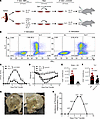 Figure 1
Adoptive transfer of 8.8 Tc1 and Tc17 cells induces autoimmune neuroinflammation. (A) Splenocytes from 8.8 mice were stimulated with MBP79-87 for 3 days in either Tc1-, or Tc17-polarizing conditions. Tc17 condition: TGF-β (10 ng/mL), IL-6 (50 ng/mL), IL-1β (10 ng/mL), anti–IFN-γ (10 μg/mL), and anti–IL-4 (10 μg/mL). Tc1 condition: IL-12 (20 ng/mL) and IL-2 (5–10 ng/mL). After 72 hours, cells were rested in either 2 ng/mL IL-2 for Tc17 polarization or 5–10 ng/mL IL-2 for Tc1 polarization. Each day, cells were split and replated in fresh media supplemented with IL-2 at concentrations indicated above. After 3 days of rest, cells were reactivated for 2.5 days with plate-bound anti-CD3 and anti-CD28 in the presence of IL-23 (10 ng/mL) and IL-2 (2 ng/mL) for Tc17 cells, and IL-12 (2 ng/mL) and IL-2 (5-10 ng/mL) for Tc1 cells. For CD8-EAE induction, CD8+ cells were purified by negative selection using MACS beads, and 2 × 10⁷ cells were transferred to recipient mice via tail vein injection. (B) Flow cytometry plots showing Tc1- and Tc17-polarized 8.8 CD8+ T cells stained for IL-17A and IFN-γ after first and second activation. (C) In total, 2 × 10⁷ MACS-purified CD8+ T cells and 0.2–0.4 μg recombinant murine IL-2 were i.v. transferred to naive recipient mice. Clinical course for CD8-EAE (n = 5–7 mice per group). Mice from 2 independent experiments in which all animals developed disease are shown. (D) Change in weight during CD8-EAE. Significance was determined by 2-way ANOVA. (E) Number of CD45+ cells isolated from the CNS (brain + spinal cord). (F) Number of CD45+ cells isolated from the brain or spinal cord. Significance was determined by a t test. (G) Photos of inflamed eyes during Tc1-mediated CD8-EAE. (H) Incidence of periocular inflammation over the course of CD8-EAE (n = 21, pooled from 5 independent experiments).
Tc1 cells cause distinct inflammation in the brain and spinal cord. To characterize CNS inflammation mediated by 8.8 Tc1 cells, we profiled immune cells from the brain and spinal cord at the peak of the disease. CD45+ cells from the CNS were virtually all CNS-resident immune cells and immune cells infiltrated into CNS tissue that were not contaminated with cells from the blood due to incomplete perfusion (Supplemental Figure 2A). Among CD45+ cells from the CNS, the predominant cell types were CD8 T cells, monocytes and monocyte-derived cells, and microglia (Figure 2A). CD8 T cells comprised most of lymphocytes in the CNS, with only 1%–3% of immune cells being CD4+ T cells and CD19+ B cells (Figure 2B). Over 95% of CD8+ cells were CD3+, and nearly all CD45loCD11b+ cells were Sall1+ microglia (Supplemental Figure 2, B–D). There were notable differences in immune cell composition and their phenotypes between the brain and spinal cord. Monocytic DCs (MoDCs) and MFs, which are highly inflammatory myeloid cells in CD4-EAE models (16), were present in higher frequencies in the spinal cord compared with the brain. In the brain, the majority of myeloid cells were microglia (Figure 2B). Myeloid cells in the spinal cord appeared to be more activated, with a higher frequency of CD11c+ and MHCII+ monocytes, and nearly all microglia expressed CD11c (Figure 2C and Figure 3B). Notably, the majority of CD8 T cells also expressed CD11c (Figure 2C). In both the brain and spinal cord, there were similar frequencies of monocytes expressing IFN-γ, TNF, and CCL2, but only a few monocytes expressed IL-1β, CXCL9, and arginase 1 (Figure 3A). Monocytes from the brain and spinal cord had a similar frequency of IFN-γ expression, but lower MFI for IFN-γ from the spinal cord (Figure 3A and Supplemental Figure 2, E and F). A higher frequency of microglia from the spinal cord expressed IFN-γ, with higher MFI for IFN-γ than in the brain (Figure 3, C–E). Interestingly, a higher frequency of microglia expressed CCL2 in the spinal cord (Figure 3C), suggesting that CCL2 secreted by microglia attracts more monocytes in the spinal cord. These data suggest that, although overall infiltrating immune cell numbers are lower in the spinal cord, both brain and spinal cord inflammation are likely relevant to pathology in CD8-EAE.
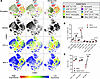 Figure 2
Tc1 cells cause distinct inflammation in the brain and spinal cord. (A) Splenocytes from 8.8 mice were activated with MBP79-87 for 3 days in Tc1 condition, followed by 3 days of expansion in IL-2 and CD8 T cell purification by MACS negative selection. In total, 2 × 10⁷ cells were transferred i.v. into recipient mice. Mice were sacrificed 7 days later, and the brains and spinal cords were analyzed separately by flow cytometry. Data from 1 (n = 3) of 2 experiments with similar results are shown. CD45+ cells from the CNS of recipient mice were clustered using t-SNE, and populations are colored according to manual gating. CD8 T cells were defined as CD45hiCD11b–CD8+, with 8.8 TCR+ and 8.8 TCR– cells being defined as TCR Vα8.3+Vβ8.1/8.2+ and TCR Vα8.3–Vβ8.1/8.2–, respectively. MoDCs and MFs were defined as CD45hiCD11b+Ly6Glo/–Ly6C+MHCII+, microglia as CD45loCD11b+, neutrophils as CD45+ CD11b+Ly6Ghi, and CD4+ cells as CD45hiCD11b–CD4+. B cells were CD45hiCD11b–CD19+. Other CD11b+ cells were CD45hiCD11b+CD4–CD8–Ly6G–Ly6C–. Other CD45+ cells were CD45+CD4–CD8–CD11b–CD19–. (B) Quantification of frequency of populations among CD45+ cells from A. (C) Frequency of CD11c+ cells among CD45hiCD8+ T cells, CD45hiCD11b+Ly6G–Ly6C+ monocytes, and CD45loCD11b+ microglia.
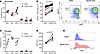 Figure 3
Myeloid cells exhibit distinct inflammatory profiles in the brains and spinal cords of mice with CD8-EAE. (A) Expression of indicated cytokines and chemokines amongst monocytes from cells treated with PMA/ionomycin/golgiplug. (B) Frequency of MHCII+ cells among monocytes. (C) Expression of indicated cytokines and chemokines amongst microglia treated with PMA/ionomycin/golgiplug. (D) Median fluorescence intensity (MFI) of IFN-γ+ microglia. (E) Histograms depicting IFN-γ expression in microglia. Significance was determined by a paired t test.
CD8 T cells in the CNS are predominantly CD11c+ and have an inflammatory phenotype. We characterized the phenotype of CD8 T cells in the CNS during CD8-EAE. Approximately half of the CD8 T cells did not express transgenic 8.8 TCR (Figure 4A). It is unclear whether these 8.8 TCR– CD8 T cells were endogenous or transferred 8.8 CD8 T cells that had downregulated expression of their 8.8 TCR, but a portion of 8.8 TCR– cells expressed either TCR Vβ8 or Vα8 chain, indicating that these cells derive from the host. Most CD8 T cells in the CNS had Tc1 phenotype, with over 80% of 8.8 TCR+ cells and approximately 70% of 8.8 TCR– cells expressing IFN-γ (Figure 4B). CD8 T cells also expressed GM-CSF, TNF, and CCL2, but 8.8 TCR– cells had a lower frequency of GM-CSF expression than 8.8 TCR+ cells. Unexpectedly, large proportions of CD8 T cells in the CNS, both 8.8 TCR+ and 8.8 TCR–, expressed CD11c (Figure 4C). Approximately 80% of 8.8 TCR+ cells were CD11c+, which is over a 4-fold enrichment in CD11c+ cells when compared with their frequency in the spleen or prior to transfer into recipient mice (Figure 4, C and D). The 8.8 TCR cells had a lower frequency of expression and MFI for CD11c than 8.8 TCR+ cells (Figure 4, E and F). Consistent with reports that CD11c+ CD8 T cells have enhanced effector function, these cells exhibited higher frequencies of IFN-γ and GM-CSF expression than CD11c– cells (Figure 4G).
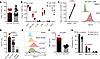 Figure 4
CD8 T cells in the CNS during CD8-EAE are predominantly CD11c+ with a proinflammatory phenotype. CD8-EAE was induced by i.v. transfer of 2 × 10⁷ Tc1 cells, and mice were sacrificed after 7 days. Brain and spinal cord cells were combined and analyzed by flow cytometry. (A) Frequency of 8.8 TCR+ cells (TCR Vβ8.1/8.2+ TCR Vα8.3+) and 8.8 TCR– cells among CD8+ cells. n = 33 mice, from 5 experiments. (B) Frequency of IFN-γ+, GM-CSF+, IL-17A+, TNF+, IL-10+, CCL2+ cells among 8.8 TCR+ CD8+ cells and 8.8 TCR– CD8+ cells (n = 2–22 mice) with data pooled from multiple experiments in all cases except for CCL2. (C) Frequency of CD11c+ cells among 8.8 TCR+CD8+ cells in the spleen versus CNS of the same mouse (n = 8 mice per group). Significance determined by paired t test. Representative flow cytometry plots are shown. (D) Frequency of CD11c+ cells among 8.8 TCR+CD8+ cells and 8.8 TCR– CD8+ cells in the CNS (n = 17 from 3 experiments) and in vitro before transfer (n = 3 independent cultures). (E) Histograms depicting expression of CD11c by CD8+ cells in the CNS and from in vitro cultures. (F) MFI of CD11c on 8.8 TCR+ and 8.8 TCR– CD8+ cells in the CNS (n = 16 from 2 experiments). (G) Frequency of IFN-γ+, GM-CSF+, and IL-17A+ cells among CD11c+CD8+ and CD11c–CD8+ cells (n = 12 mice).
Our CD8-EAE model has a monophasic disease course. A possible explanation for the self-resolving inflammation is inhibition of CD8 T cell function by checkpoint inhibitor molecules. Terminal effector phenotypes are typically characterized by high PD-1 expression on CD8+ T cells, accompanied by concurrent expression of PD-L1 on myeloid cells at the site of inflammation. To assess if this was the case in our model, we stained for PD-1 and PD-L1 on CNS immune cells during CD8-EAE. PD-1 was abundantly expressed on all CD8 T cells, while myeloid cells expressed little PD-1 (Figure 5, A and B). Among CD45+ cells, MoDCs and MFs expressed the highest levels of PD-L1, but CD8 T cells also uniformly expressed PD-L1, even more so than microglia, neutrophils, and some monocytes. Interestingly, among CD8 T cells, 8.8 TCR– cells had lower MFI for PD-1 and lower frequency of PD-1+ cells than 8.8 TCR+ cells (Figure 5C and Supplemental Figure 3A). Both 8.8 TCR+ and 8.8 TCR– cells had similar MFI and frequency of PD-L1 expression (Supplemental Figure 3, B and C). Lastly, due to the increased frequency of MoDCs and MFs in the spinal cord versus the brain, there was increased MFI for PD-L1 among CD45+ cells in the spinal cord (Supplemental Figure 3D). To further characterize checkpoint inhibitor expression on CD8 T cells during disease, we evaluated PD-1, TIM-3, LAG3, TIGIT, and CTLA-4 expression in the spleen and CNS. Both 8.8 TCR+ and 8.8 TCR– CD8 T cells expressed high levels of PD-1, TIM-3, LAG3, and TIGIT but only low levels of CTLA-4 in the CNS, whereas in the spleen only a small proportion of the cells expressed these molecules (Figure 5, D and E, and Supplemental Figure 3E). These data suggest that the disease is self-resolving due to signaling through immune checkpoint molecules. Furthermore, CD11c expression seems to be a characteristic of CD8 T cells with terminal effector function in the CNS during CD8-EAE.
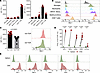 Figure 5
CD8 T cells in the CNS of mice with CD8 EAE express high levels of checkpoint inhibition molecules. (A) MFI of PD-L1 and PD-1 among indicated cell populations. (B) Histograms depicting expression of PD-1 and PD-L1 by microglia, neutrophils, MHC– monocytes, MoDCs, and MFs, and CD8 T cells. (C) MFI for PD-1 among 8.8 TCR+ and 8.8 TCR– CD8+ T cells and histograms depicting PD-1 expression. For A–C, n = 16 mice from 2 experiments. Significance was determined by an unpaired t test. (D) Frequency of PD-1, TIM-3, LAG3, TIGIT, and CTLA-4 expressing cells among 8.8 TCR+ CD8+ cells in spleen and CNS. Significance was calculated by 2-way ANOVA followed by Šídák’s multiple comparisons test. n = 8 mice. (E) Histograms depicting expression of PD-1, TIM-3, LAG3, TIGIT, and CTLA-4 expressing cells among 8.8 TCR+CD8+ cells.
Inflammation during CD8-EAE is restrained by PD-1 signaling. The high expression of PD-1 and other immune checkpoint molecules on CD8 T cells in the CNS suggested that they curtail neuroinflammation in CD8-EAE. To test this hypothesis, we blocked PD-1 signaling during EAE using blocking mAbs against either PD-1 or PD-L1. Blocking PD-1 or PD-L1 exacerbated motor dysfunction and eye inflammation during CD8-EAE (Figure 6, A and B, and Supplemental Figure 4, A and B). Blocking PD-1 increased the number of immune cells in the brain and, to a greater extent, in the spinal cord (Figure 6C). Characterization of immune cells showed that the increase in cell numbers was primarily caused by an increase in inflammatory monocyte-derived cells (Figure 6, D and E). Anti–PD-1 treatment reduced the MFI of PD-1 on CD8 T cells in the CNS (Figure 6F and Supplemental Figure 4C) but had only moderate effects on PD-L1 expression on CD45+ cells in the CNS (Supplemental Figure 4, D and E). We cannot formally rule out the possibility that the injected anti–PD-1 mAb blocked the binding of the mAb used to ex vivo stain PD-1 on cells for flow cytometric analysis. However, we observed increased staining for PD-1 on monocytes, monocyte-derived dendritic cells, and macrophages in the samples from anti–PD-1 mAb–treated mice, while in the same samples, staining for PD-1 on 8.8 T cells was reduced (Figure 6F), indicating no significant competition between the blocking and staining mAbs. Lastly, we found a modest increase in the proportion of 8.8 TCR– CD8 T cells of anti–PD-1–treated mice (Supplemental Figure 4F). Together, these data indicate that disease severity in this EAE model is limited by PD-1 signaling.
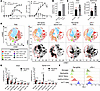 Figure 6
Blocking PD-1 signaling exacerbates CD8-EAE. Recipient mice received 8.8 T cells and were treated daily with 200 μg aPD-1 or isotype mAb (Rat IgG2a) starting from the day of CD8-EAE induction (n = 7–8 mice per group; compiled from 3 independent experiments). (A) Clinical scores and the number of inflamed eyes over time are shown. Statistical significance was determined by 2-way ANOVA. (B) Incidence of eye inflammation in mice treated with aPD-1 or isotype mAb. Significance was determined by the χ2 test. (C) Number of CD45+ cells from the brain and spinal cord of mice treated with aPD-1 and sacrificed on day 8 after CD8-EAE induction. (D) t-SNE clustering of CD45+ cells from multicolor flow cytometry data. CD8+ T cells were defined as CD8+CD3+; microglia as CD11b+Sall1+; MoDCs and macrophages as Sall1–CD11b+Ly6Glo/–Ly6C+MHCII+; neutrophils as Sall1–CD11b+Ly6GhiLy6CInt; CD4 T cells as CD4+CD3+. Other CD45hi cells did not express lineage markers stained in this panel. MHCII– monocytes were Sall1–CD11b+Ly6Glo/–Ly6C+MHCII–; Ly6C– APCs were Sall1–CD11b+Ly6C–MHCII+; other CD11b+ cells did not express Sall1, Ly6C, Ly6G, and MHCII. (E) Quantification of cell numbers based on gating from D. (F) Histograms depicting expression of PD-1 among cell populations. For C–F, statistical significance was determined by a 2-tailed unpaired t test.
Over the course of our investigation, we noted that some aged 8.8 mice develop spontaneous overt signs of EAE (sEAE), which agrees with a previous report (13). Although animals that developed sEAE were rare, we have included in vitro analyses of a mouse with sEAE. We activated splenocytes from this mouse in vitro and compared their phenotype to that of cells from healthy-looking mice. Cells from the sEAE mouse exhibited a more activated phenotype, characterized by lower PD-1 expression and increased IL-2 and TNF expression. TIM-3 and IFN-γ expression was similar between the sEAE mouse and the normal mouse (Supplemental Figure 4G). Although these observations need to be validated by comparing cells from larger numbers of mice, our data thus far suggest that the immune status of naive donor mice is not uniform and may contribute to variability in CD8-EAE.
Rapamycin-treated 8.8 CD8 T cells have enhanced encephalitogenicity. Our data on the phenotype of CD8 T cells and the blockade of PD-1/PD-L1 suggest that the monophasic disease course in our CD8-EAE model results from the elimination/anergy of CD8 T cells by checkpoint inhibitor molecules, leading to the resolution of CNS inflammation. It is known that memory T cells exhibit resistance to such inhibitory mechanisms (17). We therefore tested whether induction of memory-like cells could exacerbate or extend disease in our CD8-EAE model by treating 8.8 CD8 T cells during in vitro activation with rapamycin or 2-deoxyglucose (2-DG), which have been shown to induce a memory phenotype in CD8 T cells with enhanced and prolonged effector function in vivo (18, 19).
Rapamycin and 2-DG treatments differed in their ability to modify the phenotype of 8.8 CD8 T cells. Rapamycin strongly enhanced the production of inflammatory cytokines and chemokines, including IFN-γ, TNF, GM-CSF, and CCL2, whereas 2-DG only enhanced GM-CSF production (Figure 7, A–E). The enhanced production of IL-2 by CD8 T cells is associated with a memory phenotype and improved survival (20). Both rapamycin and 2-DG treatments increased the frequency of IL-2–expressing CD8 T cells during their culturing (Figure 7, F and G). The treatments also affected the expression of PD-1 and TIM-3, with rapamycin reducing the expression of both PD-1 and TIM-3, whereas 2-DG did not affect PD-1 expression but markedly reduced the frequency of TIM-3–expressing CD8 T cells (Figure 7, H and I). Treatment with 2-DG, but not rapamycin, upregulated TCF-1, a marker of stem cell memory T cells (Supplemental Figure 5A). We then transferred 2-DG– and rapamycin-treated 8.8 CD8 T cells to recipient mice to induce CD8-EAE. Rapamycin-treated cells induced exacerbated disease compared with control Tc1 cells, whereas 2-DG–treated cells were not encephalitogenic (Figure 7J and Supplemental Figure 5B). Although manipulation of CD8 T cell phenotype in the context of CD8-EAE requires further exploration, our data nonetheless suggest that inducing a memory-like phenotype could enhance pathogenicity of CD8 T cells.
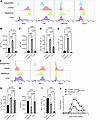 Figure 7
Rapamycin-treated 8.8 CD8 T cells induce more severe disease. The 8.8 CD8 T cells were activated in Tc1 conditions with 50 nM rapamycin (Rapa) or 4 mM 2-deoxyglucose (2-DG). (A) Expression of IFN-γ, TNF, GM-CSF, and CCL2 in CD8+ cells after 3-day stimulation with MBP79-87. (B and C) MFI of IFN-γ and TNF among IFN-γ+ and TNF+ cells. (D and E) Frequency of GM-CSF+ and CCL2+ cells among CD8+ cells. (F) Expression of IL-2, TIM-3, and PD-1 by CD8+ cells. (G) MFI for PD-1 on CD8+ cells. (H) Frequency of IL-2+ cells among CD8+ cells. (I) Frequency of TIM-3+ cells among CD8+ cells. Significance for B–E and G–I was determined by 1-way ANOVA with multiple comparisons testing. (J) Following first activation, cells were rested/expanded for 3 days in IL-2 media supplemented with 50 nM rapamycin or 1 mM 2-DG. In total, 2 × 10⁷ CD8 T cells were then transferred to recipient mice to induce CD8-EAE. Clinical course is shown; n = 4 for control and rapamycin; n = 2 for 2-DG. The significance of J was determined using a 2-way repeated measures ANOVA.
CD8-EAE pathology is dependent on IFN-γ. We next sought to determine which mechanisms control pathology in CD8-EAE. Neutralizing GM-CSF with mAb moderately suppressed disease (Supplemental Figure 6A), indicating a minor contribution of GM-CSF to pathology in CD8-EAE. This finding aligns with the report that GM-CSF is dispensable in CD4-EAE in C3HeB/FeJ mice (21), which contrasts with the findings that GM-CSF is essential for CD4-EAE in other mouse strains tested (21, 22). It is possible that GM-CSF plays a lesser role in CD8-EAE than in CD4-EAE, regardless of mouse strain, because the encephalogenicity of CD8 T cells relies on mechanisms distinct from those of CD4 T cells. In earlier studies, intrathecal transfer of MBP-specific CD8 T cells caused neuroinflammatory disease that could be blocked by anti–IFN-γ mAb (10). We tested whether IFN-γ is also important in our CD8-EAE model and found that disease was potently suppressed by i.p. injections of anti–IFN-γ mAb. Anti–IFN-γ mAb even blocked fulminant disease in experiments in which nearly all control animals quickly succumbed to CD8-EAE (Figure 8A). In agreement with clinical disease suppression, mice treated with anti–IFN-γ mAb had reduced numbers of CD45+ cells in both the brain and spinal cord (Figure 8B). We then sought to characterize the effects that blocking IFN-γ had on CNS inflammation. Clustering of CD45+ cells from the brain and spinal cords revealed reduced frequencies of MoDCs and MFs in both the brain and spinal cord (Figure 8, C and D). CD11c-expressing microglia in both the brain and spinal cord were also reduced (Supplemental Figure 6B), suggesting diminished microglia activation in anti–IFN-γ mAb–treated CD8-EAE mice. CD8 T cells were also reduced in frequency in the brain, but not in the spinal cord (Figure 8D). CD8 T cells from anti–IFN-γ mAb–treated animals had reduced expression of PD-1, indicating reduced activation (Supplemental Figure 6C). Expression of PD-L1 among both CD11b+ cells and CD45+ cells was reduced, owing primarily to fewer moDCs and MFs in the CNS (Supplemental Figure 6, D–F). These data agree with the reports that IFN-γ is essential in CD8-EAE (23, 24), which is in stark contrast with its suppressive role in CD4-EAE (25, 26). Furthermore, these data indicate that IFN-γ promotes monocyte infiltration into the CNS and that monocytes are a major effector cell type in CD8-EAE.
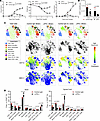 Figure 8
Blocking IFN-γ suppresses CD8-EAE. CD8-EAE was induced by transfer of 2 × 10⁷ CD8 T cells cultured in Tc1 conditions for 3 days, before being rested/expanded for 3 days before transfer. (A) Clinical scores and change in weight for CD8-EAE mice treated with 200 mg/day anti–IFN-γ mAb or control IgG; n = 8 per group, with data compiled from 2 experiments. The right panel shows clinical scores from a second independent experiment in which mice developed fulminant disease and were treated with either anti–IFN-γ or control IgG. n = 4 per group. Significance was determined by 2-way ANOVA. (B) Numbers of CD45+ cells isolated from the brain and spinal cord on day 7 after transfer; n = 5–8 per group compiled from 2 experiments. (C) t-SNE clustering of CD45+ cells isolated from the brain and spinal cord. CD8+ T cells were defined as CD45+CD8+; MoDCs and MFs as D45hiCD11b+Ly6Glo/–Ly6C+MHCII+, neutrophils as CD45hiCD11b+Ly6GhiLy6CInt; monocytes as CD45hiCD11b+Ly6Glo/–Ly6C+MHCII–; microglia as CD45loCD11b+; and CD4 T cells as CD45hiCD4+. B cells were defined as CD45+CD19+CD4–CD8–. Other CD11b+ cells were defined as CD45+CD11b+ cells that did not express other markers. Other CD45+ cells did not express other lineage markers stained in this panel. (D) Quantification of the frequency of cell populations from C among CD45+ cells in the brain and spinal cord.
CNS infiltration by CD8 T cells is concomitant with local innate immune activation. To further characterize the CNS pathology caused by adoptive transfer of 8.8 T cells, we performed histological analyses of the brains and spinal cords of mice with CD8-EAE. IHC staining revealed CD8 T cell infiltration in both the brain and spinal cord (Figure 9 and Figure 10). A widespread, diffuse CD8 T cell infiltration was observed, concomitant with regional activation of innate immune cells. CD8 T cell infiltration was observed across multiple brain regions, with the highest density in and around the brain stem, cerebellum, and olfactory bulb (Figure 9, A–C). In agreement with our flow cytometry analysis, the presence of CD8+ cells was accompanied by macrophage/microglia activation as assessed by IHC for CD11c and F4/80 (Figure 9). In contrast to CD4-EAE (27), CD8 T cells could be found in both the gray and white matter of the spinal cord (Figure 10). Inflammatory foci, however, were primarily restricted to the white matter. Notably, in both the brain and spinal cord, demyelination was mild and infrequent, despite considerable innate immune activation, which may be due to the short duration of the disease or the absence of other factors required for demyelination that are present in CD4-EAE. Nevertheless, inflammatory foci were observed in both the brain and the spinal cord in myelinated regions of tissue, consistent with the MBP specificity of the transferred 8.8 T cells. These data agree with our flow cytometry analysis, which shows that CD8 T cells infiltrate both the brain and the spinal cord, resulting in regional innate immune activation and inflammation.
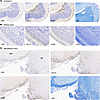 Figure 9
CD8 T cell infiltration in CD8-EAE is concomitant with regional innate immune activation. Sagittal sections of the brain were stained with Luxol fast blue for myelin, and IHC was performed for CD8, CD11c, and F4/80. (A–C) Inflammatory foci in the cerebellum (A), olfactory bulb (B), and medulla/brain stem (C) are shown. Original magnification, ×200. CD8, CD11c, and F4/80 are markers that were stained in immunohistochemistry. LFB, luxol fast blue; med, medulla; BS, brain stem.
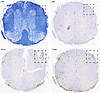 Figure 10
CD8 T cells infiltrate into the white and gray matter of the spinal cord during CD8-EAE. Sagittal sections of the spinal cord were stained with Luxol fast blue for myelin, and IHC was performed for CD8, CD11c, and F4/80. An example of inflammatory foci is marked by a box. Original magnification, ×200.


