
Clinical Research
Abstract
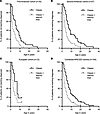
Autoimmune polyendocrinopathy-candidiasis-ectodermal dystrophy (APECED/APS-1) is a monogenic autoimmune disorder of impaired central tolerance classically diagnosed by the presence of 2 out of 3 classic triad manifestations: chronic mucocutaneous candidiasis, hypoparathyroidism, and adrenal insufficiency. However, many patients develop non-triad manifestations years earlier, delaying recognition and care. In 2016, we proposed expanded diagnostic criteria incorporating 3 early clinical manifestations — APECED rash, autoimmune enteritis, and enamel hypoplasia — based on observations in 35 North American patients. Here, we provide further support for the clinical utility of these expanded diagnostic criteria in independent cohorts of 57 American and 12 European patients enrolled in a prospective natural history study at the NIH. Across all cohorts, the expanded diagnostic criteria decreased the time to diagnosis by half relative to the classic diagnostic criteria. Patients exhibited an enrichment of early non-endocrine autoimmune manifestations, underscoring disease heterogeneity and the potential for developing organ-specific autoimmunity before endocrine failure. These findings demonstrate the clinical utility of the expanded APECED diagnostic criteria and support the notion that their adoption might enable earlier disease recognition and timely immunomodulatory therapy to improve long-term outcomes.
Authors
Elise M.N. Ferré, Joseph Pechacek, Monica M. Schmitt, Taura Webb, Heather Moorman, Thomas DiMaggio, Princess Barber, Vasielios Oikonomou, Stacey R. Rose, Peter D. Burbelo, Lindsey B. Rosen, Amy P. Hsu, Jennifer Stoddard, Shakuntala Rampertaap, Sergio D. Rosenzweig, Anjali Rai, Maria Teresa Magone, Chantal Cousineau-Krieger, Niki M. Moutsopoulos, Pamela J. Gardner, Heidi H. Kong, Leslie Castelo-Soccio, Ariane Soldatos, Katherine R. Calvo, Meryl Waldman, Behdad Afzali, Stefania Pittaluga, David Kleiner, Steven M. Holland, Kevin Fennelly, Jill Rothschild, Bryce A. Seifert, Magdalena Walkiewicz-Yvon, Theo Heller, Karen Winer, Michail S. Lionakis
Abstract
Single-cell RNA sequencing (scRNA-seq) of peripheral blood mononuclear cells (PBMCs) has enhanced our understanding of host immune mechanisms in small cohorts, particularly in diseases with complex and heterogeneous immune responses such as sepsis. However, standard PBMC isolation from blood requires technical expertise and over two hours of onsite processing using Ficoll density gradient separation (‘Ficoll’) for scRNA-seq compatibility, precluding large-scale sample collection at most clinical sites. To minimize onsite processing, we developed Cryo-PRO (Cryopreservation with PBMC Recovery Offsite), a method of immediate onsite whole blood cryopreservation and subsequent batched PBMC isolation in a central laboratory prior to sequencing. We compared multimodal single-cell immune profiling results from samples processed using Cryo-PRO versus standard onsite Ficoll separation in 23 patients with sepsis. Critical outputs including cell substate fractions, marker genes, and surface protein expression were similar for each method across multiple cell types and substates, including an important monocyte substate enriched in patients with sepsis. Capture of T cell receptor transcripts was also comparable across both methods. Cryo-PRO reduced onsite sample processing time from >2 hours to <15 minutes and was reproducible across two enrollment sites, thus demonstrating potential for expanding multimodal single-cell analyses in multicenter studies of sepsis and other diseases.
Authors
Alyssa K. DuBois, Pierre O. Ankomah, Alexis C. Campbell, Renee Hua, Olivia K. Nelson, Christopher A. Zeuthen, M. Kartik Das, Shira Mann, Abigail Mauermann, Blair A. Parry, Nathan I. Shapiro, Michael R. Filbin, Roby P. Bhattacharyya
Abstract
Postnatal growth faltering is a pervasive problem among extremely preterm infants that is independently associated with adverse neurodevelopmental outcomes. We previously observed that preterm infants with poor postnatal growth have altered development of the intestinal microbiota relative to preterm infants with appropriate postnatal growth. Here, we used gnotobiotic mice to investigate whether these differences in microbiota development independently contribute to growth faltering. We found that colonization of neonatal mice with microbiotas from extremely preterm infants with poor growth reproduced postnatal growth impairment and induced a metabolic signature of enhanced lipolysis and fatty acid oxidation in the mice, characterized by elevated hepatic acylcarnitines and circulating ketones. In mice colonized at birth with microbiotas from infants with poor growth, postnatal treatment with microbiotas from infants with appropriate growth prevented growth impairment. These results indicate that altered development of the intestinal microbiota contributes to growth faltering in extremely preterm infants, and that microbiota modification can restore postnatal growth.
Authors
Kwai Tei Chan Poon, Se Hyang Han, Olga Ilkayeva, Michael J. Muehlbauer, Christopher B. Newgard, Charles M. Cotten, Patricia L. Ashley, Patrick C. Seed, John F. Rawls, Noelle E. Younge
Abstract
BACKGROUND. In vitro fertilization (IVF) culminates in embryo transfer into a hormonally primed endometrium, often via a programmed cycle (PC) regimen postulated to influence hypertensive disorders of pregnancy (HDP) risk. We thus generated a single-cell atlas of PC endometrium to define cell type-specific differences relative to natural cycle (NC) endometrium, and evaluated whether PC-associated modulation of the window of implantation (WOI) endometrium influences angiogenic balance in pregnancy. METHODS. Single-nucleus RNA-seq of prospectively collected PC and NC WOI endometrium. An independent prospective cohort of 548 singleton pregnancies was separately analyzed for maternal serum angiogenic markers (soluble fms-like tyrosine kinase-1; placental growth factor) and HDP incidence in PC- versus NC-conceived pregnancies, adjusting for clinical confounders and IVF use. RESULTS. Prominent transcriptomic differences were observed between PC (n = 7; 48,843 nuclei) and NC (n = 9; 44,230 nuclei) WOI endometrium, particularly in glandular epithelium (682 up- and 979 down-regulated genes; adjusted P < 0.05) and stromal fibroblasts (108 up- and 168 down-regulated). PC endometrium showed reduced uterine natural killer cell abundance, potentially from CXCL14 downregulation. Functional enrichment revealed downregulation of embryo implantation, angiogenesis, and extracellular matrix remodeling pathways in PC. Altered cell-cell signaling in decidualization, angiogenesis, and inflammatory response was also observed. Despite these WOI perturbations, PC-conceived pregnancies were not associated with early gestational angiogenic imbalance or increased HDP risk. CONCLUSION. PC endometrial preparation induced distinct cellular and signaling alterations in the WOI, but was not associated with subsequent development of angiogenic imbalance or HDP, thereby underscoring the resilience and adaptability of the early maternal-fetal interface. TRIAL REGISTRATION. ClinicalTrials.gov NCT03799107. FUNDING. ABOG/AAOGF; NICHD-R01-HD084380; NCTRI-P50-HD055764; NIAMS-P30-AR070155.
Authors
David Huang, Emily Flynn, Brittany R. Davidson, Juan C. Irwin, Mohammad Naser, Ana Laura Almonte, Jennifer Qin, Yue Song, Fleurdeliza B. Rabara, Rebecca Wong, Lydia B. Zablotska, Mitchell P. Rosen, Torsten Wittmann, Gabriela K. Fragiadakis, Alexis J. Combes, Marina Sirota, Marcelle I. Cedars, Linda C. Giudice
Abstract
Tuberous sclerosis complex (TSC) and Lymphangioleiomyomatosis (LAM) lack well-defined cellular origins, limiting treatment options. In this report, scRNA-seq of Tsc2+/− mouse renal cystadenomas revealed an 80-fold increase in a tumor cell subpopulation with neural crest features, and expressing known cranial neural crest genes as SRY box transcription factor 9 (Sox9), transcription factor activator protein (Tfap2a), and candidate neurocristopathy markers, osteopontin (Spp1), lipocalin-2 (Lcn2), clusterin (Clu), and cytokeratin 18 (Krt18). These signatures were validated in mouse tumors, and LAM patient lesions and serum, identifying a tumor phenotype distinct from traditional VEGFD detection. Pathway analysis indicated activation of WNT/SHH signaling, nephric duct formation, and pro-tumorigenic signals, with transcription factor 7 (Tcf7) and ephrin-A ligands as key upstream regulators. Spp1 KO in cranial neural crest cells (CNCCs) significantly reduced proliferation (28–33%), migration (54-76%), and invasion (29-64%) without affecting viability, while Tsc2 KO increased viability 3 to 6-fold with minimal impact on chemotaxis. Elevated serum levels of SPP1 and KRT18 in some LAM patients, decreased LCN2 in nearly all, and distinct increases in VEGFD suggest complementary roles for these biomarkers. Overall, findings support a neurocristopathic model of tumor development in TSC and LAM and identify potential biomarkers and therapeutic targets beyond mTOR inhibition.
Authors
Uchenna J. Unachukwu, Enio B. Garcia, Nooralam Rai, Jeanine M. D'Armiento
Abstract
Systemic lupus erythematosus (SLE) is a heterogeneous systemic autoimmune disease, yet the molecular basis underlying this variability remains incompletely understood. We profiled the plasma proteome in 260 SLE patients and 86 healthy volunteers (HVs) using the SomaScan v4.1 platform, quantifying 7,288 analytes corresponding to 6,595 unique proteins. We identified 215 proteins that were robustly differentially abundant between SLE patients and HVs in both discovery (n=207 SLE, n=45 HVs) and validation sets (n=53 SLE, n=41 HVs). Within-cases analyses identified 421 proteins associated with disease activity. Network-based clustering delineated correlated protein modules, including an interferon-associated module and a renal-associated module. Autoantibody-stratified analyses further uncovered distinct proteomic endotypes: positivity for antibodies targeting RNA-binding proteins (anti-Sm, anti-Ro-60, anti-RNP68, anti-RNP-A) was associated with increased interferon-stimulated protein levels (e.g., MX1, ISG15, CXCL10), independent of disease activity. Anti-Sm, anti-RNP-A and anti-Ro52 antibodies were associated with reduced plasma levels of their respective autoantigens. Anti-dsDNA antibodies were associated with elevated levels of CD40 ligand (CD40LG) and the neutrophil protease proteinase-3. Moreover, we identified an association between CD40LG and disease activity specific to the anti-dsDNA positive subgroup. Together, these data define plasma protein signatures of SLE and disease activity, highlight autoantibody-specific molecular phenotypes, and provide a basis for precision medicine.
Authors
Geoffrey H. D. Leung, Charlotte Bottomley, Norzawani Buang, Robert T. Maughan, Benjamin J. Whittle, Boroumand Zeidaabadi, Yun-Ju Huang, Tabitha Turner-Stokes, Marie Condon, Liz Lightstone, Tom Cairns, Marina Botto, Matthew C. Pickering, James E. Peters

Abstract
Cystic fibrosis (CF) is a life-limiting genetic disorder caused by deleterious variants in the CFTR gene that results in altered mucus impairing the airway epithelia. Durable correction of these variants in airway cells remains a therapeutic challenge for about 10% of individuals unresponsive to CFTR modulators. A common disease-causing CFTR splice site variant, 3120+1G>A, was corrected in primary CF airway cells using base editor RNAs. Single-cell RNA sequencing revealed a remarkable increase in detectable CFTR transcript in most CF airway epithelial cell types resulting in notable enrichment of CFTR-expressing ionocytes and secretory goblet cells. Progenitor basal cell subtypes were edited, but they decreased as a fraction of total cells and CFTR-expressing cells compared with unedited cells. CRISPR base editors delivered by polymeric nanoparticles (PNPs) facilitated functional rescue of CFTR to clinically meaningful levels in immortalized and primary airway cells. PNPs delivered GFP-encoding RNA to progenitor airway cells in fully differentiated airway cultures. Vitronectin was a major component of the PNP corona that formed in vivo, but preincubation with vitronectin did not enhance delivery. Together, these findings validate a scalable, nonviral platform with compelling translational promise for treating CF and other respiratory diseases involving respiratory epithelial cell dysfunction.
Authors
Erin W. Kavanagh, Anya T. Joynt, Audrey R. Pion, Alice C. Eastman, Alianna I. Parr, Katherine L. Starego, Manav Jain, Sydney R. Shannon, Edwin J. Yoo, Gregory A. Newby, Stephany Y. Tzeng, Neeraj Sharma, Jordan J. Green, Garry R. Cutting
Abstract
Because older donor age is a major concern when considering kidneys for potential transplantation, we explored the actual impact of donor age on the features of kidneys that have been transplanted. We studied the correlations of donor age with molecular injury and rejection scores in 4502 kidney transplant biopsies assessed by microarrays, as well as function and postbiopsy survival. We used multivariable analyses to correct for the correlations of donor age with other predictive variables: recipient age, time of biopsy posttransplant, and deceased vs. living donors. Older donor age correlated with lower GFR and increased acute and chronic injury transcripts, but had no effect on rejection, which anti-correlated with recipient age. Acute injury transcripts peaked immediately posttransplant and regressed. Older donor age had little effect on acute molecular injury immediately posttransplant but strongly increased molecular injury scores at later times, peaking about 1-year posttransplant, indicating that older age does not increase molecular injury but increases failed repair post-injury. As expected, older donor age correlated with increased chronic injury and lower GFR, evident from the earliest time posttransplant, pre-transplant aging. However, despite significant age-related effects, the quantitative contribution of donor aging to molecular injury, function, and survival was very small.
Authors
Katelynn Madill-Thomsen, Martina Mackova, Jessica Chang, Enver Akalin, Tarek Alhamad, Sanjiv Anand, Miha Arnol, Rajendra Baliga, Mirosław Banasik, Christopher Blosser, Georg Böhmig, Daniel Brennan, Jonathan Bromberg, Klemens Budde, Andrzej Chamienia, Kevin V Chow, Michał Ciszek, Declan de Freitas, Dominika Dęborska-Materkowska, Alicja Dębska-Ślizień, Arjang Djamali, Leszek Domański, Magdalena Durlik, Gunilla Einecke, Farsad Eskandary, Richard Fatica, Iman Bajjoka-Francis, Justyna Fryc, John Gill, Jagbir Gill, Maciej Glyda, Sita Gourishankar, Marta Gryczman, Gaurav Gupta, Petra Hruba, Peter Hughes, Arskarapuk Jittirat, Zeljka Jurekovic, Layla Kamal, Mahmoud Kamel, Sam Kant, Nika Kojc, Joanna Konopa, James Lan, Roslyn Mannon, Arthur Matas, Joanna Mazurkiewicz, Marius Miglinas, Thomas Mueller, Marek Myślak, Beata Naumnik, Anita Patel, Agnieszka Perkowska-Ptasińska, Michael Picton, Grzegorz Piecha, Emillio Poggio, Silvie Rajnochova Bloudickova, Thomas Schachtner, Sung Shin, Soroush Shojai, Majid Sikosana, Janka Slatinská, Katarzyna Smykal-Jankowiak, Ashish Solanki, Zeljka Veceric Haler, Ondrej Viklicky, Ksenija Vucur Simic, Matthew R. Weir, Andrzej Wiecek, Zbigniew Włodarczyk, Ziad Zaky, Philip F. Halloran
Abstract
BACKGROUND. IL-7 is a critical cytokine in T cell development, survival, and homeostasis. Previous preclinical and clinical studies reported that IL-7 treatment increased T cell counts, but its effect on peripheral blood T cells in cancer patients and molecular mechanisms have not been explored. METHODS. We investigated effects of long-acting recombinant human interleukin-7 (rhIL-7-hyFc) on peripheral T cells in patients with advanced solid tumors. Peripheral blood samples were collected before and after treatment, followed by analysis through single-cell transcriptomics and flow cytometry. RESULTS. We found that rhIL-7-hyFc induced marked expansion of proliferating T cells, and promoted transcriptional changes associated with immune activation, cell cycle progression, and anti-apoptosis. Trajectory analysis revealed that post-treatment T cells had distinct transcriptional states enriched for cytokine- and TCR-mediated signaling pathways. Notably, a second dose administered after three weeks yielded diminished proliferation and minimal transcriptional changes, which were independent of antidrug antibody or CD127 downmodulation. Examination of elements of the IL-7 signaling pathway revealed intact proximal signaling (e.g., STAT5 phosphorylation) but downregulation of distal elements, including PIM-1 kinase and c-Myc. CONCLUSIONS. Our results demonstrate that rhIL-7-hyFc induces robust peripheral T-cell expansion and activation in patients with solid tumors, supporting its potential use for lymphopenic patients treated with cancer immunotherapy. TRIAL REGISTRATION. NCT03478995, NCT03619239. FUNDING. NRF-2022R1A2C3007292, RS-2024-00439160, RS-2025-02213409, RS-2025-25460003
Authors
Ho Cheol Jang, Jeong Yeon Kim, Sojeong Kim, Heewon Kim, Mi-Sun Byun, Myung Ah Lee, Jong Hee Chang, Do-Hyun Nam, Tae Won Kim, Sin-Soo Jeun, Joohyuk Sohn, Su-Hyung Park, Eui-Cheol Shin
Abstract
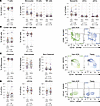
At-home blood collection devices (ABCDs) can facilitate study participation for remote and rural cohorts. Previous studies used ABCDs to interrogate samples by proteomics and sequencing approaches. We wanted to address the question of whether this approach could be used to assess live immune cells with high-parameter flow cytometry to enable remote immune monitoring. We first compared blood from standard venipuncture with ABCD blood draws, followed by assessment of the impact of sample shipping on immune cell viability and phenotyping. We found that capillary blood collected with a Tasso+ device and concurrently drawn venipuncture blood samples had highly congruent immune cell composition and phenotype. Shipment of Tasso+ samples via the United States Postal Service altered the myeloid compartment, but T cell numbers, subsets, and phenotypes remained remarkably stable compared with non-shipped samples. Finally, we describe a flow cytometry analysis framework that allowed for direct sample comparison even when samples were stained and analyzed over a time period of 1.5 years. Overall, our data highlight the feasibility of using ABCDs combined with subsequent flow cytometry analysis for remote immune monitoring. Additionally, our study also identifies areas that could be improved to further promote the use of ABCDs for immune monitoring.
Authors
Andrew J. Konecny, Fang Yun Lim, Eva Domenjo-Vila, Erika Lovas, Rachel L. Blazevic, Louise E. Kimball, Michael Boeckh, Alpana Waghmare, Martin Prlic
No posts were found with this tag.


