
Clinical Research and Public HealthClinical ResearchOncology
Open Access |  10.1172/jci.insight.195195
Determinants of pancreatic tropism in metastatic renal cell carcinoma
Haitao Xu,1,2 Payal Kapur,2,3,4 Alana Christie,2 Aleksandra W. Nielsen,5 Averi Perny,5 Olivia Brandenburg,1,2 Charlotte Small,1,2 Jeffrey Miyata,1,2 Hua Zhong,3,5 Courtney Roberts,2 Roy Elias,1,2 Vanina Tcheuyap,1,2 Cassandra Duarte,6 Adrie van Bokhoven,7 Justine Panian,8 Haoran Li,9 Katharine A Collier,10 Debra Zynger,11 Luis Meza,12 Benoit Beuselinck,13 Neeraj Agarwal,9 Amir Mortazavi,10 Sumanta Pal,12 Rana McKay,8 Elaine T. Lam,6 Satwik Rajaram,3,5 and James Brugarolas1,2
1Department of Internal Medicine (Division of Hematology and Oncology),
2Kidney Cancer Program, Simmons Comprehensive Cancer Center,
3Department of Pathology,
4Department of Urology, and
5Department of Bioinformatics, University of Texas Southwestern Medical Center, Dallas, Texas, USA.
6Department of Medicine, University of Colorado Cancer Center, and
7Department of Pathology, University of Colorado Anschutz Medical Campus, Aurora, Colorado, USA.
8Department of Medicine, Moores Cancer Center, UCSD, San Diego, California, USA.
9Department of Internal Medicine, Huntsman Cancer Institute, University of Utah, Salt Lake City, Utah, USA.
10Department of Internal Medicine, The Ohio State University Comprehensive Cancer Center, Columbus, Ohio, USA.
11Department of Pathology, The Ohio State University, Columbus, Ohio, USA.
12The Department of Medical Oncology & Therapeutics Research, City of Hope, Duarte, California, USA.
13Department of General Medical Oncology, University Hospitals Leuven, KU Leuven, Leuven, Belgium.
Address correspondence to: James Brugarolas, Department of Internal Medicine, Hematology-Oncology Division, ND3.504, University of Texas Southwestern Medical Center, 5323 Harry Hines Blvd., Dallas, Texas 75390, USA. Phone: 214.648.4059; Email: james.brugarolas@utsouthwestern.edu.
Authorship note: HX and PK contributed equally to this work.
Find articles by Xu, H. in: PubMed | Google Scholar
1Department of Internal Medicine (Division of Hematology and Oncology),
2Kidney Cancer Program, Simmons Comprehensive Cancer Center,
3Department of Pathology,
4Department of Urology, and
5Department of Bioinformatics, University of Texas Southwestern Medical Center, Dallas, Texas, USA.
6Department of Medicine, University of Colorado Cancer Center, and
7Department of Pathology, University of Colorado Anschutz Medical Campus, Aurora, Colorado, USA.
8Department of Medicine, Moores Cancer Center, UCSD, San Diego, California, USA.
9Department of Internal Medicine, Huntsman Cancer Institute, University of Utah, Salt Lake City, Utah, USA.
10Department of Internal Medicine, The Ohio State University Comprehensive Cancer Center, Columbus, Ohio, USA.
11Department of Pathology, The Ohio State University, Columbus, Ohio, USA.
12The Department of Medical Oncology & Therapeutics Research, City of Hope, Duarte, California, USA.
13Department of General Medical Oncology, University Hospitals Leuven, KU Leuven, Leuven, Belgium.
Address correspondence to: James Brugarolas, Department of Internal Medicine, Hematology-Oncology Division, ND3.504, University of Texas Southwestern Medical Center, 5323 Harry Hines Blvd., Dallas, Texas 75390, USA. Phone: 214.648.4059; Email: james.brugarolas@utsouthwestern.edu.
Authorship note: HX and PK contributed equally to this work.
Find articles by Kapur, P. in: PubMed | Google Scholar
1Department of Internal Medicine (Division of Hematology and Oncology),
2Kidney Cancer Program, Simmons Comprehensive Cancer Center,
3Department of Pathology,
4Department of Urology, and
5Department of Bioinformatics, University of Texas Southwestern Medical Center, Dallas, Texas, USA.
6Department of Medicine, University of Colorado Cancer Center, and
7Department of Pathology, University of Colorado Anschutz Medical Campus, Aurora, Colorado, USA.
8Department of Medicine, Moores Cancer Center, UCSD, San Diego, California, USA.
9Department of Internal Medicine, Huntsman Cancer Institute, University of Utah, Salt Lake City, Utah, USA.
10Department of Internal Medicine, The Ohio State University Comprehensive Cancer Center, Columbus, Ohio, USA.
11Department of Pathology, The Ohio State University, Columbus, Ohio, USA.
12The Department of Medical Oncology & Therapeutics Research, City of Hope, Duarte, California, USA.
13Department of General Medical Oncology, University Hospitals Leuven, KU Leuven, Leuven, Belgium.
Address correspondence to: James Brugarolas, Department of Internal Medicine, Hematology-Oncology Division, ND3.504, University of Texas Southwestern Medical Center, 5323 Harry Hines Blvd., Dallas, Texas 75390, USA. Phone: 214.648.4059; Email: james.brugarolas@utsouthwestern.edu.
Authorship note: HX and PK contributed equally to this work.
Find articles by Christie, A. in: PubMed | Google Scholar
1Department of Internal Medicine (Division of Hematology and Oncology),
2Kidney Cancer Program, Simmons Comprehensive Cancer Center,
3Department of Pathology,
4Department of Urology, and
5Department of Bioinformatics, University of Texas Southwestern Medical Center, Dallas, Texas, USA.
6Department of Medicine, University of Colorado Cancer Center, and
7Department of Pathology, University of Colorado Anschutz Medical Campus, Aurora, Colorado, USA.
8Department of Medicine, Moores Cancer Center, UCSD, San Diego, California, USA.
9Department of Internal Medicine, Huntsman Cancer Institute, University of Utah, Salt Lake City, Utah, USA.
10Department of Internal Medicine, The Ohio State University Comprehensive Cancer Center, Columbus, Ohio, USA.
11Department of Pathology, The Ohio State University, Columbus, Ohio, USA.
12The Department of Medical Oncology & Therapeutics Research, City of Hope, Duarte, California, USA.
13Department of General Medical Oncology, University Hospitals Leuven, KU Leuven, Leuven, Belgium.
Address correspondence to: James Brugarolas, Department of Internal Medicine, Hematology-Oncology Division, ND3.504, University of Texas Southwestern Medical Center, 5323 Harry Hines Blvd., Dallas, Texas 75390, USA. Phone: 214.648.4059; Email: james.brugarolas@utsouthwestern.edu.
Authorship note: HX and PK contributed equally to this work.
Find articles by Nielsen, A. in: PubMed | Google Scholar
1Department of Internal Medicine (Division of Hematology and Oncology),
2Kidney Cancer Program, Simmons Comprehensive Cancer Center,
3Department of Pathology,
4Department of Urology, and
5Department of Bioinformatics, University of Texas Southwestern Medical Center, Dallas, Texas, USA.
6Department of Medicine, University of Colorado Cancer Center, and
7Department of Pathology, University of Colorado Anschutz Medical Campus, Aurora, Colorado, USA.
8Department of Medicine, Moores Cancer Center, UCSD, San Diego, California, USA.
9Department of Internal Medicine, Huntsman Cancer Institute, University of Utah, Salt Lake City, Utah, USA.
10Department of Internal Medicine, The Ohio State University Comprehensive Cancer Center, Columbus, Ohio, USA.
11Department of Pathology, The Ohio State University, Columbus, Ohio, USA.
12The Department of Medical Oncology & Therapeutics Research, City of Hope, Duarte, California, USA.
13Department of General Medical Oncology, University Hospitals Leuven, KU Leuven, Leuven, Belgium.
Address correspondence to: James Brugarolas, Department of Internal Medicine, Hematology-Oncology Division, ND3.504, University of Texas Southwestern Medical Center, 5323 Harry Hines Blvd., Dallas, Texas 75390, USA. Phone: 214.648.4059; Email: james.brugarolas@utsouthwestern.edu.
Authorship note: HX and PK contributed equally to this work.
Find articles by Perny, A. in: PubMed | Google Scholar
1Department of Internal Medicine (Division of Hematology and Oncology),
2Kidney Cancer Program, Simmons Comprehensive Cancer Center,
3Department of Pathology,
4Department of Urology, and
5Department of Bioinformatics, University of Texas Southwestern Medical Center, Dallas, Texas, USA.
6Department of Medicine, University of Colorado Cancer Center, and
7Department of Pathology, University of Colorado Anschutz Medical Campus, Aurora, Colorado, USA.
8Department of Medicine, Moores Cancer Center, UCSD, San Diego, California, USA.
9Department of Internal Medicine, Huntsman Cancer Institute, University of Utah, Salt Lake City, Utah, USA.
10Department of Internal Medicine, The Ohio State University Comprehensive Cancer Center, Columbus, Ohio, USA.
11Department of Pathology, The Ohio State University, Columbus, Ohio, USA.
12The Department of Medical Oncology & Therapeutics Research, City of Hope, Duarte, California, USA.
13Department of General Medical Oncology, University Hospitals Leuven, KU Leuven, Leuven, Belgium.
Address correspondence to: James Brugarolas, Department of Internal Medicine, Hematology-Oncology Division, ND3.504, University of Texas Southwestern Medical Center, 5323 Harry Hines Blvd., Dallas, Texas 75390, USA. Phone: 214.648.4059; Email: james.brugarolas@utsouthwestern.edu.
Authorship note: HX and PK contributed equally to this work.
Find articles by Brandenburg, O. in: PubMed | Google Scholar
1Department of Internal Medicine (Division of Hematology and Oncology),
2Kidney Cancer Program, Simmons Comprehensive Cancer Center,
3Department of Pathology,
4Department of Urology, and
5Department of Bioinformatics, University of Texas Southwestern Medical Center, Dallas, Texas, USA.
6Department of Medicine, University of Colorado Cancer Center, and
7Department of Pathology, University of Colorado Anschutz Medical Campus, Aurora, Colorado, USA.
8Department of Medicine, Moores Cancer Center, UCSD, San Diego, California, USA.
9Department of Internal Medicine, Huntsman Cancer Institute, University of Utah, Salt Lake City, Utah, USA.
10Department of Internal Medicine, The Ohio State University Comprehensive Cancer Center, Columbus, Ohio, USA.
11Department of Pathology, The Ohio State University, Columbus, Ohio, USA.
12The Department of Medical Oncology & Therapeutics Research, City of Hope, Duarte, California, USA.
13Department of General Medical Oncology, University Hospitals Leuven, KU Leuven, Leuven, Belgium.
Address correspondence to: James Brugarolas, Department of Internal Medicine, Hematology-Oncology Division, ND3.504, University of Texas Southwestern Medical Center, 5323 Harry Hines Blvd., Dallas, Texas 75390, USA. Phone: 214.648.4059; Email: james.brugarolas@utsouthwestern.edu.
Authorship note: HX and PK contributed equally to this work.
Find articles by Small, C. in: PubMed | Google Scholar
1Department of Internal Medicine (Division of Hematology and Oncology),
2Kidney Cancer Program, Simmons Comprehensive Cancer Center,
3Department of Pathology,
4Department of Urology, and
5Department of Bioinformatics, University of Texas Southwestern Medical Center, Dallas, Texas, USA.
6Department of Medicine, University of Colorado Cancer Center, and
7Department of Pathology, University of Colorado Anschutz Medical Campus, Aurora, Colorado, USA.
8Department of Medicine, Moores Cancer Center, UCSD, San Diego, California, USA.
9Department of Internal Medicine, Huntsman Cancer Institute, University of Utah, Salt Lake City, Utah, USA.
10Department of Internal Medicine, The Ohio State University Comprehensive Cancer Center, Columbus, Ohio, USA.
11Department of Pathology, The Ohio State University, Columbus, Ohio, USA.
12The Department of Medical Oncology & Therapeutics Research, City of Hope, Duarte, California, USA.
13Department of General Medical Oncology, University Hospitals Leuven, KU Leuven, Leuven, Belgium.
Address correspondence to: James Brugarolas, Department of Internal Medicine, Hematology-Oncology Division, ND3.504, University of Texas Southwestern Medical Center, 5323 Harry Hines Blvd., Dallas, Texas 75390, USA. Phone: 214.648.4059; Email: james.brugarolas@utsouthwestern.edu.
Authorship note: HX and PK contributed equally to this work.
Find articles by Miyata, J. in: PubMed | Google Scholar
1Department of Internal Medicine (Division of Hematology and Oncology),
2Kidney Cancer Program, Simmons Comprehensive Cancer Center,
3Department of Pathology,
4Department of Urology, and
5Department of Bioinformatics, University of Texas Southwestern Medical Center, Dallas, Texas, USA.
6Department of Medicine, University of Colorado Cancer Center, and
7Department of Pathology, University of Colorado Anschutz Medical Campus, Aurora, Colorado, USA.
8Department of Medicine, Moores Cancer Center, UCSD, San Diego, California, USA.
9Department of Internal Medicine, Huntsman Cancer Institute, University of Utah, Salt Lake City, Utah, USA.
10Department of Internal Medicine, The Ohio State University Comprehensive Cancer Center, Columbus, Ohio, USA.
11Department of Pathology, The Ohio State University, Columbus, Ohio, USA.
12The Department of Medical Oncology & Therapeutics Research, City of Hope, Duarte, California, USA.
13Department of General Medical Oncology, University Hospitals Leuven, KU Leuven, Leuven, Belgium.
Address correspondence to: James Brugarolas, Department of Internal Medicine, Hematology-Oncology Division, ND3.504, University of Texas Southwestern Medical Center, 5323 Harry Hines Blvd., Dallas, Texas 75390, USA. Phone: 214.648.4059; Email: james.brugarolas@utsouthwestern.edu.
Authorship note: HX and PK contributed equally to this work.
Find articles by
Zhong, H.
in:
PubMed
|
Google Scholar
|

1Department of Internal Medicine (Division of Hematology and Oncology),
2Kidney Cancer Program, Simmons Comprehensive Cancer Center,
3Department of Pathology,
4Department of Urology, and
5Department of Bioinformatics, University of Texas Southwestern Medical Center, Dallas, Texas, USA.
6Department of Medicine, University of Colorado Cancer Center, and
7Department of Pathology, University of Colorado Anschutz Medical Campus, Aurora, Colorado, USA.
8Department of Medicine, Moores Cancer Center, UCSD, San Diego, California, USA.
9Department of Internal Medicine, Huntsman Cancer Institute, University of Utah, Salt Lake City, Utah, USA.
10Department of Internal Medicine, The Ohio State University Comprehensive Cancer Center, Columbus, Ohio, USA.
11Department of Pathology, The Ohio State University, Columbus, Ohio, USA.
12The Department of Medical Oncology & Therapeutics Research, City of Hope, Duarte, California, USA.
13Department of General Medical Oncology, University Hospitals Leuven, KU Leuven, Leuven, Belgium.
Address correspondence to: James Brugarolas, Department of Internal Medicine, Hematology-Oncology Division, ND3.504, University of Texas Southwestern Medical Center, 5323 Harry Hines Blvd., Dallas, Texas 75390, USA. Phone: 214.648.4059; Email: james.brugarolas@utsouthwestern.edu.
Authorship note: HX and PK contributed equally to this work.
Find articles by Roberts, C. in: PubMed | Google Scholar
1Department of Internal Medicine (Division of Hematology and Oncology),
2Kidney Cancer Program, Simmons Comprehensive Cancer Center,
3Department of Pathology,
4Department of Urology, and
5Department of Bioinformatics, University of Texas Southwestern Medical Center, Dallas, Texas, USA.
6Department of Medicine, University of Colorado Cancer Center, and
7Department of Pathology, University of Colorado Anschutz Medical Campus, Aurora, Colorado, USA.
8Department of Medicine, Moores Cancer Center, UCSD, San Diego, California, USA.
9Department of Internal Medicine, Huntsman Cancer Institute, University of Utah, Salt Lake City, Utah, USA.
10Department of Internal Medicine, The Ohio State University Comprehensive Cancer Center, Columbus, Ohio, USA.
11Department of Pathology, The Ohio State University, Columbus, Ohio, USA.
12The Department of Medical Oncology & Therapeutics Research, City of Hope, Duarte, California, USA.
13Department of General Medical Oncology, University Hospitals Leuven, KU Leuven, Leuven, Belgium.
Address correspondence to: James Brugarolas, Department of Internal Medicine, Hematology-Oncology Division, ND3.504, University of Texas Southwestern Medical Center, 5323 Harry Hines Blvd., Dallas, Texas 75390, USA. Phone: 214.648.4059; Email: james.brugarolas@utsouthwestern.edu.
Authorship note: HX and PK contributed equally to this work.
Find articles by Elias, R. in: PubMed | Google Scholar
1Department of Internal Medicine (Division of Hematology and Oncology),
2Kidney Cancer Program, Simmons Comprehensive Cancer Center,
3Department of Pathology,
4Department of Urology, and
5Department of Bioinformatics, University of Texas Southwestern Medical Center, Dallas, Texas, USA.
6Department of Medicine, University of Colorado Cancer Center, and
7Department of Pathology, University of Colorado Anschutz Medical Campus, Aurora, Colorado, USA.
8Department of Medicine, Moores Cancer Center, UCSD, San Diego, California, USA.
9Department of Internal Medicine, Huntsman Cancer Institute, University of Utah, Salt Lake City, Utah, USA.
10Department of Internal Medicine, The Ohio State University Comprehensive Cancer Center, Columbus, Ohio, USA.
11Department of Pathology, The Ohio State University, Columbus, Ohio, USA.
12The Department of Medical Oncology & Therapeutics Research, City of Hope, Duarte, California, USA.
13Department of General Medical Oncology, University Hospitals Leuven, KU Leuven, Leuven, Belgium.
Address correspondence to: James Brugarolas, Department of Internal Medicine, Hematology-Oncology Division, ND3.504, University of Texas Southwestern Medical Center, 5323 Harry Hines Blvd., Dallas, Texas 75390, USA. Phone: 214.648.4059; Email: james.brugarolas@utsouthwestern.edu.
Authorship note: HX and PK contributed equally to this work.
Find articles by Tcheuyap, V. in: PubMed | Google Scholar
1Department of Internal Medicine (Division of Hematology and Oncology),
2Kidney Cancer Program, Simmons Comprehensive Cancer Center,
3Department of Pathology,
4Department of Urology, and
5Department of Bioinformatics, University of Texas Southwestern Medical Center, Dallas, Texas, USA.
6Department of Medicine, University of Colorado Cancer Center, and
7Department of Pathology, University of Colorado Anschutz Medical Campus, Aurora, Colorado, USA.
8Department of Medicine, Moores Cancer Center, UCSD, San Diego, California, USA.
9Department of Internal Medicine, Huntsman Cancer Institute, University of Utah, Salt Lake City, Utah, USA.
10Department of Internal Medicine, The Ohio State University Comprehensive Cancer Center, Columbus, Ohio, USA.
11Department of Pathology, The Ohio State University, Columbus, Ohio, USA.
12The Department of Medical Oncology & Therapeutics Research, City of Hope, Duarte, California, USA.
13Department of General Medical Oncology, University Hospitals Leuven, KU Leuven, Leuven, Belgium.
Address correspondence to: James Brugarolas, Department of Internal Medicine, Hematology-Oncology Division, ND3.504, University of Texas Southwestern Medical Center, 5323 Harry Hines Blvd., Dallas, Texas 75390, USA. Phone: 214.648.4059; Email: james.brugarolas@utsouthwestern.edu.
Authorship note: HX and PK contributed equally to this work.
Find articles by Duarte, C. in: PubMed | Google Scholar
1Department of Internal Medicine (Division of Hematology and Oncology),
2Kidney Cancer Program, Simmons Comprehensive Cancer Center,
3Department of Pathology,
4Department of Urology, and
5Department of Bioinformatics, University of Texas Southwestern Medical Center, Dallas, Texas, USA.
6Department of Medicine, University of Colorado Cancer Center, and
7Department of Pathology, University of Colorado Anschutz Medical Campus, Aurora, Colorado, USA.
8Department of Medicine, Moores Cancer Center, UCSD, San Diego, California, USA.
9Department of Internal Medicine, Huntsman Cancer Institute, University of Utah, Salt Lake City, Utah, USA.
10Department of Internal Medicine, The Ohio State University Comprehensive Cancer Center, Columbus, Ohio, USA.
11Department of Pathology, The Ohio State University, Columbus, Ohio, USA.
12The Department of Medical Oncology & Therapeutics Research, City of Hope, Duarte, California, USA.
13Department of General Medical Oncology, University Hospitals Leuven, KU Leuven, Leuven, Belgium.
Address correspondence to: James Brugarolas, Department of Internal Medicine, Hematology-Oncology Division, ND3.504, University of Texas Southwestern Medical Center, 5323 Harry Hines Blvd., Dallas, Texas 75390, USA. Phone: 214.648.4059; Email: james.brugarolas@utsouthwestern.edu.
Authorship note: HX and PK contributed equally to this work.
Find articles by van Bokhoven, A. in: PubMed | Google Scholar
1Department of Internal Medicine (Division of Hematology and Oncology),
2Kidney Cancer Program, Simmons Comprehensive Cancer Center,
3Department of Pathology,
4Department of Urology, and
5Department of Bioinformatics, University of Texas Southwestern Medical Center, Dallas, Texas, USA.
6Department of Medicine, University of Colorado Cancer Center, and
7Department of Pathology, University of Colorado Anschutz Medical Campus, Aurora, Colorado, USA.
8Department of Medicine, Moores Cancer Center, UCSD, San Diego, California, USA.
9Department of Internal Medicine, Huntsman Cancer Institute, University of Utah, Salt Lake City, Utah, USA.
10Department of Internal Medicine, The Ohio State University Comprehensive Cancer Center, Columbus, Ohio, USA.
11Department of Pathology, The Ohio State University, Columbus, Ohio, USA.
12The Department of Medical Oncology & Therapeutics Research, City of Hope, Duarte, California, USA.
13Department of General Medical Oncology, University Hospitals Leuven, KU Leuven, Leuven, Belgium.
Address correspondence to: James Brugarolas, Department of Internal Medicine, Hematology-Oncology Division, ND3.504, University of Texas Southwestern Medical Center, 5323 Harry Hines Blvd., Dallas, Texas 75390, USA. Phone: 214.648.4059; Email: james.brugarolas@utsouthwestern.edu.
Authorship note: HX and PK contributed equally to this work.
Find articles by Panian, J. in: PubMed | Google Scholar
1Department of Internal Medicine (Division of Hematology and Oncology),
2Kidney Cancer Program, Simmons Comprehensive Cancer Center,
3Department of Pathology,
4Department of Urology, and
5Department of Bioinformatics, University of Texas Southwestern Medical Center, Dallas, Texas, USA.
6Department of Medicine, University of Colorado Cancer Center, and
7Department of Pathology, University of Colorado Anschutz Medical Campus, Aurora, Colorado, USA.
8Department of Medicine, Moores Cancer Center, UCSD, San Diego, California, USA.
9Department of Internal Medicine, Huntsman Cancer Institute, University of Utah, Salt Lake City, Utah, USA.
10Department of Internal Medicine, The Ohio State University Comprehensive Cancer Center, Columbus, Ohio, USA.
11Department of Pathology, The Ohio State University, Columbus, Ohio, USA.
12The Department of Medical Oncology & Therapeutics Research, City of Hope, Duarte, California, USA.
13Department of General Medical Oncology, University Hospitals Leuven, KU Leuven, Leuven, Belgium.
Address correspondence to: James Brugarolas, Department of Internal Medicine, Hematology-Oncology Division, ND3.504, University of Texas Southwestern Medical Center, 5323 Harry Hines Blvd., Dallas, Texas 75390, USA. Phone: 214.648.4059; Email: james.brugarolas@utsouthwestern.edu.
Authorship note: HX and PK contributed equally to this work.
Find articles by Li, H. in: PubMed | Google Scholar
1Department of Internal Medicine (Division of Hematology and Oncology),
2Kidney Cancer Program, Simmons Comprehensive Cancer Center,
3Department of Pathology,
4Department of Urology, and
5Department of Bioinformatics, University of Texas Southwestern Medical Center, Dallas, Texas, USA.
6Department of Medicine, University of Colorado Cancer Center, and
7Department of Pathology, University of Colorado Anschutz Medical Campus, Aurora, Colorado, USA.
8Department of Medicine, Moores Cancer Center, UCSD, San Diego, California, USA.
9Department of Internal Medicine, Huntsman Cancer Institute, University of Utah, Salt Lake City, Utah, USA.
10Department of Internal Medicine, The Ohio State University Comprehensive Cancer Center, Columbus, Ohio, USA.
11Department of Pathology, The Ohio State University, Columbus, Ohio, USA.
12The Department of Medical Oncology & Therapeutics Research, City of Hope, Duarte, California, USA.
13Department of General Medical Oncology, University Hospitals Leuven, KU Leuven, Leuven, Belgium.
Address correspondence to: James Brugarolas, Department of Internal Medicine, Hematology-Oncology Division, ND3.504, University of Texas Southwestern Medical Center, 5323 Harry Hines Blvd., Dallas, Texas 75390, USA. Phone: 214.648.4059; Email: james.brugarolas@utsouthwestern.edu.
Authorship note: HX and PK contributed equally to this work.
Find articles by Collier, K. in: PubMed | Google Scholar
1Department of Internal Medicine (Division of Hematology and Oncology),
2Kidney Cancer Program, Simmons Comprehensive Cancer Center,
3Department of Pathology,
4Department of Urology, and
5Department of Bioinformatics, University of Texas Southwestern Medical Center, Dallas, Texas, USA.
6Department of Medicine, University of Colorado Cancer Center, and
7Department of Pathology, University of Colorado Anschutz Medical Campus, Aurora, Colorado, USA.
8Department of Medicine, Moores Cancer Center, UCSD, San Diego, California, USA.
9Department of Internal Medicine, Huntsman Cancer Institute, University of Utah, Salt Lake City, Utah, USA.
10Department of Internal Medicine, The Ohio State University Comprehensive Cancer Center, Columbus, Ohio, USA.
11Department of Pathology, The Ohio State University, Columbus, Ohio, USA.
12The Department of Medical Oncology & Therapeutics Research, City of Hope, Duarte, California, USA.
13Department of General Medical Oncology, University Hospitals Leuven, KU Leuven, Leuven, Belgium.
Address correspondence to: James Brugarolas, Department of Internal Medicine, Hematology-Oncology Division, ND3.504, University of Texas Southwestern Medical Center, 5323 Harry Hines Blvd., Dallas, Texas 75390, USA. Phone: 214.648.4059; Email: james.brugarolas@utsouthwestern.edu.
Authorship note: HX and PK contributed equally to this work.
Find articles by Zynger, D. in: PubMed | Google Scholar
1Department of Internal Medicine (Division of Hematology and Oncology),
2Kidney Cancer Program, Simmons Comprehensive Cancer Center,
3Department of Pathology,
4Department of Urology, and
5Department of Bioinformatics, University of Texas Southwestern Medical Center, Dallas, Texas, USA.
6Department of Medicine, University of Colorado Cancer Center, and
7Department of Pathology, University of Colorado Anschutz Medical Campus, Aurora, Colorado, USA.
8Department of Medicine, Moores Cancer Center, UCSD, San Diego, California, USA.
9Department of Internal Medicine, Huntsman Cancer Institute, University of Utah, Salt Lake City, Utah, USA.
10Department of Internal Medicine, The Ohio State University Comprehensive Cancer Center, Columbus, Ohio, USA.
11Department of Pathology, The Ohio State University, Columbus, Ohio, USA.
12The Department of Medical Oncology & Therapeutics Research, City of Hope, Duarte, California, USA.
13Department of General Medical Oncology, University Hospitals Leuven, KU Leuven, Leuven, Belgium.
Address correspondence to: James Brugarolas, Department of Internal Medicine, Hematology-Oncology Division, ND3.504, University of Texas Southwestern Medical Center, 5323 Harry Hines Blvd., Dallas, Texas 75390, USA. Phone: 214.648.4059; Email: james.brugarolas@utsouthwestern.edu.
Authorship note: HX and PK contributed equally to this work.
Find articles by Meza, L. in: PubMed | Google Scholar
1Department of Internal Medicine (Division of Hematology and Oncology),
2Kidney Cancer Program, Simmons Comprehensive Cancer Center,
3Department of Pathology,
4Department of Urology, and
5Department of Bioinformatics, University of Texas Southwestern Medical Center, Dallas, Texas, USA.
6Department of Medicine, University of Colorado Cancer Center, and
7Department of Pathology, University of Colorado Anschutz Medical Campus, Aurora, Colorado, USA.
8Department of Medicine, Moores Cancer Center, UCSD, San Diego, California, USA.
9Department of Internal Medicine, Huntsman Cancer Institute, University of Utah, Salt Lake City, Utah, USA.
10Department of Internal Medicine, The Ohio State University Comprehensive Cancer Center, Columbus, Ohio, USA.
11Department of Pathology, The Ohio State University, Columbus, Ohio, USA.
12The Department of Medical Oncology & Therapeutics Research, City of Hope, Duarte, California, USA.
13Department of General Medical Oncology, University Hospitals Leuven, KU Leuven, Leuven, Belgium.
Address correspondence to: James Brugarolas, Department of Internal Medicine, Hematology-Oncology Division, ND3.504, University of Texas Southwestern Medical Center, 5323 Harry Hines Blvd., Dallas, Texas 75390, USA. Phone: 214.648.4059; Email: james.brugarolas@utsouthwestern.edu.
Authorship note: HX and PK contributed equally to this work.
Find articles by Beuselinck, B. in: PubMed | Google Scholar
1Department of Internal Medicine (Division of Hematology and Oncology),
2Kidney Cancer Program, Simmons Comprehensive Cancer Center,
3Department of Pathology,
4Department of Urology, and
5Department of Bioinformatics, University of Texas Southwestern Medical Center, Dallas, Texas, USA.
6Department of Medicine, University of Colorado Cancer Center, and
7Department of Pathology, University of Colorado Anschutz Medical Campus, Aurora, Colorado, USA.
8Department of Medicine, Moores Cancer Center, UCSD, San Diego, California, USA.
9Department of Internal Medicine, Huntsman Cancer Institute, University of Utah, Salt Lake City, Utah, USA.
10Department of Internal Medicine, The Ohio State University Comprehensive Cancer Center, Columbus, Ohio, USA.
11Department of Pathology, The Ohio State University, Columbus, Ohio, USA.
12The Department of Medical Oncology & Therapeutics Research, City of Hope, Duarte, California, USA.
13Department of General Medical Oncology, University Hospitals Leuven, KU Leuven, Leuven, Belgium.
Address correspondence to: James Brugarolas, Department of Internal Medicine, Hematology-Oncology Division, ND3.504, University of Texas Southwestern Medical Center, 5323 Harry Hines Blvd., Dallas, Texas 75390, USA. Phone: 214.648.4059; Email: james.brugarolas@utsouthwestern.edu.
Authorship note: HX and PK contributed equally to this work.
Find articles by
Agarwal, N.
in:
PubMed
|
Google Scholar
|
1Department of Internal Medicine (Division of Hematology and Oncology),
2Kidney Cancer Program, Simmons Comprehensive Cancer Center,
3Department of Pathology,
4Department of Urology, and
5Department of Bioinformatics, University of Texas Southwestern Medical Center, Dallas, Texas, USA.
6Department of Medicine, University of Colorado Cancer Center, and
7Department of Pathology, University of Colorado Anschutz Medical Campus, Aurora, Colorado, USA.
8Department of Medicine, Moores Cancer Center, UCSD, San Diego, California, USA.
9Department of Internal Medicine, Huntsman Cancer Institute, University of Utah, Salt Lake City, Utah, USA.
10Department of Internal Medicine, The Ohio State University Comprehensive Cancer Center, Columbus, Ohio, USA.
11Department of Pathology, The Ohio State University, Columbus, Ohio, USA.
12The Department of Medical Oncology & Therapeutics Research, City of Hope, Duarte, California, USA.
13Department of General Medical Oncology, University Hospitals Leuven, KU Leuven, Leuven, Belgium.
Address correspondence to: James Brugarolas, Department of Internal Medicine, Hematology-Oncology Division, ND3.504, University of Texas Southwestern Medical Center, 5323 Harry Hines Blvd., Dallas, Texas 75390, USA. Phone: 214.648.4059; Email: james.brugarolas@utsouthwestern.edu.
Authorship note: HX and PK contributed equally to this work.
Find articles by Mortazavi, A. in: PubMed | Google Scholar
1Department of Internal Medicine (Division of Hematology and Oncology),
2Kidney Cancer Program, Simmons Comprehensive Cancer Center,
3Department of Pathology,
4Department of Urology, and
5Department of Bioinformatics, University of Texas Southwestern Medical Center, Dallas, Texas, USA.
6Department of Medicine, University of Colorado Cancer Center, and
7Department of Pathology, University of Colorado Anschutz Medical Campus, Aurora, Colorado, USA.
8Department of Medicine, Moores Cancer Center, UCSD, San Diego, California, USA.
9Department of Internal Medicine, Huntsman Cancer Institute, University of Utah, Salt Lake City, Utah, USA.
10Department of Internal Medicine, The Ohio State University Comprehensive Cancer Center, Columbus, Ohio, USA.
11Department of Pathology, The Ohio State University, Columbus, Ohio, USA.
12The Department of Medical Oncology & Therapeutics Research, City of Hope, Duarte, California, USA.
13Department of General Medical Oncology, University Hospitals Leuven, KU Leuven, Leuven, Belgium.
Address correspondence to: James Brugarolas, Department of Internal Medicine, Hematology-Oncology Division, ND3.504, University of Texas Southwestern Medical Center, 5323 Harry Hines Blvd., Dallas, Texas 75390, USA. Phone: 214.648.4059; Email: james.brugarolas@utsouthwestern.edu.
Authorship note: HX and PK contributed equally to this work.
Find articles by Pal, S. in: PubMed | Google Scholar
1Department of Internal Medicine (Division of Hematology and Oncology),
2Kidney Cancer Program, Simmons Comprehensive Cancer Center,
3Department of Pathology,
4Department of Urology, and
5Department of Bioinformatics, University of Texas Southwestern Medical Center, Dallas, Texas, USA.
6Department of Medicine, University of Colorado Cancer Center, and
7Department of Pathology, University of Colorado Anschutz Medical Campus, Aurora, Colorado, USA.
8Department of Medicine, Moores Cancer Center, UCSD, San Diego, California, USA.
9Department of Internal Medicine, Huntsman Cancer Institute, University of Utah, Salt Lake City, Utah, USA.
10Department of Internal Medicine, The Ohio State University Comprehensive Cancer Center, Columbus, Ohio, USA.
11Department of Pathology, The Ohio State University, Columbus, Ohio, USA.
12The Department of Medical Oncology & Therapeutics Research, City of Hope, Duarte, California, USA.
13Department of General Medical Oncology, University Hospitals Leuven, KU Leuven, Leuven, Belgium.
Address correspondence to: James Brugarolas, Department of Internal Medicine, Hematology-Oncology Division, ND3.504, University of Texas Southwestern Medical Center, 5323 Harry Hines Blvd., Dallas, Texas 75390, USA. Phone: 214.648.4059; Email: james.brugarolas@utsouthwestern.edu.
Authorship note: HX and PK contributed equally to this work.
Find articles by McKay, R. in: PubMed | Google Scholar
1Department of Internal Medicine (Division of Hematology and Oncology),
2Kidney Cancer Program, Simmons Comprehensive Cancer Center,
3Department of Pathology,
4Department of Urology, and
5Department of Bioinformatics, University of Texas Southwestern Medical Center, Dallas, Texas, USA.
6Department of Medicine, University of Colorado Cancer Center, and
7Department of Pathology, University of Colorado Anschutz Medical Campus, Aurora, Colorado, USA.
8Department of Medicine, Moores Cancer Center, UCSD, San Diego, California, USA.
9Department of Internal Medicine, Huntsman Cancer Institute, University of Utah, Salt Lake City, Utah, USA.
10Department of Internal Medicine, The Ohio State University Comprehensive Cancer Center, Columbus, Ohio, USA.
11Department of Pathology, The Ohio State University, Columbus, Ohio, USA.
12The Department of Medical Oncology & Therapeutics Research, City of Hope, Duarte, California, USA.
13Department of General Medical Oncology, University Hospitals Leuven, KU Leuven, Leuven, Belgium.
Address correspondence to: James Brugarolas, Department of Internal Medicine, Hematology-Oncology Division, ND3.504, University of Texas Southwestern Medical Center, 5323 Harry Hines Blvd., Dallas, Texas 75390, USA. Phone: 214.648.4059; Email: james.brugarolas@utsouthwestern.edu.
Authorship note: HX and PK contributed equally to this work.
Find articles by Lam, E. in: PubMed | Google Scholar
1Department of Internal Medicine (Division of Hematology and Oncology),
2Kidney Cancer Program, Simmons Comprehensive Cancer Center,
3Department of Pathology,
4Department of Urology, and
5Department of Bioinformatics, University of Texas Southwestern Medical Center, Dallas, Texas, USA.
6Department of Medicine, University of Colorado Cancer Center, and
7Department of Pathology, University of Colorado Anschutz Medical Campus, Aurora, Colorado, USA.
8Department of Medicine, Moores Cancer Center, UCSD, San Diego, California, USA.
9Department of Internal Medicine, Huntsman Cancer Institute, University of Utah, Salt Lake City, Utah, USA.
10Department of Internal Medicine, The Ohio State University Comprehensive Cancer Center, Columbus, Ohio, USA.
11Department of Pathology, The Ohio State University, Columbus, Ohio, USA.
12The Department of Medical Oncology & Therapeutics Research, City of Hope, Duarte, California, USA.
13Department of General Medical Oncology, University Hospitals Leuven, KU Leuven, Leuven, Belgium.
Address correspondence to: James Brugarolas, Department of Internal Medicine, Hematology-Oncology Division, ND3.504, University of Texas Southwestern Medical Center, 5323 Harry Hines Blvd., Dallas, Texas 75390, USA. Phone: 214.648.4059; Email: james.brugarolas@utsouthwestern.edu.
Authorship note: HX and PK contributed equally to this work.
Find articles by Rajaram, S. in: PubMed | Google Scholar
1Department of Internal Medicine (Division of Hematology and Oncology),
2Kidney Cancer Program, Simmons Comprehensive Cancer Center,
3Department of Pathology,
4Department of Urology, and
5Department of Bioinformatics, University of Texas Southwestern Medical Center, Dallas, Texas, USA.
6Department of Medicine, University of Colorado Cancer Center, and
7Department of Pathology, University of Colorado Anschutz Medical Campus, Aurora, Colorado, USA.
8Department of Medicine, Moores Cancer Center, UCSD, San Diego, California, USA.
9Department of Internal Medicine, Huntsman Cancer Institute, University of Utah, Salt Lake City, Utah, USA.
10Department of Internal Medicine, The Ohio State University Comprehensive Cancer Center, Columbus, Ohio, USA.
11Department of Pathology, The Ohio State University, Columbus, Ohio, USA.
12The Department of Medical Oncology & Therapeutics Research, City of Hope, Duarte, California, USA.
13Department of General Medical Oncology, University Hospitals Leuven, KU Leuven, Leuven, Belgium.
Address correspondence to: James Brugarolas, Department of Internal Medicine, Hematology-Oncology Division, ND3.504, University of Texas Southwestern Medical Center, 5323 Harry Hines Blvd., Dallas, Texas 75390, USA. Phone: 214.648.4059; Email: james.brugarolas@utsouthwestern.edu.
Authorship note: HX and PK contributed equally to this work.
Find articles by Brugarolas, J. in: PubMed | Google Scholar
Published March 9, 2026 - More info
JCI Insight. 2026;11(5):e195195. https://doi.org/10.1172/jci.insight.195195.
© 2026 Xu et al. This work is licensed under the Creative Commons Attribution 4.0 International License. To view a copy of this license, visit http://creativecommons.org/licenses/by/4.0/.
Received: May 22, 2025; Accepted: January 22, 2026

-
Results
Clinicopathological characteristics of patients with PMs. This study focuses on a subset of patients with clear cell histology and samples available from an international, clinical PM consortium study (8). First, we sought to assess how the subset of patients in the current study compared with the original report. In the original study, patients were split into 2 groups and integrated data were not available (see Methods, Study design and patient population). Thus, to assess the representativeness of the cohort with samples, comparisons were performed to each of the groups. Notwithstanding the focus on ccRCC in the current study, these analyses showed that clinicopathological characteristics between the clinical and the sample cohorts were similar (Supplemental Tables 1 and 2; supplemental material available online with this article; https://doi.org/10.1172/jci.insight.195195DS1). Two items had a standardized difference greater than 0.3. First, there was a greater proportion of White patients in the subset with samples available in group 1. Second, the proportion of patients with local treatment for PMs was greater in the sample cohort (27.3% vs. 14.9%). Although there is not an obvious explanation for the former, the later was expected since the current study focuses on patients with available tumor samples (including PMs), which would have been retrieved through focal therapy (i.e., surgery).
Having established the representativeness of the current PM cohort (n = 108), we next assessed how these patients compared with patients with ccRCC without PM. For these studies, we retrieved a previously assembled cohort of patients with mRCC without PM (n = 273) (9). As a reference, the control cohort has a comparable median OS to patients with metastatic ccRCC in contemporaneous clinical trials, such as the METEOR and CheckMate 214 (16, 17). Compared with the non-PM reference cohort, patients with PM were diagnosed with RCC at earlier stages (stage 1 and 2, 33.3% vs. 14.1%, P < 0.001) and their primary tumors were more frequently of lower grade (42.7% vs. 22.1%, P < 0.001) (Table 1). In addition, patients with PM developed metastases significantly later than patients without PM (median [IQR]: 3 [0–7] years vs. 0 [0–1] years, P < 0.001), which is consistent with an association between PM and metastatic latency (4). In keeping with the late onset of metastases, the PM patient group was also more likely to be in a favorable risk category (49.6% vs. 21.2%, P < 0.001), as categorized by the International Metastatic Renal Cell Carcinoma Database Consortium (IMDC).
Patients with PM have longer survival. We compared OS between the PM and non-PM cohort. Even after adjusting for metastatic latency by evaluating OS from the time of metastasis diagnosis, patients with PM exhibited a significantly longer median OS compared with patients without PM (110 vs. 33 months, HR 0.28 [95% CI, 0.19–0.39], P < 0.001) (Figure 1A). Notably, the improvement in survival persisted even among patients in a favorable IMDC risk category (HR 0.28 [95% CI, 0.13–0.58], P < 0.001) (Figure 1B).
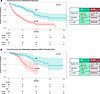 Figure 1
Kaplan-Meier analyses of overall survival for patients with mRCC with or without pancreatic metastasis. Kaplan-Meier and Cox proportional hazards analyses of OS from time of metastases diagnosis for (A) all patients and (B) those with favorable IMDC risk profile. Patients with missing survival data were excluded. OS, overall survival; PM, pancreatic metastasis; No PM, cohort without pancreatic metastases.
We next assessed the potential contribution of clinicopathological features to OS. Unstained slides from representative clinical blocks containing the highest-grade areas of the primary tumor were stained and subjected to central review (reviewer blinded to clinical data), and assigned a nucleolar grade. For patient-level comparisons, tumor grade was based on data reported in the standardized template provided by each participating institution. Although some differences were observed between the grade reported and the centralized review (Supplemental Figure 1), they were not statistically significant (see Methods).
A multivariable analysis controlling for race, sex, and other significant variables identified in univariate analyses showed that the presence of PM remained a strong and significant predictor of OS (Supplemental Figure 2).
PBRM1 loss is associated with prolonged survival. We and others have previously shown that PBRM1 loss is associated with prolonged survival, especially when compared with patients whose tumors are BAP1-deficient (13, 18, 19). We compared the frequency of BAP1 and PBRM1 loss across the 2 cohorts. To evaluate the status of these tumor suppressor proteins, we performed IHC studies. Interpretable results were obtained for 107 out of 108 patients with PM for both BAP1 and PBRM1, and we compared these results to previously available results from the control cohort (Table 2). We previously reported that BAP1 loss occurred infrequently in ccRCC with PM (9), and this was confirmed in the current study (3.7% vs. 20.7%; P < 0.001). In the current study, we also showed that PM was frequently associated with PBRM1 loss (80.4% vs. 54.8%; P < 0.001), a finding that did not reach statistical significance in our prior publication (9).
We evaluated clinicopathological characteristics of patients with PMs according to PBRM1 status. We compared the 86 patients with PBRM1-deficient tumors (80.4%) with the 21 patients with retained PBRM1 (19.6%) (Table 3). Among the different variables evaluated (demographics, stage at diagnosis, grade assigned by institutions, IMDC risk category, ECOG performance status, etc.) only ECOG performance status differed. Although the size of the cohorts compared was small, we found that patients with PBRM1-deficient tumors (PBRM1–) exhibited better ECOG performance status at diagnosis (P = 0.025).
Next, we compared survival outcomes. Median OS from metastasis diagnosis was significantly longer in the PBRM1– group compared with the PBRM1+ group (143 vs. 64 months, HR 0.41 [95% CI, 0.22–0.81], P = 0.008) (Figure 2). Notably, PBRM1 status remained an independent predictor of OS even after controlling for ECOG performance status (or IMDC risk profile) (Supplemental Figure 3). These data suggest that PBRM1 is prognostic in patients with PMs.
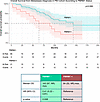 Figure 2
Kaplan-Meier analyses of patients with pancreatic metastasis according to PBRM1 status. Kaplan-Meier and Cox proportional hazards analyses of OS from time of metastases diagnosis for patients with PM according to PBRM1 status. OS, overall survival; PBRM1–, PBRM1-deficient tumor; PBRM1+, tumor with retained PBRM1; PM, pancreatic metastasis.
Improved outcomes with angiogenesis inhibitors in patients with PMs and PBRM1 loss. Previous studies have suggested an association between PBRM1 loss and response to angiogenesis inhibitors (20–22). Thus, we examined the impact of PBRM1 status on treatment response. Among 107 patients with PMs and available PBRM1 status, first-line (1L) therapy was as follows: 53 received an angiogenesis inhibitor, 19 an immune-oncology (IO) drug, and 7 a combination of angiogenesis inhibitor/IO drug. The remaining 28 patients did not receive systemic therapy. We then examined time on treatment (TOT), a surrogate for progression-free survival employed in the original consortium study (8). Patients with PBRM1-deficient tumors had significantly longer TOT with 1L antiangiogenic therapy (32.1 months, 95% CI, 20.7–50) compared with IO therapy (9.1 months, 95% CI, 7.0–NR; HR 0.16 [95% CI, 0.06–0.39], P < 0.001) (Figure 3A). In patients with PBRM1+ tumors, TOT differences between angiogenesis inhibitors (22 months, 95% CI, 4.0–NR) and IO therapy (8.0 months, 95% CI, 4.0–NR) were not statistically significant (HR 0.44 [95% CI, 0.10–2.00], P = 0.297), but these results are limited by small numbers, and the trends were similar in both groups (Figure 3B). Overall, the data suggest that patients with PM and PBRM1 loss preferentially respond to antiangiogenic therapy.
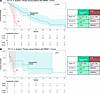 Figure 3
Kaplan-Meier analyses of patients with pancreatic metastasis according to treatment type. Kaplan-Meier and Cox proportional hazards analyses of TOT (angiogenesis inhibitor and IO therapy) for patients with PM with (A) PBRM1-deficient tumors and (B) PBRM1-WT. IO, immune-oncology therapy; PBRM1–, PBRM1-deficient tumor; PBRM1+, tumor with retained PBRM1; PM, pancreatic metastasis; TOT, time on treatment.
Patients with both pancreatic and extrapancreatic metastases exhibit more indolent features compared with patients without PMs. Next, we focused on the subset of patients with both pancreatic and extrapancreatic metastases. This subset accounted for 77 of 108 (71%) patients. Compared with the non-PM reference cohort, patients that had extrapancreatic metastases were also diagnosed with RCC at earlier stages (31.7% vs. 14.1%, P = 0.001), had primary tumors of lower grade (40.0% vs. 22.1%, P = 0.018), and were more likely to be in a favorable IMDC risk category (46.0% vs. 21.2%, P < 0.001) (Supplemental Table 3). In addition, patients with extrapancreatic metastases also developed metastases significantly later than patients without PM (median [IQR]: 2 [0–6] years vs. 0 [0–1] years, P < 0.001), reinforcing the association between tropism to the pancreas and metastatic latency (Supplemental Table 3). Even among patients with both pancreatic and extrapancreatic metastases, median OS remained significantly longer compared with patients without PM (127 vs. 33 months; HR 0.26 [95% CI, 0.17–0.39]; P < 0.001) (Supplemental Figure 4A). Additionally, the presence of PM continued to be a significant predictor of prolonged survival after adjusting for differences in clinicopathological characteristics (Supplemental Figure 4B). Even in this population, PBRM1 loss still independently predicted improved OS (NR vs. 64 months; HR 0.26 [95% CI, 0.18–0.88]; P = 0.022) (Supplemental Figure 5A). PBRM1 loss also correlated with prolonged TOT with angiogenesis inhibitors compared with immunotherapy in this group of patients (Supplemental Figure 5B).
Primary tumors from patients with PM differ from those without PM. Next, we performed more detailed analyses of primary tumors and metastases. We focused initially on primary tumors (n = 72), which were available for 71 patients (1 patient with tumors in both kidneys). For these experiments, we compared primary tumor samples from patients with PM to a cohort of 110 previously characterized primary tumor samples from patients with metastasis without PM (9, 23).
First, we focused on tumor architecture. We found that primary tumors from patients with PM were significantly enriched in indolent architectural patterns (50.0% vs. 12.7%, P < 0.001) and had a lower frequency of aggressive architectures (18.1% vs. 70.9%, P < 0.001) (Figure 4A). Next, we evaluated how driver gene status compared between primary tumors in both cohorts. For this study, BAP1/PBRM1/SETD2 status were examined together, similar to previous studies (4). Tumors with only PBRM1 loss were categorized as “Only PBRM1–”; tumors with only SETD2 loss were categorized as “Only SETD2–”; and tumors with loss of both PBRM1 and SETD2 were categorized as “PBRM1– and SETD2–.” Given that loss of BAP1 is associated with higher aggressiveness, any tumors with BAP1 loss, regardless of the status of the other genes, was considered “BAP1–.” The remaining tumors with retained BAP1, PBRM1, and SETD2 were considered as “All+.” We found that 74.3% of PM primary tumors had PBRM1 loss (with or without SETD2 loss, which cooperates with PBRM1 loss; refs. 15, 24), and PBRM1 loss was observed in 50.5% tumors without PM (P = 0.002). Conversely, BAP1 loss frequencies were significantly lower in primary tumors from patients with PM (1.4% vs. 27.7%, P < 0.001) (Figure 4B). Thus, primary tumors of patients with PM are characterized by indolent architectures and PBRM1 loss.
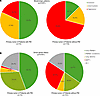 Figure 4
Primary tumors from patients with pancreatic metastasis differ from those without. Integrated pie charts of (A) dominant architectural patterns and (B) driver gene status (by IHC) of primary tumors from patients with or without PM, compared using the Fisher-Freeman-Halton exact test. BAP1/PBRM1/SETD2 status were examined together. Tumors with BAP1 loss, regardless of the status of other IHCs, were considered BAP1–. The remaining tumors were categorized as “Only PBRM1–,” “Only SETD2–,” or “PBRM1– and SETD2–” based on PBRM1/SETD2 status. Any remaining tumors with retained BAP1, PBRM1, and SETD2 were considered as “All+.” Samples with missing values for PBRM1, BAP1, or SETD2 were excluded. PM, pancreatic metastasis.
PMs are characterized by indolent features. Next, we focused our analyses on how metastases related to the corresponding primary tumors in patients in the PM cohort. For tissue-level comparisons, tumor grade was based on the data assigned after centralized review by an expert pathologist (see Methods). We investigated both PM (44 PM samples; 44 patients) as well as metastases at other sites (53 nonpancreatic “other” metastases; 34 patients). Notably, compared with primary tumor samples, PM samples were more indolent (75.0% vs. 50.0%, P = 0.021) and of lower grade (88.6% vs. 52.8%, P < 0.001) (Figure 5). In contrast, non-PM metastases had more aggressive patterns compared with primary tumors (46.2% vs. 18.1%, P < 0.001) and higher grade (84.6% vs. 47.2%, P < 0.001) (Figure 5, A and B). Thus, while metastases to sites other than the pancreas were characterized by aggressiveness, PMs were not. Furthermore, the higher frequency of indolent architectures and lower grade in PMs compared with primary tumors suggest that the pancreas is preferentially seeded by more indolent clones. These morphological differences between PMs and other metastases correlated with driver genes (P = 0.023). Whereas PMs were enriched for PBRM1 loss (alone or in combination with SETD2 loss), rates were lower in other metastases (82.9% vs. 60.4%, P = 0.034; Figure 5C).
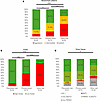 Figure 5
Pancreatic metastasis samples are characterized by indolent histology and molecular features. Integrated stacked figure of (A) dominant architectural patterns, (B) tumor grade determined by centralized review (see Methods), and (C) driver gene status in primary tumors and metastatic samples from patients with PM. For this study, BAP1/PBRM1/SETD2 status were examined together: Tumors with only PBRM1 loss were categorized as “Only PBRM1–”; tumors with only SETD2 loss were categorized as “Only SETD2–”; tumors with loss of both PBRM1 and SETD2 were categorized as “PBRM1– and SETD2–”; any tumors with BAP1 loss, regardless of the status of the other genes, were categorized as “BAP1–”; remaining tumors with retained BAP1, PBRM1, and SETD2 were categorized as “All+.” Samples with missing values for PBRM1, BAP1, or SETD2 were excluded. *P < 0.05, ***P < 0.001, and ****P < 0.0001 by Fisher’s exact test or the Fisher-Freeman-Halton exact test, as appropriate.
Next, we evaluated angiogenesis. For these studies, we leveraged a deep learning digital pathology platform, which generates an angioscore (21, 25) (see Methods). Using this tool, we found that PM samples had significantly higher angioscores compared with other metastatic sites (P < 0.001), which in turn, had lower angioscores than primary tumors (P < 0.001) (Figure 6A).
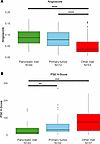 Figure 6
Pancreatic metastasis samples are characterized by heightened angiogenesis and lower mTOR pathway activation. Box plots of (A) deep-learning–generated angioscore and (B) phospho-S6 ribosomal protein (PS6) H-score for samples with remaining available slides. Box plot: the lower, middle, and upper edges correspond to the first (Q1), second (Q2; median), and third (Q3) quartiles, respectively. The IQR is defined as Q3−Q1. Whiskers extend to the most extreme data points within 1.5 × IQR below Q1 and above Q3. Data points lying beyond these limits are plotted individually and considered outliers. **P < 0.01, ***P < 0.001, and ****P < 0.0001 by Wilcoxon rank-sum test.
In addition, we evaluated mTORC1 activity. mTORC1 correlates with higher grade, and mTORC1 activation can transform lower grade PBRM1-deficient tumors into higher-grade ccRCC in mouse models (26, 27). As a readout of mTORC1, we used phospho-S6 ribosomal protein (PS6), which has been extensively used as a surrogate (27, 28). We found that PS6 was significantly lower in PM samples compared with primary tumors (P = 0.002) and metastases at other sites (P < 0.001) (Figure 6B). The difference in PS6 levels was significant even among PBRM1-deficient samples (P < 0.001) (Supplemental Figure 6).
Overall, these data are consistent with the notion that PMs, in contrast to metastases to other sites, are characterized by highly vascular indolent architectures and lower-grade tumor cells with low mTORC1 scores (Figure 7).
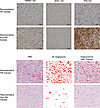 Figure 7
Illustrative images of pancreatic and nonpancreatic metastases. Representative tissue sections of PM and non-PM samples evaluated for PBRM1, BAP1, and phospho-S6 (PS6) by IHC as well as H&E-stained slides with corresponding DL vascular mask and overlay. PM samples are characterized by frequent PBRM1 loss (loss of brown nuclear staining in tumor cells; stromal cells remain positive and serve as a positive control), BAP1+, exhibit low mTORC1 (PS6) levels, and high angiogenesis. Scale bars: 100 μm. DL, deep learning; non-PM, nonpancreatic metastasis; PM, pancreatic metastasis.
PM samples arise from indolent clones from primary tumors. Overall, these data suggest that PMs, in contrast to metastases to other sites, arise from particularly indolent tumor clones in the primary tumor. To explore this notion further, we analyzed patients with matched primary tumors and metastases. Specifically, we analyzed 26 patients with matched primary tumor and PM samples (26 primary and 26 PM samples) and 15 patients with matched primary and non-PM tumor samples (15 primary and 22 non-PM samples). Of note, 5 patients had samples from primary tumors as well as from both PM and non-PM sites. We started our analyses by evaluating tumor architectures. Although the distribution of architectures in the primary tumors in the 2 cohorts (PM and non-PM) was similar (Figure 8, A and B), a significant difference was observed in tumor architectures between PM samples and samples from other metastatic sites (Figure 8, A and B). Specifically, whereas indolent architectures were observed in 84.6% of PM samples, they were found in only 45.4% of non-PM samples (P = 0.012). Conversely, aggressive architectures were more common in non-PM samples (27.3% vs. 3.9%).
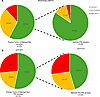 Figure 8
Subgroup analyses of matched primary and metastatic samples. Integrated pie charts of dominant architectural patterns for (A) primary tumors and their matched PM samples and (B) primary tumors and their matched non-PM samples, compared using the Fisher-Freeman-Halton exact test. Non-PM, nonpancreatic metastasis; PM, pancreatic metastasis.
Next, we evaluated PBRM1/BAP1/SETD2 status among PM and non-PM samples with matched primary tumors. Specifically, we asked how metastases related to primary tumors with PBRM1 loss. We found that all PMs in patients with primary tumors deficient for PBRM1 were also deficient for PBRM1 (with or without concurrent SETD2 loss). In contrast, the concordance rate between primary tumors and non-PMs was only 73% (P = 0.040) (Supplemental Figure 7).
While the foregoing analyses focused on representative samples of primary tumors and metastases obtained from institutions participating in the consortium, we sought to examine the relationship between primary tumors and metastases in greater depth. For these studies, we focused on our University of Texas Southwestern Medical Center (UTSW) cohort of 11 patients with PM and extensive samples available from both the primary tumor and at least 1 metastatic site (see Methods). By systematically analyzing multiple slides, we were able to render a more accurate assessment of the relative frequency of indolent, intermediate, and aggressive architectures in the primary tumor, which were then correlated with findings at metastatic sites.
As illustrated in Figure 9 and Figure 10, most primary tumors were dominated by indolent architectures. However, only 4/11 primary tumors were homogenously indolent. Intermediate patterns were found in 7/11 tumors and aggressive patterns in 5/11 tumors. These data suggest that while primary tumors that give rise to PMs are dominated by indolent architectures, more aggressive patterns can be identified in comprehensive analyses. In contrast, the same analysis of PMs revealed that the majority of PMs were homogenously indolent (5/7). Thus, despite the identification of intermediate and aggressive architectures in the primary tumor (in 1 case, making up to 65%), PMs were generally indolent. This concept was further explored through multiregional whole-exome sequencing of samples from primary tumors and metastases from 2 patients, including 1 previously reported (29) (Supplemental Figure 8). In Case 1, PMs were characterized by early divergence and included an additional PBRM1 mutation. Despite being obtained from a surgery 2 years after removal of the primary tumor, these PM samples remained low grade. In contrast, 2 subclones from the primary tumor independently acquired a different PBRM1 mutation and chromosome 14q gain, progressing to a higher grade. In the second case (Case 4), all primary and PM samples shared 3p loss, as well as VHL and PBRM1 mutations. Overall, the tumor was of low grade, including areas of grade 1 and 2, but 2 PM samples were both of grade 1.
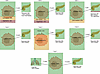 Figure 9
Comprehensive analyses of matched primary and pancreatic metastasis samples. Detailed analyses of intratumoral heterogeneity for UTSW cohort with extensive slides available.
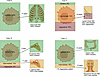 Figure 10
Comprehensive analyses of matched primary and nonpancreatic metastasis samples. Detailed analyses of intratumoral heterogeneity for UTSW cohort with extensive slides available.
Next, we analyzed non-PM in this cohort with comprehensive histological analyses. Among 7 non-PM metastases tested, 4 were indolent, and 3 were intermediate or aggressive (Figures 9 and 10). Thus, 5/7 PMs were indolent (with the remaining 2 PM being made up of at least 90% indolent features), and only 4/7 non-PMs were indolent. The rate of indolent features in the non-PM samples was higher than expected, but this may reflect the nature of the cohort (i.e., patients with PM) and a sampling bias (with preferential resection of non-PM in patients perceived to have a high likelihood of improved outcomes, such as patients with isolated metastases or long latency periods between the primary tumor and the metastasis).
Overall, these data suggest that PMs are seeded by clones in the primary tumor that are not the most aggressive and are enriched for indolent architectures and low-grade cancer cells.


