
Research ArticleClinical ResearchGeneticsVascular biology
Open Access |  10.1172/jci.insight.177656
Insights into KIF11 pathogenesis in microcephaly-lymphedema-chorioretinopathy syndrome from a lymphatic perspective
Kazim Ogmen,1 Sara E. Dobbins,1 Rose Yinghan Behncke,2,3 Ines Martinez-Corral,4 Ryan C.S. Brown,5 Michelle Meier,5,6,7 Sascha Ulferts,2 Nils Rouven Hansmeier,2,8 Ege Sackey,1,9 Ahlam Alqahtani,10 Christina Karapouliou,1 Dionysios Grigoriadis,1 Juan C. Del Rey Jimenez,9 Michael Oberlin,11 Denise Williams,12 Arzu Ekici,13 Kadri Karaer,14 Steve Jeffery,1 Peter Mortimer,1,15 Kristiana Gordon,1,15 Kazuhide S. Okuda,5,6 Benjamin M. Hogan,5,6 Taija Mäkinen,4,16,17 René Hägerling,2,3,8 Sahar Mansour,1,9 Silvia Martin-Almedina,1 and Pia Ostergaard1
1School of Health & Medical Sciences, City St George’s, University of London, London, United Kingdom.
2Research Group Lymphovascular Medicine and Translational 3D-Histopathology, Institute of Medical and Human Genetics, Charité - Universitätsmedizin Berlin, Germany.
3Berlin Institute of Health at Charité - Universitätsmedizin Berlin, BIH Center for Regenerative Therapies, Berlin, Germany.
4Department of Immunology, Genetics and Pathology, Uppsala University, Sweden.
5Organogenesis and Cancer Program, Peter MacCallum Cancer Centre, Melbourne, Victoria, Australia.
6Sir Peter MacCallum Department of Oncology and Department of Anatomy and Physiology, University of Melbourne, Victoria, Australia.
7Bioinformatics Core Facility, Peter MacCallum Cancer Centre, Melbourne, Victoria, Australia.
8Research Group Development and Disease, Max Planck Institute for Molecular Genetics, Berlin, Germany.
9South West Thames Centre for Genomics, St George’s University Hospitals NHS Foundation Trust, London, United Kingdom.
10Bioscience Institute, Wolfson Childhood Cancer Research Centre, Brewery Lane, Newcastle University, Newcastle upon Tyne, United Kingdom.
11Földiklinik GmbH & Co. KG, European Center for Lymphology Black Forest, Hinterzarten, Germany.
12The National Congenital Anomaly and Rare Diseases Registration Services (NCARDRS) NHS England, Birmingham Government Hub, Birmingham, United Kingdom.
13University of Health Sciences, Bursa Yüksek Īhtisas Training and Research Hospital, Department of Pediatric Neurology, Bursa, Turkey.
14Department of Medical Genetics, Pamukkale University Faculty of Medicine, Denizli, Turkey.
15Dermatology & Lymphovascular Medicine, St George’s University Hospitals NHS Foundation Trust, London, United Kingdom.
16Translational Cancer Medicine Program and Department of Biochemistry and Developmental Biology, University of Helsinki, Helsinki, Finland.
17Wihuri Research Institute, Helsinki, Finland.
Address correspondence to: Sahar Mansour, South West Thames Centre for Genomics, City St George’s University of London, Cranmer Terrace, London SW17 0RE, United Kingdom. Phone: 020.8725.0569; Email: smansour@citystgeorges.ac.uk. Or to: Silvia Martin-Almedina, School of Health and Medical Sciences, City St George’s University of London, Cranmer Terrace, London SW17 0RE, United Kingdom. Phone: 020.8725.3623; Email: smartina@citystgeorges.ac.uk.
Find articles by Ogmen, K. in: PubMed | Google Scholar
1School of Health & Medical Sciences, City St George’s, University of London, London, United Kingdom.
2Research Group Lymphovascular Medicine and Translational 3D-Histopathology, Institute of Medical and Human Genetics, Charité - Universitätsmedizin Berlin, Germany.
3Berlin Institute of Health at Charité - Universitätsmedizin Berlin, BIH Center for Regenerative Therapies, Berlin, Germany.
4Department of Immunology, Genetics and Pathology, Uppsala University, Sweden.
5Organogenesis and Cancer Program, Peter MacCallum Cancer Centre, Melbourne, Victoria, Australia.
6Sir Peter MacCallum Department of Oncology and Department of Anatomy and Physiology, University of Melbourne, Victoria, Australia.
7Bioinformatics Core Facility, Peter MacCallum Cancer Centre, Melbourne, Victoria, Australia.
8Research Group Development and Disease, Max Planck Institute for Molecular Genetics, Berlin, Germany.
9South West Thames Centre for Genomics, St George’s University Hospitals NHS Foundation Trust, London, United Kingdom.
10Bioscience Institute, Wolfson Childhood Cancer Research Centre, Brewery Lane, Newcastle University, Newcastle upon Tyne, United Kingdom.
11Földiklinik GmbH & Co. KG, European Center for Lymphology Black Forest, Hinterzarten, Germany.
12The National Congenital Anomaly and Rare Diseases Registration Services (NCARDRS) NHS England, Birmingham Government Hub, Birmingham, United Kingdom.
13University of Health Sciences, Bursa Yüksek Īhtisas Training and Research Hospital, Department of Pediatric Neurology, Bursa, Turkey.
14Department of Medical Genetics, Pamukkale University Faculty of Medicine, Denizli, Turkey.
15Dermatology & Lymphovascular Medicine, St George’s University Hospitals NHS Foundation Trust, London, United Kingdom.
16Translational Cancer Medicine Program and Department of Biochemistry and Developmental Biology, University of Helsinki, Helsinki, Finland.
17Wihuri Research Institute, Helsinki, Finland.
Address correspondence to: Sahar Mansour, South West Thames Centre for Genomics, City St George’s University of London, Cranmer Terrace, London SW17 0RE, United Kingdom. Phone: 020.8725.0569; Email: smansour@citystgeorges.ac.uk. Or to: Silvia Martin-Almedina, School of Health and Medical Sciences, City St George’s University of London, Cranmer Terrace, London SW17 0RE, United Kingdom. Phone: 020.8725.3623; Email: smartina@citystgeorges.ac.uk.
Find articles by Dobbins, S. in: PubMed | Google Scholar
1School of Health & Medical Sciences, City St George’s, University of London, London, United Kingdom.
2Research Group Lymphovascular Medicine and Translational 3D-Histopathology, Institute of Medical and Human Genetics, Charité - Universitätsmedizin Berlin, Germany.
3Berlin Institute of Health at Charité - Universitätsmedizin Berlin, BIH Center for Regenerative Therapies, Berlin, Germany.
4Department of Immunology, Genetics and Pathology, Uppsala University, Sweden.
5Organogenesis and Cancer Program, Peter MacCallum Cancer Centre, Melbourne, Victoria, Australia.
6Sir Peter MacCallum Department of Oncology and Department of Anatomy and Physiology, University of Melbourne, Victoria, Australia.
7Bioinformatics Core Facility, Peter MacCallum Cancer Centre, Melbourne, Victoria, Australia.
8Research Group Development and Disease, Max Planck Institute for Molecular Genetics, Berlin, Germany.
9South West Thames Centre for Genomics, St George’s University Hospitals NHS Foundation Trust, London, United Kingdom.
10Bioscience Institute, Wolfson Childhood Cancer Research Centre, Brewery Lane, Newcastle University, Newcastle upon Tyne, United Kingdom.
11Földiklinik GmbH & Co. KG, European Center for Lymphology Black Forest, Hinterzarten, Germany.
12The National Congenital Anomaly and Rare Diseases Registration Services (NCARDRS) NHS England, Birmingham Government Hub, Birmingham, United Kingdom.
13University of Health Sciences, Bursa Yüksek Īhtisas Training and Research Hospital, Department of Pediatric Neurology, Bursa, Turkey.
14Department of Medical Genetics, Pamukkale University Faculty of Medicine, Denizli, Turkey.
15Dermatology & Lymphovascular Medicine, St George’s University Hospitals NHS Foundation Trust, London, United Kingdom.
16Translational Cancer Medicine Program and Department of Biochemistry and Developmental Biology, University of Helsinki, Helsinki, Finland.
17Wihuri Research Institute, Helsinki, Finland.
Address correspondence to: Sahar Mansour, South West Thames Centre for Genomics, City St George’s University of London, Cranmer Terrace, London SW17 0RE, United Kingdom. Phone: 020.8725.0569; Email: smansour@citystgeorges.ac.uk. Or to: Silvia Martin-Almedina, School of Health and Medical Sciences, City St George’s University of London, Cranmer Terrace, London SW17 0RE, United Kingdom. Phone: 020.8725.3623; Email: smartina@citystgeorges.ac.uk.
Find articles by
Behncke, R.
in:
PubMed
|
Google Scholar
|

1School of Health & Medical Sciences, City St George’s, University of London, London, United Kingdom.
2Research Group Lymphovascular Medicine and Translational 3D-Histopathology, Institute of Medical and Human Genetics, Charité - Universitätsmedizin Berlin, Germany.
3Berlin Institute of Health at Charité - Universitätsmedizin Berlin, BIH Center for Regenerative Therapies, Berlin, Germany.
4Department of Immunology, Genetics and Pathology, Uppsala University, Sweden.
5Organogenesis and Cancer Program, Peter MacCallum Cancer Centre, Melbourne, Victoria, Australia.
6Sir Peter MacCallum Department of Oncology and Department of Anatomy and Physiology, University of Melbourne, Victoria, Australia.
7Bioinformatics Core Facility, Peter MacCallum Cancer Centre, Melbourne, Victoria, Australia.
8Research Group Development and Disease, Max Planck Institute for Molecular Genetics, Berlin, Germany.
9South West Thames Centre for Genomics, St George’s University Hospitals NHS Foundation Trust, London, United Kingdom.
10Bioscience Institute, Wolfson Childhood Cancer Research Centre, Brewery Lane, Newcastle University, Newcastle upon Tyne, United Kingdom.
11Földiklinik GmbH & Co. KG, European Center for Lymphology Black Forest, Hinterzarten, Germany.
12The National Congenital Anomaly and Rare Diseases Registration Services (NCARDRS) NHS England, Birmingham Government Hub, Birmingham, United Kingdom.
13University of Health Sciences, Bursa Yüksek Īhtisas Training and Research Hospital, Department of Pediatric Neurology, Bursa, Turkey.
14Department of Medical Genetics, Pamukkale University Faculty of Medicine, Denizli, Turkey.
15Dermatology & Lymphovascular Medicine, St George’s University Hospitals NHS Foundation Trust, London, United Kingdom.
16Translational Cancer Medicine Program and Department of Biochemistry and Developmental Biology, University of Helsinki, Helsinki, Finland.
17Wihuri Research Institute, Helsinki, Finland.
Address correspondence to: Sahar Mansour, South West Thames Centre for Genomics, City St George’s University of London, Cranmer Terrace, London SW17 0RE, United Kingdom. Phone: 020.8725.0569; Email: smansour@citystgeorges.ac.uk. Or to: Silvia Martin-Almedina, School of Health and Medical Sciences, City St George’s University of London, Cranmer Terrace, London SW17 0RE, United Kingdom. Phone: 020.8725.3623; Email: smartina@citystgeorges.ac.uk.
Find articles by
Martinez-Corral, I.
in:
PubMed
|
Google Scholar
|
1School of Health & Medical Sciences, City St George’s, University of London, London, United Kingdom.
2Research Group Lymphovascular Medicine and Translational 3D-Histopathology, Institute of Medical and Human Genetics, Charité - Universitätsmedizin Berlin, Germany.
3Berlin Institute of Health at Charité - Universitätsmedizin Berlin, BIH Center for Regenerative Therapies, Berlin, Germany.
4Department of Immunology, Genetics and Pathology, Uppsala University, Sweden.
5Organogenesis and Cancer Program, Peter MacCallum Cancer Centre, Melbourne, Victoria, Australia.
6Sir Peter MacCallum Department of Oncology and Department of Anatomy and Physiology, University of Melbourne, Victoria, Australia.
7Bioinformatics Core Facility, Peter MacCallum Cancer Centre, Melbourne, Victoria, Australia.
8Research Group Development and Disease, Max Planck Institute for Molecular Genetics, Berlin, Germany.
9South West Thames Centre for Genomics, St George’s University Hospitals NHS Foundation Trust, London, United Kingdom.
10Bioscience Institute, Wolfson Childhood Cancer Research Centre, Brewery Lane, Newcastle University, Newcastle upon Tyne, United Kingdom.
11Földiklinik GmbH & Co. KG, European Center for Lymphology Black Forest, Hinterzarten, Germany.
12The National Congenital Anomaly and Rare Diseases Registration Services (NCARDRS) NHS England, Birmingham Government Hub, Birmingham, United Kingdom.
13University of Health Sciences, Bursa Yüksek Īhtisas Training and Research Hospital, Department of Pediatric Neurology, Bursa, Turkey.
14Department of Medical Genetics, Pamukkale University Faculty of Medicine, Denizli, Turkey.
15Dermatology & Lymphovascular Medicine, St George’s University Hospitals NHS Foundation Trust, London, United Kingdom.
16Translational Cancer Medicine Program and Department of Biochemistry and Developmental Biology, University of Helsinki, Helsinki, Finland.
17Wihuri Research Institute, Helsinki, Finland.
Address correspondence to: Sahar Mansour, South West Thames Centre for Genomics, City St George’s University of London, Cranmer Terrace, London SW17 0RE, United Kingdom. Phone: 020.8725.0569; Email: smansour@citystgeorges.ac.uk. Or to: Silvia Martin-Almedina, School of Health and Medical Sciences, City St George’s University of London, Cranmer Terrace, London SW17 0RE, United Kingdom. Phone: 020.8725.3623; Email: smartina@citystgeorges.ac.uk.
Find articles by Brown, R. in: PubMed | Google Scholar
1School of Health & Medical Sciences, City St George’s, University of London, London, United Kingdom.
2Research Group Lymphovascular Medicine and Translational 3D-Histopathology, Institute of Medical and Human Genetics, Charité - Universitätsmedizin Berlin, Germany.
3Berlin Institute of Health at Charité - Universitätsmedizin Berlin, BIH Center for Regenerative Therapies, Berlin, Germany.
4Department of Immunology, Genetics and Pathology, Uppsala University, Sweden.
5Organogenesis and Cancer Program, Peter MacCallum Cancer Centre, Melbourne, Victoria, Australia.
6Sir Peter MacCallum Department of Oncology and Department of Anatomy and Physiology, University of Melbourne, Victoria, Australia.
7Bioinformatics Core Facility, Peter MacCallum Cancer Centre, Melbourne, Victoria, Australia.
8Research Group Development and Disease, Max Planck Institute for Molecular Genetics, Berlin, Germany.
9South West Thames Centre for Genomics, St George’s University Hospitals NHS Foundation Trust, London, United Kingdom.
10Bioscience Institute, Wolfson Childhood Cancer Research Centre, Brewery Lane, Newcastle University, Newcastle upon Tyne, United Kingdom.
11Földiklinik GmbH & Co. KG, European Center for Lymphology Black Forest, Hinterzarten, Germany.
12The National Congenital Anomaly and Rare Diseases Registration Services (NCARDRS) NHS England, Birmingham Government Hub, Birmingham, United Kingdom.
13University of Health Sciences, Bursa Yüksek Īhtisas Training and Research Hospital, Department of Pediatric Neurology, Bursa, Turkey.
14Department of Medical Genetics, Pamukkale University Faculty of Medicine, Denizli, Turkey.
15Dermatology & Lymphovascular Medicine, St George’s University Hospitals NHS Foundation Trust, London, United Kingdom.
16Translational Cancer Medicine Program and Department of Biochemistry and Developmental Biology, University of Helsinki, Helsinki, Finland.
17Wihuri Research Institute, Helsinki, Finland.
Address correspondence to: Sahar Mansour, South West Thames Centre for Genomics, City St George’s University of London, Cranmer Terrace, London SW17 0RE, United Kingdom. Phone: 020.8725.0569; Email: smansour@citystgeorges.ac.uk. Or to: Silvia Martin-Almedina, School of Health and Medical Sciences, City St George’s University of London, Cranmer Terrace, London SW17 0RE, United Kingdom. Phone: 020.8725.3623; Email: smartina@citystgeorges.ac.uk.
Find articles by Meier, M. in: PubMed | Google Scholar
1School of Health & Medical Sciences, City St George’s, University of London, London, United Kingdom.
2Research Group Lymphovascular Medicine and Translational 3D-Histopathology, Institute of Medical and Human Genetics, Charité - Universitätsmedizin Berlin, Germany.
3Berlin Institute of Health at Charité - Universitätsmedizin Berlin, BIH Center for Regenerative Therapies, Berlin, Germany.
4Department of Immunology, Genetics and Pathology, Uppsala University, Sweden.
5Organogenesis and Cancer Program, Peter MacCallum Cancer Centre, Melbourne, Victoria, Australia.
6Sir Peter MacCallum Department of Oncology and Department of Anatomy and Physiology, University of Melbourne, Victoria, Australia.
7Bioinformatics Core Facility, Peter MacCallum Cancer Centre, Melbourne, Victoria, Australia.
8Research Group Development and Disease, Max Planck Institute for Molecular Genetics, Berlin, Germany.
9South West Thames Centre for Genomics, St George’s University Hospitals NHS Foundation Trust, London, United Kingdom.
10Bioscience Institute, Wolfson Childhood Cancer Research Centre, Brewery Lane, Newcastle University, Newcastle upon Tyne, United Kingdom.
11Földiklinik GmbH & Co. KG, European Center for Lymphology Black Forest, Hinterzarten, Germany.
12The National Congenital Anomaly and Rare Diseases Registration Services (NCARDRS) NHS England, Birmingham Government Hub, Birmingham, United Kingdom.
13University of Health Sciences, Bursa Yüksek Īhtisas Training and Research Hospital, Department of Pediatric Neurology, Bursa, Turkey.
14Department of Medical Genetics, Pamukkale University Faculty of Medicine, Denizli, Turkey.
15Dermatology & Lymphovascular Medicine, St George’s University Hospitals NHS Foundation Trust, London, United Kingdom.
16Translational Cancer Medicine Program and Department of Biochemistry and Developmental Biology, University of Helsinki, Helsinki, Finland.
17Wihuri Research Institute, Helsinki, Finland.
Address correspondence to: Sahar Mansour, South West Thames Centre for Genomics, City St George’s University of London, Cranmer Terrace, London SW17 0RE, United Kingdom. Phone: 020.8725.0569; Email: smansour@citystgeorges.ac.uk. Or to: Silvia Martin-Almedina, School of Health and Medical Sciences, City St George’s University of London, Cranmer Terrace, London SW17 0RE, United Kingdom. Phone: 020.8725.3623; Email: smartina@citystgeorges.ac.uk.
Find articles by
Ulferts, S.
in:
PubMed
|
Google Scholar
|
1School of Health & Medical Sciences, City St George’s, University of London, London, United Kingdom.
2Research Group Lymphovascular Medicine and Translational 3D-Histopathology, Institute of Medical and Human Genetics, Charité - Universitätsmedizin Berlin, Germany.
3Berlin Institute of Health at Charité - Universitätsmedizin Berlin, BIH Center for Regenerative Therapies, Berlin, Germany.
4Department of Immunology, Genetics and Pathology, Uppsala University, Sweden.
5Organogenesis and Cancer Program, Peter MacCallum Cancer Centre, Melbourne, Victoria, Australia.
6Sir Peter MacCallum Department of Oncology and Department of Anatomy and Physiology, University of Melbourne, Victoria, Australia.
7Bioinformatics Core Facility, Peter MacCallum Cancer Centre, Melbourne, Victoria, Australia.
8Research Group Development and Disease, Max Planck Institute for Molecular Genetics, Berlin, Germany.
9South West Thames Centre for Genomics, St George’s University Hospitals NHS Foundation Trust, London, United Kingdom.
10Bioscience Institute, Wolfson Childhood Cancer Research Centre, Brewery Lane, Newcastle University, Newcastle upon Tyne, United Kingdom.
11Földiklinik GmbH & Co. KG, European Center for Lymphology Black Forest, Hinterzarten, Germany.
12The National Congenital Anomaly and Rare Diseases Registration Services (NCARDRS) NHS England, Birmingham Government Hub, Birmingham, United Kingdom.
13University of Health Sciences, Bursa Yüksek Īhtisas Training and Research Hospital, Department of Pediatric Neurology, Bursa, Turkey.
14Department of Medical Genetics, Pamukkale University Faculty of Medicine, Denizli, Turkey.
15Dermatology & Lymphovascular Medicine, St George’s University Hospitals NHS Foundation Trust, London, United Kingdom.
16Translational Cancer Medicine Program and Department of Biochemistry and Developmental Biology, University of Helsinki, Helsinki, Finland.
17Wihuri Research Institute, Helsinki, Finland.
Address correspondence to: Sahar Mansour, South West Thames Centre for Genomics, City St George’s University of London, Cranmer Terrace, London SW17 0RE, United Kingdom. Phone: 020.8725.0569; Email: smansour@citystgeorges.ac.uk. Or to: Silvia Martin-Almedina, School of Health and Medical Sciences, City St George’s University of London, Cranmer Terrace, London SW17 0RE, United Kingdom. Phone: 020.8725.3623; Email: smartina@citystgeorges.ac.uk.
Find articles by
Hansmeier, N.
in:
PubMed
|
Google Scholar
|
1School of Health & Medical Sciences, City St George’s, University of London, London, United Kingdom.
2Research Group Lymphovascular Medicine and Translational 3D-Histopathology, Institute of Medical and Human Genetics, Charité - Universitätsmedizin Berlin, Germany.
3Berlin Institute of Health at Charité - Universitätsmedizin Berlin, BIH Center for Regenerative Therapies, Berlin, Germany.
4Department of Immunology, Genetics and Pathology, Uppsala University, Sweden.
5Organogenesis and Cancer Program, Peter MacCallum Cancer Centre, Melbourne, Victoria, Australia.
6Sir Peter MacCallum Department of Oncology and Department of Anatomy and Physiology, University of Melbourne, Victoria, Australia.
7Bioinformatics Core Facility, Peter MacCallum Cancer Centre, Melbourne, Victoria, Australia.
8Research Group Development and Disease, Max Planck Institute for Molecular Genetics, Berlin, Germany.
9South West Thames Centre for Genomics, St George’s University Hospitals NHS Foundation Trust, London, United Kingdom.
10Bioscience Institute, Wolfson Childhood Cancer Research Centre, Brewery Lane, Newcastle University, Newcastle upon Tyne, United Kingdom.
11Földiklinik GmbH & Co. KG, European Center for Lymphology Black Forest, Hinterzarten, Germany.
12The National Congenital Anomaly and Rare Diseases Registration Services (NCARDRS) NHS England, Birmingham Government Hub, Birmingham, United Kingdom.
13University of Health Sciences, Bursa Yüksek Īhtisas Training and Research Hospital, Department of Pediatric Neurology, Bursa, Turkey.
14Department of Medical Genetics, Pamukkale University Faculty of Medicine, Denizli, Turkey.
15Dermatology & Lymphovascular Medicine, St George’s University Hospitals NHS Foundation Trust, London, United Kingdom.
16Translational Cancer Medicine Program and Department of Biochemistry and Developmental Biology, University of Helsinki, Helsinki, Finland.
17Wihuri Research Institute, Helsinki, Finland.
Address correspondence to: Sahar Mansour, South West Thames Centre for Genomics, City St George’s University of London, Cranmer Terrace, London SW17 0RE, United Kingdom. Phone: 020.8725.0569; Email: smansour@citystgeorges.ac.uk. Or to: Silvia Martin-Almedina, School of Health and Medical Sciences, City St George’s University of London, Cranmer Terrace, London SW17 0RE, United Kingdom. Phone: 020.8725.3623; Email: smartina@citystgeorges.ac.uk.
Find articles by Sackey, E. in: PubMed | Google Scholar
1School of Health & Medical Sciences, City St George’s, University of London, London, United Kingdom.
2Research Group Lymphovascular Medicine and Translational 3D-Histopathology, Institute of Medical and Human Genetics, Charité - Universitätsmedizin Berlin, Germany.
3Berlin Institute of Health at Charité - Universitätsmedizin Berlin, BIH Center for Regenerative Therapies, Berlin, Germany.
4Department of Immunology, Genetics and Pathology, Uppsala University, Sweden.
5Organogenesis and Cancer Program, Peter MacCallum Cancer Centre, Melbourne, Victoria, Australia.
6Sir Peter MacCallum Department of Oncology and Department of Anatomy and Physiology, University of Melbourne, Victoria, Australia.
7Bioinformatics Core Facility, Peter MacCallum Cancer Centre, Melbourne, Victoria, Australia.
8Research Group Development and Disease, Max Planck Institute for Molecular Genetics, Berlin, Germany.
9South West Thames Centre for Genomics, St George’s University Hospitals NHS Foundation Trust, London, United Kingdom.
10Bioscience Institute, Wolfson Childhood Cancer Research Centre, Brewery Lane, Newcastle University, Newcastle upon Tyne, United Kingdom.
11Földiklinik GmbH & Co. KG, European Center for Lymphology Black Forest, Hinterzarten, Germany.
12The National Congenital Anomaly and Rare Diseases Registration Services (NCARDRS) NHS England, Birmingham Government Hub, Birmingham, United Kingdom.
13University of Health Sciences, Bursa Yüksek Īhtisas Training and Research Hospital, Department of Pediatric Neurology, Bursa, Turkey.
14Department of Medical Genetics, Pamukkale University Faculty of Medicine, Denizli, Turkey.
15Dermatology & Lymphovascular Medicine, St George’s University Hospitals NHS Foundation Trust, London, United Kingdom.
16Translational Cancer Medicine Program and Department of Biochemistry and Developmental Biology, University of Helsinki, Helsinki, Finland.
17Wihuri Research Institute, Helsinki, Finland.
Address correspondence to: Sahar Mansour, South West Thames Centre for Genomics, City St George’s University of London, Cranmer Terrace, London SW17 0RE, United Kingdom. Phone: 020.8725.0569; Email: smansour@citystgeorges.ac.uk. Or to: Silvia Martin-Almedina, School of Health and Medical Sciences, City St George’s University of London, Cranmer Terrace, London SW17 0RE, United Kingdom. Phone: 020.8725.3623; Email: smartina@citystgeorges.ac.uk.
Find articles by Alqahtani, A. in: PubMed | Google Scholar
1School of Health & Medical Sciences, City St George’s, University of London, London, United Kingdom.
2Research Group Lymphovascular Medicine and Translational 3D-Histopathology, Institute of Medical and Human Genetics, Charité - Universitätsmedizin Berlin, Germany.
3Berlin Institute of Health at Charité - Universitätsmedizin Berlin, BIH Center for Regenerative Therapies, Berlin, Germany.
4Department of Immunology, Genetics and Pathology, Uppsala University, Sweden.
5Organogenesis and Cancer Program, Peter MacCallum Cancer Centre, Melbourne, Victoria, Australia.
6Sir Peter MacCallum Department of Oncology and Department of Anatomy and Physiology, University of Melbourne, Victoria, Australia.
7Bioinformatics Core Facility, Peter MacCallum Cancer Centre, Melbourne, Victoria, Australia.
8Research Group Development and Disease, Max Planck Institute for Molecular Genetics, Berlin, Germany.
9South West Thames Centre for Genomics, St George’s University Hospitals NHS Foundation Trust, London, United Kingdom.
10Bioscience Institute, Wolfson Childhood Cancer Research Centre, Brewery Lane, Newcastle University, Newcastle upon Tyne, United Kingdom.
11Földiklinik GmbH & Co. KG, European Center for Lymphology Black Forest, Hinterzarten, Germany.
12The National Congenital Anomaly and Rare Diseases Registration Services (NCARDRS) NHS England, Birmingham Government Hub, Birmingham, United Kingdom.
13University of Health Sciences, Bursa Yüksek Īhtisas Training and Research Hospital, Department of Pediatric Neurology, Bursa, Turkey.
14Department of Medical Genetics, Pamukkale University Faculty of Medicine, Denizli, Turkey.
15Dermatology & Lymphovascular Medicine, St George’s University Hospitals NHS Foundation Trust, London, United Kingdom.
16Translational Cancer Medicine Program and Department of Biochemistry and Developmental Biology, University of Helsinki, Helsinki, Finland.
17Wihuri Research Institute, Helsinki, Finland.
Address correspondence to: Sahar Mansour, South West Thames Centre for Genomics, City St George’s University of London, Cranmer Terrace, London SW17 0RE, United Kingdom. Phone: 020.8725.0569; Email: smansour@citystgeorges.ac.uk. Or to: Silvia Martin-Almedina, School of Health and Medical Sciences, City St George’s University of London, Cranmer Terrace, London SW17 0RE, United Kingdom. Phone: 020.8725.3623; Email: smartina@citystgeorges.ac.uk.
Find articles by Karapouliou, C. in: PubMed | Google Scholar
1School of Health & Medical Sciences, City St George’s, University of London, London, United Kingdom.
2Research Group Lymphovascular Medicine and Translational 3D-Histopathology, Institute of Medical and Human Genetics, Charité - Universitätsmedizin Berlin, Germany.
3Berlin Institute of Health at Charité - Universitätsmedizin Berlin, BIH Center for Regenerative Therapies, Berlin, Germany.
4Department of Immunology, Genetics and Pathology, Uppsala University, Sweden.
5Organogenesis and Cancer Program, Peter MacCallum Cancer Centre, Melbourne, Victoria, Australia.
6Sir Peter MacCallum Department of Oncology and Department of Anatomy and Physiology, University of Melbourne, Victoria, Australia.
7Bioinformatics Core Facility, Peter MacCallum Cancer Centre, Melbourne, Victoria, Australia.
8Research Group Development and Disease, Max Planck Institute for Molecular Genetics, Berlin, Germany.
9South West Thames Centre for Genomics, St George’s University Hospitals NHS Foundation Trust, London, United Kingdom.
10Bioscience Institute, Wolfson Childhood Cancer Research Centre, Brewery Lane, Newcastle University, Newcastle upon Tyne, United Kingdom.
11Földiklinik GmbH & Co. KG, European Center for Lymphology Black Forest, Hinterzarten, Germany.
12The National Congenital Anomaly and Rare Diseases Registration Services (NCARDRS) NHS England, Birmingham Government Hub, Birmingham, United Kingdom.
13University of Health Sciences, Bursa Yüksek Īhtisas Training and Research Hospital, Department of Pediatric Neurology, Bursa, Turkey.
14Department of Medical Genetics, Pamukkale University Faculty of Medicine, Denizli, Turkey.
15Dermatology & Lymphovascular Medicine, St George’s University Hospitals NHS Foundation Trust, London, United Kingdom.
16Translational Cancer Medicine Program and Department of Biochemistry and Developmental Biology, University of Helsinki, Helsinki, Finland.
17Wihuri Research Institute, Helsinki, Finland.
Address correspondence to: Sahar Mansour, South West Thames Centre for Genomics, City St George’s University of London, Cranmer Terrace, London SW17 0RE, United Kingdom. Phone: 020.8725.0569; Email: smansour@citystgeorges.ac.uk. Or to: Silvia Martin-Almedina, School of Health and Medical Sciences, City St George’s University of London, Cranmer Terrace, London SW17 0RE, United Kingdom. Phone: 020.8725.3623; Email: smartina@citystgeorges.ac.uk.
Find articles by Grigoriadis, D. in: PubMed | Google Scholar
1School of Health & Medical Sciences, City St George’s, University of London, London, United Kingdom.
2Research Group Lymphovascular Medicine and Translational 3D-Histopathology, Institute of Medical and Human Genetics, Charité - Universitätsmedizin Berlin, Germany.
3Berlin Institute of Health at Charité - Universitätsmedizin Berlin, BIH Center for Regenerative Therapies, Berlin, Germany.
4Department of Immunology, Genetics and Pathology, Uppsala University, Sweden.
5Organogenesis and Cancer Program, Peter MacCallum Cancer Centre, Melbourne, Victoria, Australia.
6Sir Peter MacCallum Department of Oncology and Department of Anatomy and Physiology, University of Melbourne, Victoria, Australia.
7Bioinformatics Core Facility, Peter MacCallum Cancer Centre, Melbourne, Victoria, Australia.
8Research Group Development and Disease, Max Planck Institute for Molecular Genetics, Berlin, Germany.
9South West Thames Centre for Genomics, St George’s University Hospitals NHS Foundation Trust, London, United Kingdom.
10Bioscience Institute, Wolfson Childhood Cancer Research Centre, Brewery Lane, Newcastle University, Newcastle upon Tyne, United Kingdom.
11Földiklinik GmbH & Co. KG, European Center for Lymphology Black Forest, Hinterzarten, Germany.
12The National Congenital Anomaly and Rare Diseases Registration Services (NCARDRS) NHS England, Birmingham Government Hub, Birmingham, United Kingdom.
13University of Health Sciences, Bursa Yüksek Īhtisas Training and Research Hospital, Department of Pediatric Neurology, Bursa, Turkey.
14Department of Medical Genetics, Pamukkale University Faculty of Medicine, Denizli, Turkey.
15Dermatology & Lymphovascular Medicine, St George’s University Hospitals NHS Foundation Trust, London, United Kingdom.
16Translational Cancer Medicine Program and Department of Biochemistry and Developmental Biology, University of Helsinki, Helsinki, Finland.
17Wihuri Research Institute, Helsinki, Finland.
Address correspondence to: Sahar Mansour, South West Thames Centre for Genomics, City St George’s University of London, Cranmer Terrace, London SW17 0RE, United Kingdom. Phone: 020.8725.0569; Email: smansour@citystgeorges.ac.uk. Or to: Silvia Martin-Almedina, School of Health and Medical Sciences, City St George’s University of London, Cranmer Terrace, London SW17 0RE, United Kingdom. Phone: 020.8725.3623; Email: smartina@citystgeorges.ac.uk.
Find articles by Del Rey Jimenez, J. in: PubMed | Google Scholar
1School of Health & Medical Sciences, City St George’s, University of London, London, United Kingdom.
2Research Group Lymphovascular Medicine and Translational 3D-Histopathology, Institute of Medical and Human Genetics, Charité - Universitätsmedizin Berlin, Germany.
3Berlin Institute of Health at Charité - Universitätsmedizin Berlin, BIH Center for Regenerative Therapies, Berlin, Germany.
4Department of Immunology, Genetics and Pathology, Uppsala University, Sweden.
5Organogenesis and Cancer Program, Peter MacCallum Cancer Centre, Melbourne, Victoria, Australia.
6Sir Peter MacCallum Department of Oncology and Department of Anatomy and Physiology, University of Melbourne, Victoria, Australia.
7Bioinformatics Core Facility, Peter MacCallum Cancer Centre, Melbourne, Victoria, Australia.
8Research Group Development and Disease, Max Planck Institute for Molecular Genetics, Berlin, Germany.
9South West Thames Centre for Genomics, St George’s University Hospitals NHS Foundation Trust, London, United Kingdom.
10Bioscience Institute, Wolfson Childhood Cancer Research Centre, Brewery Lane, Newcastle University, Newcastle upon Tyne, United Kingdom.
11Földiklinik GmbH & Co. KG, European Center for Lymphology Black Forest, Hinterzarten, Germany.
12The National Congenital Anomaly and Rare Diseases Registration Services (NCARDRS) NHS England, Birmingham Government Hub, Birmingham, United Kingdom.
13University of Health Sciences, Bursa Yüksek Īhtisas Training and Research Hospital, Department of Pediatric Neurology, Bursa, Turkey.
14Department of Medical Genetics, Pamukkale University Faculty of Medicine, Denizli, Turkey.
15Dermatology & Lymphovascular Medicine, St George’s University Hospitals NHS Foundation Trust, London, United Kingdom.
16Translational Cancer Medicine Program and Department of Biochemistry and Developmental Biology, University of Helsinki, Helsinki, Finland.
17Wihuri Research Institute, Helsinki, Finland.
Address correspondence to: Sahar Mansour, South West Thames Centre for Genomics, City St George’s University of London, Cranmer Terrace, London SW17 0RE, United Kingdom. Phone: 020.8725.0569; Email: smansour@citystgeorges.ac.uk. Or to: Silvia Martin-Almedina, School of Health and Medical Sciences, City St George’s University of London, Cranmer Terrace, London SW17 0RE, United Kingdom. Phone: 020.8725.3623; Email: smartina@citystgeorges.ac.uk.
Find articles by Oberlin, M. in: PubMed | Google Scholar
1School of Health & Medical Sciences, City St George’s, University of London, London, United Kingdom.
2Research Group Lymphovascular Medicine and Translational 3D-Histopathology, Institute of Medical and Human Genetics, Charité - Universitätsmedizin Berlin, Germany.
3Berlin Institute of Health at Charité - Universitätsmedizin Berlin, BIH Center for Regenerative Therapies, Berlin, Germany.
4Department of Immunology, Genetics and Pathology, Uppsala University, Sweden.
5Organogenesis and Cancer Program, Peter MacCallum Cancer Centre, Melbourne, Victoria, Australia.
6Sir Peter MacCallum Department of Oncology and Department of Anatomy and Physiology, University of Melbourne, Victoria, Australia.
7Bioinformatics Core Facility, Peter MacCallum Cancer Centre, Melbourne, Victoria, Australia.
8Research Group Development and Disease, Max Planck Institute for Molecular Genetics, Berlin, Germany.
9South West Thames Centre for Genomics, St George’s University Hospitals NHS Foundation Trust, London, United Kingdom.
10Bioscience Institute, Wolfson Childhood Cancer Research Centre, Brewery Lane, Newcastle University, Newcastle upon Tyne, United Kingdom.
11Földiklinik GmbH & Co. KG, European Center for Lymphology Black Forest, Hinterzarten, Germany.
12The National Congenital Anomaly and Rare Diseases Registration Services (NCARDRS) NHS England, Birmingham Government Hub, Birmingham, United Kingdom.
13University of Health Sciences, Bursa Yüksek Īhtisas Training and Research Hospital, Department of Pediatric Neurology, Bursa, Turkey.
14Department of Medical Genetics, Pamukkale University Faculty of Medicine, Denizli, Turkey.
15Dermatology & Lymphovascular Medicine, St George’s University Hospitals NHS Foundation Trust, London, United Kingdom.
16Translational Cancer Medicine Program and Department of Biochemistry and Developmental Biology, University of Helsinki, Helsinki, Finland.
17Wihuri Research Institute, Helsinki, Finland.
Address correspondence to: Sahar Mansour, South West Thames Centre for Genomics, City St George’s University of London, Cranmer Terrace, London SW17 0RE, United Kingdom. Phone: 020.8725.0569; Email: smansour@citystgeorges.ac.uk. Or to: Silvia Martin-Almedina, School of Health and Medical Sciences, City St George’s University of London, Cranmer Terrace, London SW17 0RE, United Kingdom. Phone: 020.8725.3623; Email: smartina@citystgeorges.ac.uk.
Find articles by Williams, D. in: PubMed | Google Scholar
1School of Health & Medical Sciences, City St George’s, University of London, London, United Kingdom.
2Research Group Lymphovascular Medicine and Translational 3D-Histopathology, Institute of Medical and Human Genetics, Charité - Universitätsmedizin Berlin, Germany.
3Berlin Institute of Health at Charité - Universitätsmedizin Berlin, BIH Center for Regenerative Therapies, Berlin, Germany.
4Department of Immunology, Genetics and Pathology, Uppsala University, Sweden.
5Organogenesis and Cancer Program, Peter MacCallum Cancer Centre, Melbourne, Victoria, Australia.
6Sir Peter MacCallum Department of Oncology and Department of Anatomy and Physiology, University of Melbourne, Victoria, Australia.
7Bioinformatics Core Facility, Peter MacCallum Cancer Centre, Melbourne, Victoria, Australia.
8Research Group Development and Disease, Max Planck Institute for Molecular Genetics, Berlin, Germany.
9South West Thames Centre for Genomics, St George’s University Hospitals NHS Foundation Trust, London, United Kingdom.
10Bioscience Institute, Wolfson Childhood Cancer Research Centre, Brewery Lane, Newcastle University, Newcastle upon Tyne, United Kingdom.
11Földiklinik GmbH & Co. KG, European Center for Lymphology Black Forest, Hinterzarten, Germany.
12The National Congenital Anomaly and Rare Diseases Registration Services (NCARDRS) NHS England, Birmingham Government Hub, Birmingham, United Kingdom.
13University of Health Sciences, Bursa Yüksek Īhtisas Training and Research Hospital, Department of Pediatric Neurology, Bursa, Turkey.
14Department of Medical Genetics, Pamukkale University Faculty of Medicine, Denizli, Turkey.
15Dermatology & Lymphovascular Medicine, St George’s University Hospitals NHS Foundation Trust, London, United Kingdom.
16Translational Cancer Medicine Program and Department of Biochemistry and Developmental Biology, University of Helsinki, Helsinki, Finland.
17Wihuri Research Institute, Helsinki, Finland.
Address correspondence to: Sahar Mansour, South West Thames Centre for Genomics, City St George’s University of London, Cranmer Terrace, London SW17 0RE, United Kingdom. Phone: 020.8725.0569; Email: smansour@citystgeorges.ac.uk. Or to: Silvia Martin-Almedina, School of Health and Medical Sciences, City St George’s University of London, Cranmer Terrace, London SW17 0RE, United Kingdom. Phone: 020.8725.3623; Email: smartina@citystgeorges.ac.uk.
Find articles by Ekici, A. in: PubMed | Google Scholar
1School of Health & Medical Sciences, City St George’s, University of London, London, United Kingdom.
2Research Group Lymphovascular Medicine and Translational 3D-Histopathology, Institute of Medical and Human Genetics, Charité - Universitätsmedizin Berlin, Germany.
3Berlin Institute of Health at Charité - Universitätsmedizin Berlin, BIH Center for Regenerative Therapies, Berlin, Germany.
4Department of Immunology, Genetics and Pathology, Uppsala University, Sweden.
5Organogenesis and Cancer Program, Peter MacCallum Cancer Centre, Melbourne, Victoria, Australia.
6Sir Peter MacCallum Department of Oncology and Department of Anatomy and Physiology, University of Melbourne, Victoria, Australia.
7Bioinformatics Core Facility, Peter MacCallum Cancer Centre, Melbourne, Victoria, Australia.
8Research Group Development and Disease, Max Planck Institute for Molecular Genetics, Berlin, Germany.
9South West Thames Centre for Genomics, St George’s University Hospitals NHS Foundation Trust, London, United Kingdom.
10Bioscience Institute, Wolfson Childhood Cancer Research Centre, Brewery Lane, Newcastle University, Newcastle upon Tyne, United Kingdom.
11Földiklinik GmbH & Co. KG, European Center for Lymphology Black Forest, Hinterzarten, Germany.
12The National Congenital Anomaly and Rare Diseases Registration Services (NCARDRS) NHS England, Birmingham Government Hub, Birmingham, United Kingdom.
13University of Health Sciences, Bursa Yüksek Īhtisas Training and Research Hospital, Department of Pediatric Neurology, Bursa, Turkey.
14Department of Medical Genetics, Pamukkale University Faculty of Medicine, Denizli, Turkey.
15Dermatology & Lymphovascular Medicine, St George’s University Hospitals NHS Foundation Trust, London, United Kingdom.
16Translational Cancer Medicine Program and Department of Biochemistry and Developmental Biology, University of Helsinki, Helsinki, Finland.
17Wihuri Research Institute, Helsinki, Finland.
Address correspondence to: Sahar Mansour, South West Thames Centre for Genomics, City St George’s University of London, Cranmer Terrace, London SW17 0RE, United Kingdom. Phone: 020.8725.0569; Email: smansour@citystgeorges.ac.uk. Or to: Silvia Martin-Almedina, School of Health and Medical Sciences, City St George’s University of London, Cranmer Terrace, London SW17 0RE, United Kingdom. Phone: 020.8725.3623; Email: smartina@citystgeorges.ac.uk.
Find articles by Karaer, K. in: PubMed | Google Scholar
1School of Health & Medical Sciences, City St George’s, University of London, London, United Kingdom.
2Research Group Lymphovascular Medicine and Translational 3D-Histopathology, Institute of Medical and Human Genetics, Charité - Universitätsmedizin Berlin, Germany.
3Berlin Institute of Health at Charité - Universitätsmedizin Berlin, BIH Center for Regenerative Therapies, Berlin, Germany.
4Department of Immunology, Genetics and Pathology, Uppsala University, Sweden.
5Organogenesis and Cancer Program, Peter MacCallum Cancer Centre, Melbourne, Victoria, Australia.
6Sir Peter MacCallum Department of Oncology and Department of Anatomy and Physiology, University of Melbourne, Victoria, Australia.
7Bioinformatics Core Facility, Peter MacCallum Cancer Centre, Melbourne, Victoria, Australia.
8Research Group Development and Disease, Max Planck Institute for Molecular Genetics, Berlin, Germany.
9South West Thames Centre for Genomics, St George’s University Hospitals NHS Foundation Trust, London, United Kingdom.
10Bioscience Institute, Wolfson Childhood Cancer Research Centre, Brewery Lane, Newcastle University, Newcastle upon Tyne, United Kingdom.
11Földiklinik GmbH & Co. KG, European Center for Lymphology Black Forest, Hinterzarten, Germany.
12The National Congenital Anomaly and Rare Diseases Registration Services (NCARDRS) NHS England, Birmingham Government Hub, Birmingham, United Kingdom.
13University of Health Sciences, Bursa Yüksek Īhtisas Training and Research Hospital, Department of Pediatric Neurology, Bursa, Turkey.
14Department of Medical Genetics, Pamukkale University Faculty of Medicine, Denizli, Turkey.
15Dermatology & Lymphovascular Medicine, St George’s University Hospitals NHS Foundation Trust, London, United Kingdom.
16Translational Cancer Medicine Program and Department of Biochemistry and Developmental Biology, University of Helsinki, Helsinki, Finland.
17Wihuri Research Institute, Helsinki, Finland.
Address correspondence to: Sahar Mansour, South West Thames Centre for Genomics, City St George’s University of London, Cranmer Terrace, London SW17 0RE, United Kingdom. Phone: 020.8725.0569; Email: smansour@citystgeorges.ac.uk. Or to: Silvia Martin-Almedina, School of Health and Medical Sciences, City St George’s University of London, Cranmer Terrace, London SW17 0RE, United Kingdom. Phone: 020.8725.3623; Email: smartina@citystgeorges.ac.uk.
Find articles by Jeffery, S. in: PubMed | Google Scholar
1School of Health & Medical Sciences, City St George’s, University of London, London, United Kingdom.
2Research Group Lymphovascular Medicine and Translational 3D-Histopathology, Institute of Medical and Human Genetics, Charité - Universitätsmedizin Berlin, Germany.
3Berlin Institute of Health at Charité - Universitätsmedizin Berlin, BIH Center for Regenerative Therapies, Berlin, Germany.
4Department of Immunology, Genetics and Pathology, Uppsala University, Sweden.
5Organogenesis and Cancer Program, Peter MacCallum Cancer Centre, Melbourne, Victoria, Australia.
6Sir Peter MacCallum Department of Oncology and Department of Anatomy and Physiology, University of Melbourne, Victoria, Australia.
7Bioinformatics Core Facility, Peter MacCallum Cancer Centre, Melbourne, Victoria, Australia.
8Research Group Development and Disease, Max Planck Institute for Molecular Genetics, Berlin, Germany.
9South West Thames Centre for Genomics, St George’s University Hospitals NHS Foundation Trust, London, United Kingdom.
10Bioscience Institute, Wolfson Childhood Cancer Research Centre, Brewery Lane, Newcastle University, Newcastle upon Tyne, United Kingdom.
11Földiklinik GmbH & Co. KG, European Center for Lymphology Black Forest, Hinterzarten, Germany.
12The National Congenital Anomaly and Rare Diseases Registration Services (NCARDRS) NHS England, Birmingham Government Hub, Birmingham, United Kingdom.
13University of Health Sciences, Bursa Yüksek Īhtisas Training and Research Hospital, Department of Pediatric Neurology, Bursa, Turkey.
14Department of Medical Genetics, Pamukkale University Faculty of Medicine, Denizli, Turkey.
15Dermatology & Lymphovascular Medicine, St George’s University Hospitals NHS Foundation Trust, London, United Kingdom.
16Translational Cancer Medicine Program and Department of Biochemistry and Developmental Biology, University of Helsinki, Helsinki, Finland.
17Wihuri Research Institute, Helsinki, Finland.
Address correspondence to: Sahar Mansour, South West Thames Centre for Genomics, City St George’s University of London, Cranmer Terrace, London SW17 0RE, United Kingdom. Phone: 020.8725.0569; Email: smansour@citystgeorges.ac.uk. Or to: Silvia Martin-Almedina, School of Health and Medical Sciences, City St George’s University of London, Cranmer Terrace, London SW17 0RE, United Kingdom. Phone: 020.8725.3623; Email: smartina@citystgeorges.ac.uk.
Find articles by
Mortimer, P.
in:
PubMed
|
Google Scholar
|
1School of Health & Medical Sciences, City St George’s, University of London, London, United Kingdom.
2Research Group Lymphovascular Medicine and Translational 3D-Histopathology, Institute of Medical and Human Genetics, Charité - Universitätsmedizin Berlin, Germany.
3Berlin Institute of Health at Charité - Universitätsmedizin Berlin, BIH Center for Regenerative Therapies, Berlin, Germany.
4Department of Immunology, Genetics and Pathology, Uppsala University, Sweden.
5Organogenesis and Cancer Program, Peter MacCallum Cancer Centre, Melbourne, Victoria, Australia.
6Sir Peter MacCallum Department of Oncology and Department of Anatomy and Physiology, University of Melbourne, Victoria, Australia.
7Bioinformatics Core Facility, Peter MacCallum Cancer Centre, Melbourne, Victoria, Australia.
8Research Group Development and Disease, Max Planck Institute for Molecular Genetics, Berlin, Germany.
9South West Thames Centre for Genomics, St George’s University Hospitals NHS Foundation Trust, London, United Kingdom.
10Bioscience Institute, Wolfson Childhood Cancer Research Centre, Brewery Lane, Newcastle University, Newcastle upon Tyne, United Kingdom.
11Földiklinik GmbH & Co. KG, European Center for Lymphology Black Forest, Hinterzarten, Germany.
12The National Congenital Anomaly and Rare Diseases Registration Services (NCARDRS) NHS England, Birmingham Government Hub, Birmingham, United Kingdom.
13University of Health Sciences, Bursa Yüksek Īhtisas Training and Research Hospital, Department of Pediatric Neurology, Bursa, Turkey.
14Department of Medical Genetics, Pamukkale University Faculty of Medicine, Denizli, Turkey.
15Dermatology & Lymphovascular Medicine, St George’s University Hospitals NHS Foundation Trust, London, United Kingdom.
16Translational Cancer Medicine Program and Department of Biochemistry and Developmental Biology, University of Helsinki, Helsinki, Finland.
17Wihuri Research Institute, Helsinki, Finland.
Address correspondence to: Sahar Mansour, South West Thames Centre for Genomics, City St George’s University of London, Cranmer Terrace, London SW17 0RE, United Kingdom. Phone: 020.8725.0569; Email: smansour@citystgeorges.ac.uk. Or to: Silvia Martin-Almedina, School of Health and Medical Sciences, City St George’s University of London, Cranmer Terrace, London SW17 0RE, United Kingdom. Phone: 020.8725.3623; Email: smartina@citystgeorges.ac.uk.
Find articles by Gordon, K. in: PubMed | Google Scholar
1School of Health & Medical Sciences, City St George’s, University of London, London, United Kingdom.
2Research Group Lymphovascular Medicine and Translational 3D-Histopathology, Institute of Medical and Human Genetics, Charité - Universitätsmedizin Berlin, Germany.
3Berlin Institute of Health at Charité - Universitätsmedizin Berlin, BIH Center for Regenerative Therapies, Berlin, Germany.
4Department of Immunology, Genetics and Pathology, Uppsala University, Sweden.
5Organogenesis and Cancer Program, Peter MacCallum Cancer Centre, Melbourne, Victoria, Australia.
6Sir Peter MacCallum Department of Oncology and Department of Anatomy and Physiology, University of Melbourne, Victoria, Australia.
7Bioinformatics Core Facility, Peter MacCallum Cancer Centre, Melbourne, Victoria, Australia.
8Research Group Development and Disease, Max Planck Institute for Molecular Genetics, Berlin, Germany.
9South West Thames Centre for Genomics, St George’s University Hospitals NHS Foundation Trust, London, United Kingdom.
10Bioscience Institute, Wolfson Childhood Cancer Research Centre, Brewery Lane, Newcastle University, Newcastle upon Tyne, United Kingdom.
11Földiklinik GmbH & Co. KG, European Center for Lymphology Black Forest, Hinterzarten, Germany.
12The National Congenital Anomaly and Rare Diseases Registration Services (NCARDRS) NHS England, Birmingham Government Hub, Birmingham, United Kingdom.
13University of Health Sciences, Bursa Yüksek Īhtisas Training and Research Hospital, Department of Pediatric Neurology, Bursa, Turkey.
14Department of Medical Genetics, Pamukkale University Faculty of Medicine, Denizli, Turkey.
15Dermatology & Lymphovascular Medicine, St George’s University Hospitals NHS Foundation Trust, London, United Kingdom.
16Translational Cancer Medicine Program and Department of Biochemistry and Developmental Biology, University of Helsinki, Helsinki, Finland.
17Wihuri Research Institute, Helsinki, Finland.
Address correspondence to: Sahar Mansour, South West Thames Centre for Genomics, City St George’s University of London, Cranmer Terrace, London SW17 0RE, United Kingdom. Phone: 020.8725.0569; Email: smansour@citystgeorges.ac.uk. Or to: Silvia Martin-Almedina, School of Health and Medical Sciences, City St George’s University of London, Cranmer Terrace, London SW17 0RE, United Kingdom. Phone: 020.8725.3623; Email: smartina@citystgeorges.ac.uk.
Find articles by Okuda, K. in: PubMed | Google Scholar
1School of Health & Medical Sciences, City St George’s, University of London, London, United Kingdom.
2Research Group Lymphovascular Medicine and Translational 3D-Histopathology, Institute of Medical and Human Genetics, Charité - Universitätsmedizin Berlin, Germany.
3Berlin Institute of Health at Charité - Universitätsmedizin Berlin, BIH Center for Regenerative Therapies, Berlin, Germany.
4Department of Immunology, Genetics and Pathology, Uppsala University, Sweden.
5Organogenesis and Cancer Program, Peter MacCallum Cancer Centre, Melbourne, Victoria, Australia.
6Sir Peter MacCallum Department of Oncology and Department of Anatomy and Physiology, University of Melbourne, Victoria, Australia.
7Bioinformatics Core Facility, Peter MacCallum Cancer Centre, Melbourne, Victoria, Australia.
8Research Group Development and Disease, Max Planck Institute for Molecular Genetics, Berlin, Germany.
9South West Thames Centre for Genomics, St George’s University Hospitals NHS Foundation Trust, London, United Kingdom.
10Bioscience Institute, Wolfson Childhood Cancer Research Centre, Brewery Lane, Newcastle University, Newcastle upon Tyne, United Kingdom.
11Földiklinik GmbH & Co. KG, European Center for Lymphology Black Forest, Hinterzarten, Germany.
12The National Congenital Anomaly and Rare Diseases Registration Services (NCARDRS) NHS England, Birmingham Government Hub, Birmingham, United Kingdom.
13University of Health Sciences, Bursa Yüksek Īhtisas Training and Research Hospital, Department of Pediatric Neurology, Bursa, Turkey.
14Department of Medical Genetics, Pamukkale University Faculty of Medicine, Denizli, Turkey.
15Dermatology & Lymphovascular Medicine, St George’s University Hospitals NHS Foundation Trust, London, United Kingdom.
16Translational Cancer Medicine Program and Department of Biochemistry and Developmental Biology, University of Helsinki, Helsinki, Finland.
17Wihuri Research Institute, Helsinki, Finland.
Address correspondence to: Sahar Mansour, South West Thames Centre for Genomics, City St George’s University of London, Cranmer Terrace, London SW17 0RE, United Kingdom. Phone: 020.8725.0569; Email: smansour@citystgeorges.ac.uk. Or to: Silvia Martin-Almedina, School of Health and Medical Sciences, City St George’s University of London, Cranmer Terrace, London SW17 0RE, United Kingdom. Phone: 020.8725.3623; Email: smartina@citystgeorges.ac.uk.
Find articles by Hogan, B. in: PubMed | Google Scholar
1School of Health & Medical Sciences, City St George’s, University of London, London, United Kingdom.
2Research Group Lymphovascular Medicine and Translational 3D-Histopathology, Institute of Medical and Human Genetics, Charité - Universitätsmedizin Berlin, Germany.
3Berlin Institute of Health at Charité - Universitätsmedizin Berlin, BIH Center for Regenerative Therapies, Berlin, Germany.
4Department of Immunology, Genetics and Pathology, Uppsala University, Sweden.
5Organogenesis and Cancer Program, Peter MacCallum Cancer Centre, Melbourne, Victoria, Australia.
6Sir Peter MacCallum Department of Oncology and Department of Anatomy and Physiology, University of Melbourne, Victoria, Australia.
7Bioinformatics Core Facility, Peter MacCallum Cancer Centre, Melbourne, Victoria, Australia.
8Research Group Development and Disease, Max Planck Institute for Molecular Genetics, Berlin, Germany.
9South West Thames Centre for Genomics, St George’s University Hospitals NHS Foundation Trust, London, United Kingdom.
10Bioscience Institute, Wolfson Childhood Cancer Research Centre, Brewery Lane, Newcastle University, Newcastle upon Tyne, United Kingdom.
11Földiklinik GmbH & Co. KG, European Center for Lymphology Black Forest, Hinterzarten, Germany.
12The National Congenital Anomaly and Rare Diseases Registration Services (NCARDRS) NHS England, Birmingham Government Hub, Birmingham, United Kingdom.
13University of Health Sciences, Bursa Yüksek Īhtisas Training and Research Hospital, Department of Pediatric Neurology, Bursa, Turkey.
14Department of Medical Genetics, Pamukkale University Faculty of Medicine, Denizli, Turkey.
15Dermatology & Lymphovascular Medicine, St George’s University Hospitals NHS Foundation Trust, London, United Kingdom.
16Translational Cancer Medicine Program and Department of Biochemistry and Developmental Biology, University of Helsinki, Helsinki, Finland.
17Wihuri Research Institute, Helsinki, Finland.
Address correspondence to: Sahar Mansour, South West Thames Centre for Genomics, City St George’s University of London, Cranmer Terrace, London SW17 0RE, United Kingdom. Phone: 020.8725.0569; Email: smansour@citystgeorges.ac.uk. Or to: Silvia Martin-Almedina, School of Health and Medical Sciences, City St George’s University of London, Cranmer Terrace, London SW17 0RE, United Kingdom. Phone: 020.8725.3623; Email: smartina@citystgeorges.ac.uk.
Find articles by Mäkinen, T. in: PubMed | Google Scholar
1School of Health & Medical Sciences, City St George’s, University of London, London, United Kingdom.
2Research Group Lymphovascular Medicine and Translational 3D-Histopathology, Institute of Medical and Human Genetics, Charité - Universitätsmedizin Berlin, Germany.
3Berlin Institute of Health at Charité - Universitätsmedizin Berlin, BIH Center for Regenerative Therapies, Berlin, Germany.
4Department of Immunology, Genetics and Pathology, Uppsala University, Sweden.
5Organogenesis and Cancer Program, Peter MacCallum Cancer Centre, Melbourne, Victoria, Australia.
6Sir Peter MacCallum Department of Oncology and Department of Anatomy and Physiology, University of Melbourne, Victoria, Australia.
7Bioinformatics Core Facility, Peter MacCallum Cancer Centre, Melbourne, Victoria, Australia.
8Research Group Development and Disease, Max Planck Institute for Molecular Genetics, Berlin, Germany.
9South West Thames Centre for Genomics, St George’s University Hospitals NHS Foundation Trust, London, United Kingdom.
10Bioscience Institute, Wolfson Childhood Cancer Research Centre, Brewery Lane, Newcastle University, Newcastle upon Tyne, United Kingdom.
11Földiklinik GmbH & Co. KG, European Center for Lymphology Black Forest, Hinterzarten, Germany.
12The National Congenital Anomaly and Rare Diseases Registration Services (NCARDRS) NHS England, Birmingham Government Hub, Birmingham, United Kingdom.
13University of Health Sciences, Bursa Yüksek Īhtisas Training and Research Hospital, Department of Pediatric Neurology, Bursa, Turkey.
14Department of Medical Genetics, Pamukkale University Faculty of Medicine, Denizli, Turkey.
15Dermatology & Lymphovascular Medicine, St George’s University Hospitals NHS Foundation Trust, London, United Kingdom.
16Translational Cancer Medicine Program and Department of Biochemistry and Developmental Biology, University of Helsinki, Helsinki, Finland.
17Wihuri Research Institute, Helsinki, Finland.
Address correspondence to: Sahar Mansour, South West Thames Centre for Genomics, City St George’s University of London, Cranmer Terrace, London SW17 0RE, United Kingdom. Phone: 020.8725.0569; Email: smansour@citystgeorges.ac.uk. Or to: Silvia Martin-Almedina, School of Health and Medical Sciences, City St George’s University of London, Cranmer Terrace, London SW17 0RE, United Kingdom. Phone: 020.8725.3623; Email: smartina@citystgeorges.ac.uk.
Find articles by
Hägerling, R.
in:
PubMed
|
Google Scholar
|
1School of Health & Medical Sciences, City St George’s, University of London, London, United Kingdom.
2Research Group Lymphovascular Medicine and Translational 3D-Histopathology, Institute of Medical and Human Genetics, Charité - Universitätsmedizin Berlin, Germany.
3Berlin Institute of Health at Charité - Universitätsmedizin Berlin, BIH Center for Regenerative Therapies, Berlin, Germany.
4Department of Immunology, Genetics and Pathology, Uppsala University, Sweden.
5Organogenesis and Cancer Program, Peter MacCallum Cancer Centre, Melbourne, Victoria, Australia.
6Sir Peter MacCallum Department of Oncology and Department of Anatomy and Physiology, University of Melbourne, Victoria, Australia.
7Bioinformatics Core Facility, Peter MacCallum Cancer Centre, Melbourne, Victoria, Australia.
8Research Group Development and Disease, Max Planck Institute for Molecular Genetics, Berlin, Germany.
9South West Thames Centre for Genomics, St George’s University Hospitals NHS Foundation Trust, London, United Kingdom.
10Bioscience Institute, Wolfson Childhood Cancer Research Centre, Brewery Lane, Newcastle University, Newcastle upon Tyne, United Kingdom.
11Földiklinik GmbH & Co. KG, European Center for Lymphology Black Forest, Hinterzarten, Germany.
12The National Congenital Anomaly and Rare Diseases Registration Services (NCARDRS) NHS England, Birmingham Government Hub, Birmingham, United Kingdom.
13University of Health Sciences, Bursa Yüksek Īhtisas Training and Research Hospital, Department of Pediatric Neurology, Bursa, Turkey.
14Department of Medical Genetics, Pamukkale University Faculty of Medicine, Denizli, Turkey.
15Dermatology & Lymphovascular Medicine, St George’s University Hospitals NHS Foundation Trust, London, United Kingdom.
16Translational Cancer Medicine Program and Department of Biochemistry and Developmental Biology, University of Helsinki, Helsinki, Finland.
17Wihuri Research Institute, Helsinki, Finland.
Address correspondence to: Sahar Mansour, South West Thames Centre for Genomics, City St George’s University of London, Cranmer Terrace, London SW17 0RE, United Kingdom. Phone: 020.8725.0569; Email: smansour@citystgeorges.ac.uk. Or to: Silvia Martin-Almedina, School of Health and Medical Sciences, City St George’s University of London, Cranmer Terrace, London SW17 0RE, United Kingdom. Phone: 020.8725.3623; Email: smartina@citystgeorges.ac.uk.
Find articles by
Mansour, S.
in:
PubMed
|
Google Scholar
|
1School of Health & Medical Sciences, City St George’s, University of London, London, United Kingdom.
2Research Group Lymphovascular Medicine and Translational 3D-Histopathology, Institute of Medical and Human Genetics, Charité - Universitätsmedizin Berlin, Germany.
3Berlin Institute of Health at Charité - Universitätsmedizin Berlin, BIH Center for Regenerative Therapies, Berlin, Germany.
4Department of Immunology, Genetics and Pathology, Uppsala University, Sweden.
5Organogenesis and Cancer Program, Peter MacCallum Cancer Centre, Melbourne, Victoria, Australia.
6Sir Peter MacCallum Department of Oncology and Department of Anatomy and Physiology, University of Melbourne, Victoria, Australia.
7Bioinformatics Core Facility, Peter MacCallum Cancer Centre, Melbourne, Victoria, Australia.
8Research Group Development and Disease, Max Planck Institute for Molecular Genetics, Berlin, Germany.
9South West Thames Centre for Genomics, St George’s University Hospitals NHS Foundation Trust, London, United Kingdom.
10Bioscience Institute, Wolfson Childhood Cancer Research Centre, Brewery Lane, Newcastle University, Newcastle upon Tyne, United Kingdom.
11Földiklinik GmbH & Co. KG, European Center for Lymphology Black Forest, Hinterzarten, Germany.
12The National Congenital Anomaly and Rare Diseases Registration Services (NCARDRS) NHS England, Birmingham Government Hub, Birmingham, United Kingdom.
13University of Health Sciences, Bursa Yüksek Īhtisas Training and Research Hospital, Department of Pediatric Neurology, Bursa, Turkey.
14Department of Medical Genetics, Pamukkale University Faculty of Medicine, Denizli, Turkey.
15Dermatology & Lymphovascular Medicine, St George’s University Hospitals NHS Foundation Trust, London, United Kingdom.
16Translational Cancer Medicine Program and Department of Biochemistry and Developmental Biology, University of Helsinki, Helsinki, Finland.
17Wihuri Research Institute, Helsinki, Finland.
Address correspondence to: Sahar Mansour, South West Thames Centre for Genomics, City St George’s University of London, Cranmer Terrace, London SW17 0RE, United Kingdom. Phone: 020.8725.0569; Email: smansour@citystgeorges.ac.uk. Or to: Silvia Martin-Almedina, School of Health and Medical Sciences, City St George’s University of London, Cranmer Terrace, London SW17 0RE, United Kingdom. Phone: 020.8725.3623; Email: smartina@citystgeorges.ac.uk.
Find articles by
Martin-Almedina, S.
in:
PubMed
|
Google Scholar
|
1School of Health & Medical Sciences, City St George’s, University of London, London, United Kingdom.
2Research Group Lymphovascular Medicine and Translational 3D-Histopathology, Institute of Medical and Human Genetics, Charité - Universitätsmedizin Berlin, Germany.
3Berlin Institute of Health at Charité - Universitätsmedizin Berlin, BIH Center for Regenerative Therapies, Berlin, Germany.
4Department of Immunology, Genetics and Pathology, Uppsala University, Sweden.
5Organogenesis and Cancer Program, Peter MacCallum Cancer Centre, Melbourne, Victoria, Australia.
6Sir Peter MacCallum Department of Oncology and Department of Anatomy and Physiology, University of Melbourne, Victoria, Australia.
7Bioinformatics Core Facility, Peter MacCallum Cancer Centre, Melbourne, Victoria, Australia.
8Research Group Development and Disease, Max Planck Institute for Molecular Genetics, Berlin, Germany.
9South West Thames Centre for Genomics, St George’s University Hospitals NHS Foundation Trust, London, United Kingdom.
10Bioscience Institute, Wolfson Childhood Cancer Research Centre, Brewery Lane, Newcastle University, Newcastle upon Tyne, United Kingdom.
11Földiklinik GmbH & Co. KG, European Center for Lymphology Black Forest, Hinterzarten, Germany.
12The National Congenital Anomaly and Rare Diseases Registration Services (NCARDRS) NHS England, Birmingham Government Hub, Birmingham, United Kingdom.
13University of Health Sciences, Bursa Yüksek Īhtisas Training and Research Hospital, Department of Pediatric Neurology, Bursa, Turkey.
14Department of Medical Genetics, Pamukkale University Faculty of Medicine, Denizli, Turkey.
15Dermatology & Lymphovascular Medicine, St George’s University Hospitals NHS Foundation Trust, London, United Kingdom.
16Translational Cancer Medicine Program and Department of Biochemistry and Developmental Biology, University of Helsinki, Helsinki, Finland.
17Wihuri Research Institute, Helsinki, Finland.
Address correspondence to: Sahar Mansour, South West Thames Centre for Genomics, City St George’s University of London, Cranmer Terrace, London SW17 0RE, United Kingdom. Phone: 020.8725.0569; Email: smansour@citystgeorges.ac.uk. Or to: Silvia Martin-Almedina, School of Health and Medical Sciences, City St George’s University of London, Cranmer Terrace, London SW17 0RE, United Kingdom. Phone: 020.8725.3623; Email: smartina@citystgeorges.ac.uk.
Find articles by Ostergaard, P. in: PubMed | Google Scholar
Published December 22, 2025 - More info
JCI Insight. 2026;11(3):e177656. https://doi.org/10.1172/jci.insight.177656.
© 2026 Ogmen et al. This work is licensed under the Creative Commons Attribution 4.0 International License. To view a copy of this license, visit http://creativecommons.org/licenses/by/4.0/.
Received: November 21, 2023; Accepted: December 16, 2025

-
Results
Patients with MLC show lymphatic functional defects. Lymphedema in patients with MLC is mostly bilateral, affecting lower limbs (Figure 1A) (1, 3). We evaluated 10 patients with an MLC phenotype, 6 individuals from 4 families carrying 2 different unreported KIF11 variants: c.2680C>T; p.(Q894*) and c.2922G>A; p.(P974=), and 4 individuals from 2 previously reported families (3) carrying pathogenic variants in KIF11, c.1159C>T; p.(R387*) and c.1039_1040delCT; p.(L347Efs*8). Clinical summaries are in Supplemental Tables 1 and 2 (supplemental material available online with this article; https://doi.org/10.1172/jci.insight.177656DS1). Variant summaries are in Supplemental Table 3, and pedigrees are shown in Supplemental Figure 1.
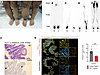 Figure 1
Patients with MLC show lymphatic abnormalities. (A) Photography of lower limbs of patients F3-II.1 and F3-II.2 showing asymmetrical lower limb lymphedema. (B–E) Lower limb lymphoscintigraphy 2 hours after injection of radionuclide (technetium-99) was used to image the lymphatic system (anterior view shown here). (B) Bilateral functional aplasia evidenced by no lymphatic drainage in either leg. (C) Significantly reduced function with rerouting in the right limb and functional aplasia of the left. (D) Functional aplasia of the right limb and abnormal tortuous tracts with patchy superficial rerouting on the left. (E) Unaffected patient with symmetrical transport of radionuclide tracer from injection sites in the feet up to the inguinal lymph nodes via main lymphatic vessels. (F) Intestinal biopsy of patient F4-II.1 with KIF11 variant c.2922G>A; p.939_974del. H&E staining shows aberrant morphology of the lacteals; podoplanin (PDPN) detected slightly enlarged lymphatic vessels (arrows). (G) Human duodenum sections derived from same patient as in F and an unaffected control were subjected to immunofluorescence staining. Selected magnifications (framed areas) depict staining for Hoechst (brown; right column, second and fourth images), E-cadherin (yellow; middle column, first and third images), PDPN (magenta; right column, first and third images), CD31 (cyan; middle column, second and fourth images). Scale bars: 100 μm. Immunofluorescence staining revealed significantly reduced lymphatic vessel density compared with healthy control samples based on PDPN-positive area per mm2 tissue area. Two-tailed Student’s t test; **P < 0.01. E is a historical standard taken from authors’ archive: “Methods of Imaging the Lymphatic System” by City St George’s University of London licensed under CC BY-SA-4.0 (59).
Lymphatic function of the lower limbs was assessed in 3 individuals using lymphoscintigraphy. Quantification of the tracer signal 2 hours after injection revealed that almost 100% of activity was retained in the feet of the most affected limbs with a reduced uptake in the groin of 0.1%–0.4% (Table 1). Proband F1-II.1, who presented with congenital bilateral lymphedema, showed absence of radioactive isotope uptake from the web spaces between the toes (i.e., functional aplasia) as described previously (3) (Figure 1B). Two siblings, F3-II.1 and F3-II.2, presenting with microcephaly and congenital bilateral lower limb lymphedema (Figure 1A) also demonstrated abnormalities on lymphoscintigraphy images (Figure 1, C and D). One leg was more affected than the other in both siblings but with evidence of functional aplasia in one leg; thus, the findings are in keeping with an underlying bilateral primary lymphedema compared with the control (Figure 1E, a historical standard from authors’ archive).
Proband F4-II.1 presented with dysphagia, intermittent diarrhea, and failure to thrive; a clinical observation not typical of MLC. Podoplanin staining of intestinal biopsies showed dilated lymph vessels (lacteals) in the duodenum (Figure 1F), and together with the significantly increased alpha 1 antitrypsin (A1AT) values in the stool, was consistent with protein-losing enteropathy caused by intestinal lymphangiectasia. Immunofluorescence staining revealed reduced lymphatic vessel density compared with healthy control samples based on podoplanin-positive area per tissue area (Figure 1G).
Patients with MLC show reduced expression of KIF11 (EG5), pointing to haploinsufficiency as the disease mechanism. To ascertain the disease mechanism in MLC, we analyzed the expression of KIF11 in lymphoblastoid cell lines, blood, and saliva from 4 patients carrying pathogenic variants (leading to a premature termination) in the motor domain (L347Efs*8) and the coiled-coil domain 1 (R387*) (Figure 2A). These regions are involved in protein oligomerization (19) and vesicle tethering (20), respectively, and thus it seems likely that both variants will negatively affect EG5 function. qRT-PCR analysis of blood (Figure 2B) and saliva (data not shown) using allele-specific primers for the WT allele and each of the mutant alleles showed a strong reduction but not a complete absence of the mutant mRNA in all samples. This fits with nonsense-mediated RNA decay and the expected level of WT KIF11 mRNA of 50% in patients’ samples compared with controls. Western blot analysis of protein lysates from lymphoblastoid cell lines also showed around 50% of EG5 protein levels compared with controls (Figure 2C). Interestingly, a truncated protein of expected size (43 kDa) was detected in F1-II.1 (Figure 2D).
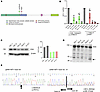 Figure 2
Reduced expression of KIF11 (EG5) and splicing abnormalities suggest haploinsufficiency as the disease mechanism in MLC. (A) EG5 (KIF11) protein domain structure indicating the position of the MLC variants p.L347Efs*8 and p.R387*. (B) qRT-PCR analysis of blood using allele-specific primers (mut: patient variant allele) showing strong reduction but not a complete absence of the mutant mRNA in all samples (F2-I.2, F2-II.1, F1-I.2 and F1-II.1), suggesting nonsense-mediated RNA decay. WT KIF11 mRNA levels decreased by up to 50% in patients compared with controls. Data represent average relative expression (n = 3 experiments) ± SD. (C) Western blot analysis of lymphoblastoid cell line lysates indicate approximately 50% reduction in the levels of WT EG5 protein (119 kDa) in the patient samples (F2-I.2, F2-II.1, and F1-II.1) using C-terminal binding EG5 antibody (NB500-181, Novus Biologicals). Average of 2 technical repeats of identical biological materials is shown with β-actin as loading control. (D) Western blot analysis with an N-terminal binding anti-EG5 antibody (CC10014, Cell Applications) showed the presence of a truncated protein of the expected size in patient F1-I.2 (arrow). The position of molecular mass markers (in kDa) is indicated on the left of the gel. (E) Left panel: Sanger sequencing of gDNA from proband F5-II.1. PCR product shows a compound peak in exon 20, which is the synonymous KIF11 c.2922G>A; p.(P974=) variant. Right panel: Sanger sequencing of cDNA from F5-II.1. Black line indicates the boundary between the last base of exon 20 and first base of exon 21. Notice the heteroduplex in exon 20 indicating exon skipping. Analysis of the full trace identified a loss of the last 108 bases in exon 20 (r.2815_2922del), which is predicted to lead to a shorter EG5 protein similar to that of the synonymous variant c.2922G>T as shown by others (46).
A synonymous variant in KIF11 causes cryptic splicing, which leads to exon skipping. Three patients with MLC in this study carried the same synonymous variant c.2922G>A; p.(P974=) (Supplemental Table 1), and in silico prediction tools suggested the variant is pathogenic (Supplemental Table 3). RNA was isolated from patient F5-II.1, converted into cDNA, and Sanger sequenced. The synonymous variant caused cryptic splicing, which led to the removal of a 108 bp fragment of exon 20 (r.2815_2922del) (Figure 2E), possibly leading to a shortened EG5 protein (p.V939_P974del) lacking part of the BimC-box tail domain. This C-terminal domain appears to be a crucial region in microtubule binding, and a previously described pathogenic variant (p.R944C) in this region has been reported (3).
KIF11 coexpresses with lymphatic VEGFR3-positive structures during human embryonic development. In silico analyses show kinesin transcripts, including KIF11, are enriched in the endothelial cell–expressed sequence tag pool (21), and human foreskin sections showed positive costaining of EG5 with CD31 and podoplanin, confirming the expression of EG5 in adult lymphatics. Given that MLC is characterized by early-onset lymphedema, there is a need to understand KIF11 expression patterns during lymphatic embryonic development. Human embryonic tissues at different developmental stages ranging from human Carnegie stage 12 (CS12) to CS22 were analyzed for KIF11 mRNA expression along with different lymphatic-specific markers (VEGFR3 and PROX1 or PDPN) using RNAscope multiplexing in situ hybridization. Although coexpression of KIF11, PROX1, and VEGFR3 was found in the hepatic primordia, little or no coexpression of KIF11 with other lymphatic markers was seen around the developing cardinal vein at CS12 (Figure 3A). Later, at CS15, low expression levels of KIF11, with coexpression to PROX1 and VEGFR3, were detected around the cardinal vein. At CS18, increased expression of KIF11 with VEGFR3- and PDPN-positive cells was found around the cardinal vein. These VEGFR3-positive cells would migrate from the cardinal vein to form the primordial thoracic duct (pTD), formerly known as the lymphatic sacs (22). Later in development, at CS22, the association between KIF11 and lymphatic markers was maintained as the lymphatic vessel network expanded. This indicates that KIF11 is associated with the development of lymphatic vessels at the later stages analyzed.
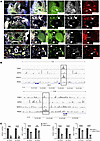 Figure 3
KIF11 expression during human embryonic development and transcriptional control in adult lymphatic endothelial cells. (A) Human embryonic slides corresponding with different embryonic developmental Carnegie stages (CS12, CS15, CS18, and CS22) were hybridized with fluorescence probes for KIF11 (white), PROX1 or PDPN (green), and FLT4 (red). Magnified regions marked with a square box in overview images contain the precardinal veins (PCVs), cardinal veins (CVs), and jugular lymphatic sacs (JLSs), and arrows point to regions of coexpression between KIF11 and lymphatic endothelial marker expression. HP, hepatic primordia. Scale bar: 200 μm. (B) ChIP-Seq analysis in cultured human dermal LECs identified an intronic region of KIF11 bound by FOXC2 and NFATC1 (top panel) and PROX1 binding 1.3 kb upstream of KIF11 promoter (bottom panel). (C) LECs were treated with siRNA PROX1 or siRNA FOXC2, and KIF11 expression was evaluated by qPCR. Bars represent mean relative expression ± SEM from n = 3 experiments. **P < 0.01, ***P < 0.001, ****P < 0.0001. Two-tailed unpaired Student’s t test.
KIF11 expression might be regulated by lymphatic transcription factors in human LECs. To understand the relationship between KIF11 expression and key transcriptional regulators of lymphatic development, we analyzed publicly available ChIP-Seq data of primary human dermal LECs (23) to identify regions on KIF11 bound by GATA2, FOXC2, NFATC1, and PROX1. We identified binding of FOXC2 and NFATC1 in intron 17 (chromosomal position chr10:92,640,060–92,640,600) and binding of PROX1 approximately 1.3 kb upstream of the KIF11 promoter (chr10:92,591,500–92,592,000) (Figure 3B). Both peaks overlapped with ENCODE enhancer-like signals predicted from DNase hypersensitivity, histone modification, or CT-CF binding, with data combined across cell types (24). To experimentally confirm that PROX1 and FOXC2 may regulate KIF11 expression, LECs were treated with either siRNA PROX1 or siRNA FOXC2 and KIF11 expression evaluated by RT-qPCR, showing downregulation (Figure 3C).
Kif11 coexpresses with lymphatic Flt4-positive structures during mouse embryonic development and in adult mouse intestine. In mice, lymphatic vessels develop at around developmental day E10.0. A subpopulation of PROX1-positive cells, so called initial LECs (iLECs), leave the cardinal vein and form the pTD (22). A second lumenized lymphatic vessel, the peripheral longitudinal lymphatic vessel (PLLV), is formed simultaneously, which represents a potential source or vascular connection site for dermal lymphatic vessels (22). We therefore investigated the expression of Kif11 and Flt4 in the cardinal vein, iLECs, pTD, and dermal LECs/PLLVs.
First, we located the relevant lymphatic structures by H&E staining and immunofluorescence on mouse embryonic slides from E10.5 to E13.5 (Figure 4, A–D). Using RNAscope, we identified a very weak Flt4 mRNA signal in the cardinal vein but a robust Flt4mRNA signal in iLECs at E10.5 (Figure 4A). From E11.5 to E13.5 when the formation of the pTD/lymph sac begins, there was an increased intensity of expression of Flt4 in the cells lining the structure (Figure 4, B–D). This increase of signal in developing and expanding lymphatic vessels was consistent with the finding in humans at later developmental stages (e.g., CS22, Figure 3A).
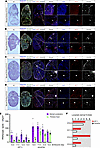 Figure 4
Kif11 coexpression with Flt4-positive lymphatic vessels during mouse embryonic development. Mouse embryonic sections from developmental stages (A) E10.5, (B) E11.5, (C) E12.5 and (D) E13.5 were processed by H&E staining, immunofluorescence staining, or RNA hybridization. Selected magnified (framed) areas highlight embryonic regions containing dermal lymphatics and the thoracic duct. These regions were imaged using DAPI staining (blue; channel 2) as well as for Kif11 (red; channel 3) and Flt4 (white; channel 4) mRNA expression; merged images are also shown. Arrowheads indicate areas with coexpression of Kif11 and Flt4 mRNA. Additional labeling was added to facilitate the understanding of the embryonic anatomy: A, artery; DLV, dermal lymphatic vessel; LEC, lymphatic endothelial cell; NC, notochord; NT, neural tube; O, esophagus; PLV, peripheral lymphatic vessel; PTD, primordial thoracic duct; T, trachea; V, vein. Scale bars: 100 μm. (E) Quantification of Kif11 and Flt4 mRNA signals from dermal (purple) and thoracic duct (light green) of different stages of mouse embryo development. RNAscope signals were measured from 6–8 different areas of 25 μm2. (F) Bar chart represents Kif11 (red) and Flt4 (VEGFR3) (white) mRNA signal ratio in dermal versus thoracic duct (Td) during different stages of mouse embryo development.
Kif11 mRNA signal was detected to coexpress with cells expressing Flt4 from E11.5 to E13.5 in the pTD at relatively constant levels, albeit at a lower signal intensity (Figure 4E). Likewise, dermal cells with a Flt4-positive mRNA signal expressed Kif11 (Figure 4, B–D). The Kif11 mRNA signal appeared to be 3- to 5-fold higher in dermal LECs compared with that of the pTD (Figure 4F).
We next performed immunofluorescence staining with an anti-EG5 antibody, anti-VEGFR3 antibody, and anti-Ki67 antibody to also assess proliferation in E10.5 and E12.5 mouse embryonic slides (Figure 5, A and B). As we had observed using RNAscope, we saw a protein coexpression pattern of EG5 and VEGFR3 that mirrored the previously detected mRNA coexpression. EG5 protein colocalized with VEGFR3-positive cells in the pTD at both the E10.5 and E12.5 stages, though the EG5 signal appeared consistently lower in intensity. Similarly, dermal VEGFR3-positive cells also expressed EG5, with stronger EG5 signal intensity in dermal LECs compared with those in the pTD. Costaining for EG5, Ki67, and VEGFR3 revealed only limited overlap, indicating a low proliferative rate during early lymphatic vessel development in the mouse at the investigated developmental stages (Figure 5, A and B).
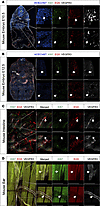 Figure 5
EG5 protein coexpression with VEGFR3-positive lymphatic vessels during mouse embryonic development and its expression pattern in adult mice. Mouse embryonic sections from developmental stages (A) E10.5 and (B) E12.5 were subjected to immunofluorescence staining. Selected magnified (framed) areas highlight regions containing dermal lymphatics and the thoracic duct, which were imaged for HOECHST (blue; channel 1), Ki67 (green; channel 2), EG5 (red; channel 3), and VEGFR3 (white; channel 4) protein expression. Additionally, whole-mount immunofluorescence staining was performed on (C) intestinal and (D) ear samples. Selected magnifications highlight regions with lacteals (C) and initial lymphatic vessels (D), also imaged for Ki67 (green; channel 2), EG5 (red; channel 3), and VEGFR3 (white; channel 4); merged images are also shown. Arrowheads indicate areas with coexpression of EG5 and VEGFR3. Scale bars: 100 μm. Additional labeling was added to facilitate the understanding of the embryonic anatomy: A, artery; LEC, lymphatic endothelial cell; NC, notochord; NT, neural tube; PLV, peripheral lymphatic vessel; PTD, primordial thoracic duct; V, vein.
Given the phenotype observed in patients with MLC, we performed whole-mount immunofluorescence staining in adult ear and intestinal mouse tissues isolated from 2-month-old mice. In the adult mouse intestine, we detected robust protein coexpression of EG5 and VEGFR3 in the lacteals (Figure 5C). In contrast, no detectable EG5 protein signal was observed in the adult mouse ear (Figure 5D).
To complement our mouse development investigations, we interrogated publicly available single-cell RNA-Seq (scRNA-Seq) datasets (25, 26). Analysis of single-cell transcriptomics data of healthy mouse skin tissue demonstrated Kif11 expression was detected in proliferative LECs, with a significantly increased proportion of cells expressing Kif11 compared with other cell types (pairwise χ2 P < 0.001, Supplemental Figure 2, A and B). This effect was also seen in an additional single-cell LEC transcriptomics dataset (Supplemental Figure 2, C and D).
During zebrafish embryonic development, kif11 expression is associated with highly proliferative lymphatic and blood endothelial precursors. To model the pathogenic basis of KIF11-associated disease, we used CRISPR/Cas9 to generate a zebrafish kif11 mutant model harboring an 8 bp deletion within the coding sequence (Supplemental Figure 3A). This allele was designated kif11uom131. Similar to a number of previously reported pathogenic KIF11 variants (3, 16), the deletion induced a frameshift and subsequent stop codon, predicted to truncate the kinesin motor domain of Eg5 (Supplemental Figure 3A). Analysis of sibling (kif11+/+ or +/uom131) and kif11uom131 homozygous mutants revealed a developmental phenotype at 14 and 17 hours after fertilization (hpf). Mutant embryos displayed abnormal development of the brain and showed somitogenesis defects, as well as a delay in embryonic development based on somite numbers (Figure 6A). At 24 hpf, homozygous mutant embryos showed brain necrosis, abnormal eye development, and delayed embryonic development, including the formation of vasculature (Figure 6B). Homozygous embryos also had no circulation at 28 hpf or 48 hpf (n = 33/111 at 28 hpf, n = 11/56 at 48 hpf) (data not shown). This led to embryonic lethality by 2–3 days after fertilization (dpf), which precluded the analysis of the lymphatic lineage. Heterozygous mutants were indistinguishable from WT, including in lymphatic development (Supplemental Figure 3B). These defects are consistent with aspects of the human phenotype but could be considered more severe than the human phenotypes reported to date (1, 16).
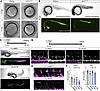 Figure 6
Genetic and pharmacological loss of kif11 results in abnormal embryonic and vascular development in zebrafish. (A) Differential inference contrast images of 14 and 17 hpf sibling (kif11+/+ or +/uom131) and mutant embryos (kif11uom131). Somite defects, brain necrosis, and aberrant tail development observable in 100% of mutants at both time points (n = 8/8 mutants and n = 0/19 sibling at 14 hpf and n = 8/8 mutants and n = 0/7 sibling at 17 hpf). Scale bar: 100 μm. (B) Upper: brightfield images of sibling and mutant embryos at 24 hpf. Brain necrosis and reduced embryo size observable in mutants. Lower: confocal maximum projection images of Tg(fli1a:nEGFP) embryos showing reduced intersegmental vessel sprouting and vascular development likely consistent with delayed embryonic development (n = 26/26 mutants and n = 0/88 sibling). Scale bar: 1 mm. (C) Brightfield and confocal maximum projection images of DMSO control (upper) and treated (lower) embryos following exposure to 50 μM ispinesib (ISP) at 10–48 hpf. Tg(fli1a:nEGFP;lyve1b:DsRed2) used to visualize ECs, veins, and lymphatic progenitors (PL). ISP treatment caused brain necrosis, pericardial edema, and aberrant tail development (n = 26/26 ISP-treated, n = 27 1% DMSO). Scale bar: 1 mm. (D) Confocal maximum projection images of DMSO control or 50 μM ISP-treated Tg(fli1a:nEGFP;lyve1b:DsRed2) embryos at 72 hpf. ISP treatment 24 –72 hpf; 50 μM ISP-treated embryos showed impaired PL formation at horizontal myoseptum (quantified in E). Scale bar: 100 μm. (E) Zoomed images of DA and PLs from D. (F) Bar plots of EC numbers (per somite) in DA and PLs treated with increasing ISP concentrations (n = 11, 1% DMSO; n = 12, 10 μM ISP; n = 12, 25 μM ISP, n = 9, 50 μM ISP). Reductions in LECs and DA ECs were observed. Unpaired Student’s t test for normally distributed data and Mann-Whitney U test for non-normally distributed data. *P = 0.0261; **P = 0.0018; ***P = 0.0002; ns, nonsignificant. TD, thoracic duct; DA, dorsal aorta; EC, endothelial cell.
To further explore the impact of kif11/Eg5 loss of function in zebrafish, we next treated embryos with carefully optimized concentrations of the Eg5 inhibitor ispinesib (Supplemental Figure 3C). To avoid severe early developmental phenotypes, we treated at stages following embryonic gastrulation. Treatment from 10 hpf led to a partial phenocopy of the mutant phenotype described above with brain necrosis and tail extension defects (Figure 6C), suggesting that the inhibitor was likely generating a loss-of-function model. Next, we treated embryos with 50 μM ispinesib from 24 hpf and analyzed them at 72 hpf to allow normal vasculogenesis and angiogenesis to occur before assessing kif11/Eg5 function in vasculature. Treatment at this stage generated embryos that developed normal blood circulation and major vascular lineages, such as the dorsal aorta, precardinal veins, and intersegmental vessels; however, we observed reductions in the total number of LECs and dorsal aorta endothelial cells (Figure 6, D–F). Together, this finding suggests that kif11/Eg5 has a broad function in embryonic development and is important for the normal development of vasculature in the embryo.
To gain further insight into the role of kif11, we analyzed recently published scRNA-Seq data of WT zebrafish populations at 3 and 4 dpf (27). kif11 expression was evaluated across all reported cell types (Supplemental Figure 3, D and F) and compared with proliferation markers pcna and mki67. kif11 expression was positively correlated with the expression of proliferation markers mki67 and pcna (Supplemental Figure 3, E and G). This suggests a role in highly proliferating endothelial cell populations that would include LECs of the developing embryo and is in line with the suggested role of this protein in cytokinesis (28).
KIF11 inhibition impairs VEGFC-driven cell migration and sprouting in LECs. VEGFR3 is the essential signaling protein in maintaining lymphatic function. The similarities between the congenital bilateral lower limb lymphedema and functional aplasia on lymphoscintigraphy imaging seen in Milroy disease (caused by pathogenic VEGFR3 variants) and MLC (caused by pathogenic KIF11 variants), along with the coexpression of KIF11 and VEGFR3 during human and mouse embryonic development, may suggest a common functional pathway.
With KIF11 haploinsufficiency confirmed as the disease mechanism, we generated 2 loss-of-function approaches to block EG5 function: siRNA transfection and a specific EG5 antagonist, ispinesib, widely used to investigate EG5 function in several cell models including HUVEC (21). After 24 hours of siRNA KIF11 transfection in LECs, EG5 protein expression was reduced by more than 80% (Supplemental Figure 4A), with the expected decrease in cell proliferation measured as the percentage of EdU+ LECs (Supplemental Figure 4B). Spindle pole formation after ispinesib treatment (0.5–50 nM) was evaluated by α-tubulin staining (Supplemental Figure 4D). Ispinesib at 5–50 nM caused an abnormal distribution of the filament fibers, compared with vehicle-treated cells, due to the inhibition of the kinesin motor function necessary for the assembly of the microtubules (29), verifying the inhibitory effect of ispinesib on mitotic function of EG5 at the analyzed doses. Toxicity was tested in a spheroid-based assay by measuring fluorescence uptake of a dye by viable cells. Spheroids treated with 50–100 nM ispinesib showed comparable fluorescence levels to DMSO controls and retained some ability to sprout, whereas spheroids treated with 200 nM showed increased toxicity and impaired sprouting ability (Supplemental Figure 4E).
To investigate the possible role of EG5 in regulating LEC migration, we first performed in vitro Transwell migration assays to measure the ability of LECs to migrate toward VEGFC. Ispinesib inhibited migration in a dose-dependent manner, and a 50% reduction was seen after 50 nM ispinesib treatment (Figure 7A). With an approximately 50% loss of KIF11 expression in patients with MLC (Figure 2, B and C), we sought to use 50 nM ispinesib for further experiments as our haploinsufficiency in vitro model.
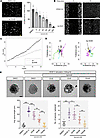 Figure 7
KIF11 deficiency impairs LEC migration and sprouting. (A) 5 x 10⁴ serum starved cells were plated per fibronectin-coated Transwell chamber and given 10 hours to migrate in the presence of increasing concentrations of ispinesib (0 to 200 nM) before fixation and staining of the nuclei with DAPI. Resulting membranes (2 examples on left) were scored for the movement of nuclei through the Transwell membrane and results represented in a plot (right). Data are shown as SD, n = 3 biological replicates (with 2 technical replicates per biological replicate). Scale bar: 50 μm. (B) Single-cell tracking migration assay follows wound closure ability over 15 hours in DMSO (Ctrl) and 50 nM ispinesib-treated cells. Scale bar: 200 μm. (C) Number of cells in experimental wound-window area for Ctrl and cells treated with 50 nM ispinesib over time (frames). (D) Distance and direction of a subset of cells illustrated as star plots of cell tracks for Ctrl and cells treated with 50 nM ispinesib. (B–D) One representative experiment is shown from n = 2. (E) 3D spheroid sprouting assay. Sprouting was stimulated in LECs by VEGFC 150 ng/mL either in the presence of DMSO vehicle or several doses of ispinesib (25, 50, 100 nM). Average sprout length in μm (28 spheroids analyzed) and total number of sprouts per spheroid (15 spheroids analyzed) were quantified in each condition. One representative image is shown per condition from n = 2 biological repeats. *P < 0.05, **P < 0.01, ***P < 0.001, ns, nonsignificant. Two-tailed unpaired Student’s t test. Scale bar: 100 μm.
To further analyze migration parameters in more detail, we performed wound healing experiments tracking single cells moving into the wound. The aim was to study the role of EG5 on cellular migration, minimizing interference from cell division, considering that the average full cell-cycle length of primary LECs is more than 20 hours. The wound was fully closed after 15 hours in the control condition, but a delay was observed in cells treated with 50 nM ispinesib (Figure 7B and Supplemental Videos 1 and 2), and a reduction of the number of cells in the experimental wound window over time was also observed (Figure 7C). Star plots showed different direction migration patterns between control and ispinesib treatments (Figure 7D), and velocity analysis indicated a significant reduction of individual cell speed in ispinesib-treated cells with the mean velocity of cells at 2.08 for the control versus 1.94 for cells treated with 50 nM ispinesib (Wilcoxon rank-sum test; P < 2.2 × 10⁻¹⁶).
Lymphatic sprouting is a key process driving lymphangiogenesis in the developing lymphatic system, which requires collective action of both proliferation of stalk and migration of tip cells (30). We assessed the role of EG5 in LEC sprouting using an in vitro 3D spheroid assay. After 24 hours, 150 ng/mL VEGFC increased the average sprouting length by 60% and the number of sprouts by 30% per spheroid compared with the vehicle control. This was reduced in a dose-dependent manner by ispinesib treatment (Figure 7E); 50 nM ispinesib caused approximately 50% reduction of both the average length and the number of sprouts compared with VEGFC only, and 100 nM ispinesib completely abolished VEGFC-induced sprouting. Overall, the data suggest a role for EG5 in LEC sprouting, probably due to a combination of the impact on both proliferation and migration. To differentially test the effects purely on migration, we attempted to inhibit proliferation prior to ispinesib treatment; however, in our hands, the combination of ispinesib and aphidicolin (a cell cycle inhibitor) was very damaging for the cells (data not shown).
KIF11 inhibition reduces VEGFC-induced VEGFR3 signaling, leading to loss of AKT and MAPK phosphorylation. To understand the impact of KIF11 haploinsufficiency on LEC signaling pathways regulating migration and sprouting, we used Proteome Profiles Human Phospho-Kinase Array to detect phosphorylation changes in 43 human kinases in siRNA KIF11-treated LECs compared with the siRNA control. Quantification of the signal intensities demonstrated no striking changes in phosphorylation patterns, but we could detect decreased phosphorylation of p38MAPK and AKT1 (at both positions Ser-473 and Thr-308), and an increase in phosphorylation of other kinases including JUN and TP53 (Figure 8A), the last associated with spindle defects and stress response (31). We explored the molecular interactions derived from the human phospho-kinase analysis, plus the already known interactions described in the literature and public databases, by pathway analysis using STRING and Cytoscape. A selection of the kinase networks generated is shown in Figure 8B, showing interactions and the direction of the phosphorylation changes (blue, decrease of phosphorylation; red, increase of phosphorylation).
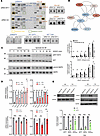 Figure 8
KIF11 deficiency alters MAPK and AKT signaling pathways and reduces expression of lymphatic cell identity and cell-cell junction markers. (A) Human phospho-kinase array showing changes in phosphorylation levels of 43 kinases. Dots have been magnified for selected kinases with decreased (in blue) or increased (in red) phosphorylation. (B) Network pathway analysis using STRING and Cytoscape reveals known interactions and the directionality of the phosphorylation change in siRNA KIF11-treated cells (blue, decreased; red, increased). (C) Effect of ispinesib treatment (50 nM) on AKT and MAPK phosphorylation in LECs over time after stimulation with VEGFC (100 ng/mL). DMSO (vehicle) as control. Phosphorylation was analyzed with anti-pAKT S473 and anti-p44/42 MAPK Thr202/Tyr204 (upper panels) and levels of AKT and MAPK protein expression with anti-AKT and MAPK antibodies (lower panels). Molecular mass markers (in kDa) are indicated on the left. Blots are quantified on the right. *P < 0.05, **P < 0.01, ns, nonsignificant. Two-tailed unpaired Student’s t test. (D) FLT4 (VEGFR3), PROX1, PDPN, FOXC2, LYVE1, TJP1 (ZO-1), CLDN5, and CDH5 gene expression related to GAPDH in LECs treated with siRNA 6 KIF11 for 48 and 72 hours analyzed by qPCR (n = 3–4 experiments). *P < 0.05, **P < 0.01, ***P < 0.001, ns, nonsignificant. Two-tailed unpaired Student’s t test. (E) Western blot analysis and quantification of PROX1 and VEGFR3 expression in LECs treated with siRNA KIF11 for 48 and 72 hours. GAPDH was used as control. **P < 0.01, ***P < 0.001, ns, nonsignificant. Two-tailed unpaired Student’s t test. (C–E) Bars represent mean relative expression ± SEM. (C and E) One representative image is shown from n = 3–4 experiments.
We focused our attention on the AKT and MAPK signaling pathways that appeared downregulated after siRNA KIF11 treatment, which are 2 of the major downstream effectors of tyrosine kinase receptor signaling including VEGFR3. LECs were pretreated overnight with DMSO (vehicle) or 50 nM ispinesib and were stimulated the next day with 100 ng/mL VEGFC for up to 45 minutes. VEGFC treatment activated the phosphorylation levels of MAPK and AKT both in DMSO- and ispinesib-treated cells. Ispinesib treatment resulted in a significant reduction of MAPK phosphorylation at 10–15 minutes and AKT phosphorylation at 45 minutes after VEGFC stimulation compared with DMSO treatment (Figure 8C).
KIF11 knockdown downregulated PROX1, VEGFR3, and cell junction molecule expression. PROX1 is a master regulator of LEC specification (32), regulating genes and proteins important for maintenance of LEC identity such as VEGFR3 and podoplanin (33, 34) and transcription factors essential for lymphatic valve morphogenesis like FOXC2 (35). To determine whether downregulation of lymphatic markers might also contribute to the lymphatic defects observed with KIF11 haploinsufficiency, we transfected siRNA KIF11 for 48 and 72 hours in LECs and investigated the effect on the expression of well-characterized LEC markers. After 48 hours, we detected approximately 50% downregulation of FLT4 (VEGFR3) gene expression and PROX1 both at mRNA (Figure 8D) and protein (Figure 8E) levels. Other lymphatic identity markers such as FOXC2 and LYVE1 showed significant reduction after 72 hours, whereas the gene expression of PDPN remained unaffected (Figure 8D). These results were confirmed with a second siRNA sequence (siRNA KIF11 7) (Supplemental Figure 4, A and C).
Lymphoscintigraphy (Figure 1, B–D) revealed a lack of interstitial fluid uptake in patients with MLC, suggesting the initial lymphatic capillaries may be dysfunctional. The permeability of the lymphatic capillaries is critical for functional fluid uptake and is controlled by specialized junctions (36), and the importance of this specialized junctional organization has already been probed in several animal models (37–39). Since it is crucial to understand the role of EG5 in controlling lymphatic junction architecture and permeability and its contribution to lymphatic (dys)function (e.g., failure of fluid uptake in lymphatic capillaries), we looked next at the impact of KIF11 depletion on the expression of cell junction molecules and found downregulation of TJP1 (encoding ZO-1), CLDN5 (encoding claudin-5), and CDH5 (encoding VE-cadherin) (Figure 8D and Supplemental Figure 4C).


