
Research ArticleClinical ResearchNeuroscience
Open Access |  10.1172/jci.insight.200021
Erythropoietin alleviates syndrome-associated intellectual disability and autism-like behavior in Zbtb20-haploinsufficient Primrose syndrome mouse model
Martin Hindermann,1,2 Justus B.H. Wilke,1 Yasmina Curto,1 Stefan N. Oline,3 Vinicius Daguano Gastaldi,1,2 Umer Javed Butt,1,4,5 Rakshit Dadarwal,6 Umut Çakır,1,2 Anja Ronnenberg,1 Kurt Hammerschmidt,7 Susann Boretius,6 Anastassia Stoykova,8 Anton B. Tonchev,9 Klaus-Armin Nave,4 Manvendra Singh,1,2,5 and Hannelore Ehrenreich1,2,5
1Clinical Neuroscience, Max Planck Institute for Multidisciplinary Sciences, City Campus, Göttingen, Germany.
2Georg-August-University, Göttingen, Germany.
3Princeton Neuroscience Institute, Princeton University, Princeton, New Jersey, USA.
4Department of Neurogenetics, Max Planck Institute for Multidisciplinary Sciences, City Campus, Göttingen, Germany.
5Experimental Medicine, Central Institute of Mental Health, Medical Faculty Mannheim, Heidelberg University, Heidelberg, Germany.
6Functional Imaging Laboratory, and
7Cognitive Ethology, German Primate Center, Göttingen, Germany.
8Rhythms - Beating Cilia and Ticking Clocks Group, Max Planck Institute for Multidisciplinary Sciences, Fassberg Campus, Göttingen, Germany.
9Anatomy and Cell Biology, Faculty of Medicine & Stem Cell Biology, Research Institute, Medical University-Varna, Varna, Bulgaria.
Address correspondence to: Hannelore Ehrenreich, Experimental Medicine, Central Institute of Mental Health, Medical Faculty Mannheim, Heidelberg University, J 5, 68159 Mannheim, Germany. Phone: 49.160.97000331; Email: hannelore.ehrenreich@zi-mannheim.de.
Find articles by Hindermann, M. in: PubMed | Google Scholar
1Clinical Neuroscience, Max Planck Institute for Multidisciplinary Sciences, City Campus, Göttingen, Germany.
2Georg-August-University, Göttingen, Germany.
3Princeton Neuroscience Institute, Princeton University, Princeton, New Jersey, USA.
4Department of Neurogenetics, Max Planck Institute for Multidisciplinary Sciences, City Campus, Göttingen, Germany.
5Experimental Medicine, Central Institute of Mental Health, Medical Faculty Mannheim, Heidelberg University, Heidelberg, Germany.
6Functional Imaging Laboratory, and
7Cognitive Ethology, German Primate Center, Göttingen, Germany.
8Rhythms - Beating Cilia and Ticking Clocks Group, Max Planck Institute for Multidisciplinary Sciences, Fassberg Campus, Göttingen, Germany.
9Anatomy and Cell Biology, Faculty of Medicine & Stem Cell Biology, Research Institute, Medical University-Varna, Varna, Bulgaria.
Address correspondence to: Hannelore Ehrenreich, Experimental Medicine, Central Institute of Mental Health, Medical Faculty Mannheim, Heidelberg University, J 5, 68159 Mannheim, Germany. Phone: 49.160.97000331; Email: hannelore.ehrenreich@zi-mannheim.de.
Find articles by Wilke, J. in: PubMed | Google Scholar
1Clinical Neuroscience, Max Planck Institute for Multidisciplinary Sciences, City Campus, Göttingen, Germany.
2Georg-August-University, Göttingen, Germany.
3Princeton Neuroscience Institute, Princeton University, Princeton, New Jersey, USA.
4Department of Neurogenetics, Max Planck Institute for Multidisciplinary Sciences, City Campus, Göttingen, Germany.
5Experimental Medicine, Central Institute of Mental Health, Medical Faculty Mannheim, Heidelberg University, Heidelberg, Germany.
6Functional Imaging Laboratory, and
7Cognitive Ethology, German Primate Center, Göttingen, Germany.
8Rhythms - Beating Cilia and Ticking Clocks Group, Max Planck Institute for Multidisciplinary Sciences, Fassberg Campus, Göttingen, Germany.
9Anatomy and Cell Biology, Faculty of Medicine & Stem Cell Biology, Research Institute, Medical University-Varna, Varna, Bulgaria.
Address correspondence to: Hannelore Ehrenreich, Experimental Medicine, Central Institute of Mental Health, Medical Faculty Mannheim, Heidelberg University, J 5, 68159 Mannheim, Germany. Phone: 49.160.97000331; Email: hannelore.ehrenreich@zi-mannheim.de.
Find articles by Curto, Y. in: PubMed | Google Scholar
1Clinical Neuroscience, Max Planck Institute for Multidisciplinary Sciences, City Campus, Göttingen, Germany.
2Georg-August-University, Göttingen, Germany.
3Princeton Neuroscience Institute, Princeton University, Princeton, New Jersey, USA.
4Department of Neurogenetics, Max Planck Institute for Multidisciplinary Sciences, City Campus, Göttingen, Germany.
5Experimental Medicine, Central Institute of Mental Health, Medical Faculty Mannheim, Heidelberg University, Heidelberg, Germany.
6Functional Imaging Laboratory, and
7Cognitive Ethology, German Primate Center, Göttingen, Germany.
8Rhythms - Beating Cilia and Ticking Clocks Group, Max Planck Institute for Multidisciplinary Sciences, Fassberg Campus, Göttingen, Germany.
9Anatomy and Cell Biology, Faculty of Medicine & Stem Cell Biology, Research Institute, Medical University-Varna, Varna, Bulgaria.
Address correspondence to: Hannelore Ehrenreich, Experimental Medicine, Central Institute of Mental Health, Medical Faculty Mannheim, Heidelberg University, J 5, 68159 Mannheim, Germany. Phone: 49.160.97000331; Email: hannelore.ehrenreich@zi-mannheim.de.
Find articles by Oline, S. in: PubMed | Google Scholar
1Clinical Neuroscience, Max Planck Institute for Multidisciplinary Sciences, City Campus, Göttingen, Germany.
2Georg-August-University, Göttingen, Germany.
3Princeton Neuroscience Institute, Princeton University, Princeton, New Jersey, USA.
4Department of Neurogenetics, Max Planck Institute for Multidisciplinary Sciences, City Campus, Göttingen, Germany.
5Experimental Medicine, Central Institute of Mental Health, Medical Faculty Mannheim, Heidelberg University, Heidelberg, Germany.
6Functional Imaging Laboratory, and
7Cognitive Ethology, German Primate Center, Göttingen, Germany.
8Rhythms - Beating Cilia and Ticking Clocks Group, Max Planck Institute for Multidisciplinary Sciences, Fassberg Campus, Göttingen, Germany.
9Anatomy and Cell Biology, Faculty of Medicine & Stem Cell Biology, Research Institute, Medical University-Varna, Varna, Bulgaria.
Address correspondence to: Hannelore Ehrenreich, Experimental Medicine, Central Institute of Mental Health, Medical Faculty Mannheim, Heidelberg University, J 5, 68159 Mannheim, Germany. Phone: 49.160.97000331; Email: hannelore.ehrenreich@zi-mannheim.de.
Find articles by Daguano Gastaldi, V. in: PubMed | Google Scholar
1Clinical Neuroscience, Max Planck Institute for Multidisciplinary Sciences, City Campus, Göttingen, Germany.
2Georg-August-University, Göttingen, Germany.
3Princeton Neuroscience Institute, Princeton University, Princeton, New Jersey, USA.
4Department of Neurogenetics, Max Planck Institute for Multidisciplinary Sciences, City Campus, Göttingen, Germany.
5Experimental Medicine, Central Institute of Mental Health, Medical Faculty Mannheim, Heidelberg University, Heidelberg, Germany.
6Functional Imaging Laboratory, and
7Cognitive Ethology, German Primate Center, Göttingen, Germany.
8Rhythms - Beating Cilia and Ticking Clocks Group, Max Planck Institute for Multidisciplinary Sciences, Fassberg Campus, Göttingen, Germany.
9Anatomy and Cell Biology, Faculty of Medicine & Stem Cell Biology, Research Institute, Medical University-Varna, Varna, Bulgaria.
Address correspondence to: Hannelore Ehrenreich, Experimental Medicine, Central Institute of Mental Health, Medical Faculty Mannheim, Heidelberg University, J 5, 68159 Mannheim, Germany. Phone: 49.160.97000331; Email: hannelore.ehrenreich@zi-mannheim.de.
Find articles by Butt, U. in: PubMed | Google Scholar
1Clinical Neuroscience, Max Planck Institute for Multidisciplinary Sciences, City Campus, Göttingen, Germany.
2Georg-August-University, Göttingen, Germany.
3Princeton Neuroscience Institute, Princeton University, Princeton, New Jersey, USA.
4Department of Neurogenetics, Max Planck Institute for Multidisciplinary Sciences, City Campus, Göttingen, Germany.
5Experimental Medicine, Central Institute of Mental Health, Medical Faculty Mannheim, Heidelberg University, Heidelberg, Germany.
6Functional Imaging Laboratory, and
7Cognitive Ethology, German Primate Center, Göttingen, Germany.
8Rhythms - Beating Cilia and Ticking Clocks Group, Max Planck Institute for Multidisciplinary Sciences, Fassberg Campus, Göttingen, Germany.
9Anatomy and Cell Biology, Faculty of Medicine & Stem Cell Biology, Research Institute, Medical University-Varna, Varna, Bulgaria.
Address correspondence to: Hannelore Ehrenreich, Experimental Medicine, Central Institute of Mental Health, Medical Faculty Mannheim, Heidelberg University, J 5, 68159 Mannheim, Germany. Phone: 49.160.97000331; Email: hannelore.ehrenreich@zi-mannheim.de.
Find articles by Dadarwal, R. in: PubMed | Google Scholar
1Clinical Neuroscience, Max Planck Institute for Multidisciplinary Sciences, City Campus, Göttingen, Germany.
2Georg-August-University, Göttingen, Germany.
3Princeton Neuroscience Institute, Princeton University, Princeton, New Jersey, USA.
4Department of Neurogenetics, Max Planck Institute for Multidisciplinary Sciences, City Campus, Göttingen, Germany.
5Experimental Medicine, Central Institute of Mental Health, Medical Faculty Mannheim, Heidelberg University, Heidelberg, Germany.
6Functional Imaging Laboratory, and
7Cognitive Ethology, German Primate Center, Göttingen, Germany.
8Rhythms - Beating Cilia and Ticking Clocks Group, Max Planck Institute for Multidisciplinary Sciences, Fassberg Campus, Göttingen, Germany.
9Anatomy and Cell Biology, Faculty of Medicine & Stem Cell Biology, Research Institute, Medical University-Varna, Varna, Bulgaria.
Address correspondence to: Hannelore Ehrenreich, Experimental Medicine, Central Institute of Mental Health, Medical Faculty Mannheim, Heidelberg University, J 5, 68159 Mannheim, Germany. Phone: 49.160.97000331; Email: hannelore.ehrenreich@zi-mannheim.de.
Find articles by Çakır, U. in: PubMed | Google Scholar
1Clinical Neuroscience, Max Planck Institute for Multidisciplinary Sciences, City Campus, Göttingen, Germany.
2Georg-August-University, Göttingen, Germany.
3Princeton Neuroscience Institute, Princeton University, Princeton, New Jersey, USA.
4Department of Neurogenetics, Max Planck Institute for Multidisciplinary Sciences, City Campus, Göttingen, Germany.
5Experimental Medicine, Central Institute of Mental Health, Medical Faculty Mannheim, Heidelberg University, Heidelberg, Germany.
6Functional Imaging Laboratory, and
7Cognitive Ethology, German Primate Center, Göttingen, Germany.
8Rhythms - Beating Cilia and Ticking Clocks Group, Max Planck Institute for Multidisciplinary Sciences, Fassberg Campus, Göttingen, Germany.
9Anatomy and Cell Biology, Faculty of Medicine & Stem Cell Biology, Research Institute, Medical University-Varna, Varna, Bulgaria.
Address correspondence to: Hannelore Ehrenreich, Experimental Medicine, Central Institute of Mental Health, Medical Faculty Mannheim, Heidelberg University, J 5, 68159 Mannheim, Germany. Phone: 49.160.97000331; Email: hannelore.ehrenreich@zi-mannheim.de.
Find articles by Ronnenberg, A. in: PubMed | Google Scholar
1Clinical Neuroscience, Max Planck Institute for Multidisciplinary Sciences, City Campus, Göttingen, Germany.
2Georg-August-University, Göttingen, Germany.
3Princeton Neuroscience Institute, Princeton University, Princeton, New Jersey, USA.
4Department of Neurogenetics, Max Planck Institute for Multidisciplinary Sciences, City Campus, Göttingen, Germany.
5Experimental Medicine, Central Institute of Mental Health, Medical Faculty Mannheim, Heidelberg University, Heidelberg, Germany.
6Functional Imaging Laboratory, and
7Cognitive Ethology, German Primate Center, Göttingen, Germany.
8Rhythms - Beating Cilia and Ticking Clocks Group, Max Planck Institute for Multidisciplinary Sciences, Fassberg Campus, Göttingen, Germany.
9Anatomy and Cell Biology, Faculty of Medicine & Stem Cell Biology, Research Institute, Medical University-Varna, Varna, Bulgaria.
Address correspondence to: Hannelore Ehrenreich, Experimental Medicine, Central Institute of Mental Health, Medical Faculty Mannheim, Heidelberg University, J 5, 68159 Mannheim, Germany. Phone: 49.160.97000331; Email: hannelore.ehrenreich@zi-mannheim.de.
Find articles by Hammerschmidt, K. in: PubMed | Google Scholar
1Clinical Neuroscience, Max Planck Institute for Multidisciplinary Sciences, City Campus, Göttingen, Germany.
2Georg-August-University, Göttingen, Germany.
3Princeton Neuroscience Institute, Princeton University, Princeton, New Jersey, USA.
4Department of Neurogenetics, Max Planck Institute for Multidisciplinary Sciences, City Campus, Göttingen, Germany.
5Experimental Medicine, Central Institute of Mental Health, Medical Faculty Mannheim, Heidelberg University, Heidelberg, Germany.
6Functional Imaging Laboratory, and
7Cognitive Ethology, German Primate Center, Göttingen, Germany.
8Rhythms - Beating Cilia and Ticking Clocks Group, Max Planck Institute for Multidisciplinary Sciences, Fassberg Campus, Göttingen, Germany.
9Anatomy and Cell Biology, Faculty of Medicine & Stem Cell Biology, Research Institute, Medical University-Varna, Varna, Bulgaria.
Address correspondence to: Hannelore Ehrenreich, Experimental Medicine, Central Institute of Mental Health, Medical Faculty Mannheim, Heidelberg University, J 5, 68159 Mannheim, Germany. Phone: 49.160.97000331; Email: hannelore.ehrenreich@zi-mannheim.de.
Find articles by
Boretius, S.
in:
PubMed
|
Google Scholar
|

1Clinical Neuroscience, Max Planck Institute for Multidisciplinary Sciences, City Campus, Göttingen, Germany.
2Georg-August-University, Göttingen, Germany.
3Princeton Neuroscience Institute, Princeton University, Princeton, New Jersey, USA.
4Department of Neurogenetics, Max Planck Institute for Multidisciplinary Sciences, City Campus, Göttingen, Germany.
5Experimental Medicine, Central Institute of Mental Health, Medical Faculty Mannheim, Heidelberg University, Heidelberg, Germany.
6Functional Imaging Laboratory, and
7Cognitive Ethology, German Primate Center, Göttingen, Germany.
8Rhythms - Beating Cilia and Ticking Clocks Group, Max Planck Institute for Multidisciplinary Sciences, Fassberg Campus, Göttingen, Germany.
9Anatomy and Cell Biology, Faculty of Medicine & Stem Cell Biology, Research Institute, Medical University-Varna, Varna, Bulgaria.
Address correspondence to: Hannelore Ehrenreich, Experimental Medicine, Central Institute of Mental Health, Medical Faculty Mannheim, Heidelberg University, J 5, 68159 Mannheim, Germany. Phone: 49.160.97000331; Email: hannelore.ehrenreich@zi-mannheim.de.
Find articles by Stoykova, A. in: PubMed | Google Scholar
1Clinical Neuroscience, Max Planck Institute for Multidisciplinary Sciences, City Campus, Göttingen, Germany.
2Georg-August-University, Göttingen, Germany.
3Princeton Neuroscience Institute, Princeton University, Princeton, New Jersey, USA.
4Department of Neurogenetics, Max Planck Institute for Multidisciplinary Sciences, City Campus, Göttingen, Germany.
5Experimental Medicine, Central Institute of Mental Health, Medical Faculty Mannheim, Heidelberg University, Heidelberg, Germany.
6Functional Imaging Laboratory, and
7Cognitive Ethology, German Primate Center, Göttingen, Germany.
8Rhythms - Beating Cilia and Ticking Clocks Group, Max Planck Institute for Multidisciplinary Sciences, Fassberg Campus, Göttingen, Germany.
9Anatomy and Cell Biology, Faculty of Medicine & Stem Cell Biology, Research Institute, Medical University-Varna, Varna, Bulgaria.
Address correspondence to: Hannelore Ehrenreich, Experimental Medicine, Central Institute of Mental Health, Medical Faculty Mannheim, Heidelberg University, J 5, 68159 Mannheim, Germany. Phone: 49.160.97000331; Email: hannelore.ehrenreich@zi-mannheim.de.
Find articles by Tonchev, A. in: PubMed | Google Scholar
1Clinical Neuroscience, Max Planck Institute for Multidisciplinary Sciences, City Campus, Göttingen, Germany.
2Georg-August-University, Göttingen, Germany.
3Princeton Neuroscience Institute, Princeton University, Princeton, New Jersey, USA.
4Department of Neurogenetics, Max Planck Institute for Multidisciplinary Sciences, City Campus, Göttingen, Germany.
5Experimental Medicine, Central Institute of Mental Health, Medical Faculty Mannheim, Heidelberg University, Heidelberg, Germany.
6Functional Imaging Laboratory, and
7Cognitive Ethology, German Primate Center, Göttingen, Germany.
8Rhythms - Beating Cilia and Ticking Clocks Group, Max Planck Institute for Multidisciplinary Sciences, Fassberg Campus, Göttingen, Germany.
9Anatomy and Cell Biology, Faculty of Medicine & Stem Cell Biology, Research Institute, Medical University-Varna, Varna, Bulgaria.
Address correspondence to: Hannelore Ehrenreich, Experimental Medicine, Central Institute of Mental Health, Medical Faculty Mannheim, Heidelberg University, J 5, 68159 Mannheim, Germany. Phone: 49.160.97000331; Email: hannelore.ehrenreich@zi-mannheim.de.
Find articles by
Nave, K.
in:
PubMed
|
Google Scholar
|
1Clinical Neuroscience, Max Planck Institute for Multidisciplinary Sciences, City Campus, Göttingen, Germany.
2Georg-August-University, Göttingen, Germany.
3Princeton Neuroscience Institute, Princeton University, Princeton, New Jersey, USA.
4Department of Neurogenetics, Max Planck Institute for Multidisciplinary Sciences, City Campus, Göttingen, Germany.
5Experimental Medicine, Central Institute of Mental Health, Medical Faculty Mannheim, Heidelberg University, Heidelberg, Germany.
6Functional Imaging Laboratory, and
7Cognitive Ethology, German Primate Center, Göttingen, Germany.
8Rhythms - Beating Cilia and Ticking Clocks Group, Max Planck Institute for Multidisciplinary Sciences, Fassberg Campus, Göttingen, Germany.
9Anatomy and Cell Biology, Faculty of Medicine & Stem Cell Biology, Research Institute, Medical University-Varna, Varna, Bulgaria.
Address correspondence to: Hannelore Ehrenreich, Experimental Medicine, Central Institute of Mental Health, Medical Faculty Mannheim, Heidelberg University, J 5, 68159 Mannheim, Germany. Phone: 49.160.97000331; Email: hannelore.ehrenreich@zi-mannheim.de.
Find articles by Singh, M. in: PubMed | Google Scholar
1Clinical Neuroscience, Max Planck Institute for Multidisciplinary Sciences, City Campus, Göttingen, Germany.
2Georg-August-University, Göttingen, Germany.
3Princeton Neuroscience Institute, Princeton University, Princeton, New Jersey, USA.
4Department of Neurogenetics, Max Planck Institute for Multidisciplinary Sciences, City Campus, Göttingen, Germany.
5Experimental Medicine, Central Institute of Mental Health, Medical Faculty Mannheim, Heidelberg University, Heidelberg, Germany.
6Functional Imaging Laboratory, and
7Cognitive Ethology, German Primate Center, Göttingen, Germany.
8Rhythms - Beating Cilia and Ticking Clocks Group, Max Planck Institute for Multidisciplinary Sciences, Fassberg Campus, Göttingen, Germany.
9Anatomy and Cell Biology, Faculty of Medicine & Stem Cell Biology, Research Institute, Medical University-Varna, Varna, Bulgaria.
Address correspondence to: Hannelore Ehrenreich, Experimental Medicine, Central Institute of Mental Health, Medical Faculty Mannheim, Heidelberg University, J 5, 68159 Mannheim, Germany. Phone: 49.160.97000331; Email: hannelore.ehrenreich@zi-mannheim.de.
Find articles by Ehrenreich, H. in: PubMed | Google Scholar
Published February 23, 2026 - More info
JCI Insight. 2026;11(4):e200021. https://doi.org/10.1172/jci.insight.200021.
© 2026 Hindermann et al. This work is licensed under the Creative Commons Attribution 4.0 International License. To view a copy of this license, visit http://creativecommons.org/licenses/by/4.0/.
Received: September 10, 2025; Accepted: January 2, 2026

-
Results
Synopsis
This study was designed with the objective of performing an exhaustive behavioral characterization of Zbtb20+/– mice, a construct-valid model of the thus far untreatable human Primrose syndrome. Based on our previous observations of EPO specifically targeting ZBTB20 expression, we incorporated a 3-week treatment trial using rhEPO. The findings unveiled impairments across all domains that are typically associated with ASD and intellectual disability. Importantly, improvements in several pathological parameters were observed following rhEPO administration (Figures 1–6, Supplemental Figures 1–3, and Supplemental Tables 1–4; supplemental material available online with this article; https://doi.org/10.1172/jci.insight.200021DS1), thus potentially offering a promising therapeutic approach to Primrose syndrome.
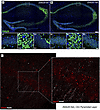 Figure 1
Histology. (A and B) Representative images of ZBTB20 expression (green) in the hippocampal region of Zbtb20+/+ (WT) and Zbtb20+/– (Het) mice. A1–A3 and B1–B3: higher magnifications of the outlined boxes in A and B, representing CA1, CA3, and DG areas. Scale bars: 100 μm for A and B; 20 μm for higher magnifications. (C) CA1 pyramidal layer of Zbtb20+/– (Het) including higher magnification reveals no double-labeling of Zbtb20 with PSD95.
Immunohistochemistry illustrates ZBTB20 expression in the hippocampus of Zbtb20+/+ versus Zbtb20+/– mice. Immunohistochemical images of ZBTB20 expression in the hippocampal regions CA1, CA3, and dentate gyrus (DG) of Zbtb20+/+ (WT) and Zbtb20+/– mice document the expectedly reduced expression/green signal in Zbtb20+/– mice (Figure 1, A and B). Interestingly, but still unclear in nature, are the small green puncta distributed all over the hippocampus exclusively of Zbtb20+/– mice. Exploratory costaining for PSD95 excluded a simple colocalization of these puncta with synaptic structures (Figure 1C). Furthermore, they were mainly located outside the nucleus and were not associated with astrocytic (GFAP) nor with neuronal processes (MAP2, data not shown).
Hematopoietic cell composition in lymphoid organs is largely unaffected in Zbtb20+/– mice. While ZBTB20 has been most extensively studied in the central nervous system, accumulating evidence, derived from cell-type-specific Zbtb20-knockout mice, highlights important roles for this transcription factor in several immunological processes (41–44). To assess whether ZBTB20 haploinsufficiency impacts the hematopoietic cell composition, we performed high-parameter flow cytometric immunophenotyping to quantify 6 major immune cell types, namely B cells, CD4+ and CD8+ T cells, NK cells, monocytes, and granulocytes, as well as 19 functionally distinct immune cell subsets across several lymphoid compartments, including blood, bone marrow, lymph nodes, and spleen (Supplemental Figure 3A and Supplemental Table 4). Qualitative comparison of immune cell clusters expectedly revealed major differences between the immune cell compartments but no gross abnormalities in Zbtb20+/– versus WT mice (Supplemental Figure 3B). Subsequent quantitative permutational multivariate analysis of variance (PERMANOVA) comparison of the immune cell compositions within each lymphoid compartment confirmed the absence of major changes in the immune cell composition of Zbtb20+/– mice (all P > 0.05, Supplemental Figure 3C). Detailed analysis of individual immune cell populations revealed a subtle but significant increase in CD4+ T cells in lymph nodes of Zbtb20+/– mice (FDR = 0.023, fold change = 1.1) as well as an increase in splenic NK cells (FDR = 0.0275, fold change = 1.2). No significant differences between Zbtb20+/– and WT mice were observed for distinct subsets of NK cells, T cells, B cells, and monocytes (all FDR > 0.05, Supplemental Table 4).
Zbtb20+/– males display impairments in all primary domains of ASD-like behavior. An in-depth behavioral characterization of Zbtb20+/– males (Figure 2, A and B) revealed impairments across all primary domains of an ASD phenotype. The compromised social interaction became evident in the 3-chamber sociability test. Here, placebo-treated Zbtb20+/– males failed to differentiate between the chamber housing a stimulus mouse and the opposite chamber containing an empty cage (P = 0.1261). In contrast, both placebo- and rhEPO-treated WT and rhEPO-treated Zbtb20+/– demonstrated a preference for the chamber of the stimulus mouse over the empty chamber (P = 0.0008, P < 0.0001, P = 0.0080; Figure 2C and Supplemental Table 1).
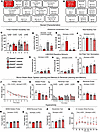 Figure 2
Experimental outline and Zbtb20+/– impairments in ASD domains. (A and B) Graphical experimental outlines for main (A) and additional (B) cohort of male Zbtb20+/– mice and their Zbtb20+/+ littermates, used as control. After 11 consecutive placebo resp. rhEPO injections, behavior experiments were performed. PND, postnatal day; DPI, days post injection. (C–F) Assessment of social characteristics shows impaired social preference in the 3-chamber sociability test (C), since placebo-treated Zbtb20+/– mice did not distinguish between stimulus mouse (S) and empty cage (E). This impairment is rescued by rhEPO treatment (t test, mean ± SEM). Communication assessed with ultrasound vocalization (D and E) shows that Zbtb20+/– mice exhibit an increased latency to first call (D) with improvement after rhEPO treatment and a reduced number of calls (E) compared with controls (2-way ANOVA with Bonferroni’s post hoc test, mean ± SEM). Nest building (F) results in a reduced score in Zbtb20+/– mice regarding quality of constructed nests overnight (2-way ANOVA with Bonferroni’s post hoc test, mean ± SEM). (G and H) Repetitive behavior was assessed in home cages via LABORAS and shows increased duration (G) and events (H) of climbing in Zbtb20+/– mice (2-way ANOVA with Bonferroni’s post hoc test, mean ± SEM). (I) Hot plate test reveals hyposensitivity toward heat-mediated nociception in Zbtb20+/– mice, with an increased latency of the first reaction to heat perception (2-way ANOVA with Bonferroni’s post hoc test, mean ± SEM). (J–M) Spatial learning, memory, as well as reversal learning and memory were assessed in a Morris water maze. Hidden training over 8 days shows time and genotype effect in escape latency (J, 3-way ANOVA with Bonferroni’s post hoc test, mean ± SEM). Probe trial for hidden learning task (K) reveals impaired spatial memory in Zbtb20+/– mice compared with controls, shown by reduced time spent in target quadrant (TQ, 2-way ANOVA with Bonferroni’s post hoc test, mean ± SEM). Reversal hidden training over 4 days (L) displays impaired spatial reversal learning in placebo-treated Zbtb20+/– mice and a rescue effect after rhEPO treatment, indicated by escape latency to platform (2-way ANOVA with Bonferroni’s post hoc test, mean ± SEM). Reversal probe trial (M) demonstrates impaired reversal spatial memory in Zbtb20+/– mice, indicated by the time spent in target quadrant (2-way ANOVA with Bonferroni’s post hoc test, mean ± SEM). (N–Q) Hyperactivity of Zbtb20+/– mice was assessed in probe trials for both hidden (N) and reversal (O) tasks of the Morris water maze, neophobia test (P) (all 2-way ANOVA with Bonferroni’s post hoc test, mean ± SEM), and 4-hour-complex wheel running (Q, 3-way ANOVA with Bonferroni’s post hoc test, mean ± SEM).
Communication deficits were discernible in the vocalization test. Both placebo- and rhEPO-treated Zbtb20+/– males exhibited an increased latency to their first vocalization upon exposure to an anesthetized female stimulus mouse (genotype effect: P = 0.0106). Interestingly, rhEPO treatment of both WT and Zbtb20+/– mice reduced the latency to their first vocalization (treatment effect: P = 0.0295). Furthermore, both Zbtb20+/– groups emitted significantly fewer calls toward the stimulus mice throughout the 3-minute recording, compared with their respective controls (genotype effect: P < 0.0001, Figure 2, D and E, and Supplemental Table 1). In nest building, another social skill test, Zbtb20+/– males constructed nests of inferior quality compared with WT controls and rhEPO had no effect (genotype effect: P = 0.0279, Figure 2F and Supplemental Table 1).
This result was also mirrored in their female littermates, where both Zbtb20+/– groups scored lower in nest building compared with their respective WT controls (genotype effect: P < 0.0001, Supplemental Figure 1A and Supplemental Table 2). Intriguingly, the diminished quality of nests constructed by both Zbtb20+/– sexes was already obvious in their home cages, an observation that experimenters became aware of only after being unblinded at project conclusion.
Assessment by the Laboratory Animal Behavior Observation Registration and Analysis System (LABORAS) revealed enhanced repetitive behavior, with Zbtb20+/– males displaying increased duration of climbing and number of climbing events (genotype effects: P = 0.0099 and P = 0.0008, respectively; Figure 2, G and H, and Supplemental Table 1) compared with WT controls. In females, the result was similar (genotype effects: P = 0.0145 and P = 0.0002, respectively; Supplemental Figure 1, B and C, and Supplemental Table 2).
Additional abnormalities of Zbtb20+/– males linked to ASD-like behavior. In the hot-plate test, an augmented tolerance for heat-mediated pain became aware. Both placebo- and rhEPO-treated Zbtb20+/– males exhibited a heightened latency to their initial visible reaction toward the stimulus (genotype effect: P = 0.0002, Figure 2I and Supplemental Table 1). In females, placebo-treated Zbtb20+/– mice also demonstrated an increased latency compared with their WT control (genotype effect: P = 0.0003). However, unlike in males, female rhEPO-treated Zbtb20+/– mice displayed a latency to the first reaction that was on par with WT controls and therefore lower than placebo-treated Zbtb20+/– females (treatment effect: P = 0.0093, Supplemental Figure 1D and Supplemental Table 2).
The Morris water maze was employed to evaluate spatial learning and memory. Zbtb20+/– males exhibited visual abilities equivalent to their WT controls (Supplemental Table 1). A genotype effect was observed during 8 days of hidden training (P = 0.0387, Figure 2J). During both hidden and reversal probe trials, Zbtb20+/– males spent significantly less time in the target quadrant that previously held the escape platform (both genotype effects: P < 0.0001, Figure 2, K–M, and Supplemental Table 1). Between both probe trials, 4 days of reversal training were conducted, revealing that placebo-treated Zbtb20+/– males were the only group not showing significant improvement in escape latency over time (P = 0.5629). In contrast, both placebo- and rhEPO-treated WT males (P = 0.0476, P = 0.0265) and rhEPO-treated Zbtb20+/– males improved significantly (P = 0.0339, Figure 2L and Supplemental Table 1). In females, a phenotype was only observable during both probe trials of hidden and reversal task where Zbtb20+/– mice spent less time in the target quadrant compared with controls, independent of treatment (genotype effects: P = 0.0153 and P = 0.0040, respectively; Supplemental Figure 1, F–H, and Supplemental Table 2). Both male and female Zbtb20+/– mice displayed increased locomotion across a variety of tests. In males, hidden and reversal probe trials (genotype effects: P < 0.0001), the neophobia test (genotype effect: P = 0.0001), and 4-hour complex wheel running (genotype effect: P = 0.0007, Figure 2, N–Q, and Supplemental Table 1) revealed significantly increased track lengths. In females, Zbtb20+/– mice demonstrated increased locomotion in the open field test (genotype effect: P = 0.0006), both hidden and reversal probe trials (genotype effects: P = 0.0009 and P = 0.0004, respectively), and in the LABORAS test (genotype effect: P = 0.0076, Supplemental Figure 1, L–O, and Supplemental Table 2).
Zbtb20+/– phenotypes in working memory, sensorimotor gating, and motivation. The Y-maze test was employed to assess working memory by contrasting the frequency of alternating and non-alternating entries into the maze arms. Despite all 4 male groups performing significantly more alternating than non-alternating entries, a comparison of the deltas from these 2 readouts revealed that placebo-treated Zbtb20+/– mice had the lowest delta of all groups, significantly lower than rhEPO-treated Zbtb20+/– males, thus demonstrating a treatment effect (P = 0.0314, Figure 3, A and B, and Supplemental Table 1). The open field and hole board tests were utilized to assess exploratory behavior and the motivation to engage in such. Zbtb20+/– males spent more time within the periphery and less time within the intermediate zone in the open field compared with their WT controls (genotype effects: P = 0.0085 and P = 0.0040, respectively; Figure 3C and Supplemental Table 1). The hole board experiment revealed a reduction in revisits to the most recently visited hole in placebo-treated Zbtb20+/– males compared with their WT controls (genotype effect: P = 0.0148). Additionally, an increase toward control levels was observed in rhEPO-treated Zbtb20+/– males (treatment effect: P = 0.0139, Figure 3D and Supplemental Table 1). A similar result was obtained in the female groups, where placebo-treated Zbtb20+/– mice showed fewer revisits compared with WT control, and rhEPO-treated Zbtb20+/– females exhibited a tendency of increasing the number of revisits to control level (genotype effect: P = 0.0982, treatment effect: P = 0.0526, Supplemental Figure 1I and Supplemental Table 2).
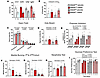 Figure 3
Working memory, exploration, pre-pulse inhibition, obsessive-compulsive readouts, and related control testing in Zbtb20+/– mice. (A and B) Working memory was assessed in the Y-maze test and shows significantly more alternating (a) than non-alternating (na) entries in all 4 groups (A, t test, mean ± SEM). Comparing Δ of entries (B) reveals further improved preference of alternating entries in rhEPO-treated Zbtb20+/– mice compared with placebo-treated controls (2-way ANOVA with Bonferroni’s post hoc test, mean ± SEM). (C) Placebo-treated Zbtb20+/– mice show increased time spent in peripheral zone and reduced time spent in intermediate zone in the open field test (2-way ANOVA with Bonferroni’s post hoc test, mean ± SEM). (D) Explorative behavior was also assessed in hole board test, revealing reduced rigorous revisits of placebo-treated Zbtb20+/– mice and a rescue effect upon rhEPO treatment (2-way ANOVA with Bonferroni’s post hoc test, mean ± SEM). (E) Prepulse inhibition test shows a genotype effect, namely increased inhibition of startle response in both placebo- and rhEPO-treated Zbtb20+/– mice (3-way ANOVA with Bonferroni’s post hoc test, mean ± SEM). (F and G) Marble burying test resulted in reduced numbers of buried marbles in the main (F) and, as control for this unexpected result, in an additional (G) cohort (2-way ANOVA with Bonferroni’s post hoc test, mean ± SEM). (H) Neophobia test shows increased interaction time with objects in placebo-treated Zbtb20+/– mice and no treatment effect (2-way ANOVA with Bonferroni’s post hoc test, mean ± SEM). (I) Sucrose preference test demonstrates absence of anhedonia-like (depressive) behavior in placebo- and rhEPO-treated Zbtb20+/– mice (3-way ANOVA with Bonferroni’s post hoc test, mean ± SEM).
In the prepulse inhibition paradigm, which was used to evaluate sensorimotor gating, significant distinctions were observed among the various sound intensities in all 4 groups (sound intensity: P < 0.0001). Moreover, a genotype effect was identified when comparing both placebo- and rhEPO-treated Zbtb20+/– males with their respective WT controls (P = 0.0061, Figure 3E and Supplemental Table 1). Interestingly, in the marble burying test, both cohorts of placebo- and rhEPO-treated Zbtb20+/– males buried fewer marbles compared with their respective WT controls (both genotype effects: P < 0.0001, Figure 3, F and G, and Supplemental Table 1). A similar result was observed in females, where placebo- and rhEPO-treated Zbtb20+/– mice of both cohorts buried significantly fewer marbles compared with their respective controls (genotype effects: P < 0.0001 and P = 0.0034, respectively; Supplemental Figure 1, J and K, and Supplemental Table 2). To further investigate potential causes for these unusual results, additional tests for the assessment of neophobia, depression-like behavior, and anhedonia were conducted in a second experimental cohort of this project. In neophobia testing, both male and female Zbtb20+/– mice did not show decreased time spent with objects compared with their controls (Supplemental Tables 1 and 2), but Zbtb20+/– males exhibited an increased time spent with novel objects (genotype effect: P = 0.0100, Figure 3H and Supplemental Table 1). For depression-like behavior, tail suspension and forced swim tests were performed but did not reveal an overall increased time of immobility in Zbtb20+/– males or females (Supplemental Tables 1 and 2). For the assessment of anhedonia, the sucrose preference test was conducted, showing all 4 groups with significantly increasing preference towards sucrose over the experimental time of 3 days (time effect: P < 0.0001, Figure 3I and Supplemental Table 1). Females also revealed no differences across groups in this test (Supplemental Table 2).
MRI uncovered structural differences for brain regions. A voxel-wise Jacobian determinants map was created to provide a visual representation of volumetric changes in the mouse brain (Figure 4, A and B). This map intensely delineates the increasing (yellow/red) and decreasing (blue/white) volumes when comparing both placebo-treated groups (Figure 4A) and both placebo- and rhEPO-treated Zbtb20+/– groups (Figure 4B). This comprehensive overview, combined with findings reported from previous studies and the technical prowess of this MRI technique, facilitated the volume analysis of an array of brain regions.
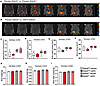 Figure 4
Magnetic resonance imaging. (A and B) Voxel-wise Jacobian determinants map indicates increased (red/yellow) or decreased (blue) volume changes in both placebo-treated Zbtb20+/+ versus Zbtb20+/– (A) and placebo- versus rhEPO-treated Zbtb20+/– (B) mice. (C–F) Volumetric analyses of specific brain regions show in both placebo- versus rhEPO-treated Zbtb20+/– mice an increased volume of hippocampus (C), cerebellum (D), brain matter (E), and whole brain (F). (G–I) Weight assessment of whole brains. (G) Immediately after extraction, brains of both placebo- and rhEPO-treated Zbtb20+/– mice display increased weight compared with controls. (H) Likewise, after 48 hours of lyophilization, brain dry weight of both placebo- and rhEPO-treated Zbtb20+/– mice was enhanced. (I) Also, calculated water content was augmented in both placebo- and rhEPO-treated Zbtb20+/– mice (2-way ANOVA with Bonferroni’s post hoc test; mean ± SEM).
In males, both Zbtb20+/– groups exhibited an increased volume of hippocampus (P < 0.0001), cerebellum (P = 0.0003), brain matter (P < 0.0001), and whole brain (P < 0.0001, Figure 4, C–F, and Supplemental Table 1). The brain weight immediately after extraction, dry weight, and computed water content corroborated these findings (genotype effects: P = 0.0030, P = 0.0018, P = 0.0055; Figure 4, G–I, and Supplemental Table 1). The brain regions of the olfactory bulb, thalamus, corpus callosum, and ventricles unveiled no volumetric differences (Supplemental Table 1).
The volumetric analysis in females disclosed a diminished olfactory bulb volume in both placebo- and rhEPO-treated Zbtb20+/– mice (genotype effect: P < 0.0001, Supplemental Figure 2A and Supplemental Table 2). While the volumes of both hippocampus and cerebellum were increased in placebo-treated Zbtb20+/– mice (genotype effects: P = 0.0060 and P = 0.0047, respectively), rhEPO treatment led to a reduction in the volume (treatment effects: P = 0.0293 and P = 0.0156, respectively; Supplemental Figure 2, B–D, and Supplemental Table 2). Volumetric changes of the ventricles revealed a treatment-dependent reduction (treatment effect: P = 0.0007, Supplemental Figure 2C and Supplemental Table 2).
snRNA-seq discovered upregulation of ZBTB20 in pyramidal neurons on rhEPO. To begin examining the ZBTB20 expression in the mouse hippocampus, we leveraged the recently published single-nuclei RNA-seq (snRNA-seq) dataset encompassing a broad range of neuronal and non-neuronal cell types (39). By refining these lineages deeper using the preset resolution of 0.4 from the Seurat package, we profiled the transcriptome of 19 distinct hippocampal lineages. This resolution was set to establish a balance between over-clustering and subpopulation level classification of abundant lineages such as pyramidal cells and oligodendrocytes (Figure 5A). With this approach, our analysis segregates pyramidal neurons into 6 distinct layers, including newly formed migratory (NFM), newly formed ventral (NFV), CA1-dorsal (CA1-D), CA1-ventral (CA1-V), CA2, and CA3 lineages. Additionally, oligodendrocyte and oligodendrocyte progenitor cells (OPCs) were distinguishable into 2 lineages each. The rest of the lineages resolved here, i.e., DG, intermediate neurons, interneurons, microglia, astrocytes, pericytes, endothelial, ependymal, and CD274+ neuroimmune cells, were classified as they exist in the original study (39). Finally, the high fidelity of cell type identification was set by cross-validating the pattern of observed differentially expressed genes (DEGs) with known markers (Figure 5B). Most of these DEGs were concomitant with known bona fide markers that are shown to be vital elements in the classified lineages (details provided in https://github.com/Manu-1512/Zbtb20/). Intriguingly, from the repertoire of DEGs, we find that the upregulation of Zbtb20 was flagged in the “intermediate cell” cluster. “Intermediate cells” were identified based on the upregulation and coexpression of DG-specific genes (Prox1 and Rfx3) and developing pyramidal neuronal genes (Nfia and Rgs6). Moreover, Sema3c, a gene that assists in developing the physiology of pyramidal neurons (45), was exclusively expressed in “intermediate cells” among all neuronal lineages. Of note, in consistency with genome wide in situ hybridization image data (mouse.brain-map.org), Zbtb20 expression is perceivable in DG, CA1-D, CA3, astrocytes, and vascular cells (Figure 6, A and B). Taken together, the upregulation of Zbtb20 marks the intermediate cells that seem to link DG and developing pyramidal neuronal populations, which accords with its postulated function of neuroplasticity in health and pathologies.
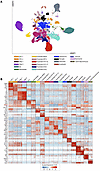 Figure 5
Classification and molecular markers of distinct lineages in the mouse hippocampus. (A) Two-dimensional Uniform Manifold Approximation Plot (UMAP) resolving the 19 distinct lineages of mouse hippocampus (integrated snRNA-seq derived from rhEPO [N = 6] and placebo [N = 6] mice). Cluster identity was assigned manually by retrieving known marker genes. The major cell types are annotated on the plot. Each dot represents a nucleus. (B) Heatmap illustrating the relative expression of the top 6 key genes defining the identity of each cluster in A. The top differentially expressed genes (DEGs) were calculated using Wilcoxon’s rank-sum test for each identified cell type. The color ranges from low (blue) to high (red) expression of marker genes (rows) in the single nuclei (columns). A full list of DEGs in each cell type is given in Supplemental Table 3.
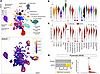 Figure 6
rhEPO induces Zbtb20 expression in the newly formed migratory pyramidal lineage. (A) Feature plot (lower panel) based on UMAP (upper panel) demonstrating the wider pattern of Zbtb20 levels, denoted as the density of relative expression. Midnight blue area represents lower expression whereas the nuclei under the golden area exhibit higher expression of Zbtb20. Note: Zbtb20 expression in multiple locations suggests the intricacy of Zbtb20 regulation in the hippocampus needs to be unveiled in future studies. (B) Violin plot showing the expression distribution of Zbtb20 across the lineages coded by colors as denoted in A. Stars signify the adjusted P values obtained by Benjamini-Hochberg (BH) correction followed by Wilcoxon’s rank-sum test (1-way), comparing Zbtb20 expression in intermediate cell versus the remaining lineages (***P < 0.001, BH test). (C) Grouped violin plot visualizes the comparison of expression dynamics of Zbtb20 between placebo (light gray) and rhEPO (red) across lineages; level of significance is calculated similarly as shown in previous plot, except here, the comparison is made between placebo and rhEPO samples (*P < 0.05, **P < 0.01, ***P < 0.001, BH test). (D) Left panel: Stacked bar plot of pyramidal (NFM) cell type illustrating the percentage of cells expressing Zbtb20 (gold) and the remaining cells (gray) separately in placebo- and rhEPO-treated samples. Asterisks denote the P value of difference in cells expressing Zbtb20 between rhEPO- and placebo-treated samples (***P < 0.001, 2-sided Fisher’s exact test). Right panel: Violin plot quantifying the density and distribution of Zbtb20 expression in pyramidal (NFM) cell type from rhEPO- and placebo-treated samples in pairwise manner (***P < 0.001, Wilcoxon’s rank-sum test, 1-way).
Next, we asked whether rhEPO treatment affects the Zbtb20 expression pattern in any or many of the aforementioned lineages. By comparing the transcriptome of identical cell types between rhEPO- and placebo-treated mice, we identified a substantial dysregulation of Zbtb20 in multiple cell types. While the dysregulation was nominal in vascular and neuroimmune cells, pyramidal (NFM) neurons exhibited the dramatic effect of rhEPO on Zbtb20 expression (Figure 6C). Most of pyramidal (NFM) cells expressing Zbtb20 are from rhEPO samples (Figure 6D), indicating that Zbtb20 expression is induced upon rhEPO specifically in 1 lineage. Because pyramidal (NFM) cells are highly specialized in combating the disorders of mood, memory, and cognition, and in the potential to intricately integrate in neural circuits and the induction of immediate early genes upon metabolic challenges, our results point toward ZBTB20 as a player for future therapeutic purposes. Considering the transcription factor activities of ZBTB20, overall, the involvement of ZBTB20 in linking neuronal activity to gene expression and plasticity upon rhEPO is proposed.


