
Immunology
Abstract
B cells contribute to the pathogenesis of food allergies as they induce allergen-specific antibody production. Clinically-used allergen-specific immunotherapies have shown to induce regulatory B cell (Bregs) subsets as well as target and reduce allergy-driving B cell functions. This report aims to elucidate the contribution of regulatory B cells to an allergen-encapsulating nanoparticle (aeNP) immunotherapy in a murine model of food allergy. In this model, B cells directly associated with aeNPs. CD20+ B cell depletion after aeNP treatment increased the number of mice with severe allergic reactions during oral food challenges and reduced the expansion of regulatory immune cells including CD103+ dendritic cells (DCs) and CCR9+ gut-homing regulatory T cells, indicating that B cells are a component of aeNP immunomodulation. B cell communication in the gastrointestinal tract of aeNP-treated mice identified CD23 signaling as a potential inducer of regulatory CD103+ DC functions and disrupter of allergy-driving B cell-T cell communication. These tolerogenic signaling patterns were also identified in IL-10+ B cells, which have been known to impart regulatory immune effects in both murine and human disease. Ultimately, B cells are a component of the complex immunomodulation leading to aeNP efficacy at reducing allergic reactivity.
Authors
Laila M. Rad, Michael N. Saunders, Laura A. Williams, Katarzyna W. Janczak, Chris L. Dorsett, Kate V. Griffin, Elizabeth J. Bealer, Jeffrey A. Ma, Sayre A. Tillery, Jyotirmoy Roy, Stephen D. Miller, Jessica J. O'Konek, Lonnie D. Shea
Abstract
Immune responses against transgene products can compromise AAV-mediated gene transfer. Although several factors influencing this immunogenicity have been described, the early in vivo events driving CD8+ T cell activation remain poorly defined. Here, we examined antigen presentation kinetics following intramuscular AAV administration in mice. Strikingly, viral genomes were detected in draining lymph nodes as early as one hour post-injection, and transgene-derived peptides were presented to CD8+ T cells from day 1, resulting in progressive activation and first cell divisions detected at day 4. Removal of the injection site demonstrated that AAV particles reaching draining lymph nodes within the first hour were sufficient to induce cytotoxic transgene-specific CD8+ T cells. Finally, AAV vectors incorporating different muscle-specific promoters and regulatory sequences were evaluated. Although muscle-specific, all promoters exhibited variable transgene expression in dendritic cells in vitro, correlating with early T-cell activation in vivo; notably, those associated with higher early antigen presentation induced robust T cell response, whereas reduced presentation correlated with absence of CD8+ T cells. These findings reveal an unexpectedly early onset of transgene-derived epitope presentation, modulated by promoter specificity, which critically shapes CD8+ T cell response. This provides a rationale for evaluating and mitigating AAV immunogenicity in gene therapy design.
Authors
Lindsay Jeanpierre, Coralie Pecquet, Hanadi Saliba, Pauline Finard, Stéphane Terry, Gianni Tavella, Inès Guesmia, Sylvie Boutin, Bérangère Bertin, Sofia Benkhelifa-Ziyyat, Giuseppe Ronzitti, David-Alexandre Gross
Abstract
In chronic beryllium disease (CBD), elevated levels of the inflammatory chemokines CCL3 and CCL4 in the lungs coincide with expanded populations of CD4+ T cells specific to beryllium (Be)-modified peptides derived from these chemokines. Here, we generated HLA-DP2 transgenic (Tg) CCL3-deficient mice (CCL3-/-) that also lack CCL4 to investigate their role in disease development. Be-exposed CCL3-/- mice maintained normal numbers of lung macrophages and dendritic cells (DCs) but exhibited significantly reduced total and HLA-DP2-CCL/Be tetramer-specific CD4+ T cells, IFN-γ-producing CD4+ T cells, and peribronchovascular aggregates, consistent with attenuated inflammation. CCL3 was predominantly expressed in macrophages and DCs, and bone marrow chimera studies confirmed that hematopoietic-derived DCs are the key regulators of CCL/Be-specific CD4+ T cell responses. RNA sequencing of lung-resident CCL4/Be tetramer-positive CD4+ T cells revealed a transcriptional profile enriched for inflammatory and cholesterol-metabolism pathways, with elevated expression of Ifng, Tnf, and Il17a. Moreover, Be-exposed HLA-DP2 Tg mice lacking TNF-α or treated with peptide-MHCII CAR-T cells targeting CCL4/Be-specific CD4+ T cells showed reduced T cell responses and cellular aggregates. These findings demonstrate that CCL3 and CCL4 promote CCL/Be-specific CD4+ T cell responses and highlight peptide-MHCII CAR-T cells as a novel strategy for depleting self-peptide/Be-specific CD4+ T cells in CBD.
Authors
Michael T. Falta, Masoom Raza, Caley J. Nevienski, Tonya M. Brunetti, Rui Fu, Rebecca M. Tucker, Joseph M. Gaballa, Faiz Minhajuddin, Kibrom M. Alula, Alberto Dinarello, Douglas G. Mack, Allison K. Martin, Joseph C. Onyiah, Michael Yarnell, Prashanth Francis, Terry J. Fry, Lisa A. Maier, Andrew P. Fontenot, Charles A. Dinarello, Shaikh M. Atif
Abstract
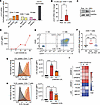
Human CD4+ T cells utilize nutrients, including lipids, to support their activation and polarization. Considering the pivotal role of lipoproteins in lipid transport, we reasoned that lipoprotein uptake and processing could effect CD4+ T cell function. Here, we demonstrate that activation of human CD4+ T cells induced expression of LDL receptor (LDLR) to facilitate LDLR-mediated endocytosis of LDL. Degradation of surface LDLR on CD4+ T cells with PCSK9 hampered activation and proliferation of the cells. Lipoprotein deprivation or blocking of lysosomal cholesterol egress impaired activation of mechanistic target of rapamycin complex 1 (mTORC1), affecting CD4+ T cell activation and proliferation. Furthermore, lipoprotein deprivation of cultured primary CD4+ T cells lead to reduced expression of c-MAF and FOXP3, key transcription factors for IL-10, accompanied by reduced IL-10 secretion. The pivotal role of LDLR-mediated lipoprotein uptake for mTORC1 activity, c-MAF and FOXP3 expression, and IL-10 secretion was confirmed using LDLR-dysfunctional CD4+ T cells from patients with homozygous familial hypercholesterolemia. Our study offers valuable insights into the lipoprotein metabolism of human CD4+ T cells and their reliance on the LDLR pathway for activation and polarization, a feature that may be leveraged to modulate CD4+ T cell function.
Authors
Angela Markovska, Niels S. van Heusden, Dagmar Duijzer, Alejandra Bodelón, Greta Rogani, Enric Mocholi, Edwin C.A. Stigter, Can Gulersonmez, Sander Kooijman, Leonie Van der Zee, Monique T. Mulder, Jeanine E. Roeters van Lennep, Patrick C.N. Rensen, Jorg van Loosdregt, Sebastiaan J. Vastert, Noam Zelcer, Marianne Boes, Henk S. Schipper
Abstract
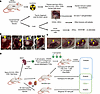
Stem cell–derived β cells offer a promising approach for type 1 diabetes (T1D) treatment. However, the processes of graft infiltration and rejection by immune cells remain poorly understood in humans. In this study, autologous or allogeneic stem cell–derived islets (SC-islets) were transplanted in human immune system mice and analyzed 14 to 18 weeks later. Imaging mass cytometry revealed unique characteristics of SC-islet grafts, including a high percentage of glucagon+ cells and the presence of cysts and CD57+ enterochromaffin cells, features not typically observed in endogenous or transplanted allogeneic primary pancreatic islets. Allogeneic SC-islet grafts exhibited heavy immune infiltration, cell proliferation, and pro-fibrotic processes, whereas autologous grafts showed minimal infiltration and little fibrosis. In some mice, autologous T cells expressing islet antigen-reactive (IAR) T cell receptors (TCRs) were adoptively transferred. Three weeks after transfer, autologous grafts injected with IAR-TCR+ T cells showed negligible immune infiltration, even though IAR-TCR+ T cells were detected in the spleen. Under the conditions tested, human SC-islet grafts were not rejected by an autologous immune system, even in the presence of autoreactive T cells, pointing to several limitations that remain to be addressed for a model of spontaneous autologous SC-islet infiltration and destruction.
Authors
Camillo Bechi Genzano, Giorgia Zanetti, Qian Du, Daniel Traum, Deeksha Lahori, Grant M. Downes, Sakshi A. Bhatele, Xiaolan Ding, Kyle D. Apley, Rebuma Firdessa Fite, Matthew Ishahak, Enrique Eduardo Sanchez-Castro, Jeffrey R. Millman, Yiming Luo, Klaus H. Kaestner, Cory Berkland, Dieter Egli, Megan Sykes, Remi J. Creusot
Abstract
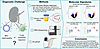
BK polyomavirus–associated nephropathy (BKVN) adversely impacts kidney allograft survival and often mimics acute T cell–mediated rejection (TCMR), confounding diagnosis and management. To address this conundrum, we performed unbiased RNA sequencing of urinary cells matched to biopsies classified as BKVN with intragraft inflammation (BKVN-P), BKVN without inflammation (BKVN-N), TCMR, or no rejection (NR). BKVN-N displayed dominant host DNA replication, cell cycle, and repair programs, while BKVN-P samples exhibited expansive innate immune activation, antigen presentation, chemokine upregulation, and epithelial injury. Both BKVN subtypes shared signatures of T cell exhaustion and mature and tolerogenic dendritic cell activation but differed in immune orientation — Th1 predominance in BKVN-N versus Treg and CD8 enrichment in BKVN-P. Compared with TCMR samples, BKVN-P lacked robust TCR/CD28 signaling and was enriched for viral and innate modules; BKVN-N lacked alloimmune activation. B cell exhaustion characterized BKVN-N, while BKVN-P displayed robust B cell activation with metabolic downregulation. A ratiometric urinary cell biomarker, CXCL10 mRNA/CD3E mRNA, distinguished both BKVN subtypes from TCMR with diagnostic accuracy, replicated by quantitative reverse transcription PCR for clinical translation, and confirmed in an independent cohort. These findings demonstrate the utility of urinary cell transcriptomics for resolving viral injury from alloimmunity, enabling precision diagnostics and targeted immunomodulation in kidney transplantation.
Authors
Franco B. Mueller, Carol Li, Darshana M. Dadhania, Surya V. Seshan, Thalia Salinas, Vijay K. Sharma, Jenny Z. Xiang, Hans H. Hirsch, Thangamani Muthukumar, Manikkam Suthanthiran
Abstract
Immunosenescence, the biological aging of the immune system, leads to dysregulated immune responses, increasing susceptibility to infections and reducing vaccine efficacy in older adults, as seen with flu vaccines. In contrast, the AS01-adjuvanted recombinant herpes zoster vaccine (RZV) maintains high and sustained efficacy, offering 82% protection against herpes zoster at 11-years post-vaccination, in individuals over 50. To identify factors impacting age-dependent vaccine efficacy, we conducted a randomized, partially placebo-controlled clinical study. Young adults (18-35 years, n=84) were randomized 3:3:1:1 to receive either RZV, an inactivated quadrivalent seasonal influenza vaccine (IIV4), placebo for RZV or placebo for IIV4, while older adults (≥60, n=63) were randomized 1:1 to receive RZV or IIV4. RZV elicited robust antibody production, antigen-specific polyfunctional CD4+ T cell responses and IFN-γ from PBMCs in both age groups, while IIV4 increased antibody responses, but induced fewer antigen-specific CD4+ T cells and no elevation of IFN-γ from PBMCs. Interestingly, RZV reduced systemic inflammation in older adults, particularly after the second injection. Baseline inflammation negatively correlated with antibody production and IFN-γ response, especially after RZV. Our findings suggest that RZV may help overcome immunosenescence by enhancing cellular responses and potentially decreasing systemic inflammation, deserving further investigation into the underlying molecular mechanisms.
Authors
Gizem Kilic, Esther J.M. Taks, Leonie S. Helder, Elisabeth A. Dulfer, Büsra Geckin, Liesbeth van Emst, Heidi Lemmers, Stefano Berrè, Adhidev Biswas, Mumin Ozturk, Yutaka Negishi, Wivine Burny, Sofia Maria Buonocore, Jaap ten Oever, Musa M. Mhlanga, Mihai G. Netea
Abstract
Virally suppressed people with HIV (PWH) remain at risk for developing comorbidities due to chronic inflammation with one potential contributor being the HIV reservoir. Associations between the CD4-reservoir and inflammation have been extensively characterized, while the role the monocyte-reservoir is poorly understood despite evidence that inflammatory monocytes play a role in HIV-associated comorbidities. Additionally, most studies focus on a single cellular reservoir, while it is highly likely that these reservoirs are interdependent. In a cohort of 164 PWH, we used the intact proviral DNA assay to quantify cell-specific reservoirs, applied unsupervised clustering to identify reservoir phenotypes, and then determined if reservoir phenotypes were associated with distinct immune signatures compared to people without HIV. Five unique reservoir clusters emerged driven primarily by variability in the monocyte reservoir, and each associated with a distinct immune landscape. These included profiles characterized by systemic inflammation, leukocyte–vascular activation, T cell activation with vascular and neuronal injury, enhanced CD8 activation and NK cell recovery, and altered monocyte survival, activation, and migration. This multidimensional approach provides a framework to identify reservoir-immune profiles that may explain heterogeneity in inflammation despite viral suppression and may inform strategies to mitigate HIV-associated comorbidities.
Authors
Ruoyu Wang, Aparna B. Bhattacharyya, Lily Pohlenz, Erin N. Shirk, Hayley S. Romero, Katherine Haas, Jennifer M. Coughlin, Raha M. Dastgheyb, Leah H. Rubin, Rebecca T. Veenhuis

Abstract
Brain metastases (BrMs) occur in approximately 30% of cancer patients, causing nearly one-fifth of cancer deaths. While immune checkpoint inhibitors (ICIs) benefit some BrM patients, responses remain highly variable. This variability partly reflects distinct histopathological growth patterns that include minimally invasive (MI) and highly invasive (HI) brain BrMs. Here we show that MI BrMs exhibit robust immune infiltration, whereas HI lesions are immunosuppressed. However, histological differentiation between MI and HI can be challenging because of subjective margin assessment. Here, using highly multiplexed spatial proteomics on 119 tumor sections from 46 patients with BrMs, we identify CHI3L1 as a key mediator of the immunosuppressive microenvironment in HI BrMs. In preclinical models, genetic deletion of CHI3L1 converts immune-cold metastases into lymphocyte-rich, ICI-responsive lesions infiltrated by granzyme B+ CD8+ T cells. In BrM patients treated with ICI, immunohistochemical quantification of CHI3L1 expression was a stronger predictor of ICI response than traditional MI/HI classification. Thus, CHI3L1 represents a promising biomarker and therapeutic target for BrMs.
Authors
Sarah M. Maritan, Elham Karimi, Matthew Dankner, Aldo Hernandez-Corchado, Miranda W. Yu, Matthew G. Annis, Yashar Aghazadeh Habashi, Morteza Rezanejad, Bridget Liu, Nebras Koudieh, Emilie Pichette, Parvaneh Fallah, Benoit Fiset, Yuhong Wei, Ali Nehme, Chun Geun Lee, Jack A. Elias, Morag Park, Yasser Riazalhosseini, Hamed Najafabadi, Kevin Petrecca, Marie-Christine Guiot, Daniela F. Quail, Logan A. Walsh, Peter M. Siegel

Abstract
Bladder cancer (BCa) mortality is mainly driven by metastatic dissemination and an immunosuppressive tumor microenvironment. Here, we identify ELN (tropoelastin), an extracellular matrix protein abundantly secreted by cancer-associated fibroblasts (CAFs), as a critical determinant of these processes and a marker of poor prognosis. ELN promotes epithelial-mesenchymal transition (EMT), facilitates lymphatic spread, and induces immune dysfunction characterized by macrophage polarization toward an M2 phenotype and T cell exhaustion. Mechanistically, ELN functions as a binding partner of TGF-β receptor 2 (TGFBR2), thereby triggering SMAD2/3-dependent TGF-β1 secretion and establishing a feed forward signaling loop. This ELN/TGFBR2/TGF-β1 axis amplifies metastatic capacity and immunosuppressive signaling, ultimately accelerating disease progression and diminishing responsiveness to immune checkpoint blockade. Functional studies in BCa organoids and murine models demonstrated that pharmacologic blockade of the ELN-TGFBR2 interaction effectively suppressed tumor metastasis and restored antitumor immunity. Collectively, our findings establish ELN as a CAF-derived driver of metastasis and immune evasion in BCa. Targeting the ELN-TGFBR2 interaction offers a promising therapeutic strategy to limit metastatic progression and enhance the efficacy of immunotherapy in this lethal disease.
Authors
Wentao Xu, Jia Gao, Shanshan Wu, Jianshang Huang, Chenchen An, Chonggui Jiang, Nianping Liu, Chen Cheng, Zihan Wang, Zijian Dong, Yuchen Xu, Jun Zhou, Hanren Dai, Xiaolei Li, Honghai Xu, Songyun Zhao, Qianwen Fan, Yang Li, Ying Dai, Li Zuo, Hua Wang
No posts were found with this tag.


